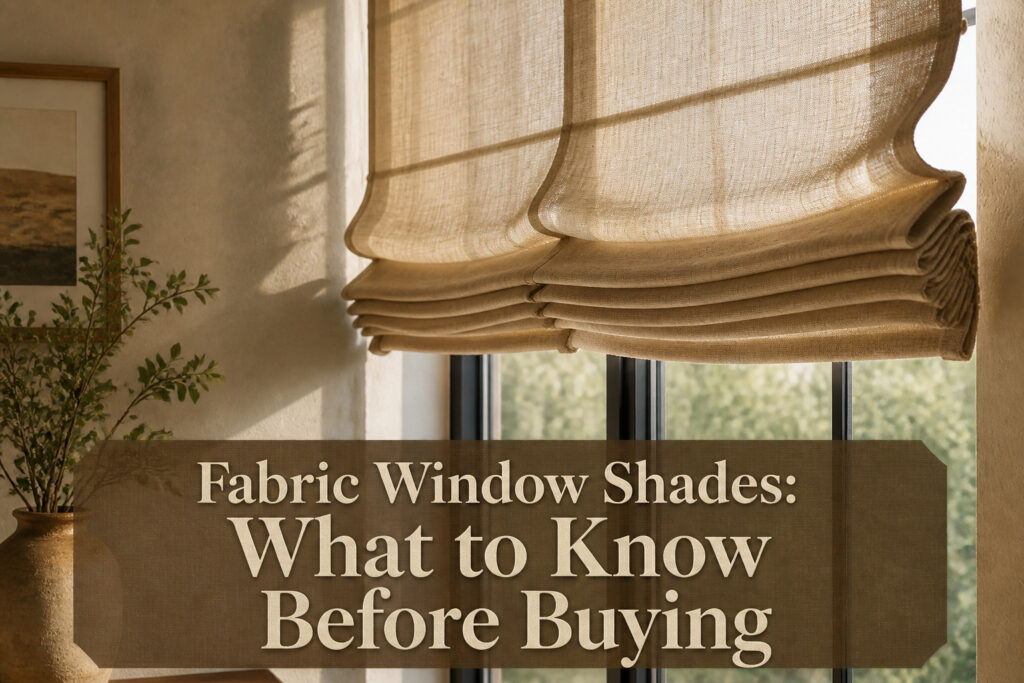
Fabric window shades are soft coverings made from cloth that roll, fold, or stack to control light and privacy. What separates one type from another is not the material alone but how that material behaves under tension and daily use.
A flat Roman fold stacks tight enough to hide behind trim, while a hobbled fold needs extra height to hold its waterfall shape.
Roman Shades
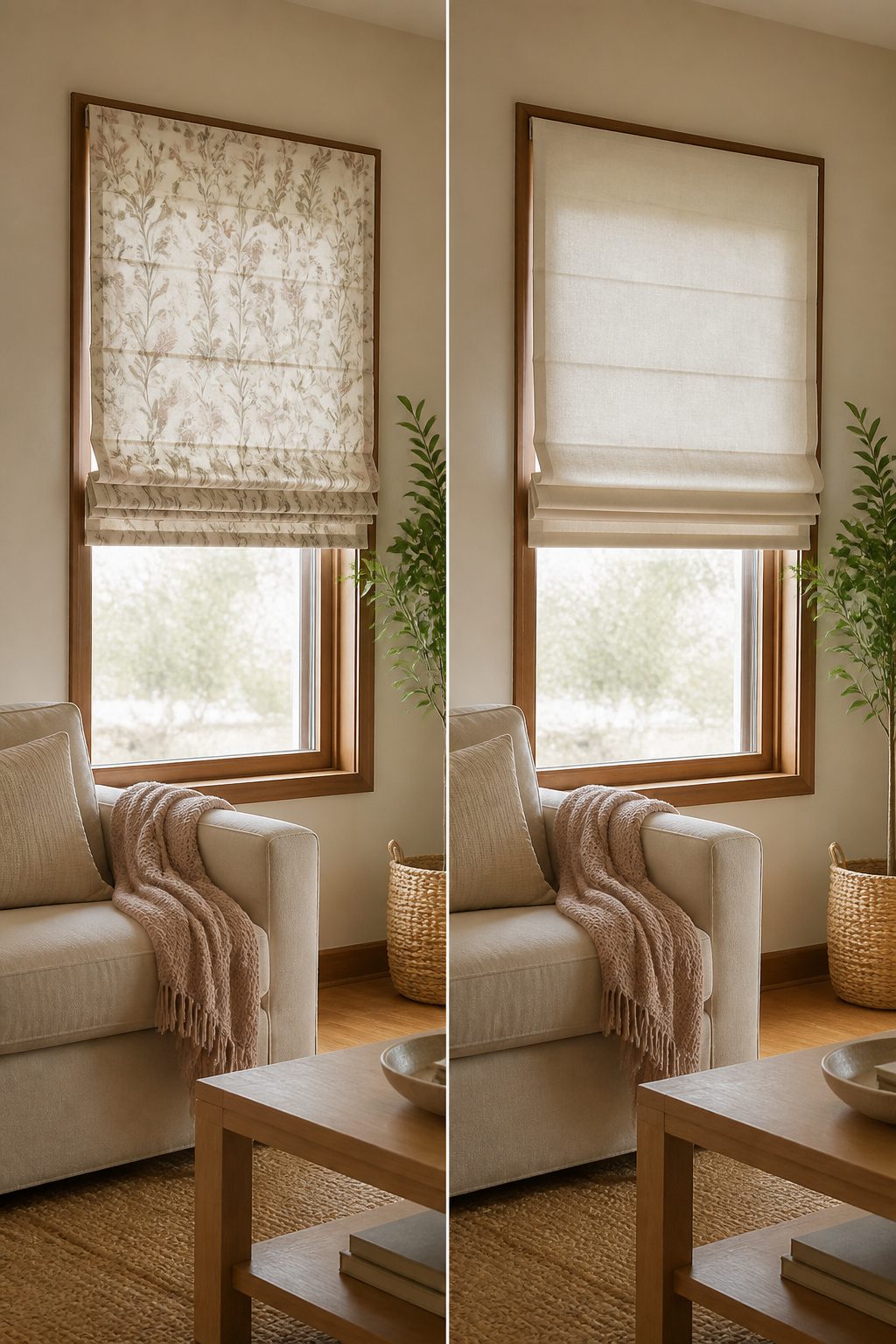
Roman shades are fabric window coverings that raise into neat, horizontal folds and lower into a smooth panel.
The flat or classic style gives you a clean, modern look when lowered and crisp folds when raised; it works best with patterned fabrics and stacks tight behind trim, which makes it the practical choice for high-traffic rooms where you will operate it daily.
Soft or hobbled folds keep gentle waterfalls of fabric even when fully lowered, so solid or lightly textured fabrics get the most out of the dimension; the stack runs slightly fuller, and tall windows suit it well.
Relaxed or European shades carry a soft smile curve at the bottom hem, informal and airy, best for casual spaces like living rooms and breakfast nooks.
Lighter fabrics drape best here, though a privacy liner helps the shade hold its shape.
Pleated or knife-pleat shades offer a tailored, seamed look with strong vertical definition; they hold shape well for daily use, pair nicely with blackout liners, and fit formal rooms where you want a crisp profile.
For renters, flat folds win on function and cost: simpler construction means less bulk to wrestle with during install or move-out.

[ECO-FRIENDLY FABRIC ]: Light filtering roller shade is 100% polyester fabric. Good ventilation capability, anti-static, dust-proof and durable. The aluminum bottom rod replaces the plastic bottom rod to improve the overall stability, so that the panel and the bottom are on the same level, not easy to tilt, prevent wind blowing, and give users a better experience.

1【Our Strengths】Over 100 Years Window Covering Expertise (SCHOENBERGER GROUP est.1878)
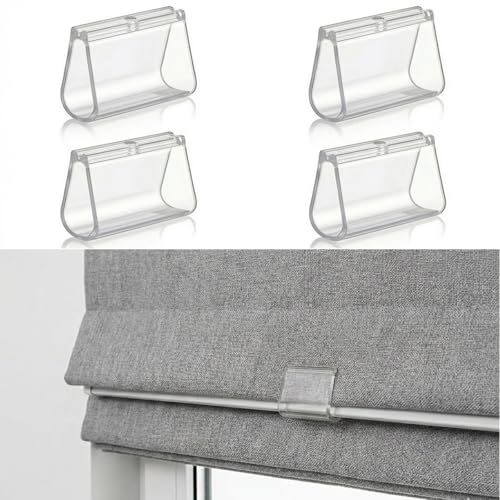
Designed Exclusively for Roman Shades: Specifically engineered to slide onto the flat bottom hem or spline of cordless Roman shades. Compatibility Check: This grip is NOT suitable for Roller blinds or cellular shades with round or thick bottom rails. Please verify your shade type before ordering.
Roller Shades
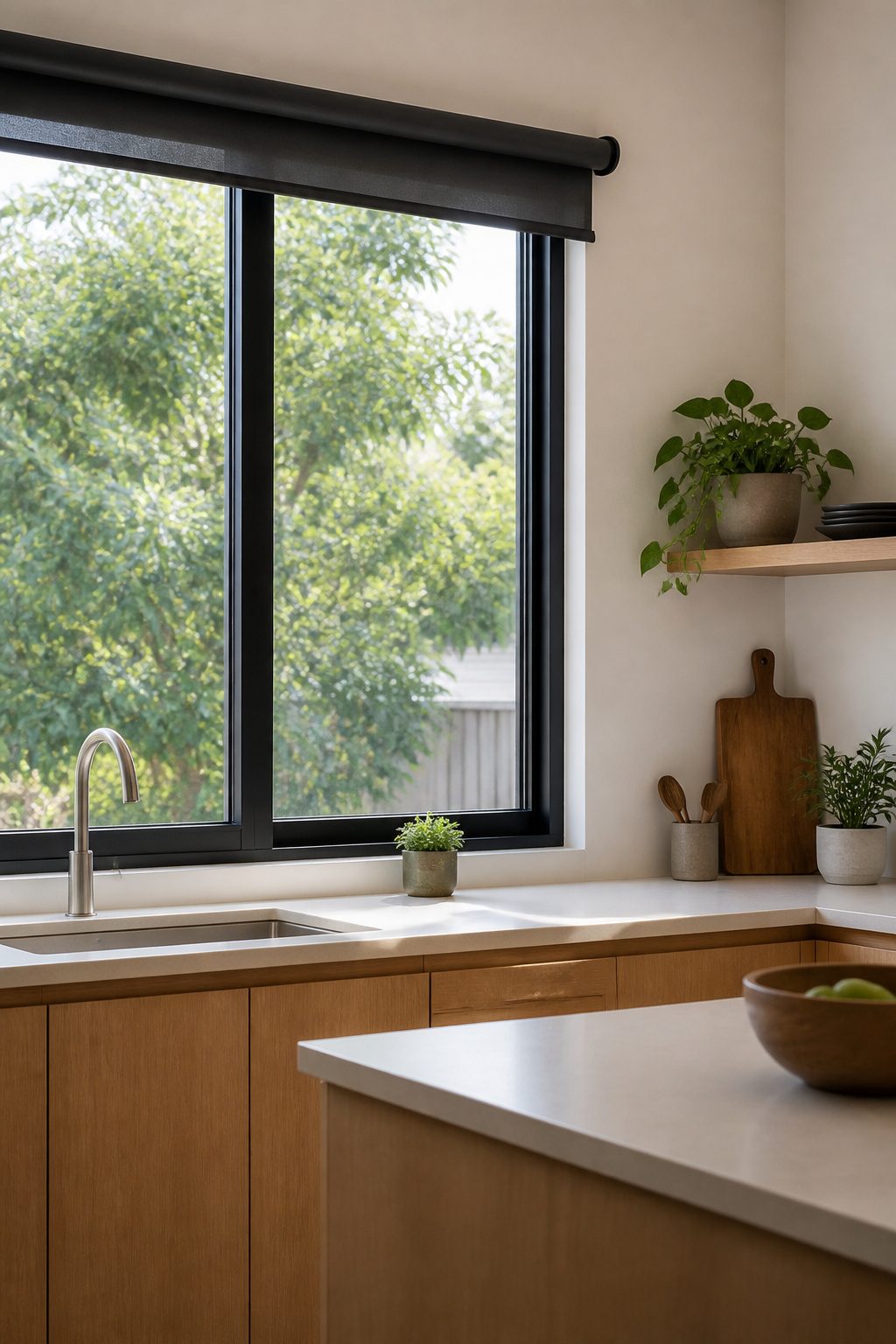
A roller shade is a single rectangle of fabric wrapped around a hollow tube, mounted so the fabric rolls up from the bottom and stores flat against the top of the window.
The mechanism is either a spring-loaded catch or a beaded chain on the side, and both work fine until they don’t, at which point the shade hangs crooked or the chain pulls loose from its loop.
What sold me on these was the clean line when they are fully raised.
The fabric bunches into a cylinder roughly two to three inches in diameter, and whether that cylinder shows at all depends entirely on where you mount the bracket.
An inside mount, set within the window frame, leaves the tube visible from below and the sides.
An outside mount, attached to the wall or trim above the frame, pushes the rolled fabric clear of the glass so it does not block any light and the tube sits above where your eye naturally rests.
The fabric itself ranges from sheer linen-look synthetics to thick canvas weaves, and the pattern options are wider than people expect.
A small repeat or a solid color keeps the rolled tube looking neat; a large-scale print can read as a dark stripe when the shade is up and the fabric layers over itself.
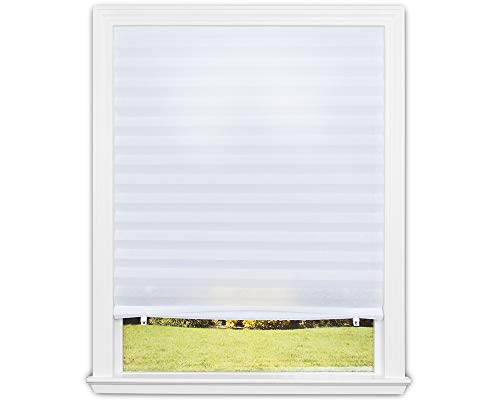
Light Control: Softly filters light for privacy, light control and UV protection — made of non-woven polyester fabric

Material: Water repellent and UV protect Polyester- one side Silver one side black
Natural Woven Shades
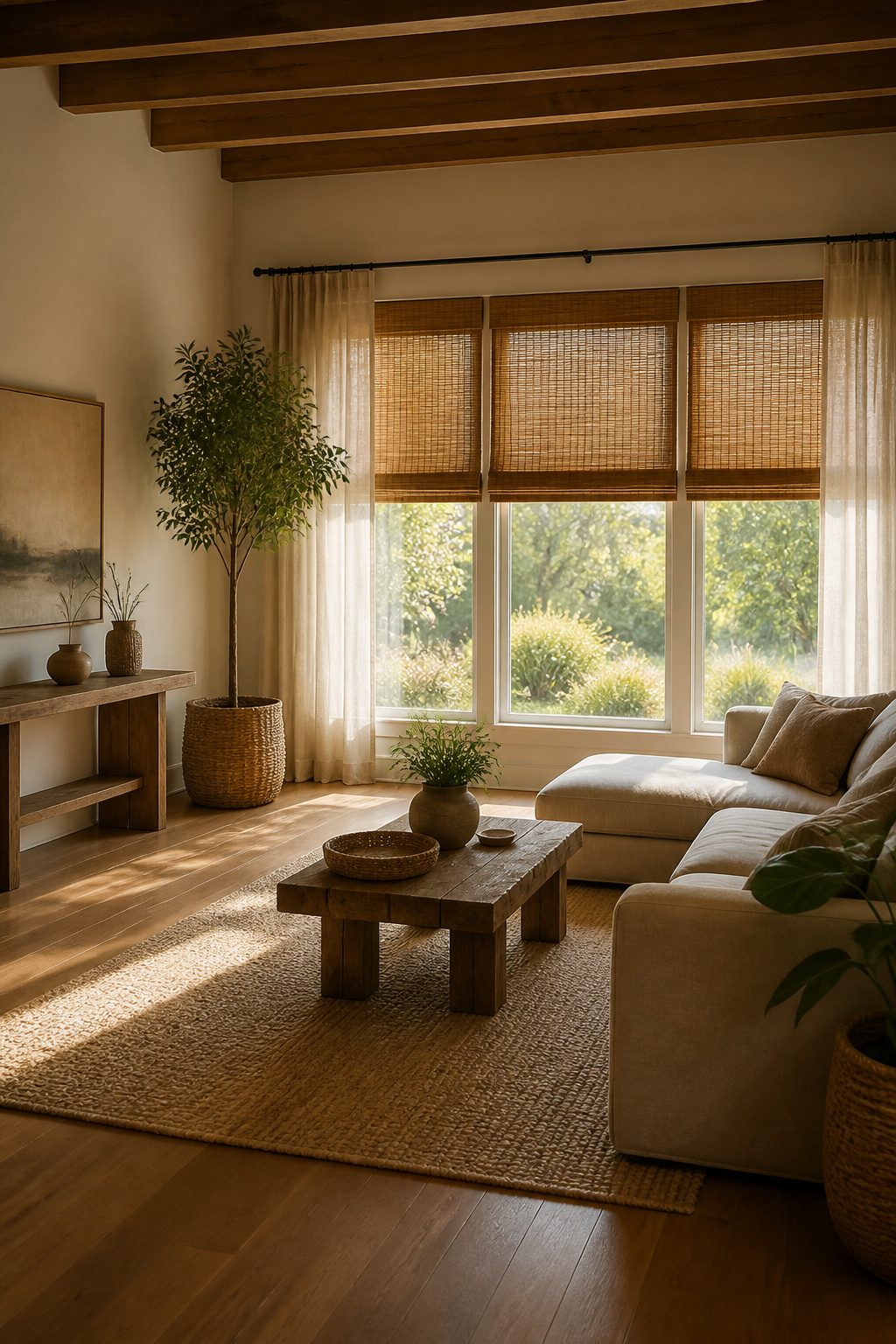
Bamboo, jute, and reeds give natural woven shades their texture, and the grain shows through even when the shade is down.
The weave filters light rather than blocking it, so the room stays bright but private; you will not get a dark bedroom or a glare-free screen without adding something behind it.
That openness is exactly why they layer well with curtains.
A cotton or linen panel on a rod a few inches wider than the shade frames the window, gives you blackout when you need it, and lets the texture of the woven material read as the accent rather than the whole treatment.
In a rental, this is a practical pair: the shade goes up with a few brackets, the curtains hang on a tension rod, and neither one commits you to a single look.
The renewable side matters if you are weighing options. These materials grow fast and the shades themselves read as warmer than synthetic weaves, though the texture varies batch to batch.
Order a swatch and hold it against your wall in morning light before you decide; the color shifts more than a dyed fabric would.

Natural Woven Bamboo Shades: Crafted from 50% premium ramie, these natural woven roman shades bring an elegant and sophisticated touch to any indoor space. They infuse your home with natural elements and warmth, all while being completely safe for your health. Neutral tones (Beige/Brown/Grey) complement modern, farmhouse, or bohemian interiors.
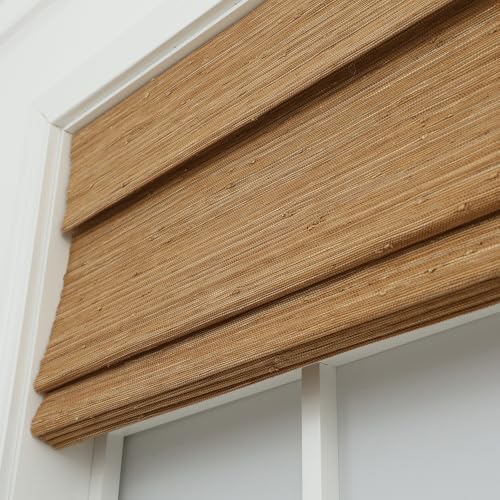
① Organic Beauty: Crafted meticulously by hand from 100% natural jute, our window blind features a soothing ‘Serene Sand’ hue. This elegant earthy color simplifies your space, cutting through visual noise to introduce a sense of peaceful, organic modernity. Transform your room into a calming retreat with this perfectly neutral shade.

Natural Woven Bamboo Shades: Crafted from 50% premium ramie, these natural woven roman shades bring an elegant and sophisticated touch to any indoor space. They infuse your home with natural elements and warmth, all while being completely safe for your health. Neutral tones (Beige/Brown/Grey) complement modern, farmhouse, or bohemian interiors.
Zebra Shades
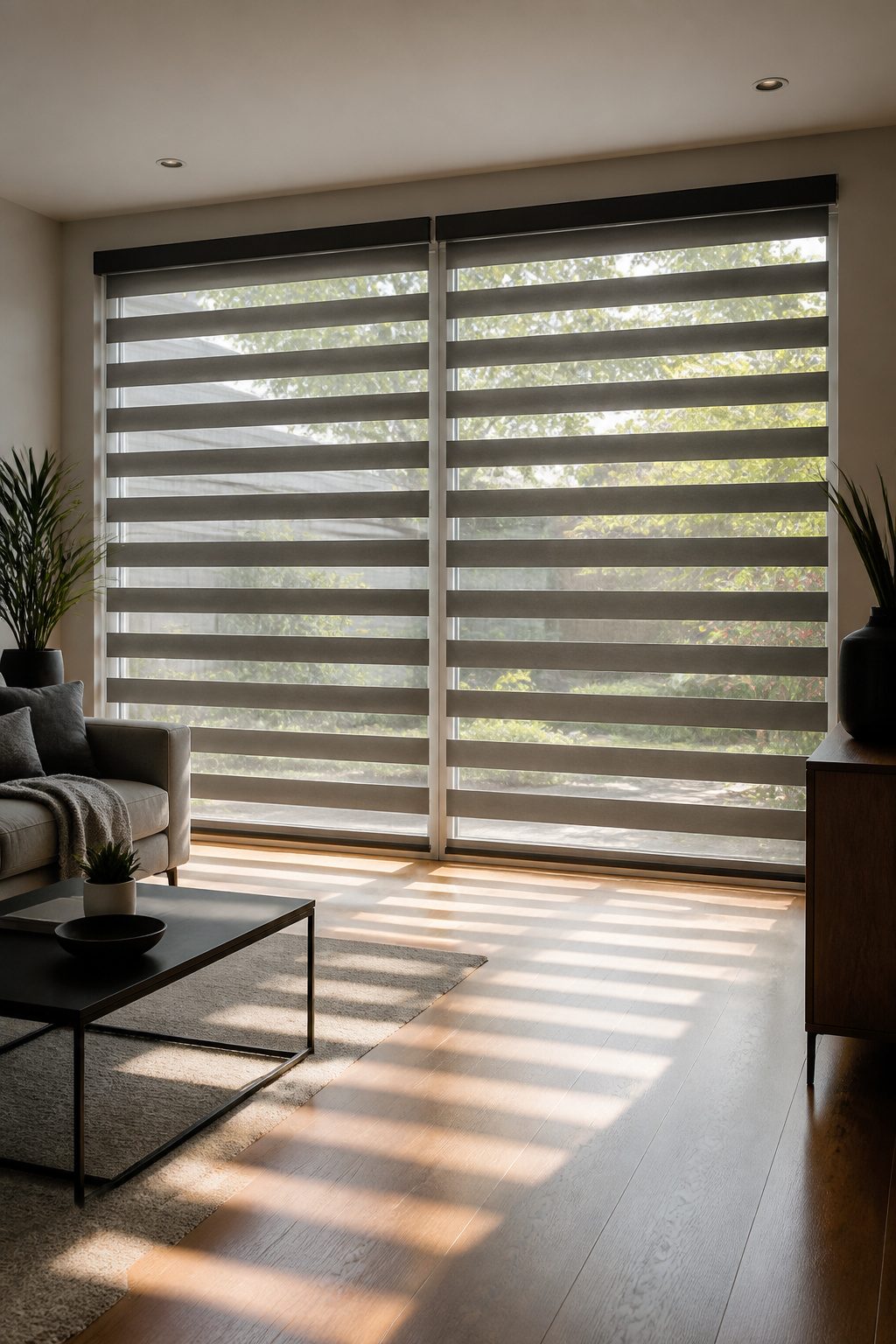
Zebra shades run two fabric layers in one headrail, one sheer and one solid, on parallel rollers. Shift the cord and the stripes glide past each other.
Align the solid bands and the room goes dim; line up the sheers and daylight filters through. The setting that trips people up is the half-and-half zone, where the bands overlap at staggered intervals.
Light leaks through in horizontal bars, privacy holds only at chest height, and from the street the window reads as busy rather than intentional.
That middle ground looks sophisticated in showroom photos. In practice, the overlap points draw the eye straight to the glass, especially at night with interior lamps on.
Most people end up using zebra shades as two-position devices: fully closed or fully open, treating the gradations as a party trick they tried once.
For a bedroom facing a neighbor’s kitchen, that limitation matters more than the sales pitch suggests.

【Excellent Natural Woven Fabric】100% excellent polyester imported; Bamboo-look fabric gives your room an easy-breezy, carefree look and feel in just minutes; Prized for their unique differences in colors, these ahhh-inspiring woven window coverings easily blend into almost any room or with any style; Unlined, cast a soft, inviting glow over living rooms, home offices and more while naturally shading your interiors from harsh sunlight.

【Quality service】We will use the good logistics provider for delivery, and provide 24 months warranty service, if there is any problem with the product, please feel free to contact us, our most professional after-sales team will solve your problem by the best way.

Important Inside Mount Measuring Instructions: This bamboo shade is the exact size you order - no deductions are made. Measure the width across the top, middle, and bottom of window. Ensure your window measures 22.25" - 23" wide for a 22" wide bamboo shade. This allows proper fit with minimal light gaps.See our images for a simple guide to measuring to get the ideal fit and coverage for your windows.
Blackout Shades
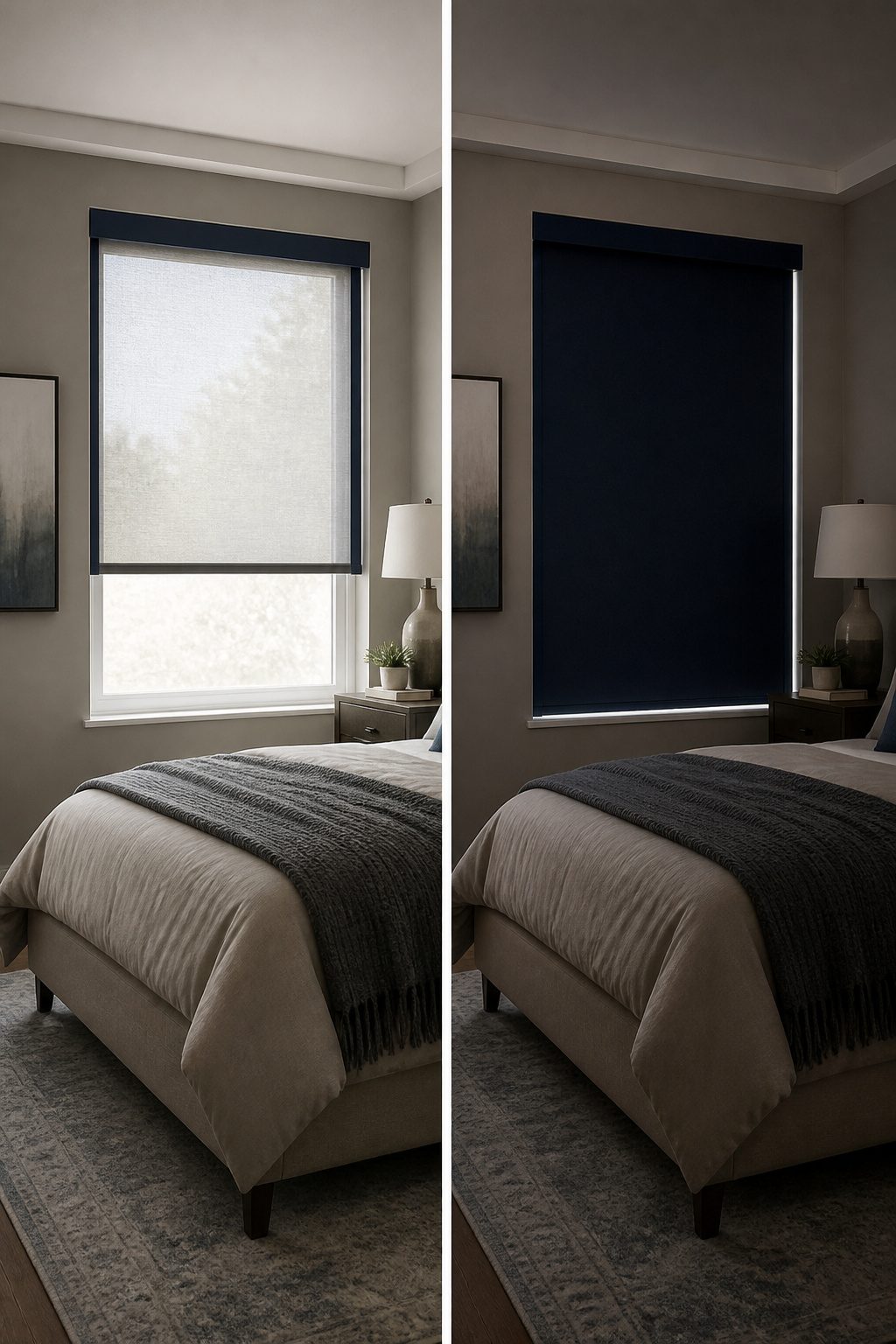
Blackout shades promise total darkness, but the fabric alone does not deliver it.
A true blackout system needs side tracks and seals that close the gaps where light bleeds around the edges. Without them, morning sun finds the cracks and you end up with a room that is dim, not dark.
The fabric itself matters too.
Blackout material blocks light through the weave, and adding a blackout liner buys extra insulation while stiffening the cloth. That liner changes how the shade behaves: the folds come out sharper and the stacked height grows slightly when raised.
Color shifts as well, since less light passes through to illuminate the face fabric from behind. On a Roman shade, the difference is visible.
Bedrooms are the obvious place for this setup, especially for shift workers or anyone sensitive to streetlight.
The weakness shows at installation. Gaps along the window frame, a header that does not sit flush, or tracks that stop short of the sill all become light paths.
Measure for the tightest fit you can get, then test at noon. If you can read a label on the back of your hand, the seal failed somewhere.
Custom Shades
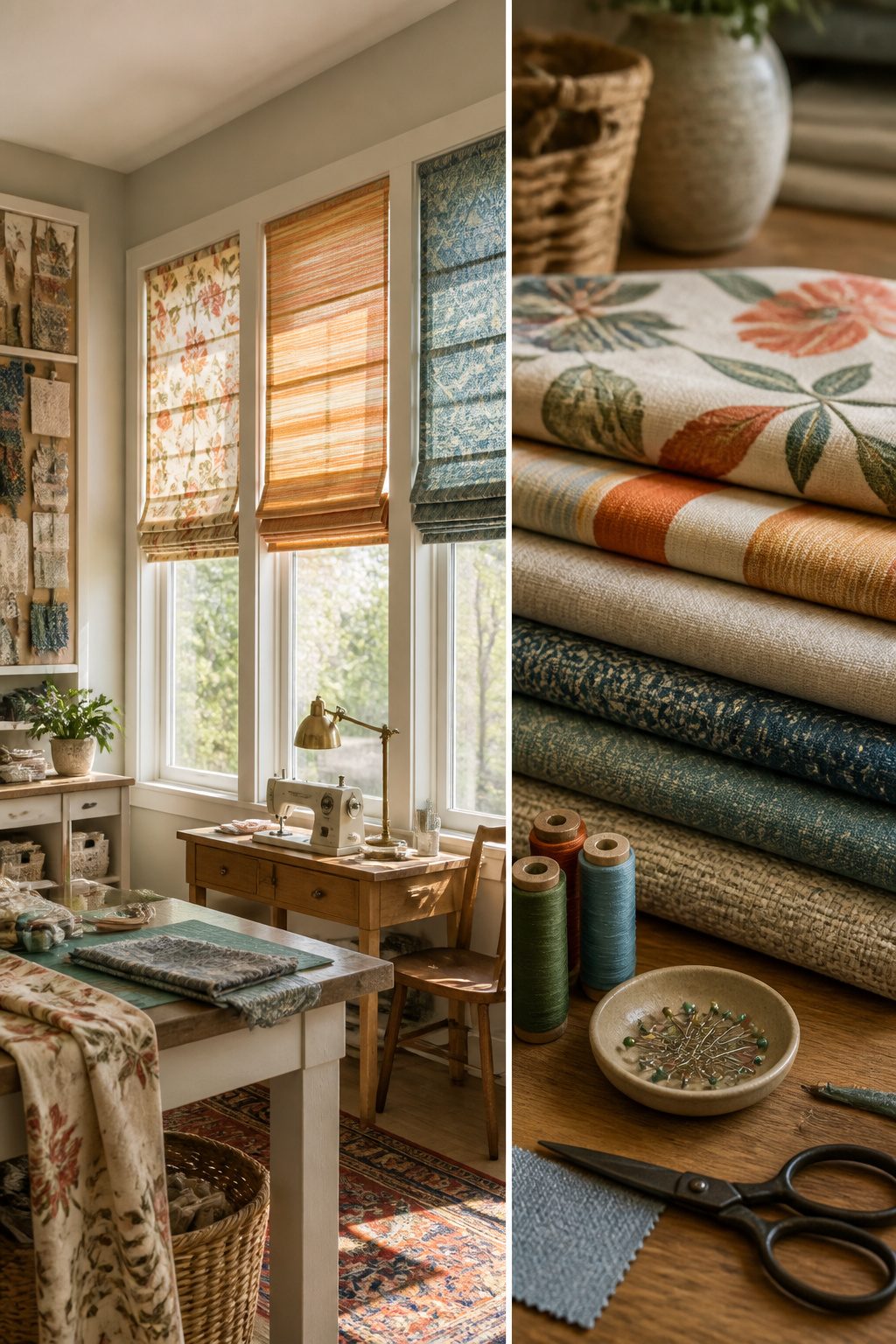
Some makers will build fabric window shades from material you send them, not just from their own rolls.
The process usually starts with a photo or a mailed swatch so they can judge whether your fabric will hold a crease, take glue, or survive tension without sagging.
Medium-weight cottons and linens tend to work; sheer voiles and heavy upholstery velvets often do not, because the first collapses under structure and the second fights the headrail.
Lead times run longer than stock shades, sometimes four to six weeks, since your bolt has to arrive, get inspected for flaws, and then queue behind standard orders.
The upcharge is not always the sticker shock; it is the wait paired with the risk that your fabric behaves differently under tension than it did on the bolt.
One shop takes artwork and wallpaper samples too, which widens the field but does not change the physics.
If your heart is set on a print no catalog carries, send a yard ahead and ask for a mock-up before the full cut.

① Natural Materal: Made of premium natural jute and grass fiber, our cordless roman shades are breathable, elegant, sturdy and strong.Each slat is woven with color-coordinated yarn for a unique design.

REAL WOVEN BAMBOO CONSTRUCTION: Authentic natural bamboo fibers create a warm, textured roman shade with genuine tonal variation in every panel. Adds organic texture to modern organic, boho, coastal, farmhouse, and rustic rooms at an everyday price.

ORGANIC MATERIAL: Crafted from premium natural ramie or jute or bamboo, each woven shade adds organic texture and warmth to your home. Safe, eco-friendly, and timeless in style, it’s the perfect way to bring nature indoors.
Fabric That Holds Up
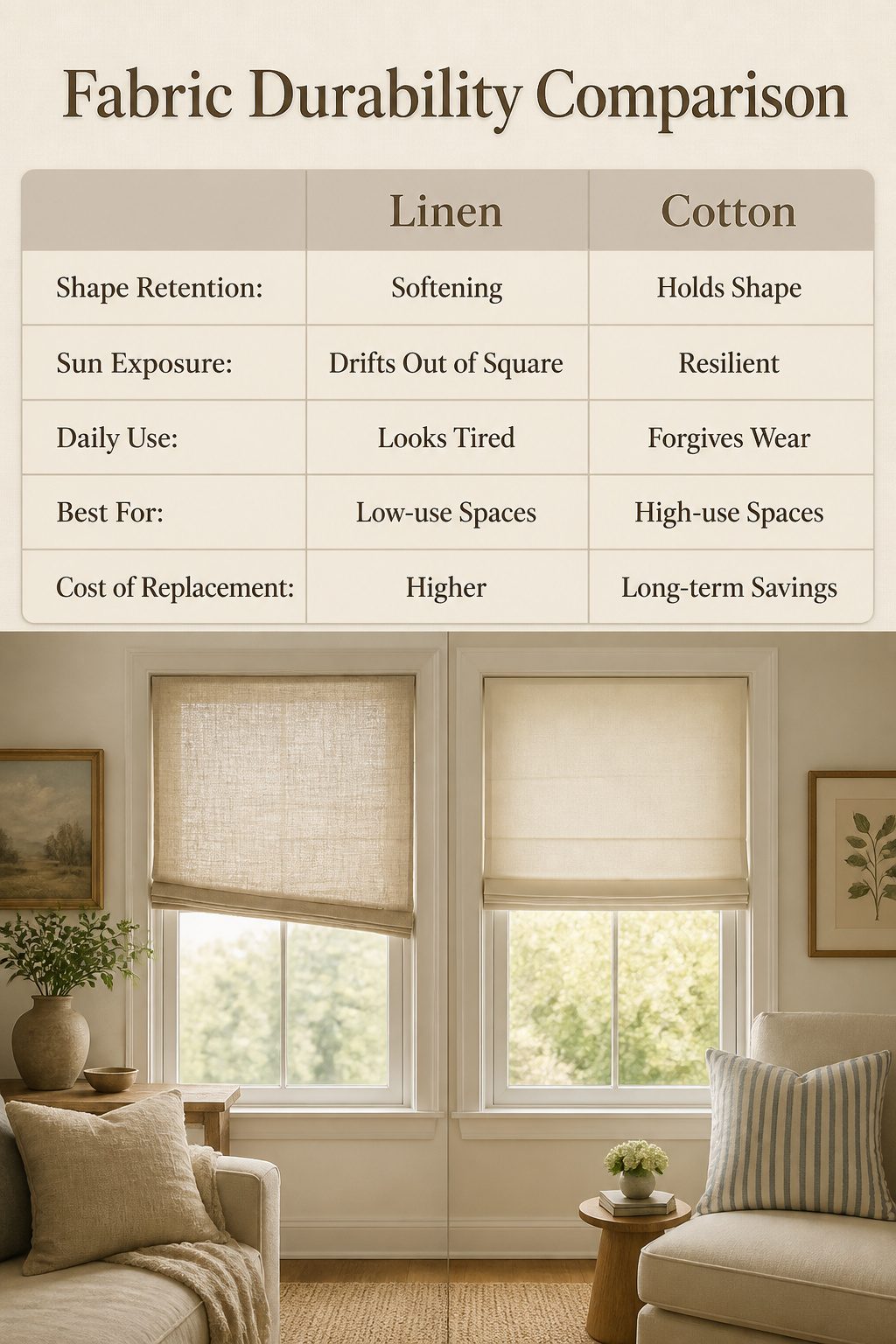
Linen looks relaxed the day it arrives and keeps relaxing until the shade hangs a little crooked.
Interlining gives it body, but over two summers of strong western exposure the fibers still soften and the bottom edge drifts out of square.
I have replaced linen shades in two rooms for that reason alone, not because they tore but because they looked tired.
Cotton and cotton blends hold their shape through daily raising and lowering, which matters more than it sounds when you are adjusting shades twice a day for privacy.
Prints and stripes stay readable, and the fabric does not fight the mechanism. For a kid’s room or any window that sees real use, cotton is the fabric that forgives.
Silk carries a sheen that cotton cannot touch, but sun is its enemy.
Without interlining for protection, the color shifts and the panel thins where the light hits hardest. I keep silk to formal spaces where the shade stays down as display more than function.
Performance fabrics are engineered for fade resistance and stability, the two things that ruin every other material.
In humid regions or on south-facing windows, they are the only choice that does not need replacing inside five years. The upfront cost runs higher, but one set of performance shades outlasts two rounds of linen.
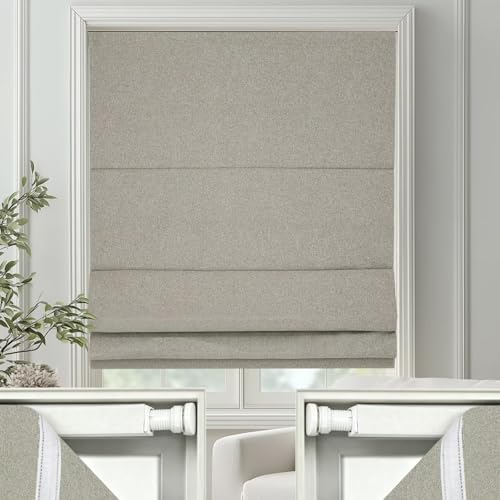
Size instructions and inside mount only: No Drill Roman Shades sizes displayed on the page are the actual shade size you will receive. There are tension rods on both sides of top rail, please measure your window size carefully, and your window width should be 3/8-1/2 inches wider than the shade width for perfect fit. So this 50 inches wide 64 inches high roman shades fit for window width 50 3/8 -50 1/2 inches, window height should be less than 64 inches. Please Note: Minimum 2" depth of window frame required, so this no drill roman shade may not fit for doors.

Contemporary roman shades take roman shades to a whole new level of sophistication. They offer the soft, dimensional elegance of traditional roman shades. You can choose blackout beige liner or unlined light filtering as you desired. Washable and replacable.

【Linen Fabrics】Made from high-quality linen fabric, our light filtering shades are designed to be soft and skin-friendly, transparent to light, opaque to sight. Perfect for creating a cozy and peaceful atmosphere in any room. The fabric is precisely cut with a laser without any rough edges. Linen fabric is predominantly made from natural linen fibers, which are completely natural and odor-free, providing you a more comfortable and enjoyable environment.
Linings and Light Control
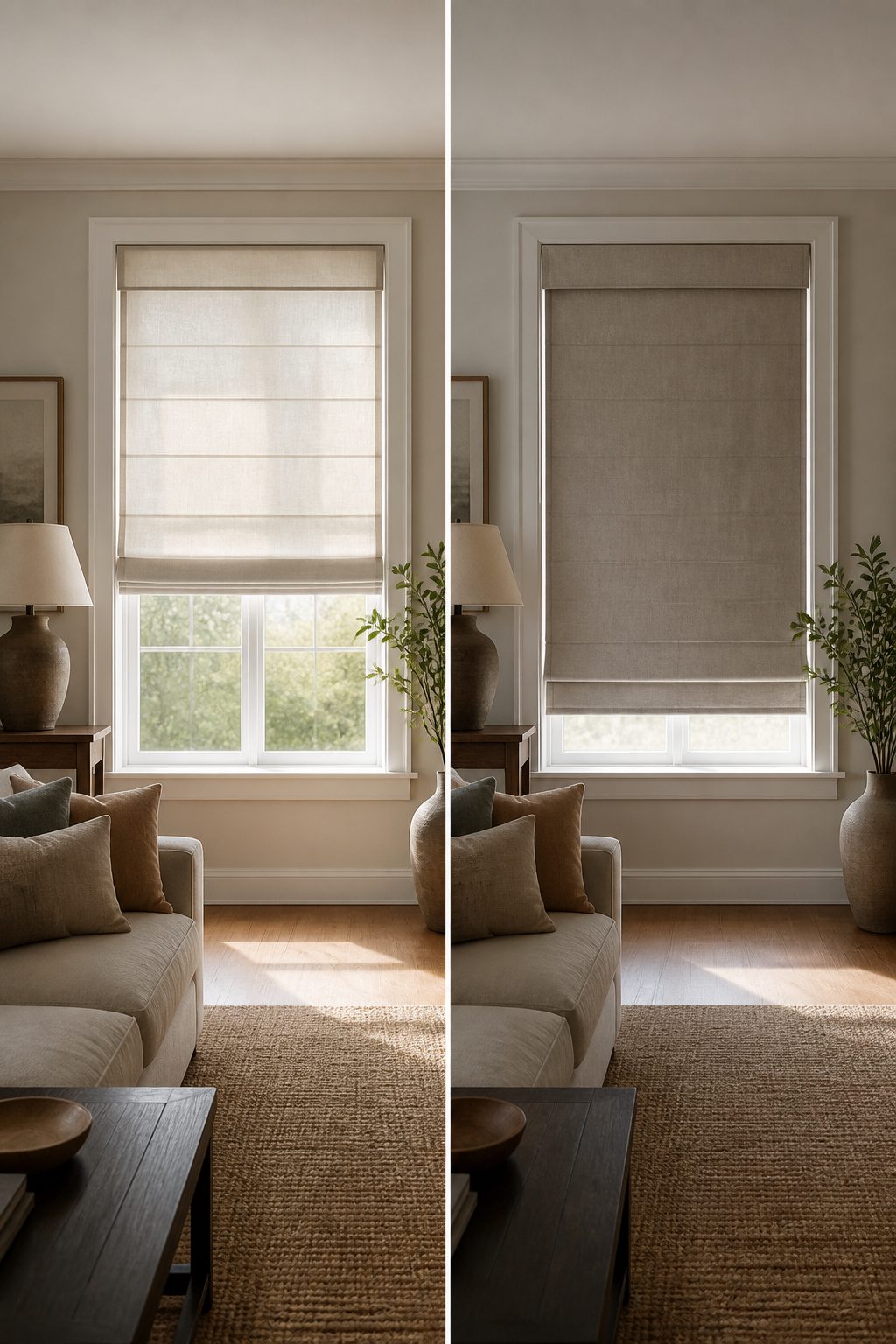
The face fabric on a fabric window shade gets all the attention, but the liner underneath does most of the actual work.
Sheer liners let texture show through and give rooms a soft glow after dark, which sounds romantic until you are trying to sleep across from a streetlight.
Privacy liners cut daytime glare without killing the light entirely, and they are the right call for a living room where you want brightness without living in a fishbowl.
Blackout liners add body to Roman shades, sharpen the folds, and stack slightly taller when raised. They also shift the face color a little since less light pushes back through the cloth.
Window direction matters more than most people think. East-facing bedrooms need blackout unless you enjoy waking up at 5:30 a.m. in June.
West-facing spaces get hammered by afternoon sun, so a privacy liner with side panels or an outside mount stops the edge halo that leaks around the sides.
The liner choice should come from how you use the room, not how the shade looks on the rack.
Lift Systems That Actually Work
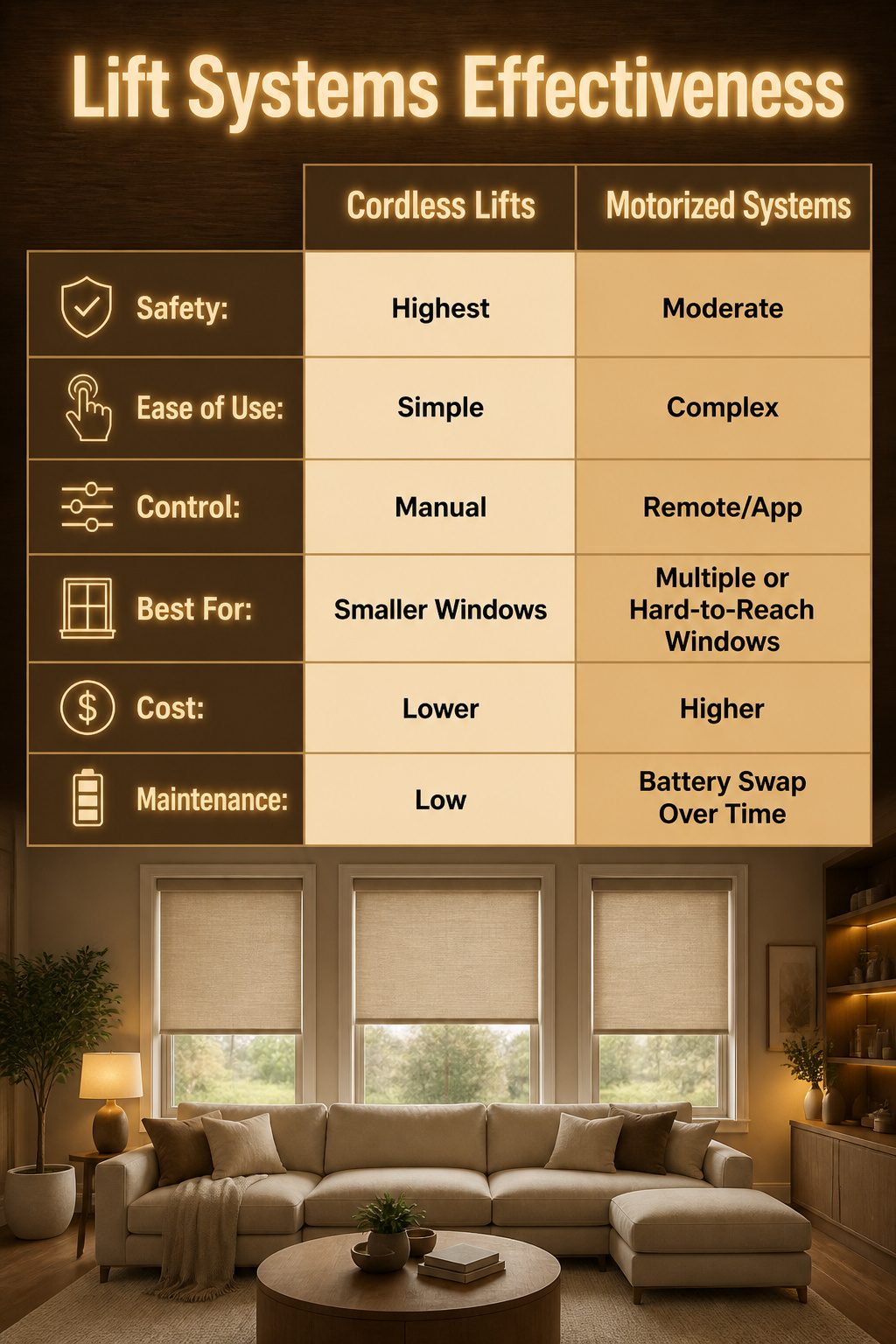
Cordless lifts on fabric window shades remove the dangling cords that snag on toddler hands and vacuum wands alike. A push or pull at the bottom rail is the whole motion, and the shade stays where you let it.
For homes with children or pets, this is the safest option and the one most retailers now stock as standard on smaller windows.
Motorized systems run on rechargeable batteries or wired power and pair with remotes, apps, or smart home voice commands. They make sense for windows above a stairwell, behind a deep sofa, or anywhere you operate three or more shades together.
Programmed schedules can lower afternoon glare before it hits the television and raise them again at dusk without your input. The tradeoff is cost and the eventual battery swap; skip the motor on a window you touch twice a year.
I still run a continuous cord loop on one high window in a stair landing.
The chain is anchored to the wall at four feet, which keeps it taut and out of reach, and the loop gives precise control over a heavy blackout shade that a cordless spring could not lift.
For that one spot, the older technology earns its keep.

These shades are woven by professional artisans from natural wood, reeds, bamboo and grass. Natural material create a natural and tranquil atmosphere. Hemp straw woven fabric is more breathable. It has a transparency that permits outdoor view during daylight hours allows the same view of interiors at night when lights are on, so it function best in living spaces where night time privacy is not a priority.

PREMIUM NATURAL BLENDED FABRIC & DELICATE EDGE WORK: Dense ramie-linen woven fabric features rustic texture. Neat stitched edge trim effectively avoids fraying for long service life, and breathable structure offers gentle light filtering.

Natural Woven Roman Shade: Crafted from premium natural bamboo and ramie woven blend, these cordless roman shades are breathable, elegant, sturdy and durable. Each slat is woven with color-coordinated yarn for a one-of-a-kind textured design.
Measuring for What You Ordered
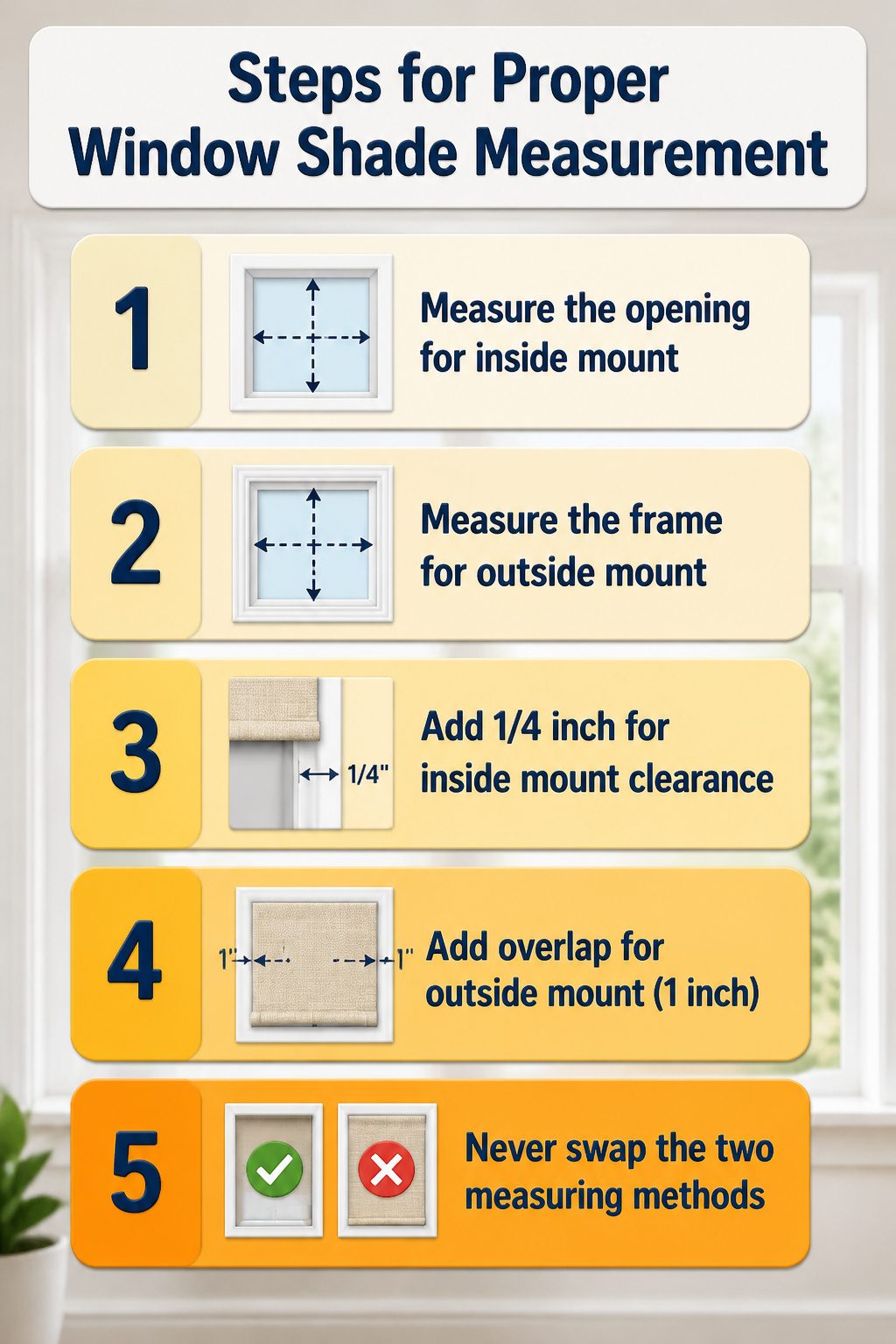
Inside-mount fabric window shades need the window opening itself, not the glass.
The factory takes its own deduction so the shade clears the frame, and adding your own quarter inch on top of that is how you end up staring at a half-inch gap of light on both sides.
Outside mount is more forgiving: you measure the frame and add overlap, usually an inch past the molding on each side.
The quarter inch that saved one of my projects was the extra I tacked onto an outside-mount linen shade for a bathroom with deep, uneven casing.
That tiny buffer pulled the edge past the worst of the shadow line. The same quarter inch ruined a bedroom job where I treated inside mount like outside mount and gave the vendor a frame measurement instead of the opening.
The shade arrived proud of the jambs by just enough that the latch caught every time I tried to lower it. Measure the opening for inside mount, the frame for outside mount, and never swap the two.
Frequently Asked Questions
What are Roman shades?
Roman shades are fabric window coverings that raise into neat, horizontal folds and lower into a smooth panel.
Flat or classic styles work best for daily use in high-traffic rooms, while soft or hobbled folds suit tall windows with solid fabrics.
Relaxed or European styles carry a gentle curve at the bottom for casual spaces, and pleated versions fit formal rooms with their crisp, tailored look.
How do I choose the right fabric for window shades?
Cotton and cotton blends hold their shape through daily raising and lowering, making them the practical pick for busy rooms and kids’ spaces.
Linen looks relaxed at first but softens and drifts out of square within a couple of years. Silk carries a beautiful sheen but fades and thins in direct sun, so keep it to formal spots where the shade stays down.
Performance fabrics are the only choice that lasts five years or more on south-facing or humid windows, though they cost more upfront.
What are the benefits of motorized window shades?
Motorized shades let you raise and lower fabric window shades with a remote, app, or voice command, which matters most for windows behind deep furniture, above stairwells, or anywhere you operate several shades together.
You can program them to cut afternoon glare before it hits your screen and raise again at dusk without touching them. The tradeoff is higher cost and eventual battery replacement; skip the motor on windows you adjust twice a year.