Window shades ideas in 2026 run from $10 temporary paper fixes to wired smart-home systems, and the gap between what you buy and what you actually use comes down to one thing: whether you measured the frame depth before ordering.
Roller shades need 2–3 inches for a clean interior mount; miss that and you are outside-mounting brackets over trim you meant to leave exposed.
1. Roller Shades
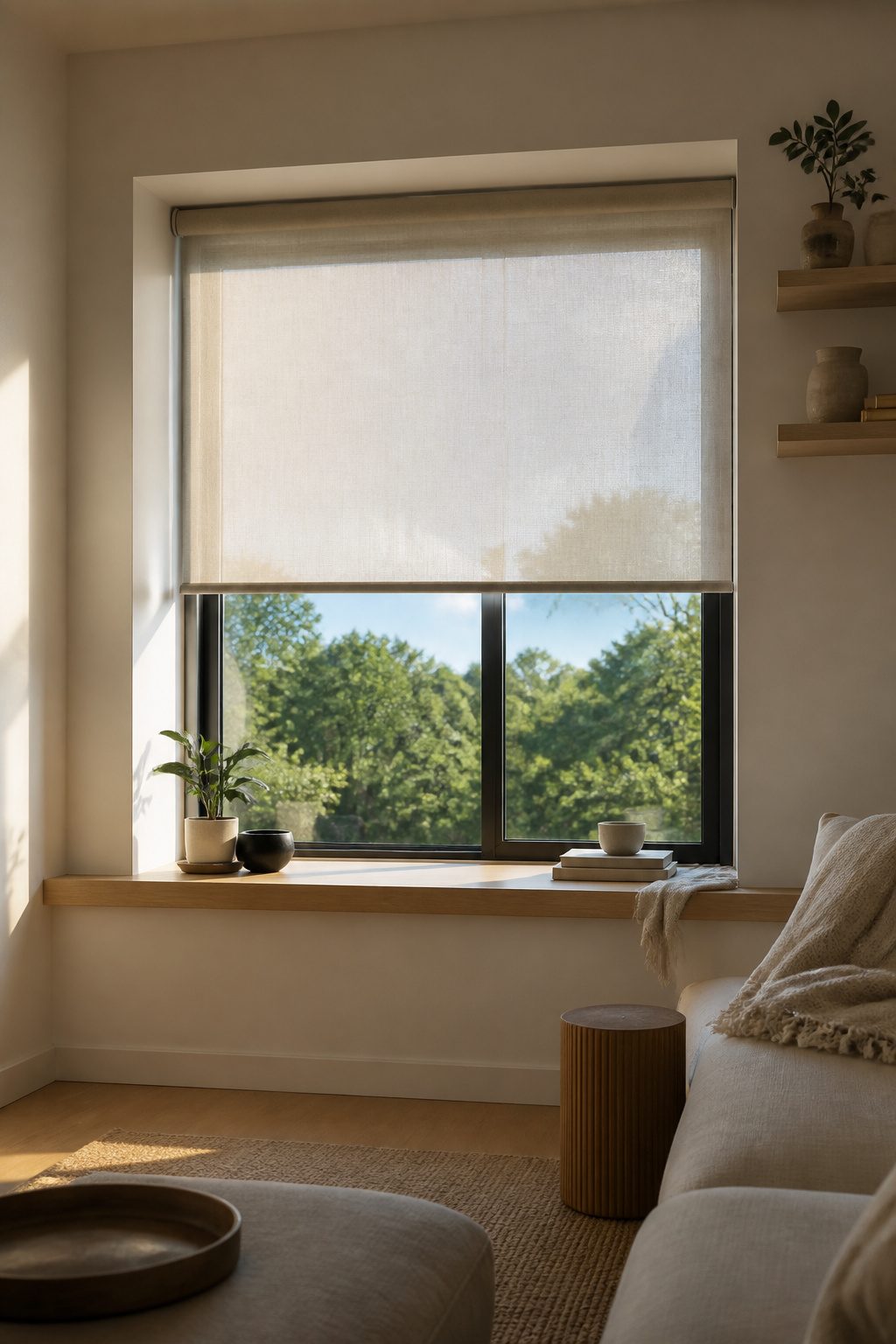
Roller shades are about as close to invisible as a window covering gets.
The fabric sits flat against the glass when it is down, and when it rolls up, the whole thing collapses into a tube roughly the diameter of a soda can.
That small footprint matters in rooms where the window itself is the feature, or where you are working with black-trimmed windows that already read as a deliberate design choice.
The real decision is between light-filtering and blackout fabric. Light-filtering versions soften direct sun without killing the view entirely; blackout is the one to choose for bedrooms, nurseries, or any space where you need the room to go fully dark.
The passages note that some homeowners layer a blackout roller behind drapery panels, which hides the functional shade and keeps the look soft.
Sizing and installation caught me off guard the first time.
These mounts sit inside the window frame, and you need at least 2–3 inches of frame depth for a clean interior mount. My first set measured flush to the glass and I missed the lip of the trim entirely.
The brackets sat crooked until I swapped to an outside-mount bracket instead. Measure depth, not just width and height, before you order.

【Linen Fabrics】Made from high-quality linen fabric, our light filtering shades are designed to be soft and skin-friendly, transparent to light, opaque to sight. Perfect for creating a cozy and peaceful atmosphere in any room. The fabric is precisely cut with a laser without any rough edges. Linen fabric is predominantly made from natural linen fibers, which are completely natural and odor-free, providing you a more comfortable and enjoyable environment.
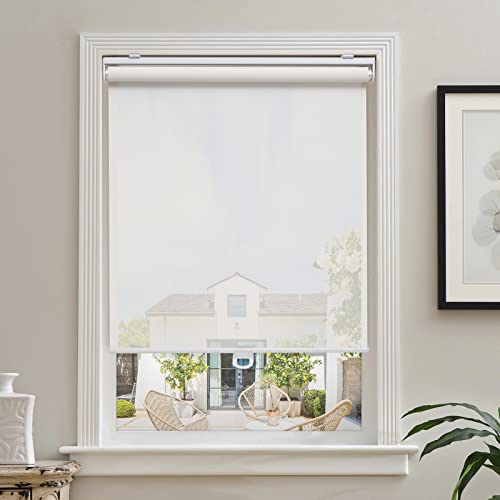
[ECO-FRIENDLY FABRIC ]: Light filtering roller shade is 100% polyester fabric. Good ventilation capability, anti-static, dust-proof and durable. The aluminum bottom rod replaces the plastic bottom rod to improve the overall stability, so that the panel and the bottom are on the same level, not easy to tilt, prevent wind blowing, and give users a better experience.
2. Roman Shades
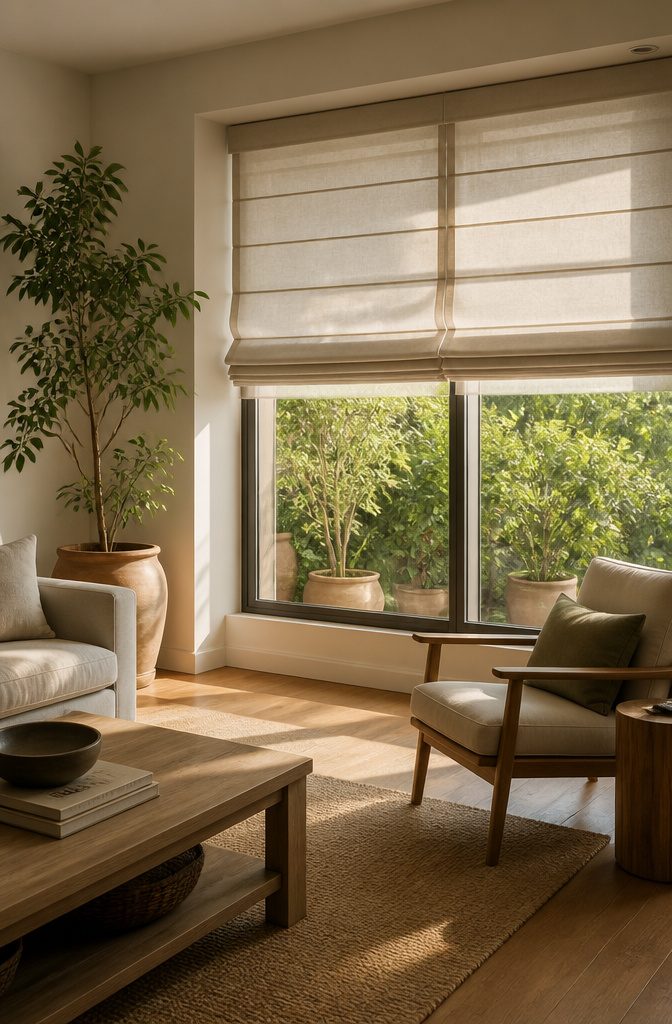
Fabric shades that fold into soft, horizontal pleats bring a warmth that hard vinyl or aluminum simply does not.
Roman shades stack this way by design, and the effect in a living room or bedroom reads more like a finished textile than a window covering you settled for.
What the sources rarely mention is how much volume that folded fabric collects at the top.
A fully raised Roman shade can eat six to eight inches of clear glass, sometimes more depending on the fabric weight and the number of pleats built in.
For a standard window this is a visual nuisance; for a shallow window or one placed high on the wall, it can block meaningful daylight.
Medium-weight cotton or a cotton-linen blend folds most neatly, while upholstery-weight velvet or anything too sheer fights the mechanism and bunches instead of stacking.
The hardware side is where renters often stall. A basic spring-loaded rod or tension mount will not handle the weight once the fabric is doubled over itself in folds.
The shade needs a secure headrail, and if you are mounting inside the frame, the brackets require a minimum depth that older windows may not have.
Ready-made Romans in standard sizes start around $40–$60 per window at big-box retailers, but custom widths climb fast and the lead times stretch past a single weekend.
The no-sew workaround, built from an inexpensive vinyl mini blind and fusible hem tape, lands closer to $15–$25 in materials and solves the width problem for any window the blind skeleton already fits.

【Excellent Material】:Blind Size: 23"W x 72"H, Fabric Size: 22"W x 72"H. Fabric is 100% polyester material fabrics with reinforce thermal insulated coating, feeling soft and smooth. No burrs, strong wear resistance, and easy to clean.Our blackout blinds block 100% of sunlight and UV rays. The thermal backing reduces the loss of room heat and against cold through the windows in winter and summer, helping to reduce your energy bills.
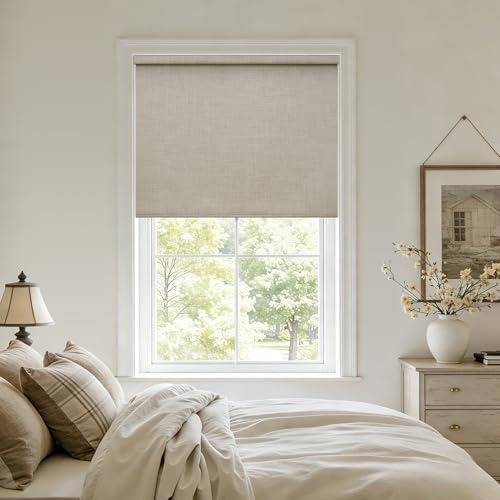
Cordless & Safe by Design: Our cordless shades feature a smooth, free-stop system. Adjust them easily-just push up or pull down to your desired height, and they remain securely and quietly in place. With no loose cords to manage, the design reduces risks and maintains a clean, uncluttered aesthetic, making it ideal for households with children and pets. Experience effortless daily control and enjoy a tidier, more peaceful atmosphere

Create Darkness & Ensure Privacy: Made of 100% light-blocking fabric, our blackout curtains effectively block sunlight and external light, offering reliable darkness and privacy for your bedroom or office.
3. Woven Wood Shades
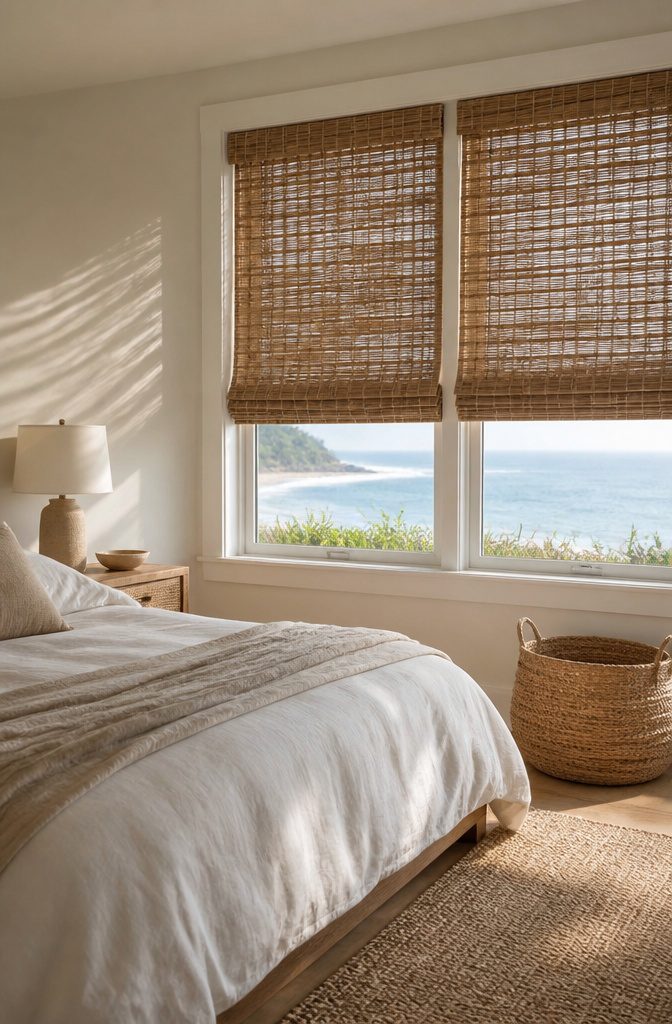
Woven wood shades carry the kind of texture that flat fabric never quite matches.
Bamboo, grasses, and reeds are woven into patterns that vary shade to shade, so the one you hang is the only one like it. Light filters through in a dappled way, enough to warm a room without leaving it exposed.
The relaxed, almost coastal feeling these materials bring works best in living spaces and bedrooms where humidity stays moderate.
In bathrooms or above kitchen sinks, the same organic fibers that look so good will absorb moisture, swell, and eventually warp or grow mildew.
That limitation is real, and it is the reason I would not put them anywhere steam collects.
A liner changes what the shade does.
Without one, the weave stays visible and the glow stays soft. With one, or with a secondary honeycomb shade behind, the same woven wood can darken a room or add insulation.
The dual shade option costs more, but it saves the look when you need function the woven layer alone cannot give.
If your windows face a humid climate, budget for the upgrade or plan to replace them sooner.

【Premium & Sturdy Construction】Crafted from high-quality iron in a sleek silver finish, these roller shade brackets for curtain rods over blinds are built to last. They provide robust support for various window roller shades and roller window blinds, ensuring your window treatments stay securely in place without sagging or falling.

Strong Support: The window shade brackets can easily fix the pulley track, ensuring the normal operation of the roller blind and preventing effectively the roller blind from falling off or loosening.

Strong Support: The window shade brackets can easily fix the pulley track, ensuring the normal operation of the roller blind and preventing effectively the roller blind from falling off or loosening.
4. Cellular Shades
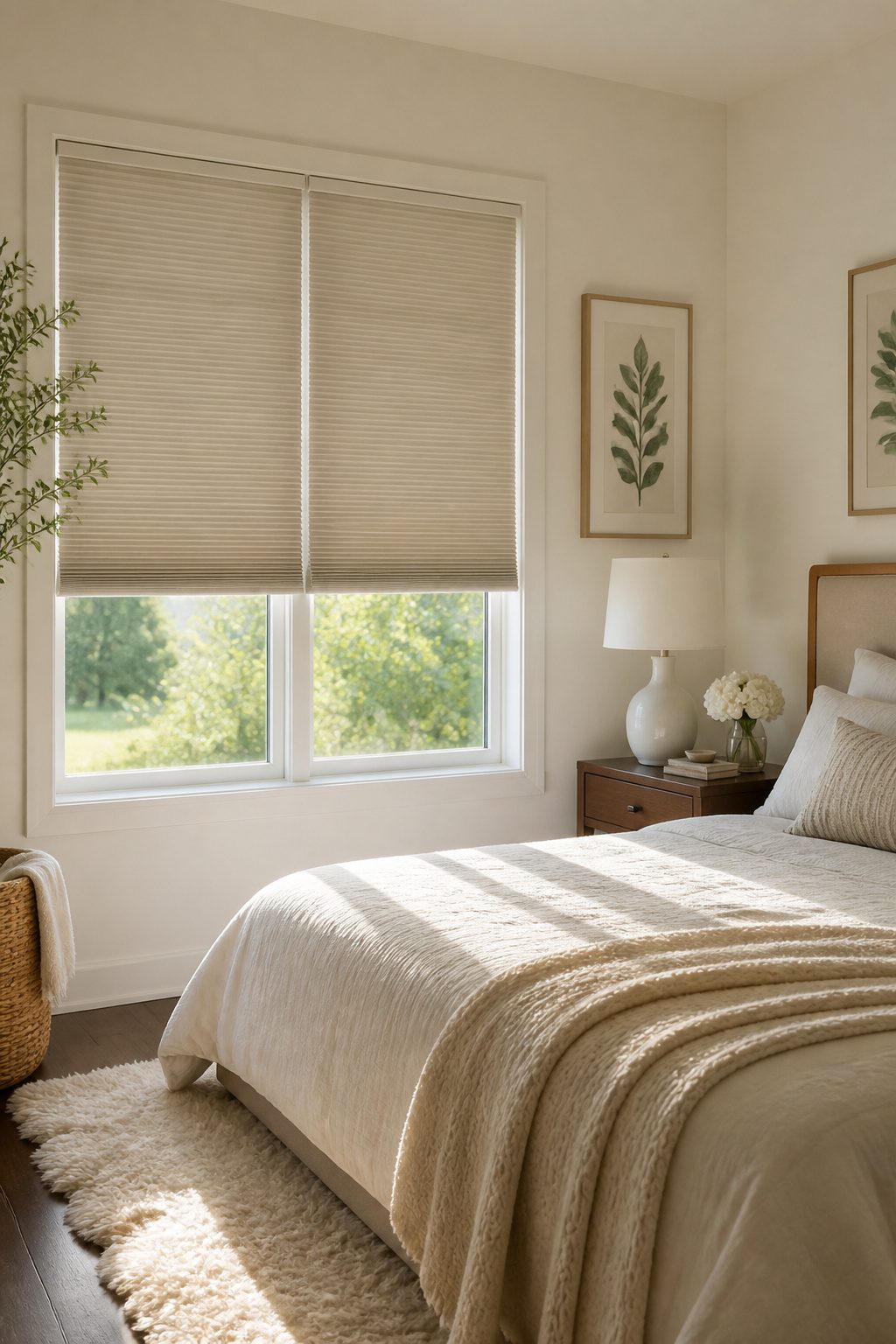
The honeycomb pockets in cellular shades trap air in distinct chambers, and that trapped air is what does the insulating.
In winter it slows heat loss through the glass; in summer it blocks solar gain from warming the room. Energy efficiency is the main reason to buy these, not the look.
Custom cellular shades can run expensive, but off-the-shelf versions still perform the same thermal job for less.
The savings on heating and cooling bills will eventually offset the upfront cost, though how quickly depends on your climate and how many windows you are treating.
For a rental or a first home where you are picking priorities, these make sense if the windows are older or if the room gets direct afternoon sun.
Blackout options exist for bedrooms, and the shades come in enough colors that you are not stuck with white. The pleats stay crisp over time, which matters more than you would think if you are opening and closing them daily.

No Drill Blinds: LazBlinds patented technology No Tools-No Drill system allow it no need to drill any holes on your window frame, great for Renter, Landlord, and Home Buyer. Easy to Install in 30 seconds with no tools-no drill, screws, or brackets. And it can afford maximum 30kg. Fit All Kinds of Walls, like woodiness metope, tile marble, concrete wall and rough tile.

What you will receive: package comes with 4 roman shade cord locks, enough quantity to meet your daily need, fitting for blinds, roman shades and similar window treatments; They are applied to easily open and close the shade by gripping and releasing the cords
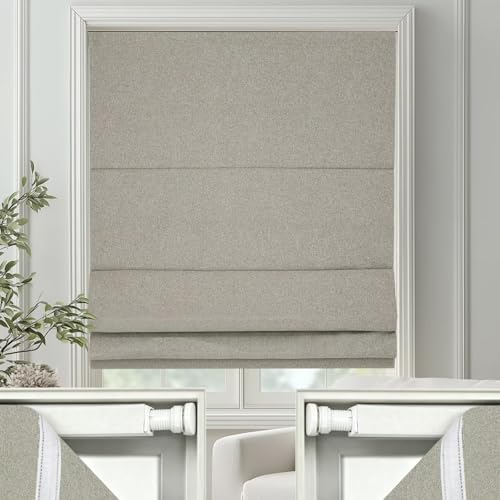
Size instructions and inside mount only: No Drill Roman Shades sizes displayed on the page are the actual shade size you will receive. There are tension rods on both sides of top rail, please measure your window size carefully, and your window width should be 3/8-1/2 inches wider than the shade width for perfect fit. So this 30 inches wide 64 inches high roman shades fit for window width 30 3/8 - 30 1/2 inches, window height should be less than 64 inches. Please Note: Minimum 2" depth of window frame required, so this no drill roman shade may not fit for doors.
5. Zebra Shades
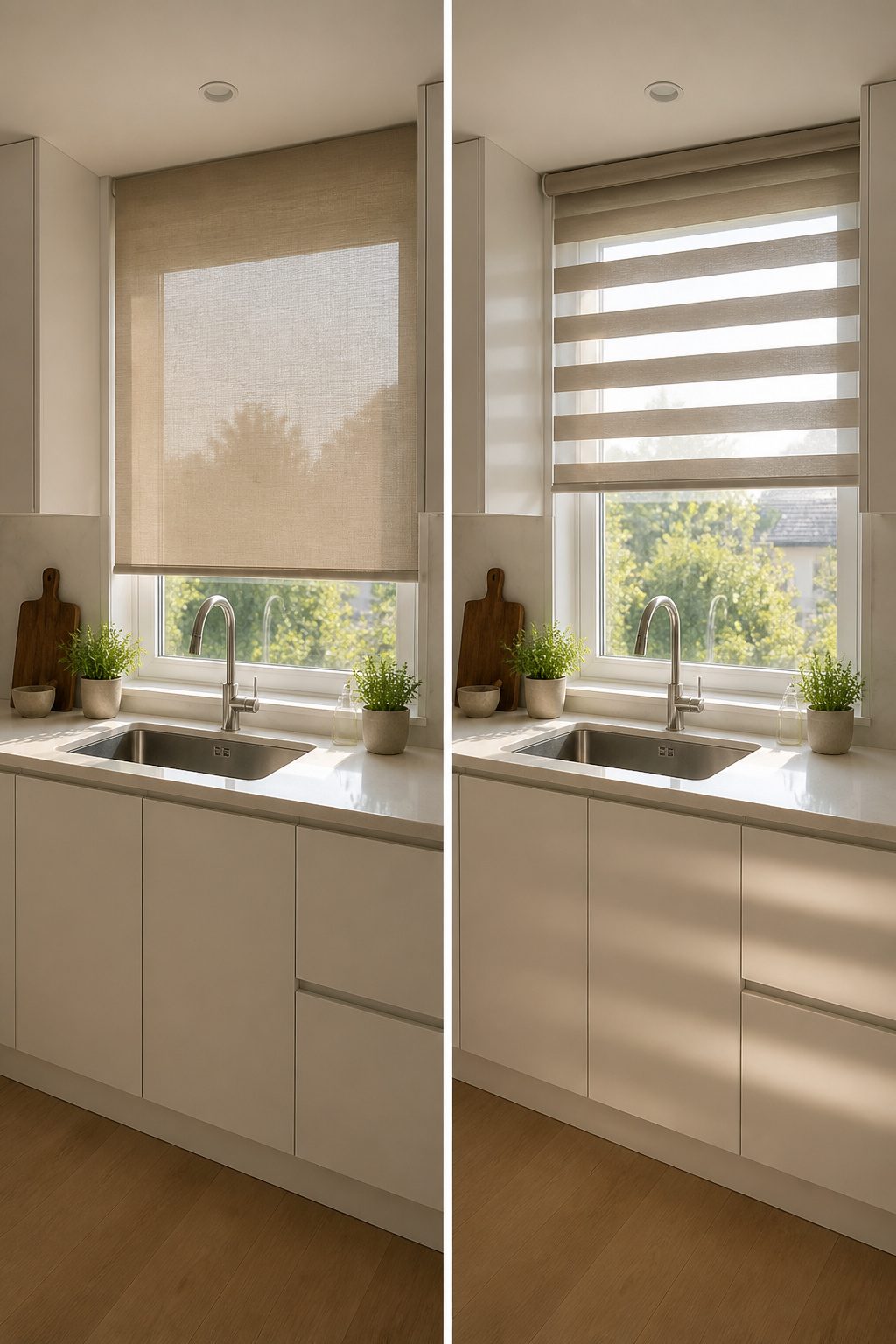
Zebra shades run one continuous loop of fabric with alternating sheer and solid stripes. Pull the cord and the stripes shift past each other, letting you line them up for full view, full privacy, or something between.
That middle setting is where they earn their keep in a west-facing kitchen or a street-level bedroom, where you want light without the fishbowl feeling.
The mechanism is simple on paper and finicky in practice. The stripes have to stay parallel across the full width or the whole shade looks like a printer that jammed mid-page.
I have wrestled with this twice, once after a rushed Saturday install where I skipped checking the headrail level and spent the next month watching the solids drift half a stripe out of register by the time they reached the sill.
A small level and five extra minutes at the top save an hour of staring at crooked lines.
They read modern without trying hard, which makes them a safer bet for a first home than for a rental you will leave in two years.
The hardware is more involved than a basic roller, and the fabric is one piece, so damage means replacing the whole shade rather than a panel.
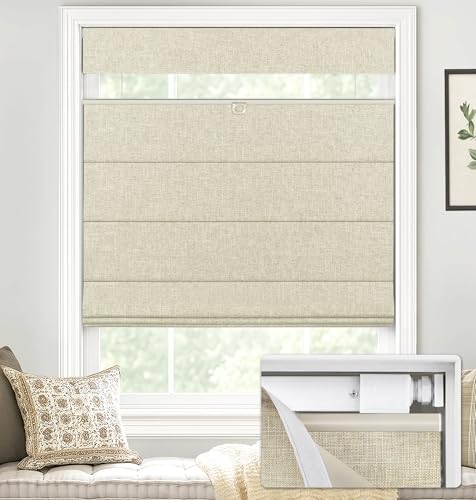
Inside Mount ONLY. For better internal installation, a standard 1/4 inch deduction is made to the shade width. The actual blind size is 19.75"W x 64"H, the unique spring rod can extend 1 inch in total, allow the blind to fit for window width 19.85 - 20.75 inch, blind height can adjust from 0" to 64". (Pls Note) Minimum 1 1/5" depth of window frame required for inside mount.

No Drill Easy Installation: Our no drill Top Down Bottom Up roman shades for windows feature a drill free design, Installation without drilling or damaging walls, quick installation in 30 seconds. The cordless design not only simplifies installation but also eliminates the hassle of traditional pull cords.for its installation ease, you’ll quickly own stylish and functional TDBU roman shades, enjoying a stress free shopping and setup experience.

【Top Down Bottom Up Design】: Enjoy flexible privacy and natural light control by lowering the shade from the top while keeping the bottom covered, or raising it from the bottom like a traditional shade. Adjust your window exactly the way you want throughout the day.
6. Sheer Shades
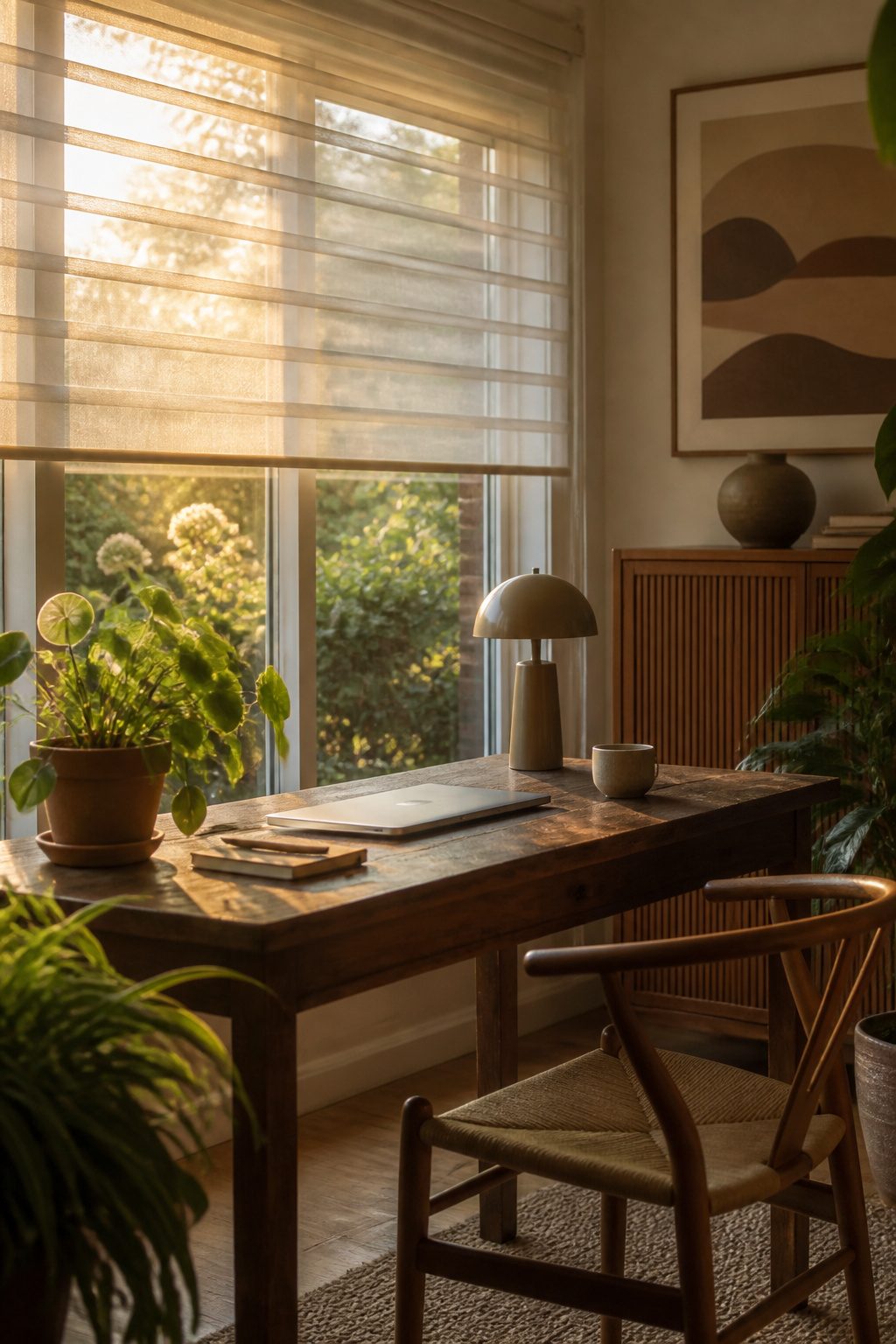
Soft fabric vanes suspended between two sheer layers let you tilt for gentle light control without killing the view entirely.
The UV blocking is real, which matters if you’ve ever watched a hardwood floor bleach out where sun sits all afternoon.
Privacy collapses after dark.
The same sheer that softens daylight becomes a lit stage from inside once lamps go on. I’ve seen this in a friend’s living room: beautiful golden glow at 4 p.m., fishbowl by 8 p.m.
Bedrooms are out unless you layer something behind. Bathrooms, same problem.
The rooms where sheer shades actually work are ones where you spend daylight hours and do not need to undress or sleep: a home office facing greenery, a dining room where the view matters more than the glare.
Living rooms can work if you close them up after sunset or add drapes you actually pull.
Product names like Silhouette and Pirouette float around these, but the mechanic is what counts.
The vanes tilt closed, and when they do, you get privacy back. The gap between "tilted open for glow" and "closed for night" is the whole operation, and forgetting to make that switch is the mistake that undoes the install.

[Innovative Free-Stop System]: Experience effortless control with our light filtering roller shade's innovative free-stop system. Easily adjust the shade to your desired height, allowing for precise light control and privacy, without the hassle of traditional cords or chains.

[Innovative Free-Stop System]: Experience effortless control with our light filtering roller shade's innovative free-stop system. Easily adjust the shade to your desired height, allowing for precise light control and privacy, without the hassle of traditional cords or chains.

【Excellent Material】Made of imported 100% Polyester. Light filtering, good ventilation, anti-static, dust-proof and durable. Dual-layer fabric for daylight filtering and full night privacy.
7. Blackout Shades
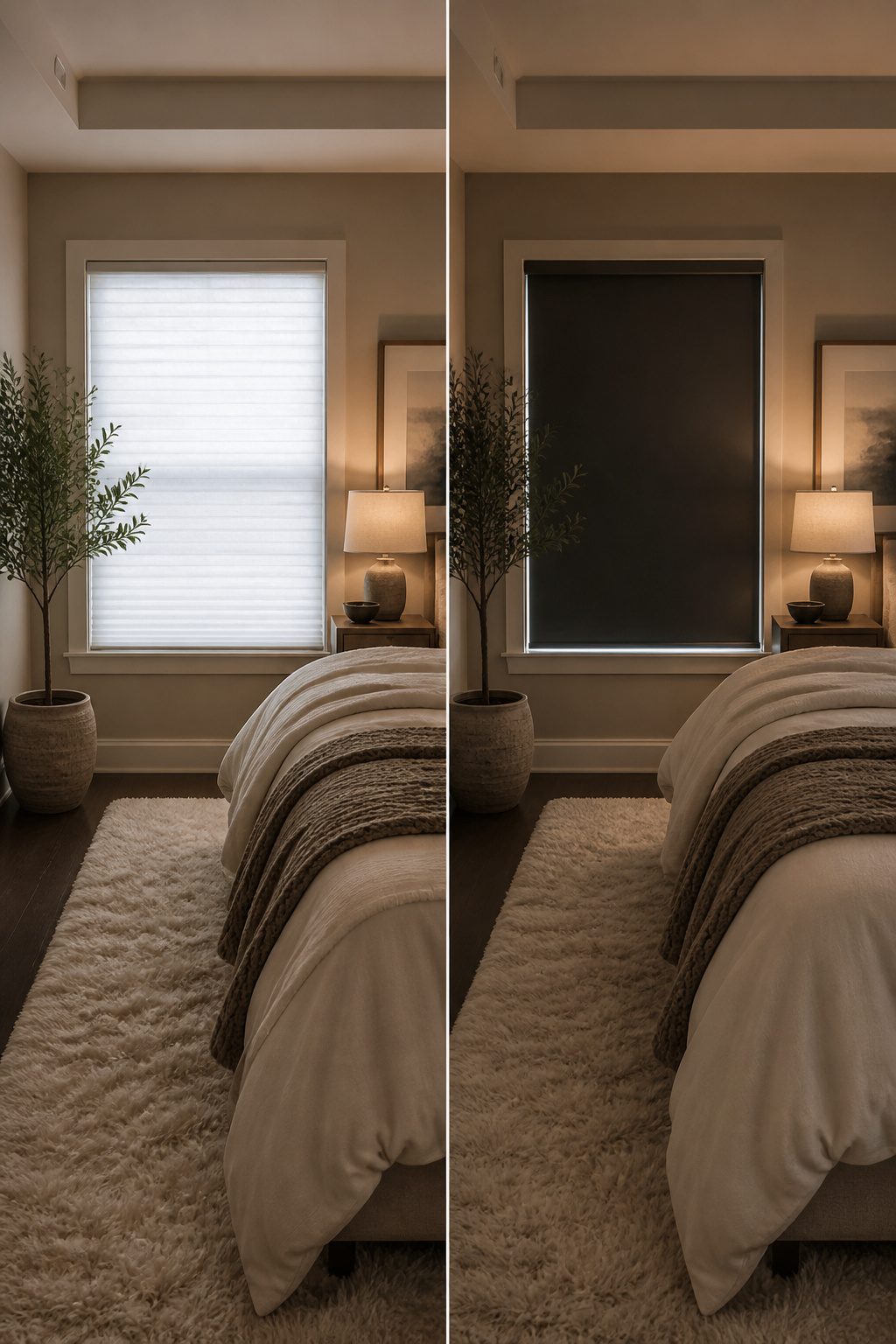
Light that slips past the edges of a shade is what separates a dim room from one that actually lets you sleep.
Blackout materials block nearly all incoming light through the fabric itself, but the gap around the mounting is where the morning still gets in.
Interior mounting needs at least 2–3 inches of window sill depth to sit tight enough to matter; anything less and you’re trading darkness for convenience.
Roller and cellular both come in blackout builds.
Cellular shades add sound and temperature insulation on top of the light block, which is why I tend to push that direction for bedrooms and media spaces where the goal is eliminating distraction, not just dimming it.
The shade itself won’t win beauty contests, but layered behind a panel it disappears into the job.
Your actual blackout performance depends more on how precisely you measure the frame than on which brand you pick.
A quarter inch of play at the sides is the difference between night-shift sleep and that grey half-light that keeps you hovering just below rested.

Crafted from high-quality, soft fabric, these roller shades feature a smooth touch and robust durability. The material is thick, wrinkle-resistant, and built to last, making it ideal for long-term daily use.

[Innovative Free-Stop System]: Experience effortless control with our blackout roller shade's innovative free-stop system. Easily adjust the shade to your desired height, allowing for precise light control and privacy, without the hassle of traditional cords or chains.

【Product Details】: Blind Size: 23"W x 72"H, Fabric Size: 22"W x 72"H. Fabric is 100% blackout. Feeling soft and smooth.Note: Fabric width is 1" narrower than total width.Our cordless roller blind fabric is of high quality, more durable and fade resistant than the inferior fabrics on the market.
8. Dual Shades
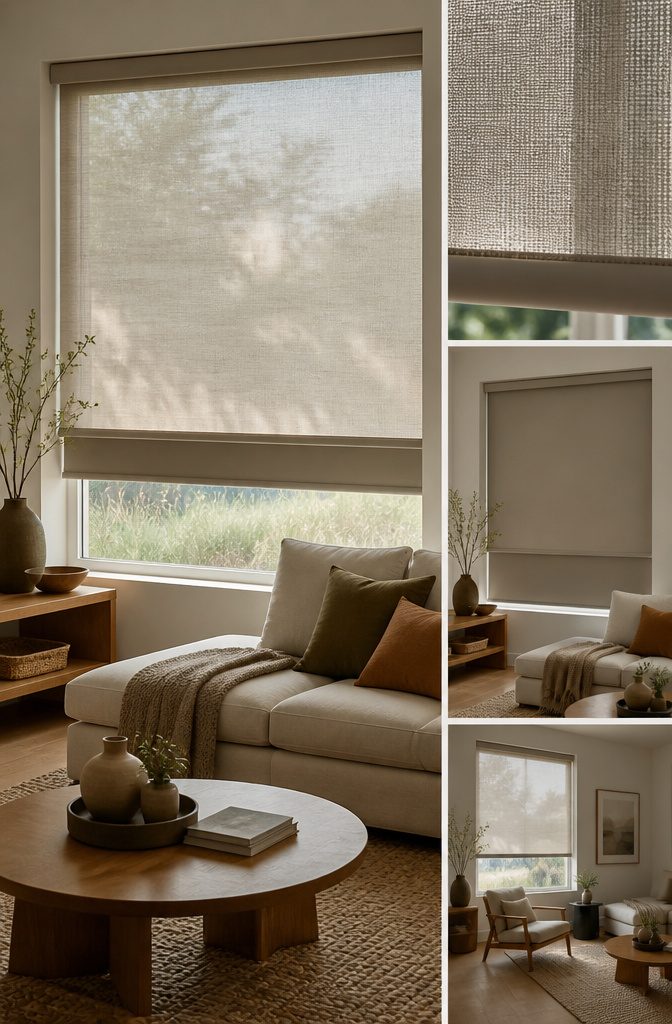
Dual shades stack a light-filtering layer and a room-darkening layer into one headrail, so the same window can soften daylight or block it entirely without swapping hardware.
The product categories that offer this setup include roller shades, roman shades, cellular shades, sheer shades, and woven shades, with some woven wood lines pairing the natural weave with a secondary honeycomb shade for added insulation.
The headrail bulk is the trade you make for that convenience. Two shades means a deeper bracket and more weight at the top of the frame, which can crowd shallow window recesses or interfere with trim.
Whether the daily flexibility justifies the cost and complexity depends on how often you actually switch modes.
A bedroom where you need darkness at 6 a.m. and filtered light by noon earns it; a living room you only adjust seasonally probably does not.
9. Motorized Shades
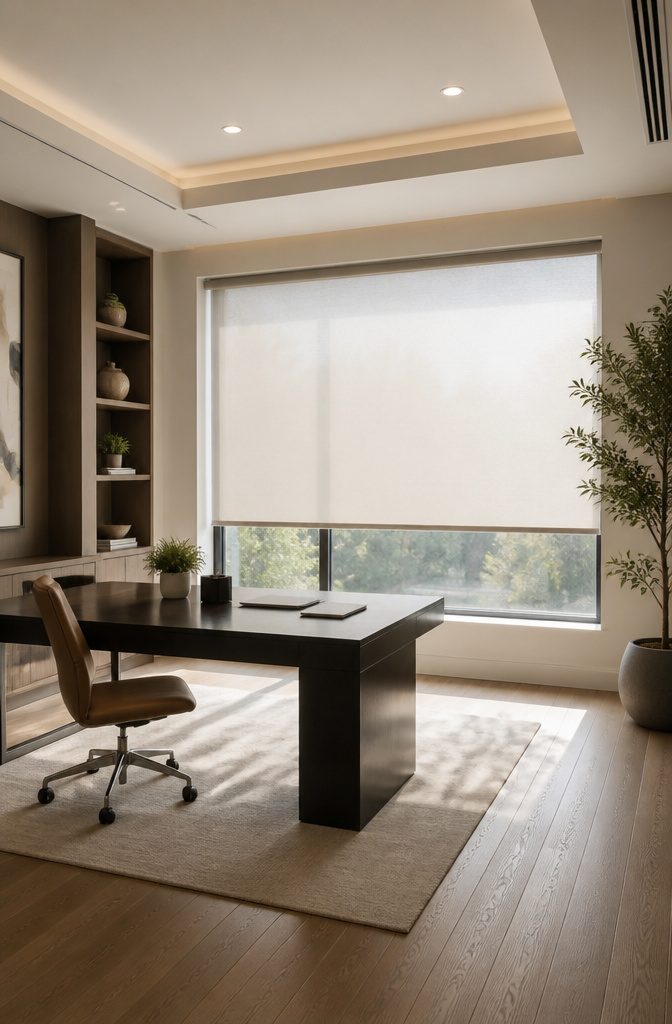
Motorized shades sit at the point where window treatment meets daily habit.
The scheduling is what actually changes how a room feels: east-facing shades lower themselves before glare hits the desk, west-facing ones rise an hour before sunset so the light comes in sideways instead of head-on.
Smart home integration means that schedule can shift with sunrise times through the year, or respond to voice commands when hands are full.
Battery power versus wired installation is the choice most people stall on.
Battery motors keep the project weekend-scale, no electrician needed, but the charge cycle becomes part of your household rhythm. Wired motors disappear into the wall and stay disappeared, though they usually need professional installation and a junction box within reach.
The question worth asking upfront is what happens when the motor fails.
A shade with a dead motor is just a heavy rectangle at the wrong height. Some brands design for motor replacement without removing the whole shade; others treat it as a full-unit swap.
Ask before you buy whether the motor module comes out separately, because the difference is between a $40 part in five years and a whole new shade.
Size instructions and inside mount only: No Drill Roman Shades sizes displayed on the page are the actual shade size you will receive. There are tension rods on both sides of top rail, please measure your window size carefully, and your window width should be 3/8-1/2 inches wider than the shade width for perfect fit. So this 34 inches wide 64 inches high roman shades fit for window width 34 3/8 - 34 1/2 inches, window height should be less than 64 inches. Please Note: Minimum 2" depth of window frame required, so this no drill roman shade may not fit for doors.
Size instructions and inside mount only: No Drill Roman Shades sizes displayed on the page are the actual shade size you will receive. There are tension rods on both sides of top rail, please measure your window size carefully, and your window width should be 3/8-1/2 inches wider than the shade width for perfect fit. So this 32 inches wide 64 inches high roman shades fit for window width 32 3/8 - 32 1/2 inches, window height should be less than 64 inches. Please Note: Minimum 2" depth of window frame required, so this no drill roman shade may not fit for doors.
Size instructions and inside mount only: No Drill Roman Shades sizes displayed on the page are the actual shade size you will receive. There are tension rods on both sides of top rail, please measure your window size carefully, and your window width should be 3/8-1/2 inches wider than the shade width for perfect fit. So this 33 1/2 inches wide 50 inches high roman shades fit for window width 33 7/8 -34 inches, window height should be less than 50 inches. Please Note: Minimum 2" depth of window frame required, so this no drill roman shade may not fit for doors.
10. Layered Shades with Curtains
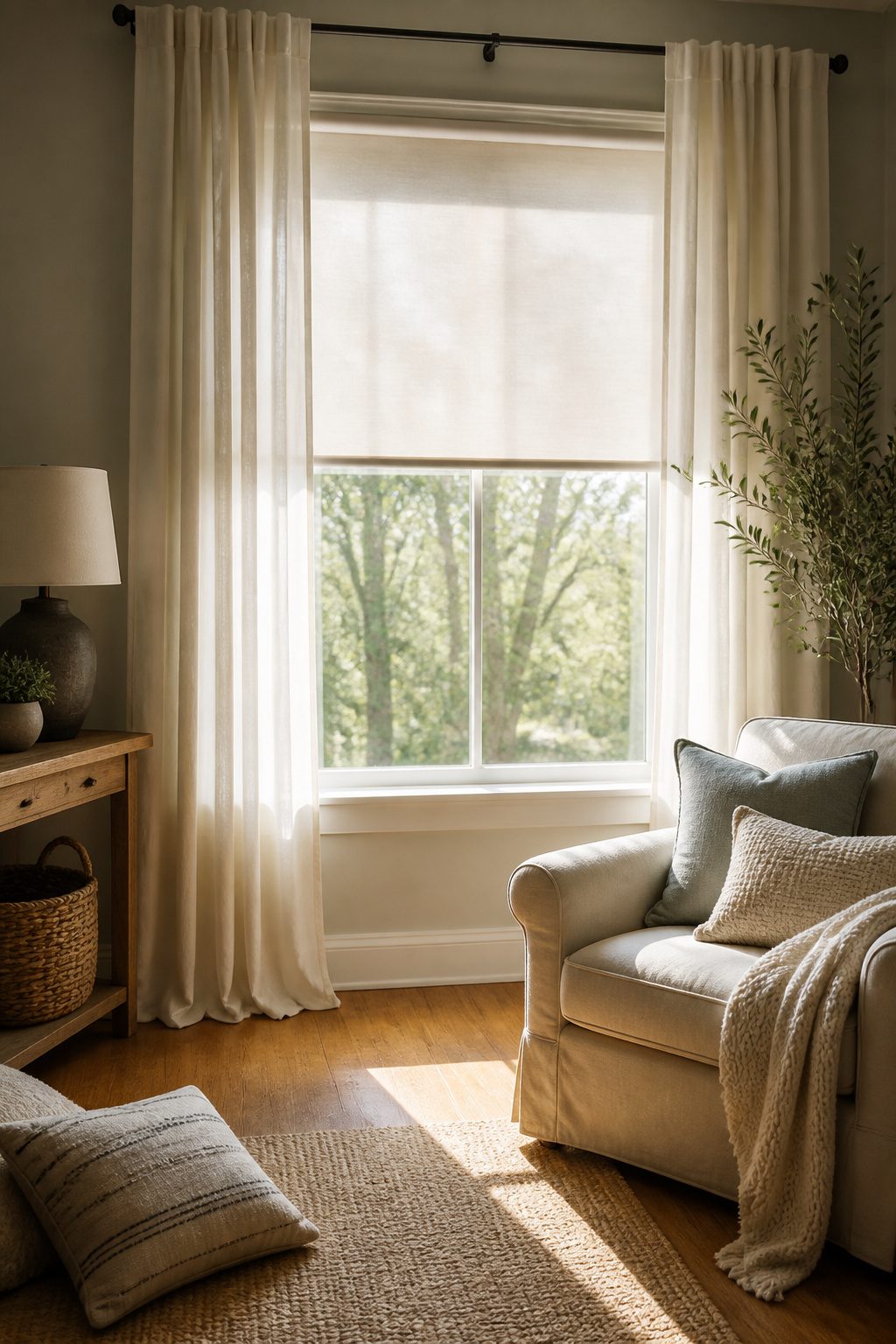
A roller shade mounted inside the window frame, left bare, looks exactly like what it is: a cheap apartment fix.
The fix is a curtain rod hung 12 inches past the frame on each side, which lets the drapery stack clear of the glass and tricks the eye into reading a wider window. Wall space is the catch.
That 24 inches of extra width, plus the stack depth of two panels, needs a flat run of wall without switches or vents. I have seen people mount the rod anyway and end up with fabric bunched over a thermostat.
For hardware, expect to spend $40 to $80 on a basic steel rod and brackets that can handle the span without sagging. The shade still does the work, privacy and light control, while the curtains add color and softness.
Two ways to play the header style: a grommet gives a cleaner line that reads modern, while a rod pocket or back-tab softens further but slides less smoothly.
The grommet wins if you are adjusting the panels daily; the pocket is fine for treatments that stay mostly decorative.
Either way, buy panels long enough to kiss the floor, not hover an inch above it, that gap is where the cheap shows.
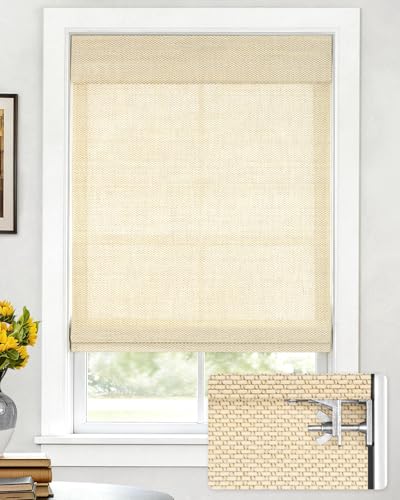
Inside Mount ONLY. For better internal installation, a standard 3/8 inch deduction is made to the shade width. The actual blind size is 19 5/8" W x 48" H, the metal brackets at both ends can extend 1 inch in total, allow the blind to fit for window width 19.7-20.7 inch. (Pls Note) Minimum 1 1/2" depth of window frame required for inside mount.

Important Inside Mount Measuring Instructions: This bamboo shade is the exact size you order - no deductions are made. Measure the width across the top, middle, and bottom of window. Ensure your window measures 30.25" - 31" wide for a 30" wide bamboo shade. This allows proper fit with minimal light gaps.See our images for a simple guide to measuring to get the ideal fit and coverage for your windows.
【Top Down Bottom Up Design】: Enjoy flexible privacy and natural light control by lowering the shade from the top while keeping the bottom covered, or raising it from the bottom like a traditional shade. Adjust your window exactly the way you want throughout the day.
What Each Shade Actually Does
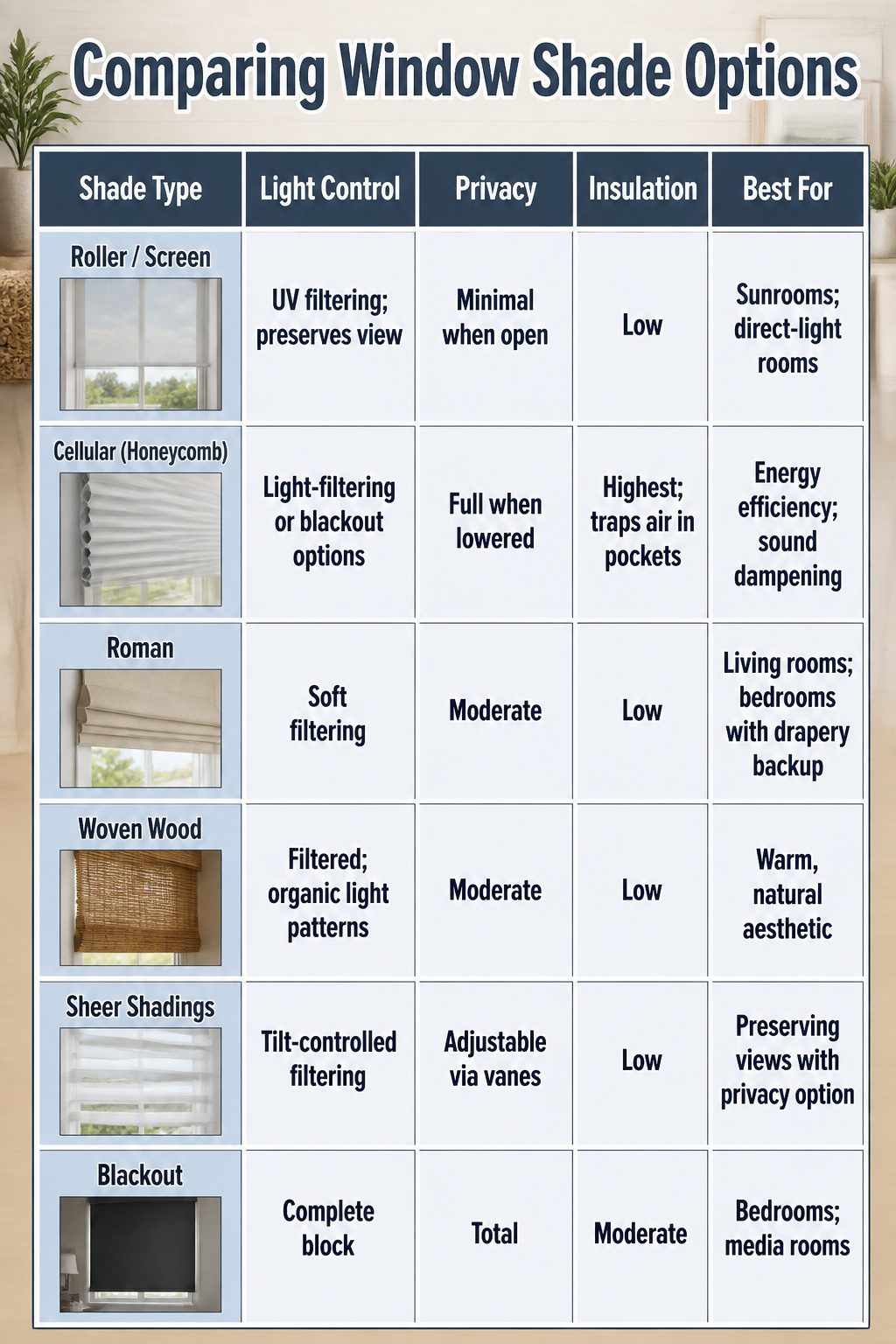
The difference between a shade you tolerate and one you actually use comes down to what it blocks and what it lets through.
Roller and screen shades keep UV off your floors and artwork while preserving the view, which makes them the default for sunrooms and any room that gets direct light.
Cellular shades, with their honeycomb pockets, trap air and add insulation for both temperature and sound; that construction is why they rank as the most energy-efficient option.
Roman shades and woven woods filter light softly but do not seal tight to the frame, so they give you privacy without full blackout.
Sheer shadings split the difference: tilt the vanes and you get privacy, open them and you keep the view.
For bedrooms and media rooms, blackout shades are the straightforward choice. They stop light completely, give total privacy, and cut heat gain from direct sun.
Layering any pull-down shade behind drapery panels gets you the same control with more flexibility; that is the setup that worked in my daughter’s room, where the honeycomb blackout behind fabric panels disappeared visually but handled the function.
| Shade Type | Light Control | Privacy | Insulation | Best For |
|---|---|---|---|---|
| Roller / Screen | UV filtering; preserves view | Minimal when open | Low | Sunrooms; direct-light rooms |
| Cellular (Honeycomb) | Light-filtering or blackout options | Full when lowered | Highest; traps air in pockets | Energy efficiency; sound dampening |
| Roman | Soft filtering | Moderate | Low | Living rooms; bedrooms with drapery backup |
| Woven Wood | Filtered; organic light patterns | Moderate | Low | Warm, natural aesthetic |
| Sheer Shadings | Tilt-controlled filtering | Adjustable via vanes | Low | Preserving views with privacy option |
| Blackout | Complete block | Total | Moderate | Bedrooms; media rooms |
Energy Savings by Shade Type
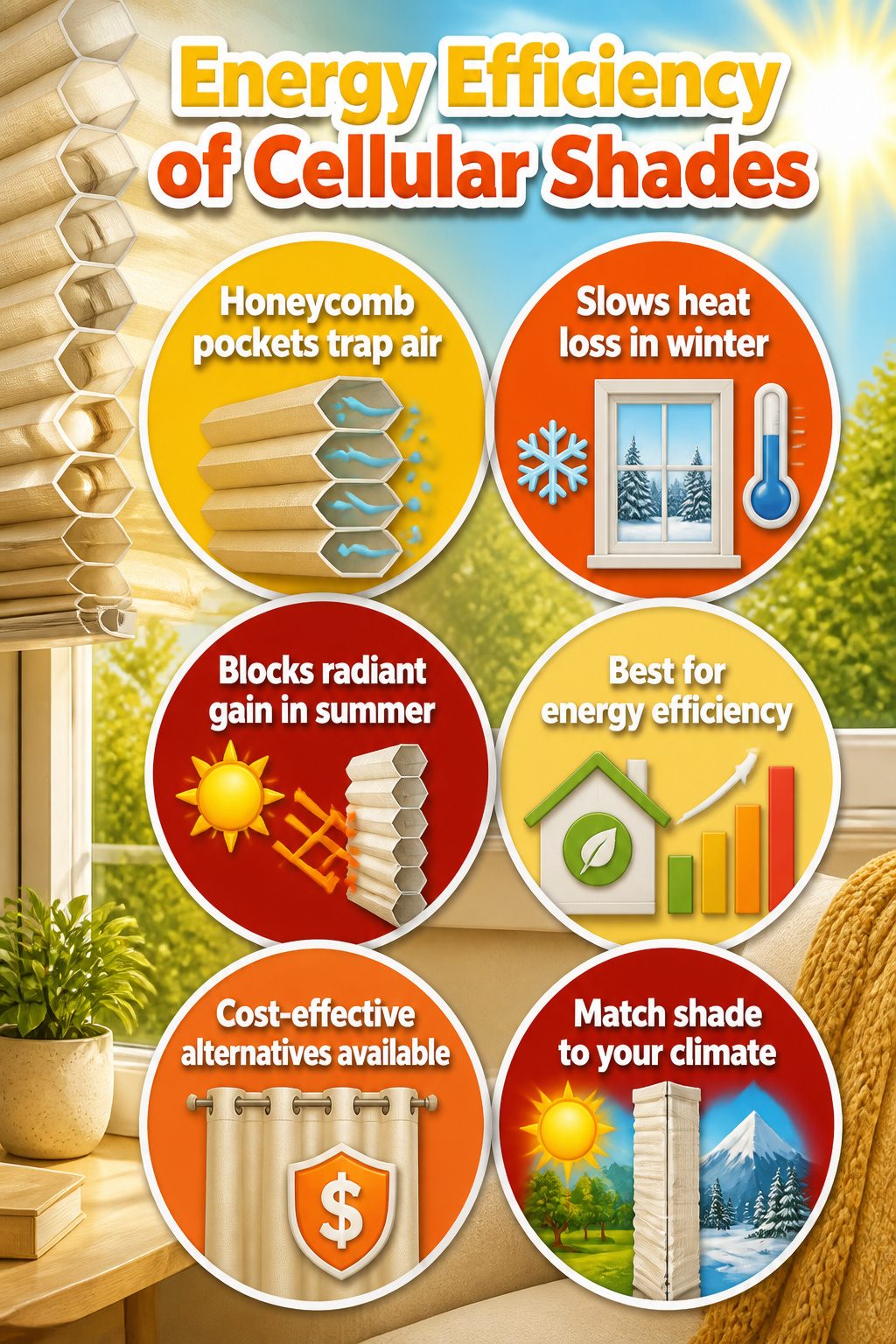
Cellular shades trap air inside honeycomb-shaped pockets, and that trapped air is what actually does the insulating. In winter, the barrier slows heat loss through the glass; in summer, it blocks some of the radiant gain coming in.
The difference is real enough that manufacturers like Hunter Douglas have built entire product lines around it, with Duette Honeycomb Shades as the flagship and even a Sonnette Cellular Roller Shade for people who want the roller look with the same pocket construction.
The rest of the shade types make softer claims. Roller shades, even blackout ones, are a single layer of fabric against the glass; they cut light and UV but do not create that dead-air gap.
Woven wood and Roman shades are thicker than a bare window, yet without engineered pockets they are more decorative barrier than thermal one.
A thermal blackout liner added to existing curtains gets closer to cellular performance for less money, though it still misses the structured air cells that make honeycomb shades the standout.
What convinced me, reading through the product descriptions and efficiency claims, is that the cooling-season benefit matters more for south- and west-facing rooms where the sun pounds the glass.
For north-facing windows in a heating-dominated climate, the gap between cellular and a heavy lined curtain narrows. Match the shade to the season you actually fight.
DIY Options Under $50
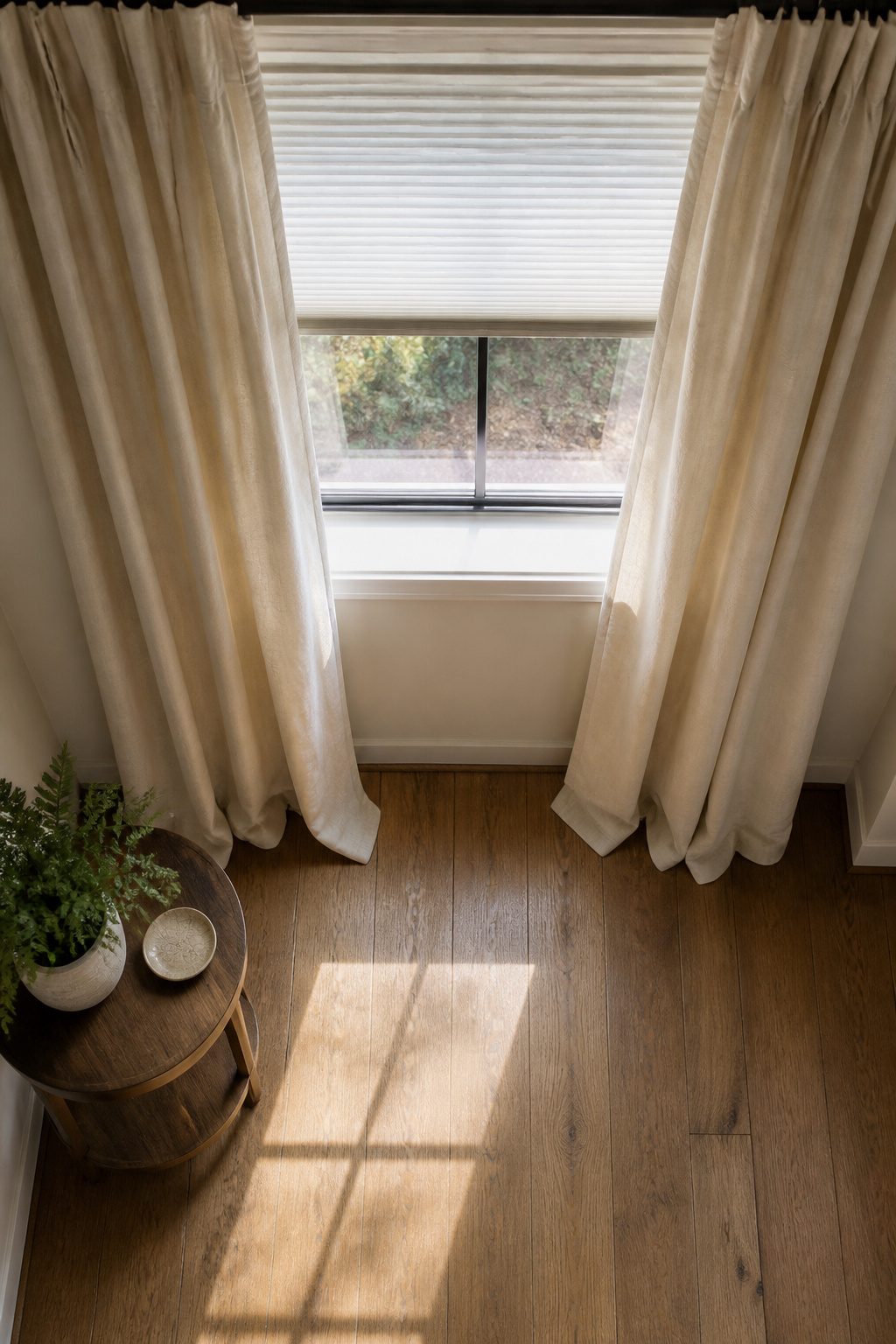
Temporary pleated paper shades are the cheapest privacy fix going, often under $10 per window. You cut them to width with scissors and stick them to the frame with the pre-attached adhesive strip.
They look like the placeholder they are, so pair them with floor-length curtain panels hung high and wide to hide the cheap shade behind something that reads expensive.
The panels do the visual work; the paper shade does the privacy work until you upgrade.
A cornstarch-and-water paste can also frost glass directly with lightweight fabric or lace, peeling off later with warm water and no damage. Either approach buys you time and coverage for the cost of a takeout lunch.
Smart Home and Sustainable Materials
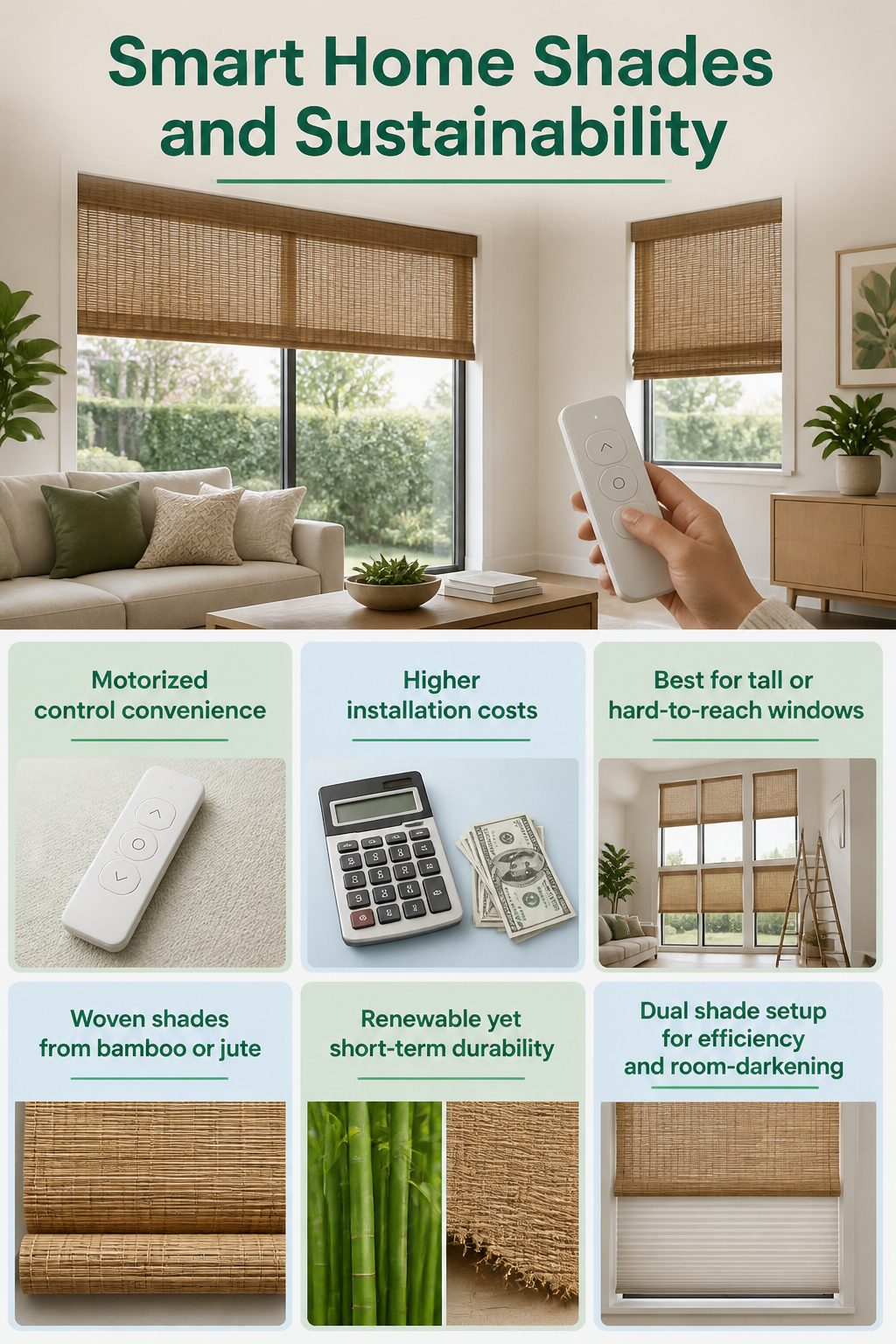
Motorized shades sit at the intersection of real convenience and real cost.
Hands-free control and scheduling through smart-home integration work best on tall windows or large sliders where reaching the shade itself is awkward, but the hardware and installation premium only makes sense if you hit those windows daily.
For a rental or a first home where you might swap treatments in three years, the upgrade is money that does not travel with you.
Woven wood shades made from bamboo or jute carry the same tension. The texture and warmth are genuine, and the weave variations let you dial the light from filtered glow to near-blackout with a liner added.
A dual shade setup, pairing the woven wood with a secondary honeycomb layer, adds energy efficiency and room-darkening without giving up the look.
Whether that justifies the higher price against standard cellular or roller options depends on how long you will keep them.
Bamboo does not outlast synthetic fibers in humid rooms, so the sustainability claim is partial: the material is renewable, but replacing it sooner undercuts the math.
Frequently Asked Questions
What is the absolute cheapest way to cover a window for privacy?
Temporary pleated paper shades run under $10 per window. Cut them to width with scissors and stick them to the frame with the pre-attached adhesive strip.
For a more finished look, pair them with floor-length curtain panels hung high and wide to hide the paper shade behind something that reads more intentional.
How can I make cheap blinds look more expensive?
Hang a curtain rod 12 inches past the window frame on each side so drapery stacks clear of the glass and tricks the eye into reading a wider window.
Buy panels long enough to kiss the floor, not hover above it; that gap is where the cheap shows. A grommet header slides more smoothly if you adjust daily, while a rod pocket reads softer for mostly decorative panels.
Are there any cheap window options that also save energy?
Cellular shades are the best budget pick for energy savings, since the honeycomb pockets trap air and insulate the glass.
Off-the-shelf versions still perform the thermal job for less than custom. Adding a thermal blackout liner to curtains you already own gets closer to cellular performance for even less money, though it misses the structured air cells.