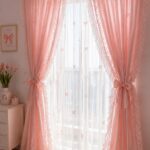

Short windows force a choice between privacy and daylight, and the right treatment depends on how much wall depth your frame actually has.
A shallow jamb under three-quarters of an inch rules out inside mounts entirely, sending you to café curtains or layered sheers instead.
Custom shutters can scale down to 12 by 12 inches, but only if the surrounding space lets the panel swing clear.
1. Café Curtains
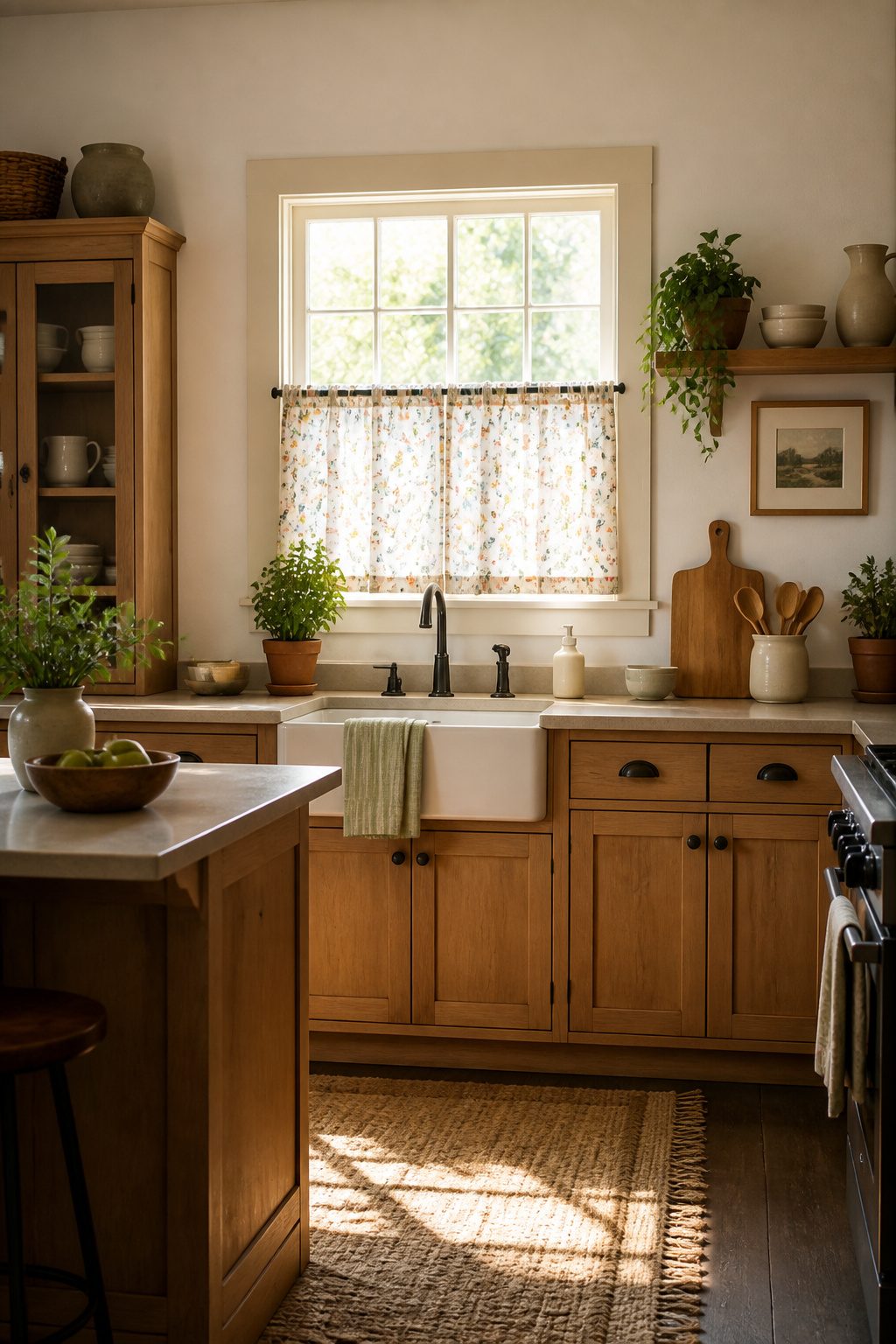
Café curtains cover only the lower half of the glass, which makes them a natural fit for short windows where you want privacy without giving up daylight.
The rod mounts at mid-window height, and that placement tricks the eye: the empty glass above the fabric reads as extra height, so the window feels taller than it measures.
Kitchens, bathrooms, and breakfast nooks are where these show up most. Light cotton, linen, or a small pattern keeps the mood bright and casual.
Sheer or lightweight fabric is the better choice here, since translucence gives you both coverage and that glow from the sun. Keep the rods and rings small; bulky hardware fights the whole point.
The tradeoff is real control. You get no blackout, and on a south-facing wall the glare can still land on your counters.
For a renter working weekends, though, café curtains install with a tension rod and come down just as fast, which matters more than perfect light blocking in a space you use for coffee and morning chaos.

Size & Quantity: Each pack contains 2 tier curtains, each 30" wide and 36" long, total width is 60", total length is 37.5" including 1.5" header. The rod pocket applicable to curtain rods no wider than 1", the bottom hem rod pocket fits for curtain rods no wider than 1"
Size & Quantity: Each pack contains 2 tier curtains, each 30" wide and 24" long, total width is 60", total length is 25.5" including 1.5" header. The rod pocket applicable to curtain rods no wider than 1", the bottom hem rod pocket fits for curtain rods no wider than 1".

Size & Quantity: Each pack contains 2 pieces, each 30" wide and 24" long, total width is 60", total length is 25.5" including 1.5" header. The 2" rod pocket fits most curtain rods and are easy to hang or slide.
2. Inside Mount Shades
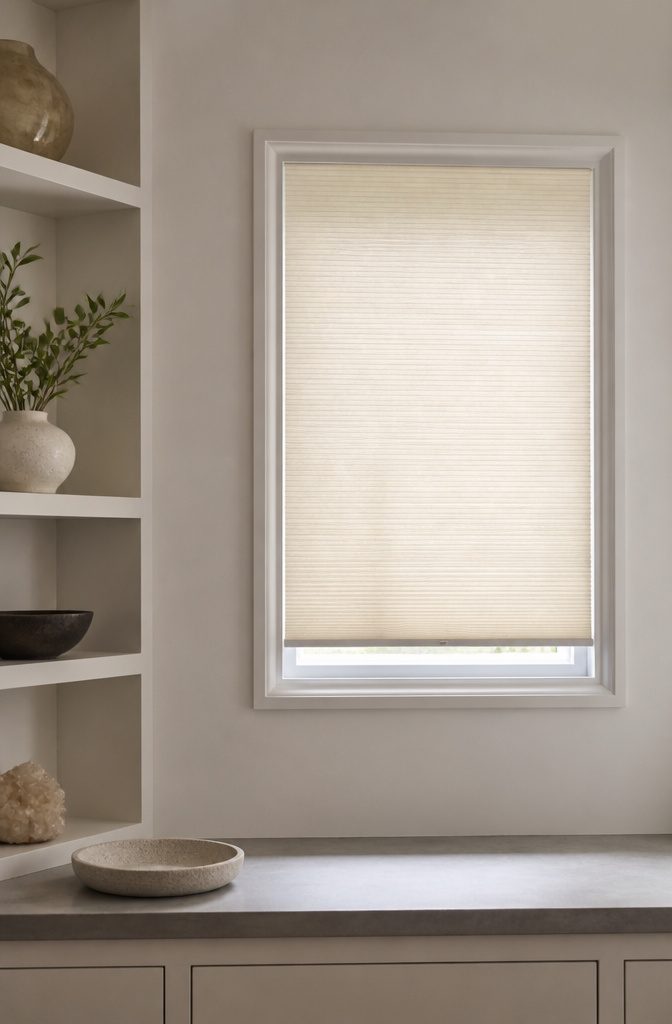
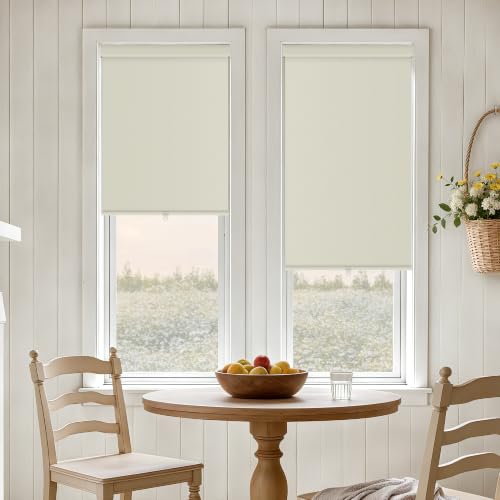
Inside mount shades sit flush within the window frame itself, which keeps the surrounding wall clear for shelves, a desk, or whatever tight arrangement a small room demands.
The shade reads as part of the architecture rather than an addition, and that restraint matters on a short window where every visual inch counts.
The catch is frame depth. A shallow jamb, common in older apartments and some rentals, leaves the shade protruding or forces an outside mount instead.
Before ordering, measure the depth from the glass to the front edge of the frame and check it against the bracket profile of the style you want.
Roller and cellular shades tend to need less clearance than Roman, which stack higher and can crowd the opening.
Inside mounts work best when the frame has at least ¾ inch of depth to spare. Less than that, and the hardware competes with the glass; more, and the shade tucks in cleanly with no light gap at the edges.
In a rental, the minimal footprint also means fewer holes to patch later, which is its own kind of savings.

Cordless & Safe by Design: Our cordless shades feature a smooth, free-stop system. Adjust them easily-just push up or pull down to your desired height, and they remain securely and quietly in place. With no loose cords to manage, the design reduces risks and maintains a clean, uncluttered aesthetic, making it ideal for households with children and pets. Experience effortless daily control and enjoy a tidier, more peaceful atmosphere

【Total Blackout Design with Side Light Blocking Strips & Valance】: Exclusive side light blocking strips eliminate annoying side light gaps that most roller shades leave.Luxurious and elegant blackout roller shades add an extra layer of hand-stitched valance using fabric to effectively cover the seams of the top rail and reduce light leaks.Achieve 100% blackout effortlessly—perfect for bedrooms, nurseries, and home theaters.Enjoy complete privacy and uninterrupted sleep.

【Soft Light Filtering & Total Privacy】Experience the dual benefits of softened natural light and unwavering privacy. The special fabric of these cellular shades gently filters harsh sunlight into a soft glow, ensuring your space is filled with natural light without compromising your privacy from prying eyes.The unique honeycomb cells trap air to reduce noise and maintain room temperature, helping you save energy year-round,making them the ideal choice for modern home decor.
3. Sheer Panels
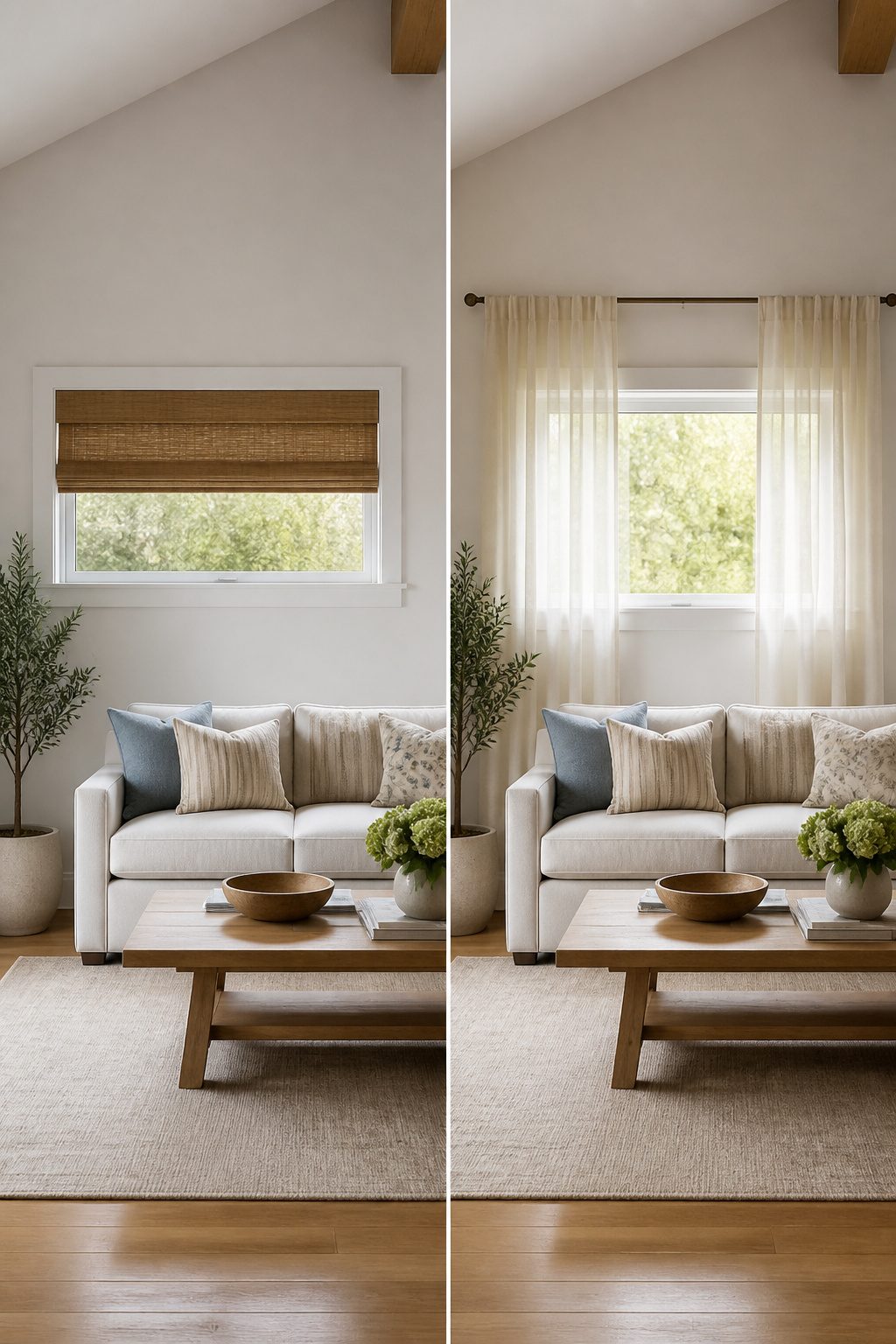
Sheer panels let daylight through while softening the glare, which matters more on a short window where every inch of glass counts. The fabric weighs almost nothing, so the wall behind it stays visible and the room keeps its depth.
At night, the privacy they offer is minimal; anyone outside with a porch light gets a clear silhouette of whatever is near the glass.
Layering fixes that without defeating the point. A sheer hung closest to the glass diffuses the daytime light, and a heavier panel on a second rod pulls across after dark.
The combination reads as intentional rather than apologetic, and the sheer still does its job when the solid panel is tied back.
Mount the hardware wider than the frame and higher so the fabric stacks clear of the glass when both panels are open. A short window already limits the view; blocking any of it with bunched fabric just repeats the problem.
A soft, unlined drape in a light color like bright white or natural avoids the visual mass that makes a small window feel walled in.
Custom lengths start at 15 inches, so even an odd-sized basement or laundry window can get a clean hem instead of a puddle on the sill.
The rods go as narrow as 28 inches, though extending past that width is what actually enlarges the opening.

Perfect to adjust for varying inside opening measurements!

【Premium & Sturdy Construction】Crafted from high-quality iron in a sleek silver finish, these roller shade brackets for curtain rods over blinds are built to last. They provide robust support for various window roller shades and roller window blinds, ensuring your window treatments stay securely in place without sagging or falling.

【Linen Fabrics】Made from high-quality linen fabric, our blackout shades are designed to be soft and skin-friendly, providing full coverage to block out light in your home. Perfect for creating a cozy and peaceful atmosphere in any room. The fabric is precisely cut with a laser without any rough edges. Linen fabric is predominantly made from natural linen fibers, which are completely natural and odor-free, providing you a more comfortable and enjoyable environment.
4. Roman Shades
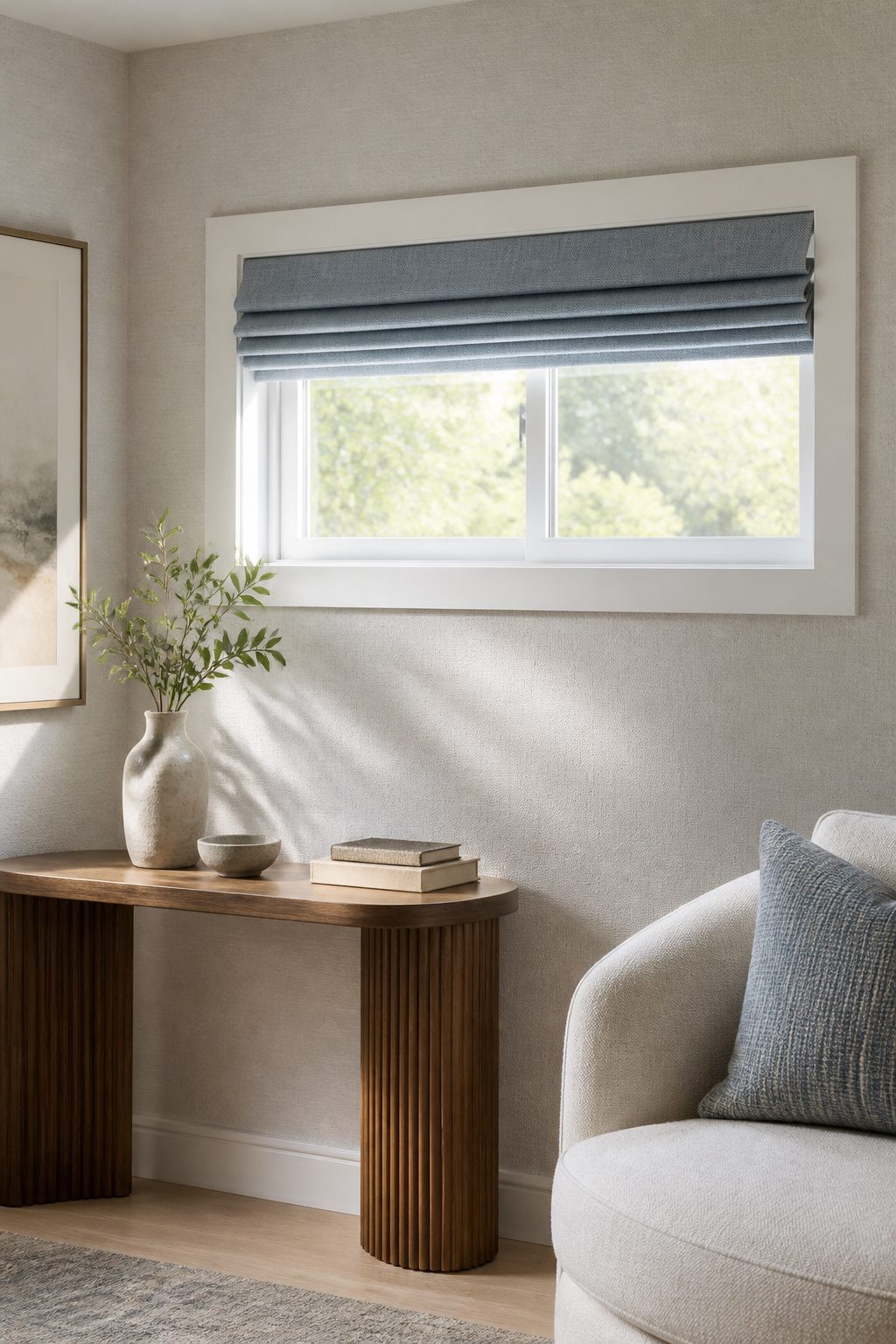
Roman shades fold into soft, even sections when lifted and drop smoothly when closed, which gives a short window a deliberate, finished look rather than a temporary fix.
The huge variety of fabrics, colors, and patterns means matching a room’s style is straightforward, whether that runs casual or more traditional.
What sold me on them for smaller spaces is how they sit close to the glass without boxing in the frame; the clean stacked line when raised keeps the glass feeling taller than it is.
Fabric choice changes the sense of scale more than people expect. A heavier weave or busy pattern can read as bulky on a short window, while something lighter lets the stack stay slim and the window feel open.
A lining adds better light control and privacy, worth it in a bedroom or anywhere the window faces a neighbor.
The tradeoff is upkeep: they need regular dusting or vacuuming, and even fully raised they cover part of the glass. For living spaces and dining rooms where you want softness with real light control, that compromise is usually acceptable.

Well Made: Sold as pair, including 2 gold sheer curtains 84 inch length - Panel measures: 52" x 84"; Set measures: 104" x 84". Each panel features rust-free silver grommets top (which can fit up to 1 1/4" curtain rods/poles), constructed with header height: 4", bottom hem: 2". Easy for hanging and open.

Versatile Hanging Options: Combining pinch pleats with back tabs, these curtains fit both hooks and curtain rods perfectly. You don’t have to compromise on your preferred hanging style—switch between the crisp look of hooks or the laid-back ease of rod hanging in seconds, making it a breeze to match your decor vibe and daily mood.

Ready Made: The package includes 2 panels of thick linen semi sheer curtains, and each panel 42"W (84"W for pair), 3 hanging options to meet your needs: rod pocket, back tab, or hanging ring (clips or hooks not included).
5. Roller Shades
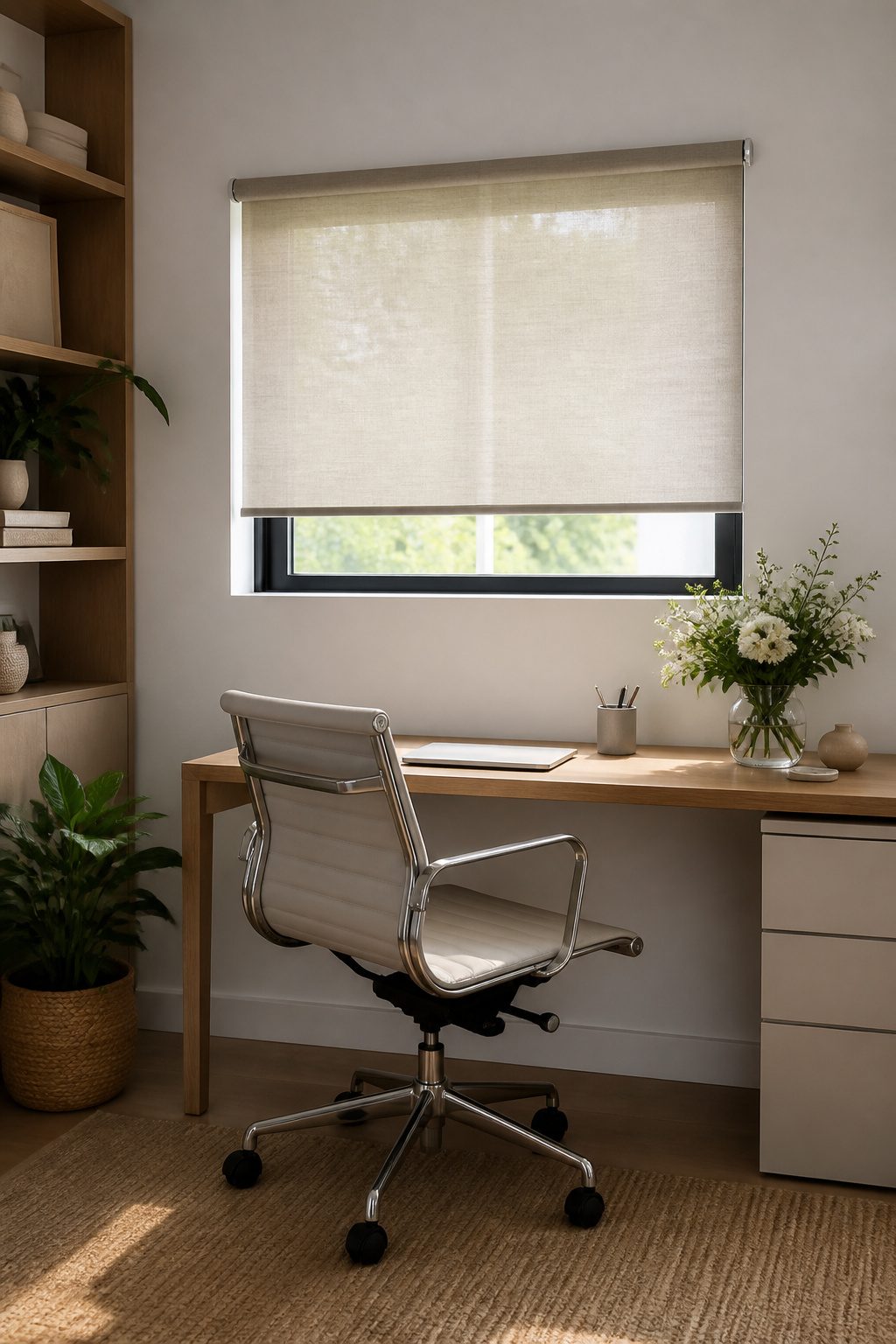
A roller shade’s fabric wraps around a tube at the top of the frame, and when you pull it up, the whole window stays almost completely clear.
That tight roll matters more on a short window than a tall one. A bulky stack of folded fabric or tilted slats eats up proportionally more of the glass you have, which only makes the opening feel smaller.
The fabric itself runs from sheer to full blackout, so the same hardware works whether you need privacy in a ground-floor bathroom or just want to cut glare on a west-facing desk.
Low-profile brackets and a valance keep the tube tucked in, whether you mount inside the frame or on the wall above it. The clean line draws the eye across rather than up, which reads as width.
The tradeoff is texture. Roller shades read as modern and practical, not decorative.
If you want softness or pattern, you will need to layer, and that adds cost and depth. For a weekend project under a few hundred dollars, though, the minimal footprint is hard to beat.

Double Layered Curtains: Crafted with a sheer lace layer, our boho kitchen curtains boast a smooth, delicate handfeel, while the linen layer is soft and durable. With one-piece cutting and neatly sewn edges, our linen curtains with lace overlay strike a balance between beauty and practicality. They are suitable for kitchen, bathroom window, living room, cafe, camper, basement and other places

Double Layer Curtains: The embroidered floral sheer curtains are light and flowing, with a gauzy beauty that softens light—adding a touch of warm and natural atmosphere to any room. The blackout layer effectively blocks light. Includes 2 lace tiebacks, so you can achieve different looks or light effects by tying it.
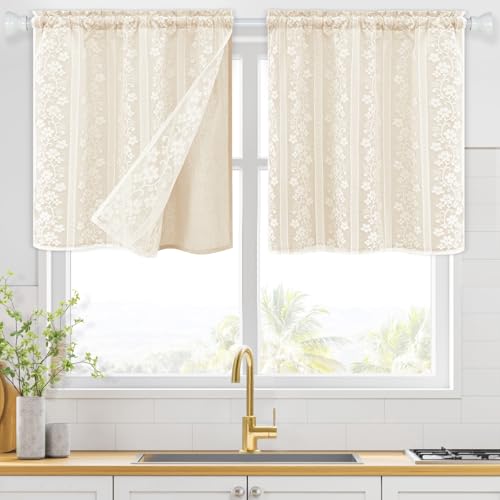
Double Layered Curtains: Crafted with a sheer lace layer, our boho kitchen curtains boast a smooth, delicate handfeel, while the linen layer is soft and durable. With one-piece cutting and neatly sewn edges, our linen curtains with lace overlay strike a balance between beauty and practicality. They are suitable for kitchen, bathroom window, living room, cafe, camper, basement and other places
6. Shutters
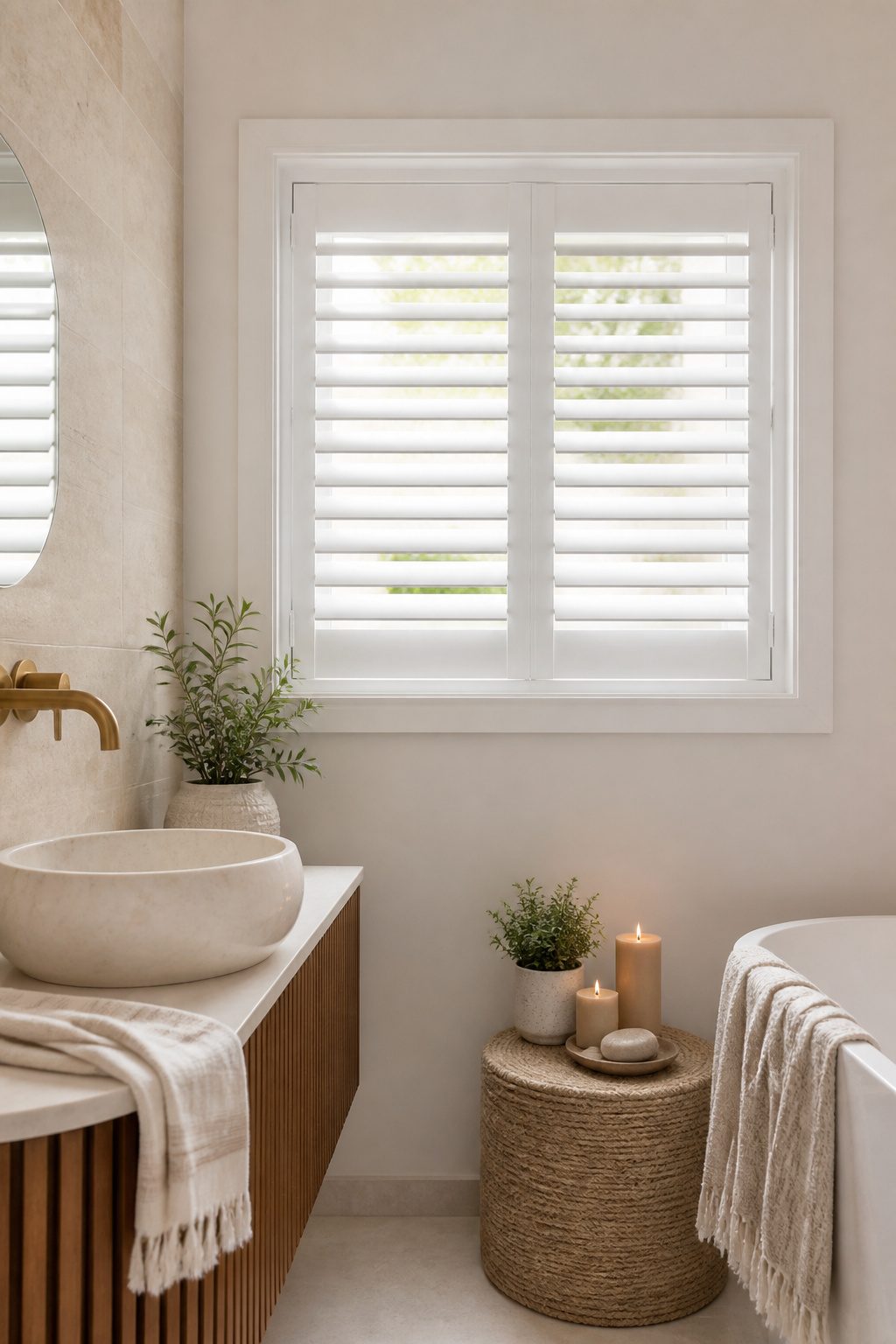
Custom shutters sit inside the window frame itself, so they never add the visual weight that drapes or outside-mount shades pile onto a small opening.
The clean lines read as built-in architecture rather than an afterthought, and the slats tilt open to let light pour through at an angle that keeps privacy intact.
Most people assume shutters need grand windows to work, but custom-made shutters can be built as small as 12 by 12 inches, fitting short windows that other treatments overwhelm.
Faux wood versions handle humid rooms like bathrooms without warping, and a quick wipe cleans them where fabric would stain.
The catch is depth. Shutters need clearance for the panel to swing and the louvers to tilt, so very shallow jambs or tight openings near sinks or toilets can kill the option before you order.
Check the room layout with the tape measure out, not after delivery.

Package includes:2 light-filtering neutral burlap natural linen curtain panels. Each panel features a dual hanging design with 24 back tabs and a rod pocket, fitting most standard rods for quick installation. The generous width delivers full window coverage and creates neat, tailored draping for a tidy minimalist look.

Hand Block Printed - These cafe curtains are hand block printed by local craftsmen, giving them a unique and authentic touch making these curtains a beautiful addition to your home. Available in a selection of

Pair Sold: Each package includes 2 tier curtains for kitchen (30" W x 24" L), designed as kitchen curtains sets for windows or cafe curtains. Perfect for small window curtains or layered valances for windows (rods up to 1.5" diameter). Dual hanging options (rod pocket/clip rings) adapt to short curtains needs in kitchens, bathrooms, or cozy cafes
7. Drapes and Curtains
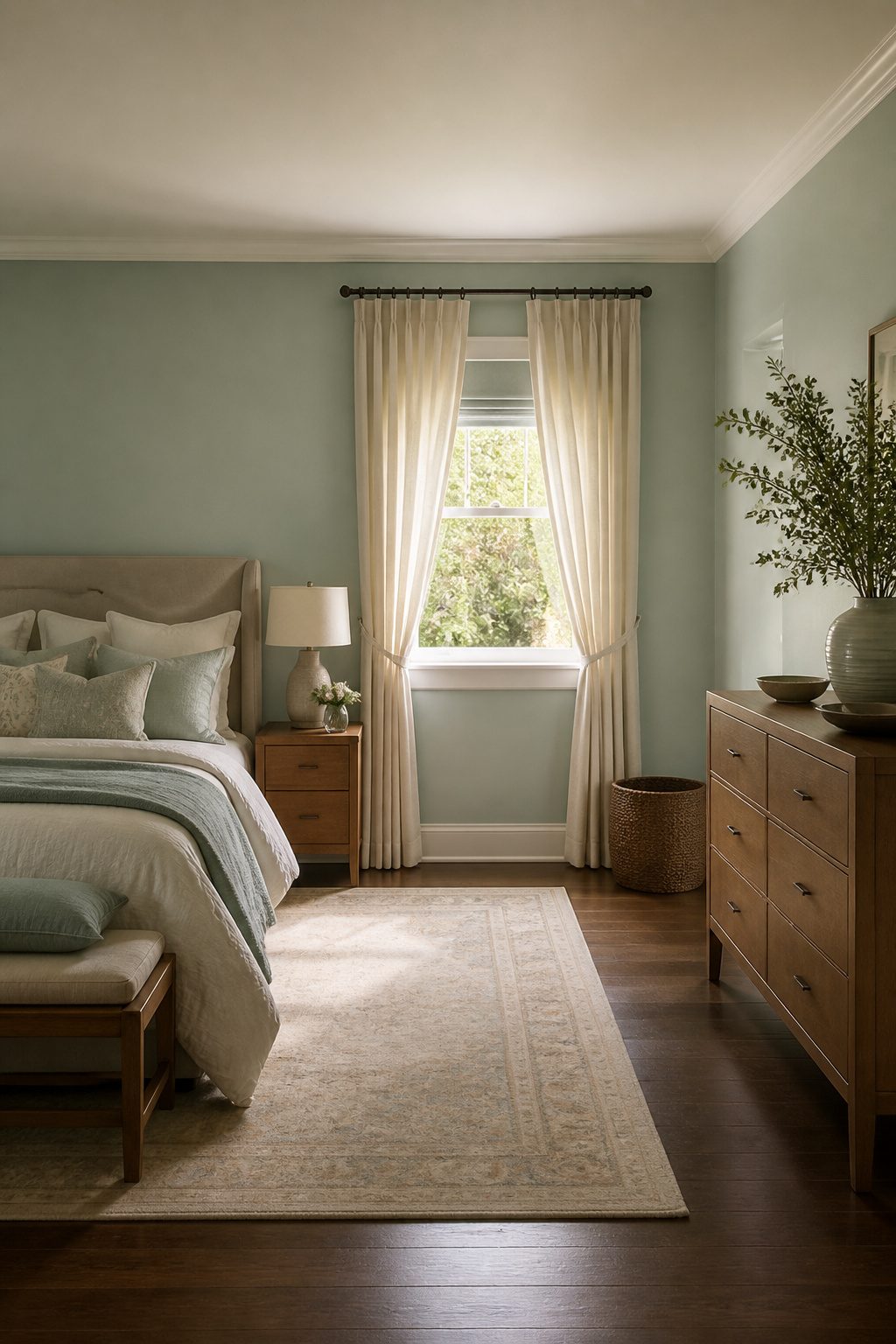
Full drapes on a short window only work if you break the instinct to frame the glass itself.
Mount the rod several inches above the frame, closer to the ceiling than to the top of the window, and let the fabric fall past the sill or to the floor.
The eye travels up the vertical line and reads the window as taller than it is.
The fabric matters as much as the placement.
Heavy, lined panels will swallow a small opening and push into the room. A soft, unlined drape in a light color, something like a sheer or a lightweight cotton, keeps the bulk down and the light moving through.
Custom panels start at 15 inches long, so even a narrow window near a door or in a bath can get this treatment without looking like borrowed clothes.
I would skip floor-length altogether in a tight space where the panels have nowhere to stack back.
In that case, hem them to just below the sill and keep the rod extended wider than the frame so the fabric clears the glass when open. The window gets the height illusion, and you keep the function.

Cordless & Safe by Design: Our cordless shades feature a smooth, free-stop system. Adjust them easily-just push up or pull down to your desired height, and they remain securely and quietly in place. With no loose cords to manage, the design reduces risks and maintains a clean, uncluttered aesthetic, making it ideal for households with children and pets. Experience effortless daily control and enjoy a tidier, more peaceful atmosphere
Cordless & Safe by Design: Our cordless shades feature a smooth, free-stop system. Adjust them easily-just push up or pull down to your desired height, and they remain securely and quietly in place. With no loose cords to manage, the design reduces risks and maintains a clean, uncluttered aesthetic, making it ideal for households with children and pets. Experience effortless daily control and enjoy a tidier, more peaceful atmosphere

【Roman shades】 Traditionally used in order to block out the sun by folding and unfolding a sheet of fabric. The incredible benefit of window roman shades is that they are also a great way to complement the interior decor of your home. Roman shades have been used for centuries, and have yet to go out of style.
8. Top-Down/Bottom-Up Shades
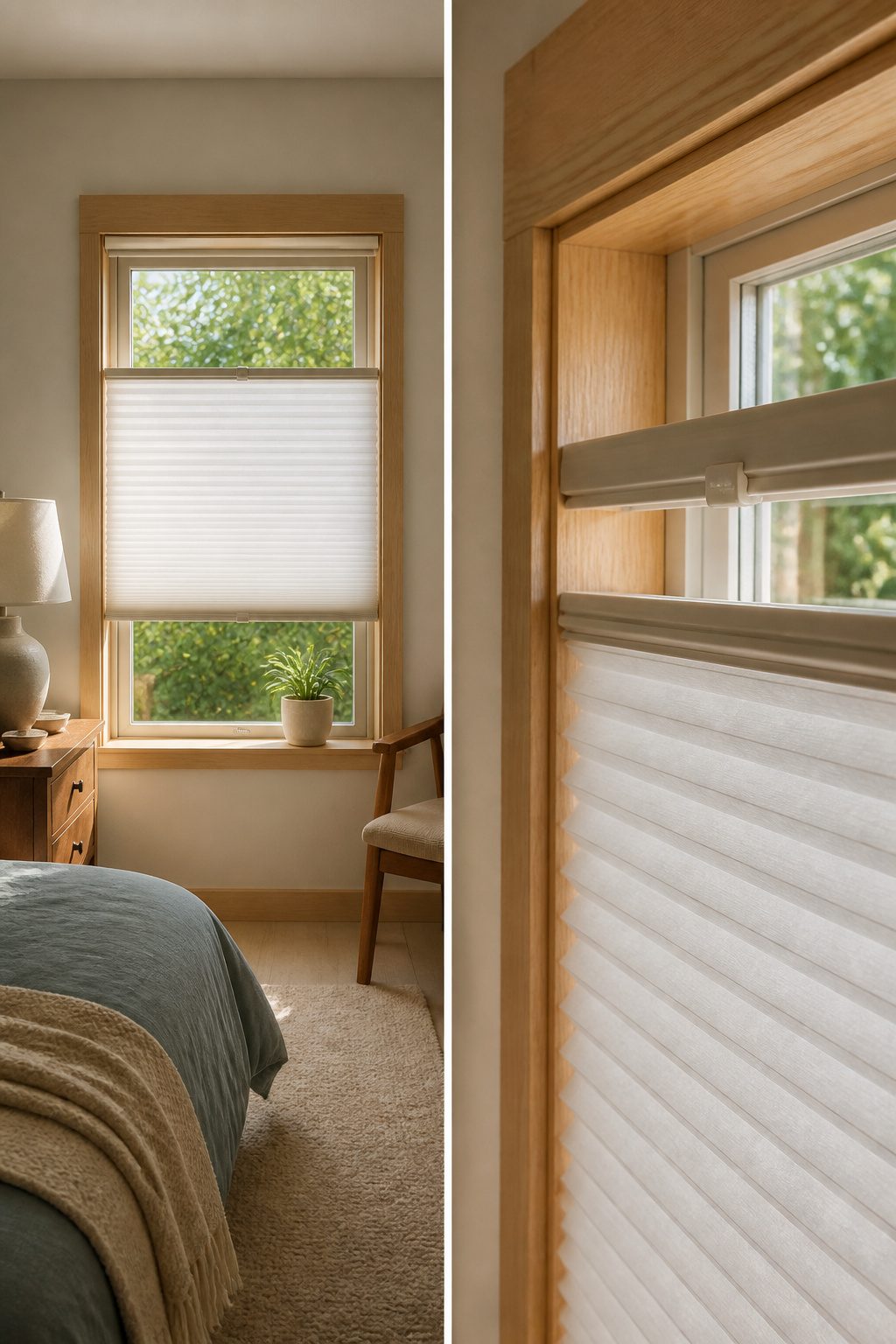
Top-down/bottom-up shades let you drop the top rail a few inches while the bottom stays put, which means privacy at eye level without sacrificing the daylight that short windows need.
On a ground-floor bathroom facing an alley or a bedroom window six feet from the neighbor’s deck, that split is the difference between a usable room and one that stays shuttered all day.
The mechanism does show.
You will see cords when the shade is half open, and the hardware at the top needs a valance to hide it. One designer I read flatly avoids them for that reason, calling the strings a visual mess.
I think that judgment holds for a formal living room where every detail is staged, but for a rental kitchen or a first home’s side window, the function wins.
Cotton, linen, or a grassy weave can make the valance look intentional rather than apologetic.
For short windows specifically, the real advantage is proportion. A standard shade raised from the bottom leaves a tall stack of fabric that eats the already-small glass.
Opening from the top keeps the lower half clear and the window feeling larger than it is. The tradeoff is light control: you still get glare from above, and full blackout is not happening without another layer.


Heavy Duty - 1st Rate Quality!
9. Mini Blinds
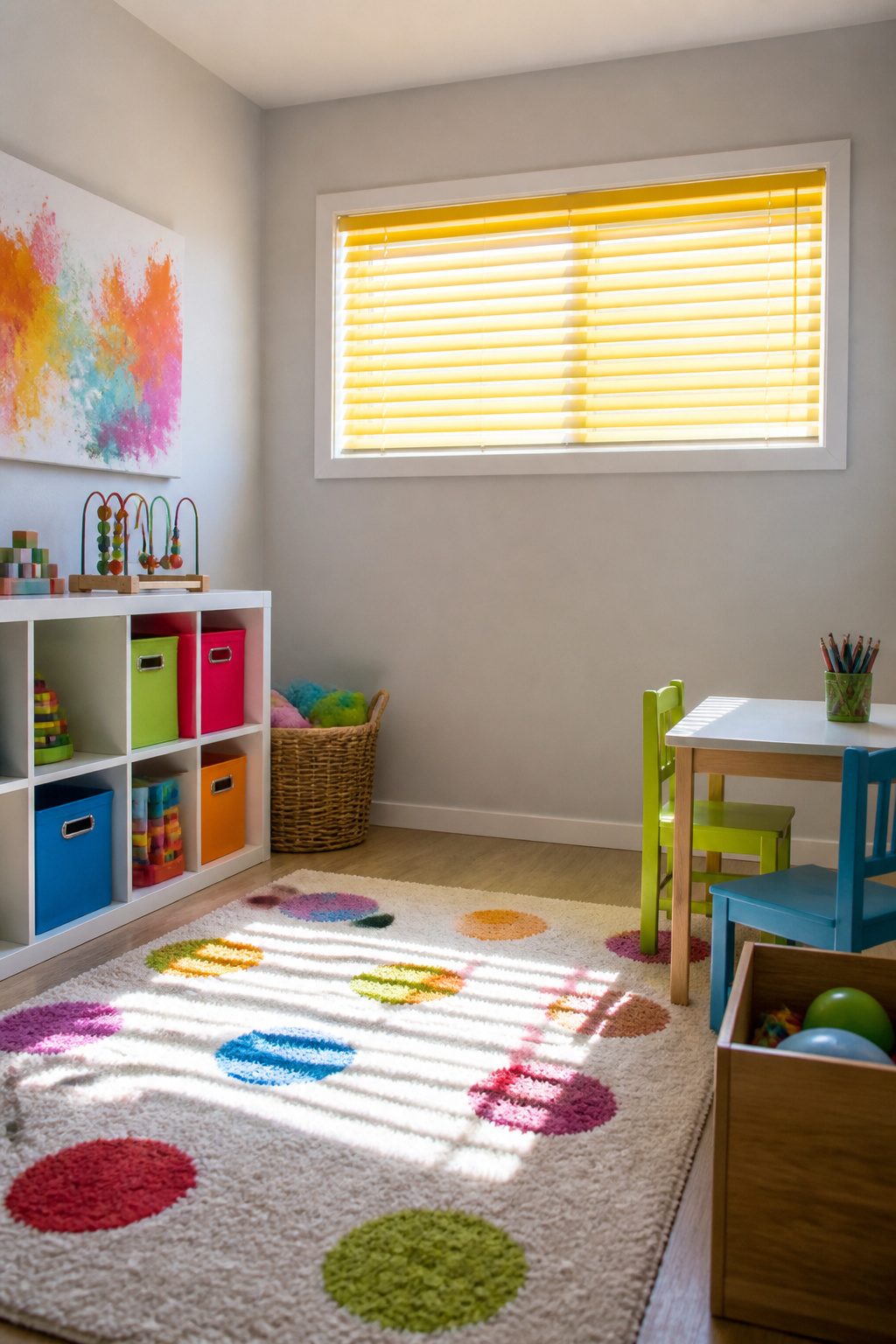
Half-inch slats are the detail that keeps mini blinds from looking like a door propped on a windowsill.
Standard aluminum blinds carry one-inch slats that read as heavy on a short frame; the proportion feels off in the same way oversized buttons ruin a shirt.
The narrower slat keeps the rhythm tight and lets the window hold its own visual weight.
Some markets push even slimmer, down to a micro-mini half-inch, though availability shifts by region. On a truly small window the effect is the same: the treatment recedes, the glass gets the attention.
Modern Precious Metals runs the half-inch size across seventy-plus colors, and optional decorative tape can pull the look toward custom without the custom invoice.
For renters, the aluminum build wipes clean and survives a move.
The slat width matters more than the finish, though. Get that wrong and the whole wall shrinks.

BASE INFORMATION: The package includes 1 panel country style embroidered valance curtains. Curtain measurements: 60 W x 14 L. Super wide rod pocket slot top, fitting curtain rods up to 1.8 inches in diameter.
Ready Made: The package includes 2 panels of thick linen semi sheer curtains, and each panel 42"W (84"W for pair), 3 hanging options to meet your needs: rod pocket, back tab, or hanging ring (clips or hooks not included).

Ready-Made: The package includes 1 panel of 26"W x 40"L semi-sheer linen door curtain with a tie-back. These pretty linen sheer door panels feature top and bottom rod pockets for easy installation. It is ideal for a door window that brings French elegance to your room.
Choosing by Room Purpose
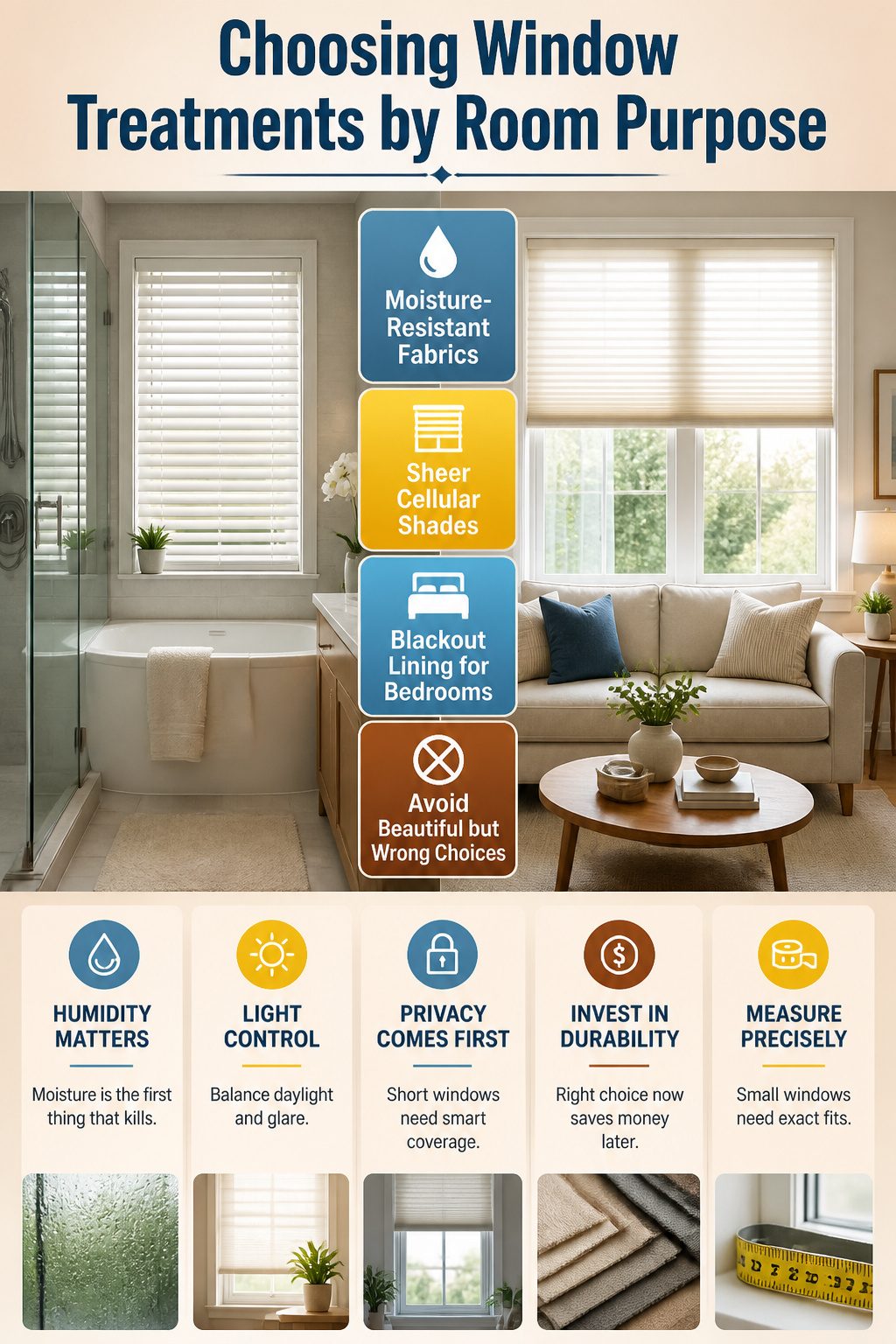
Moisture is the first thing that kills a window treatment in the wrong room.
In bathrooms, synthetic fabrics or composite PVC hold up where cotton rots; I learned that the hard way after installing a cotton roller shade above a tub and watching mildew bloom inside a month.
Faux-wood blinds or moisture-resistant roller shades are the safer bet for any space with a shower, and café curtains work if the fabric is explicitly mildew-resistant.
Living areas need the opposite problem solved: keeping the room from feeling like a cave while still cutting glare. Sheer cellular shades filter daylight without blocking it, and that softness makes a short window feel intentional rather than apologetic.
Bedrooms split the difference. Blackout lining belongs there if you sleep past sunrise, but a short window already limits light; layering a sheer with a solid panel gives you the option without committing the whole wall to darkness.
The real mistake is buying something beautiful for the wrong room and hoping for the best.
Humidity, light control, and privacy are not details you address later. They are the starting point.
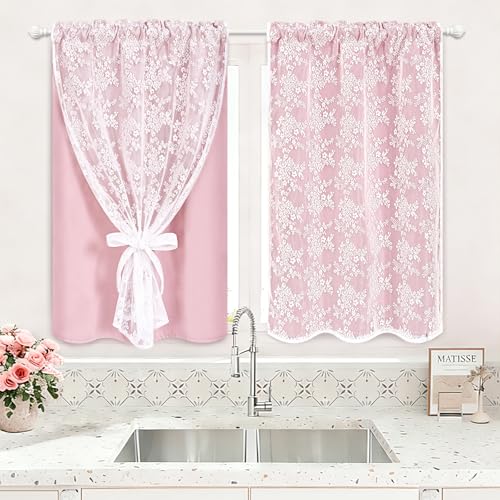
Double Layer Curtains: The embroidered floral sheer curtains are light and flowing, with a gauzy beauty that softens light—adding a touch of romance to any room. The blackout layer effectively blocks light. Includes 2 lace tiebacks, so you can achieve different looks or light effects by tying it.

Package Contents: Tiers and valance adequately cover your small window. Each tier panel measurement:W26"x L24"(Tiers total W52"x L24"). Valance measurement:W52"x L16"

Size & Quantity: Each pack contains 2 pieces, each 42" wide and 24" long, total width is 84", total length is 25.5" including 1.5" header. The rod pocket applicable to curtain rods no wider than 1", the bottom hem rod pocket fits for curtain rods no wider than 1".
Hardware and Layering Tricks
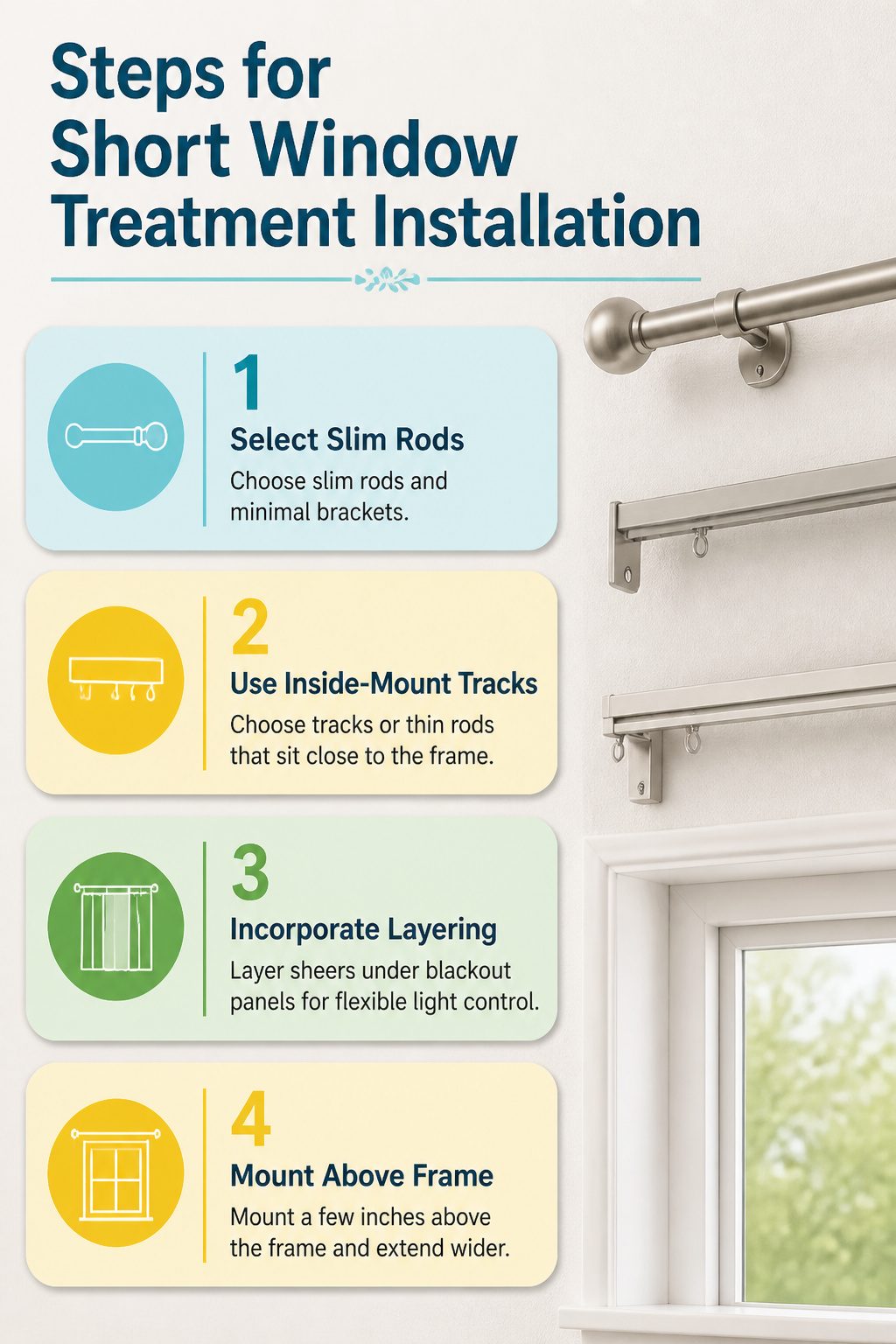
Slim rods and minimal brackets matter more on short windows than they do on tall ones, because bulky hardware eats a larger share of the visual space.
A one-inch rod that looks fine above a standard window can feel like plumbing pipe above a small bedroom casement. Inside-mount tracks or thin rods that sit close to the frame keep the focus on the glass, not the metal.
Layering is where short windows gain real flexibility. Sheer drapes underneath blackout panels let you pull the heavy layer closed for sleep and leave the sheers to filter morning light.
The combination works in rooms where a single treatment would leave you choosing between glare and a cave. In kitchens or bathrooms, easy-clean fabrics like polyester or vinyl-coated textiles handle the moisture without adding bulk.
Mounting a few inches above the frame and extending wider than the opening still helps short windows read larger, but the hardware has to stay in proportion.
Narrow slats, thin brackets, and materials without heft let the treatment recede instead of competing with the window itself.
Motorized and Custom Options
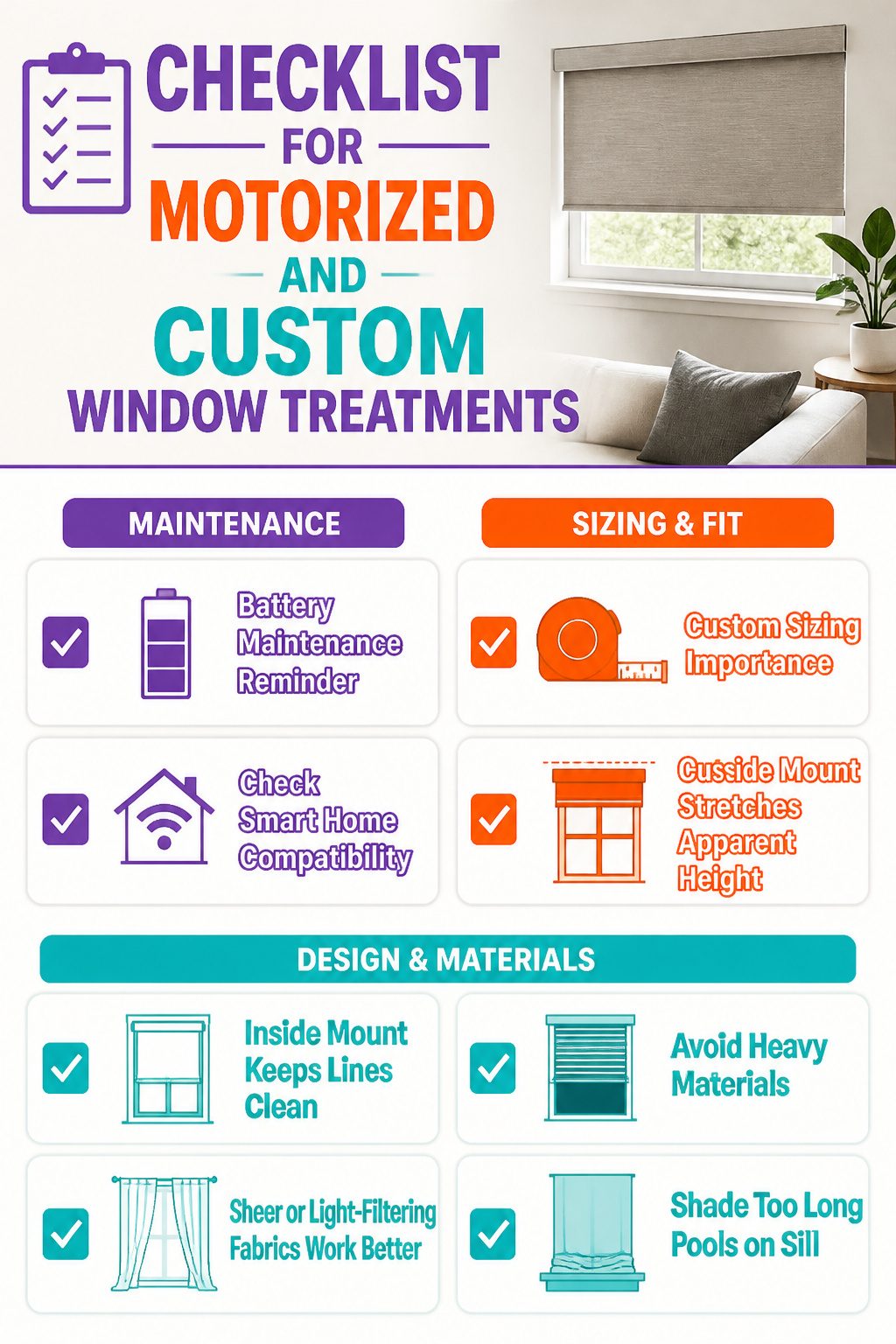
Motorized roller shades solve the one real problem short windows create when they sit high on a wall or behind furniture: reaching them at all.
The systems run on remote or app control and tie into smart-home setups, though the battery needs a charge every 6–8 months. That cycle is manageable for a window you adjust daily, but it is a maintenance item to budget for.
Custom sizing matters more on short windows than standard ones because the stock dimensions rarely land right. A shade cut even an inch too long pools on the sill; too short, and the gap reads as a mistake.
For odd proportions, an inside mount keeps the lines clean, while an outside mount placed a few inches above the frame can stretch the apparent height of the window itself.
Sheer or light-filtering fabrics work better than heavy materials here, a solid dark shade on a wide, short frame turns the opening into a black hole and flattens the wall.
Frequently Asked Questions
What is the best way to choose window treatments for small windows?
Pick low-profile options that tuck tightly away, such as roller shades, mini blinds, or cellular shades.
These styles keep the glass visible and do not compete with the limited space. Inside mounts and slim hardware also help the window hold its own visual weight.
What is the best way to dress a small window?
Choose treatments that do not dominate the glass.
Roller shades roll up into a small tube and leave the entire window clear, while café curtains or sheer panels add softness without bulk. The goal is to preserve as much visible glass as possible.
How do you make small windows look good?
Use light-filtering shades or sheer fabrics to keep the room open while still getting privacy.
Mount rods wider than the frame and higher than the top edge so the fabric stacks clear of the glass and the eye reads extra height.
Soft, light colors avoid the visual mass that makes a small window feel walled in.
How do you cover a very small window?
Order custom-made blinds or shades cut to the exact width. Stock sizes rarely land right on short windows; even an inch too long pools on the sill, and too short leaves a gap that reads as a mistake.
Custom shutters can be built as small as 12 by 12 inches, and custom drapery panels start at 15 inches long.