
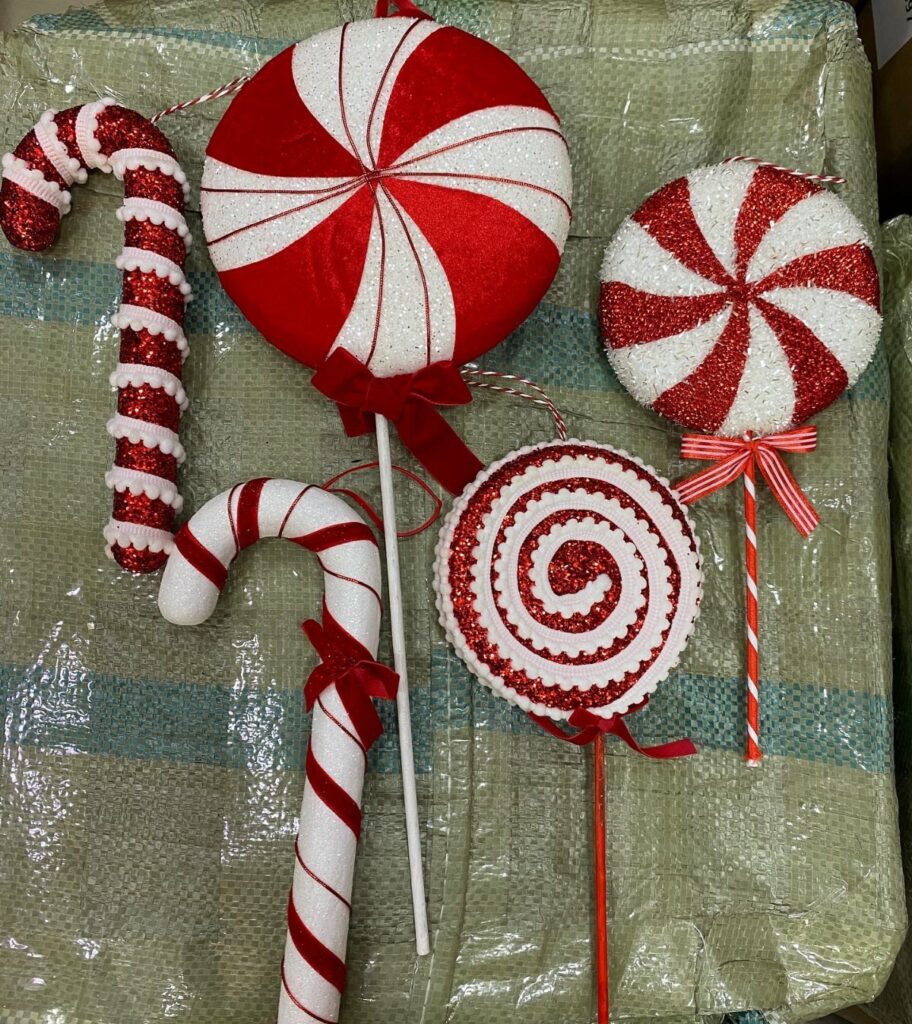
A single afternoon and a few dollars’ worth of supplies is enough for most of these 8 projects, though the giant yard lollipops need a Home Depot run for rigid insulation board and a jigsaw with a steady hand.
What decides which one is yours is whether you have storage space come January, since the PVC candy canes store as a slim bundle and the full candy-dressed tree folds back into its box, while the foam wreath and the garland need their own bins.
The detail that marks this list is the rebar stake with a PVC sleeve glued to the back, the wind support that keeps a two-foot peppermint disk from torquing apart in gusts.
1. Candy Christmas Tree
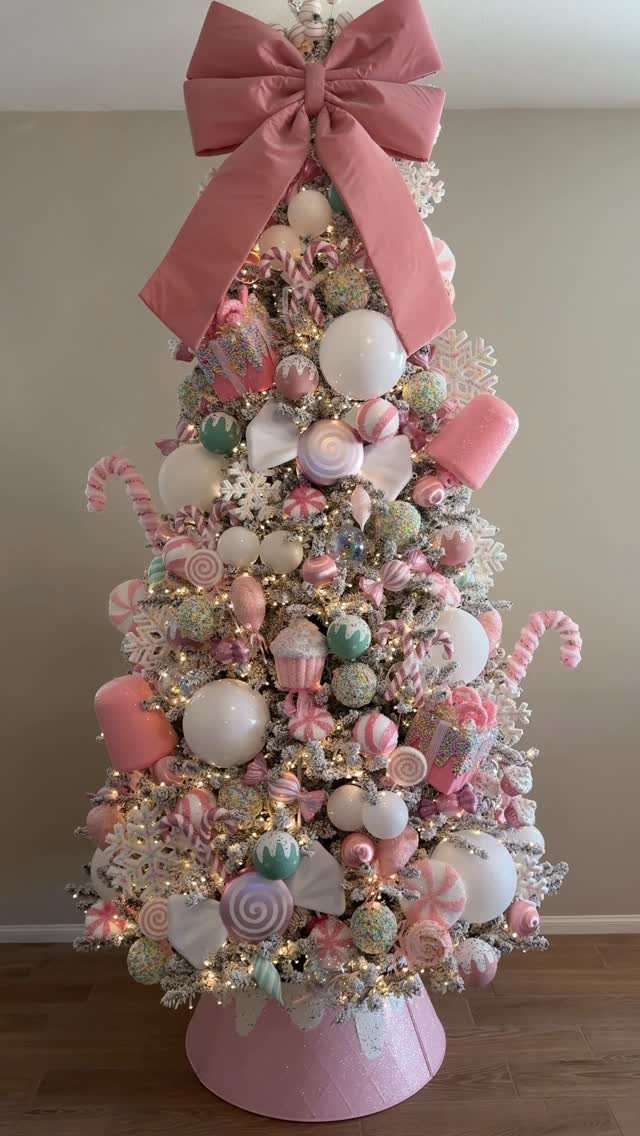
A full Christmas tree dressed as a candy shop window works best when you commit to one color story and repeat it until it feels excessive.
I like this for renters because nothing is permanent: the ornaments pack flat and the tree itself folds back into its box.
The large bow topper is wired pipe cleaner and ribbon, not a purchased piece, which is the move I would make to keep the scale oversized without the specialty-store price.
2. Wrapped Candy Ornaments
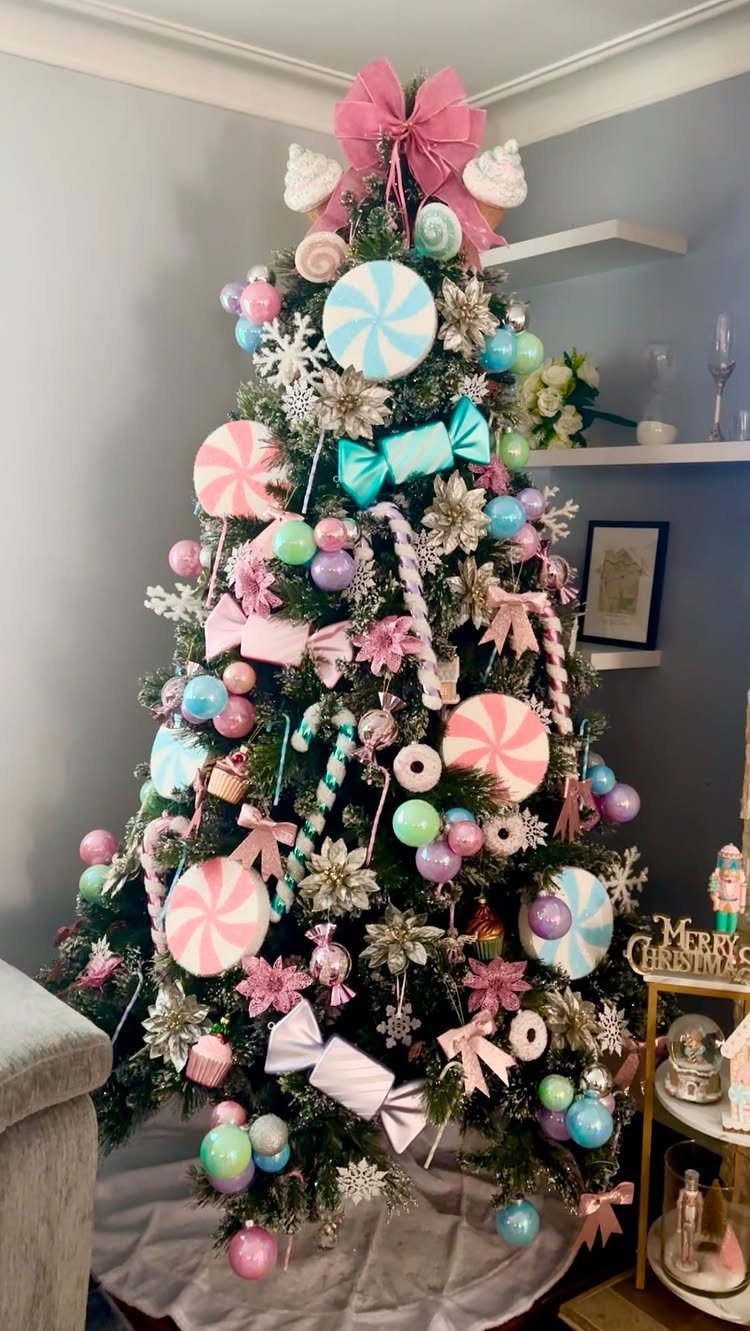
Wrapped candy ornaments are the entry point for anyone who wants the candy look without storing a second tree’s worth of decorations.
Pastel pinks and mints read as candy because of the shape, not the material, which means you can get there with polymer clay, painted wood cutouts, or even dense foam sealed with Mod Podge.
I would make these from air-dry clay; one pack yields a batch of ornaments with a cookie-cutter shape and a nail for the hole before they set.
The twisted-wrapper ends are just painted-on stripes or thin ribbon glued at the seam. They store in a shoebox and weigh almost nothing, which matters if your tree is the slim artificial kind that sags under glass balls.
When you’re not enjoying them as a minty Christmas treat, candy canes can be easily transformed into DIY wreaths, mini reindeer, Christmas table centerpieces, and ornaments.
3. Peppermint Candies Wreath
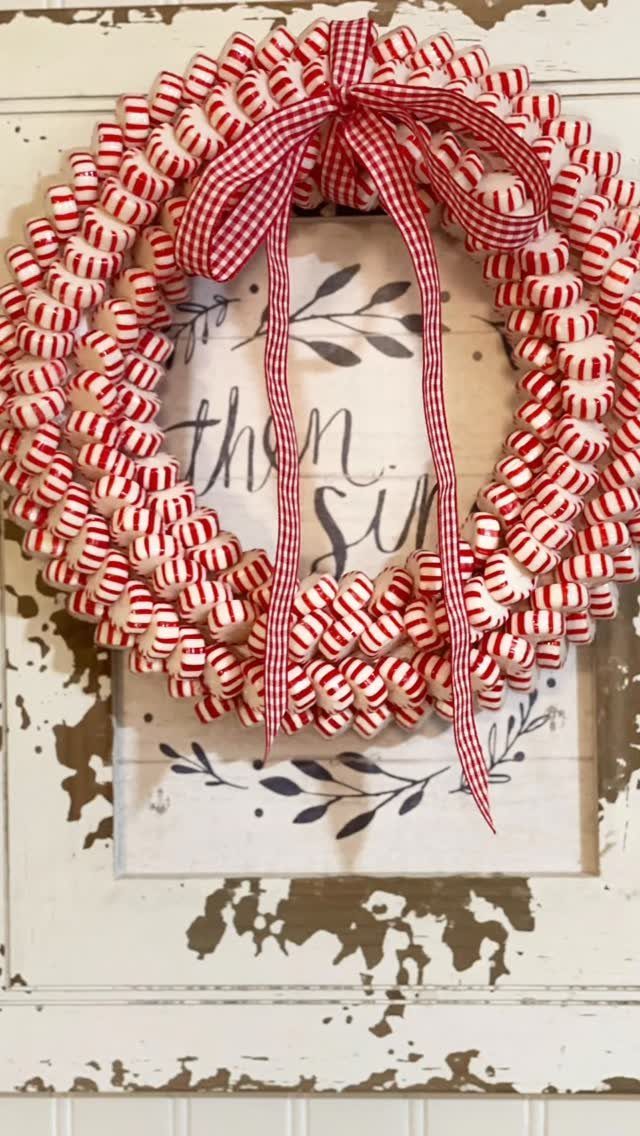
The peppermint candy wreath is built on a foam ring with the candies hot-glued in a tight spiral, and the maker notes that these are peppermint candies in the round shape rather than candy canes.
That distinction matters for coverage: the wheels fill gaps more cleanly than hooked canes would.
A foam wreath form costs little, and 2 bags of peppermints covers it with a few to spare.
I would lay them out dry first to check the spiral, then glue in sections so the glue stays tacky while you work.
The gingham bow is wired ribbon, which I prefer because it holds its shape through humidity and door-slamming.
This is a one-afternoon project that reads as more effort than it was, which is exactly what I want for front-door decor I will replace in January.
4. Giant Lollipops
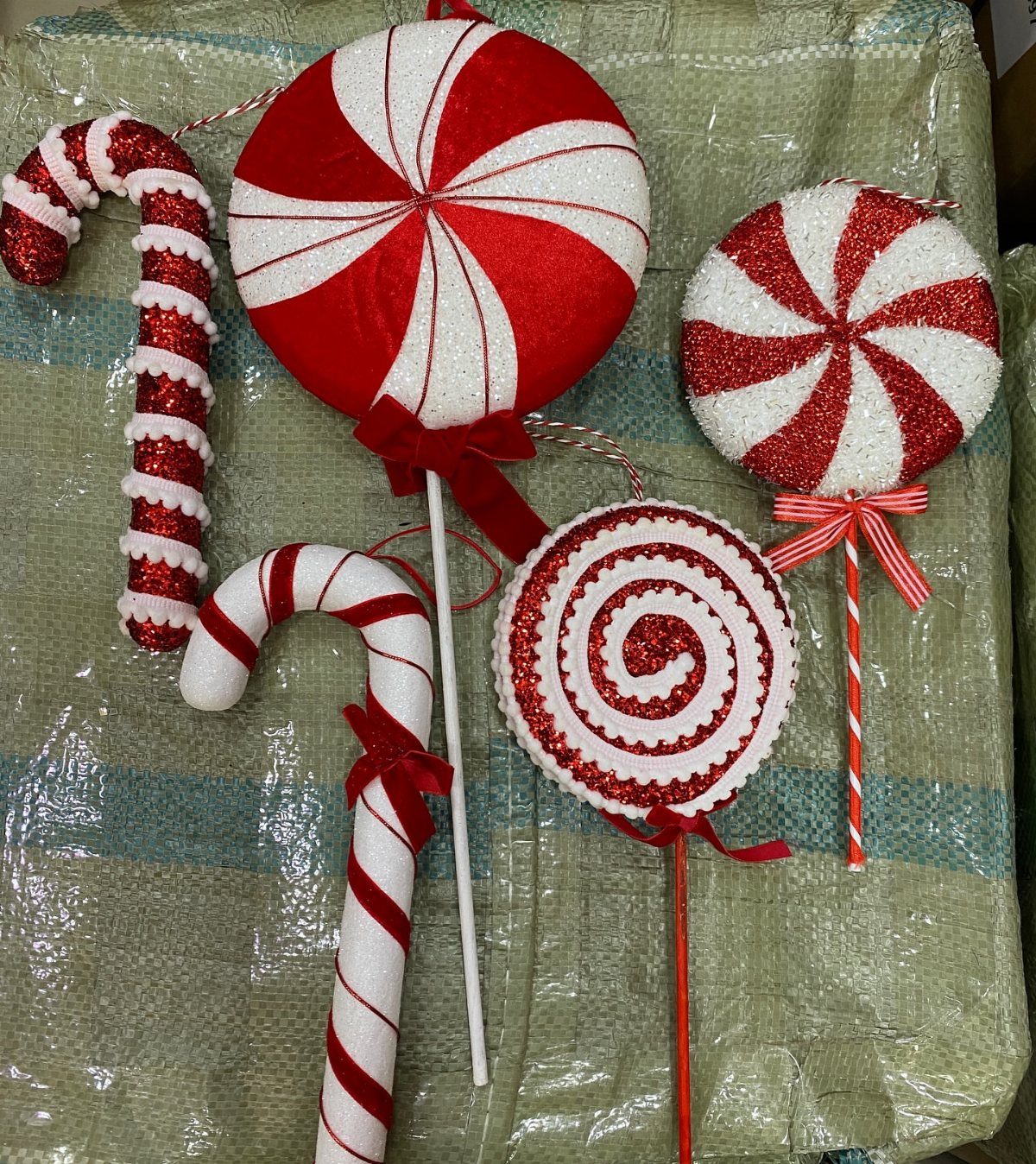
Giant lollipops scale up the candy motif to yard-stake size, and the glitter finish catches light from passing cars in a way flat paint does not.
The construction is typically a painted plywood or foam circle on a dowel or PVC stake, with the swirl added in tape, paint, or glued-on ribbon.
I would use rigid insulation board from Home Depot, a standard sheet that yields a half-dozen lollipops or more depending on the diameter you choose.
A keyhole router bit or a jigsaw with a steady hand cuts the circle; the edges sand clean with 120-grit.
The glitter is spray adhesive followed by loose glitter, which I would seal with clear acrylic so it does not shed on your porch. Store them flat and they last several seasons.
5. Giant Candy Canes
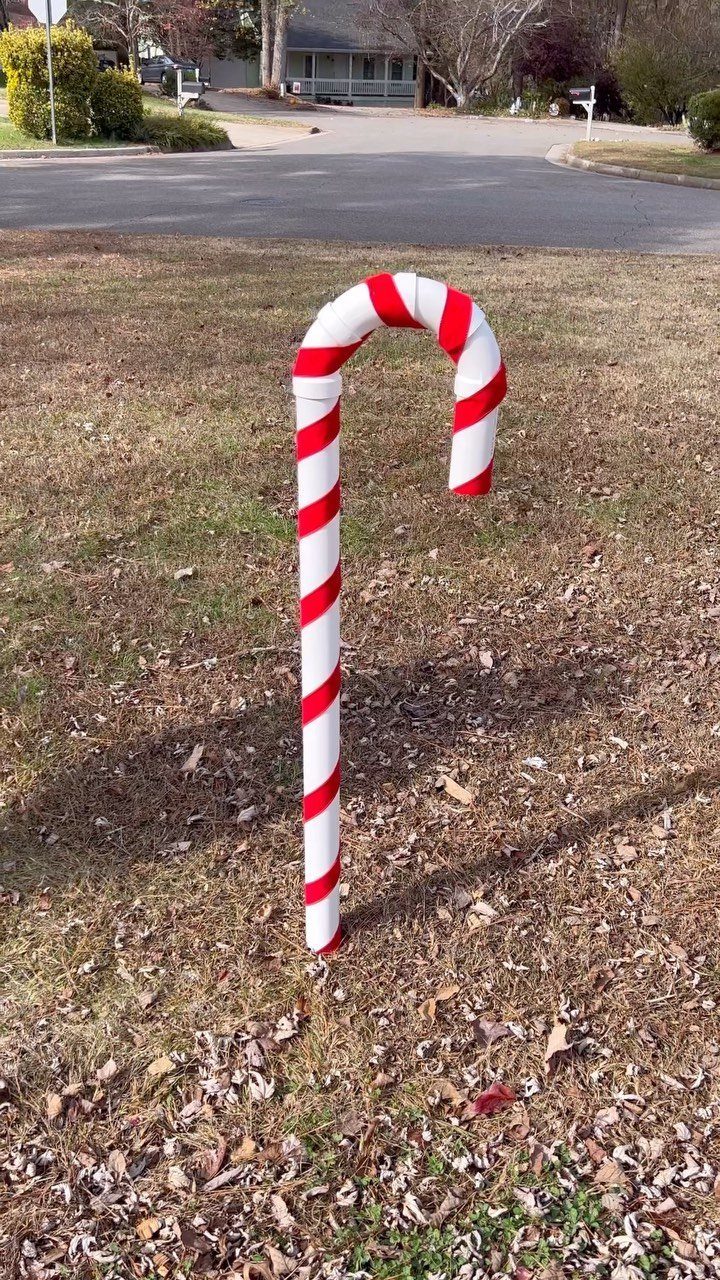
PVC pipe candy canes are the rare outdoor decoration that survives actual weather without the storage bulk of molded plastic.
A stick of PVC runs a few dollars; one stick makes one candy cane with a short stub left over.
I would use PVC pipe and elbow joints for the curved end, gluing the pieces together and spraying the whole thing with bright white and red paint.
At this height these read from the street without needing a ladder to install, which is why I prefer them to the inflatable versions.
6. DIY Candyland Decorations
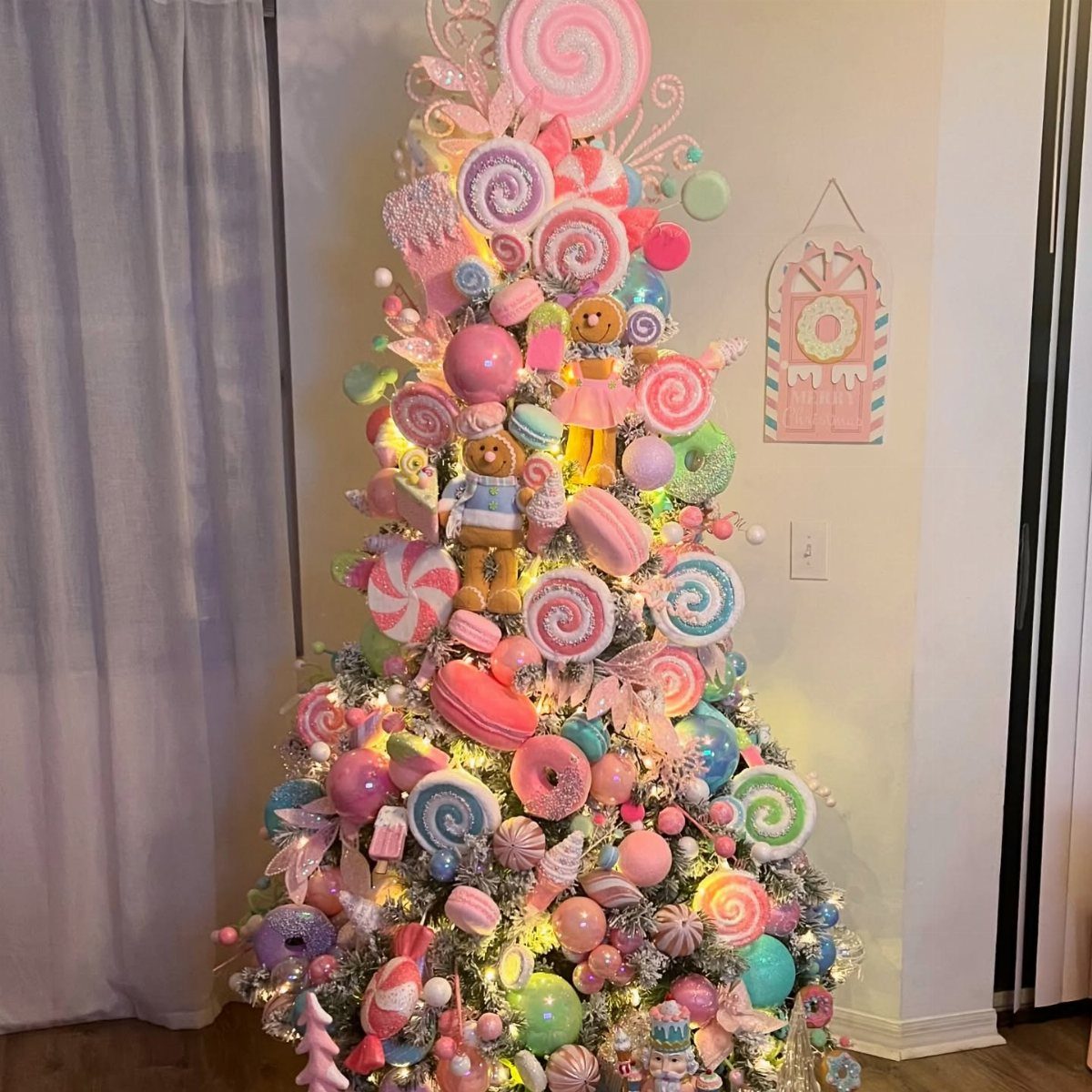
A Candyland theme works when you treat the tree as a single display rather than a collection of individual ornaments.
Oversized lollipops, macarons, and donuts mixed with smaller ornaments and a lettered banner keep the eye moving between scales so nothing feels stuck on.
I would start with the large pieces first, placing them deep into the branches so they read as growing out of the tree rather than hanging on it.
The gingerbread figures add warmth that pure candy lacks, and they are easy to make from salt dough or cinnamon-applesauce if you want the smell as well as the look.
7. Candy Themed Christmas Garland

A flocked garland carries candy ornaments better than bare greenery because the white background reads as icing.
I would buy 2 matching lengths for symmetry on a mantel or stair rail, since the eye catches repetition faster than variety. The velvet bows and striped ribbon are wired, which means they hold shape after months in a bin.
Peppermints and lollipops on this scale are lightweight resin or foam; hot glue holds them to the branches without sag. One afternoon and a few dollars’ worth of supplies, and the garland stores with the rest of your Christmas greenery.
8. Candy-Themed Christmas Tree Topper

The tree topper is where restraint goes to die, and candy theme gives you permission.
This arrangement builds upward from the crown with candy canes angled like pickets, peppermint picks filling gaps, and a wired bow taking the last vertical inches.
I would anchor the canes by tying their hooks to the trunk with floral wire; without that, the first curious cat or heating vent sends them sliding. The picks with wire stems twist in anywhere.
A bow this size needs wired ribbon in a good wide width, looped and fluffed until it holds its own weight. Done well, it reads as one piece rather than a pile, which is the difference between festive and yard-sale.
Budget-friendly Crafting Tips
PVC pipe, rigid insulation board, and foam wreath forms are the materials I reach for first because they sell at hardware-store prices and work at craft-store scale.
Paint samples from the hardware store counter give you the candy colors without the craft-paint markup.
I would buy the exterior-grade sample pots for anything that sits on a porch; the difference is a dollar or two per color and the finish lasts through thaw cycles.
Hot glue is the right adhesive for foam-to-foam and foam-to-candy bonds, but the high-temp sticks matter in cold weather. The low-temp variety turns brittle below forty degrees and drops peppermints on your doorstep by New Year’s.
Customization Options
The candy look does not require literal candy colors. A single-color story on the tree, read against white flocking or bare green, carries further than a rainbow mix because the eye reads it as intentional rather than accumulated.
I would test a palette on paper first: one main color, one lighter tint, and one near-white for highlights. The wrapped ornaments and the garland ribbon are where that second and third color live.
If your walls are warm white, a cool mint reads as deliberate contrast; if your trim is stark white, a dusty rose softens the whole room.
Patterns follow that same rule. Striped ribbon on the garland and the ornament wrappers share one scale of stripe, not two competing widths.
The gingham on the wreath bow is a different pattern family entirely, which is why I would keep it to that one piece rather than spreading it around.
Safety and Durability Advice
Outdoor paint and clear acrylic sealer are the two finishes that separate a decoration that lasts one season from one that lasts five.
Wind support is the piece most people skip.
I would stake giant lollipops with a foot of rebar driven into the ground and a PVC sleeve glued to the back of the disk; the stake takes shear force and the disk does not torque in gusts.
Candy canes need the same: a rebar upright with the PVC slipped over it, not just the cane shape standing on its own curve.
I would hang from two points, not one, with ribbon or wire looped at ten and two o’clock on the ring. A single hanger concentrates stress and pulls the glue bond apart by mid-December.
Frequently Asked Questions
How to make DIY Christmas candy decorations?
Start with simple materials like foam wreath forms, PVC pipe, and air-dry clay, which sell at hardware-store prices.
For wrapped candy ornaments, shape air-dry clay with a cookie cutter, poke a hole with a nail before it sets, and paint twisted-wrapper ends with stripes or glue thin ribbon at the seam.
What are some ideas for Candyland Christmas tree decorations?
Treat the tree as a single display with oversized lollipops, macarons, and donuts mixed with smaller ornaments and a lettered banner. Add gingerbread figures for warmth; salt dough or cinnamon-applesauce gives you the smell as well as the look.





