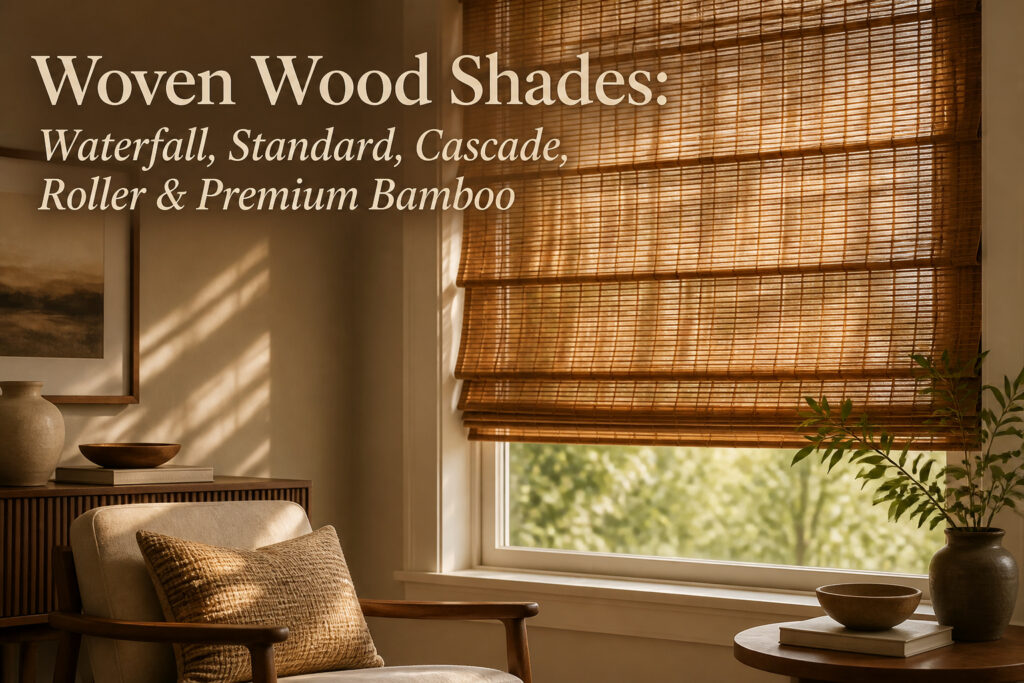
Woven wood shades are window coverings built from natural fibers like bamboo, jute, and grasses woven into a single sheet. The catch is that no two shades carry identical grain, color, or texture, so the look you order will not match the sample exactly. A 48-inch wide shade in thick bamboo weave can weigh enough that a spring-loaded cordless lift drifts downward after a few months; that weight threshold is where continuous cord loop becomes the practical choice.
[link-whisper-related-posts]What Woven Wood Shades Are
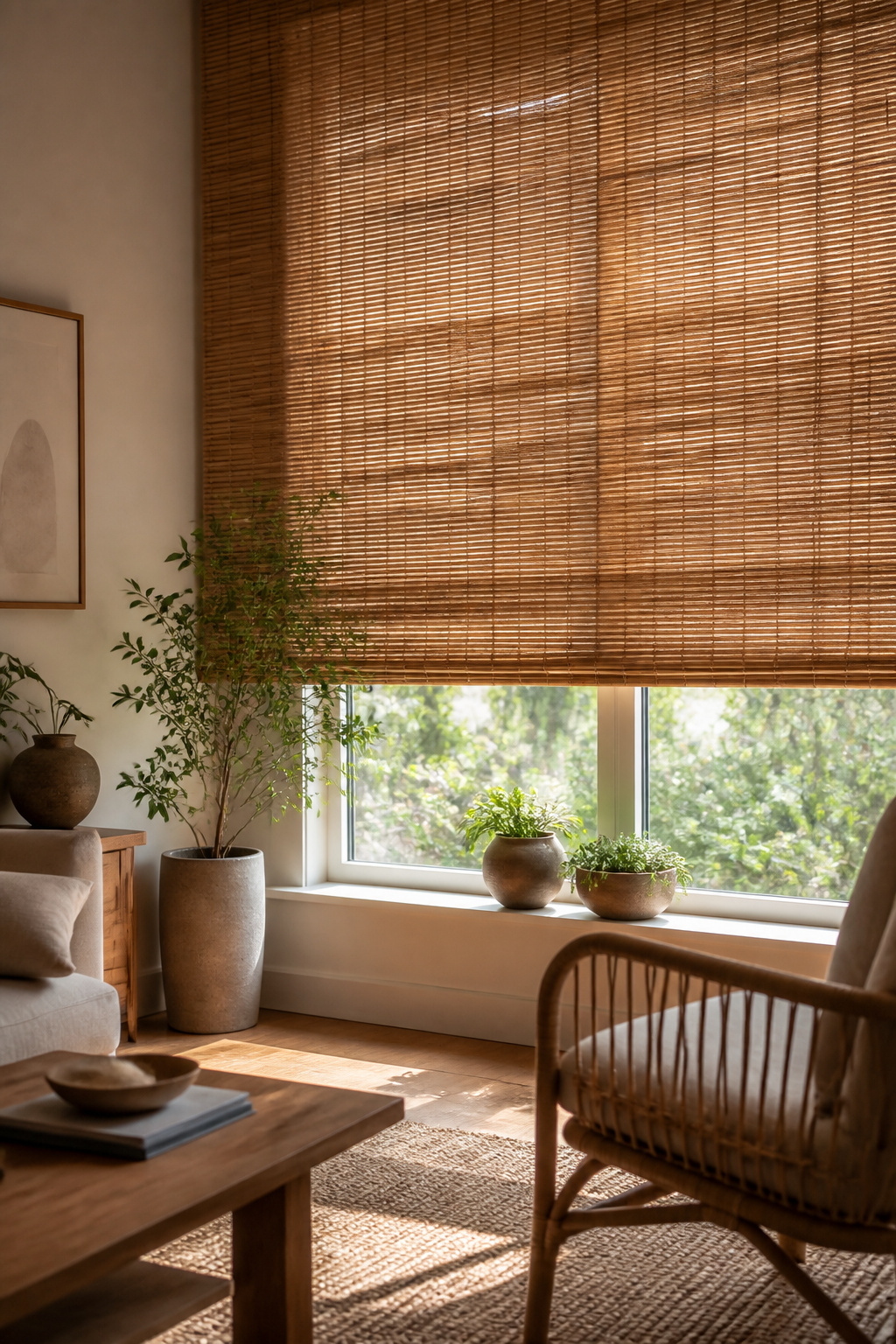
Woven wood shades are window coverings built from natural fibers, bamboo, jute, grasses, and reeds woven into a single sheet. The fibers come from sustainable sources, and the handwoven construction means no two shades carry identical grain, color, or texture. That variation is the point; synthetic shades aim for uniformity, but these lean into the irregularity of raw material.
Light passes through the small gaps between fibers rather than through the material itself. The result is a filtered, diffused glow rather than a solid block or a sheer wash. The aesthetic reads as organic and relaxed, closer to a screen or a basket than to a fabric curtain or a vinyl blind.
The natural fiber content also sets the practical limits. Bamboo and jute respond to humidity. Grasses stiffen or relax with the season. These are not flaws; they are the behavior of the material, visible and expected. A buyer who wants the look has to accept the maintenance that comes with it.
Waterfall Style
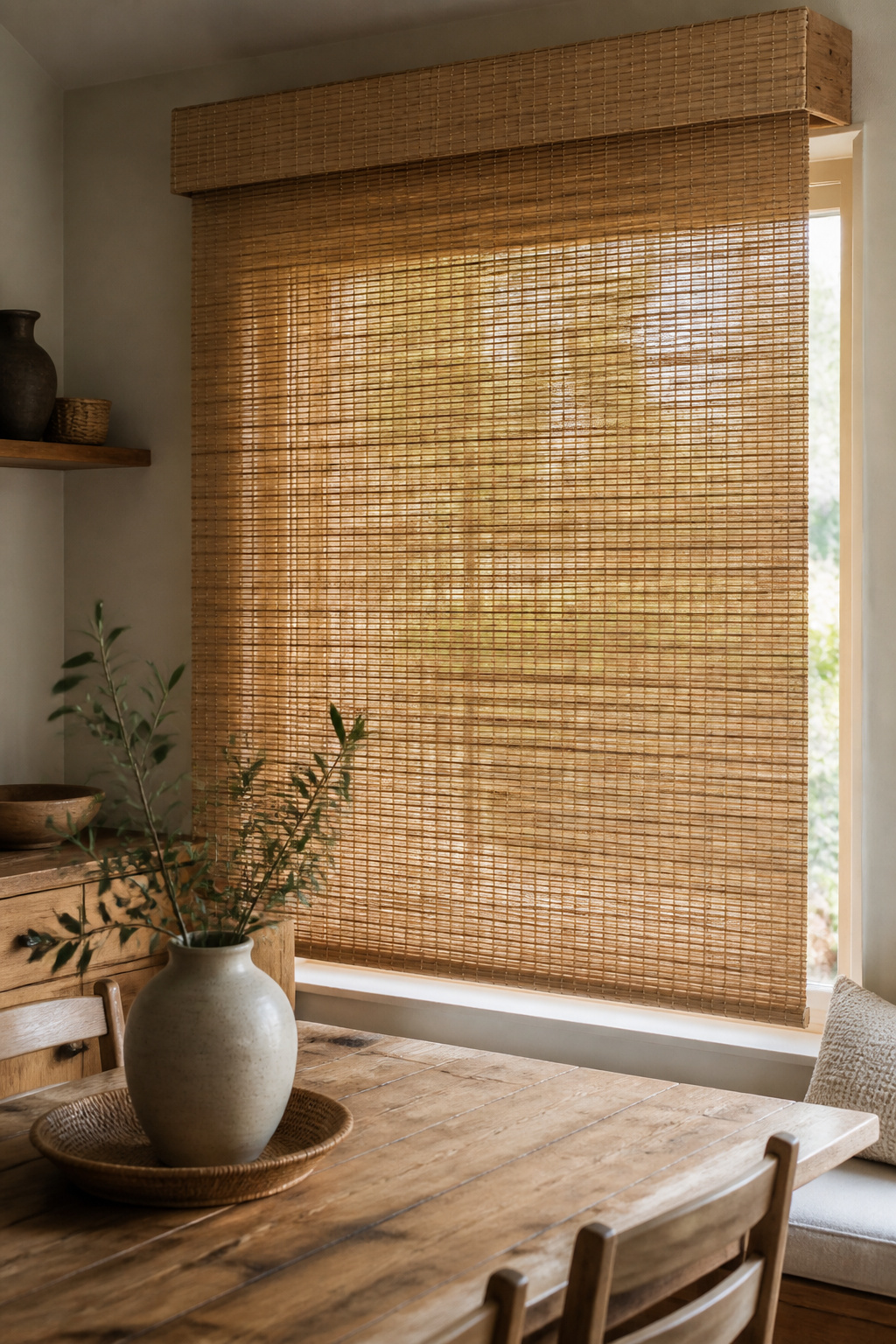
The fabric drops straight from the front of the headrail with no gap showing hardware, so the woven material itself becomes the visual headline. Bamboo and grasses fall in one continuous sheet, which reads softer than a shade that stacks flat or exposes its mechanism.
I like this style for rooms where the window is already the focal point: a breakfast nook, a landing with a single large sash, anywhere you want the texture to do the decorating. The permanent bottom fold keeps the lower edge tidy even after months of daily raising and lowering, which matters more than you’d think in a house where people actually use their shades instead of leaving them staged.
The tradeoff is that the headrail sits slightly farther out from the frame, so check your clearance if you are layering curtains or working inside a deep window seat. For renters, the payoff is the look of a custom install without the commitment of something built into the casing.
Standard Style
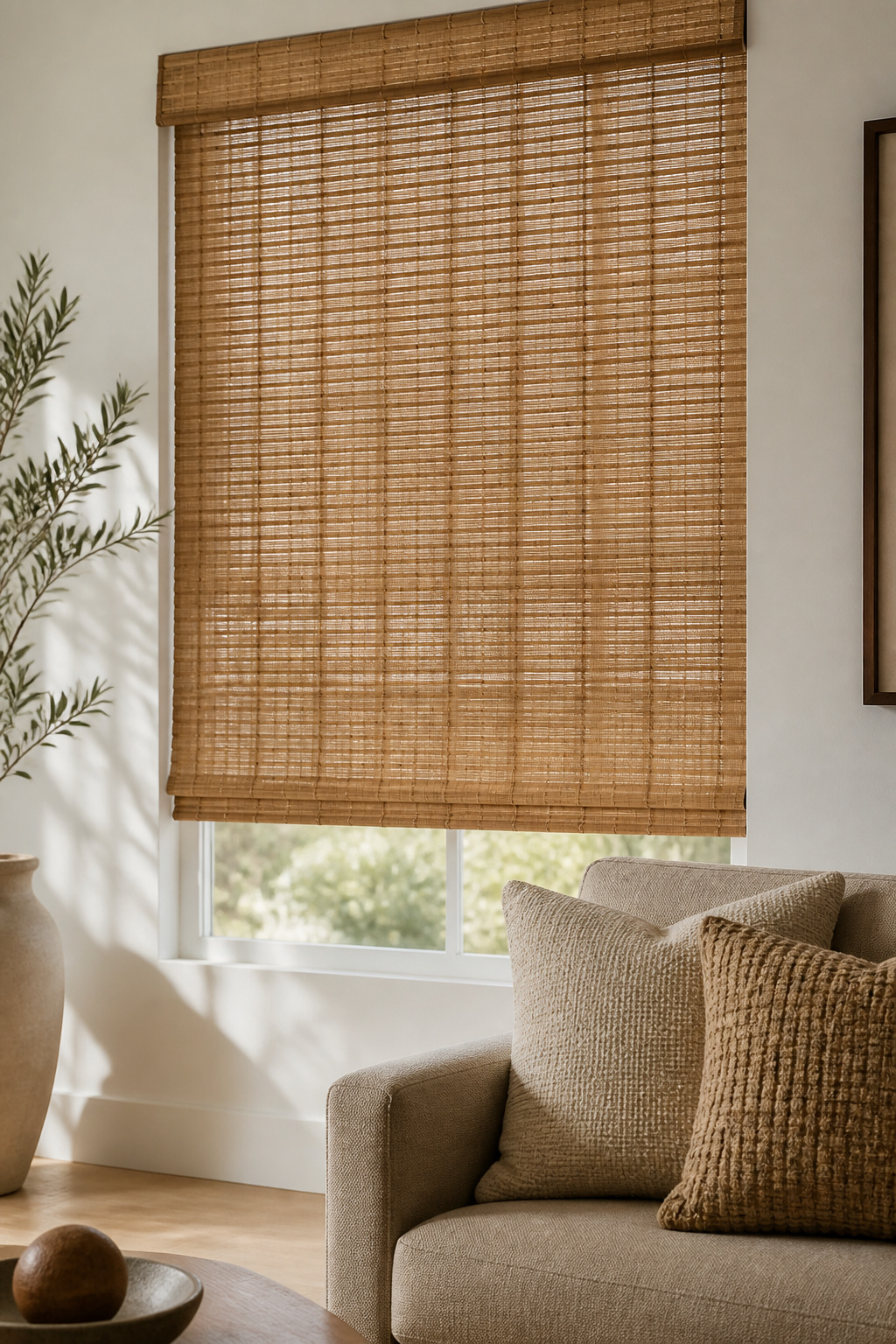
Standard woven wood shades carry a traditional look that still reads clean in most rooms. The material falls straight off the back of the headrail, which gives them those even lines people picture when they think of a classic window treatment. What keeps the hardware out of sight is the custom valance included with every shade, a detail that saves you from hunting down something compatible later. Operation stays straightforward: raise, lower, done. No extra mechanics to fuss with on a Saturday morning. For everyday use, this is the style that asks the least of you while still looking finished. If you want the texture of bamboo or grass weaves without drawing attention to the shade itself, the standard cut gets out of the way and lets the material do the work.
Cascade Style

Cascade woven wood shades carry their structure in the back, where 1/8" pockets hold dowel inserts that you never see from the room side. Hand-sewn pleats run across the face at intervals of six to roughly 6 7/8 inches, and those hidden dowels are what keep each fold crisp when the shade rises. Without them, a woven material this flexible would bunch like a bedsheet. The spacing matters more than it sounds: too wide and the stack goes slack, too narrow and you pay for pleats that do nothing but eat window. For a shade you will raise and lower daily, that internal skeleton is the difference between something that looks tailored and something that looks like a temporary fix. The seams sit on the front face, not tucked behind, so the stitching becomes part of the texture rather than hidden hardware. It is a style that reads as dressed-up without reading as formal, which is a narrow line to walk in a woven material.
Roller Style

Roller woven wood shades work on a simple tube mechanism instead of the folded Roman-style construction. Where waterfall, standard, and cascade styles all gather into stacked folds at the top, a roller shade wraps the woven material around a horizontal barrel. That difference gives you a three-inch stack sitting flush above the window frame, not a layered pile of folded material that can drop eight inches or more.
The cleaner profile matters most in rooms where every inch of glass counts. A kitchen window over the sink, a bathroom with trim molding you do not want buried, or any space where you have hung shelves or artwork tight to the frame: these are the spots where a roller mechanism earns its keep. Light still filters through the woven fibers the same way, softening the room without the bulk at the top.
I would not choose roller for every application. The tube and clutch system is more hardware than fabric, and some of the organic texture that draws people to woven wood gets visually swallowed by the rolling action. But for a rental where you want the look without permanently altering sight lines, or for a first home with low ceilings and small windows, the compact stack is often the deciding factor.
Premium Bamboo
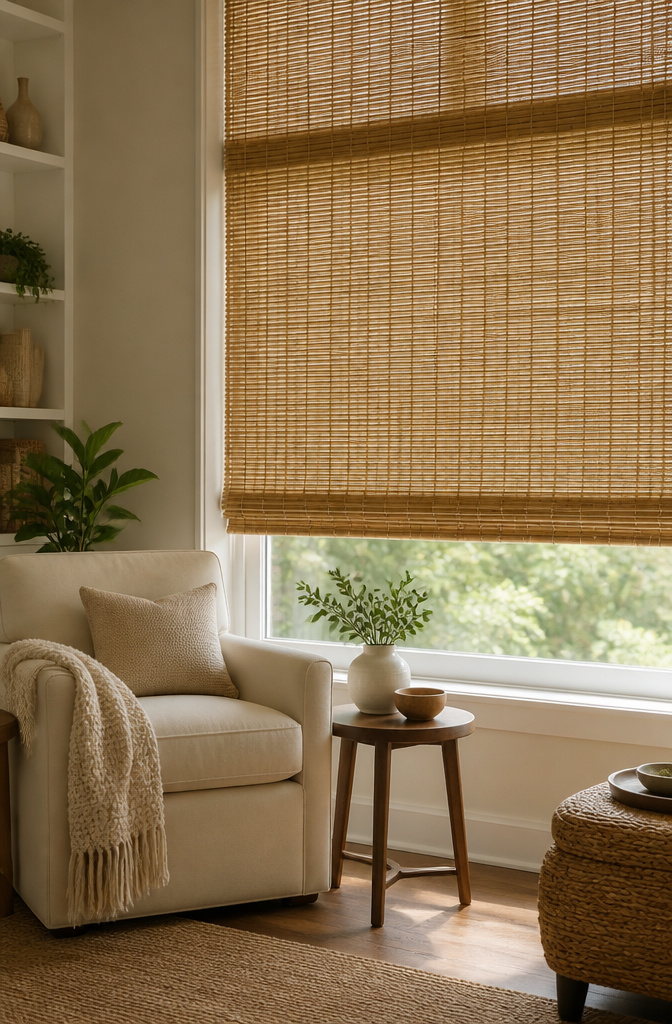
Premium bamboo woven wood shades sit a tier above the standard grade, and the difference shows up the moment you hold a sample in both hands. The bamboo, jute, and other natural fibers are woven tighter, with less variation from slat to slat, so the shade reads as one deliberate surface rather than a loose collage of whatever the harvest yielded that day. That consistency costs more, but it also means the shade keeps its shape after years of daily raising and lowering.
The tighter weave matters for light control, too. Standard shades let pinpricks of light through where the fibers gap; premium grade blocks more of it by construction, not by adding a liner you will pay extra for later. Some brands still label imperfect variations as a feature, and they are honest to do so, but the premium line is what you want if your room faces east and you are trying to sleep past sunrise without a blackout curtain layered on top.
For renters, the premium grade is a judgment call. The shade survives a move better because the material is less brittle, yet you are spending more on something you might leave behind. My own rule: premium bamboo for the one window you face every morning, standard grade for the laundry room you barely notice.
Control Options
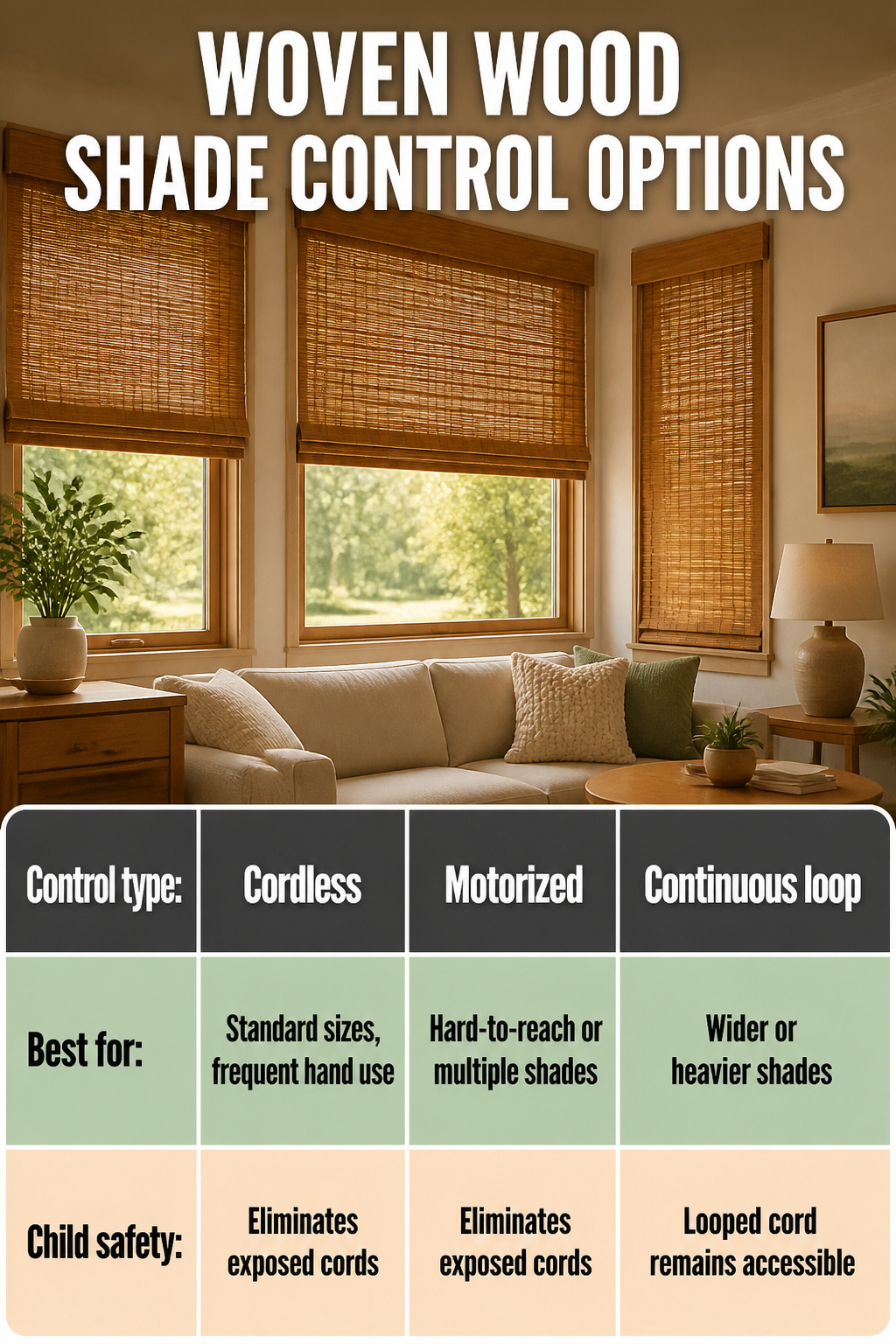
Cordless and motorized lifts on woven wood shades remove the dangling cord hazard entirely, which matters if you have toddlers or if your living room doubles as a play zone on rainy Saturdays. The cordless version runs on a spring-loaded system inside the headrail; you push up or pull down on the bottom bar and it stays where you leave it. Motorized adds a small tube motor and a remote or app, useful for shades mounted behind furniture where reaching the bottom bar means moving a sofa.
Continuous loop is the third option, and it exists because woven wood gets heavy fast. A 48-inch wide shade in a thick bamboo weave can weigh enough that a spring would fight you or a motor would need upsizing. The looped bead chain runs through a clutch mechanism that gears the load down, so one hand and a few inches of pull raises or lowers the full drop without strain.
| Control type | Best for | Child safety |
|---|---|---|
| Cordless | Standard sizes, frequent hand use | Eliminates exposed cords |
| Motorized | Hard-to-reach or multiple shades | Eliminates exposed cords |
| Continuous loop | Wider or heavier shades | Looped cord remains accessible |
I ordered cordless for a bedroom and it worked fine until I went wider than 36 inches; the shade drifted down on its own after a few months. The replacement under warranty switched to continuous loop, and the clutch held steady. If I were doing it again, I would size the break point closer to 30 inches for a medium-weight weave rather than trust the catalog cutoff.
Liner Choices

Liner choice is where most people second-guess themselves with woven wood shades, and the three options break cleanly by room. No liner leaves the weave fully visible and lets the most light through, which works well in a kitchen or sunroom where the texture itself is the point. A privacy liner, typically a 50/50 polyester-cotton blend fixed to the back, softens the incoming light without turning the room dark; that middle ground suits living rooms and dining areas where you want coverage without a cave effect. For bedrooms or any space with a screen, the blackout liner is 100% polyester and blocks light entirely.
The gap between privacy and blackout is wider than it sounds. Privacy fabric still silhouettes movement at night, so street-facing windows in a ground-floor bedroom need the heavier layer. In my own reading through options, the upgrade to blackout rarely costs as much as people fear, but it does add weight that affects how the shade hangs and how smoothly it raises. If you are ordering waterfall, standard, or cascade styles, both liner types are available; roller shades handle the question differently with their exposed or sewn-in bottom bar, and the liner integration varies by hardware choice.
Measuring and Installing

- Inside-mount woven wood shades need three measurements per window: width at the top, middle, and bottom of the frame; height at the left, center, and right. The smallest width and the longest height are what you order, since the factory deducts a fraction of an inch for hardware clearance.
- Outside-mount shades hang on the wall or molding and cover the full frame plus overlap. Two inches of extra width on each side blocks more light; add three inches to the height if you want the shade to stack above the window when raised.
- A steel tape measure beats a cloth one here. I keep a notebook with sketches, because "left side" and "right side" flip depending on which room I am standing in, and ordering a 34-inch shade when I needed 43 is a mistake that survives all the way to unboxing.
- Professional measurement and installation is available at additional charge. The minimum trip fee runs $250, with installation priced at 10 percent of the product list price for non-motorized shades and 15 percent for motorized versions. That percentage applies before any discounts, so a $600 shade with a coupon still bills installation against the full $600.
- DIY installation takes a drill, level, and about forty minutes per window if the brackets align with studs. Hollow-wall anchors work but add time and a small wobble risk; I have learned to buy a size up and accept the extra hole if the first try drifts.
Customization Details

Edge binding is the detail most people skip on the first order and reconsider once the shade is up. A one-inch fabric strip, folded to a half-inch and run along the edges, covers the weave and protects against fraying. The color list runs from white and cream through gray and black, with pecan, mocha, and chocolate in between. I tend toward the darker bindings on lighter weaves; the contrast reads intentional rather than like an afterthought.
The no-binding option leaves the weave exposed. It gives a rougher, more traditional look that works in spaces where the imperfection reads as character. In a rental, that exposed edge can snag if you are moving furniture or have a narrow hallway with bags brushing past.
What no one tells you upfront is that natural variation means two shades ordered from the same material will not match. The bamboo, jute, or grass fibers carry color shifts and texture differences that make each shade its own piece. Ordering multiples for one room, I always request them cut from the same production lot if possible, and I hang adjacent windows side by side the same day so any difference reads as gradual rather than jarring. If the variation still bothers you, edge binding in a consistent color can visually unify the set.
Materials Compared

Bamboo carries the tightest weave and the most predictable grain, which makes it the default for rooms that see hard use. Jute loosens up the texture with thicker, more irregular strands, and grasses fall somewhere between the two for stiffness but can fray at the edges over time. Bali Natural Shades uses all four: bamboo, jute, grass, and American hardwood, so the material choice is built into the product line rather than an afterthought.
| Material | Durability | Texture | Best match |
|---|---|---|---|
| Bamboo | Highest | Tight, even grain | High-traffic windows, kitchens |
| Jute | Moderate | Loose, coarse | Bedrooms, low-traffic spaces |
| Grasses | Moderate | Medium stiffness | Living rooms, layered looks |
| American hardwood | Highest | Solid, non-woven | Accent panels or borders |
Hardwood trim on a bamboo body is the combination that survives daily cord pulls and afternoon sun without sagging. Jute softens a room but the open weave lets more light through, so plan on a liner if privacy matters. Grasses look relaxed but the strands can work loose at the hem after a few years of raising and lowering.
What I Watch For

Samples of woven wood shades rarely match the finished product. The weave tightens during production, and the stain darkens under factory finish, so a light honey sample can arrive as something closer to amber. Order the largest sample a company offers and live with it in the window for a full day of light before you commit.
Weight is the next thing that changes the math. A six-foot woven wood shade carries enough heft that standard mounting brackets fatigue over time. On anything wider than about four feet, I switch to a continuous cord loop or motorized lift; the corded standard option starts to feel like raising a window by its shoelaces.
Bathrooms are a hard no unless you are running the exhaust fan like a white noise machine. The grass and bamboo fibers absorb steam, then dry unevenly, and the weave loosens into a slight sag that no amount of tension fixes. I learned that on a half bath with a shower I swore nobody used. The shade made it eighteen months before the bottom rail sat visibly off level.
Aging is less dramatic than you would expect, but it is directional. The side facing the sun shifts color first, and the difference between the exposed face and the folded-up stack becomes obvious after a couple of years. Rotating the shade top-to-bottom is not practical, so I plan the fade into the color choice from the start.
Frequently Asked Questions
What are woven wood shades?
Woven wood shades are window coverings handwoven from natural fibers like bamboo, jute, grasses, and reeds into a single sheet. Light filters through the small gaps between fibers, creating a soft, diffused glow rather than a solid block or sheer wash. Each shade carries unique grain, color, and texture because no two pieces of raw material are identical.
How do I install woven wood shades?
You can install woven wood shades yourself with a drill, level, and about forty minutes per window, or hire a professional starting at a $250 trip fee plus 10 percent of the product price for non-motorized shades or 15 percent for motorized. For inside mounts, measure width at three heights and height at three widths, then order the smallest width and longest height. Outside mounts need extra overlap: two inches per side for width, three inches for height if you want the stack hidden above the frame.
What are the different styles of woven wood shades?
The four styles are Waterfall, Standard, Cascade, and Roller. Waterfall drops straight from the front of the headrail for a continuous sheet of visible material. Standard hangs from the back of the headrail with a custom valance included. Cascade uses hidden 1/8" pockets with dowel inserts to hold crisp hand-sewn pleats. Roller wraps around a horizontal tube, leaving just a three-inch stack above the frame instead of folded material.
What control options are available for woven wood shades?
Control options are cordless, motorized, and continuous loop. Cordless uses a spring-loaded system inside the headrail; you push or pull the bottom bar and it stays put. Motorized adds a tube motor with remote or app control, useful for shades behind furniture. Continuous loop runs a beaded chain through a clutch mechanism to gear down the load, which is the practical choice for wider or heavier shades that would strain a spring or need an upsized motor.