
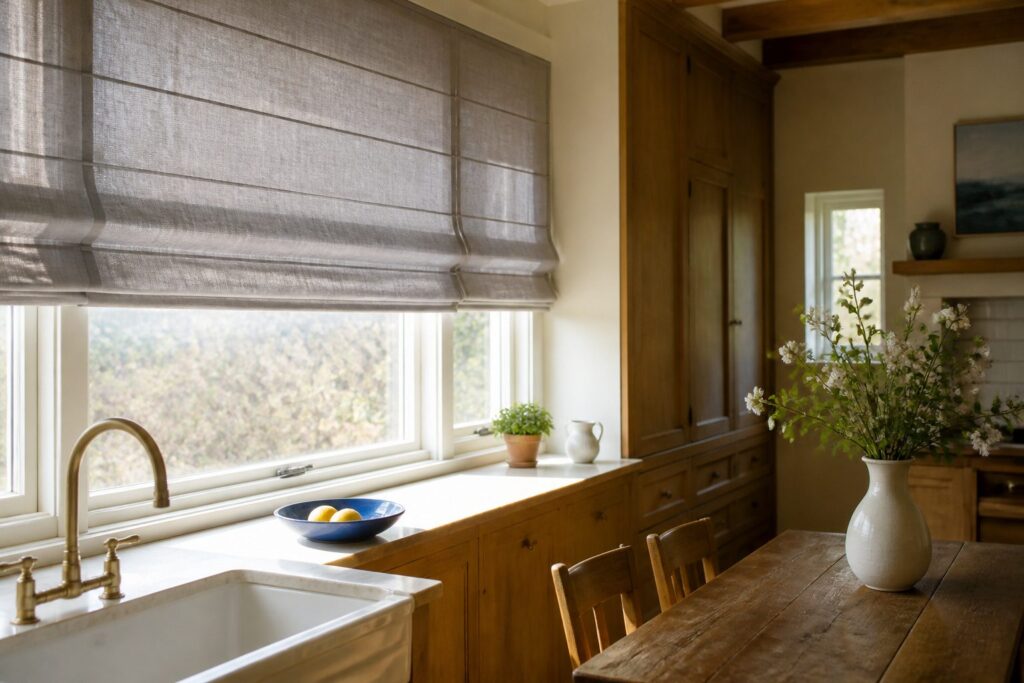
A plain fold roman shade lies flat against the glass when lowered, with horizontal seams every few inches that let it collapse into even pleats as you raise it.
The spacing of those seams is the detail that decides everything: closer intervals give tighter folds, wider ones keep the lowered face cleaner but stack taller at the top.
That trade-off between lowered look and raised bulk is what makes or breaks this style for a given window.
What Plain Fold Roman Shades Actually Are
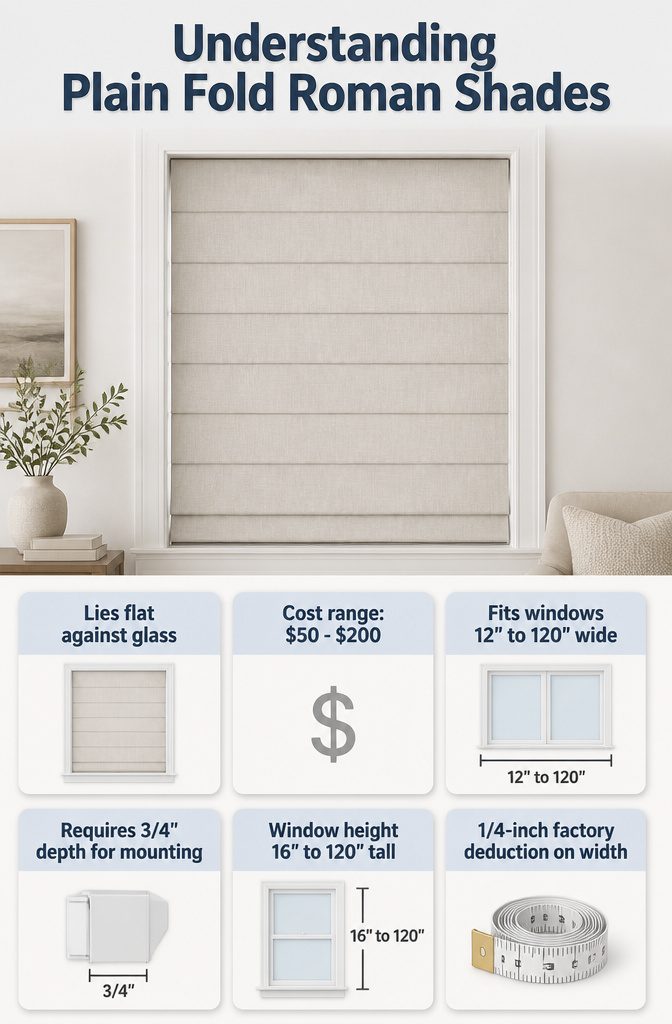
A plain fold roman shade is the style that lies flat and smooth against the glass when fully lowered.
Horizontal seams spaced every few inches run the length of the fabric, and those seams create the structure that lets the shade fold into neat, even pleats as you raise it.
The spacing matters more than most people notice at first: closer seams give tighter, more compact folds, while wider spacing keeps the lowered face cleaner but stacks taller at the top.
These shades fit windows from 12 inches up to 120 inches wide, and from 16 to 120 inches tall. That range covers most standard residential windows, though anything above about 84 inches in either direction moves you into custom territory where lead times stretch.
The headrail measures 3/4 inch high by 1-3/4 inches deep, a slim profile that sits close to the frame and works well on French doors or any window where you do not want hardware projecting into the room.
The 1/4-inch factory deduction on width is standard, so order the exact window opening and let the maker handle the clearance.
1. Seam Design
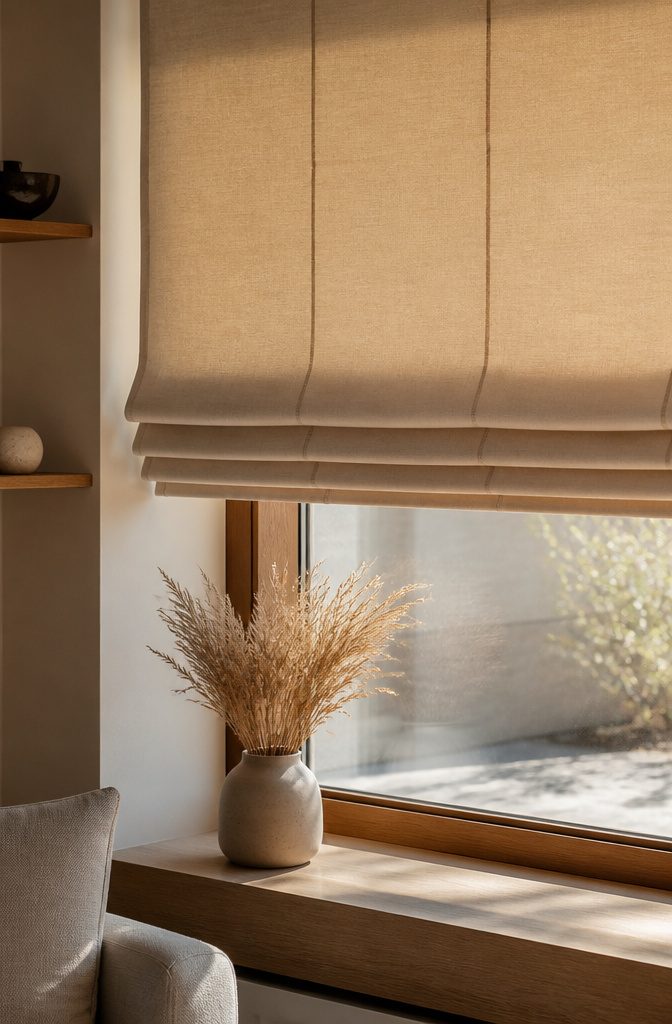
The seams on a plain fold roman shade sit a few inches apart across the full length of the fabric, and that spacing is what gives the face its depth when the shade is lowered.
On a solid color, the slight shadow between each seam keeps the surface from reading as flat fabric on glass.
You feel it right away: the same seams break up a pattern, so I steer renters and first-home owners toward plains and textures rather than prints for this fold style.
Raised, those evenly spaced seams act as built-in guides.
The fabric collapses along each line into consistent, level folds instead of bunching unevenly, which is why this construction holds up to daily use better than styles that rely on stiffness or weight to keep their shape.
The shade stays tidy coming up and down, and there is less strain on any single point of the lift system because the load distributes across each seam.
The slim profile helps here too. Because the stack stays compact and even, the shade works in shallow windows and on French doors where a thicker fold would block clearance or sight lines.
For a window you open and close every morning, that combination of even folds and seam-guided structure is the practical reason plain fold roman shades outlast fussier styles on a real budget.
2. Minimalist Aesthetic
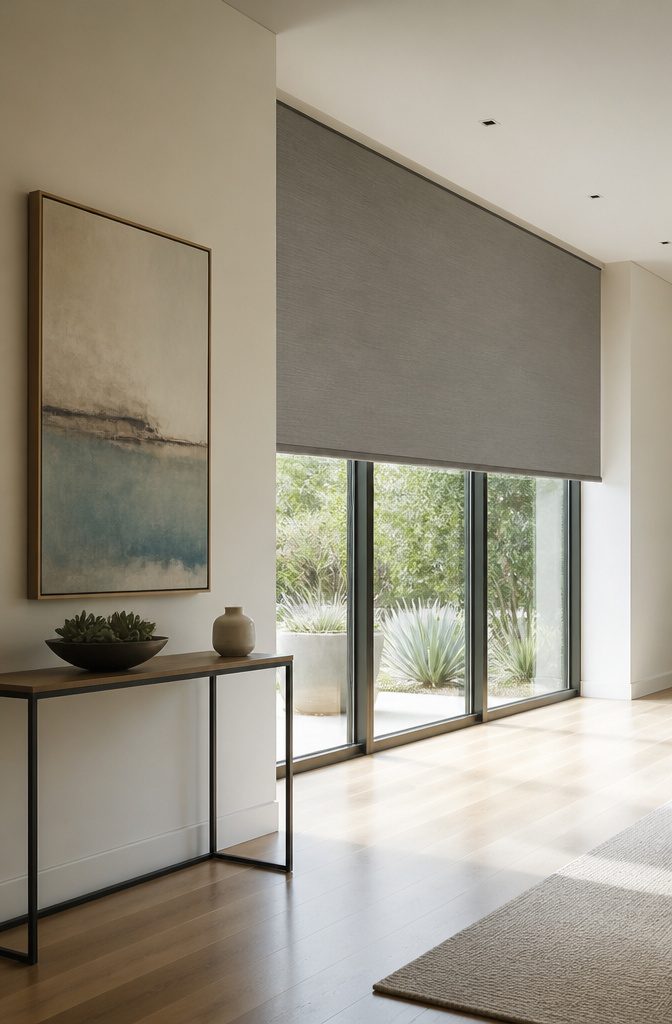
The flat, seam-free face of a plain fold roman shade reads as simpler than hobbled styles with their cascading poufs or relaxed versions with their deliberate droop.
That uninterrupted surface draws the eye straight across, which is exactly what modern interiors ask for.
I tend to recommend this style for rooms where the architecture or the view already does the work: a wall of glass facing a backyard, windows with clean casing, spaces where you do not want the window treatment competing for attention.
The slim profile also helps on shallow windows and French doors where a deeper stack would crowd the glass.
What you give up is motion. Because the face has no seams, the bottom edge sometimes needs a quick straightening when you raise the shade.
Hobbled folds hide that kind of shift inside their poufs. For me, the cleaner lowered look wins that exchange every time, but it is a choice, not a free upgrade.
3. Fabric and Lining Options
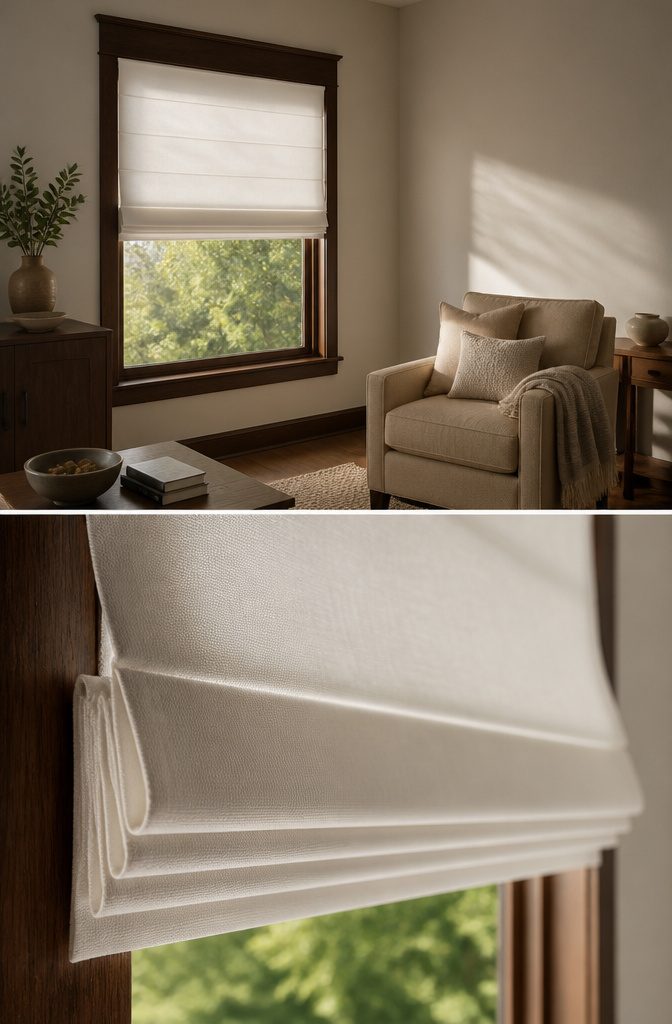
The fabric you choose for plain fold roman shades decides whether the finished shade holds a crisp line or relaxes into soft folds.
Roman shade-specific fabrics are engineered to keep their shape, resist sagging, and deliver that clean, tailored look the style is known for.
Regular drapery fabrics work too, but they read more casual, with gentle wrinkles and a looser drape that suits relaxed spaces.
Lining is where function separates from look.
Light-filtering lining softens daylight and keeps some privacy without killing the glow of a room. Blackout lining, achieved with either a lightweight coating on shade-specific fabrics or a heavier separate liner on drapery fabrics, blocks light completely.
I put blackout in bedrooms and media rooms every time. For living spaces where you want the room to feel awake, light-filtering wins.
The cost is real: blackout adds weight and changes how the shade stacks at the top, while unlined or light-filtered fabrics stay lighter and neater in that folded profile.
4. Light Control and Privacy
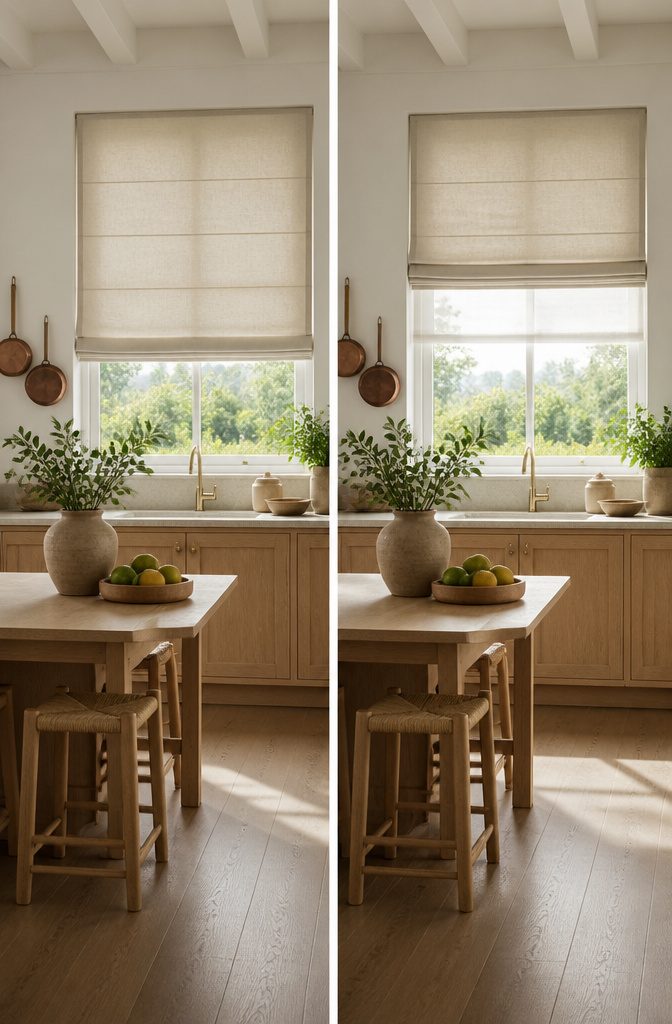
Plain fold roman shades do not, by themselves, block much light or guarantee privacy. The construction is simply a flat panel that stacks into folds when raised; the fabric density and lining you choose decide what actually reaches your room.
A lightweight cotton or linen face fabric with no lining will glow by noon and silhouette anyone standing near it after dark.
That can work in a dining room where you want daylight and do not face a neighbor, but it fails in a street-facing bedroom. Add a standard lining and you get opacity at night while preserving some daylight texture.
Move up to blackout lining, available in grades that add roughly 10% or 25% to the base price depending on the level you choose, and the same plain fold shade turns a south-facing window dark enough for a migraine or a toddler’s nap.
The plain fold’s advantage here is that its flat face shows the lining color cleanly when the shade is lifted partway. A more complicated fold style would break up that edge and let light leak through the seams.
With plain fold, the only light path is through the fabric itself, so your decision is straightforward: pick the face material for how it looks lowered, then pick the lining for how you need the room to feel at 6 a.m. and 9 p.m.
5. Inside or Outside Mount
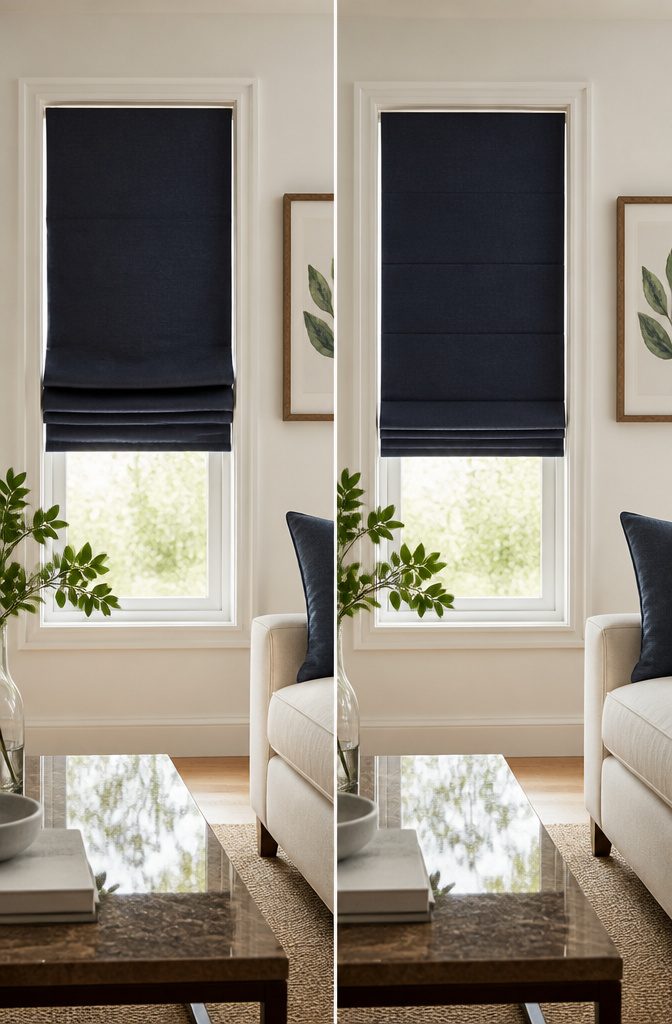
Inside mount tucks the shade into the window frame so the fabric stacks between the jambs and the trim stays visible.
For plain fold roman shades, the frame needs at least ¾ inch of depth for a secure fit, and 1¼ inches is the practical minimum to avoid the headrail jutting past the plane of the wall.
Two inches gives you a true flush mount. The factory deducts ⅜ inch from the ordered width so the shade rides without scraping the sides, but that gap lets in a sliver of light at the edges.
Outside mount brackets to the wall or trim above the window frame and drops past the bottom edge to cover the entire opening.
Standard L brackets run 1 inch by 1 inch, and a 6-inch valance comes with continuous cord loop orders to hide the hardware.
This is the move when your frame is too shallow, when you want to hide unattractive molding, or when blocking every trace of light matters more than preserving the trim.
I default to outside mount in rentals with cheap vinyl windows and inside mount anywhere the carpentry is worth showing off. You choose between clean lines and maximum coverage, and the frame depth decides it before taste even enters.
6. Durability for Daily Use
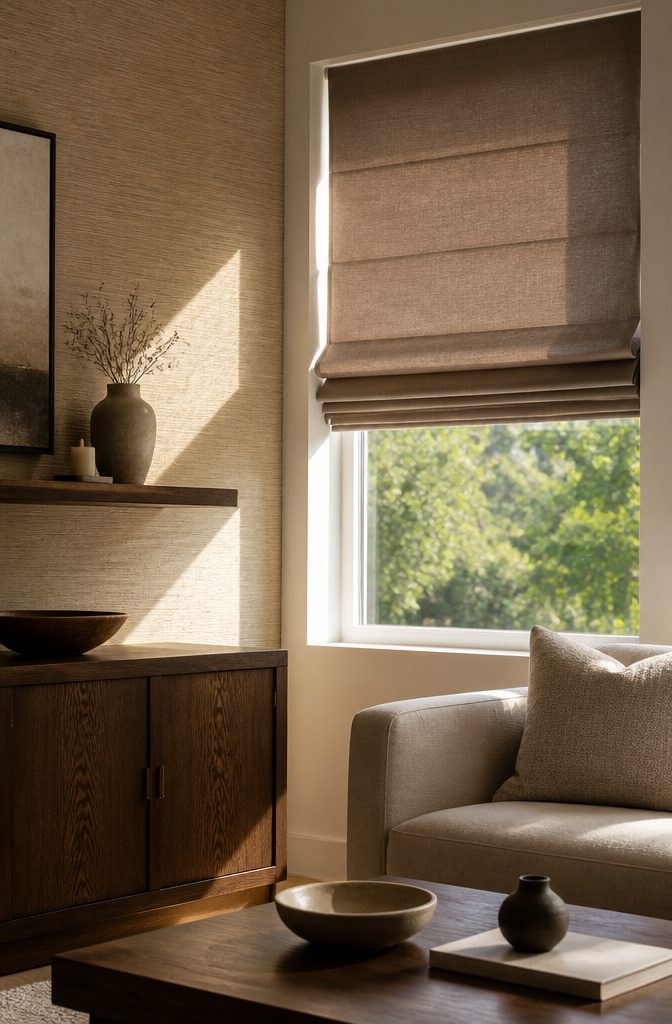
The single horizontal seam per fold in a plain fold roman shade is what keeps the stack straight after years of daily use.
Each fold is stitched directly to the lift cord rings, so the fabric settles into the same line every time you raise it.
Styles with more elaborate fold arrangements, waterfall folds or knife pleats, introduce multiple tension points and extra stitching that can sag or shift as the fabric ages.
That simpler construction also means fewer failure points. A flat fold shade relies on small tack stitches to form pleat memory after the first few days raised; plain fold builds that memory into the seam itself.
Over time, the shade trained by its own weight and repeated motion holds its shape without the bottom rail drifting out of level, which flat fold owners sometimes notice and have to correct by hand.
For a renter planning to take the shade along at move-out, or a first-home owner who wants the project to last until the next reno budget, plain fold wins on longevity per dollar.
What you pay is visual: you see those seams when the shade is down. I think that is a fair exchange for hardware that still works smoothly in year five.
Measuring and Installation
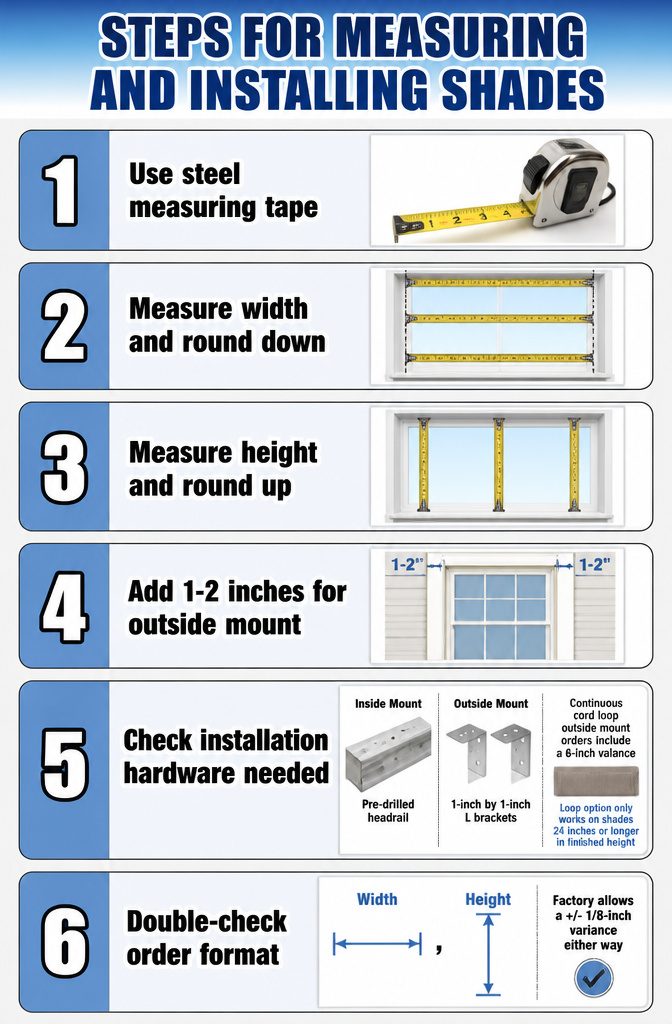
- A steel measuring tape is the only tool worth grabbing here; cloth tapes stretch and throw off the 1/8-inch precision these shades demand. For inside mount, measure the width at the top, middle, and bottom of the window box, then use the smallest width and round down to the nearest 1/8 inch. The factory deducts 3/8 inch from that ordered width for the headrail and fabric to clear the frame.
- Height for inside mount works the opposite way: measure left, center, and right, then take the longest measurement and round up to the nearest 1/8 inch. The shade needs to reach from the top of the window frame to the inside bottom of the sill, no gaps.
- Depth matters for plain fold construction specifically. You need at least 3/4 inch of window box depth just to mount securely, and 2 inches if you want the headrail flush with the frame; anything between 1-1/4 and 2 inches leaves the headrail protruding slightly.
- Outside mount changes the math entirely. Measure the outer edge of the trim or frame, then add 1 to 2 inches past the opening on each side if you lack molding; you want to cover the full frame plus block light bleed. For height, measure from where the headrail will sit above the frame down to just below the bottom trim edge.
- Installation hardware differs by mount type. Inside mount uses the pre-drilled headrail directly; outside mount relies on 1-inch by 1-inch L brackets as standard. Continuous cord loop outside mount orders include a 6-inch valance to hide the control mechanism, and that loop option only works on shades 24 inches or longer in finished height.
- Double-check the format before ordering: width first, then height, with the factory allowing a +/- 1/8-inch variance either way.
Cordless and Safety Features
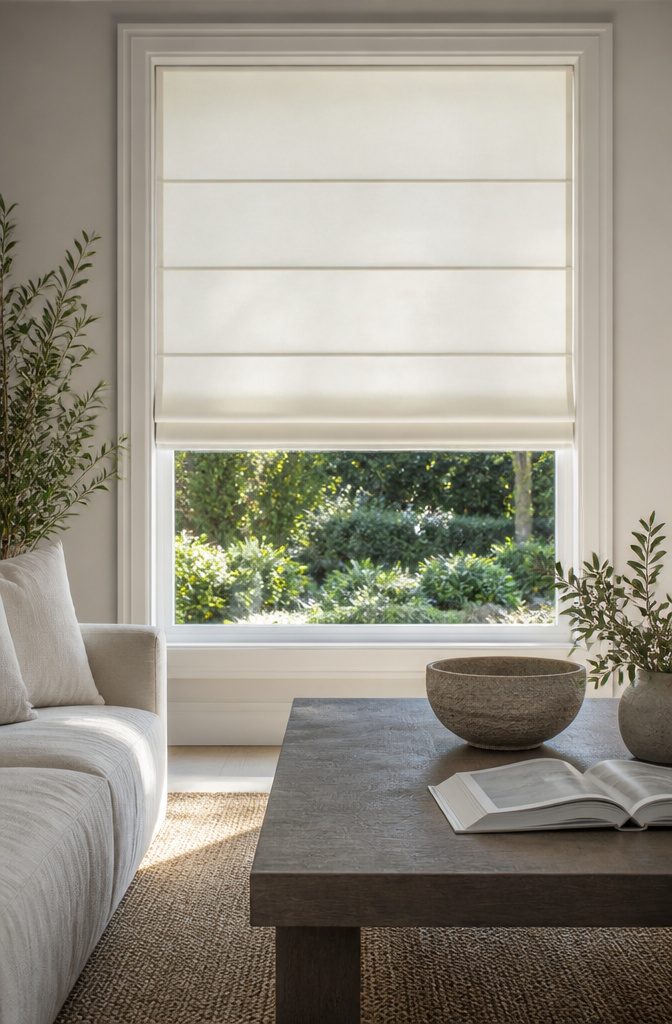
Cordless lift on a plain fold roman shade swaps the standard cord-and-tassel system for a spring-loaded mechanism or a motorized wand hidden inside the frame.
The shade still stacks in the same neat, flat folds when raised; the only difference is what you grab to move it.
You push up from the bottom rail or pull down gently, and the internal tension holds the fabric at whatever height you leave it.
For homes with children or pets, this eliminates the dangling cord hazard entirely.
The Consumer Product Safety Commission identifies corded window coverings as one of the top five hidden dangers in American homes, and cordless operation removes that risk without changing the look of the shade itself.
It is a mechanism choice, not a style departure from the plain fold.
What you pay is cost and feel. Cordless hardware adds roughly $40–$80 per shade depending on width, and the lift requires slightly more effort at larger sizes.
I would skip it only on windows a child or pet genuinely cannot reach, which in most homes is none of them.
Where Moisture Resistance Matters
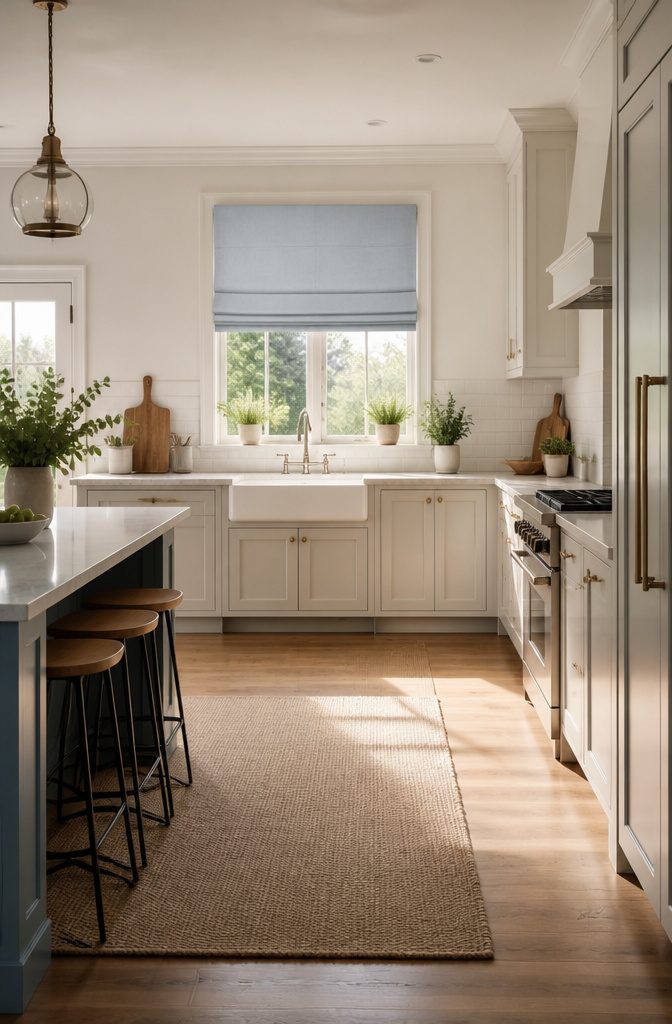
Moisture-resistant fabric treatments for plain fold roman shades make sense in kitchens, where steam from the stove and splatter from the counter are daily realities.
The finish repels humidity rather than soaking it in, so the folds keep their shape and the shade stays easy to wipe down.
Bathrooms are a different call. The same stacked fabric that looks crisp in a bedroom holds moisture in all those layers, which means mold risk and a longer dry time after showers.
A bathroom with a small window and a fan that runs reliably might still work, but a steamy primary bath with poor ventilation is where I would switch to a hard treatment instead.
When you are ordering, ask whether the moisture-resistant treatment is a topical spray or inherent to the fiber.
Topical finishes wear off with cleaning and sun; inherent ones last the life of the fabric. Also ask if the lining is treated too, since an untreated lining behind a treated face still soaks up humidity from the room side.
Energy Efficiency from Layers
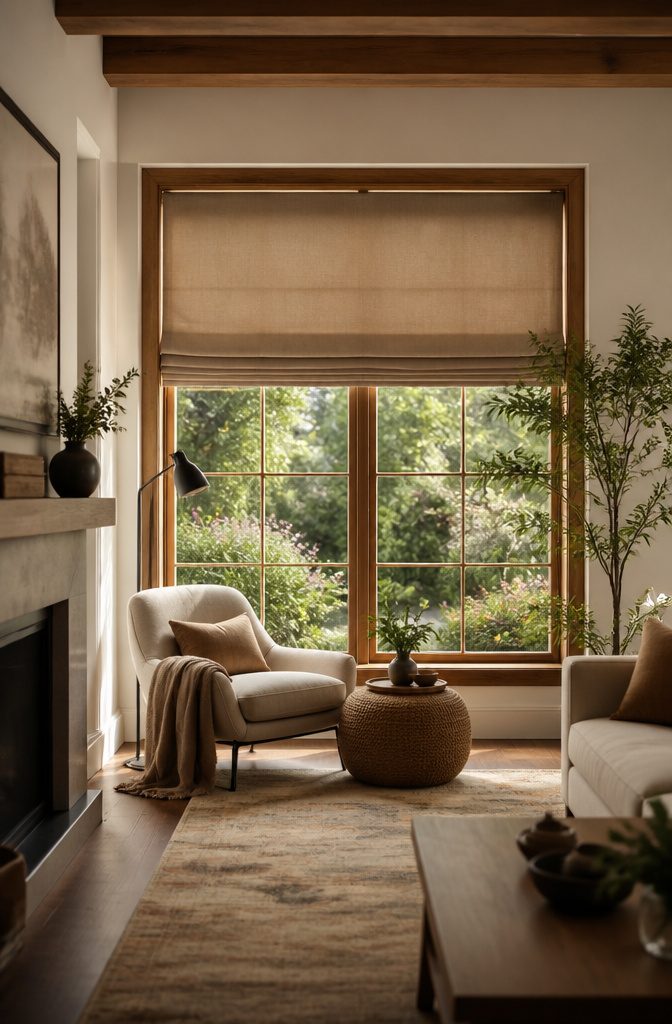
A plain fold roman shade with a good lining does more for temperature than most people expect, though it will not replace weatherstripping or a dedicated cellular shade.
The fabric itself blocks direct sun, but the real work happens in the gap between the face cloth and the lining. That trapped air acts as a buffer, slowing heat transfer through the glass in both directions.
In summer it keeps some of the afternoon load out; in winter it keeps the warmth you paid for from radiating straight to the pane.
The gap is narrow, so the effect is modest. You will notice it most on a window you sit near, not on the utility bill.
If your house has single-pane glass or metal frames, the shade helps the room feel less drafty, but the lining weight matters more than the face fabric for this.
A cotton sateen lining adds more resistance than a thin polycotton, and an interlining, the flannel-like layer some makers sandwich in, adds a little more still.
Do not buy these expecting the R-value of a honeycomb. A cellular shade builds sealed cells on purpose; a roman shade builds them by accident, and they collapse when the shade is raised.
For a renter who cannot swap the window, this is a reasonable middle ground. For someone who owns the place, caulk and a storm panel do more for less money, but they do not look like anything.
Frequently Asked Questions
What are plain fold roman shades?
Plain fold roman shades are window coverings that lie flat and smooth against the glass when lowered, with horizontal seams spaced every few inches that create neat, even pleats when raised.
The spacing between seams determines how compact the folded stack is at the top.
They fit windows from 12 inches up to 120 inches wide and 16 to 120 inches tall, with a slim 3/4-inch by 1-3/4-inch headrail that sits close to the frame.
How do I install plain fold roman shades?
For inside mount, measure width at the top, middle, and bottom of the window box, use the smallest width, and round down to the nearest 1/8 inch; for height, measure left, center, and right, use the longest measurement, and round up to the nearest 1/8 inch.
You need at least 3/4 inch of window box depth to mount securely, and 2 inches for a truly flush mount.
Outside mount brackets to the wall or trim above the frame with standard 1-inch by 1-inch L brackets, adding 1 to 2 inches past the opening on each side for full coverage.
What type of fabric is best for plain fold roman shades?
Roman shade-specific fabrics are engineered to keep their shape and resist sagging, delivering the crisp, tailored look this style is known for.
Regular drapery fabrics work too but read more casual with gentle wrinkles and a looser drape. For plain fold construction specifically, plains and textures generally work better than prints because the horizontal seams break up patterns.
Light-filtering lining suits living spaces where you want daylight, while blackout lining, achieved with either a coating on shade-specific fabrics or a heavier separate liner, blocks light completely for bedrooms and media rooms.
What are some common problems with plain fold roman shades?
The bottom edge sometimes needs a quick straightening when you raise the shade, since the seamless face does not hide shifts the way hobbled folds do inside their poufs.
The horizontal seams also break up patterns, so prints can look interrupted rather than continuous. In bathrooms, the stacked fabric layers hold moisture and create mold risk in poorly ventilated spaces.
And while the flat face shows lining color cleanly when partway lifted, a lightweight fabric with no lining will glow by noon and silhouette anyone near it after dark.
Where can I find made-to-measure plain fold roman shades?
Standard sizes cover most residential windows, but anything above about 84 inches in either direction moves you into custom territory where lead times stretch.
The factory deducts 1/4 inch from the ordered width as standard for clearance, so order the exact window opening and let the maker handle the deduction.
When ordering, specify width first, then height, with a +/- 1/8-inch variance allowed either way. Continuous cord loop options require a finished height of at least 24 inches.





