
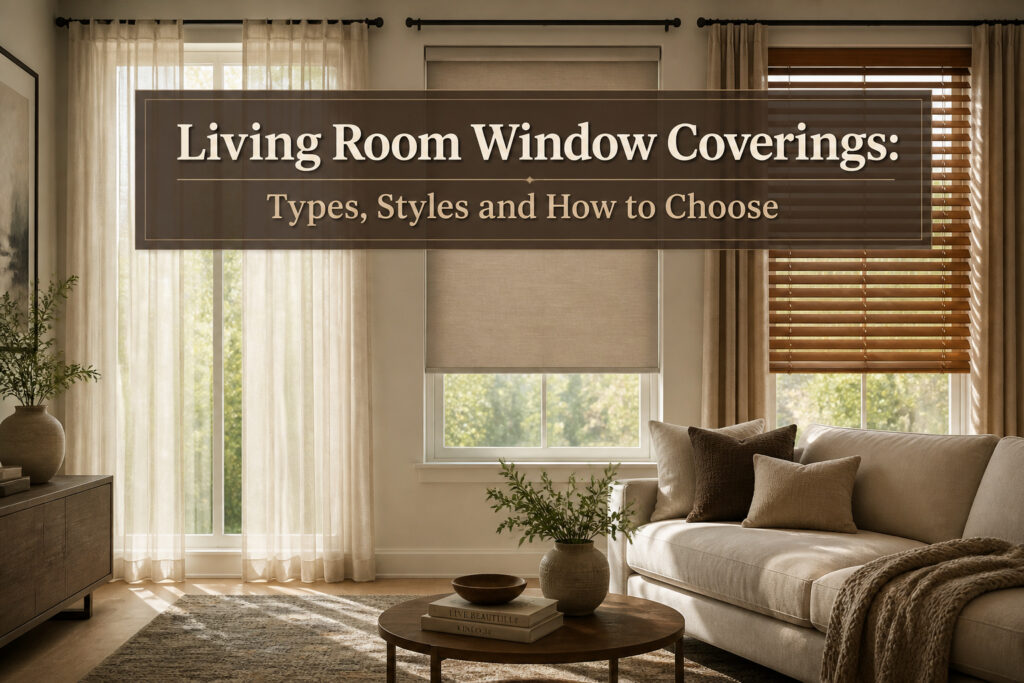
Living room window coverings are the shades, blinds, drapery and layered combinations that control light, privacy and temperature at the window. The catch is that no single treatment handles all three jobs well; a roller shade blocks sun completely but offers no middle ground, while sheer fabrics keep the view and leave you exposed after dark. A basic telescoping rod and bracket set runs $25–60 and installs in twenty minutes, yet most people buy the hardware first and measure stack height second, only to find folded fabric eating six to eight inches of glass they paid for.
[link-whisper-related-posts]Roller Shades

Roller shades keep a low profile that works well in living rooms where you want the window, not the treatment, to read as the feature. The fabric rolls up onto a tube that hides inside a slim cassette or sits nearly flush against the frame, so the shade itself disappears when you want the view.
Light control comes down to two basic positions: open or closed. Some fabrics let you land partway, but the mechanism still wants to be all the way up or all the way down. Sheer and semi-opaque opacities soften direct light and cut glare without killing the daylight entirely, while blackout or dim-out fabrics handle screen glare or afternoon sun when you need the room darker.
Privacy follows the same binary. Closed means covered; open means exposed. In a living room that faces a neighbor’s window or a street, that on-or-off rhythm matters more than it would in a bedroom where you mostly want dark. Pattern and color range is wide, from solids that blend into the wall to prints that read as intentional, so the shade can either step back or act as a deliberate accent.
The limitation is real. No vanes to tilt, no slats to angle. If your living room needs graduated light across the day, you either accept the compromise or plan to layer. For renters or first-home owners doing one weekend project, roller shades trade that flexibility for simplicity of install and use.
Roman Shades

Roman shades stack fabric into clean horizontal folds that lift flat, which makes a living room window read as finished without the floor space drapery demands. The folded design sits somewhere between a bare roller and full curtains: dressed-up, but not the kind of formal that feels like a hotel lobby you are afraid to touch.
What swayed me, looking through the options, was how the same construction handles wildly different moods. A flat fold in linen reads Scandinavian rental; a relaxed fold with a slight droop at the bottom turns the same window into something a little more collected. The Shade Store lists six distinct styles and upward of five hundred materials, which sounds excessive until you realize the difference between a stiff cotton that holds its crease and a soft velvet that slumps slightly changes the whole room.
For renters especially, the inside-mount option keeps the treatment contained to the window frame itself. No holes in the wall beyond the casing, and when you move, the shade comes with you. The catch is the stacking height: folded fabric takes up six to eight inches at the top of the window when fully raised. In a living room with already-short windows, that can eat the glass you paid for. Measure the stack before you order, not after you have drilled.
Cellular Shades

The honeycomb pockets in cellular shades trap air in distinct layers, and that trapped air is what does the insulating work. For a drafty living room, especially in a first home or a rental where the windows are original to the building, that extra barrier matters more than the fabric color ever will. I have watched the same room shift from uncomfortably cold near the glass to simply neutral after these went up, and the difference was immediate enough that the thermostat moved by a couple degrees.
Duette Honeycomb Shades are the name that kept coming up when I looked into which cellular option actually delivers on the promise. They fit skylights and odd window sizes without losing the pleat structure, which matters if your living room has anything other than standard rectangles.
The look is deliberately minimal. Cellular shades do not announce themselves the way layered drapery might; they sit close to the glass and keep the lines clean. For someone who wants the efficiency but rents and cannot rebuild the window surround, that low profile is the practical compromise. The 50-plus fabric options mean you are not stuck with one institutional white, though I would steer toward the mid-tones that hide dust between cleanings.
Renter reality: these install with tension or light adhesive brackets in most cases, and the shade itself travels with you. The upfront cost lands higher than a basic roller shade, but the heating bill difference pays some of that back in a single cold season if the windows are thin.
Drapery Panels

Drapery panels are the most forgiving way to cover a living room window because they work whether you hang them alone or stack them over a shade. Cotton hangs light and casual, linen adds texture without weight, and velvet does the heavy lifting for rooms that need the fabric to read as the design statement. The hardware matters more than most people expect: a rod with rings and finials is straightforward to mount, but track systems run smoother if your window is wider than about six feet and you plan to open and close them daily.
Layering panels with a roller or Roman shade behind them gives you the room-darkening and privacy control that fabric alone rarely manages, especially on east-facing windows where morning light hits hard. Stationary side panels, hung purely for frame, skip the functional hardware entirely and cost less, though they do not block anything.
A standard telescoping rod and bracket set runs roughly $25–60 at most hardware stores and installs with a drill, a level, and twenty minutes. Track systems with custom finials climb toward $150–300, and the mounting is not harder, just more exacting about keeping the line straight across a wide span.
Venetian Blinds

Venetian blinds earned their reputation in living rooms because the horizontal slat does something curtains cannot: tilt the louvers to let daylight in while blocking the view from the street. The adjustment is mechanical and immediate. Twist the wand one direction and the slats flatten to full exposure; twist back and they overlap into privacy. Most hardware sets the slat range between fully closed upward, fully closed downward, and any angle in between.
Material changes the experience more than the look suggests. Wood slats, typically basswood, carry weight and dampen sound. Adjusting them produces a soft click, almost a thunk, and the blind stays where you set it without drift. Aluminum is lighter, cheaper, and noisier. The same twist of the wand gives a sharper metallic rattle, and the slats flutter more in a draft. PVC splits the difference on price and weight, though the plastic hinge wears looser over years of daily adjustment.
Maintenance is where all three materials converge. A damp cloth run across closed slats removes dust in about thirty seconds per window. No laundering, no steaming, no removal from the bracket. For a living room that sees actual use, that practicality compounds fast.
Woven Wood Shades

Woven wood shades bring in the kind of texture that flat fabric struggles to match. The materials are the story here: bamboo, reeds, and grasses are woven into panels that filter light in stripes and speckles rather than blocking it evenly. That filtered quality works best on east or west-facing living room windows where direct sun is brief, or on any window where you want the room to stay bright without going bare.
The weave itself determines how much privacy you actually get. A tighter bamboo weave reads almost solid from the street at night with a lamp on behind it; a loose grass weave stays fairly transparent even in daylight. Most lines offer a liner option if you need more control, and some pair with a secondary honeycomb shade for full room darkening. A liner changes the whole personality of the shade, though, so the tradeoff is real: you gain function and lose that dappled light effect that probably drew you to woven wood in the first place.
For renters, the weight matters. These run heavier than roller shades or basic cellulars, so tension-only mounting is risky on larger windows. Check your hardware capacity before you commit; a sagging woven wood shade looks like a mistake you meant to fix months ago.
Blackout Shades
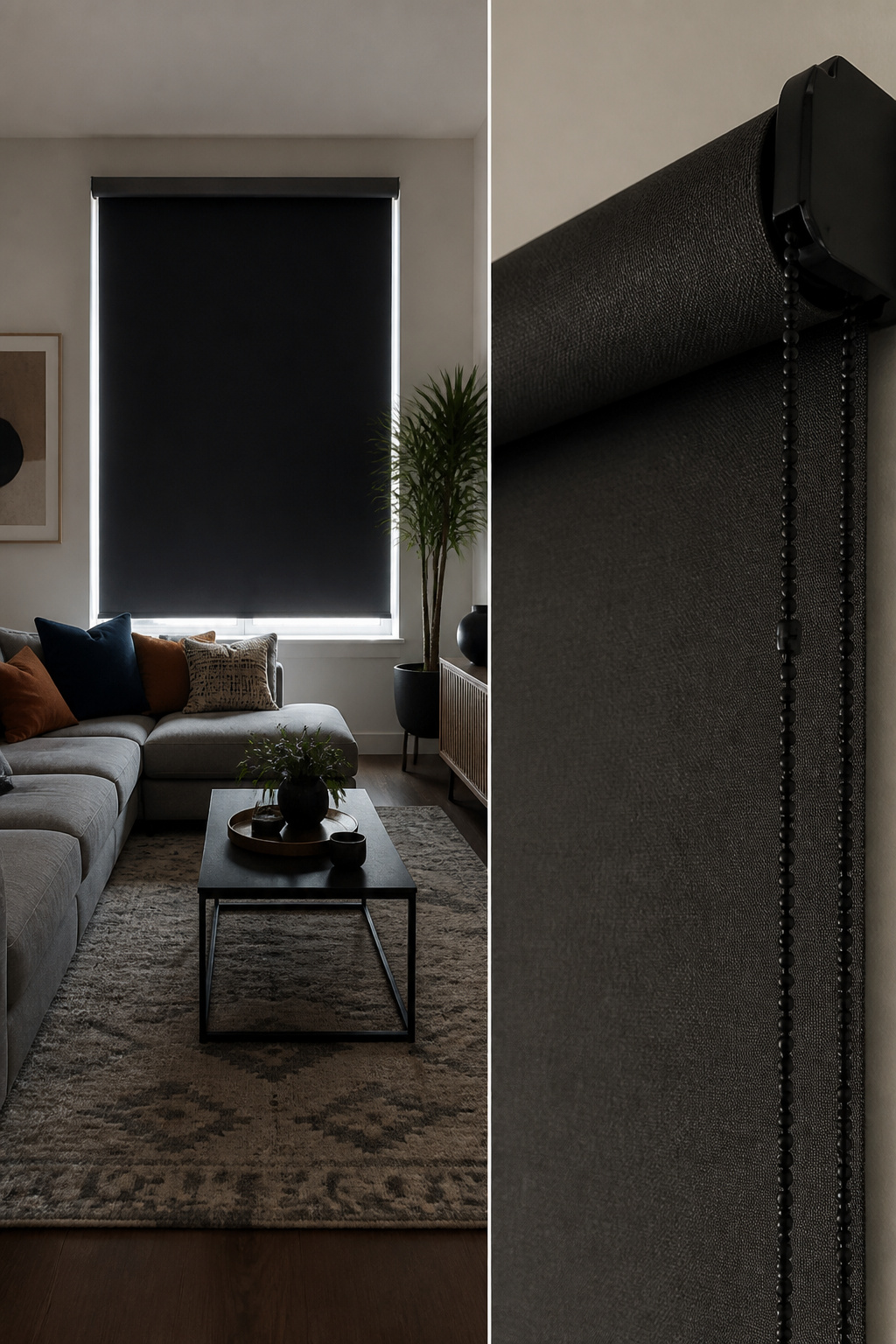
Blackout shades make sense in a living room only when that room has to pull double duty. A friend of mine slept on a pull-out in her Denver loft for two years while saving for a bedroom set, and the west-facing windows turned every summer evening into a sauna of light until she installed a proper blackout roller. The backing matters more than people expect. From the street, a true blackout shade reads as a flat, opaque plane, usually white or off-white on the exterior face, because the light-blocking layer is laminated inside the fabric, not painted on. Cheaper versions sometimes use a dark acrylic coating that can bubble or crack after a season of sun, so the street-side look goes from clean to patchy. Cellular rollers with blackout construction, like the Sonnette line, keep the exterior face uniform while the interior honeycomb traps both light and some heat. For renters, the clean street face also matters if your landlord or HOA has rules about visible window treatments; a white backing reads as neutral, while a dark liner can look like a hole punched in the facade from the sidewalk.
Sheer Shades

Sheer shades soften sunlight without killing the view, which is why they tend to land on living room windows facing a yard or anything green worth looking at. The fabric vanes between sheer layers tilt open to cut glare while still letting light and landscape through, then close off when you want less exposure. That last part matters more than the marketing lets on: daytime privacy is nearly nonexistent with the vanes open, and even closed, the sheerness means silhouettes show through after dark. I would not put them on a ground-floor street-facing window without a backup plan.
The fix most people end up with is layering. A pair of drapery panels on a separate rod gives you the blackout option for movie nights or changing clothes, and the combination reads as intentional rather than apologetic. Solar shades work a similar trick with less fabric, though they read more modern and offer no light-filtering middle ground between open and closed. Pirouette and Silhouette shades sit in the same sheer category with slightly different vane constructions; the choice between them comes down to whether you want the fabric to roll up into a cassette or flatten into a solid sheet when raised.
Dual Shades

Two layers of fabric ride on the same headrail, and that is what you are paying for with dual shades. The front layer filters daylight and softens the view; the rear layer drops down to block light and seal privacy. Both roll independently on one shared bracket, so the hardware looks like a standard roller or roman installation until you notice the double barrel inside.
The convenience is real on a living room window that faces the street. You can leave the sheer layer down for afternoon light, then lower the blackout behind it after dark without swapping hardware or hanging a second treatment. Whether that convenience is worth the price jump depends on how often you actually switch modes. For a weekend project budget, a single blackout shade with a separate sheer curtain on a tension rod often does the same job for less, and the curtain moves with you when you leave. Dual shades make more sense if you want the clean look of one system and plan to stay in the place long enough to stop noticing the premium.
Motorized Shades
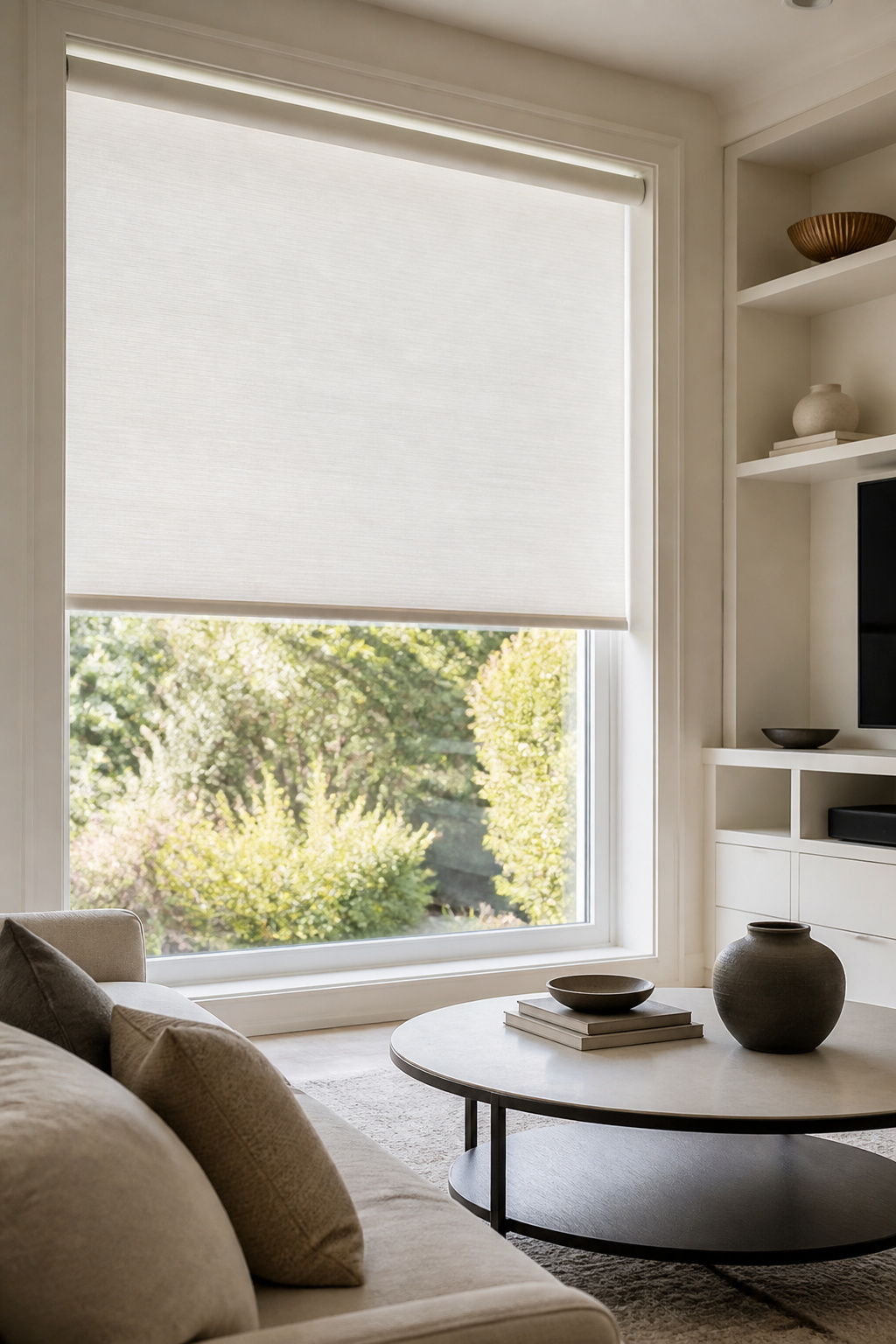
Motorized shades sound like a luxury until you try adjusting a six-foot shade by hand twice a day. The motor does the work, and for large living room windows that alone justifies the price jump. Figure on roughly double the cost of a manual shade for a basic battery-powered unit, more if you want hardwired integration with Alexa or Google Home.
Battery models run on rechargeable packs that tuck behind the headrail, so no electrician is needed. That also means no drilling into the window frame for wiring, which matters if you are renting. Most install with brackets that bite the top of the frame or the wall above it, and the holes are small enough to patch with spackle when you move out. Check your lease, though. Some landlords classify any motorized fixture as an alteration, even when the physical footprint is identical to a manual shade.
The remote is the weak link. Lose it and you are stuck with a shade that only moves when you climb up and press the manual override button, usually a tiny switch on the motor itself. Some brands sell replacement remotes paired to your exact frequency, others make you replace the whole receiver. Before buying, confirm whether the app works as a backup. App control adds about thirty percent to the price, but after misplacing a remote behind the couch for two weeks, that premium stopped feeling optional.
Layering Window Treatments

Layering drapery over shades is the combination most living rooms can actually use. The shades handle the light control and privacy, while the curtains add softness and frame the window even when they are open. The hardware matters more than most people expect. A double rod setup, with the shade mounted inside the window frame and the drapery rod extended several inches past the frame on each side, keeps the fabrics from fighting each other at the top. The drapery rod sits higher, usually 4 to 6 inches above the window, so the stacked fabrics do not bunch together. For side panels that stay stationary, a single rod at the outer position works fine and costs less, though you lose the ability to draw the drapery closed. The header style on the drapery, whether a simple rod pocket or a pleated top, determines how cleanly the fabric falls and whether the look reads tailored or relaxed.
Sizing for Different Window Types

Small living room windows fight for wall space, so the mounting point matters more than the fabric. An inside mount on a shallow double-hung frame leaves the trim visible but eats two inches of glass on each side; an outside mount pushed high and wide buys the illusion of a larger opening, though the stack sits proud of the wall. Picture windows change the math entirely. Without a break in the middle, a single wide shade or panel pair has to span uninterrupted, and anything over about seventy-two inches starts climbing out of ready-made territory into custom pricing.
Sliding doors force a directional choice. Vertical blinds still dominate rentals because they clear the track, but a panel track or drapery that stacks to one side keeps the walkthrough clear without that apartment-complex look. The header depth limits what hardware hides; a standard two-inch bracket fits most drywall, but older plaster or exterior sliders with shallow returns need a ceiling mount or a custom solution.
Where custom starts is less about the window type than the dimension. Big-box stock tops out at fixed widths, and once you add returns for inside mounts or overlap for outside ones, a window that measures standard on paper needs a cut-down or made-to-order piece. The upcharge is usually thirty to fifty percent, and the lead time stretches from next-day pickup to two or three weeks. For a weekend project, that gap decides whether you are hanging something Saturday or measuring again and waiting.
Light Control and Privacy Balance

Sheer curtains diffuse daylight into something you can actually sit in, but after dark they flip: the same fabric that hid your view out becomes a screen that hides nothing from the street. That shift matters more in a living room than anywhere else, because you are there for both states.
Blinds and shades with slats or vanes handle the change better. Venetian blinds tilt closed from the bottom up, so you block the sightline from a neighbor’s porch while the upper slats still pull in evening sun. Shutters work the same way. The adjustment takes a hand and a few seconds, which sounds minor until you are doing it twice a day for three windows.
Roller shades and Roman shades do not do gradual. They are up, down, or somewhere in the middle where privacy depends on how high you stopped. A half-lowered roller shade at night is a privacy test you will fail. Dual shades fix this by stacking a sheer over a room-darkening layer on one headrail, so you shift between them instead of guessing at a middle position.
What convinced me, reading through the options, is that the hardware matters as much as the fabric. A shade you leave in one position because the cord fights you is a shade that quits working for your room.
Style and Living Room Décor

Layered drapery with shades underneath is the 2025 move I keep seeing done well and done badly. The difference is whether the fabrics actually talk to what is already in the room. A linen roman shade under heavy velvet panels reads collected if your sofa has any weight to it, but the same pairing against a low-profile sectional looks like the window got dressed for a different party.
The header style matters more than people expect. A tailored pinch pleat pulls traditional furniture together; a grommet or ripple fold keeps things cleaner with modern lines. What fails is treating the window as its own zone. Side panels that never close, hung just to frame the glass, work only when their color or texture picks up something real: the tone of a wood frame, the nap of a rug, the metal finish on a lamp base.
Cohesive means the eye travels without stopping to question. Trying too hard is when the pattern scale fights the art on the adjacent wall, or when the drapery weight makes a lightweight room feel dressed in borrowed clothes. If your living room is still finding its footing, neutral shades with texture beat printed panels every time; you can layer in personality with what sits in front of them.
Frequently Asked Questions
What window treatment is best for a living room?
The best living room window covering depends on whether you need graduated light control, full privacy, or both. Venetian blinds tilt open and closed to let daylight in while blocking street-level views, making them a strong all-around choice. Roller shades work if you mostly want the window itself to stand out, but they only give you open or closed, not the angles in between.
How do I choose window treatments for my living room?
Start with what the window actually faces and when you use the room. A street-facing living room needs treatments that handle both afternoon glare and evening privacy, while a yard-facing window can stay lighter. Match the header style and fabric weight to your furniture so the window does not look like it belongs to a different room.
What are the benefits of blackout shades?
Blackout shades block all light and give full privacy, which matters most when your living room doubles as a guest space or faces harsh afternoon sun. The backing quality varies: a laminated interior layer keeps the exterior face clean and white, while cheaper coated fabrics can bubble or crack after one season.
Can I layer window treatments?
Yes, and most living rooms benefit from it. Mount a shade inside the frame for light control and privacy, then hang drapery on a rod set 4 to 6 inches above and several inches wider than the frame. The combination gives you room-darkening when you need it and keeps the window looking finished even when the curtains are open.