
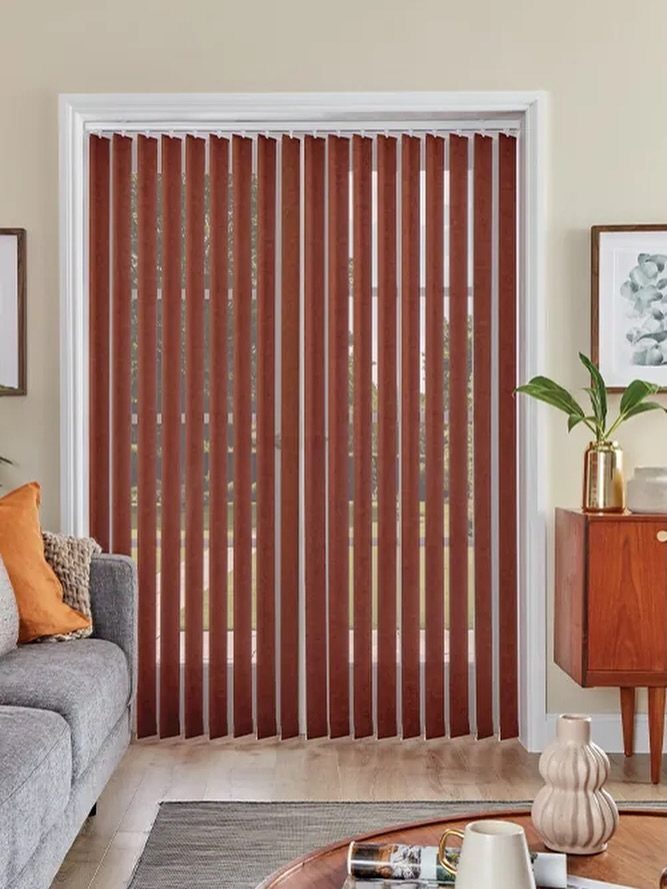
The ideas below run from a roller blind cut to fit up to plantation shutters that need a stud finder and a second pair of hands.
I would start by checking whether your frame has the depth for an inside mount, because a blind that stands proud of the recess loses the clean edge that makes Roman shades, shutters, or any of the other choices below look finished.
1. Roman Shades
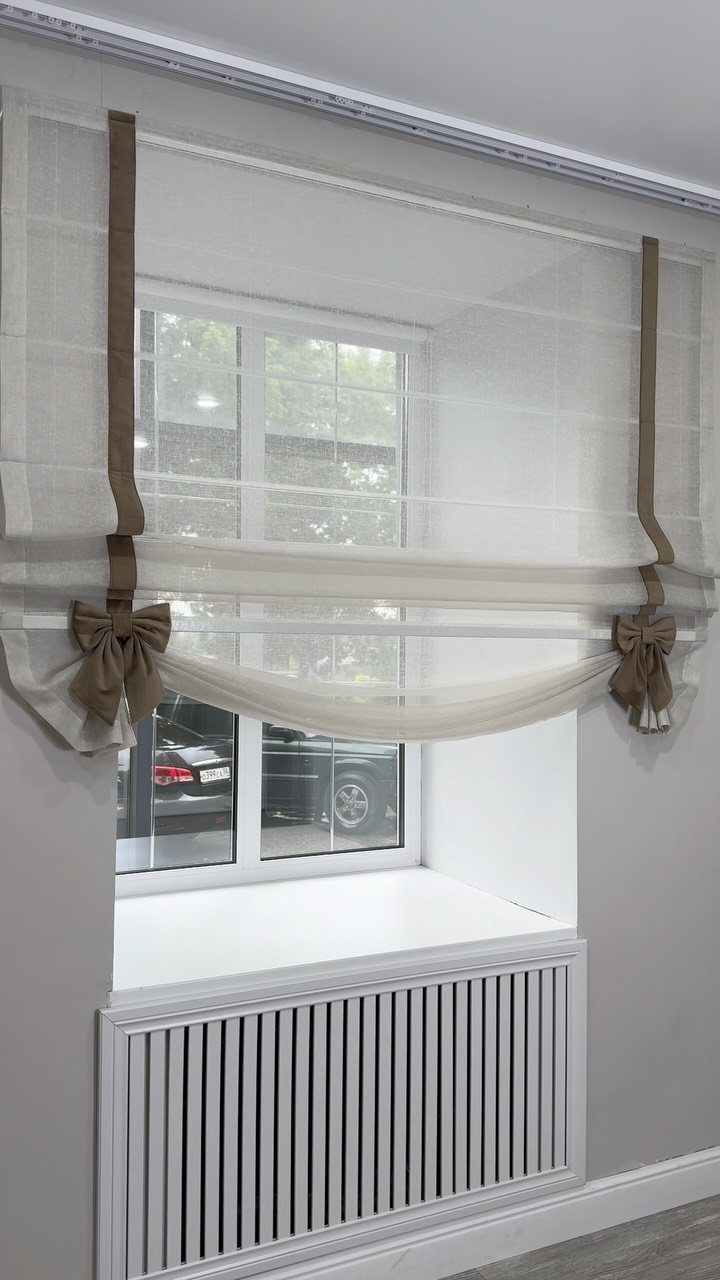
Roman shades fold into neat horizontal pleats when raised and lie flat when lowered. Ribbon borders with bow accents turn a simple white shade into something that reads as finished furniture rather than temporary covering.
I would sew the bows myself rather than buy them premade; grosgrain ribbon holds its shape and costs less per yard than premade trim.
The hardware is standard: a cord lock and a small pulley system inside the top rail, which any shade kit includes for less than a replacement shade would cost.
These suit renters who need one treatment to do both jobs, privacy and decoration, and who have a landlord who allows mounting inside the frame.
2. Shutters
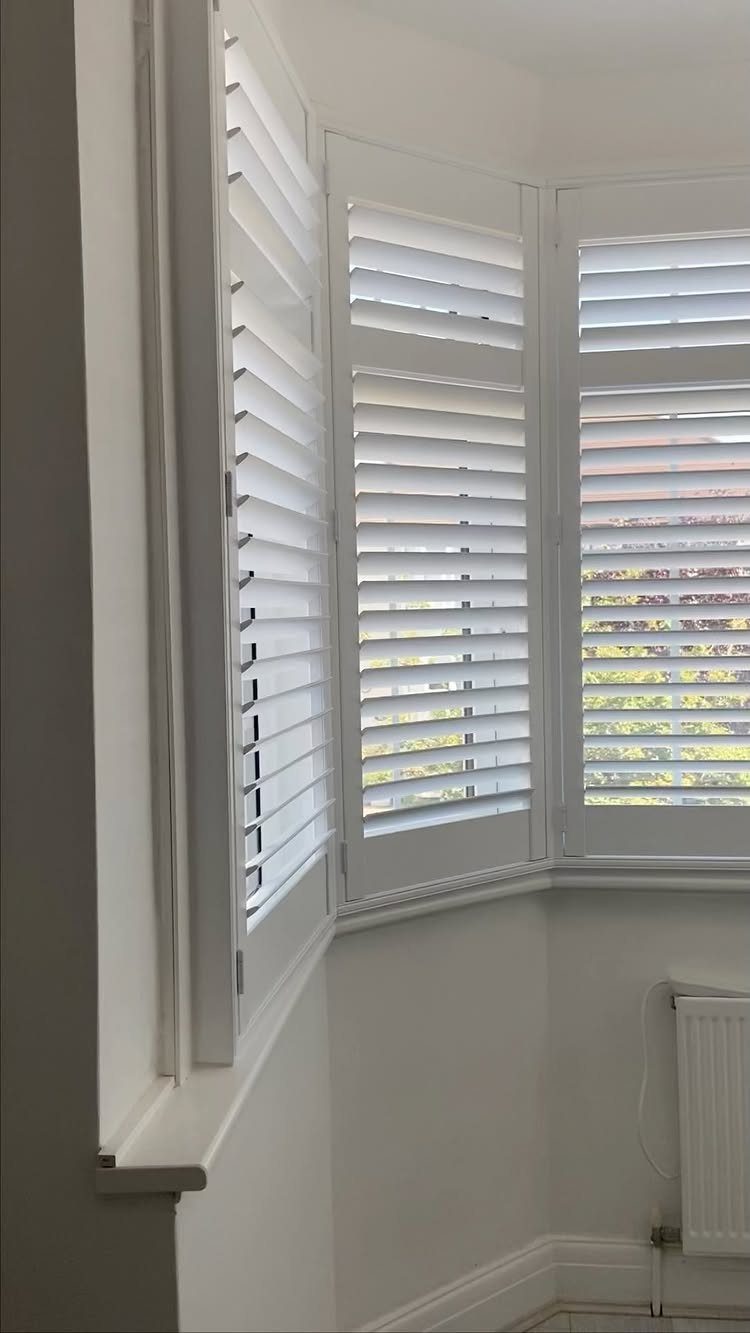
Plantation shutters split the window into framed sections with adjustable louvers, and the white pair above a radiator shows why they work in rooms with awkward architecture.
The fixed frame covers the window casing completely, so the radiator below becomes part of the composition instead of a problem to hide.
They are heavy. I would not hang them on a window frame I suspected of rot or on old plaster without finding the studs first.
3. Vertical Blinds
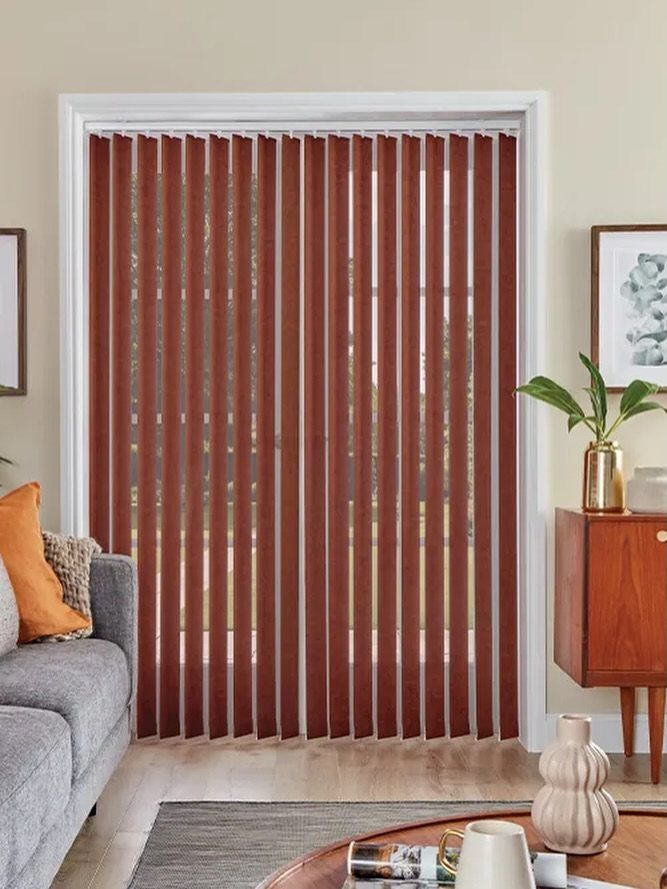
Vertical blinds hang individual slats from a top track and draw to one side like a curtain, which makes them the practical choice for sliding patio doors too wide for a single blind.
A rust color warms a modern room without the flatness of a solid wall of fabric.
Each slat is wide enough to block light when closed and weighs almost nothing, so the track hardware carries less load than horizontal alternatives.
Replacement slats are cheap if a pet or child damages one, which I consider a real advantage over woven shades where one tear ruins the whole unit.
Drawn open, the slats occupy a chunk of door frame that you need to account for in your layout.
4. Wood Blinds
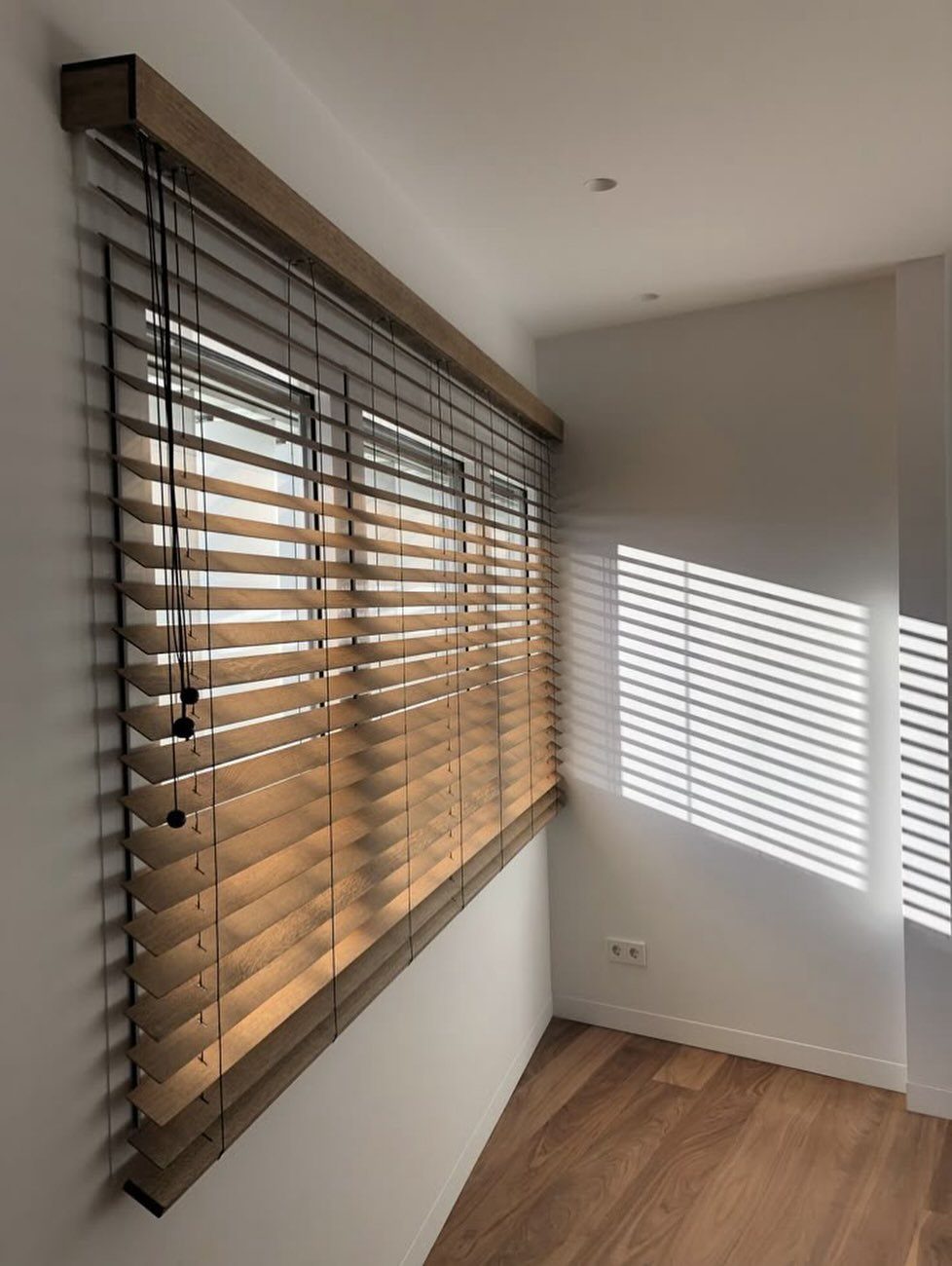
Wood blinds cast a striped shadow pattern on adjacent walls, and that texture is half the reason to choose them.
Standard slat width is 2 inches, though I prefer 1 inch for narrow windows; the proportions look less like a door.
Most manufacturers sell them in set increments, so measure exactly and order the size down rather than up if you fall between.
Faux wood handles humidity better and costs noticeably less, but it clicks when the slats move and real wood does not.
5. Roller Blinds
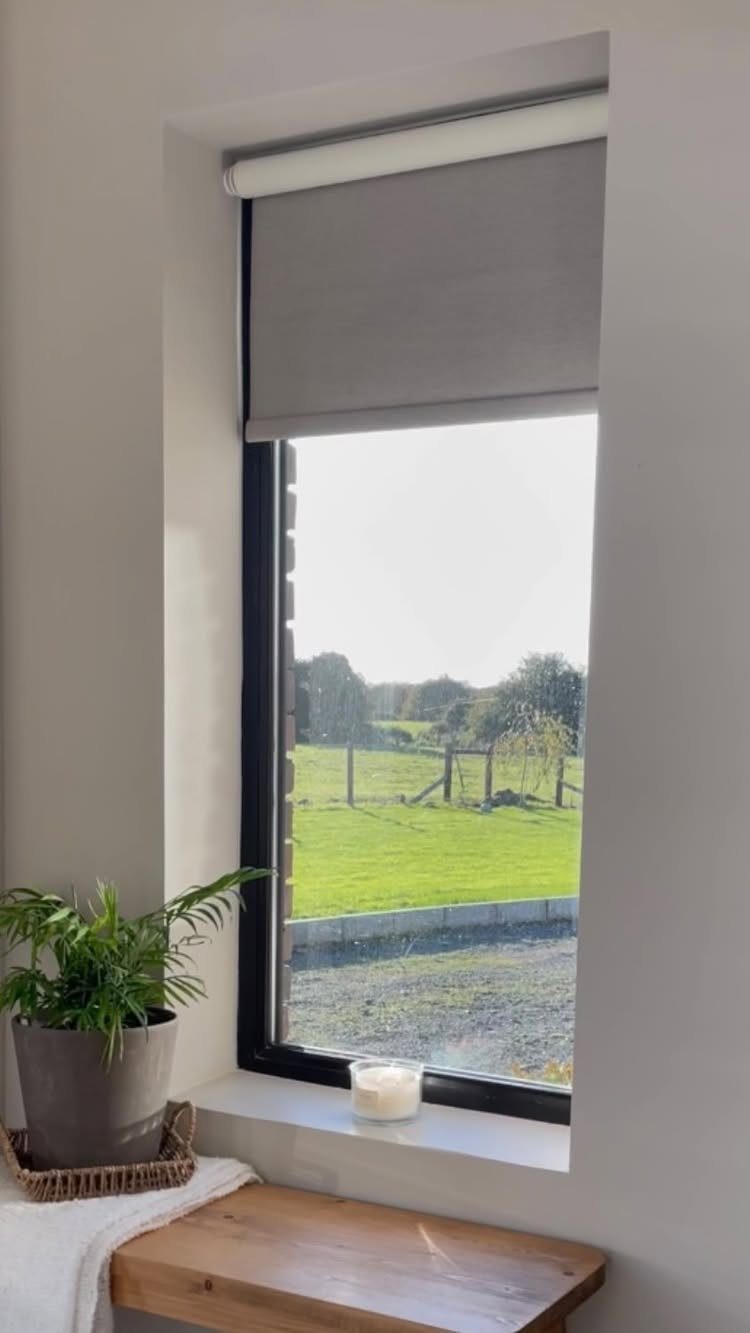
A light-filtering weave softens daylight without darkening the room entirely.
Installation means 2 brackets and a center support if the span is wide enough to sag. I always mount inside the window frame when possible; the blind disappears more completely and the wall stays clean.
The chain control hangs to one side, and I replace the standard white chain with a metal one on any blind above shoulder height because the plastic cracks fast.
Custom widths start cheap and climb steeply; for a standard window, an off-the-shelf blind cut to fit saves half.
6. Venetian Blinds
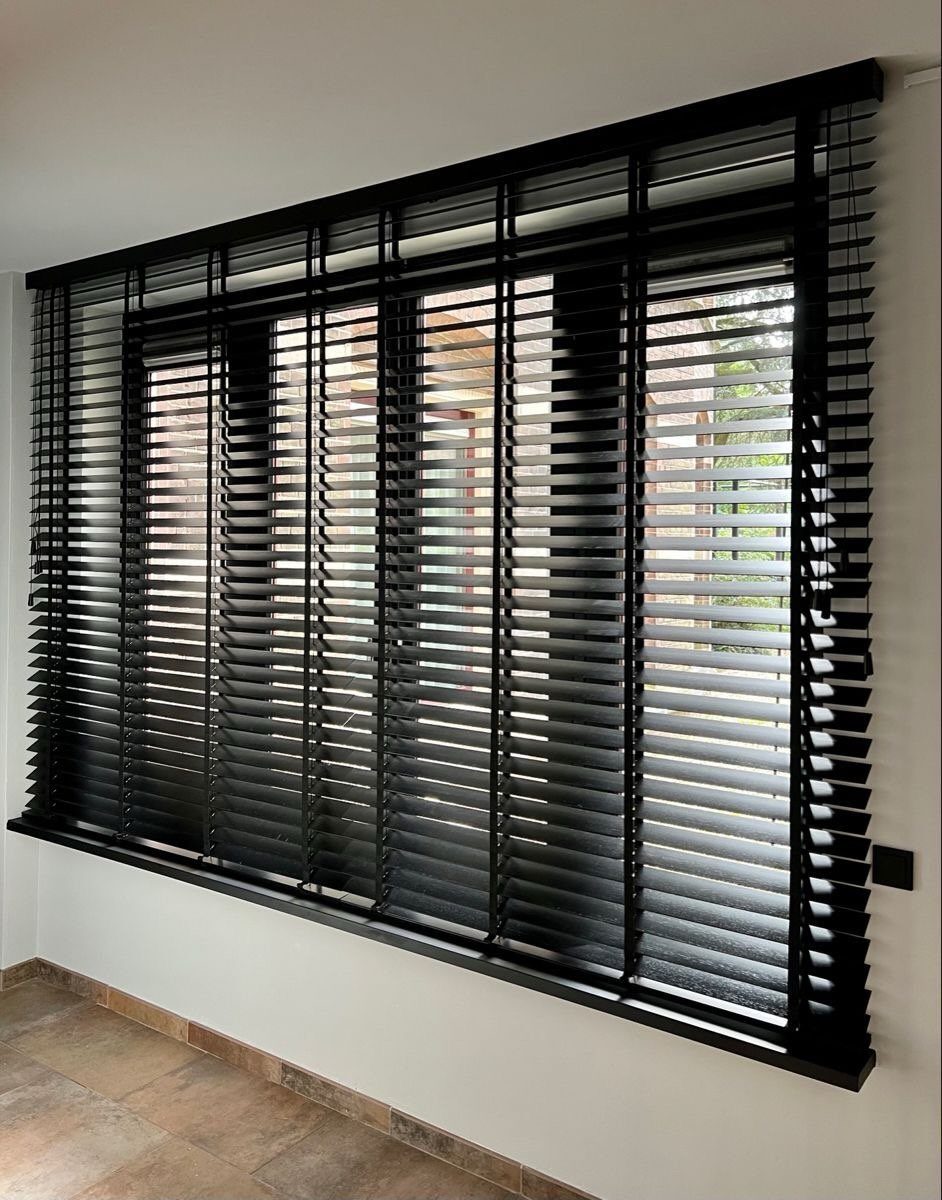
The color choice is bold; black reads as shadow rather than object, which I like in a room with white walls and too much hard light.
Aluminum slats are the standard now, though the name originally meant wood.
The 1-inch slat is common for residential use, and the gauge, 8 or 9, determines how easily a slat dents. I would not buy lighter than 8-gauge for a child’s room or a high-traffic rental.
Dusting is the maintenance, and a closed blind wiped with a microfiber mitt takes about a minute per window. Open the slats and repeat, or the edge facing the room stays grimy.
7. Blackout Blinds
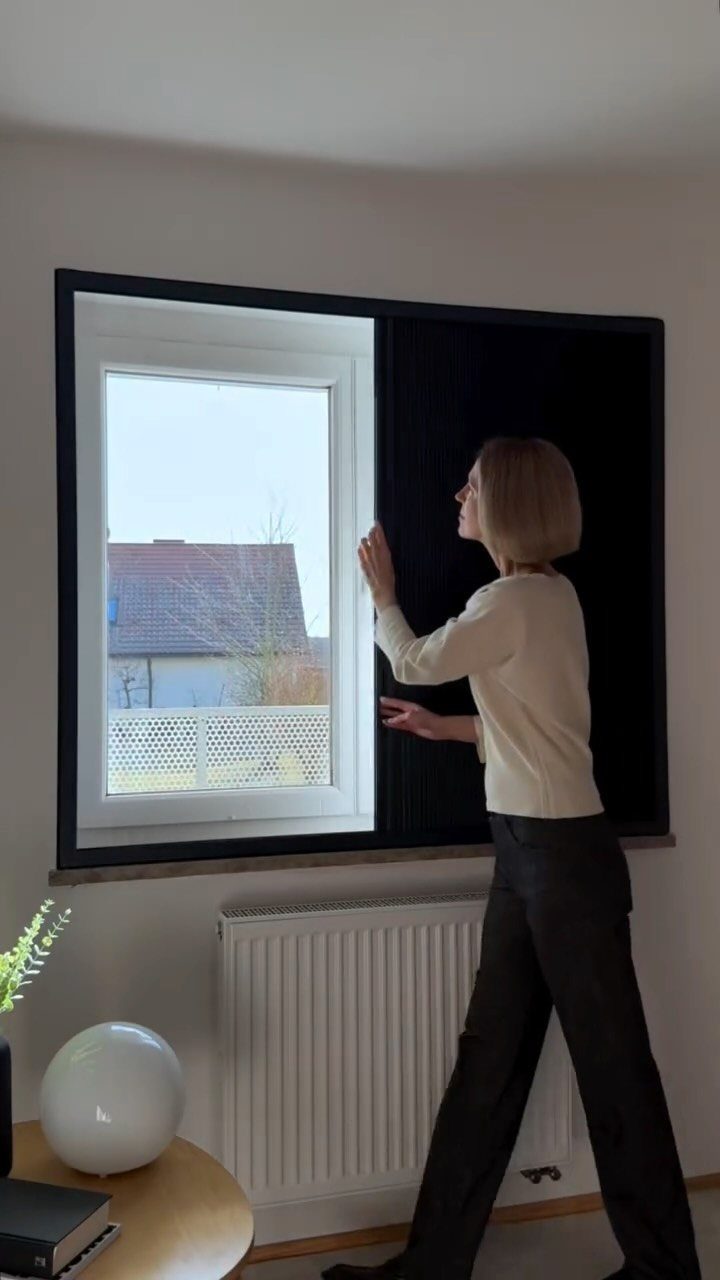
Blackout blinds seal light out with a coated fabric or layered backing that sits flat against the glass.
A side-pull track mounted inside the recess blocks more light than an outside mount, where bleed around the edges is hard to avoid.
I would add a fabric-wrapped valance to hide the roll, since the black shade reads as hardware otherwise. They suit shift workers or anyone with a screen opposite the window, though the room goes fully dark even at noon.
8. Zebra Blinds
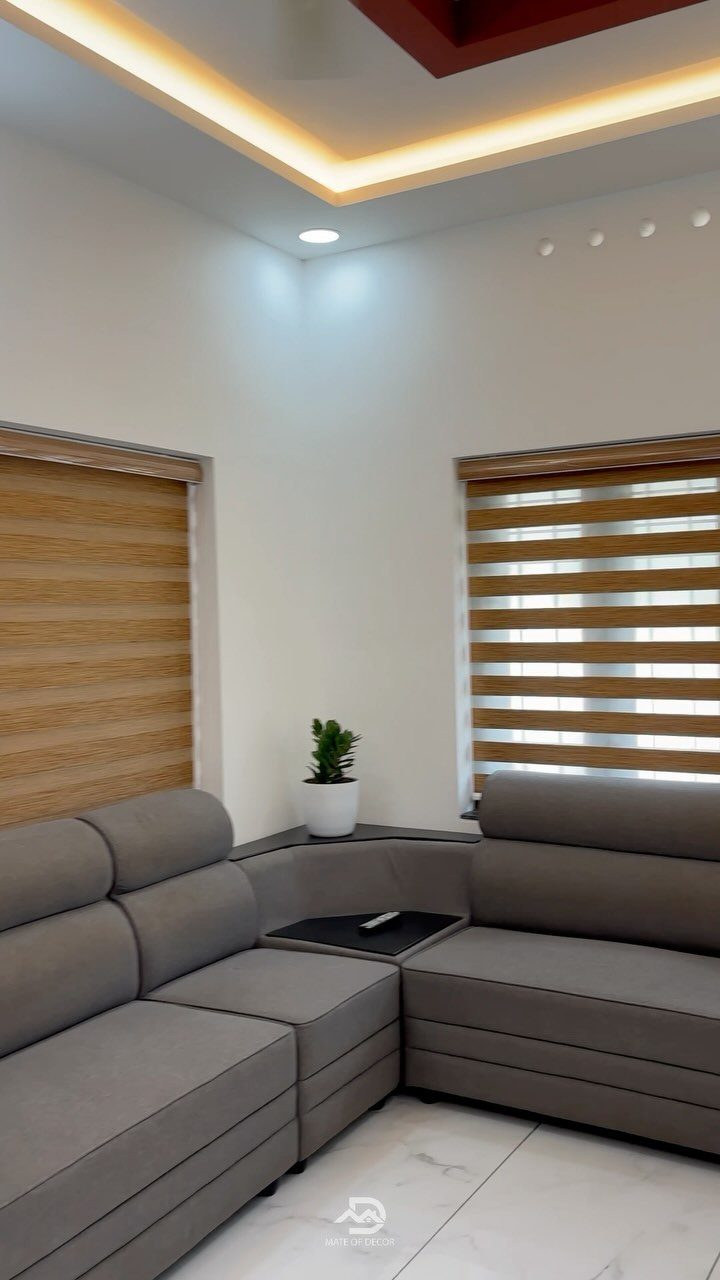
Zebra blinds run 2 layers of striped fabric past each other; align the sheer and solid bands for light, offset them for privacy. Brown warms a grey room without adding a second pattern that competes with the sofa.
I would order them as inside-mount rollers rather than the layered roman style some makers sell; the mechanism is simpler and the stripes stay level. The fabric is polyester, so it wipes clean but holds static.
9. Cellular Blinds
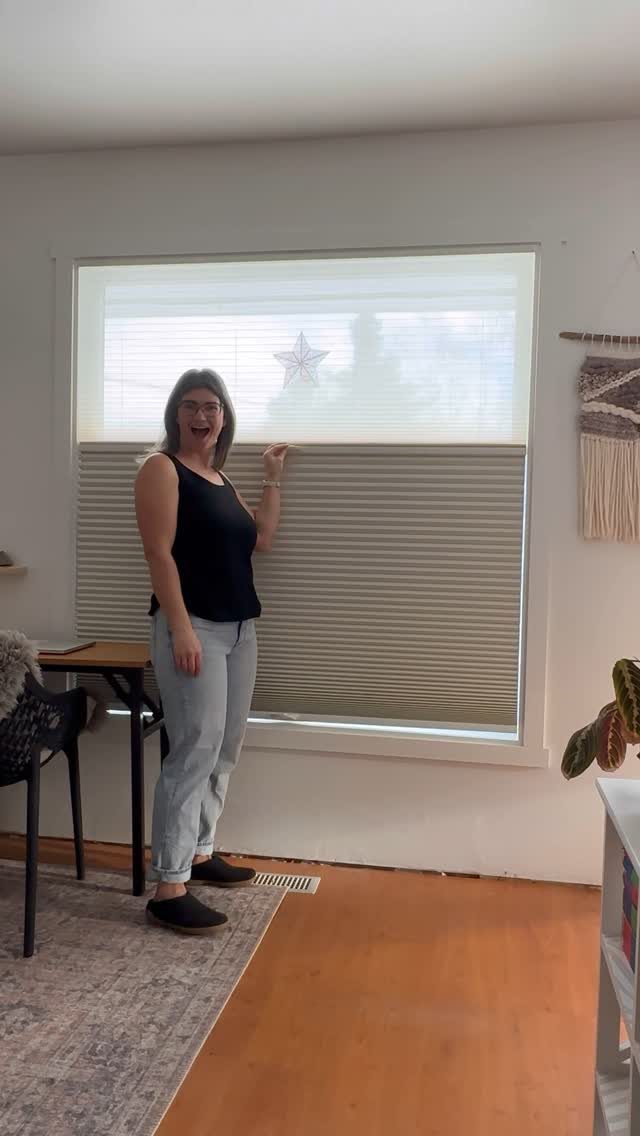
Cellular shades trap air in honeycomb-shaped pockets that slow heat transfer through the glass. Light grey stays neutral against wood floors and does not fight wall color the way white can.
I would choose single-cell for standard windows and double-cell only above a west-facing wall where summer heat builds; the stack gets thick and eats into the window view.
Cordless lift is standard now and worth it for the clean edge alone.
10. Blinds Paired with Sheer Curtains
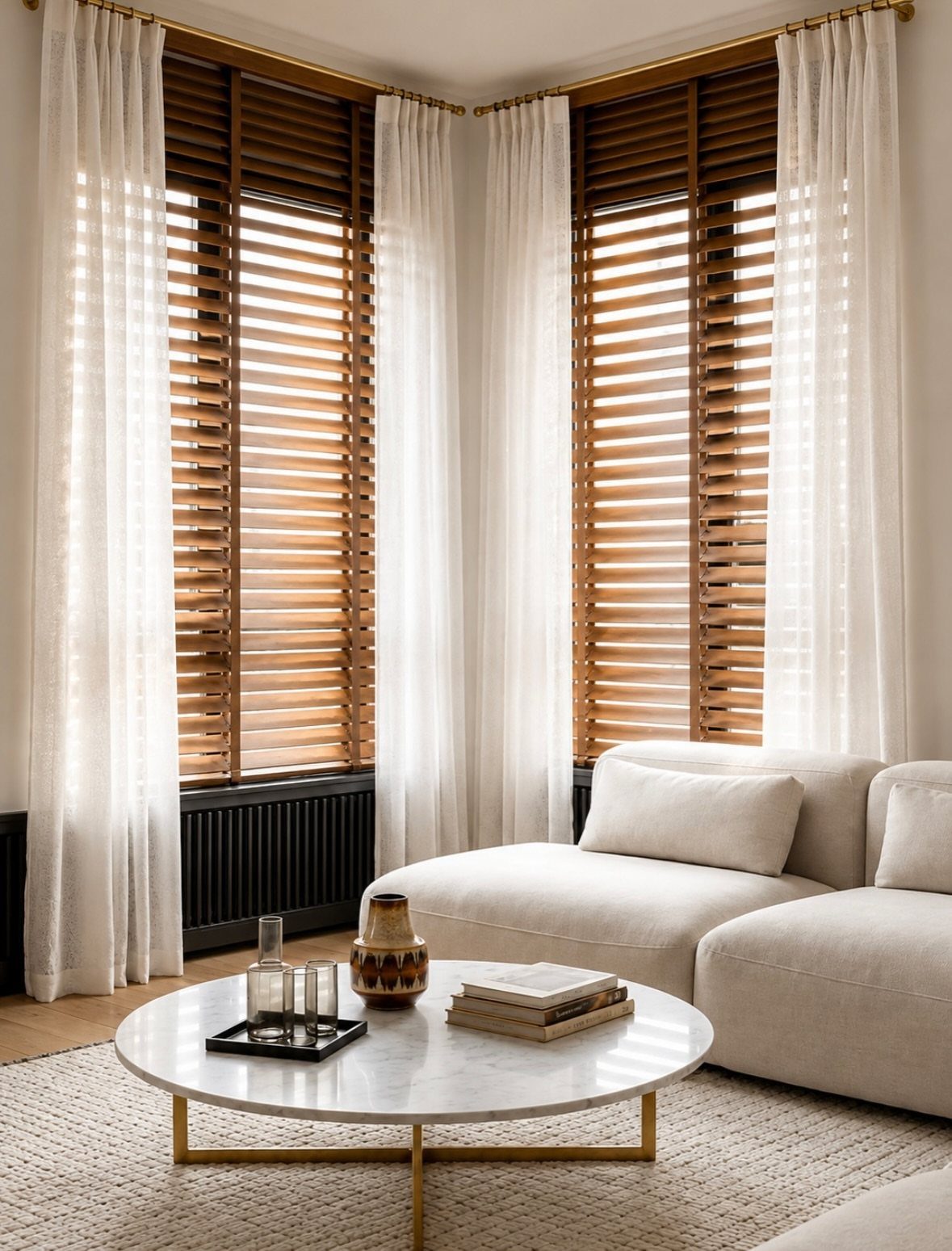
Blinds paired with sheer curtains give you 2 layers of control: tilt the slats for exact light, draw the sheers for softness.
I would mount the rod closer to the ceiling than the casing and let the sheers puddle slightly; the blind does the technical work, so the curtain can be decorative.
Wash the sheers twice a year; dust from the slats migrates fast.
11. Drapery
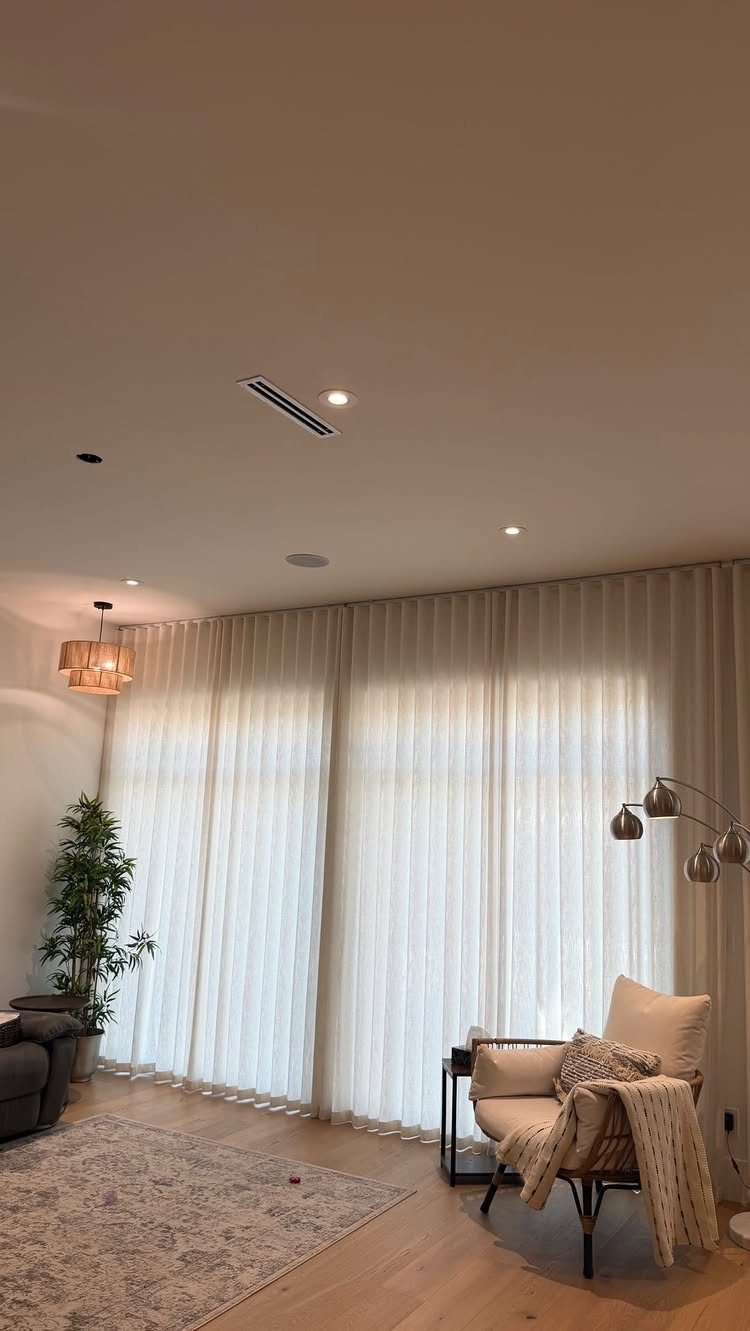
Ripple-fold drapery runs on a track with carriers spaced to hold even pleats across the whole span. Sheer white filters light without blocking it, which suits a room that faces north or gets sun only in morning.
I would budget for extra width; ripple-fold needs 2.5 to 3 times the window width to stack properly, and skimping shows as flat patches between the waves. Floor-length is the only length that works with this heading.
Choosing the Right Blinds
Light control and privacy sit at opposite ends of the same decision. I start by asking which problem the room actually has: too much glare on a screen, or a window facing a sidewalk at eye level.
A north-facing room that needs only softening gets a different answer than a west wall that bakes by four in the afternoon.
Color choice follows function, not the other way around. White reflects more light into the room; darker tones absorb it and cut glare harder.
For privacy without a cave, I look for materials that block sight lines while still transmitting some daylight, a filter layer or a sheer paired with a blind.
Material and maintenance are where budget divides into first cost and long cost.
Wood needs dusting and hates humidity; aluminum dents but wipes clean. I count the windows, think about how much dusting and wiping each style needs, and decide whether I will actually do it.
Customization Options
Most manufacturers now stock enough colors and materials that "custom" does not mean "expensive."
I would order free swatches before committing; screen color lies, and texture disappears on a monitor. Hold the sample against the wall at the actual window hour, morning or evening, because light changes everything.
Lining is the hidden choice that matters. A blackout lining or interlining adds weight and cost, but less than buying twice because the first pick was wrong.
Hardware finish is the last detail and the first thing I notice on someone else’s window. Brushed nickel, oil-rubbed bronze, or plain white: the rod or headrail should read as intentional, not leftover.
Cornices and valances top the treatment and cover the mechanics; I add one when the roll or track would otherwise sit exposed as raw hardware.
Installation and Measurement
Measure twice, order once. I measure width at three points, top, middle, and bottom, and use the narrowest for an inside mount; the frame may not be square, and a blind that jams at one corner is useless.
For outside mount, I add overlap past the frame on each side for light blocking, more if the wall is uneven.
Inside mount needs sufficient depth.
Check the frame for obstructions: handles, cranks, or a sill that projects. The manufacturer lists a minimum depth for full recess; without it, the blind stands proud and the clean look disappears.
Professional measurement costs nothing in some service areas and a flat trip charge outside them.
I would pay it for any wide window or one above a stairwell, where my ladder skills are not the issue, my tape accuracy is. Virtual consultations work for standard rectangles; send photos and they flag what I might miss.
Frequently Asked Questions
What type of blinds are best for a living room?
That depends on what the room actually needs. Roman shades handle privacy and decoration in one piece, which is why I still spec them for clients who want fabric but do not want two systems.
Wood blinds cast striped shadows that add texture, though I would pick faux wood for humid rooms and accept the clicking sound. Start with the problem, glare or privacy or heat, then match the material.
What is the current trend in window blinds?
Energy efficiency and clean edges are what manufacturers have moved toward. Cordless lift has become the default on cellular shades, and I specify it for the cleaner sill line even when kids are not a factor.
Light-filtering weaves and layered fabrics, zebra blinds with their 2 striped layers, let you adjust privacy without swapping hardware. Customization has also gotten cheaper; most makers stock enough colors that ordering a swatch first is the only extra step.
What are people using instead of blinds?
Sheer curtains over blinds give 2 layers of control, tilt for exact light and draw for softness. Shutters cover the casing completely and turn awkward architecture, like a radiator below the window, into part of the composition.
Are blinds out of style in 2026?
No.
Blinds remain a practical choice because they solve specific problems, light control and privacy, that curtains alone handle poorly. Aluminum slats wipe clean in a minute per window.
Replacement slats for vertical blinds cost little if one gets damaged. The hardware has also improved; cord locks and pulley systems are standard in shade kits now, and inside-mount brackets keep the wall clean.





