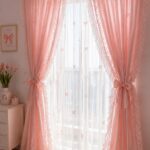

The right small window treatment depends on whether your priority is light, privacy, or both, and the cost gap between a stock roller shade and custom plantation shutters can run hundreds of dollars for a single opening.
Moisture is the condition that eliminates real wood in bathrooms and kitchens, where synthetic slats survive steam that warps hardwood within a season.
1. Shutters
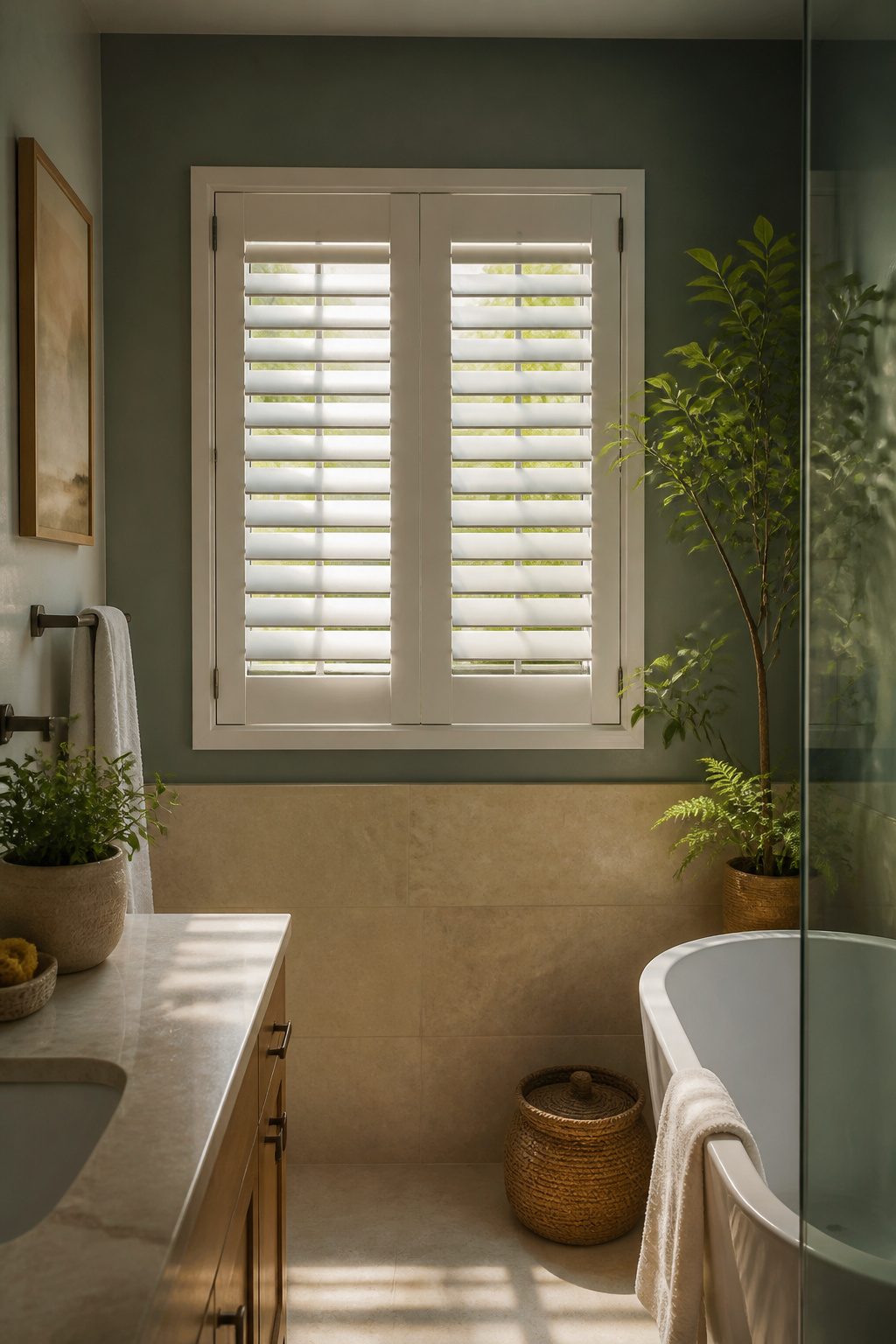
Shutters give a small window the same control over light and privacy that larger ones get, but the proportions change what reads as built-in versus bolted-on.
Custom plantation shutters can be cut to the exact dimensions of a small window, which matters because an off-the-shelf unit with even half an inch of play looks like an afterthought on a frame that narrow.
Woodlore and Normandy lines both use adjustable louvers, so you can angle for daylight in a cramped bathroom or close them flat for sleeping.
The catch is that small windows usually need professional measuring and installation, and the cost runs higher than fabric options.
Faux wood holds up to humidity if the window sits over a sink; real wood gives the architectural feel that makes a tiny window feel intentional rather than apologetic.
Either way, the shutter becomes part of the wall, which is what separates this from a curtain that merely covers the opening.

Privacy + Max Natural Light: These cafe style plantation shutters cover only the lower portion of your window, providing privacy while allowing natural light in from above

Vinyl & Real Wood Options: Waterproof Faux Wood Plantation Shutters for humid spaces, solid hardwood plantation shutters for bedrooms & living rooms
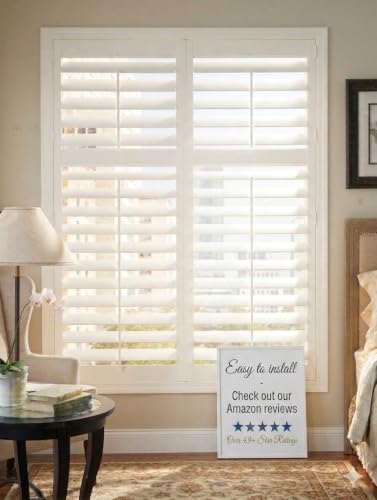
*Elegant White finish - CUSTOM MADE TO FIT YOUR WINDOWS
2. Sheer Shades
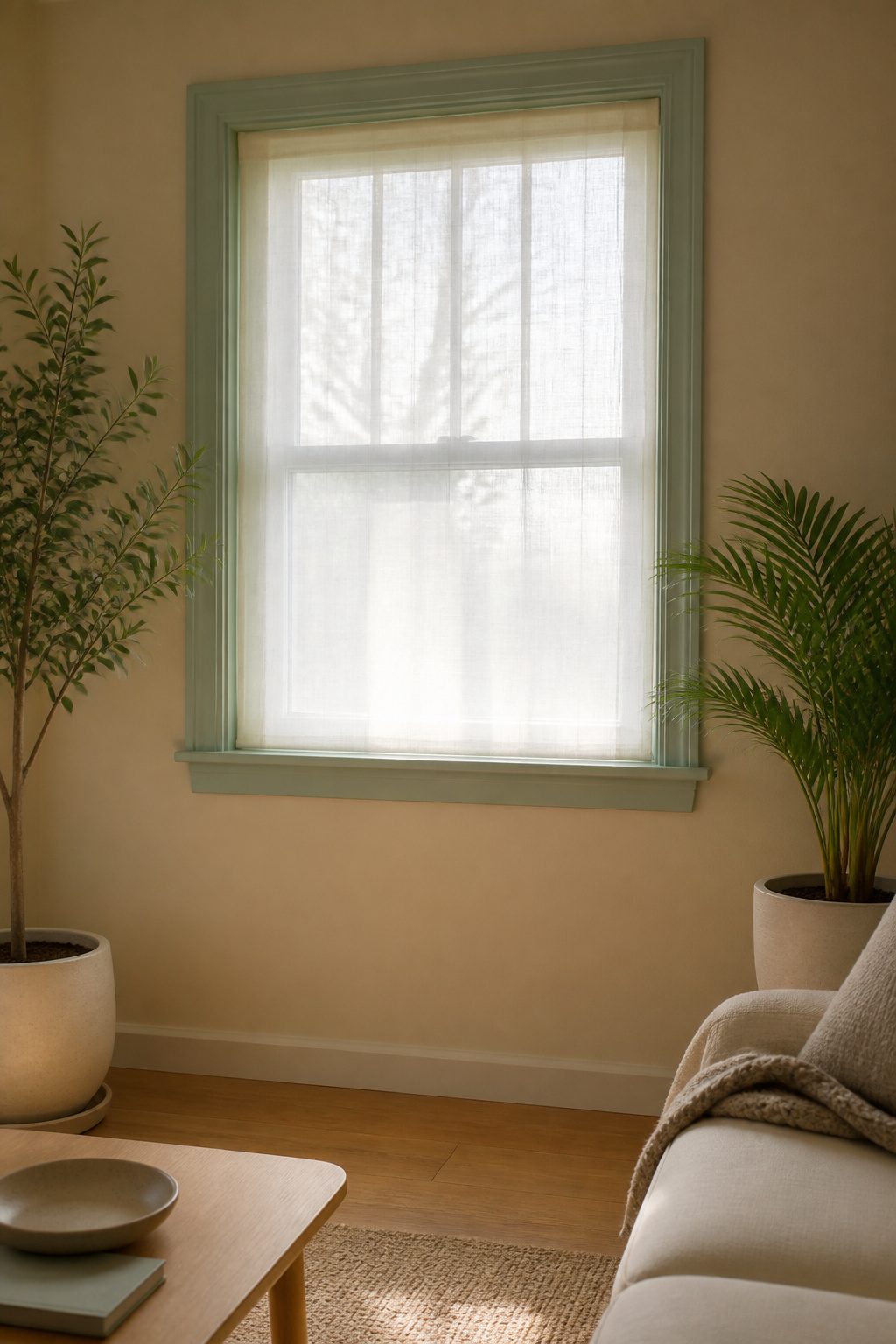
Sheer shades thread a narrow needle: they soften daylight without killing it, and that translucency is what keeps a small room from feeling boxed in.
The fabric works like a diffuser on a camera flash, scattering sun so glare drops but the space still reads as bright.
In my own reading, that quality matters most in rooms where you spend daylight hours and want the window to disappear visually, not perform as a dark rectangle.
A minimal profile helps too. Sheer shades sit close to the glass and don’t eat the few inches of wall that small windows leave around themselves.
The tradeoff shows up after sunset, when the same translucency offers almost no privacy. Layering solves this if you have the depth for a second treatment, though that adds weight and cost.
Best placed where brightness beats blackout: living rooms, bedrooms that face away from streetlights, or any sunroom where the goal is keeping the space visually light rather than achieving real seclusion.

Item Description: 12"W x 39"H Lifetime Vinyl, Standard Cathedral Top Center Mullion, Open Louver Shutters, w/Installation Shutter-Lok's & Matching Screws (Per Pair), Black

【Complete Louver Hardware Kit for DIY Projects】 This all-in-one louver hardware kit includes every component for a professional deck sunblind system. Build an adjustable louvered roof kit for your pergola, privacy screen, or Bahama shutters with 22 brackets, 10 actuators, screws, and rivets (supports up to 11 wood slats).
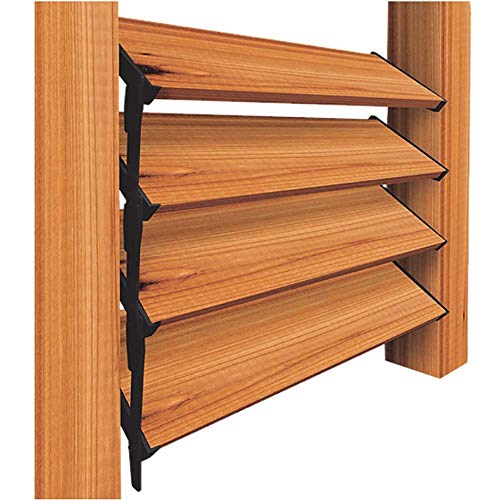
Pack of 2 - Louver Blinds & Shutter System - A versatile and customizable product. Easily change the angle of the louvers to manipulate the rain, sun, and air flow to go where you want it to.
3. Roller Shades
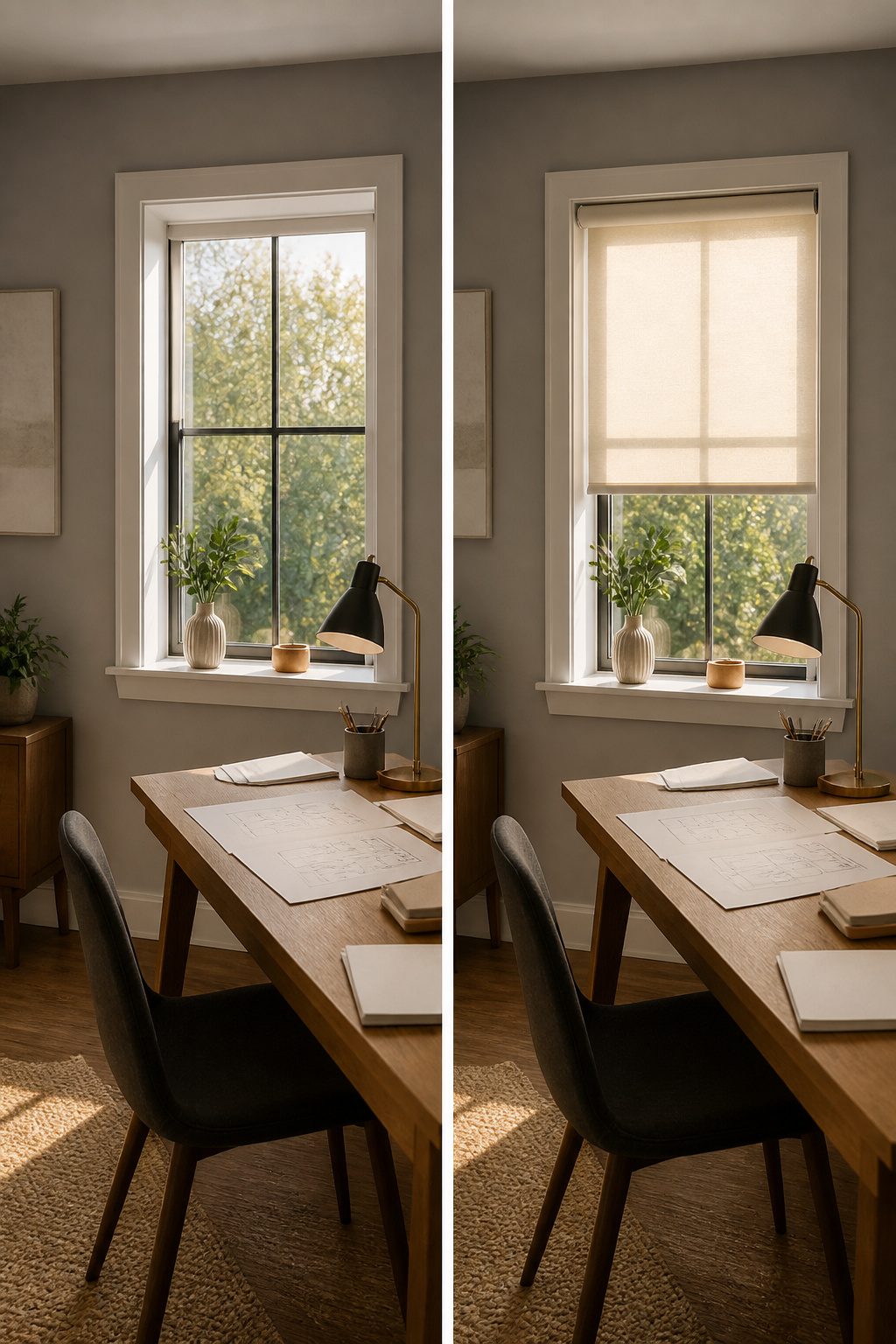
Roller shades carry the least visual weight of any mounted treatment, which makes them a natural fit for small windows that already fight for wall space.
The fabric rolls up into a tube at the top of the frame, so when they’re open, the entire window stays visible and nothing crowds the glass.
The choice between light-filtering and blackout fabric is where most people stall out. Light-filtering keeps a room from feeling cave-like during the day; blackout belongs in bedrooms or anywhere you need the room to go fully dark.
The cleaner look comes with a trade: roller shades are less decorative than layered treatments, and if you want texture or warmth, you’ll need to add curtains or a valance separately.
Cordless operation keeps the lines minimal and avoids the tangle of strings against a small frame.
For renters or anyone working on a weekend timeline, the install is straightforward, and the compact hardware doesn’t demand much depth inside the window casing.

Jacquard lace sheer, semi-sheer,

【Excellent Material】Made of imported 100% Polyester. Light filtering, good ventilation, anti-static, dust-proof and durable. Dual-layer fabric for daylight filtering and full night privacy.

MULTIPLE HANGING: Sold per pair, including 2 window panels - Panel measures: 52 x 84 - inches | Set measures: 104 x 84 - inches, with 3 curtain top hanging options (Back tab & Rod pocket & Pleated) for your personalized style. Each panel sewn with 4" rod pocket (7 back loops), 2" bottom hem and 0.8" side hem, specialized fitting the curtain rods up to 3
4. Roman Shades
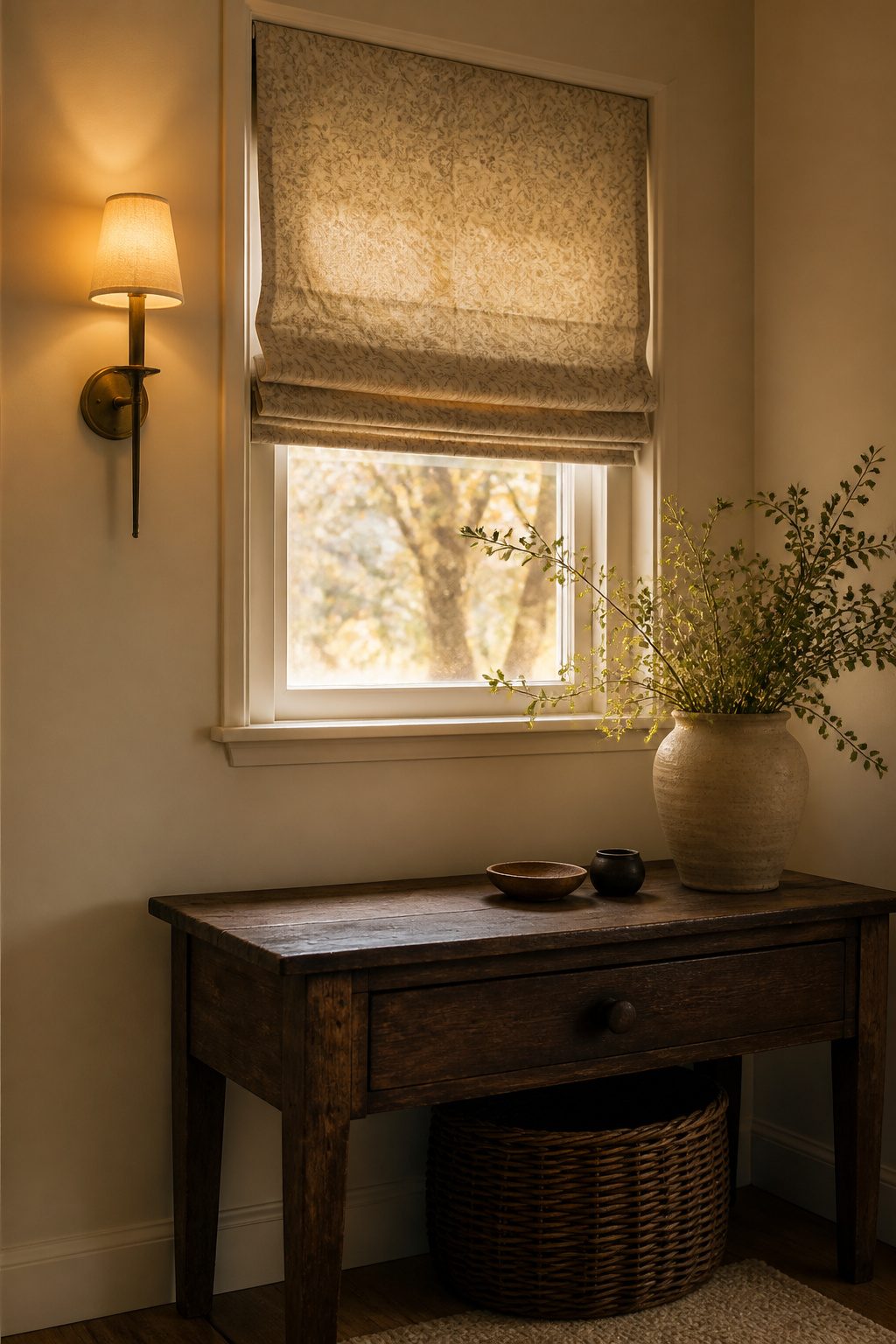
Roman shades fold into soft, even sections when raised and drop smooth when lowered, which gives a small window a tailored look without the bulk of full drapery.
The real draw is fabric choice: the same bolts used for curtains mean you can run a subtle linen, a geometric print, or something darker with a lining for bedrooms where light control matters.
What stopped me short, reading through the options, was how the stacked fabric behaves when the shade is up.
That folded pile sits anywhere from six to twelve inches high depending on the fabric weight and the number of folds, and on a short window that can eat a noticeable slice of glass even at full raise.
Mounting a few inches above the trim, not inside the frame, lets the stack live on the wall instead of screening the upper pane.
The tradeoff is you need that wall space; for windows with little to no surround, an inside mount keeps the clean edge but you accept the permanent partial cover.

[Innovative Free-Stop System]: Experience effortless control with our light filtering roller shade's innovative free-stop system. Easily adjust the shade to your desired height, allowing for precise light control and privacy, without the hassle of traditional cords or chains.
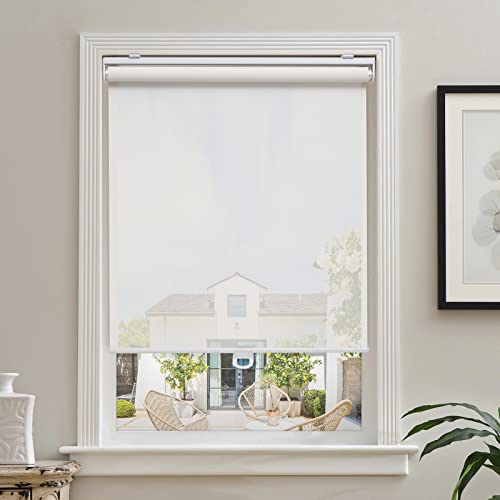
[ECO-FRIENDLY FABRIC ]: Light filtering roller shade is 100% polyester fabric. Good ventilation capability, anti-static, dust-proof and durable. The aluminum bottom rod replaces the plastic bottom rod to improve the overall stability, so that the panel and the bottom are on the same level, not easy to tilt, prevent wind blowing, and give users a better experience.
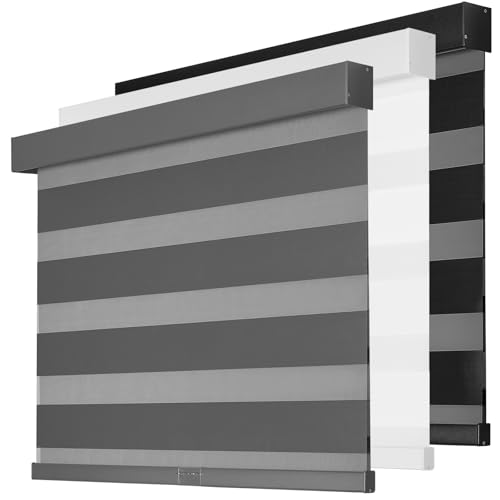
【Excellent Material】Zebra blinds are crafted from 100% polyester with a dual-layer sheer and solid design. They gently filter daylight, reduce glare, and block UV rays while creating soft, comfortable light and protecting your privacy when the stripes overlap. The fabric is durable, dust-resistant, and easy to maintain. It provides flexible light control and a clean, modern look that is ideal for year-round use.
5. Wood Blinds
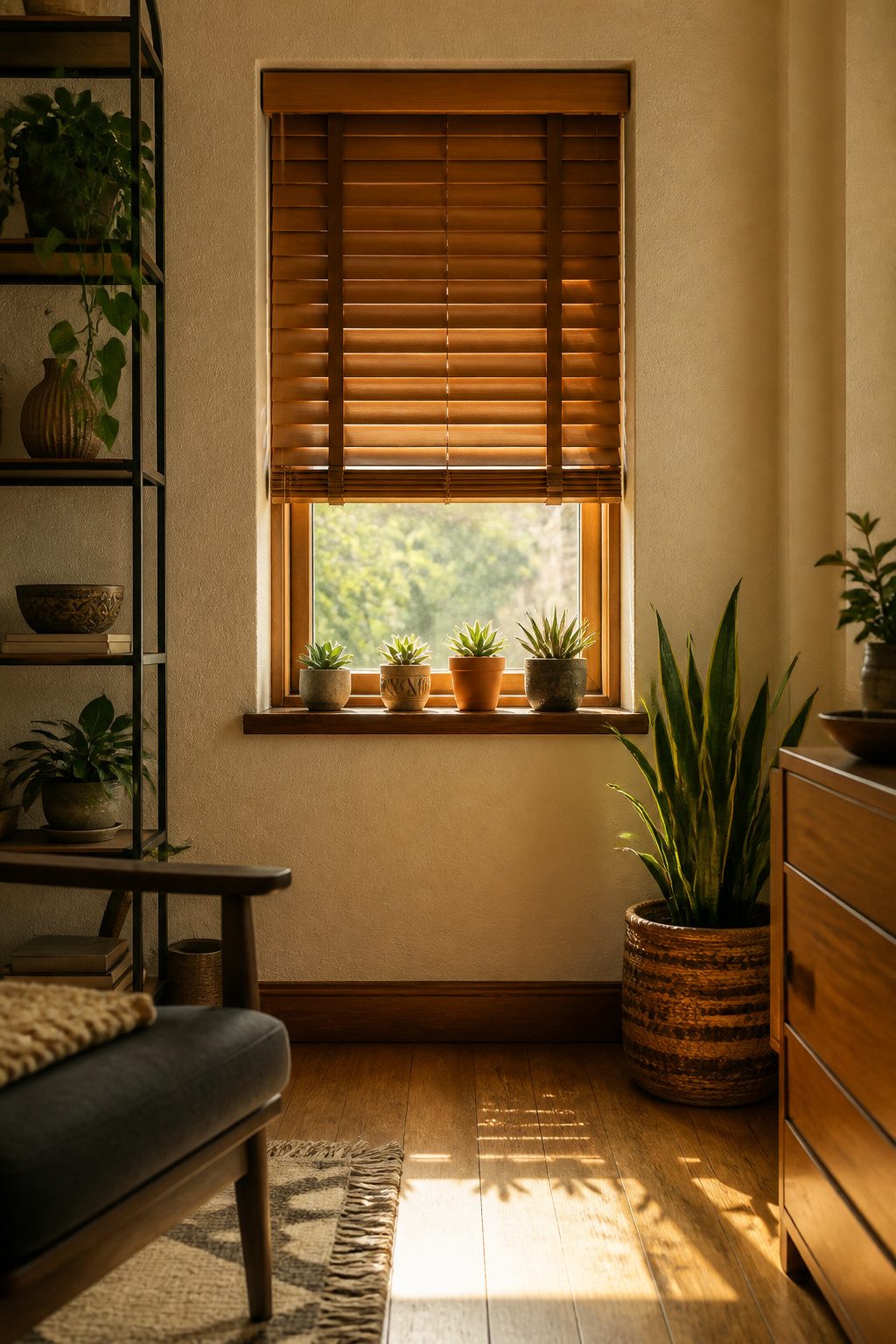
Premium hardwood construction gives wood blinds a weight and grain that thinner materials never quite match, and in a small window that substance reads as intentional rather than bulky.
The slat width matters more than most people expect: a two-inch slat on a twenty-inch window eats up visual space and leaves the stack looking crowded, while a one-inch slat keeps the proportions clean and lets more light through when the blind is raised.
Wood also insulates better than vinyl or aluminum, which matters in compact rooms where every surface affects temperature.
The tradeoff is moisture. A bathroom or kitchen above the stove will eventually warp real wood no matter how well sealed, so the warmth and character hardwood brings needs to be matched to the right spot.
For a bedroom or a study with a small window, though, the combination of natural grain, solid insulation, and slat sizing you can scale to the opening makes this one of the more satisfying treatments to live with long-term.

100% Blackout Roller Shade: Made of polyester fabric coated with blackout backing. Blocking out 100% light for complete privacy, light control and UV protection for bedrooms, children’s rooms and movie rooms. Excellent for deeper and longer sleepers.

【Excellent Material】:Blind Size: 23"W x 72"H, Fabric Size: 22"W x 72"H. Fabric is 100% polyester material fabrics with reinforce thermal insulated coating, feeling soft and smooth. No burrs, strong wear resistance, and easy to clean.Our blackout blinds block 100% of sunlight and UV rays. The thermal backing reduces the loss of room heat and against cold through the windows in winter and summer, helping to reduce your energy bills.

【Excellent Material】:Blind Size: 23"W x 72"H, Fabric Size: 22"W x 72"H. Fabric is 100% polyester material fabrics with reinforce thermal insulated coating, feeling soft and smooth. No burrs, strong wear resistance, and easy to clean.Our blackout blinds block 100% of sunlight and UV rays. The thermal backing reduces the loss of room heat and against cold through the windows in winter and summer, helping to reduce your energy bills.
6. Faux Wood Blinds
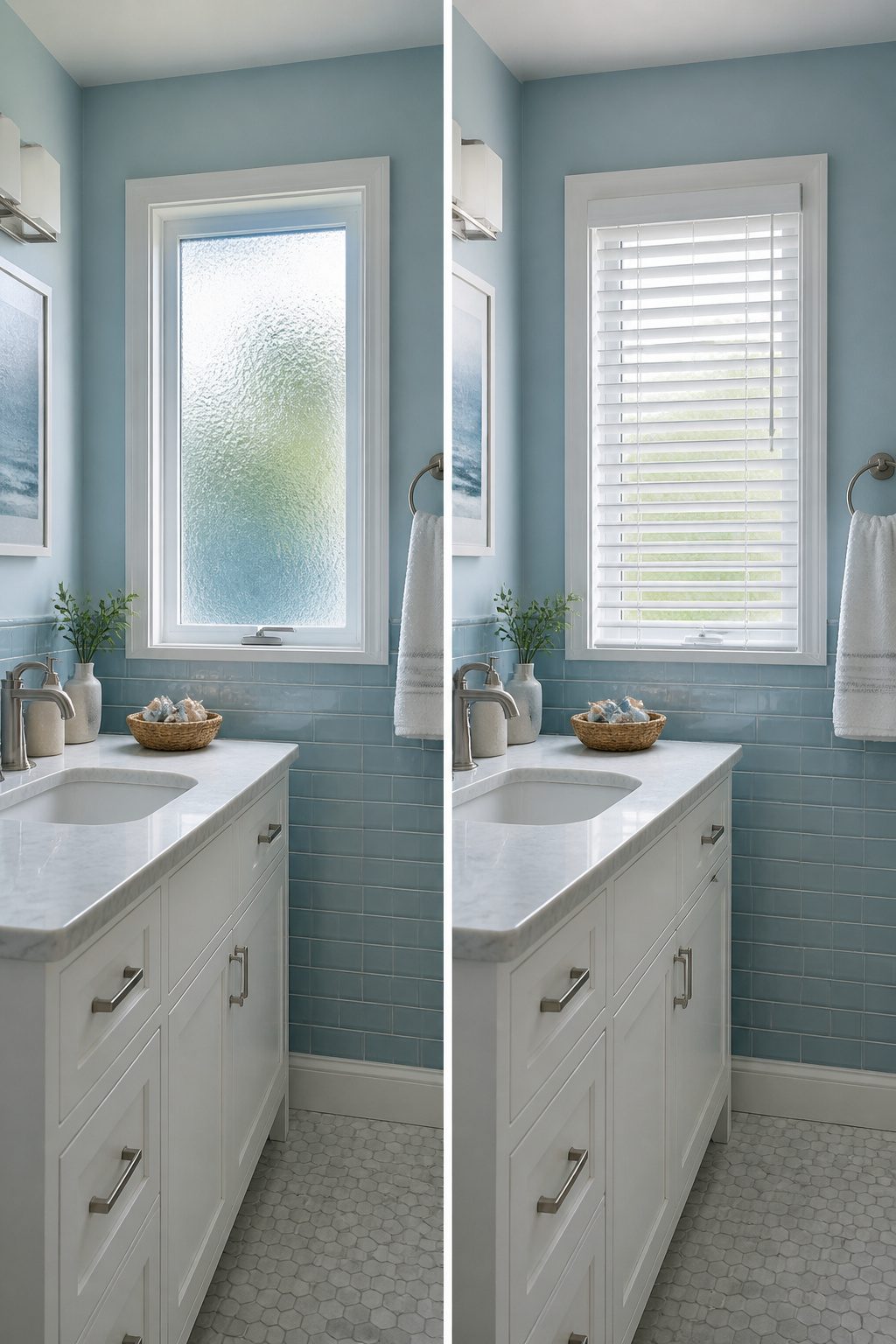
Faux wood blinds made sense for my bathroom window only after the real set warped. The steam from daily showers had lifted the grain on genuine wood slats within a single winter, leaving them bowed and impossible to close flat.
Synthetic slats handle that same humidity without swelling, which is why kitchens and bathrooms are the rooms where they outperform real wood.
The material is a high-quality synthetic that mimics the look of wood, so the trade is purely functional, not aesthetic. Slats stay lightweight, the profile stays slim, and operation in a tight window space stays easy.
For a small window above a sink or in a shower nook, that slim construction matters more than it would on a broad living room opening.
Budget also shifts: synthetic runs cheaper than genuine wood, and the maintenance difference over time is real. No resealing, no swelling, no replacing a set because the bathroom fan could not keep up.
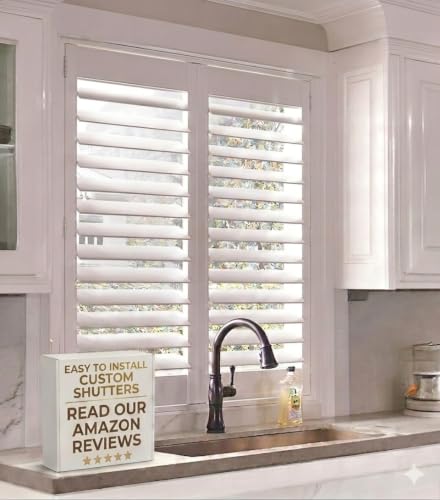
Modern and Elegant: Our interior window shutters feature a unique design with no front tilt rod and hidden gear, that creates a seamless, modern and elegant appearance while making the blinds easier to clean and maintain.

Privacy + Max Natural Light: These cafe style plantation shutters cover only the lower portion of your window, providing privacy while allowing natural light in from above.

Heavy-Duty Magnetic Security: Engineered with a reinforced magnet and precision steel strike plate(Square Shape), our catch delivers a robust pull force to keep cabinet doors securely closed—even against heavy doors or accidental bumps. Perfect for kitchens, cabinet, cupboard, drawer, garages, and RVs.
7. Mini Blinds
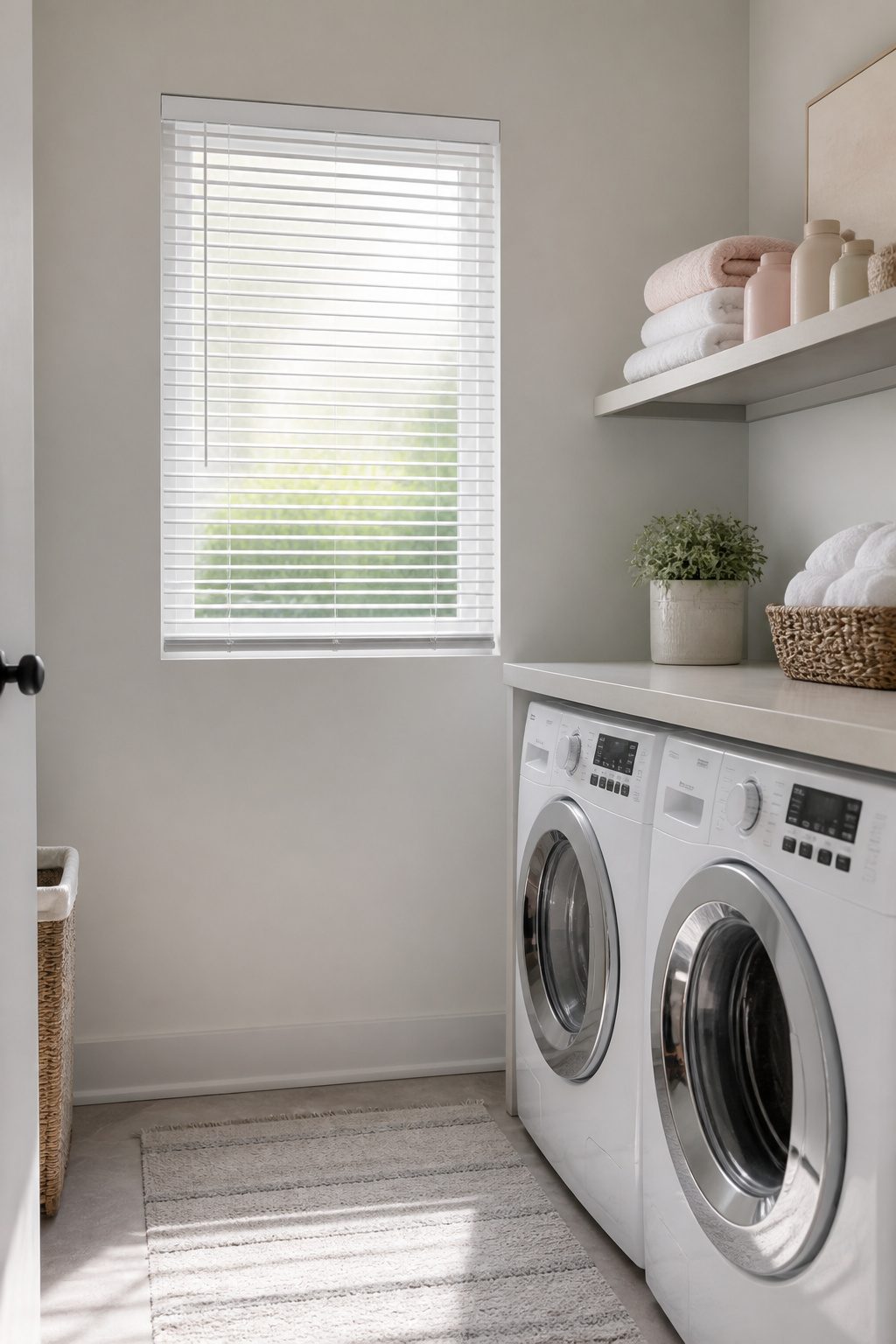
Mini blinds sit almost flush with the window frame, which matters more than most people think until they try to open a cabinet or squeeze past a radiator.
The half-inch slats stack tight at the top, leaving the glass clear and the wall around it uncluttered. That low profile is the reason they still show up in laundry rooms and second bathrooms where every inch of clearance counts.
The clean look comes from the slats themselves: narrow, uniform, nothing decorative to fight with tile or bare drywall. In a small window, ornament competes with the view; mini blinds mostly get out of the way.
They are also the cheapest option that still reads as finished, not temporary. Faux wood versions add moisture resistance for bathrooms or kitchens, though the standard aluminum or vinyl ones handle dry spaces fine and cost less.
Dust collects between the slats, which is the real maintenance hit. A cheap blind-cleaning tool, the kind that went viral on TikTok for about $8, clips over two slats at once and cuts the job in half.
Without it, you are wiping each slat individually, and in a house with hard water or cooking grease, that gets old fast.

MULTI-APPLICATION: Ideal for shutters for windows outside, privacy wall kit, deck sunblind system, hot tubs, pool enclosures, pergola roofs etc

Available in various color options

One Piece Injection Molded Polypropylene Construction
8. Café Curtains
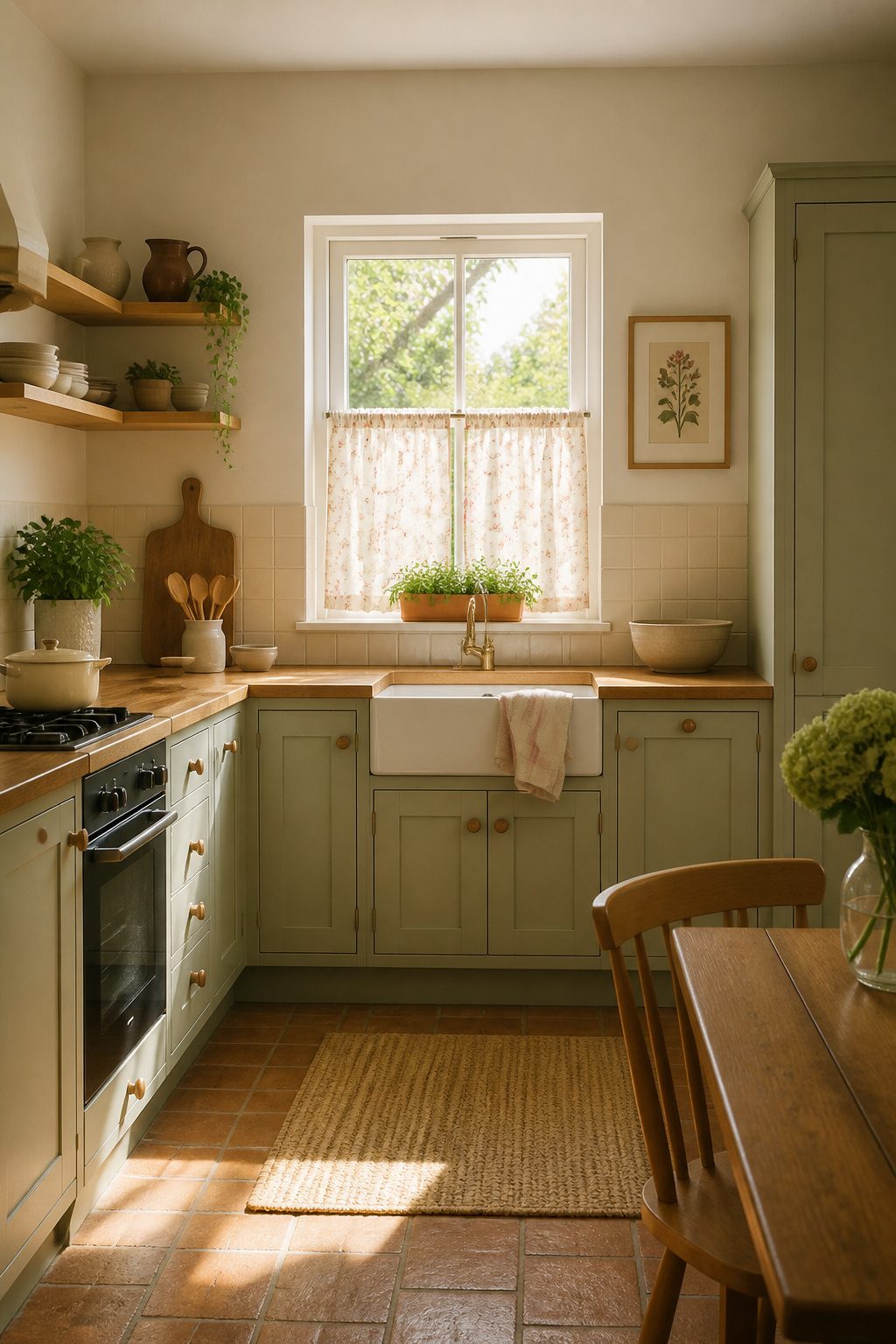
Café curtains hang across the lower half of a window, covering the glass from roughly the sill to the midpoint while the top stays open to daylight.
That split is the whole point: you get privacy from anyone passing at street level without trading away the sun above. In a small window, the partial coverage also keeps the fabric from swallowing what little frame there is.
Kitchens, breakfast nooks, and other casual spaces are where this treatment earns its keep.
A bathroom or laundry room works too, but the style reads relaxed, not formal, and the light it lets in matters more than the light it blocks. If you need real blackout, this is the wrong choice.
Fabric weight decides how the curtain behaves.
Cotton or linen keeps the look airy and stacks neatly when you do move it. Sheers turn the lower half translucent rather than opaque, which is enough for some rooms and too little for others.
Rod pockets suit curtains that stay put; rings or grommets help if you plan to open and close them daily. Pinch pleats or flat panels glide easiest on a café rod mounted inside the frame.

No Drill Installation Self-adhesive: say goodbye to cumbersome curtain rods and drills; This no-drill curtain features a self-adhesive design,requires no tools, and can be installed in minutes without damaging the wall; Suitable for renters, apartments, dorm rooms, or temporary window treatments

Quantity: 1 panel Tie-up Curtain. Curtain rod is not included.

WELL MADE: Sold as 2 panels, each panel is W52" x L84", and W104" x L84" in total. Each curtain panel has 2-in-1 top style design: rod pocket and back tab. With 3-inch inner diameter fit most standard rod. Curtains also can be hung with clip rings. 3 ways meet your various needs.
9. Lightweight Curtains
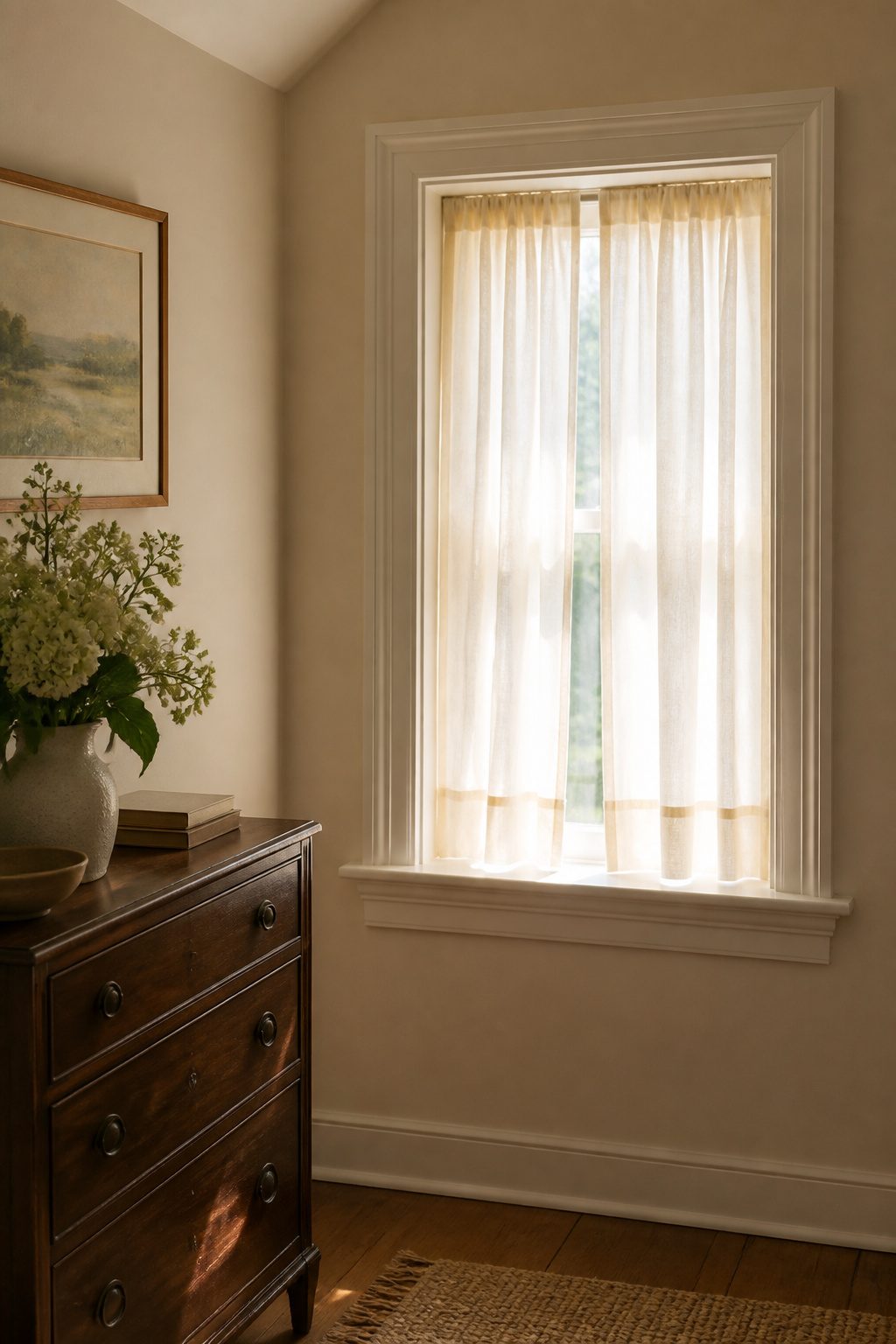
Cotton voile and lightweight linen hang differently than the heavier drapes you see in showrooms. On a small window, that weight gap matters.
Thick jacquard or triple-weave blackout cloth can swallow the frame whole, turning a modest opening into what looks like a padded wall. Sheer cotton, by contrast, lets the window keep its shape while still softening the glass.
The rod placement decides a lot of this. Mount it inside the frame, not six inches above, and the curtain stays compact against the wall.
That inside mount trick works especially well in tight spots like attic dormers or a bathroom over a tub, where fabric that projects into the room becomes something you bump into.
A slim pocket header sits flatter than grommets or rings, which is worth remembering if the window sits near a hallway or staircase where every inch of clearance counts.
Color plays its part too. A white or pale neutral curtain reads as part of the wall, not a separate object dividing the space.
Dark greens and moody reds might tempt you on the bolt, but on a 24-inch window they flatten the room rather than open it.
"You can use light-colored curtains like white or neutral colors to create an airy feel."
What that means in practice: if your walls are a warm off-white, match them rather than contrast. The eye travels past the window instead of stopping there, and the room reads larger for it.

【Linen Fabrics】Made from high-quality linen fabric, our light filtering shades are designed to be soft and skin-friendly, transparent to light, opaque to sight. Perfect for creating a cozy and peaceful atmosphere in any room. The fabric is precisely cut with a laser without any rough edges. Linen fabric is predominantly made from natural linen fibers, which are completely natural and odor-free, providing you a more comfortable and enjoyable environment.

【Filter Harsh Sunlight While Preserving Your View】Tired of glare and heat without losing your outdoor scenery? Our sheer Light Filtering Roller Shades feature a unique woven texture that reduces strong sunlight, cools your room naturally, and lets in soft, pleasant light—so you can still enjoy the view outside without squinting or overheating.

Cordless & Safe by Design: Our cordless shades feature a smooth, free-stop system. Adjust them easily-just push up or pull down to your desired height, and they remain securely and quietly in place. With no loose cords to manage, the design reduces risks and maintains a clean, uncluttered aesthetic, making it ideal for households with children and pets. Experience effortless daily control and enjoy a tidier, more peaceful atmosphere
10. Valances and Cornices
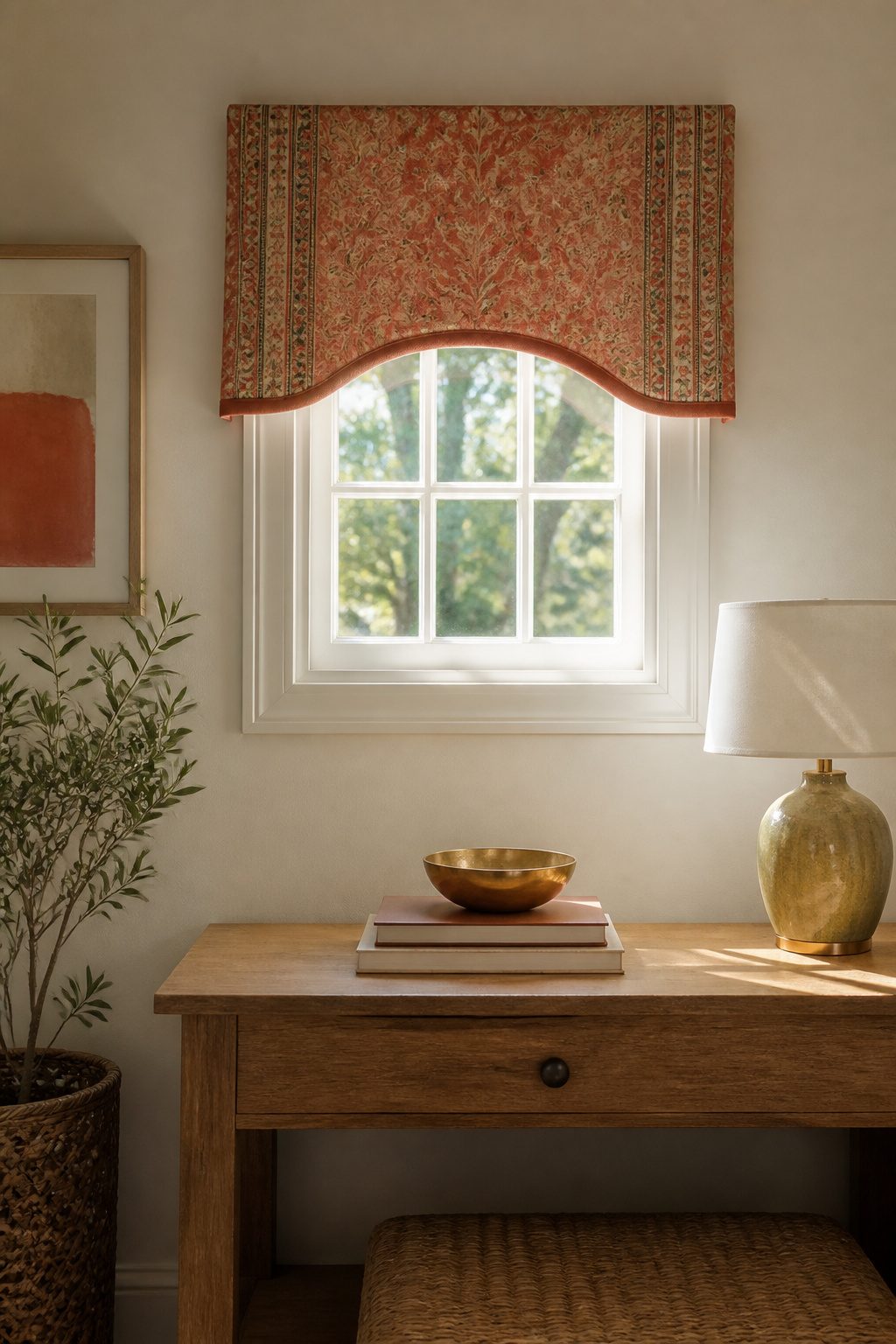
A small window can feel finished without ever touching the glass itself. Valances and cornices sit above the frame, adding color and texture while the pane stays completely open to the light.
I like this approach for rooms where privacy is already handled and the goal is simply to stop the window from looking like an afterthought.
The shapes matter more than the fabric. A straight-edged flat cornice reads clean and modern; a scalloped valance softens the line for something more traditional.
What I would skip are swags or anything that pools visually heavy fabric above a narrow opening. Those styles swallow small proportions instead of framing them.
Let the valance overlap the glass by about an inch so the edge of the frame softens and the window reads slightly larger than it is.
Keep the fabric light, and the whole treatment stays decorative without becoming the main event.

[Innovative Free-Stop System]: Experience effortless control with our blackout roller shade's innovative free-stop system. Easily adjust the shade to your desired height, allowing for precise light control and privacy, without the hassle of traditional cords or chains.

100% Blackout & Thermal: Features a triple-layer coated fabric that physically blocks 100% of sunlight and UV rays. The thermal insulated material helps maintain room temperature by reflecting exterior heat, creating a perfect dark sleep environment for shift workers, nurseries, and light-sensitive sleepers.

100% Blackout Roller Shade: Made of polyester fabric coated with blackout backing. Blocking out 100% light for complete privacy, light control and UV protection for bedrooms, children’s rooms and movie rooms. Excellent for deeper and longer sleepers.
Maximizing Light
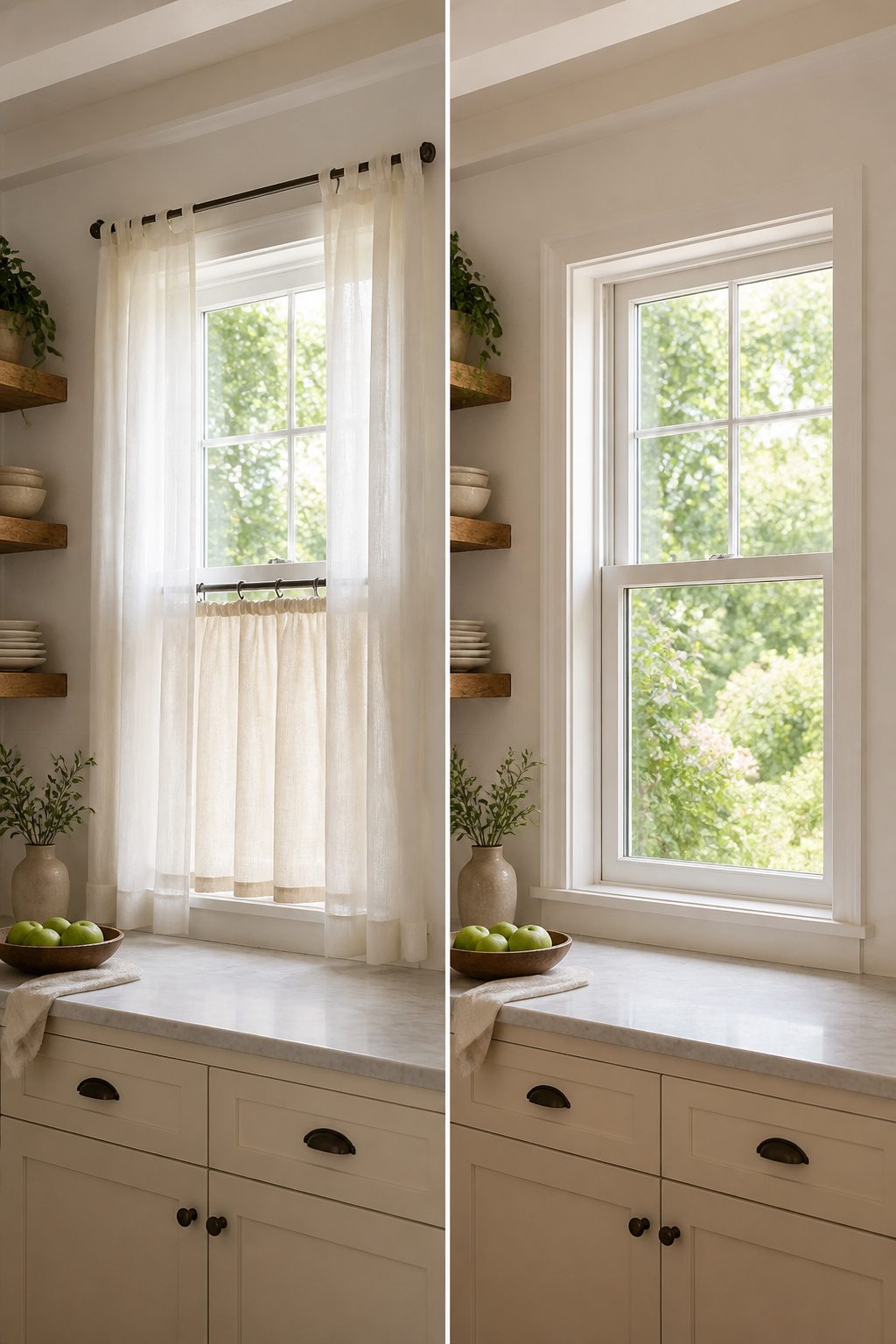
Sheer treatments are the first thing to reach for when a small window needs to stay private without turning the room into a cave.
A translucent fabric diffuses daylight instead of blocking it, which keeps the wall from feeling like a solid barrier.
In my own reading through the options, the difference between a sheer and a standard curtain is the difference between a room that reads as finished and one that reads as cramped.
Light-colored and sheer fabrics visually expand the space, a point every source returns to. The trick is choosing coverage that matches the privacy you actually need.
Sheer panels alone filter sunlight and cut glare while still letting the room breathe, though they give minimal privacy after dark. For a bathroom or a street-facing window, that is a real limit.
Cafe curtains solve the tension differently by covering only the lower half or two-thirds of the frame.
Light enters high, sight lines stay blocked low, and the small window never gets visually swallowed by full-length fabric. Kitchens and laundry rooms are the natural home for this approach; a formal living room, less so.
Lightweight cotton or linen keeps the look airy, and a rod pocket header works fine if the curtains will stay put most of the time. Rings or grommets matter more if you are opening and closing them daily.
Layering is the fallback when one treatment cannot do both jobs. Sheers underneath heavier curtains or shades gives control without sacrificing the open feel on bright days.
Function Versus Look
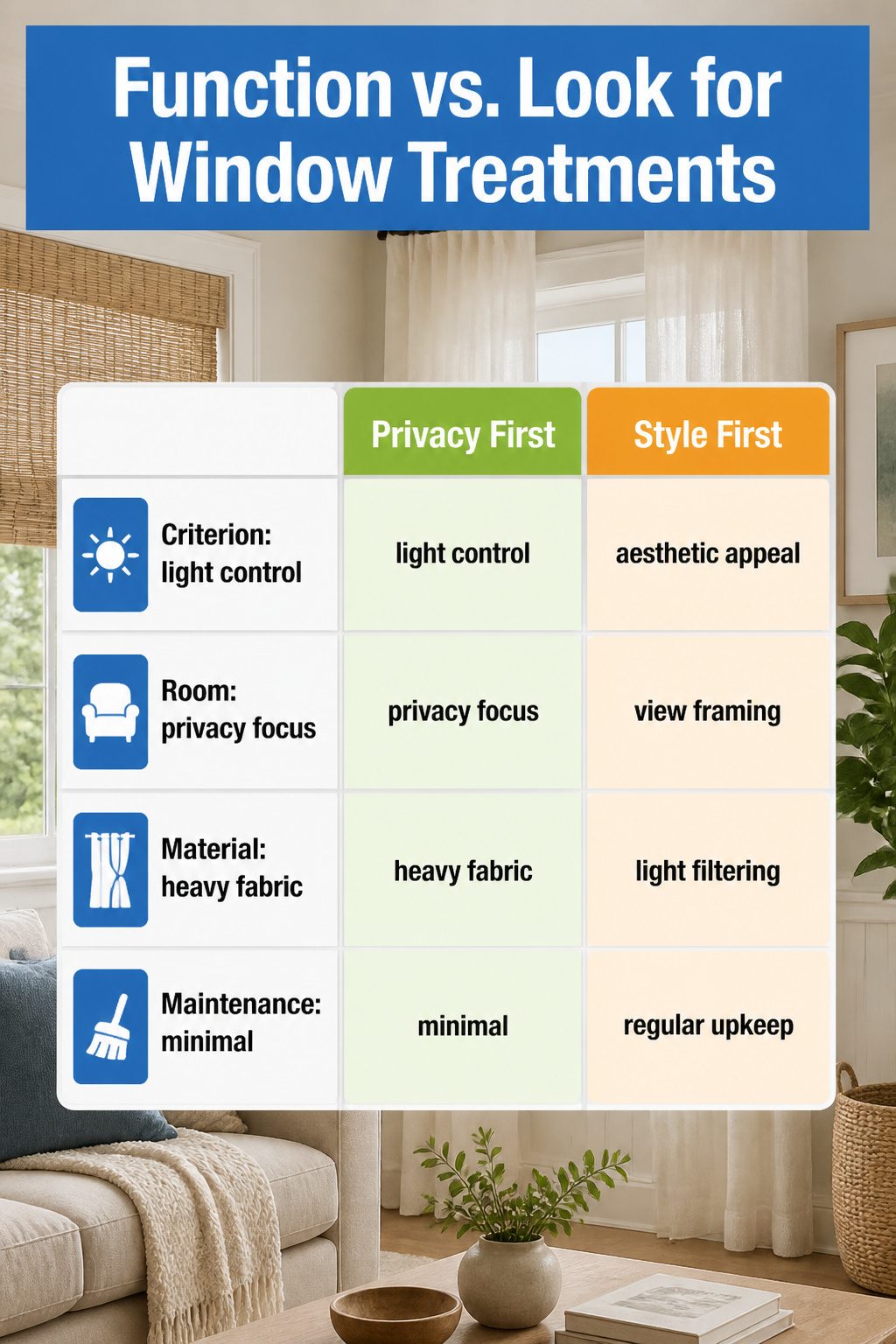
A small window in a bathroom demands privacy first, style second. The reverse is true in a living room where the treatment mainly frames the view.
In kitchens and laundry rooms, cafe curtains covering the lower half or two-thirds solve both problems at once: light above, coverage below, no heavy fabric swallowing the frame.
The mistake is picking the same priority for every room.
Bold patterns and colors on a small window can overwhelm the space, especially when wall area is already tight. Roller shades keep things streamlined where the look should stay quiet; wood blinds add warmth where the room needs texture.
Basements force another call.
They need every photon they can get, so full blackout shades read as a trap rather than a retreat. Sheers or lightweight cotton and linen layers pull in daylight without leaving the glass bare to the street.
My own rule, shaped from a few wrong purchases: decide the single job this window must do before touching fabric swatches. In a bedroom, that might be blocking morning glare.
In a hallway, it might just be not looking like an afterthought. The treatment that does its job and still belongs in the room is the one worth the Saturday install.
Picking Materials
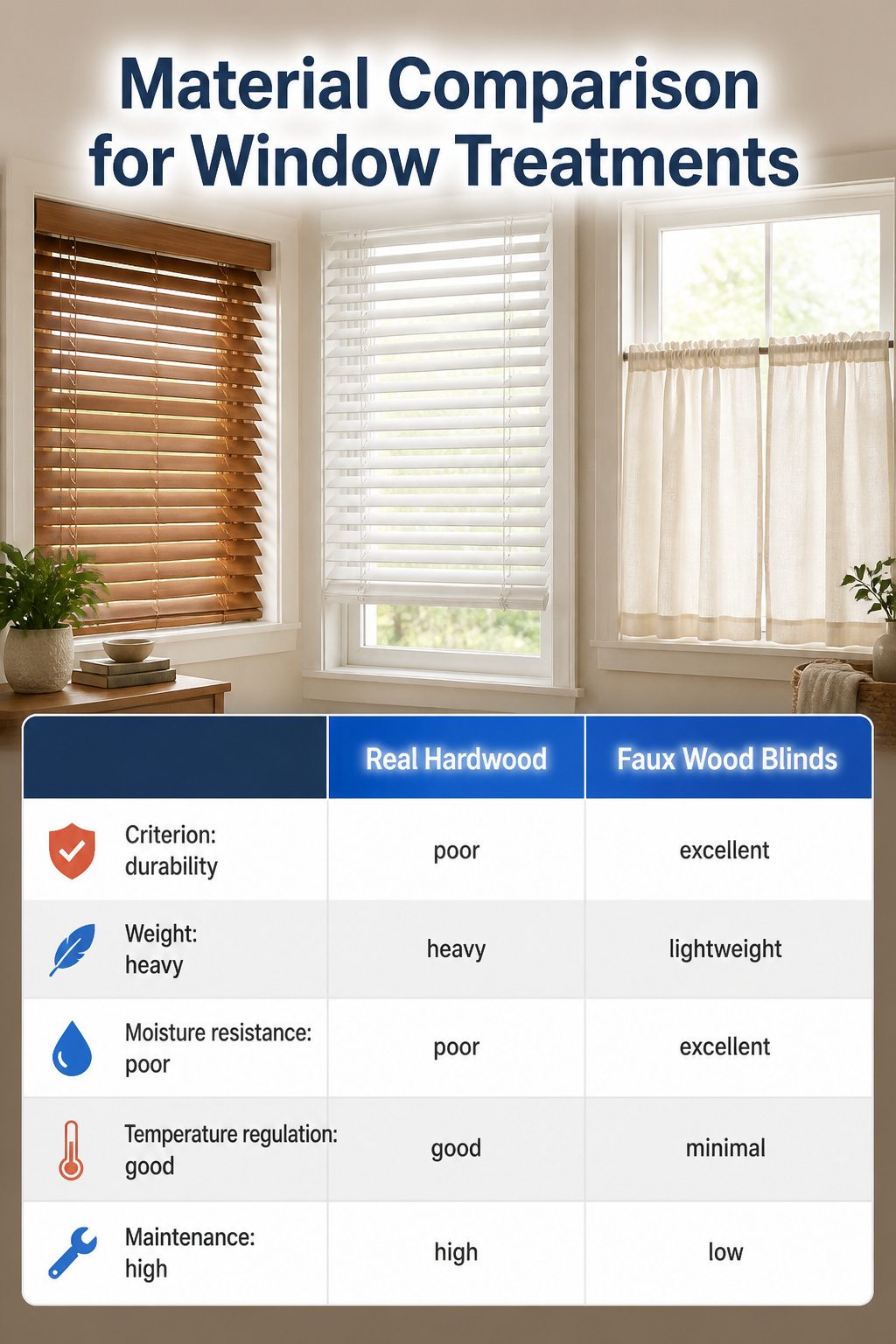
Real hardwood carries visual weight that can overwhelm a small window unless the room has enough else going on to balance it.
In a compact study or bedroom, the warmth pays off, and the insulation helps regulate temperature and sound in tight quarters where every surface matters.
The catch is moisture: bathrooms and kitchens will warp real wood over time, so the premium material ends up a poor investment there.
Faux wood blinds solve the moisture problem with synthetic construction that mimics the look without the maintenance. Their lighter weight and slimmer profile operate easily in tight spaces, and the durability holds up against humidity that would ruin hardwood.
Budget-wise they run friendlier too, which matters when a rental bathroom needs covering but the security deposit is already on your mind.
Lightweight fabrics change the equation entirely. Cotton or linen café curtains keep the airiness in kitchens, laundry rooms, and sunrooms where full coverage would steal needed daylight.
Moisture-resistant synthetics or mildew-resistant fabrics handle bathroom humidity better than natural fibers, and sheer panels maintain privacy without blocking the window visually.
The rule I settled on after reading through enough of these: match the material to the room’s hardest condition first, then worry about color.
A bold pattern or light shade can always be swapped; replacing water-damaged blinds is a Saturday you do not get back.
Matching the Room’s Style
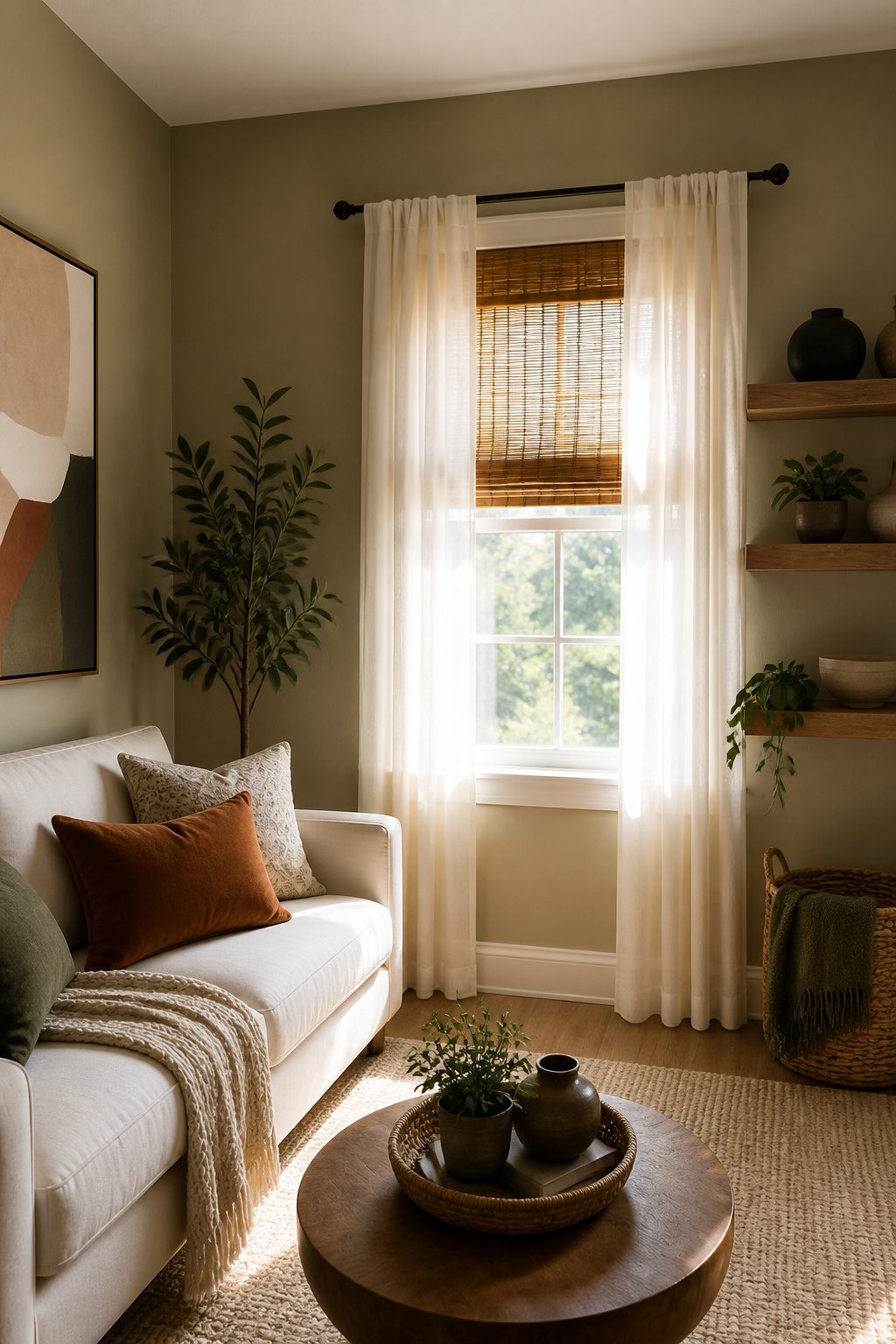
Cohesive does not mean matching everything to the exact shade of the walls, though that trick works.
In my own reading, the advice that stuck came from seeing what actually breaks a room: a heavy blackout curtain hung beside a sheer Roman shade, or wood blinds fighting with metal curtain rods two feet away.
The eye stops at every clash, and in a small room those stops add up fast.
The passages split on how far to take uniformity. One camp says keep every treatment in the room the same style and color-matched to the wall.
The other allows more interesting fabric or texture if it makes the small window feel intentional. Both agree on the real mistake: layering treatments when the space cannot handle the bulk.
In a compact room, blinds or shades pulled tight to the top almost disappear, letting light do the enlarging. Drapes work only if they stay drawn open or hang high and long enough to stretch the window upward.
Short curtains that cut the glass in half, or a valance plus blinds plus sheers, shrink the room by dividing what little visual space exists.
Frequently Asked Questions
What are some good window treatments for small windows?
Shutters, sheer shades, roller shades, Roman shades, wood and faux wood blinds, mini blinds, café curtains, lightweight curtains, and valances or cornices all work well.
The best choice depends on whether you need privacy, light control, or just a finished look, and on how much wall space surrounds the window.
How do I maximize light in a small room with windows?
Stick with light-colored and sheer fabrics that diffuse daylight instead of blocking it.
Sheer shades or lightweight cotton and linen curtains let the room read as bright, and mounting hardware inside the frame keeps treatments compact against the wall so nothing crowds the glass.
What materials are best for small window treatments?
Lightweight fabrics like cotton voile or linen keep things airy in kitchens and living spaces.
Real hardwood adds warmth and insulation in dry rooms such as bedrooms, while faux wood or synthetics stand up to bathroom and kitchen humidity without warping or swelling.
Can I layer window treatments for small windows?
Yes, though only if the space can handle the bulk.
Sheers underneath heavier curtains or shades give you light control plus privacy after dark, but in tight quarters a single streamlined treatment pulled tight to the top almost disappears and lets the room feel larger.