

A single panel can read as intentional or like a mistake, depending on whether you let the wall do the work.
The deciding factor is the window’s position: off-center windows need the rod extended 8–12 inches past the frame on the open side so the stack clears the glass, while centered narrow windows call for a different treatment entirely.
In a 24-inch rental window shoved against one wall, that overhang was the difference between a pinched corner and one that breathed.
1. Single Curtain Panel
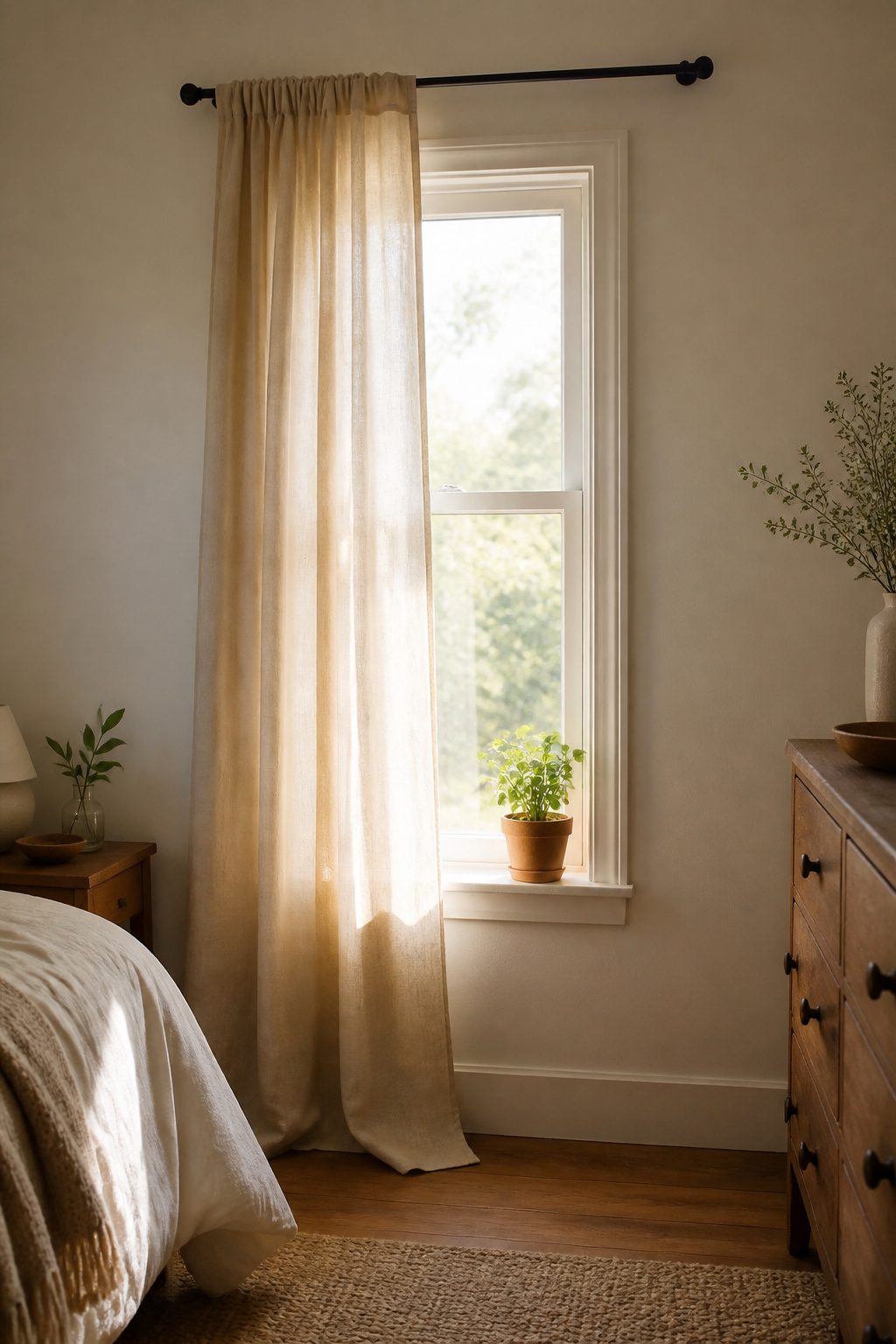
A single panel on a narrow window reads as intentional, not like half a set got lost in the move.
The first time I tried this was in a rental with a window shoved against one wall, maybe 24 inches wide, and a pair of panels made the whole corner feel pinched.
One panel, hung to the open side, gave the glass room to breathe.
The trick with off-center windows is letting the wall do the work.
Mount the rod 6–12 inches above the frame and extend it 8–12 inches past the frame on the open side. That overhang lets the panel stack clear of the glass when drawn, so you are not blocking light you barely have.
In a corner setup where wall space is tight, a stationary single panel on the open side keeps the treatment compact without fighting architecture that will not budge.
Light colors and straight lines matter more here than on a big window, because the panel sits closer to your eye.
Soft cotton or linen in a pale tone reflects what light comes through instead of swallowing it. Skip heavy headers or busy prints; the goal is balance, not volume.
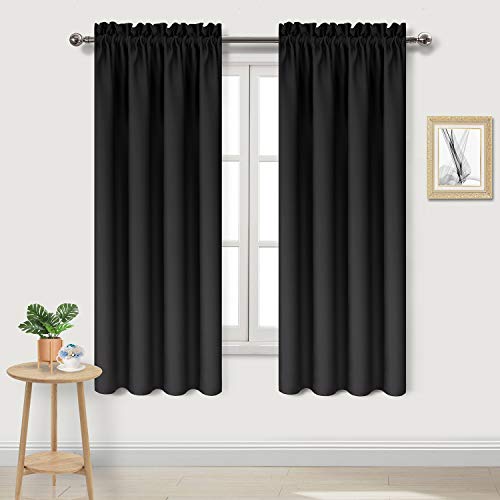
[Polyester Material] Made of high-quality durable 100% polyester fabric, our blackout curtains are super smooth and soft. Two blackout curtain panels will be included in the bundle. Each panel is 42 inches wide by 63 inches length

SET DETAILS: Pack of single panel charcoal gray doorway curtain, measures 34 inch wide by 80 inch long with 6 silver metal grommets (1.6 inch inner diameter) on top, easy to install and slide smoothly. Pets have no problem to pass.
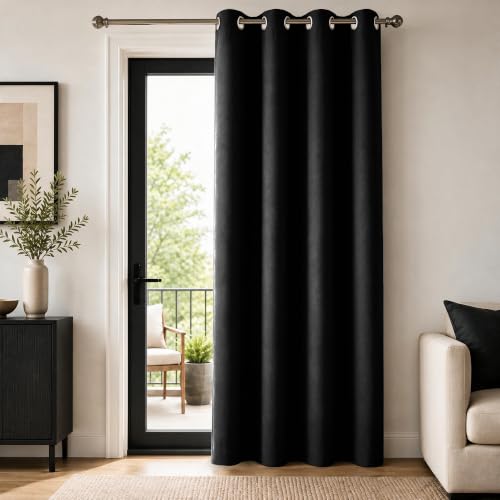
Panel Size: Each curtain panel measures 42 inches wide by 63 inches long. Check your window dimensions before choosing a size, and allow enough fabric to cover the window with room for natural folds
2. Sheer Curtains
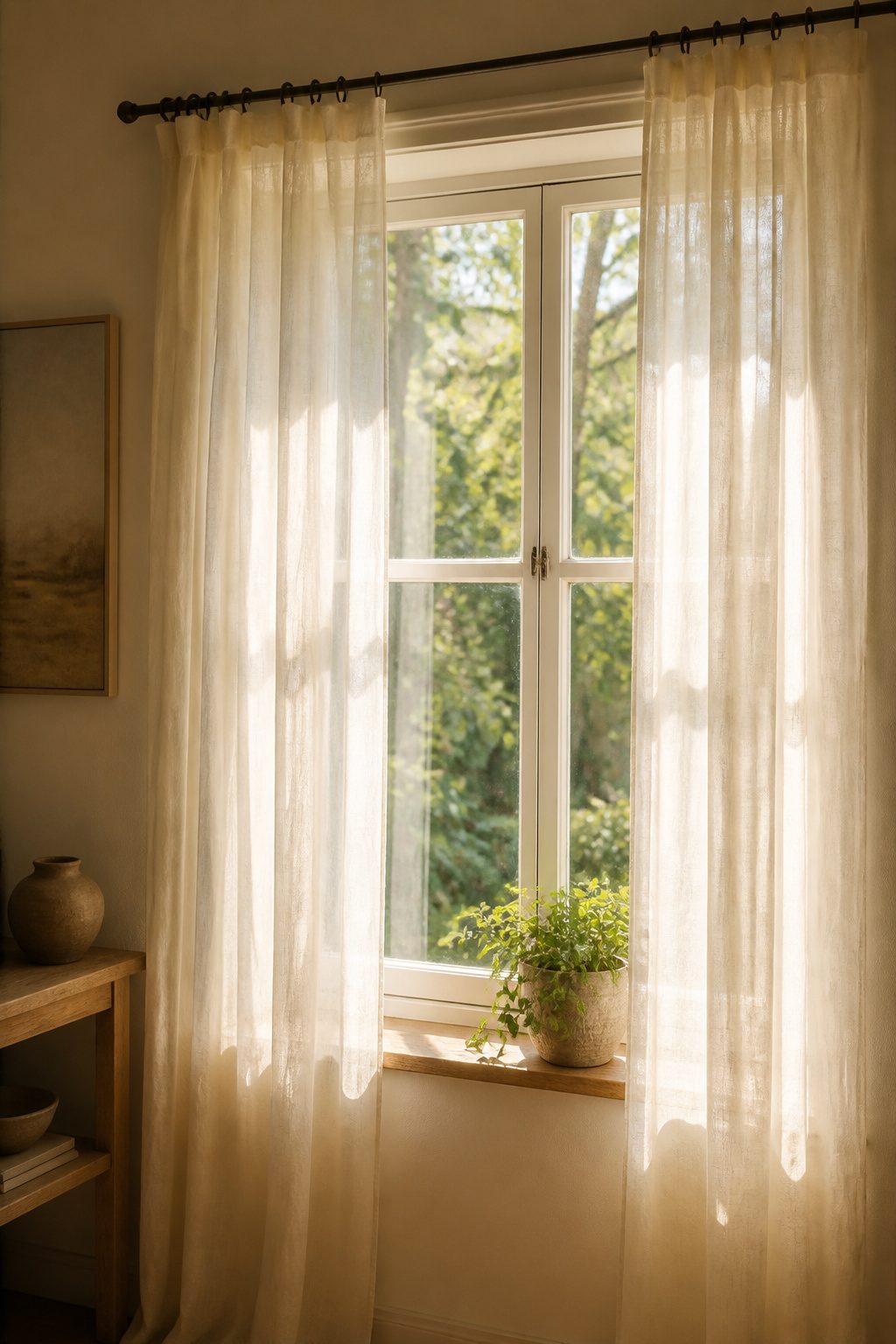
Light, airy sheers are the first thing that comes to mind for a small window that faces a neighbor’s wall or a busy sidewalk.
The fabric diffuses daylight coming in without turning the room into a cave, and the slight blur they create from the outside gives you enough privacy to leave them drawn all day.
Linen and cotton are the fabrics that keep that look from going too formal; linen has a natural slub that reads relaxed even when the panel is new, and cotton blends hold up to washing without the dry-cleaning bill.
The real win for renters is the hardware. A tension rod wedged inside the window frame takes about thirty seconds to install and leaves zero evidence when you move out.
For sheers lighter than a heavy cotton, adhesive hooks can work too, though the hold is only as good as the paint behind it.
Expect temporary hardware to handle lighter treatments best, so skip the lined panels and save the heavy fabric for a rod anchored in studs.

Thick Linen Fabric: These linen curtains are carefully crafted from 400 GSM fabric of flax linen, cotton and polyester, offering a blend of softness, natural aesthetics and durability. Thicker linen curtains capture a real rich flax textured feel while savoring a heavier set,adding a touch of sophistication
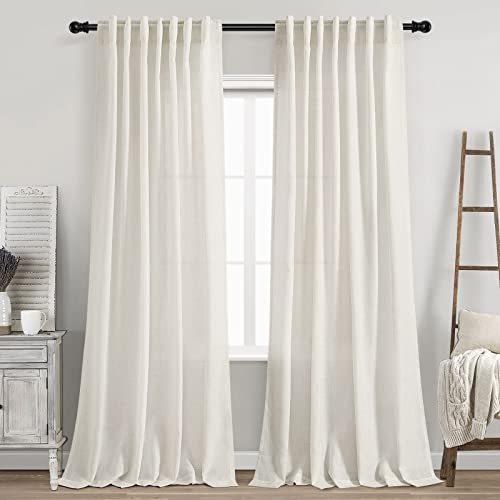
READY MADE: 2 Linen Curtain Panels per package.Each panel measures 52 inches wide by 84 inches long. Top design of Back tab & loop pocket provide 3 hanging options. <1> hanging from the back patch to create an elegant pleated look, <2> from the 3 inch rod pocket for a classic look <3> Hanging with clip rings for easy, slide open and closed (clip rings are not included)

Basic Information: Includes 2 curtain panels, each measuring 50 inches wide for a total of 100 inches. Easy care for machine washable in cold water, do not bleach, tumble dry low, iron on low heat if needed.
3. Roman Shades
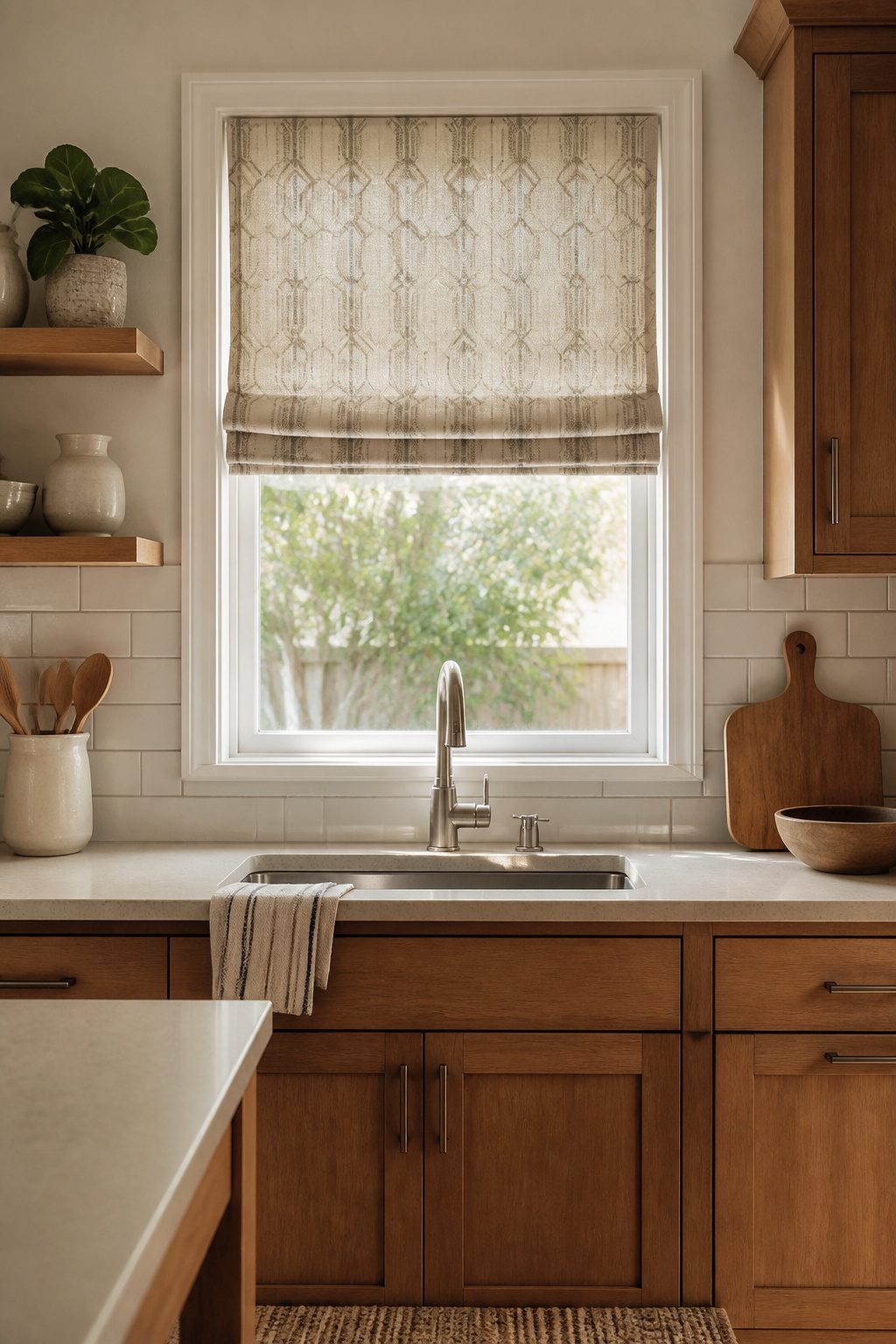
Roman shades stack fabric in clean, horizontal folds that disappear into a slim header when raised. That structure keeps the treatment inside the window frame, which matters in small rooms where every inch of wall and floor space counts.
Drapery panels need clearance to stack back, and in a narrow bathroom or a kitchen above the sink, that bulk steals space you do not have.
The fold style changes the look more than most people expect. A flat fold sits smooth and almost architectural when lowered, good for modern rooms where you want the window to read as a single plane.
A hobbled fold keeps soft, rounded loops even when fully extended, which reads more traditional without adding any extra depth. Either way, the shade stays close to the glass.
Thickness is the place where these can still go wrong.
Heavy lining or stiff fabric turns a slim profile into a padded envelope that projects farther than you planned. For a small window, light to medium weight cloth with minimal lining keeps the neatness that makes the idea work.

【PACKING SPECIFICATIONS】: 2 pcs of white curtain rods, which can be extended from 26 to 39 inch, and the best use range is 28 to 36 inch,Scalable without drilling.

【Reinforced Support】 Our extendable curtain rod features a reinforced design with a 50% increase in wall thickness, providing unmatched support. It easily withstands 6 LBS of pressure without bending, ensuring a carefree user experience

【Size Introduction】Equipped with 2 tension rods,The actual length of the product is 17-28 inches (43-71cm).(Recommended best use range 17 to 26 inches (43-66cm))
4. Café Curtains
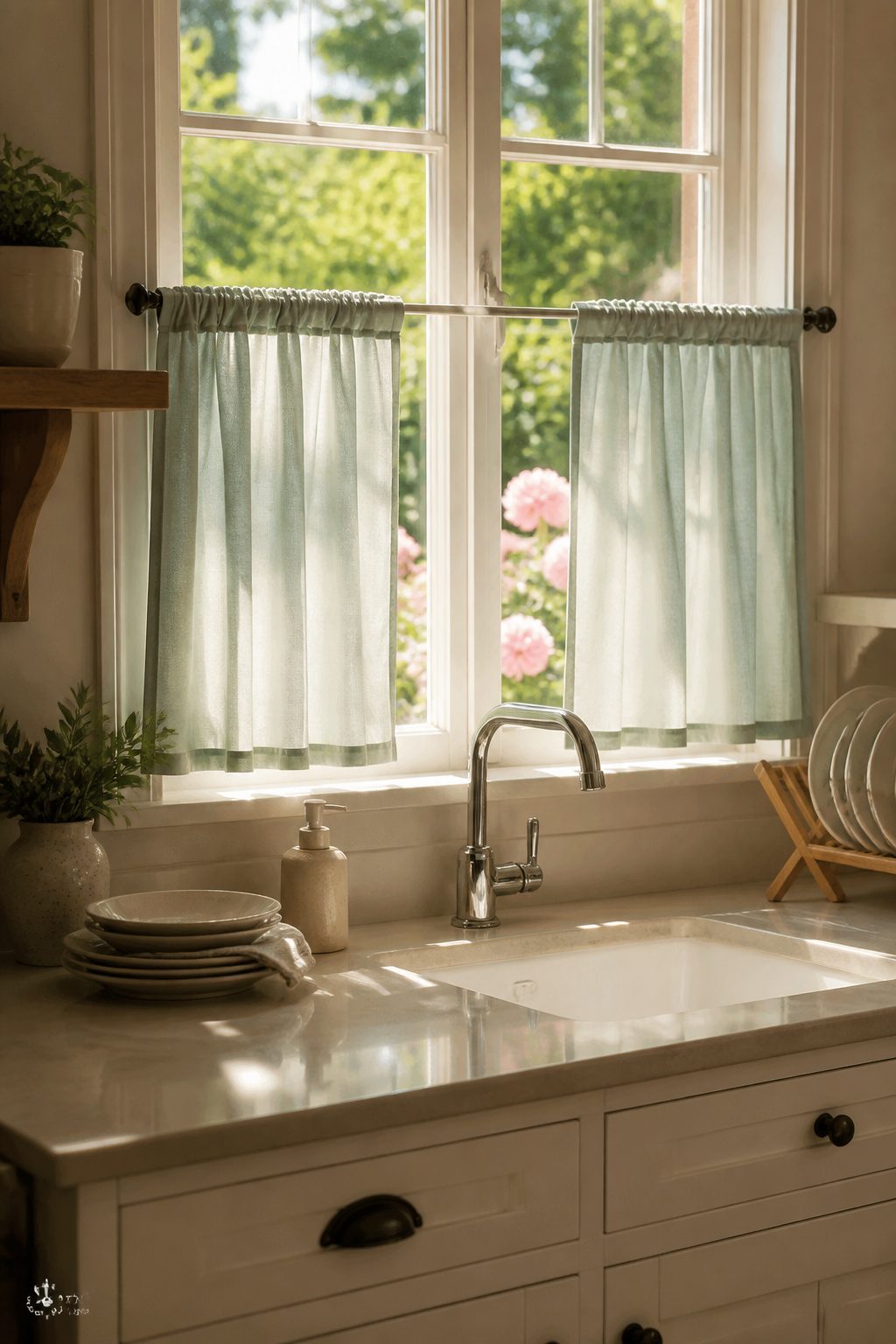
Café curtains hang across the lower half of a window, which is exactly where privacy matters most in a kitchen or bathroom. The top stays open for daylight, the bottom blocks the sightline from a neighbor’s yard or the sidewalk.
For a small window above a sink, a full panel would bunch onto the counter or drag through water every time you reached for the faucet. The shorter cut keeps fabric clear of splashes and soap.
Moisture is the real enemy in these rooms.
A fabric that stays damp grows problems, so washable synthetic blends that dry quickly beat anything that needs delicate handling. Linen looks beautiful until it shrinks from repeated humidity.
Cotton blends hold up better, but check the care label before you commit. Cordless mounting matters too, especially in kitchens and bathrooms where children climb and cords near water create hazards.
The style limit is real.
Café curtains won’t darken a room for sleep, and they read as casual by default. In a space with modern hardware or sharp lines, they can feel fussy unless the fabric is plain and the hem is crisp.
For a rental kitchen with a tight budget and a Saturday morning, they solve the problem without asking for much money or skill.
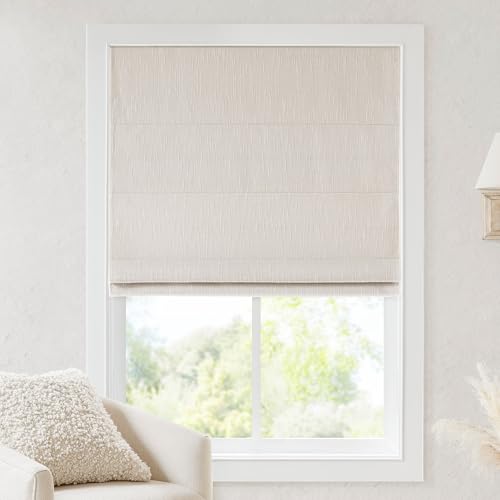
True to size - Refer to our sizing guide image for your perfect fit. SIZE: 34"W x 64"L. Inside mount requires shade 0.5" shorter in width, while outside mount requires shade 3" wider than your window size
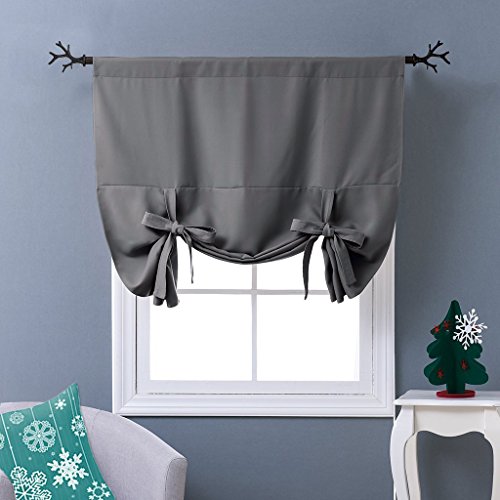
READY MADE: Package includes 1 panel Tie Up Shade with 46" width x 63" length (117cm x 161cm), same color as front. 3" pocket fits various standard or decorative curtain rod/pole.
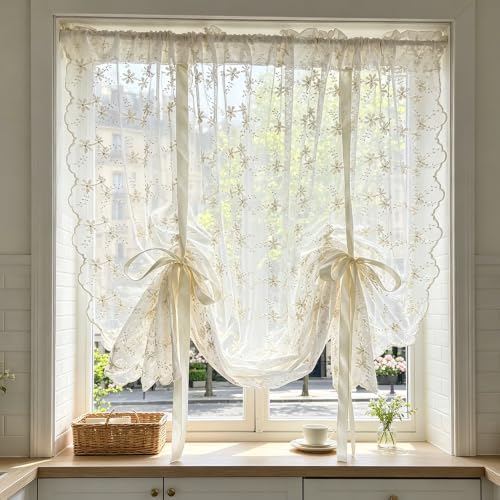
Ready to Hang:Sold as 1 Panel. Lightweight cream sheer fabric fully covered with tiny beige flower embroidery, soft translucent texture softens harsh sunlight for gentle natural indoor lighting.
5. Layered Curtains
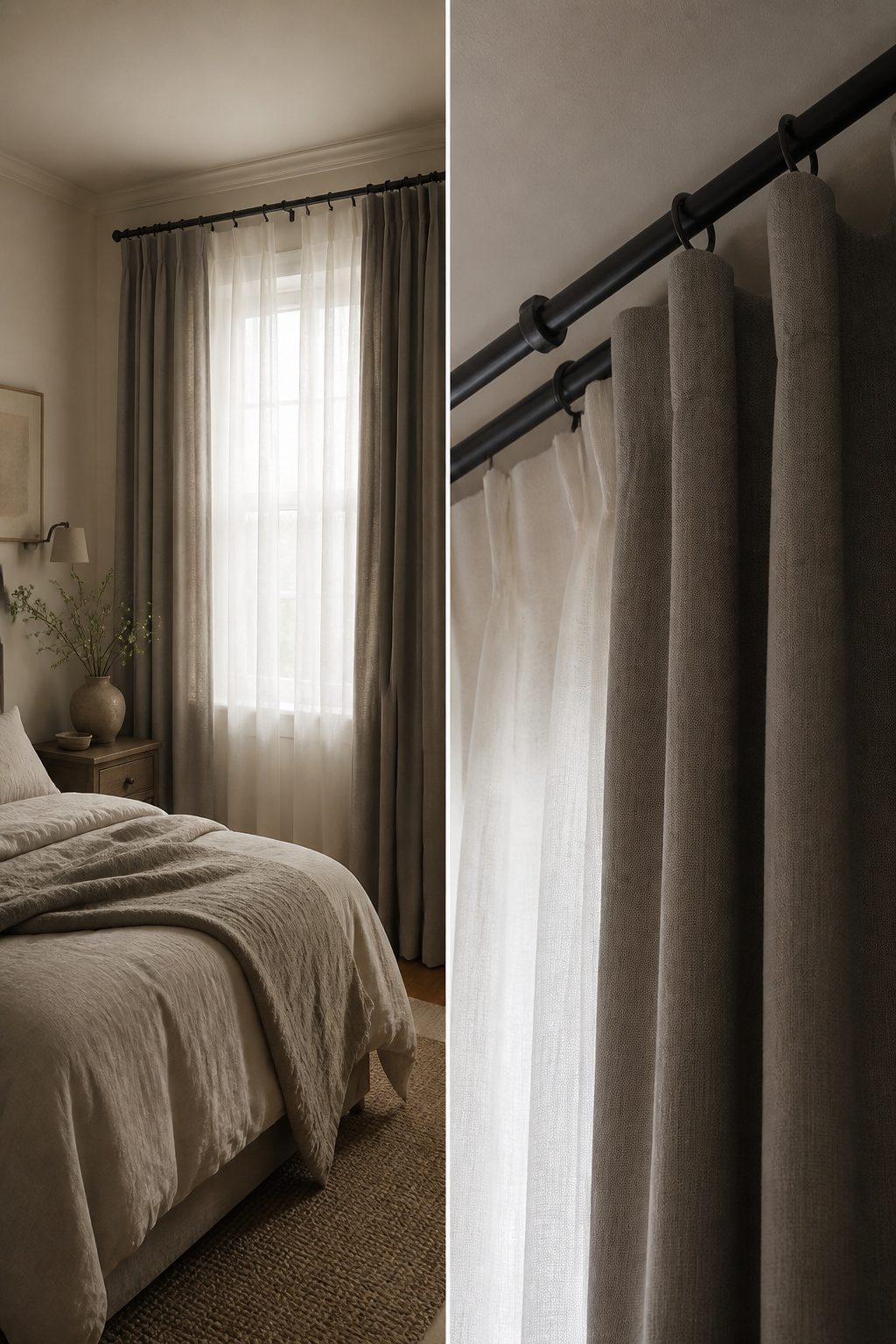
Sheer fabric underneath a heavier drape gives you a dial instead of a switch.
Morning light filters through the sheer while you drink coffee; at night, the heavier panel closes the room off completely. That day-to-night shift is why layering works for a single window you actually live with, not just look at.
The hardware choice matters more than the fabric.
A double rod setup keeps both layers on separate tracks, so either panel slides independently. A single rod forces you to bunch both fabrics together when you open them, which eats space and looks bulky on a narrow window.
If your window is small enough that bulk becomes the whole story, the sheer-under-solid pairing keeps the stack trimmer than mixing two heavier fabrics.
Layering does add depth, but it also adds failure points. Two sets of rings, two hem lengths to keep even, and twice the dusting.
For a rental with a weekend timeline, the double rod is worth the extra drilling if you plan to stay put; for a temporary fix, the bulk of a single rod might be the compromise you accept.

Easy to Install and Detachable: Just need to put the assembled curtain rod into the base. It is easy to take the curtains off when you need wash or change different curtains, just put the rod from the base. No need to disassemble the pole.

WIDE POCKET DESIGN WITH DURABLE METAL SUPPORT: 2.5 inch pocket fits wide pocket drapery securely, while adjustable 3.44"–5.94" projection allows flexible spacing and sturdy metal construction ensures reliable support.

Easy to Install and Detachable: Just need to put the assembled curtain rod into the base. It is easy to take the curtains off when you need wash or change different curtains, just put the rod from the base. No need to disassemble the pole.
6. Bold Patterns
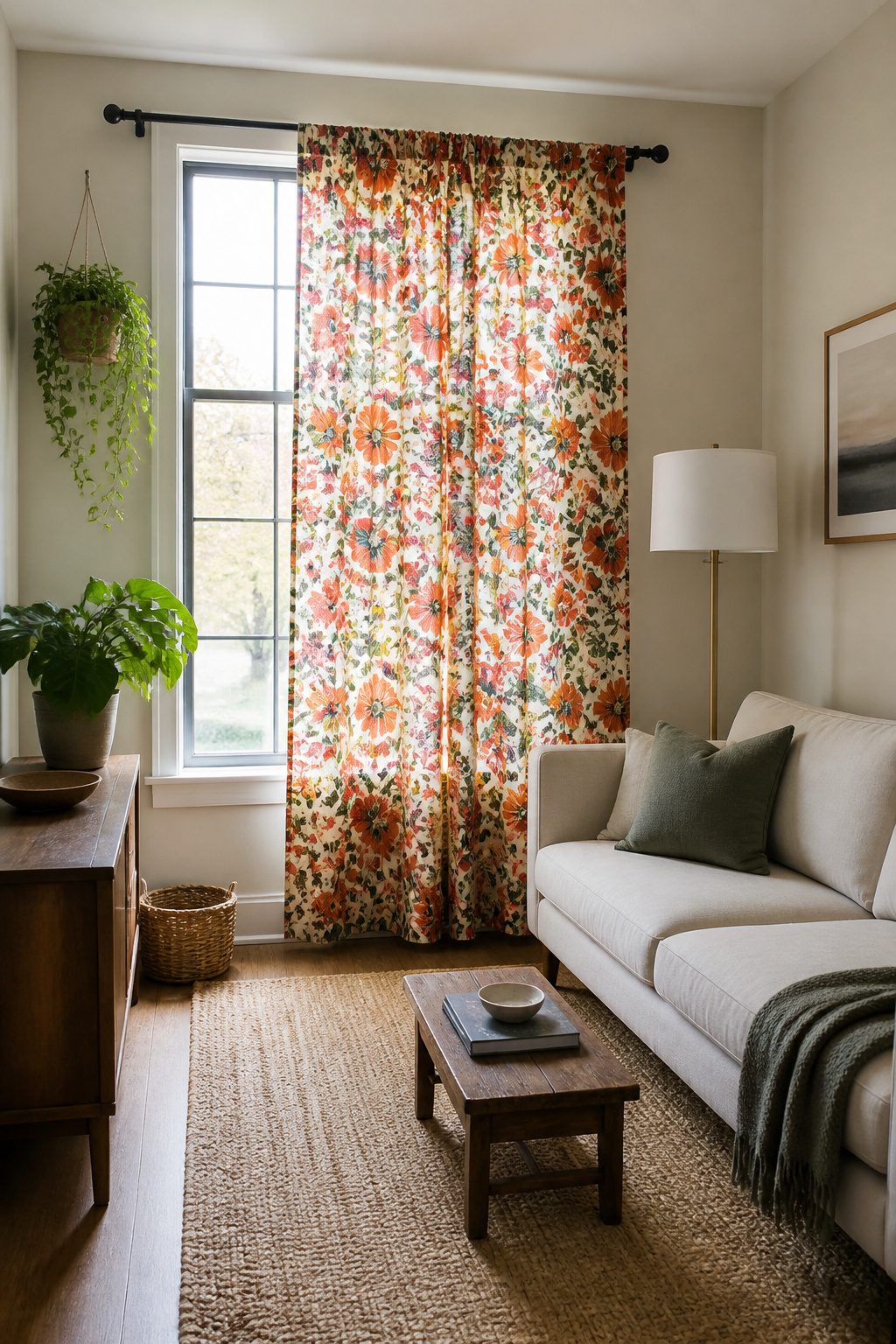
Small windows do not have to disappear behind safe choices. A bold pattern can pull the eye straight to the glass and make the wall feel intentional rather than apologetic.
The fear is real, though: too large a motif shrinks the opening by comparison, while the right scale turns the curtain into the room’s single best move.
Direction matters as much as scale. Vertical stripes or narrow repeated motifs guide the eye upward and can add perceived height, whereas horizontal bands flatten the space.
Florals work when the repeat is tight enough to read as texture from across the room, not as isolated blobs that fight the frame.
The real decision is whether the curtain carries the room or merely sits in it.
In a maximalist space, a longer curtain in the same textile used elsewhere, as designer Eric Allart did with a Simrane floral in a Parisian apartment, lets the pattern move the eye around rather than stop at the window.
If you’re stuck with tiny windows, use curtains to create the illusion of size.
For most renters and first-home owners, this means one bold curtain paired with neutral walls and bedding.
The pattern becomes the statement; everything else steps back. If the room already holds strong color or competing prints, a bold curtain adds clutter, not focus.

ELEGANT DESIGN: 2 panels per package. Each curtain measures 42" wide x 45" long when fully laid flat/unfolded. Silver grommet design (1.6-inch inner diameter) delivers casual home elegance, while enabling simple installation and smooth sliding of the curtains.

ELEGANT DESIGN: 2 panels per package. Each Blackout Curtain Panel measures 42 inches wide x 63 inches long. The NICETOWN drapery is constructed with rod pocket, fitting the curtain rod of your choice up to 2 inches in diameter, making the curtains easy to install and slide.

LIGHT CONTROL & COLOR VARIATION – This premium Faux linen unlined curtain panel is designed for room darkening which can block upto 70% of light. Darker shades of these curtains will block more light as compared to lighter shades that illuminates the living room and provides a traquil effect. Note: Actual colors may vary based on the lighting in your room (natural, LED, or incandescent) and monitor settings.
7. Valances and Scarves
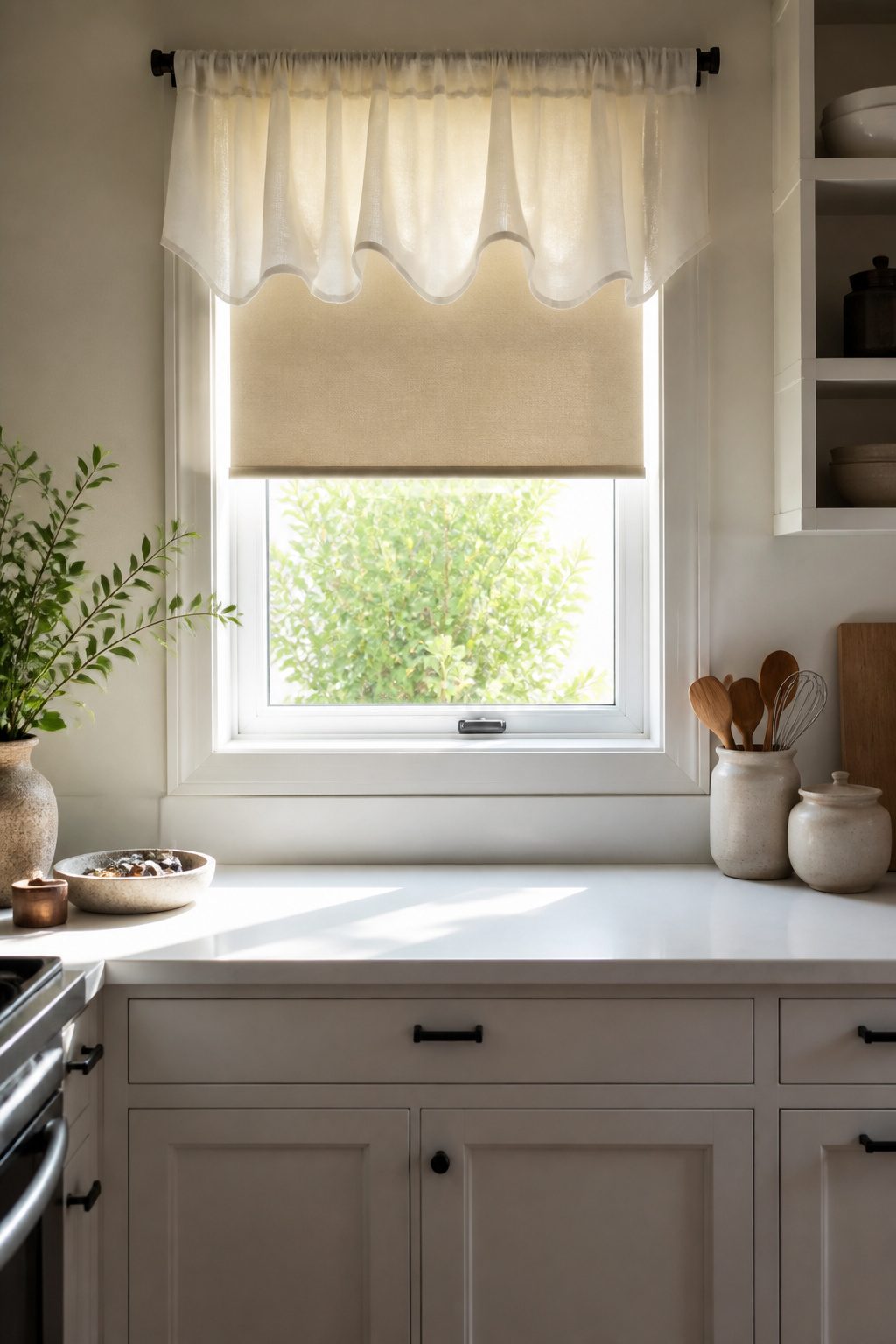
A valance or scarf topper adds the finished look of curtains without the bulk that can swallow a small window whole. The fabric sits high, frames the glass, and stops before it ever pools on the floor.
Voile and sheers work best here if the room already gets good light and you just want softness against bare glass.
Linen blends hold a crisper shape if you are hiding a roller blind or an older vinyl shade underneath. Cotton blends add slightly more privacy when layered over nothing but the window itself.
Box pleat valances read formal; swag scarves read relaxed. Either way, the trick is keeping the stack shallow.
A thick topper stacked above the frame cuts into the glass and makes the window feel smaller than it started. That defeats the point.
I have seen beaded trim suggested for luxury, but on a rental budget it tends to read as costume. Skip it unless the rest of the room already carries that weight.

SOPHISTICATED LOOK: The well-crafted design of the Loha curtain panels offers a touch of elegance to your home with rich, linen-like texture and a variety of luxurious colors.

Thick Linen Fabric: These linen curtains are carefully crafted from 400 GSM fabric of flax linen, cotton and polyester, offering a blend of softness, natural aesthetics and durability. Thicker linen curtains capture a real rich flax textured feel while savoring a heavier set,adding a touch of sophistication

Basic Information: Includes 2 curtain panels, each measuring 50 inches wide for a total of 100 inches. Easy care for machine washable in cold water, do not bleach, tumble dry low, iron on low heat if needed.
8. Roller Blinds
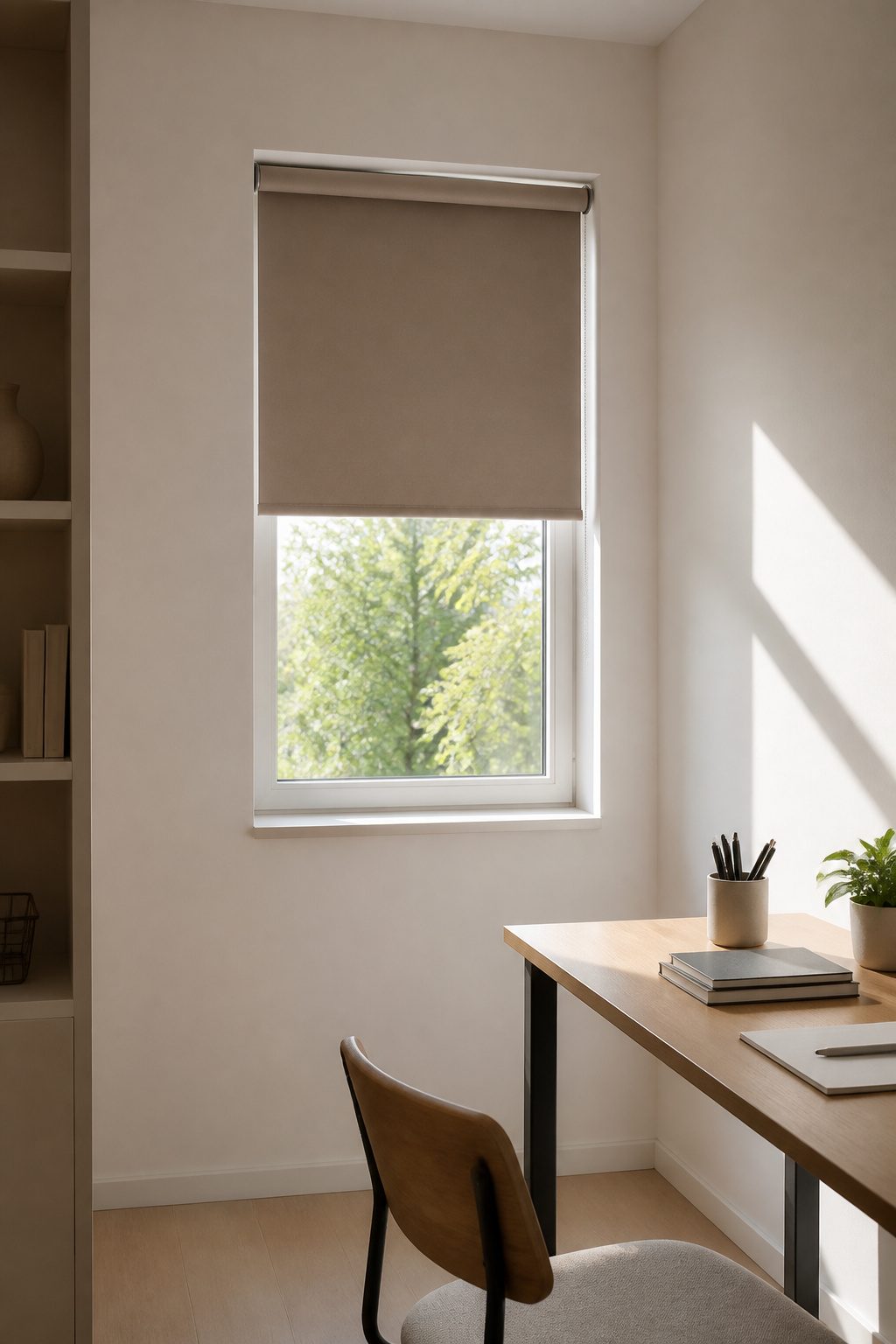
Roller blinds sit almost flush against the glass, which makes them the cleanest choice when a window is tucked beside cabinets, a desk, or any wall where fabric would fight for room.
The roll itself stacks at the top in a tight cylinder, so you do not lose the few inches of clearance that curtains demand on each side.
They read as visually quiet, which can leave a small room feeling calmer than a heavy fabric treatment would.
That same plainness can look unfinished in a space that wants softness, so the decision depends on what else is in the room.
A warm wall color or a textured roller shade helps, but the blind alone will not carry the design.
Layering fixes this without giving up the space savings.
A roller blind mounted inside the frame handles privacy and light control, and a single panel hung wider than the window adds fabric only where it does not block movement. The blind does the work; the curtain does the decoration.

No Drilling Curtain Rod: HOTOZON curtain rods no drilling features its no drilling 3M adhesive brackets design. No Drill curtain rods for windows could be stick on any kind of wall that you can't punch holes on. Renter friendly curtain rods are suitable for living room, bedroom, kitchen, bathroom, office , dorm and so on

【Size Introduction】- 2Pcs small tension rods 17-28 inch diameter:10/13mm.(Recommended best use range 17 to 28 inches)

【No-Rust and Non-Slip material 】Shower Curtain Rod is made of premium stainless steel, waterproof and rust-proof,the end of the black shower curtain rod comes with two Non-Slip rubber pads that fit tightly against the wall to prevent the rod from slipping.
9. Blackout Curtains
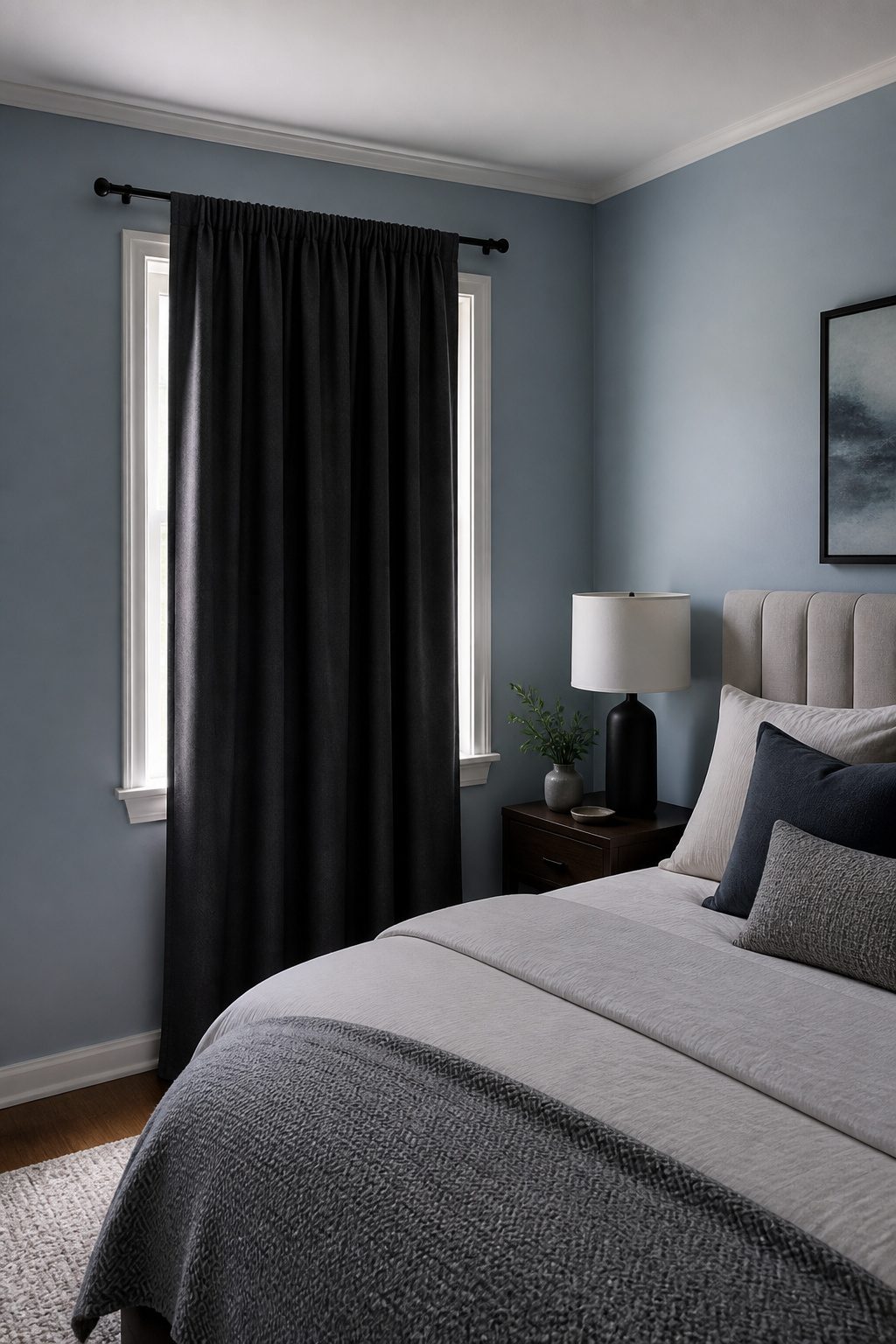
A single blackout panel on a small bedroom window handles light without the visual bulk of layering multiple curtains.
One substantial panel drapes cleanly enough to look finished rather than makeshift, which matters in a guest room or kid’s room where street lighting bleeds through after dark.
The real decision is whether blackout works best as the only treatment or as a hidden layer.
A blackout roller or lined Roman shade behind a lighter front layer keeps the room from feeling shut down during the day, which is the smarter move if the window faces a common area or if you need the space to shift between work and sleep.
In a tight room where layering turns bulky fast, the single blackout panel wins for simplicity. Either way, getting the length right is what separates intentional from improvised.

CORDLESS MAGNETIC & NO-DRILL DESIGN: Our upgraded Roman shades feature a hassle-free, no-drill installation with ultra-strong sticky velcro that securely holds the shade without damaging your walls. The ingenious cordless magnetic folding system ensures silky-smooth operation while completely eliminating dangerous dangling cords, providing ultimate safety for homes with children and pets, and giving you total peace of mind.

Important Inside Mount Measuring Instructions: This bamboo shade is the exact size you order - no deductions are made. Measure the width across the top, middle, and bottom of window. Ensure your window measures 34.25" - 35" wide for a 34" wide bamboo shade. This allows proper fit with minimal light gaps.See our images for a simple guide to measuring to get the ideal fit and coverage for your windows.

Ready-Made: Package includes 1 panel magnetic linen door curtain + pole accessories + free sticky strap. The door curtain is finished with sticker for easy to install. The back of the door curtain is also designed rod/pole pocket, to meet your various needs.
Curtain Fabric Choices
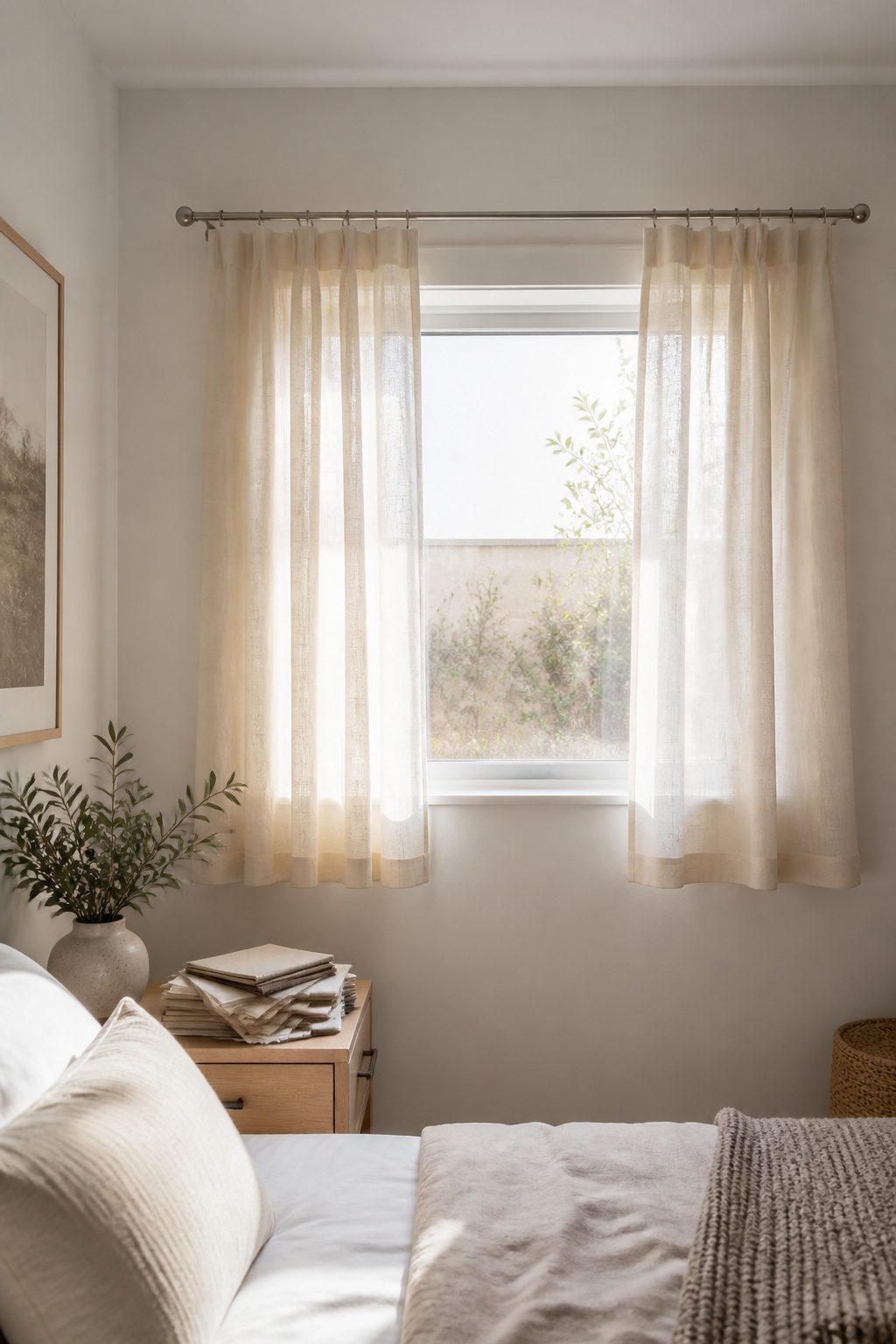
Lightweight fabrics like linen and cotton suit small windows best because they keep the stack thin when the panel is open and do not crowd the frame.
A heavy drape on a narrow window can read like a theater curtain on a puppet stage; the proportions fight each other.
That said, the room’s job still matters. A bedroom where you need darkness, or a north-facing wall that leaks cold, is a reasonable place to add weight.
A cotton blend with a lining, or a separate thermal layer behind a lighter face fabric, gives you the warmth or blackout without the bulk at the edges.
Voile and sheers work when privacy is not the main concern and you just want the glass to soften.
The mistake I see most often is choosing the fabric for looks alone and only later noticing how much real estate it eats.
For a single panel on a small window, a fabric that folds back to four inches or less makes the difference between a deliberate choice and a cluttered one.

【Check Your Wall Surface Before Installing】Designed for clean, smooth and stable surfaces. Works best on flat wall, tile, glass and wood with lightweight to medium curtains. Avoid textured, uneven, dusty, damp or peeling surfaces for better adhesion.
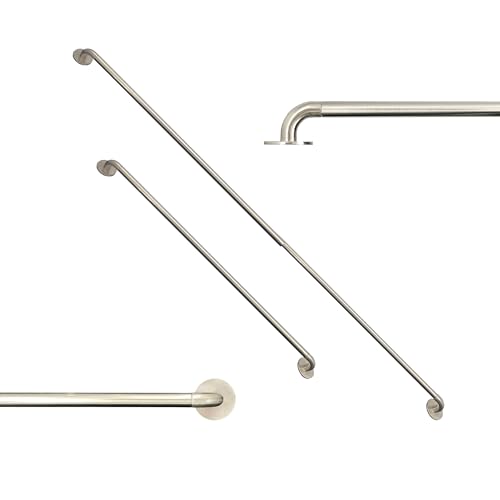
Two Ways to Mount for Versatile Installation: Whether your French doors are wood, glass, or metal, you're covered. Use the screw mount for a permanent, rock-solid hold on wood frames - it's so simple you can hand-tighten it without any tools. Or choose the industrial-strength adhesive for a no-drill option that works beautifully on glass, metal, aluminum, or tile. Suitable for renters, or for anyone who wants a clean install without permanent marks. Two complete sets of hardware are included, so you can pick what works best for your home

THE PERFECT CURTAIN ROD: Crafted from durable steel, the metal rod is 5/8 inches in diameter and this adjustable curtain rod is ideal for light to medium weight curtains anywhere in the home
Hanging Techniques
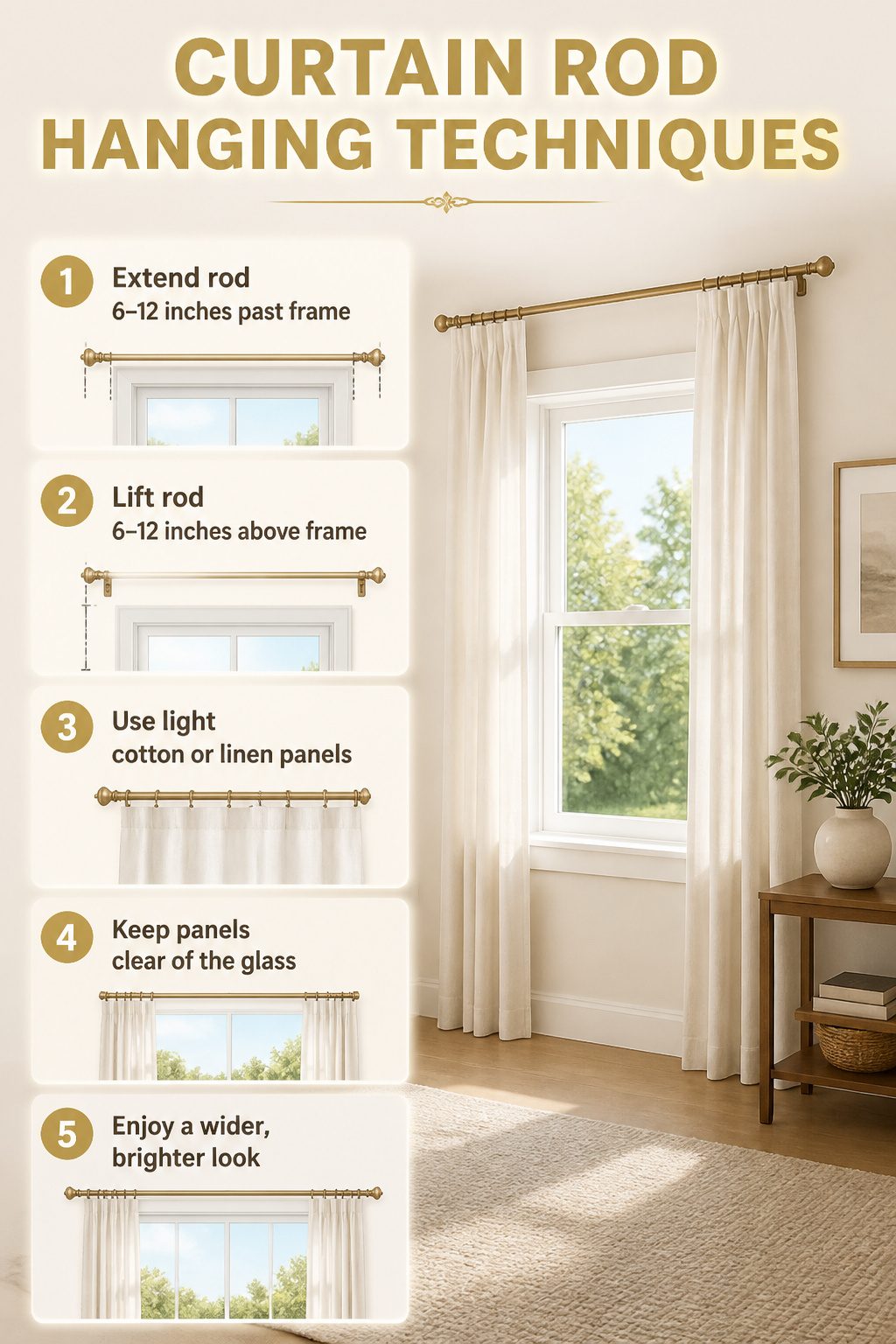
The first time I tried to widen a window with a curtain rod, I mounted it exactly flush with the frame and wondered why the room still felt cramped.
The fix came later, reading how the eye locks onto hardware as the true border of an opening. Extend the rod 6–12 inches past the frame on each side, and the same glass suddenly reads wider.
Height works the same way: lifting the rod 6–12 inches above the frame draws the gaze upward and stretches the wall. Cotton or linen panels stay light enough that the extra fabric does not overwhelm a small room.
The panels will sit mostly clear of the glass, so more daylight comes through and the wall feels generous rather than boxed in. Treat that surrounding wall space as part of the window itself, not as leftover trim to ignore.
Measurement Guidelines
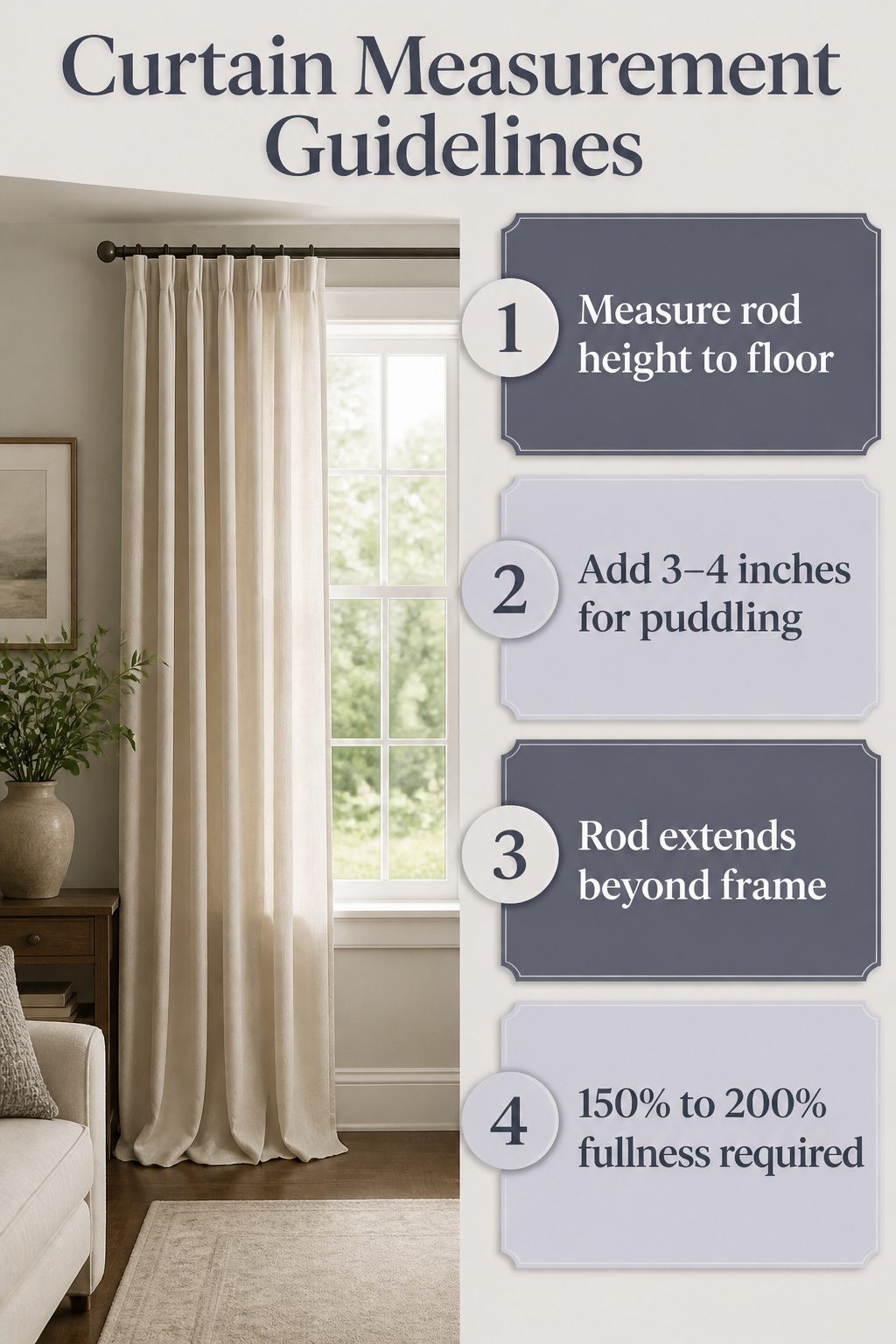
A curtain that fits the window but not the wall looks like a mistake. Width is where most people stop measuring too soon.
The rod should extend past the frame so the stackback clears the glass, and the panel itself needs 150% to 200% fullness to hang with actual drape rather than hanging flat like a bed sheet.
On a 36-inch window, that means the single panel wants 54 to 72 inches of fabric to look intentional.
Length depends on where you want the hem to land. Measure from the rod to the floor, then decide: a modern flush stop right at the floor, or add three to four inches if you want the fabric to puddle.
The header style eats height too. A rod pocket sits higher on the rod than a ring clip, so that measurement shifts by an inch or two before the fabric even starts.
I account for it by holding the tape where the top of the panel will actually sit, not where the rod itself is.
Practical Solutions for Small Spaces
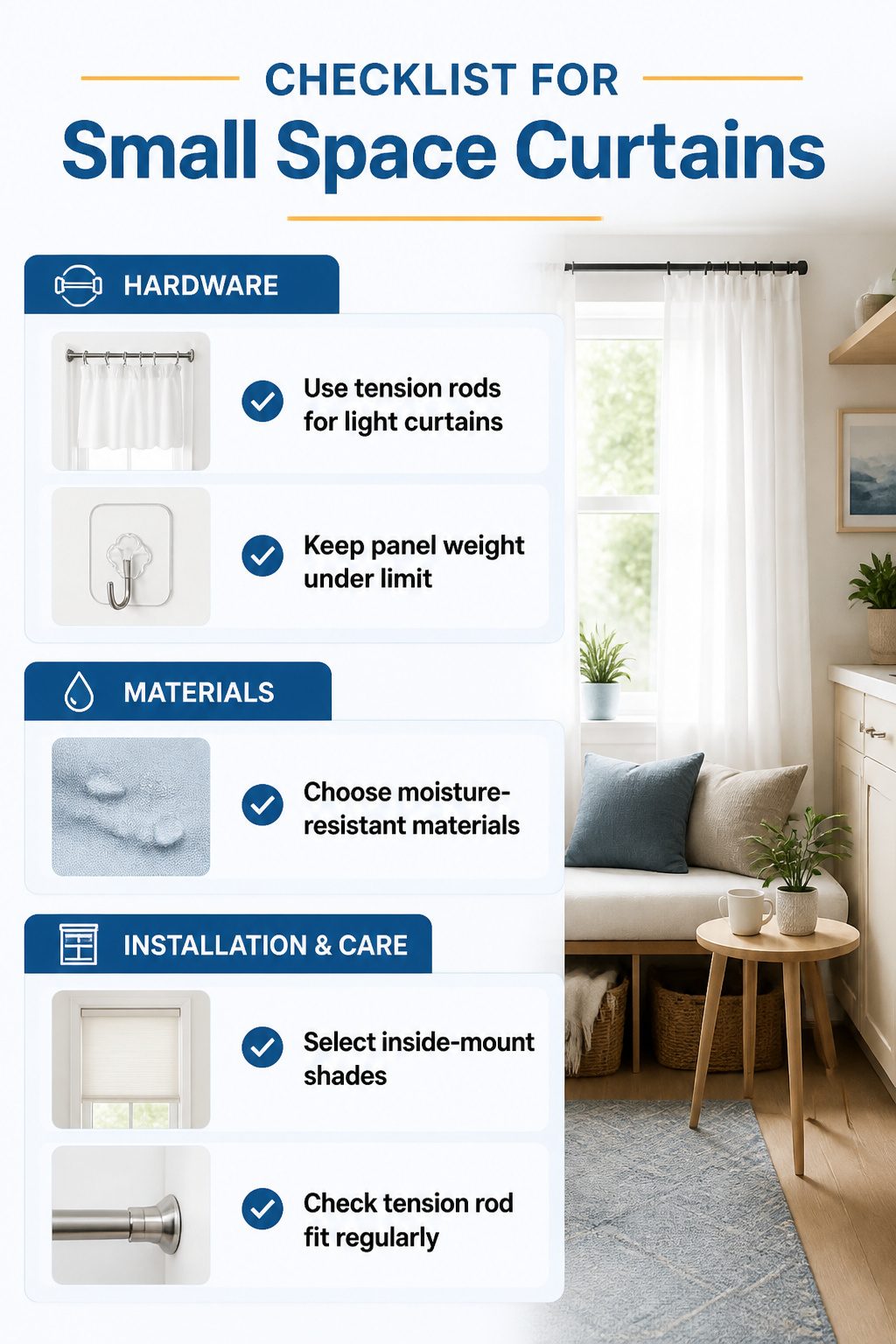
Tension rods and adhesive hooks are the hardware most renters actually reach for, and the difference between them matters more than the packaging suggests.
A tension rod carries enough weight for a café curtain in a kitchen or bath, but the spring inside will fatigue if you hang anything heavier than a light cotton panel.
Adhesive hooks work better for decorative sheers than for fabric with any heft, and the bond weakens faster in rooms that steam up.
For bathrooms and kitchens, moisture-resistant materials are worth the slight premium, polyester or a synthetic blend that dries instead of mildewing.
Inside-mount shades fit the window frame directly and keep the wall untouched, which saves your security deposit and looks neater in tight quarters.
The real limit is stability: temporary hardware handles lighter treatments best, so keep expectations realistic and the panel weight under what the package claims.
A tension rod in a humid bathroom will slip eventually; check the fit every few months rather than trusting the first install.
Frequently Asked Questions
How do I make a small window look bigger?
Mount the rod 6–12 inches above the frame and extend it 8–12 inches past the frame on each side.
The extra height draws the eye upward, and the wider span tricks the brain into reading the glass as larger than it is. Light fabrics like cotton or linen keep the added fabric from overwhelming the wall.
What type of curtains are best for small windows?
Sheer curtains, single panels, and Roman shades all work well depending on the room.
Sheers diffuse light without blocking it; a single panel hung to one side keeps narrow corners from feeling pinched; Roman shades stack inside the frame and save wall and floor space.
The right choice comes down to whether you need privacy, light control, or both.
Should curtains touch the floor on small windows?
Floor-length curtains usually look better, even on a small window, because the longer line pulls the eye upward and makes the room feel taller.
Short panels still make sense in kitchens or over very low windows where fabric would hit water or counters. Measure from the rod to the floor, then decide between a flush stop or a three- to four-inch puddle.
Can I use blackout curtains on a small window?
Yes, though blackout often works best as a hidden layer rather than the only treatment. A blackout roller or lined Roman shade behind a lighter front layer keeps the room from feeling shut down during the day.
In a tight bedroom where layering turns bulky, a single substantial blackout panel can still drape cleanly enough to look intentional.
How do I measure for curtains on small windows?
Measure from the rod to the floor for length, accounting for whether the header sits above or below the rod itself.
For width, aim for 150% to 200% fullness so the panel drapes rather than hangs flat; on a 36-inch window, that means 54 to 72 inches of fabric. Extend the rod 6–12 inches past the frame on each side so the stackback clears the glass.