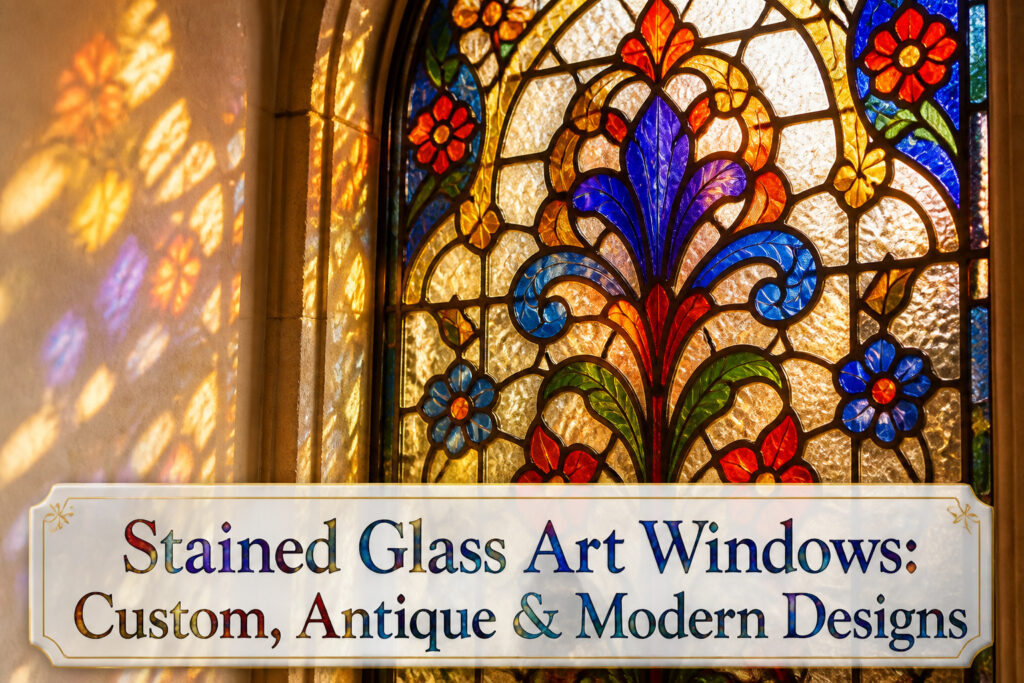
A stained glass art window is colored glass cut into pieces and joined with lead came or copper foil to form a pattern or picture, not a single sheet dyed afterward. The color runs through the material itself, added as metallic salts during manufacture, so light passing through is what makes it work. A hand-assembled 20-inch custom panel starts around $459, while an antique 1700s German piece set into an 1800s English frame can run past $22,000, with the gap coming down to provenance, painted detail, and whether the glass was mouth-blown or rolled in a factory.
What Stained Glass Art Windows Actually Are
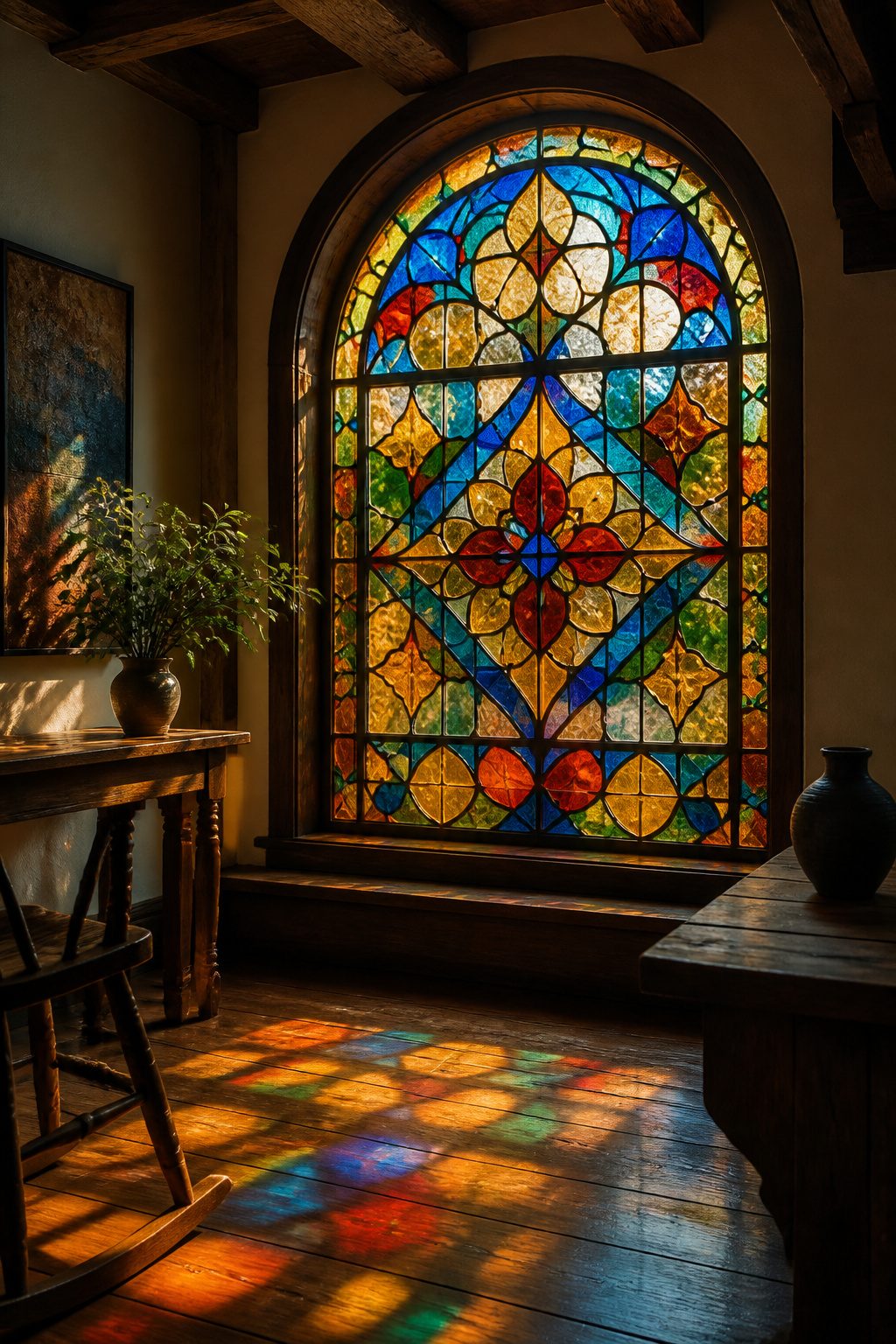
A stained glass art window is colored glass cut into pieces and joined together to form a pattern or picture, not a single sheet dyed after the fact. The color comes from metallic salts added during manufacture, so the hue runs through the material rather than sitting on top.
Traditional construction uses lead came, those soft H-shaped strips that cradle each edge and get soldered at the joints. The lead provides the structure but also creates the dark lines that outline every shape. Modern makers sometimes swap in copper foil or zinc came for lighter pieces, or resin cames that flex where lead would fatigue.
Ordinary window glass starts from the same silica base but stays clear, with iron oxide giving thick pieces a faint green tint that factories try to suppress. Stained glass leans into the impurities and the chemistry, building something that only works as light passes through it. You can spot the difference by looking at the edge of any piece: true stained glass shows color straight through, while painted surface treatments sit on top and chip with age.
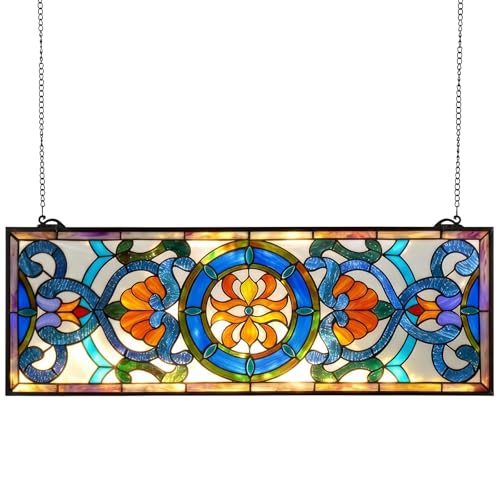
Artful Aesthetics: Each stained glass window panel features intricate patterns and vibrant colors, blending American luxury with modern minimalism. It adds an artistic flair to any space and becomes a stunning visual centerpiece

Custom Stained Glass Windows
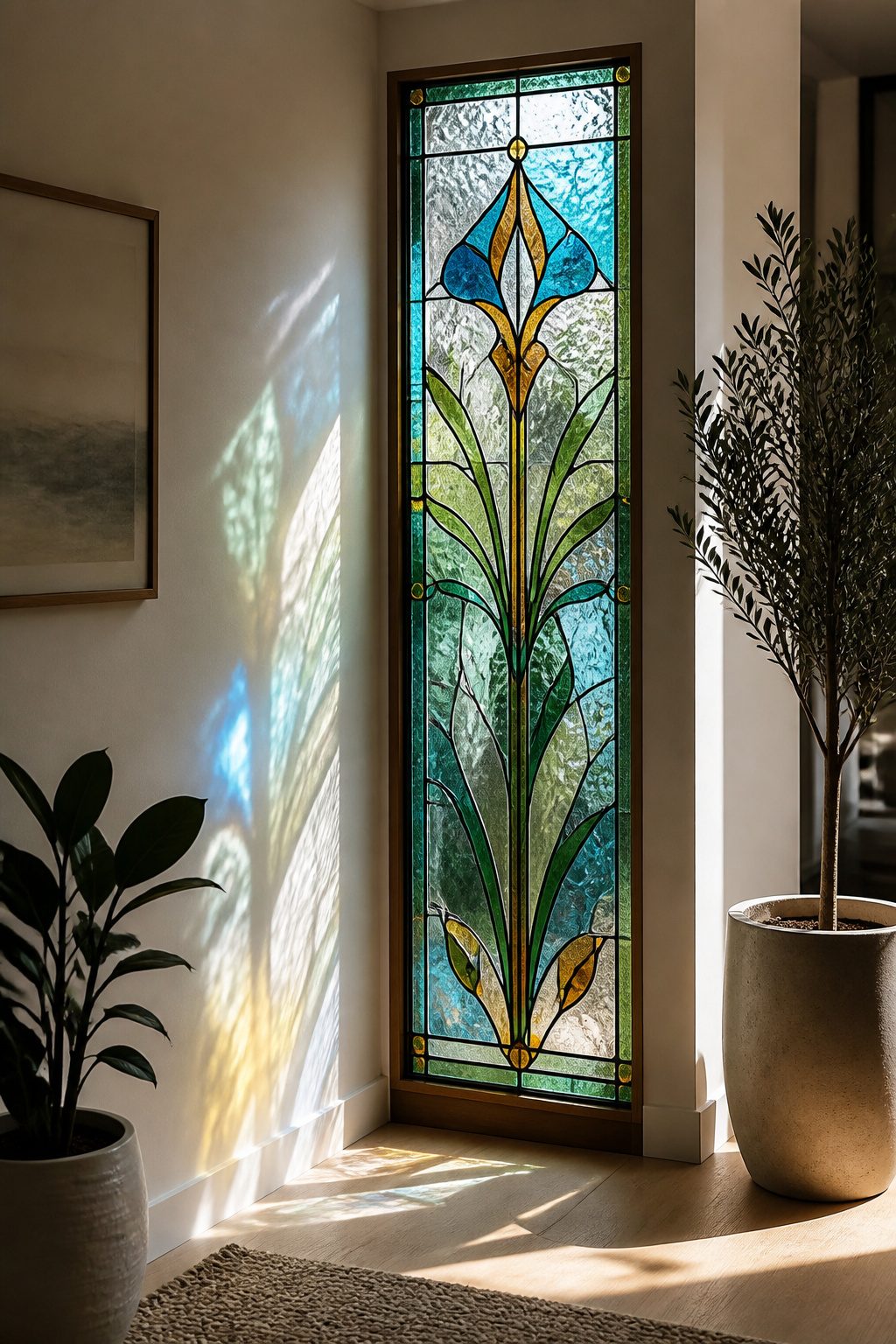
Made-to-order stained glass art window panels run on a timeline most people do not expect. From the day measurements are finalized, a custom piece typically needs four to six weeks in the studio. That gap covers glass selection, cutting, copper foiling or leading, soldering, and the curing of any patina. Rush orders sometimes shave off a week, but the real bottleneck is drying time, which does not bend.
Personalization works in three places: size, color, and style. A studio will scale a design to your opening in quarter-inch increments, swap a palette from amber-and-cream to blue-and-green, or shift a pattern from Victorian lace lines to Mission geometry. The more variables you change, the more the proofing cycle matters. Ask for a photo of the glass laid out before soldering; color shifts under fluorescent shop lights, and "navy" in the sample book can read nearly black once leaded.
For entry-level custom work, the Colorful Mission Prairie Octagon Window Panel lands around $459. That price gets you a hand-assembled piece roughly 20 inches across, not a machine-printed film stuck to acrylic. At that point you are paying for actual cut glass and soldered joints, which changes how it reads against daylight and how long it lasts.

The Ultimate Customized Mother Day Tribute: Searching for a gift for the woman who has everything? This stained glass suncatcher is meticulously designed to celebrate the bond between generations. Whether it is for a new mom, or a beloved grandmother, this custom piece serves as a heartfelt mother day surprise that transcends traditional card. It is a daily reminder of love that hangs elegantly in a kitchen window, living room, or nursery, turning natural sunlight into a rainbow of memories.

Customized Gifts: This stunning stained glass window hanging suncatcher is a perfect gift for couples or families. Add your own custom photo for a one-of-a-kind present.

Dimensions: Measuring 18 inches in width and 25 inches in height, this rectangular panel is the perfect size to grace your living room, bedroom, or any room in your home.
Decorative Stained Glass Windows
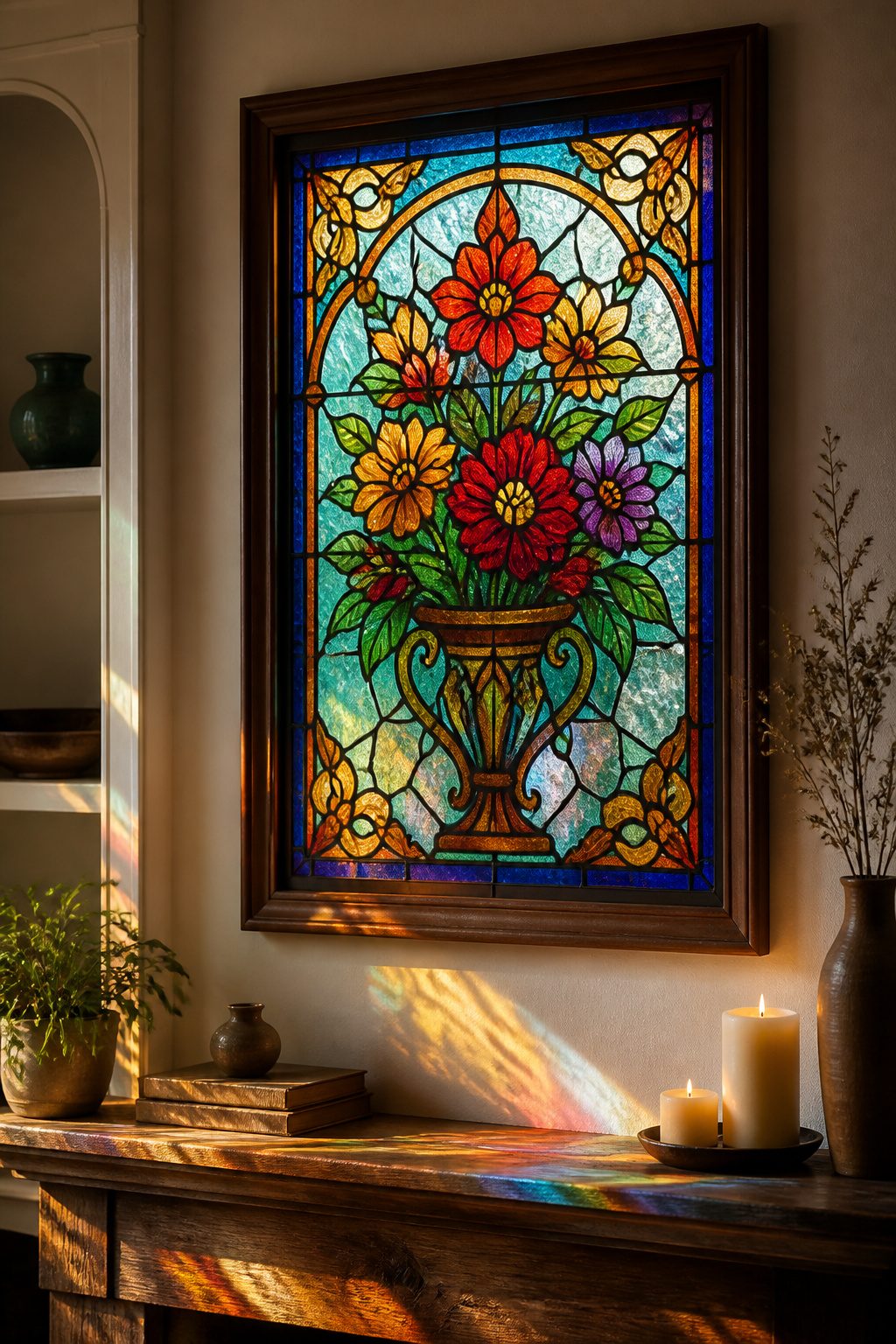
A decorative stained glass art window does not have to open, light a hallway, or face the street. It hangs where a painting might hang: above a sofa, in a stairwell landing, or leaned on a mantel with a light source behind it. The frame matters more than the sash, because the piece is art first and fenestration second.
Renters have the advantage here. A decorative panel needs only a wall hook or a plate stand, not a contractor. First-home owners sometimes install one in a borrowed-light opening between rooms, where it reads as a window from the hall and a color field from inside. That trick works best when the design is abstract or botanical, not narrative. A scene with figures wants to be read slowly, like a book; a pattern of leaves or geometry reads instantly from either side.
The mistake I see most often is sizing for the architecture instead of the furniture. A panel scaled to a twelve-foot wall will dwarf a standard sofa beneath it. Measure the object it hangs over, not the room it sits in.

Glass and Metal Materials: Made of genuine stained glass with a sturdy metal frame. The vivid colors and layered textures add a handcrafted look that stands out in natural or artificial light.

Glass and Metal Materials: Constructed from real stained glass with a metal frame. The layered surface reflects light to show soft color variations.

Glass and Metal Construction: Made with real stained glass and a metal frame. The textured design shows gentle variations in color when light shines through.
Art Glass Windows
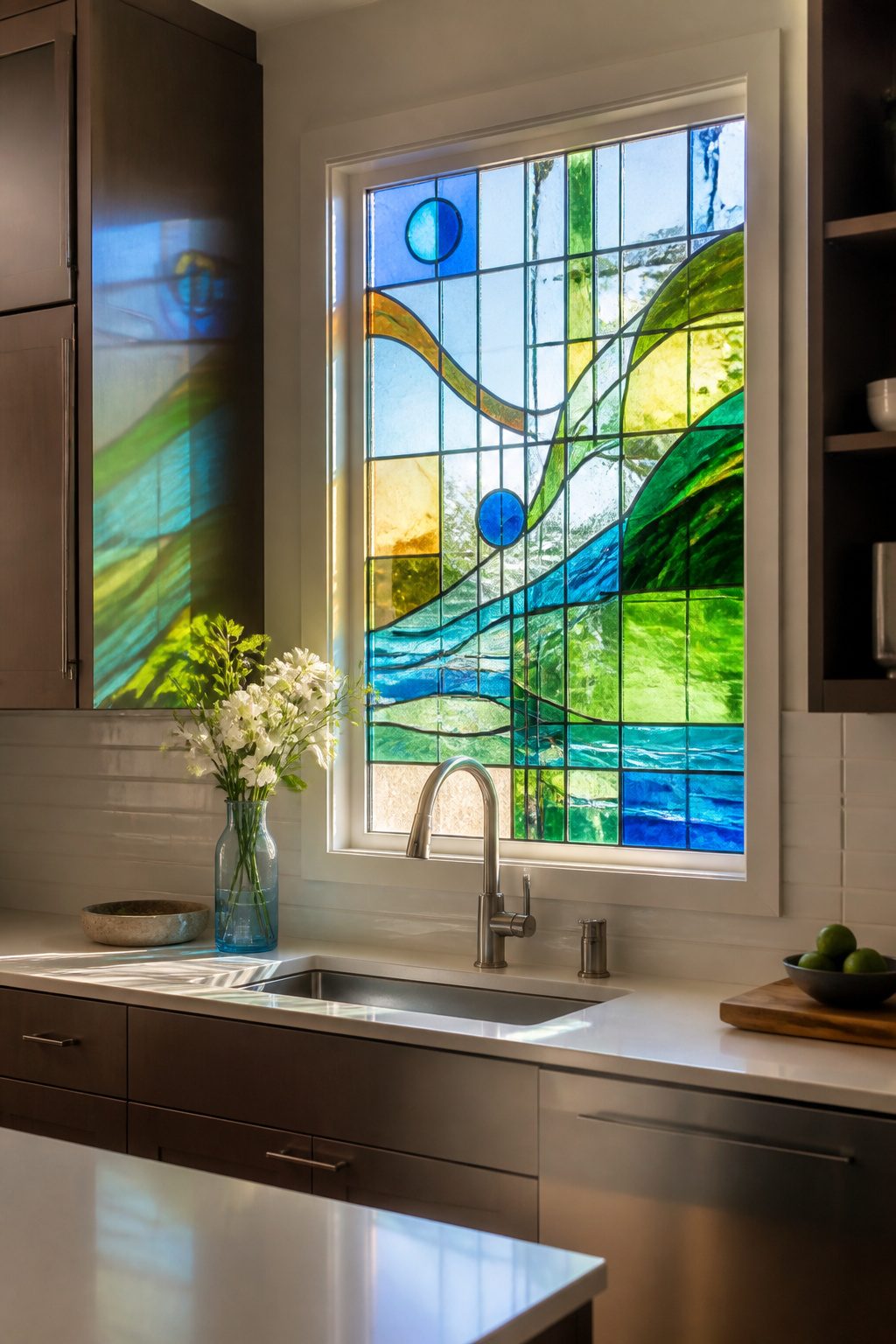
Art glass windows borrow the look of traditional stained glass without always following the same rules. Where old church windows rely on lead came and individually cut pieces of colored glass, contemporary makers often work with resin beads, fused glass layers, or even computer-generated designs printed directly onto glass. The distinction matters when you are shopping, because the techniques affect both price and durability.
In a home setting, art glass usually reads as decoration first and craft tradition second. A kitchen cabinet door or a bathroom sidelight does not need the narrative weight of a rose window; it needs light that shifts pleasantly through the afternoon. I have seen renters install adhesive art glass panels over existing windows, then peel them off at move-out with no more damage than a faded Command strip. That flexibility is the real separation from historical pieces, which are fixed in place and valued for staying there.
The modern materials have their limits. Resin beads can yellow in direct sun over enough years, and printed designs lack the depth you get when light passes through actual colored glass. For a weekend project under a few hundred dollars, though, art glass hits a balance between handmade presence and replaceable cost that antique stained glass rarely manages.

Flexible & Strong for Easy Use – Glassco Unstreached lead came for stained glass features a durable yet pliable design, making it easy to bend, cut, and shape without cracking. Works seamlessly with a lead came stretcher for precision.

Flexible & Strong for Easy Use – Glassco Unstreached lead came for stained glass features a durable yet pliable design, making it easy to bend, cut, and shape without cracking. Works seamlessly with a lead came stretcher for precision.
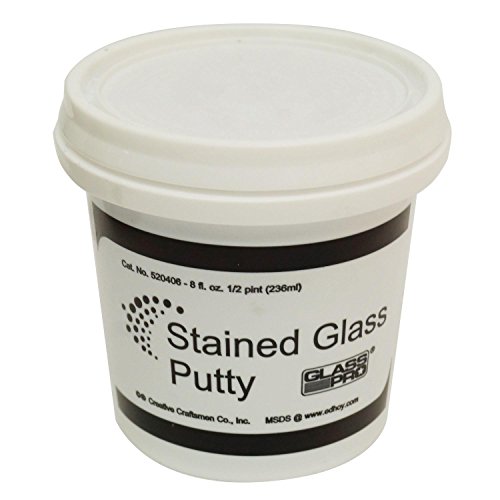
Large container makes mixing easy and tidy
Antique Stained Glass Windows
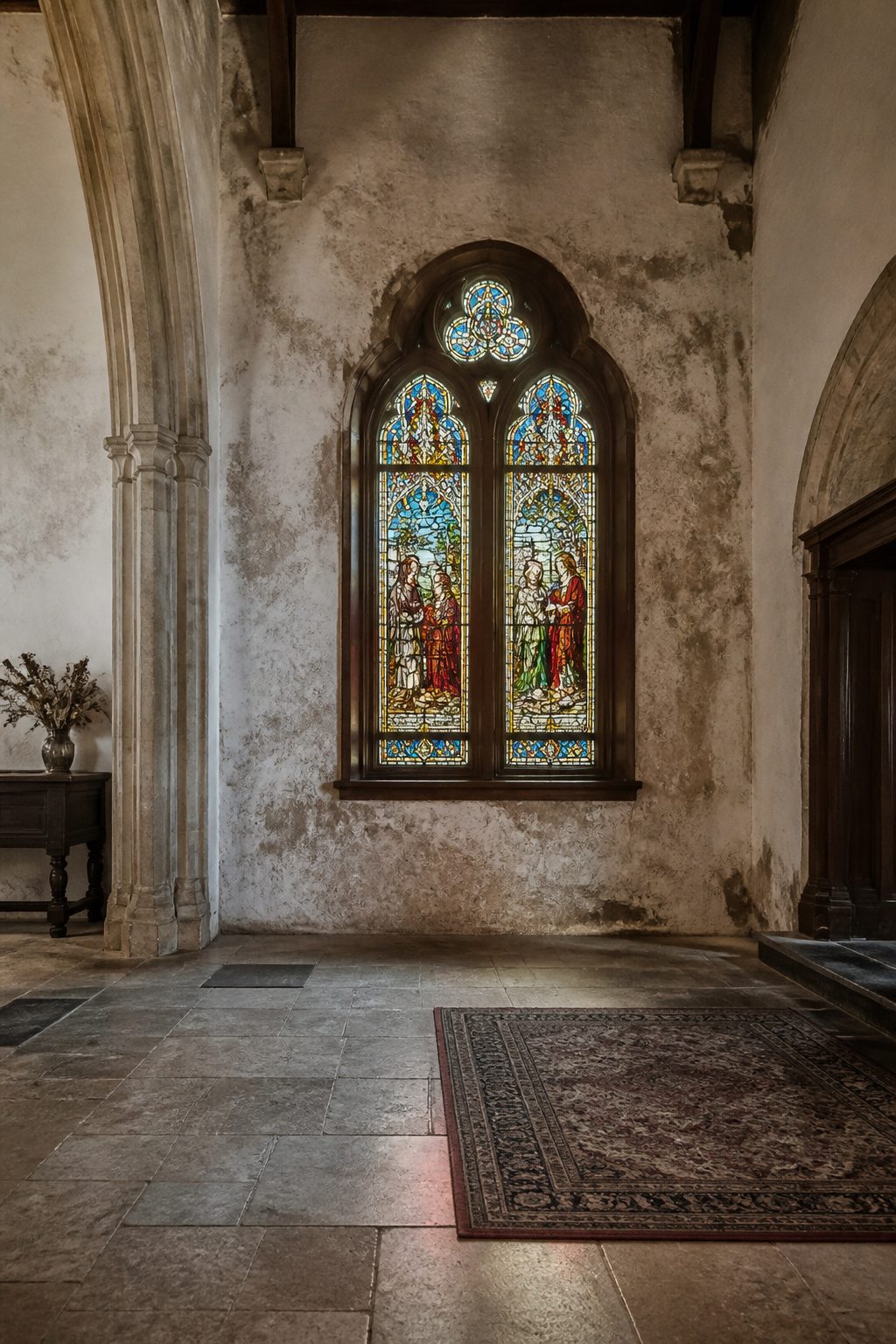
Antique stained glass art windows sit in a market where provenance and condition split the price range wide. A Gothic Revival Musical Ladies window from England runs $3,650, while an 1890s church piece out of St. Louis hits $12,500 and a Stained Glass Double Vent Church Window reaches $14,500. The jump to $22,000 comes for a 1700 German panel set into an 1800 English window, where two centuries and two countries of craft stack onto one frame.
What drives these numbers is not just age. Church windows command more because of scale and narrative complexity; secular scenes, even finely painted ones, sell for less unless the workmanship is exceptional. The German piece in the English frame costs what it does because the glass survived relocation and re-leading, a process that ruins half the panels attempted.
"The purpose of a stained glass window is not to allow those within a building to see the world outside or even primarily to admit light but rather to control it."
Buying antique means accepting that control as fixed. The design is set, the color palette is not changing, and any repair requires a specialist who works with mouth-blown glass and lead came, not the copper foil of modern hobby kits. Budget $3,500 to $15,000 for a piece that ships intact, or twice that if the glass itself predates the frame and both need separate conservation.

This is a pack of 2 units of Edco 7/32 Copper Foil

Outstanding tack

7/32 copper foil
Religious Stained Glass Windows
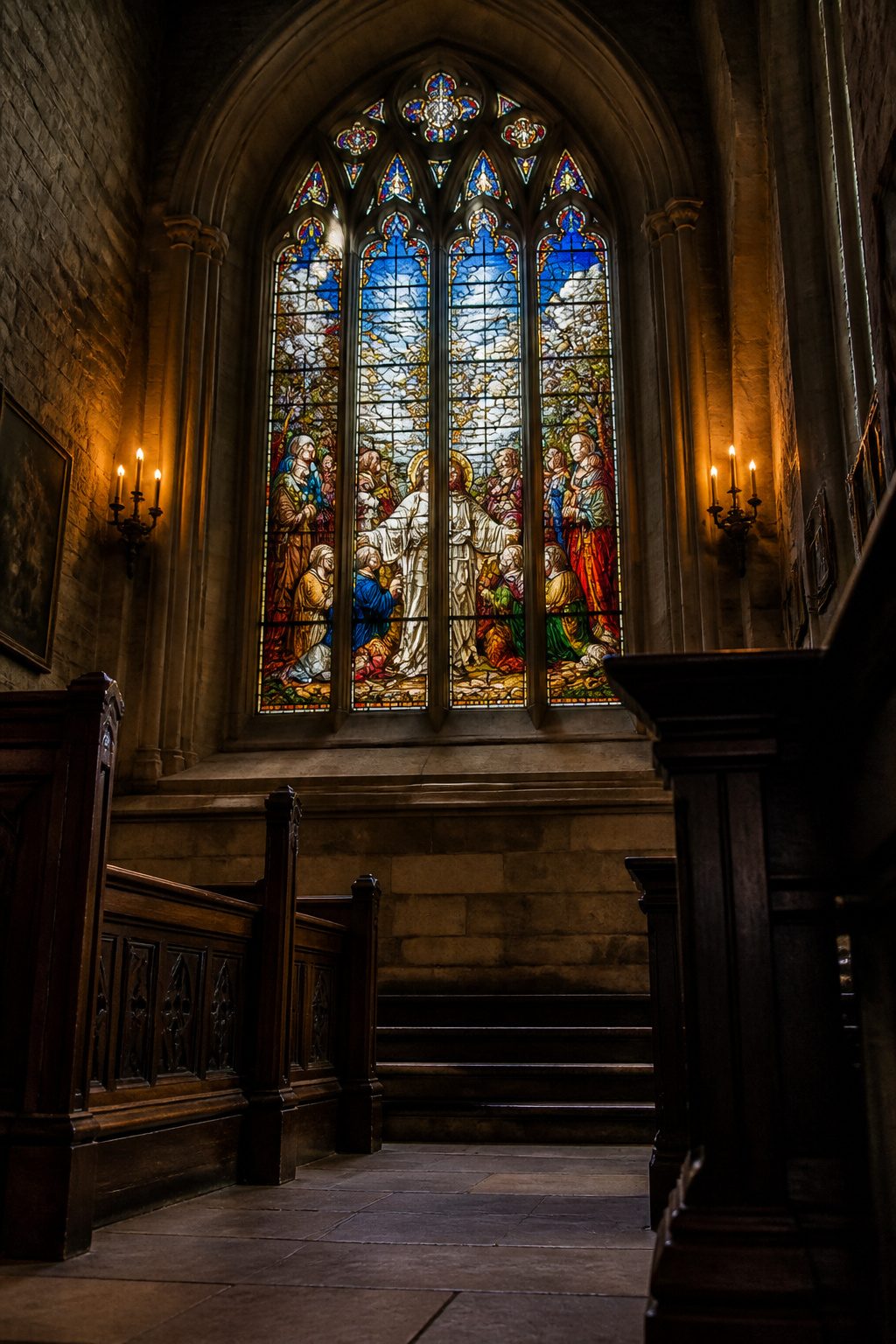
The Romanesque and early Gothic periods gave stained glass its lasting identity in sacred spaces. Artists fused individual pieces of colored glass with lead to create intricate designs that served as focal points from outside and transformed interior light into something the congregation experienced rather than merely saw.
That tradition developed a specific visual language. Iconography in religious windows carries doctrinal weight: biblical scenes, saints, and symbols were arranged so the illiterate could read the narrative. Scale follows function. A cathedral rose window might span thirty feet and require a team of artisans over months, while a chapel niche piece could be finished in weeks by a single craftsperson. The commissioning process historically involved clergy, patrons, and guild masters negotiating subject, placement, and cost long before glass was cut.
Residential work operates differently. A homeowner choosing a stained glass art window for a bathroom or sidelight typically selects from existing designs or adapts a modest custom piece. The subject is decorative or personal rather than didactic. Lead times run shorter, budgets smaller, and the stakes are aesthetic preference rather than communal worship. The craft skills overlap, but the purpose reshapes every decision from sketch to installation.


[ARTISTIC STAINED GLASS DESIGNS] Infuse your space with timeless charm through this handcrafted tree of life stained glass panel, Each panel is meticulously created by skilled artisans, blending classic craftsmanship with artistic elegance. When sunlight shines through, it brings the intricate details to life with a mesmerizing interplay of light and color.
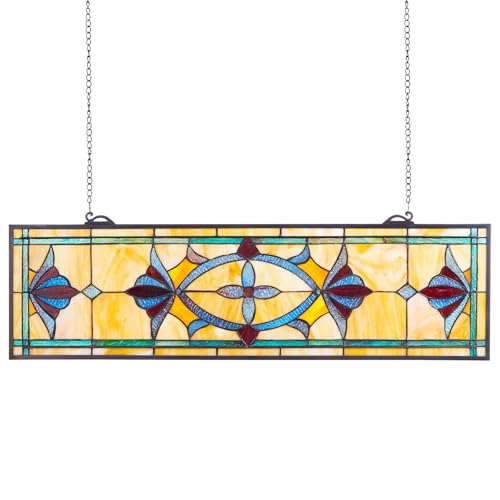
Artful Aesthetics: Each stained glass window panel features intricate patterns and vibrant colors, blending American luxury with modern minimalism. It adds an artistic flair to any space and becomes a stunning visual centerpiece
Modern Stained Glass Designs
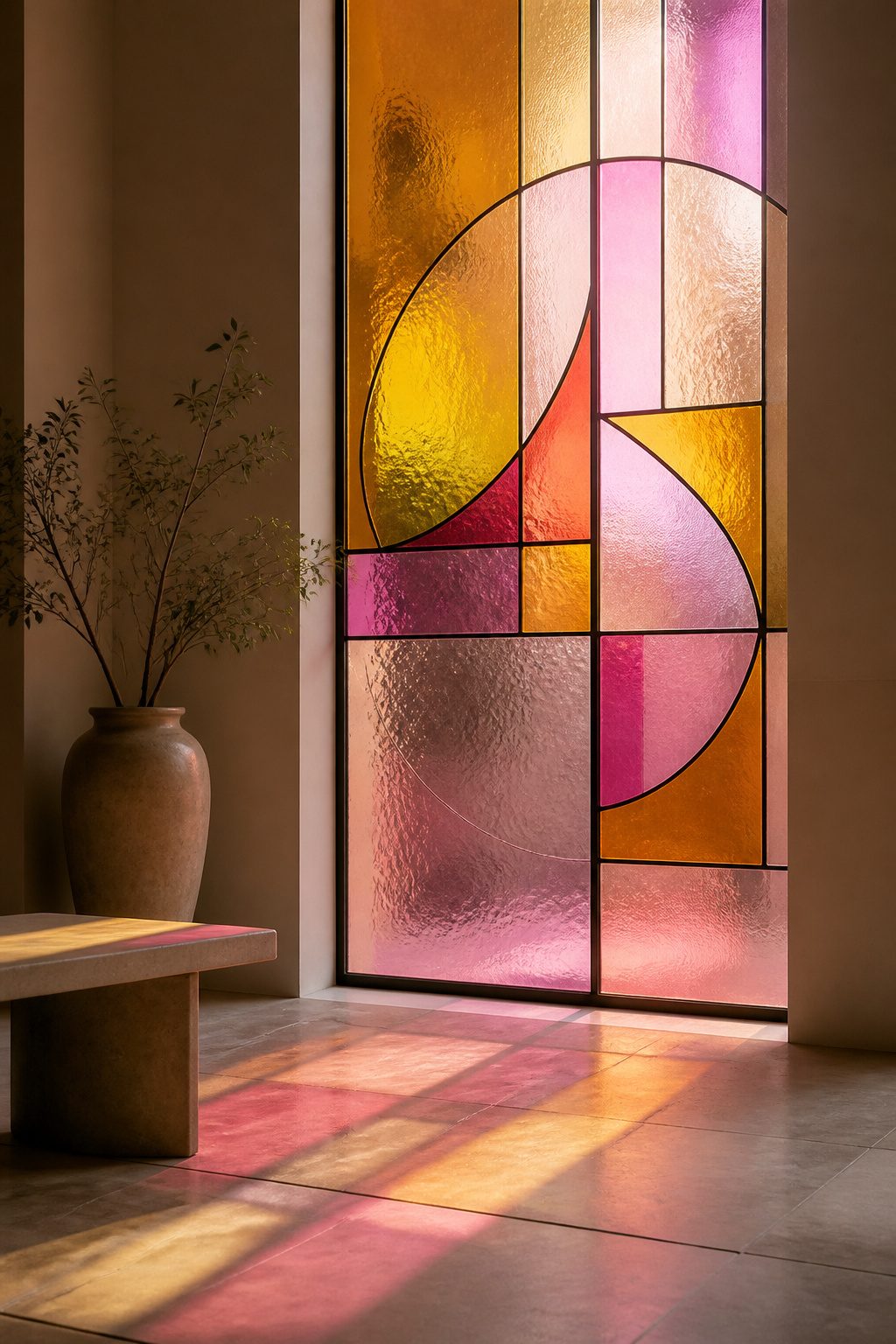
Clean geometry reads modern faster than any date on the glass. The Art Deco Style Stained Glass Window at $715 proves it: stepped borders and sunburst angles that would look wrong in a cathedral feel right in a 1920s bungalow or a plain rectangle of a 1960s ranch. That price sits well below the antique church windows that climb past $12,000, and below even the 1800s German hand-painted pieces at $3,850. Modern work skips the narrative panels and painted faces; it lets the lead lines do the talking.
The Fleur De Lis Pink and Amber at $975 complicates the line slightly. The motif is old, but the color blocking is flat and symmetrical, more graphic than devotional. Traditional fleur-de-lis windows layer symbolism; this one reads as pattern. That is the shift: modern stained glass borrows forms without serving stories. It costs more than the Deco piece because pink and amber glass runs pricier than clear bevels, not because the labor differs much.
What you are paying for, either way, is the absence of provenance. No century of patina, no parish history. The glass is new, the design is now, and the price reflects that honesty.

Size: 24-inch/62 cm, square shape, net weight: 7.7 lbs.

[ARTISTIC STAINED GLASS DESIGNS] Infuse your space with timeless charm through this handcrafted floral stained glass panel, Each panel is meticulously created by skilled artisans, blending classic craftsmanship with artistic elegance. When sunlight shines through, it brings the intricate details to life with a mesmerizing interplay of light and color.

Personalized Family Portrait Keepsake: Turn your cherished memories into a stunning piece of everyday art by uploading your favorite family photo, which will be beautifully integrated into a faux stained-glass window hanging design that captures your family's love in a unique way
Functional Stained Glass for Privacy and Insulation
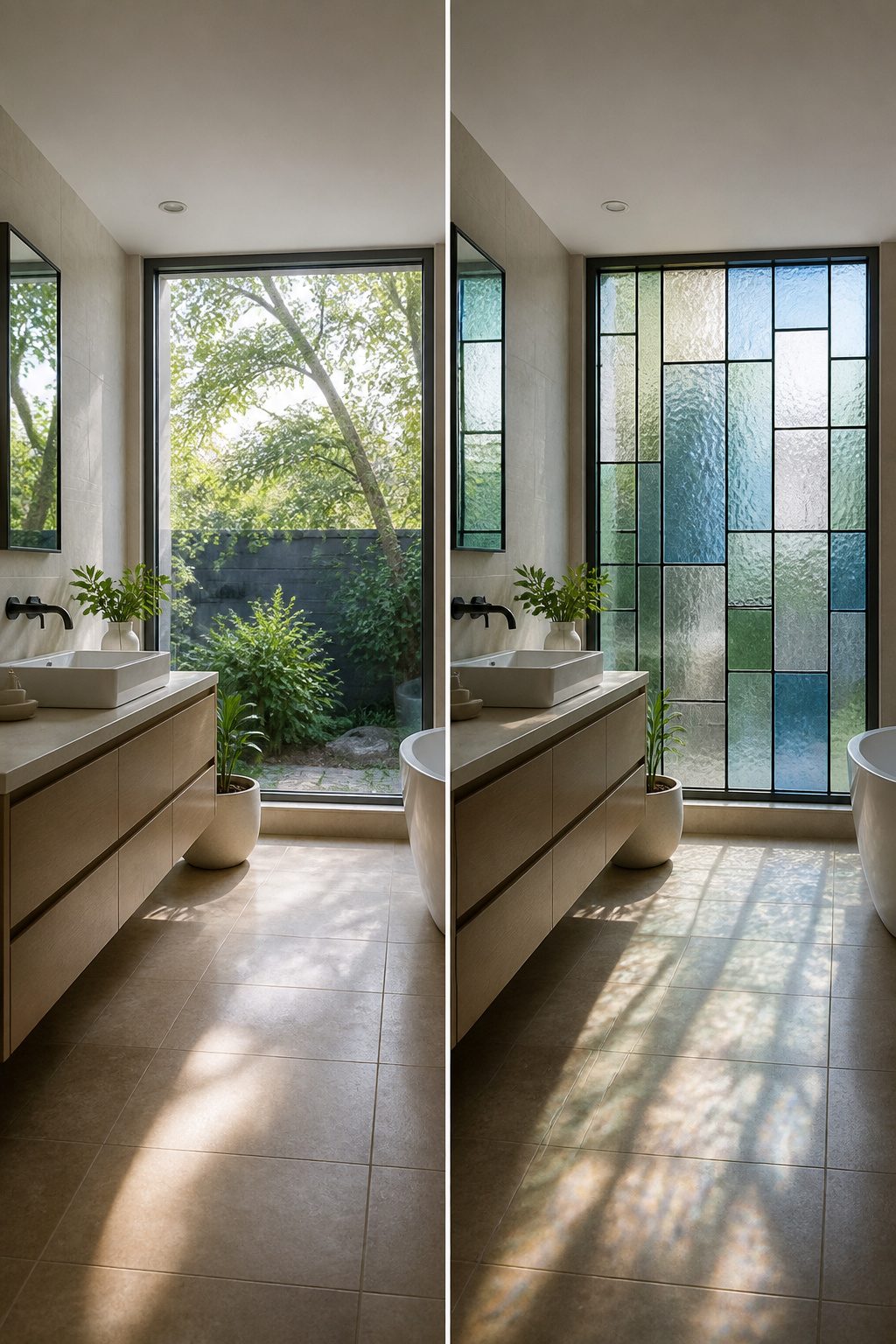
Stained glass does more than decorate a wall. In a bathroom facing the street or a front door sidelight, the textured and colored glass blocks sightlines without killing daylight, which means you can skip the curtain hardware entirely. The privacy level depends on how tight the pattern is: small, dense pieces with lots of lead came between them obscure more than a few large panes of pale cathedral glass.
The thermal side surprised me when I started reading up on it. A single pane of stained glass, even the thick stuff, is not insulation on its own. What changes the math is whether the panel gets built as a sealed double-pane unit with the art glass on the interior side and tempered clear glass outside. That sandwich traps air and meets modern energy code in most climates. Ask the maker specifically about spacer bar width and whether they can integrate low-E coating on the outer lite; some will, some treat the stained layer as purely decorative and leave you with a cold spot in January.
Light diffusion follows the same logic. Iridescent and heavily textured glasses scatter sun outward into a room, which cuts glare on screens and fades flooring slower than a clear window. For a home office or a south-facing reading nook, that scattered quality is the main functional win, and it pushes you toward rippled or seedy glasses rather than the smooth, transparent ones that read as almost ordinary when the sun hits them straight on.

Generous Dimensions: Stained glass window hangings measures 31.5 inches wide and 11 inches height, weighs 4.5kg/10lbs, and comes with a 33 inches long chain for easy installation
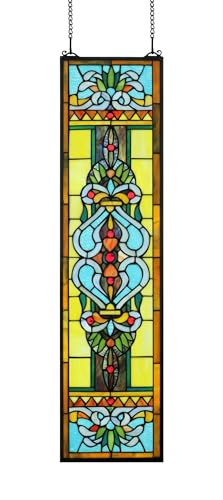
SIZE: Height: 35 inch, Width:9 inch
How Stained Glass Windows Are Made
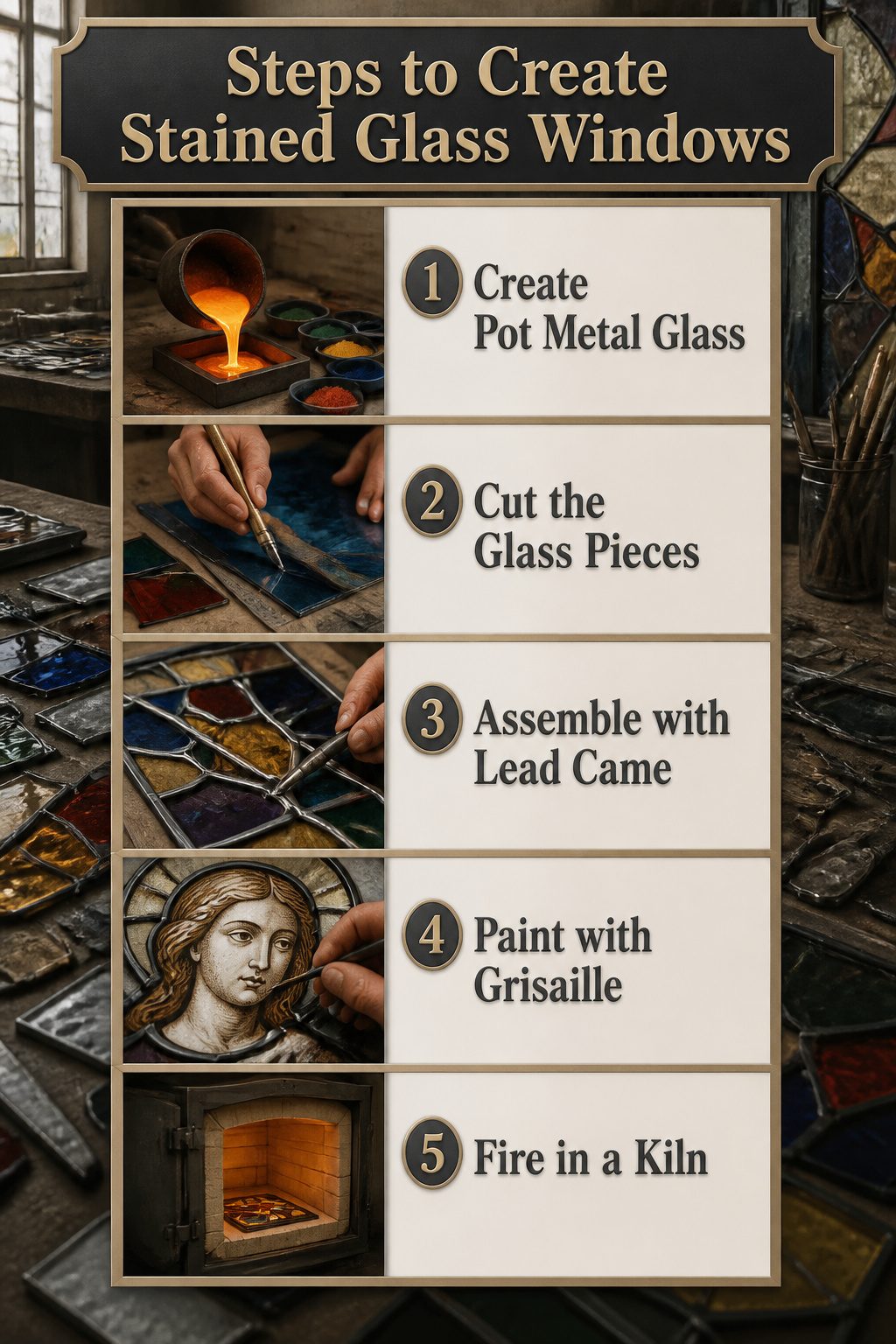
Most colored glass in a stained glass art window starts as pot metal, where metal oxides are mixed into molten glass so the color runs the full depth of the sheet. That solid color is durable and consistent, but it limits the range of reds because gold-based formulas get expensive and darken to near-black at full thickness. Medieval makers solved this with flashed glass, a thin layer of colored glass fused onto a colorless base. The flash can be etched or engraved away to let light through in two tones from a single piece, giving faces and drapery their modeled look without the cost of solid ruby glass.
Lead came is what actually holds the window together: H-shaped strips of soft metal that cradle each piece of glass, soldered at the joints and waterproofed with putty. The came flexes enough to survive some movement, but a large window still needs saddle bars or flat strips of iron soldered across the back to keep the weight from pulling the panel out of shape over decades.
Painting on glass is done with grisaille, an iron-based pigment that fires permanently onto the surface in a kiln. The detail work, eyelashes and fabric folds, is scratched through the painted layer with a needle before firing, so the light itself carries the line. That fired surface is as tough as the glass beneath it, which is why medieval painted faces survive when the lead around them has sagged and been replaced twice over.
Handcrafted Against Mass-Produced
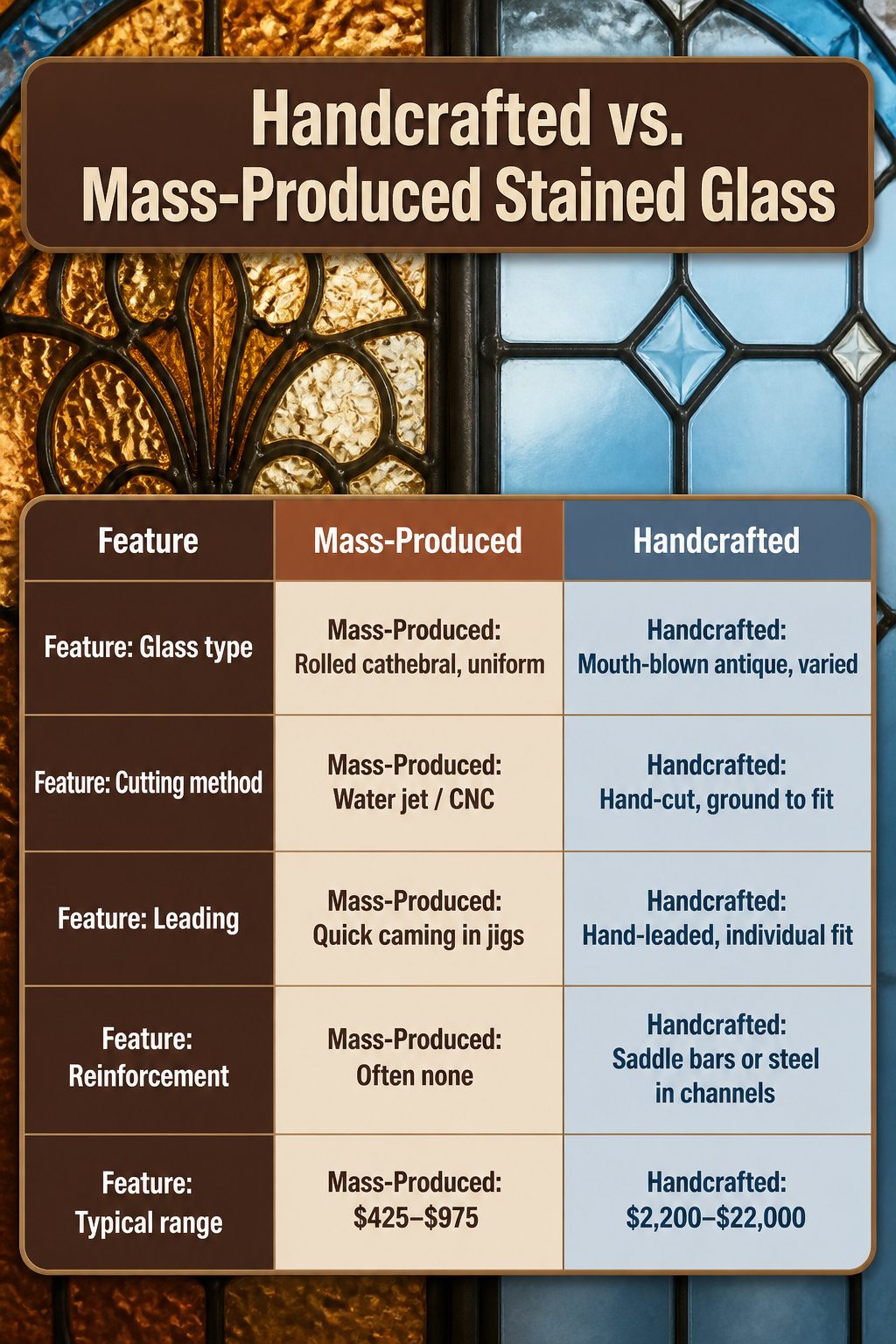
A $425 amber and light-blue beveled panel and a $22,000 1700 German piece in an 1800 English frame sit at opposite ends of the same market. The gap is not just hours of labor; it is what the labor is applied to.
Mass-produced panels start with rolled cathedral glass, uniform in thickness and color, cut on water jets or CNC tables. The edges are ground quickly, copper-foiled or lead-camed in jigs, and soldered in batches. The result is consistent, lighter, and often single-glazed without reinforcement. Handcrafted work, by contrast, relies on mouth-blown antique glass, where striations and bubbles vary sheet to sheet. Each piece is cut to pattern, the edges smoothed on a grinder, and the fit adjusted by eye before leading. Large panels get saddle bars or steel reinforcement embedded in the lead channels.
| Feature | Mass-Produced | Handcrafted |
|---|---|---|
| Glass type | Rolled cathedral, uniform | Mouth-blown antique, varied |
| Cutting method | Water jet / CNC | Hand-cut, ground to fit |
| Leading | Quick caming in jigs | Hand-leaded, individual fit |
| Reinforcement | Often none | Saddle bars or steel in channels |
| Typical range | $425–$975 | $2,200–$22,000 |
The $12,500 1890 St. Louis church window and the $3,850 German hand-painted piece command their prices partly from provenance and age, but also from painted and fired details that machine work cannot replicate: faces, drapery, shading baked into the glass surface at kiln temperatures. For a bathroom or a replacement AC-wall unit, the mid-range custom shop at $2,000–$3,000 often splits the difference: hand assembly, rolled glass, limited painting. The mistake is assuming the $459 panel is merely smaller. It is usually thinner, simpler, and built to hang, not to last a century.
What Stained Glass Costs and Why
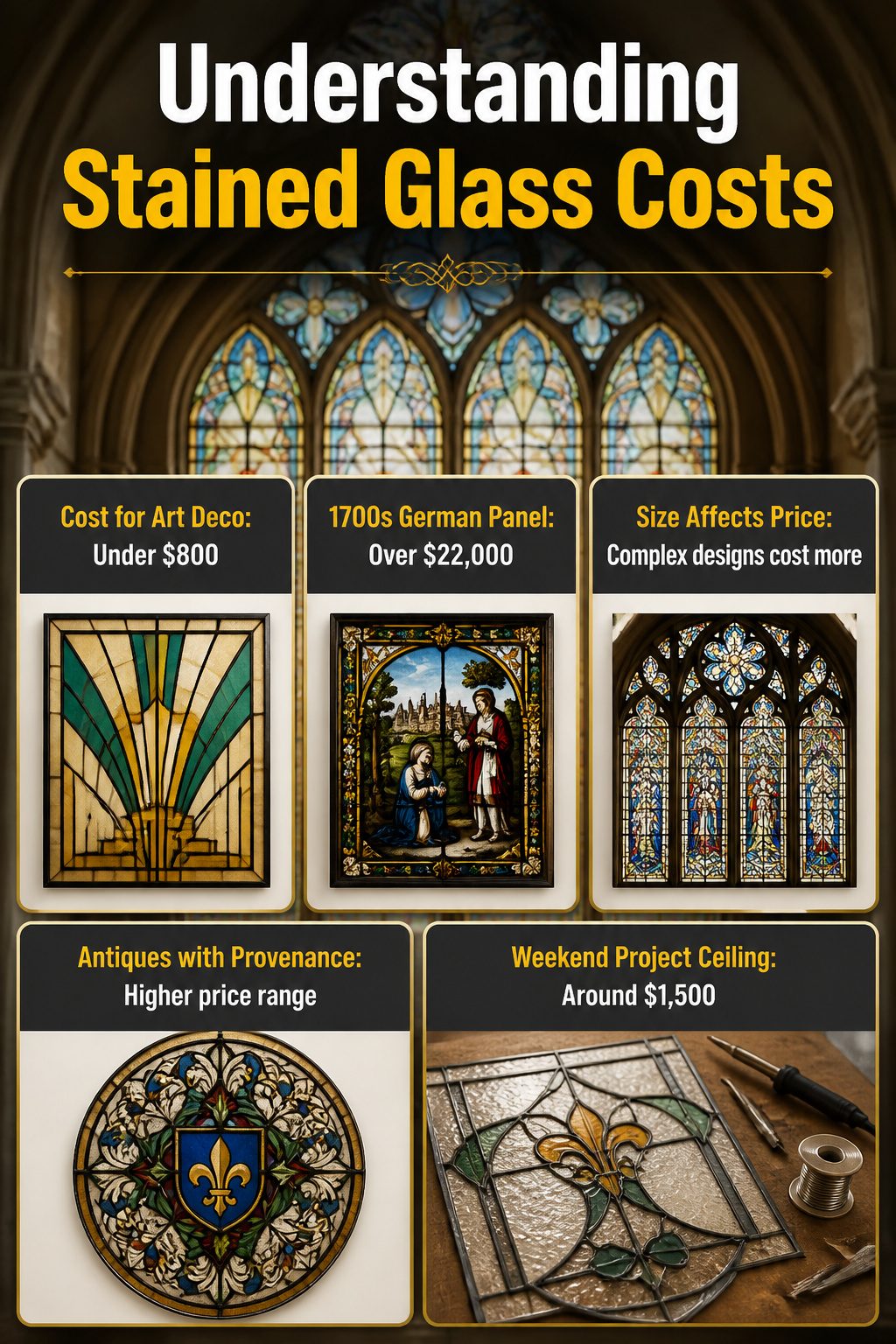
A small Art Deco stained glass art window can land under $800, while a 1700s German panel in an 1800s English frame runs past $22,000. Most of what sits in the middle tells the same story: age and story add more to the tag than glass and lead ever could.
Size and complexity push the numbers too. A hand-beveled pelican design, made to order, starts around $565, but that is a single figure in a modest frame. Stretch that to a double-vent church window and you are past $14,000 before shipping. The difference is not just acreage; it is the hours in cutting, fitting, and soldering every joint.
For a first-home owner, the split is practical. Production pieces and smaller vintage panels, the 1950s church salvage or the fleur-de-lis design near $975, hang well and do not need custom framing. Antiques with documented provenance, like that St. Louis church window at $12,500, belong to a different budget and a different wall. I would put the ceiling for a weekend project at roughly $1,500, which covers beveled work, hand-painted details, or genuine period pieces without the museum paperwork. Above that, you are collecting, not decorating, and the insurance math changes.
Frequently Asked Questions
What are stained glass windows made of?
A stained glass art window is colored glass cut into pieces and joined together, not a single sheet dyed after the fact. The color comes from metallic salts added during manufacture, so the hue runs through the entire piece rather than sitting on top. Traditional construction uses lead came, those soft H-shaped strips that cradle each edge and get soldered at the joints, though modern makers sometimes use copper foil, zinc came, or resin cames instead.
How much do stained glass windows cost?
Prices range from about $425 for a small mass-produced panel to $22,000 for a 1700s German piece in an 1800s English frame. Entry-level custom work like the Colorful Mission Prairie Octagon Window Panel lands around $459, while a hand-beveled made-to-order design starts near $565. Antiques with documented provenance, such as an 1890s church window from St. Louis, run $12,500 and up. For most weekend projects, budget roughly $1,500 as a practical ceiling before you shift from decorating into collecting.
What is the history of stained glass?
Stained glass developed its lasting identity in sacred spaces during the Romanesque and early Gothic periods, when artists fused individual pieces of colored glass with lead to create intricate designs for churches and cathedrals. These windows served as focal points from outside and transformed interior light into something the congregation experienced rather than merely saw. The visual language carried doctrinal weight: biblical scenes, saints, and symbols were arranged so the illiterate could read the narrative, a tradition that shaped the craft for centuries before secular and modern applications took hold.