
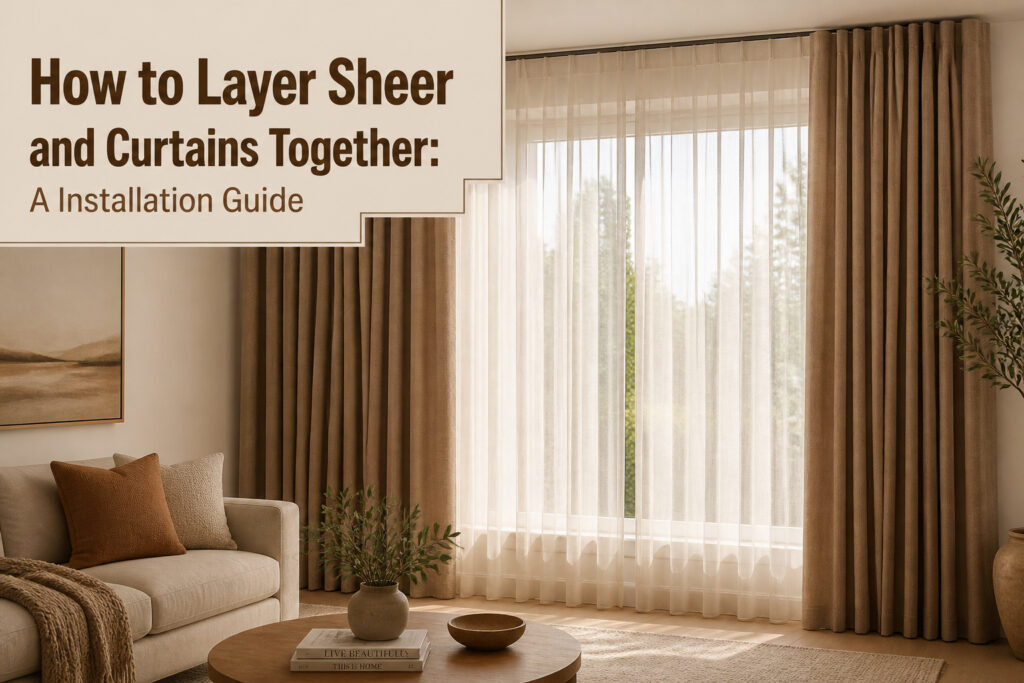
Layering sheer and curtains together takes about a weekend, $40–$120 in hardware, and a drill. The payoff is a window that shifts from filtered daylight to full blackout without swapping panels.
Most people get the hardware choice wrong from the start: double rods look right in the store, but a ceiling track handles weight better and hides itself completely.
The four-to-six-inch gap between those two rods is what keeps the sheers from snagging on the drapes every time you draw them.
1. Choose the Right Hardware
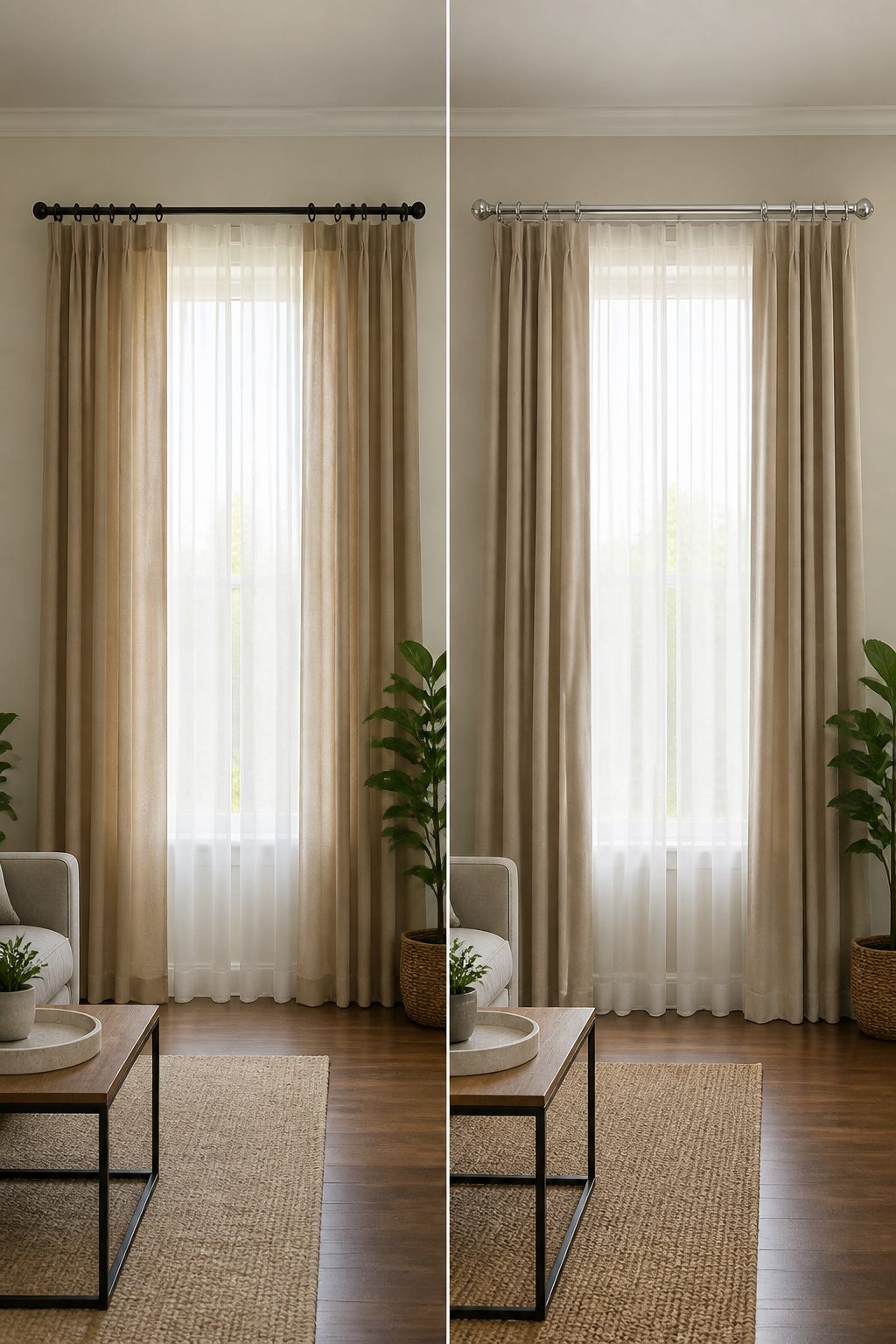
Double curtain rods are the hardware most people picture for this job, and they are usually the right call.
The two parallel rods sit on one set of brackets, with the thinner back rod holding sheers and the thicker front rod carrying the heavier drapes.
The range of finishes means the hardware itself can read as decorative, not just functional.
A double track system is the alternative worth knowing about before you commit. The curtains glide on carriers inside a ceiling- or wall-mounted channel, so nothing shows but the fabric.
The look is cleaner, and the mechanism handles weight better than rods if your drapes are thick or your span is wide. A hotel-style floor-to-ceiling installation pretty much demands tracks.
Bracket spacing is where either choice can fail on you. The rule is one support bracket every 30–36 inches of rod or track length.
Skip this and the center sags, especially once both layers are hung. I have seen a rod that looked fine empty bow enough to let light leak at the middle once sheers and blackout panels were both loaded on.
The sewn-together panel sets sold as "layered curtains" skip all this hardware entirely.
One rod, one layer of fabric with a sheer attached. Both panels move as one unit, so you lose the independent control that makes the two-rod setup worth the extra drilling.

Dual Rod for Blackout & Privacy: This double rod holds two layers (sheer + blackout). The sheer layer lets in natural light while blocking outside views for daytime privacy. The wrap-around curved design pushes drapes flat against the wall, closing side gaps for complete darkness when you need it.

Sold as 2 Panels: Each package includes 2 pieces sheer curtains. Each panel measures 42 inch width, 72 inch long( The curtain length not include top 1.5 inch header) 2 pieces total width is 84 inches, Sheer curtains width is 1.5-2 times wider than your window to show a nice look. Multiple Length are available, please measure your window first for the right choose.

Double Layered Curtains: Crafted with a sheer lace layer, our boho curtains for bedroom boast a smooth, delicate handfeel, while the linen layer is soft and durable. With one-piece cutting and neatly sewn edges, our linen curtains 84 inches long 2 panels strike a balance between beauty and practicality. They are suitable for bedroom, living room, nursery, office and other places
2. Measure for Installation
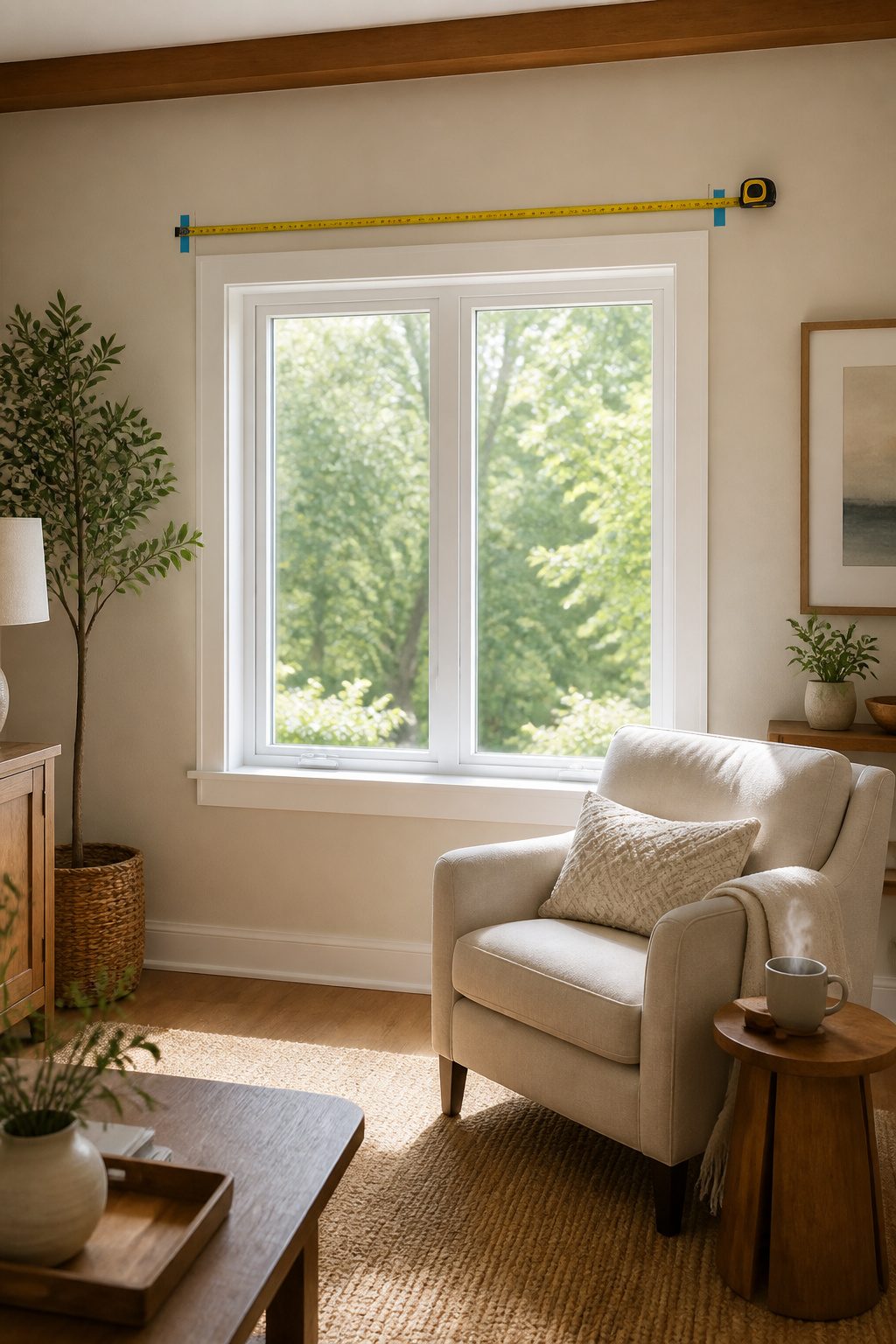
The high and wide method starts with height: mount the double curtain rod 4–6 inches above the window frame. This pulls the eye upward and gives the ceiling more breathing room than a frame-hugging rod ever will.
Width matters just as much.
Extend the rod 6–12 inches past the frame on each side, and the drapes will stack back against the wall instead of blocking glass when open. That full stacking is what makes a modest window read as intentional rather than cramped.
Specific curtain length and width will change window to window, but the goal stays the same.
The hardware placement should make the window appear larger and leave the view clear when the sheers and curtains are drawn open. When the measurement feels tight, go wider on the rod rather than narrower.

Ready Made & Four Hanging Design: Set of 2 linen & cotton blend curtain panels and 32 hooks per package.Each panel measures 50 inches wide.Top design of Back tab & loop pocket provide 4 hanging options. (a) Hanging from the back loops to create an elegant pleated look. (b) Using our 32 small hooks on the hook belt and pinning on your own rings.(Rings are not included) (c) Using your own clip rings. (d) A classic rod pocket style, simply hang our curtains by passing the 3-inch rod pocket.

- Custom Design Fabric:To reduce budget while keeping the linen/cotton organic characteristics,XTMYI R&D designer makes this stone-washed ultra soft yet linen look blended fabric - 20% cotton,20 linen,60% polyester.It drapes well,medium thick,airy and breathable in hot summer.

Ceiling-Mount Dual Curtain Track Design: This heavy-duty ceiling-mount dual track system is constructed from aluminum alloy, it ensures long-lasting performance even when supporting heavier curtain fabrics. The dual track feature allows you to smoothly operate two separate layers of curtains, this enables ultimate flexibility in light management and privacy throughout the day. Perfect for living rooms, bedrooms, office or commercial spaces
3. Install the Brackets
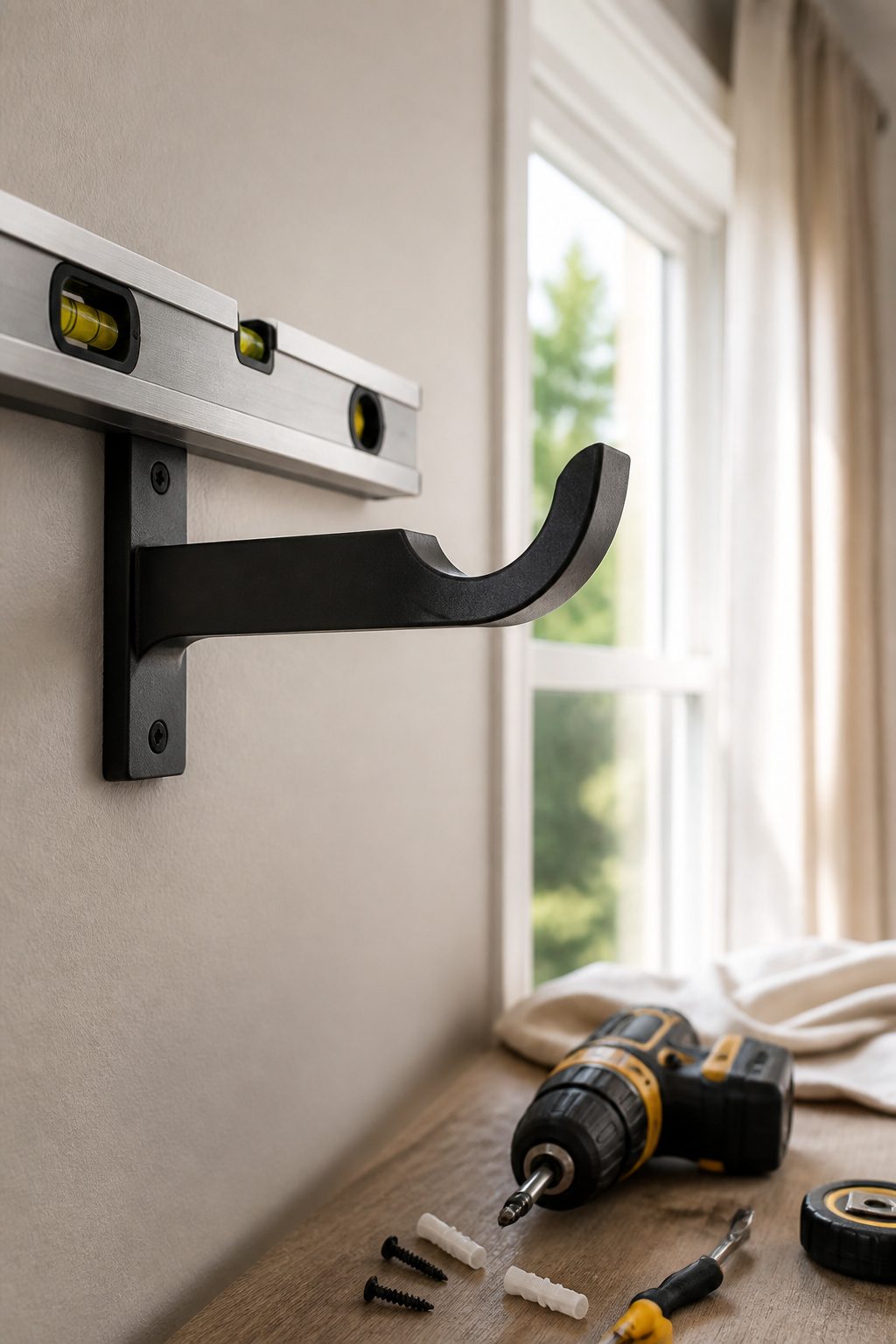
A stud finder saves the guesswork when you are hunting for something solid behind drywall.
Hollow wall anchors will hold a lightweight sheer, but two layers of fabric plus the hardware itself needs the 30–36 inch support bracket rule: brackets spaced no wider than that, and each one biting into a stud or a proper anchor rated for the load.
Mark the first hole, then draw a faint line with a level to the second bracket before you drill.
The rod has to carry twice the weight you are used to, and a tilt of even half an inch telegraphs across sheer fabric.
The inner rod sits closer to the window for the sheers, the outer rod for drapes, so check that both sets of brackets line up independently.
I have watched a friend realize too late that her outer brackets were an inch low; the drapes pooled on one side like a curtain call gone wrong, and she had to patch the holes and start over.

【Double Rod Performance】TVWOO Heavy Duty Double Curtain Rod is the best black double rod curtain solution for layered windows.Engineered for long-lasting duty,the 1 inch front rod supports 35 lbs while the back rod handles 20 lbs,making these double curtain rods for windows both luxurious and sturdy

【Luxury Dual Window Treatment Rods】Elevate your space with this gold double curtain rod,engineered for layered 72-150 inch windows, Curtain rod featuring handcrafted acrylic crystal finials embedded with foil,acting as brilliant room jewelry that instantly upgrades any modern living room or primary bedroom

Wrap Around Design for Room Darkening: TONIAL double curtain rods feature curved ends that sit flush against walls to eliminate side light gaps and light leaks. They provide full room darkening and extra noise reduction, great for bedrooms, home theaters and night shift workers, help you create a comfortable and cozy indoor environment
4. Hang the Sheer Curtains
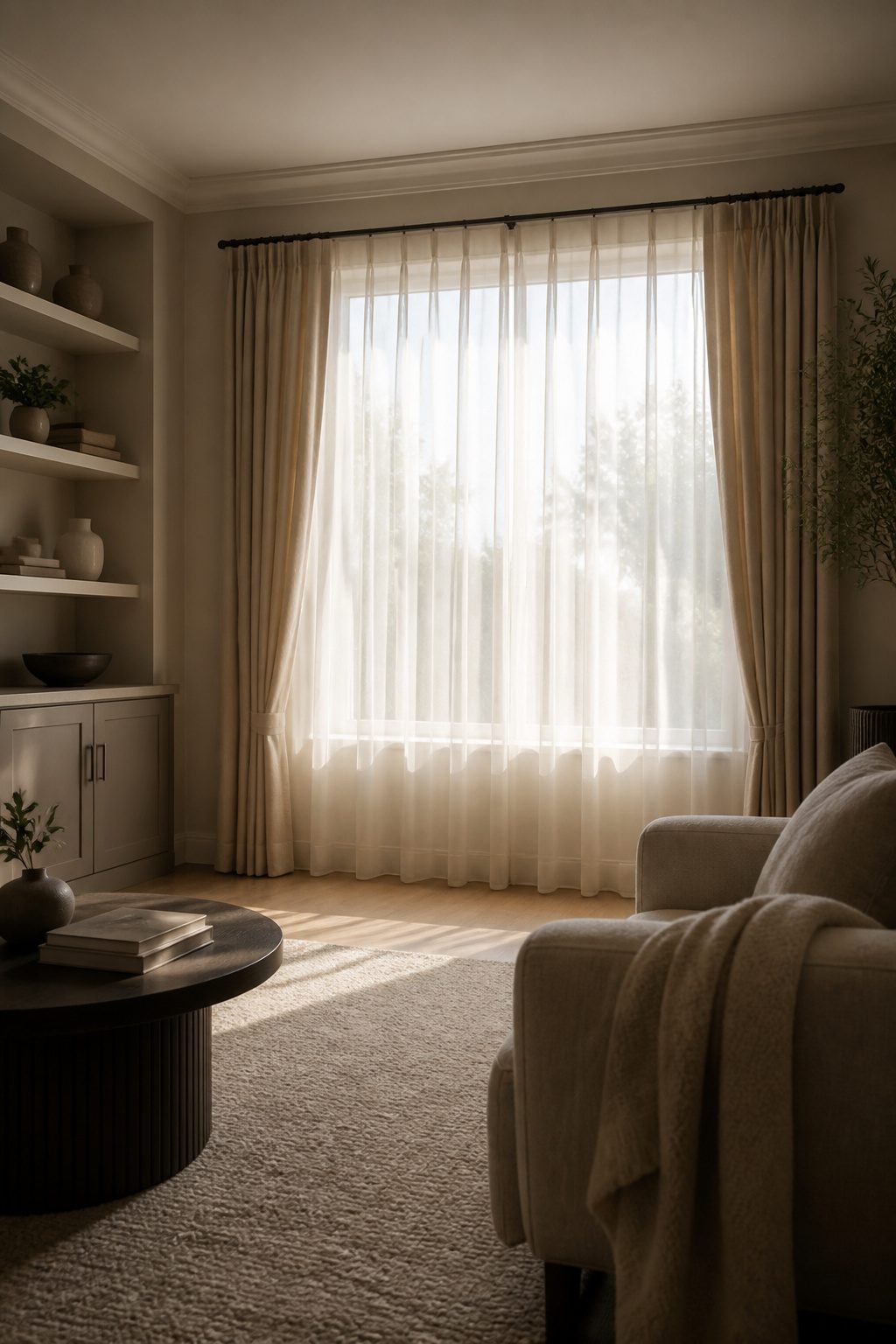
The inner rod, the one pressed closest to the glass, is where the sheers belong.
That placement puts them against the window as the base layer, which lets them do the one job they are built for: diffusing daylight into something softer than raw sun while still giving you enough privacy that a neighbor walking by sees only shape and shadow, not whether you are still in pajamas.
Draw the heavier drapes over them at night when you need the room sealed off completely.
Length matters more than most people expect. Sheers that stop short of the floor while the drapes pool look like a mistake, or like you ran out of fabric.
Matching the sheer length to the drape length, hem to hem, reads as intentional even when the layers are open and the sheers are all that is doing the work.
The double rod makes this easy enough to get right, so there is no reason to accept the sloppy alternative.
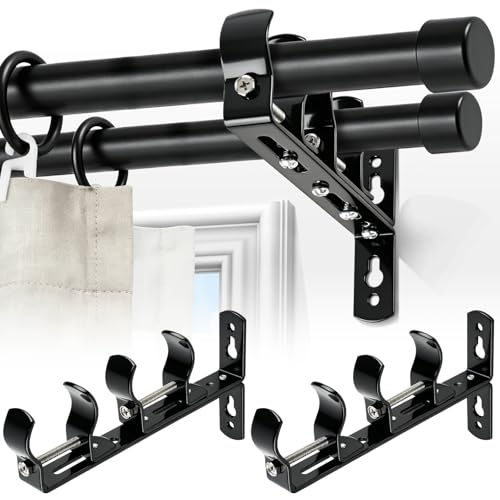
Adjustable Dual Rod Design --- Curtain rod bracket features upgraded dual adjustable locking cups—outer rod fits 5/8"-1-1/2" diameters and inner rod fits 3/4"-1-1/2"—perfect for layered blackout and sheer curtain setups while fixing rod securely without slipping

[Size] -- Total length of double curtain rod brackets is about 7.7inch and the distance between two rods is 2.4inch. PLEASE NOTE CURTAIN BRACKETS SIZE TO AVOID INAPPLICABILITY.
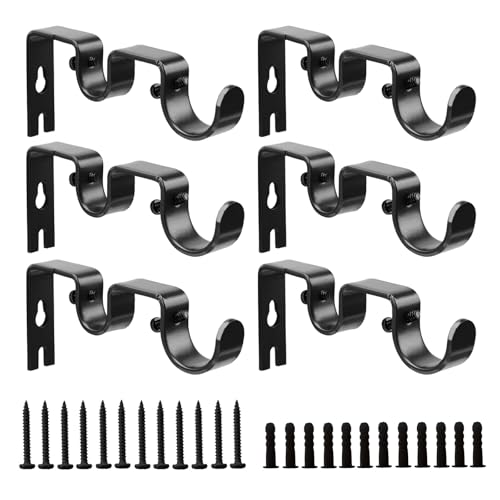
[Simple & Classic Style Match with Window Treatment Decor]: Simple & classic style double curtain rod holder not only supports your curtains and curtain rods well, but also matches perfectly with your other room set. Add the finishing touch to your window treatments while creating an element of elegance to your home.
5. Hang the Drapes
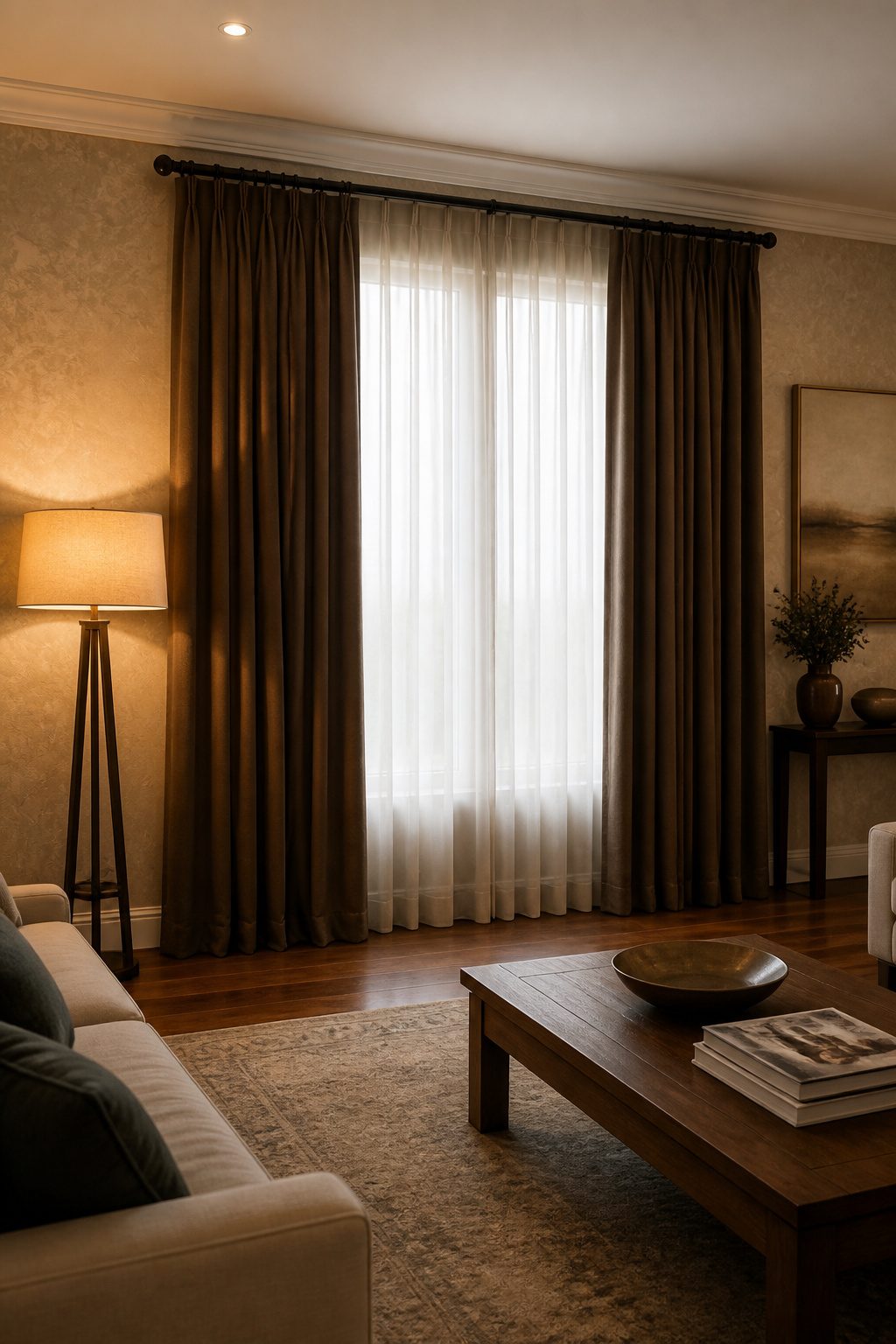
The heavier drapes belong on the outer rod, set forward toward the room.
This layer does the real work after sunset, blocking light completely and sealing off the view from the street. Draw them shut and the room goes fully dark; the sheers behind stay put, already diffused.
Insulated drapes cut heat loss by up to 25%, which matters more than I expected in a drafty first apartment where the landlord controlled the thermostat. The weight also changes how the wall feels.
Velvet, lined cotton, or a thick linen blend reads formal against the airy sheer behind it, and the contrast in texture is what makes the pairing look intentional rather than like a temporary fix.
Both layers should finish at the same length. A sheer that puddles while the drapes hover an inch above the floor looks like a measuring mistake, and in a small space those details stack fast.
I learned that the hard way in a rental where I eyeballed one layer and spent two years noticing the gap every evening.


Sufficient quantity: there are 60 pieces of silver curtain track hooks in this package, lightweight and sufficient to meet your daily needs and replacements, convenient and portable for you to hang the drapes on the curtain rail

TYPE A - LARGE SLIDING EYE CURTAIN CARRIER
6. Final Adjustments
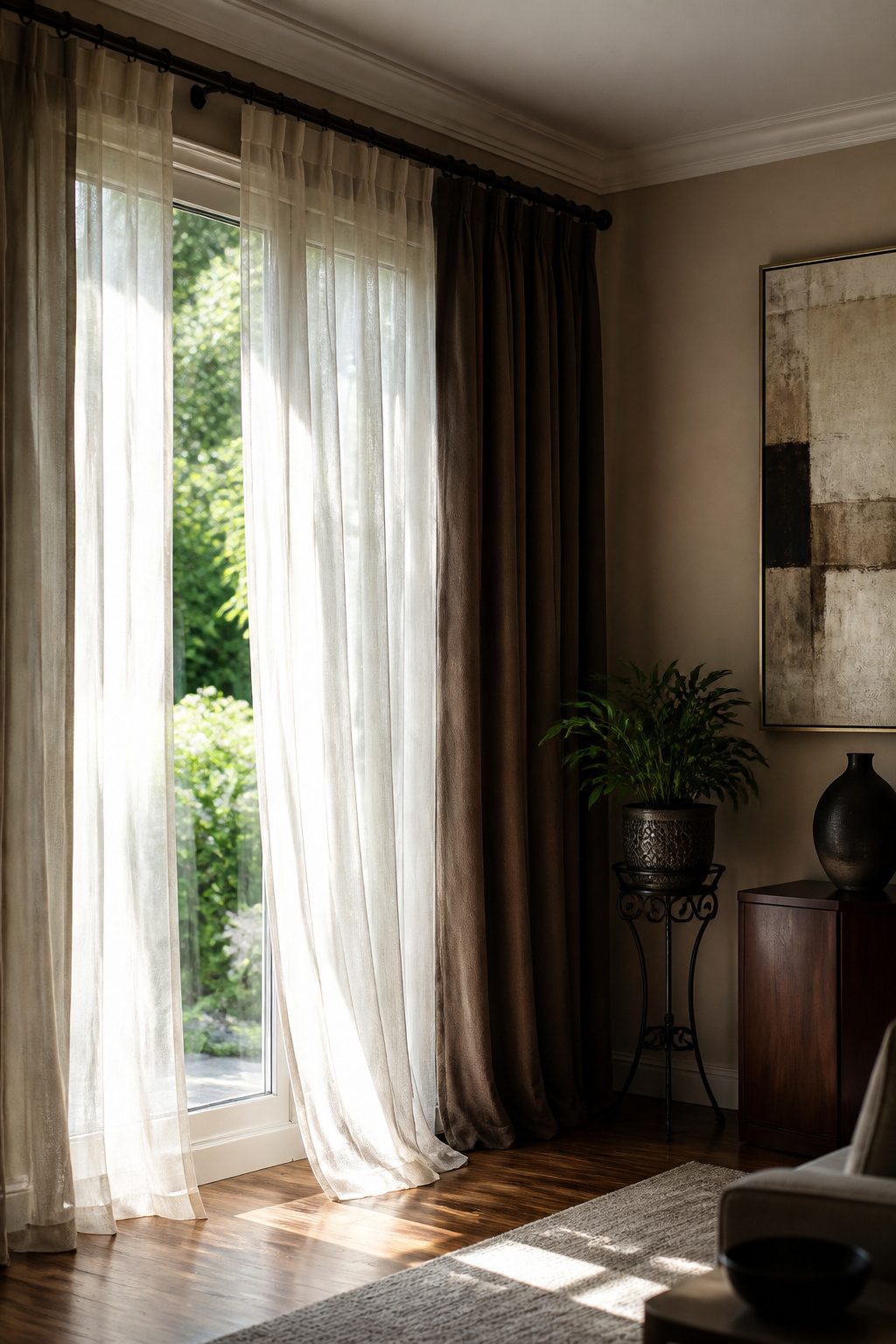
Both layers need to move on their own hardware, or the whole point of layering sheer and curtains together is lost.
I learned this watching a set I hung for a friend where the sheers and drapes shared rings, so opening the blackout meant dragging the sheers with it every time. She ended up leaving both closed half the year.
Panels should run 1.5 to 2 times the window width for fullness that reads intentional rather than skimpy.
Stand six feet back and look for flat spots where the fabric hangs dead straight, light gaps where the two layers part, or bunching where too much width piles at the bracket.
The sheer layer especially will telegraph every half inch of error.
If the sheers catch on the drapery rings when you draw them, the rods are either too close together or one finial is crowding the other.
A double rod with four to six inches of depth between the two usually solves it, though ceiling tracks give more clearance if your window frame allows the mount.
Puddled hems look romantic in photos until one layer puddles differently than the other and the whole stack reads lopsided; floor-length or a half-inch kiss keeps the two layers in proportion without daily fussing.
A quick steam before the final check saves the look. Wrinkles from packaging hide in the sheer’s folds and only show once afternoon light hits them.

Room Darkening Solution: The double curtain rod features a wrap around design, which creates a tight seal between the wall and curtains, effectively blocking light and reducing outside noise to help you create a comfortable and cozy indoor environment.

Front rod has 7/8" diameter and back sheer rod has 5/8" diameter

Durable and Sturdy Material - this double curtain rod is made of high-quality stainless steel with excellent rust and corrosion resistance, it can stably support up to 25 pounds of curtains, effectively preventing deformation or bending whether for heavy blackout curtains or lightweight sheer curtains.
7. Layering Options Beyond Drapes
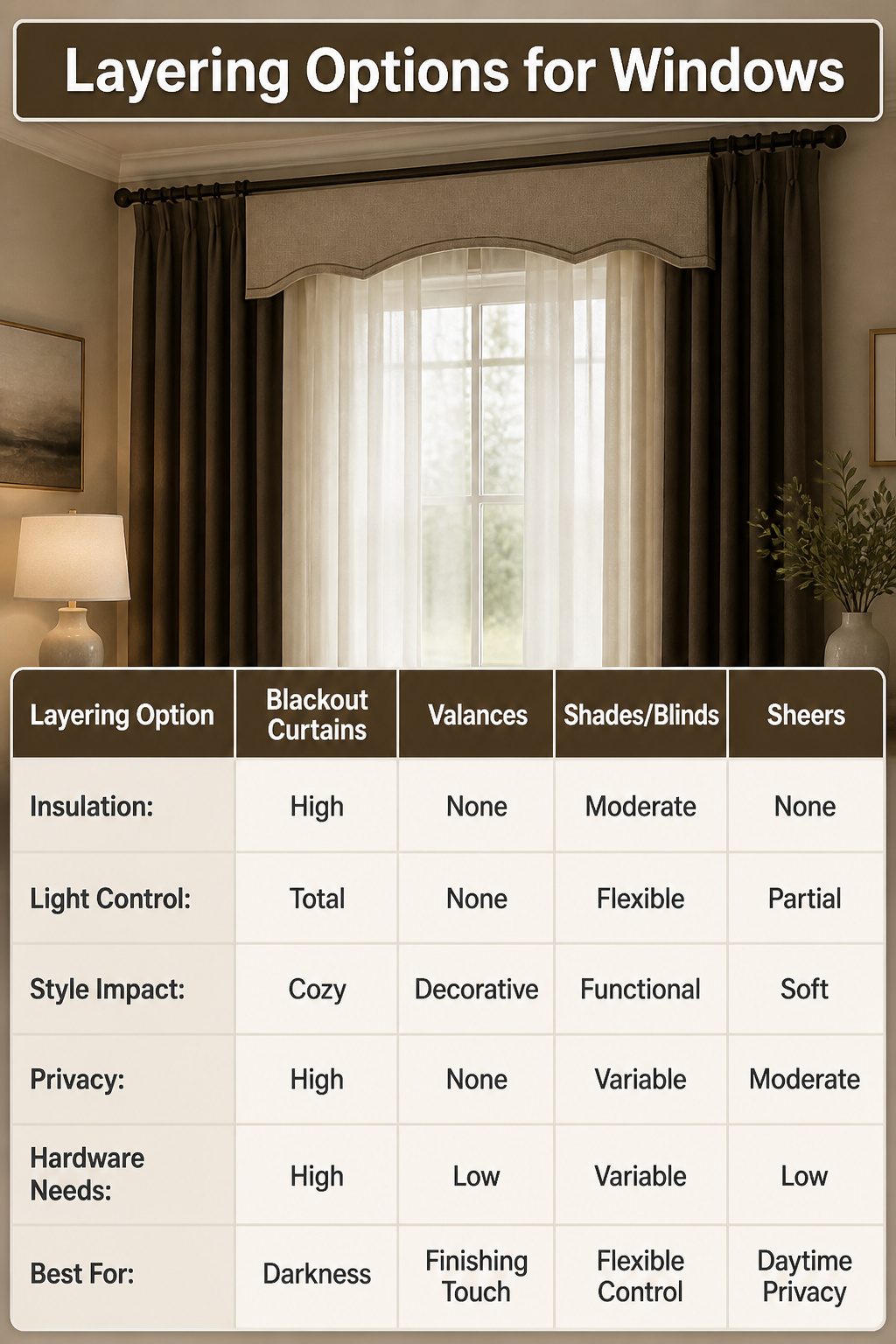
Sheer and curtains together do not have to mean two layers of fabric on a rod. Three other pairings came up often enough that they are worth weighing.
- Blackout curtains as the outer layer turn the same window from day to night. The sheer filters morning light; the blackout panel, mounted on its own rod so it can fully cover the sheer, gives complete darkness and traps air for insulation. Velvet, heavy cotton twill, or recycled polyester blackout fabrics each add structure and some sound absorption. Thermal or lined versions boost the energy savings. Deeper tones against the sheer read as cozy rather than theatrical.
- Valances on top dress the window up and hide the hardware, but they block no light. Their short length is pure style. The tradeoff is real: you get the finished look, yet you still rely on the sheer and the main curtain beneath for every functional job.
- Shades or blinds behind the sheers add flexible light control without a second drapery layer. A sheer cellular shade under a sheer curtain gives two diaphanous layers and diffused light; a blackout roller shade behind a sheer lets you pull the shade for darkness while the sheer stays for daytime privacy. A velvet drape over a sheer cellular shade adds insulation and the option to go fully dark when both are drawn.
Each pairing changes what the window does and what it costs in hardware. Pick the one that matches whether your problem is light, privacy, temperature, or the bare look of the rod itself.

Ultra-quiet Tracks System: If your children or family members are troubled by noise pollution and are often exhausted by the noisy track sound, resulting in poor sleep quality, then our 30-40 dB ultra-quiet curtain track (with PVC silent strips and pulleys) will be your ideal choice. The noise when the curtains are opened and closed is only 0.5 times (half) that of other tracks, which is very quiet

Memory Shape Pinch Pleated: Each curtain panel is designed with 7 pinch pleats. The permanently stitched pleat design exudes bespoke luxury, while the elegant folds instantly elevate the aesthetic appeal of your home decor. Each panel is heat-set at 248°F for memory shape retention—maintaining a crisp, tailored appearance year after year without the need for repeated reshaping.

[Package Contains]:The ceiling curtain track system includes 1x curtain track 9.8ft(3m), 26x track rollers,9x ceiling brackets, 2x end covers, 26x iron hooks, 9x drywall anchors, 9x screws.(Note: Clips are NOT included)
Light Control and Privacy
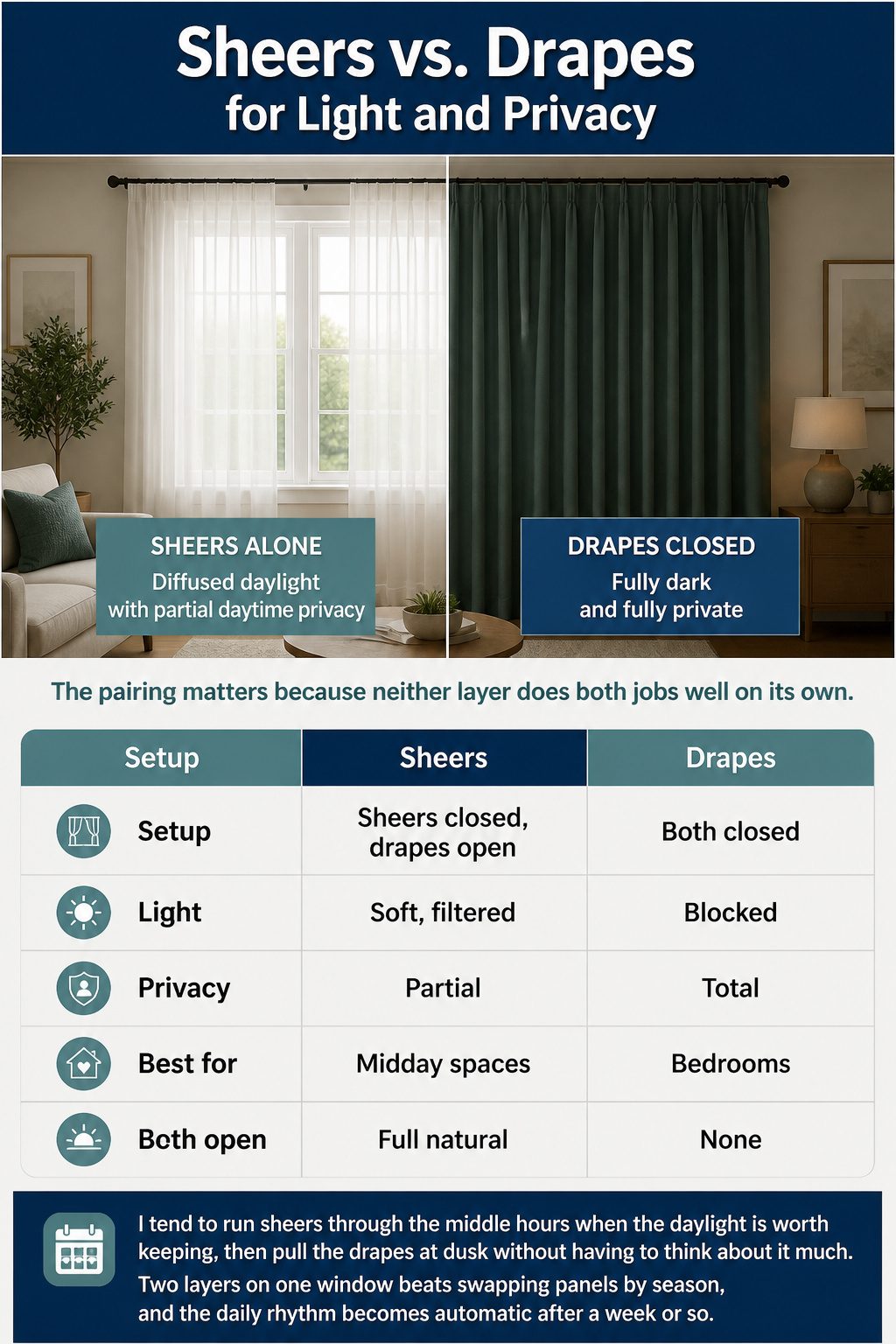
Sheers alone give you diffused daylight with partial daytime privacy, though anyone outside can still make out shapes and movement if they are close enough.
Draw the heavier drapes and that same window goes fully dark and fully private. The pairing matters because neither layer does both jobs well on its own.
| Setup | Light | Privacy | Best for |
|---|---|---|---|
| Sheers closed, drapes open | Soft, filtered | Partial | Midday living spaces |
| Both closed | Blocked or near-blackout | Total | Evenings, bedrooms, street-facing rooms |
| Both open | Full natural light | None | Views, morning routines |
I tend to run sheers through the middle hours when the daylight is worth keeping, then pull the drapes at dusk without having to think about it much.
The sheers act as a screen in daylight without blocking the light itself, while the drapes handle the times when visibility flips and outside eyes adjust to the dark.
Two layers on one window beats swapping panels by season, and the daily rhythm becomes automatic after a week or so.
【Double Rod Performance】TVWOO Heavy Duty Double Curtain Rod is the best black double rod curtain solution for layered windows.Engineered for long-lasting duty,the 1 inch front rod supports 35 lbs while the back rod handles 20 lbs,making these double curtain rods for windows both luxurious and sturdy

TANGWIN Blackout Wood Double Curtain Rod:Rustic wooden curtain rod with hand-carved wood grain finials,hand-painted in natural shades of brown,imitation wood grain patterns preserves original texture of the wood,gives bamboo wood curtain rod a unique artistic expression.Farmhouse curtain rods suitable for bohemian,pastoral,modern,vintage,rustic or french style homes,decorative boho curtain rod can become a unique,wood looking and unique double blackout curtain rod pleasing scenery in the home

【Double Rod Performance】TVWOO Heavy Duty Double Curtain Rod is the best gold double rod curtain solution for layered windows.Engineered for long-lasting duty,the 1 inch front rod supports 35 lbs while the back rod handles 20 lbs,making these double curtain rods for windows both luxurious and sturdy
Energy Efficiency and Insulation
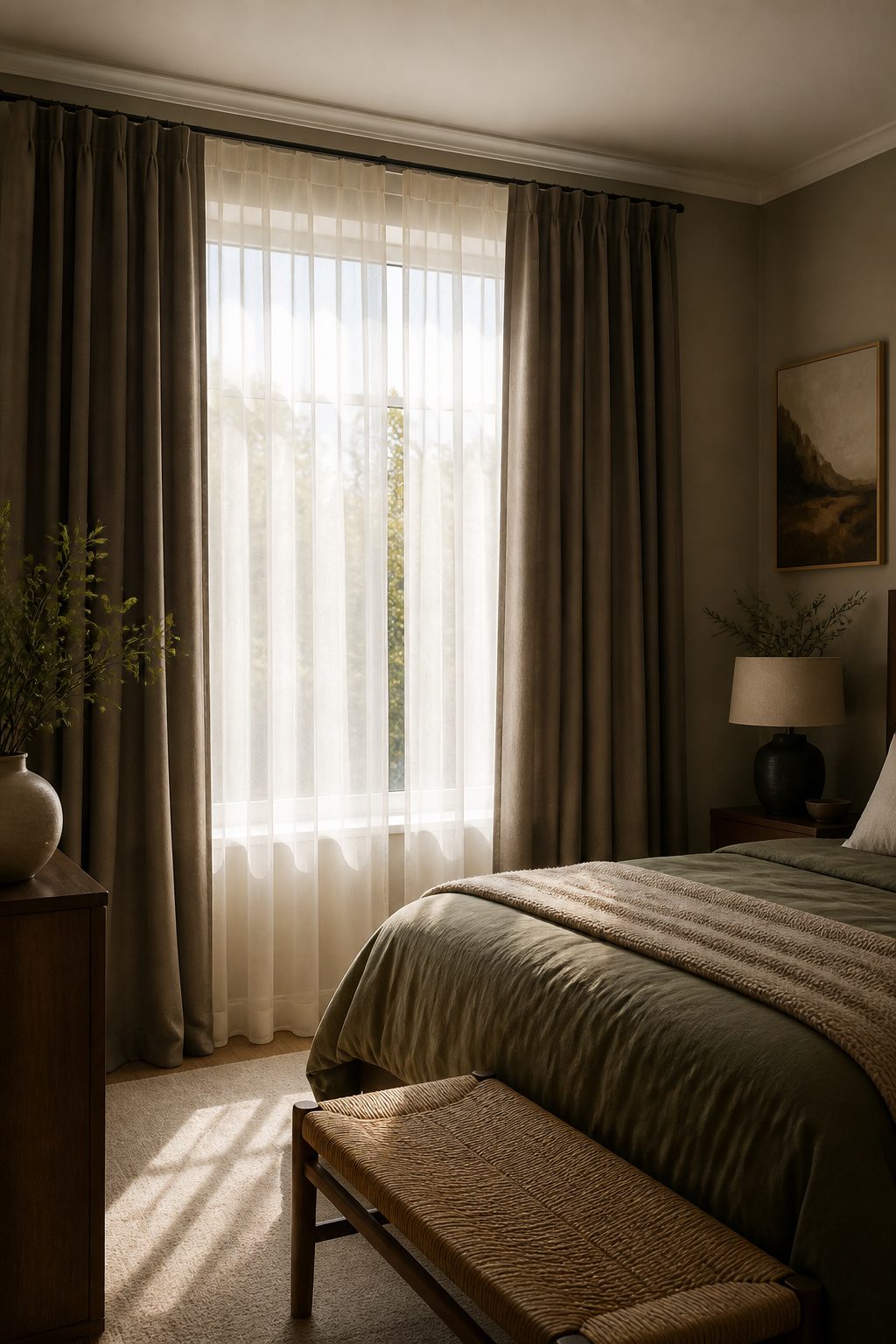
Sheer fabric on its own does almost nothing to stop heat from moving through a window.
The weave is too open to trap air, so in winter the cold presses straight through and in summer the sun warms the glass and radiates inward unimpeded.
Drapes change that equation entirely. An insulated curtain layer can cut heat loss by up to 25%, which is the difference between a room that holds its temperature and one that fights the thermostat all day.
The real gain from layering sheer and curtains together is the air gap. Two layers hung slightly apart create a pocket of still air that neither layer manages alone.
The sheer sits closest to the glass, diffusing light and taking the edge off radiant heat, while the heavier panel behind it acts as the actual thermal barrier. That gap matters more than most people expect.
A single thick curtain pressed flat against the window still conducts some temperature straight through the fabric. Two layers with space between them slow the transfer the way a storm window does, without the cost of replacing glass.
For a renter or first-time owner working on a Saturday budget, this is one of the few upgrades that pays back in both seasons.
The same layered setup that keeps heat inside in January will block solar gain in July, and you get the visual softness of the sheer for the months in between when the drapes stay tied back.

😀High-quality material: The curtain rod hooks are made of high-quality metal material, sturdy and more heavy-duty for using. The surface black coating is treated with zinc plating process.

[Simple & Classic Style Match with Window Treatment Decor]: Simple & classic style double curtain rod holder not only supports your curtains and curtain rods well, but also matches perfectly with your other room set. Add the finishing touch to your window treatments while creating an element of elegance to your home.

EXTENDED CURTAIN ROD BRACKETS - PLEASE NOTE THE LENGTH OF DOUBLE CURTAIN BRACKETS TO AVOID TOO LONG FOR INAPPLICABILITY. ----------KOLAKO curtain rod brackets is designed with double rods, hang 2 rods & layers of grommet drapes perfectly. The total length of curtain rod holder is about 7.7inch, provide enough additional space between wall and window coverings. 2.4inch gap between two rods, wide enough to that the two sets of curtains do not hang up on each other.
Fabric and Color Choices
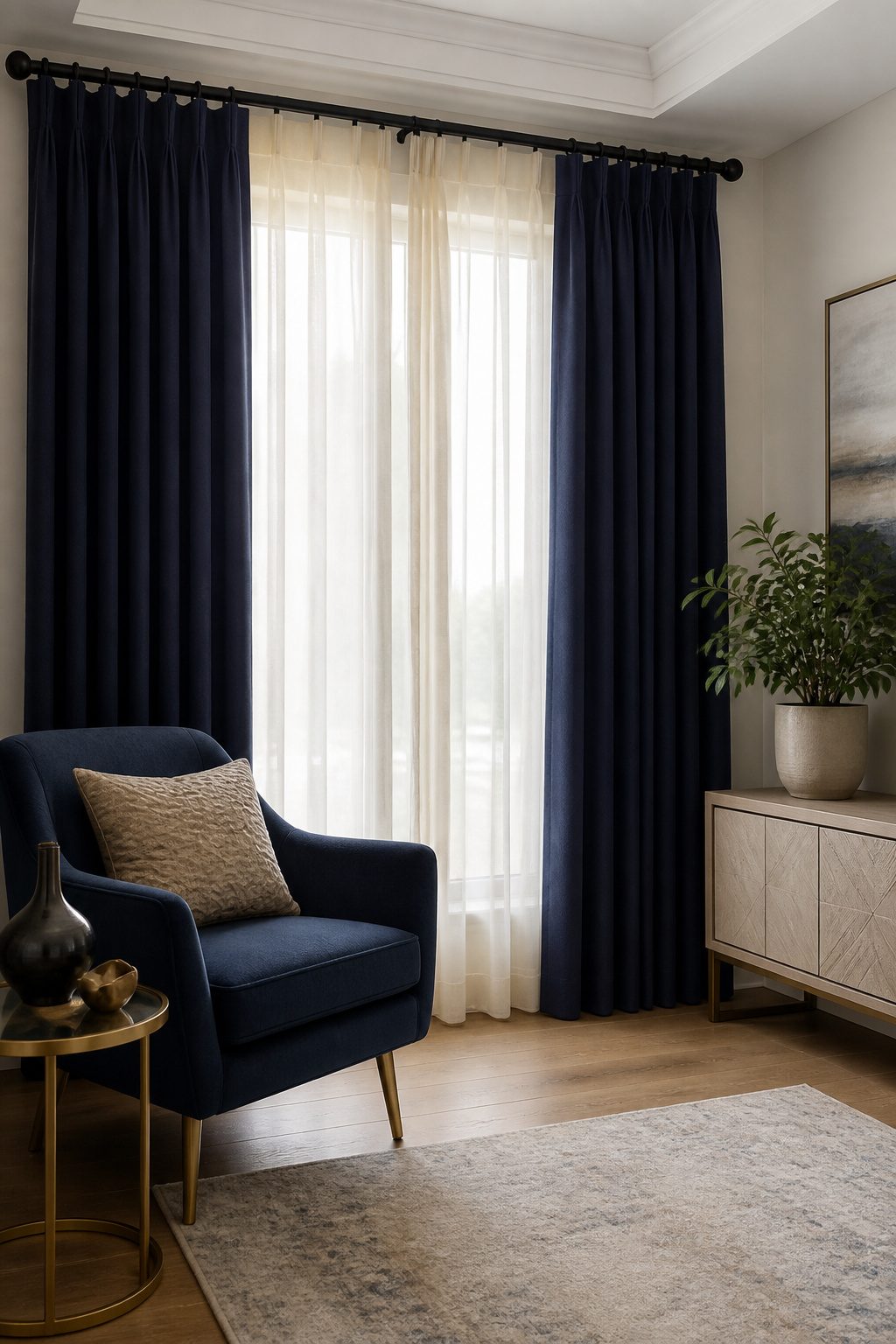
Sheer fabric and drape fabric do different jobs, and that difference is the whole point. A lightweight voile or linen sheer filters daylight and softens the view without blocking it.
Velvet, brushed cotton, or a heavier linen draped in front adds weight, warmth, and the ability to close the room off completely. The contrast between airy and substantial is what makes layering read as intentional rather than accidental.
Color mixing works best with one anchor and one accent. Navy or charcoal blackout panels against soft white sheers gives you that contrast without fighting for attention.
If you want pattern, put it on the layer that faces the room: solid sheers behind, patterned drapes in front when the walls are already quiet.
Pattern on the sheer itself tends to wash out when light pours through, so a self-patterned weave reads better than a printed one.
Matching length matters more than matching material. Both layers should kiss the floor.
A sheer that floats while the drape pools, or vice versa, breaks the line and makes the window feel smaller. The fabric weights can differ completely; the hemline should not.

✔Product Content: 50 x white curtain slider hooks, Size (L*W*H): 1-1/4” x 7/16” x 1/4”. The quantity is enough to meet your daily needs.

Package content: there are 100 pieces traverse rod slides in total, which measure 1.2 x 0.5 inches, enough quantities for meeting your replacing needs

PERFECT FIT, SMOOTH GLIDE – These roller carriers are the same ones that came with your EverTrack Curtain Track, so you know they’ll work great.
Single Rod Workarounds
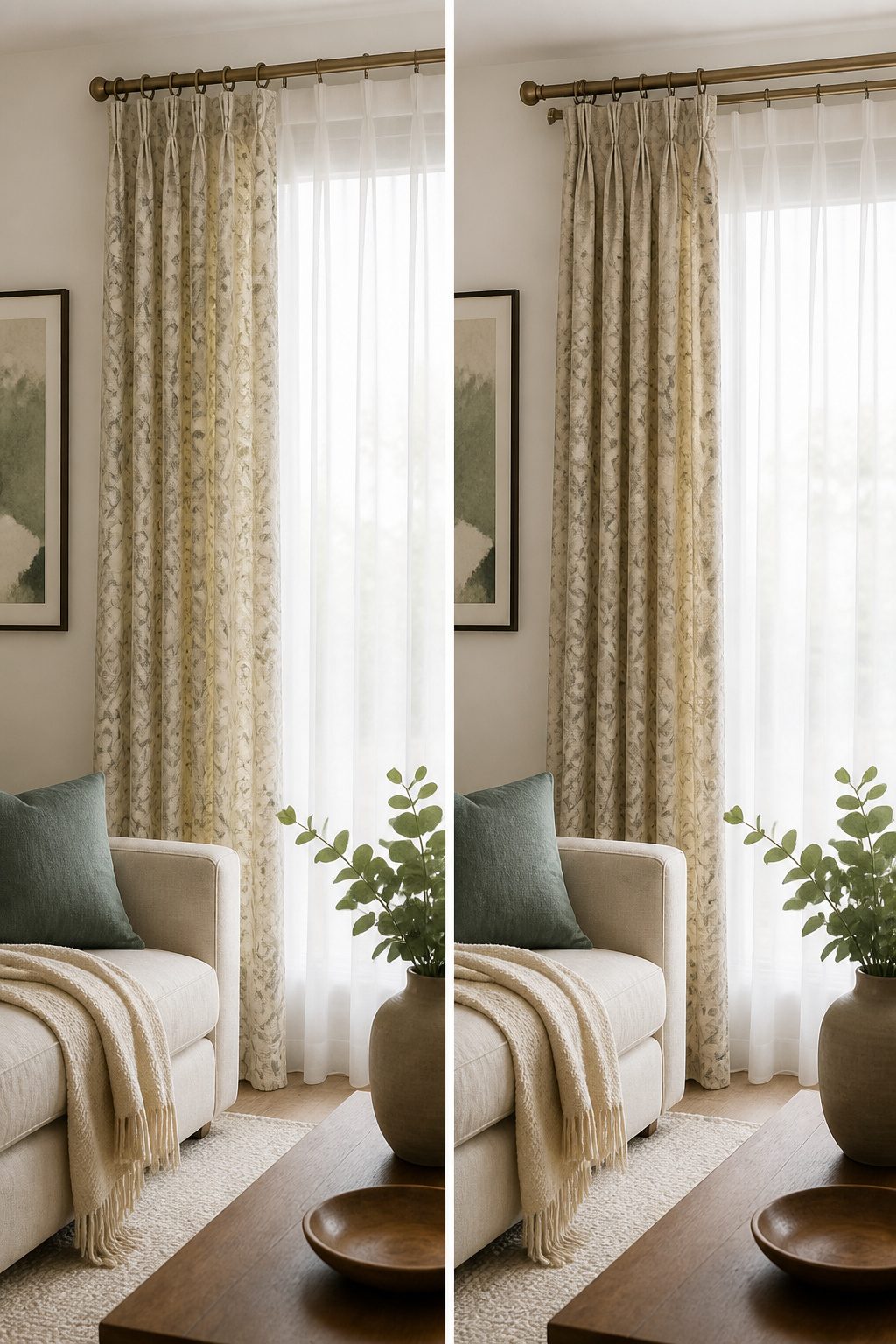
Ring clips or a combo panel will let you hang sheer and curtains together on a single rod, but the compromise is real.
With one rod, both layers move as a unit. You cannot slide the drapes open for morning light while leaving the sheers closed for privacy, which is usually the whole point of layering in the first place.
A combo panel, where sheer fabric is sewn directly onto an opaque curtain, has the same problem. It looks layered, yet you lose independent control over light and privacy.
The double rod exists for a reason.
Two separate layers on two rods give full functionality for each, plus the depth that makes the look work from the street. For anyone mid-project with a free weekend, the extra hardware is worth the twenty minutes of install time.
Frequently Asked Questions
What is the proper way to hang sheer curtains with drapes?
Use a double curtain rod with sheers on the inner rod and drapes on the outer rod.
The inner rod sits closest to the window glass so the sheers diffuse daylight and provide daytime privacy, while the outer rod carries the heavier drapes you draw shut for full darkness and complete privacy after sunset.
This setup keeps both layers independent so you can open the drapes for morning light while leaving the sheers closed.
Do the sheers and drapes need to be the same length?
Yes, both layers should finish at the same length for a polished look.
Matching hem to hem reads as intentional even when only the sheers are doing the work, while a sheer that stops short of the floor while the drapes pool looks like a measuring mistake.
The double rod makes this easy to get right.
Can I hang sheers and drapes on a single rod?
You can, but it is not recommended because you lose the main benefit of layering. With one rod, both layers move as a unit, so you cannot slide the drapes open for light while keeping the sheers closed for privacy.
Ring clips or sewn-together combo panels have the same limitation. The extra hardware for a double rod takes about twenty minutes to install and gives full independent control over light and privacy.