Blinds for door glass are mounted treatments sized to fit the narrow panels and moving frames that standard window hardware cannot accommodate.
The catch is the door itself: every swing, slide, or dog scratch tests the hardware more than any stationary window.
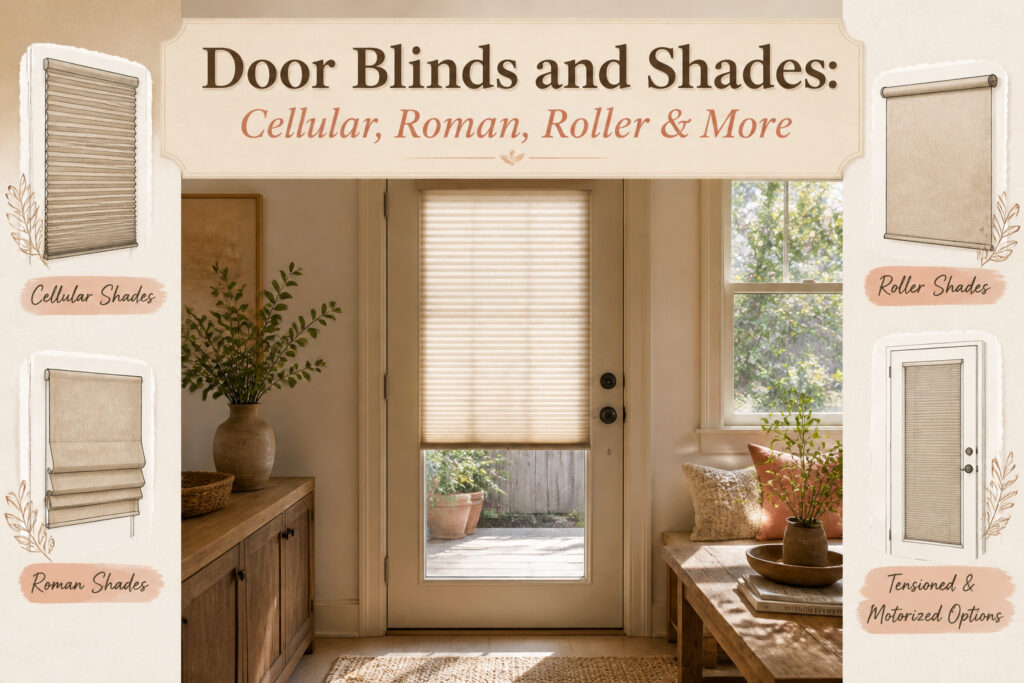
Hunter Douglas alone makes over 330 roller fabrics for these, but the real decision is whether you pay extra for tensioned or motorized systems that keep the shade from slapping the frame each time someone walks through.
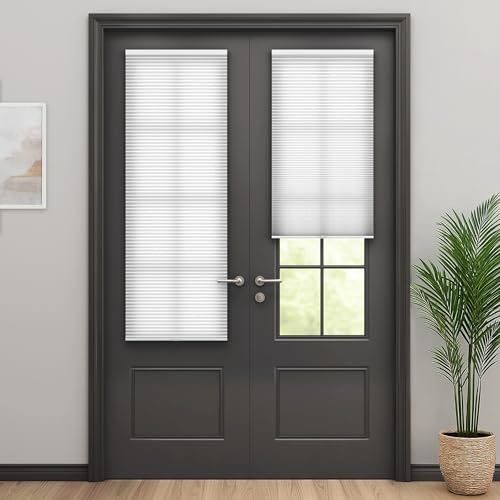
Cellular Shades for Doors
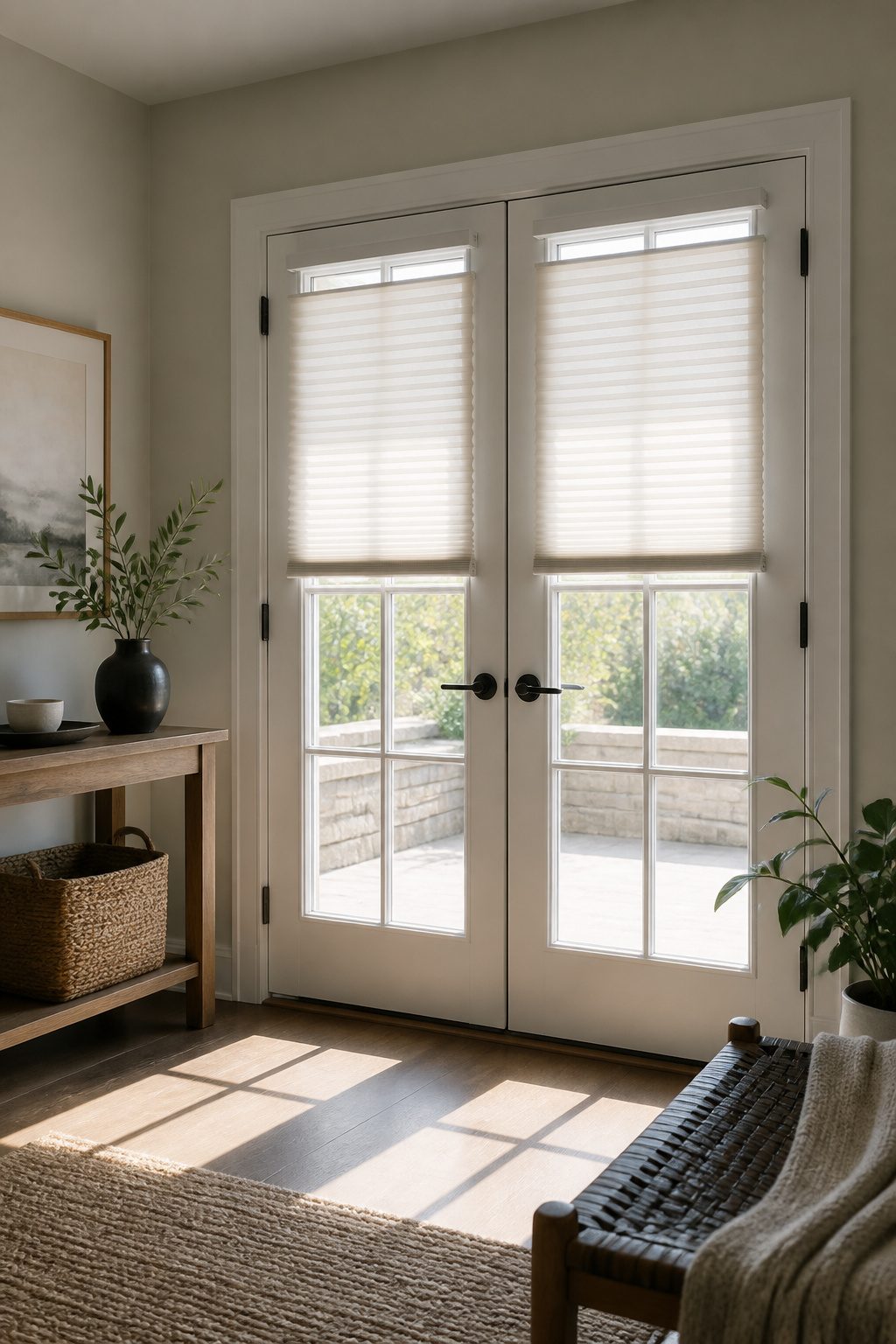
Cellular shades owe their insulation to the honeycomb pockets that trap air between the door and the room.
That trapped air layer slows heat transfer enough to matter on a south-facing entry door or a set of French doors that bake all afternoon.
The shades compress to almost nothing when raised, which keeps the glass clear when you want it, and the honeycomb structure itself provides privacy even in a light-filtering fabric.
For doors people actually use, the cordless option handles traffic better than anything with dangling cords.
No cord means nothing for kids or pets to get into, and the shade won’t slap against the door or tangle each time someone passes through.
I would not put a corded cellular on a door I opened twice a day, let alone one the dog scratches at.
French doors and entry doors with sidelights take the standard horizontal cellular without trouble; the narrow width of a sidelight is exactly the shape these shades suit.
Sliding glass doors get their own treatment, a vertical cellular that runs side to side, and that belongs in its own discussion.

WHAT YOU GET: A SINGLE SHADE (1 Pack) – Each unit comes with full mounting kits: strong adhesive foam tape for a no-drill, damage-free setup (ideal for renters), plus brackets and screws for a permanent drill-mounted installation. Choose the method that works best for you
Product Size: 25" W x 70" H, adjustable length from 0 to 70" L. Make sure your window width is at least 25 inch or larger for an inside mount. For OUTSIDE MOUNT: Blinds width is recommended to be 1-4 inches wider than actual window width for better light blocking. Please read the picture to learn the light gap may happen on the window.

Product Size: 24" W x 78" H, adjustable length from 0 to 78" L. Make sure your window width is at least 24 inch or larger for an inside mount. For OUTSIDE MOUNT: Blinds width is recommended to be 1-4 inches wider than actual window width for better light blocking. Please read the picture to learn the light gap may happen on the window.
Roller Shades for Doors
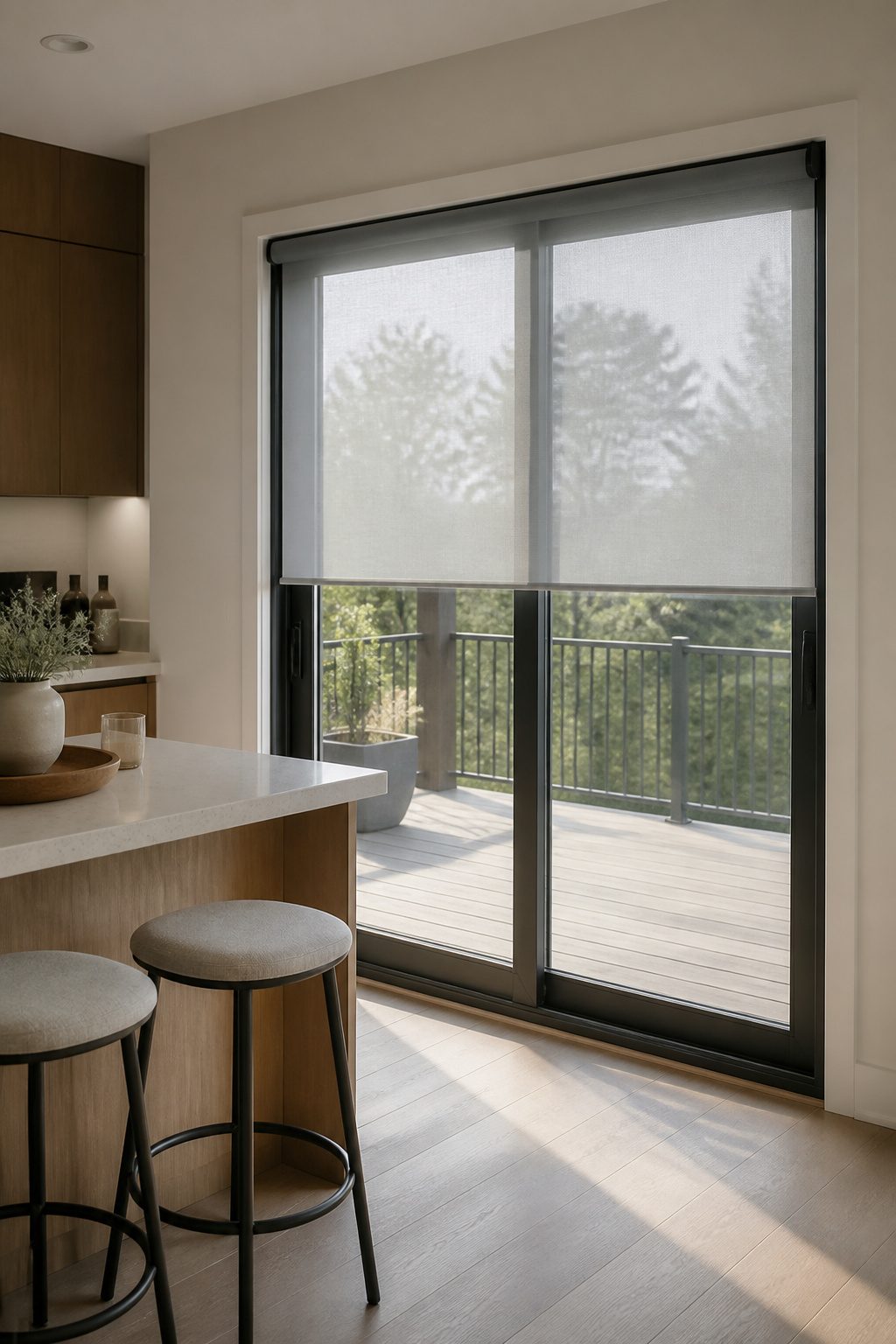
Roller shades sit almost flush against the glass, which matters more than you might think until you try walking through a sliding door that keeps snagging its own shade.
That slim profile is what makes them workable where bulkier treatments become a daily annoyance.
Hunter Douglas Designer Roller Shades carry over 330 fabric options running sheer to blackout, so the same hardware works whether you want filtered afternoon light or a room you can sleep in past sunrise.
The real decision for doors is the operating system. Standard cordless or chain-driven shades swing when the door moves, which gets old fast on a high-traffic slider.
Tensioned versions hold the fabric taut against the frame, and motorized ones eliminate dangling parts entirely. Either way, you’re paying for hardware that keeps the shade in place, not just fabric that looks right in the sample book.
Product Size: 24" W x 78" H, adjustable length from 0 to 78" L. Make sure your window width is at least 24 inch or larger for an inside mount. For OUTSIDE MOUNT: Blinds width is recommended to be 1-4 inches wider than actual window width for better light blocking. Please read the picture to learn the light gap may happen on the window.

【ENVIRONMENTALLY FRIENDLY RECYCLABLE MATERIAL】Persilux blackout cellular shades is made from recycled materials, which is a great way to continue your eco-friendly lifestyle. Instead of using all new materials to create these blinds, you can have peace of mind that you're giving materials a new life (image 3).They come in multiple fabric colors as light filtering or blackout. Special honeycomb structure offers features such as energy saving & thermal insulation & noise reduction.
Product Size: 22" W x 78" H, adjustable length from 0 to 78" L. Make sure your window width is at least 22 inch or larger for an inside mount. For OUTSIDE MOUNT: Blinds width is recommended to be 1-4 inches wider than actual window width for better light blocking. Please read the picture to learn the light gap may happen on the window.
Roman Shades for Doors
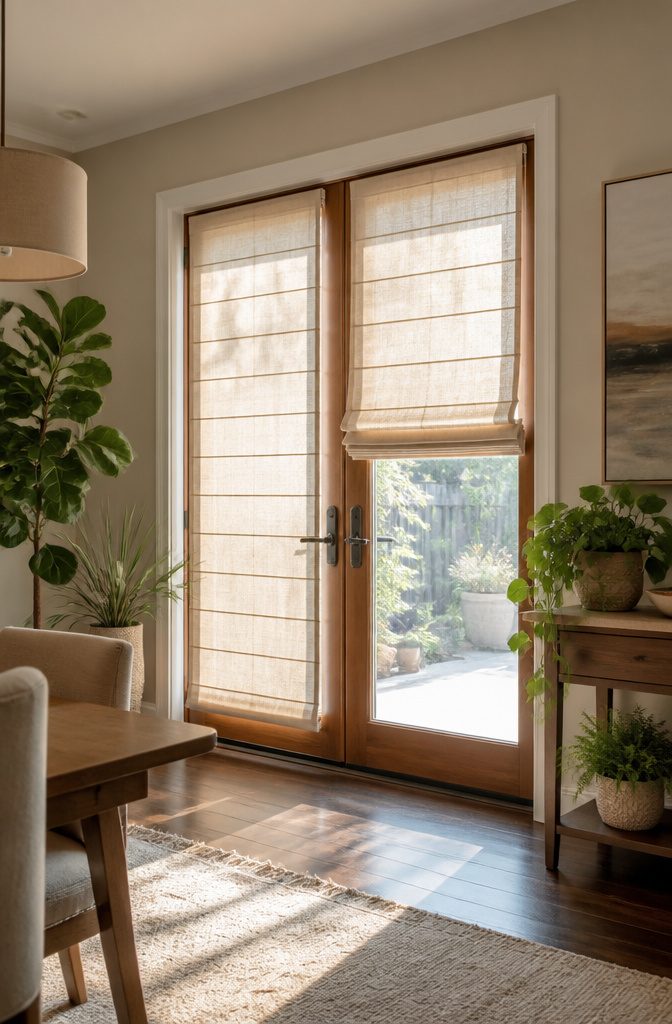
Roman shades bring a tailored softness that hard blinds can’t match, with fabric folds stacking evenly as they rise and settling into neat horizontal lines when lowered.
The layered look reads formal without feeling stiff, which is why it works on a front door sidelight or a set of French doors off a dining room where you still want some presence.
The folded fabric at the top needs clearance, and this is where a door installation differs from a window.
A standard Roman in the fully raised position leaves a stack several inches deep. On a door that swings inward, that stack can block the handle or stop the door from opening fully if the shade mounts too low.
Measuring from the top of the frame down to the hardware, not just the glass, keeps the stack above the door’s arc.
Custom sizing matters more here than with most treatments. Doors vary in height and width in ways windows don’t, and an off-the-shelf Roman cut to approximate size gaps at the edges or overlaps the trim.
Ordering to the exact door dimensions gets you the clean fitted look that makes the formality worth the extra cost.

【Excellent Material】Made of imported 100% Polyester. Light filtering, good ventilation, anti-static, dust-proof and durable. Dual-layer fabric for daylight filtering and full night privacy.

【Linen Fabrics】Made from high-quality linen fabric, our blackout shades are designed to be soft and skin-friendly, providing full coverage to block out light in your home. Perfect for creating a cozy and peaceful atmosphere in any room. The fabric is precisely cut with a laser without any rough edges. Linen fabric is predominantly made from natural linen fibers, which are completely natural and odor-free, providing you a more comfortable and enjoyable environment.

Fabric Vertical Shades: Our modern version of classic cordless fabric vertical shades offer a contemporary look with easy operation. They are alternative to vertical blinds, sliding panel blinds, or extra wide pinch pleated curtains.
Plantation Shutters for Doors
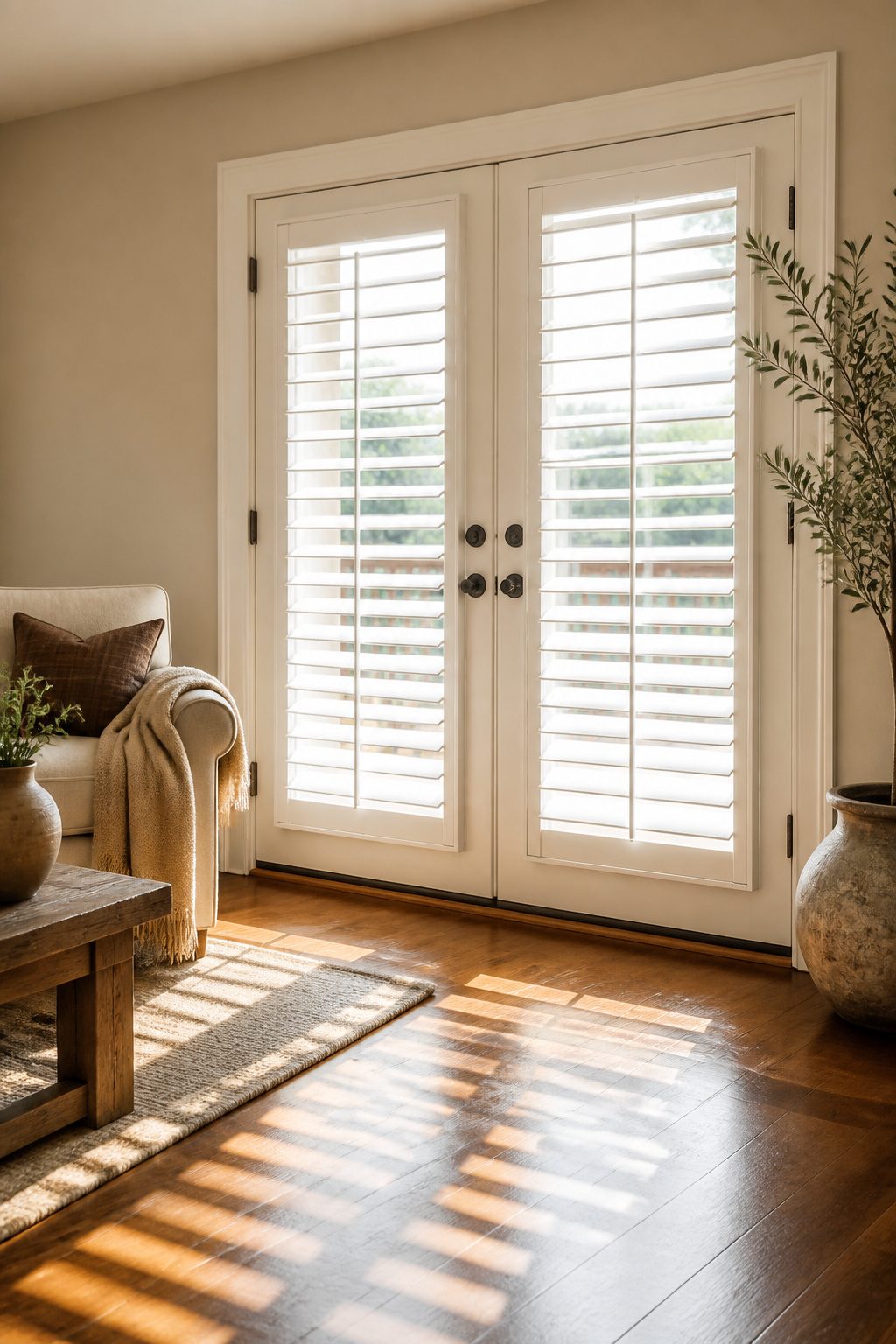
Solid louvers set in a real frame make plantation shutters the one door treatment I would trust in a house with kids running through.
The wood or composite slats take a knock without bending, and the whole assembly is built to be opened and closed daily without complaint.
Where the frame mounts matters: on French doors, attaching directly to the door itself keeps the surrounding trim intact and lets the panels swing with the door rather than blocking it.
Hinged panels fold back for full door use when you want the opening completely clear.
A bi-fold track system needs a couple feet of clearance around the door to open like a fan; tight spaces call for a bypass track where panels slide past each other, though you can only open one side fully at a time.
In hot climates or heavy sun, faux-wood composites resist warping and cracking better than real wood, a distinction that matters after a few summers of direct exposure.

100% Blackout Roller Shade: Made of polyester fabric coated with blackout backing. Blocking out 100% light for complete privacy, light control and UV protection for bedrooms, children’s rooms and movie rooms. Excellent for deeper and longer sleepers.

【Linen Fabrics】Made from high-quality linen fabric, our light filtering shades are designed to be soft and skin-friendly, transparent to light, opaque to sight. Perfect for creating a cozy and peaceful atmosphere in any room. The fabric is precisely cut with a laser without any rough edges. Linen fabric is predominantly made from natural linen fibers, which are completely natural and odor-free, providing you a more comfortable and enjoyable environment.

Blind Size: 26" W x 70" H, exactly the size you will receive without any deductions. The clip buckle adds 2/5 inch on each side (total 4/5 inch). Due to potential light gaps from the clips after interior installation, we recommend exterior installations. If you choose interior installation, please note: window width > blinds width + 4/5 inch.
Add-On Blinds Between Glass
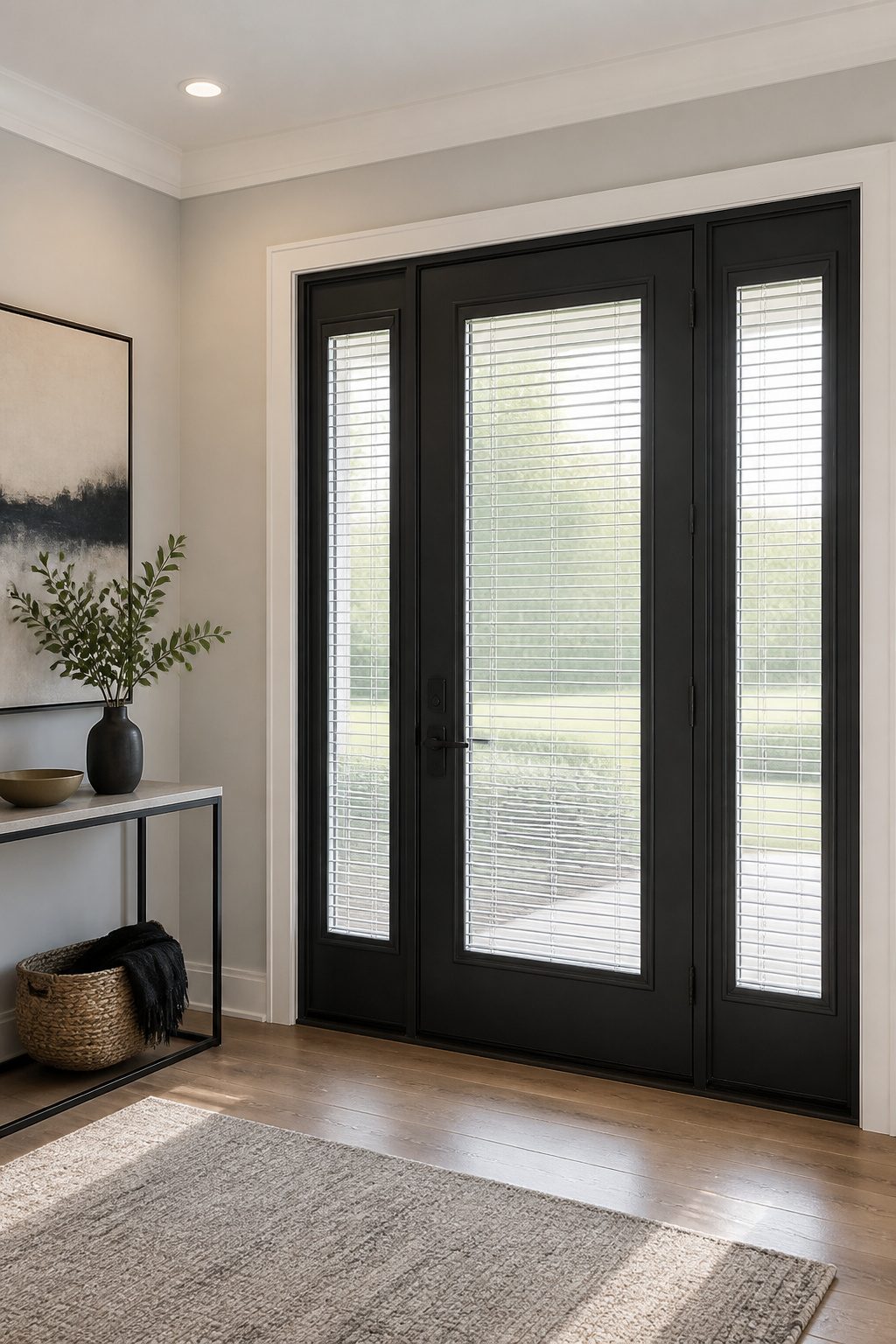
ODL’s Add-On Blinds seal the slats between two panes of glass, which means no cords dangling at toddler height and no dusting between slats ever again.
The unit mounts over your existing doorglass with a tempered safety glass pane on the outside, so the blinds themselves never bang or swing when the door opens.
The system comes in two standard sizes: half-view at 36 inches and full-view at 64 inches of glass height.
Installation runs under an hour with just a screwdriver, and ODL backs it with a five-year warranty. Raising or tilting the blinds happens through smooth fingertip sliders on the frame, not by touching the slats directly.
For homes with small children or pets, the enclosed design carries real safety certification worth checking for.
The only maintenance involves cleaning the outer glass like a normal window; once a year you unclip the side brackets, lift the unit off, and wipe the interior glass facing the blinds.
Someone helping makes that easier on the 64-inch full-view size.

INSTALL IN 1 MINUTE (FULL KIT INCLUDED) – Everything you need is in the box: 1 curtain panel, 1 matching sticky strap, 1 extra backup strap, and 1 instruction manual. Say goodbye to drills and holes. We use Upgraded Stronger Adhesive straps for a secure hold. Perfect for French doors, renters, and homeowners who want to protect their permanent fixtures. (Note: Wait 24h after sticking for best results).

🌸 100% BLACKOUT & PRIVACY PROTECTION: Perfect for nurseries, bedrooms, street-facing and sunny windows — blocks all sunlight and UV rays. No backing coating, dual-sided linen texture on both sides. Provides total darkness for better sleep and privacy, ideal for light-sensitive children and daytime rest.

FRENCH DOOR CURTAINS SET OF 2: Including 2 panels of premium french door curtains with 2 adhesive strips, the package includes all accessories and is shipped together, making it more cost-effective than buying 1 panel door curtain. The door curtains provide a complete, no-drill solution for front door glass, and back door glass. Featuring the same elegant color and soft linen-like texture on both sides, they cover french door glass or door windows for full privacy and a seamless look.
Vertical Cellular Shades for Sliding Doors
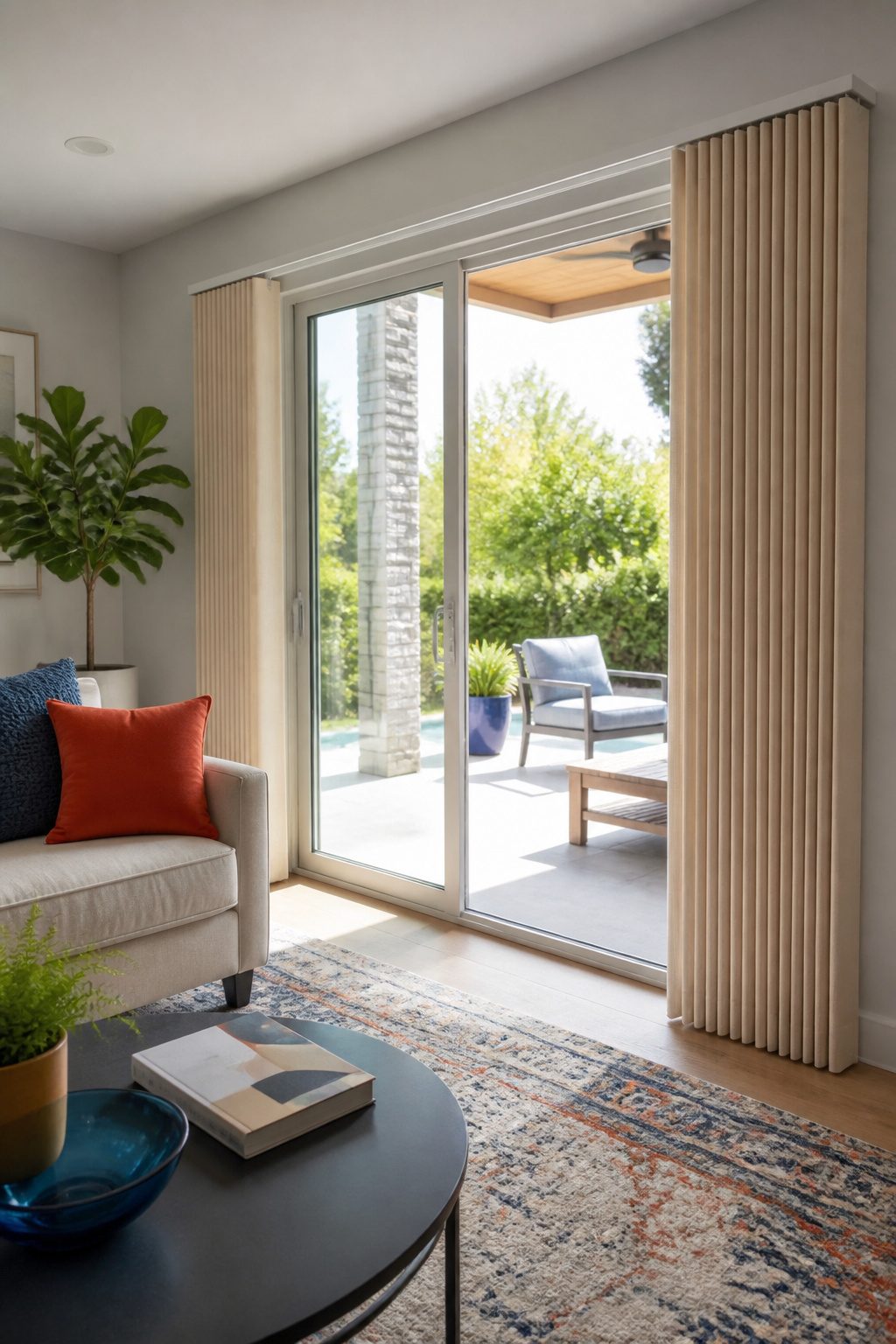
Vertical cellular shades solve the problem horizontal shades create on a slider: fabric bunching at one end every time you want through.
The panels open from the same side as the door itself, stacking tight to the jamb instead of blocking half the walkway. You keep the honeycomb cells that trap air, just oriented upright.
The track system runs the full header and sill, which matters more than I expected before I started reading into these.
Wide spans sag without it; the channels keep every panel aligned so the shade does not bow toward the glass or wander off its line. That rigidity removes the need for a bottom rail weighted by a chain or bar.
On a door handle that juts into the frame channel, anything swinging at knee height catches. With the panels captured top and bottom, nothing dangles to snag.
Fabric choices run the same range as horizontal cellular, from sheer to blackout.
The limitation is width per panel, so very large sliders need more seams. For most patio doors in standard tract housing, two or three panels cover the span without looking busy.

Product Size: 24" W x 78" H, adjustable length from 0 to 78" L. Make sure your window width is at least 24 inch or larger for an inside mount. For OUTSIDE MOUNT: Blinds width is recommended to be 1-4 inches wider than actual window width for better light blocking. Please read the picture to learn the light gap may happen on the window.
Product Size: 22" W x 78" H, adjustable length from 0 to 78" L. Make sure your window width is at least 22 inch or larger for an inside mount. For OUTSIDE MOUNT: Blinds width is recommended to be 1-4 inches wider than actual window width for better light blocking. Please read the picture to learn the light gap may happen on the window.

WHAT YOU GET: A SINGLE SHADE (1 Pack) – Each unit comes with full mounting kits: strong adhesive foam tape for a no-drill, damage-free setup (ideal for renters), plus brackets and screws for a permanent drill-mounted installation. Choose the method that works best for you
Measuring and Custom Fitting
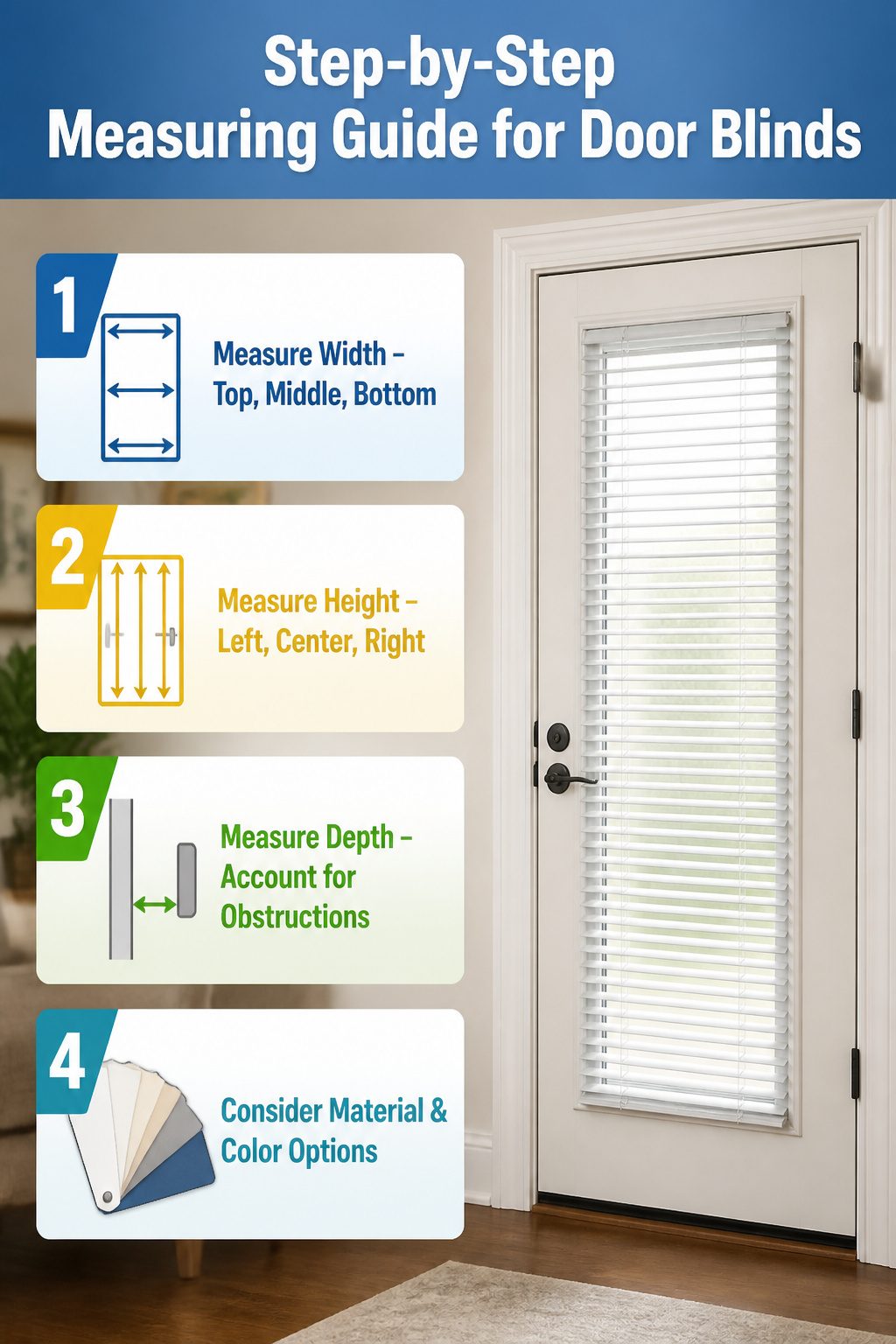
- Width comes first. Run the tape across the top, middle, and bottom of the glass or frame you’re covering, because doors settle out of square more often than they stay true. The smallest of those three numbers is what you order.
- Height goes the same way: left edge, center, right edge. The longest height is your number; a blind cut short leaves a gap that light finds immediately.
- Depth matters for mount type. Inside-mount brackets need enough clearance for the mechanism and any handle sweep, so measure from the window plane to the nearest obstruction. Outside mount needs flat trim or wall space around the frame.
- Materials and color range run wider than the big-box shelf suggests. Vinyl holds up to humidity and wiping; fabric softens the look but asks more of your cleaning routine. Whites and off-whites ship fastest; anything custom-dyed adds weeks and rarely fits a weekend timeline.
WHAT YOU GET: A SINGLE SHADE (1 Pack) – Each unit comes with full mounting kits: strong adhesive foam tape for a no-drill, damage-free setup (ideal for renters), plus brackets and screws for a permanent drill-mounted installation. Choose the method that works best for you
Product Size: 12" W x 70" H, adjustable length from 0 to 70" L. Make sure your window width is at least 12 inch or larger for an inside mount. For OUTSIDE MOUNT: Blinds width is recommended to be 1-4 inches wider than actual window width for better light blocking. Please read the picture to learn the light gap may happen on the window.

【Cellular Shades Blinds】The newly upgraded aluminum alloy framed curtains have a longer lifespan and are easier to open and close compared to frameless curtains. We provide a separate sealing strip for connecting the curtain frame and the wall, which enables close to 100% blackout.
Light Control and Privacy Choices
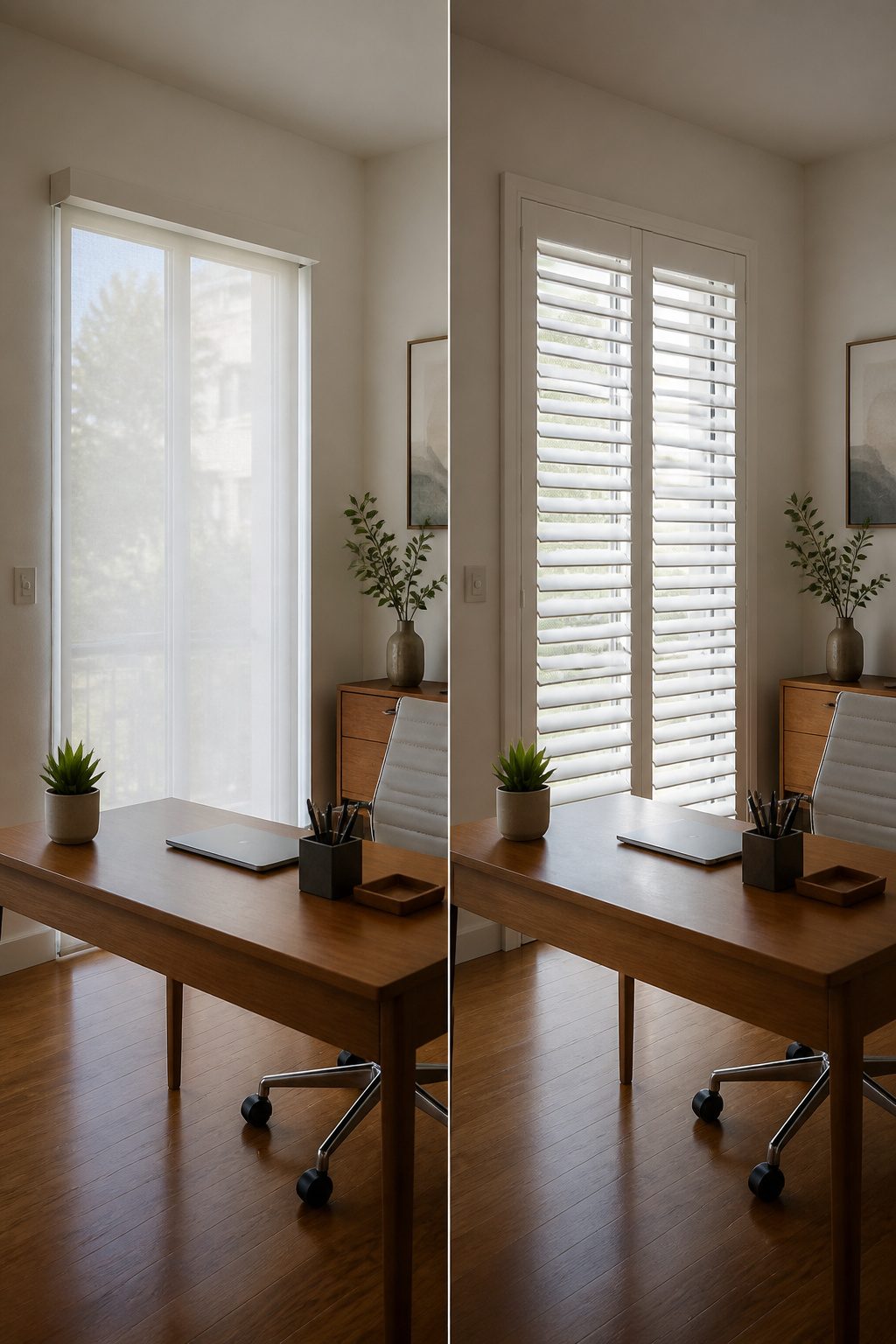
Sheer roller shades filter daylight into something you can read by, but after dark the effect reverses.
Anyone standing outside can see straight in once the lights go on. Blackout cellular shades solve that with complete opacity, though the trade is a wall of fabric that reads as blank from either side.
For a front door with glass, that can feel like living in a cave by four in the afternoon.
The between-glass option, like ODL’s Add-On Blinds, gives the cleanest control. The blinds sit sealed behind tempered safety glass, adjusted with fingertip sliders for height and tilt.
No cords bang against the frame when the door opens, and dusting is not part of the maintenance schedule. The tilt lets you angle light upward in the afternoon while keeping the sightline blocked from eye level.
Shutters with working louvers split the difference.
A partial tilt catches daylight and bounces it toward the ceiling while the angled slats still block a direct view in. The gap between slats is the weak point; at certain angles, someone determined can see a sliver through.
For sidelights, vertical sheers with a fabric face soften the light during the day and close to opaque vanes at night.
The narrow shape of most door windows works better with that vertical layout than with a shade that stacks thickly at the top.
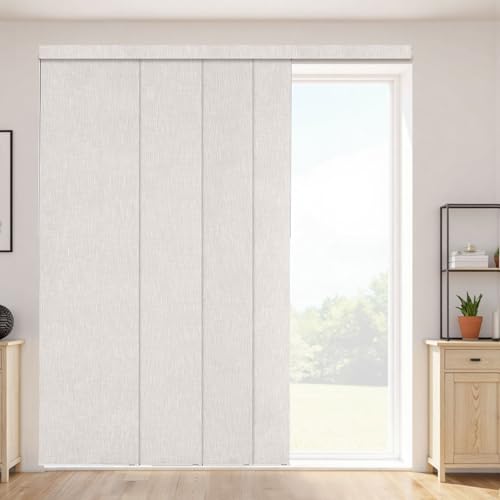
High-Quality Polyester Fabric: Made from premium polyester, our panel track blinds provide exceptional strength and durability. They endure fraying and tearing, stay fresh, and are built to last – a reliable choice for your home

FITS SLIDING DOOR OPENINGS 46–86 INCHES WIDE: Includes 4 fabric panels, each 23" wide × 96" tall, covering 92" total fabric width. Track rail adjusts 46"–86" to fit most sliding glass doors and patio doors. Trim panel height with scissors for a custom fit—panel width is fixed and cannot be trimmed. For openings wider than 86", install two sets side by side.

DOUBLE-SIDED LINEN-LOOK FABRIC, TRUE 100% BLACKOUT: Unlike ordinary roller blinds with cheap coated backs that peel over time, our shades use identical cationic-dyed linen-look fabric on both sides. An inner composite black film delivers genuine 100% light blockage — no surface coating, no ugly reverse side. Laser-cut edges ensure zero burrs. Blocks harsh sunlight and UV rays, protects privacy, and elevates any room decor.
Installing Door Blinds Yourself
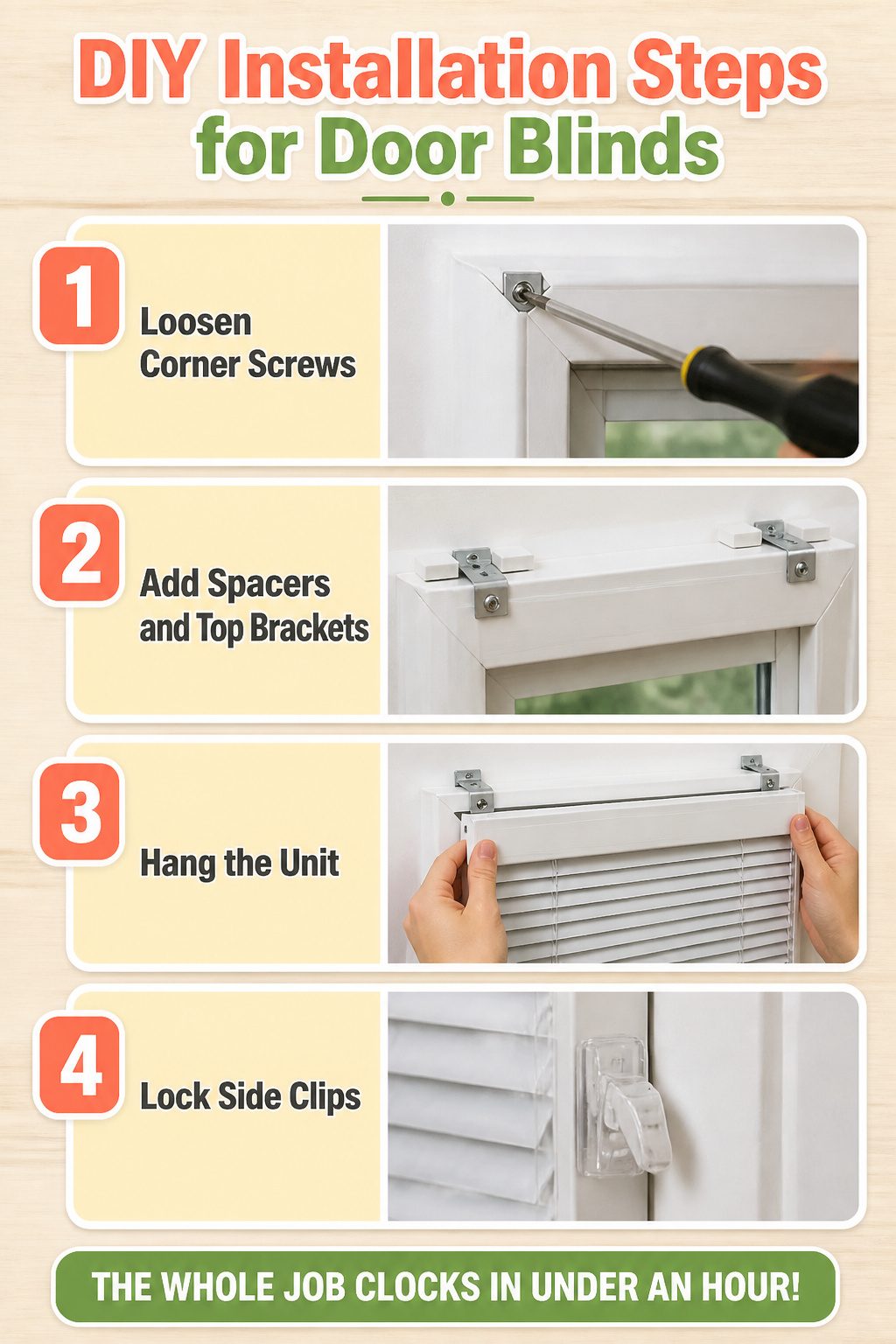
Most door blinds install with basic tools, often just a screwdriver.
The ODL Add-On Blinds system is designed to go up fast on raised frame doors: loosen the corner screws on your existing frame, add the provided spacers and top brackets, hang the unit, and lock the side clips.
The whole job clocks in under an hour, which makes it one of the few door projects that actually fits between breakfast and lunch.
That speed assumes a straightforward surface mount. Track systems or anything involving in-glass replacement push most people toward a pro.
Budget Blinds offers professional installation for those who want it, and the money starts to make sense once you’re dealing with precise measurements or drilling near door glass where a slip costs you the whole panel.
DIY rewards the simple add-on; the integrated systems punish impatience.

【Excellent Material】Made of imported 100% Polyester. Light filtering, good ventilation, anti-static, dust-proof and durable. Dual-layer fabric for daylight filtering and full night privacy.
【Linen Fabrics】Made from high-quality linen fabric, our light filtering shades are designed to be soft and skin-friendly, transparent to light, opaque to sight. Perfect for creating a cozy and peaceful atmosphere in any room. The fabric is precisely cut with a laser without any rough edges. Linen fabric is predominantly made from natural linen fibers, which are completely natural and odor-free, providing you a more comfortable and enjoyable environment.

【Quality service】We will use the good logistics provider for delivery, and provide 24 months warranty service, if there is any problem with the product, please feel free to contact us, our most professional after-sales team will solve your problem by the best way.
Frequently Asked Questions
What types of door blinds are available for my front door?
Cellular shades, roller shades, Roman shades, plantation shutters, and add-on blinds between glass all work for front doors.
Each handles light, privacy, and traffic differently: cellular shades insulate through honeycomb pockets, roller shades sit flush against glass, Roman shades bring a tailored fabric look, shutters hold up to daily knocks, and between-glass systems seal slats behind tempered safety glass.
Are door blinds suitable for sliding glass doors?
Yes, though horizontal treatments bunch at one end and block the walkway. Vertical cellular shades solve this by opening from the same side as the door, stacking tight to the jamb while keeping the honeycomb insulation.
Tensioned or motorized roller shades also work, since standard cordless versions swing and tangle on high-traffic sliders.
Can door blinds be custom-fitted for French doors?
Custom sizing is available and often necessary. French doors vary in height and width in ways windows do not, and off-the-shelf shades gap at the edges or overlap trim.
For Roman shades specifically, measuring from the top of the frame down to the hardware keeps the folded fabric stack above the door’s swing arc so it does not block the handle.
How do door blinds enhance privacy and light control?
Sheer fabrics filter daylight but reverse to full visibility after dark; blackout cellular shades block all light and sightlines but read as blank walls.
Shutters with working louvers let you angle light toward the ceiling while blocking direct views. The between-glass option, like ODL’s Add-On Blinds, adjusts height and tilt through fingertip sliders for clean control without cords or dusting.
Are door blinds durable enough for high-traffic areas?
Treatments built for doors handle frequent use. Plantation shutters take knocks without bending and open daily without complaint.
Cordless cellular shades eliminate dangling cords that tangle or slap against the door. Tensioned roller shades and track-mounted vertical cellulars keep fabric captive so nothing snags on handles or catches at knee height.