Rustic window treatments are window coverings built from natural materials like wood, linen, and woven grasses that carry the imperfect, lived-in character of farmhouse spaces.
The catch is that the same quality that sells the look, moisture vulnerability in real wood or light bleeding through loose weaves, also determines where each option can actually survive.
Six to eight weeks of lead time for custom woven shades is the norm, and measuring wrong on bracket depth turns a clean inside mount into a visible gap.
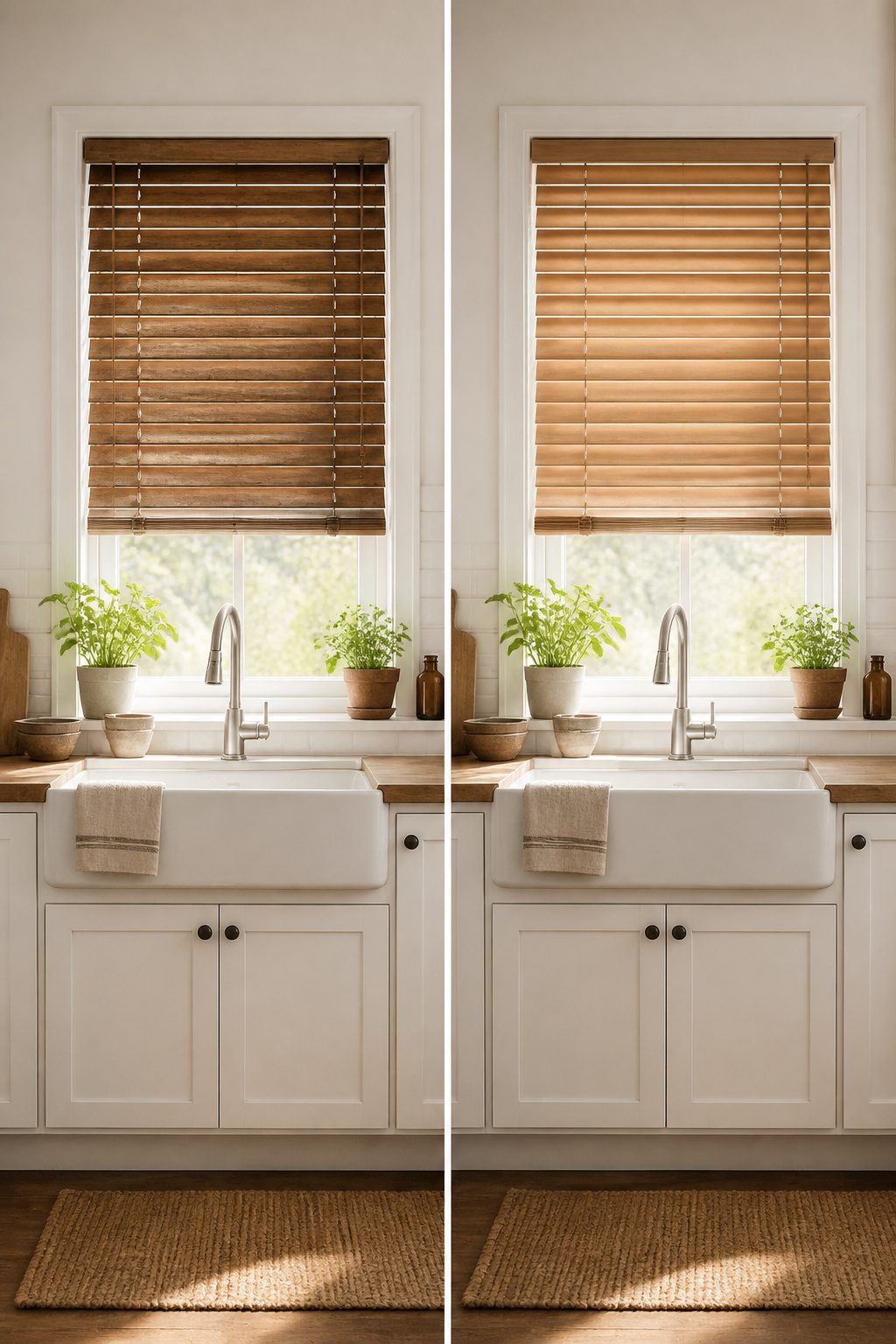
1. Wood Blinds
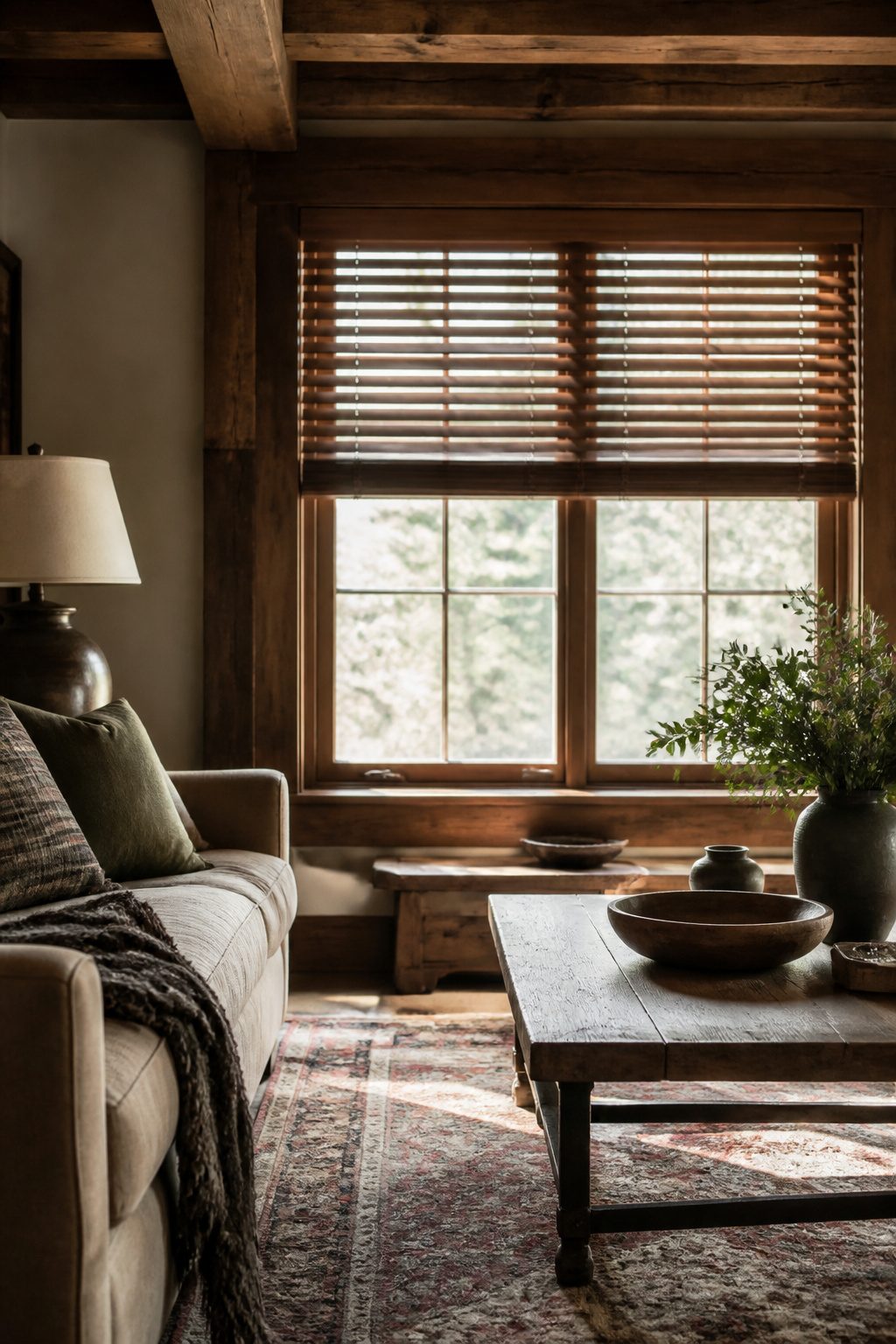
Real wood blinds carry the grain patterns and warm finishes that set the baseline for farmhouse style.
The natural variation in each slat gives a room the imperfect, lived-in character that reads as rustic rather than rustic-themed. Stained wood in particular, rather than painted, lets that character show through.
Different slat sizes and custom color-matching let you tie the blinds to existing floors or trim instead of letting them float as an afterthought.
In a living room or home office, the wood tones echo shelving and furniture in a way that builds cohesion without matching too carefully.
The catch is moisture and heat. Real wood warps in bathrooms, above kitchen sinks, or on south-facing windows that bake all afternoon.
For those spots, the farmhouse look survives better in materials built for it. Where the conditions stay moderate, though, wood blinds block UV rays completely when closed and adjust easily for changing light.
That combination of function and straightforward warmth is why they remain the starting point most people picture when they think rustic window treatments.

Solid Wood Venetian Blinds: Upgrade your home decor with the organic luxury of authentic timber. Crafted with premium 2 inch slats, these wooden window blinds outlast cheap plastic faux alternatives, highlighting a stunning natural grain and rustic texture

✅ ! ! ! Important Note: - This wooden blind is 22.5" wide, and the actual width you receive will also be 22.5". Suitable for windows with widths from 22.8" to 23.7". Please measure carefully—refer to the picture description to ensure a perfect fit. Add 3-5" to the width and height for installation outside the frame.

Waterproof Faux Wood Aluminum Blinds: Designed with faux wood blinds style and durable aluminum blinds structure, these wood grain metal slats are moisture resistant, easy to wipe clean, and ideal for bathrooms, kitchens, laundry rooms and everyday indoor windows
2. Faux Wood Blinds
Faux wood blinds carry the grain and warmth of real wood without the warping that humidity brings.
The material shrugs off heat and moisture, which makes a kitchen above the stove or a bathroom with a daily shower a place where real wood would swell and crack within a season.
I have put them in both rooms for exactly that reason, and the difference in cost matters when you are dressing five or six windows on a tight weekend budget.
The look is close enough that the trade registers only when you tap the slat and hear that slight hollow give. For a rustic window treatment that has to survive actual living, the moisture resistance wins over authenticity every time.

IMPORTANT! - This blind is 34.5" wide to allow for mounting the blind inside a 35" wide window. Your blind will arrive to you exactly 34.5" wide. Our 2 Inch Faux Wood blinds are designed for a wide variety of window sizes and styles. Sizes stated within the product descriptions are listed by WIDTH then HEIGHT. See measuring instructions to ensure best fit.
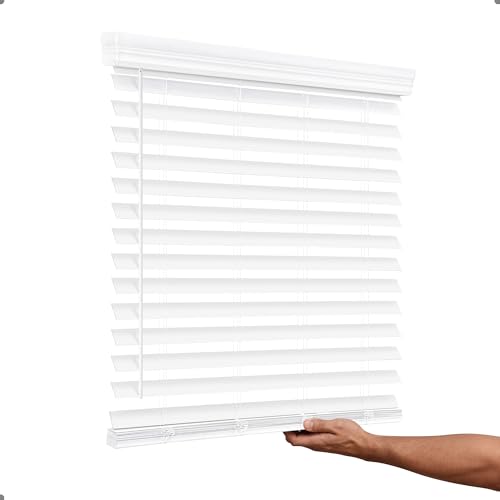
IMPORTANT SIZE NOTE – Precision Fit for Your Window This wood blind arrives exactly 33.5 inches wide, expertly crafted for a snug inside mount in a standard 34-inch window frame. Measure carefully before ordering – all sizes are "Width x Height". For outside mount, refer to our guide to select the ideal size. Perfect for window blinds for home and indoor use

Smooth Wood-Look Slats (No Grain Texture) - 2" composite faux-wood slats with a clean white finish that complements modern, transitional, classic or minimalist décor. Smooth, low-maintenance surface with no wood-grain texture.
3. Woven Wood Shades
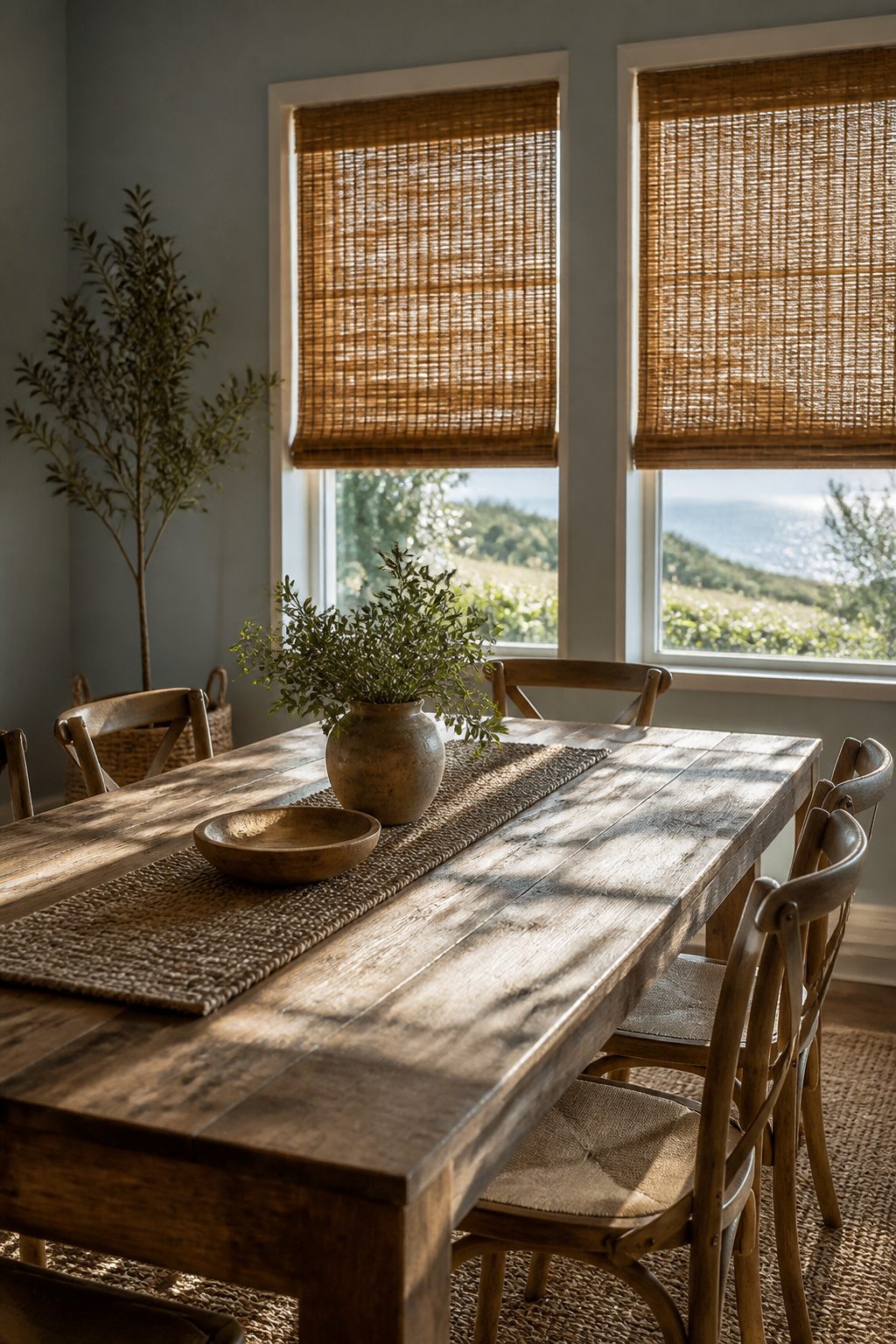
Grass, jute, and reed shades carry a texture you do not get from anything manufactured.
The weave is loose enough that sunlight comes through in patches, not beams, which softens a room in a way that reads rustic without forcing the farmhouse label.
What sold me on them was how that same texture drifts toward coastal; the material does not change, only what you hang around it.
The stack is thicker than fabric or vinyl, which matters more than I expected.
Inside mount them and the rolled material takes up real depth at the top of the window. I have seen the shade sit an inch or two lower than the frame line, blocking glass you thought would stay clear.
Outside mount fixes it, but only if you planned for the projection; the hardware sits farther out than standard brackets, so your trim or casing needs the clearance.
Liners and edge banding let you adjust for privacy or block more light, though adding either steps the shade away from that open, dappled look that makes the material worth using.
For a dining room or sunroom where you want glow without glare, the unlined weave is the point. Bedrooms need the liner, and the trade is accepting a heavier, more conventional shade.

100% Natural Bamboo: Our bamboo blinds are made of 100% premium bamboo material with a simple and elegant appearance. Effectively block harmful UV rays and offer semi private light control. Bamboo shades are suitable for a variety of decorative styles, bringing freshness and vitality to your room

① Natural Fabric: Natural shades are made of bamboo and other natural materials, like reed, grass, paper and jute; Unique texture creates a natural look and feel; Pairs well with most furniture and additional window treatments; Softly filters incoming light, additional liners available.

REAL WOVEN BAMBOO CONSTRUCTION: Authentic natural bamboo fibers create a warm, textured roman shade with genuine tonal variation in every panel. Adds organic texture to modern organic, boho, coastal, farmhouse, and rustic rooms at an everyday price.
4. Roman Shades
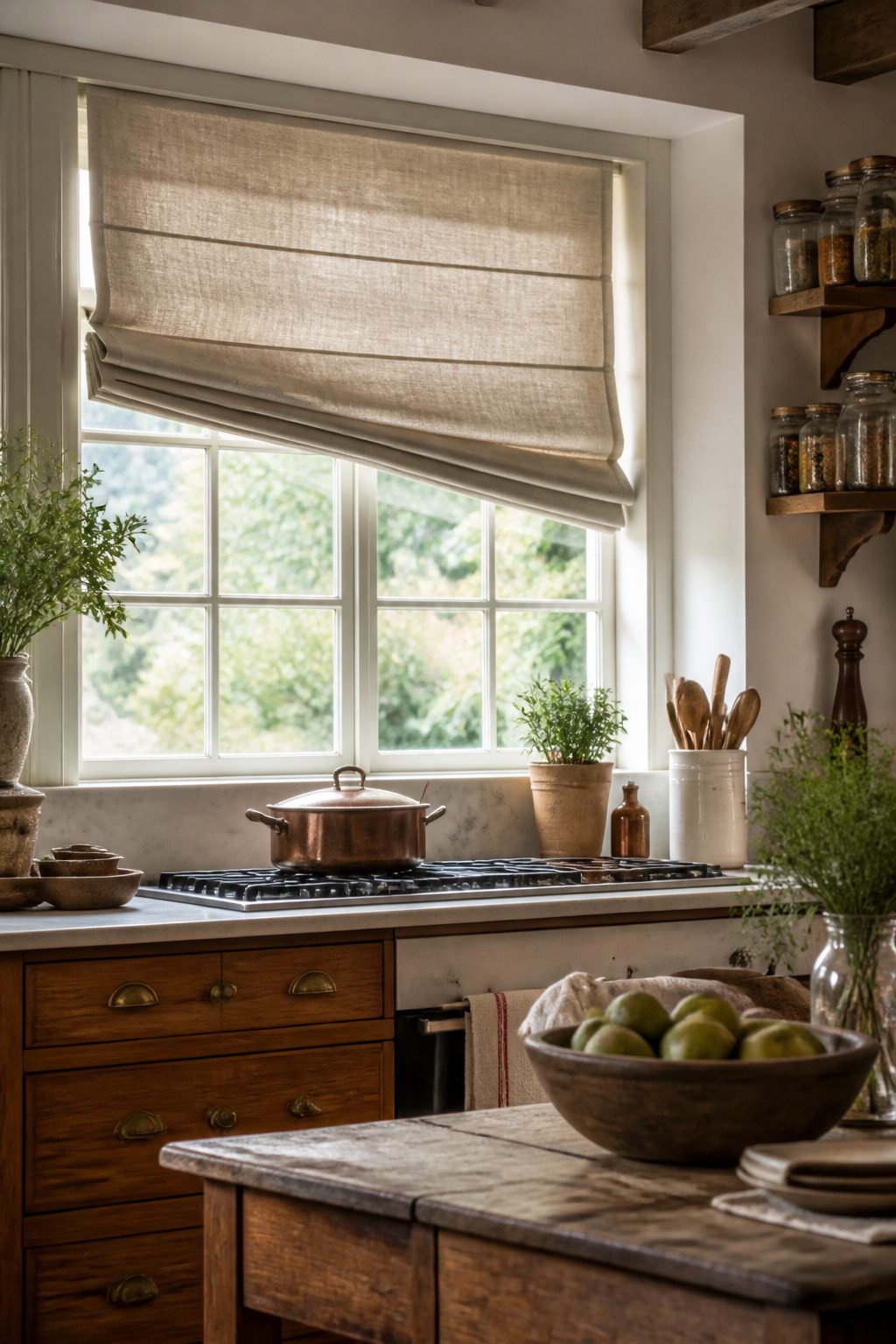
Linen or cotton Roman shades carry the rustic look through fabric choice rather than hardware drama.
The flat-fold and waterfall styles keep the profile clean, while the traditional pleat reads more cottage than farmhouse. What separates the shades that last from the ones that sag is the lining.
A lining too heavy for the face fabric will fight the fold every time the shade goes up, and within a season those neat stacks turn into slumped piles.
Light-filtering lining works with off-white or oatmeal linen because both fabrics have enough body to hold their shape without help from something stiffer.
I have watched the same off-white linen shade in a friend’s kitchen stay crisp for three years while a near-identical one in a bedroom, lined with blackout material for the sake of sleeping in, developed a permanent droop at the bottom fold.
The lining should match the weight of the face fabric, not the room’s light needs; solve darkness with a separate layer or accept that this particular window is not a Roman shade candidate.
For renters, the whole assembly hangs on a standard headrail that lifts off brackets in about thirty seconds, making it one of the few rustic options that travels with you without leaving screw holes to patch.

READY MADE: 1-piece printed lined tie up window curtain, measures 24.5” wide and 46.5” long, constructed with 3” Rod Pocket on top. Easy to install. Handmade with care – slight length variations (up to 0.5") are natural and not defects.

READY MADE: 1-piece printed lined tie up window curtain, measures 45” wide and 63” long, constructed with 3” Rod Pocket on top. Easy to install.

Ready Made: A package comes in 1 valance measuring 52 inch width by 20 inch length. Our faux linen valance features a 3 inch pole pocket to coordinate with most curtain rods. Adjustable ties with snaps can be freely switched to meet your needs for light.
5. Plantation Shutters
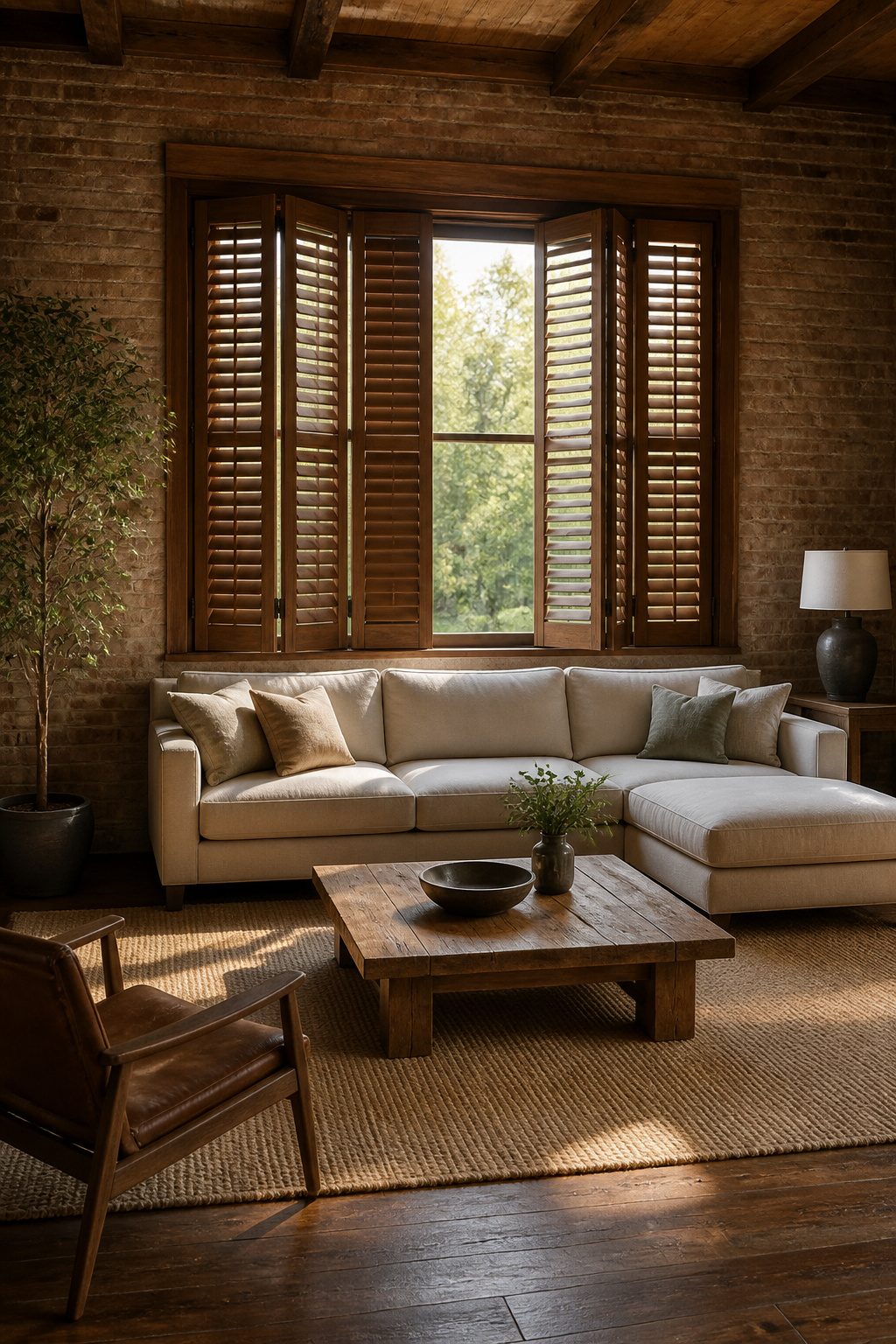
Wide-louver plantation shutters carry a furniture-like weight that can read either rustic or simply traditional, and the difference hangs on two choices: the finish and the slat width.
A natural wood stain on louvers broad enough to feel architectural leans farmhouse; the same profile painted crisp white reads as straight colonial. For the rustic effect the sources describe, warm stains and handcrafted-feeling finishes win over paint every time.
The catch is commitment. These are permanently installed, frame and all, which makes them a poor fit for renters or anyone who redecorates on impulse.
Wood shutters in particular add genuine beauty, but the cost jump from a roller shade or even a quality blind is significant enough that the choice needs to survive at least five years of looking at it.
In my own reading, the rooms where plantation shutters actually earn their keep are the ones already carrying rustic DNA: exposed beams, stone, brick. Set against drywall and standard trim, even the best stain can feel like costume jewelry.
Entryways, living rooms, and bedrooms get the nod most often, though that "no wrong answer" line from the manufacturers sounds generous once you’ve priced genuine wood.
Custom interior shutters in vinyl or alternative wood bring the look down somewhat, but they lose the warmth that makes the rustic reading work.
REAL WOVEN BAMBOO CONSTRUCTION: Authentic natural bamboo fibers create a warm, textured roman shade with genuine tonal variation in every panel. Adds organic texture to modern organic, boho, coastal, farmhouse, and rustic rooms at an everyday price.
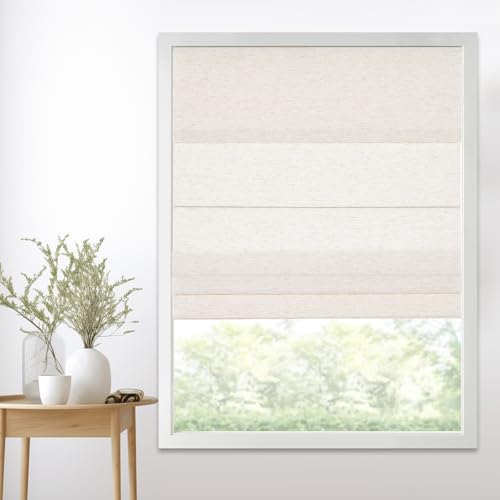
【How to choose the correct size】For example,your window size is 23”W x 72”H.INSIDE MOUNT:Window Width is Blind width. Blind Width=23"; Blind Height>=72".OUTSIDE MOUNT: Plus at least 4" is blind width and height, Blind Width=23"+4"=27"; Blind Height=76".【Pls Note】If you choose standard size,we won't take deduction,if you choose custom size,for inside mount,we will take 0.276" deduction on width,if you don't need the deduction,pls tell us.

【Linen Fabrics】Made from high-quality linen fabric, our light filtering shades are designed to be soft and skin-friendly, transparent to light, opaque to sight. Perfect for creating a cozy and peaceful atmosphere in any room. The fabric is precisely cut with a laser without any rough edges. Linen fabric is predominantly made from natural linen fibers, which are completely natural and odor-free, providing you a more comfortable and enjoyable environment.
6. Linen Drapes
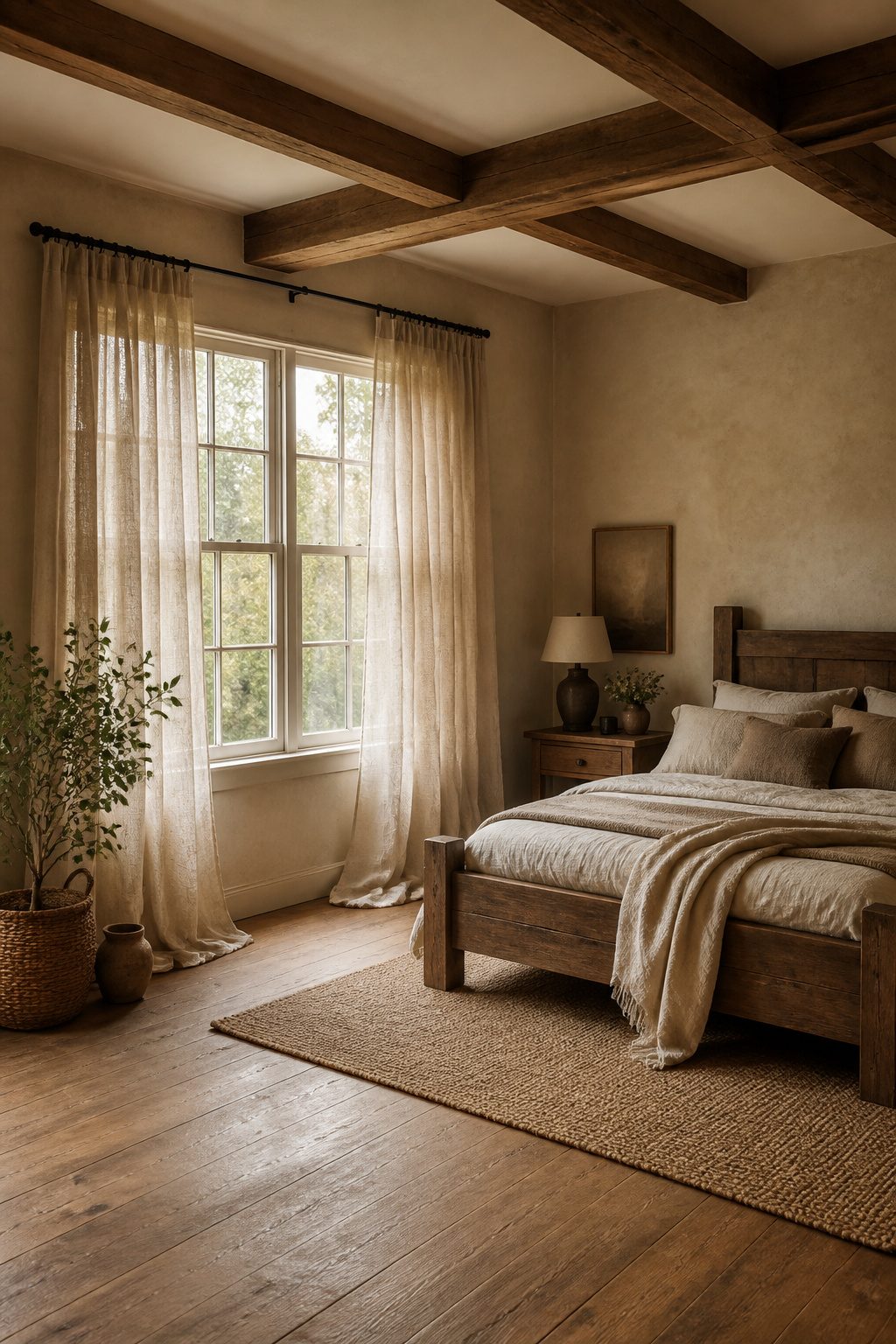
Linen drapes bring a texture nothing else quite matches.
The slubbed weave catches light unevenly, and the fabric falls in soft folds that read as relaxed rather than sloppy. That same texture makes them useful for softening wood blinds or rougher wall finishes without introducing a competing pattern.
The wrinkle question comes up immediately with linen, and the honest answer is that the fabric wrinkles. Some of that rumpled look suits rustic spaces; if it crosses into looking neglected, heavier-weight linen holds a cleaner line than sheer grades.
Washing and drying before final hemming matters here, since linen shrinks and a rod placed too low leaves you with high-water drapes.
Length is where the bigger decision sits. Pooling an extra two or three inches on the floor reads romantic and farmhouse; just brushing the floor keeps the look sharper and avoids dust collection in high-traffic rooms.
In my own use, pooling works best when the drapes stay open most of the day, since the bunched fabric at the sides becomes part of the texture story. For drapes drawn regularly, floor-skimming saves fussing.
Hardware finishes like antique brass or oil-rubbed bronze pair naturally with linen’s warmth, and simple back-tab or clip-ring headings keep the look unfussy.
Pinch pleats can work in more formal rustic rooms, but they fight the relaxed drape that makes linen worth choosing in the first place.

🏠 Premium Quality: These solid wood blinds are made from high-quality 100%solid wood, making them the ideal choice for wood blinds for indoor windows. Their exquisite design showcases natural elegance and sophistication as wooden window blinds, enhancing your home or office decor while adding warmth and style

Solid Wood Venetian Blinds: Upgrade your home decor with the organic luxury of authentic timber. Crafted with premium 2 inch slats, these wooden window blinds outlast cheap plastic faux alternatives, highlighting a stunning natural grain and rustic texture

Important measuring notes - The window blind listed measures 34 inches wide. If you choose to inside mount, and your window frame size is between 34.375 to 35 in. wide this faux wood blind is recommended. A wider window and there will be more of a light gap, a more narrow window and the faux blind will likely not fit; in these cases please look at our other size options. Please view more detailed measuring instructions for inside or outside mounting within the product images section.
7. Valances and Cornices
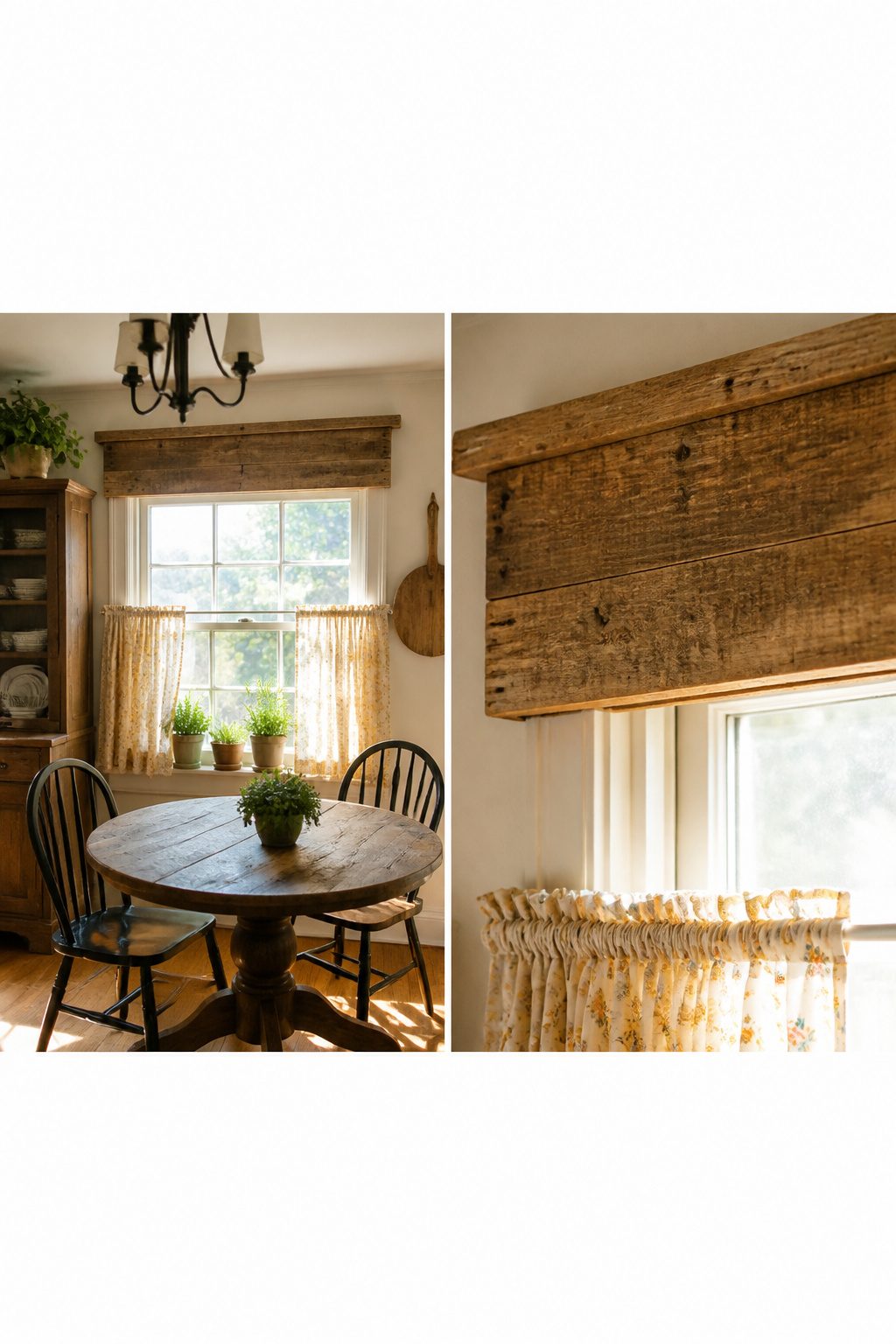
A bare curtain rod leaves a window looking unfinished, especially in a kitchen or breakfast nook where full drapes would swallow the space. A wooden valance built from reclaimed lumber solves that gap without adding weight or blocking light.
Cornices do similar work with a harder edge, but a simple DIY wood valance reads more rustic and costs less than a wrapped board from a shop.
Either way, the top of the window gets the detail that ties a room together. Fabric valances soften the line if the wood feels too heavy for a smaller pane, though they need more upkeep near a stove or sink.
What convinced me, reading through a dozen of these installs, is that the reclaimed route lets you leave the saw marks and nail holes in place. Those imperfections are the charm, not something to sand away.

IMPORTANT SIZING INFORMATION! - This window blind is 33.5" wide to allow for mounting inside a 34" wide window opening. All inside-mount blinds include a ½-inch width deduction from the size ordered to ensure a perfect fit within your window frame. Your blind will arrive exactly 33.5" wide (for a 34" wide window). Sizes listed in the product description are measured by Width × Height. Please review our measuring guide to confirm proper sizing before ordering.

1【Our Strengths】Over 100 Years Window Covering Expertise (SCHOENBERGER GROUP est.1878)

8. Café Curtains
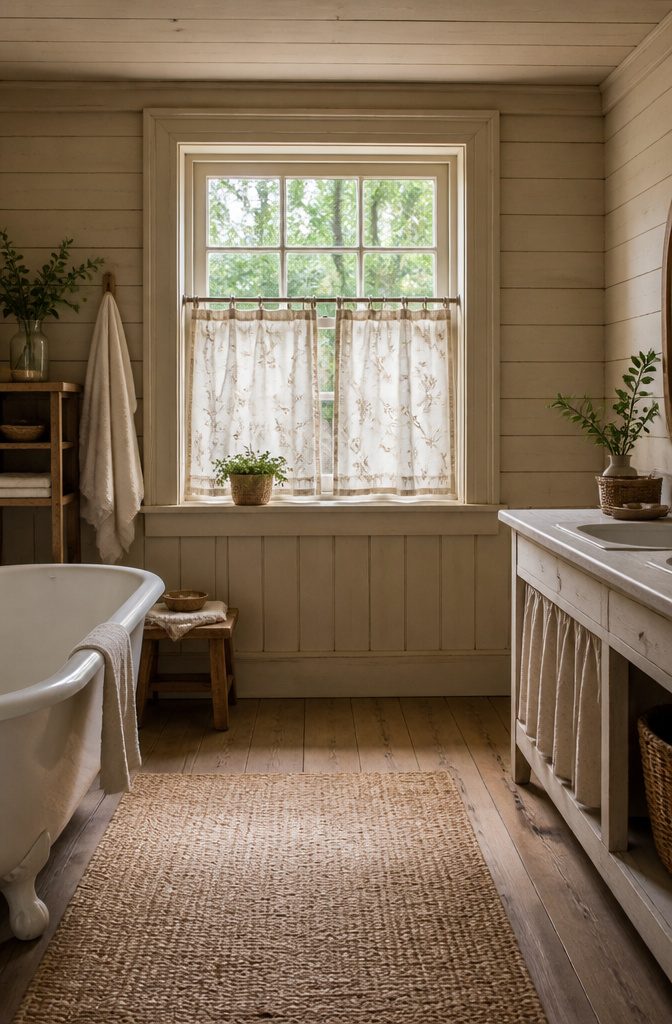
Café curtains are hemmed fabric panels mounted on a rod with curtain clips, covering only the bottom half of a window.
The partial coverage suits rustic kitchens and bathrooms where you want privacy without blocking daylight or a view above the sill. The farmhouse style favors this relaxed, decorative approach over formal full-length treatments.
My own mistake came on a bathroom window with a deep sill. I measured the frame opening and cut fabric to match, forgetting the rod would sit forward of the casing.
The panels hung too narrow, leaving a gap at each side. For deep sills, measure from the wall surface where the rod mounts, not the window edge, or the coverage falls short.

①【Flexible Light Control — Liner Optional】Unlined, the woven reeds transform harsh glare into a warm, dappled glow — bright enough for reading or entertaining, yet soft enough to keep neighbors from peeking in. The lined upgrade shuts out over 70% of light, giving you cave-dark sleep for daytime naps, movie marathons, or lazy weekend mornings. It also blocks UV heat to protect your furniture from fading, keep rooms cooler in summer and warmer in winter.

These shades are woven by professional artisans from natural wood, reeds, bamboo and grass. Natural material create a natural and tranquil atmosphere. Hemp straw woven fabric is more breathable. It has a transparency that permits outdoor view during daylight hours allows the same view of interiors at night when lights are on, so it function best in living spaces where night time privacy is not a priority.

①【Flexible Light Control — Liner Optional】Unlined, the woven reeds transform harsh glare into a warm, dappled glow — bright enough for reading or entertaining, yet soft enough to keep neighbors from peeking in. The lined upgrade shuts out over 70% of light, giving you cave-dark sleep for daytime naps, movie marathons, or lazy weekend mornings. It also blocks UV heat to protect your furniture from fading, keep rooms cooler in summer and warmer in winter.
9. Striped Curtains
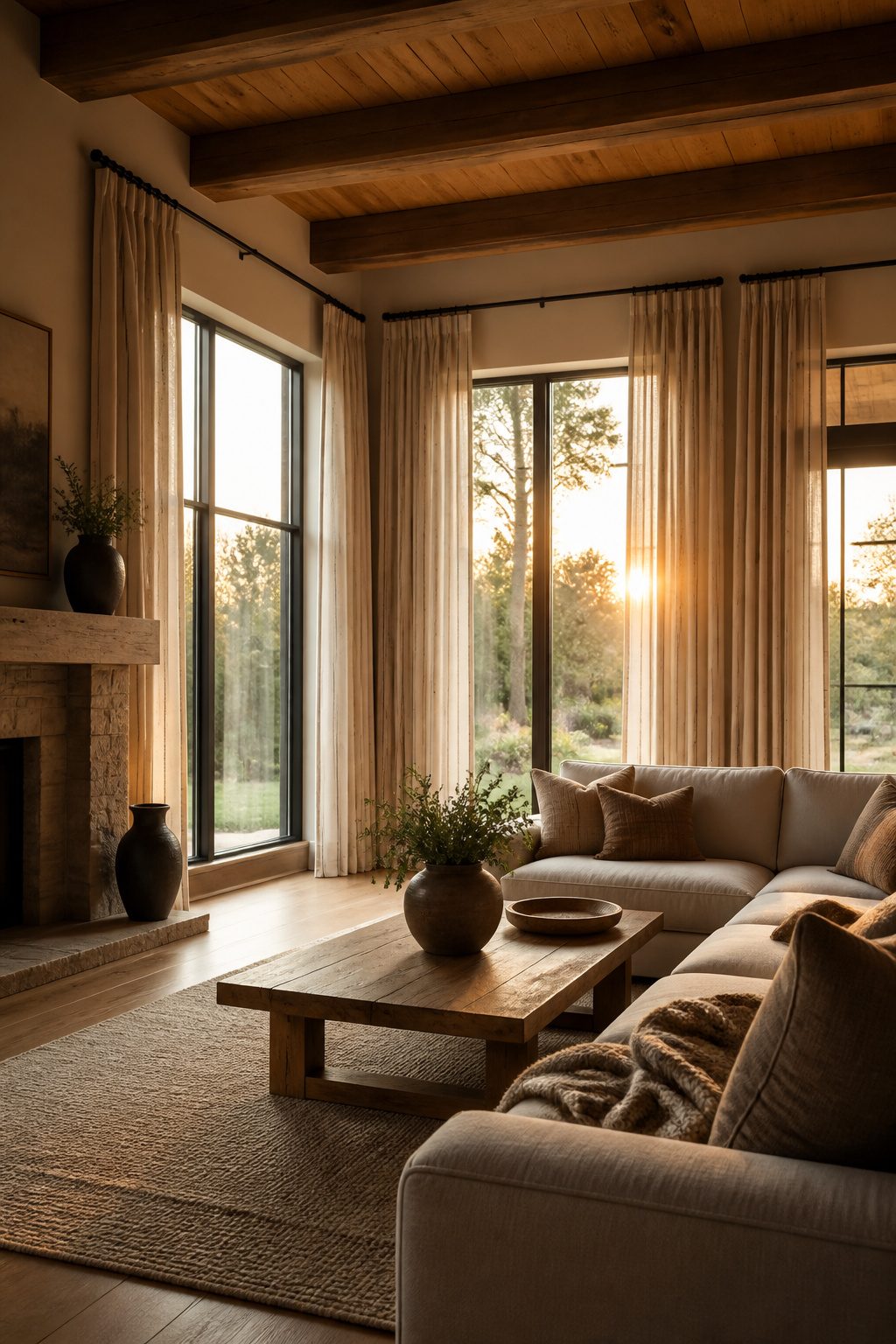
Horizontal stripes read wider; vertical stripes read taller.
That optical trick is the whole reason I think about stripe direction before I order linen curtains for a farmhouse room. Vertical ticking stripes draw the eye up, which helps low windows or rooms with eight-foot ceilings feel less squat.
Horizontal stripes flatten the wall, so the window looks broader, almost panoramic, which I find works better on a single large casement than on a grouped set where the pattern starts looking like a barcode.
The color contrast matters more than the direction.
Classic farmhouse leans on busy motifs, buffalo checks and florals on warm shiplap walls, but I have watched those same patterns turn a small rental kitchen into a visual fight between twenty things.
Tonal stripes, pale beige on natural linen or soft gray on oatmeal, keep the texture of woven cloth without the competition.
They read as rustic because of the weave and the slight irregularity in hand-drawn stripe spacing, not because of loud color.
High-contrast navy and cream stripes feel more coastal or circus-tent to me, and they dominate a room that already has cobblestone or reclaimed wood competing for attention.
For a modern farmhouse space, where the look is cleaner and less busy, muted stripes bridge the gap. They give you the pattern the style traditionally uses, but quiet enough that you are not re-wallpapering the room around your curtains.
Vertical ticking stripes in abalone gray or natural linen are the safer bet for low ceilings; horizontal bands in the same tones only if the window already carries the room and you want to widen it.

Ready-Made: Package includes 1 panel magnetic linen door curtain + pole accessories + free sticky strap. The door curtain is finished with sticker for easy to install. The back of the door curtain is also designed rod/pole pocket, to meet your various needs.

Linen Blend Valance: A package comes in 1 linen blend valance measuring 42 inch width by 45 inch length. Our flax linen valance features 3 inch pole pocket to coordinate with most standard curtain rods. It is recommended to use a rod with a diameter of 1.8 inch or less.

Tie Up Shade Valance: A package comes in 1 tie-up shade valance curtain panel measuring 42 inch width by 45 inch length. Our flax linen valance curtain features 3 inch pole pocket to coordinate with most standard curtain rods. Adjustable ties can be switched to meet your needs for light.
10. Lace Curtains
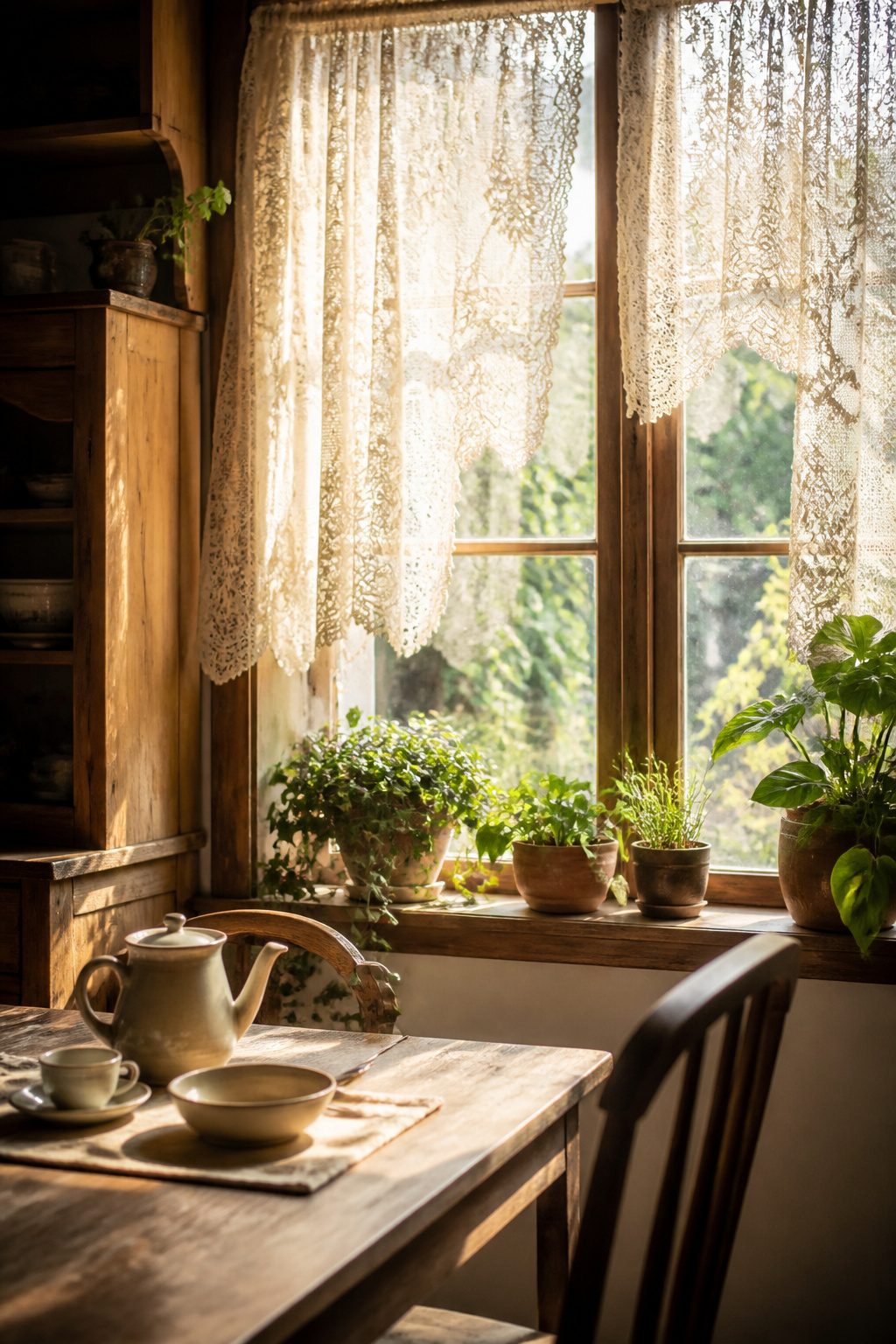
Lace curtains carry a reputation that keeps most people from even considering them. The trick is knowing where they earn their place and where they tip into fussy.
In a rustic scheme, lace works when it reads as practical history, not decoration for its own sake.
The kitchen of my grandmother’s farmhouse had them, yellowed slightly from years of sun, and they filtered the afternoon light without pretending to block the view. That is the mood to aim for: light filtration first, charm second.
The sources point toward white linen sheers with embroidered elements as the modern translation, which tells you something.
Pure lace can feel costume-heavy fast. Where I have layered them successfully, a simple lace panel hangs closest to the glass with heavier cotton or linen drapes in a neutral tone on the same rod or a second one.
The lace handles daylight and softens the room; the heavier panel closes for privacy and insulation. Antique brass or oil-rubbed bronze hardware keeps the look grounded.
What fails is treating lace as the main event.
Alone on a wide window, it looks like you forgot the rest of the curtain. The layering is not an upgrade; it is what makes the lace functional enough to justify itself.

【Excellent Natural Woven Fabric】100% excellent polyester imported; Bamboo-look fabric gives your room an easy-breezy, carefree look and feel in just minutes; Prized for their unique differences in colors, these ahhh-inspiring woven window coverings easily blend into almost any room or with any style; Unlined, cast a soft, inviting glow over living rooms, home offices and more while naturally shading your interiors from harsh sunlight.
【Excellent Natural Woven Fabric】100% excellent polyester imported; Bamboo-look fabric gives your room an easy-breezy, carefree look and feel in just minutes; Prized for their unique differences in colors, these ahhh-inspiring woven window coverings easily blend into almost any room or with any style; Unlined, cast a soft, inviting glow over living rooms, home offices and more while naturally shading your interiors from harsh sunlight.

【Natural Woven Linen Fabric】The light filtering material offers privacy and allows filtered light to come through. Images, shapes and shadows may be seen through the fabric but details are not visible. For light and glare control, this shades are perfect for any room or decorating style.
Natural Materials That Read Rustic
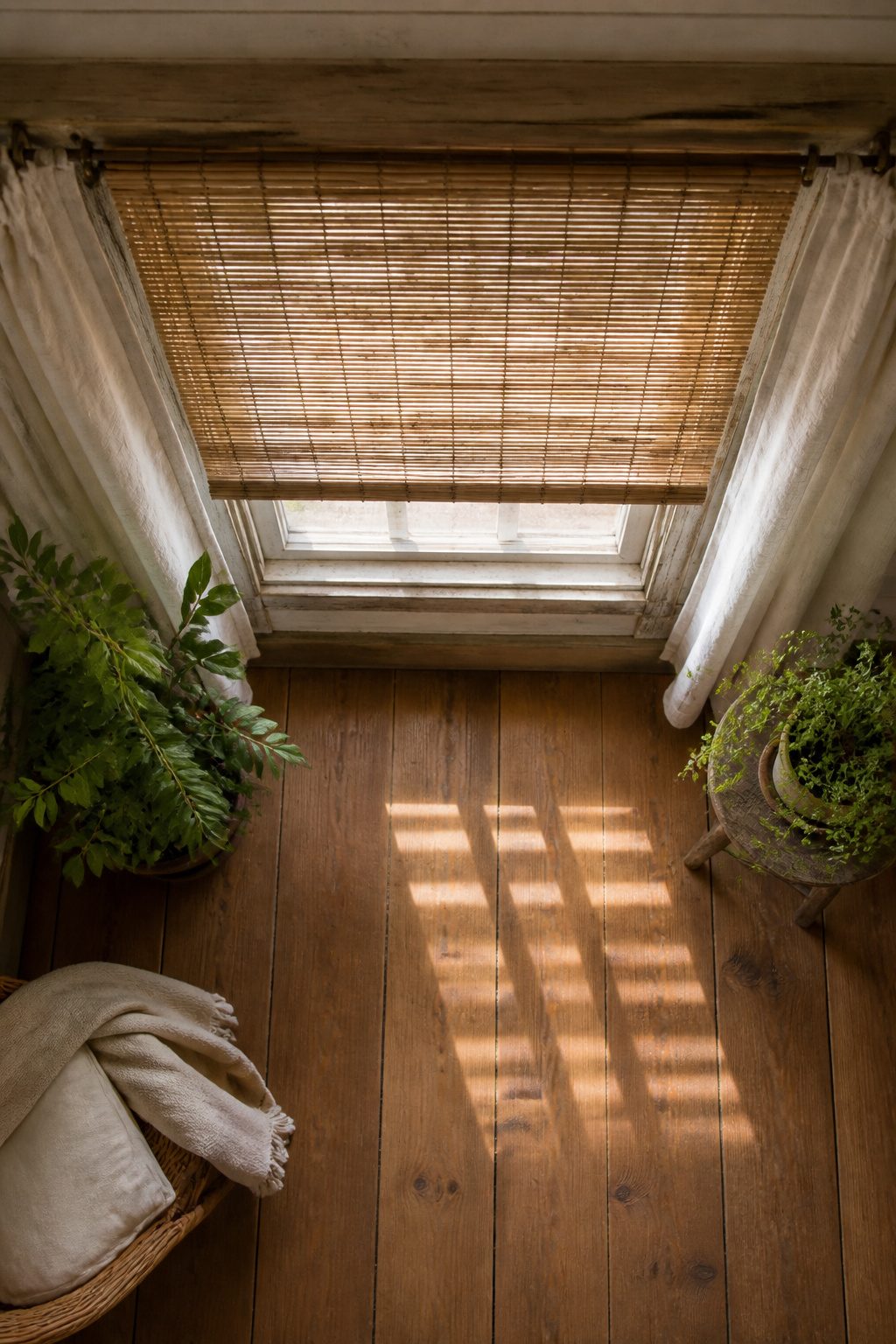
Wood, bamboo, cotton, and linen each pull weight in a rustic window setup, and the difference between them and synthetics is tactile before it is visual.
A hand-woven bamboo shade carries the irregular gaps and grass flecks that make a window feel like it belongs to a house with history; poly-cotton or faux wood can sit in the same visual range, but the surface stays uniform, and the eye reads that uniformity as flat.
Linen drapes do something similar with light. Their weave breaks sunshine into soft bands across a floor, where a polyester sheen would throw it back sharp and cold.
The sources agree on the hierarchy: natural fiber first, blends accepted for budget or durability, but never with the same result. Raw or chalk-painted wood hardware adds the patina that deliberate distressing tries and usually fails to fake.
Where synthetics succeed is practical ease. A linen-cotton blend hangs straighter after washing and costs less to replace in a rental.
The compromise is knowing which imperfection matters; the slub in real linen invites touch, while the even grain of faux wood merely reads "clean" from across the room.
Neutral Color Palettes
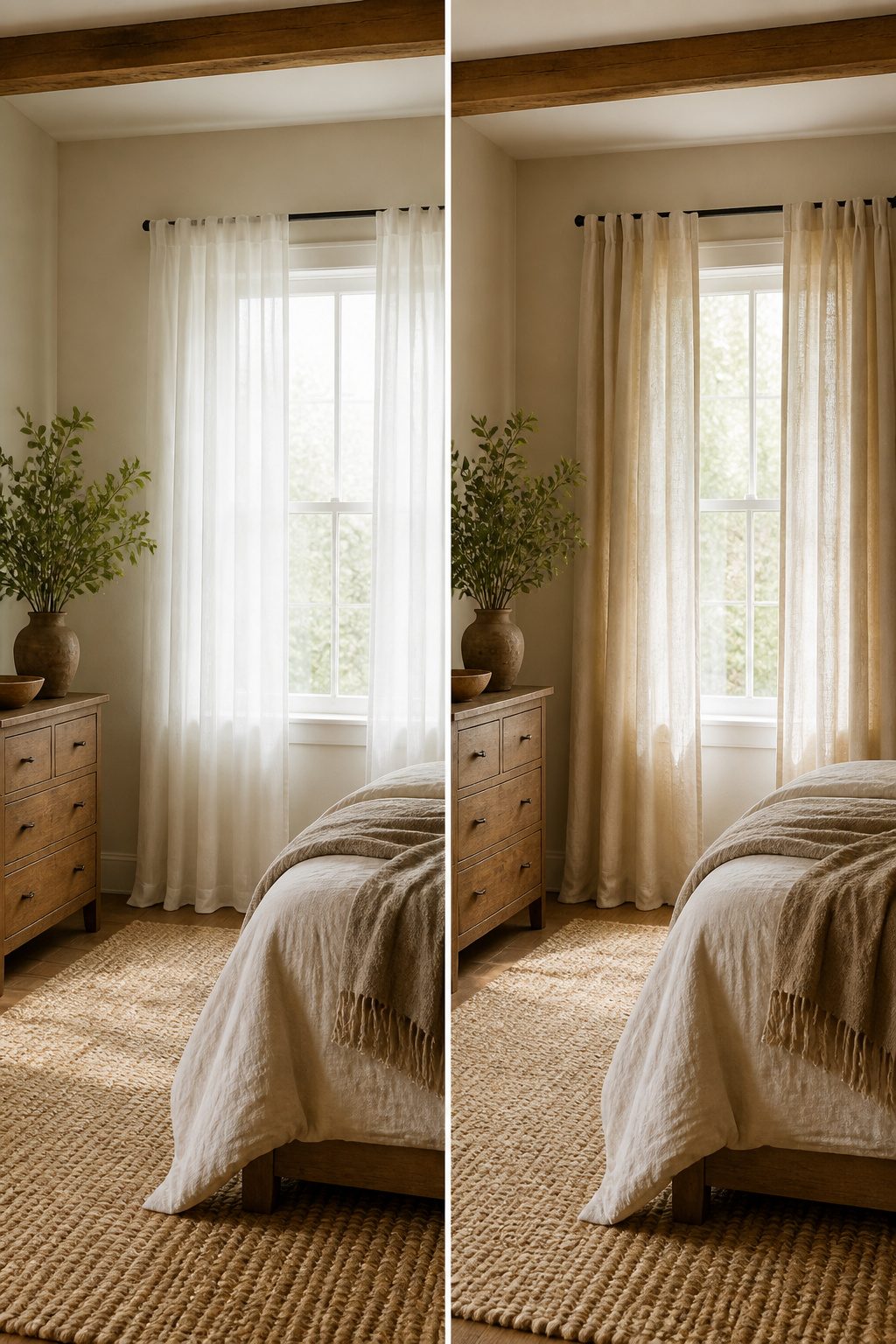
Whites, creams, and warm grays do the heavy lifting in rustic window treatments because they catch morning light the way plaster walls do in old farmhouses.
Linen in oatmeal or unbleached cotton reads as lived-in from day one, which matters when you are renting and cannot wait for patina to build.
I have strayed into muted sage and soft rust when the room already had too much beige going on, and it worked because those colors still feel like they came from outside.
The mistake is not the color itself; it is using it as an accent without enough neutral around it to breathe. Too much beige, and the room goes flat like a rental carpet no one chose.
If your walls are already warm white, cream drapes with a slight slub in the weave give you texture without demanding attention. That is usually where I stop.
Traditional Farmhouse Against Modern
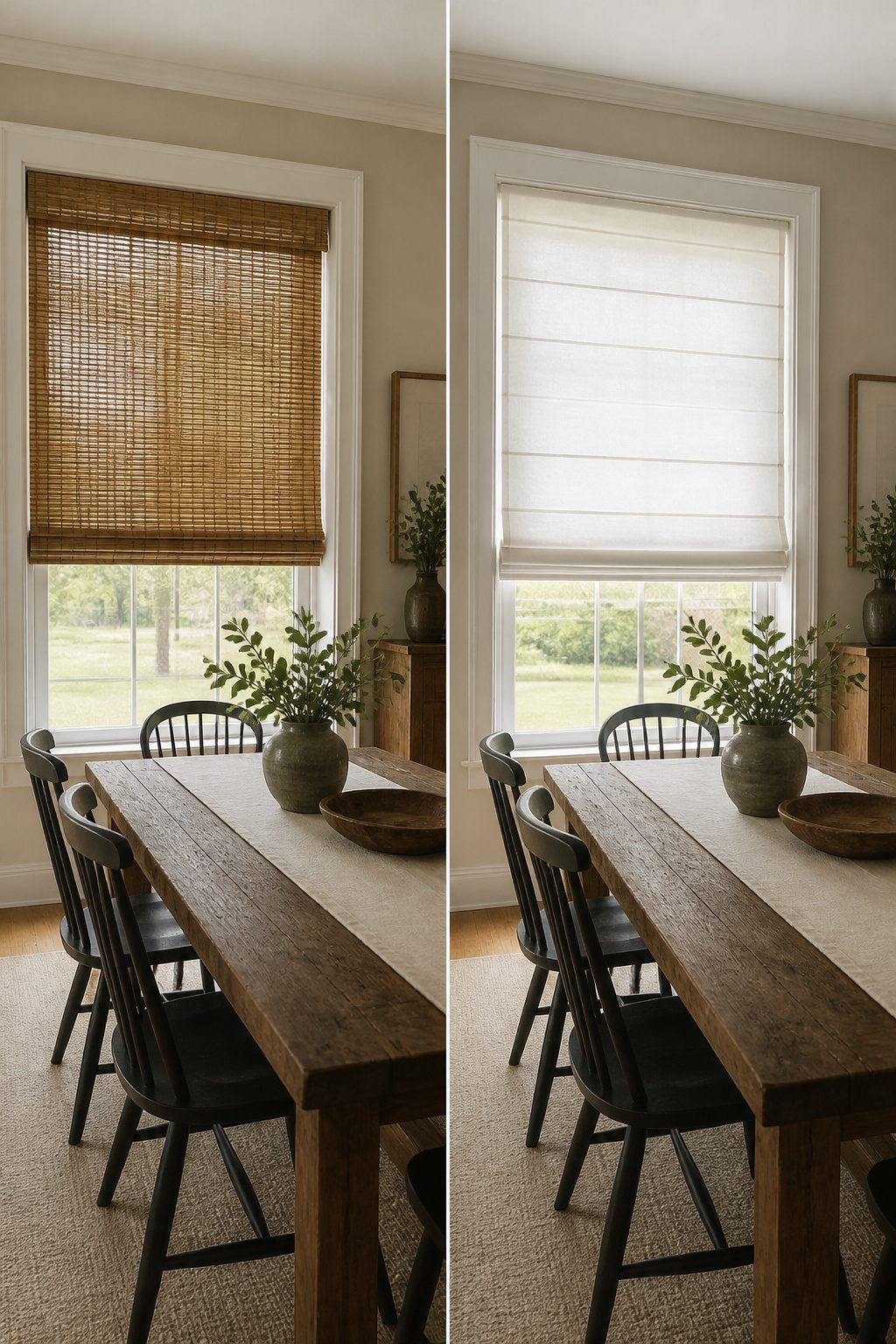
The same window treatment can read as either traditional farmhouse or modern farmhouse depending on what you surround it with. Traditional farmhouse leans on vintage pieces, plaid patterns, natural materials, and warm wood tones.
Modern farmhouse, the kind Joanna Gaines popularized on Fixer Upper, keeps the simplicity and comfort but strips in clean lines, a more neutral color scheme, and sleek, modern finishes.
Take roman shades. In off-white linen with a flat or waterfall pleat, they look understated and almost disappear into a modern farmhouse room.
Swap that for cotton with embroidered paisleys and the same shade suddenly reads traditional, ornate, maximalist. The construction did not change; the fabric and detail did.
Plantation shutters work the same way. Wide horizontal louvers in crisp white or warm off-white pair with straight lines and neutral tones for modern farmhouse.
Stain that same shutter in a natural wood finish and it leans rustic, traditional, almost lodge-like. The finish does the style work, not the shape.
Even solar shades can play rustic if the room already has exposed beams and raw fixtures. In one Portland home with sweeping landscape views, simple solar shades kept things minimal and let the rustic architecture speak.
They blended into the background rather than competing with it. The trick is knowing which version of farmhouse you are actually living in, then letting the window treatment support that story instead of fighting it.
Light, Privacy, and Insulation
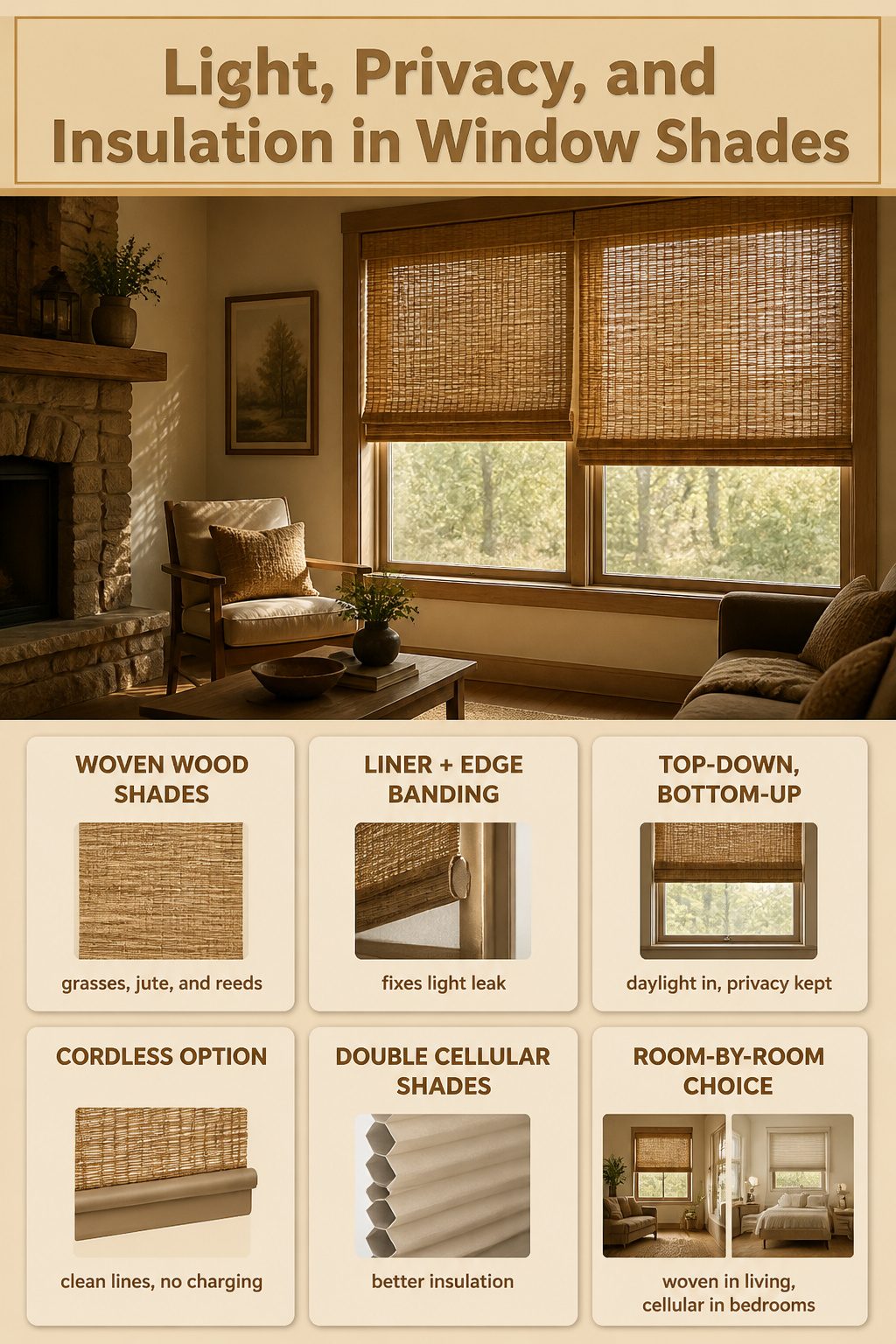
Woven wood shades made from grasses, jute, and reeds filter sunlight into a soft, dappled glow that feels right in a rustic room, but that loose weave is the problem.
Light control, privacy, and insulation all suffer for the look. The gaps let heat bleed out in winter and in; they let the neighbor’s porch light sit on your ceiling at night.
A liner fixes this without killing the texture.
Edge banding along the sides closes the light leak most people miss until they install. The shade still reads as natural from the room side; the liner hides behind it, doing the work.
Top-down, bottom-up operation helps too. You can drop the top to let daylight in while the lower half stays closed for privacy, or reverse it depending on the window’s facing.
I would skip motorized controls on a first install. The cordless option runs about the same price, keeps the clean lines that suit rustic spaces, and you are not drilling for a charging station.
For rooms where you need real insulation, double cellular shades do the job better than any woven material, though they trade the raw texture for efficiency.
My choice: woven wood with a liner in living spaces where the look matters, cellular in bedrooms where drafts wake you up.
Customizing Sizes and Finishes
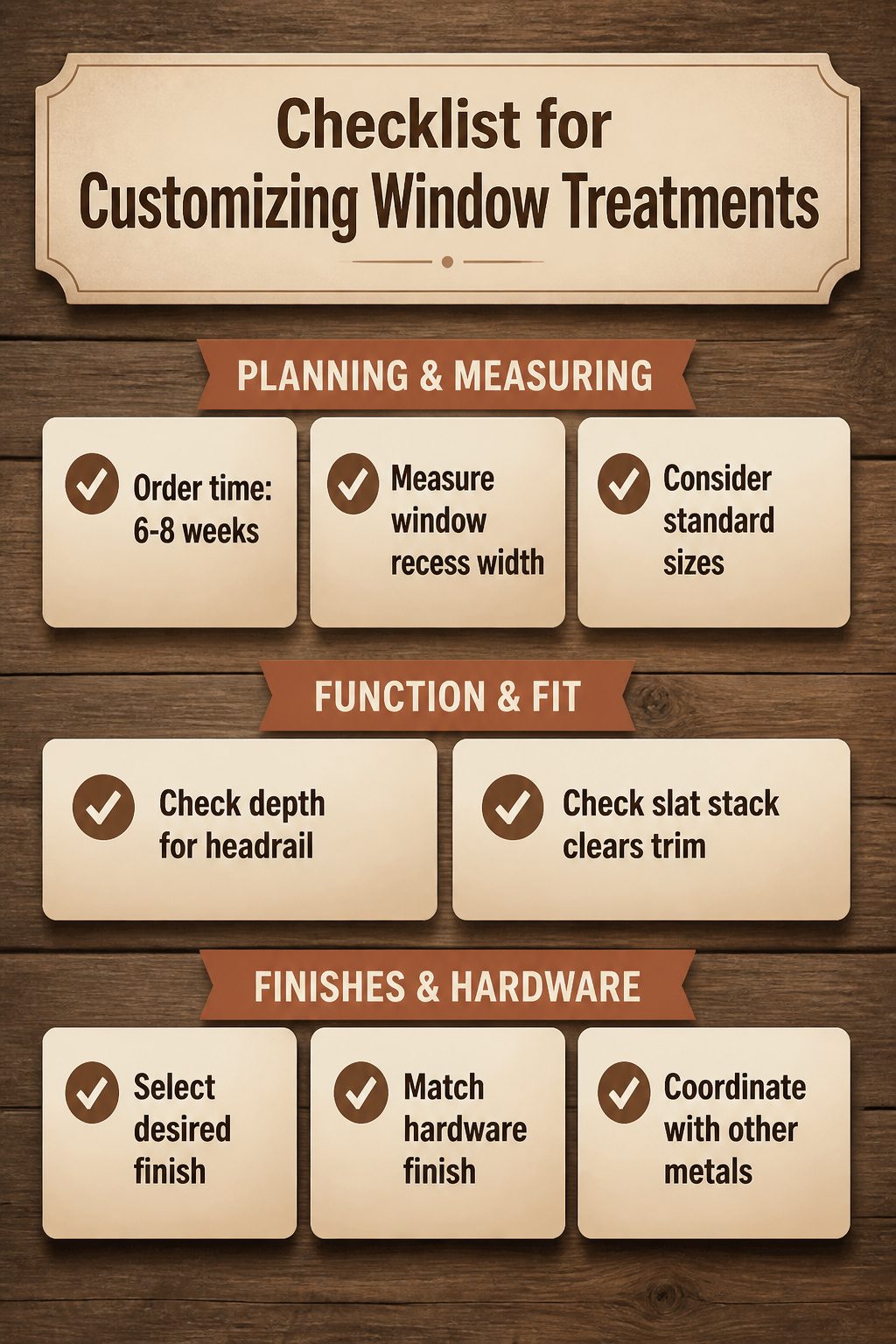
Custom sizing sounds like the safe play until you see the calendar. Most woven wood and wood blind orders run six to eight weeks, and that assumes you measured right the first time.
I have measured window recess width without deducting for the brackets, which turned a clean inside-mount plan into a shallow outside-mount job with a half-inch gap showing.
Ready-made panels in standard widths, especially for side treatments or layered looks, often cover the error without the wait.
If the window is truly odd, the upgrade to custom is worth it, but only after double-checking the depth for the headrail and whether the slat stack clears the trim when raised.
Finishes are where the real tailoring happens: wire-brushed abachi, a weathered stain to match flooring, or a matte paint that reads softer than factory white.
The hardware finish matters too. Exposed rods or brackets in oil-rubbed bronze tie back to other metals in the room better than mixing in a brushed nickel that no other piece carries.
Frequently Asked Questions
What are the best window treatments for a rustic look?
Wood blinds, woven wood shades, and linen drapes are the most popular choices.
Real wood blinds carry grain patterns and warm finishes that establish farmhouse style, while woven wood shades made from grass, jute, or reed add texture that manufactured materials cannot replicate.
Linen drapes bring a slubbed weave that catches light unevenly and reads as relaxed rather than sloppy.
How do I choose the right color for rustic window treatments?
Stick to whites, creams, warm grays, and earthy tones like muted sage or soft rust. These neutrals catch morning light the way plaster walls do in old farmhouses, and oatmeal or unbleached cotton reads as lived-in from day one.
Too much beige flattens a room, so use texture from the weave rather than color variation to add interest.
What materials are best for rustic window treatments?
Natural materials win: wood, bamboo, cotton, and linen. Hand-woven bamboo shades carry irregular gaps and grass flecks that make a window feel like it belongs to a house with history, while linen breaks sunshine into soft bands across a floor.
Poly-cotton or faux wood can sit in the same visual range, but the surface stays uniform and reads as flat to the eye.
Can I DIY rustic window treatments?
Yes, wooden valances built from reclaimed lumber are especially DIY-friendly. A simple wood valance solves the gap above a window without adding weight or blocking light, and leaving saw marks and nail holes in place is where the charm lives.
Fabric valances soften the line if wood feels too heavy for a smaller pane, though they need more upkeep near a stove or sink.