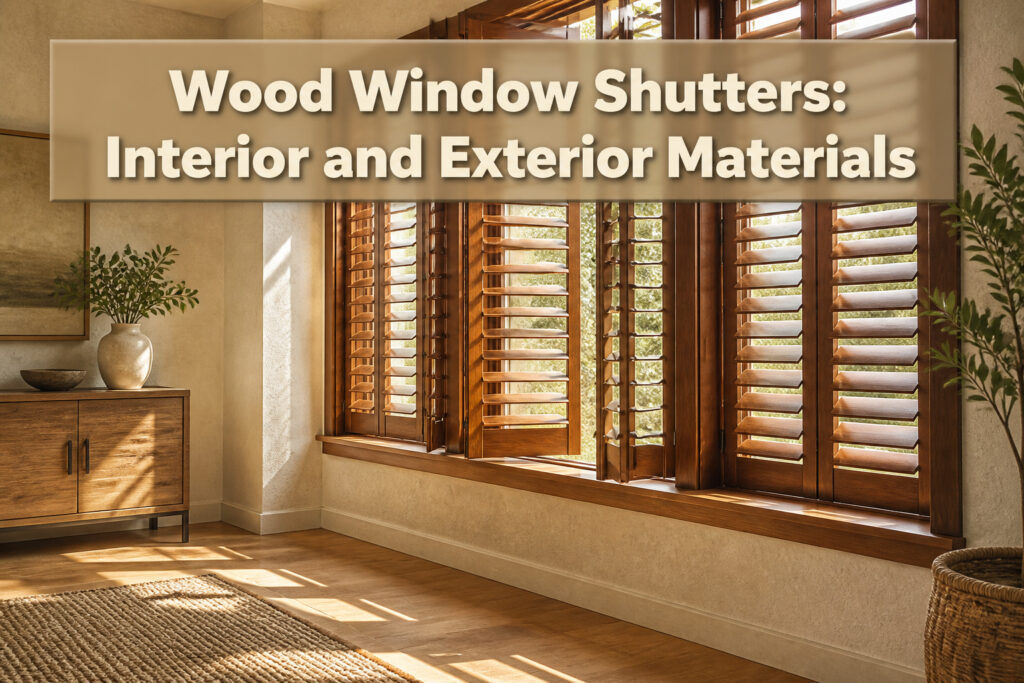
Wood window shutters are fixed or adjustable slatted panels installed on window frames for light control, privacy, and weather protection.
The material you choose matters more than the style, because a softwood left bare on a south-facing exterior will warp within two seasons while the same wood indoors lasts a decade with almost no care.
Pine pairs start at $52, mahogany at $112, and engineered composites split the difference on price while eliminating the refinishing cycle entirely.
Pine Shutters
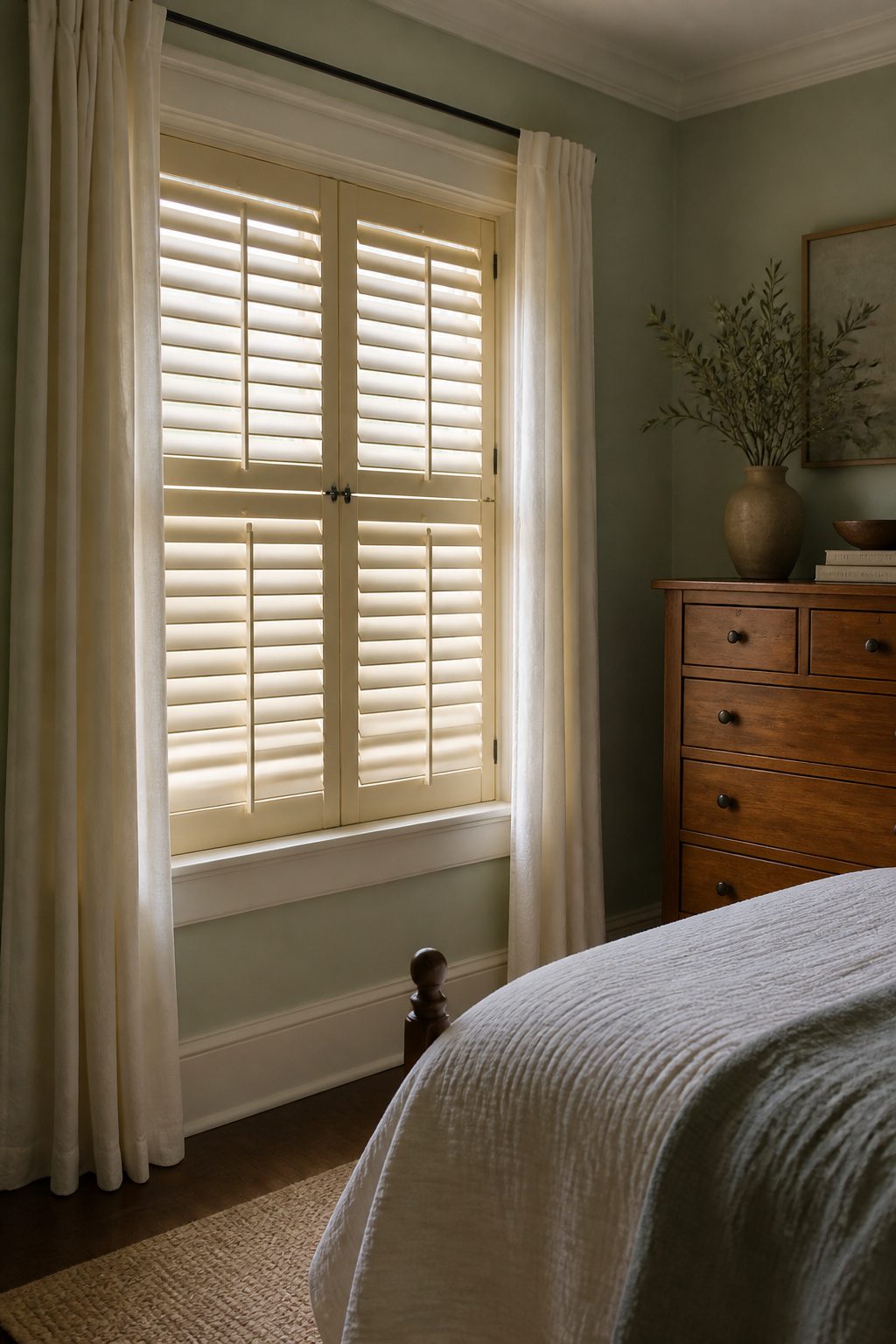
Pine sits at the bottom of the wood shutter price ladder for a reason, and that reason is not always a bad one.
The PlacerCraft Southern Yellow Pine Exterior Shutter runs $52 per pair, which is about half the cost of stepping up to Red Grandis and less than a third of Mahogany.
For a weekend project dressing up a rental or a first home’s curb appeal, that gap matters.
The catch shows up after the first season or two. Pine is soft, porous, and hungry for maintenance.
Water works its way in at joints and end grain faster than with harder woods, so caulk and paint are not cosmetic choices here; they are the actual seal keeping the slats from cupping or the frame from loosening.
Skip a repaint cycle, or thin it to save an afternoon, and the shutter starts looking like the bargain it was.
Interior use changes the math. Away from rain and freeze-thaw cycles, pine’s weaknesses matter less.
A louvered pine shutter inside a bedroom or kitchen holds paint well enough, responds to sanding when the surface dulls, and can be replaced in a few years without mourning the investment.
The same piece on a south-facing exterior in a wet climate is a shorter bet, one that pays off only if the maintenance calendar is treated as seriously as the purchase price was.

Dimension - 15" W x 39 H in

Dimension - 15" W x 59 H in
Dimension - 15" W x 71 H in
Red Grandis Shutters
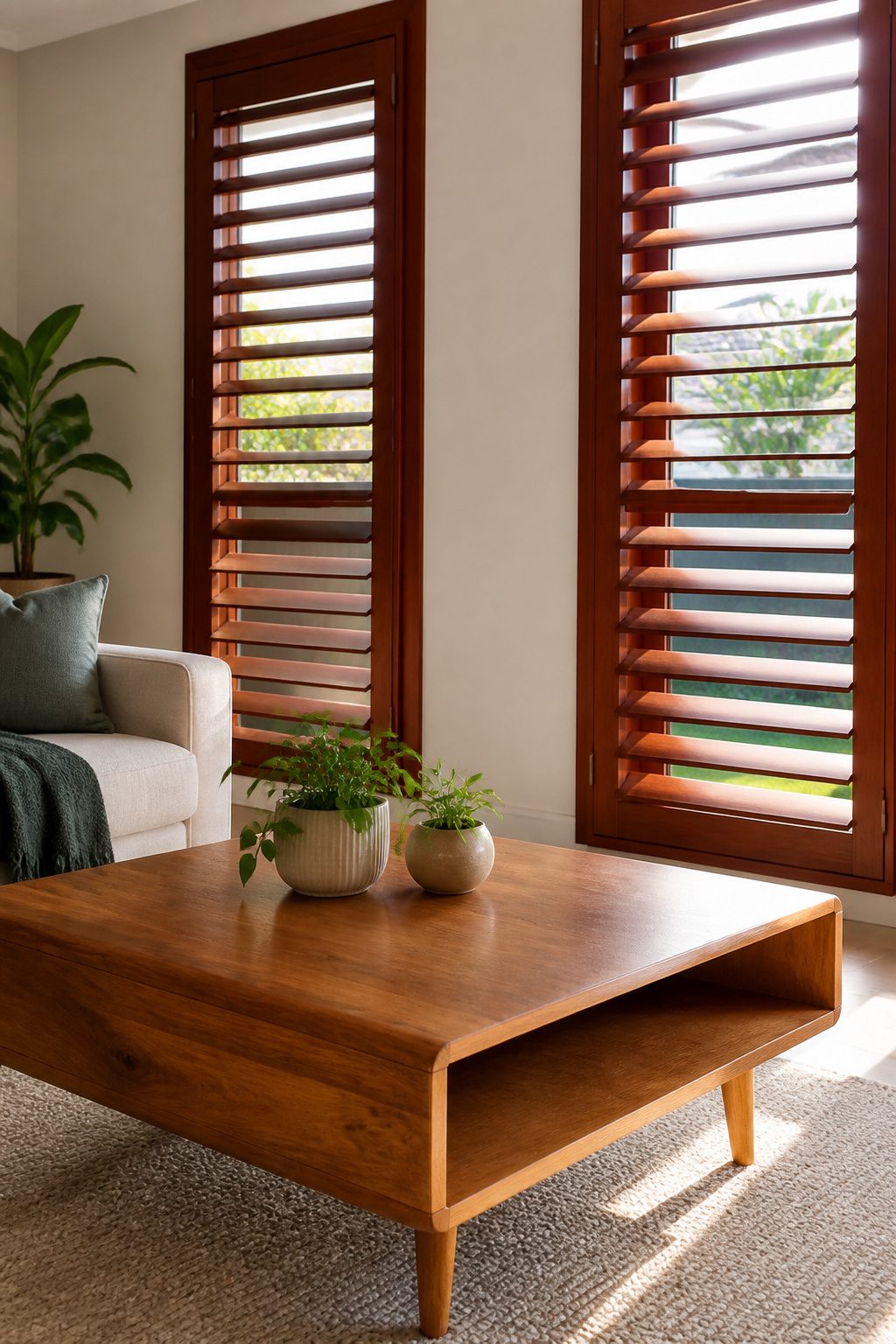
Red Grandis hardwood shutters sit right where most weekend projects land: better than bare-bones pine without the sticker shock of mahogany.
A louvered pair in this wood starts at $79, the same opening price as pine’s board-and-batten style but with a harder, more stable grain behind it.
The difference shows up after a few seasons. Pine dents if you look at it wrong and swells enough to jam louvers shut in humid months.
Red Grandis carries enough natural density to take a knock and keep its shape, yet it still planes and sands without fighting you. Paint goes on smooth; stain soaks evenly without the blotching softwoods give you.
For renters or first-home owners who want real wood that does not read as temporary, the upgrade cost is modest and the workability stays forgiving.
Skip it only if you are dead-set on the lowest possible number and willing to replace or refinish sooner.

Enhanced Curb Appeal: Transform your home's exterior with board and batten shutters designed for visual impact. Choose from classic black, white to complement any architectural style.
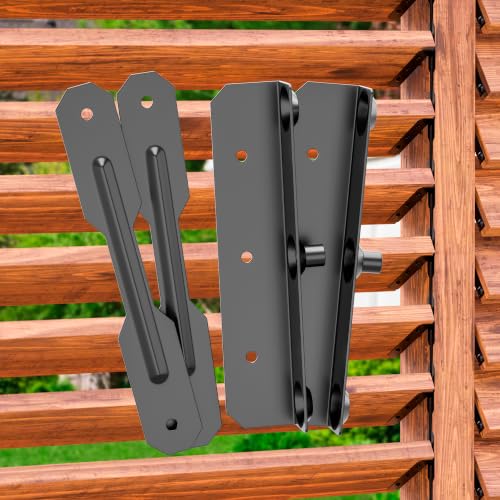
Are you looking for an idea for the wall of your deck or patio to block the sun & rain? Create clean, adjustable privacy experience with our deck sunblind system, designed to provide adjustable shade and UV protection, privacy when you want, sun or shade when you want, easier than installing windows.
Dimension - 15" W x 55 H in
Cedar Shutters
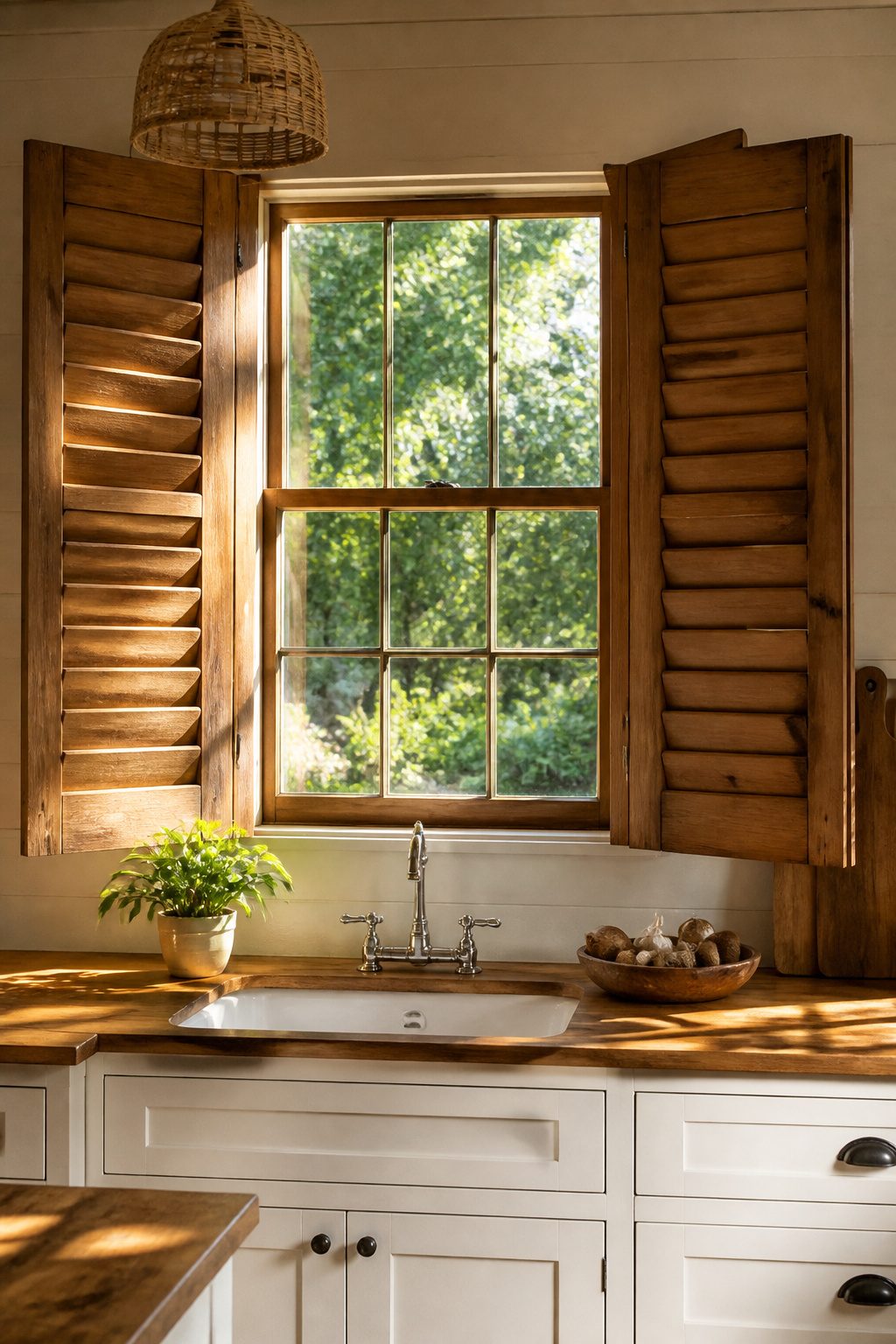
Cedar sits in the middle of the wood lineup for a reason. The PlacerCraft range prices it above pine and Red Grandis, and in return you get natural resistance to rot and insects without stepping up to mahogany money.
That matters on any exterior wall that catches rain or sits close to planting beds where termites travel.
The weight sits between the lighter softwoods and the dense hardwoods, so hanging a pair still feels like a one-person job with a level and a Saturday morning.
Maintenance does not disappear: cedar weathers to a silver-gray if left bare, and keeping any stain or paint film intact means re-coating every few years, especially on south-facing elevations.
Skip that rhythm and the surface checks, though the boards underneath stay sound longer than pine would.
Where cedar earns its place over cheaper options is longevity in actual conditions, not showroom promise. For a first home you plan to hold five to ten years, the extra cost spreads across fewer replacements or repairs.
Renters should think harder: if the landlord will not reimburse the upgrade, pine or a painted composite panel gets the curb appeal done for less.
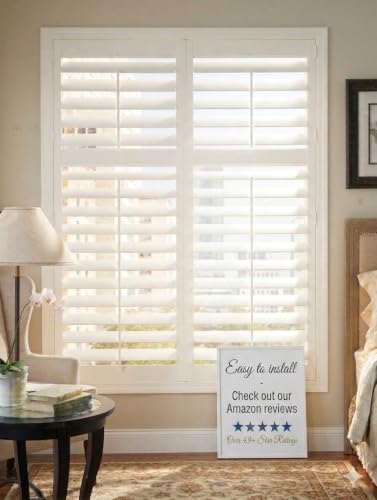
*Elegant White finish - CUSTOM MADE TO FIT YOUR WINDOWS
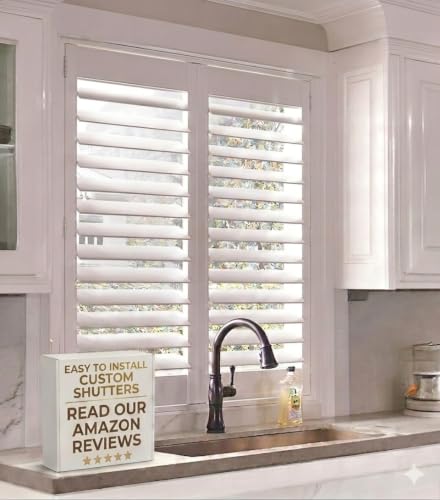
Modern and Elegant: Our interior window shutters feature a unique design with no front tilt rod and hidden gear, that creates a seamless, modern and elegant appearance while making the blinds easier to clean and maintain.

Privacy + Max Natural Light: These cafe style plantation shutters cover only the lower portion of your window, providing privacy while allowing natural light in from above.
Mahogany Shutters
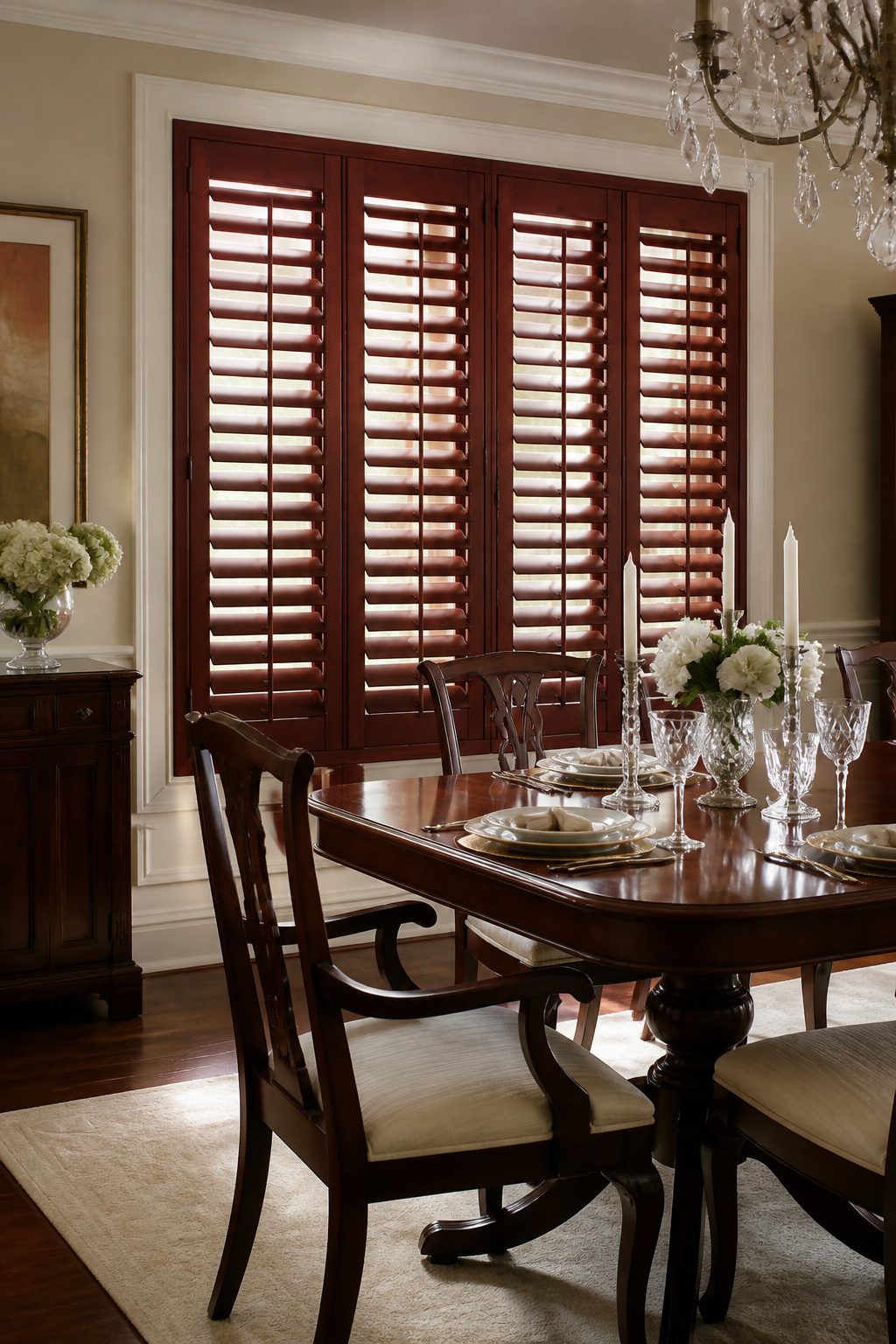
Mahogany sits at the top of the wood shutter hierarchy for a reason that shows up the moment you hold a sample beside pine or cedar.
The grain runs tighter, the weight feels more substantial, and the finish takes on a depth that cheaper woods simply do not offer.
For exterior work, the PlacerCraft Mahogany Louvered Exterior Shutter runs $112 per pair, which is not pocket change next to the $52 pine pair from the same line, but the stability in changing humidity pays back over years of seasonal swelling and shrinking.
That exterior price, though, is only the entry point for what mahogany can cost once you move inside.
A premium stained wood shutter in mahogany territory, the kind built to interior custom specs, lists at $584.40 before a coupon drops it to $409.08. The six-to-eight week production time tells you what you are buying: made-to-order joinery, not warehouse stock.
I would not spend that on a rental I am leaving in two years. For a first home where the windows are staying put and the trim is already leaning traditional, the math changes.
The gap between that $112 exterior pair and the $409 interior coupon price is the gap between dressing the outside and finishing the inside as furniture-grade woodwork.
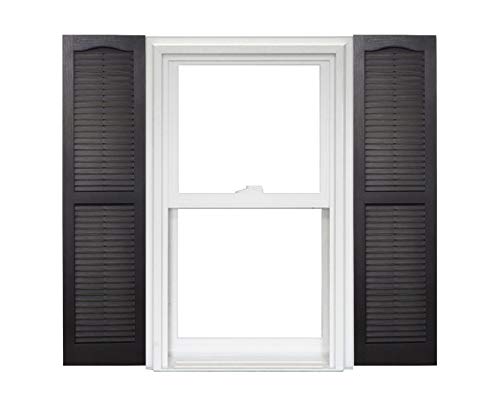
Open Louver Shutters are decorative which fits window heights of 58in - 60in (window is not included with shutters)

Item Description: 14 1/2"W x 64"H Lifetime Vinyl, Standard Cathedral Top Center Mullion, Open Louver Shutters, w/Installation Shutter-Lok's & Matching Screws (Per Pair), Paintable

Item Description: 14 1/2"W x 55"H Lifetime Vinyl, Standard Cathedral Top Center Mullion, Open Louver Shutters, w/Installation Shutter-Lok's & Matching Screws (Per Pair), Black
Faux Wood Shutters
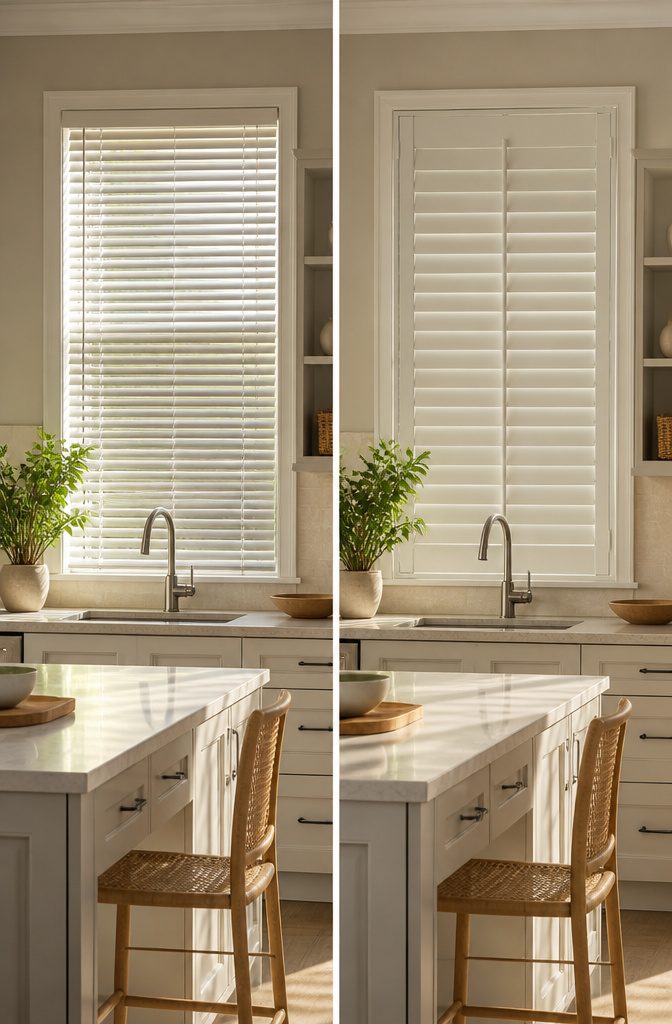
Faux wood shutters carry the grain and warmth people expect from painted timber without the warping that sends real wood back to the shop.
The material shrugs off bathroom steam and kitchen humidity that would eventually twist a pine or cedar frame, and the wipe-clean surface saves the annual sanding and re-coating that natural shutters demand.
An estimated ship date of September 11th–15th is typical for these, roughly half the wait of traditional wood.
That speed matters when you are covering a window before a lease inspection or trying to finish a room before guests arrive.
For a rental or a first home where the budget needs to stretch across several rooms, the lower cost per square foot leaves room for hardware or a second project.
The tradeoff is weight: the panels run heavier than cedar or mahogany, so a large window may need an extra hinge or a split panel to keep the frame from sagging over time.
In dry climates where humidity is not the threat, real wood still wins on feel and resale value. Where the air stays thick or the dollars need to cover three windows instead of one, faux wood is the practical choice.

One Piece Injection Molded Polypropylene Construction

One Piece Injection Molded Polypropylene Construction

One Piece Injection Molded Polypropylene Construction
Composite Shutters
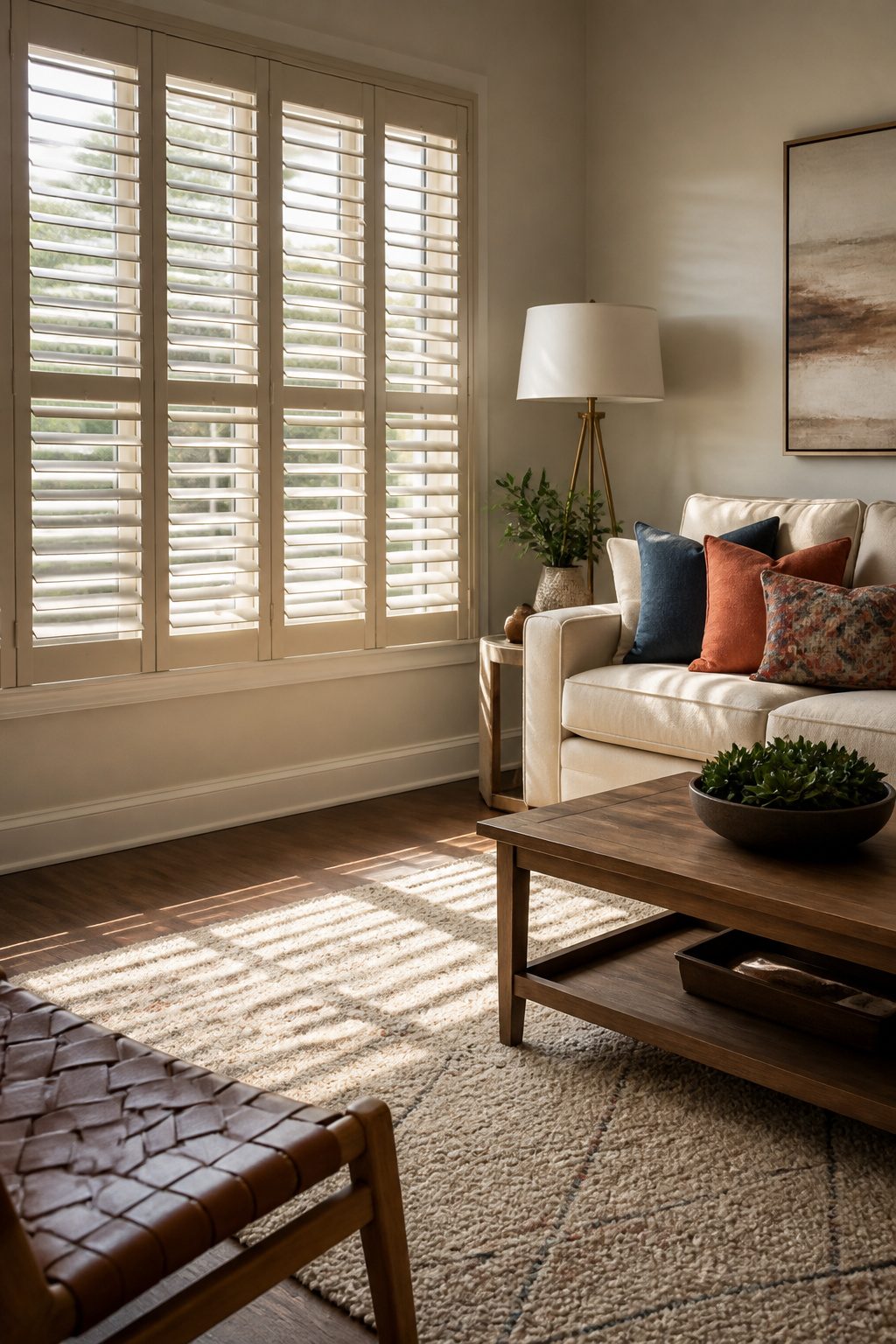
Composite shutters sit where the warmth of real wood meets the practicality of something engineered to take a beating.
The construction uses a wood core wrapped or pressed with synthetic material, which gives you the grain and heft of genuine hardwood without the warping or swelling that sends solid wood shutters out of true in a steamy bathroom or above a kitchen sink.
Where this differs from faux wood is worth sorting out before you order.
Faux wood is all synthetic, usually hollow vinyl or a polymer blend meant to read as wood from across the room but feel lighter and less substantial up close.
It holds up to moisture and costs less, which makes sense for a rental you are dressing up on a tight budget or a south-facing window that bakes all afternoon.
Composite, on the other hand, keeps an actual wood element in the mix, so the paint or stain finishes with the depth and variation that reads genuine even when the light hits it directly.
The weight feels right when you tilt the louvers.
For a first home where you want the look to last through a few years of real living, composite is the middle path that usually wins: wood aesthetics with improved durability, priced between the two.
Dimension - 15" W x 47 H in
Dimension - 15" W x 63 H in
Dimension - 15" W x 43 H in
Vinyl Shutters
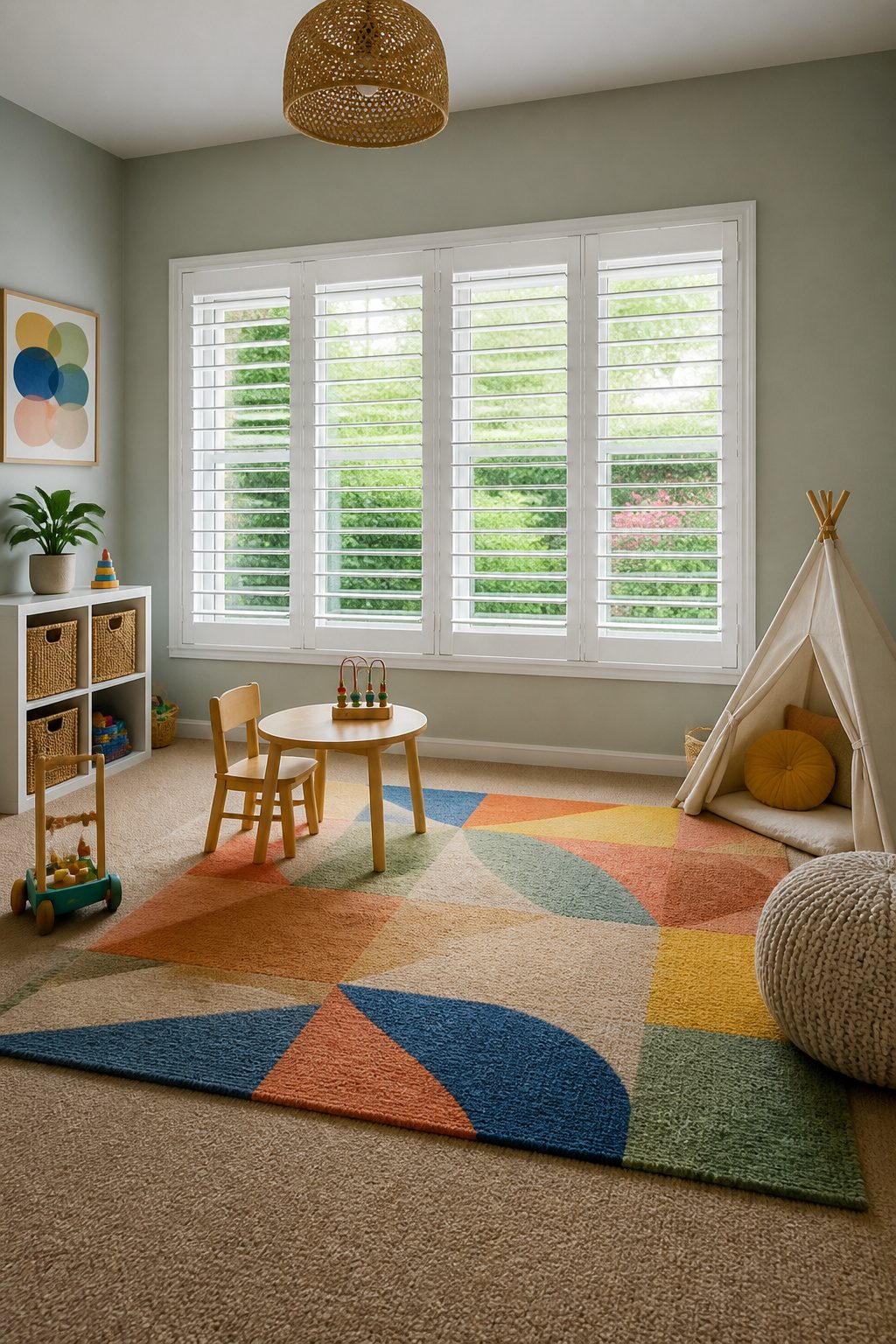
Vinyl shutters earn their keep in rooms that punish anything organic.
The U-PVC co-polymer used in some lines, the same material found in crash helmets, shrugs off the steam from daily showers and the UV beating through south-facing windows without the warping or yellowing that eventually claims real wood.
That moisture resistance makes them the practical call for bathrooms and coastal rooms where humidity hangs in the air year-round.
The trade is visible the moment you set them beside hardwood.
Painted vinyl carries a slight plastic sheen, and the louvers never quite match the depth and grain variation of harvested timber. In a living room where shutters frame the view, the difference reads as budget choice rather than design choice.
Composite splits the difference for spaces where you want the wood look with more toughness, but vinyl wins where function has to outrank appearance.

Fade-Resistant Color Technology: Color-through process resists fading and hides scratches for long-lasting appearance

Enhanced Curb Appeal: Transform your home's exterior with louver shutters designed for visual impact. Choose from classic black, white, red, or blue to complement any architectural style.
Fade-Resistant Color Technology: Color-through process resists fading and hides scratches for long-lasting appearance
Ecowood Shutters
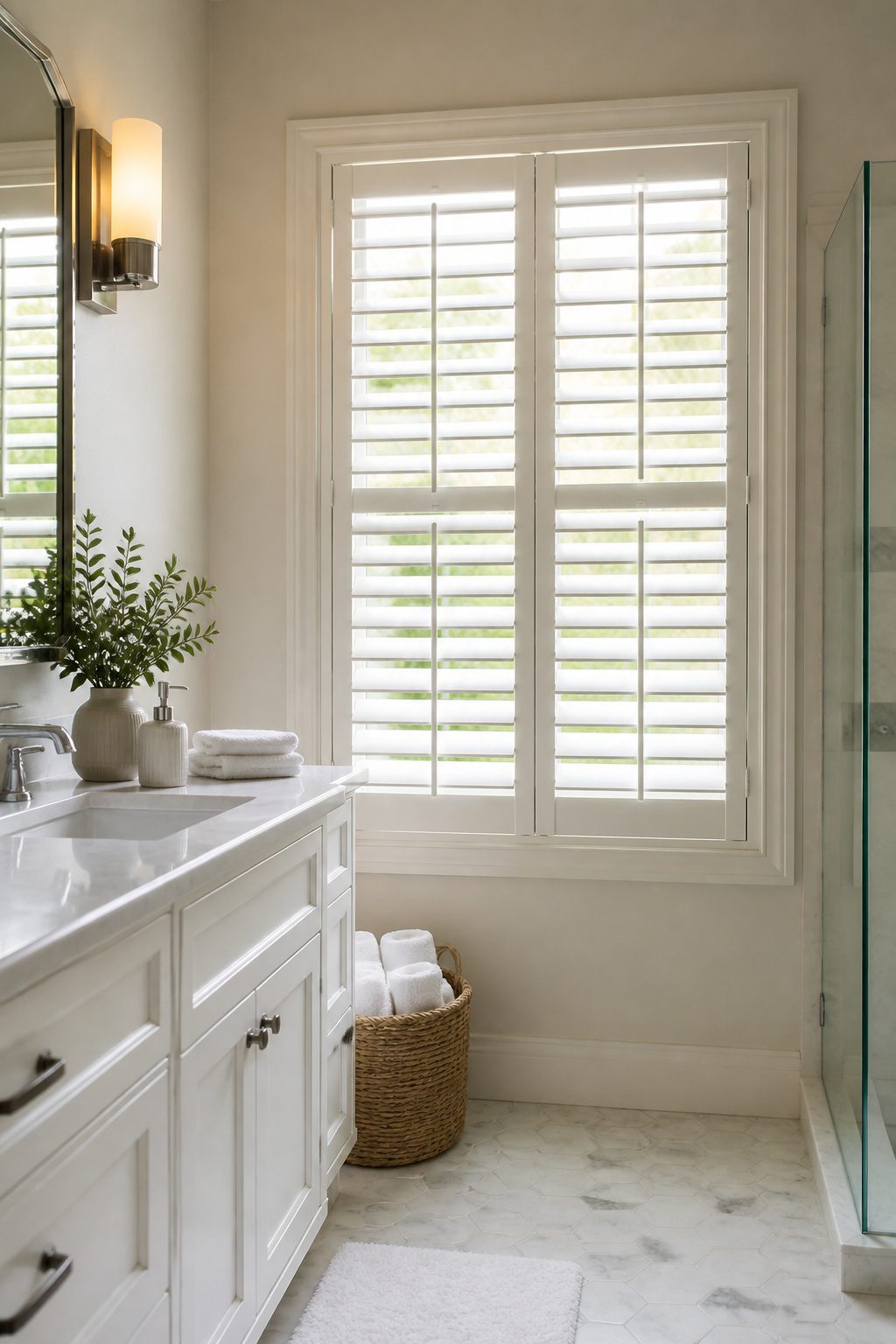
Ecowood shutters are built from U-PVC, a rigid polymer that handles dings and moisture without the soft give of vinyl.
At $20.00 per square foot, they sit at the entry point for permanent shutters, and the limited lifetime warranty covers the kind of hairline cracks that can spider through lesser materials after a few hard winters.
U-PVC means the color runs through the whole piece, not a surface layer waiting to chip. Scuff it, and you are looking at the same tone underneath.
That matters for renters who want the warmth of painted wood grain without the refinishing cycle, or for first-home owners putting shutters on a bathroom window where steam warps real timber in two seasons.
The tradeoff is weight and feel.
Tap U-PVC and you hear a hollower note than solid wood. The grain pattern is embossed, not cut, so up close the repetition shows.
For a street-facing second-story window or a rental you are dressing up for resale inspection, that distinction rarely costs you anything. For a period dining room where guests linger with their wine, it might.
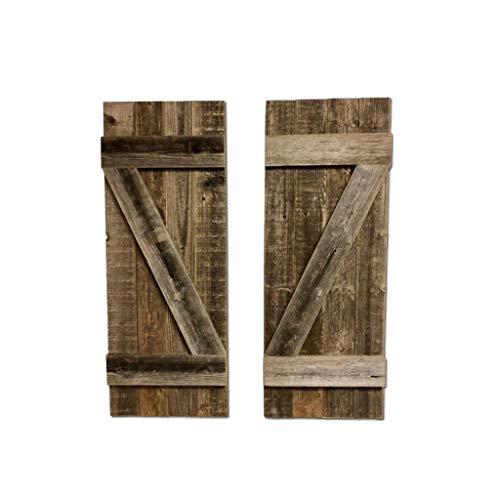
Distinctive Traditional Barn Look: Set of 2 Window Shutters. Elevate your home decor with our exclusive design, featuring a traditional barn look with the Z pattern that adds charm and character to any room.

Rustic Interior Wooden Shutters: Capture the essence of charming country style with these wooden shutters indoors, and give your home a cozy farmhouse ambiance.

One Piece Injection Molded Polypropylene Construction
Measuring for Inside and Outside Mounts
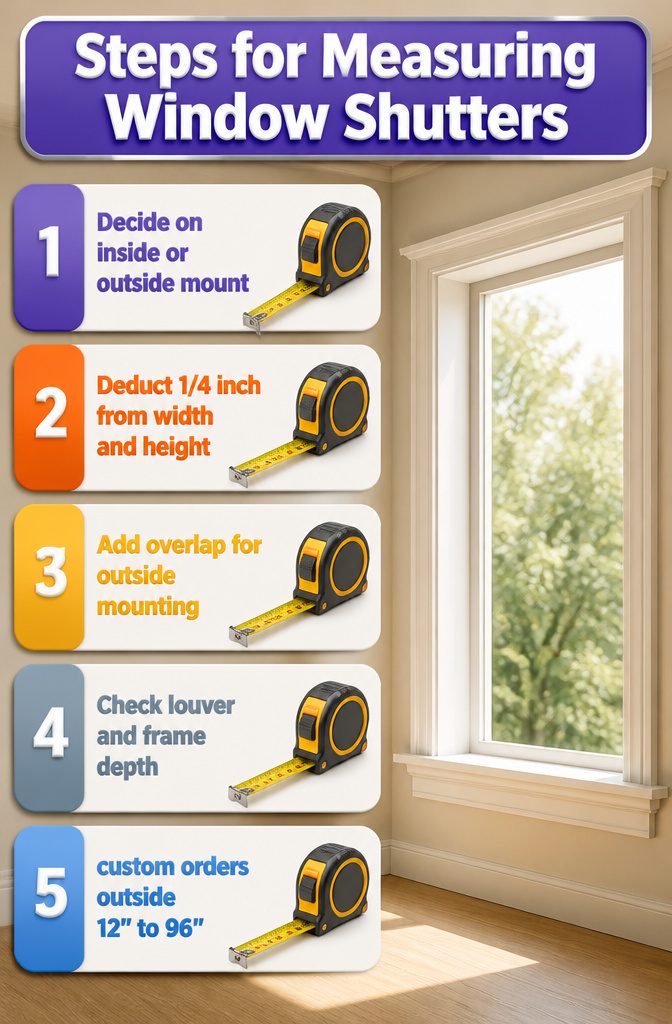
- Decide first whether the shutter frame will sit inside the window recess or overlap the wall around it. An inside mount needs a flat, unobstructed frame with enough depth for the louver size you want; an L-frame with 3 1/2" louvers needs 2 1/2" of depth, while 4 1/2" louvers need a full 3". A Z-frame saves some of that space, needing only 2 1/8" for 3 1/2" louvers.
- For an inside mount, deduct 1/4 inch from both the width and height of the window opening. This minimum gap lets the frame fit without binding; windows that are out of square may need more taken off.
- For an outside mount, add overlap to all four sides based on your frame choice. An L-frame or 2" decorative frame gets 2" added per side; a 2 1/2" modern frame gets 2 1/2"; a 3" decorative frame gets 3". If the bottom will rest on a sill, skip the overlap there.
- Check your louver and frame pairing against the depth the assembly needs. Outside mount L-frames sit shallow, as little as 1/4" for 2 1/2" louvers, but decorative frames run deeper, up to 1 5/8" for 4 1/2" louvers.
- Width and height limits run 12" to 96" for standard orders; anything outside that range needs a custom call.

Available in various color options

One Piece Injection Molded Polypropylene Construction

Item Description: 14.5 in. W x 48 in. H Builders Edge, Standard Cathedral Top Center Mullion, Open Louver Shutters, Includes Matching Installation Spikes (Per Pair), 002 - Black
Louver Sizes and Panel Choices
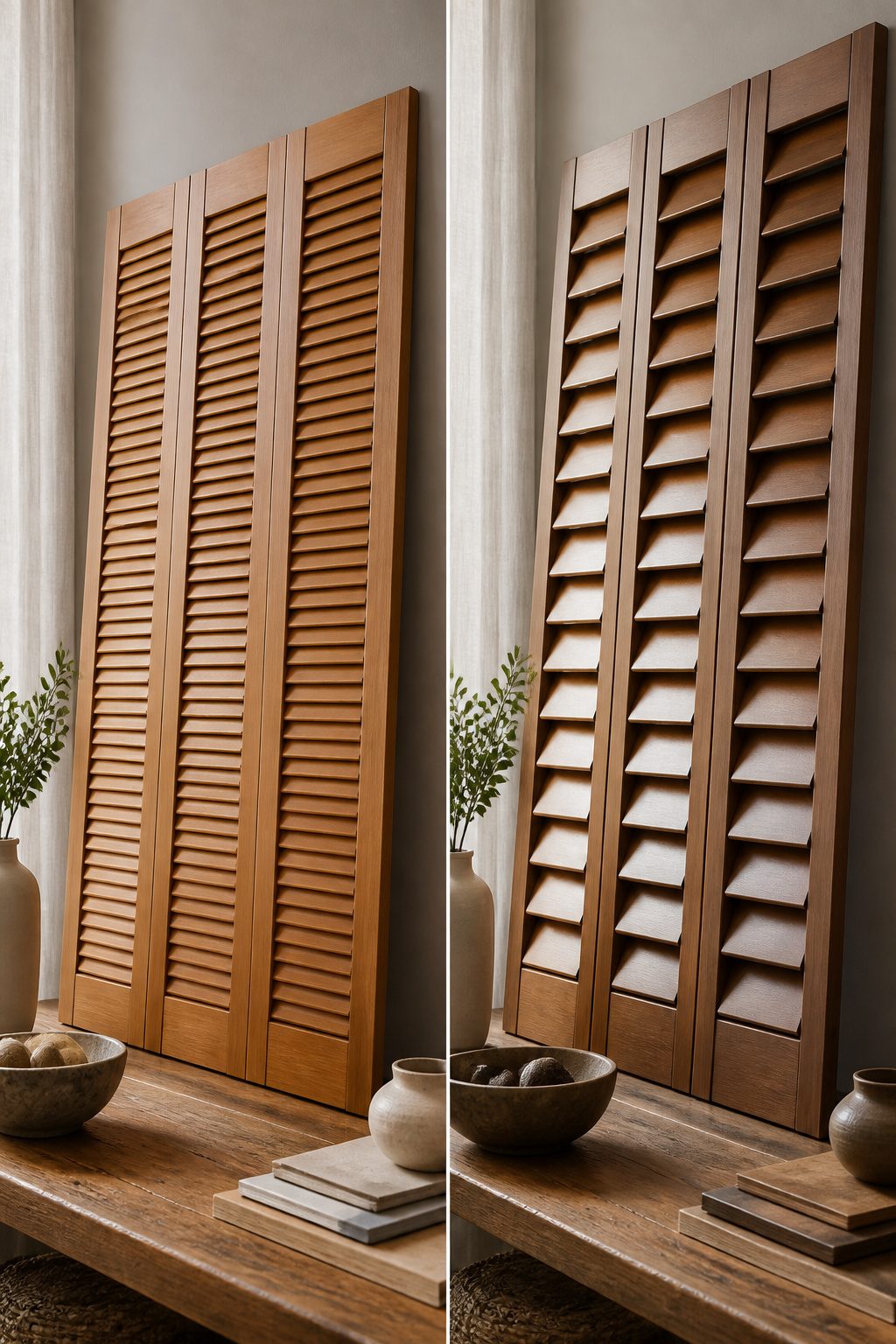
Louver width changes the whole personality of a room without touching the wall color.
A 2½-inch louver reads traditional and suits smaller windows where wider blades would crowd the frame. At 3½ or 4½ inches, the same wood window shutters go cleaner and more modern, and you actually see more glass when the slats open flat.
Panel splits matter more than most buyers expect. A single tall panel with no divider rail keeps the face uninterrupted, but every louver moves as one unit.
Add a center divider rail and you gain the option to close the bottom half for privacy while the top half stays open to the light. For windows over four feet tall, that rail also stiffens the panel against sagging.
Tilt rods finish the decision. Front-mounted rods give the classic plantation look most people picture, though they break the sight line slightly.
Concealed gear tilts hide the mechanism entirely; the tradeoff is a more contemporary feel and one-touch control rather than adjusting each section by hand.
Color runs broader than the hardware. Lines like Heritance Wood Shutters carry twenty-plus paint and stain options, from standard whites to custom color matches.
Painted finishes read crisper in modern rooms; stains let the hardwood grain stay visible. Either way, the factory finish beats anything a weekend brush job achieves.

One Piece Injection Molded Polypropylene Construction
One Piece Injection Molded Polypropylene Construction

One Piece Injection Molded Polypropylene Construction
What Holds Up and What Needs Care
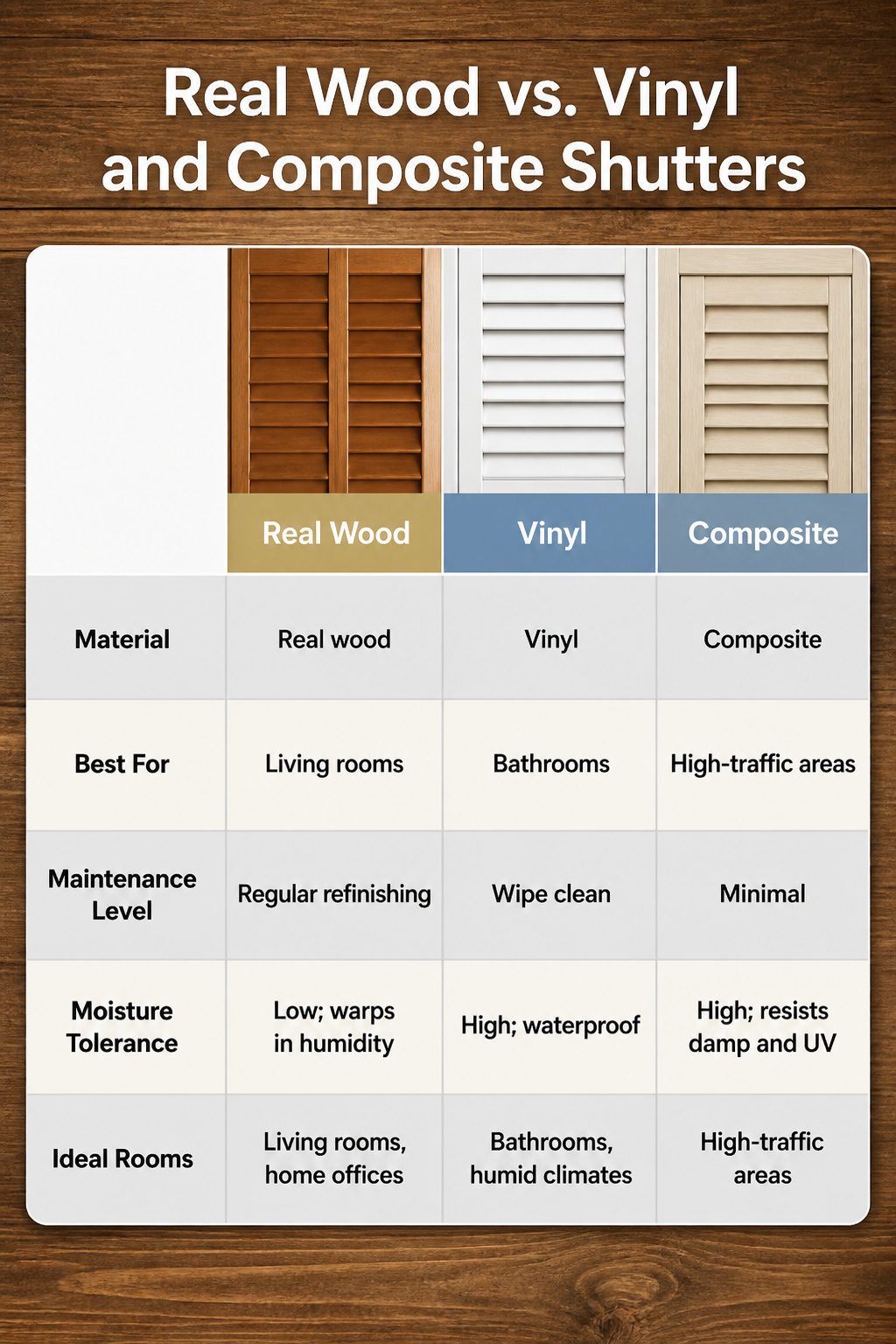
Real wood shutters carry a warmth that composites try to copy, but that warmth comes with a maintenance schedule most product pages gloss over.
Hardwood harvested from responsibly managed forests needs periodic refinishing to handle humid rooms or direct sun without warping or yellowing.
I learned to ask exactly what "periodic" means before ordering, because the answer changes whether you are hanging them in a dry bedroom or above a kitchen sink.
Vinyl and composite materials flip that burden. Vinyl shutters wipe clean and tolerate the intense sunlight and moisture that damages wood, which makes them the practical choice for bathrooms.
Composite shutters blend the look of genuine wood with durability that takes wear and tear without the same vigilance.
| Material | Best For | Maintenance Level | Moisture Tolerance |
|---|---|---|---|
| Real wood | Living rooms, home offices | Regular refinishing | Low; warps in humidity |
| Vinyl | Bathrooms, humid climates | Wipe clean | High; waterproof |
| Composite | High-traffic areas | Minimal | High; resists damp and UV |
The gap between what sources promise and what owners live with usually sits in that refinishing column. Wood demands specific care: sanding, staining or painting, and time to cure between coats.
Faux wood and composite reduce that burden to a damp cloth, which is why I steer weekend-timeline renters toward them unless the architectural detail of real hardwood is non-negotiable.
Motorized and Safety Features
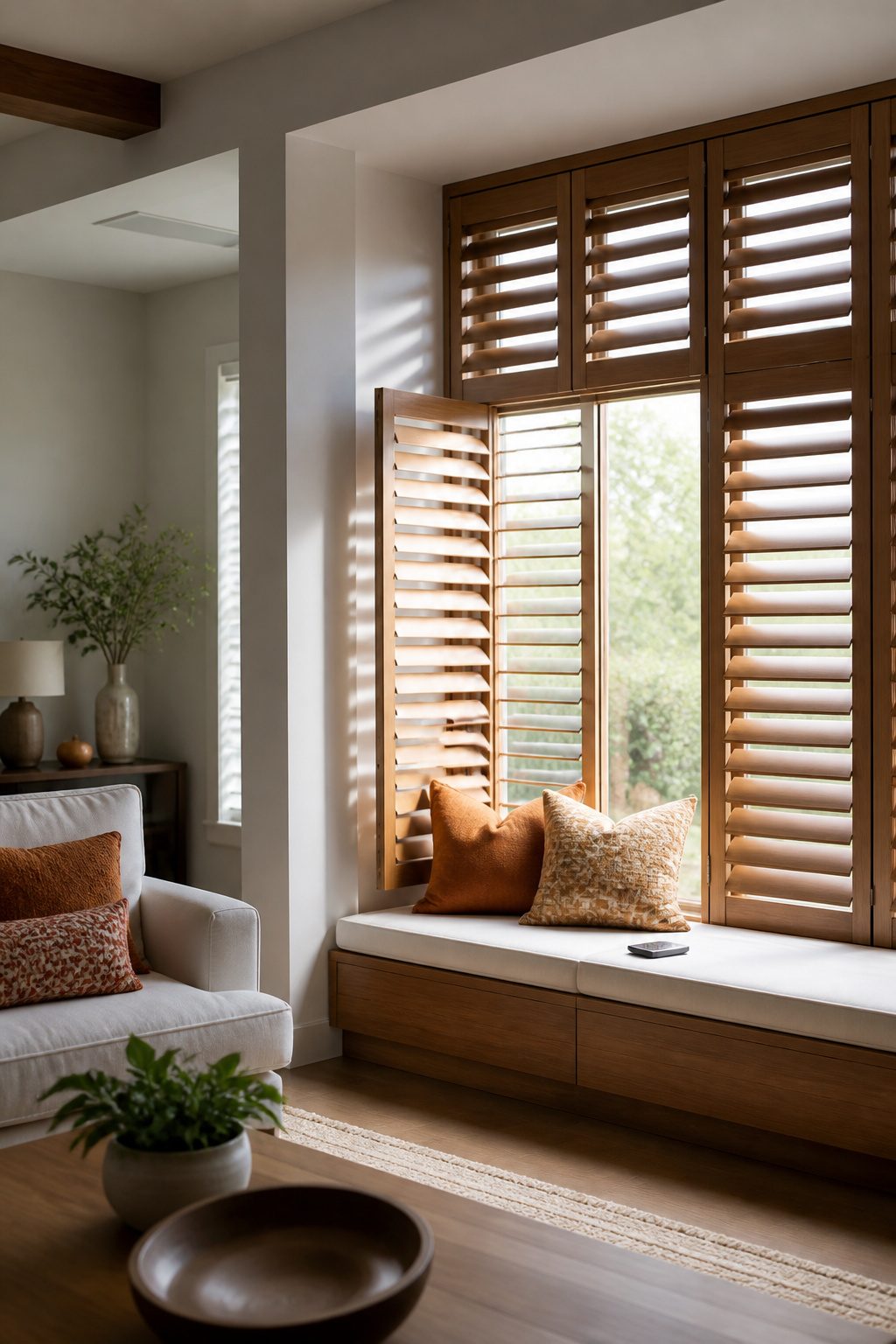
Smart motorization for wood window shutters lets you tilt louvers by remote, app schedule, or voice assistant like Alexa or Google Assistant.
The appeal is real: scheduled adjustments can make a house look occupied, and louvers set to block summer sun or winter heat loss add efficiency you would not get bare-windowed.
Hunter Douglas builds this into their Palm Beach Polysatin shutters with three power options: battery wands, rechargeable batteries, or wired direct-electric systems.
"With smart motorization, you can conveniently control the tilt of shutter louvers with a remote, your mobile device, automatically (through schedules you set in an app), or even with your favorite voice assistant, such as Amazon Alexa or the Google Assistant."
For a weekend project on a few hundred dollars, this is not where the money belongs.
The hardware and wiring eat budget that pays for actual square footage of shutters, and a manual tilt rod still works fine for anyone standing in the room.
Where it earns its keep: windows you cannot reach easily, a whole-house setup you will live with for a decade, or specific security concerns in a vacation home.
Child safety compliance, on the other hand, costs nothing extra and should be non-negotiable. The CPSC guidelines exist because cords and chains on window coverings have killed children; any shutter you order should conform to them outright.
A limited lifetime warranty tagged onto that compliance is standard from better makers, though production timelines of six to eight weeks mean you are not hanging these this Saturday regardless.
Production Timelines and What They Cost You
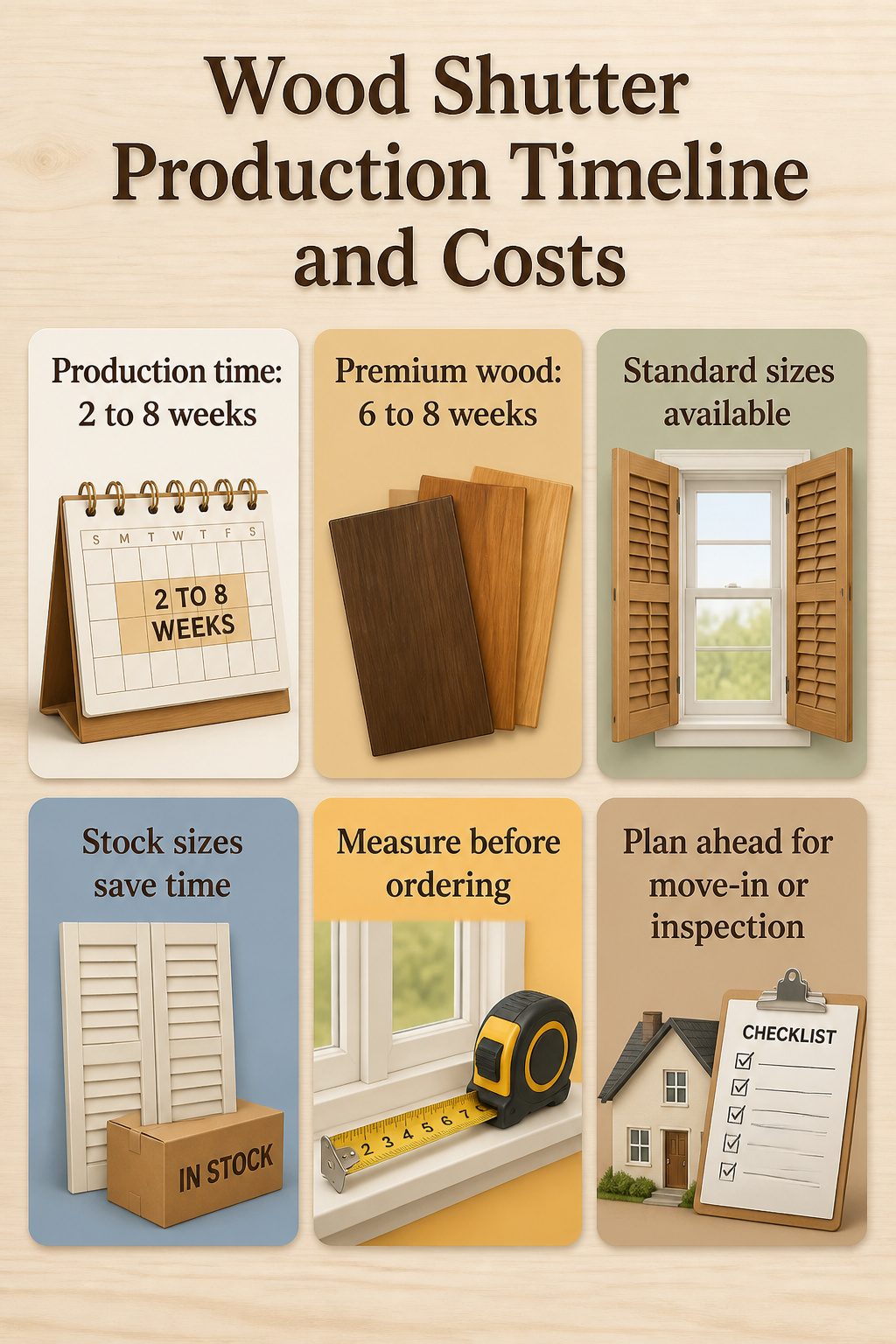
Custom wood window shutters run anywhere from two to eight weeks out, with premium stained wood landing at the six-to-eight-week mark.
That longer end is what I watch for when I am mapping a project against a move-in date or a lease renewal inspection.
Six to eight weeks sounds manageable until you realize the measuring happens first, then the order, then the wait, and suddenly you are past a month before anything ships.
Stock sizes beat custom waits when the window is close to a standard dimension and you are not married to a particular stain grade.
The savings in time usually outweigh the slight compromise in fit, especially on a rental where the landlord is not splitting the cost.
If the finish matters and the window is an odd size, you pay the weeks and plan backward from when you need them functional.
Frequently Asked Questions
What are the different types of wood window shutters?
The main types are pine, Red Grandis, cedar, mahogany, faux wood, composite, vinyl, and Ecowood.
Pine is the most affordable but needs the most maintenance, while mahogany sits at the top for stability and finish quality. Faux wood, composite, vinyl, and Ecowood are engineered options built to handle moisture without warping.
How do I measure for shutters?
Start by choosing inside or outside mount. For inside mounts, subtract 1/4 inch from both width and height so the frame fits without binding.
For outside mounts, add overlap to all four sides based on your frame choice: 2 inches for an L-frame or 2 inch decorative frame, 2 1/2 inches for a 2 1/2 inch modern frame, or 3 inches for a 3 inch decorative frame.
Check that your louver and frame pairing matches the depth your window recess can handle.
What is the production time for custom shutters?
Custom wood window shutters typically run two to eight weeks, with premium stained wood landing at the six-to-eight-week end.
Stock sizes ship faster, roughly half the wait of traditional custom orders. Plan backward from your deadline because measuring and ordering add time before production even starts.