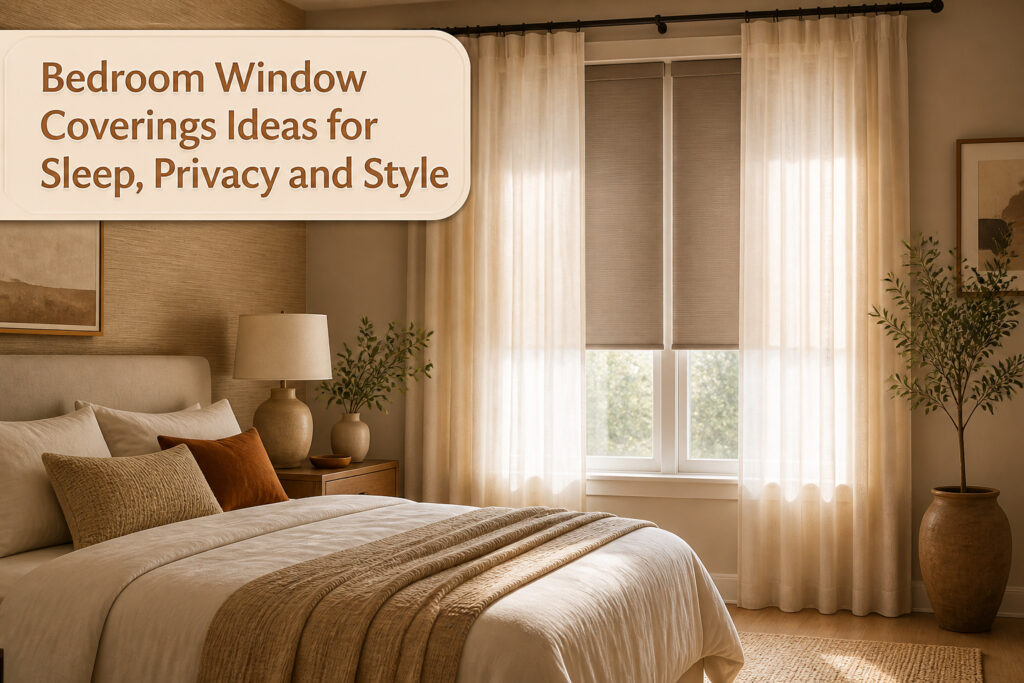
Bedroom window coverings are the shades, blinds, and layered treatments that control light, temperature, and privacy at the glass. The right choice depends on which problem you need solved: blackout fabric for alley light, cellular construction for south-facing heat, or sheer panels that become backlit screens after dark. A stock 36-inch roller shade with a half-inch gap on each side leaked more light than the fabric itself, which is why custom sizing and edge sealing matter more than the material alone.
[link-whisper-related-posts]Roller Shades

The clean profile of a roller shade disappears into its own cassette when you raise it, which is why these ended up on every bedroom window in my first apartment. Light-filtering fabric gave the front room a soft morning glow, but the real decision was the back bedroom, where I needed blackout material to block the alley light. Custom sizing mattered more than I expected; the stock 36-inch width left a half-inch gap on each side that leaked more light than the fabric did. The cord mechanism is a beaded chain that runs through a clutch, and after two years of daily use the pull still had the same light resistance, though the plastic beads had worn smooth where my thumb always gripped. For renters, the minimal bracket footprint means you fill tiny holes rather than patching a valance mount when you move.
Roman Shades

Roman shades live in the soft fold of fabric across the top of a window, and that fold is where they get their elegance. Cotton, linen, velvet, whatever you choose, the material stacks into neat horizontal pleats when the shade is raised. That stack is the tradeoff: plan for six to eight inches of visible window eaten by the gathered fabric, or mount the shade outside the frame entirely.
I learned this measuring for a bedroom with eight-foot ceilings and a window I wanted to feel taller. Measured inside the frame, ordered the shade, watched it arrive beautiful and then watched it swallow the top third of the glass. The room felt shorter after, not taller. An outside mount, extending a few inches past the frame on each side, would have kept the full window visible and let the fabric read as intentional architecture rather than a mistake in proportion.
Light filtering through the weave gives Roman shades their particular bedroom quality: private without being dead, textured without demanding attention. Velvet reads formal, cotton casual, linen somewhere between. The wrong choice is usually the one chosen for looks alone; the right one accounts for how much light you want to lose and how much stack height you can spare.
Cellular Shades

Cellular shades owe their insulating power to a honeycomb-shaped cell structure that traps air in pockets between the fabric layers. That trapped air acts as a buffer against the glass, which is the weak link in any bedroom wall for heat loss and gain. The difference shows up concretely on my south-facing wall, where the R-value improvement was noticeable enough that the room stopped overheating by mid-afternoon in summer.
The same construction that blocks temperature also blocks light when you need it. Room-darkening cellular shades add blackout fabric to those honeycomb cells, so you get the insulation plus the darkness for sleeping. Privacy works through the layering too: even a sheer or light-filtering cellular shade gives you a soft visual barrier from outside, because the cells put multiple fabric surfaces between you and the window.
For extreme climates, some manufacturers offer a honeycomb-within-a-honeycomb build that stacks smaller cells inside larger ones, creating more air pockets without much added bulk. The tradeoff is cost and stack height when the shade is raised. For most bedrooms, a standard single-cell construction handles the job; the double-cell upgrade pays off if your window faces brutal summer sun or winter wind, or if you simply sleep better in a stable temperature.
Blackout Shades
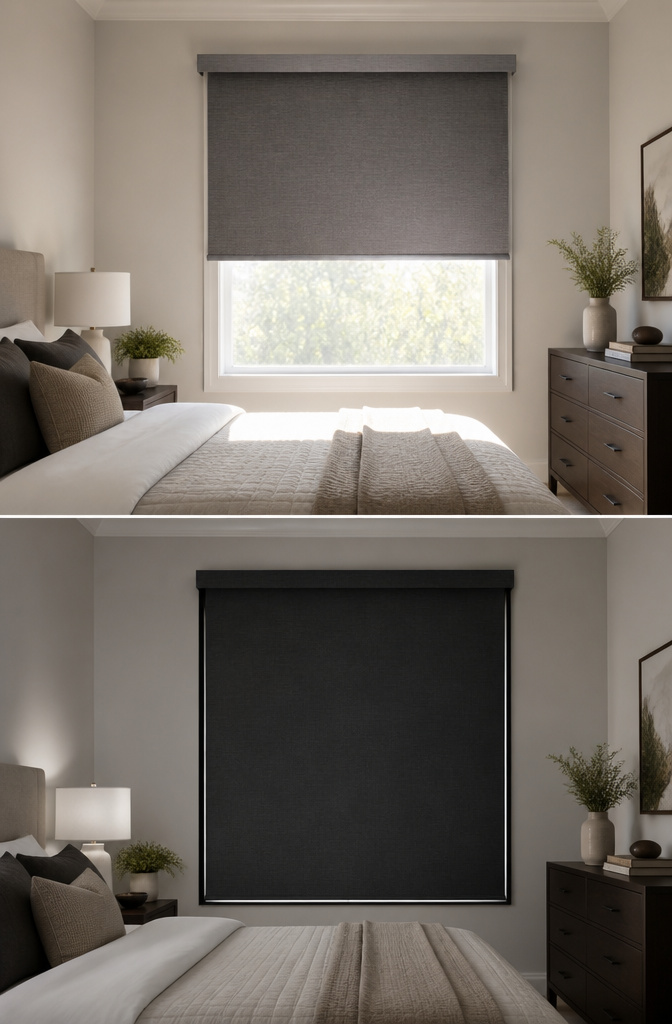
Blackout shades are built to block light through the fabric itself, but the edges are where the dark fails. A flashlight held against the glass at 2 AM will still find the halo creeping around the sides, thin and gray, enough to read a clock by once your eyes adjust. The gap wins unless you plan for it.
Room-darkening shades let through more than that; they soften morning into dusk but never kill it. Blackout is the heavier grade, and the difference matters if you sleep days or run on six hours and cannot afford to lose one to a streetlamp.
An outside mount buys you overlap, wrapping the frame on three sides. Side channels or light-block strips close the rest. I have not found a shade that seals perfect on its own; the hardware does the work the fabric cannot.
Sheer Shades
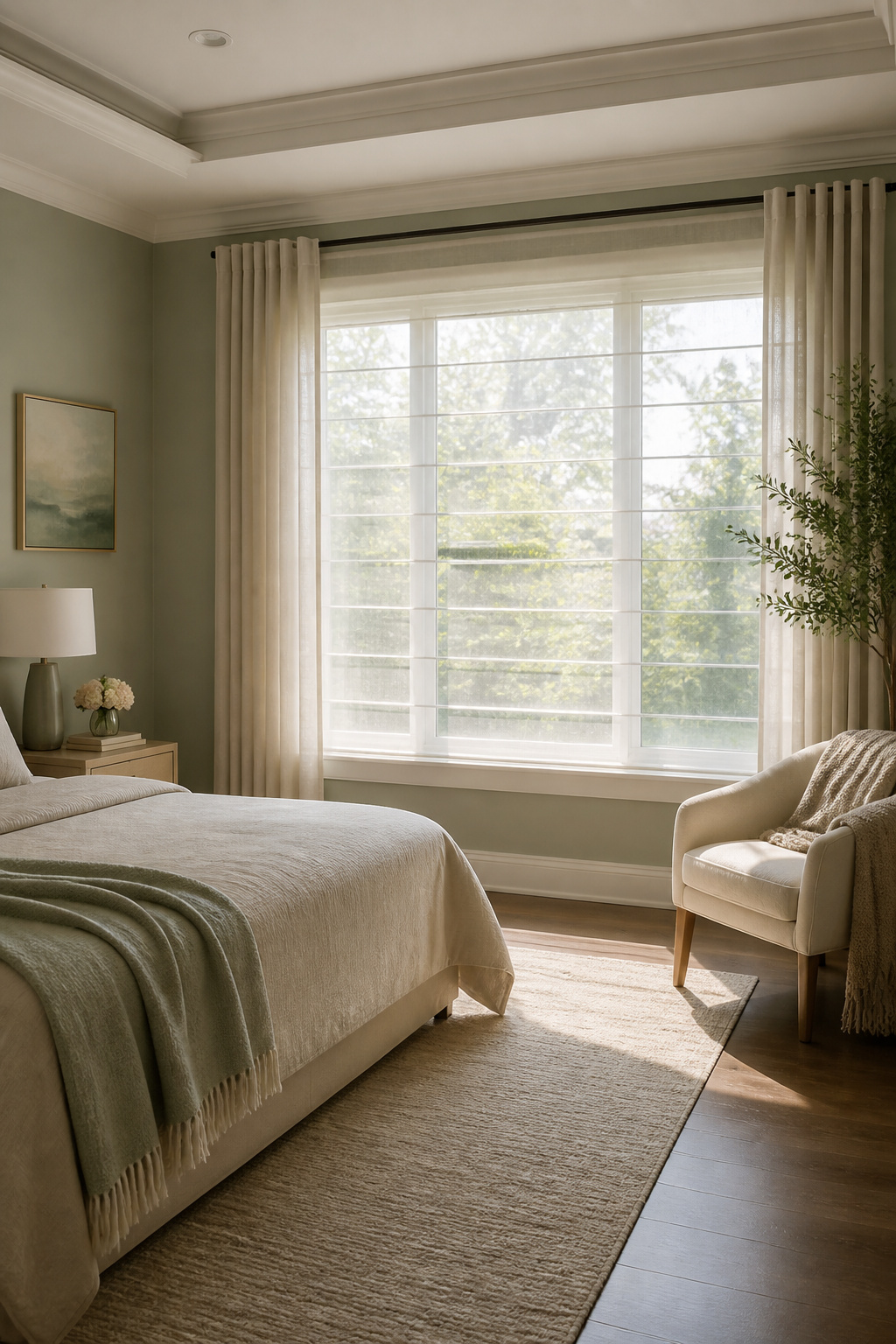
Sheer shades trade direct sun for a soft, diffused glow that still lets you read the clock without turning on a lamp. The fabric layers scatter light rather than block it, which keeps the room feeling open and airy during the day.
Privacy was where I misjudged them. From inside at noon, the white rear sheer obscures the view in well enough that you forget the window is uncovered. The streetlamp test at night tells a different story. With interior lights on and darkness outside, the diffusion reverses: silhouettes show through clearly, and anyone walking past can map the furniture. Daytime privacy and evening privacy are two separate features with sheer shades, not one.
The ceiling-height approach helps with this visual exposure more than you’d expect. Architectural Digest notes that custom floor-to-ceiling sheer panels "add a softness to the room, diffuse sunlight, and provide privacy in the evening," plus the vertical line draws the eye upward into an expansive ceiling. That height buys you coverage; the closer the fabric falls to the sill, the more backlit the room becomes after sunset.
For bedrooms, pair sheer shades with a room-darkening layer if you need both the glow and actual night privacy. The Silhouette Duolite option builds this in: a translucent shading paired with a roller shade behind it. Without that second layer, plan on adding your own curtain or accepting that the room goes dark by switching off the lamps.
Bamboo Shades

Bamboo brings a warmth to a bedroom that synthetics struggle to match. The grain runs in natural stripes, and the light filters through in soft bands rather than harsh blocks. For anyone trying to build a calmer space, that alone carries weight.
The eco-friendly label holds up if you source carefully. Bamboo grows fast and needs little water, though the binding resins and shipping distances muddy the claim depending on where you buy. The smell of new bamboo shades is distinct, a sweet grassy note that fades over a few weeks. Some find it pleasant; others air out the room before sleeping.
My own pair warped within two humid summers. The slats curved outward like a smile, then cracked where the tension sat too long. Bamboo hates bathrooms and any bedroom with poor ventilation; keep it for dry climates or rooms with consistent airflow. In the right spot, it lasts years. In the wrong one, you are replacing strips while your neighbor’s faux-wood holds flat.
The tranquil aesthetic works best where you want softness without bareness. Paired with a simple curtain, bamboo diffuses morning light into something gentle enough to wake slowly to.
Zebra Shades

Zebra shades run alternating sheer and opaque fabric strips across the same roller, and the light you get depends entirely on how those stripes line up. Align the opaque bands and the room goes dim; offset them by half a step and daylight filters through in horizontal bands. The striped shadow pattern lands on the wall exactly as you’d expect, like soft venetian blind shadows but wider and more regular, which reads as modern rather than office-like.
The overlap position has a learning curve. Small adjustments make a bigger difference than with standard shades because the transition zone between "bright" and "dim" is so narrow. In my reading, people tend to stop too early, leaving a sliver of sheer exposed that throws a bright line across the pillow at dawn. The full blackout position takes an extra half-inch of pull, and you learn to feel for it.
Layering Shades
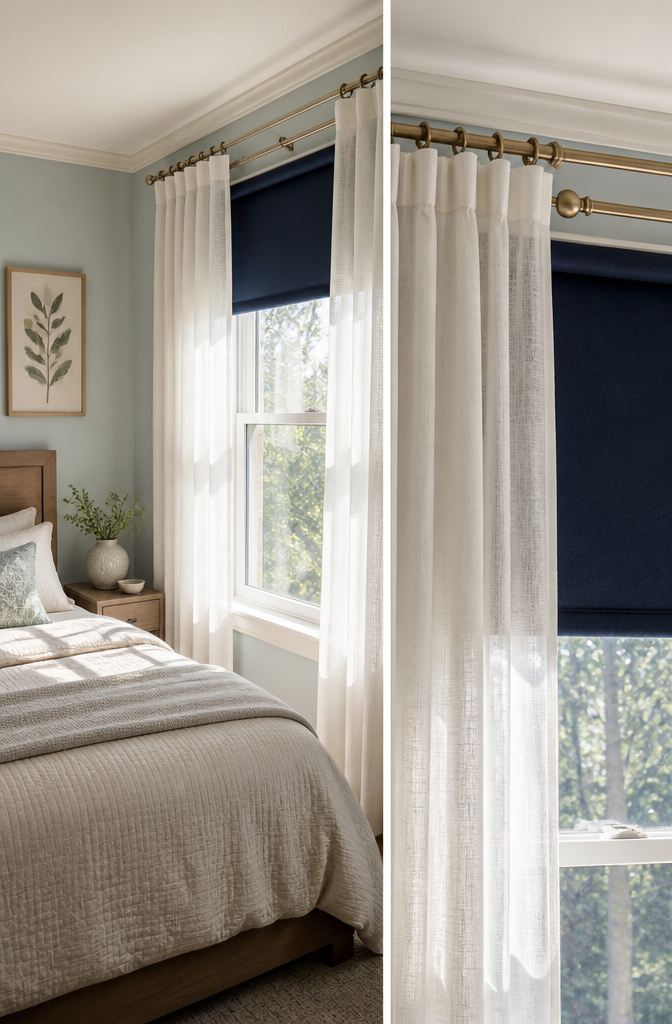
One shade rarely handles both morning light and midnight privacy on its own. Pairing a sheer layer with a blackout shade gives you the filtration of a single fabric during the day and the darkness of blackout cellular or roller shades when you need sleep. The double rod setup runs about $25–40 for a basic tension system, more if you want a mounted double bracket with finials.
The tradeoff is the morning routine. You are adjusting two layers instead of one, and if the blackout is a roller, the sheer sits in front and collects dust where you cannot reach it without moving the whole arrangement. Day-night cellular shades on a single headrail skip this, but they cost more upfront and the light-filtering panel is never quite as soft as a true sheer.
For renters, the double rod wins because it leaves no more holes than a single bracket and travels with you. Buy the blackout first if sleep is the problem; add the sheer once the budget loosens.
Light Control and Sleep

How dark a bedroom needs to be depends on the sleeper, not the shade. Some people need to block every hint of morning light to stay asleep past six; others wake easier with a thin glow filtering through. The right shade matches the sleeper, not the room.
Blackout shades serve the first group. Roller and cellular styles both carry blackout linings, and cellular construction adds insulation and noise reduction alongside the darkness. Hunter Douglas takes this further with LightLock, a side-channel system of micro-ridges that absorbs or deflects nearly all incoming light by overlapping the shade edges against the window frame. For renters who want flexibility without installing two separate treatments, Duolite combines opaque and sheer fabrics into one shade: privacy and blackout at night, filtered daylight when you raise the opaque layer.
Zebra shades land on the gentler end of the spectrum. Their alternating sheer and opaque stripes let you dial in exactly how much morning light enters, aligning the bands to block light or filter it. The adjustment is manual and precise, which suits someone who wants gradual waking more than total darkness.
The tradeoff between these approaches is flexibility versus completeness. Blackout linings give absolute darkness but one setting; zebra shades give range but never full seal. A renter covering east-facing windows for shift work should probably commit to blackout. Someone who simply wants to soften a 5:30 sunrise can get what they need from zebra stripes at half the hardware complexity.
Privacy After Dark

Translucent fabrics look private during the day and turn into backlit screens at night. Solar screens, in particular, can appear see-through after dark with interior lights on, which makes them a poor standalone choice for a bedroom.
The reliable options are blackout roller shades, room-darkening cellular shades, and lined Roman shades. These block the view completely because the fabric itself is opaque, not because of a coating that might wear thin.
Before I settle on any shade, I run the flashlight test. After dark, I stand outside with a phone flashlight pressed to the glass where the shade will sit. If any light leaks through the material or around the edges, the shade fails. Edge gaps are the usual culprit, and an outside mount with extra overlap fixes most of them. Side channels or light-block strips handle the rest.
What Room Temperature Has to Do With It

The air gap inside a cellular shade does more than the fabric itself. Honeycomb cells trap a layer of still air against the glass, and that trapped air is what slows heat transfer. A single-cell shade helps; a honeycomb-within-a-honeycomb construction adds another pocket of air and another degree of separation between your bedroom and the outside temperature.
Layering compounds the effect. A sheer shade paired with a heavier blackout shade creates two additional barriers, and the trapped air between them matters almost as much as the materials. In winter, that stack of layers can turn a window from a cold wall into something you can sleep next to.
I switched one bedroom window to a honeycomb shade two Januarys ago and tracked the difference. The room ran warmer by a few degrees on the same thermostat setting, and my electric bill for that month dropped by about eleven dollars. One window, one change, one line item lower. Scale that to every bedroom window in a house and the sleep quality improvement pays for itself before the savings do.
Motorized Options

Motorized shades solve the one problem no cord or wand can touch: windows you cannot physically reach without a step stool or worse. The convenience factor is real for clerestory windows, loft bedrooms, or any treatment mounted over a bed where climbing up means climbing on the mattress. Battery-powered units run on rechargeable cells that tuck into the headrail, while wired options need an outlet or rough-in during construction. Battery models install with a drill and four screws, but the charge cycle becomes part of your household rhythm; wired ones disappear into the wall and stay disappeared.
For my own reachable bedroom windows, the math never worked. The premium over a manual shade bought me nothing I could not get by standing up. The loft changed that. The window sits above the stairwell, angled under a sloped ceiling, and resetting it at bedtime meant a trip to the garage for the six-foot ladder. The battery-powered shade up there gets charged when the low-battery tone chirps, about twice a year, and the difference between remembering to plug it in and remembering to haul a ladder upstairs is the difference between a feature I use and one I ignore.
Frequently Asked Questions
What are the best bedroom window treatments?
Roller shades, Roman shades, cellular shades, and blackout shades are the most reliable choices for bedrooms. Each solves a different combination of sleep, privacy, and temperature needs, so the best one depends on whether you prioritize darkness, insulation, or a softer filtered light.
Do blackout blinds make the room completely dark?
Blackout fabrics block most light through the shade itself, but tiny edge gaps can create a faint halo around the frame. An outside mount with extra overlap, or side channels and light-block strips, closes those gaps for a darker room.
Which bedroom window treatments offer the most full privacy at night?
Blackout roller shades, room-darkening cellular shades, and lined Roman shades provide reliable nighttime privacy because the fabric itself is opaque. Solar screens and other translucent options can appear see-through after dark when interior lights are on, so they work poorly alone in bedrooms.
What’s the difference between room-darkening and blackout for bedrooms?
Room-darkening significantly dims the space but allows a trace of glow to filter through. Blackout blocks the most light and is the heavier grade, which matters if you sleep during the day or cannot afford to lose an hour to a streetlamp.