
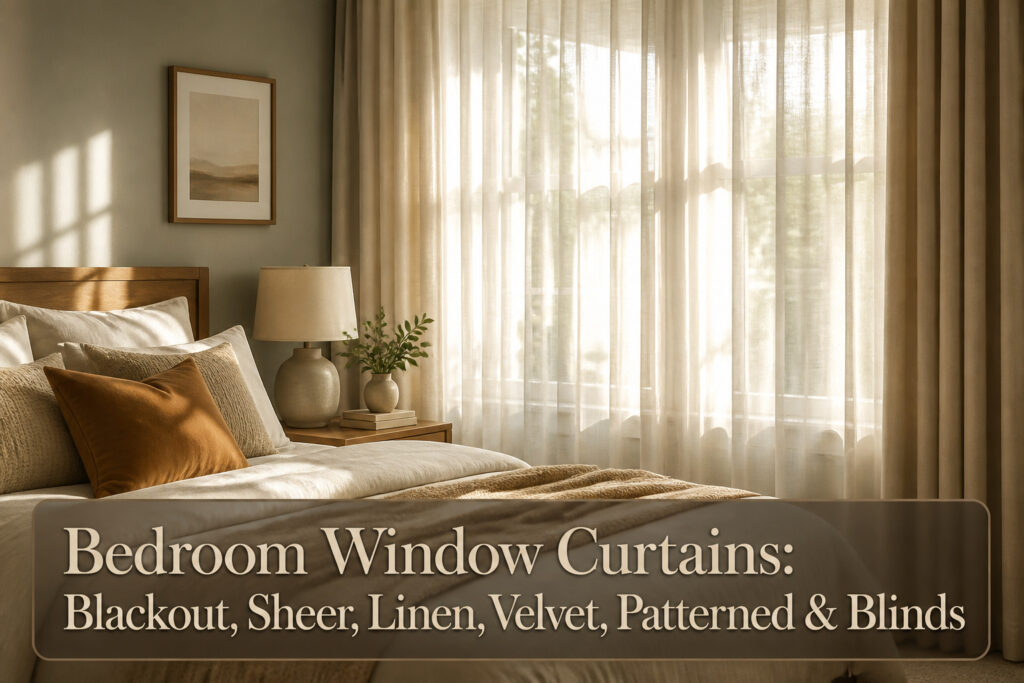
A curtain for bedroom window is a fabric panel hung on a rod or track to block light, filter glare, or frame the glass for privacy.
The choice that trips most people up is assuming one layer can do everything, because blackout fabric reads as a solid slab of color and sheer linen lets winter cold straight through.
The triple-weave construction that actually stops light sandwiches a dense black yarn between two outer layers, and that middle layer is what shifts a room from bright to cave-dark with one pull.
Blackout Curtains
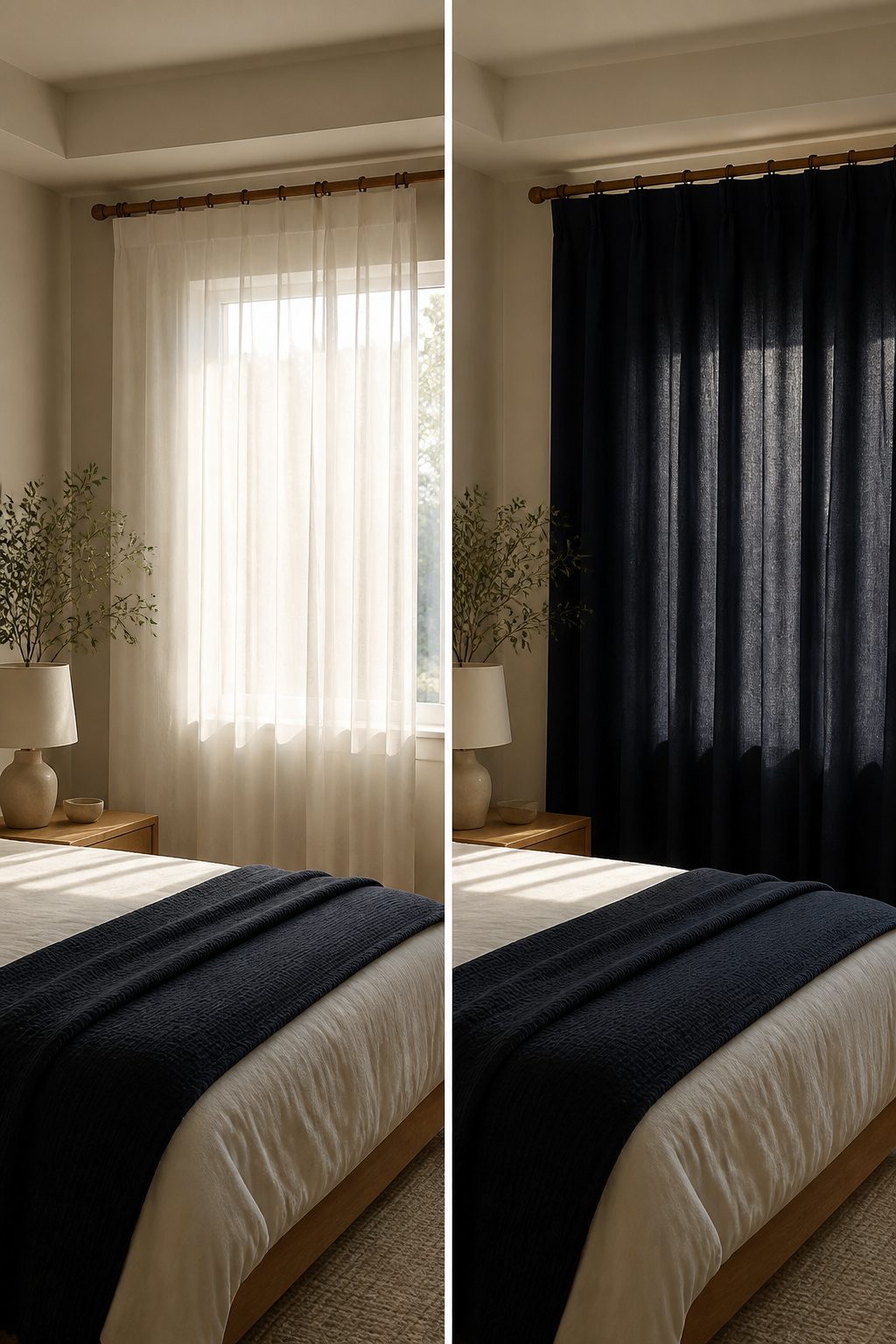
A triple-weave fabric sandwiches a dense black yarn between two colored outer layers, and that middle layer is what stops light completely rather than just dimming it.
The construction feels heavier in your hand than standard drapery, closer to canvas than to bedsheet, and the difference is immediate when you hold a panel up to a lamp.
Shift workers or anyone sleeping past sunrise notice the payoff first. An east-facing window throws full morning sun straight across a pillow by six in summer, and a blackout curtain changes that room from bright to cave-dark with one pull.
The fabric also knocks down some street noise and drafts, which matters in older rentals with single-pane glass.
The catch is the look. Most blackout panels read as solid slabs of color, and the coated versions that feel almost rubbery on the back hang stiffly.
If you want the room dark but not sterile, a textured weave or a color deep enough to hide the blackout layer helps.
I would skip white blackout curtains entirely; the coating shows through eventually, and they end up looking like office furniture.
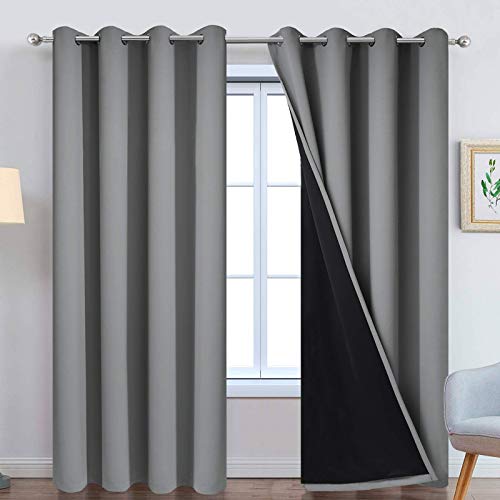
PACKAGE MADE:2 panels per package. Each Lined Curtain measures 52" wide x 84" long. 8 Silvery Grommets per panel. This silvery grommet (1.6 inch inner diameter) fits many rods. Easy to hang and smooth to slide. The simple design gives people a sense of ease.

2 PANELS SET: Sold pair(set) of 100% blackout curtains, each window panels measuring 52 inches wide and 84 inches long with 8 grommets. The unique design of silvery grommet (1.6 inch inner diameter) creates fashion for your house, which makes the curtains easy to install and slide.
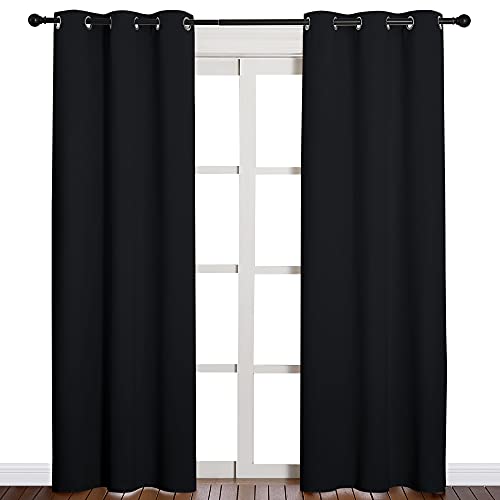
READY MADE: Set includes 2 BLACKOUT PANELS of 42" wide x 84" length with 6 grommets top each. Quality fabric without liner feels soft and heavy.
Sheer Curtains
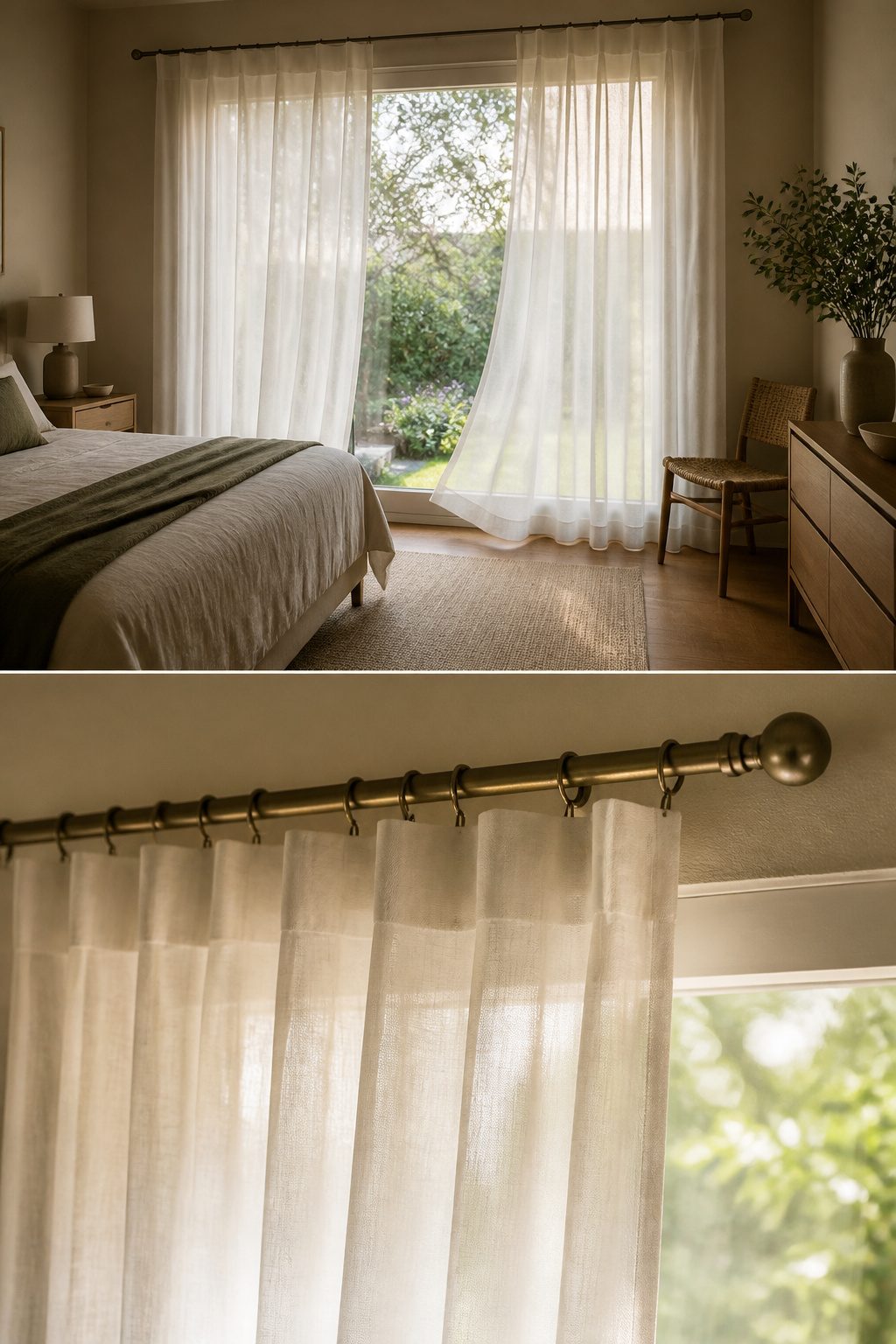
Sheer curtains let morning light spread across a bedroom without the exposed feeling of bare glass. The fabric diffuses what comes through, so faces and furniture stay in soft silhouette rather than sharp detail.
That balance works best in rooms that face a garden wall, a side yard, or any window where the nearest neighbor is far enough that outlines matter more than total concealment.
A bedroom used only for sleeping, where darkness is the point, will need more than sheers alone.
The same rods can carry a second layer: blackout panels on rings that slide past the sheers when night comes, or a roller shade fitted inside the frame for the same purpose.
Either setup keeps the airy look during the day without surrendering the room to streetlights after dark.
The layering also solves the seasonal problem.
Sheers billow pleasantly in a spring breeze but do nothing against winter drafts. A heavier curtain drawn across at night adds the insulation that sheers cannot.
For renters, this is the practical case for a double rod: it installs with the same brackets, leaves no extra holes, and lets the room shift between two personalities without buying two separate window treatments.
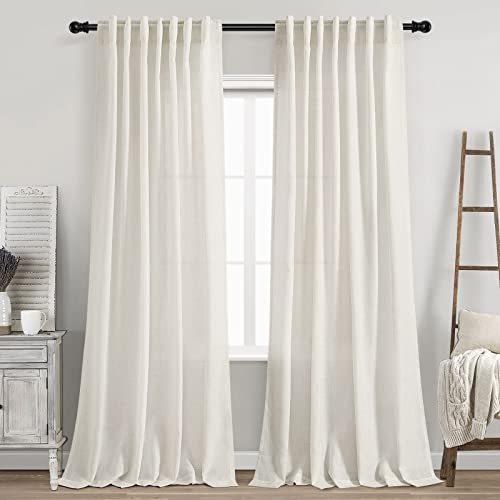
READY MADE: 2 Linen Curtain Panels per package.Each panel measures 52 inches wide by 84 inches long. Top design of Back tab & loop pocket provide 3 hanging options. <1> hanging from the back patch to create an elegant pleated look, <2> from the 3 inch rod pocket for a classic look <3> Hanging with clip rings for easy, slide open and closed (clip rings are not included)

Basic Information: Includes 2 curtain panels, each measuring 50 inches wide for a total of 100 inches. Easy care for machine washable in cold water, do not bleach, tumble dry low, iron on low heat if needed.

READY MADE: 2 White Linen Curtain Panels per package.Each panel measures 52 inches wide by 84 inches long. Top design of Back tab & loop pocket provide 3 hanging options. <1> hanging from the back patch to create an elegant pleated look, <2> from the 3 inch rod pocket for a classic look <3> Hanging with clip rings for easy, slide open and closed (clip rings are not included)
Linen Curtains
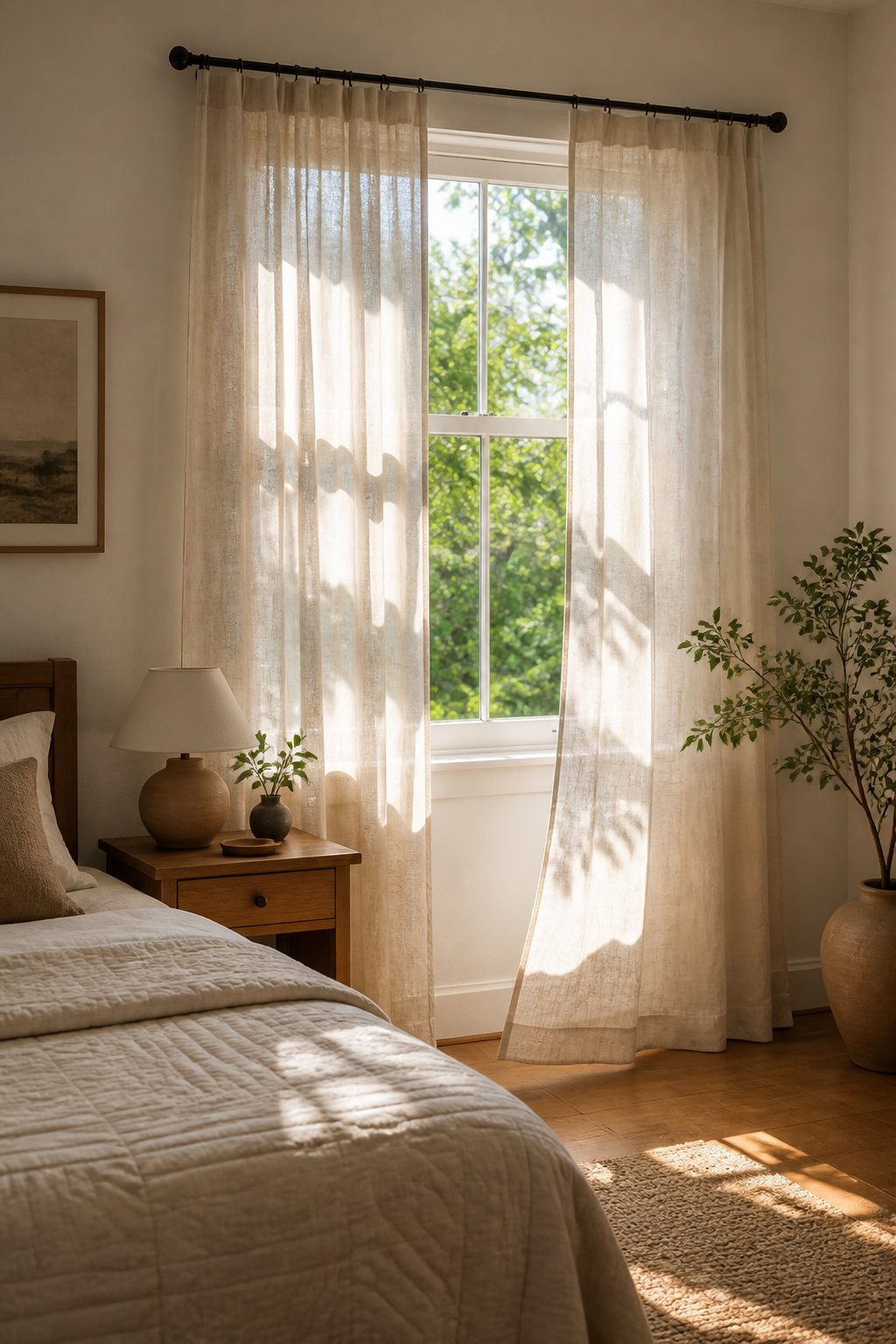
Linen curtains carry a texture that reads as relaxed even when the rest of the room is pulled together.
The weave lets air move through in summer, which keeps a bedroom from turning stale on nights when you want the windows cracked but still need privacy.
In winter that same openness works against you; the fabric does little to stop cold from radiating off the glass, so you will want a heavier layer behind it or a draft snake along the sill.
The casual look is the point, not a side effect. Linen drapes in soft folds rather than crisp pleats, and the slubs in the fiber catch light unevenly through the day.
What you give up is the tailored finish of cotton or polyester. Wrinkling is not a flaw with linen; it is the material announcing itself, and steaming it every week will exhaust you.
Washing tightens the weave temporarily and the creases soften out after a day or two of hanging, so the lowest-efftenance path is to hang them slightly damp and let gravity do the rest.
For a rental bedroom where you are dressing one window and moving on, linen reads as intentional without looking like you tried too hard.
The cost sits a notch above basic synthetics, but the fiber lasts through multiple washes where cheaper curtains pill or fade.

100% Blackout Curtains: Our Blackout Curtains ensure a completely dark room, isolate noise and protect privacy. These room darkening curtains can block 100% sunlight.Heavy duty curtains keep heat indoors in winter and discharge heat in summer, thereby reducing cooling and heating costs , While protecting your furniture, floors and artwork from the sun damage

100% Blackout Curtains: Our Blackout Curtains ensure a completely dark room, isolate noise and protect privacy. These room darkening curtains can block 100% sunlight.Heavy duty curtains keep heat indoors in winter and discharge heat in summer, thereby reducing cooling and heating costs , While protecting your furniture, floors and artwork from the sun damage

MULTIPLE HANGING: Sold per pair, including 2 window panels - Panel measures: 52 x 84 - inches | Set measures: 104 x 84 - inches, with 3 curtain top hanging options (Back tab & Rod pocket & Pleated) for your personalized style. Each panel sewn with 4" rod pocket (7 back loops), 2" bottom hem and 0.8" side hem, specialized fitting the curtain rods up to 3
Velvet Curtains
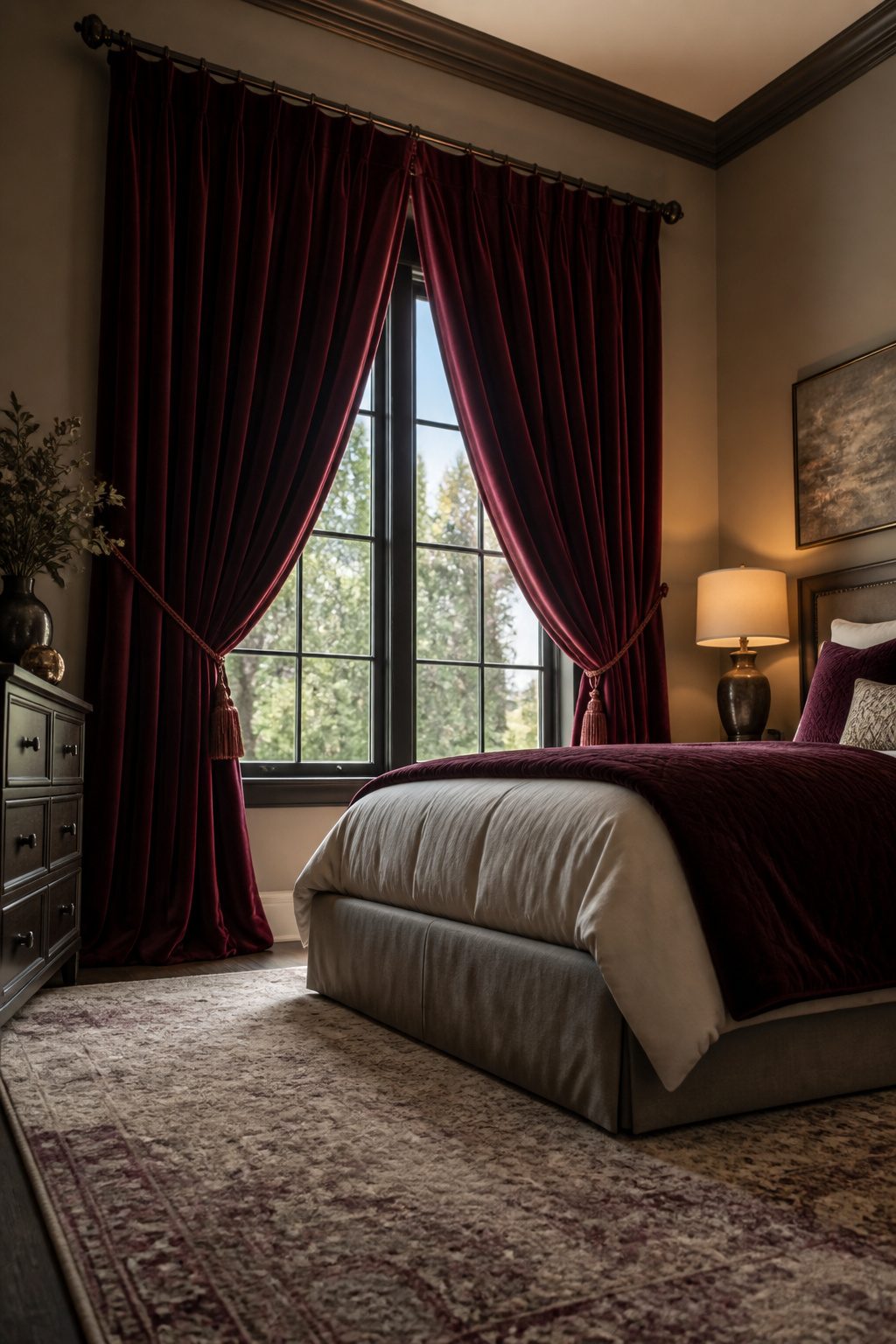
Velvet curtains carry a weight you notice the moment you hang them. The fabric pulls straight and falls in folds that catch light differently from every angle, giving a bedroom walls that feel finished rather than decorated.
That density works as insulation too; in a drafty rental last winter, swapping thin panels for velvet dropped the cold bleed from the window enough that I stopped piling an extra blanket on the bed.
The pile does demand attention. Dust settles into those fibers rather than resting on top, so vacuuming with an upholstery attachment every few weeks keeps the color true.
Washing means front-loading machines only, cold water, and air drying flat to keep the nap from crushing into permanent creases. Dry cleaning is the safer bet for deeper cleans, though the bill adds up over years.
For renters, the heft also means a sturdier rod bracket; a tension rod will sag or slip by February.

Room Darkening Solution: The double curtain rod features a wrap around design, which creates a tight seal between the wall and curtains, effectively blocking light and reducing outside noise to help you create a comfortable and cozy indoor environment.
Room Darkening Solution: The double curtain rod features a wrap around design, which creates a tight seal between the wall and curtains, effectively blocking light and reducing outside noise to help you create a comfortable and cozy indoor environment.

Ready Made:Package includes 2 panels of double layered blackout and sheer curtains with tie backs,measuring 37Wx95L inch each panel,3 inch rod pocket back tab design.Recommend to order 2-3 times rod width for proper look and fullness.
Patterned Curtains
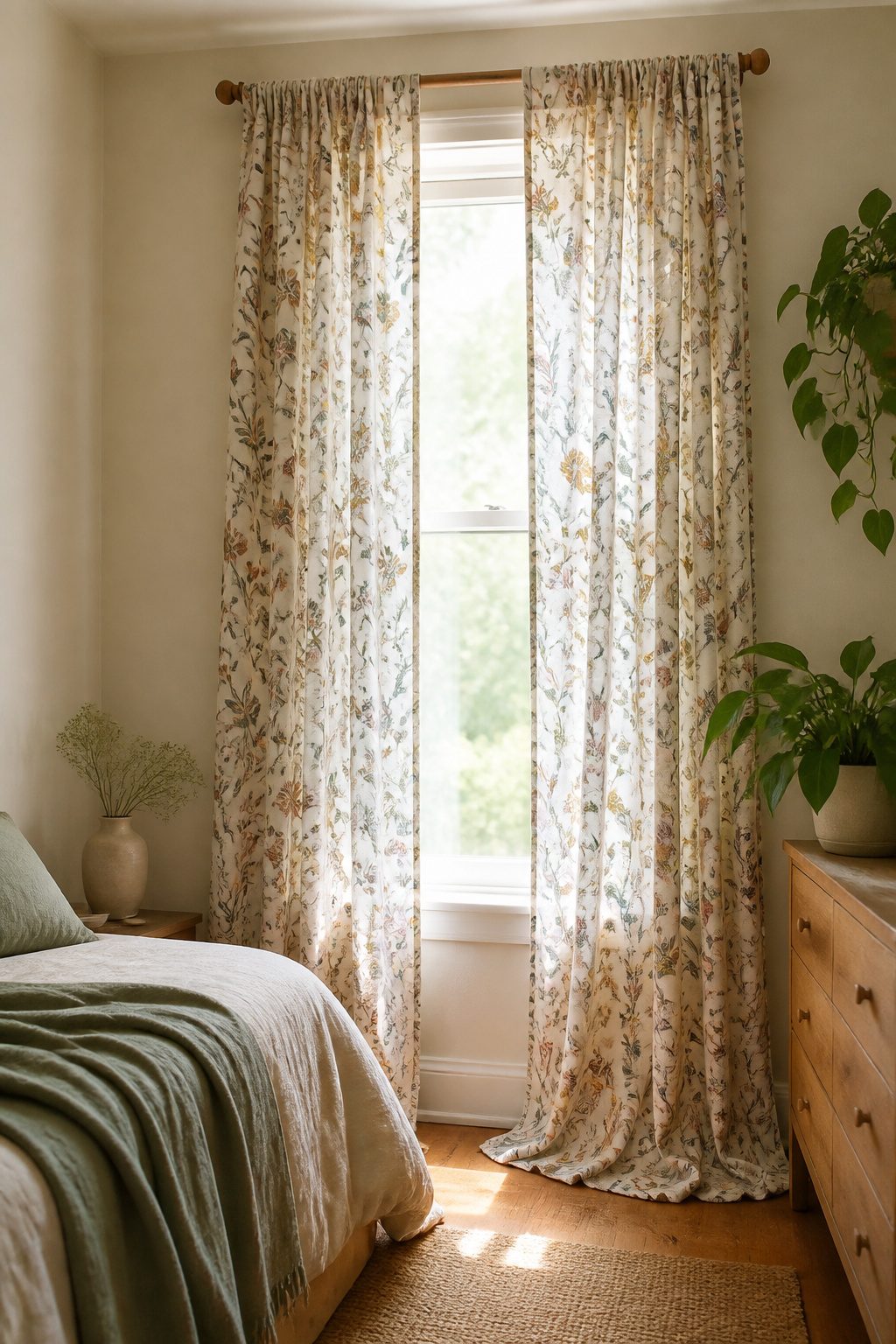
Patterned curtains carry the room when the rest of the bedroom stays quiet. A small geometric or soft floral on cotton can wake up white walls without asking for anything else in return.
The mistake is treating them like wallpaper with holes cut for windows. Scale matters more in a bedroom than anywhere else, because the window sits close to the bed and the eye rests there.
A large repeat on a narrow window looks like a sample swatch hung by accident; a tiny print on a wide slider reads as texture from across the room, which defeats the purpose of choosing pattern at all.
The real judgment call is whether the curtain competes with what is already busy.
If the bedding has a print, the rug has a motif, and the art above the dresser carries its own geometry, patterned curtains become one voice too many. In that room, solids or quiet textures win.
But when the walls are flat, the bedding is linen or a single color, and the floor is bare wood, a patterned curtain becomes the single piece that makes the room feel finished rather than forgotten.
I have seen renters hesitate here, worried a print will feel dated before the lease ends. A stripe, a small-scale botanical, or an irregular dot ages slower than anything trending, and costs the same.
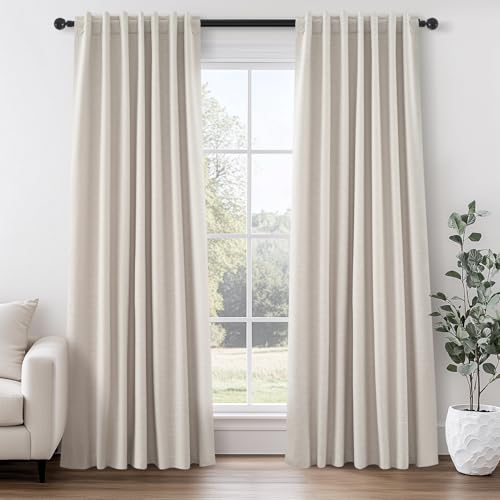
100% Blackout & Privacy: With a dual-layer, heavy-duty design, these curtains block 100% of sunlight and UV rays, providing complete darkness and privacy. Ideal for bedrooms, nurseries, and home offices that need a peaceful, undisturbed environment

100% Blackout Curtains: A full blackout white coating is attached to the back of our linen curtains, blocking 100% of sunlight and UV rays. Provide you a complete private and personal space for a sweet sleep or rest. Good choice for bedrooms, nursery, living rooms, offices, patio door. Also perfect for babies, night shift workers and people sensitive to light

Quality Fabric:These modern linen draperies are crafted from blended fabric(30%linen,70%polyester).drapes well and not easy-wrinkle.Suitable for various styles: modern,farmhouse,boho,neutral,bedroom,living room,nursery,dining room,sliding door,etc.
Blinds as Alternative
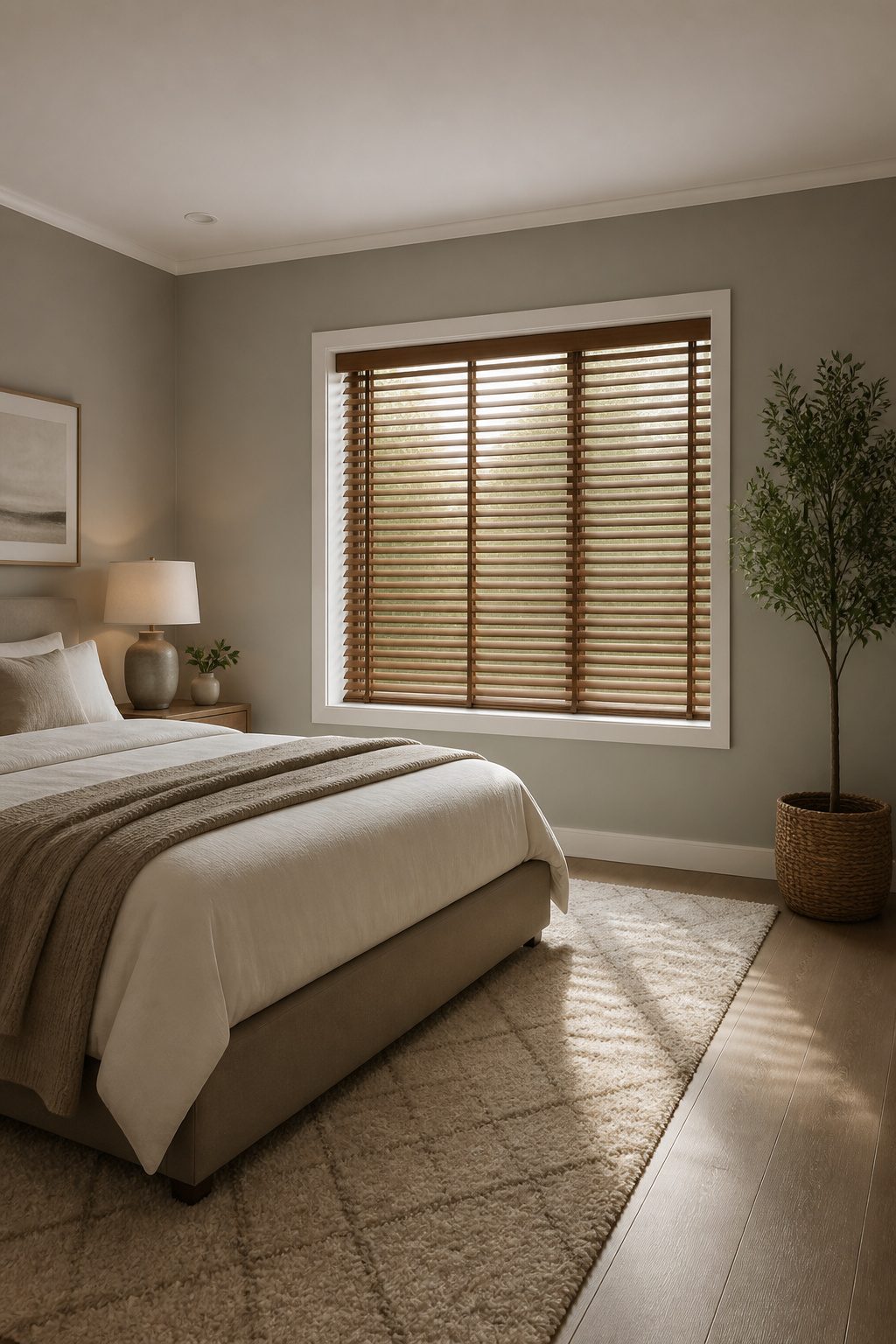
Blinds carry a different visual weight than fabric. Where curtains soften the edges of a window, blinds sit inside the frame and draw the eye to the glass itself.
That cleaner line suits bedrooms where the architecture is already doing something interesting, or where floor space is tight enough that pooled fabric becomes a nuisance.
Function is where blinds pull ahead. A top-down bottom-up cellular shade lets morning light in across the ceiling while the lower half stays covered, something no single curtain panel manages without layering.
For renters, cordless faux-wood blinds install with two brackets and leave pencil-eraser holes that spackle hides in ten minutes.
Pairing the two is common and practical. A blind handles privacy and light blocking; a curtain frame wide of the window handles the decorative work.
The blind does the job, the curtain does the room. In my own reading, the combination that keeps people happiest long-term puts the money into the blind and buys the curtain for texture, not function.
The limit is warmth.
A bedroom with blinds alone can read utilitarian, especially in white or off-white. Wood tones help, but they cost more and the slats still collect dust in ways fabric does not.
For a weekend project with a few hundred dollars, blinds alone save enough to matter. Whether they save enough to live with is the judgment call.
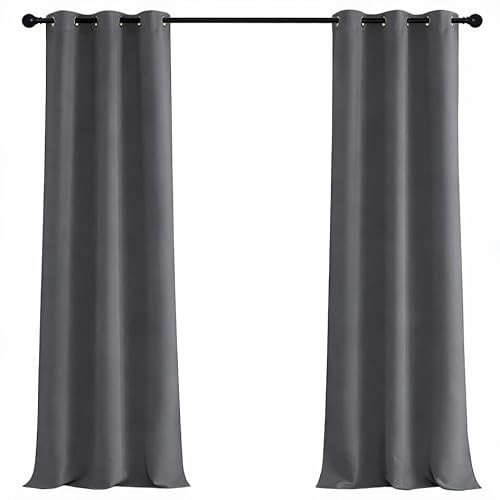
Size & Setup: 2 panels per set, each measuring 40" wide x 96" long. The sleek silver grommet top (1.6" inner diameter) delivers modern sophistication while enabling effortless glide and quick setup. Available in multiple sizes to fit various window dimensions. Perfect for kitchen, bathroom, living room, bedroom with a polished, contemporary look.

Package Contents: 2 Full blackout panels in package. Each panel measures 52 inch wide x 84 inch long, ensuring full coverage of any window for maximum privacy and style

Package Includes & Material: Each package includes 4 black blackout curtains, each measuring 63 inches in length and 40 inches in width, with a total width of 160 inches for the 4 curtains. The 4-piece set provides fuller pleats and wider coverage, which is usually more cost-effective than purchasing two separate 2-piece sets. These curtains are the same colour on both sides. Made from thick 225 GSM matte single-layer fabric, these curtains drape neatly, creating a clean, modern look
Choosing Material
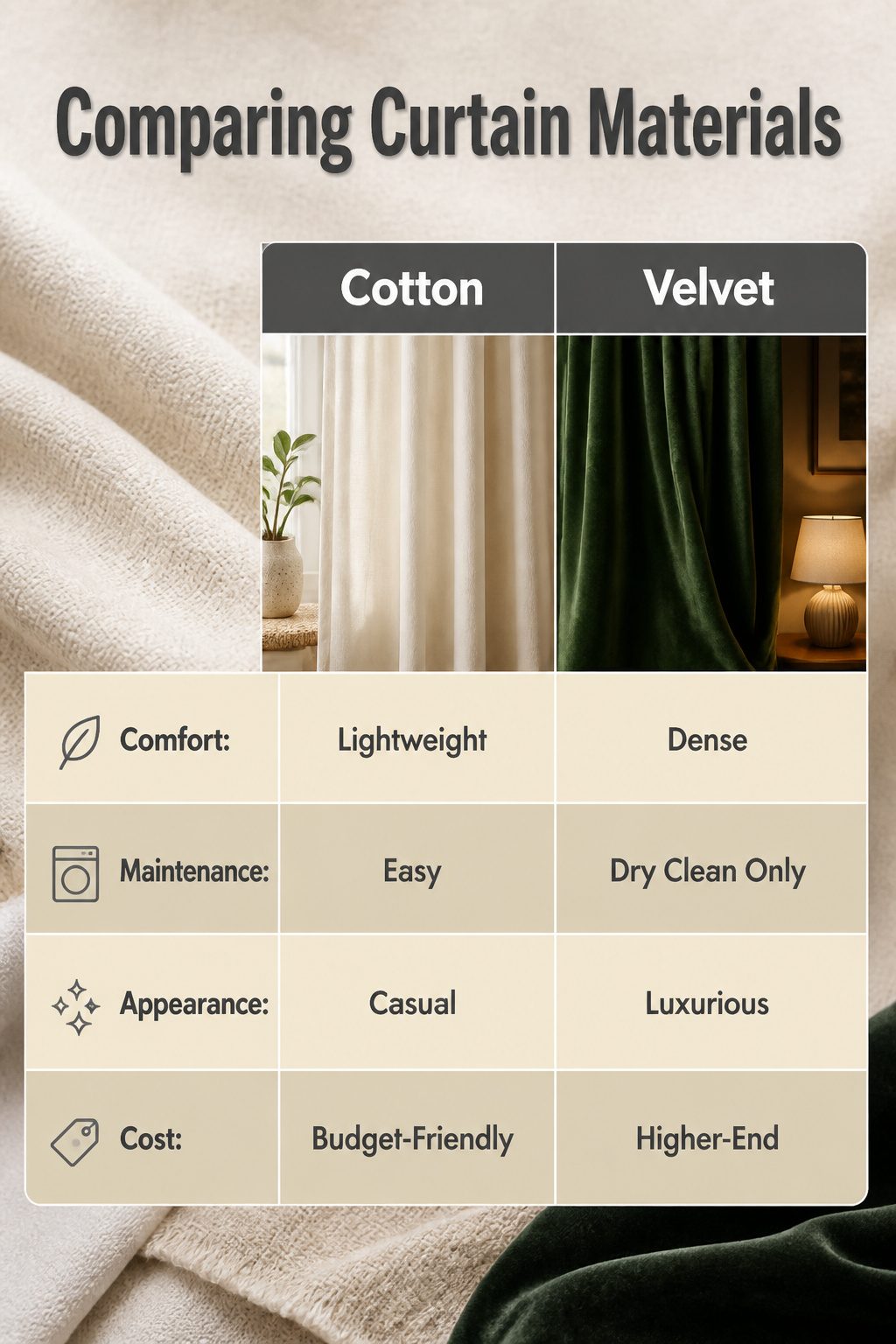
Cotton hangs lighter than most people expect, which makes it forgiving in a small bedroom where heavy fabric can feel like it is leaning on the walls.
The drape stays neat without much fuss, and the cleaning is straightforward enough that a rental turnover does not become a project of its own.
Linen costs more and wrinkles the second you look at it, but the texture works in a room where you want the window to read as intentional rather than just covered.
It needs to be the look you are actually after, not the one you think should impress someone.
Silk and velvet sit at the heavier end of what still holds its shape without sagging.
Silk catches light in a way that flatters a north-facing window in the afternoon, though the maintenance is real: water spots, dry cleaning, the kind of care that turns a quick refresh into a line item.
Velvet does the light-blocking work itself, dense enough that you may not need a separate liner, but the weight means a sturdier rod and brackets, which is an extra trip to the hardware store and another hole in the plaster.
Choose a material you like — one that looks good during the day and night, up close and far away, gathered to the side or pulled shut.
That test matters because bedroom curtains spend most of their life open, bunched to one side, catching the lamp light while you are trying to read.
A fabric that only looks right when it is drawn closed is a fabric you will resent by Tuesday.
For a weekend project with a few hundred dollars, cotton or a cotton blend is usually where the money lands. Linen is the upgrade you save for the room you actually sit in, not the one you mostly sleep through.

SOPHISTICATED LOOK: The well-crafted design of the Loha curtain panels offers a touch of elegance to your home with rich, linen-like texture and a variety of luxurious colors.

WELL MADE: Sold as 2 panels, each panel is W52" x L84", and W104" x L84" in total. Each curtain panel has 2-in-1 top style design: rod pocket and back tab. With 3-inch inner diameter fit most standard rod. Curtains also can be hung with clip rings. 3 ways meet your various needs.

READY MADE: 2 Linen Curtain Panels per package.Each panel measures 52 inches wide by 96 inches long. Top design of Back tab & loop pocket provide 3 hanging options. <1> hanging from the back patch to create an elegant pleated look, <2> from the 3 inch rod pocket for a classic look <3> Hanging with clip rings for easy, slide open and closed (clip rings are not included)
Installing Curtain Rods
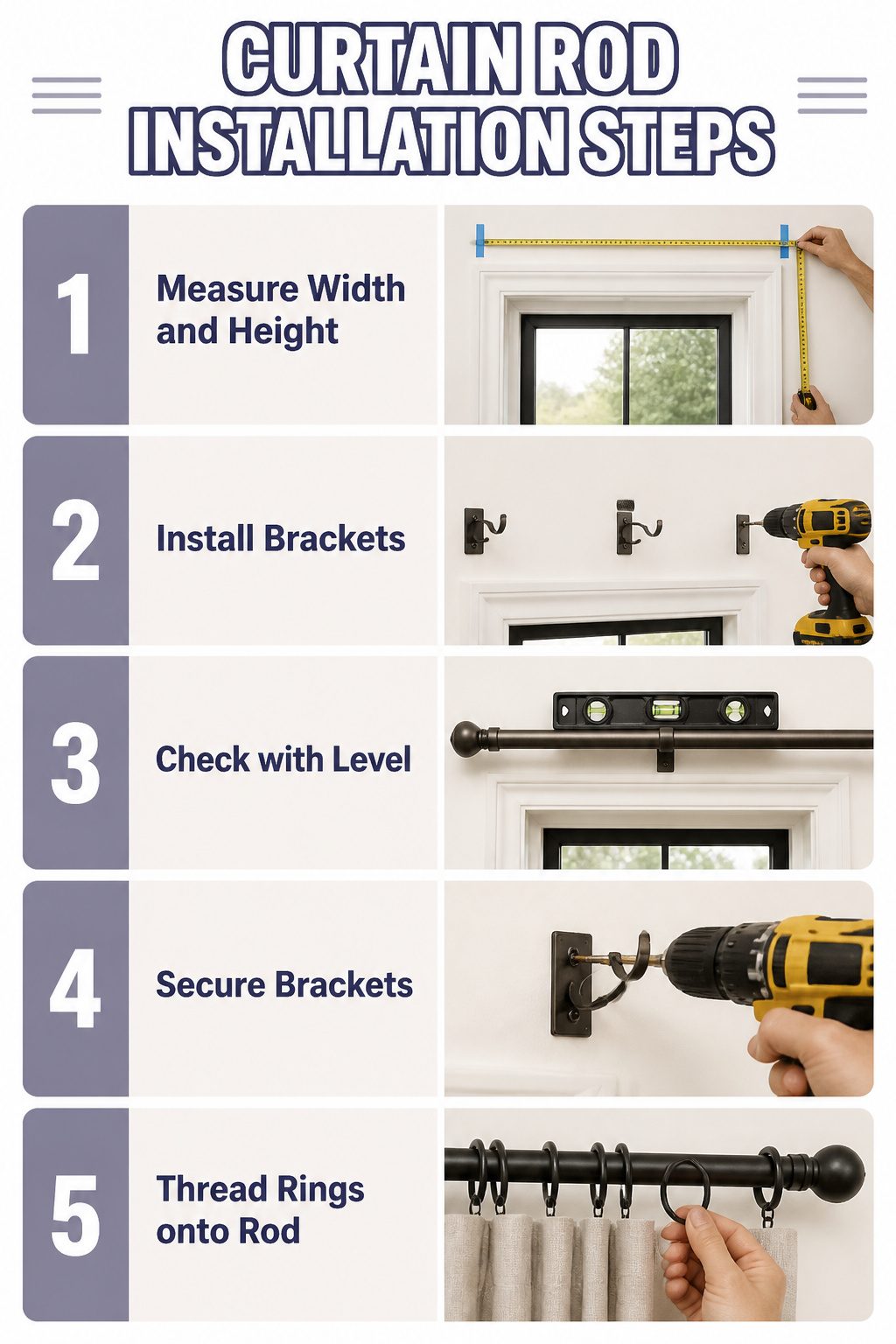
A curtain rod and maybe a drill and ladder are all it takes to get from bare window to finished. The rest is measuring twice so you only drill once.
- Width first: add 6–12 inches past the window frame on each side. This pushes the curtains clear of the glass when they are open, and the stackback looks intentional rather than cramped. I mark the wall with painter’s tape before anything permanent happens.
- Height sits 4–6 inches above the frame, or higher if the ceiling allows. The eye reads the window as taller than it is, and the room gains vertical inches without construction.
- Brackets go at the ends and at the center for anything over about four feet of span. Skip that middle bracket and the rod bows over time, especially with heavier fabric.
- A level is non-negotiable. The most common mistake is trusting the ceiling line or the window frame itself, which in older rentals are often off by enough to notice. The second is drilling into drywall without anchors and watching the bracket pull free the first time the curtain moves.
- Thread the rings or grommets onto the rod before you lift it into place. The brackets on my first solo attempt were perfectly level, but I had to take the whole thing down again to add the curtain.
100% Blackout Curtains: Our Blackout Curtains ensure a completely dark room, isolate noise and protect privacy. These room darkening curtains can block 100% sunlight.Heavy duty curtains keep heat indoors in winter and discharge heat in summer, thereby reducing cooling and heating costs , While protecting your furniture, floors and artwork from the sun damage

100% BLACKOUT: These 100% blackout curtains utilize advanced technology to completely block out natural light and effectively filter out UV rays, plunging your room into total darkness so you can enjoy a restful sleep day or night. Combined with excellent thermal and sound insulation, they help maintain a stable room temperature and dampen outside noise, making them ideal for bedrooms, living rooms, and nurseries—creating a peaceful, private space for relaxation.

PAIR SOLD: 2 panels in package. Each panel measures 52"W x 84"L| Pair measures 104"W x 84"L. Thread trimmed and wrinkle free, panel is constructed with 8 anti rust grommets which fit well up to 1 1/2 inches curtain rods
Light Control Levels
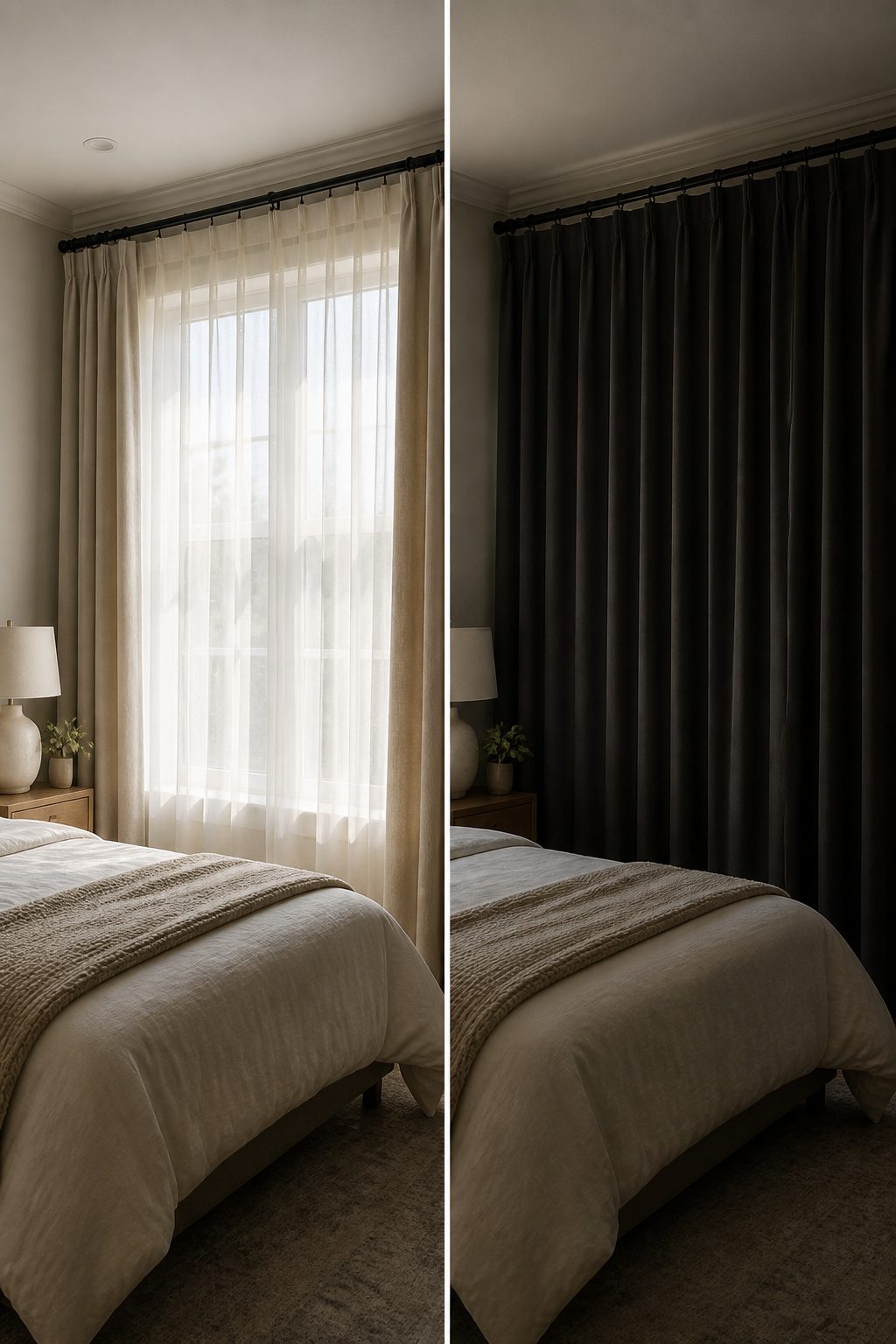
Light in a bedroom rarely behaves the way you expect.
A south-facing window with sheer linen looks gentle at noon and blinding by three. Blackout fabric solves that, but layering is what lets you shift between full dark and filtered morning light without swapping hardware.
The orientation of your window matters more than the curtain style. East bedrooms catch sunrise straight on; west rooms bake through afternoon.
If you sleep past eight, blackout lining pays for itself. Night shift workers need the same regardless of direction.
Sheers alone work only where you want diffusion, not control.
They soften glare but do not block it. Pairing them with a separate blackout panel on a double rod gives you the adjustment: sheers for privacy with the lights on, blackout when you need the room dark.
Renter-friendly tension rods handle this without drilling into trim you do not own.
Velvet and heavy linen fall somewhere between. They dim a room significantly without achieving true blackout, which suits some sleepers fine.
Test what your body actually needs. A weekend of poor sleep costs more than the right curtain setup.

ELEGANT: The Catarina curtain panels offer both the function of a sateen woven room darkening blackout curtain paired with the fashion of a sewn in sheer panel for layered sophistication
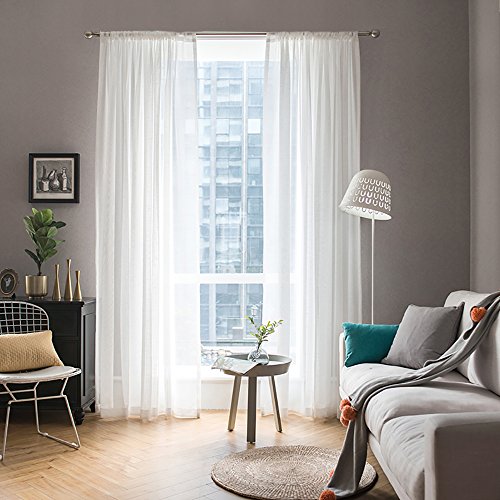
Size&Material: Set includes 2 sheer panels of 54" wide x 84" length.Sheer curtain is made of Polyester. Soft to touch.

Sturdy 1 Inch Metal Curtain Rod - Made with a 1 inch diameter rod and 0.8 mm thick metal pipe, this heavy duty double curtain rod provides reliable support (up to 45LB)for layered curtains, blackout curtains, and everyday window treatments.
Cleaning and Care

Most bedroom curtains need more attention than people give them, and the fabric type decides whether that means a quick machine wash or a trip to the cleaners.
- Velvet should almost always be dry cleaned. Water stains the pile, and once that happens the texture flattens permanently. The tag usually says dry clean only for a reason, not as a suggestion.
- Linen and cotton hold up to a gentle cycle in cold water, but they shrink more than you’d expect if the water’s even slightly warm. Hang them damp and straighten the hem by hand; the dryer twists them into creases that take an iron and patience.
- Sheers are the easy ones. A mesh bag, delicate cycle, and they come out fine. The problem is forgetting them entirely. Dust builds up in the weave and turns gray in window light before you notice.
- Blackout lining separates from the face fabric in hot water or a crowded drum. Wash these alone, cool, and line dry if you can. The lining’s rubbery coating cracks in the dryer over time.
- Ignoring the care label costs about the replacement price of the curtain. A $80 panel ruined in hot water is $80 spent twice.

Memory Trained Pinch Pleated: Curtains has made meticulous 248°F heat-setting process that maintain their lux shape wash after wash. The innovative memory trained technology ensures your drapes remain perfect structured season after season, with a design that complements both modern and traditional decor styles.
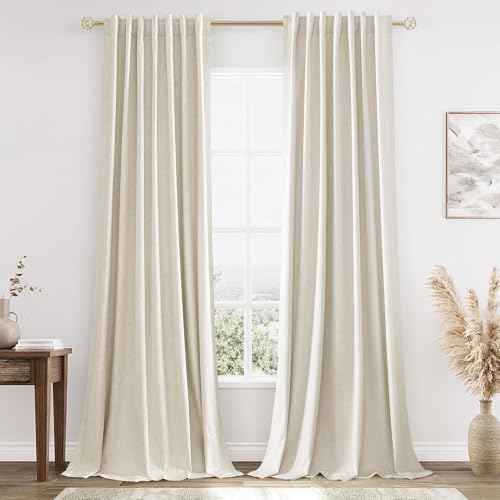
100% Blackout Curtains: A full blackout white coating is attached to the back of our linen curtains, blocking 100% of sunlight and UV rays. Provide you a complete private and personal space for a sweet sleep or rest. Good choice for bedrooms, nursery, living rooms, offices, patio door. Also perfect for babies, night shift workers and people people sensitive to light

Premium Material: Made of 85% imported polyester and 15% linen fabric. More soft and make curtain hang naturally
Frequently Asked Questions
What are the best curtains for bedroom windows?
The best curtain for a bedroom window depends on what you need from it. Blackout curtains are the clear choice for anyone who sleeps past sunrise or works nights, since the triple-weave fabric blocks light and some noise.
Sheer curtains work better in rooms where you want soft, diffused light during the day and do not need darkness at night.
Linen, velvet, and patterned options each bring a different look and feel, so the right pick matches your sleep habits and the room’s style.
How do I choose the right curtain material?
Pick a material you like looking at whether it is open, closed, or bunched to the side in lamplight. Cotton and cotton blends are forgiving and easy to clean, making them the practical starting point for most bedrooms.
Linen wrinkles constantly but carries a relaxed, intentional texture that suits certain rooms. Velvet blocks light and insulates against drafts but needs dry cleaning and a sturdier rod.
Silk flatters afternoon light but demands serious maintenance. The fabric should look good during the day and night, up close and far away.
How do I install curtains?
You need a curtain rod, a drill, a ladder, and a level.
Add six to twelve inches past each side of the window frame for width, and mount the rod four to six inches above the frame, or higher if the ceiling allows.
Use brackets at both ends and a center bracket for spans over four feet to prevent bowing. Check everything with a level before drilling, and thread the rings or grommets onto the rod before lifting it into the brackets.