

Window treatments run from $35 polyester sheers to custom workroom pieces that double ready-made prices, and the deciding factor is usually how long you plan to stay in the room.
Renters sleeping through a lease on east-facing windows need different hardware than owners fitting twelve-foot ceilings with goblet pleats that read settled instead of staged.
The eighty-dollar DIY motor I wired in twenty minutes only pays back on a year-plus lease, not a six-month sublet, and the 2.4 GHz pairing headache is apparently just the cost of admission.
1. Floor-to-Ceiling Sheer Curtains
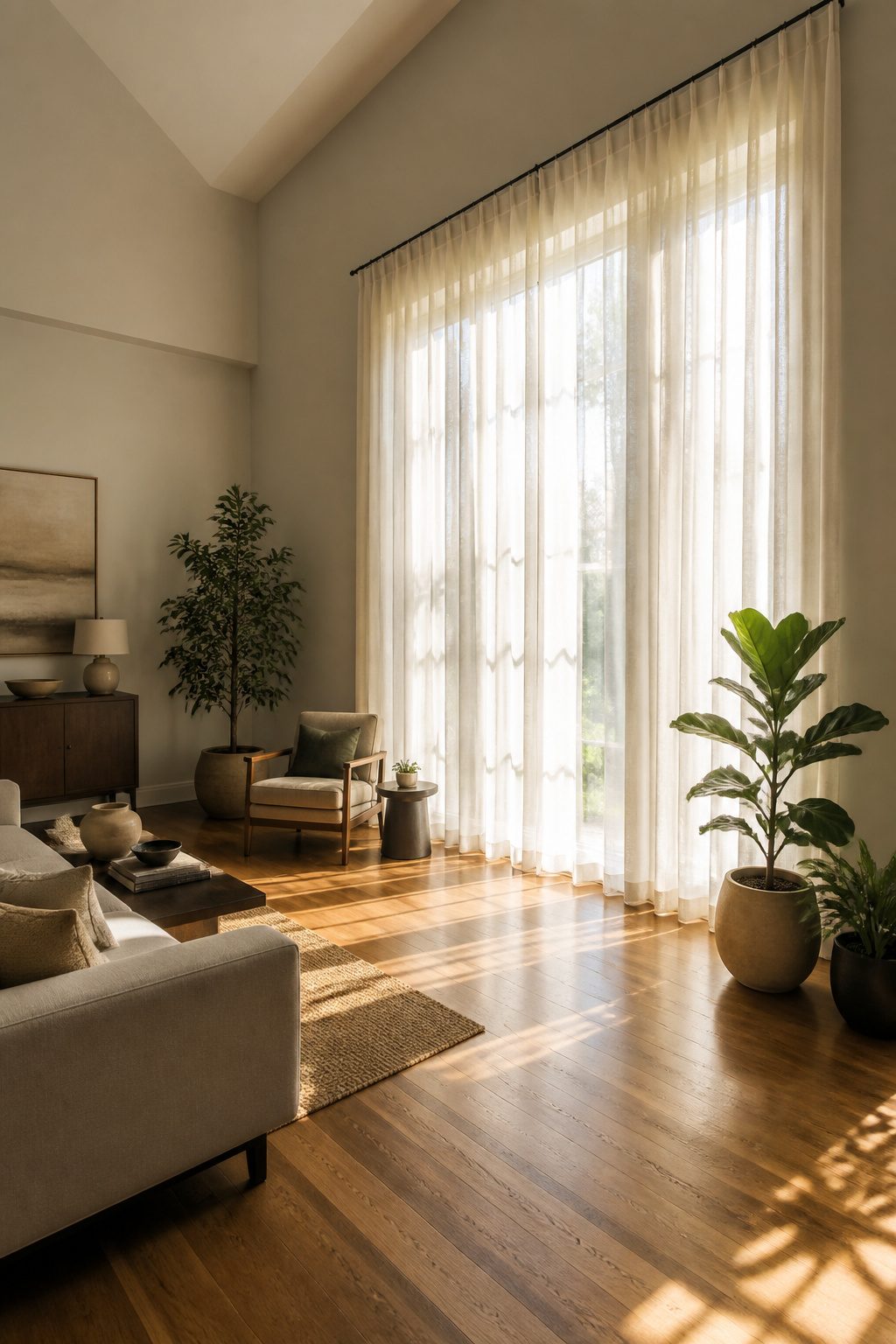
Floor-to-ceiling sheer curtains in linen, polyester, or silk pull daylight through a room without the fishbowl feeling of bare windows. The fabric diffuses what comes in, so the space reads brighter but still private enough for morning coffee in pajamas.
The vertical line does more than filter light. Hanging sheers from the ceiling rather than the window frame draws the eye upward, and a room with a 9-foot ceiling starts to feel closer to ten.
I learned the hard way that the rod needs to sit 4–6 inches above the frame, not flush with it.
I measured for the window height, bought panels labeled "108 inch," and ended up with a gap of bare wall that broke the whole illusion.
Re-measured, re-ordered, and the second set hit the floor with the slight puddle that makes the height read as intentional.
Polyester sheers were the budget call: my panels ran about $35 each, where linen started closer to $80 and silk climbed past $120.
The polyester washes without drama and the drape is decent, though it does not move like linen in a breeze. For a rental or a first project, that trade is worth it.
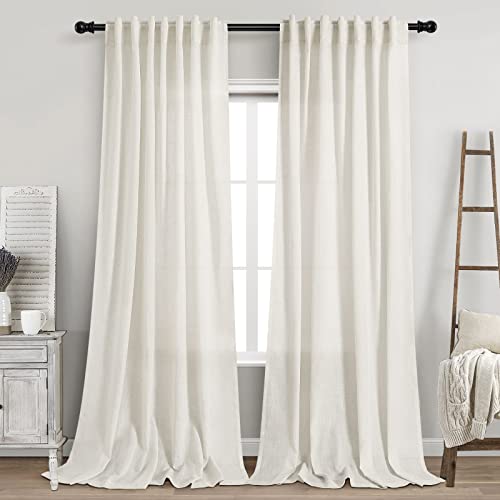
READY MADE: 2 Linen Curtain Panels per package.Each panel measures 52 inches wide by 102 inches long. Top design of Back tab & loop pocket provide 3 hanging options. <1> hanging from the back patch to create an elegant pleated look, <2> from the 3 inch rod pocket for a classic look <3> Hanging with clip rings for easy, slide open and closed (clip rings are not included)

Exquisite Pinch Pleat Design: 2 Panels per package.Each panel measures 40 inches wide by 96 inches long.The top design of this linen curtain creates an elegant and voluminous effect. Suitable for a variety of styles and scenes

READY MADE: 2 Linen Curtain Panels per package.Each panel measures 52 inches wide by 96 inches long. Top design of Back tab & loop pocket provide 3 hanging options. <1> hanging from the back patch to create an elegant pleated look, <2> from the 3 inch rod pocket for a classic look <3> Hanging with clip rings for easy, slide open and closed (clip rings are not included)
2. Layered Curtains With Blinds
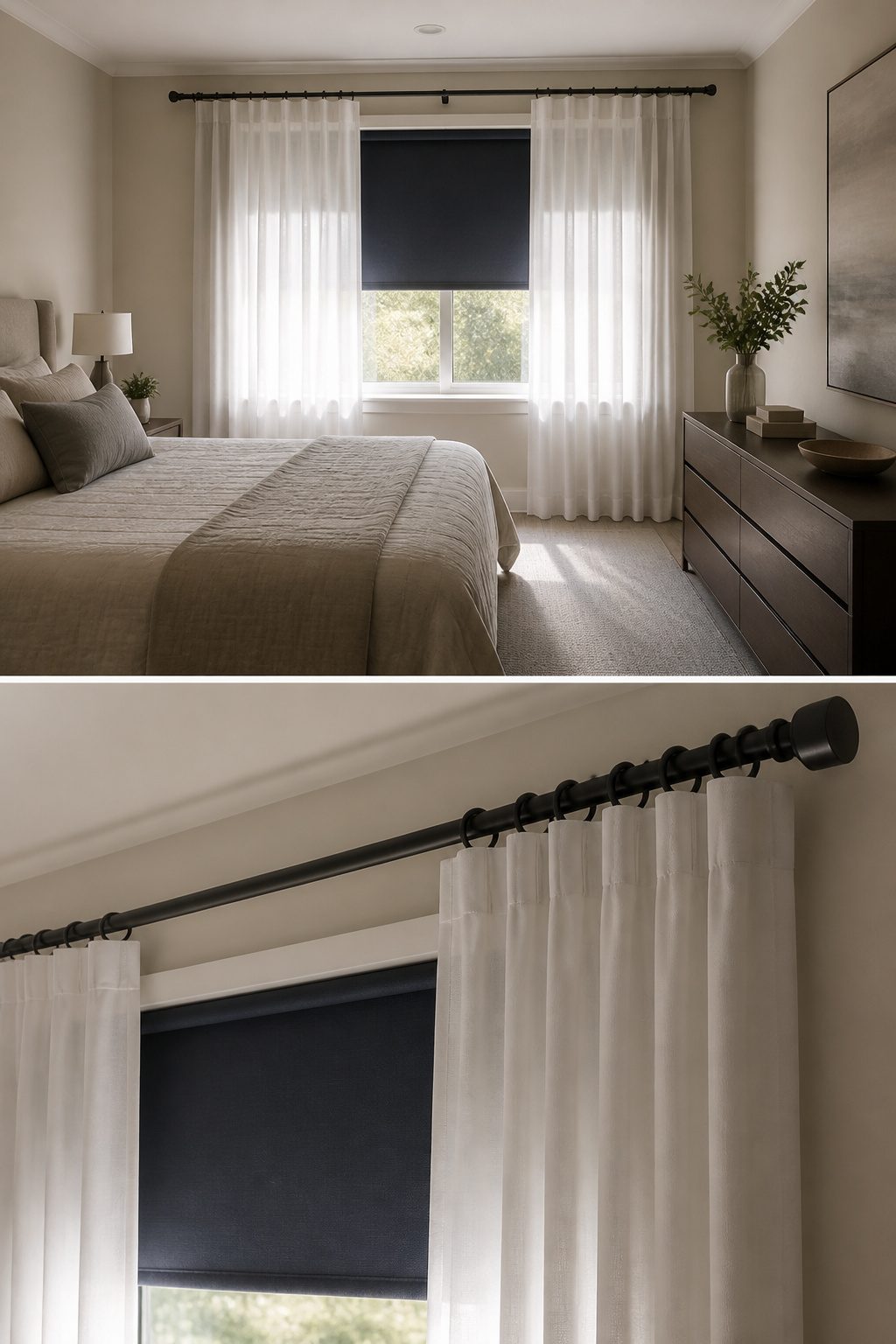
Layered curtains with blinds is the combination every guide returns to for light control and privacy, and after sleeping through a summer with east-facing windows, the reason is obvious.
In my own bedroom I run sheer curtains over blackout blinds, which lets me pull the sheers for filtered morning light without committing to full sun, then drop the blinds when I actually need darkness.
The double hardware ran me about $45 for a basic rod and brackets plus the blind mount, all off-the-shelf from a home center.
Nothing custom. The trick that made it look intentional rather than crowded was hanging the curtain rod 12 inches past the window frame on each side.
That width lets the sheers stack clear of the glass when they’re open, so the blinds still operate and the window reads larger than it is.
Roman blinds paired with curtains get called the classic choice, and the look is cleaner.
For renters, though, a simple roller blackout inside the frame and a tension rod for sheers does almost the same job without drilling into trim you don’t own.

Sold as 2 Panels: Each package includes 2 pieces white sheer curtains. Each sheer curtain measures 42 inch width, 84 inches long( The curtain length not include top 1.5 inch header,total length 85.5 inch) 2 pieces total width is 84 inches, Sheer curtains width is 1.5-2 times wider than your window to show a nice look. Multiple Length are available, please measure your window first for the right choose

Ready Made: Each package includes sheer curtains 84 inch length 2 panels set, total width is 80". The top dual rod pocket are between 1.5"-2" in size, suitable for curtain rods of most windows, which make curtains easier to hang and slide.

Basic Information: Includes 2 curtain panels, each measuring 50 inches wide for a total of 100 inches. Easy care for machine washable in cold water, do not bleach, tumble dry low, iron on low heat if needed.
3. Made-to-Measure Fabric Curtains
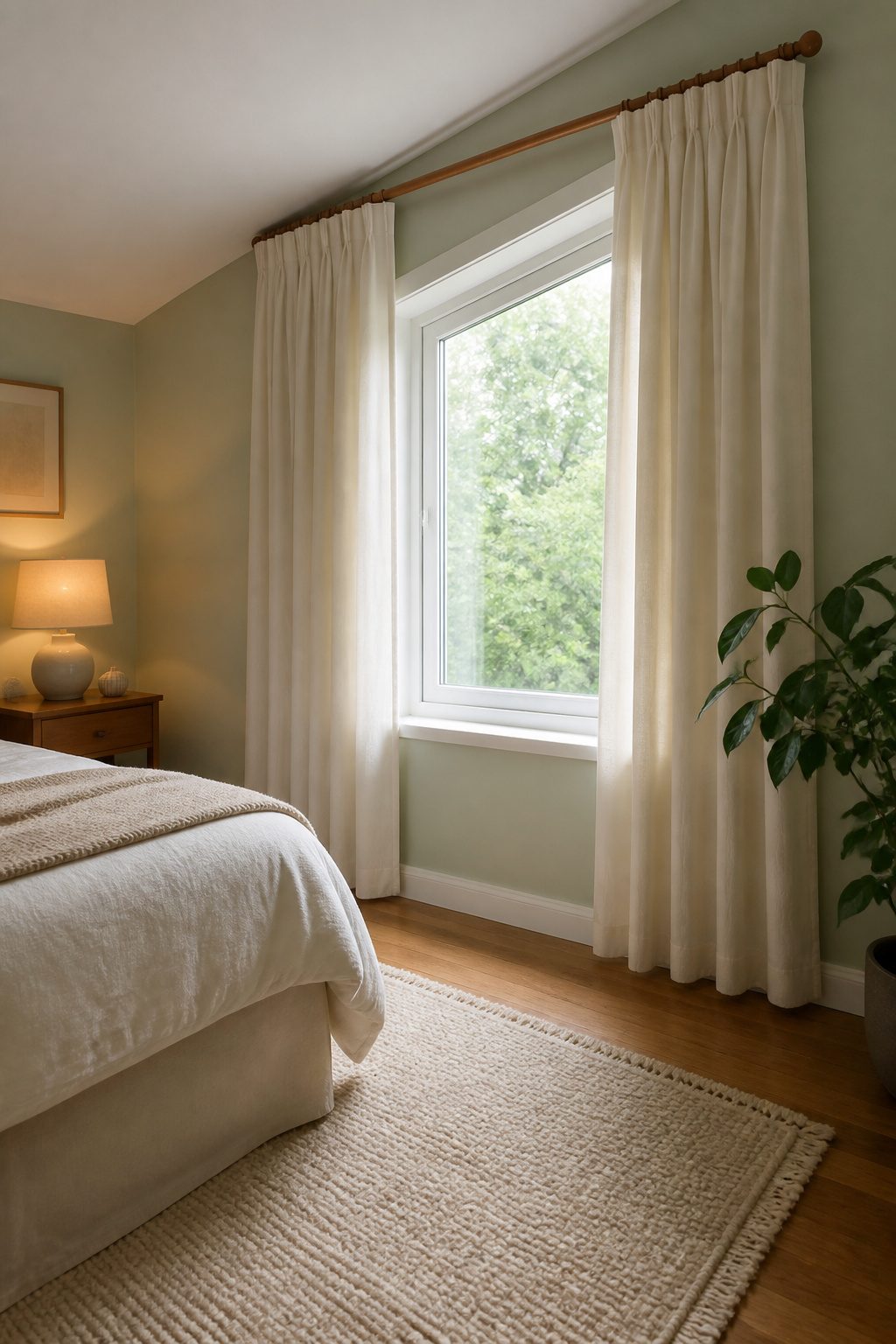
Velvet, silk, and linen curtains from a made-to-measure service run about double what ready-made panels cost, sometimes more depending on the yardage. The difference is not just the fabric.
Measuring yourself goes wrong most often on the width, where people measure the glass instead of the track or rod they actually need covered, and end up with panels that look like they are hiding from the window.
I learned that the hard way on a bedroom window that looked straightforward until I noticed the casing sloped slightly at the top.
The gap was small, maybe half an inch, but enough to let morning light leak through like a blade above a ready-made 84-inch panel.
A local workroom charged me for fabric and labor, but because they cut to the true opening plus overlap, the finished pair hung flush without a valance or other fix.
The one place bespoke actually saved money was a bathroom window over the tub: 22 inches wide, 46 inches tall, an odd size that no retailer stocks without special-order fees that matched the workroom quote anyway.
The linen there has held up better than the polyester I would have settled for, so the cost crossover included durability I did not plan for.

ELEGANT DESIGN: 2 panels per package. Each Blackout Curtain Panel measures 42 inches wide x 63 inches long. The NICETOWN drapery is constructed with rod pocket, fitting the curtain rod of your choice up to 2 inches in diameter, making the curtains easy to install and slide.

Pair Sold: Each package includes 2 panels of blackout curtains. Each panel measures 40"W x 63"L, with a pair measuring 80"W x 63"L. Each panel has 6 anti-rust silver grommets(1.6 inch inner diameter) which would fit most standard curtain rods
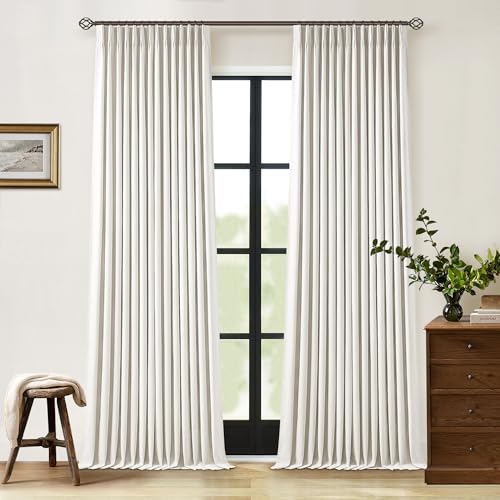
Double Layer Design 100% Blackout Curtains: Our pinch pleated blackout curtains crafted from linen blend fabric and 100% blackout curtain liner, combining the softness of linen with the practicality of blackout lining. The pairing of these two layers creates a sophisticated look, adding texture to the window treatment. Provide you a complete private and personal space for a sweet sleep or rest
4. Monochromatic Curtains
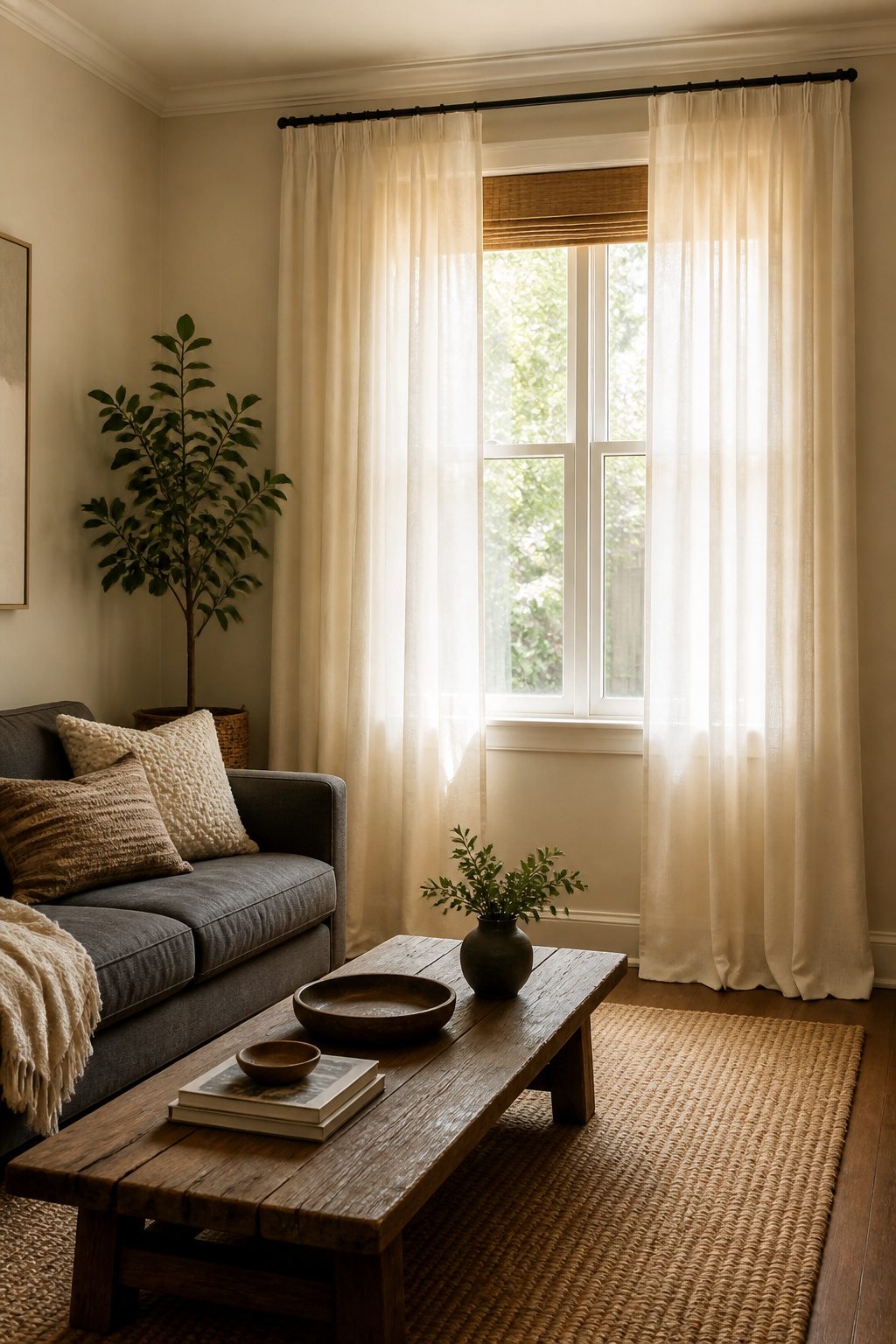
Matching curtains to wall color does something almost magical in a small room: the edges soften, the walls seem to push outward, and the window stops reading as a hole punched through fabric. The eye travels without hitting a border.
I learned the limit of this trick the hard way in a rental with medium-gray walls. I hung curtains two shades lighter in the same gray family, thinking the subtle shift would read as intentional.
Instead it looked like the apartment came that way, the kind of neutral package a landlord orders by the dozen. No warmth, no decision, just gray on gray on gray.
The fix cost nothing and took ten minutes. I swapped the gray panels for a warm ivory that was still quiet against the walls, not contrasting, but alive.
The warmth made it look chosen instead of inherited. The room finally felt like someone lived there on purpose.
For renters working with beige or off-white walls already, this is the safest move.
For cooler grays, steer toward linen with a little yellow or pink in its undertone. The match should be close enough to recede, different enough to prove you thought about it.

【20s No-Drill Setup】 Get your roller shades ready in seconds—no tools, no screws, and no wall damage. The built-in tension system holds the shade firmly inside the window frame, yet allows easy removal for cleaning or relocating. Ideal for inside-mount windows with at least 2" depth. For the best fit, measure your top inside window width and check the Size Guide Image before ordering.

【Linen Fabrics】Made from high-quality linen fabric, our blackout shades are designed to be soft and skin-friendly, providing full coverage to block out light in your home. Perfect for creating a cozy and peaceful atmosphere in any room. The fabric is precisely cut with a laser without any rough edges. Linen fabric is predominantly made from natural linen fibers, which are completely natural and odor-free, providing you a more comfortable and enjoyable environment.
【Linen Fabrics】Made from high-quality linen fabric, our blackout shades are designed to be soft and skin-friendly, providing full coverage to block out light in your home. Perfect for creating a cozy and peaceful atmosphere in any room. The fabric is precisely cut with a laser without any rough edges. Linen fabric is predominantly made from natural linen fibers, which are completely natural and odor-free, providing you a more comfortable and enjoyable environment.
5. Automatic Curtains and Blinds
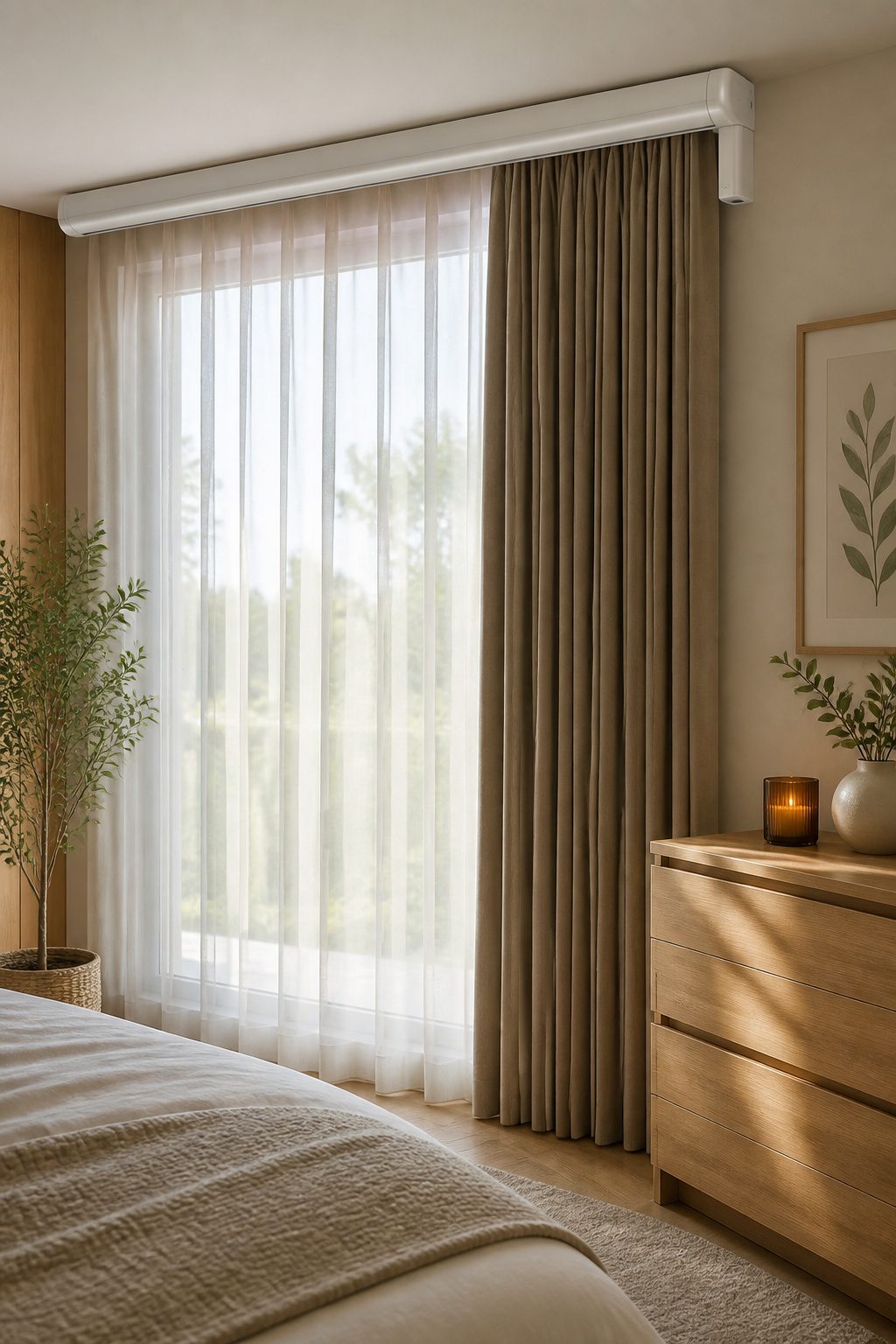
Motorized tracks used to read as luxury showroom bait, but a small DIY retrofit kit changed that.
The one I fitted to a 72-inch bedroom curtain ran about eighty dollars, while the quote for a pro install on the same window started near four hundred.
The hardware itself mounted inside the existing rod in twenty minutes. The Wi-Fi pairing ate the rest of the afternoon, mostly because the app wanted a 2.4 GHz network and my phone kept latching to 5 GHz during setup.
A router band split fixed it, though the instructions assumed I already knew to look for that.
For a rental, the value depends on how long the lease runs.
The motor adds holes no larger than standard brackets, so patching is routine, but the eighty dollars only pays back if you stay long enough to enjoy not hauling yourself up to adjust blackout panels twice a day.
I would do it again for a year-plus lease, but not for a six-month sublet. The modern look is real, the convenience is real, and the afternoon of troubleshooting is apparently just the cost of admission.

Actual blind width is 47.5 inches. For an inside mount, fits windows 48 inches wide
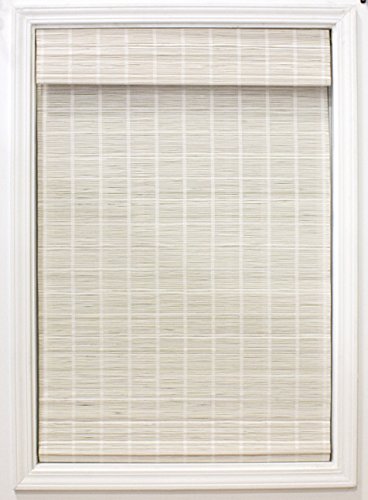
Actual blind width is 29.5 inches. For an inside mount, fits windows 30 inches wide

【Light Filtering ROMAN SHADES】Made from 80% polyester & 20% Linen, supported by a fabric valance in front and flocked fabric behind, it has a soft and comfortable hand. 70% blackout lets in light but not views. Gently diffuses natural light, creating a soft, comfortable ambiance while maintaining daytime privacy. Ideal for the living room, door, office or bedroom.
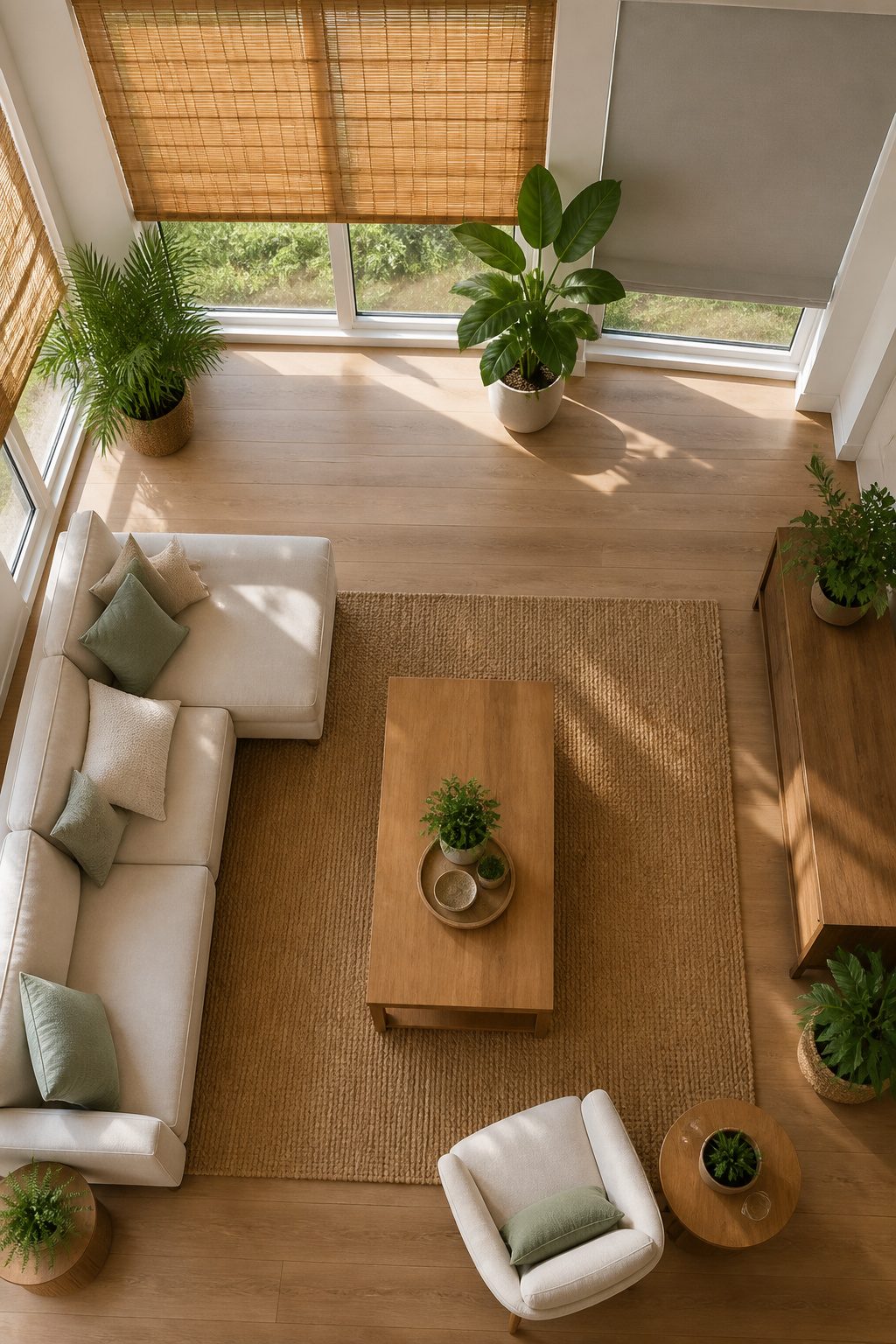
6. Bamboo Blinds With Natural Curtains
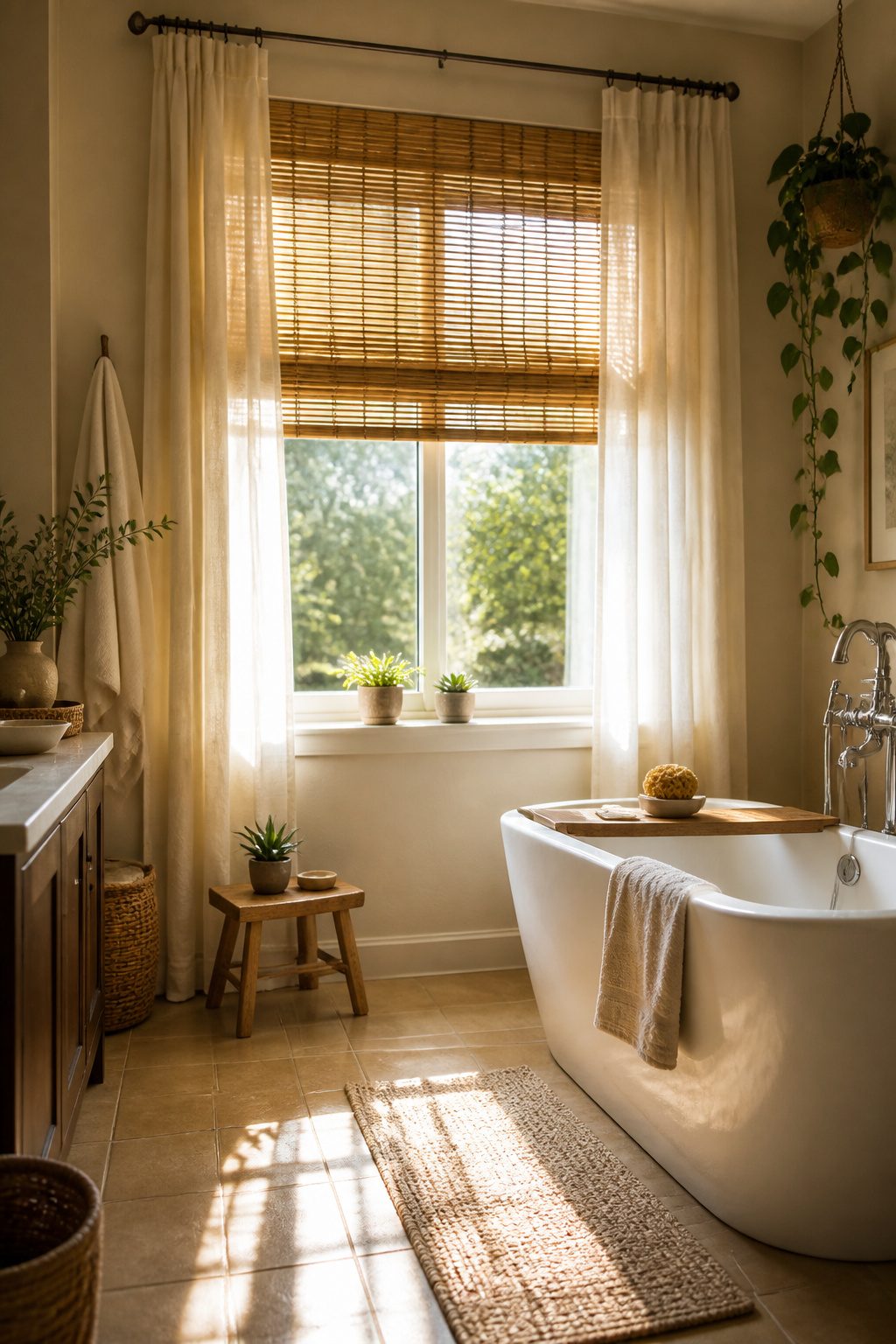
Bamboo blinds with natural curtains work best when the fibers share the same undertone.
Warm honey-toned bamboo against cool white linen looks like a mistake you are trying to hide; both in the tan family, and the layers read as one intentional choice.
I found affordable bamboo at a home goods chain that sources overstock from higher-end lines.
The slats were thinner than the hardware-store version, which mattered more than I expected. Thicker slats cast heavier shadows and fight the softness of cotton or linen curtains hung over them.
The real test was a bathroom with a window directly above the tub. Steam collected on the bamboo for months before I noticed the slats starting to bow slightly at the edges.
They never failed, but the shape change was visible when the blinds were fully raised. Jute would have fared worse; cotton curtains in that same room held up fine because they dried faster and were easier to wash.
Hang the curtains high and wide enough that the bamboo still reads as its own layer, not stuffing peeking out of a sleeve.
Four to six inches of exposed blind on each side of the curtain panel is the proportion that looks considered rather than crowded.

Basic Information: Includes 2 curtain panels, each measuring 50 inches wide for a total of 100 inches. Easy care for machine washable in cold water, do not bleach, tumble dry low, iron on low heat if needed.

Package Includes: Include 2 natural ivory linen curtains, each light filtering burlap neutral curtain measures 52" W x 96" L (104" wide total). With 7 back tabs and 3" rod pocket fits most standard rods and makes the maximum coverage of windows.

PINCH PLEATED DESIGN: Curtains top features 1.5 times length fabric design for an elegant pleated effect. Perfectly presenting a sense of stereoscopic and layering. Whether in living room, bedroom, dining room or sliding door etc, it fit perfectly into a variety of room decor style
7. Eyelet Curtains
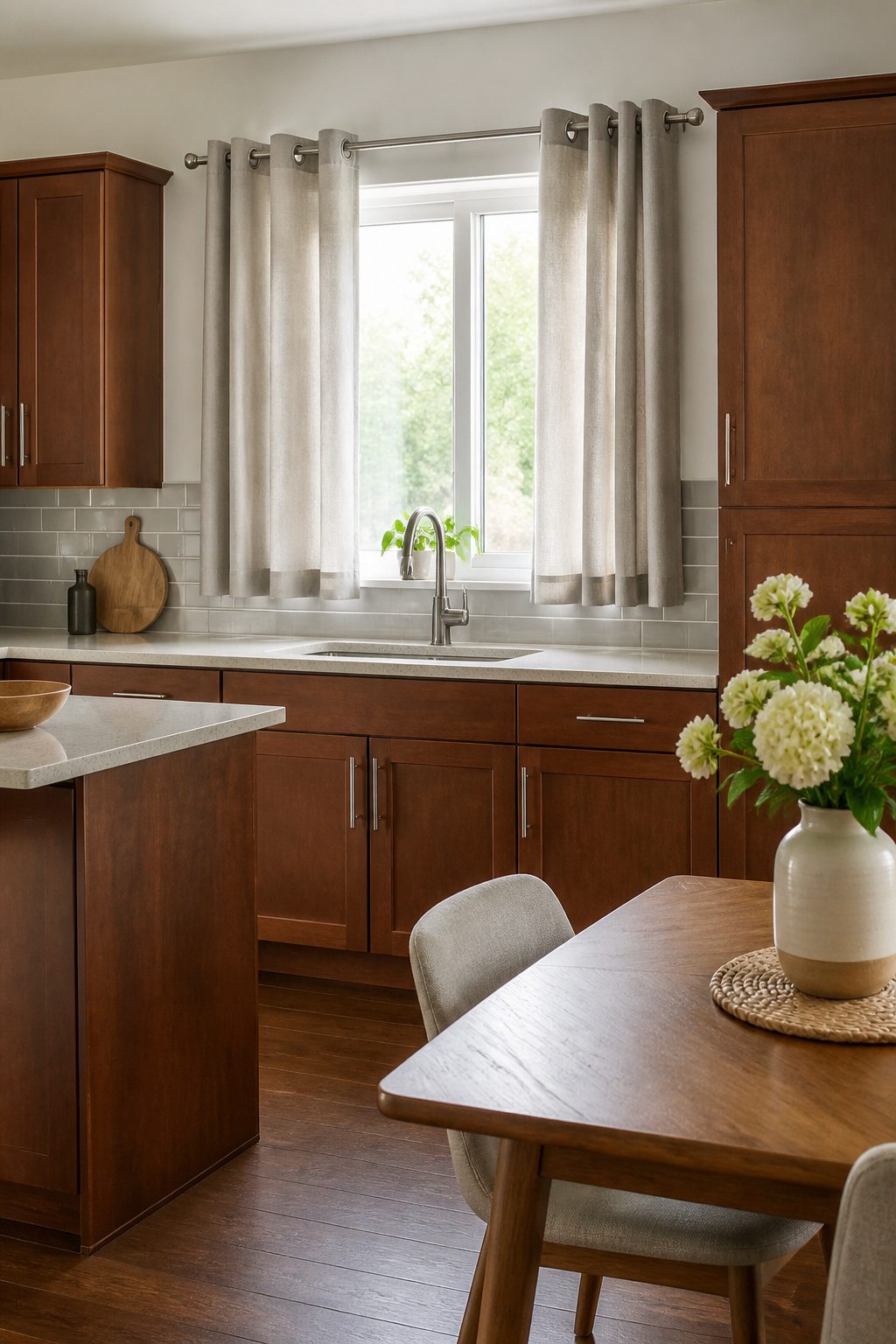
Eyelet curtains slide on the rod through metal rings punched straight into the fabric, which is why they move smoother than pocket or back-tab styles.
Those other versions bunch and drag where the fabric grips the pole; the ring lets the cloth glide with almost no resistance.
The catch is rod diameter: too thick and the eyelet binds, too thin and the curtain sags between rings. A 1-inch to 1.25-inch rod is the usual fit, though the curtain tag should list its own maximum.
My kitchen pair went up in twenty minutes.
The rings meant no hooks to thread, no tape to pleat, just feeding the pole through and setting the brackets. The material fell into soft, even folds that looked intentional without any pinning.
For a room that sees grease and daily light changes, that low-friction slide matters more than it sounds: yank them shut after sunset, shove them open for morning sun, no wrestling required.

Basic Info.: Each panel of White linen sheer curtains measures 52" wide, sold as 2 panels. The inner diameter of the rod pocket and each back tab is 2.3", which makes the curtains are easy to install and move.

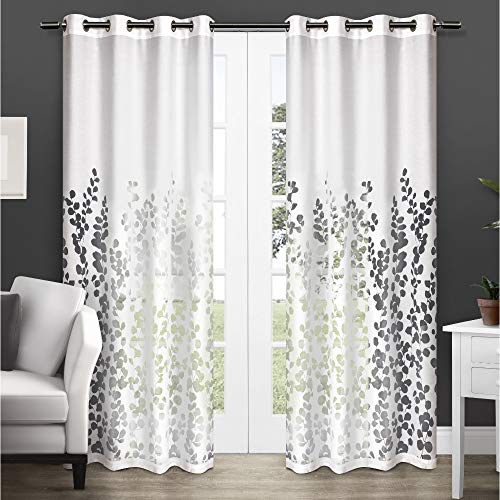
LEAFY FLORAL PATTERN: The Wilshire sheer curtain panels offer a beautiful leafy floral pattern that add elegance into any room.
8. Twin Roller Blinds
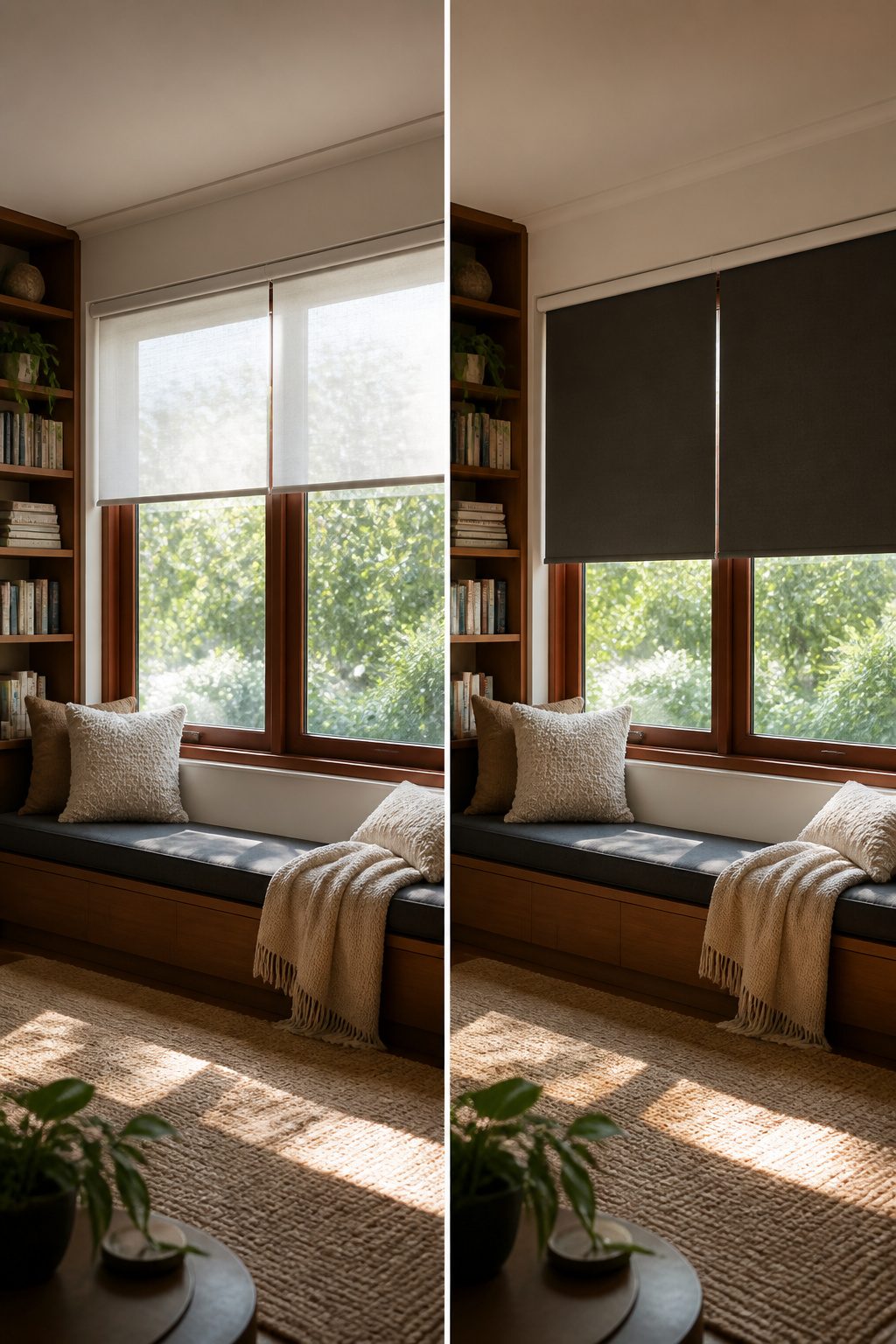
A single dual bracket holds two roller fabrics on the same window, which means you can drop the sheer for daytime privacy or pull the blockout down for movie darkness without swapping hardware.
The bracket itself is the only extra part; two tubes, two chains, one headrail. I paid $340 for a 36-inch window finished in white, installed myself on a Saturday.
Day-night fabric, the kind that stripes sheer and opaque in one sheet, looks clever in the catalog.
In use the stripes never quite line up where you want them, and the gaps let light leak at the edges. Sheer plus separate blockout gives a real seal when you need it and an actual view when you don’t.
The pair also handles temperature better: the blockout layer has thermal backing that takes strain off the AC in summer, while the sheer stays down to filter glare without trapping heat.
For renters the whole system mounts with four screws and comes down leaving holes you can fill with a dab of spackle.

Double Layer Design 100% Blackout Curtains: Our pinch pleated blackout curtains crafted from linen blend fabric and 100% blackout curtain liner, combining the softness of linen with the practicality of blackout lining. The pairing of these two layers creates a sophisticated look, adding texture to the window treatment. Provide you a complete private and personal space for a sweet sleep or rest

100% Blackout: Our blackout curtains are made of high-quality fabrics with a special silver coating on the back, which can block 100% of sunlight and UV rays. It fits perfectly with the window without gaps around it, providing you with a dark sleeping environment and complete privacy.

100%BLACKOUT- Nighton 100% blackout curtains, lightweight fabric for easy portability, blocks sunlight in summer and reduces heat loss in winter, Perfectly blackout shading to create a comfortable dark sleeping environment
9. Blockout Curtains
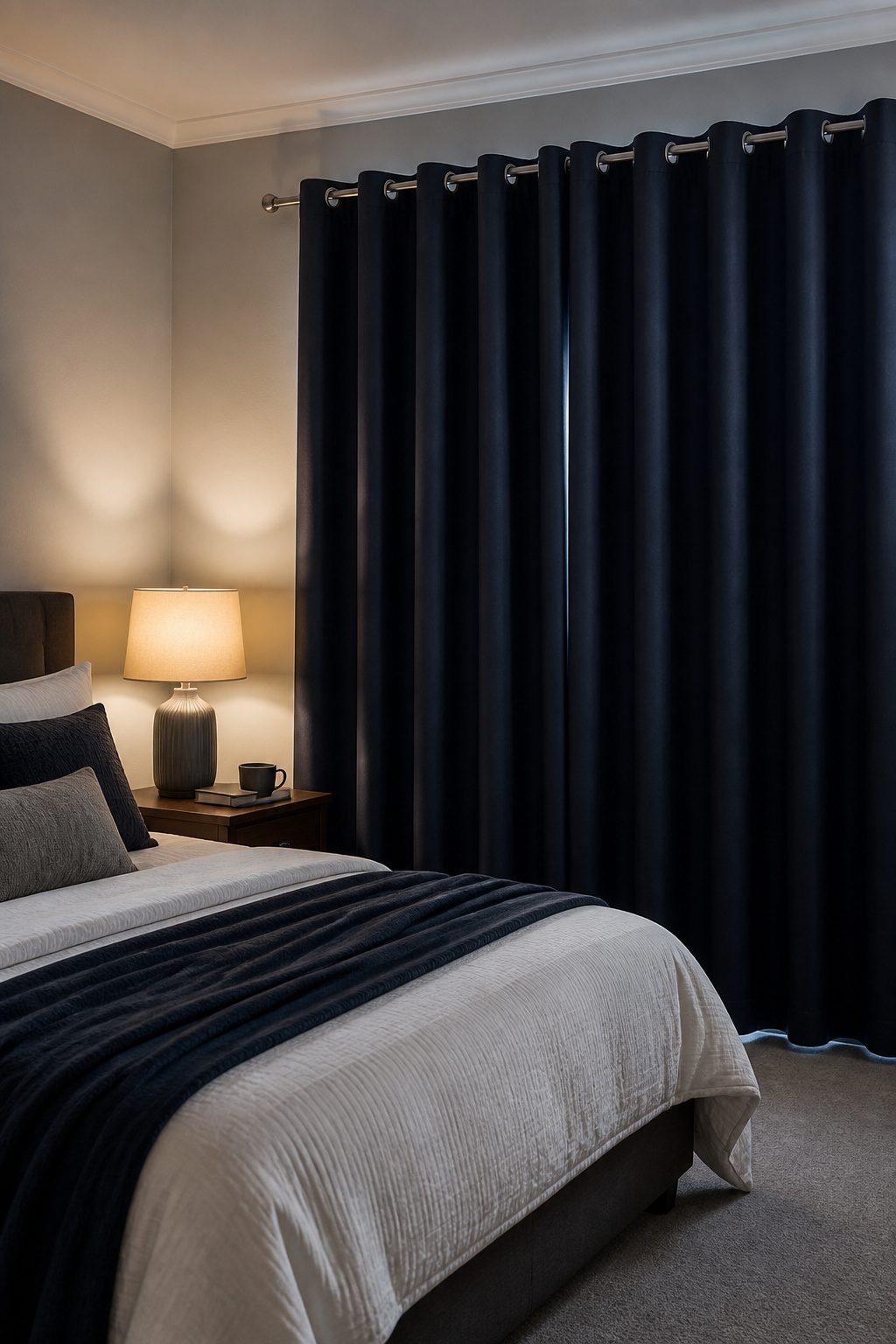
True blockout curtains come in two builds, and the difference matters more than the label suggests.
A standard curtain with blockout lining sewn to the back still lets a thin blade of morning light slip through the needle holes and the seams.
A true blockout weave, where the dense layer is bonded into the fabric itself, seals those gaps. The lined version costs less and hangs softer, but the bonded weave is the only one that actually blacks out a room.
I ran lined blockouts in my bedroom for two winters thinking the thermal claims would show up on my bill.
The HVAC cycled less in the afternoon, which the source passages note, yet the morning leak along the track meant the furnace still kicked on by dawn.
The savings were real but modest, maybe enough over a season to cover a decent dinner out, not the dramatic drop the packaging implied.
That light leak is why I still pair them with a blind. A simple roller blind mounted inside the recess catches what the curtain gaps miss, and the combo costs less than upgrading to bonded-weave panels in every window.
For renters, the blind goes with you; the curtain rod holes are already the landlord’s problem.

【20s No-Drill Setup】 Get your roller shades ready in seconds—no tools, no screws, and no wall damage. The built-in tension system holds the shade firmly inside the window frame, yet allows easy removal for cleaning or relocating. Ideal for inside-mount windows with at least 2" depth. For the best fit, measure your top inside window width and check the Size Guide Image before ordering.

【Quality Assurance】 Professional roller shades production process, Upgraded generation of roller shades products, to give you the best-looking decorative effect. We offers 24 months guarantee, if you have problems in using our cordless roller shades, please contact us via Amazom mail. We will provide you with professional after-sales service.
【Linen Fabrics】Made from high-quality linen fabric, our blackout shades are designed to be soft and skin-friendly, providing full coverage to block out light in your home. Perfect for creating a cozy and peaceful atmosphere in any room. The fabric is precisely cut with a laser without any rough edges. Linen fabric is predominantly made from natural linen fibers, which are completely natural and odor-free, providing you a more comfortable and enjoyable environment.
10. Motorized Roman Blinds
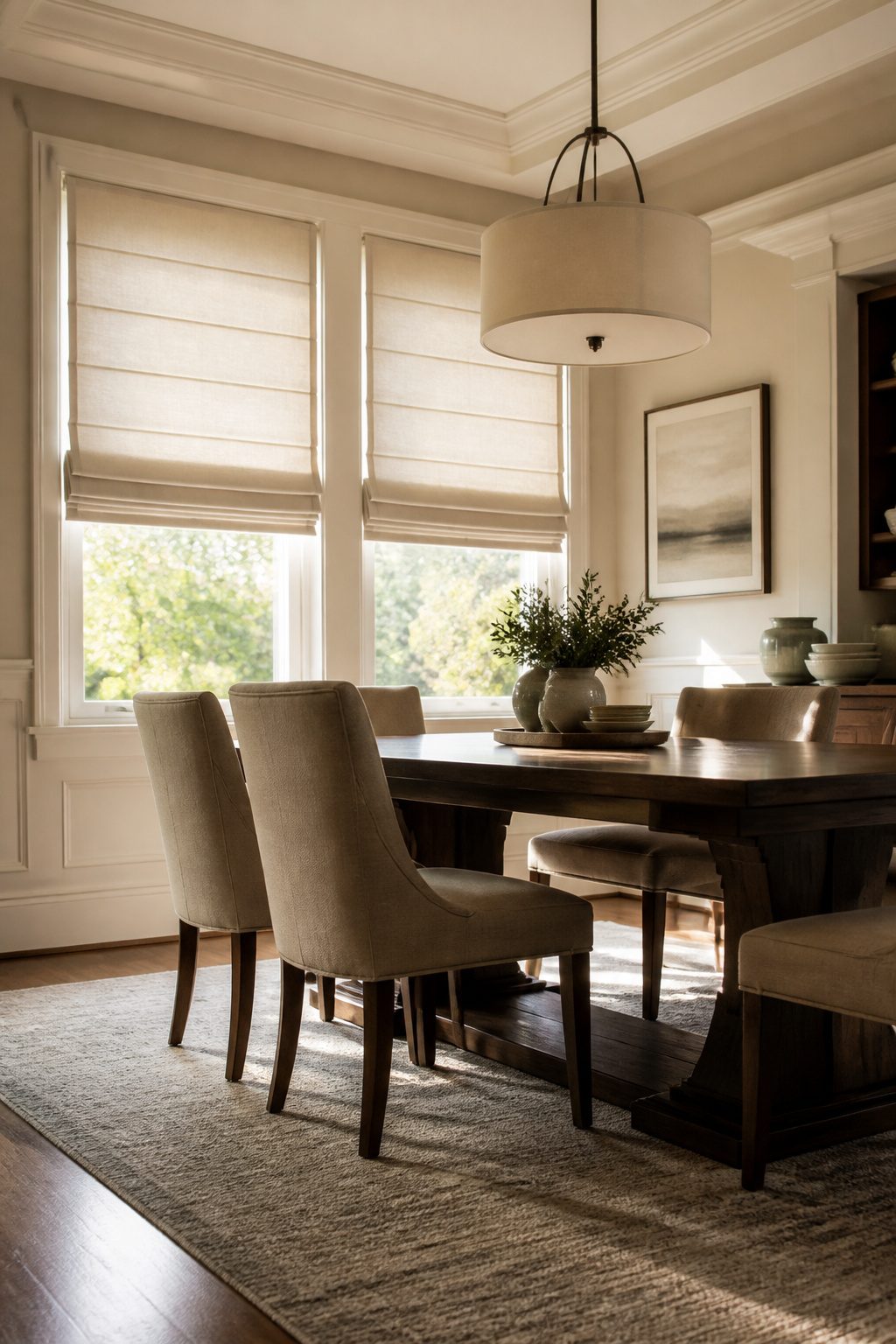
Roman folds stack into neat, tailored pleats that read as upholstery for the window, which makes them the natural choice for dining rooms or anywhere the blinds might share wall space with wainscoting or built-ins.
A motorized version keeps the lines clean; no cord loop breaks the plane of the fabric.
Battery-powered units have come far enough that hardwiring is now an option rather than a requirement.
The lithium pack on the set I installed in a client’s townhouse ran eighteen months between charges, though that drops fast if the blind is wide enough to need a second motor.
Recharging means carrying a step stool to the window twice a year, or paying an electrician once to hide the wire inside the wall.
My three-hour install should have taken forty minutes.
I skipped the stud finder and drove the first bracket straight into drywall with an anchor that spun uselessly. The second bracket hit a stud edge and cracked the plaster.
By the third attempt I was measuring offsets, patching holes, and running the finder properly. The blind itself mounted in ten minutes once the brackets were square.

Made of selected high qulity real bamboo
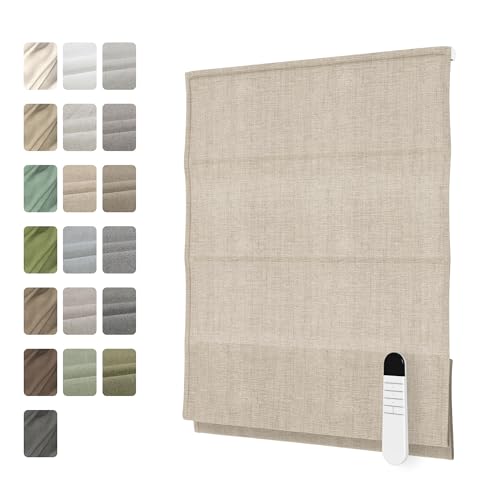
Remote Control Convenience: No more cords or climbing over furniture—just grab the remote and control your motorized roman shades from anywhere in the room. Whether you’re relaxing in bed or cooking in the kitchen, it’s comfort at the click of a button. Simple, smooth, and super easy for everyone to use—especially great for seniors or anyone who wants hassle-free light control.

Complete Darkness, Ultimate Privacy: Experience total blackout with our premium door curtains. Crafted from advanced fabric technology, they effectively block out 100% of light, creating the perfect environment for sleeping, napping, or enjoying a movie marathon. Whether you're working from home or simply seeking respite from the outside world, these curtains ensure absolute privacy and a serene atmosphere.
11. Semi-Transparent Panel Blinds
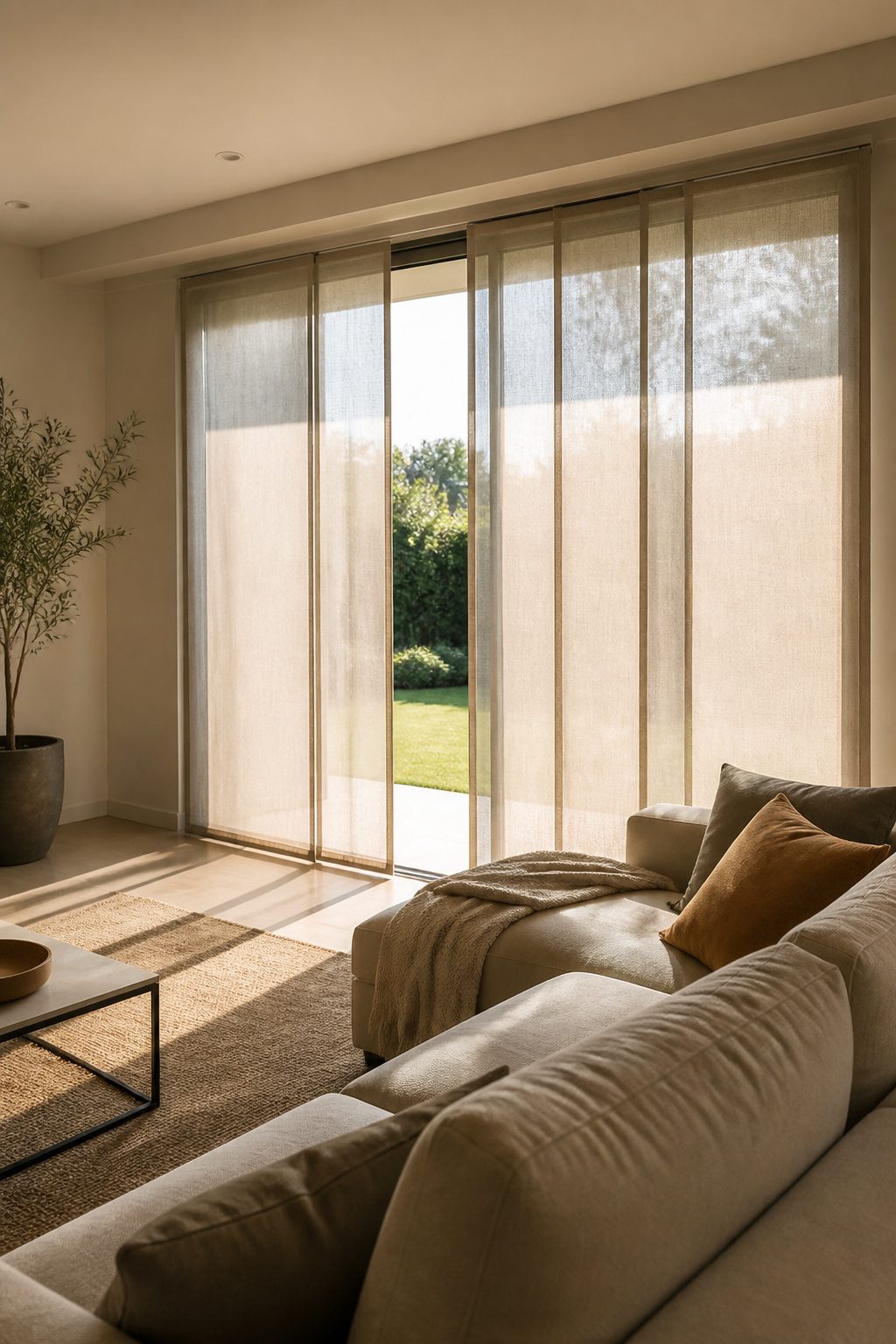
Vertical lines running on a track give panel blinds a clean look that reads more architectural than fabric-heavy.
They work best where you want filtered daylight without full privacy: wide patio sliders, home office windows facing a fence line, or anywhere sheer curtains would tangle in daily traffic.
My own panel blind project started with a standard 6-foot closet opening the previous owner had fitted with bifold doors that never sat straight.
I pulled those out, mounted a ceiling track, and hung four semi-transparent panels in a linen-weave polyester.
The track width determines panel overlap: divide your opening width by the number of panels, then add 2 to 3 inches per panel so they stack with slight coverage rather than gaping.
Four panels across 72 inches meant each panel measured roughly 21 inches finished width. The whole swap ran under $200, including the track hardware from a big-box store and panels ordered cut-to-width online.
The filtering is real but limited. You get softened daylight and blocked sightlines from a distance, yet someone standing close on the other side sees movement and silhouette.
For a closet, that tradeoff is free; for a bedroom facing a neighbor’s window, pair these with a roller shade or skip them entirely.
12. Goblet Pleat Curtains
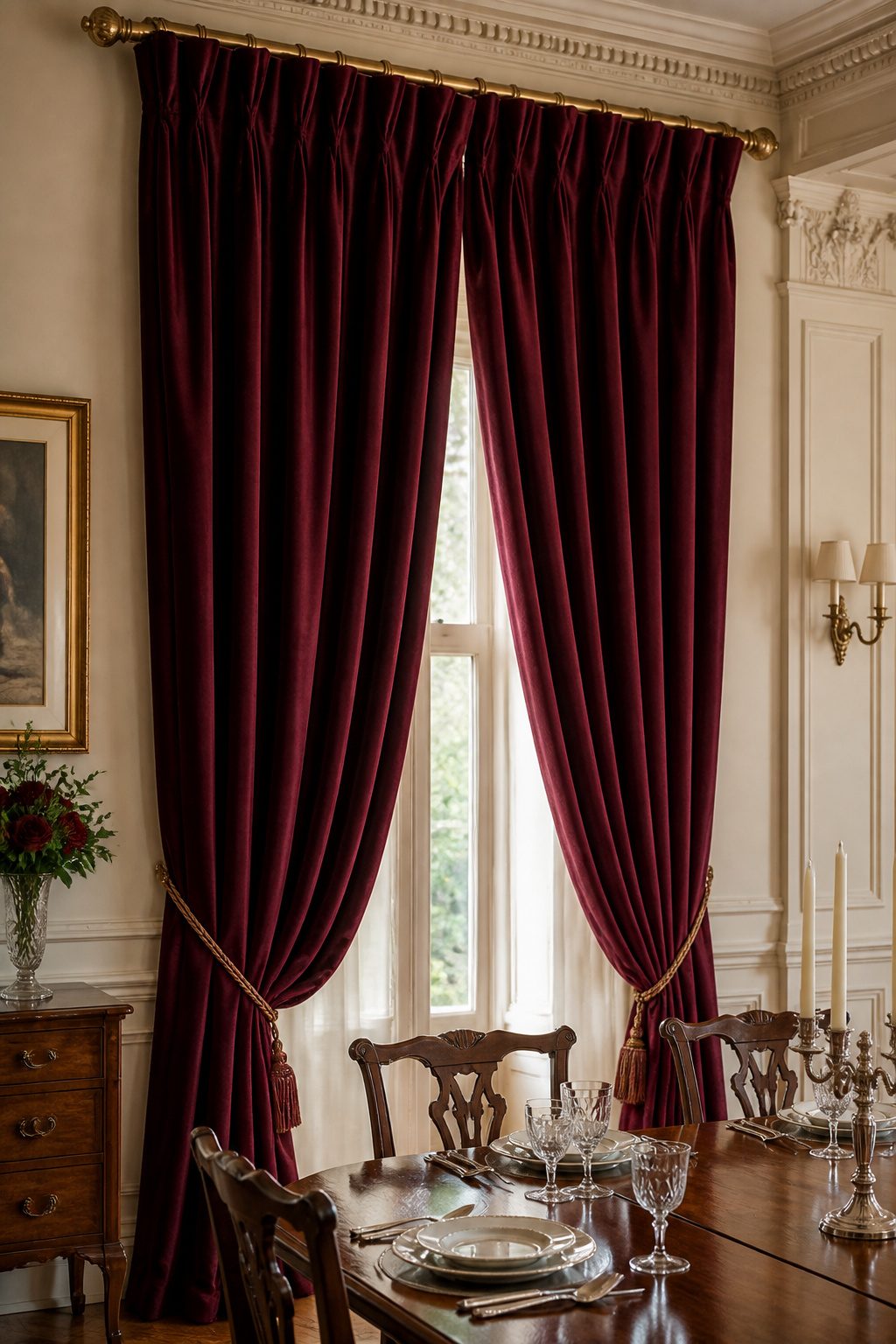
Goblet pleat curtains carry a formality that heavy fabrics need.
The pleat itself is shaped like a wine glass, stuffed at the top so the silhouette holds even when the panels are drawn. Velvet and brocade drape well here; lightweight cotton collapses the structure and looks like a costume.
I considered them for my own living room and stopped.
The house has standard eight-foot ceilings and builder-grade trim. Those pleats read rented in that context, like someone hung hotel drapes in a flat without enough height for them to breathe.
The stuffing and structure need room above the rod, and rooms without it feel dressed up for a party no one invited.
The place I saw them work was a friend’s dining room in a 1920s bungalow.
Twelve-foot ceilings, original crown molding, walls painted a deep green that drank the light. She used velvet in a shade close to burgundy, lined, with the goblets spaced wide.
The formality matched the architecture instead of fighting it. In that room they looked settled, not staged.
Light colors are the usual recommendation for goblet pleats, though her dark choice proved the rule has exceptions when the scale is right.
13. Acoustic Blinds and Curtains
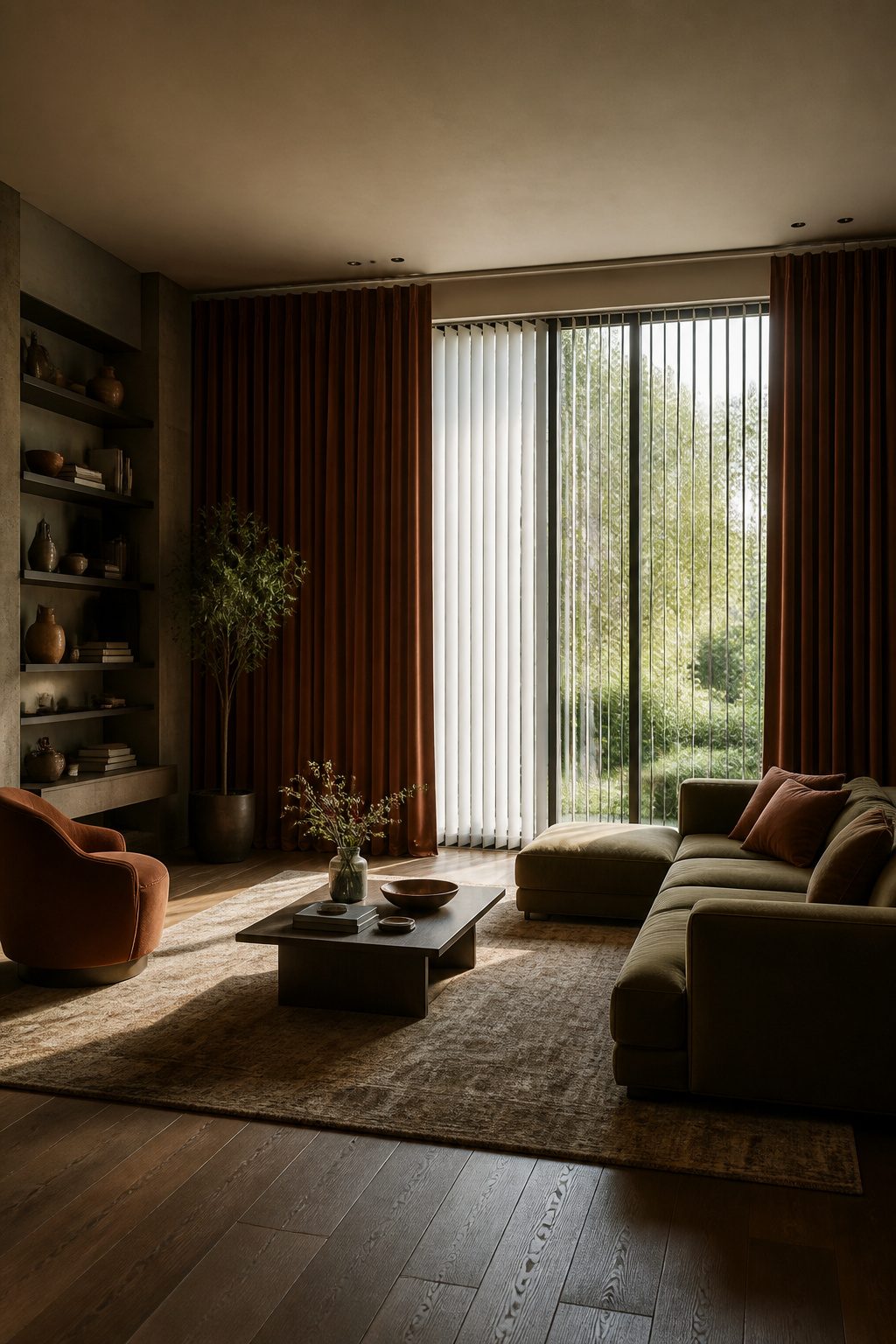
Heavy curtains paired with vertical blinds do more for noise than most people expect, but the mechanism matters. Sound absorption is not sound blocking.
Thick velvet or layered cotton dampens echoes inside a room by trapping sound waves in the fibers. That is absorption.
Blocking, which stops traffic noise from entering, requires mass and airtight seals around the window frame. Most ready-made treatments only deliver the first.
City apartments see the bigger payoff. Street-level buses, neighboring units through thin walls, the hum of an HVAC system on the roof, these are mid- and high-frequency sounds that heavy fabric can actually tame.
In a suburban house set back from the road, the same curtains mostly soften footsteps and dish clatter, the problems you already had covered.
I tested this with a decibel app on my phone, not lab-grade equipment but enough to show the spread.
The reading dropped a few points with the curtains drawn versus bare glass, though the app could not separate absorption from the psychological hush of simply blocking the view.
The real measure was whether I could hear my own thoughts during rush hour. On that, the layered setup won.
Why Window Treatments Matter
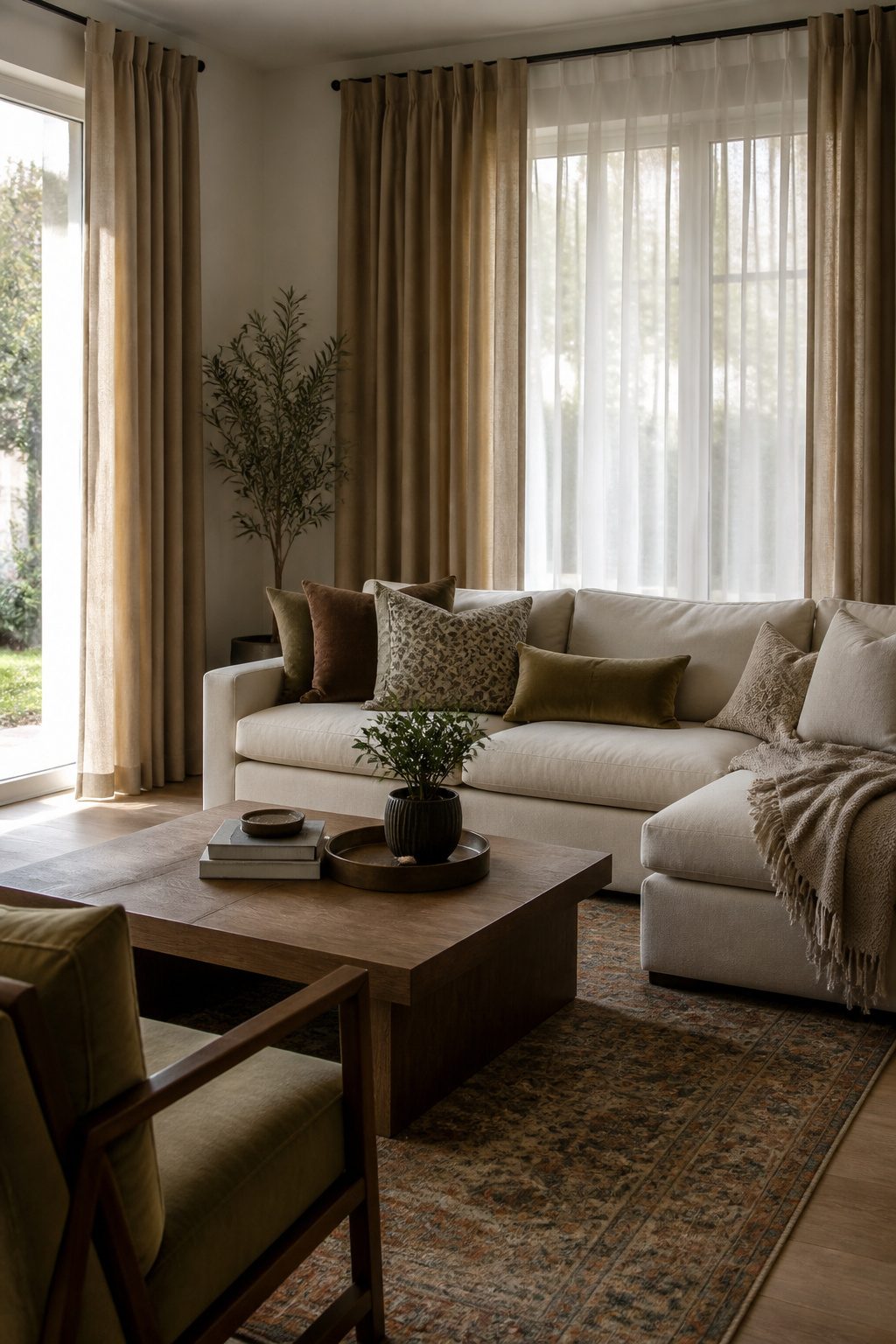
After five apartments and one house, I have learned that window treatments are the first thing you notice when they are wrong and the last thing you notice when they are right.
In my first rental, I hung a bedsheet over the bedroom window with thumbtacks because the afternoon light turned the room into a greenhouse by four o’clock.
The sheet blocked the glare but also every hint of morning, so I slept through alarms and woke up groggy for months.
Privacy works the same way. Sheer linen drapes let you keep the view while softening what neighbors can see in, which is why they ended up in my current bedroom.
Blackout drapes went to the media room, where midday glare on the television made afternoon movies unwatchable.
The difference between a room that feels finished and one that feels off often comes down to whether the light is doing what you need it to do at the hour you actually use the space.
Texture and color around the frame matter more than I expected.
Custom designs or soft linen drapes add warmth that bare windows never achieve, and the choice between Roman shades in a kitchen or long curtains in a living room shapes how the whole room reads before you have arranged a single piece of furniture.
Blinds Versus Curtains
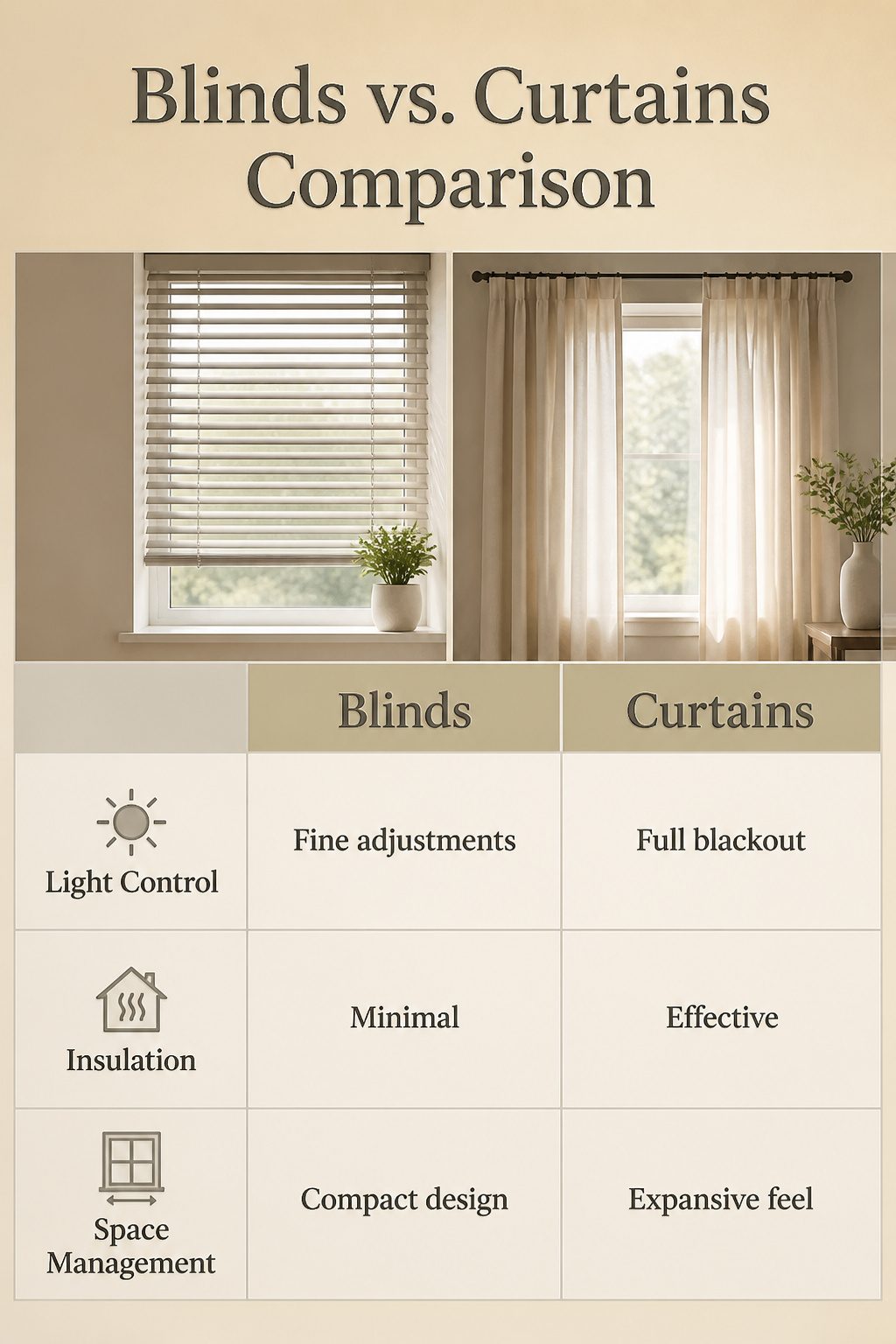
Curtains hang from rods as fabric panels you can draw open or closed.
Blinds are hard coverings built from slats or vanes that tilt, lower, or stack to the side. Each handles light differently, and the tilt of a blind slat gives you gradations no single curtain panel matches.
A curtain alone works when softness and full blackout matter more than fine control. A blind alone suits a tight recess or a window that only needs raising or lowering.
I default to both because the combination solves what either leaves open: the blind manages glare and privacy through the day, the curtain adds insulation, blocks the last ribbon of light at night, and softens the hard edges.
Layering also lets you treat a large window without the fabric looking skimpy or the blind looking clinical.
For a small room, the pairing that keeps it from feeling closed in is light-colored sheers with a narrow roller blind behind. The sheer filters daylight, the roller drops for sleep, and neither competes for wall space.
What Is Changing in Window Treatments
Motorized blinds have shifted from a showroom novelty to something I see in stock at every big-box store I walk into.
The hardware costs less than it did three years ago, and the installation no longer requires an electrician if you are comfortable swapping a light switch.
What convinced me, reading through a dozen of these systems, is that the reliability gap has closed: early motors failed when curtains were too heavy, but newer units now list weight limits you can actually trust.
Natural materials are the other change worth your attention.
Bamboo and jute blinds used to sit in a corner of the catalog marked "tropical." Now they are shelved beside gray-washed oak and matte black hardware, framed as neutrals rather than statements.
I pinned plenty of these looks before I understood the maintenance: jute sheds fibers for the first month, and bamboo slats warp in a bathroom you actually steam up daily.
Plan to dust them weekly and keep them out of high-humidity rooms unless the label specifies sealed construction.
Frequently Asked Questions
What is the difference between curtains and blinds?
Curtains are fabric panels that hang from rods and draw open or closed.
Blinds are hard coverings built from slats or vanes that tilt, lower, or stack to the side. The tilt of a blind slat gives you light gradations that no single curtain panel can match.
Are motorized or automatic curtains a good investment?
They are worth it for year-plus leases but not short sublets.
A DIY retrofit kit for a 72-inch window costs about $80 versus $400 for professional installation, though expect an afternoon of app and Wi-Fi troubleshooting. The convenience and modern look are real once the setup headaches pass.
Can you combine blinds and curtains?
Yes, and the combination solves problems that either leaves open alone. A blind manages glare and privacy through the day while the curtain adds insulation, blocks the last ribbon of light at night, and softens hard edges.
For small rooms, pair light-colored sheers with a narrow roller blind behind so neither competes for wall space.