
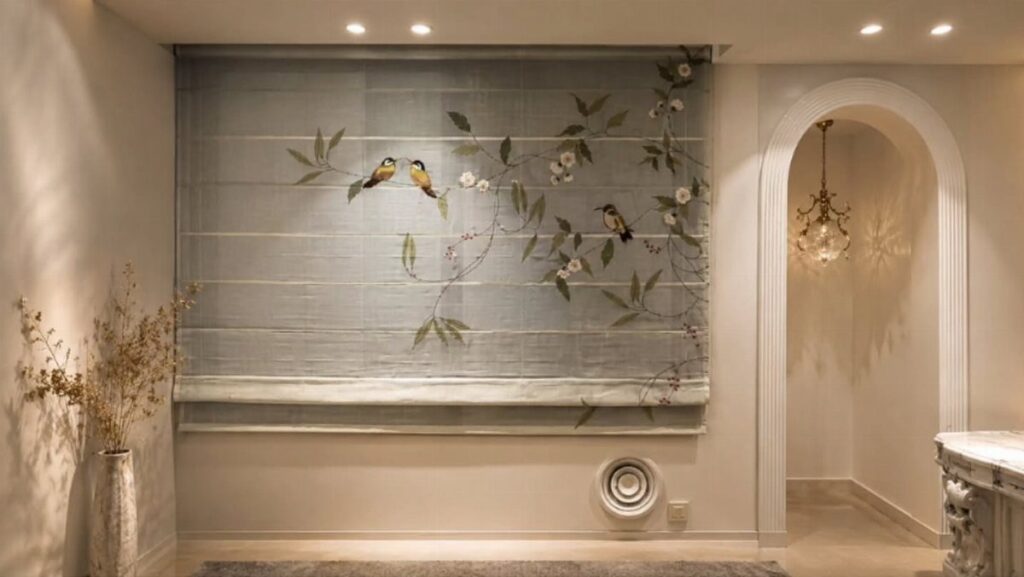
These 11 Roman blind designs run from a few dollars in grosgrain ribbon to the cost of blackout lining and weighted bead trim, with most projects finishing inside a weekend.
What decides which one is yours is whether the window needs to disappear at night, filter light while it works, or sit inside a bay that no standard size fits.
The black lining that keeps folds from sagging into a rumpled sheet is the detail that separates a shade that holds its shape from one that looks cheap by morning.
1. Black Lined Roman Shades
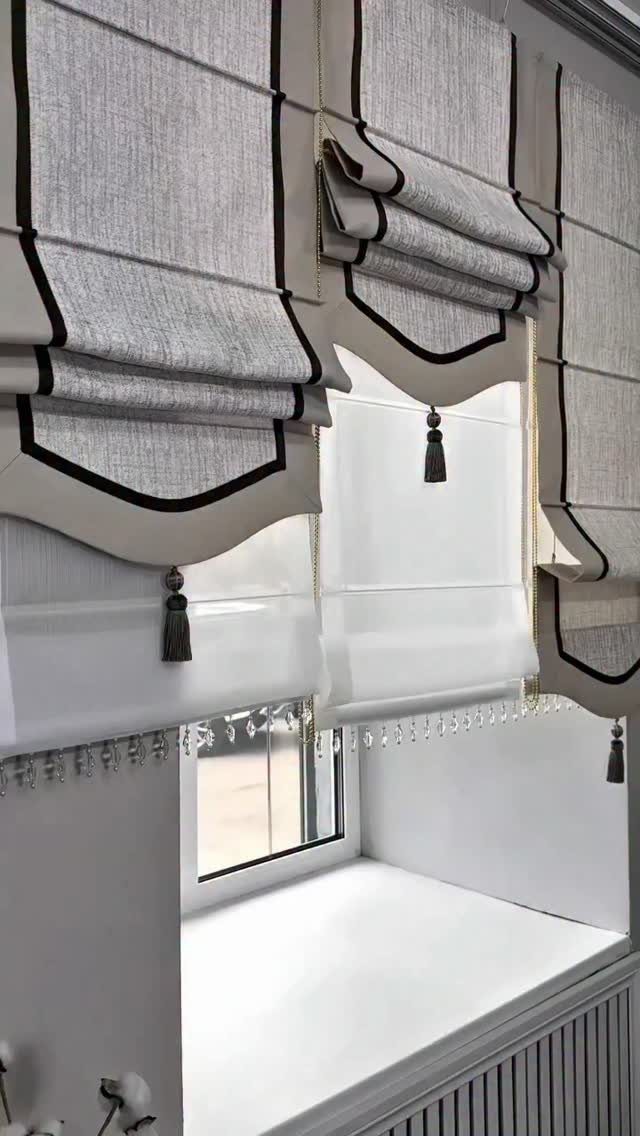
Black lining does more than block light. It gives the shade body, so the folds keep their shape instead of sagging, and from the street the window reads as one dark plane rather than a rumpled sheet.
Trim and tassels turn that structure into a deliberate look. I would add the piping before the fringe; it defines the edge even when the shade is down, and fringe can tangle in a washer.
Layered over sheers, this works in rooms where you want privacy without losing daylight. The sheers diffuse, the black lining sleeps.
2. Custom Roman Shades
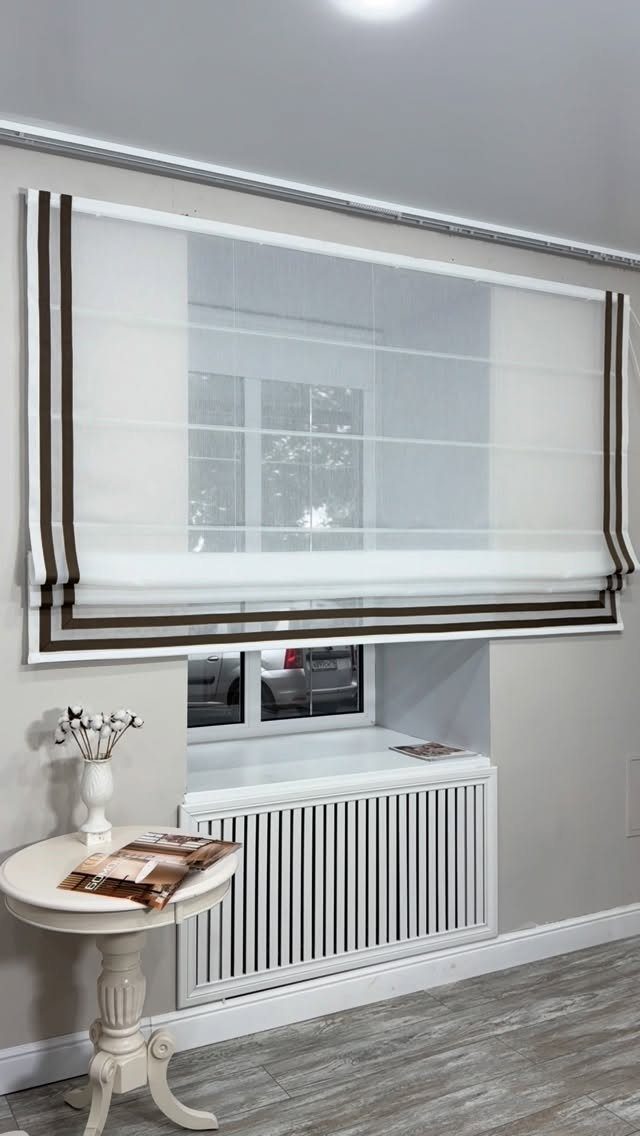
A ribbon border turns an off-the-rack white shade into something that looks measured for the window. The brown stripe picks up the radiator cover below, and that coordination is half the custom effect for a few dollars in grosgrain.
I order shades slightly wider than the frame and mount them just above the trim, not inside it. The overlap kills the light bleed that makes cheap treatments look cheap.
The ribbon gets hand-sewn to the face after installation, not before. Easier to keep straight when the shade is already hanging plumb.
3. Classic Striped Roman Blinds
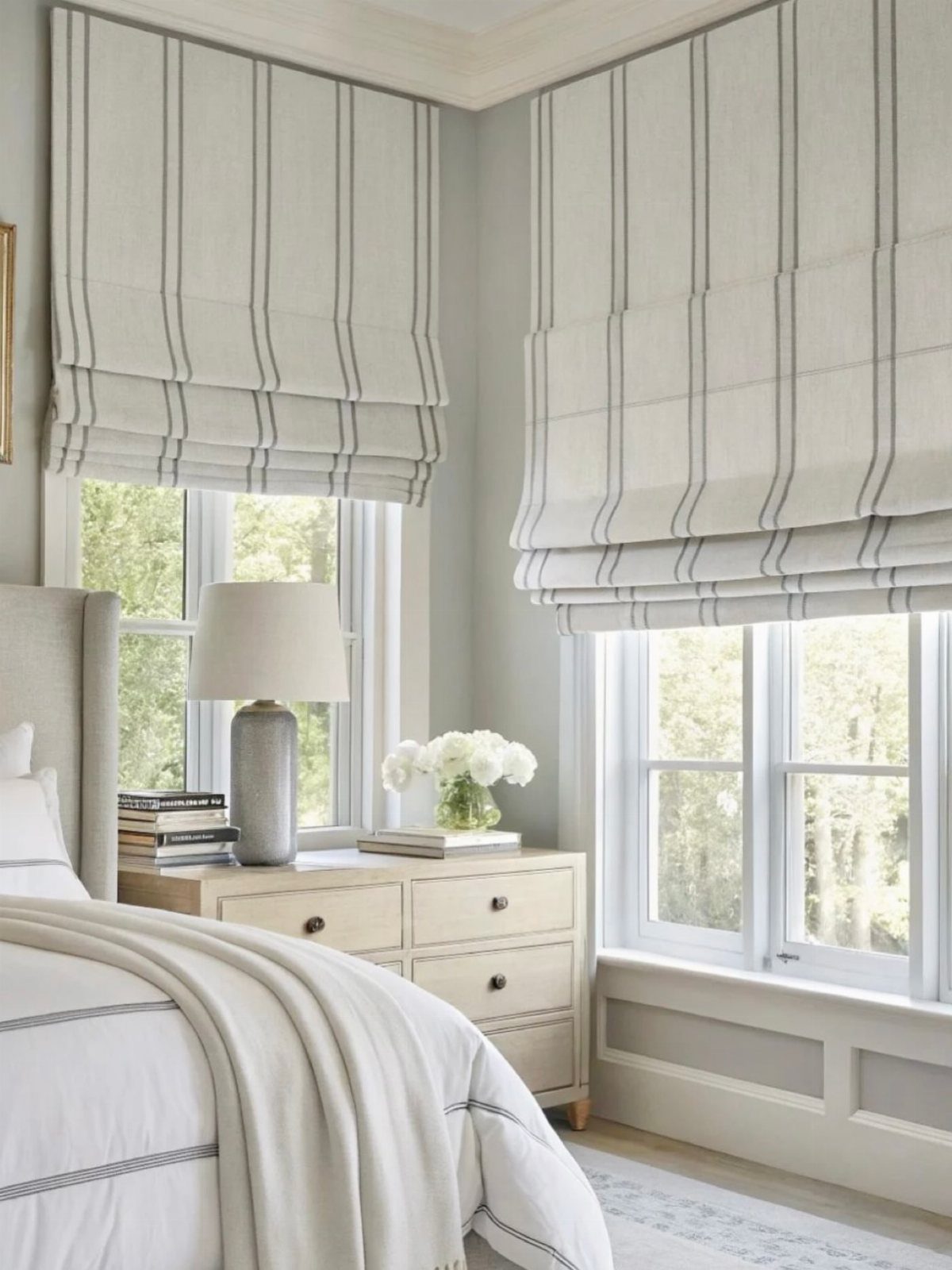
Stripes suit rental bedrooms because they read as intentional without demanding new furniture. The cream and grey here stays quiet against white walls and wood tones you probably already own.
I like a stripe width between 1 and 2 inches.
Narrower gets busy; wider starts to feel like awning fabric. The horizontal repeat matters more than the vertical, since Roman blinds fold horizontally and the stripe needs to stack evenly.
Cotton duck or a cotton-linen mix holds the crease and steams flat if it bags. Polyester stripes tend to shine under lamplight, which reads motel to me.
4. Roman Blinds for Bay Windows
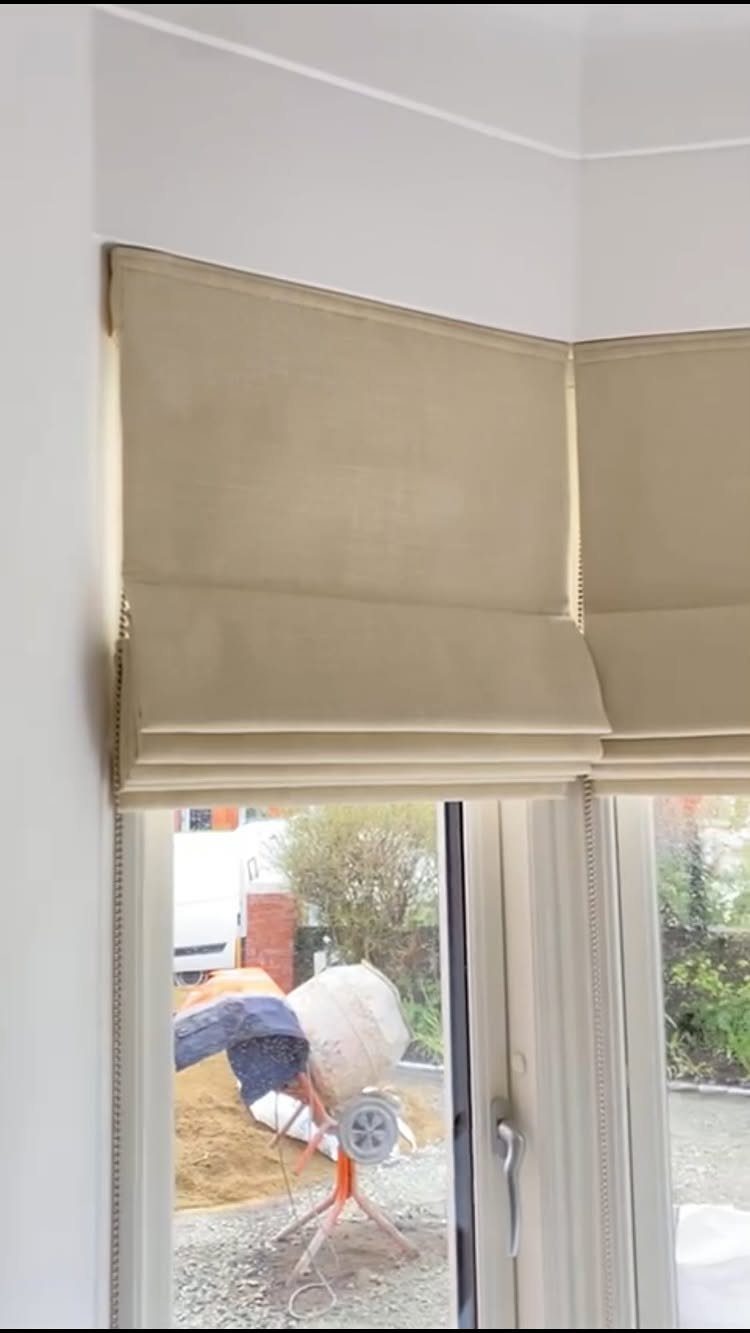
Three separate blinds, one per pane, beats a single curved track every time. The track costs more, collects dust, and never runs smooth where the angles bend.
Each blind mounts inside its own frame, cut to the exact width of that section.
I measure top, middle, and bottom of each pane; old bays settle uneven, and even a small gap at one corner lets in a blade of afternoon light that will find your eye.
Neutral fabric keeps the architecture visible. The bay is already the room’s event; pattern here competes with the view.
5. Roman Blinds with Trimmings
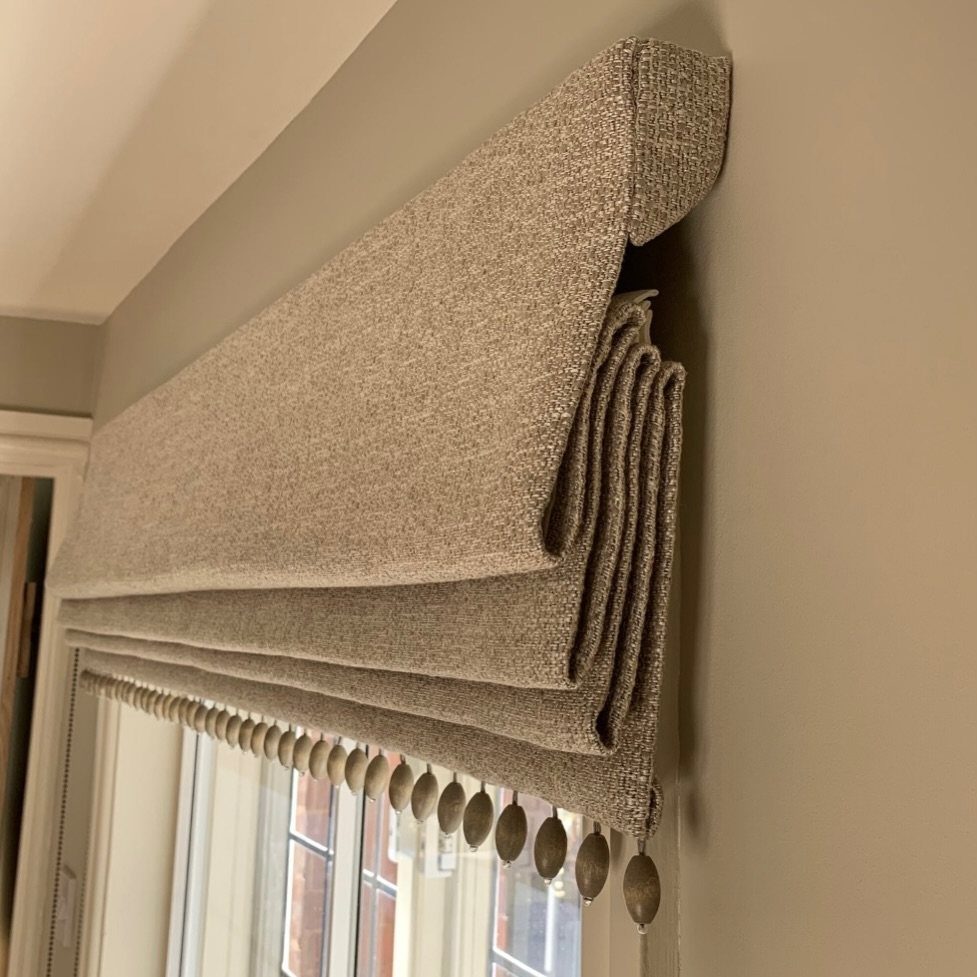
Bead trim along the bottom hem adds weight, which helps the shade drop square and resist curling.
Oval beads strung, not glued, clink slightly when the shade moves. I find that pleasant; you may not.
Sew trim to the lining side, tacked through at each fold so it does not swing free and catch. Machine stitching the tape down first, then hand-sewing the beads through, takes about an hour for a standard width.
I would skip this in a child’s room or anywhere the blind gets yanked. The beads are the first thing to snap.
6. Floral Roman Blinds
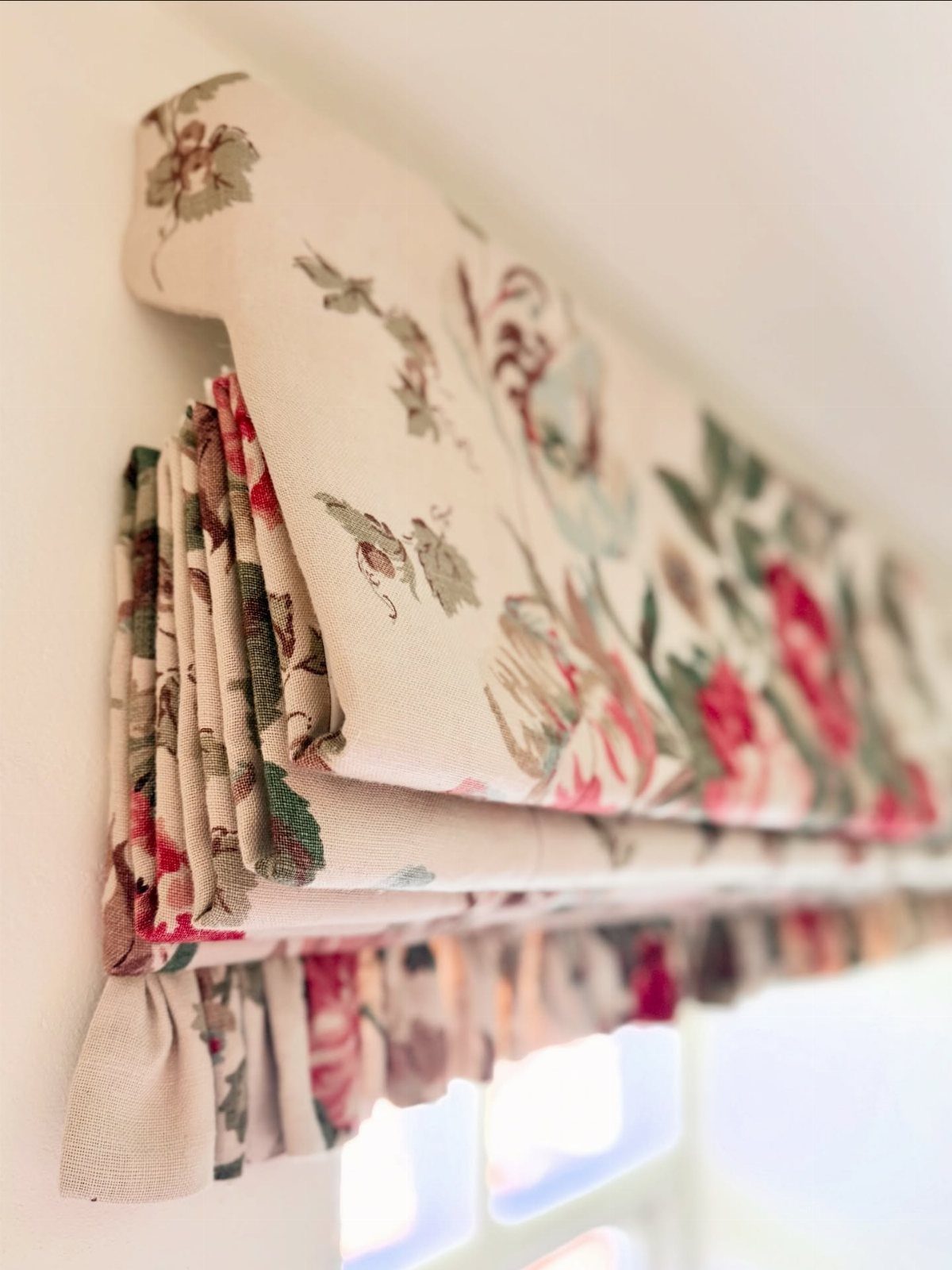
A large-scale floral works best when the repeat is bigger than your hand and the background is quiet. Pink roses on beige, not white, keep the wall from reading as blank where the shade is up.
The ruffled edge is a choice I would not make myself.
It collects dust and the curve fights the straight stack of folds. A plain hem with the same floral continuing to the bottom feels calmer and sews faster.
This pattern suits a room with solid upholstery. A floral blind against floral pillows is a garden, not a room.
7. Bedroom Roman Blinds
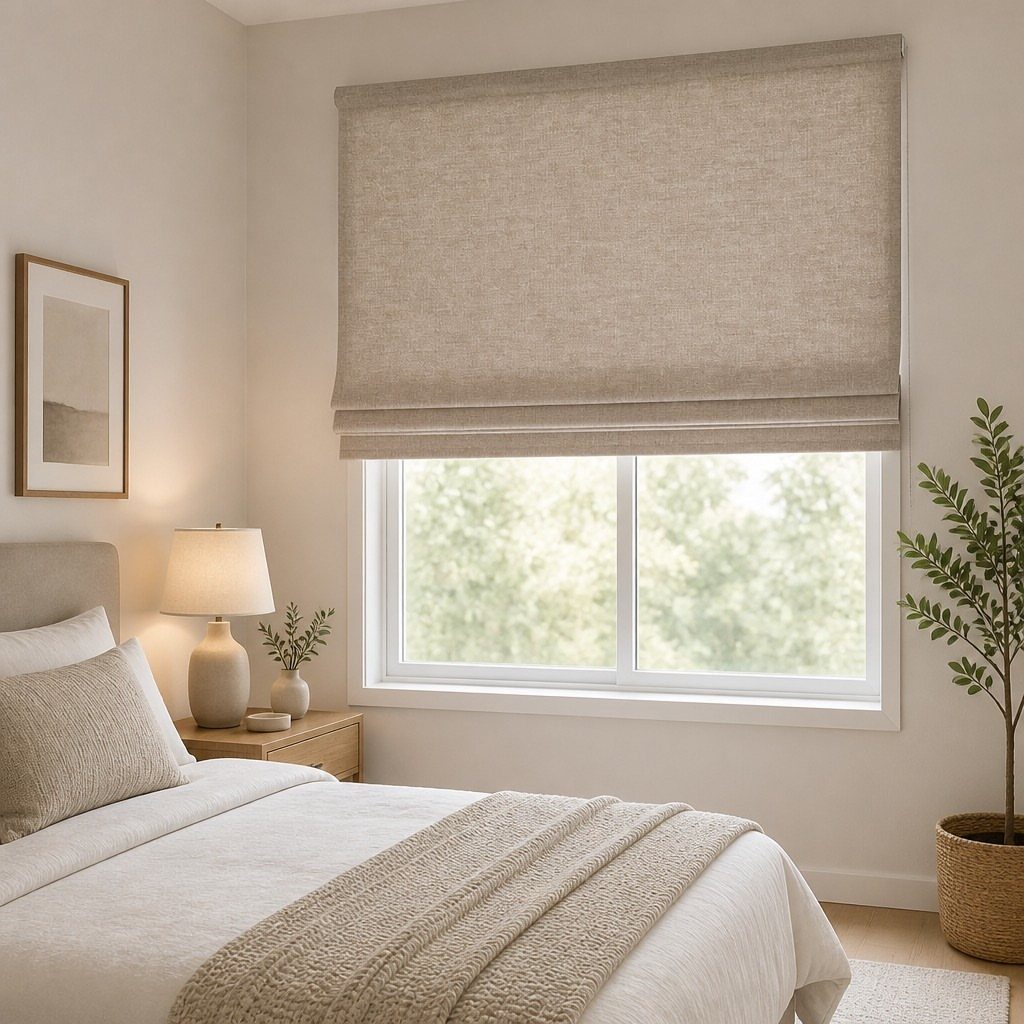
Bedroom Roman blinds sit best in a quiet weave that reads as texture, not pattern. The beige here does that work: it warms white walls without asking for new bedding to match.
I would line even a light-colored bedroom shade with blackout cloth. The difference in sleep quality is worth the extra cost for blackout lining, and the lining protects the face fabric from sun rot.
Mount it high enough that the stacked folds clear the window glass entirely when raised. In a bedroom you want every possible inch of morning light.
8. Pastel Roman Shades
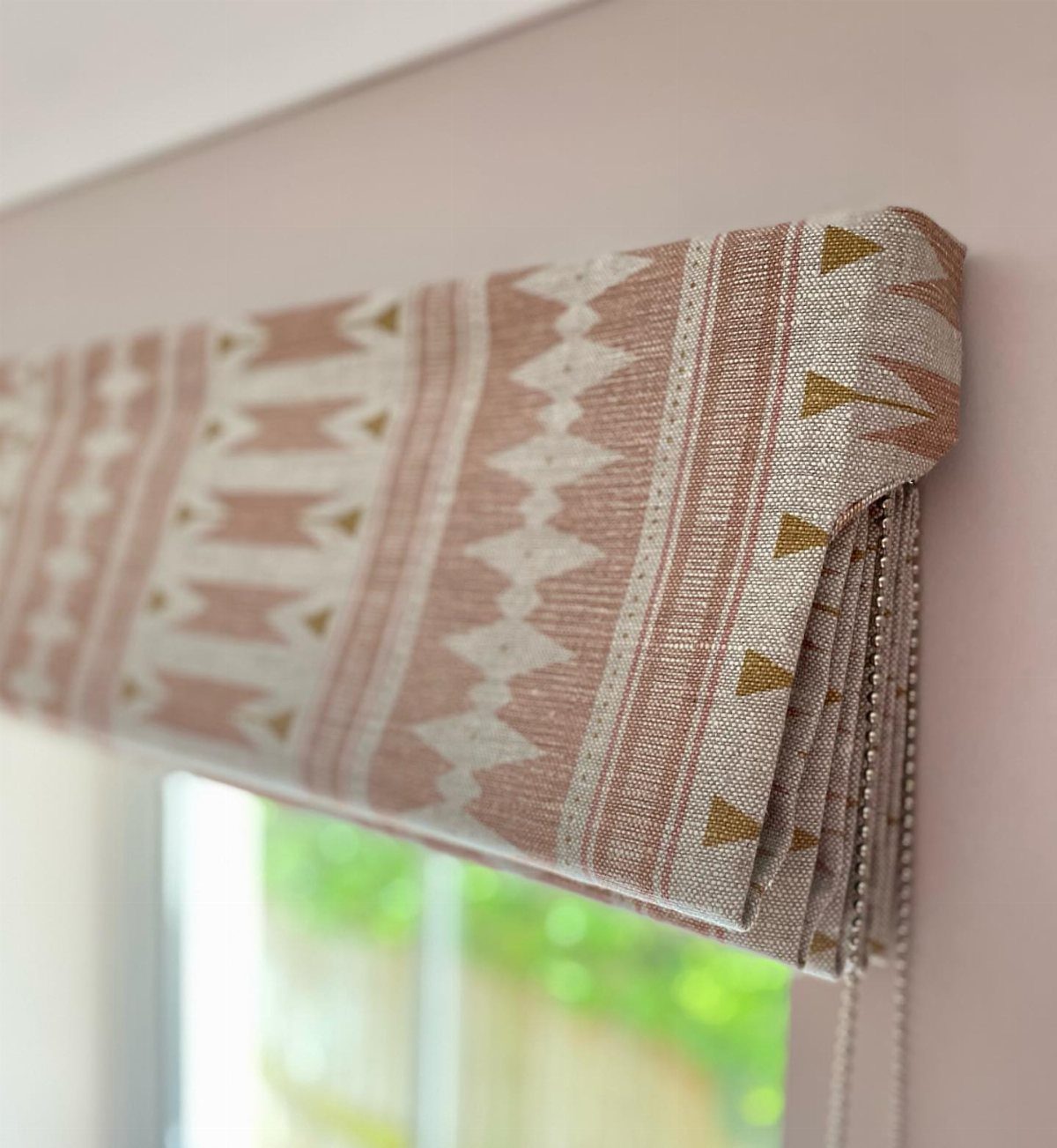
Pastel works on Roman shades because the flat panels between folds let the color read as a wash rather than a busy repeat. The dusty rose and mustard here stay muted enough to live with through changing seasons.
A tribal geometric needs more care than a solid. I would check the pattern repeat against the folded height before ordering; a motif that lands awkwardly across a fold looks broken.
Most makers list the repeat in inches; divide it into your raised stack height and aim for a whole number.
The beaded chain is a detail I would swap for a cordless system if small children visit. The beads are a choking hazard and they clack against the frame in a breeze.
9. Bamboo Roman Shades
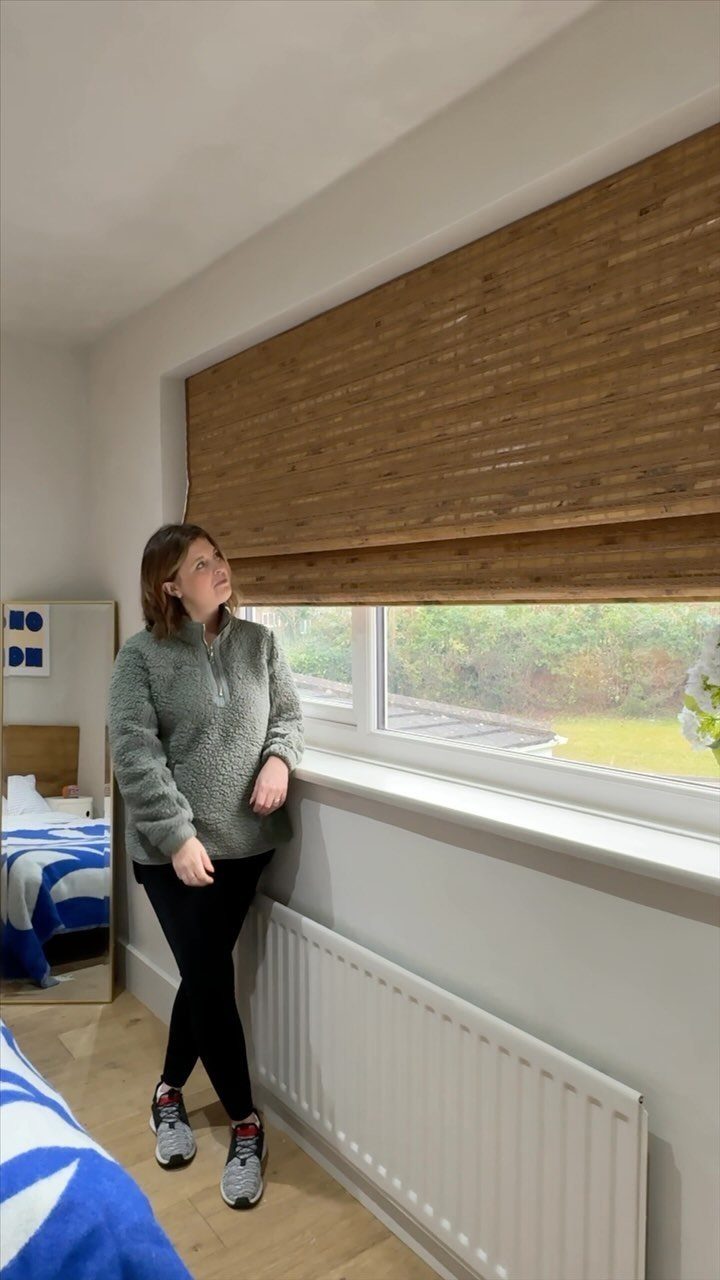
Bamboo Roman shades bring in texture that reads as warm even under cool LED bulbs. The natural color variation hides dust better than uniform fabric, which matters in a bedroom where you notice everything once the lights are low.
The weave density determines privacy.
A tight weave blocks the view but still lets light through; open weave reads lighter but silhouettes you clearly after dark. I would hold a sample up to a lamp in the store.
These run heavier than fabric, so check the hardware weight limit. A full-size bamboo shade gets heavy fast, and a cheap headrail will bow.
10. Sheer Roman Blinds
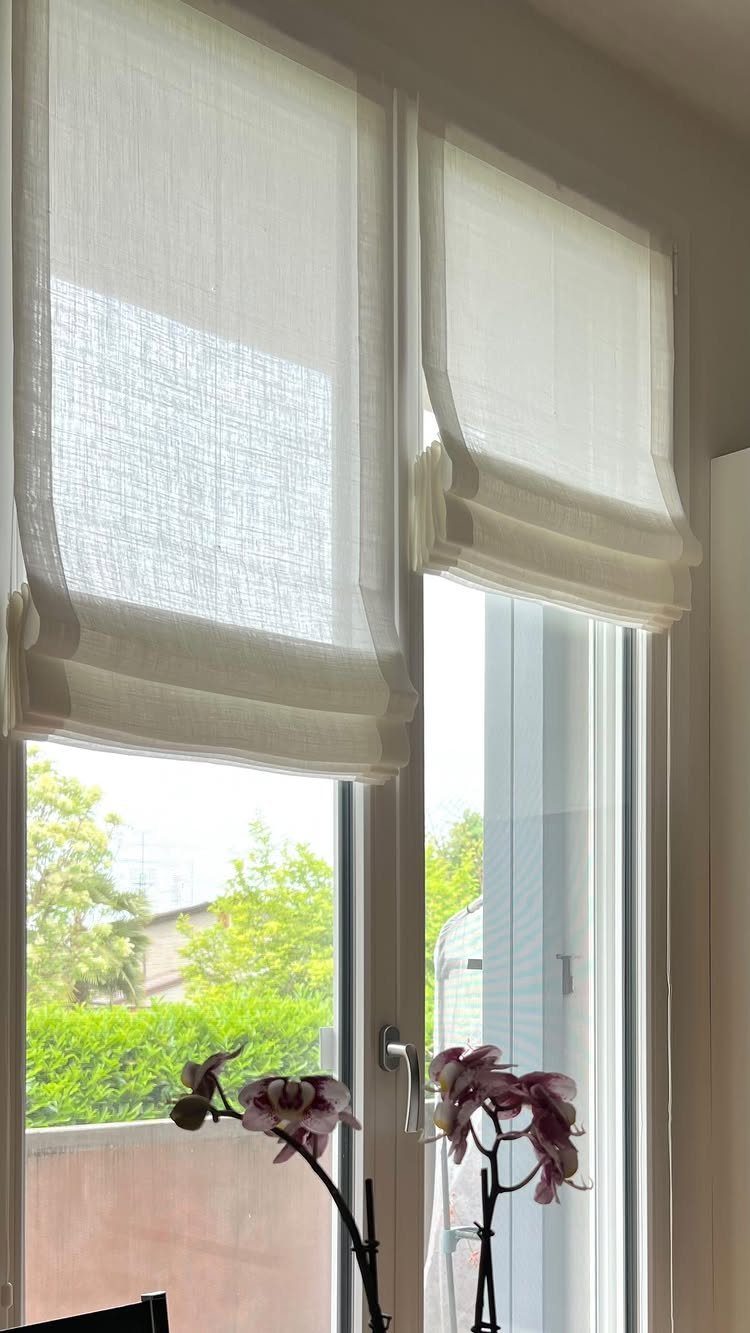
Sheer Roman blinds filter light rather than block it, which suits east-facing rooms where you want sunrise without glare. The white here reads as soft, not clinical, because the texture breaks up the flat planes.
Two blinds on one wide window beats a single wide shade.
The center gap disappears when both are raised, and you get cleaner stacks at the sides. Measure each half independently; windows this tall often taper.
I would add a blackout roller behind these for summer evenings when the sun stays up late. The sheer stays visible during the day; the roller does the night work without competing.
11. Geometric Pattern Roman Blinds
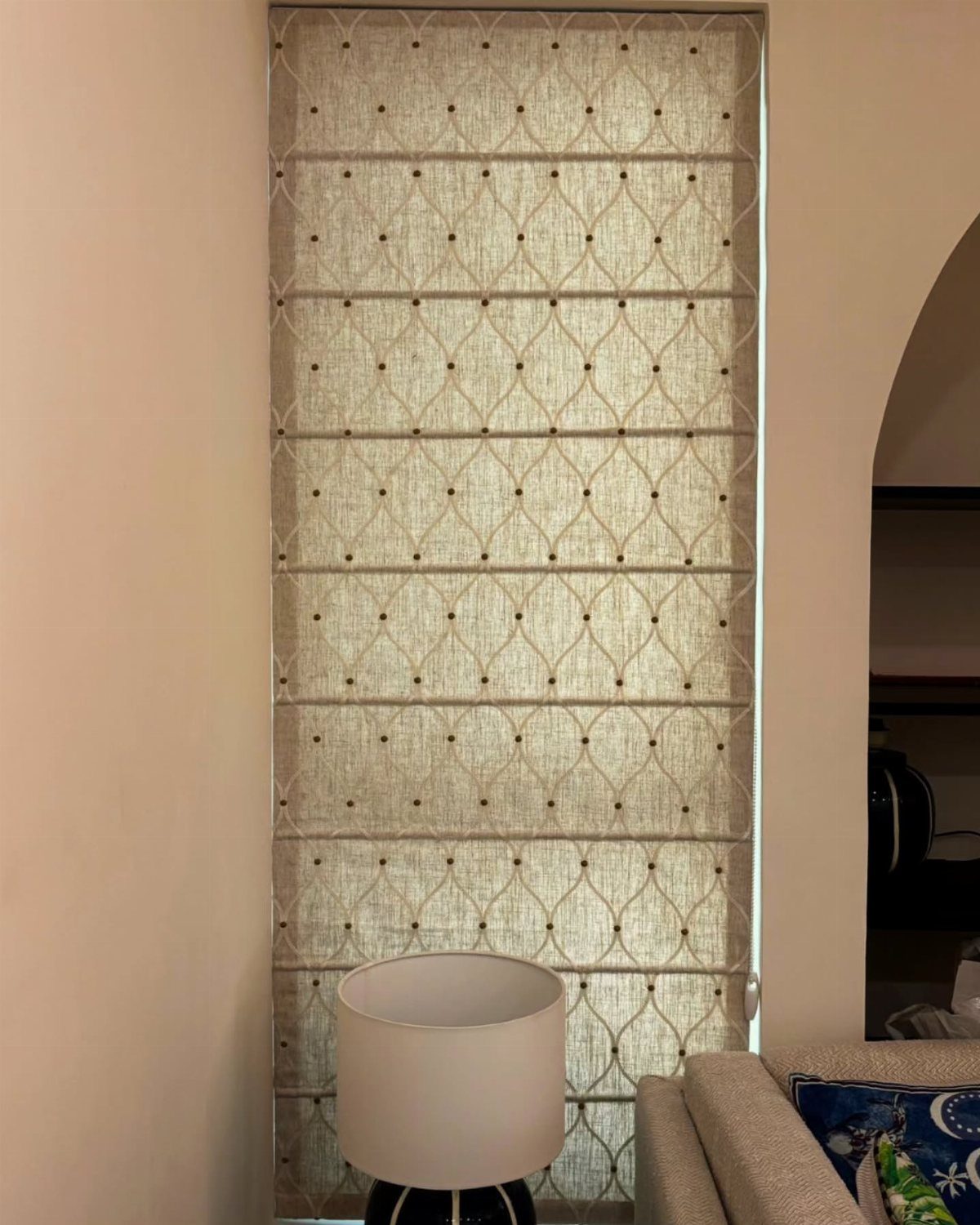
A geometric trellis on linen gives structure without hardness. The curved repeat here softens the grid, and the beige ground keeps it from reading as office wallpaper.
Scale matters more than color for this pattern.
I would not use it on a narrow blind; the repeat gets cut off and the eye reads the interruption as a mistake. At full width, the motif has room to breathe.
Linen wrinkles.
A cotton-linen blend holds the fold crisper and costs less pure linen. The surface has a slight sheen; held to the light, the blend looks satiny where straight linen stays matte.
Layering with Curtains
Layering a Roman shade with curtains gives you 2 tools that do different work.
The shade handles light and frames the window itself; the curtain adds height and softens the wall. Used together, they read as deliberate and finished in a way either alone rarely manages.
I hang the shade inside the frame or just above it, and the curtain rod high enough to clear the stacked folds with the rod extending past the frame width on each side.
For fabric pairings, I keep the shade quieter than the curtain.
A textured solid shade under a patterned drape lets the curtain carry the interest without competition. Two patterns of similar weight fight each other; one should step back.
Sheer curtains over a blackout Roman shade solve the privacy problem in stages: sheer during the day for filtered light, shade down at night for sleep.
The reverse, a sheer shade under heavy curtains, reads fussy to me and collects more dust.
The layering of a Roman shade and a curtain can give your space an instantly sophisticated, immediately more expensive look.
Frequently Asked Questions
What is the downside of Roman blinds?
Roman blinds block light less completely than heavy drapes because the horizontal folds let thin blades of light through even when fully lowered. A blackout lining helps, though the stack of raised folds still sits visible at the top.
I still get full darkness by pairing them with a blackout roller mounted behind; the roller handles night duty while the Roman layer handles the look.
Are Roman shades out of style in 2026?
No. Roman shades remain a classic staple because the soft horizontal folds add tailored fullness that reads as intentional in both modern and traditional rooms.
The clean stack when raised suits windows where floor space is limited, and the fabric choice lets them shift with changing taste without replacing the whole mechanism.





