
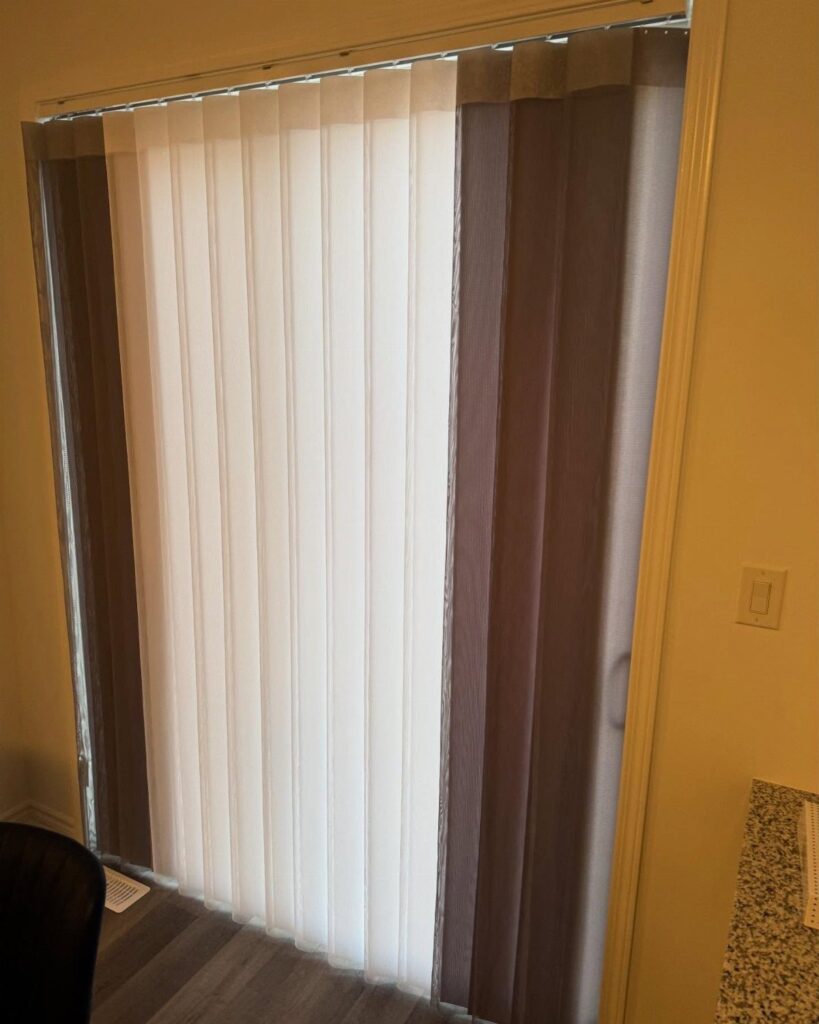
A patio door covering can be as cheap as basic vertical blinds or as permanent as shutters that stay with the house, and the right choice has less to do with budget than with whether you own the place and plan to stay.
I always start with which way the door faces: south and west get the hardest sun, so a treatment with some insulation pays for itself in cooling costs, while north and east let you get away with sheers.
For renters, the wall space matters as much as the door itself; stacked drapes or drawn vertical blinds need clearance that a cramped apartment layout may not give.
1. Vertical Blinds
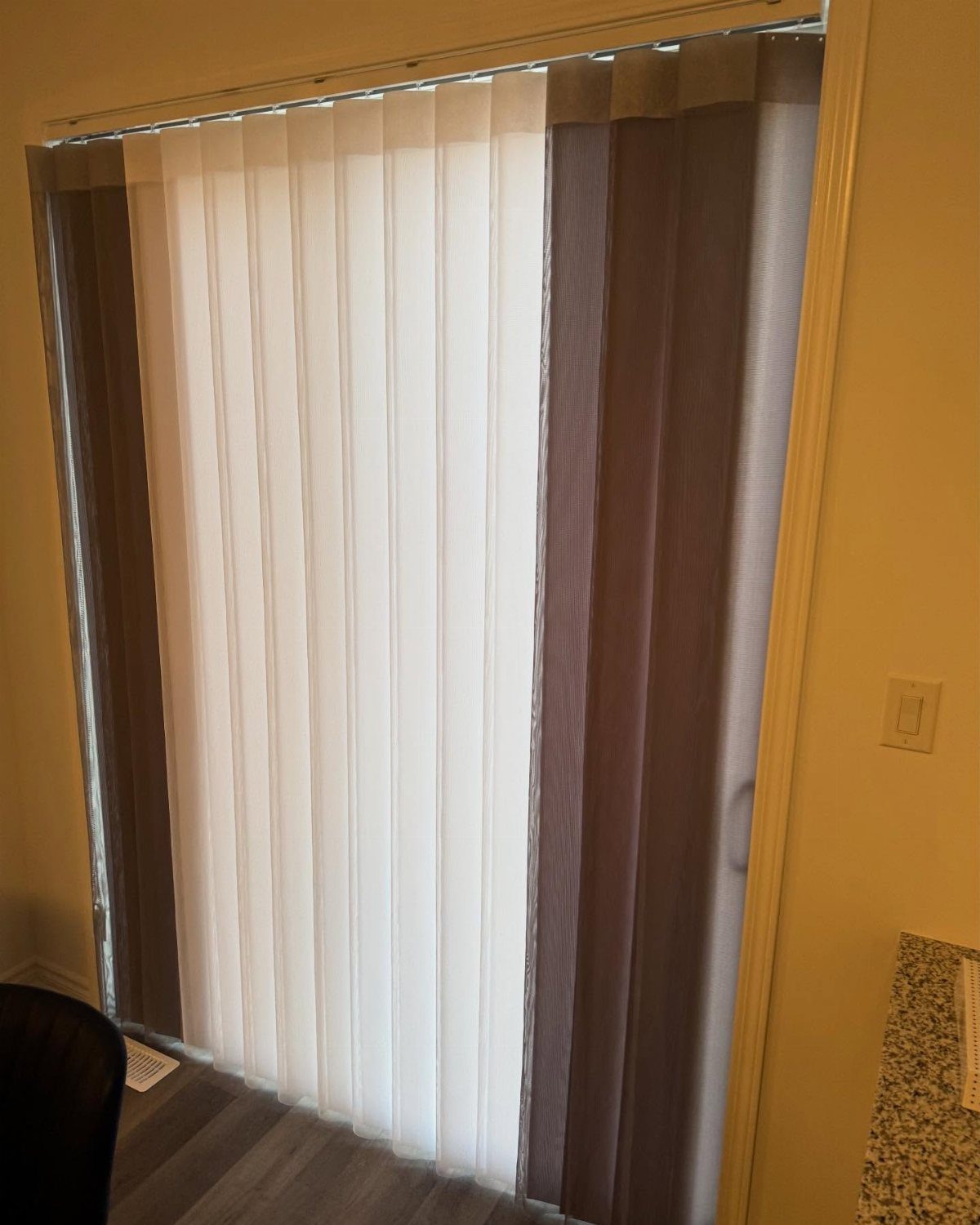
Vertical blinds still own the rental market for a reason: they cover the full width of a sliding door cheaply, and the vanes stack tight to one side so the door stays usable.
I would skip the decorative valance and put that money into wider slats, which look less like an office. Cleaning is the real drawback; each vane collects dust and pet hair, and there are a lot of them.
2. Roller Shades
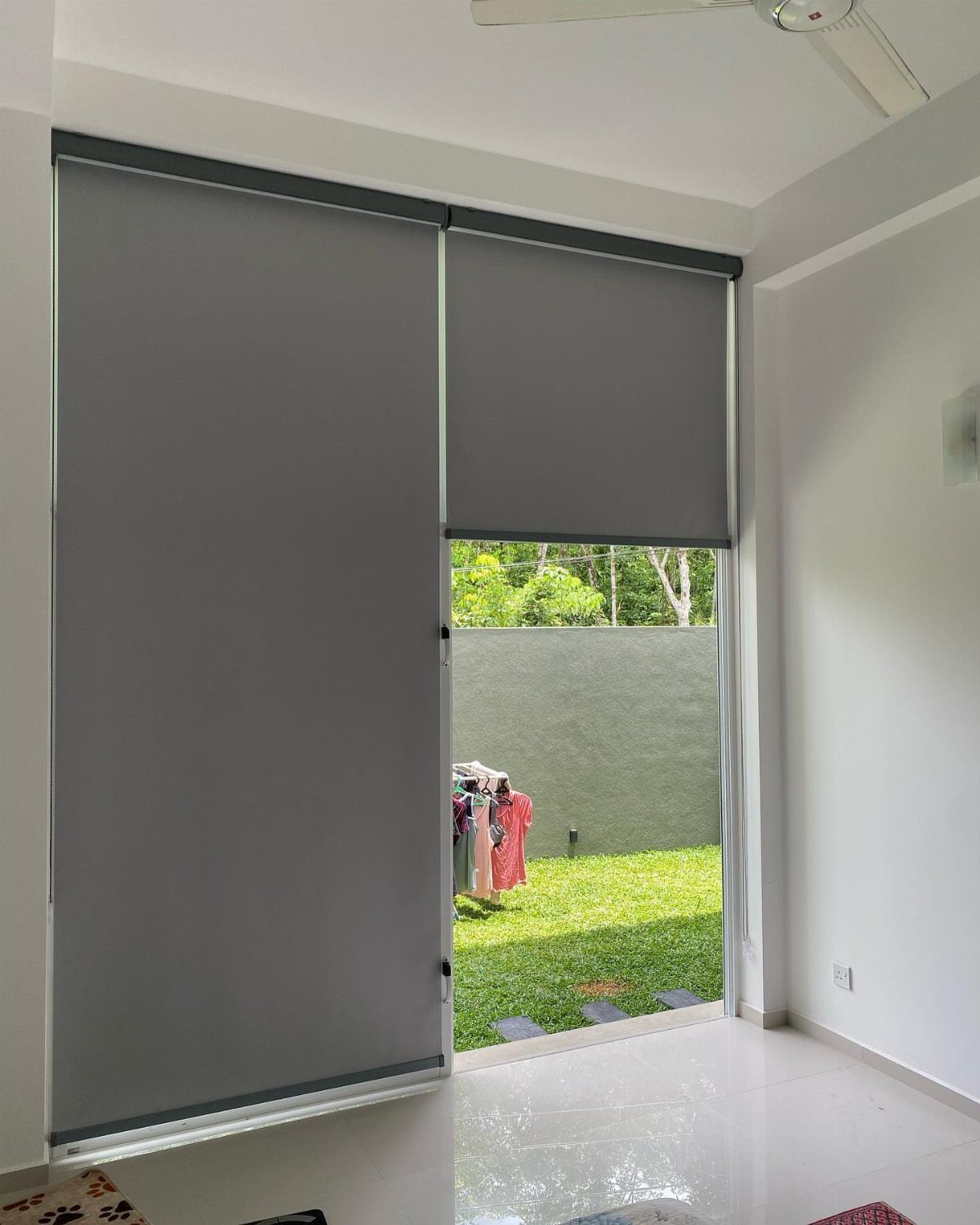
Roller shades disappear when you want them to. 2 matched shades spanning a wide patio door keep the wall flat and the view open, and grey fabric reads as neutral without going institutional.
I like this choice for first-home owners who are already juggling paint colors and furniture; one decision, done. Mount them high and wide, past the door frame on each side, so the fabric clears the glass completely when rolled up.
The downside is insulation: single-layer roller shades do little against summer heat or winter cold. A solar or blackout liner fixes that and adds to the cost per shade.
3. Drapes
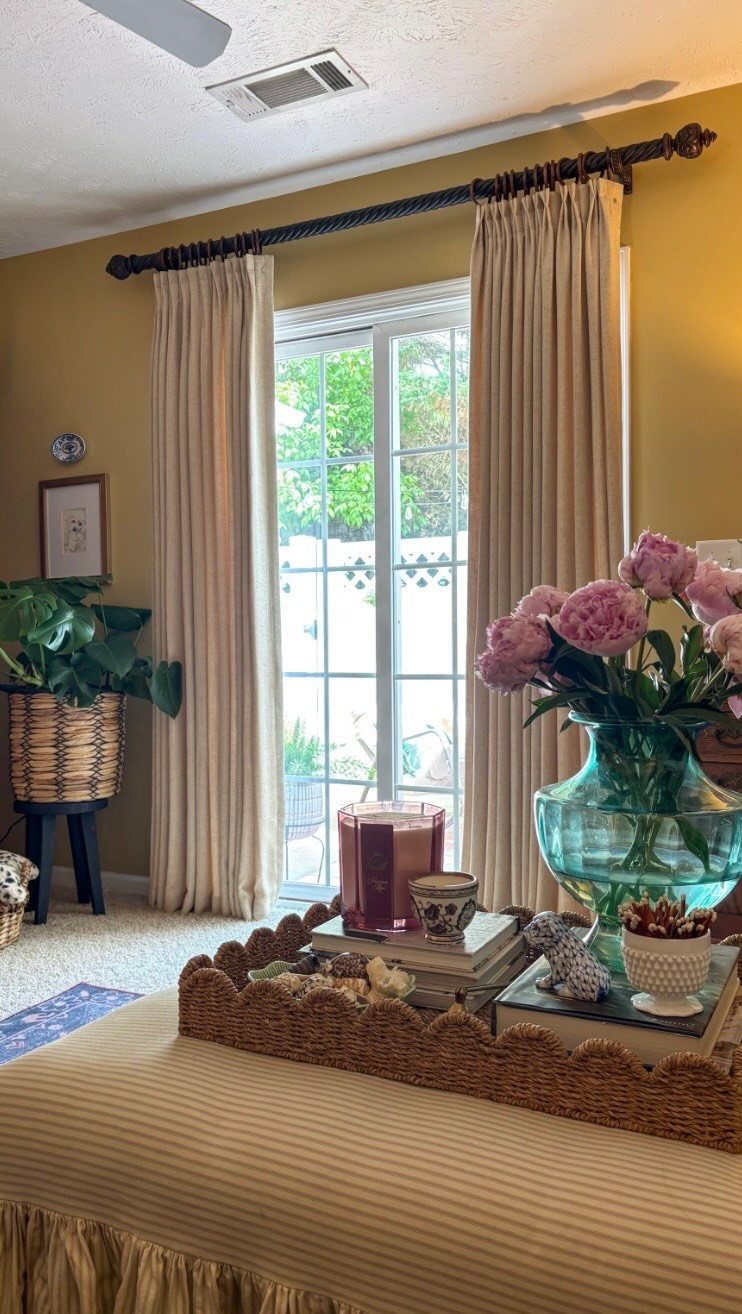
Pinch-pleat drapes on a dark rod frame a door the way a good frame sets a photograph.
For a patio door, hang the rod above the frame and use ring clips so the panels slide easily.
Lined cotton or linen drapes start at big-box stores for less than unlined sounds like it should cost, but lining helps them fall right and last longer.
Stacked open, they eat a chunk of wall on each side. Plan the furniture placement first.
4. Sheer Vertical Shades
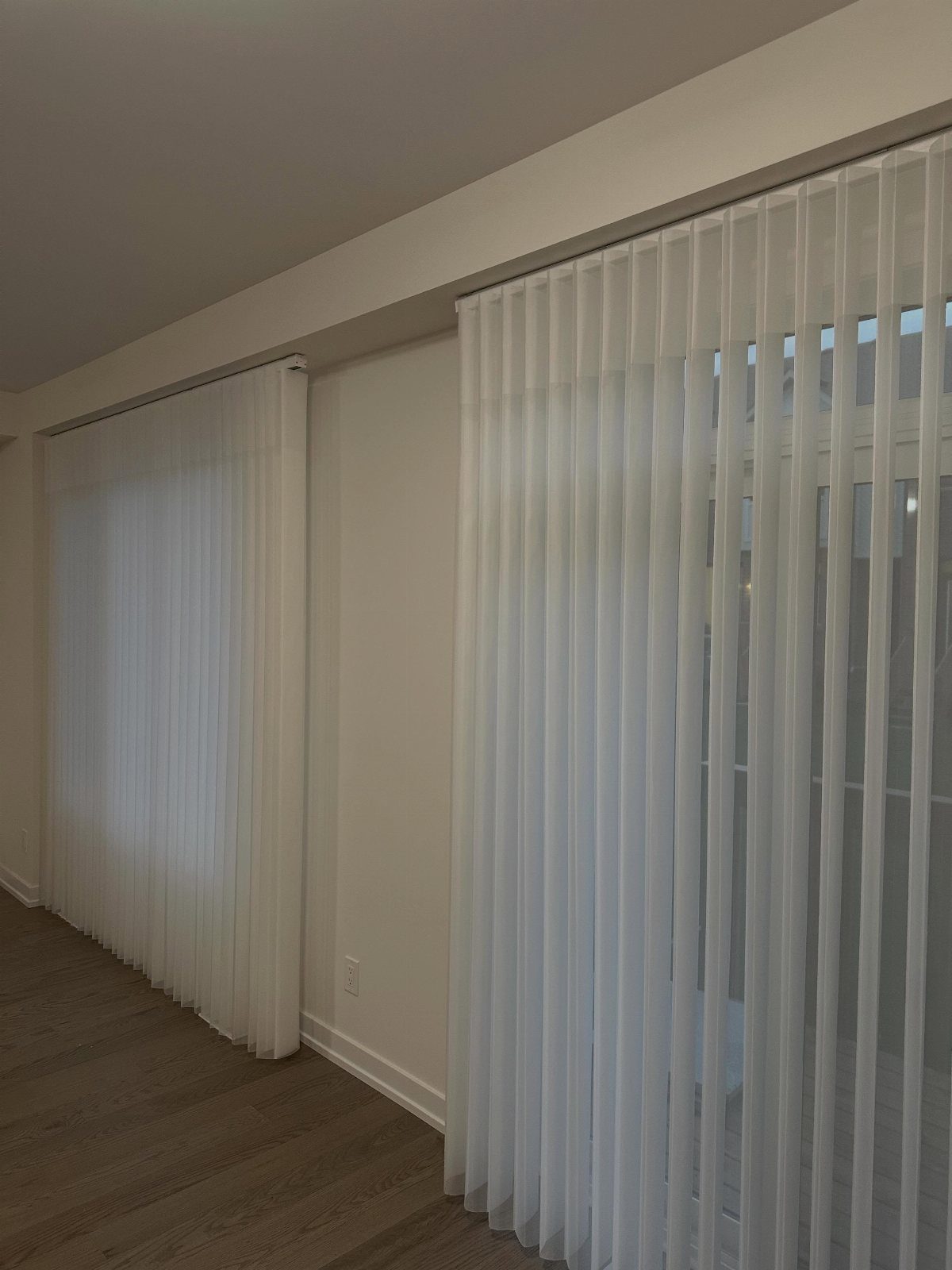
Sheer vertical shades split the difference between drapes and blinds.
Fabric vanes hang between sheer panels, so light filters through even when closed, and the whole thing draws back like a drapery to one side. Floor-to-ceiling white suits a modern room with wood floors and not much clutter.
I find these work best when privacy matters less than glare control; the sheers blur the view but do not block it.
Expect to pay more than basic blinds for a standard patio door width, and order a wand control rather than cords if you have children or just dislike tangled pulls.
5. Zebra Striped Shades
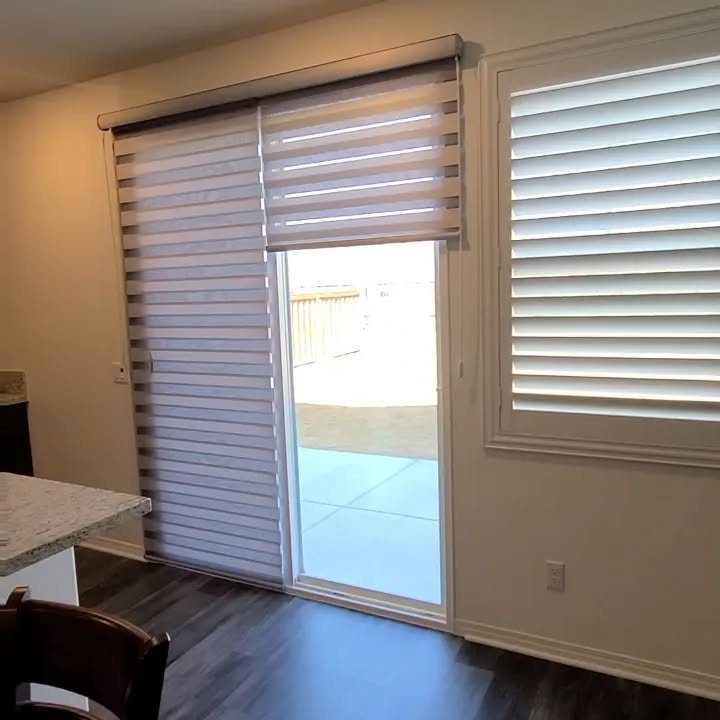
Zebra shades, also called layered or dual shades, run two strips of fabric on one roller: sheer stripes alternate with opaque ones, and shifting the alignment changes the light from filtered to blocked.
Matching treatments across one wall looks intentional rather than pieced together.
Installation is straightforward, 2 brackets and a level, but measure carefully for an inside mount; there is little tolerance on the width.
Prices per shade for standard sizes run higher than basic roller shades but below shutters. I would not use these as the only blackout option for a bedroom; the striped pattern can cast shadows even when closed.
6. Interior Plantation Shutters
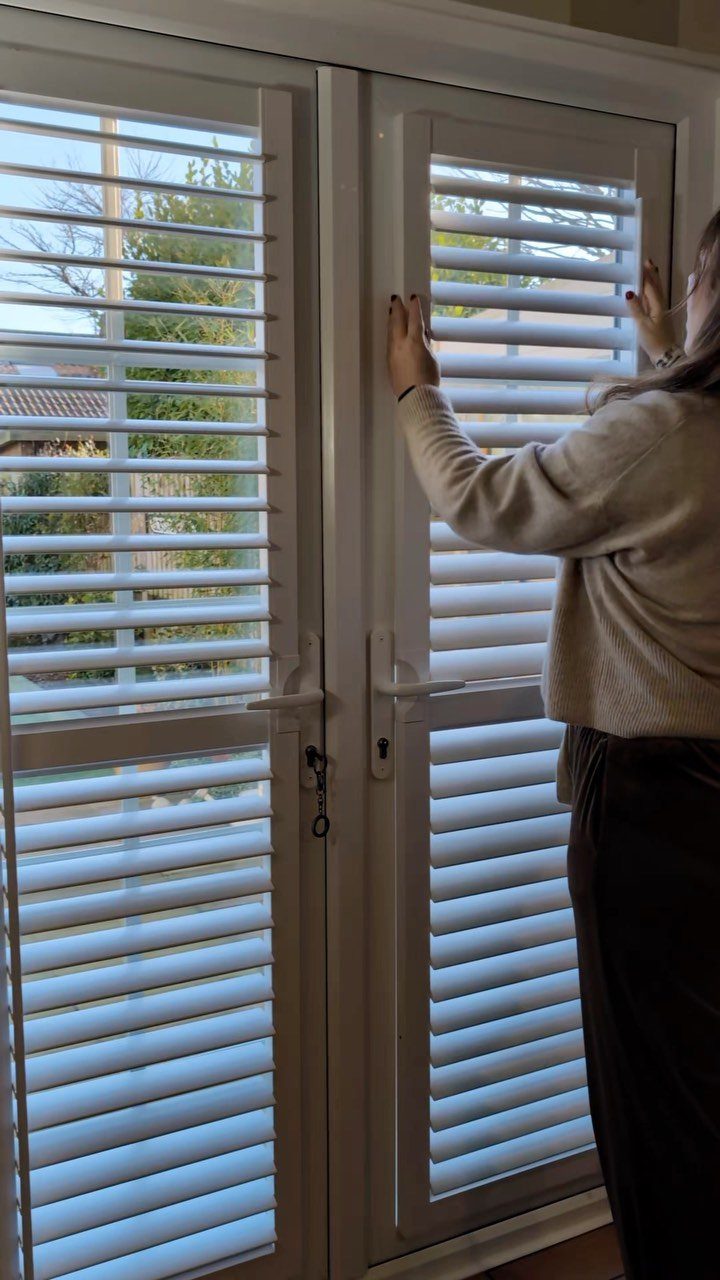
Plantation shutters mount directly to the door frame, louvers and all, which means no cords, no swinging panels, and nothing to dust but flat surfaces.
White shutters read as built-in, not added on, and that is the appeal: they look like architecture, not decoration.
The cost is the barrier. I would choose these only if I planned to stay in the home for the long haul; they do not move with you.
Adjust the louvers seasonally, angled down in summer to block high sun, horizontal in winter to catch it.
7. Pleated Door Blinds
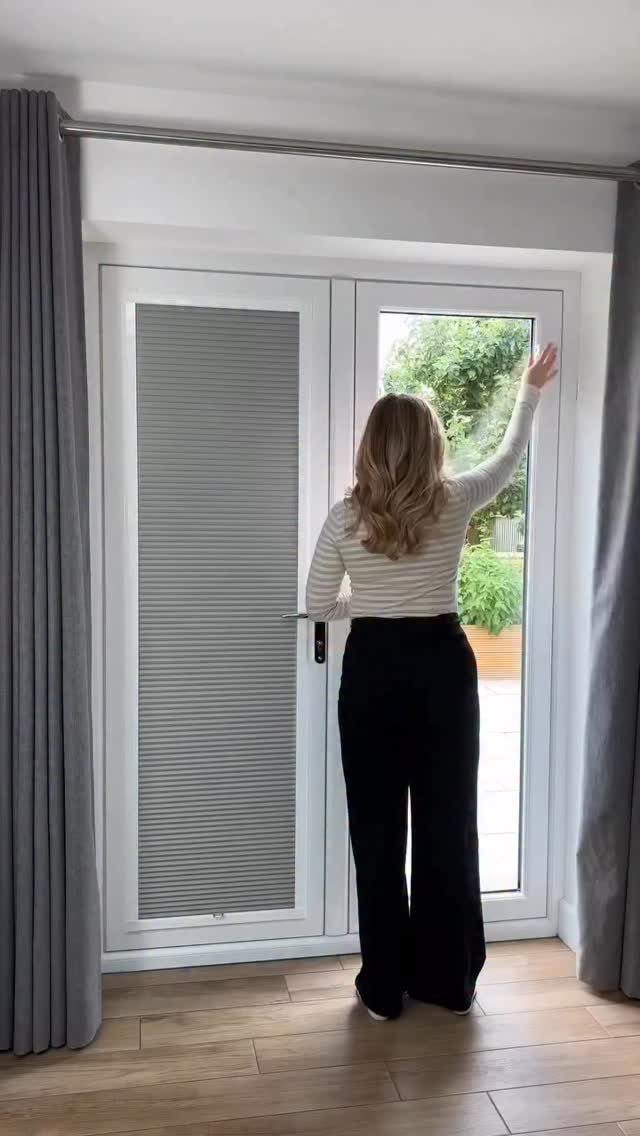
Pleated blinds fit inside the door frame itself, one panel per glass pane, so nothing swings or stacks into the room.
A pleated blind in a soft grey sits calm against white trim, and the same grey in long curtains flanking the door gives you 2 layers: the blind for daily privacy, the drapes for nights or when the temperature drops.
Installation means mounting brackets top and bottom of each door panel, which takes a drill and patience on aluminum frames. The blind tracks with the door when it slides, no clearance issue at all.
Cleaning is the trade: dust settles in every pleat, and the fabric is not something you wipe down fast. I would vacuum them gently with a brush attachment every few months and spot-clean only when I had to.
Choosing the Right Shade
Privacy, light, energy efficiency, style, and space all matter, but they do not matter equally in every room.
I start with how the door faces: south and west get the hardest sun, so a treatment with some insulation pays for itself in cooling costs. North and east are easier; sheer options work without the room overheating.
Space is what renters often miss.
The wall you need for stacked drapes or drawn vertical blinds has to be clear of furniture, switches, and the door swing itself. Measure that before you fall in love with a style.
For operation, test the hardware in the store if you can.
A wand that sticks or a roller that catches will annoy you twice a day for years. Smooth movement matters more than fabric texture once you live with it.
Measuring and Installation Tips
Measure width at the top, middle, and bottom of the opening; use the narrowest.
I measure height at 3 points across the opening and work with the shortest number, since floors and headers are rarely level. Those 2 numbers are your opening size.
Outside mounts need 3–4 inches of extra width and height to cover the frame and block side light. That overlap blocks light bleed at the edges and hides an uneven frame.
I like slim tracks because they sit close to the wall and read as part of the door, not hardware bolted on top.
Order the headrail depth when you check out; a protruding track ruins the flat wall effect that roller shades and vertical systems do well.
Check handle clearance too, especially on sliding doors: the treatment must pass behind the hardware or the door stops short.
Care and Maintenance
Dust collects on the vertical edges first, so I work top to bottom with a microfiber cloth or vacuum brush attachment before anything sets into the fabric.
For spots, I use mild detergent in warm water and dab; no scrubbing.
Harsh chemicals strip coatings and weaken threading, particularly on sheers and pleated materials. Blot; do not scrub.
For the pleated blinds that track with the door, vacuum gently every few months.
Dust settles in the folds and builds faster than on flat surfaces. Spot-clean only when necessary; the fabric does not take repeated wetting well.
Avoid anything abrasive on solar or blackout liners. They are functional layers, not decorative, and damage shows as streaks in the light block.
Frequently Asked Questions
What kind of blinds are good for patio doors?
Vertical blinds still dominate rentals because they cover the full width cheaply and stack tight to one side so the door stays usable. Wider slats look less office-like than narrow ones.
Are sliding patio doors with built-in blinds worth it?
Built-in blinds eliminate cords, swinging panels, and most dusting, but they lock you into one choice for the life of the door.
I would weigh that against removable treatments that move with you or change with the room. Pleated blinds that fit inside the frame and track with the door give a similarly clean look without committing to a permanent installation.
How to make a sliding glass door look nicer?
Mount treatments high and wide, past the door frame on each side, so fabric clears the glass completely when open.
A dark rod with pinch-pleat drapes frames the door like a photograph, and grey roller shades read as neutral without going institutional.
Can I motorize my sliding door shades?
Cellular, vertical, and roller shades all take motorization well, letting you raise or tilt them without touching a cord. Bluetooth, remote, and app-powered motors are available, including ones that respond to Alexa or Google Home voice commands.





