

Ceiling-mounted tracks run tight to the surface and extend past the opening by at least a foot on each side, or the panels park in front of the glass you wanted clear.
The ideas below range from a single rod swap to a full wall of ripple-fold sheers, and the deciding factor is what the wall itself needs to do: conceal, diffuse, or simply finish the plane.
1. Floor-to-Ceiling Drapery

Floor-to-ceiling drapery turns an entire wall into a soft, finished plane. The eye reads height first, so a ceiling-mounted rod placed well above the frame buys extra vertical inches even in a standard room.
I like a ripple-fold heading on sheers this tall; the spacing stays even from top to bottom without constant dressing. Budget two panels per side minimum, three if the wall is wide, or the stack-back will swallow glass when open.
2. Sheer Curtains Behind Heavier Drapes
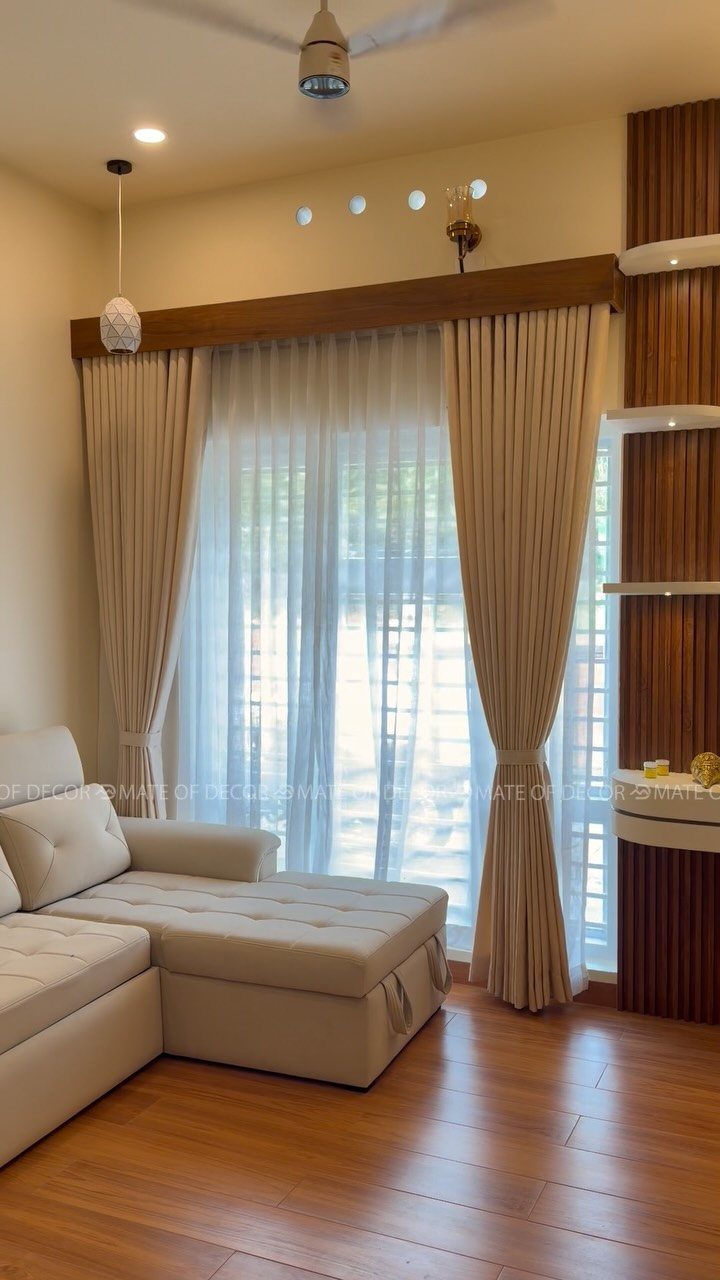
Sheers behind heavier drapes give you 2 layers to work with through the day. The sheer handles daylight and sightlines; the outer drape adds weight, color, and blackout when you need it.
A double rod or track system is what you need for 2 functional layers; a single rod will not give you rings that slide independently in front and back.
I find the look reads richer in person than in product shots; the sheer catches light the camera flattens.
3. Decorative Curtain Rods
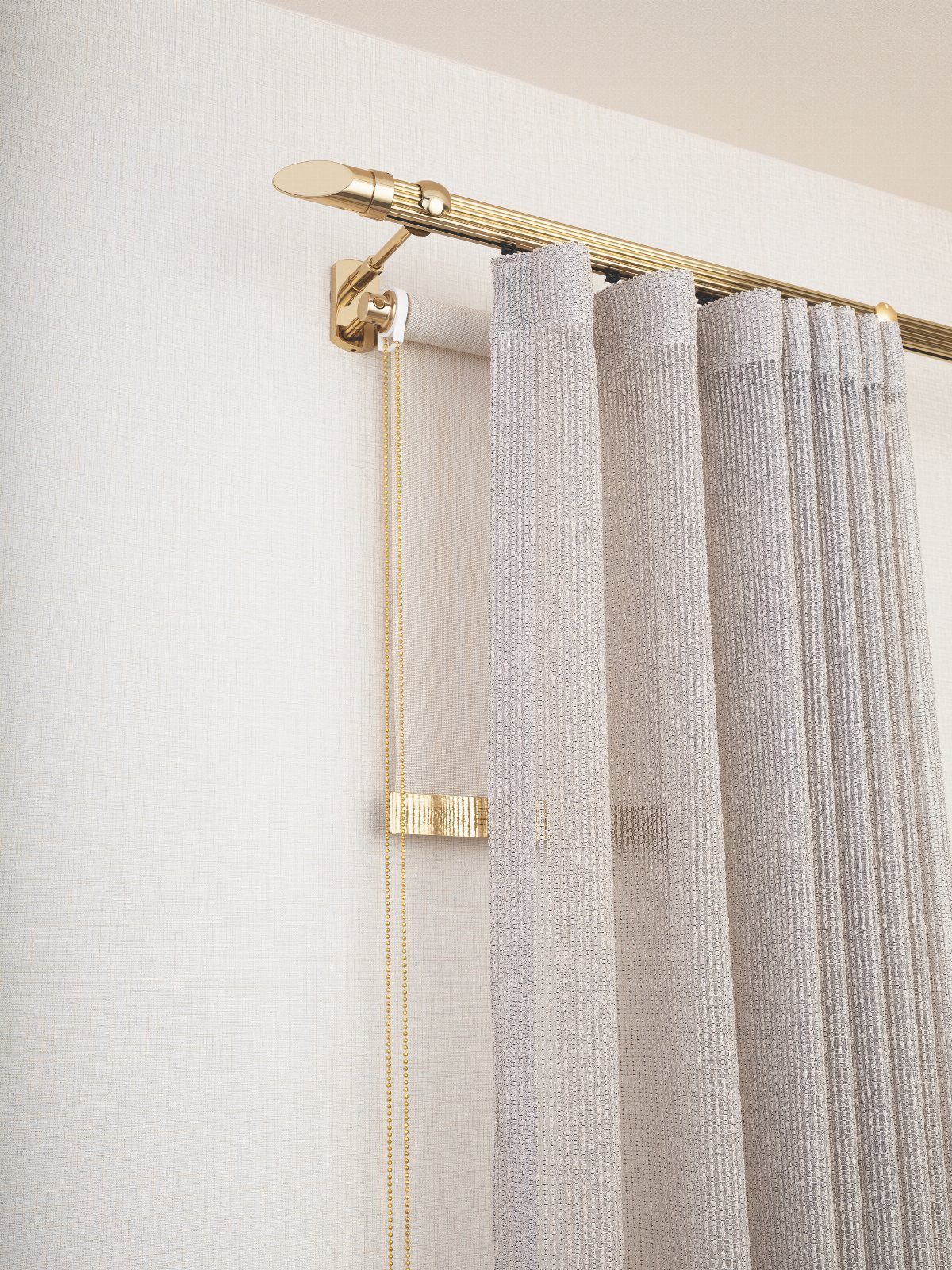
A fluted or reeded rod is jewelry for an otherwise plain wall. Brass and gold finishes warm up cool-toned rooms; matte black does the opposite work.
I would spend here on a solid rod, not a thin wrapped tube, because the texture is the whole point and cheap versions read as costume.
Check the bracket spacing: decorative rods are heavier, and a center support close together prevents sag. A slim diameter rod suits sheers to medium-weight panels; go thicker for lined drapes.
4. Colorful Curtain Panels

Alternating panels in two or three colors turn a window wall into a stripe you do not have to paint.
Hold the palette to one temperature; the pink, coral, and lime above all share a warm undertone, so they quarrel less than you would expect.
I would buy ready-made panels and alternate them on a single rod rather than sewing custom widths. Returns and exchanges matter more than usual here; hold the colors against your wall in daylight before committing.
I aim for fabric width that is one and a half to two times the rod width; that gives the panel enough gather to look full without reading as skimpy.
5. Curtain Backdrop Behind the Bed
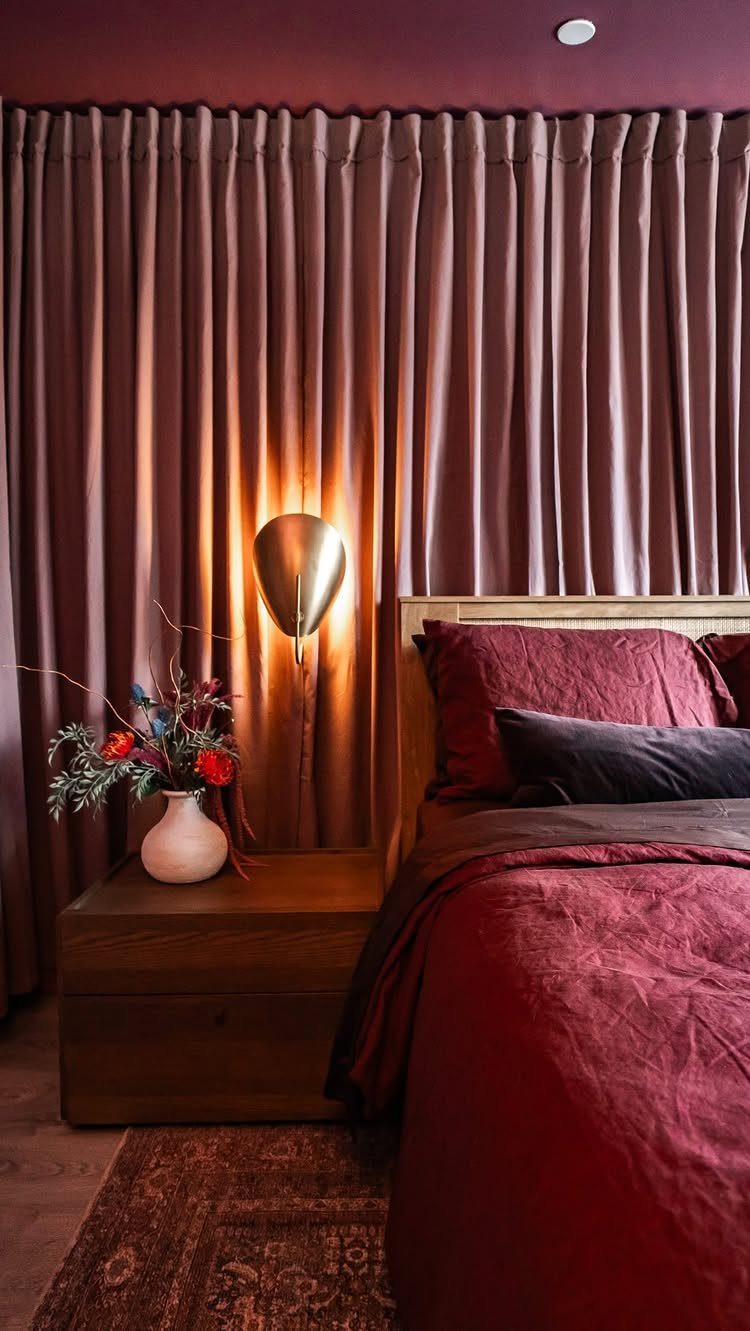
Curtains behind a bed replace a headboard with something you can change seasonally.
Mount the rod at ceiling height and let the panels pool slightly on the floor, or hem to just clear the bedding if you have baseboard heat.
I would add a blackout liner behind these; morning light through sheers is pleasant, but behind a bed it becomes a wake-up call you did not schedule.
A wall sconce on the curtain side needs a shielded shade for fire safety.
Curtain Hanging Techniques
Ceiling-mounted tracks save you from finding studs in plaster or patching anchor holes later.
I would run the track tight to the ceiling plane, not dropped down on brackets, so the fabric meets the surface and the wall reads as one continuous face.
Width matters more than beginners expect. A track needs to extend past the actual wall or opening by at least a foot on each side, or the panels will park in front of the area you wanted clear.
For a full wall, I would size the track to the full span and accept the stack-back at the edges; anything less and the curtain looks like a window treatment that lost its window.
Choosing Curtain Fabrics
Linen in heavy weight hangs with the kind of deep, uniform pleats that make a wall of fabric look intentional rather than improvised.
The same fiber in sheer weight, hung floor-to-ceiling, filters light without the flimsiness of polyester voile. I would choose based on what the wall needs to do: concealment calls for the heavier cloth, diffusion for the lighter.
Pattern works best at scale. For closet openings or storage walls, I would default to solid color and let the pleating provide the interest.
Curtain Color Coordination
White, mustard, emerald, and olive share one quality: each is saturated enough to hold its own against a painted wall without matching it exactly.
I would not try to sample the wall paint and find a curtain in that same chip; the slight mismatch looks like a mistake. Better to step deliberately lighter, darker, or into a neighboring hue.
Cream over sheer white against teal shows the other move, which is to layer neutrals against a strong wall color and let the architecture provide the statement.
The sheer layer keeps the cream from going flat; without it, the single panel can read as a blank spot. I would test this in afternoon light, when teal shifts most dramatically, before deciding the combination holds.
Frequently Asked Questions
Which type of curtain is best?
Linen holds a crease well, which matters when you are covering six or eight feet of wall and every pleat needs to stay put.
Small repeats get busy fast across a wide span; for anything bigger than a standard window I stick with solids and let the texture do the work.
Are there curtains that allow you to see out but not in?
Sheer curtains behind heavier drapes give you that two-layer control through the day.
A layered setup, sheer closest to the glass and a heavier panel in front, lets you see out through the day and pull the outer drape for privacy after dark.
The sheer layer does most of the visual work in real space, catching and shifting with actual daylight in a way product photography rarely captures.
What is the modern way to hang curtains?
Track mounted flush to the ceiling loses the hardware line entirely; the fabric seems to grow out of the wall itself.
I add twelve to eighteen inches of track past each edge of the opening, otherwise the bunched panels sit where you wanted open wall.
A wall-length track means the fabric stacks at the sides, which I accept as the trade for that uninterrupted sweep across the middle.
How to put up curtains without drilling into the wall?
Tension rods and adhesive hooks fail under this much weight; the span is too wide and the drape too heavy for anything that does not screw into structure.
For a true wall treatment, ceiling-mounted tracks with appropriate anchors are the method I trust, though that does require drilling into the ceiling rather than the wall itself.





