
The 10 ideas below run from a ready-made sheer curtain you wash yourself to shutters at £250 to £400 per square metre, with most options sitting somewhere in between.
What separates them is not budget but how you actually use the window: whether you need the glass fully clear during the day, fully covered at night, or both in the same hour.
I would pay extra for top-down bottom-up operation on a street-level window where you want light and still want to block the view in, and that single feature costs more than a standard up-down cellular shade.
1. Shutters
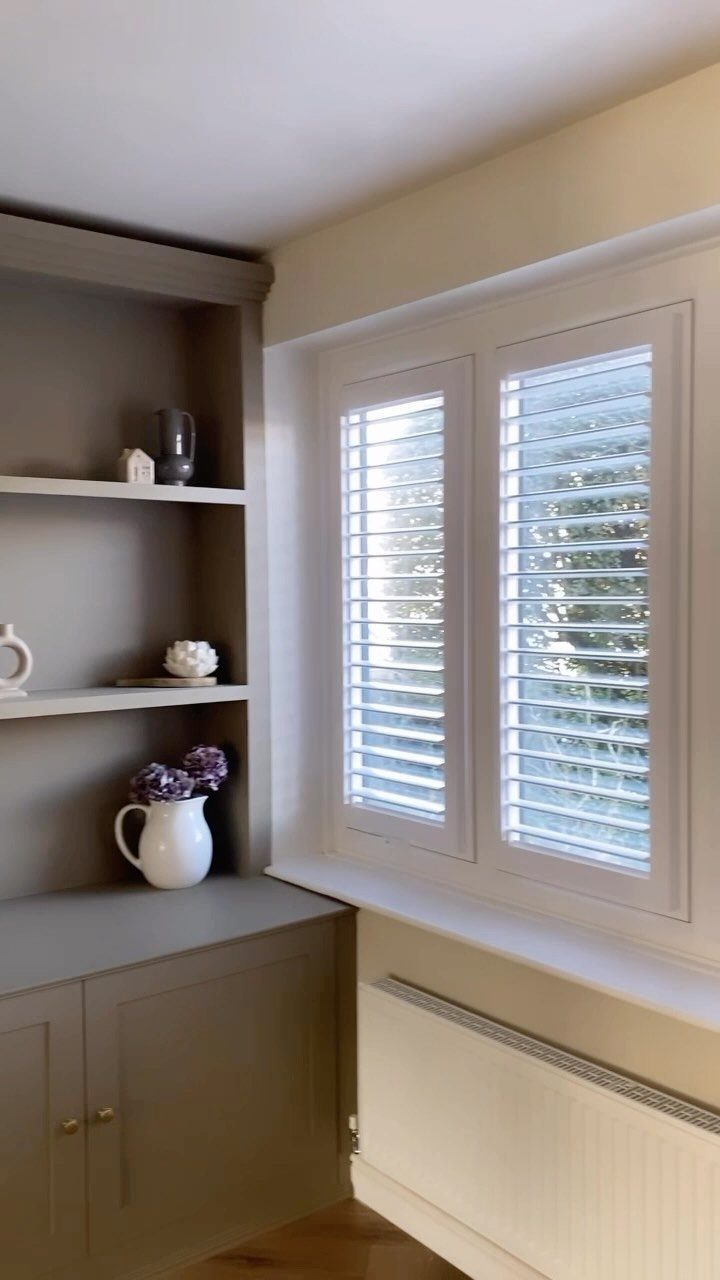
Plantation shutters with their adjustable louvers give you light control without cords or chains to replace later.
I like them on recessed windows because the frame sits inside the depth of the jamb, keeping the clean plane of the wall uninterrupted.
Interior shutters run more than most blinds, and faux wood cuts the price roughly in half while holding up better above a radiator where heat warps real timber.
The downside is weight: faux wood slats are thicker, so the folded stack takes more space at the sides when you swing them fully open.
2. Venetian Blinds
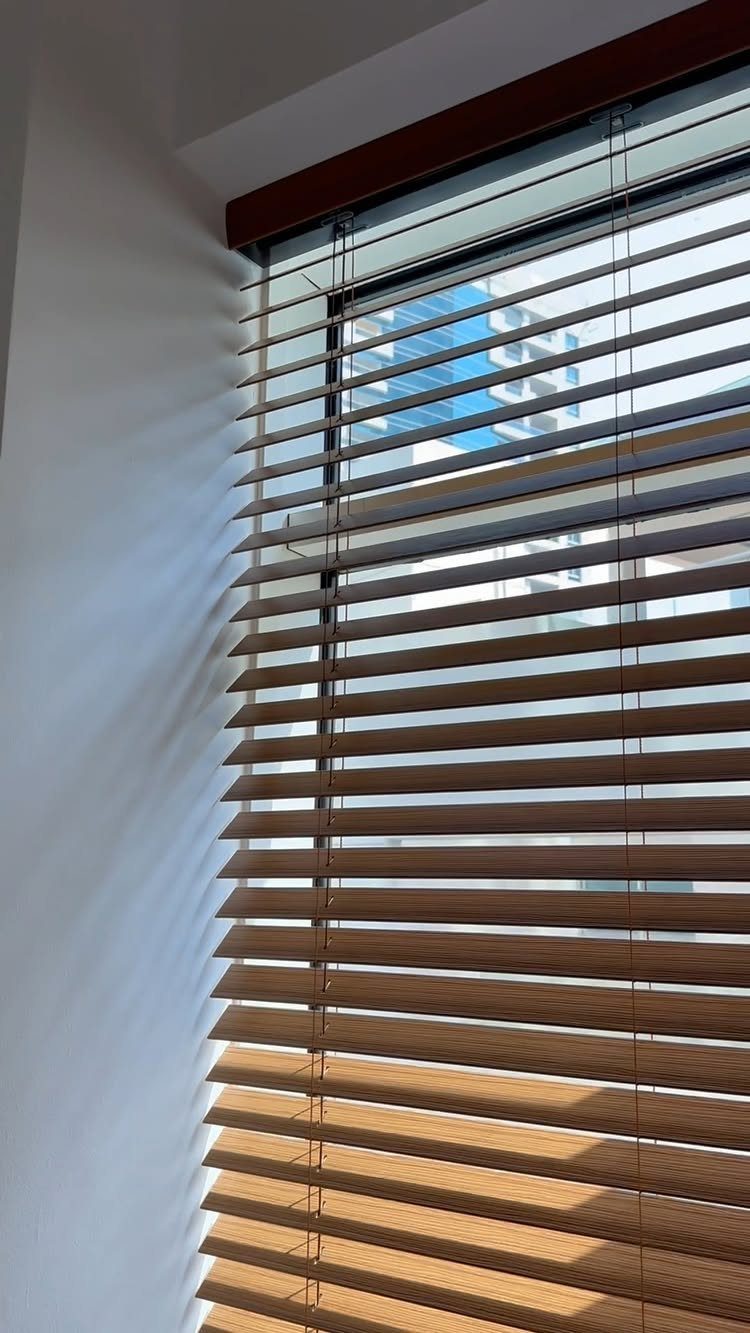
Horizontal slats tilt to any angle, which matters more than most people think until they try to cut glare on a screen without losing the view entirely. Wood slats run 2 inches wide, a size that reads modern rather than office-like.
I would choose real wood over aluminum every time for a living space, but not for a kitchen or bath where moisture swells the slats.
Basswood slats come pre-finished or raw if you want to stain them yourself; installed prices sit well above off-the-shelf vinyl. Dusting is weekly work with a microfiber or the vacuum brush attachment.
3. Drapery Side Panels
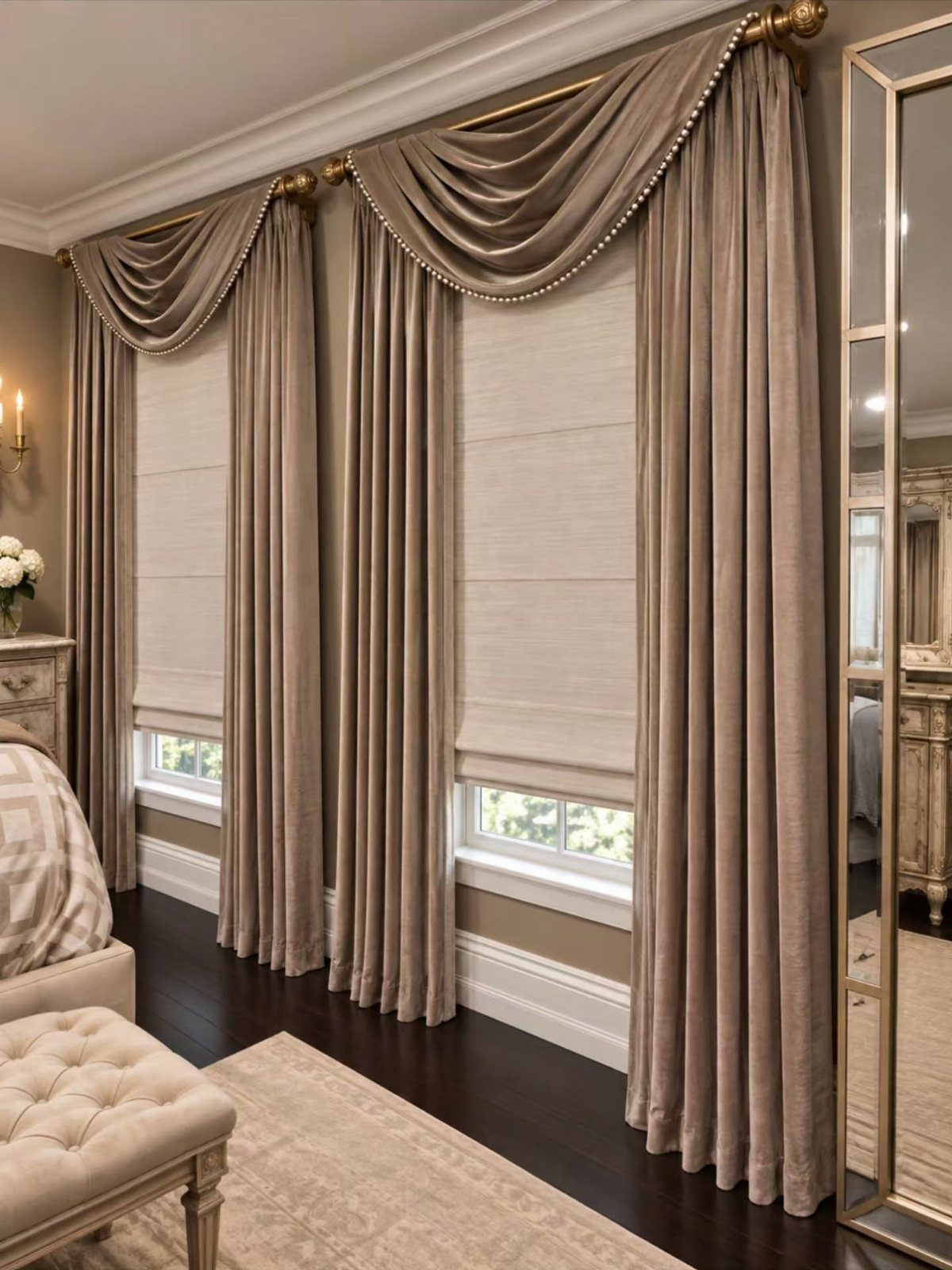
Side panels that do not close, only frame, solve the problem of windows where you need privacy from a shade or blind but still want fabric to soften the edges.
Velvet in a tone close to the wall color gives depth without demanding attention; a beaded swag is one way to top them, though I prefer a simple rod unless the room already has other formal pieces.
Panels hung high and wide, with the rod well past the window frame on each side, make the window read larger than it is.
Ready-made long panels start at a moderate price per pair; lining adds cost and saves the fabric from sun rot.
4. Roman Shades
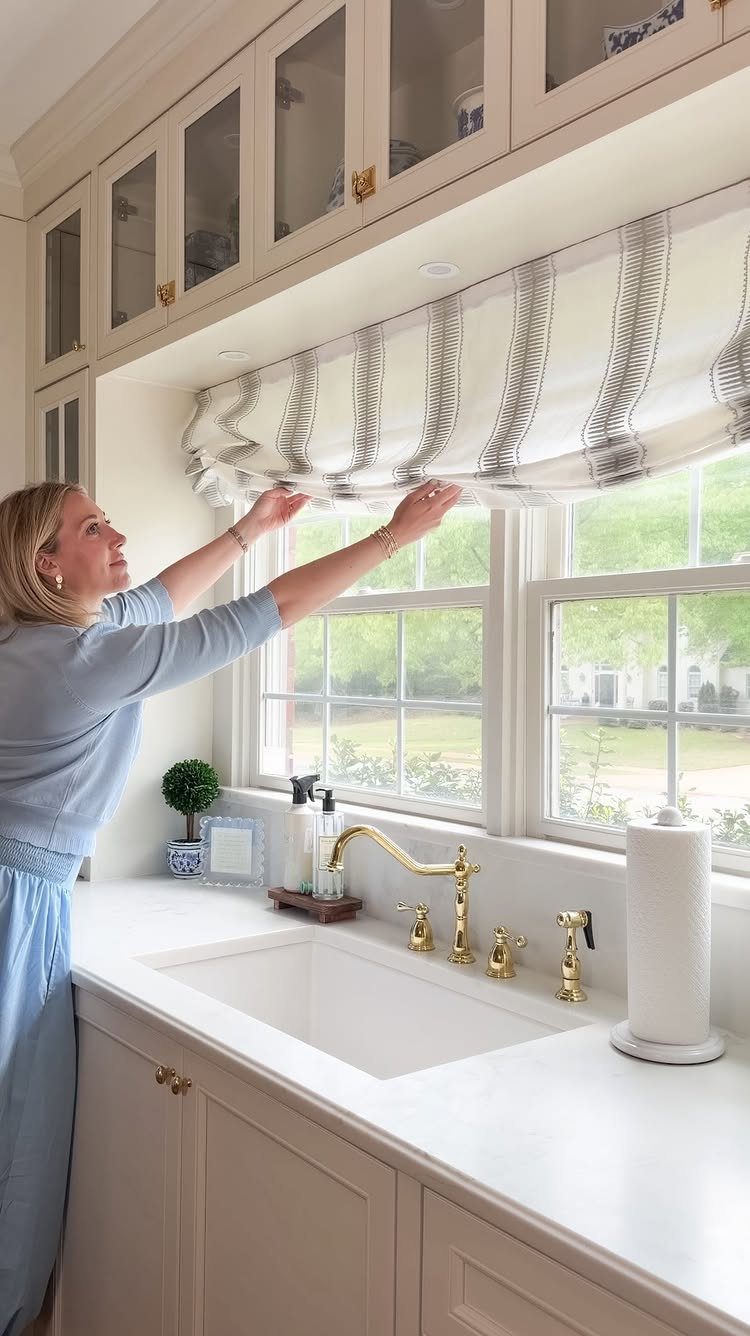
A Roman shade folds into itself as it rises, stacking fabric in soft horizontal lines that read tailored rather than fussy.
A shade over the kitchen sink clears the work area completely when raised, and lowers for privacy after dark without the footprint of curtains.
I would mount it well above the frame to keep the stack from blocking glass when raised. Flat-fold styles suit patterns best; hobbled folds with their tucked intervals read richer in solids.
5. Layered Window Treatments
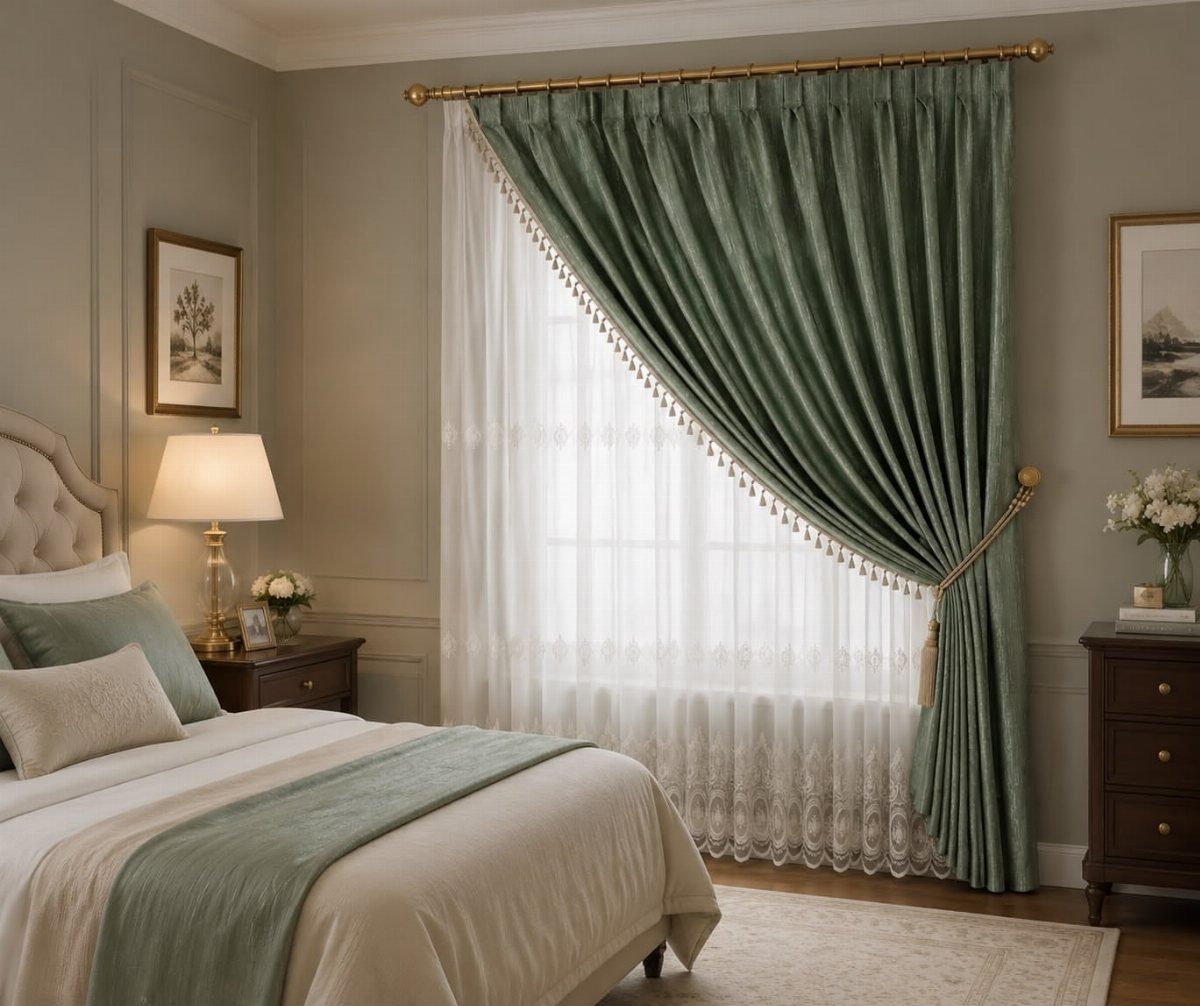
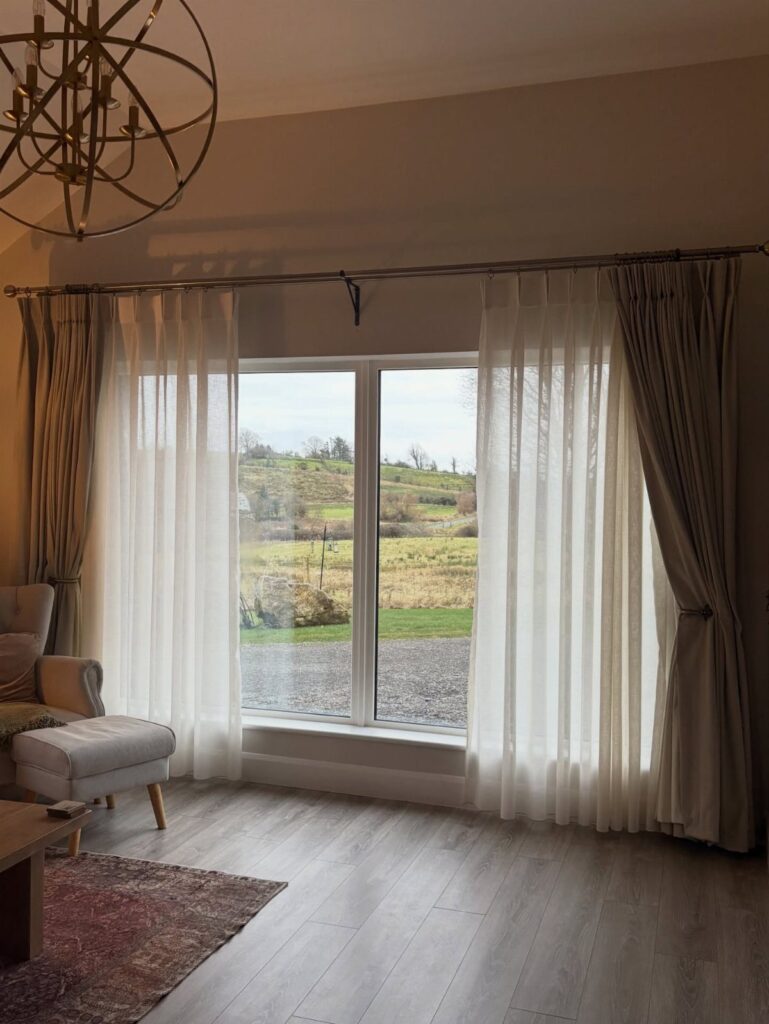
Sheers underneath drapes give you 2 operating modes: diffused daylight with the sheers closed and drapes held back, or full blackout when both are drawn.
The tieback on the outer drape is doing real work here, holding the fabric clear of the glass so light still passes through the sheer.
Plan your rod depth carefully: the sheer layer needs to sit closer to the glass than the drape, which usually means a double bracket or a second rod mounted on extension arms.
Hardware alone adds up fast in a wide window.
6. Roller Shades
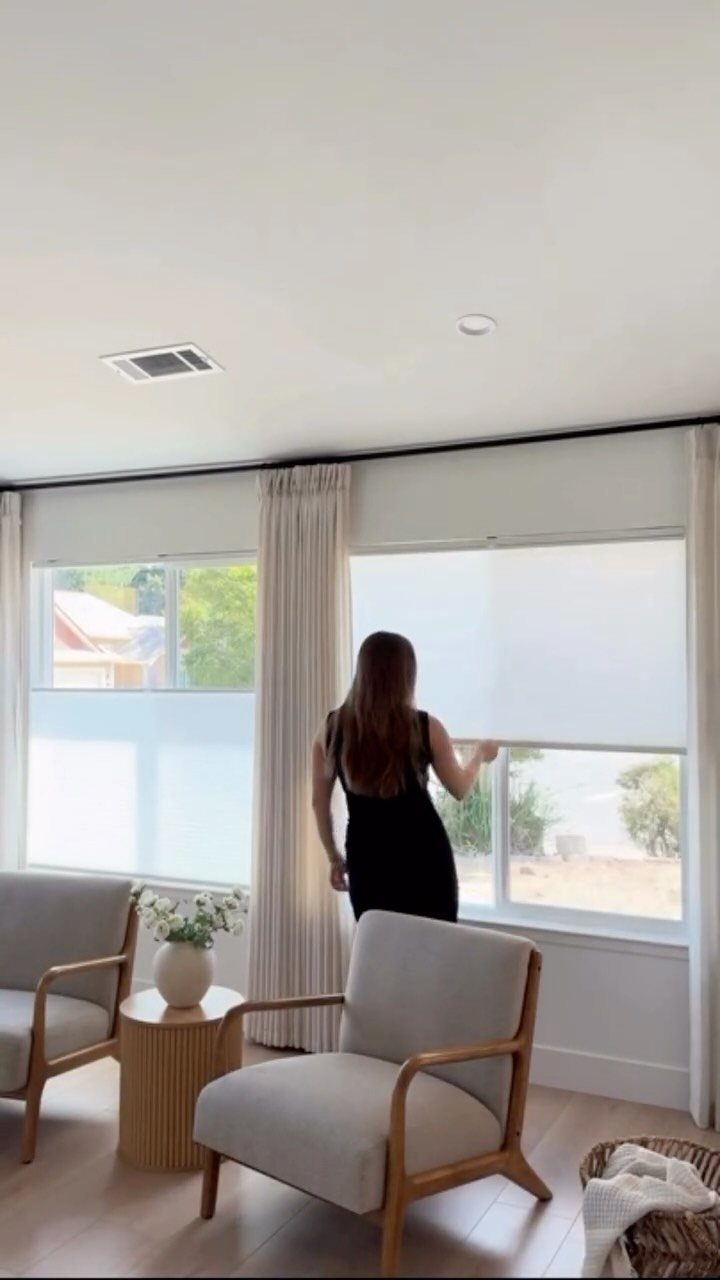
A roller disappears almost entirely when raised, leaving the window frame as the only visual element. That minimal presence is why I reach for them in rooms where the view or the architecture matters more than the treatment.
The mechanism is simple: a spring roller or a chain-driven clutch wrapped in a fabric tube.
Chain control lets you stop the shade precisely; spring rollers snap up if you release them carelessly, which I find annoying on large windows. Light-filtering fabrics give daytime privacy without losing brightness; blackout linings add noticeably to the cost.
A shade in a mid-weight fabric runs more retail, less if you measure and install yourself. The only trick is width: measure 3 places and use the narrowest, or the shade will scrape and wear at the sides.
7. Woven Wood Shades
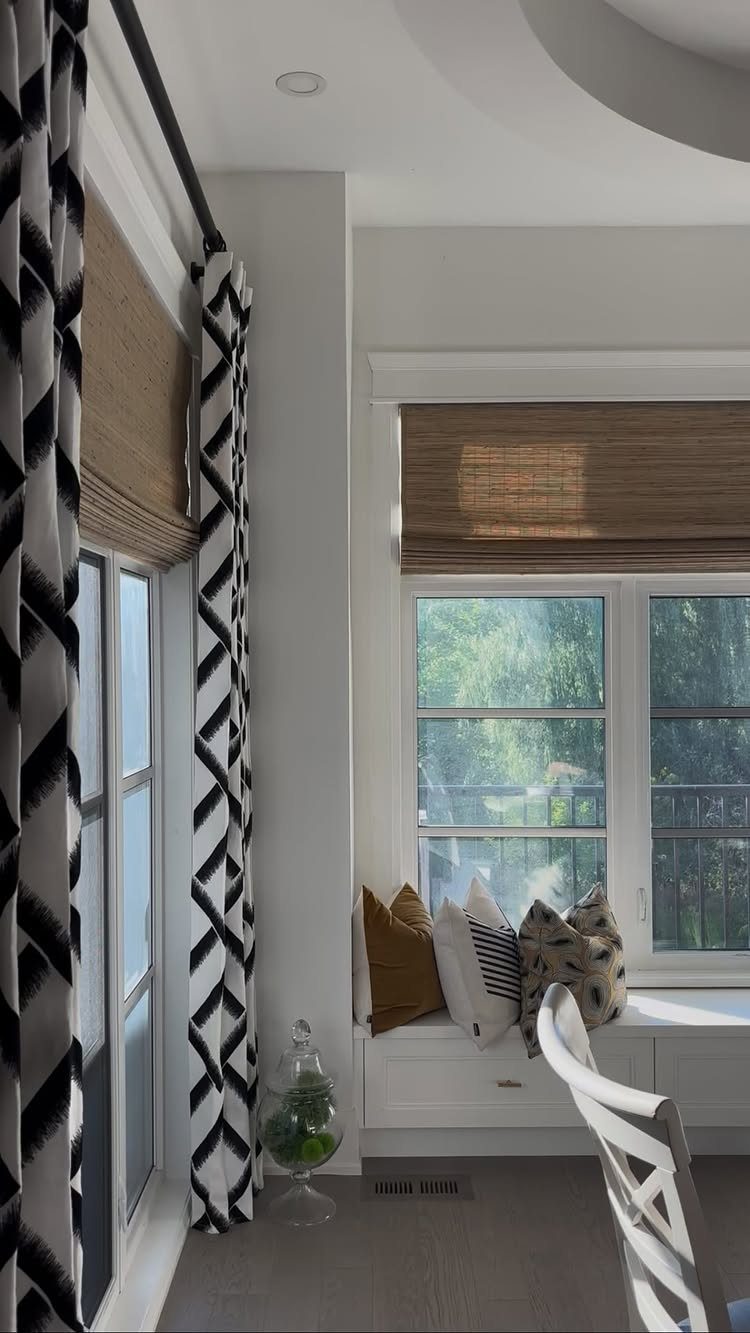
Bamboo, grass, and reeds woven into a shade give a room the texture that painted drywall lacks. The irregular grid filters light into soft stripes rather than blocks.
I like them best where the view outside is green; the natural fiber echoes what is already there. Lining adds privacy and prevents the fibers from drying and cracking in direct sun, though it doubles the price.
Unlined versions work on windows that face north or sit under deep eaves. The stack raises several inches, so mount high if you want the window fully clear.
8. Sheer Curtains
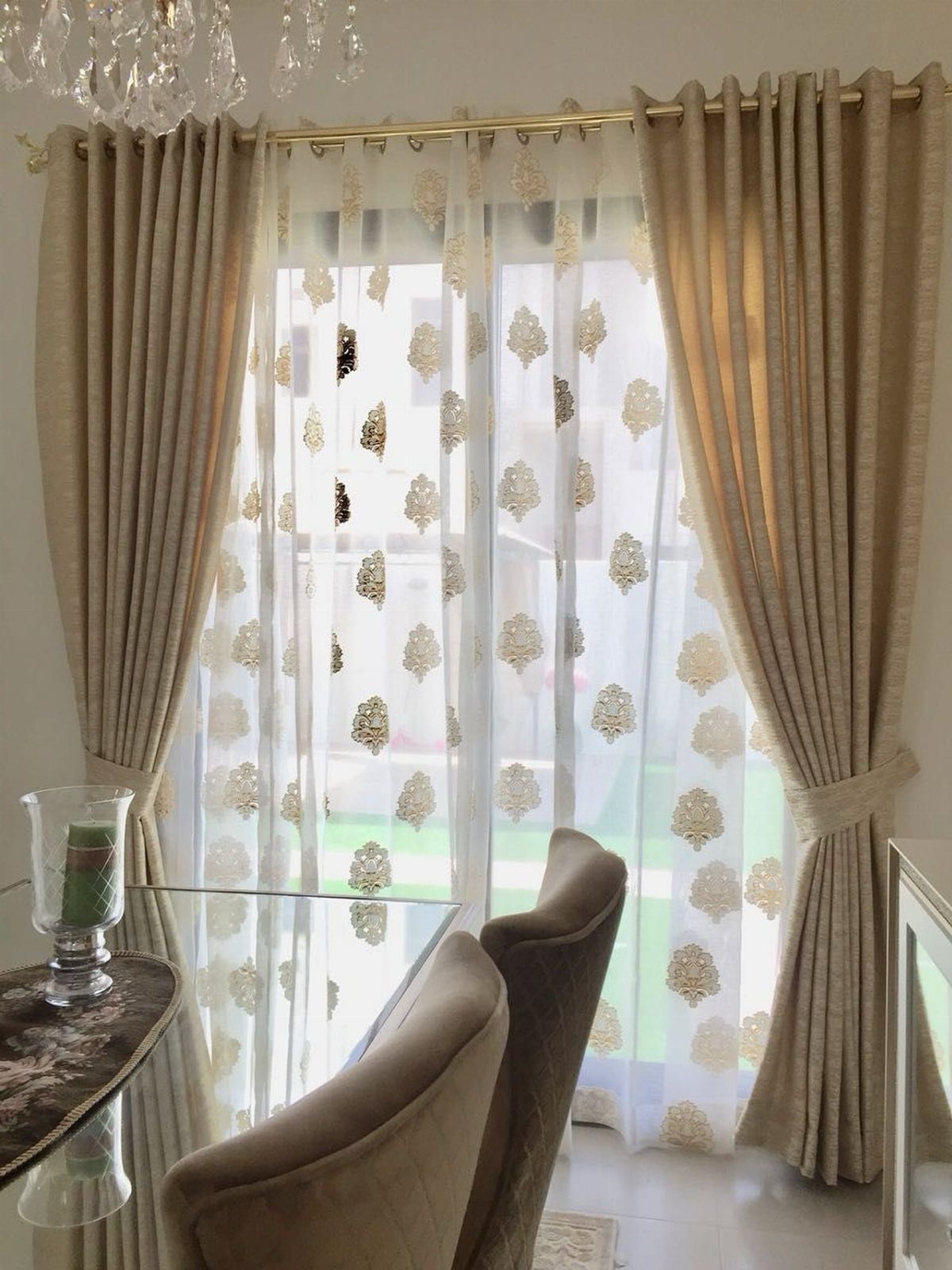
Sheer panels diffuse daylight into something usable; you can read by it without the glare that makes you squint. A floral print on the sheer gives the eye something to rest on without closing the room in.
I use sheers as the working layer and add heavier drapes only for night privacy or winter drafts.
A sheer on its own is the cheapest full-window treatment you can buy ready-made. Wash cold and line-dry; the heat of a dryer shrinks the hem unevenly.
9. Cellular Shades
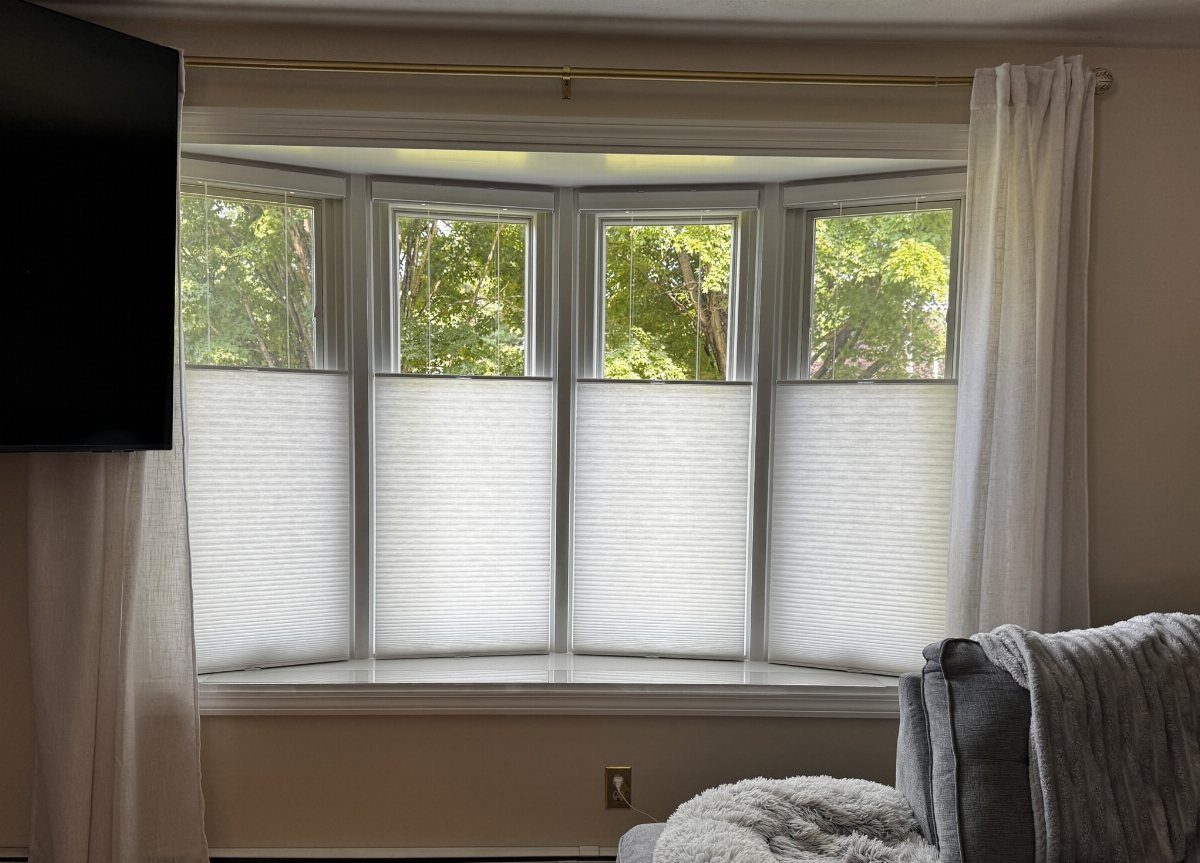
The honeycomb cells trap air in columns, which is why these shades insulate better than anything else on this list.
Top-down bottom-up operation, visible here, lets you drop the shade from the top to expose the upper glass while the lower half stays covered.
That flexibility costs more than a standard up-down model. I would pay it for a street-level window where you want light and still want to block the view in.
White cells facing the street read neat from outside; colored fabric inside faces the room. Measure each bay section separately; the angles are rarely square.
10. Decorative Valance
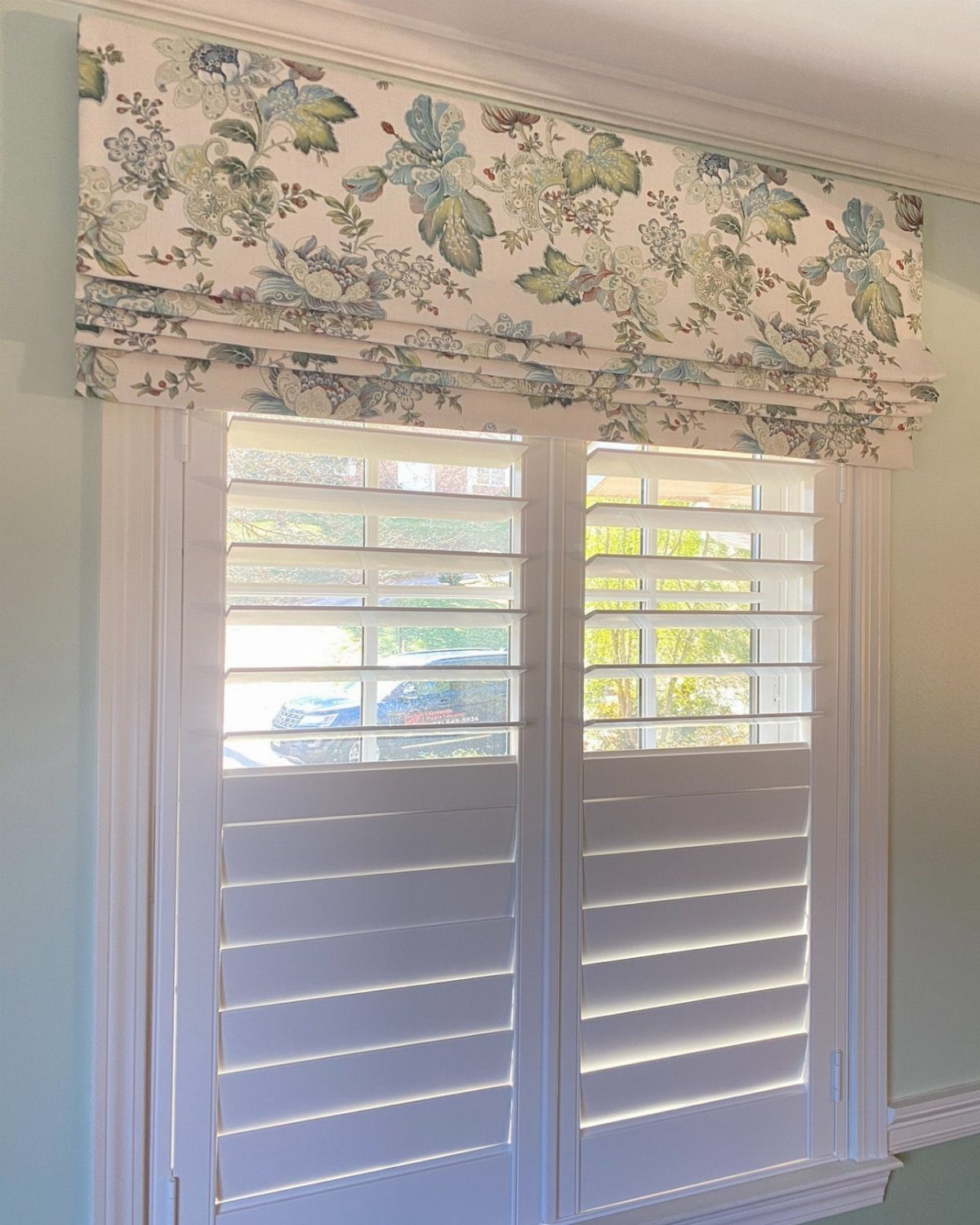
A valance covers only the top third of the window, which is exactly enough to hide a roller shade or blind hardware while leaving the glass open. A fabric valance softens shutters beneath without competing with them.
I would keep the pattern scale small and the color quiet if the room already has one strong element.
Making one takes a straight seam and a board mount; buying ready-made is faster and often cheaper once you factor in fabric yardage and lining.
A valance alone does not give privacy, so pair it with something operable or use it on a window that faces nowhere sensitive.
Cleaning and Maintenance
Curtains need professional dry cleaning when they start looking tired, especially where dust collects or windows stay open.
Blinds and shutters wipe clean with a microfiber cloth, a weekly job that takes minutes. That simplicity matters in busy households or anywhere children and pets live.
Cost Considerations
Curtains run highest because fabric, tailoring, and installation each add cost. Velvet, silk, or linen can hit £60 to £120 per metre; ready-made cuts the price but rarely matches the finish.
Blinds sit at moderate cost: a standard roller blind starts lower per window, with Roman and Venetian slightly above that. Shutters cost £250 to £400 per square metre, premium at purchase but lasting longer with near-zero upkeep.
Solid wood shutters cost a little more upfront and age better, which matters if you plan to stay in the home.
Frequently Asked Questions
What is the current trend in window coverings?
Layering different treatments for versatility is the direction most people are taking right now. Layering sheers under heavier panels lets you run the room on daylight or shut it down completely, switching between the two without swapping hardware.
The hardware costs more, especially on a wide window, but the flexibility means one room works for morning coffee and afternoon naps without swapping anything out.
What are some easy things to decorate windows?
A valance is the simplest add-on: it covers the top third of the window, hides hardware, and takes just a straight seam and board mount if you make it yourself.
By the time you buy yardage, lining, and thread, a ready-made panel from a retailer like IKEA or Target often costs less than DIY with nicer seams.
Sheer panels are the cheapest full-window treatment ready-made, and they wash cold and line-dry without shrinking if you skip the dryer.
What are window dressings called?
The terms overlap and people use them loosely. Window dressings, window treatments, and soft furnishings all mean the same general category: anything that covers or frames a window.
Fabric panels hung from a rod are curtains or drapes; blinds are the ones with slats you tilt open and closed; shades roll or fold up as one solid piece; shutters are the hinged, louvered panels that mount inside the frame.
What is the best window dressing for a bathroom?
Faux wood shutters or a vinyl roller blind hold up where moisture swells real timber.
I would not put basswood slats in a bath; the humidity warps them. A waterproof roller wipes clean and disappears almost entirely when raised, which matters in a small room where every visual inch counts.
White or pale gray surfaces reflect what light the window gets, which helps a small bathroom feel less boxed in.
What window treatment is best for a living room?
Real wood Venetian blinds or drapery side panels in velvet or linen suit a living room where you want warmth and light control without the institutional feel of aluminum.
A 2-inch slat has enough presence to feel residential; the narrow 1-inch stuff is what you find in cubicle farms.
Mounting rods a foot above the frame and running panels past the sides by 6 inches or more tricks the eye into seeing a bigger window, and velvet that matches the wall color adds quiet depth instead of a color statement.





