
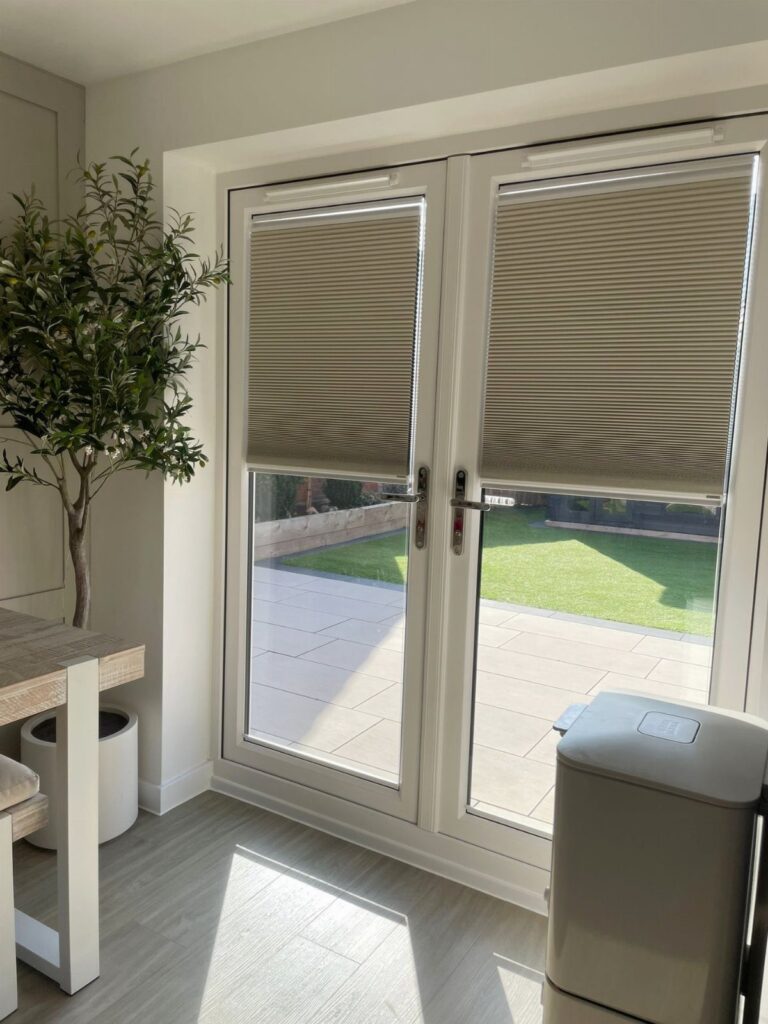
The 8 ideas below run from a few dozen dollars for ready-made roller shades up to a significant premium for motorized panel tracks on a 153-inch sliding door.
The one that fits your window depends on whether you need the glass to disappear entirely or just soften what comes through it.
Cellular shades still win me over on insulation; that honeycomb pocket traps air in a way no slatted blind can match, and you still get to raise and lower it at will.
1. Roller Shades
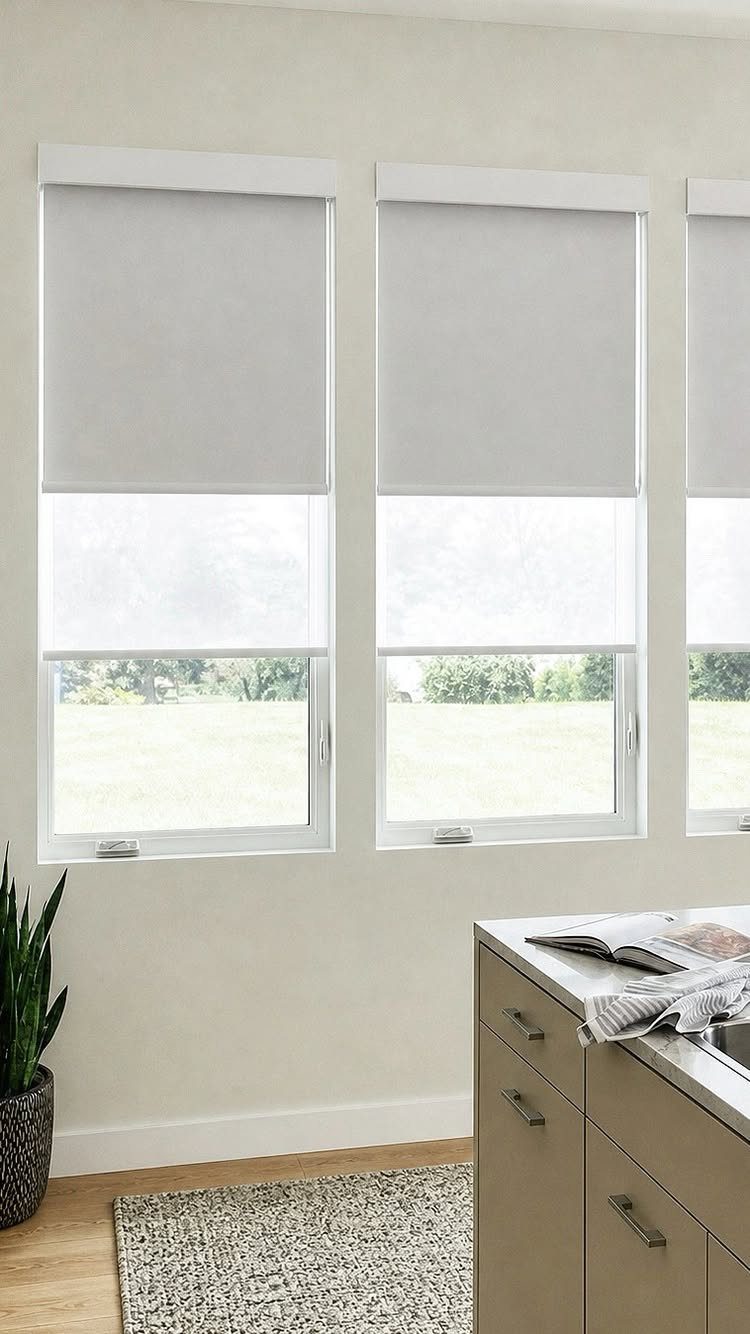
Roller shades suit a kitchen or any room where you want the window to read as clean wall when the shade is up. The whole piece rolls onto a tube at the top, so nothing hangs below the sill.
I like them for rentals because installation is 2 brackets and a clip; you will need a drill, a level, and not much more than a coffee break per window.
Choose a light-filtering fabric if you want softened daylight without the vinyl look, or blackout if the window faces east and you make coffee while it is still dark out.
Budget around a few dozen dollars per window for ready-made sizes. Custom widths push the price up by a noticeable margin.
2. Cellular Shades
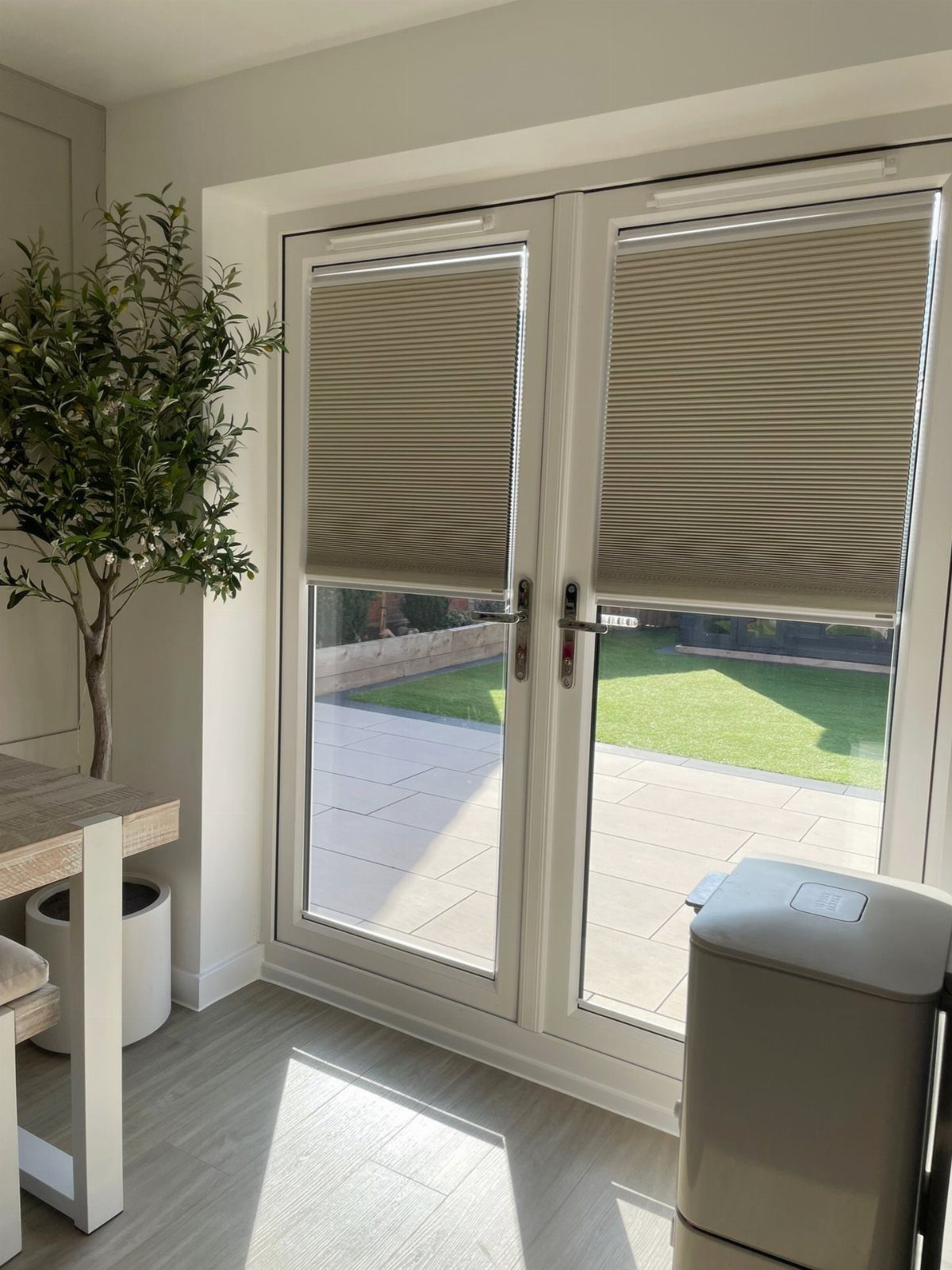
The honeycomb pockets in these shades trap air between the room and the glass, which is where the insulating value comes from.
That structure matters if your patio door leaks winter cold or summer heat; the shade itself becomes insulation you can raise and lower.
Stopping the shade partway gives you privacy below and light above, which I find more useful than fully up or down. You keep privacy at eye level while the lower half still admits light and lets you see out.
Cordless lifts are standard now and worth it; the clean line looks better, and there is no dangling cord for a toddler to reach. Expect to pay a moderate premium per door panel for double-cell construction.
3. Roman Shades
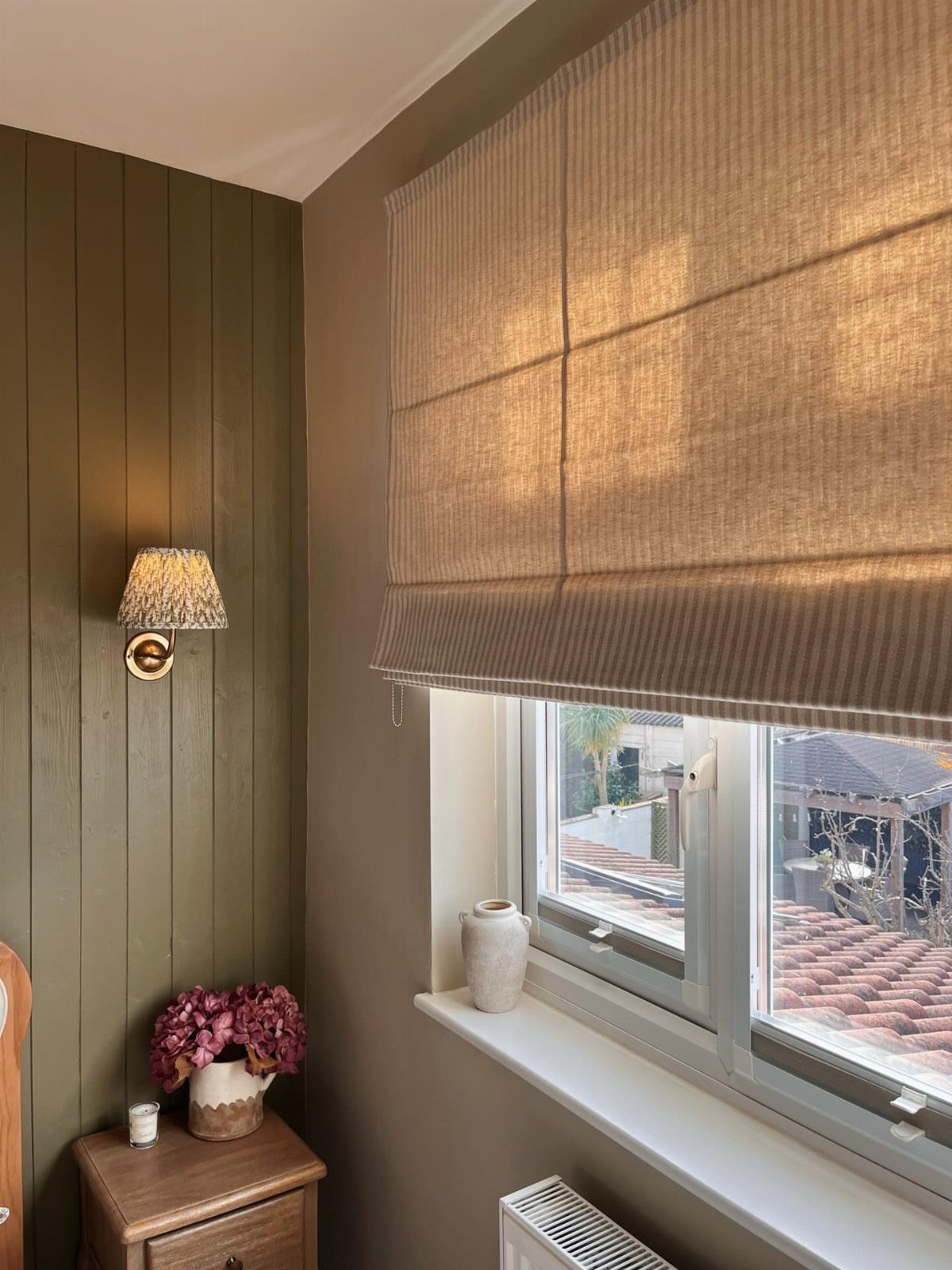
A Roman shade is fabric that folds into itself as it rises, so the raised stack still reads as a soft valance rather than hardware.
A stripe or pattern keeps the fold lines visible even when the shade is down, which I think hides the slight unevenness that develops over time in solid colors.
For a bedroom like this one, mount the shade just above the window frame and let it overlap the opening on each side so no light leaks around the edges.
That overlap blocks the light leak that otherwise runs down the edges at sunrise.
Budget a moderate amount for a standard window in a mid-weight cotton or linen blend. Dry cleaning every few years is part of the cost.
4. Panel-Track Blinds
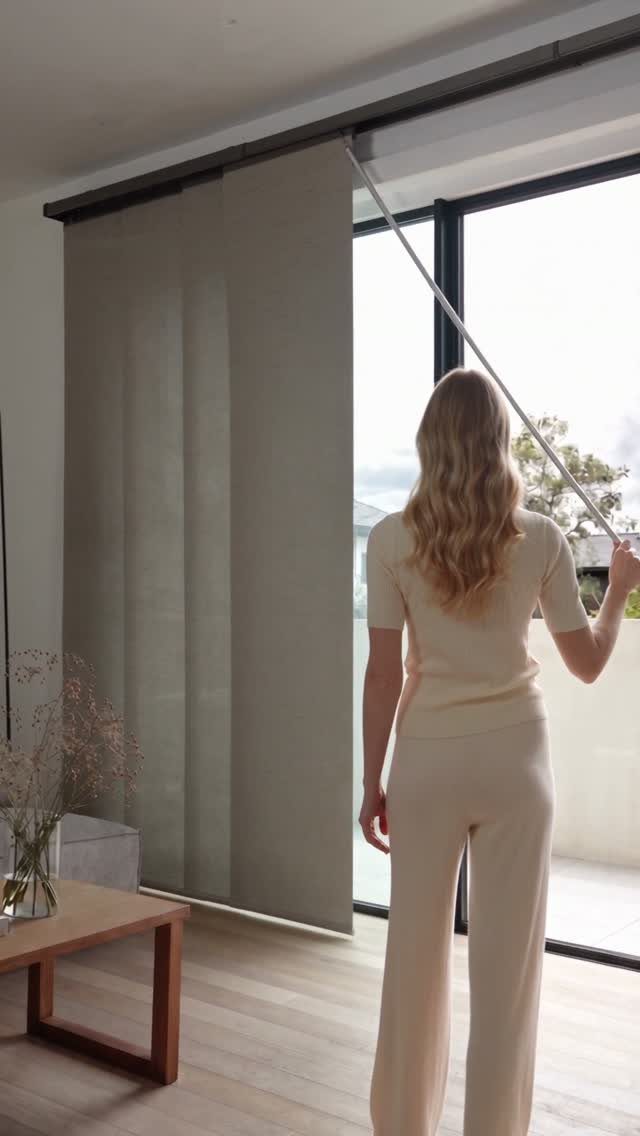
Panel-track blinds were built for openings too wide for a single shade. The fabric panels hang from an overhead track and overlap slightly as they stack left or right; a wand or cord draws them across.
One maker builds them to 153 inches wide, which covers most residential sliding doors without splicing tracks. I would choose the wand over corded operation for a door you pass through daily; there is less to tangle with groceries in hand.
The panels themselves are fairly wide, and you will want at least one full panel past the door frame on the stack side so the glass clears fully.
Installation needs a level and a stud finder; the track is aluminum and heavier than it looks.
5. Sheer Vertical Shades
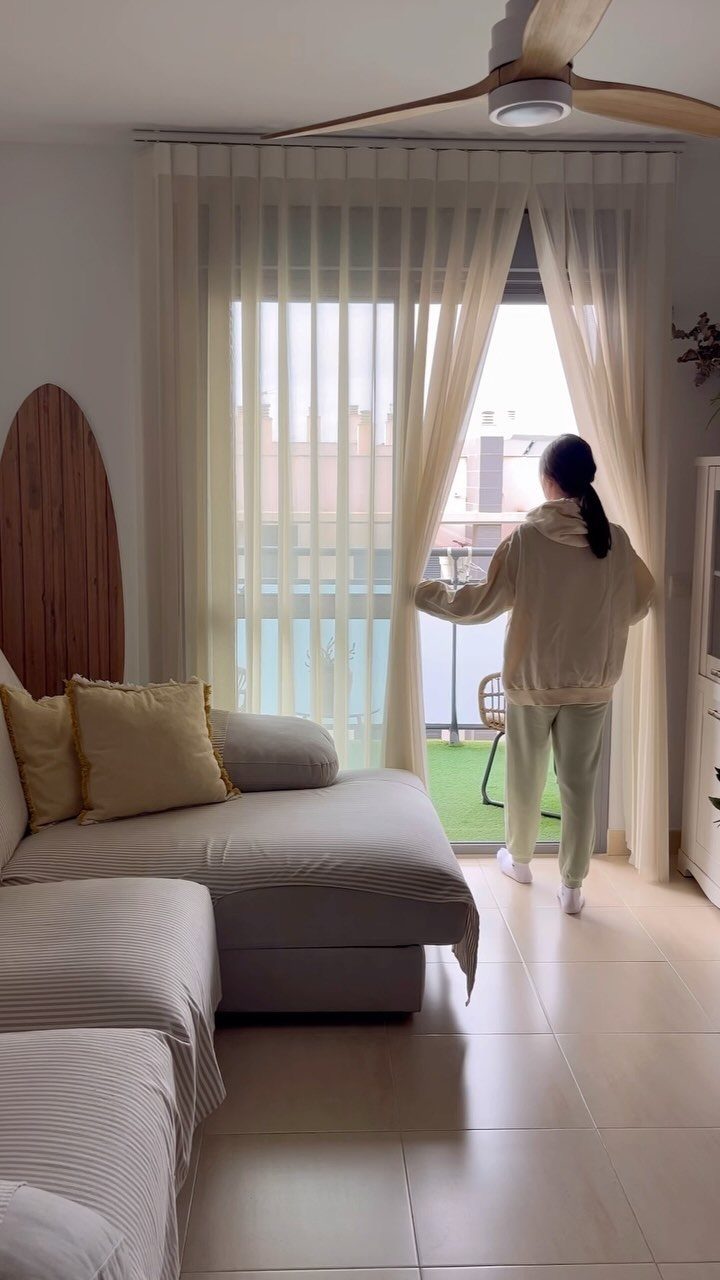
Sheer vertical shades hang like drapery but rotate like blind slats.
The fabric vanes attach to a sheer backing, so you can walk through the shade when the vanes are open or close them for privacy without losing the softness of fabric.
I would use these where a sliding door opens onto a view you want to keep, since the sheer layer stays in place even when the vanes turn.
Placing a sectional facing the door lets the shade become part of the room’s horizontal line rather than a vertical interruption.
Dust the vanes with a vacuum brush monthly; the fabric holds static and shows lint more than vinyl.
If you’re itching to replace your old vertical blinds with something a little bit nicer, the good news is that there are plenty of options you can use, from elegant, full-length curtains to rustic bamboo blinds.
— Hunker
6. Zebra Shades
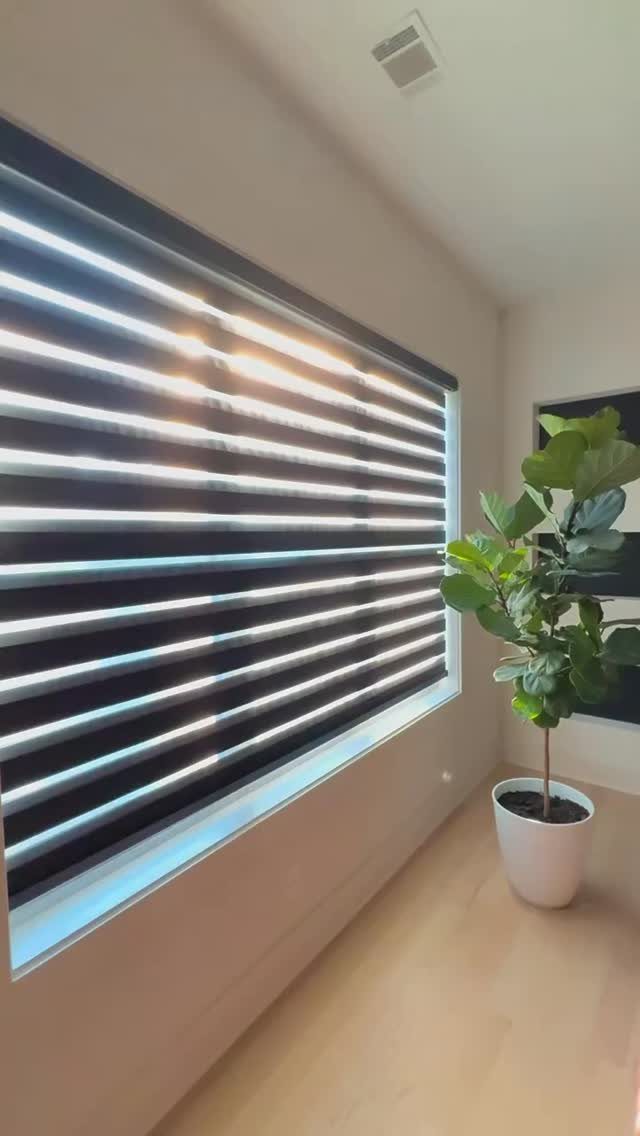
Zebra shades alternate sheer and opaque stripes on a single roll. Align the stripes and light filters through the sheer bands; offset them by a few inches and the opaque bands overlap into solid coverage.
The effect works best in a room with some architecture to match the horizontal rhythm. These stripes need some warmth around them; in a blank white room they can feel like a barcode.
I find the adjustment fussier than a plain roller shade. You will nudge the shade up or down to hit the exact overlap you want, and the mechanism needs to stay level or the stripes drift.
Budget a moderate amount for a typical living-room window. Choose a neutral stripe color; bold contrasts date faster than the hardware lasts.
7. Woven Wood Shades
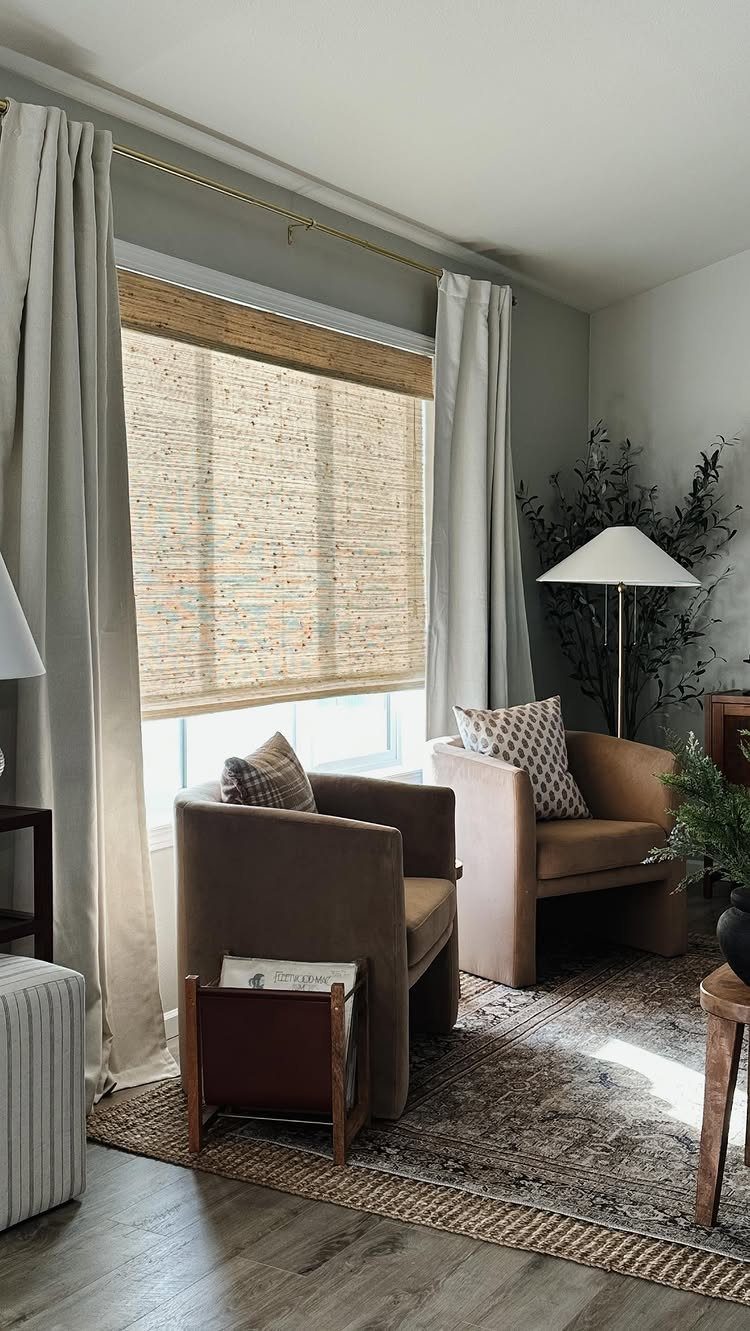
Woven wood shades bring in bamboo, reeds, or grasses that have already been harvested and dried, so the grain and color variation is part of the finished piece rather than applied.
The texture reads as warmer than painted slats or printed fabric.
I would hang them where the room already has some natural material, a wood table or jute rug, so the shade does not sit alone as a rustic accent in an otherwise smooth space.
The weave is open enough that you will want a liner for a bedroom; without one, streetlights show at night.
Dust settles into the weave more than on a flat surface.
A vacuum with a soft brush head, run lightly down the face every month or two, keeps the color from dulling. Budget a moderate amount above a plain roller for the material and the liner.
8. Floor-Length Curtains and Drapes
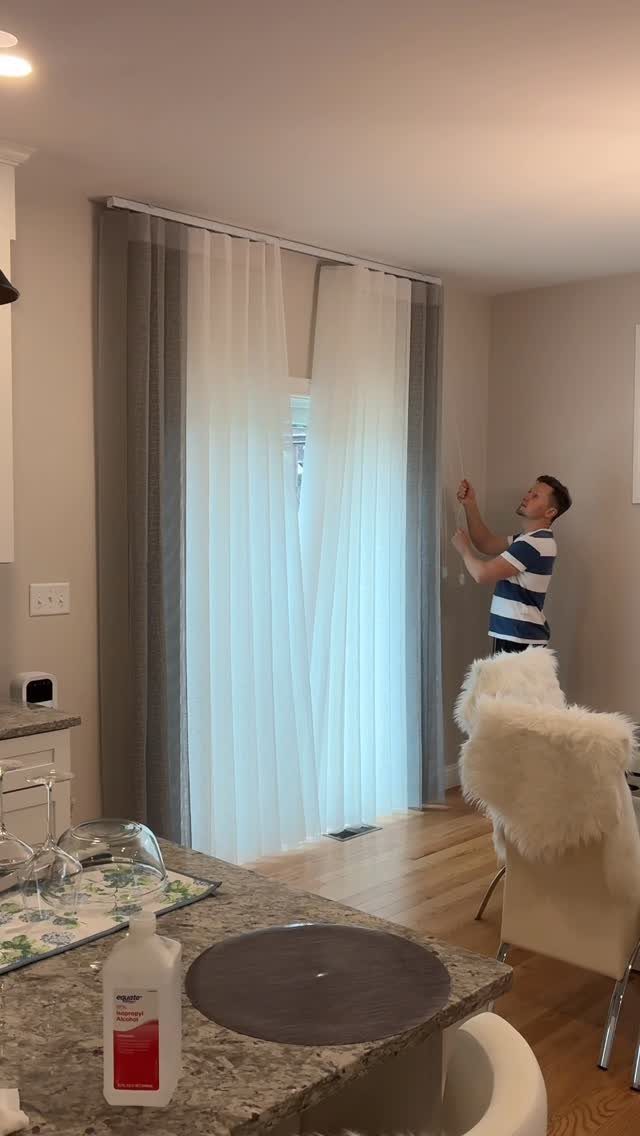
Floor-length curtains frame a window rather than cover it, which changes how the wall reads.
Sheer layers filter light without blocking it; you keep the window as a light source all day and draw the heavier panel for privacy after dark.
A rod mounted close to the ceiling and extending past the frame on each side makes the window look taller and lets the panels stack clear of the glass when open.
Measure the wall, not the window, for rod length; give the panels enough width that they stack clear of the glass and do not crowd the view.
Sheer panels run a modest amount per window.
The heavier drape behind them adds cost but gives you 2 layers to adjust through the day. A wand, like the one visible here, saves you from reaching past furniture to pull fabric by hand.
Benefits of Switching to Shades
Shades read as a single surface rather than a grid of slats, which is the softer look that works when you want the window to disappear into the wall.
The maintenance difference matters more than people expect: dust settles on a flat shade where a vacuum or a quick wipe reaches it, instead of collecting on every horizontal slat and the strings between them.
Light control shifts from angle to amount. Blinds let you tilt slats to bounce light toward the ceiling; shades give you up, down, or a stop in between, which I find enough for most rooms.
The safety gain is real and now standard: cordless lifts have eliminated the looped cords that were a hazard in older blinds, and motorized options remove even the short pull cord.
Where precise glare control matters, blinds still win. For blackout, insulation, or a clean face, shades are the plainer choice.
Choosing the Right Window Covering
Room function comes first.
A bedroom needs blackout and often insulation; a living room may only need softened daylight and privacy after dark. Match the covering to the hours you actually use the space, not to how the room is labeled.
Light control runs on a scale, not a yes-no.
Ask whether you need darkness for sleep, filtered light for screen glare, or just privacy from the sidewalk. The answer puts you at different points on the list.
Privacy has its own scale.
Some materials block the view in both directions while still admitting daylight; others give you a silhouette to anyone outside after dark. Test this at night if it matters to you.
If you are building or renovating, choose coverings before the drywall goes up.
You can coordinate with electrical rough-in for motorized shades, budget accurately, and measure openings that are still clean. Retrofitting motorization later means surface-mounted wiring or battery packs that need recharging.
Motorized Window Treatments
Motorization pays for itself in reach and repetition. Tall windows over a stairwell, wide sliding doors, or any treatment behind a desk or sofa are awkward to adjust by hand; a remote or wall switch removes that friction.
Scheduled adjustments, tied to sunrise or your work hours, mean the shades move without your attention.
Battery-powered motors now run for months between charges in typical use, and hardwired options tie into smart-home systems if the electrical is in place.
I would not motorize a single small window that I pass daily; the hand operation is faster than finding a remote.
For a bank of windows or a door I adjust morning and evening, automation stops the accumulation of small annoyances.
The added cost is moderate to significant depending on the motor and power source. Build it into the budget early if you want it; retrofitting later is possible but usually means visible components or more frequent maintenance.
Frequently Asked Questions
What are some affordable alternatives to blinds?
If you are starting from nothing and want the lowest spend, roller shades are where I would look first: ready-made sizes run about $25–$50 per window, and the hardware is usually included.
Sheer panels for floor-length curtains also cost a modest amount per window and give you light filtering without hardware complexity. Cellular shades and Roman shades cost more but add insulation or fabric presence that some rooms need.
What is the newest trend in window coverings?
Motorized shades tied to smart-home systems and sunrise scheduling are the clearest shift, now that battery motors run for months between charges.
Zebra shades with their alternating sheer and opaque stripes also read as newer than plain rollers, though they need more adjustment to get right. Both trends favor cordless, minimal hardware over dangling pulls.
Are shades better than blinds?
I prefer shades when the room needs a quieter look than slats give, and the single surface does block drafts better than blinds with their gaps and rout holes.
Blinds still win where you need to tilt light toward the ceiling or bounce glare off a specific angle. For most rooms I find the flat surface and cordless safety of shades enough, but the tools are different, not ranked.





