

Wide windows force a choice between daylight and privacy, and most curtains for wide windows fail at both because the hardware is undersized or the panels are too narrow.
A 120-inch span needs six standard 50-inch panels at proper fullness, not two, plus brackets rated for the load or the rod bows in the middle.
The right setup depends on whether you need the glass covered after dark or just softened during the day.
1. Curtains on the Edges Only
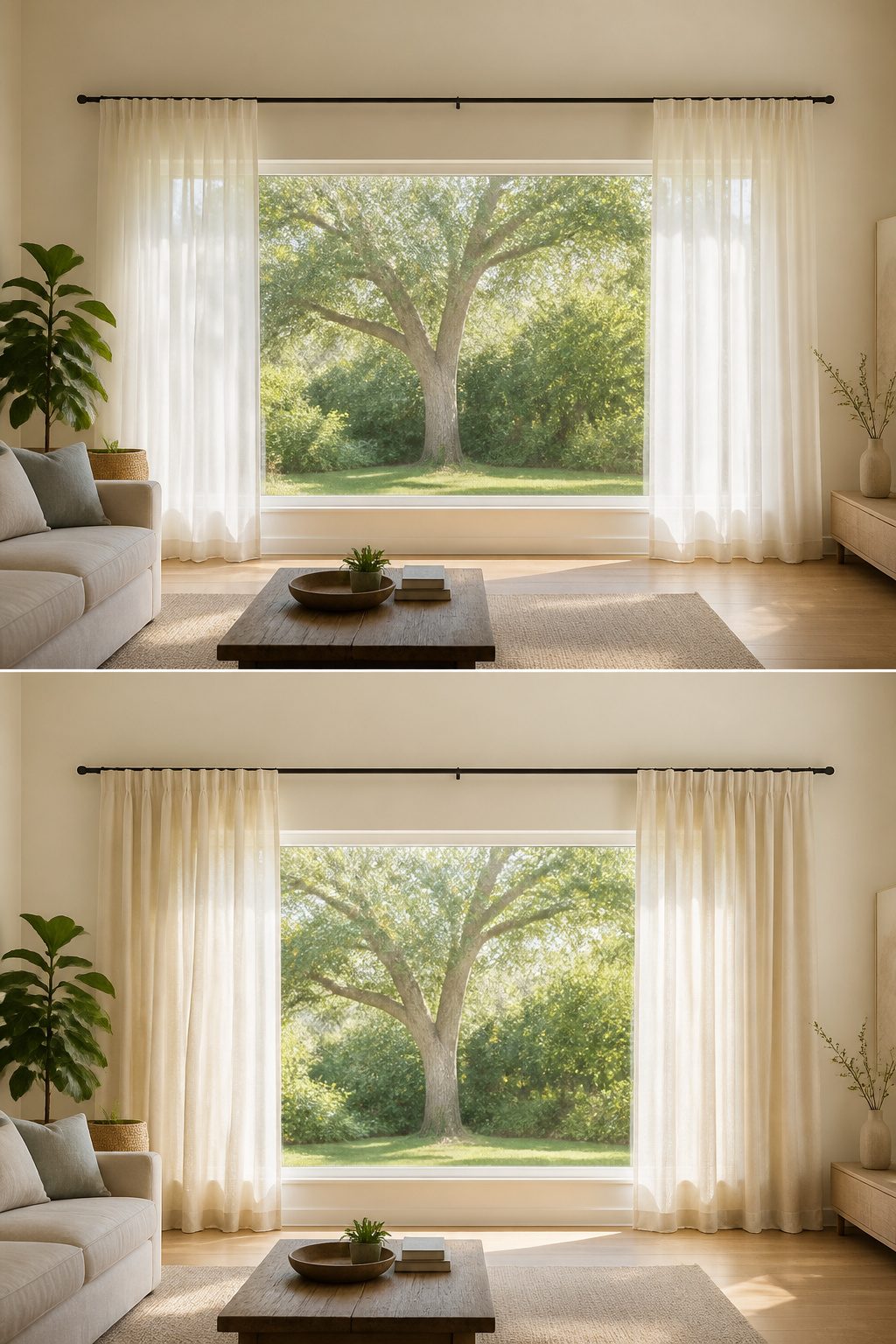
The cheapest way to dress a wide window is also the one that keeps the most daylight.
Hang one panel on each side and leave the center glass completely open. Extend the rod 6–12 inches past the frame on each side so the fabric stacks clear of the view when drawn back.
This setup works best where privacy ranks below light: living rooms, dining rooms, any space you use mainly in daylight hours.
Bedrooms and street-facing rooms will feel exposed after dark, so the tradeoff is real. Sheers or semi-sheers on the edges soften the look without blocking the middle, but opaque panels read more finished when the room lights go on.
I like this approach for first apartments because it uses a standard pair of curtains instead of the custom widths wide windows usually demand. The hardware costs the same as a normal window.
The catch is accepting that the glass stays bare; if you need full coverage after sunset, you will be adding blinds or a shade to the center later, which undoes the savings.

READY MADE: 2 panels sheer curtains per package. Each panel is 54" wide and 84" long when hanging as a flat. One of the grommets' inner diameter is 1.6". Purchase curtain whose width is 1.5-2 times wider than your window will form a nice look.

Sold as 2 Panels: Each package includes 2 pieces white sheer curtains. Each sheer curtain measures 42 inch width, 84 inches long( The curtain length not include top 1.5 inch header,total length 85.5 inch) 2 pieces total width is 84 inches, Sheer curtains width is 1.5-2 times wider than your window to show a nice look. Multiple Length are available, please measure your window first for the right choose

SOPHISTICATED LOOK: The well-crafted design of the Loha curtain panels offers a touch of elegance to your home with rich, linen-like texture and a variety of luxurious colors.
2. Multiple Lightweight Panels
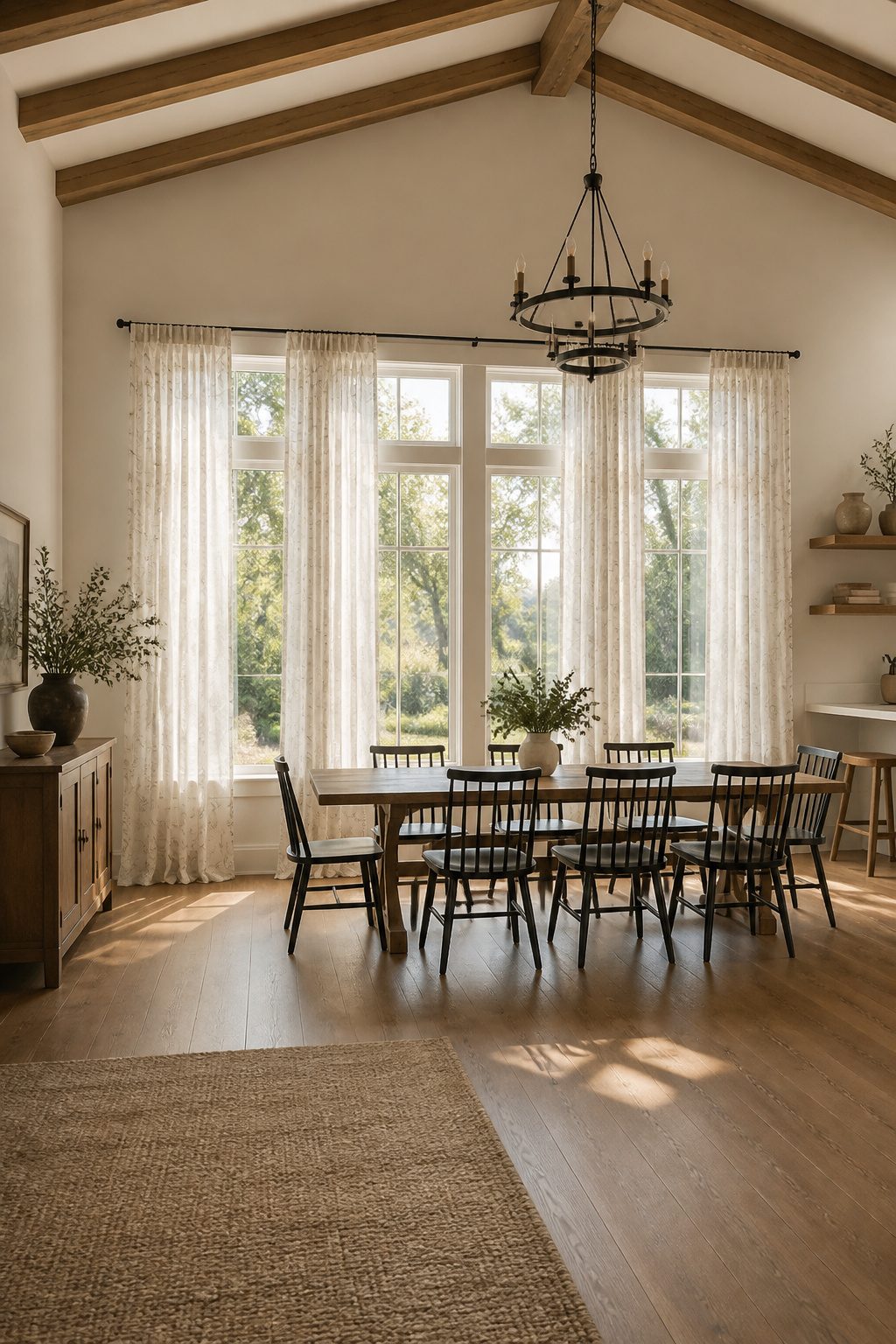
Several narrow panels hung across a wide opening can read as one continuous curtain, especially over a row of windows where a single expanse of fabric would be impossible to find off the shelf.
The trick is getting the panel count right so the gathers look intentional, not skimpy.
For a 72-inch window, the math starts with the rod. Add 12 inches of overhang to each side, giving a 96-inch rod.
At the standard 2x fullness, that calls for 192 inches of fabric total. Divided by typical 50-inch panels, that is 3.84 panels, rounded up to four (two per side).
A 100-inch window can land anywhere from two to six panels depending on the panel width you start with; wider panels in the 100-inch range drop the count sharply, though they are harder to source at budget prices.
The 192-inch rod width divided by 50-inch panels works the same way: 3.84, so four panels again.
Lightweight fabric helps the seams between panels stay soft.
Heavier material stacks stiffly at each break and ruins the illusion. Privacy takes a hit with this method; there will be thin spots where panels meet, and closing them fully takes more fussing than a single wide drape.
For a bedroom facing the street, layer with a shade or choose a different approach entirely.

Basic Information: Includes 2 curtain panels, each measuring 50 inches wide for a total of 100 inches. Easy care for machine washable in cold water, do not bleach, tumble dry low, iron on low heat if needed.

Basic Information: Includes 2 curtain panels, each measuring 50 inches wide for a total of 100 inches. Easy care for machine washable in cold water, do not bleach, tumble dry low, iron on low heat if needed.

Basic Information: Includes 2 curtain panels, each measuring 50 inches wide for a total of 100 inches. Easy care for machine washable in cold water, do not bleach, tumble dry low, iron on low heat if needed.
3. Sheer Curtains Seamless
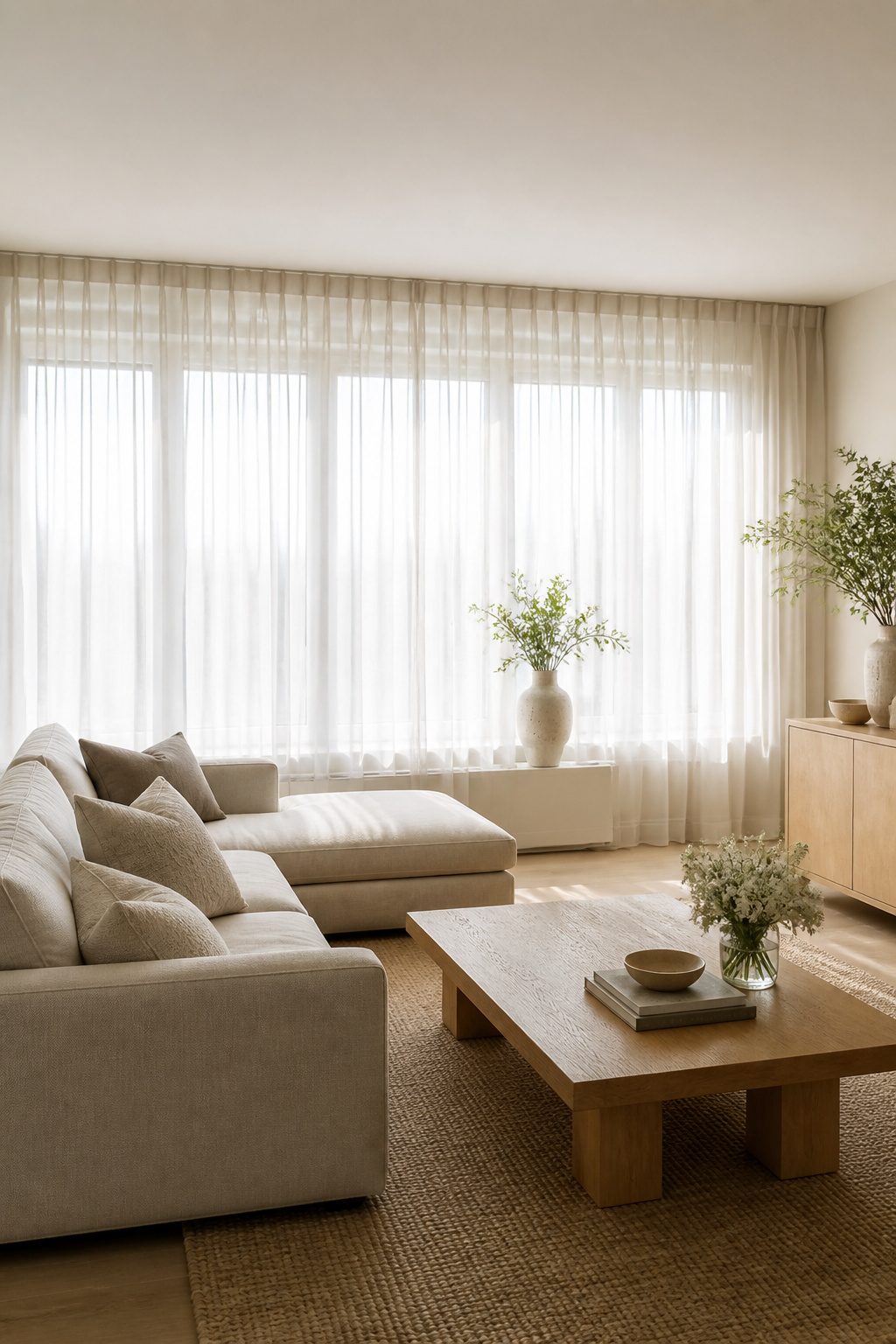
Sheer curtains need more fabric to look right than heavier panels do. Plan for 2x to 2.5x your rod width in total sheer fabric, compared with the 1.5x to 2x that works for standard non-pleated drapes.
That extra fullness keeps sheers from hanging flat and looking like a bedsheet when they span a wide window wall-to-wall.
Wall-to-wall sheers soften daylight without killing it, which is why they work well in living rooms and bedrooms where you want the room to feel open but still filtered.
The light comes through, the view stays partly visible, and daytime privacy holds up enough for most situations.
Heavier curtains or layered treatments would block more light and more of the outside, which is the tradeoff if you go that direction.
Sheers on their own keep things simple, no extra drapery required, though grommet tops and pinch pleats both hang cleanly depending on whether you want a little texture in the drape.
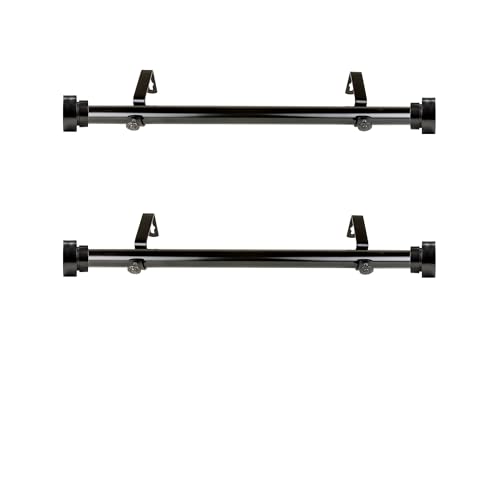
Includes two 1" diameter adjustable from 12-20 inch rods, two finials, 4 wall mount brackets and mounting hardware

【Side Curtain Rods】- 1inch curtain rods can match with different type of draperies, it can hang on your living room, bedroom, door and more.

[EASY INSTALLATION]: The small tension rod installation no need drill, just adjust the spring rod length to 1 inch larger than the wall distance, and then snap it in between the wall, by twisting the rod to make the spring tighter to complete the installation, with stronger load-bearing capacity
4. Window Scarves Instead
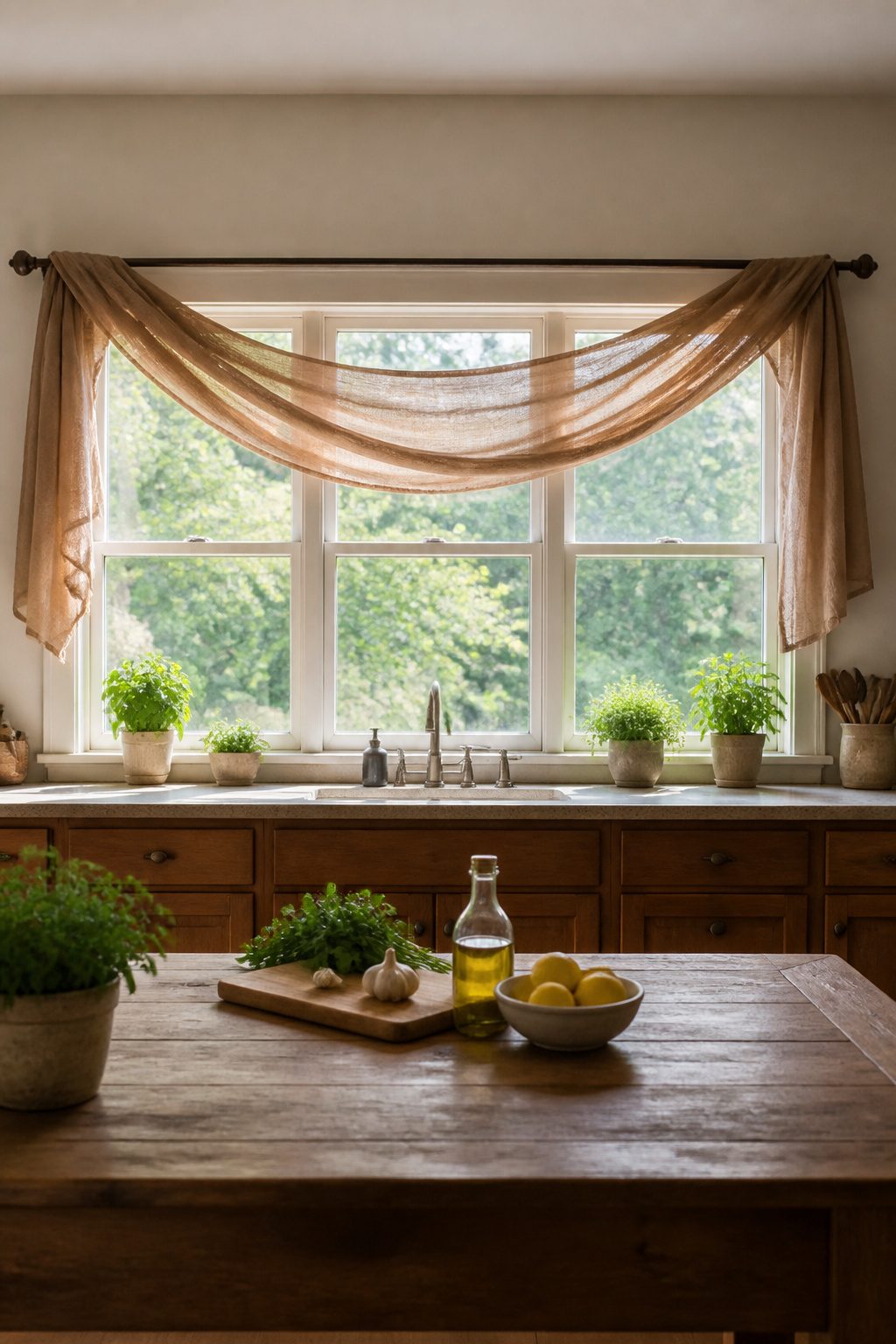
Window scarves trade full coverage for speed and flexibility. A length of fabric, usually 3 to 6 yards depending on the window, drapes over a simple rod or loops through holdbacks at the sides.
The hardware runs under twenty dollars if you already have a basic curtain rod; holdbacks alone cost less than a pair of decent brackets.
I reach for this when panels feel like overkill.
Wide windows in rentals often sit above baseboard heaters or have molding that fights a proper frame. A scarf covers the top third, softens the rectangle, and never needs hemming if you let the ends pool.
The light still comes through, which is the point in a dining room or over a kitchen sink where you want the glass, not the blackout.
The look is intentionally casual. Where six panels on a 120-inch window stack back into a thick column, a scarf stays flat and open.
It works best with lightweight fabrics that hold a drape rather than a crease: linen blends, thin cotton, anything that looks better a little wrinkled.
Velvet or heavy damask fight the looseness and end up looking like you gave up halfway through.
What you lose is privacy after dark and any real insulation.
This is a daytime solution, or one layered over a shade you already own. For a weekend project on a tight budget, that trade is often worth it.

WELL MADE: Sold per pair, including 2 grommet curtain panels - Panel measures: 42"W x 63"L|Set measures: 84"W x 63"L. Each panel has 6 elegant metal grommets, inner diameter of grommet is 1.6", fit well with standard or decorative curtain rods

MULTIPLE HANGING: Sold per pair, including 2 window panels - Panel measures: 52 x 84 - inches | Set measures: 104 x 84 - inches, with 3 curtain top hanging options (Back tab & Rod pocket & Pleated) for your personalized style. Each panel sewn with 4" rod pocket (7 back loops), 2" bottom hem and 0.8" side hem, specialized fitting the curtain rods up to 3

2 PANELS SET: Sold pair(set) of 100% blackout curtains, each window panels measuring 52 inches wide and 84 inches long with 8 grommets. The unique design of silvery grommet (1.6 inch inner diameter) creates fashion for your house, which makes the curtains easy to install and slide.
5. Color and Fabric Mixing
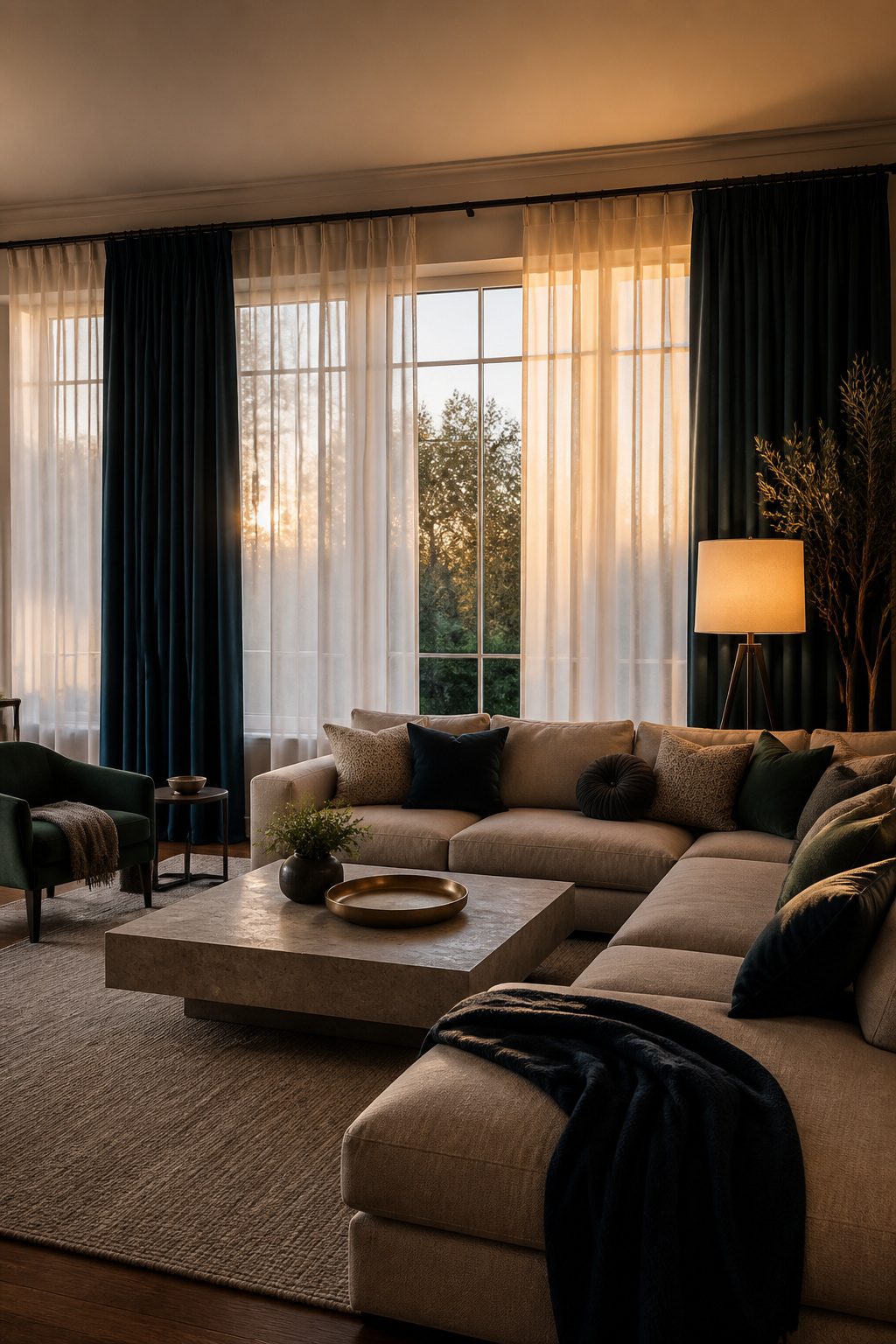
A wide window eats fabric, so the texture you put in front of it becomes the whole mood of the wall.
Linen-look panels soften the glass without adding bulk; they work best in living rooms or relaxed bedrooms where you want the window to feel connected to the rest of the space rather than staged.
Velvet or heavier woven fabrics do the opposite. They pull the span inward visually and add the structure that street-facing rooms or media spaces need to feel finished.
Mixing the two is where it gets interesting. Hang velvet on the outer edges and lighter sheers or linen toward the center, and the window gains layers instead of mass.
The heavy fabric frames the view; the lighter middle keeps daylight from turning the room into a cave. The visual weight shifts toward the sides, which tricks the eye into reading the window as narrower than it is.
The catch is maintenance. Velvet and heavy linen usually need professional cleaning, and wide panels are already a pain to take down.
If you are renting or doing your own wash, polyester blends or treated cottons hold up better at the grommets and survive a home machine. That tradeoff matters more than the look on day one.
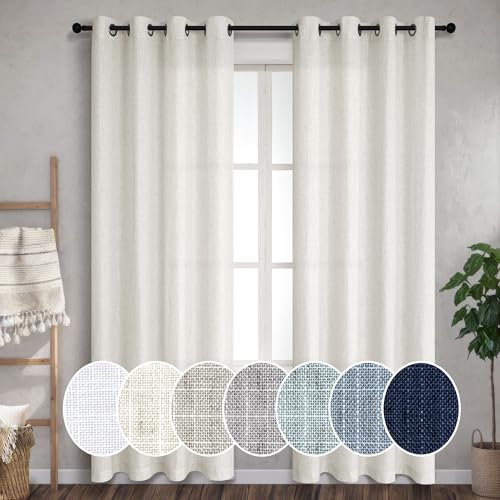
HIGH END LUXURY LINEN: Open woven of linen blended fabric.20% raw flax linen plus 80% polyester.Unlike 100% linen curtains too stiff and skin unfriendly,these linen/polyester not only keeps natural primitive aesthetic of linens but also brings soft drape effect,wrinkle free and shrinkage resistant

Well Made: Each pack contains 2 pieces of 72 inch ivory sheer curtains, each 40" wide and 72" long with 1.5" beautiful header, total width is 80". The top 3" rod pocket is suitable for most curtain rods, which makes the sheer voile curtains easy to hang or slide.
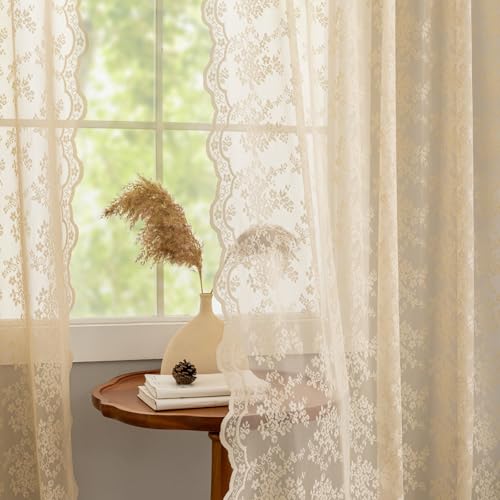
Ready-Made:Sold as Pair, 2 Panels beige lace curtains 72 inch Length included. Each panel measures 52 inch wide 72 inch long, set measures: W104 x L72 Inch. Soft and quality lace fabric.
6. Shades With Curtain Accents
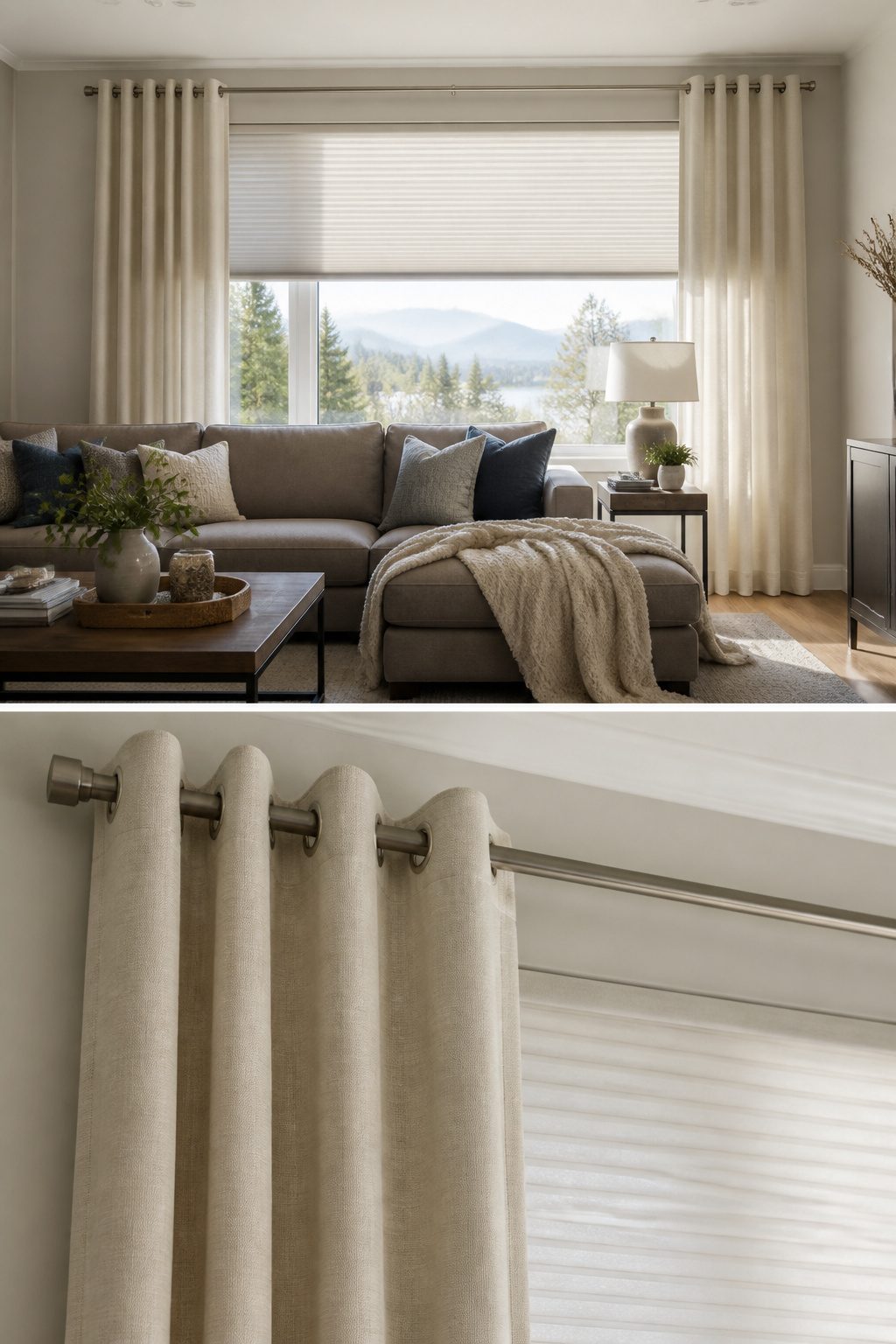
Roller or cellular shades mounted inside the frame give wide windows the privacy and insulation that fabric alone rarely manages.
The gap at each edge of a single wide panel, or the light leak between two, lets in more than you expect on a twelve-foot span.
I learned that the hard way in a south-facing rental where the curtains looked substantial until the afternoon sun hit.
The fix was layering. A neutral cellular shade handles the functional job, and decorative panels in front handle the room.
The combination beats either alone: shades this wide need tracks to glide smoothly, and tracks look institutional without fabric to soften them. Black, brass, or brushed nickel rods in front add structure the track alone lacks.
The load adds up. Wide lined panels run heavy, and the shade hardware sits in the same real estate.
Use enough brackets to carry the rod without bowing, especially if the span passes six feet. For very wide windows or sliding doors, a ceiling-mounted track for the shades keeps the wall clear for the rod.
Custom sizing matters here.
Off-the-shelf shades gap at the edges; off-the-shelf curtains hang too short or pool wrong. The layered look only works when both pieces fit the width precisely.
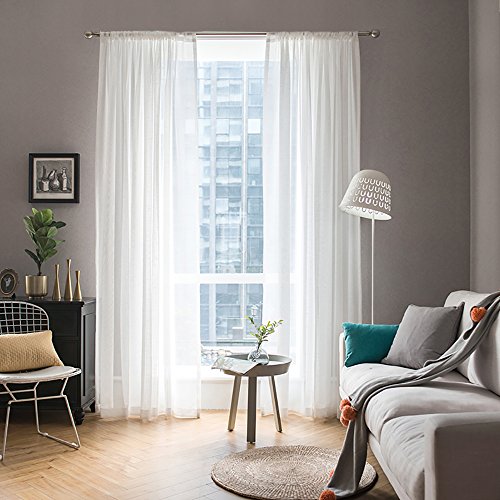
Size&Material: Set includes 2 sheer panels of 54" wide x 84" length.Sheer curtain is made of Polyester. Soft to touch.

Sold as 2 Panels: Each package includes 2 pieces sheer curtains. Each panel measures 42 inch width, 84 inch long( The curtain length not include top 1.5 inch header) 2 pieces total width is 84 inches, Sheer curtains width is 1.5-2 times wider than your window to show a nice look. Multiple Length are available, please measure your window first for the right choose
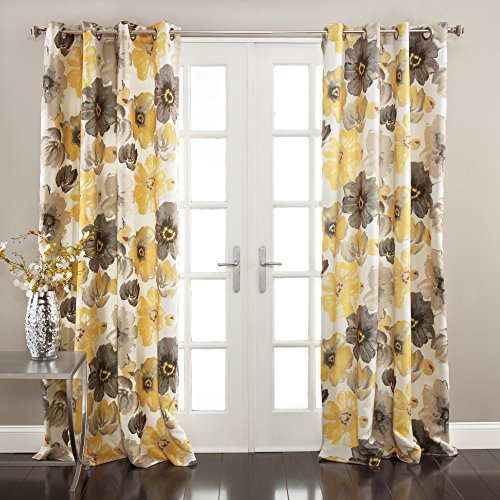
Bold Florals: The charming design of our Leah Light Filtering Curtains feature large, colorful blooming flowers that will brighten any room in your home with the feeling of spring. Add to your bedroom, dining room, home office or living room decor.
What the Curtains Are For
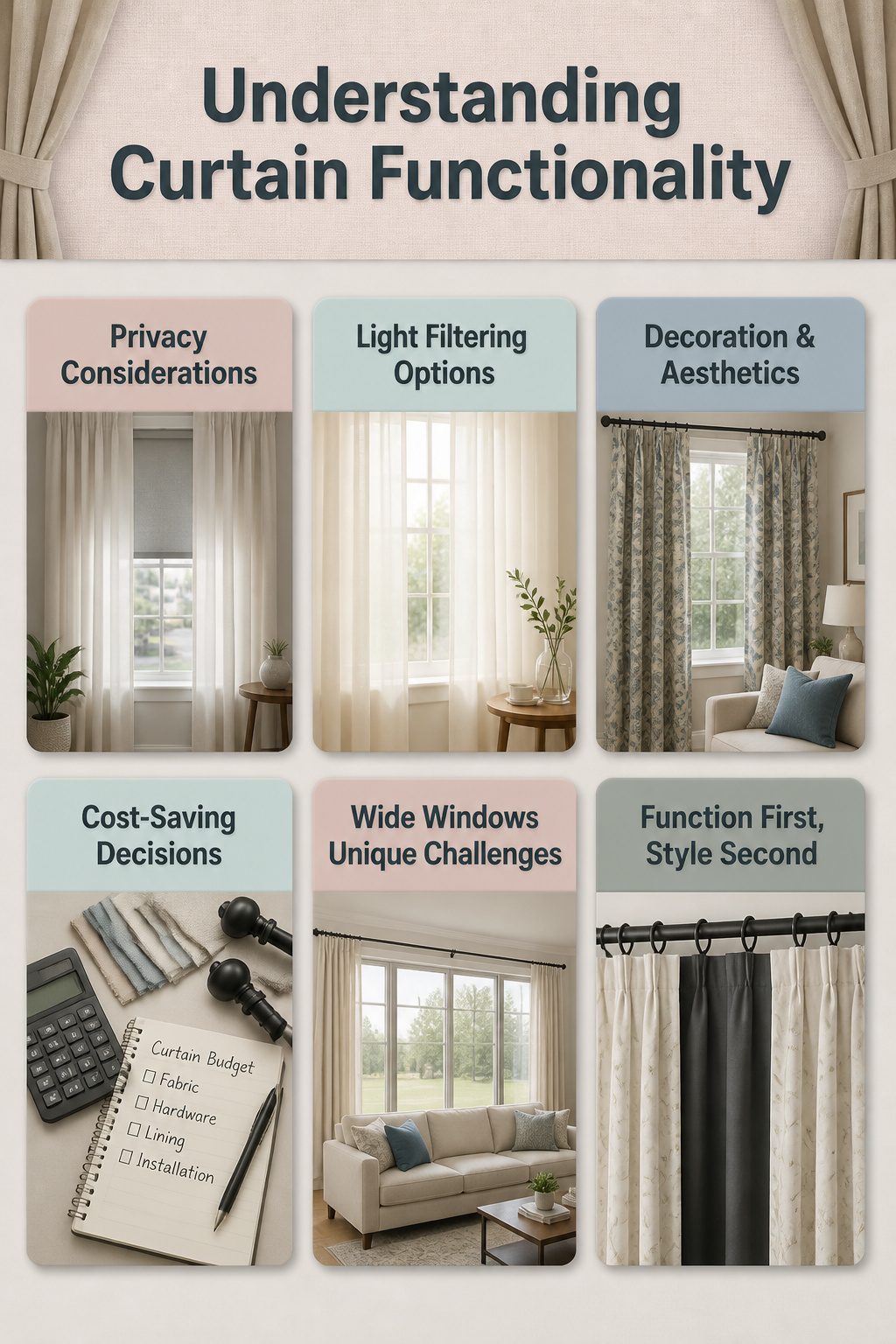
Wide windows eat up fabric and hardware budgets fast, so deciding the job first saves half the money before you shop. Privacy, light filtering, or pure decoration: pick one as the main function and everything else narrows itself.
I watched a neighbor skip this step last spring. She bought heavy blackout panels for a west-facing living room that only needed softening at sunset, then couldn’t return the custom width.
The curtains still hang there, overkill and half-open, because full blackout makes the room feel like a basement during the day.
Light filtering and decoration leave you with airy fabrics and simpler rods.
Privacy as the primary goal, especially on a ground floor or facing a street, usually means adding blinds or shades behind the curtains or accepting that sheers alone will fail you after dark.
Wide windows fall short on both insulation and full privacy no matter what curtain you choose, so the honest assessment matters more at this scale than with a standard 36-inch window.
The style question only works once the function is settled. A decorative curtain that needs blackout lining behind it becomes a different project than one that stands alone.

Pair Sold: Each package includes 2 panels of solid long curtains. Each panel measures 50"W x 84"L, with a pair measuring 100"W x 84"L. The thermal curtains have 2 hanging options (Rod pocket & Clip Style) with a 3-inch rod pocket to fit 1.5-inch rods. Multiple colors and sizes are available to meet your preferences

Basic Information: Includes 2 curtain panels, each measuring 50 inches wide for a total of 100 inches. Easy care for machine washable in cold water, do not bleach, tumble dry low, iron on low heat if needed.

Basic Information: Includes 2 curtain panels, each measuring 50 inches wide for a total of 100 inches. Easy care for machine washable in cold water, do not bleach, tumble dry low, iron on low heat if needed.
Budget for Wide Windows
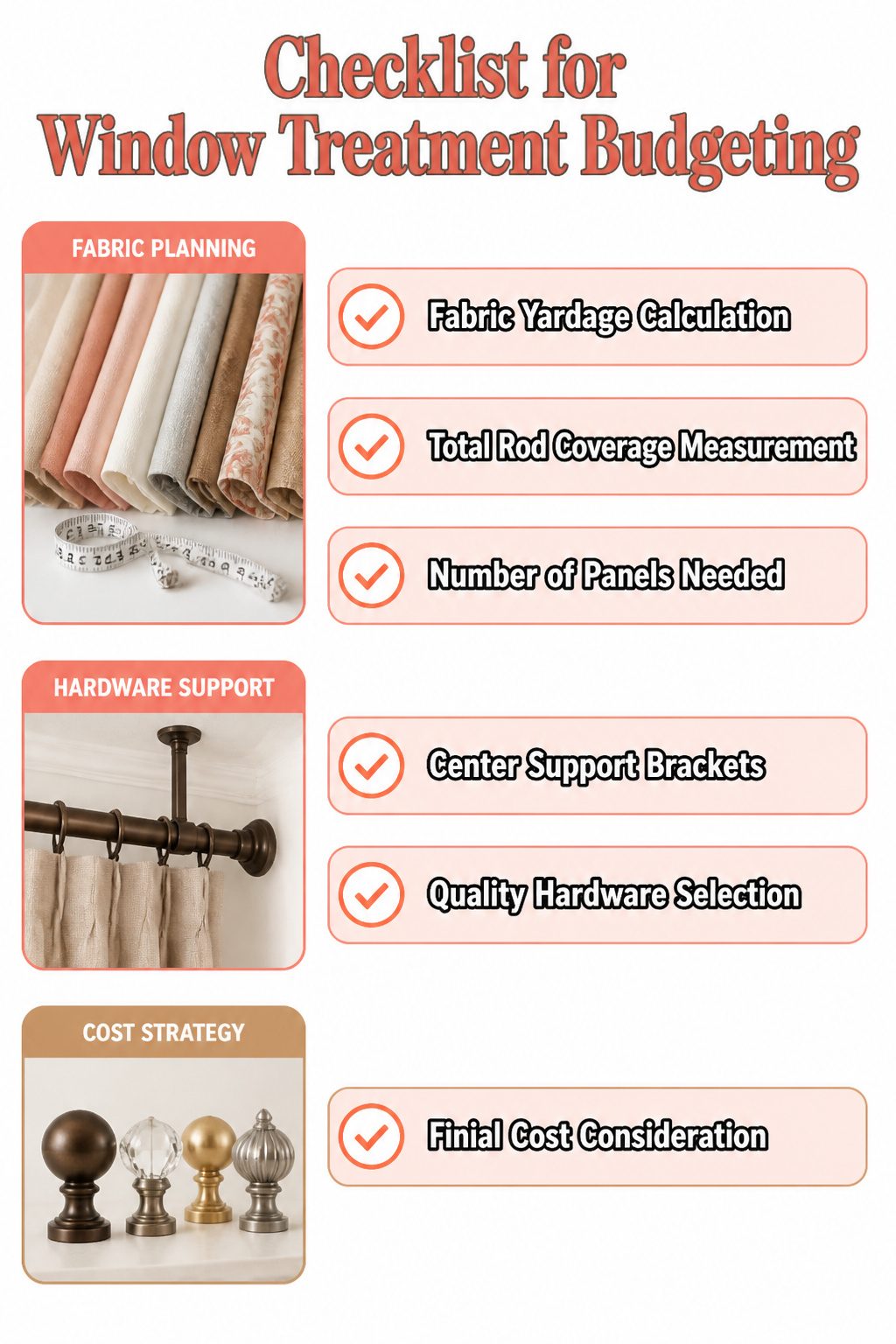
Fabric is sold by the yard, and width multiplies every line item in a way that sneaks up on you. A 120-inch window with a rod mounted 12 inches past each side needs 144 inches of rod coverage.
At the standard 2x fullness, that is 288 inches of fabric width, which works out to six standard 50-inch panels rather than the two or four you might picture.
The same math on a 72-inch window still demands four standard panels. Extra-wide panels in the 100-inch range cut that count, but they cost more per panel and the savings are not always real.
Rods and brackets scale too. A long span needs center support brackets, sometimes doubled, and the hardware adds up faster than the fabric.
Cheap rods sag in the middle; cheap brackets pull out of drywall. That is where holding the line costs more later.
I would rather spend on the brackets and save on the fabric by accepting standard-width panels with a slightly higher fullness, or by using fewer wide panels if the price per inch works out.
The place to save is the decorative finial, not the thing keeping the rod off the floor.

【Purchase Note】Short tension rod, adjustments range in size just 4 inches, be necessary to get correctly measurements and order the right size

【Side curtain rods】Material: high quality metal, heavy duty. Aluminum alloy brackets and finials, modern and stable. Rod thickness is 0.6mm, diameter is 1inch.

Rod Pocket Valance:The size of the curtain rod pocket is 3 inches,suitable for most straight rods(diameter less than 1.5 inches)in the market,easy to install and disassembly,and the best choice for window decoration
Rod and Bracket Hardware
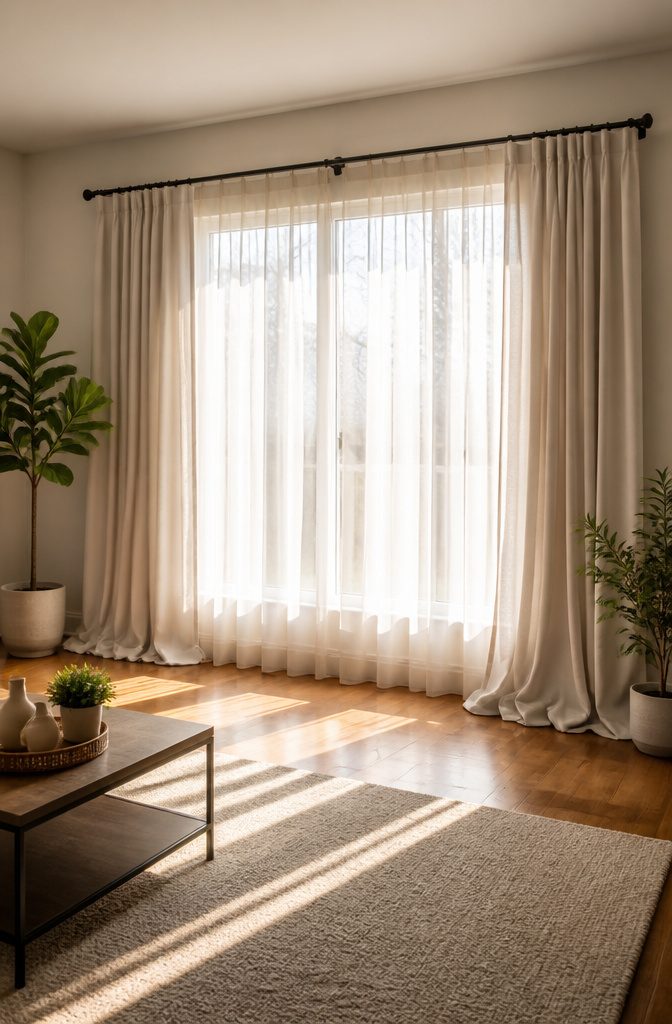
A 1.25-inch diameter is the smallest solid metal rod worth considering for wide curtains, and even that bows if the span passes eight feet without a center bracket.
Hollow rods look the same on the shelf but sag under lined panels; the weight of wide curtains multiplies fast.
For moderately wide windows, a decorative rod in black, brass, or brushed nickel still makes sense. The hardware stays visible and adds structure to the room.
Add a center bracket for any span past 8–10 feet, mounted into a stud or a heavy-duty anchor rated for the load, or the rod will dip in the middle no matter how solid it looked going up.
Very wide windows, sliding doors, or anything ceiling-mounted wants a track instead. Tracks glide smoother across long runs and read cleaner where a rod would look busy.
Pinch pleat and ripple fold styles both need the right hardware: pinch pleat clips onto rings or carriers sized to its pleat spacing, while ripple fold demands a track with the exact carrier spacing built in.
Mix those up and the drape hangs wrong from day one.
Wall anchors and stud placement matter more than the rod itself. A bracket floating in drywall crumbles under the first pull.

SIZE & MATERIAL:Set includes 2 panels blackout curtains(52" Wide by 84" Long). Each panel has 8 grommets.The interior diameter of hole is 1.6 inch.It's easy to hang. Curtains are made by quality faux linen.

SET DETAILS: Pack of single panel charcoal gray doorway curtain, measures 34 inch wide by 80 inch long with 6 silver metal grommets (1.6 inch inner diameter) on top, easy to install and slide smoothly. Pets have no problem to pass.

Pair Sold: Each package includes 2 panels of short blackout curtains. Each panel measures 40"W x 63"L, with a pair measuring 80"W x 63"L. The curtains blackout have 2 hanging options (Rod pocket & Clip Style) with a 3-inch rod pocket to fit standard or decorative curtain rods. Don't worry if this blackout curtain is a few inches shorter than your window. Hang with rings & hooks for easy 3-4" height adjustment.
Mistakes I Have Made
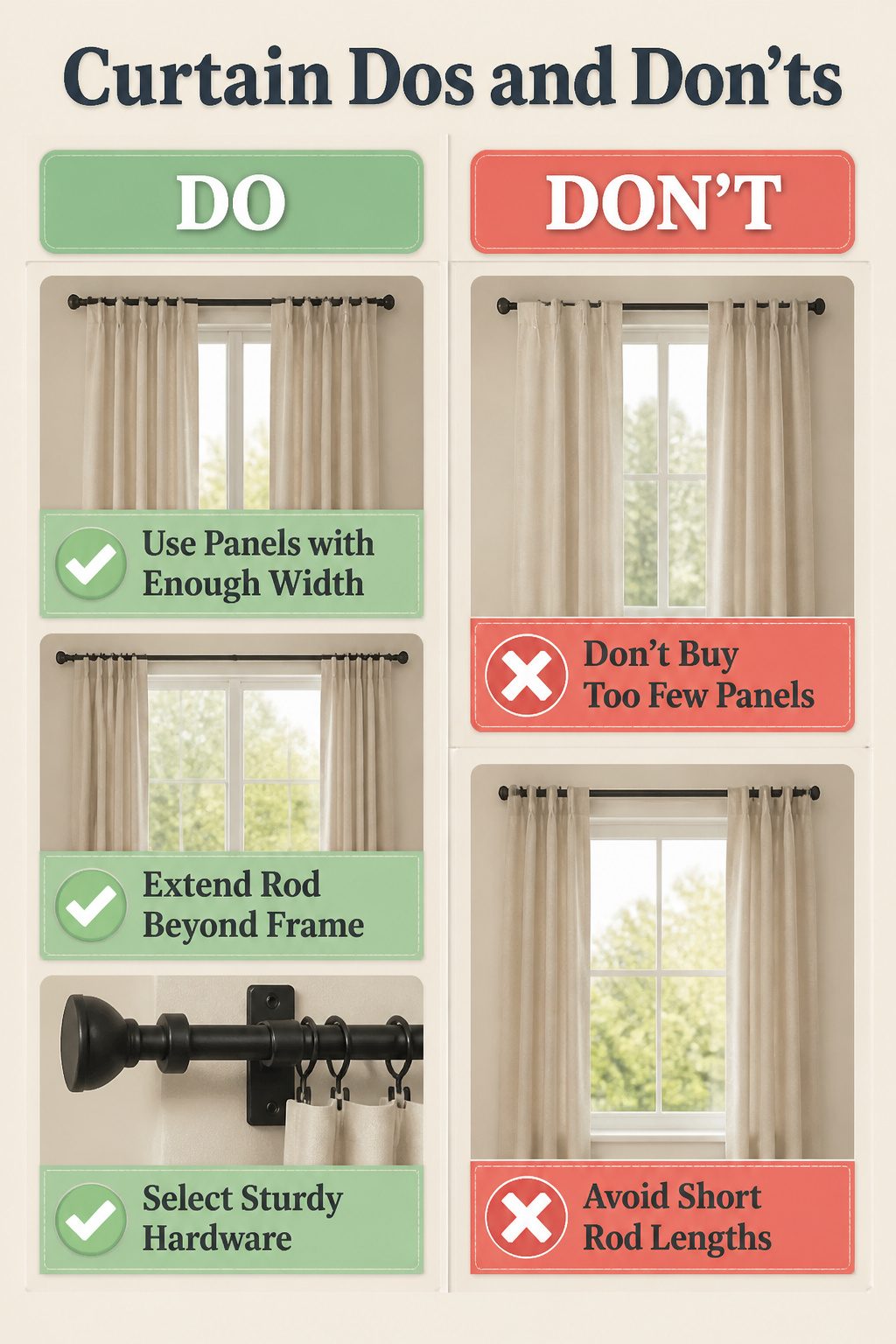
Panels that are too narrow for the rod width leave curtains looking flat against the glass, more like a bedsheet hung to dry than a finished treatment.
The fabric needs enough width to fold back on itself when the panels are closed; without that extra material, the window reads as smaller than it is and the whole job looks unfinished.
I learned this the hard way on a 120-inch window where two standard 50-inch panels barely met in the middle.
The math says you want roughly twice the rod width in fabric, which for that span meant six panels, not two.
Buying the right amount the first time costs less than replacing the whole set after you have already drilled holes and mounted hardware.
Rods that stop at the frame edge create the same cramped feeling. The curtains have nowhere to stack when open, so they block a slice of glass on each side and the window looks boxed in.
Extending the rod six to twelve inches past the frame on each side gives the fabric room to gather clear of the view.
For that same 120-inch window, the rod should run 144 inches, not 120. The brackets for a span that wide need to be heavier duty too, especially with thicker fabric.
Skipping the extension means either living with less light or paying for a longer rod and new brackets later, plus patching the old holes.

The price is for 1 panel, each panel size is 78''width *90''height

Exquisite Pinch Pleat Design: 2 Panels per package.Each panel measures 40 inches wide by 45 inches long.The top design of this linen curtain creates an elegant and voluminous effect.Suitable for a variety of styles and scenes

These curtains are made of 100% durable imported polyester and luxurious textured weave sheer fabric, your package includes 2 panels, each panel measures 52 x 54 inch length
Frequently Asked Questions
What curtains are best for wide windows?
Custom-sized floor-length curtains with enough fullness and strong hardware work best for wide windows.
Pinch pleat, ripple fold, grommet, and lined linen-look curtains all suit different rooms and needs. The key is matching the fabric weight and heading style to whether you need privacy, light filtering, or pure decoration.
How wide should curtains be for wide windows?
For non-pleated curtains, plan on total fabric width of about 1.5x to 2x the rod width; sheers need 2x to 2.5x to avoid hanging flat.
A 144-inch rod at standard 2x fullness demands 288 inches of fabric, or six standard 50-inch panels. Extra-wide panels in the 100-inch range cut the panel count but cost more per panel.
Should I use a curtain rod or track for wide windows?
A decorative curtain rod in black, brass, or brushed nickel suits moderately wide windows up to about 8–10 feet, with a center bracket added past that span.
Very wide windows, sliding doors, or ceiling-mounted treatments need a track, which glides smoother across long runs and reads cleaner where a rod would look busy.