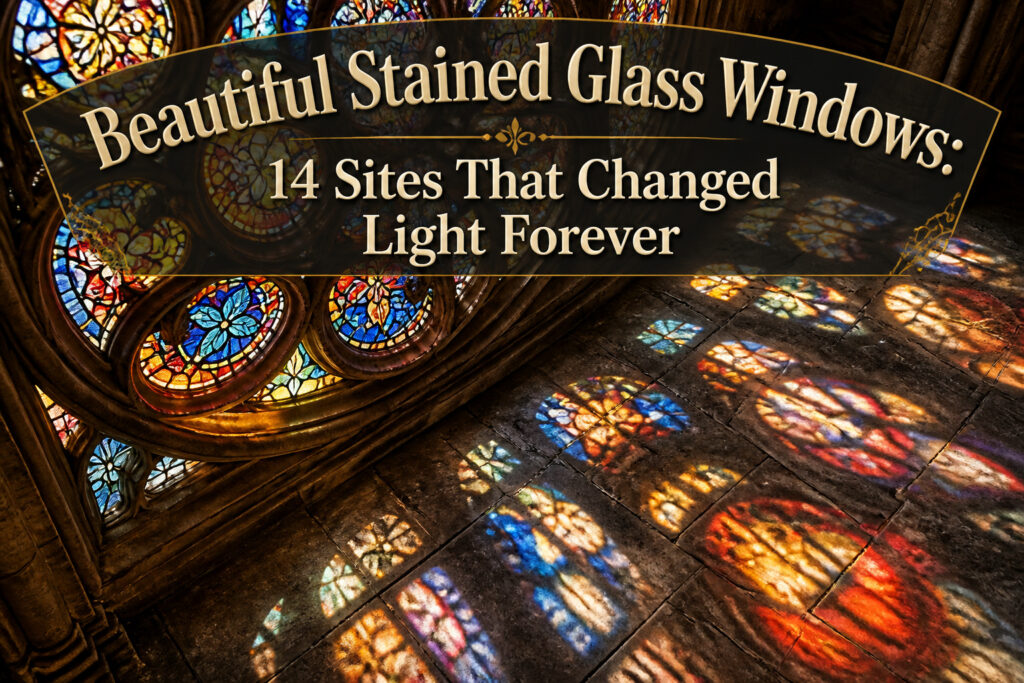
Beautiful stained glass windows are not merely decoration but a technology for bending light into narrative, color, and space.
What separates the extraordinary examples from the merely old is the condition under which they were made and the cost of keeping them intact: a single seven-year, $10 million laser restoration at Sainte-Chapelle returned 1,113 biblical scenes to something closer than visitors have seen in centuries, because medieval pigment chemistry, like the famous blue at Chartres, can be lost faster than it can be replicated.
Sainte-Chapelle and the Height of Medieval Glass
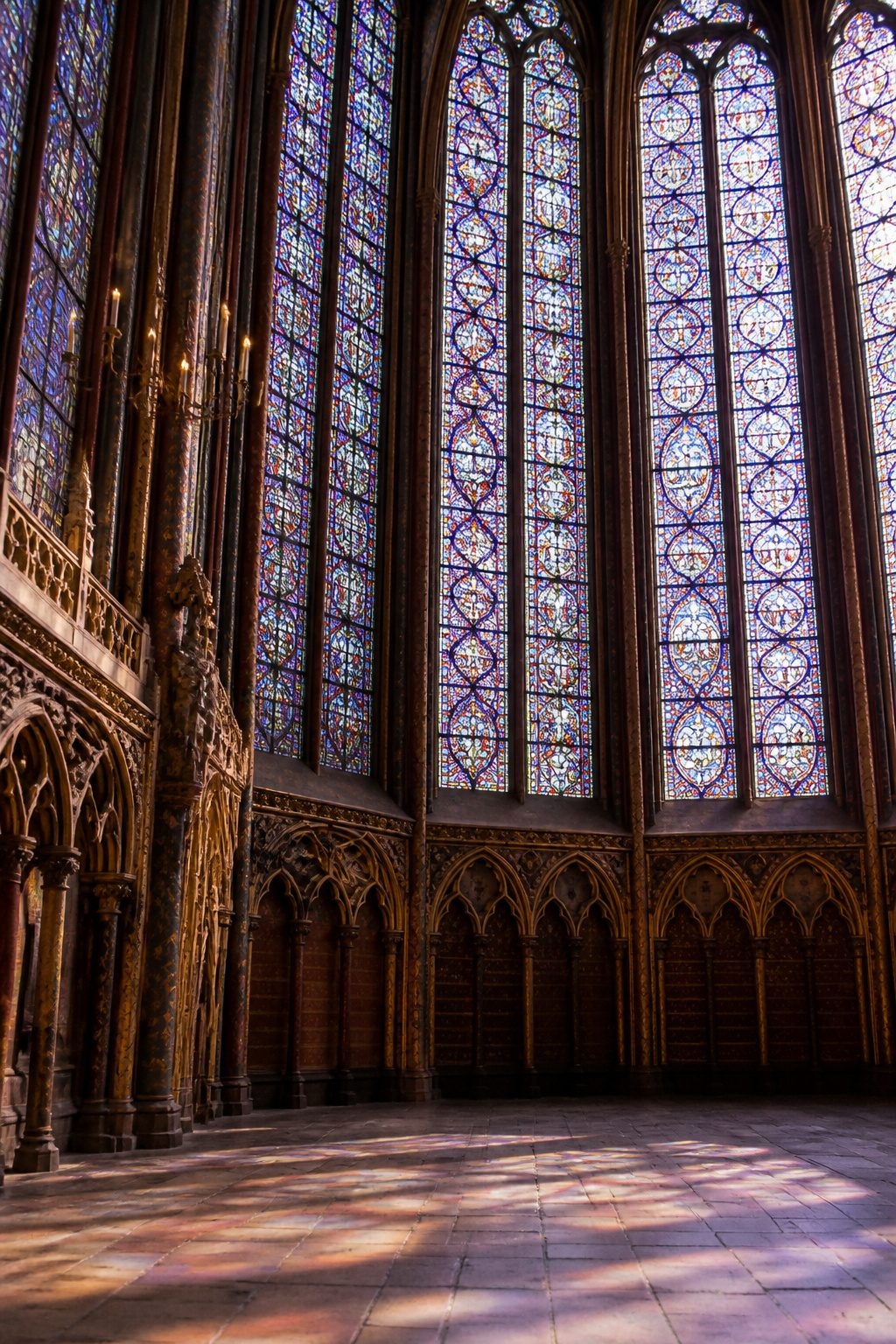
The 15 windows at Sainte-Chapelle each rise about 50 feet, and together they pack in 1,113 scenes from the Old and New Testaments.
In the 13th century, when most worshippers could not read, this was how the Bible got taught: light filtered through colored glass and turned stone walls into a picture book.
The chapel sits on the Ile de la Cité in Paris, commissioned by King Louis IX as a reliquary and finished in 1248.
Its glass covers roughly 6,500 square feet, essentially walling out the masonry so that the building itself seems built of light and narrative. That was the medieval ideal taken as far as it would go.
The panels recently underwent a seven-year, $10 million restoration, during which the windows were removed and cleaned with lasers.
That 2015 finish date matters for anyone planning a visit now. The damage came from wars, pollution, and time itself; the laser cleaning stripped away centuries of grime without abrading the painted details.
What you see today is closer to what Louis IX’s builders intended than what visitors saw even thirty years ago.

Ready for a perfect window film installation: The HTVRONT window film kit includes 1* 5.5 inches Felt Squeegee, 1* 7 inches Detachable Ergonomic Knife,1* Replacement Blade and 1* 100ML Spray Bottle. The window privacy film installation tools are designed for making window film applications like a breeze
GLASS POLISHING KIT: The Nu Finish Scratch Doctor Glass Restore and Repel Kit contains a 4 fl oz bottle of glass polishing compound, a 2 fl oz bottle of ceramic glass sealant, one Precision Applicator Tool, and two reusable sponges

REALISTIC STAINED GLASS EFFECT - This unique stained glass paint kit features 6 brilliant colors, 1 bottle of Gallery Glass Liquid Leading, 2 plastic surfaces - 10" circle and 10" oval, and 1 traditional pattern pack - perfect for creating a realistic stained glass effect on all your DIY projects! This glass paint comes in a 2 oz size. Do not shake or stir. The colors in the set include Gallery Glass Crystal Clear, Rosy Pink, Sunny Yellow, Royal Blue, Emerald Green, and Lavender
La Sagrada Familia’s Unfinished Light
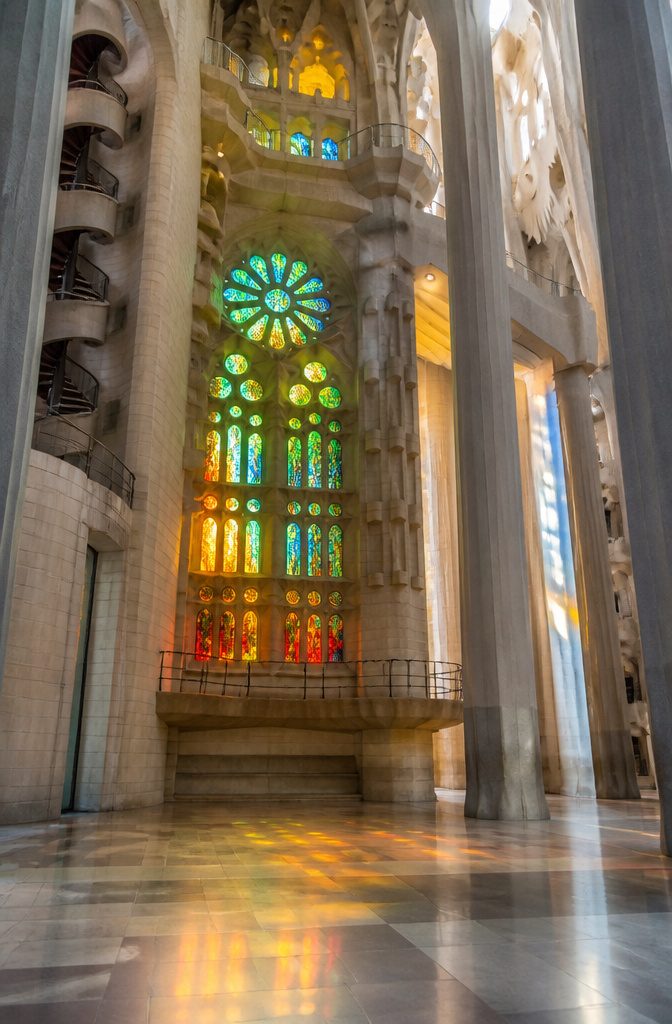
Antoni Gaudí died in 1926, a full century before the basilica he reimagined is expected to finish construction in 2026.
Work on La Sagrada Familia began in 1882 as a more conventional Neo-Gothic project, but when the original architect stepped aside, Gaudí reshaped it into something far stranger and more personal.
He never saw the stained glass installed, yet he left enough direction that the windows going in now still serve his vision of what he called a "church of harmonious light."
Medieval builders typically told biblical stories in their glass, painting figures and scenes onto colored panes.
Gaudí’s approach was almost the opposite: abstract fields of color that shift with the sun’s angle, turning the interior into something closer to a forest canopy than a narrative cycle.
The windows are a 21st-century addition, fabricated with modern techniques that let current architects interpret those old directives rather than copy medieval craft exactly.
Architect Jordi Faulí, now leading the project, has the final stage on track for that 2026 completion date.
For a renter used to swapping out curtains seasonally, the timeline is almost impossible to imagine. A single window treatment outlasts whole leases; this building has consumed generations.

Perfect for 3D Stained Glass Projects This 3D stained glass soldering jig helps you easily create intricate designs. It combines angles from 30° to 150°, ensuring accurate alignment for all your projects. A must-have in your stained glass tools collection for precise work.

【What You Get】The glass cutting tool kit contains 1pcs glass running pliers, 1pcs breaker grozer pliers, 1pcs alloy handle, 1pcs12-20mm cutting head, 1pcs 2-6mm cutting head, 1pcs 6-12mm cutting head, 1pcs oil dropper and 1pcs screwdriver, totally 8pcs. The perfect kit can meet your different needs.

PACKAGE CONTENTS: You will receive 1 piece 3D stained glass soldering jig.
The Pink Mosque in Shiraz
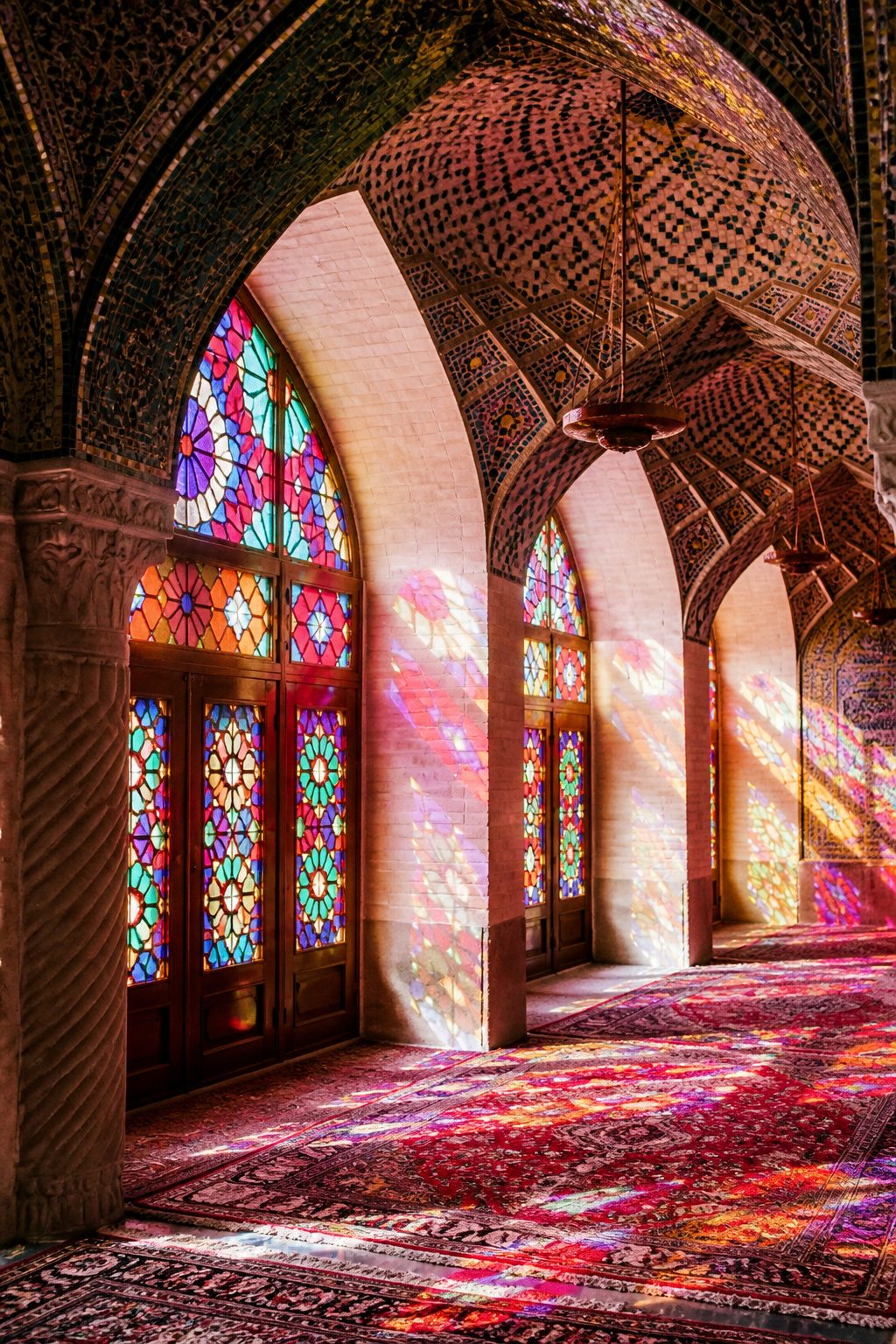
Morning light through the Nasir al-Mulk Mosque’s stained glass does something European cathedrals never aimed for. Where Sainte-Chapelle or Chartres built narratives in lead and pigment, this 19th-century Qajar-era prayer hall in Shiraz turns the entire room pink.
The architects, Muhammad Hasan Memar and Muhammad Reza Kashi Pz-e-Shirazi, arranged multicolored panes so that sunrise filters through sculpted arches and lands on Persian carpets in a single rose-tinted wash.
The effect is deliberate but not didactic. Islamic tradition generally avoids figural representation, so the glass carries geometric and floral patterns rather than saints or biblical scenes.
The "Panj Kaseh-I" or five concaves on the facade show classical Persian detailing, but the real engineering sits in the walls: flexible wood struts that have let the structure survive repeated earthquakes where rigid construction would have cracked.
I find the timing instructive for anyone planning a visit.
The kaleidoscopic shift happens early, not the golden hour photographers usually chase. Arrive after mid-morning and the specific magic thins out.
The mosque was finished around 1888, late enough to borrow techniques from European glassmaking yet rooted in a completely different purpose: not teaching scripture through narrative windows, but creating a space where light itself becomes the devotional experience.
Artful Aesthetics: Each stained glass window panel features intricate patterns and vibrant colors, blending American luxury with modern minimalism. It adds an artistic flair to any space and becomes a stunning visual centerpiece
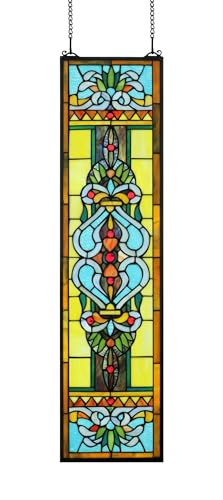
SIZE: Height: 35 inch, Width:9 inch

A great religious gift for friends and family. Witness your faith and dedication to the Holy Mass, Rosary Prayer, and the body and blood of Jesus.
Chartres Cathedral’s Blue
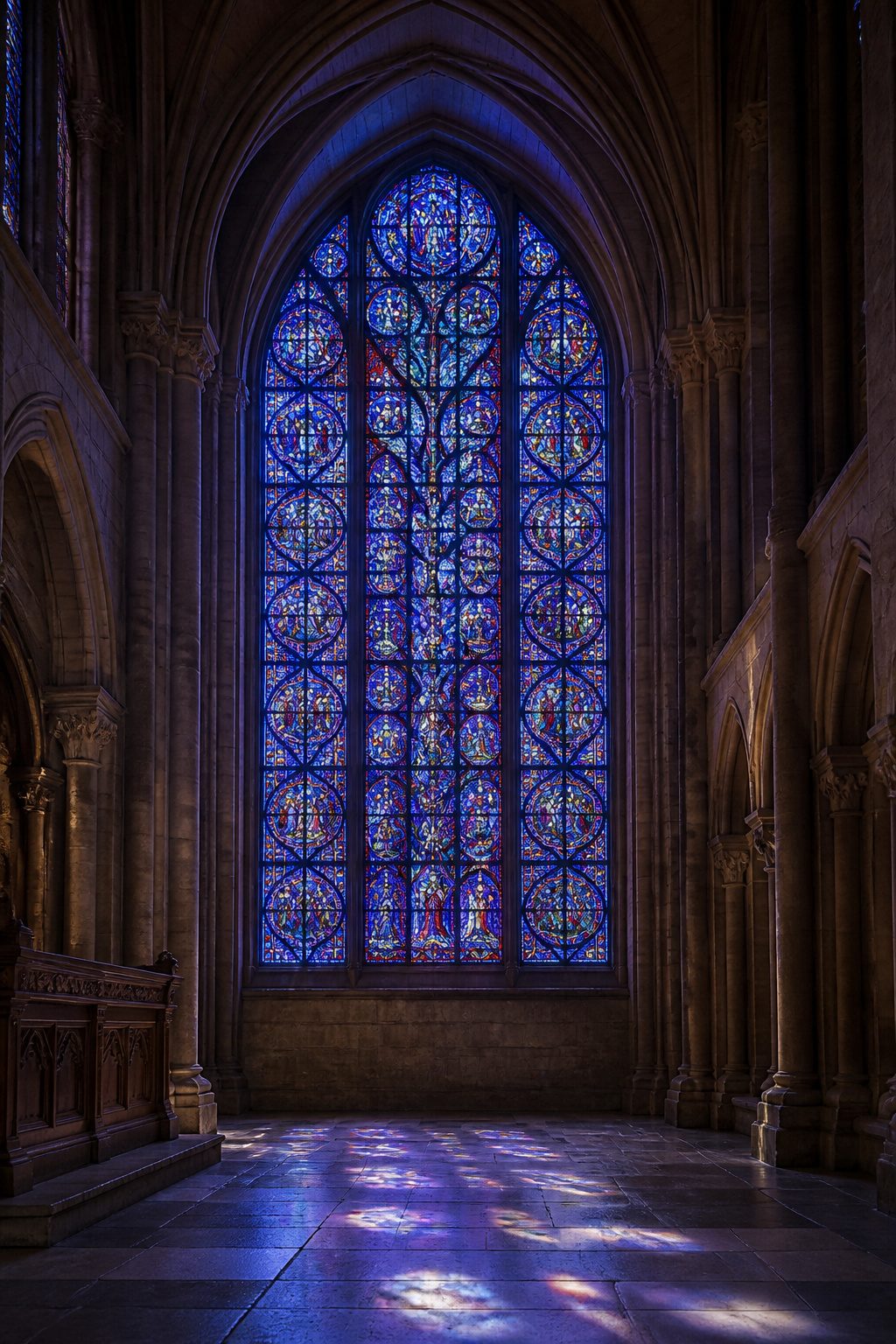
The glass at Chartres dates to the 12th and 13th centuries, and the blue formula itself is now lost.
Medieval makers achieved a saturation that modern chemists have not matched, a depth that reads almost as a solid color rather than a tinted pane.
Biblical scenes cover roughly 100 square meters of window area across the cathedral. The Tree of Jesse window traces Christ’s genealogy through King David, branches spreading upward from the reclining figure of Jesse.
These images functioned as teaching tools for congregants who could not read Latin, the narrative sequence readable from left to right, bottom to top.
Wars and weather damaged the panels across centuries, including during the French Revolution.
Restoration work continues, though the original blue remains irreplaceable. What survives is not merely the design but the particular chemistry of that color, a technical achievement that became unrepeatable once the medieval workshops closed.
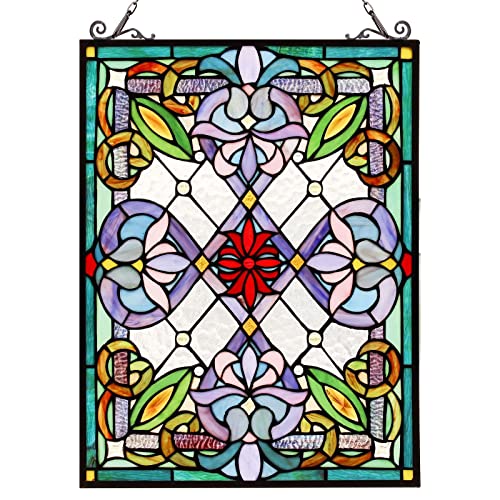
Stained Glass Panel Size: The stained glass window panels size is 22" W x 17" H, it's weight is 6.4lbs, it come with 33 inches long chain, and the chain length can be flexibly adjusted

【Definately Tiffany Window Panels Eye-Catching】This beautiful window Panels on a wire stained glass, 22 inch indicates the height of the window Panels while the width is close to 17 inches. stained glass window hangings displayed on kitchen panel window, they make you smile each time you glance their way.

Solar-powered: The outdoor solar lantern Runs on solar energy with no additional batteries required, saving energy and reducing environmental impact; features IP44 waterproof rating to withstand year-round outdoor weather conditions including rain, snow and fog. A spare battery compartment at the bottom provides extra convenience, ensuring reliable use in various scenarios.
Canterbury Cathedral’s Survival
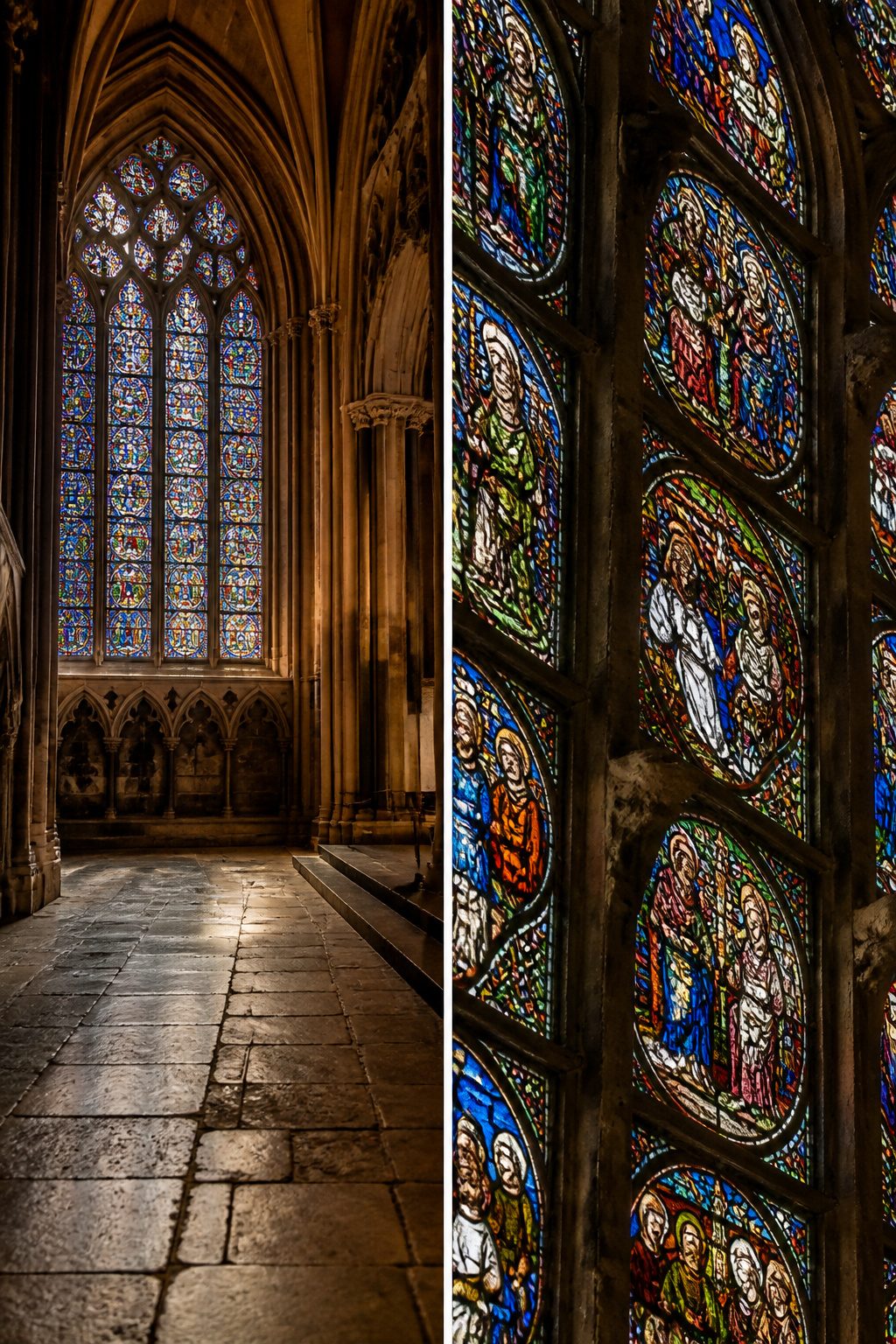
The 12th- and 13th-century glass at Canterbury Cathedral still reads as a manual of medieval belief because it was built for pilgrims who needed the stories fast.
The Ancestors of Christ panels line the choir clerestory in a genealogical sequence that taught biblical history to visitors who might never hold a book.
That educational role, common to medieval programs, mattered more here because Canterbury drew traffic from across Europe after Thomas Becket’s murder in 1170 made the site a major pilgrimage destination.
What strikes me reading about these windows is how much had to go wrong for them to survive at all.
The Reformation brought iconoclasm that destroyed stained glass across England; Canterbury lost significant portions, yet enough of the Ancestors and other early panels escaped to retain the original scheme.
Then came the Baedeker raids of 1942, when German bombing targeted historic English cities. The cathedral suffered damage, and conservation work continues today to stabilize glass that has now endured both deliberate and accidental violence across eight centuries.
The survival feels almost accidental, but it is not.
Someone chose to protect these panels during each crisis, and those choices compound into the rarest kind of continuity: you can still stand where Chaucer’s pilgrims stood and look at substantially the same light.
💎 Immerse yourself in the enchanting beauty of Black Diamond Pigments Midnight Blue, a rich, deep hue that captures the essence of a twilight sky. Assembled in the United States of America, this mica pigment adds a stunning shimmer to your projects, transforming your artistic creations into captivating reflections of the night!

Vibrant Variety: A total of 12 blue stained glass sheets, perfect for all your creative projects.

Value pack: Include 2.2lb stained glass mosaic tiles with variety of blue colors and different shapes
York Minster’s Five Sisters
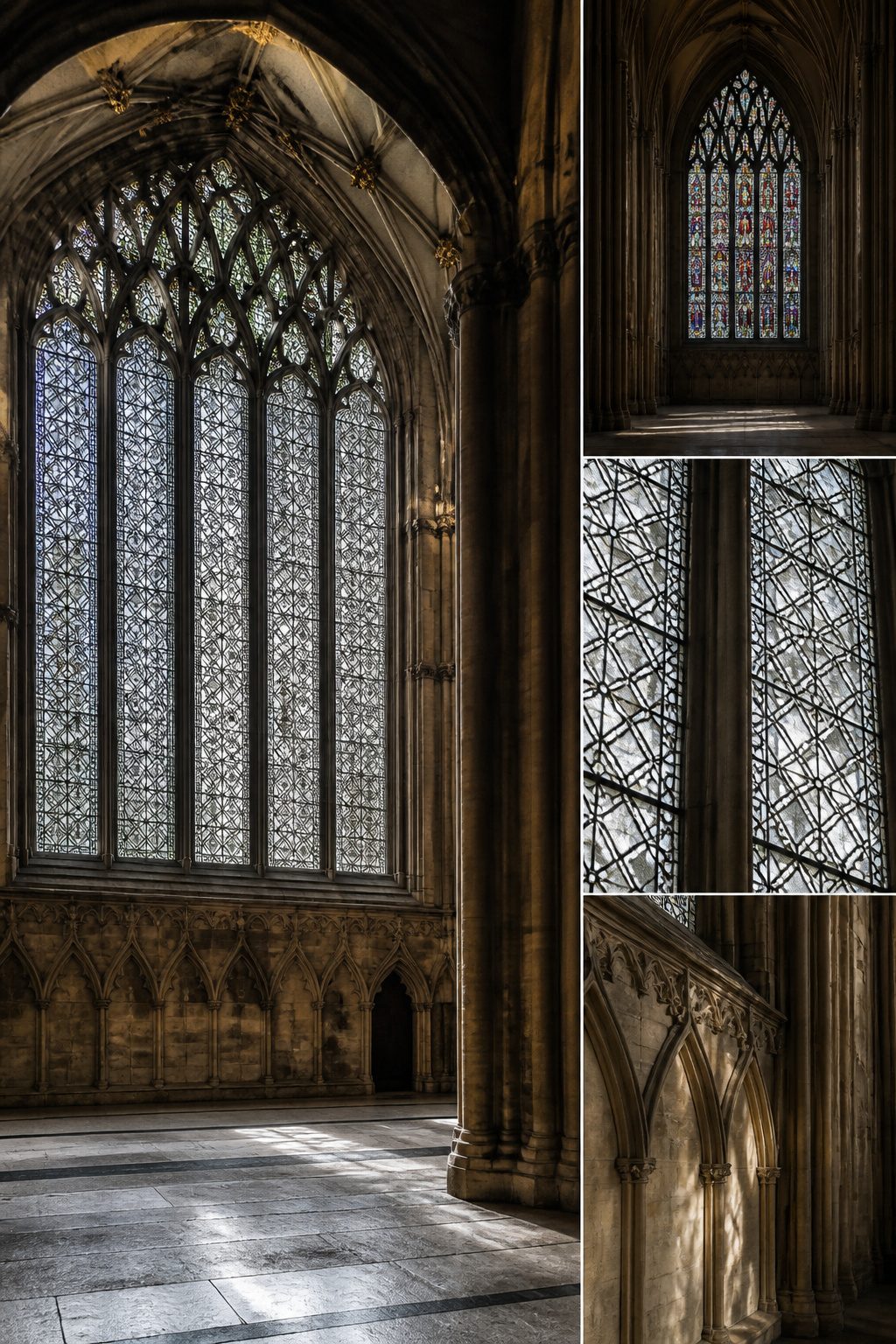
York Minster holds two windows that show how English medieval glass could go in completely different directions.
The Five Sisters Window, dating to the 13th century, stretches over 80 square meters of grisaille glass, geometric patterns in muted tones without narrative scenes.
Its austerity is the point: the scale and repetition create something architectural rather than pictorial, light filtered through order rather than story.
The Great West Window takes the opposite path.
Where the Five Sisters withhold, this one narrates, its heart-shaped tracery framing biblical scenes in saturated color. The grisaille approach asks you to feel space and rhythm; the narrative window wants you to read, to follow a sequence.
For anyone used to thinking of stained glass as essentially a picture in light, the Five Sisters complicates that.
The window has survived centuries of weather and required careful restoration to keep its structural integrity, but the design itself never needed updating.
The geometric grisaille was already complete in concept. The Great West Window, by contrast, keeps drawing the eye to new corners of its story.
If you’re planning a project with glass in your own space, the divide matters. A single small window can carry color and scene like the West Window, but the Five Sisters suggest what repetition and restraint do at scale.
Most renters and first-home owners won’t face 80 square meters, but the principle translates: a grid of simple panes can outlast one busy statement piece.

【What You Get】:8" Mosaic Glass Cuttitl llrs x1, 8" glass running plier x1, 6" Glass Breaker Pliers x1,150W soldering iron x1,desoldering pump x1,5 multiple soldering tips, solder wire 2mm*3pcs(100g),soldering iron stand x1,tweezers x1,wire stripper cutter x1,Screwdriver x2,sponge cleaning pad x 4,Handmade zipper bag x 2,bone knife x2,pistol type oil fed glass cutter x1,with 3 interchangeable heads (2-6,6-12, 12-20mm)oil drip tubes x1,Tungsten Carbide Tip Scriber x1,copper foil tape(7mm*20M)*2pcs,cut-proof gloves*2pcs,110V Glass Grinder x1,5/8" + 1" Diamond Grinder Bit x2,Finger Cots x 10,Goggles x1,English description says x1,Diamond Hand File for Glass Polishing x 1,Flux Paste x 1.
Stained Glass Kit: beginners who don't know how to make it can search for pre cut stained glass kits tutorial videos; You will have pre cut green luna moth stained glass pieces, 1 roll of solder wire, jump rings, metal chains, brush, copper foil tape, a burnishing tool, plus a detailed pattern sheet; Please note: our product does not include flux
✅ RESTORES GLASS CLARITY & VISIBILITY: Restores a polished finish, surface smoothness, and optical clarity for a clearer view through car glass
Cologne Cathedral’s Miracle Windows
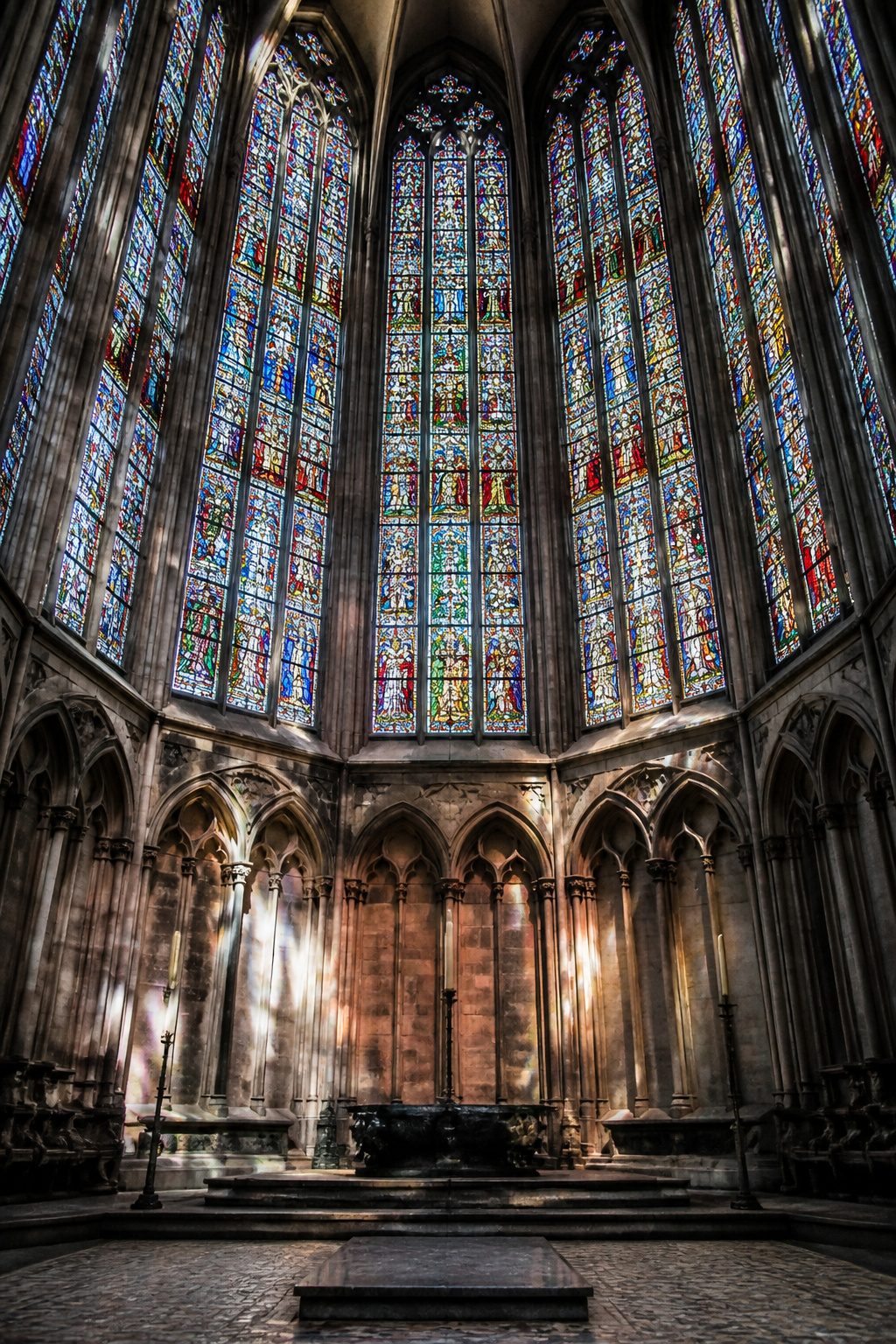
The Miracle Windows at Cologne Cathedral rise more than 15 meters, filling the choir with 13th-century glass that survived wars and restoration.
Scenes from the lives of saints, their miracles rendered in saturated color, were pieced together across decades by teams of craftsmen whose names did not survive but whose glazing did.
What strikes me, reading the history, is how much of what visitors see today belongs to the 19th-century push to finish the cathedral.
Construction had stalled for centuries; when German nationalism revived the project, completing the windows became part of proving the young nation’s cultural weight.
The glass was already old, already damaged, but the frame that holds it now is inseparable from that political moment.
Restoration has been ongoing.
Conflicts cracked and darkened panels; careful work has returned their radiance without erasing the medieval hand. The result reads as a palimpsest: 13th-century design, 19th-century ambition, 20th-century repair, all layered in the same light.

Versatile Functionality: This hand foiler and stained glass foiling tool is designed to perform as a foiling tool, foil crimper, and foil burnisher in one, providing extended performance for a variety of foil and glass applications. Foil dispenser is an indispensable accessory for artists and DIY enthusiasts, ensuring consistent results in every project.

Multi-Angle: The jig offers multiple angle options (60°, 72°, 90°, 108°, 120°, 135°) to meet basic soldering needs. Made of durable plastic, it is easy to clean and store

The layout block system is very useful when doing a stain glass project that you must keep square. Great for both beginners and professionals.
Augsburg Cathedral’s Romanesque Glass
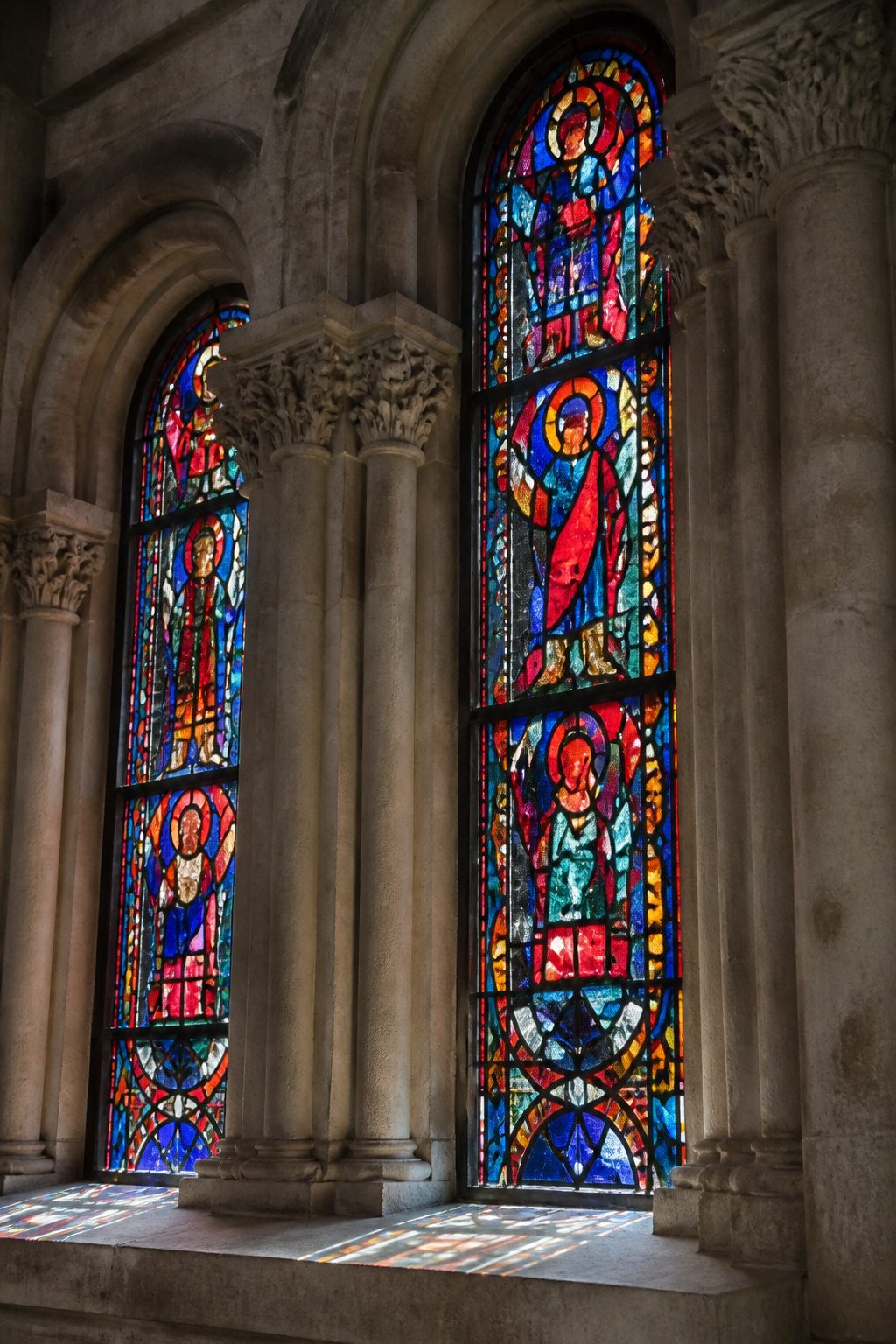
Romanesque glass at Augsburg Cathedral predates the Gothic style by a couple of centuries, and the difference shows in how the windows are built.
The panels here are thicker and more saturated, with heavier lead lines breaking the image into bold, flat shapes rather than the fine tracework that later medieval glass would perfect.
The figures read more like icons than natural bodies, which makes sense when you remember these were teaching tools for worshippers who could not read.
The cycle itself is the oldest figural stained glass in Germany, dating to the 12th century. That age comes with wear; ongoing restoration keeps the panels stable enough to remain in place.
Compared with later Gothic examples, the Augsburg windows sacrifice some of that famous luminous transparency for solidity and color density. The effect is quieter, more contained, and in its own way just as deliberate.
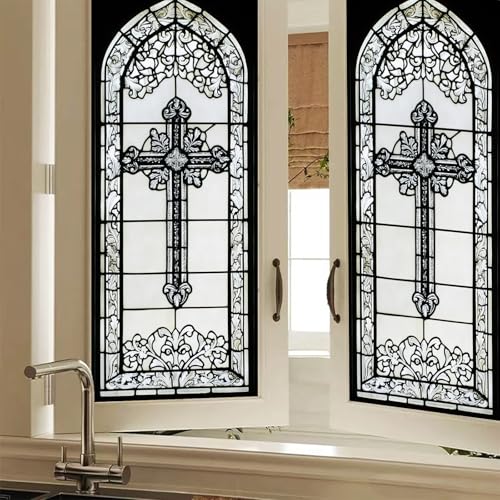
Gothic Cross Design: This stained glass window film features an intricate cross and floral pattern inspired by stained glass windows, adding a reverent and classical aesthetic to spaces like home entryways, church offices, or meditation rooms.

Artful Aesthetics: Each stained glass window panel features intricate patterns and vibrant colors, blending American luxury with modern minimalism. It adds an artistic flair to any space and becomes a stunning visual centerpiece

The Blue Mosque and Ottoman Glass
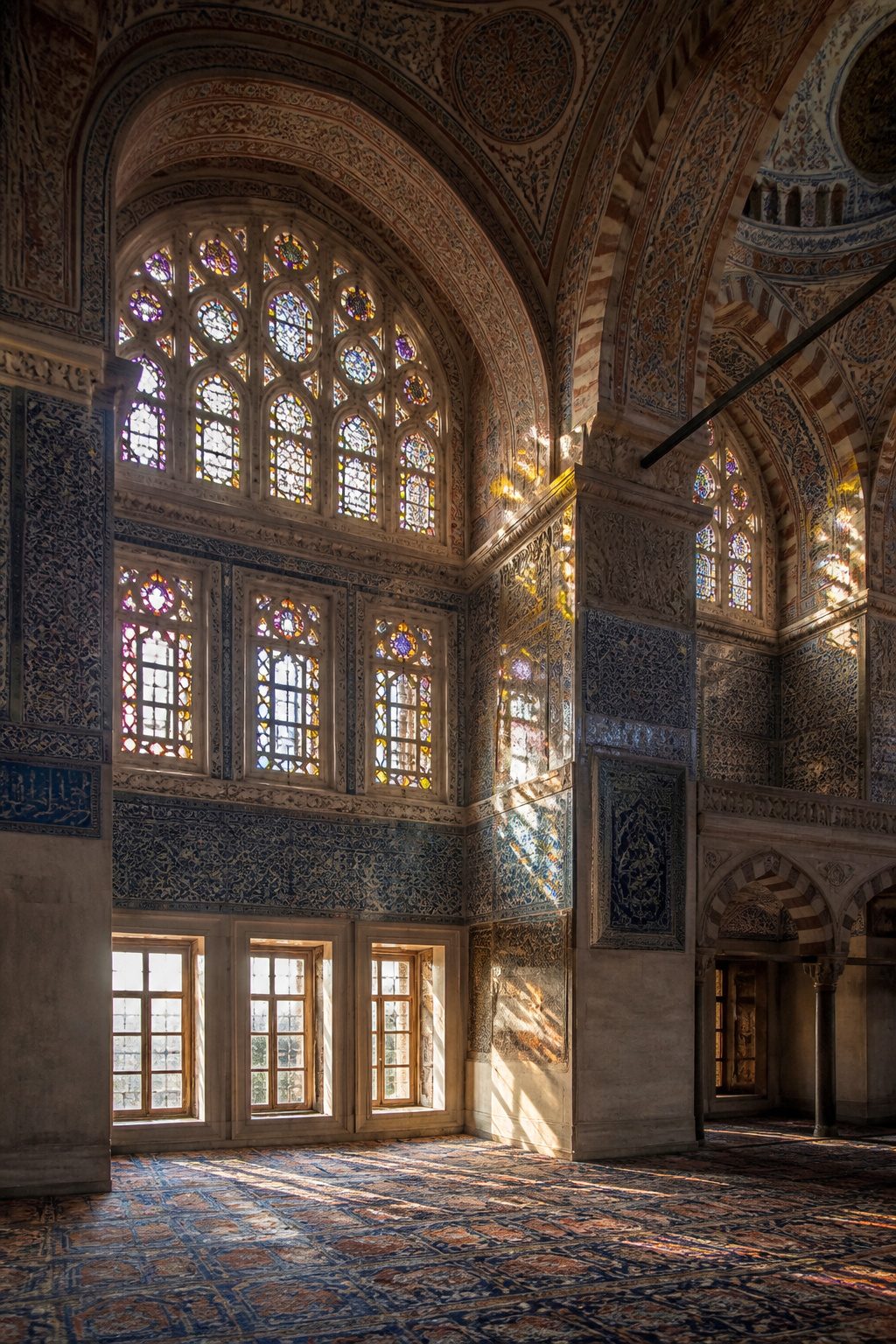
The Sultan Ahmed Mosque in Istanbul gets called the Blue Mosque for its walls, not its windows, which is the first clue that Ottoman glasswork plays by different rules than the European cathedrals most people picture.
Where Sainte-Chapelle stacks colored glass into stone skeletons to flood the nave with narrative light, the Blue Mosque filters daylight through small roundels of painted glass set into grilles of carved plaster, more like embroidery in a window frame than a wall of light.
That scale difference runs through the whole tradition.
Ottoman workshops favored thinner, more translucent glass than the heavy pot-metal pieces European furnaces produced, and they painted rather than leaded their designs, treating each roundel as a miniature to be read up close.
The purpose shifts too: where medieval European glass taught Bible stories to the illiterate, mosque windows assume a literate audience already steeped in the text, so the ornament leans toward geometric repetition and calligraphic names rather than sequential narrative.
The Iznik tiles surrounding those windows matter as much as the glass itself. The blue-and-white ceramic frames the light, turning the window into one element in a larger surface pattern rather than a separate luminous event.
Persian glasswork, by contrast, often let the vessel or the standalone panel carry the whole design; Ottoman integration of glass into architecture reads, to my eye, as the more restrained of the two.
Whether that restraint counts as refinement or as missed opportunity depends on whether you visit at noon, when the tiles dominate, or near sunset, when the roundels finally glow.

Garden Decor for Outside: This garden lantern features printed designs on all four sides, emitting a warm glow at night to create a cozy and inviting ambiance. Suitable for decorating patios, lawns, backyards, porches, gatherings, parties, and celebrations. You can hang the lantern or place it on tables, windowsills, entryways, or poolside.

Elegant Stained Glass Design: Crafted with vibrant stained glass, this window hanging creates a beautiful interplay of light and color when sunlight passes through, adding artistic charm to any space.
Sun Catchers Indoor Window: This stained glass suncatchers is a masterpiece that transforms ordinary light into a symphony of colors. Casting vibrant patterns across your room when sunlight filters through.Whether it’s a soft morning glow or the warm afternoon sun, these suncatcher add a touch of ethereal beauty that captivates the eye and enhances any space.
The Glory Window in Washington
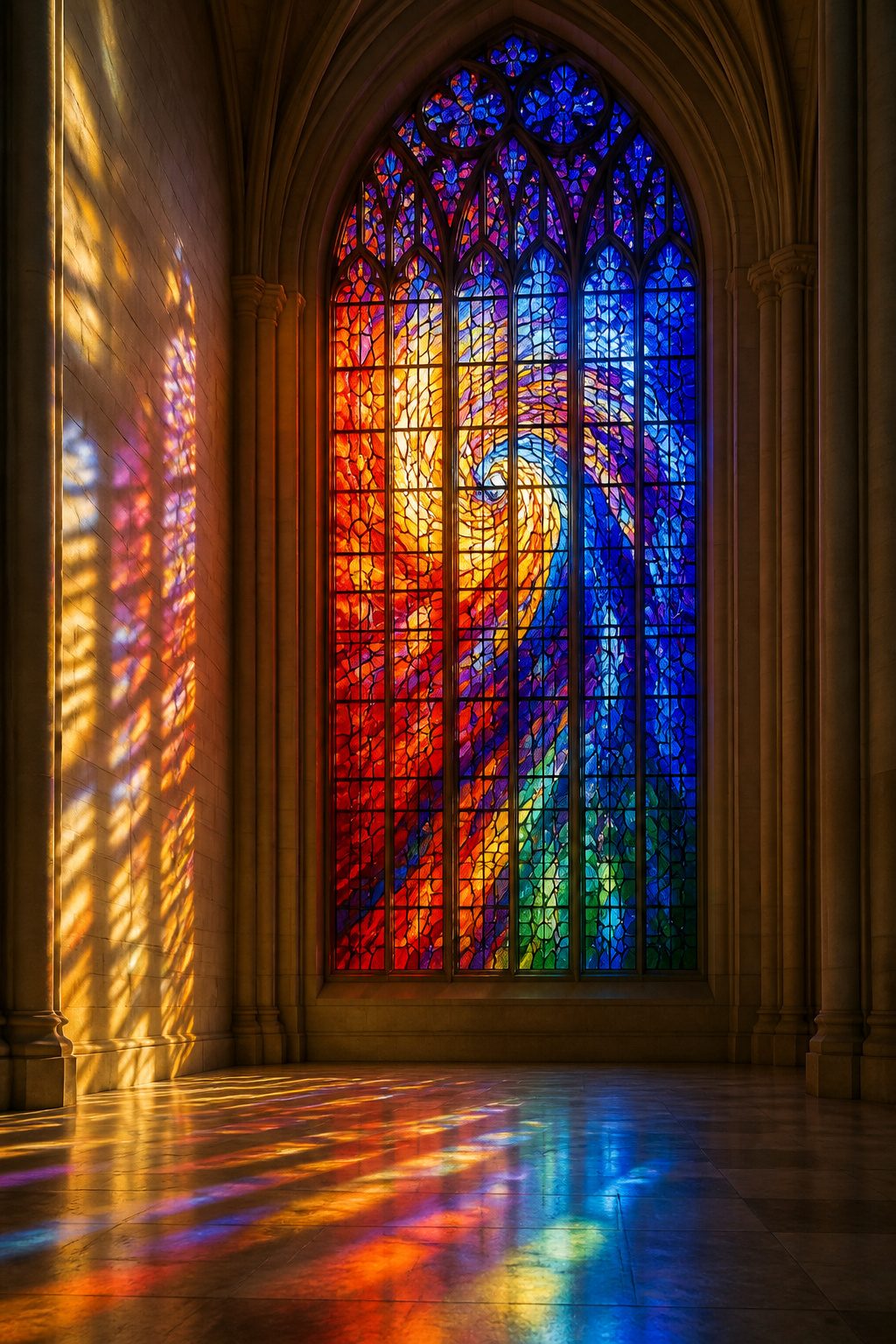
The Glory Window covers more than 600 square meters in the Resurrection Chapel at Washington National Cathedral, making it one of the largest modern stained glass installations in the country.
Artist Rowan LeCompte designed it in the 20th century with an abstract composition meant to suggest divine glory rather than depict any biblical scene directly.
What struck me, reading about the project, is how deliberately it repositions an old form. Medieval cathedrals used stained glass as scripture for the illiterate, packing narrative into every panel.
The Glory Window does something else entirely: bold color fields and flowing abstraction replace figures and stories, trusting 20th-century viewers to respond to light and scale without the medieval teaching apparatus.
A national church built in the modern era could have gone purely contemporary or copied the past. This window splits the difference, keeping the transcendent ambition while dropping the literal instruction.
The result draws visitors who may not know the chapel’s name but remember the light.

Value Pack: A total of 24 stained glass sheets, including 12 blue and 12 green.

10 lovely shades of Stained Glass - This pack contains 10 sheets of transparent glass in a wide range of blues

Each sheet measures 4 x 6 inches
St. Vitus Cathedral’s Creation Windows
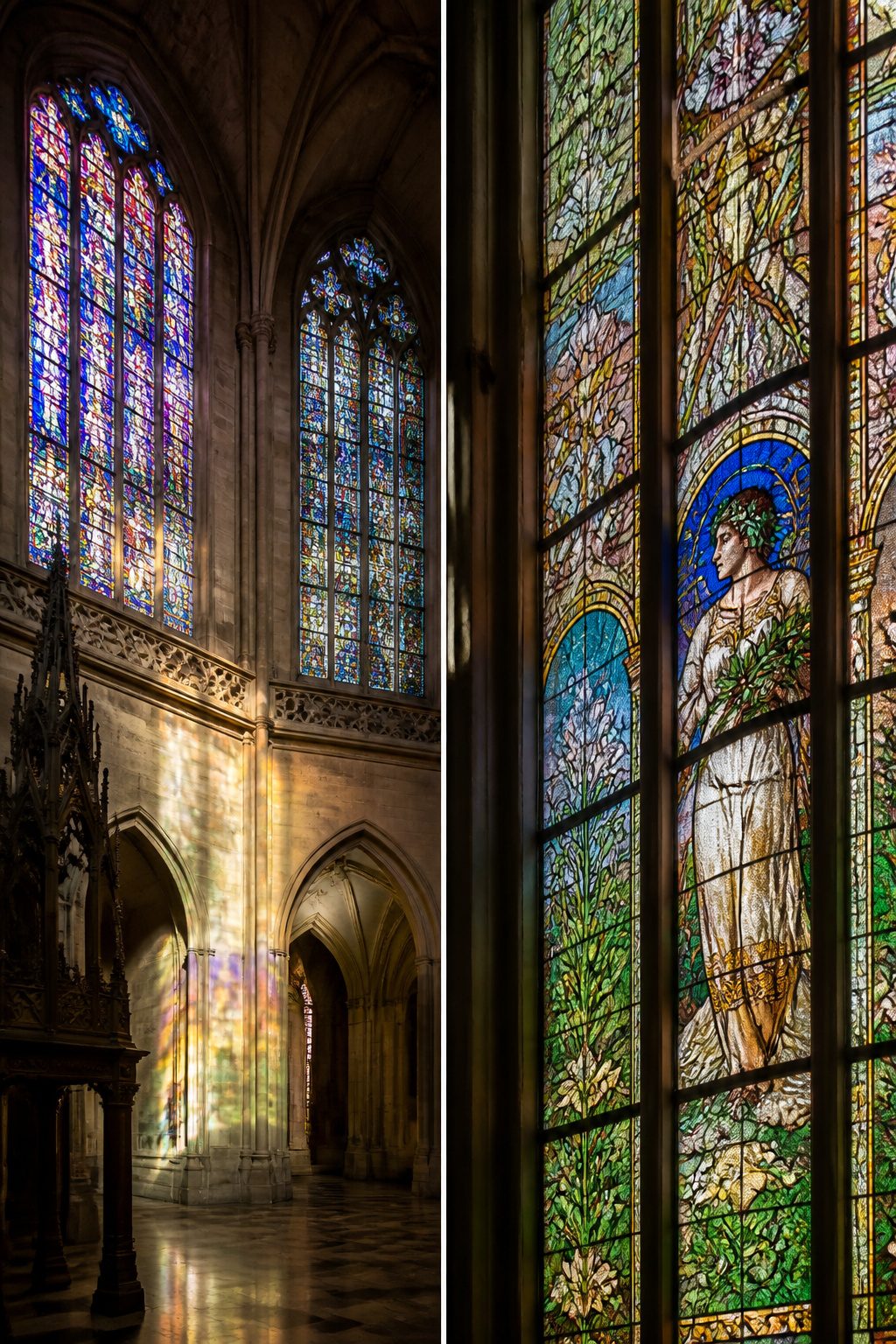
Prague’s St. Vitus Cathedral holds a window that stops most visitors mid-step, and for good reason. Alphonse Mucha’s Art Nouveau panels in a Gothic stone frame feel like an argument made in glass, not a seamless match.
The cathedral itself rose across centuries of medieval workshop tradition, where teams of artisans built windows from small pieces held in lead cames, telling biblical stories in color-coded shorthand for worshippers who could not read.
Mucha’s early twentieth-century work broke from all of this.
His figures flow with organic lines and flat, decorative backgrounds drawn from poster art and Slavic folk motifs rather than the compartmentalized narrative scenes the structure around them was built to hold.
What strikes me, looking at photographs and reading accounts of the commission, is how deliberately the cathedral’s stewards chose this tension.
They did not ask Mucha to fake a medieval style. The window stands as its own period’s statement, mounted where Gothic tracery demands something else entirely.
For anyone planning to see it, the contrast rewards attention to the surrounding glass too. The medieval and neo-Gothic windows nearby set up a comparison the building never planned for, and the effect is sharper for it.
Strasbourg’s Last Judgment
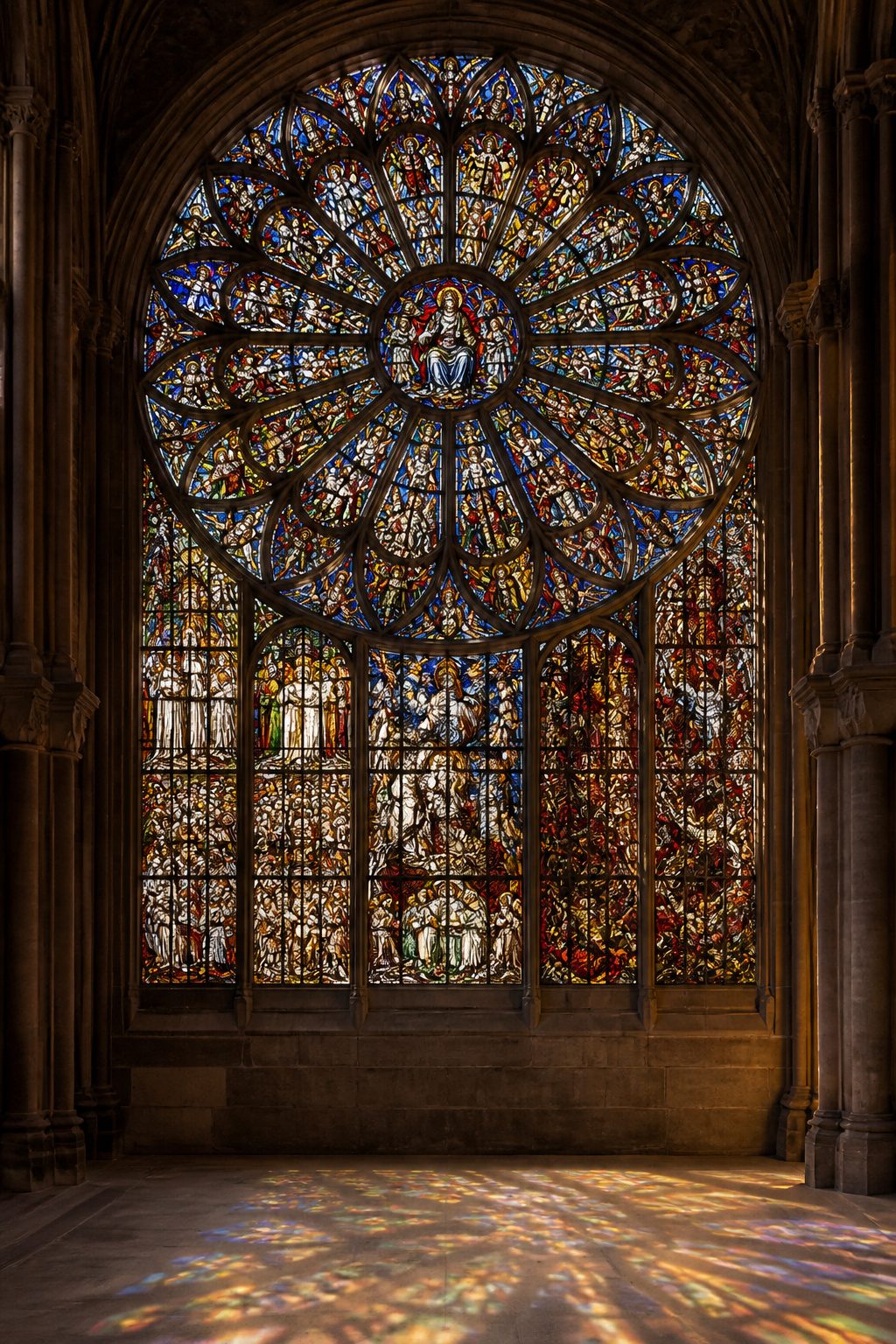
The Last Judgment window at Strasbourg Cathedral carries its theology in the one place every parishioner would look: the west facade, where sunlight pours through at day’s end.
Thirteenth-century glassmakers arranged the saved on Christ’s right hand in ordered ranks, the damned tumbling to his left into a mouth that still reads as teeth and flame even from the nave floor.
Latin inscriptions run above each figure, but the images did the real teaching.
A mother who could not read the Gospel still saw the weighing of souls, the demons dragging the small and guilty downward, and understood exactly where her confessions stood.
The designers knew their audience. They made the blessed pale and still, the condemned twisted and active, so that stillness itself became a kind of longing.
What strikes me, looking at photographs against the surviving glass, is how little the palette has shifted; the red still sinks in first, then the blue rises behind it, the same sequence that must have caught a miller’s eye in 1280.
Tiffany’s Secular Turn
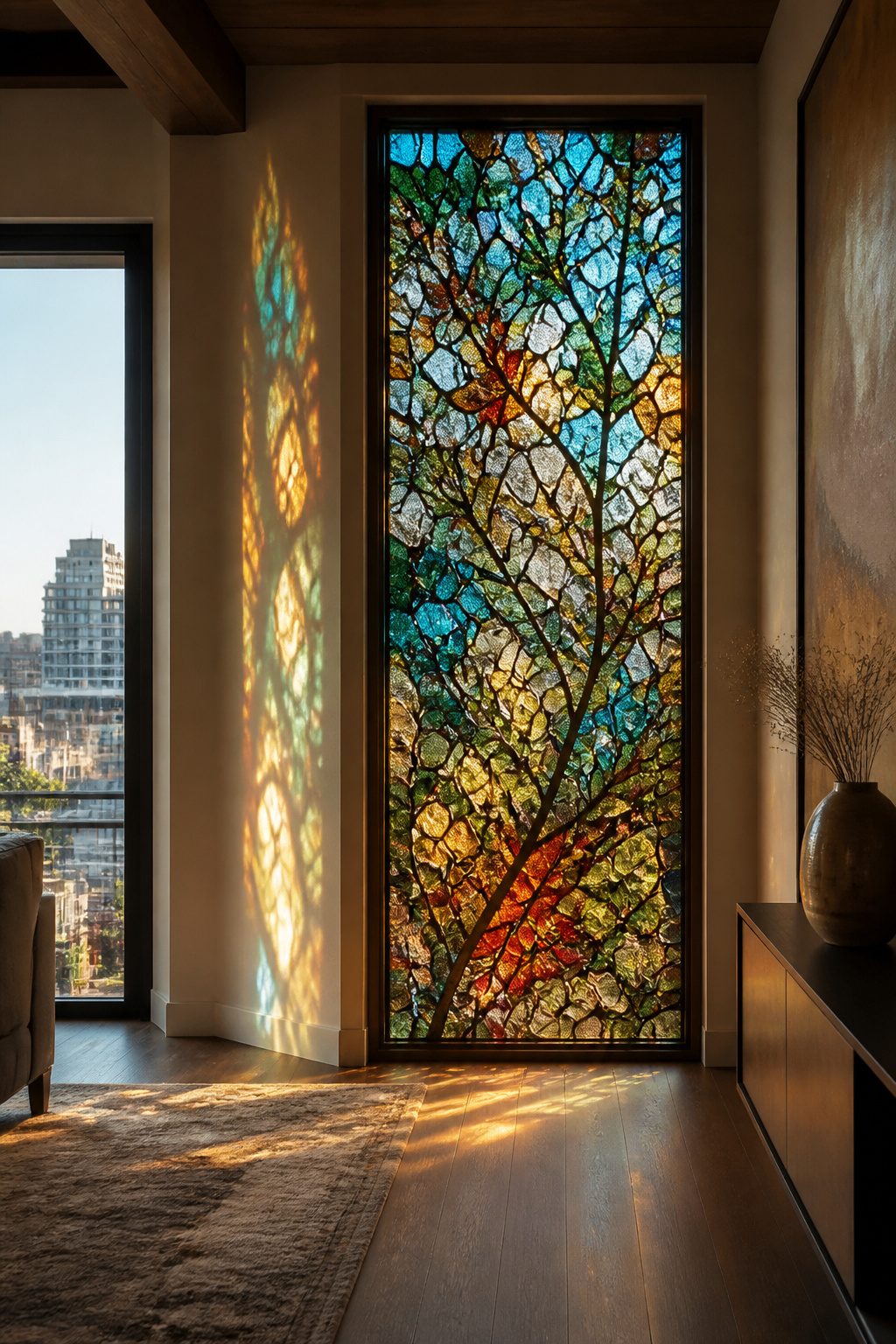
Louis Comfort Tiffany spent decades proving stained glass did not need a sermon to justify its place in a room.
His studios filled American churches with luminous panels, yes, but the real shift came when those same techniques moved into homes, libraries, and department stores without a single saint in sight.
The "broken jewel" technique developed with John La Farge made this possible. Instead of painting on flat panes, they set tiny bits of colored glass directly into the lead so the surface itself caught and fractured the light.
La Farge used it first in 1882 for Peacocks and Peonies II, now at the Smithsonian American Art Museum, but Tiffany Studios pushed it harder and marketed it wider.
The result was glass that read as material first, message second: nature scenes, abstract motifs, decorative geometry that needed no biblical literacy to read.
By the early 20th century, Tiffany windows sat in private residences and public buildings alongside their church commissions.
The same studios produced both. That crossover, more than any single window, is what moved stained glass out of its medieval job description and let it survive as a secular art.
Duomo di Milano’s Scale
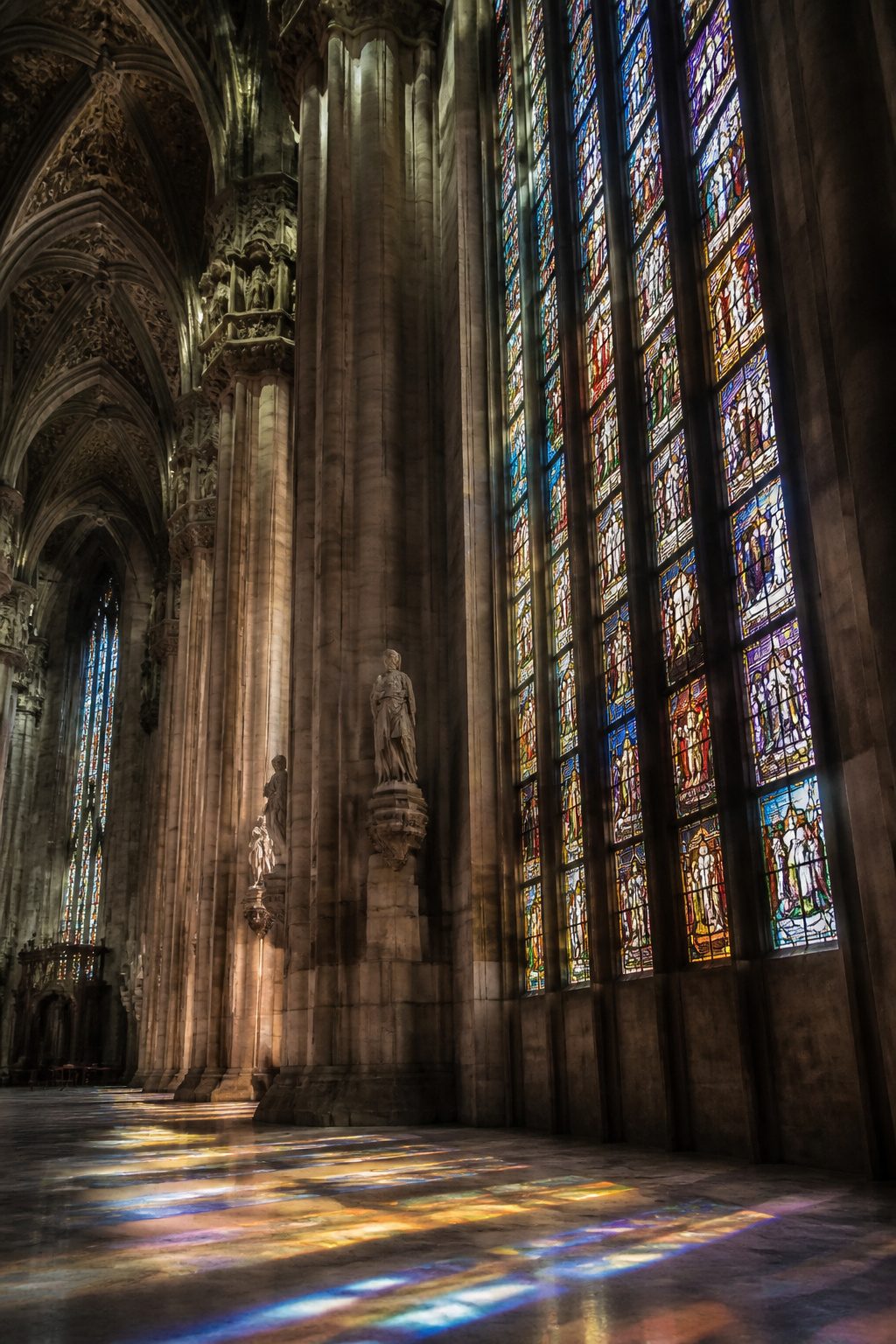
The stained glass at Milan Cathedral covers surfaces so vast that walking the nave means light shifts from amber to cobalt and back again with every few steps.
Panels installed across four centuries, from the 1400s through the 1800s, trace biblical narrative across windows among the largest any church has ever glazed.
The logistical puzzle of that scale, not the artistry alone, is what stays with me: scaffolding had to rise inside an active building, centuries apart, with each generation matching color and lead technique to work already set.
A 15th-century panel of the Old Testament sits above a 19th-century New Testament scene, and the join reads seamless only because craftspeople solved the problem of firing pigment to match faded glass.
For anyone who has ever tried to patch a single cracked window at home and watched the new piece read too bright, the patience involved in that consistency across thousands of square feet is the real feat.
How Medieval Glass Taught the Bible
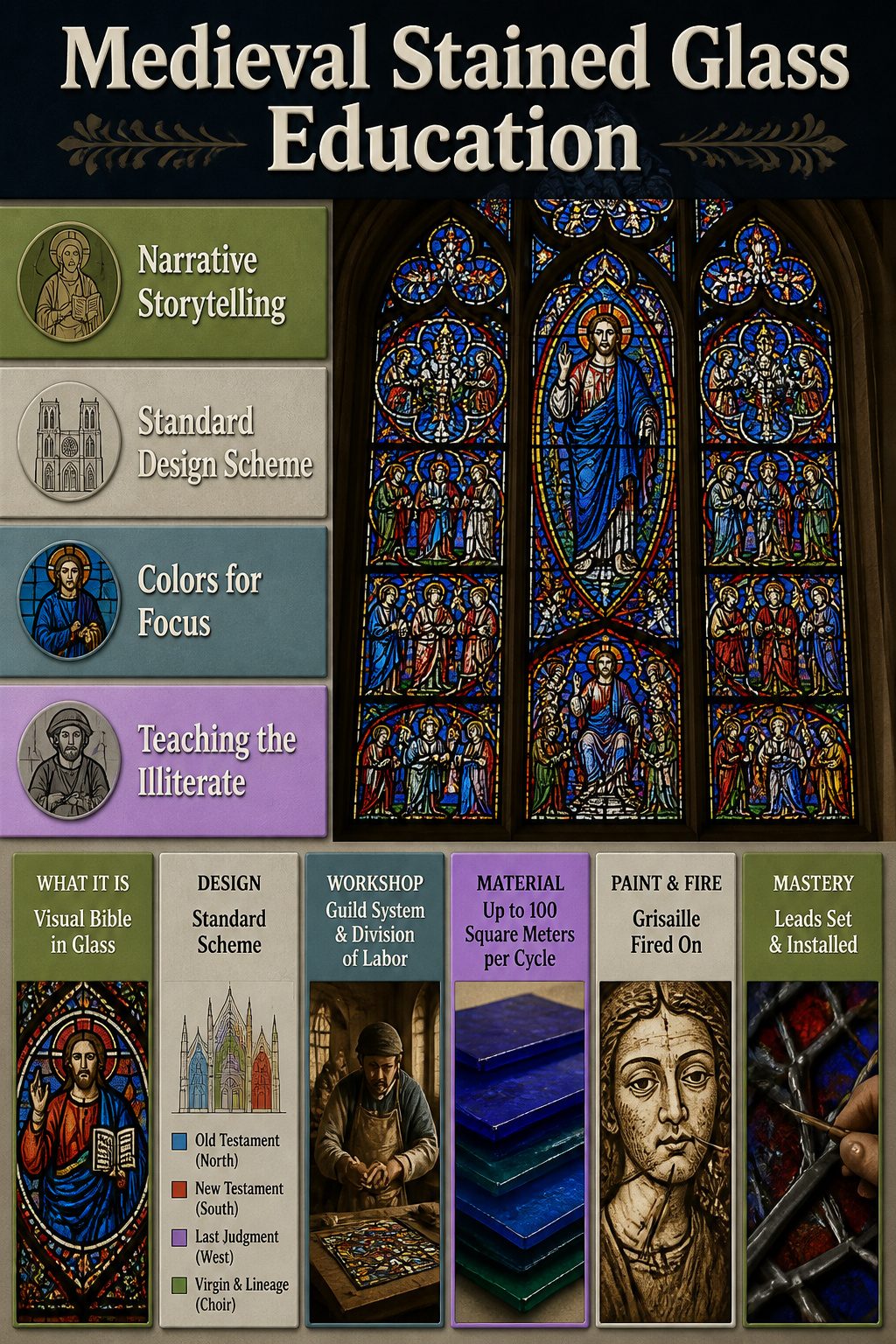
Most people in a medieval parish could not read a word of Latin, yet they walked out of Mass knowing the full sweep of salvation history. The glass did the teaching.
A single lancet window at Chartres might carry the life of a saint in ten comic-strip panels, read bottom to top, left to right, the colors chosen so a figure in blue would catch the eye even from the nave floor a hundred feet away.
The 12th- and 13th-century programs were not random decoration.
They followed a standard scheme: the Old Testament on the north side, the New Testament on the south, the Last Judgment over the west door, the Virgin and her lineage in the choir.
A illiterate farmer could trace the lineage of Christ across a bay of glass the way a literate clerk turned pages.
The workshops that made these windows operated like a guild system with a division of labor that modern studios still mimic. A designer, called the verrier in French practice, laid out the full cartoon.
Glassblowers produced the flat sheets, sometimes 100 square meters of finished window in a major cathedral cycle. Apprentices cut pieces to fit the pattern; journeymen painted the faces and drapery with grisaille, a gray-brown iron-based paint that fired onto the surface.
The master set the final leads and installed the panel. What survives at Sainte-Chapelle and Chartres is the product of that chain, not a lone artist’s vision.
What Lead and Pigment Actually Do
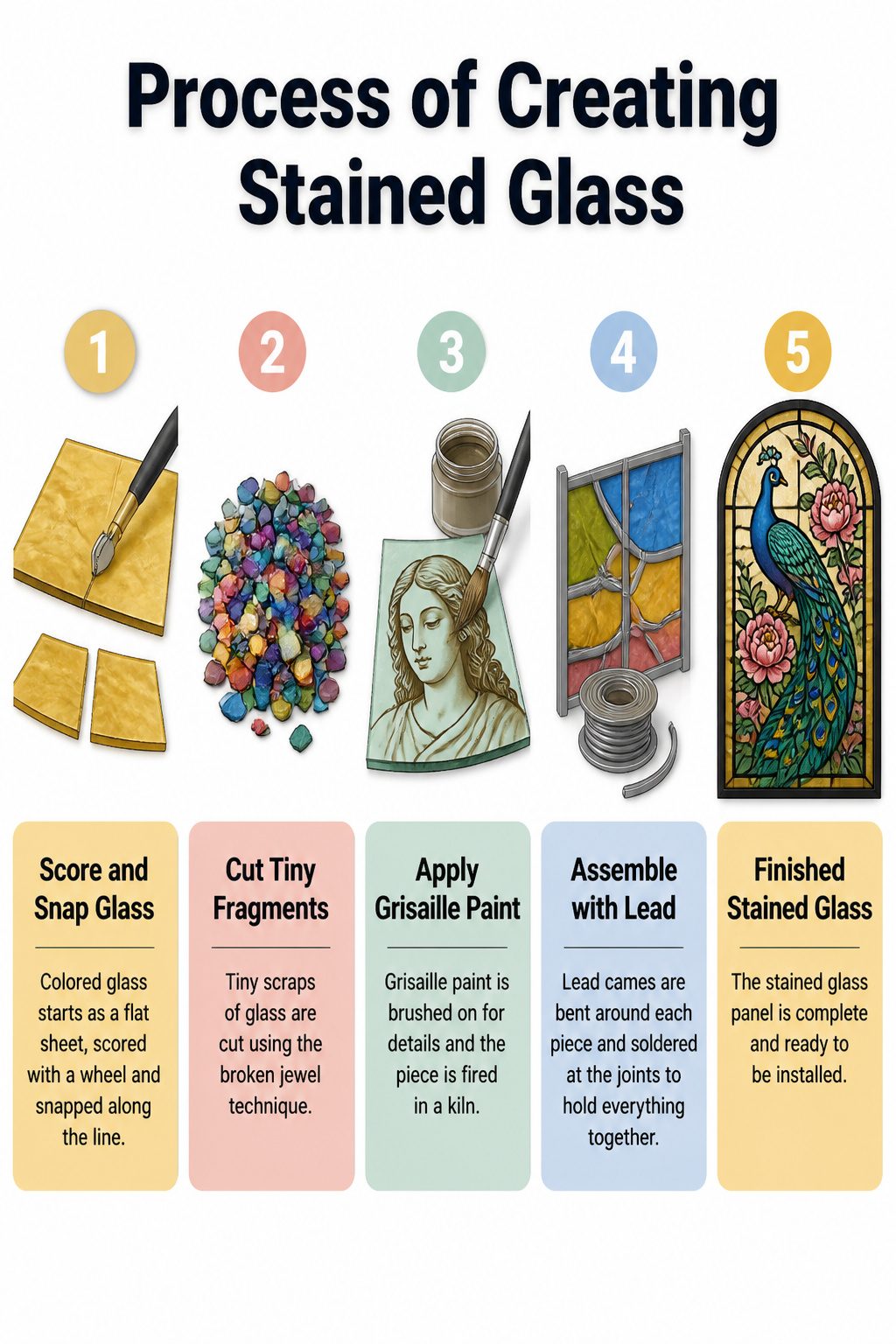
Colored glass starts as a flat sheet, scored with a wheel and snapped along the line.
Medieval artisans had no way to make large uniform panes, so the broken jewel technique grew from necessity: tiny scraps of glass, set like mosaic tiles, turned a material limit into shimmering texture.
John La Farge used this deliberately in 1882 for Peacocks and Peonies II, cutting fragments small enough that light seems to vibrate between them.
Painted details come from grisaille, a gray-brown enamel of ground glass and metal oxides brushed onto the surface.
The piece then fires in a kiln so the paint fuses permanently. Without this layer, faces and drapery would be impossible in a medium of flat color blocks.
Lead cames hold the assembly together: soft H-shaped strips, hand-bent around each piece and soldered at the joints. The lead does more than frame; it absorbs movement from wind and settling walls, keeping brittle glass from cracking under stress.
Iron frameworks carry the weight to the building’s structure, a detail that becomes critical in curved roofs like the Ursulines Institute’s 1900 Winter Garden.
Modern studios work with the same sequence, but industrial glass removes the size constraints that shaped medieval design.
A 13th-century builder at Sainte-Chapelle could not order a sky-blue sheet to fit a tall lancet; modern makers can, and the visual rhythm of lead lines changes when fewer are needed.
Why These Windows Keep Breaking
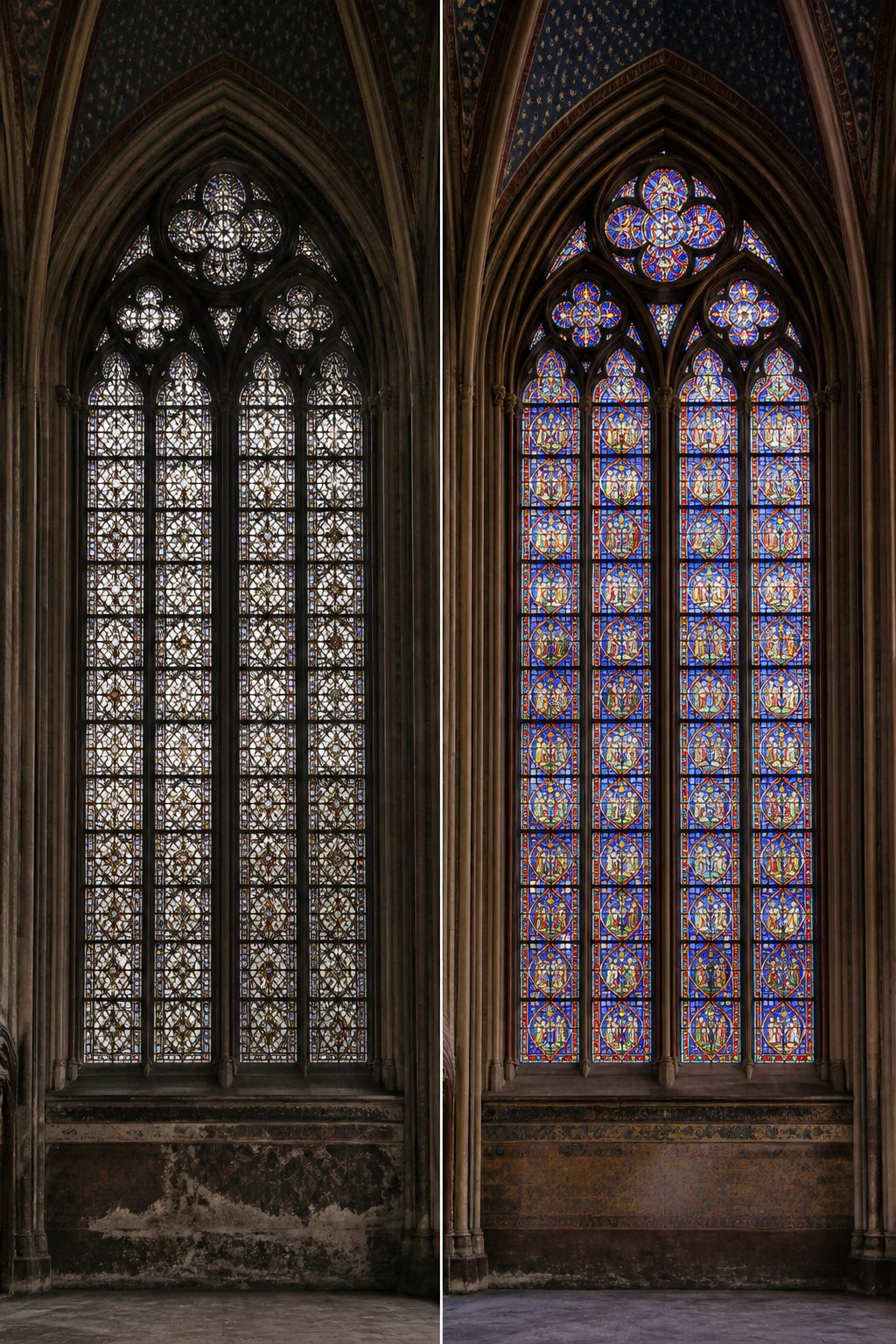
The glass at Sainte-Chapelle spent centuries taking on smoke and grime before a 2015 restoration returned its 6,500 square feet across 15 panels to something closer to what 13th-century builders intended.
That work never really finishes; the windows still need monitoring, still face the slow damage of time and pollution.
Notre-Dame’s 2019 fire made the problem violent and visible. The cathedral’s own medieval glass survived that night, but the heat and collapse threatened what centuries of weathering had not.
Now restoration there means deciding what can be saved and what must be remade, with every replacement panel debated against the original.
York Minster learned this in 1984, when a lightning strike burned its south transept.
The fire destroyed the rose window’s heart, and the choice afterward was not simply repair but reconstruction: new glass, new lead, new decisions about how faithful to be to what burned.
War damage across Europe forced the same question faster and more widely. Coventry Cathedral kept its bombed medieval ruins standing, then commissioned Lawrence Lee’s new windows for St. Michael’s beside them.
The old glass by John Thornton remains, fractured, as witness. The tension is always between preserving the original material and admitting that some light will never come back through the glass that first caught it.
Reading the Symbols
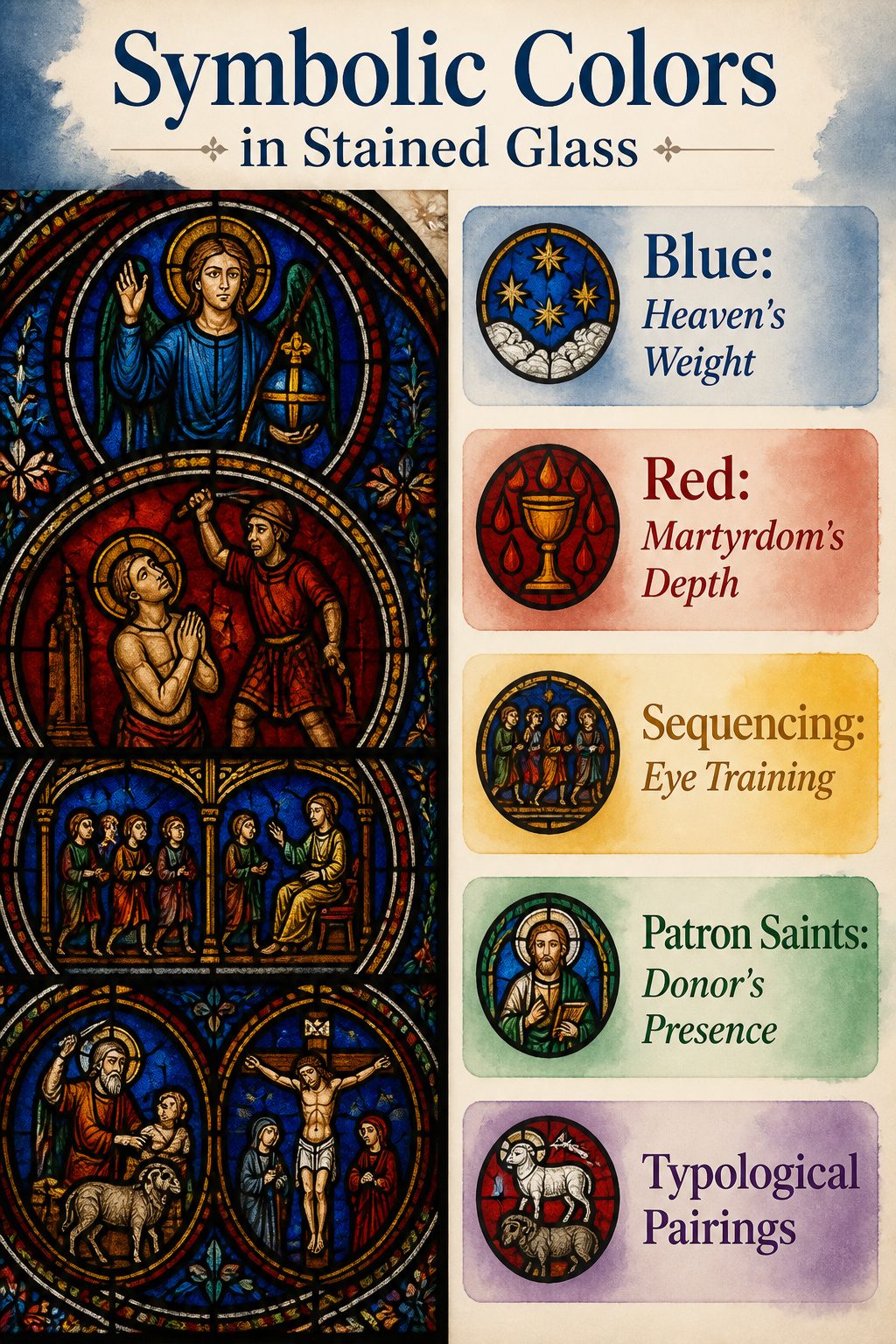
Color in medieval glass was never decoration for its own sake. Blue carried the weight of heaven, the celestial sphere that pressed against the vault above the nave, while red soaked into the stone where martyrdom was the subject.
Standing in the south transept at Chartres, the body reads the shift before the mind catches up: cool distance giving way to visceral heat, the narrative pulling you through the sequence whether you know the story or not.
The sequencing itself is a technology. Scenes run left to right, bottom to top, because literacy was scarce and the eye had to be taught.
A single lancet might track a saint’s life from refusal to execution, the moments spaced so a parishioner walking the ambulatory could pick up the thread at any point.
Patron saints appear where donors paid for them, which is why local figures crowd the lower registers while Peter and Paul hold the central axis.
The typological pairings are the part that still arrests me. Abraham’s sacrifice sits above the Crucifixion, the ram and the lamb rhyming across centuries.
The medieval viewer was expected to hold both moments at once, the Old Testament promise and its fulfillment, the glass itself becoming a kind of compressed argument in light.
Not every pairing survives legibly; some have oxidized to the color of weak tea, the argument faded to a suggestion.
Glass in Hotels and Museums Now
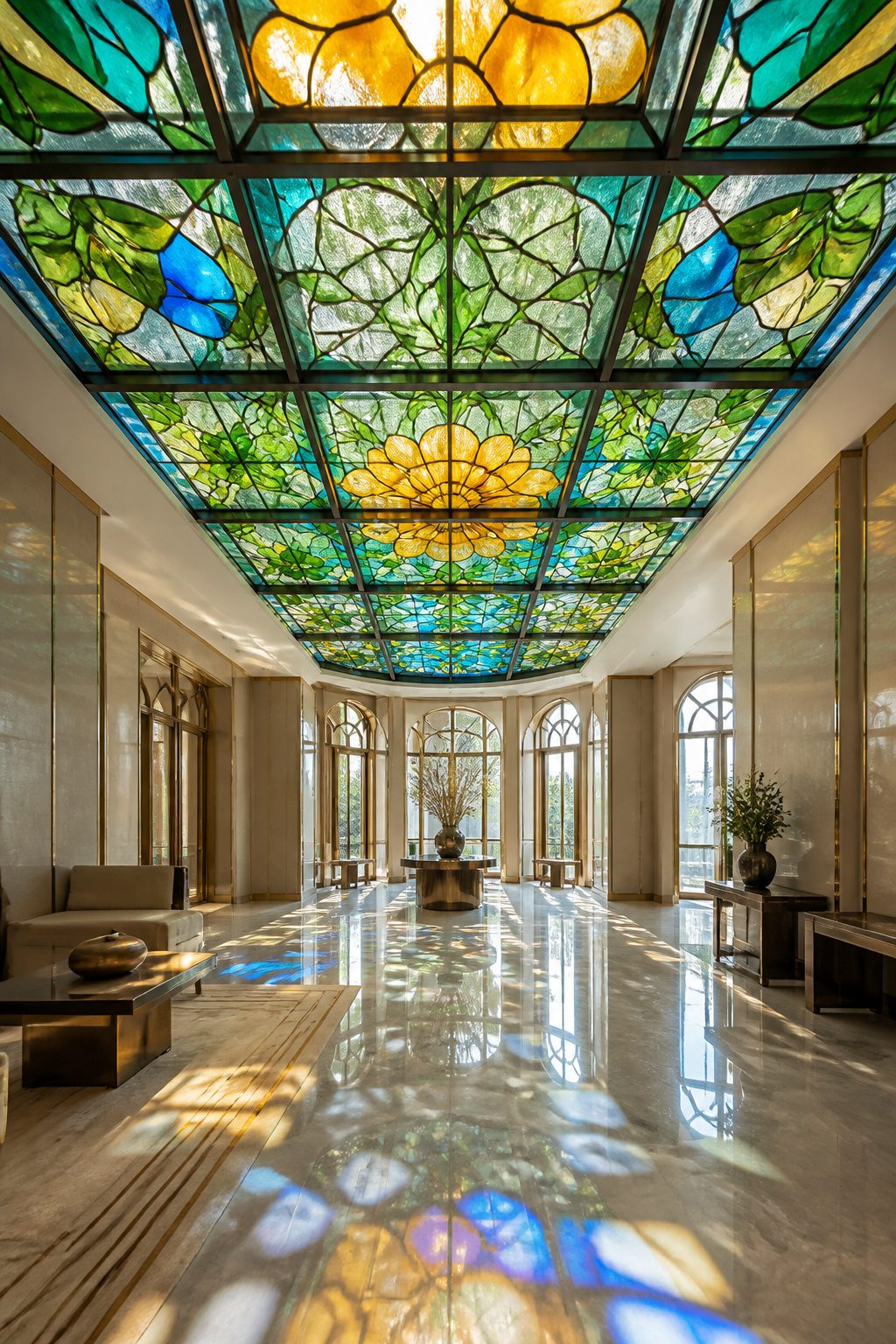
Stained glass stepped out of churches in the 19th century, and the shift opened a smaller but stubborn field.
Hotels, museums, and shopping malls now commission pieces that do not preach, only color the air. The Erawan Museum in Bangkok hangs glass overhead like a ceiling, and Mexico City’s Gran Hotel de Ciudad still draws visitors for its panels.
Architects such as Philip Johnson and Oscar Niemeyer worked the medium into secular buildings, treating it as structure and art at once.
Contemporary artists keep the craft alive without church budgets, though the secular market is narrower than the historical one. A hotel lobby or cultural institution might fund one major installation where a cathedral once ordered dozens.
The work persists because the effect persists: light through colored glass still changes how a room feels to stand in. For renters and first-home owners, this matters mostly as proof that stained glass belongs outside sanctuaries.
A small panel in a bathroom window or a transom above a door borrows the same logic, scaled to a weekend budget and a hardware-store frame.
What Persian and European Glass Share
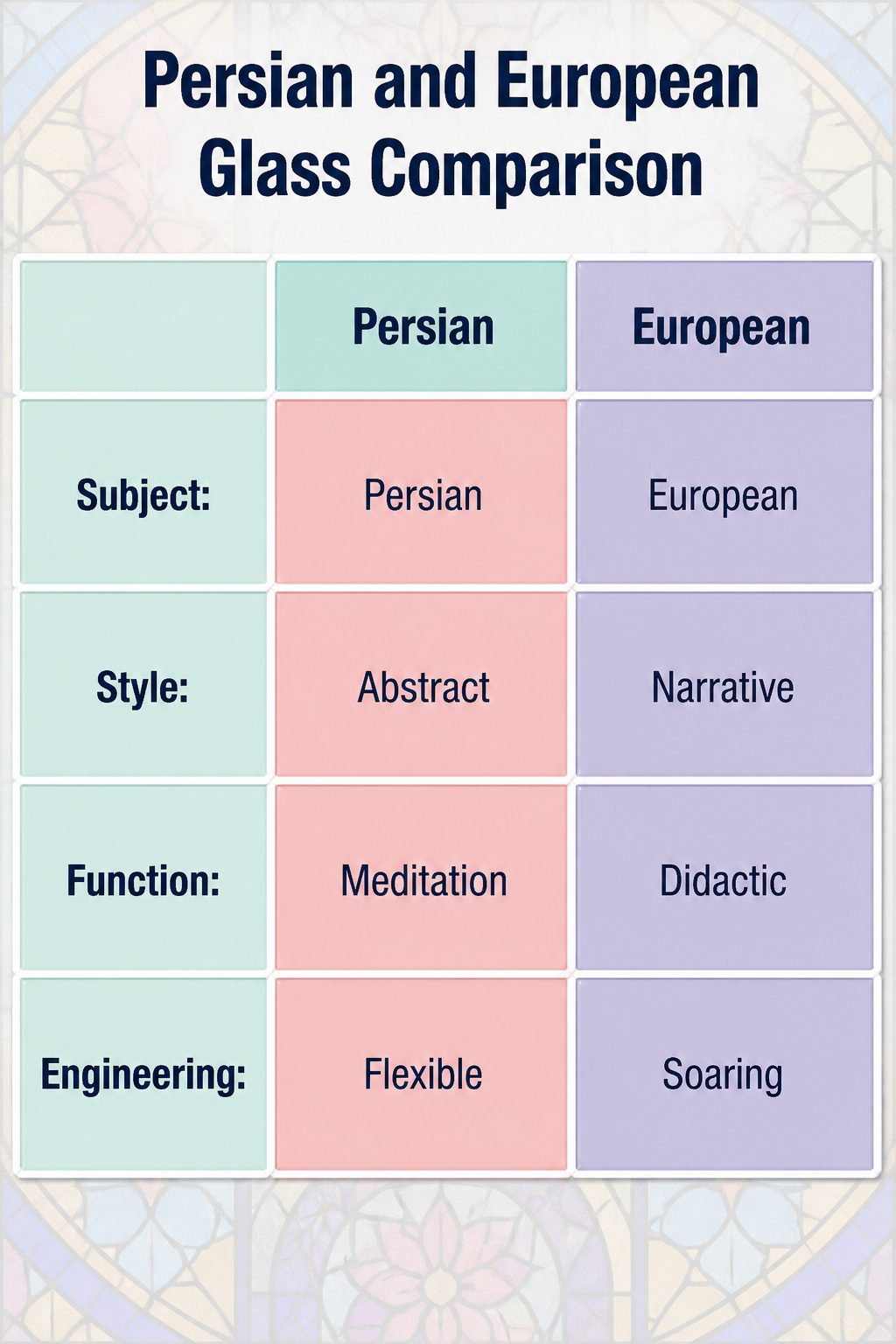
The Nasir al-Mulk Mosque in Shiraz and Sainte-Chapelle in Paris both turn sunlight into something you walk through, but the two buildings ask completely different questions of the glass.
At Nasir al-Mulk, finished in the late 19th century, the windows are pure geometry and color. Floral and arabesque patterns filter morning light into the prayer hall, where it lands on Persian carpets and carved pillars in shifting patches.
The light itself becomes the subject, not a path to one. Islamic aniconism keeps figures off the glass, so the experience stays abstract, mathematical, almost musical in its repetition.
Sainte-Chapelle, built six centuries earlier, does the opposite. Its 600 square meters of glass are crowded with biblical narrative, Old and New Testament scenes read left to right, level by level, as a visual catechism.
The light here is a delivery system: it makes the stories legible, urgent, didactic. You do not watch the color; you follow where it points.
The engineering differs too.
Nasir al-Mulk’s builders relied on flexible wood struts to survive earthquakes in Fars Province. Sainte-Chapelle’s Gothic frame was designed to carry stone and story upward, not flex but soar.
One tradition treats glass as meditation, the other as sermon. Both work, but a visitor expecting narrative at the Pink Mosque or pure color at Louis IX’s chapel will miss what each was built to do.
Frequently Asked Questions
What are the most beautiful stained glass windows in the world?
The most beautiful stained glass windows include the 13th-century panels at Sainte-Chapelle in Paris, with 1,113 biblical scenes across 6,500 square feet; La Sagrada Familia’s abstract color fields in Barcelona; the rose-tinted morning light at Shiraz’s Nasir al-Mulk Mosque; and Chartres Cathedral’s legendary medieval blue, a formula modern chemists have never replicated.
How are stained glass windows made?
Stained glass windows are built by cutting pieces of colored glass with a scoring wheel, snapping them along the line, and holding the assembly together with lead cames.
Painted details come from grisaille, a gray-brown enamel of ground glass and metal oxides that fires onto the surface. The lead absorbs movement from wind and settling walls, keeping brittle glass from cracking under stress.
What is the significance of stained glass windows?
Stained glass windows served as scripture for the illiterate, with medieval programs following a deliberate scheme: Old Testament on the north, New Testament on the south, Last Judgment over the west door, and the Virgin’s lineage in the choir.
A farmer who could not read Latin still traced salvation history across the glass. Louis Comfort Tiffany later proved the medium needed no sermon to justify its place, moving the art into homes and public buildings with purely secular designs.