

Small kitchen window treatments run from $18 aluminum minis to custom motorized shades, and the right choice depends less on budget than on exactly where the window sits relative to your stove and sink.
Faux wood blinds and vinyl shutters survive grease splatter with a damp cloth, but a fabric shade mounted over the range will stain within a year.
The Polysatin compound used in some shutters carries a guarantee against warping, cracking, or discoloring even in extreme heat, which tells you what manufacturers have learned about real kitchens.
1. Faux Wood Blinds
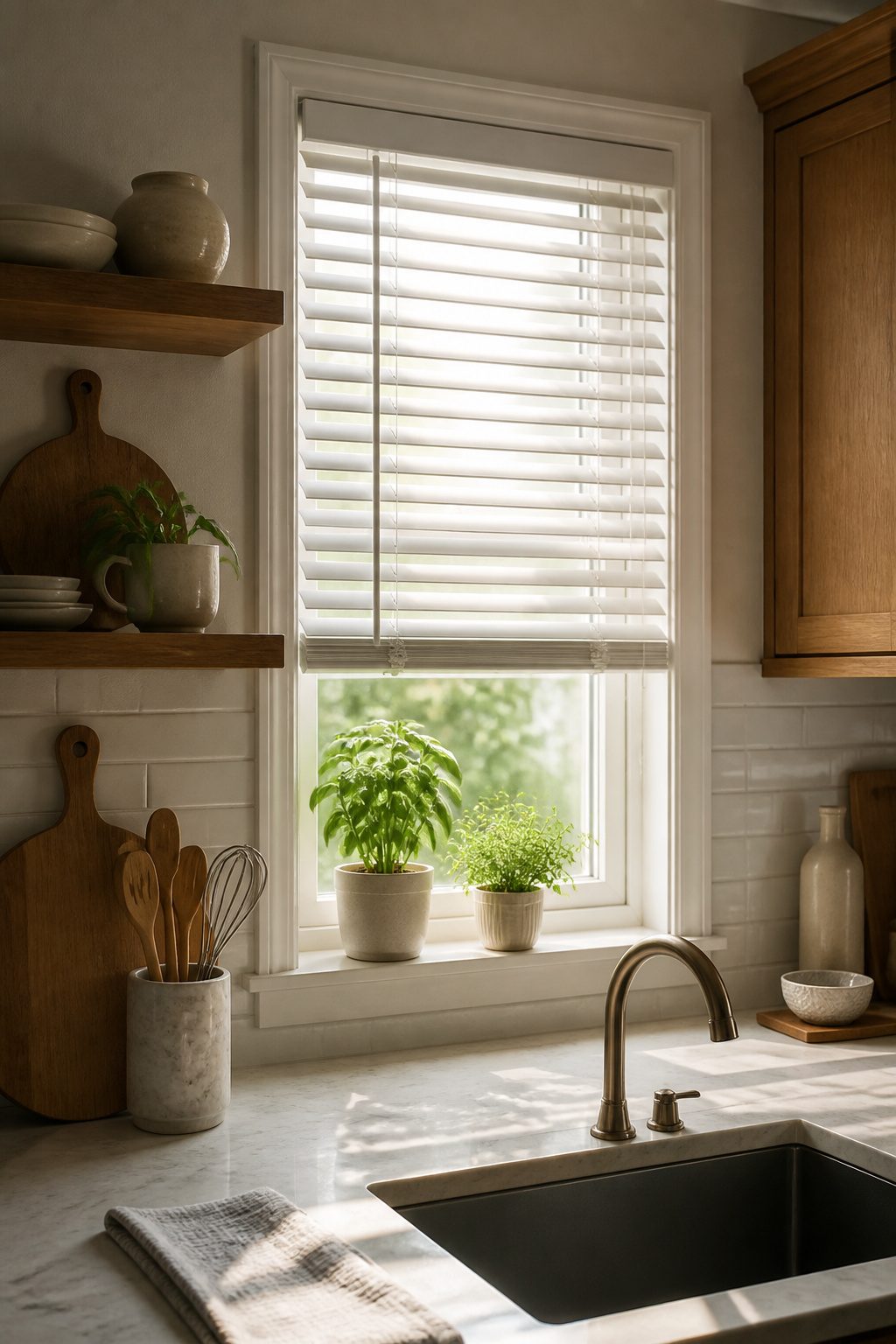
Steam from the stove warps real wood blinds in about two years, which is why I stopped recommending them above kitchen sinks.
Faux wood blinds, built from a UV-resistant Polysatin compound, carry a guarantee against warping, cracking, fading, chipping, peeling, or discoloring even in extreme heat and moisture.
That same compound shrugs off grease splatter that would stain genuine hardwood; a damp cloth wipes it clean where fabric shades would need laundering or replacement.
The install itself takes a Saturday morning. Measure inside the frame, order custom-cut slats, and mount with two brackets and a drill.
No specialist tools, no second person required. The blinds cost less than half what traditional wood runs, which matters when you are dressing three or four small kitchen windows and still need to buy paint for the cabinets.
One practical limit: the slat stack still eats some glass when raised.
In a window under eighteen inches, that can block a quarter of your light. For those slivers of glass, a roller shade or shutter sits flatter.
But for standard small kitchen windows where you want adjustable light and the look of painted wood without the upkeep, faux wood blinds are the choice I would make again.

IMPORTANT! – This window blind measures exactly 34" wide and is designed to fit inside a 34.5" wide window, following industry-standard sizing. A 1/2-inch deduction is applied to ensure proper bracket placement within the window frame for a secure fit.
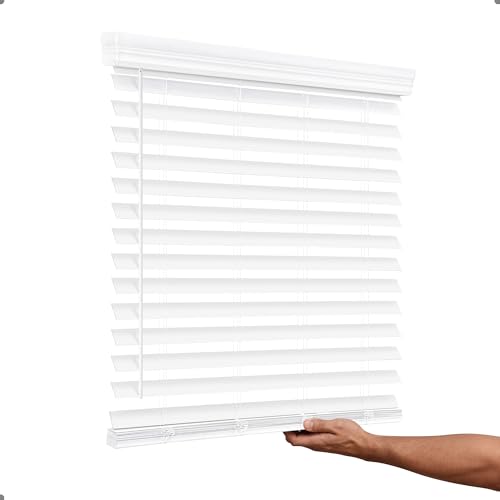
IMPORTANT SIZE NOTE – Precision Fit for Your Window This wood blind arrives exactly 33.5 inches wide, expertly crafted for a snug inside mount in a standard 34-inch window frame. Measure carefully before ordering – all sizes are "Width x Height". For outside mount, refer to our guide to select the ideal size. Perfect for window blinds for home and indoor use

IMPORTANT! - This window blind is 33.5" wide to allow for mounting the blind inside a 34" wide window. Your blind will arrive to you exactly 33.5" wide. Our 2 Inch Faux Wood blinds are designed for a wide variety of window sizes and styles. Sizes stated within the product descriptions are listed by WIDTH then HEIGHT. See measuring instructions to ensure best fit.
2. Cellular Shades
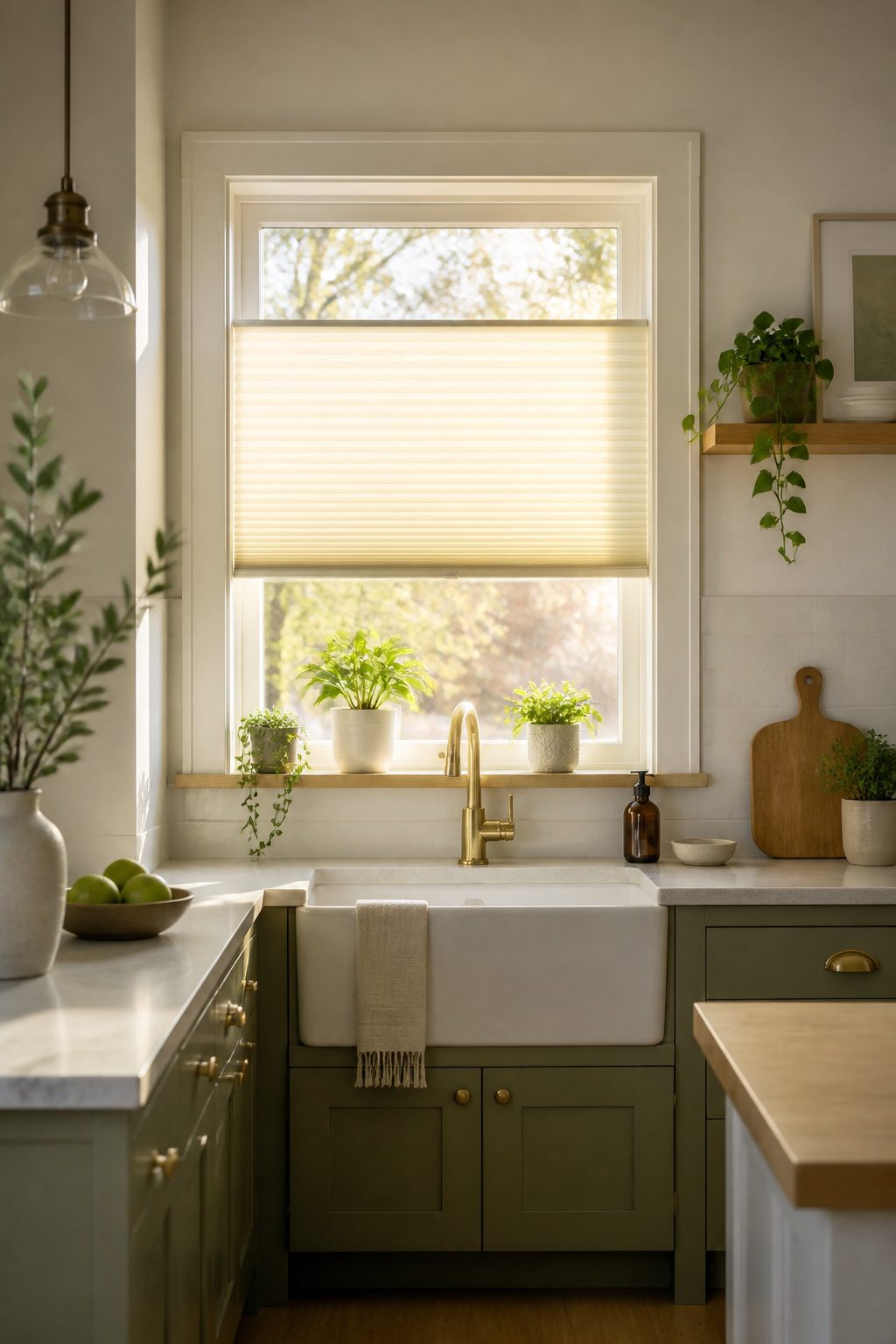
The honeycomb pockets in cellular shades trap air in a way that actually changes how a window performs.
Duette Honeycomb Shades were the ones I kept coming back to while reading through options, partly because Hunter Douglas has enough fabric and color lines that matching a kitchen palette is straightforward rather than a compromise.
What sold me on looking closer was the R-value conversation around these.
My own north-facing kitchen window used to collect condensation on cold mornings, enough that I worried about the sill. The air pockets in a cellular shade add insulation that can shift that surface temperature just enough to matter.
The Architella line takes it further with a honeycomb-inside-a-honeycomb construction, though for a small kitchen window the standard Duette is often the practical stop.
The condensation issue is what would have pushed me to switch, not looks or light control.
Duolite is available if you want both filtering and blackout in one headrail, and Vertiglide exists for sliding doors, but in a typical small kitchen the basic cellular construction does the heavy lifting against temperature differences.

Fade-Resistant Color Technology: Color-through process resists fading and hides scratches for long-lasting appearance

One Piece Injection Molded Polypropylene Construction
One Piece Injection Molded Polypropylene Construction
3. Roman Shades
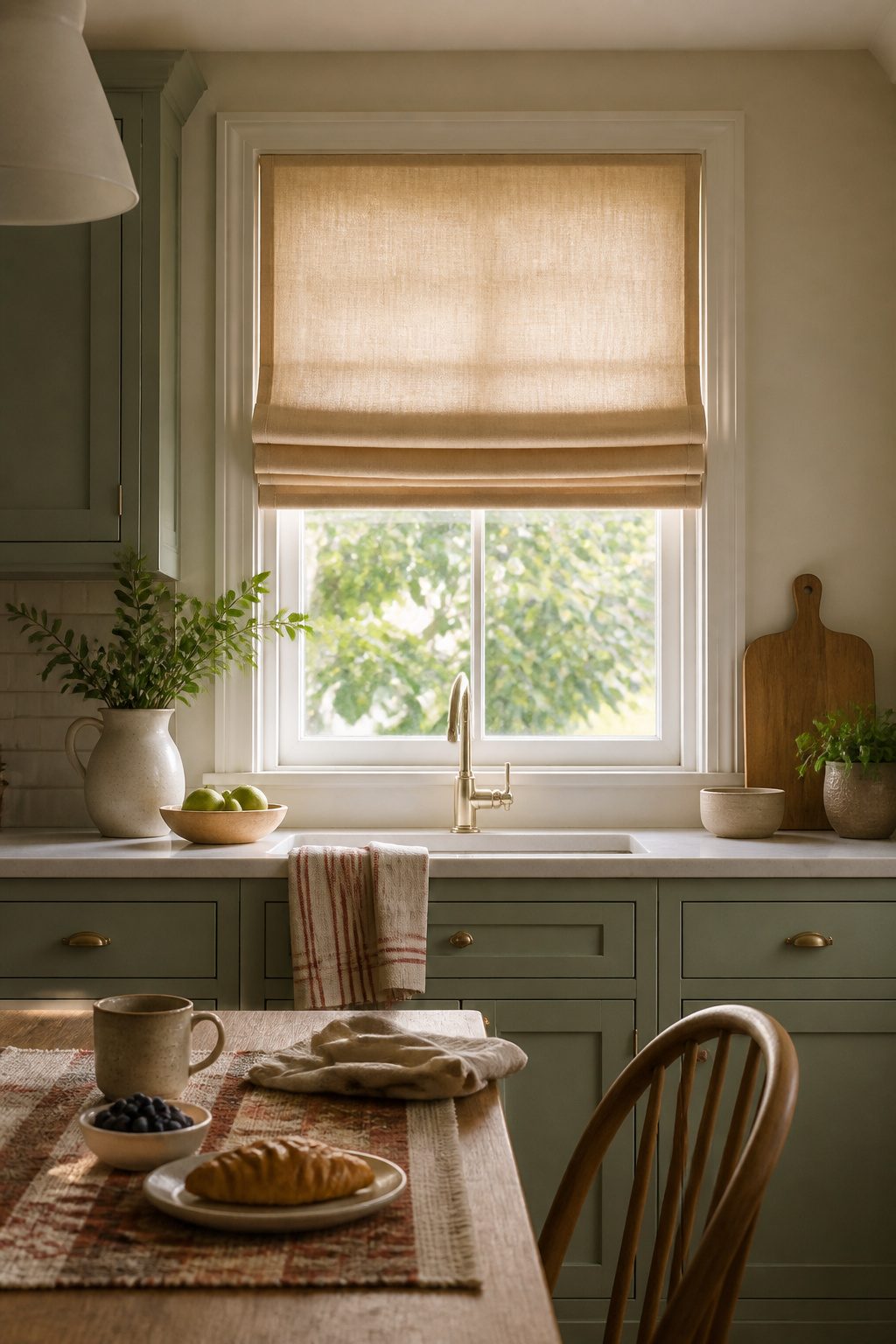
Roman shades bring a softness into a kitchen that hard surfaces alone can’t manage, and the modern ones keep that look tidy even with daily adjusting.
The fabric wraps fully around the headrail and falls in consistent folds whether the shade is raised or lowered, which matters in a room where the window treatment gets handled several times a day.
I learned the hard way that not all Roman shades hold their shape. An off-brand version I tried developed sagging folds within a year that no amount of restringing fixed.
Vignette Modern Roman Shades are the ones that solved this for me, with fabric that wraps cleanly around the hardware and maintains its structure through repeated use.
They come in a wide range of fabrics, even down to fabric-wrapped hardware, so the finished look stays coherent.
For kitchen use, the fabric opacity choice is worth thinking through carefully.
Light-filtering fabric keeps the space workable during daylight hours, which most kitchens need. Room-darkening makes more sense only if the window faces a neighbor at close range or if evening privacy is the main concern.
The Duolite system lets you combine both into a single shade with two separate fabrics, though I found that overkill for a small kitchen window where I mostly wanted consistent daytime light.

【ENVIRONMENTALLY FRIENDLY RECYCLABLE MATERIAL】Persilux blackout cellular shades is made from recycled materials, which is a great way to continue your eco-friendly lifestyle. Instead of using all new materials to create these blinds, you can have peace of mind that you're giving materials a new life (image 3).They come in multiple fabric colors as light filtering or blackout. Special honeycomb structure offers features such as energy saving & thermal insulation & noise reduction.

Important Inside Mount Measuring Instructions: This cellular shade is the exact size - no deductions are made. Measure the width across the top, middle, and bottom of window. Ensure your window measures 22.25" to 23" wide for a 22" wide cellular shade. This allows proper fit with minimal light gaps. Measure the height from the top of the window to the windowsill on the left, middle, and right of the window. The largest measurement will be the height you order.
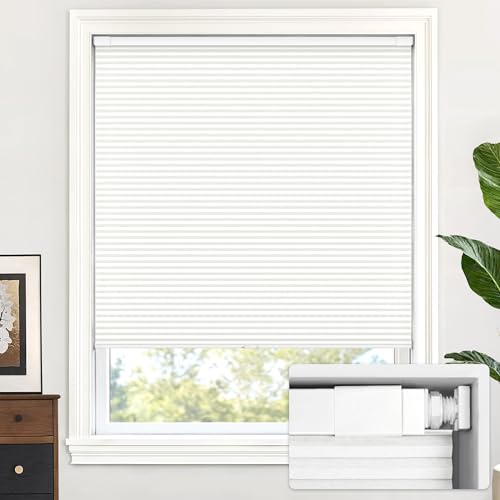
No Drill Blinds: LazBlinds patented technology No Tools-No Drill system allows installation without drilling any holes on your window frame, perfect for renters, landlords, and home buyers. Easy to install in 30 seconds. Fits all kinds of walls, like wooden walls, tile marble, concrete wall and rough tile
4. Roller Shades
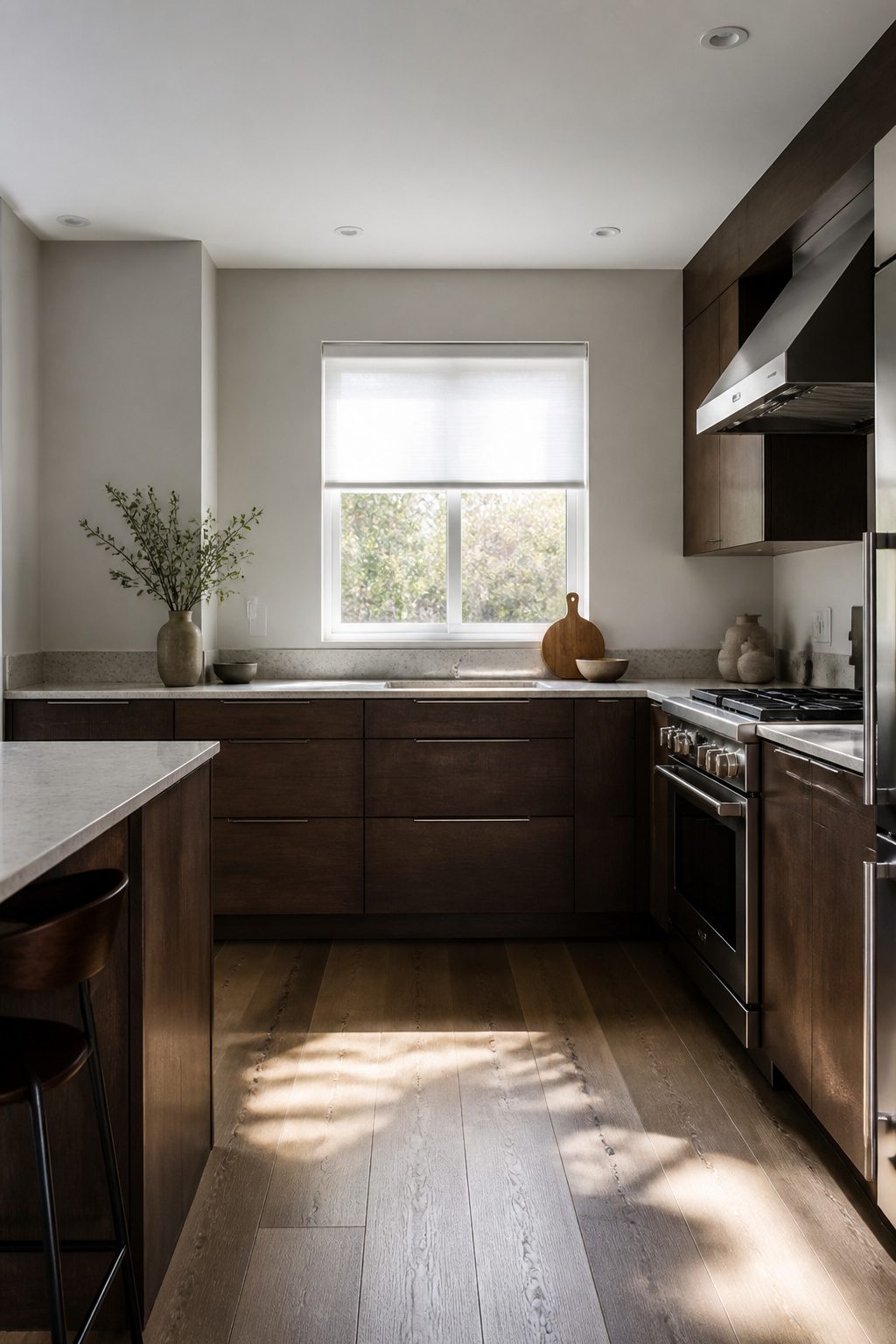
Roller shades sit almost flush against the glass, which matters in a small kitchen where every inch of wall counts.
The roll itself hides inside a compact tube at the top, so the window keeps its clean rectangle without the bulk of slats or folds.
The material choice splits into two camps for kitchen duty. Wipe-clean vinyl handles grease and splashes with a damp cloth, making it the practical default for windows near the stove or prep area.
Fabric versions, including sheers and light-filtering weaves, soften the light but need more care; reserve those for spots away from direct cooking mess.
Over the sink, the operating mechanism becomes the deciding factor. Spring-roller shades retract with a tug, no chain to grab with wet hands.
Chain-operated models offer more precise positioning, though the cord dangles where dishwater splashes. For a rental kitchen where you might replace the shade in a few years, spring-rollers save the daily friction of reaching for metal with soapy fingers.
Battery-operated rollers exist now too, and they solve the reach problem entirely if your sink window sits behind a deep basin. The custom valance that hides the roll, which some manufacturers offer, keeps the look built-in rather than improvised.
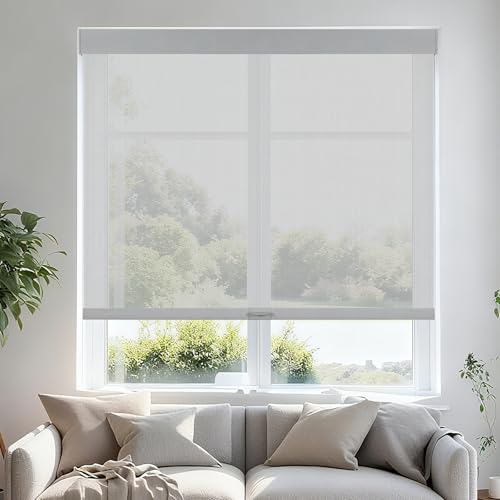
【Product Dimension】Blind size: 20"W x 72"H, fabric size: 19.2"W x 72"H. Depth of top cassette is 2.36". Minimum 1.7" depth of window frame required for the inside mount. Roller shades can be used for both inside mount and outside mount. You will also receive an installation guide and hardwares.

【How to choose a correct size to fit? Example your window meas 23" width by 72" length.】INSIDE MOUNT: window width is blind width, window height is blind height. Blind Width=23"; Blind Height=72". OUTSIDE MOUNT: Plus at least 4" is blind width, plus at least 4" is blind height. Blind Width=23"+4"; Blind Height=72"+4".【Pls Note】Fabric width will be 0.8" shorter than the size of the shade. Depth of top cassette is 2.95".
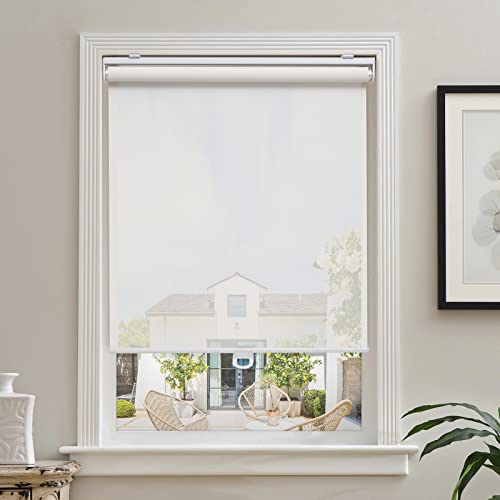
[ECO-FRIENDLY FABRIC ]: Light filtering roller shade is 100% polyester fabric. Good ventilation capability, anti-static, dust-proof and durable. The aluminum bottom rod replaces the plastic bottom rod to improve the overall stability, so that the panel and the bottom are on the same level, not easy to tilt, prevent wind blowing, and give users a better experience.
5. Woven Wood Shades
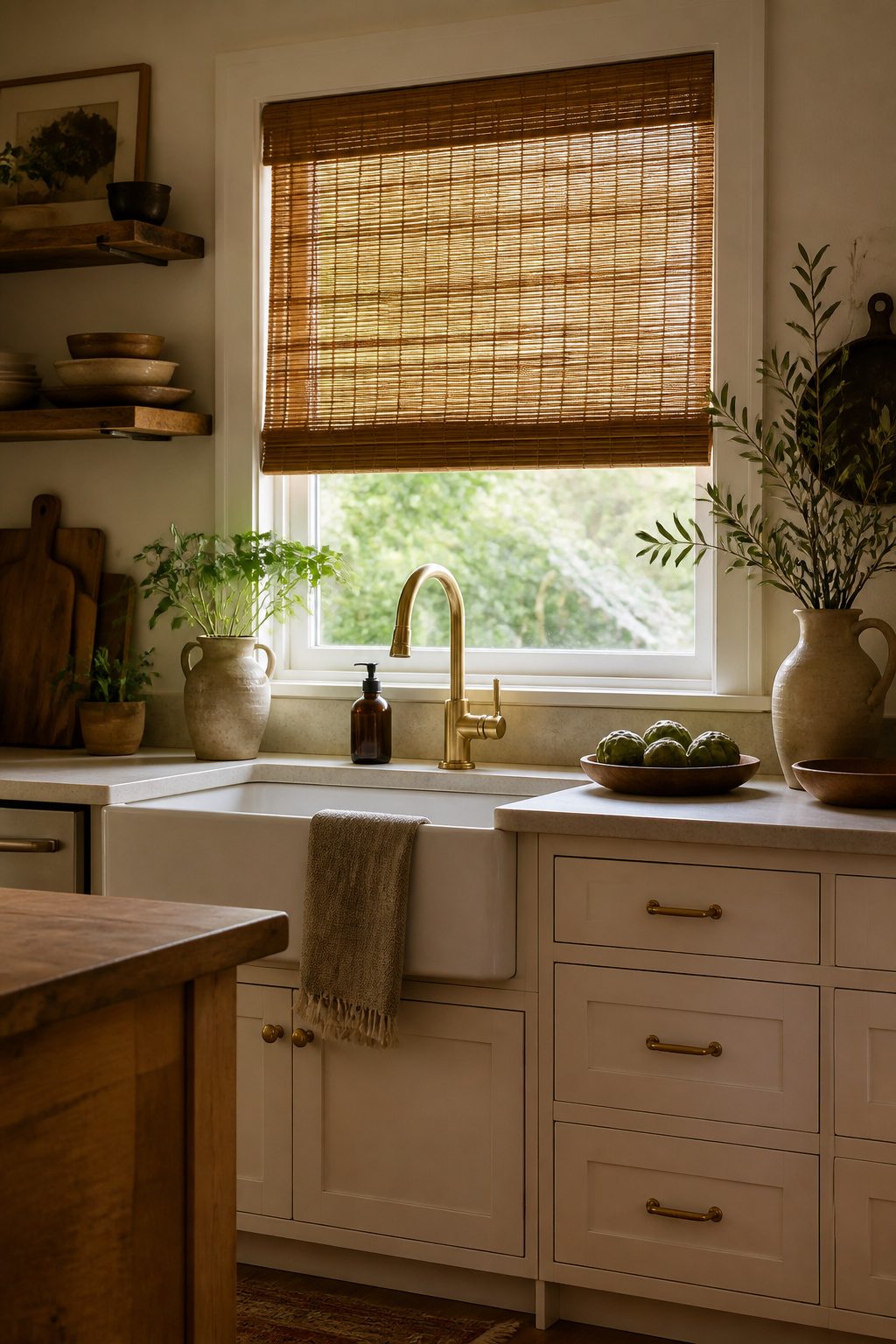
Woven wood shades bring in the warmth that stainless steel and painted cabinets strip out.
Bamboo, grasses, reeds, jute: the materials themselves do the work, no pattern required. In a small kitchen, that texture keeps the space from reading like a showroom.
Provenance Woven Wood Shades are built to minimize stretching, bowing, breaking, and fading — the four ways natural fiber treatments usually fail near a window over the sink.
The independent liner option matters here too. Light-filtering or room-darkening fabric operates behind the weave, so you get privacy after dark without killing the texture that drew you to woven wood in the first place.
Where I pause is grease. Cooking residue settles on every surface, and natural fibers are harder to clean than vinyl or aluminum.
A shade mounted directly above the range, especially in a tight kitchen where splatter travels, asks for more maintenance than most weekend projects allow.
Better placement is the breakfast nook window, the high transom, or any small kitchen window that gets light and steam but not direct oil.
The Brooklyn brownstone approach Erin Fearins used — lightweight woven reed for evening privacy without blocking daylight — works because that window wasn’t doing hard labor above a fry pan.

Motorized Cellular Shades with Remote: Smart cellular blinds can regulate the incoming natural daylight and sunlight to control the indoor climate and save energy, by taking full advantage of the reflective and insulating properties, creating perfect atmosphere at any time of the day.

EASY INSTALL BLINDS: The remote blinds have a simple and practical no-drill mechanism(suitable for inside mount). Attach the adhesive extension block to the groove of the upper rail (it is forbidden to put more than one block), and then push it into the window frame. There is a battery compartment at the top to supply power for the shades. If the batteries are low, just take them out and replace. A stylish valance is included to block the light from the gap between fabric and the top rail
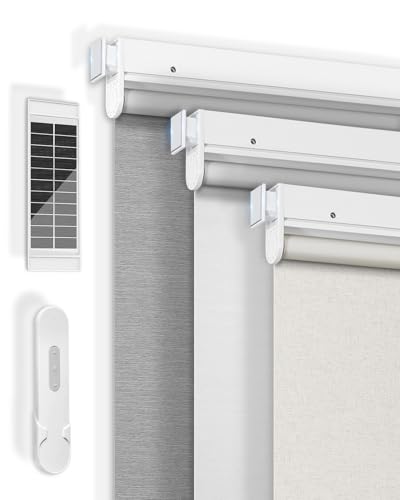
【100% Blackout Motorized Blinds】Experience ultimate comfort and privacy with LICHTDIM24 Motorized Blinds. Our blinds are made of upgraded texture 26-layer blackout fabric, effectively achieving shading, UV protection, insulation and privacy protection. They create a dark, glare-free environment, enhancing your relaxation or entertainment experience.
6. Sheer Shadings
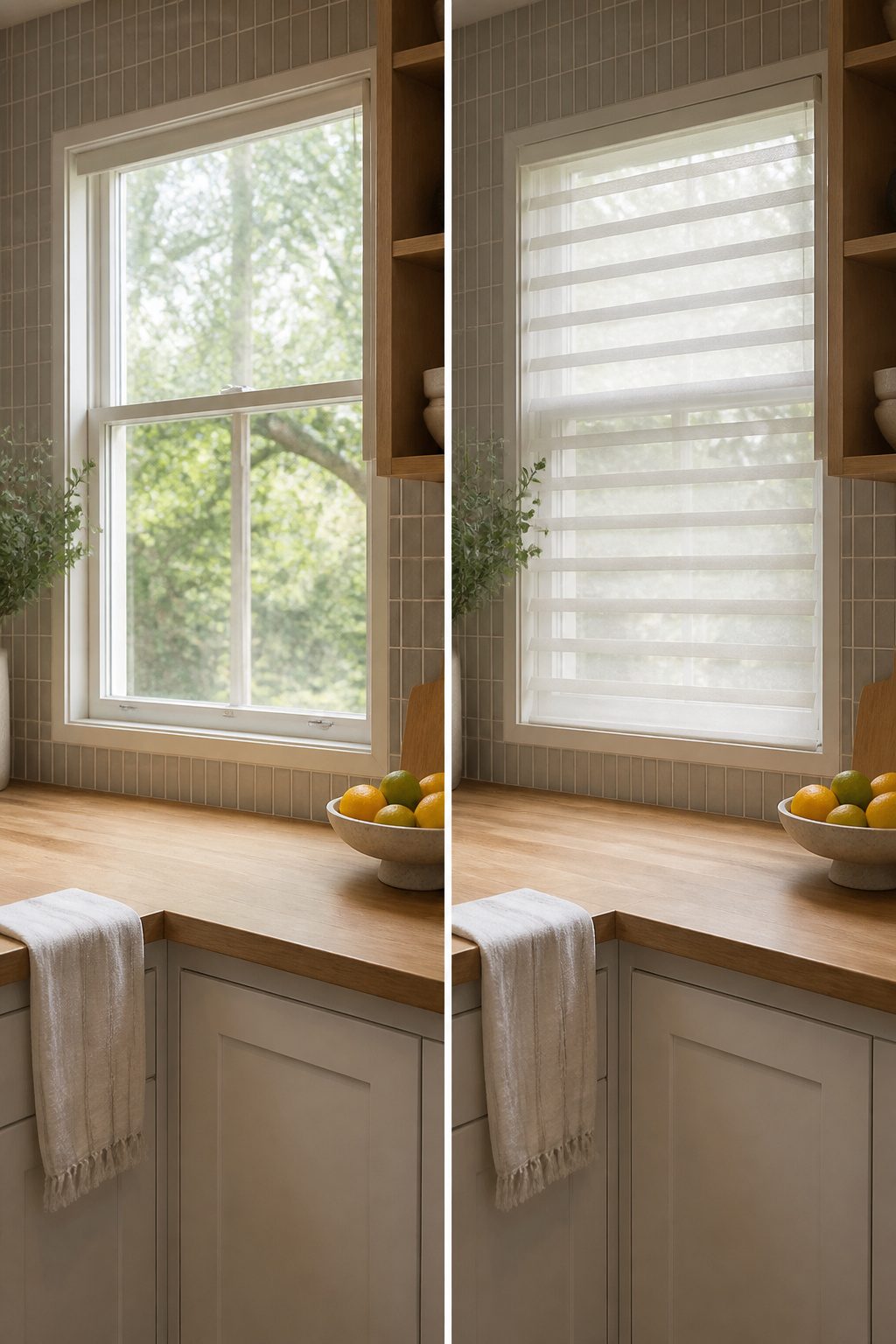
Sheer shadings hit a balance that few small kitchen window treatments manage: they soften direct sun into something you actually want to cook under while keeping the neighbor’s deck from being part of your morning routine.
The layered construction, with S-shaped fabric vanes suspended between front and back sheers, is what makes this possible.
Tilt the vanes open and light filters through in a diffused glow; close them and the view in cuts down without killing the room’s feel.
For kitchens where the only window faces another house at close range, that adjustability matters more than total blackout ever would.
The dusting reality caught me off guard. Those floating vanes collect grease and airborne flour the same way any textured surface does, and the sheer panels on either side mean three planes of fabric instead of one.
A vacuum brush attachment works, but the job takes longer than a flat shade would and the crevices between vane and sheer need actual attention.
If your kitchen sees heavy use, budget the cleaning time into your choice or you’ll end up with a fixture that looks tired faster than it should.
IMPORTANT SIZING INFORMATION! - This window blind is 33.5" wide to allow for mounting inside a 34" wide window opening. All inside-mount blinds include a ½-inch width deduction from the size ordered to ensure a perfect fit within your window frame. Your blind will arrive exactly 33.5" wide (for a 34" wide window). Sizes listed in the product description are measured by Width × Height. Please review our measuring guide to confirm proper sizing before ordering.

Important measuring notes - The ordered blind width is the actual finished size, no width deductions at factory. If you choose inside mount, this 30.5-inch faux wood blind fits window frames ranging from 30.875 to 31.5 inches wide. For outside mount, order a blind 2–4 inches wider than your window opening. Please refer to our illustrated measuring guide for precise sizing and ideal installation outcome.

Importance of Installation: Our blinds offer two mounting options—inside or outside the frame—both of which provide a perfect fit for your window. Please note: The blades width of this blinds is 34", and the width of the top track is 33.5" (allow for proper installation clearance), suitable for windows with inside frames between 34"-34.5". For an outside mount, just order 8" wider for better covering. If you are unsure how to choose the appropriate size, please feel free to contact us at any time. We are always happy to answer every question, helping you have more confidence in your choices and making our after-sales service more humane.
7. Solar Shades
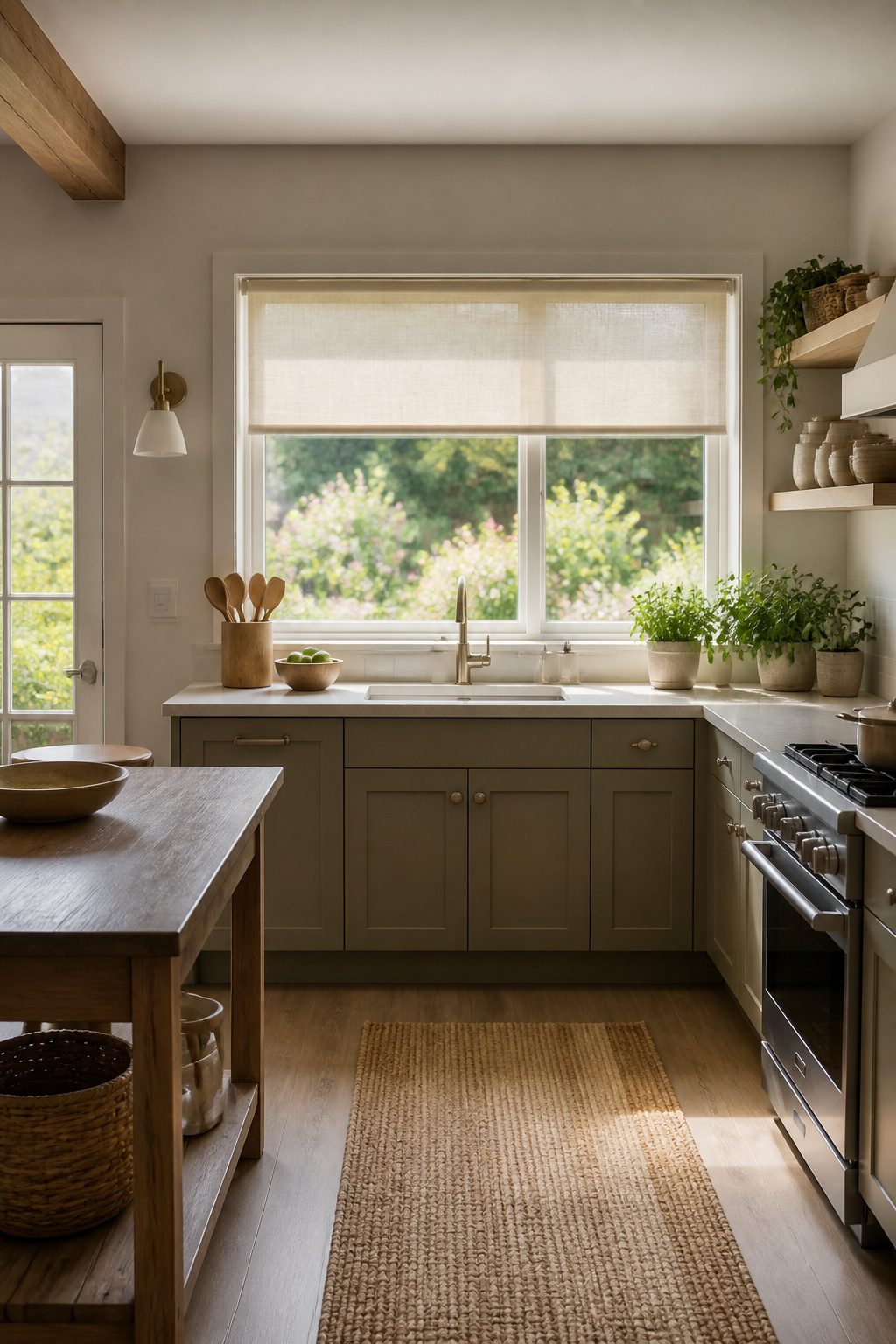
Solar shades cut heat and glare without killing the view, which matters more in a small kitchen where a dark shade can make the whole room feel boxed in.
The fabric comes in openness factors, basically a mesh density rating: 1% or 3% blocks almost everything and works if privacy from a close neighbor matters more than light, 5% is the middle ground most people land on, and 10% keeps the room brightest but lets the most heat through.
A west-facing window over a countertop is where this choice actually gets tested.
Mine baked the laminate by 4 PM most of the year. I went with 5% openness, thinking the view of the side yard was worth some residual heat.
By August I had to keep a cutting board propped against the glass as a heat shield during prep hours. 3% would have killed the glare dead and still left enough daylight to work without flipping the switch.
The view-versus-heat tradeoff tilts harder toward blocking than the showroom suggests, because afternoon sun in a kitchen hits at exactly the wrong angle and the countertop stores that heat for hours.

One Piece Injection Molded Polypropylene Construction
One Piece Injection Molded Polypropylene Construction
One Piece Injection Molded Polypropylene Construction
8. Aluminum Mini Blinds
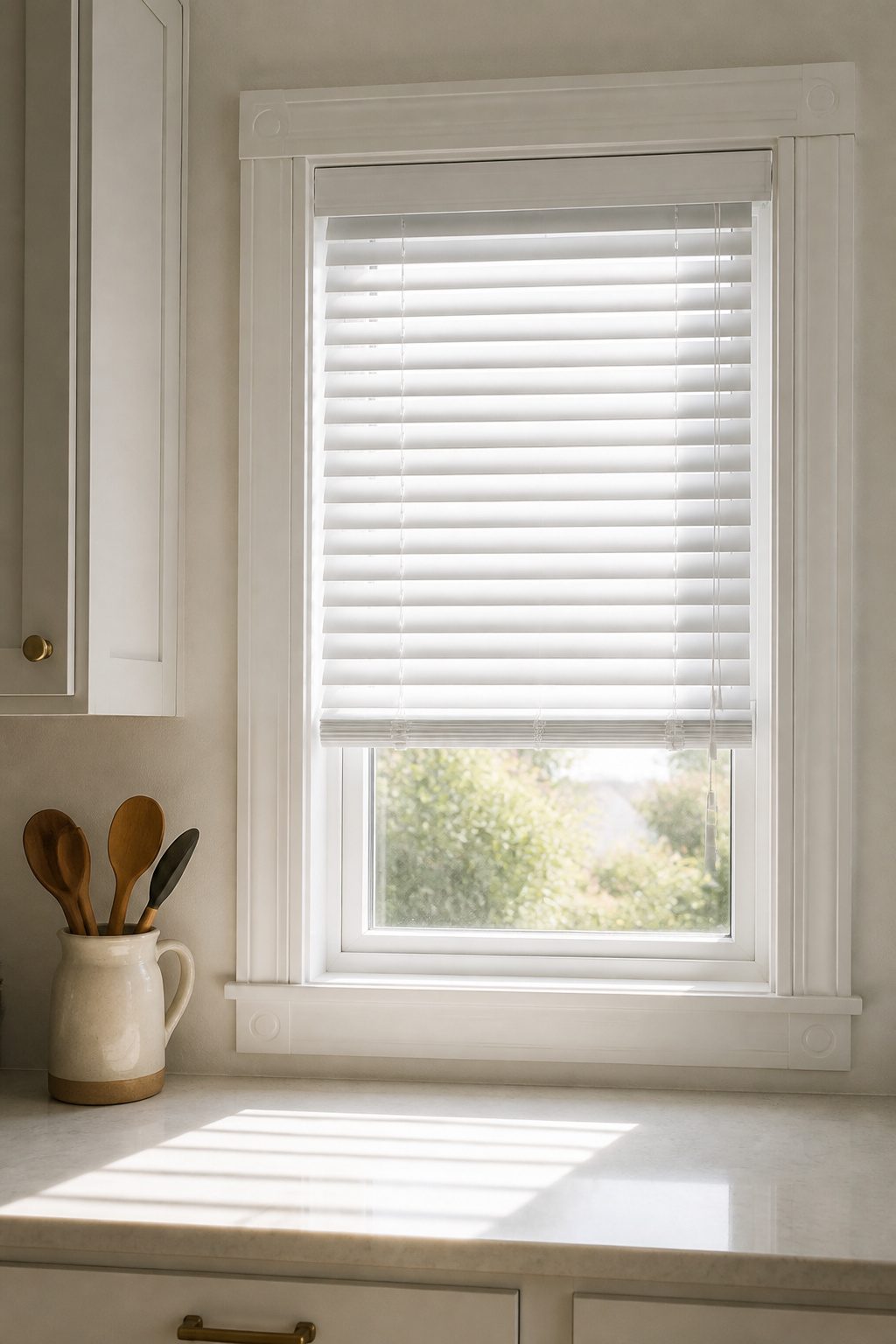
Aluminum mini blinds start around $18, which is why they ended up in the rental unit I managed a few years back.
The tenant wanted something that read clean against white trim without fighting the existing hardware, and a crisp white 1-inch slat did exactly that.
Wider 2-inch or 2.5-inch slats feel more modern, but in a small kitchen window the narrower slat keeps the proportions right and stacks tighter when raised.
The real math that sold me was bent-slat replacement. A single damaged slat on faux wood or a fabric shade means replacing the whole blind or living with the flaw.
With aluminum minis, you pop out the bad slat and thread in a new one for a couple of dollars. In a rental with turnover every twelve to twenty months, that durability mattered more than any smart feature ever could.
Cordless tilt controls the light without cords dangling near the sink, and the whole thing wipes down with a damp cloth after cooking splatters.
They are not the most exciting choice on the rack. They are the choice that still looks the same three years in.

Ideal Lighting and Privacy: Achieve perfect lighting and privacy with Light Filtering Cellular Shades. Ideal for living rooms, dining rooms, and bathrooms, the cordless operation customizes light filtering for balanced illumination.
Important Inside Mount Measuring Instructions: This cellular shade is the exact size - no deductions are made. Measure the width across the top, middle, and bottom of window. Ensure your window measures 34.25" to 35" wide for a 34" wide cellular shade. This allows proper fit with minimal light gaps. Measure the height from the top of the window to the windowsill on the left, middle, and right of the window. The largest measurement will be the height you order.

How to Choose a Proper Size: For INSIDE mount: Choose the size SAME or CLOSEST to your window width. For Example, if your windows are 30" wide, order 30" or slightly less for internal installation. For OUTSIDE mount: We recommend Shades Width=your window width + (3-5)inch for better coverage. For Example, if your windows width is 30", order size 34" would be okay for outside mount. Shades height can adjust from 0" to 36".
9. Shutters
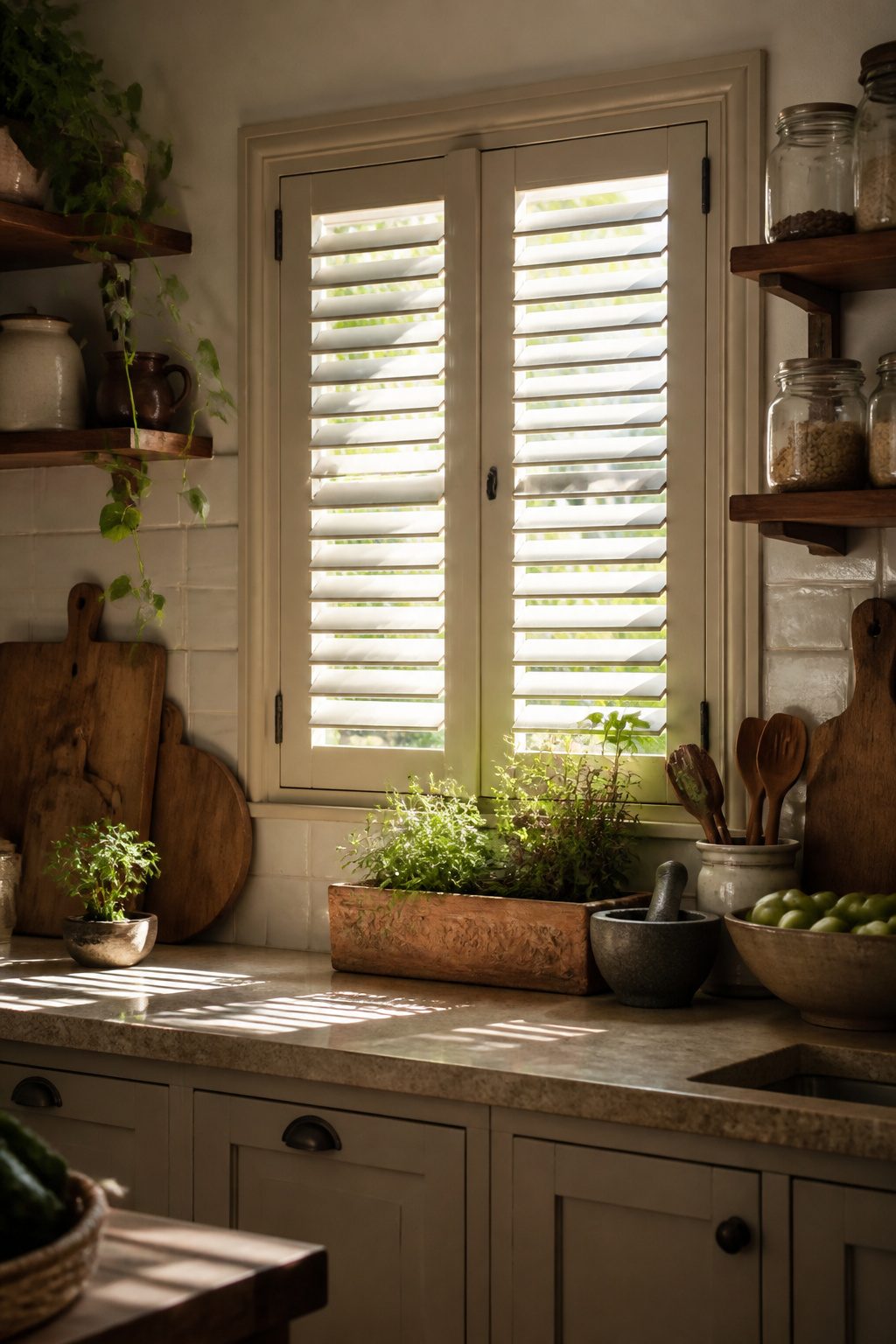
Shutters give the best light and heat control of anything in this list, which is why Sarah Stacey specified traditional louvered shutters for a Texas kitchen that gets sun all day.
The slats tilt to block glare without killing the room, and the closed panels act like insulation against summer heat.
That same structure makes them read as traditional, so they suit older homes where the architecture already has something to say.
The real-wood versus poly decision matters more in a kitchen than anywhere else. Real hardwood warps in steam and grease; near a sink or stove, faux wood or a Polysatin compound is the only sensible choice.
Palm Beach Polysatin shutters carry a guarantee against warping, cracking, fading, chipping, peeling, or discoloring in extreme heat or moisture, and they wipe clean with a damp cloth.
Most guests will not know they are not painted wood until they touch them.
Cafe shutters, covering only the lower half of the window, solve the problem of a small kitchen where full coverage feels heavy. They block the sightline from the neighbor’s yard while leaving the top open for daylight.
My own install took two Saturdays, not the one I had planned. The first day I measured twice, ordered once, and then discovered the window frame was not square by half an inch.
The second day I shimmed, cursed, and finally seated the hinges level. Budget for the time, not just the price of the panels.


【How to choose a correct size to fit? Example your window meas 23" width by 72" length.】INSIDE MOUNT: window width is blind width, window height is blind height. Blind Width=23"; Blind Height=72". OUTSIDE MOUNT: Plus at least 4" is blind width, plus at least 4" is blind height. Blind Width=23"+4"; Blind Height=72"+4".【Pls Note】Fabric width will be 0.8" shorter than the size of the shade. If your height differs too much from the existing blind height, please choose a custom size.

【Product Dimension】Blind size: 20"W x 72"H, fabric size: 19.2"W x 72"H. Depth of top cassette is 2.36". Minimum 1.7" depth of window frame required for the inside mount. Roller shades can be used for both inside mount and outside mount. You will also receive an installation guide and hardwares.
What Holds Up to Kitchen Conditions
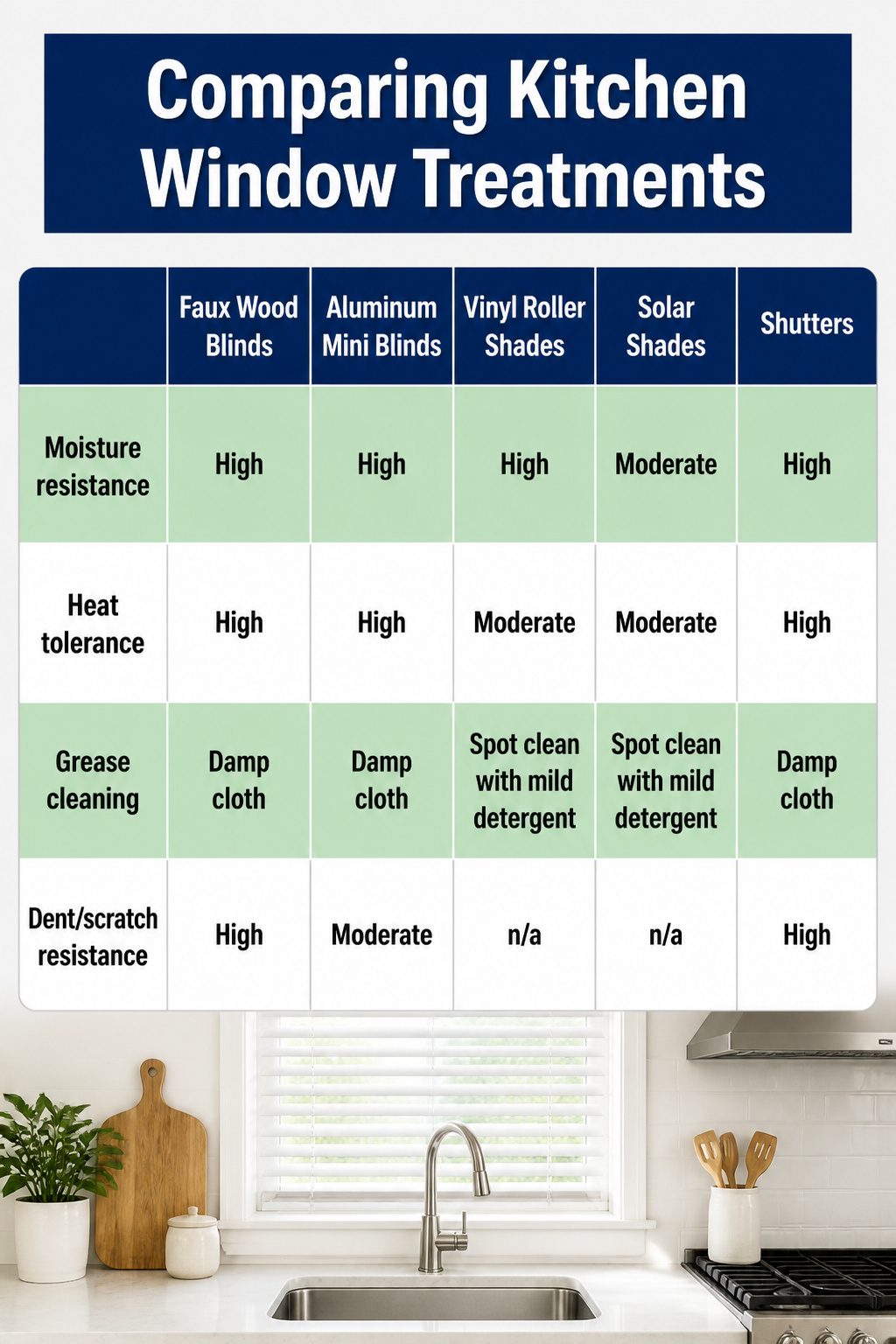
Steam from the stove and splatter from the pan are the real tests for anything near a kitchen window.
Faux wood blinds handle all three: heat, moisture, and grease wipe-off with a damp cloth. Aluminum mini blinds do too, though they read more industrial than warm.
Real wood warps.
Fabrics stain. In a small kitchen where the window sits right over the sink or adjacent to the range, material matters more than style.
| Faux Wood Blinds | Aluminum Mini Blinds | Vinyl Roller Shades | Solar Shades | Shutters | |
|---|---|---|---|---|---|
| Moisture resistance | High | High | High | Moderate | High |
| Heat tolerance | High | High | Moderate | Moderate | High |
| Grease cleaning | Damp cloth | Damp cloth | Spot clean with mild detergent | Spot clean with mild detergent | Damp cloth |
| Dent/scratch resistance | High | Moderate | n/a | n/a | High |
I have watched a set of painted wood shutters cup and peel above a friend’s gas range; the faux wood set I helped her replace them with still sits flat two years later.
The Polysatin compound in some shutters carries a guarantee against warp, crack, fade, chip, peel, or discolor, which tells you what the manufacturers have learned about real kitchens.
For renters, the win is speed: faux wood or aluminum goes up fast, comes down clean, and survives a security deposit inspection.
For first-home owners, the same materials free up budget for the backsplash or the faucet you actually touch every day.

EASY INSTALL BLINDS: The remote blinds have a simple and practical no-drill mechanism(suitable for inside mount). Attach the adhesive extension block to the groove of the upper rail (it is forbidden to put more than one block), and then push it into the window frame. There is a battery compartment at the top to supply power for the shades. If the batteries are low, just take them out and replace. A stylish valance is included to block the light from the gap between fabric and the top rail

Lily Fabric: Made of 20% linen and 80% polyester, 350 gsm, this fabric is soft with a natural drape. Multiple lining options, including light filtering and blackout, allow customizable light control and privacy. Slight color variations may occur with different linings.

100% Blackout Roller Shade: Made of polyester fabric coated with blackout backing. Blocking out 100% light for complete privacy, light control and UV protection for bedrooms, children’s rooms and movie rooms. Excellent for deeper and longer sleepers.
Light Control and Privacy in a Small Space
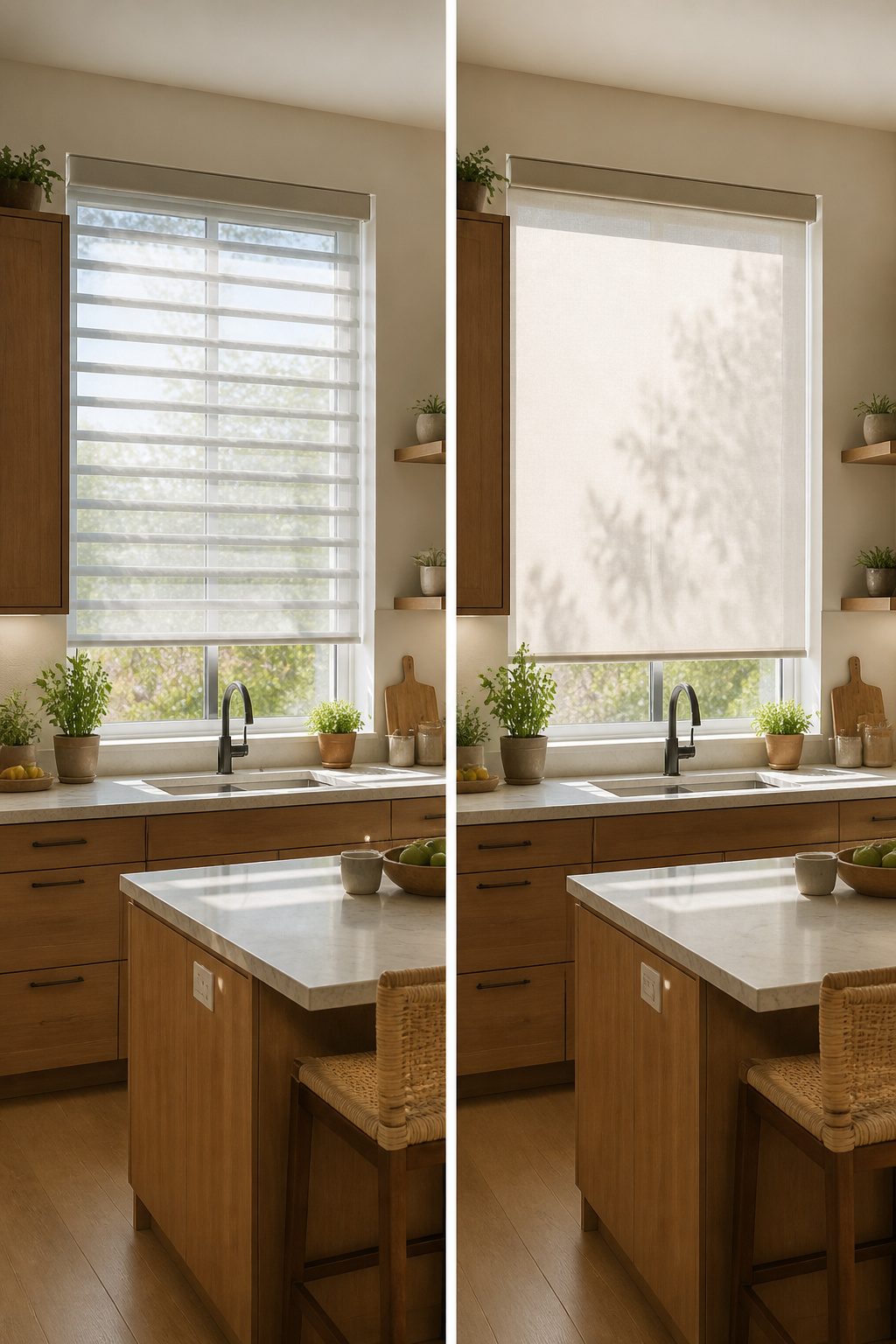
Ground-floor kitchens force a harder choice than upper floors. Neighbors or foot traffic sit at eye level, yet the room still needs daylight to feel usable.
Sheer shadings with floating fabric vanes, like the Silhouette style, filter harsh sun into something softer while blocking the direct sightline. The Duolite pairing adds a roller layer behind for evening privacy without swapping hardware.
Top-down/bottom-up operation matters more here than in larger rooms. Cellular shades and woven wood both offer it, letting you drop the upper section for sky light while the lower half stays closed.
Standard mini blinds and faux wood blinds do not; they open from the bottom only, so privacy and light become an either/or decision at every hour.
My own mistake was ordering light-filtering roller shades for a ground-floor kitchen without checking opacity. The fabric softened the glare beautifully at noon, but after dark the material turned into a backlit screen.
Anyone walking past saw every movement inside. A kitchen shade that reads "light filtering" on the label can still broadcast your silhouette if the weave is loose enough.
For that window, I ended up layering a bottom-up cellular shade behind the roller, which worked but cost more than doing it right once.
Matching Your Kitchen’s Look
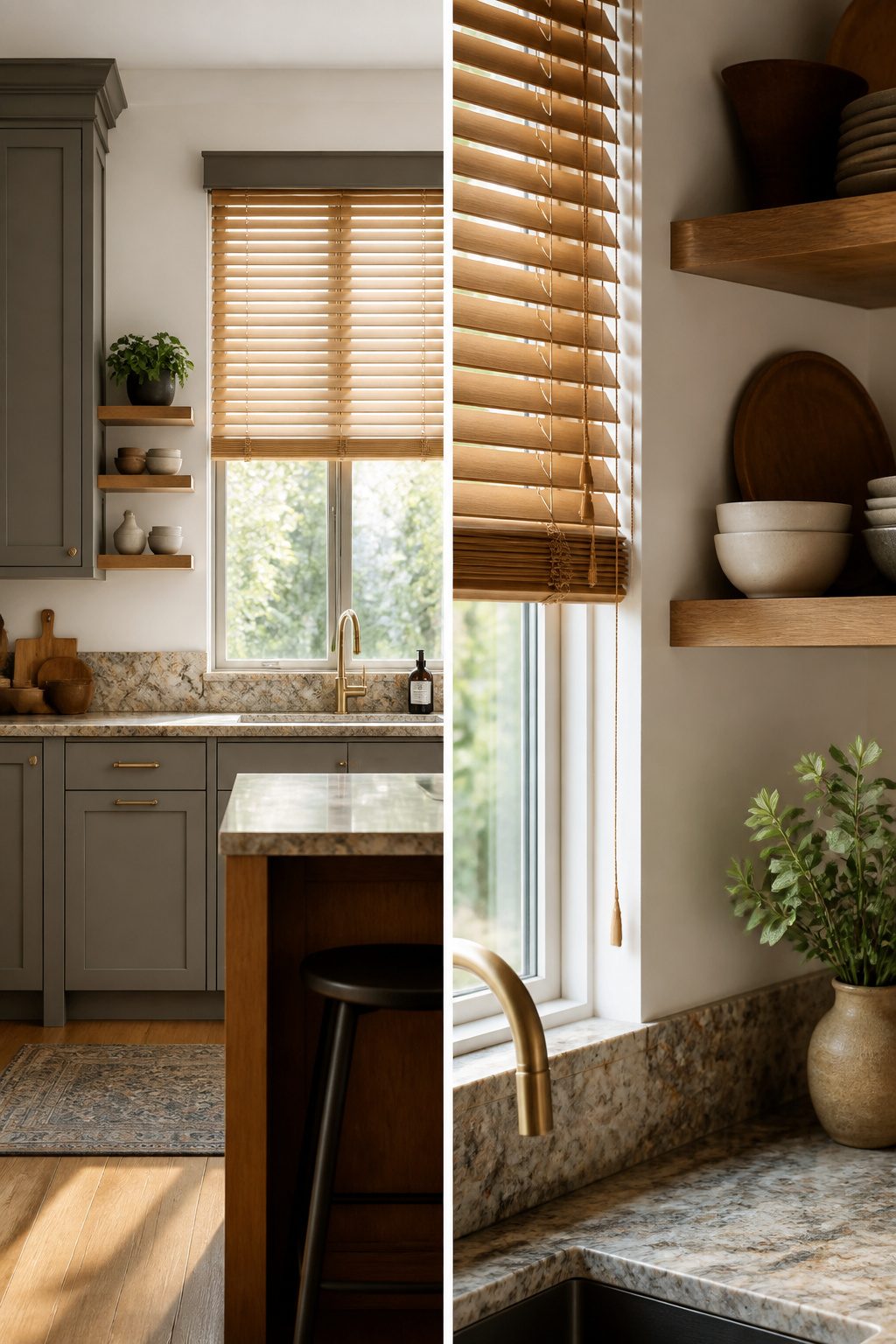
Warm cabinets and cool countertops already fight each other in most kitchens, so the window treatment needs to pick a side rather than sit in the middle.
I learned this after installing honey-toned wood blinds against gray shaker cabinets that read distinctly blue in afternoon light.
The blinds looked dirty. Not actually dirty, just wrong in a way that no amount of cleaning fixed.
The rule I use now is to match the undertone, not the material. If the cabinets run cool, the treatment needs a cool white, a grayed natural, or a painted finish that acknowledges the same base color.
Warm wood only works when the kitchen already leans warm overall, and even then, the wood should be lighter and less red than the cabinetry or it turns into a competing focal point.
Painted faux wood or cellular shades in a tone pulled from the countertop give the safest result. They recede instead of shouting, which matters in a small kitchen where every surface sits close to every other one.
I still like the look of real wood in the right room, but that room needs golden oak trim or walnut details somewhere else to justify it.
Operating Over the Sink and Stove
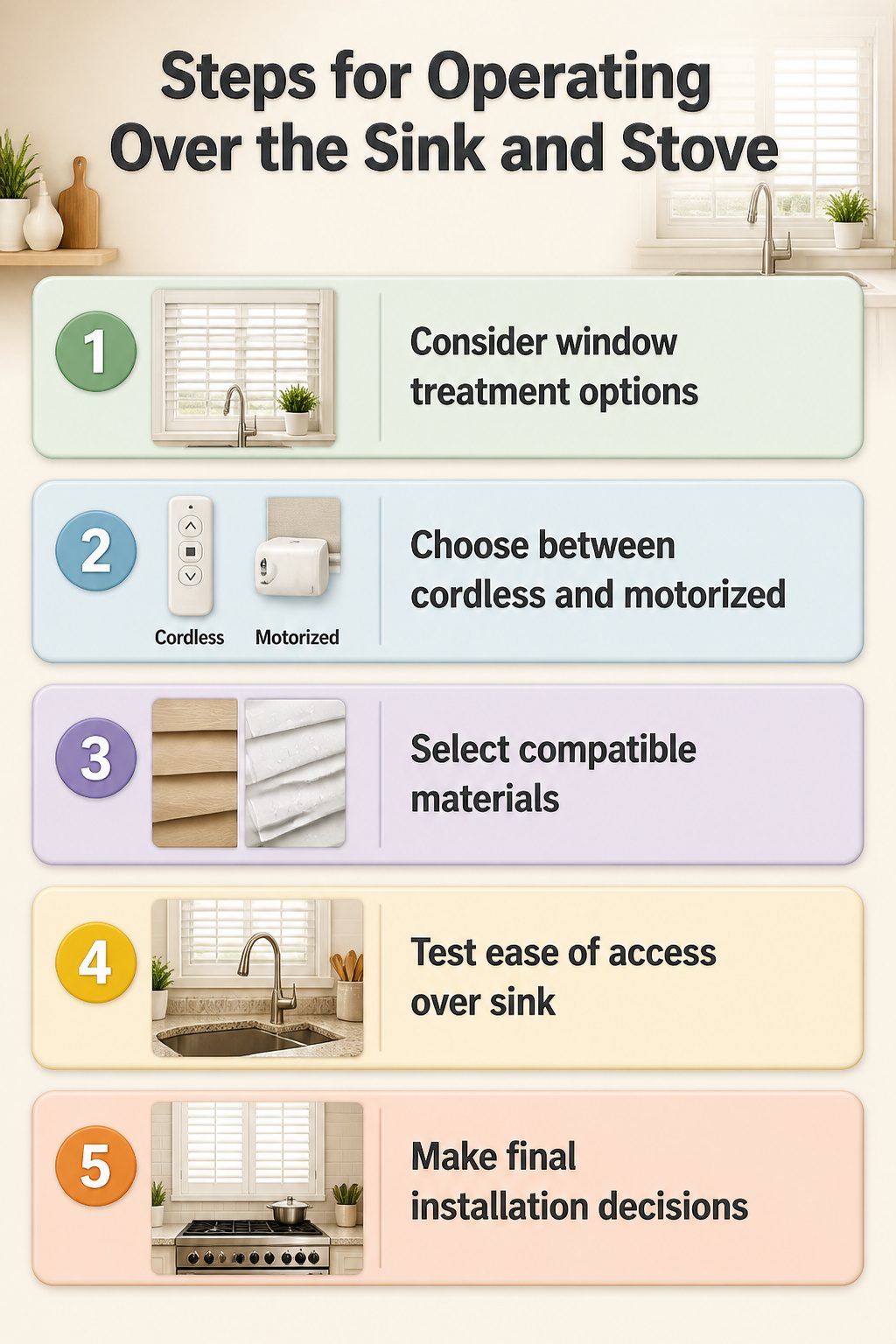
Windows behind the faucet or above the range sit where steam, grease, and splatter collect daily. Faux wood blinds and vinyl shutters handle that exposure without warping; they wipe clean with a damp cloth, which fabric treatments rarely manage.
Palm Beach Polysatin shutters carry a guarantee against warping, cracking, or discoloration even in extreme heat and moisture, and guests usually mistake them for painted hardwood until they see a spill wipe off in seconds.
Reach matters as much as material. My own sink window sits far enough behind the faucet that leaning across wet granite got old fast.
I weighed cordless against motorized: cordless drops the hazard of dangling strings near water and clears the view, but you still need arm length to grab the rail.
Motorized lifts win for windows you cannot comfortably reach without stretching over a hot pan or a full sink.
The cost gap has narrowed enough that the convenience justifies itself if you open and close that shade more than once a day.
For a window you touch only at morning and evening, cordless stays the cleaner look and the smaller hit to budget.
Frequently Asked Questions
What are the best blinds for kitchen windows?
Faux wood blinds and aluminum mini blinds are the most practical choices because they resist heat, moisture, and grease while wiping clean with a damp cloth.
Faux wood built from a UV-resistant Polysatin compound carries a guarantee against warping, cracking, fading, chipping, peeling, or discoloring even in extreme kitchen conditions.
For adjustable light control and the look of painted wood without upkeep, faux wood blinds cost less than half what traditional wood runs.
Should I choose blinds or shades for my kitchen?
Blinds work better when you want adjustable slats for flexible light control and easy wipe-down cleaning near sinks or stoves.
Shades create a softer, more streamlined look and sit flatter against the glass, which matters in small kitchens where wall space is tight.
Roman shades add warmth in lower-moisture areas, while cellular shades add insulation against cold windows; roller shades fit almost flush and hide in a compact tube at the top.
How do you clean kitchen blinds and shades?
Faux wood blinds, aluminum mini blinds, and Polysatin shutters wipe clean with a damp cloth after grease splatters.
Vinyl roller shades spot clean with mild detergent. For fabric shades, regular dusting with a soft cloth or vacuum brush attachment handles surface dirt, while tougher stains need a microfiber cloth soaked in warm water and mild detergent.
Sheer shadings with floating vanes need more attention because grease and flour collect on three planes of fabric, including crevices between vane and sheer.