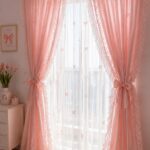

The right small window privacy idea depends on whether the glass sits above a tub, across from a neighbor’s porch, or in a room that never sees steam.
Moisture is the dividing line: PVC and vinyl survive daily showers, while real wood swells and fabric mildews within a season.
For a 19-inch-wide stairwell window angled toward the front door, that choice becomes the difference between a treatment that leaks light at the edges and one that fills the frame exactly.
1. Faux Wood Blinds
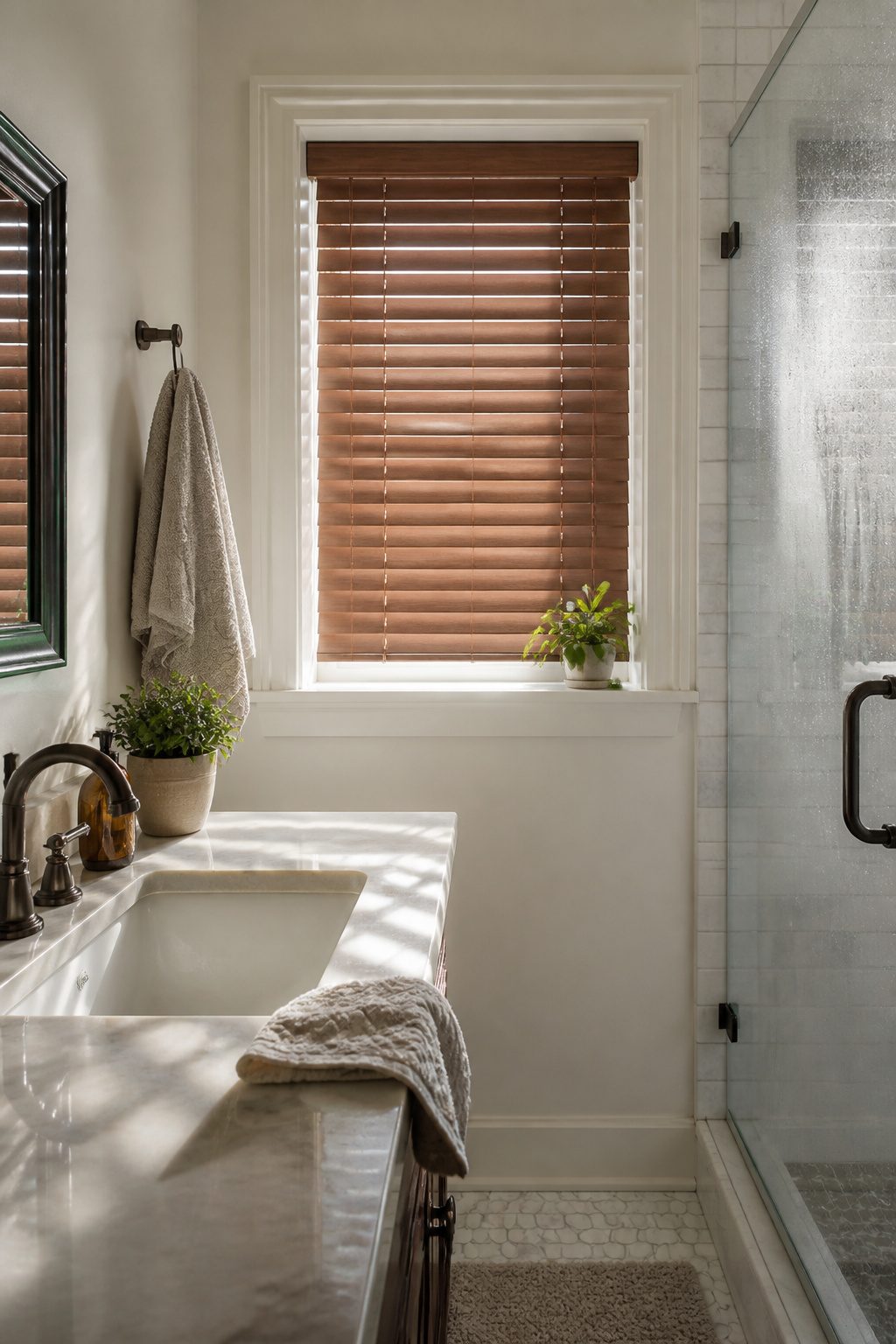
Faux wood blinds carry the warm grain look of real timber, but the composite material underneath shrugs off the steam that warps the genuine article inside a season.
In a bathroom with a small window, that moisture resistance matters more than the prestige of natural wood, because the slats sit inches from a shower that runs twice a day.
The cleaning is where the composite pays off a second time.
A quick wipe with a damp cloth lifts toothpaste splatter and condensation spots without the oil soaps or careful drying that real wood demands. For a renter who swaps treatments between leases, that low maintenance translates to hours saved.
The tradeoff shows up in the stack. Faux wood slats are thicker than their real-wood cousins, so the raised bundle blocks more light at the top of a small window than you might expect.
In a tight bathroom, that can mean the difference between a dim mirror and one that catches morning sun.
If the window is under 24 inches tall, the bulk is worth weighing against how often you plan to raise the blinds fully open.
For humid rooms, the composite wins on durability and wipe-down ease. For the tiniest windows, real wood’s slimmer profile keeps more glass clear, but only if you are willing to replace it when the steam finally gets in.

IMPORTANT SIZING INFORMATION! - This window blind is 33.5" wide to allow for mounting inside a 34" wide window opening. All inside-mount blinds include a ½-inch width deduction from the size ordered to ensure a perfect fit within your window frame. Your blind will arrive exactly 33.5" wide (for a 34" wide window). Sizes listed in the product description are measured by Width × Height. Please review our measuring guide to confirm proper sizing before ordering.

IMPORTANT! - This blind is 34.5" wide to allow for mounting the blind inside a 35" wide window. Your blind will arrive to you exactly 34.5" wide. Our 2 Inch Faux Wood blinds are designed for a wide variety of window sizes and styles. Sizes stated within the product descriptions are listed by WIDTH then HEIGHT. See measuring instructions to ensure best fit.
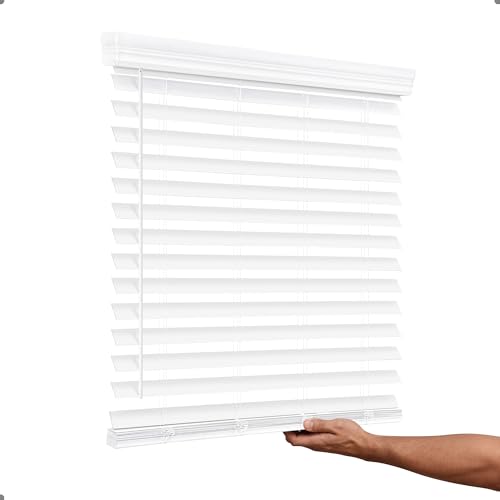
IMPORTANT SIZE NOTE – Precision Fit for Your Window This wood blind arrives exactly 33.5 inches wide, expertly crafted for a snug inside mount in a standard 34-inch window frame. Measure carefully before ordering – all sizes are "Width x Height". For outside mount, refer to our guide to select the ideal size. Perfect for window blinds for home and indoor use
2. Roller Shades
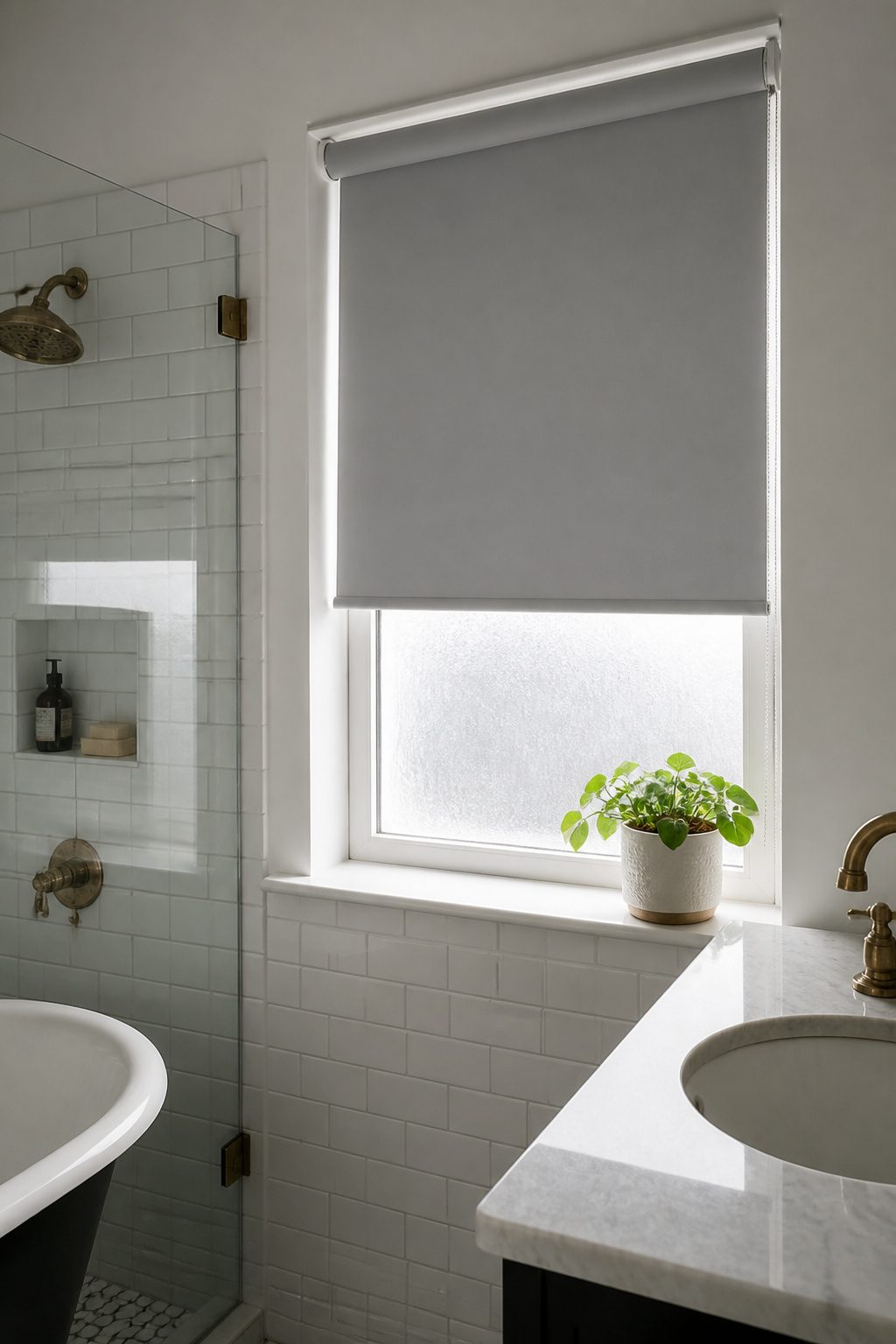
PVC and vinyl roller shades are the only window treatment I would trust in a bathroom that actually gets steamed up.
Their surfaces are completely non-porous, so a damp cloth wipes off soap scum or mildew before it ever sets in. No fabric to dry out, no slats to clean between.
The minimalist profile matters more than I expected in a small window.
Rolled up, the shade practically disappears, and even deployed it sits flat against the glass without the bulk of blinds or shutters. That visual quiet keeps a tight room from feeling crowded.
Light-filtering fabric is the smarter choice here over blackout material. A small bathroom or hallway window needs every lumen it can get, and filtering rather than blocking preserves that brightness while still breaking the sightline from outside.
Blackout turns the room into a cave by day, which defeats the point in a space this size.
Polyester or PVC fabrics hold up best against moisture. The "all or nothing" privacy of a standard roller shade is the real tradeoff, light-filtering solves it without the heaviness of a double shade.

【No Drill 30s Installation】Experience hassle-free setup with our no drill shades for indoor windows in just 30 seconds. The no drill tension blinds not only save your installation time but also keep your walls intact, providing a great choice for those who dislike hassle. Please note that these no screw blinds are designed for inside mount only and require a minimum window DEPTH of 2 inches.

【Excellent Material】:Blind Size: 23"W x 72"H, Fabric Size: 22"W x 72"H. Fabric is 100% polyester material fabrics with reinforce thermal insulated coating, feeling soft and smooth. No burrs, strong wear resistance, and easy to clean.Our blackout blinds block 100% of sunlight and UV rays. The thermal backing reduces the loss of room heat and against cold through the windows in winter and summer, helping to reduce your energy bills.

【Excellent Blackout Material】Crafted from 100% blackout polyester fabric with a matching color coating, our TOVALOR cordless roller shades offer a sleek, modern look with exceptional durability. The thermal backing blocks out all sunlight, providing complete light control and ensuring privacy. Finished with sturdy, e-coated aluminum top and bottom rails, these shades feature a smooth, natural finish that seamlessly complements any room décor.
3. Cellular Shades
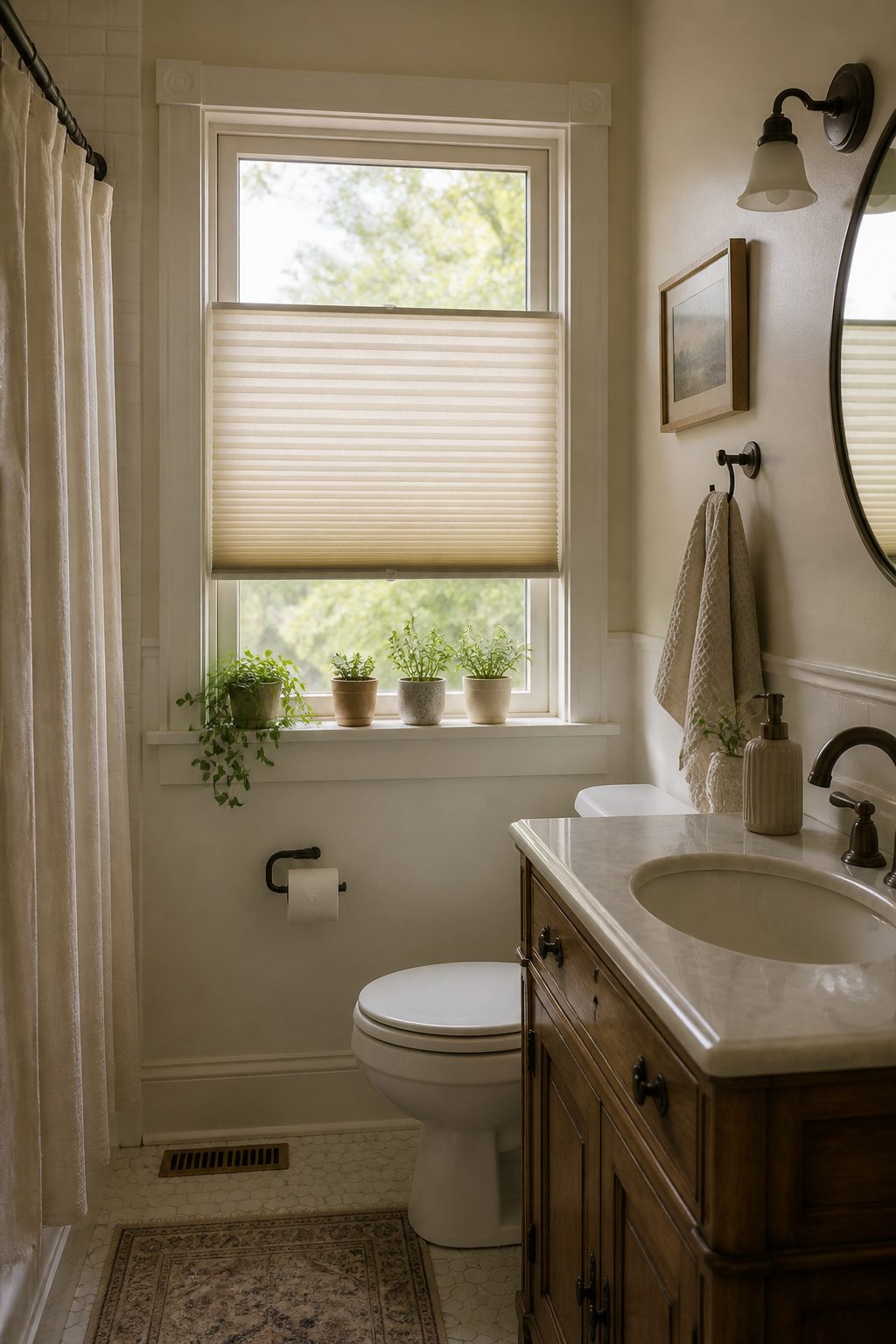
Cellular shades, also called honeycomb shades, owe their name to the rows of fabric pockets that run the width of the shade.
Those pockets trap air and add a layer of insulation between the glass and the room, which matters more than you might expect in a small bathroom window on a cold morning.
The top-down/bottom-up lift system is what makes these work for privacy.
You can drop the shade from the top to let daylight in above eye level while the lower half stays fully covered, or raise it from the bottom the usual way.
In a small window, that flexibility gets you light without the fishbowl feeling.
The fabric cells have a soft, textured look that reads as finished even in a tight frame where bulkier treatments would crowd the sill.
Dust does collect inside the cells over time and takes a vacuum with a brush attachment to clear out.
For a bathroom where you are balancing temperature, light, and not giving the neighbors a show, that tradeoff is usually worth it.

【Linen Fabrics】Made from high-quality linen fabric, our light filtering shades are designed to be soft and skin-friendly, transparent to light, opaque to sight. Perfect for creating a cozy and peaceful atmosphere in any room. The fabric is precisely cut with a laser without any rough edges. Linen fabric is predominantly made from natural linen fibers, which are completely natural and odor-free, providing you a more comfortable and enjoyable environment.

[Innovative Free-Stop System]: Experience effortless control with our light filtering roller shade's innovative free-stop system. Easily adjust the shade to your desired height, allowing for precise light control and privacy, without the hassle of traditional cords or chains.
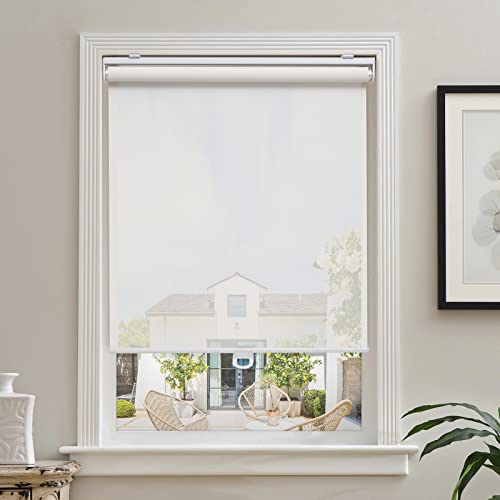
[ECO-FRIENDLY FABRIC ]: Light filtering roller shade is 100% polyester fabric. Good ventilation capability, anti-static, dust-proof and durable. The aluminum bottom rod replaces the plastic bottom rod to improve the overall stability, so that the panel and the bottom are on the same level, not easy to tilt, prevent wind blowing, and give users a better experience.
4. Vinyl Shutters
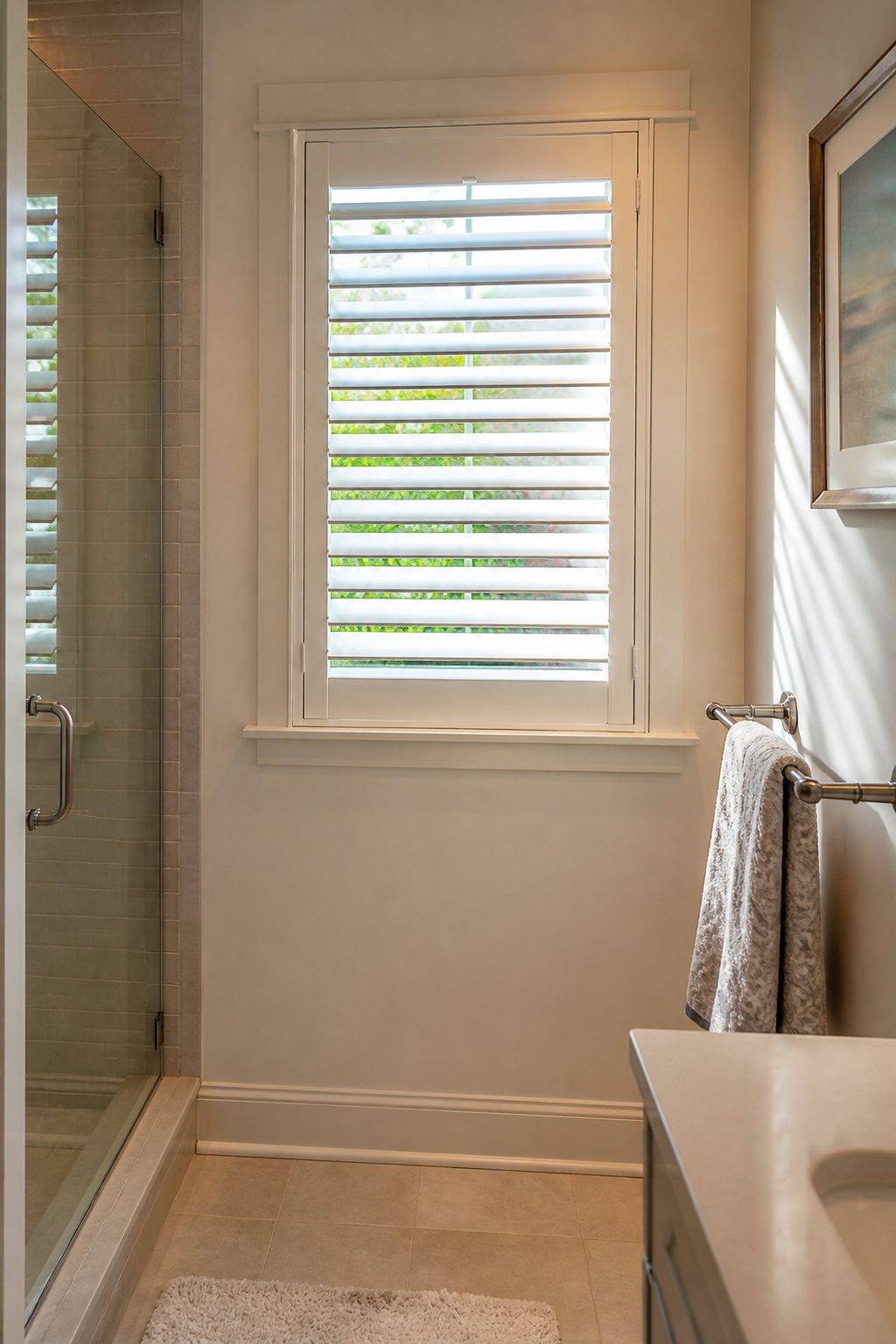
Vinyl shutters handle the one-two punch of steam and splatter that ruins most small-window treatments. The slats are non-porous PVC, so a quick wipe with a damp cloth knocks down soap scum and mildew before it sets in.
That waterproof surface also means no peeling or cracking after a few humid summers, which is more than I can say for the composite blinds I tried in my last rental.
The movable louvers are the real win in a tight bathroom or ground-floor bedroom. Tilt them flat and you get full daylight; angle them up and you block the sightline from the sidewalk without killing the ambient light.
An inside mount keeps the frame from swallowing visual space, which matters when your window is already narrow.
The catch is the weight: the frame reads heavy in a very small opening, and the price sits higher than faux wood or roller shades.
For a room you use daily and want to look finished, the durability and control usually justify it.
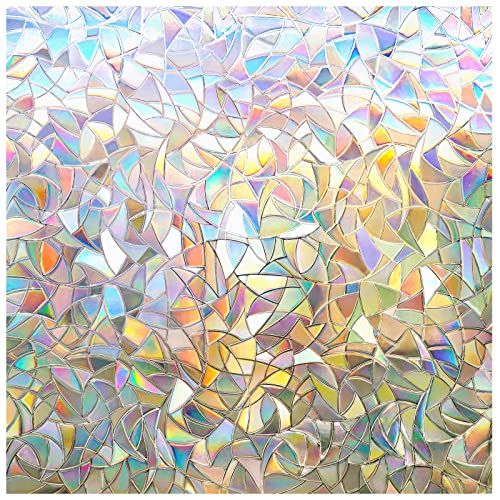
Striking Pattern, Stylish Decoration: With over 10 years of experience in window film innovation, rabbitgoo static film features unique irregular patterns that cast rainbow glows in sunlight, adding a stylish touch to your decor. A cost-effective alternative to bulky curtains, blending durability with everyday elegance

Note: 1. The protective film shall be removed before installing. 2. Please remove all excess water & bubbles in the end of installation steps. 3. The free tools are inside the paper tube.4. The frosted glass film can’t be used in frosted glass, cut glass and all of processed non-smooth surface glass.

Stop Closing Curtains All Day: Turns your windows into a one-way mirror during daylight: nosy neighbors, passersby and delivery drivers see only their reflection, while you enjoy crystal-clear views of birds, trees and the outdoors. Note: Draw curtains at night for full privacy when indoor lights are on. Perfect for ground-floor homes, street-facing bedrooms and busy offices
5. Privacy Window Film
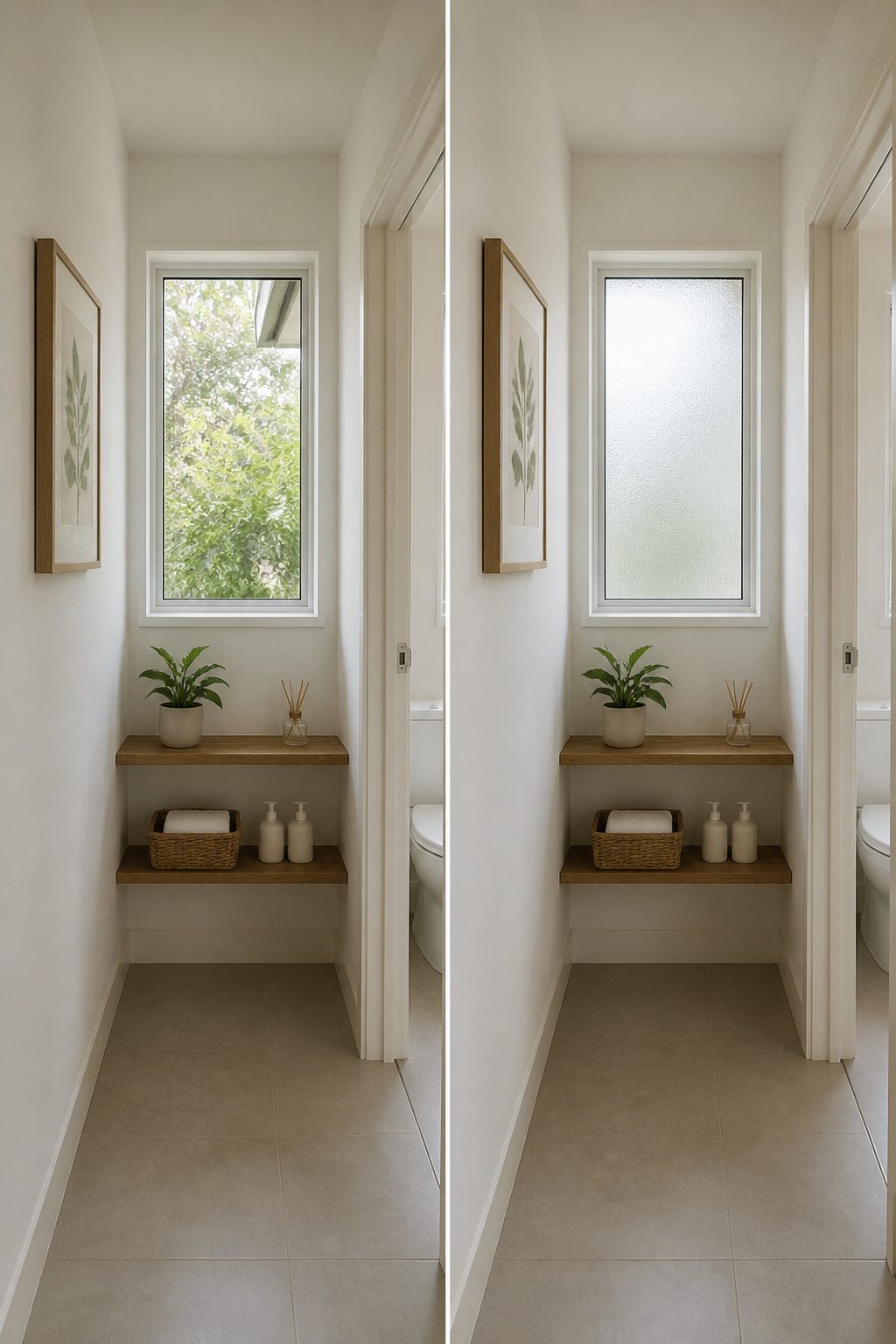
Privacy window film sticks directly to the glass, which means it never protrudes into a room the way a blind or shade does.
For a small window in a tight bathroom or a narrow hallway, that absence of bulk matters. The film blurs the view from outside while still letting in soft, diffused light, so you do not lose the window’s purpose entirely.
Application is straightforward enough that most people handle it alone in an afternoon. You cut the film to size, mist the glass with water, and smooth it into place.
Removal is equally simple, which makes it one of the few privacy fixes that follows you when you move. Renters get the benefit without worrying about landlord approval or leaving holes.
The tradeoff is rigidity.
Once the film is up, privacy is always on. You cannot tilt slats or raise a shade for an unobstructed view.
Patterns range from plain frosted to stained-glass looks, but the function does not change. For a window that only faces a neighbor’s wall or a street-level sightline you would rather block permanently, that fixed state is not really a problem.
For anything overlooking a garden you sometimes want to see, it is a harder sell.

ADHESIVE-FREE FILM - Made of environmental friendly materials, our static cling window film can be easily removed, re-positioned and reused

Privacy Protection with Elegant Decorative Diamond Pattern: Featuring a frosted diamond lattice pattern that transforms plain windows into a work of art, this static cling film obscures visibility from outside while allowing plenty of natural light to filter through. Enjoy perfect privacy with the right level of opacity—no more dark spaces or closed blinds all day. Suitable for front door sidelights, bathroom windows, bedroom windows, basement glass, and street-facing windows. Sizing Tip: Please measure your window dimensions in advance and order a larger size when possible to cover the full glass seamlessly without piecing rolls together.

✔ NO ADHESIVE APPLICATION-- This privacy window film is static cling without adhesive, super easy to do application on smooth window glass surface,and it can be removable and reusable.
6. Sheer Curtains
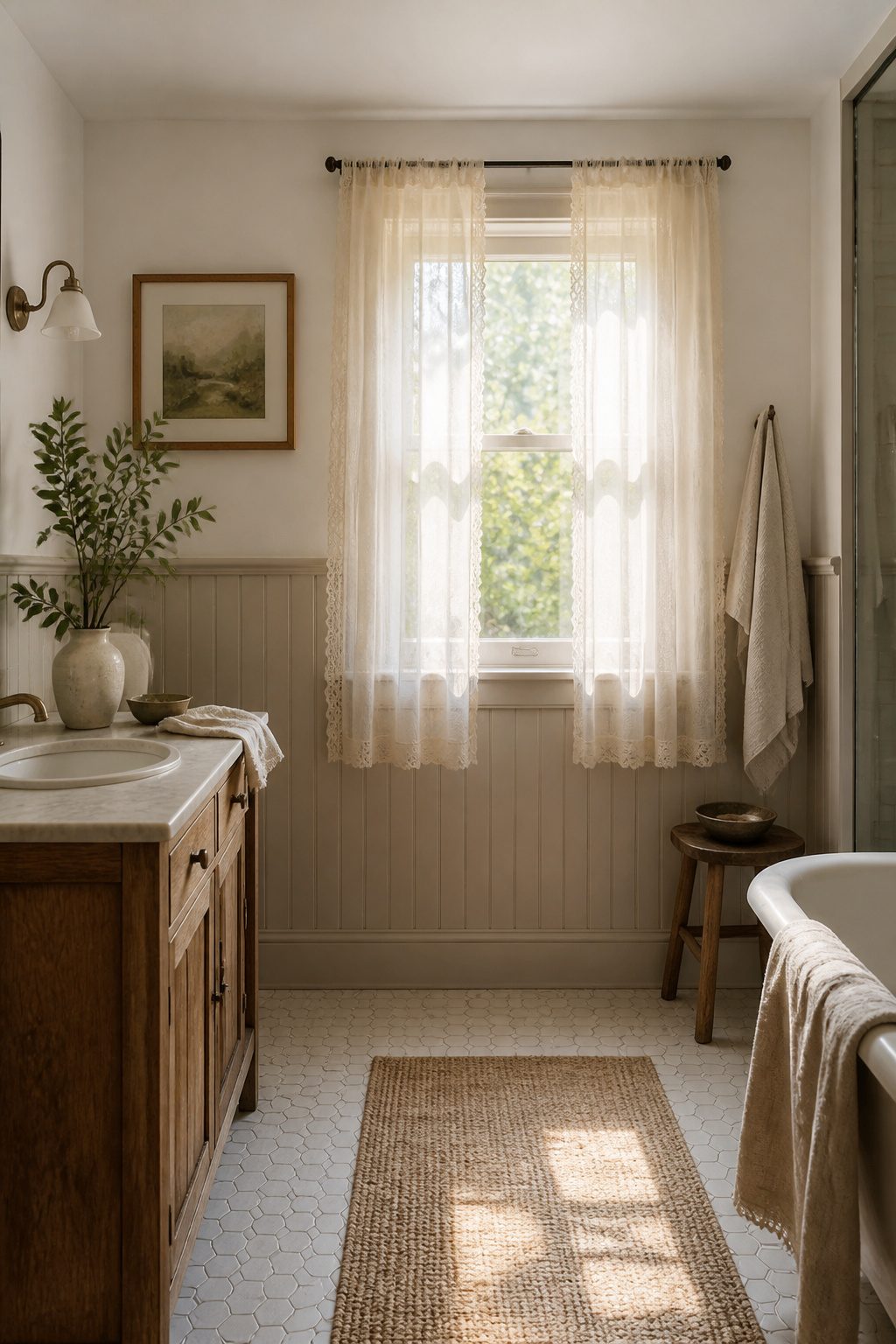
Sheer curtains soften the view into a room without turning it dark, which matters more than it sounds in a small space where heavy fabric can feel like a wall moved inward.
The fabric diffuses daylight across the room and keeps the window itself from reading as a hard black rectangle at night, but the privacy is situational.
Someone standing on your porch at dusk will see shapes and movement clearly; during full daylight the effect reverses and you mostly see out.
A minimal profile suits awkward small windows where bulky treatments eat the only wall space you have for a shelf or light switch.
In a bathroom or powder room, hanging the sheer below a mirror line, as some designers do, adds coverage where you need it while the upper glass still pulls in light.
The same approach in a ground-floor bedroom leaves you exposed once lamps come on.
Sheers work best where privacy is partial by nature: above a sink, beside a front door, or layered behind a heavier curtain you close at night.
Alone on a street-facing bedroom or any first-floor window at night, they are decoration doing security’s job.
Cotton or linen sheers keep the look casual and the rod pocket simple if you plan to leave them in place; rings or grommets only matter if you will open and close them daily, which for this fabric you usually won’t.

IMPORTANT SIZE NOTE – Precision Fit for Your Window This wood blind arrives exactly 34 inches wide, expertly crafted for a snug inside mount in a standard 34.5-inch window frame. Measure carefully before ordering – all sizes are "Width x Height". For outside mount, refer to our guide to select the ideal size. Perfect for window blinds for home and indoor use

Smooth Wood-Look Slats (No Grain Texture) - 2" composite faux-wood slats with a clean white finish that complements modern, transitional, classic or minimalist décor. Smooth, low-maintenance surface with no wood-grain texture.

IMPORTANT! – This window blind measures exactly 34" wide and is designed to fit inside a 34.5" wide window, following industry-standard sizing. A 1/2-inch deduction is applied to ensure proper bracket placement within the window frame for a secure fit.
7. Tinted or Decorative Glass
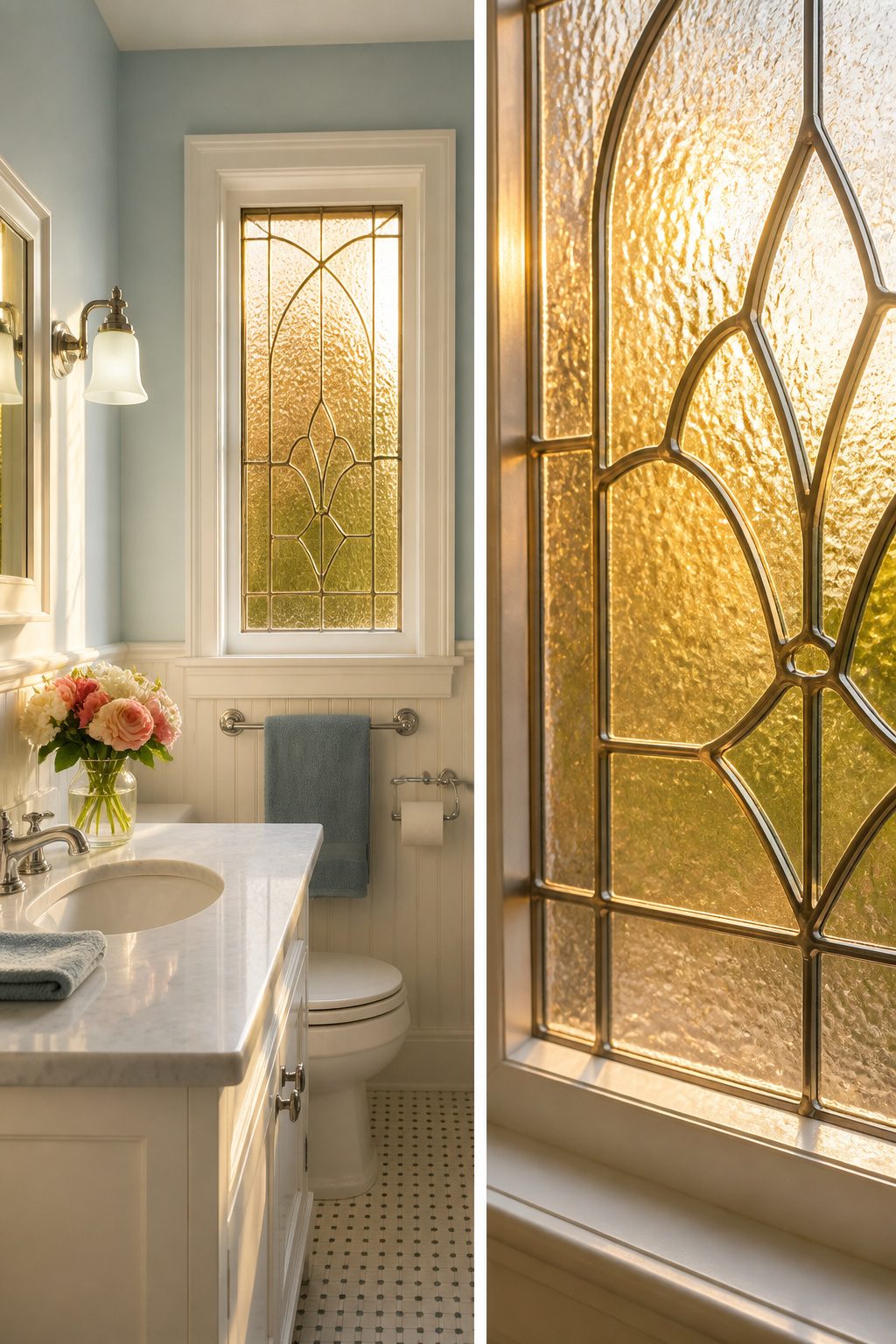
Tinted or decorative glass is the only privacy solution that lives in the window itself, not on it.
A bronze, gray, or green tint turns a small bathroom window into a steady wash of color that still lets daylight through, while decorative options like aqualite glass with its watery translucent surface or Flemish glass with its opaque, sequined texture block the view entirely without looking like an afterthought.
The upfront cost runs high, since this means replacing the sash or the whole window unit during construction or a renovation, not clipping something on after move-in.
For a first-home owner gutting a bathroom, that price buys zero maintenance for the life of the window. Renters should skip this entirely; it is not a weekend project and it does not travel with you.
The payoff is for someone staying put who wants privacy solved once, permanently, in a space small enough that a single custom glass choice defines the room.

Precision-made materials, durable and robust: outdoor roller shades 0.8mm transparent PVC + painted aluminum alloy base rail, stable and smooth. Windproof and rainproof, light-transmitting, easy to clean, and resistant to yellowing and aging

Premium Clear PVC Roller Shade – Crafted from 0.5mm thick soft vinyl PVC, this Clear Roller Blind delivers crystal-clear visibility with superior durability. The heavy-duty transparent material designed to maintain long-lasting clarity, making it ideal for luxury outdoor living spaces, patios, pergolas, and balcony enclosures

ALL-WEATHER PROTECTION: Premium vinyl roller shades shield against rain, wind, and UV rays while staying crystal clear. Perfect transparent roll up curtains for patio, porch, and pergola to enjoy unobstructed outdoor views year-round
8. Cafe Curtains
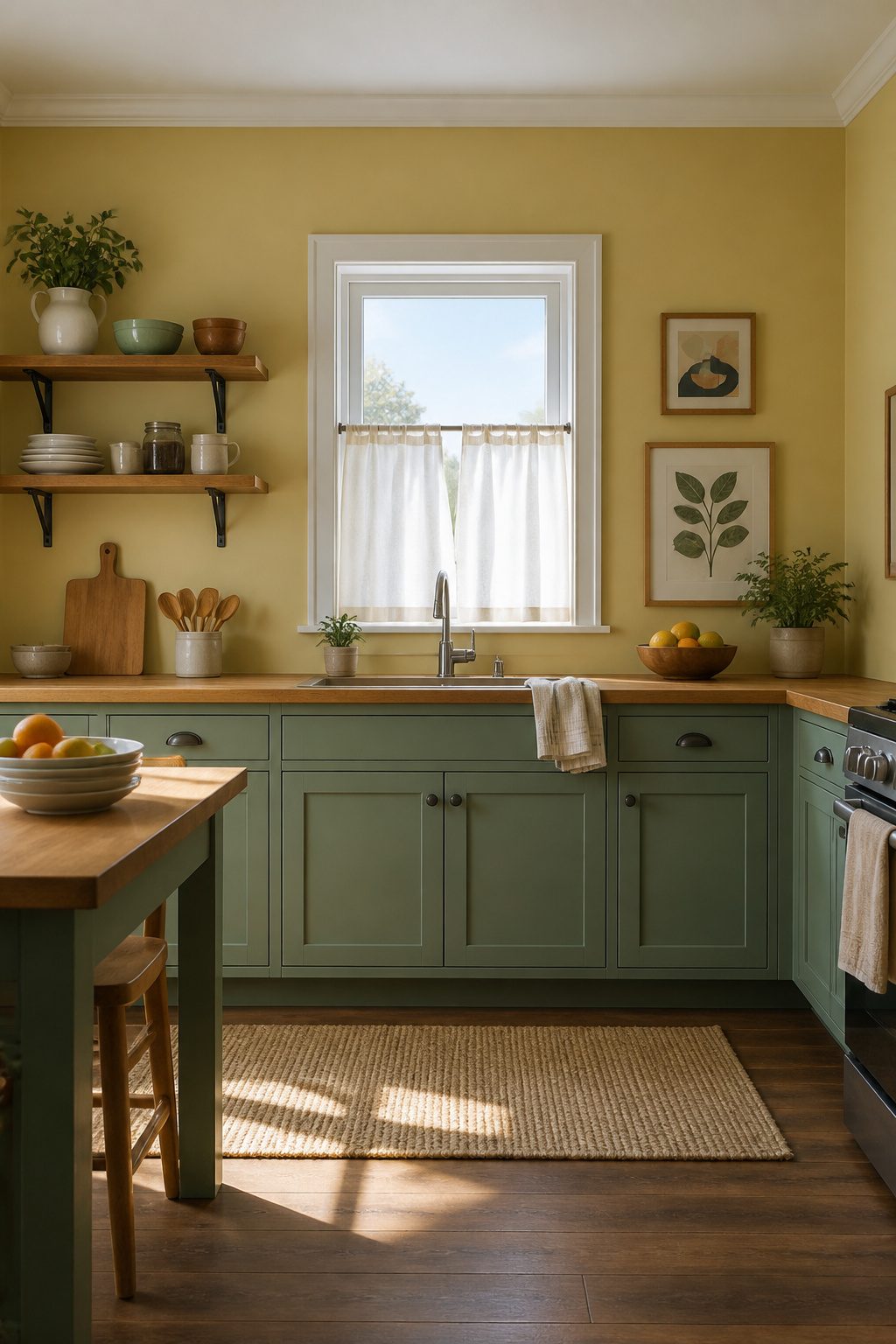
Cafe curtains cover only the lower half or two-thirds of a window, which makes them one of the more practical small window privacy ideas for rooms where you still want the light.
The upper glass stays clear, so a kitchen over the sink or a laundry room facing a neighbor’s driveway gets privacy without turning into a cave.
Lightweight cotton or linen keeps the look airy, and sheers work if you only need semi-privacy.
A rod pocket header is fine for curtains that stay put; rings, grommets, or pinch pleats glide better if you plan to open and close them daily.
In tight, suburban lots, it’s easy to feel like your neighbors are too close, especially if you catch their eye while doing the dishes. To combat a lack of privacy, try cafe curtains.
That scenario is exactly where these earn their keep: the bottom half of the window hides you from the waist down, while the top half still lets in daylight and a view of sky.
They are a casual fit, which means they look out of place in formal rooms, but for a weekend project on a small window they are hard to beat.
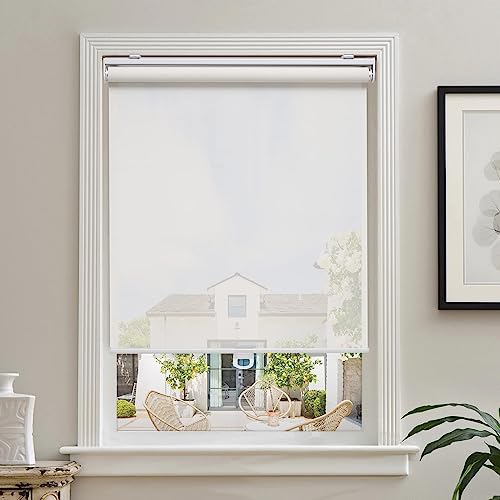
[ECO-FRIENDLY FABRIC ]: Light filtering roller shade is 104% polyester fabric. Good ventilation capability, anti-static, dust-proof and durable. The aluminum bottom rod replaces the plastic bottom rod to improve the overall stability, so that the panel and the bottom are on the same level, not easy to tilt, prevent wind blowing, and give users a better experience.

PERFECT FIT - For mounting inside the window frame, just order your window size and we will custom make it slightly smaller (1/2”) for the proper fit. For mounting outside the window frame, just add ½” to your desired measurement for the proper fit. Still unsure how to order? Contact our US-based team at [email protected] and we will be happy to assist.
【Linen Fabrics】Made from high-quality linen fabric, our light filtering shades are designed to be soft and skin-friendly, transparent to light, opaque to sight. Perfect for creating a cozy and peaceful atmosphere in any room. The fabric is precisely cut with a laser without any rough edges. Linen fabric is predominantly made from natural linen fibers, which are completely natural and odor-free, providing you a more comfortable and enjoyable environment.
9. Roman Shades
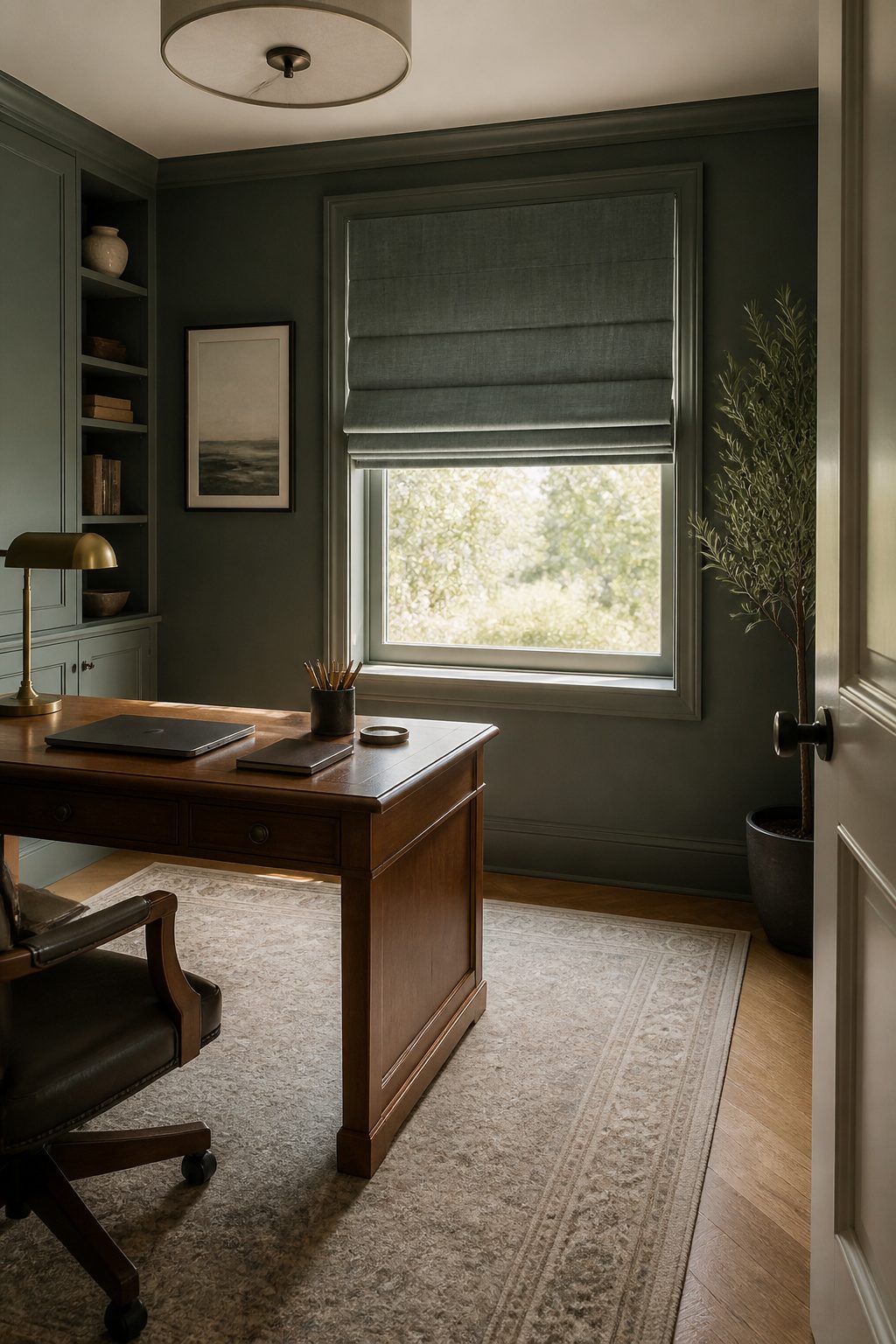
Roman shades fold fabric into clean, stacked pleats that sit tight to the glass, which makes them the most tailored option when wall space is scarce. The structured profile reads intentional, not apologetic, on a small window.
Fabric choice splits the decision. Drapery-weight cottons and linens drape beautifully in a bedroom or living room, but a bathroom demands something engineered for steam.
Polyester or other synthetic weaves resist mildew and dry fast between showers, keeping the tailored look without the rot risk that natural fibers invite.
The tradeoff is slight: synthetics hold their crisp folds with less fuss, though they lack the soft hand of raw linen.
Mount the shade a few inches above the window frame, not inside it.
The stack then parks on the wall, not the glass, so the upper sash stays clear for light and air when the shade is up. In a small window, every inch of clear glass matters.

DECORATIVE DESIGN: These window films feature a beautiful green leaf pattern that adds a natural freshness to any room and creates a rainbow visual effect when the sun shines.

Top Privacy, Soft Light: Enjoy complete seclusion without sacrificing sunlight. Our film creates a frosted white wall effect, instantly blurring outdoor views for bathrooms and bedrooms. It bathes your room in a soft, natural glow, eliminating the need for gloomy curtains

Window Film Kit --Window film tubes contain all the tools you need to install, saving money and time to make installation easier.
10. Custom Shutters
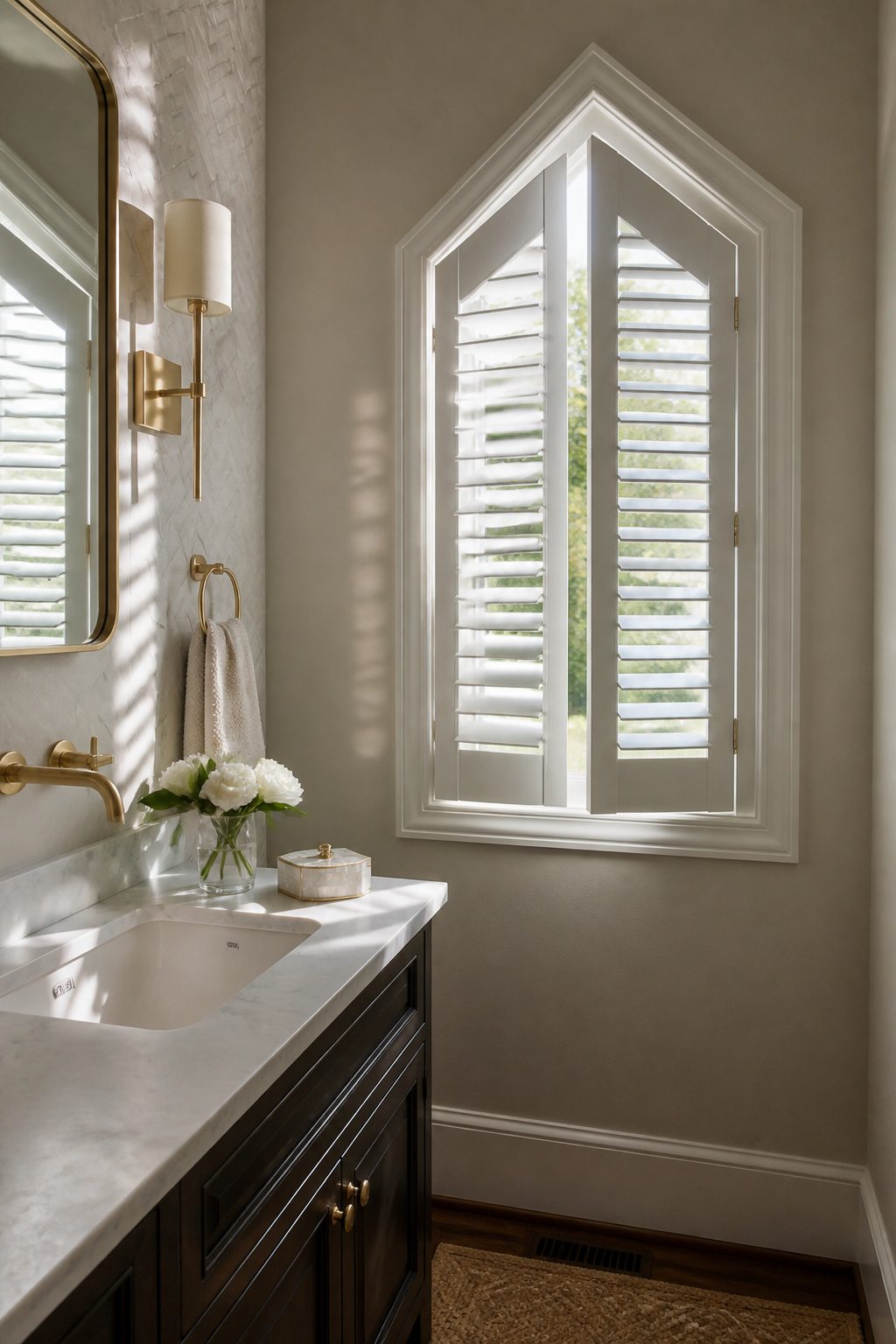
Custom shutters solve the problem off-the-shelf treatments create in irregular small windows: the gap, the shim, the obvious compromise.
A made-to-measure build fills a trapezoid bathroom window or a shallow kitchen casement without the filler strips that read as an afterthought.
The cost runs higher than standard sizes, no way around it.
What buys you is the precise fit and the operable louvers that let you angle light up or shut it down entirely, which matters when the window sits at eye level across from a neighbor’s deck.
For bathrooms or laundry rooms where steam hangs in the air, vinyl or composite holds up where wood swells and jams. The frame does eat visual space; in a tight powder room, an inside mount keeps the footprint cleaner.
I spent time weighing this against simpler options for a stairwell window that measured 19 inches wide on the sill and 17 at the top. The shutter quote stung.
A roller shade would have cost a third and taken a week less. The shade would have leaked light at the sides, though, and this window faced the front porch directly.
The shutters won on function, lost on price, and the decision came down to whether that particular window was worth the investment or just the covering.

Size: 15 x 2.8 x 0.6cm/6" x 1.1" x 0.24"(L*W*T); Package includes: T: 1 x Cabin Hook, 4 x Screws

2nd Generation Frosted Glass Window Film: With a more delicate frosted texture, it has a better touch than the real frosted glass, and greatly prolongs the service life, up to 10 years

1【Our Strengths】Over 100 Years Window Covering Expertise (SCHOENBERGER GROUP est.1878)
11. Sill-Length Curtains
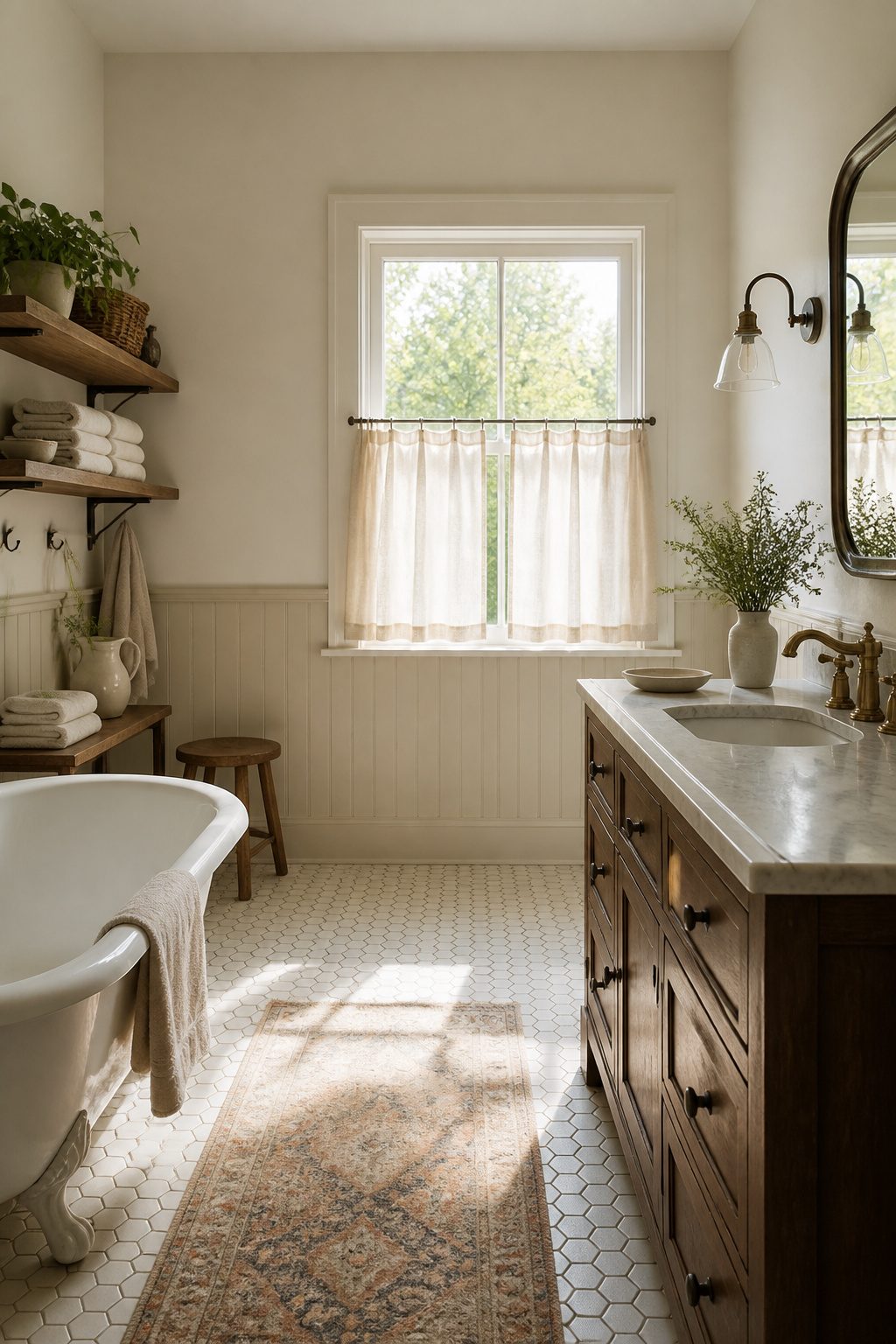
Sill-length curtains stop right at the window ledge or hang just a few inches past it, which keeps fabric from piling on the floor and swallowing what little visual space a small room has.
That shorter drop matters most in kitchens, bathrooms, and bedrooms where floor-length pooling looks dressed up for a window that never asked for it.
The rod placement is where most people trip up. Mount the hardware a few inches above the trim and extend the pole at least six inches past each side of the frame.
That overhang lets the fabric stack clear of the glass when you pull it back, so the window opens up instead of staying half-covered.
Without that width, the curtains sit in front of the glass even when "open," blocking light you were trying to gain.
In a tight spot with a radiator or built-in beneath the sill, the shorter length also avoids fighting furniture you cannot move.
The look stays casual, more farmhouse than formal, which suits rental rooms where you are dressing the window without remodeling around it.
12. Mini Blinds
Mini blinds run one-inch slats on a narrow headrail, which keeps them from swallowing the limited glass real estate on a small window.
The slats tilt open or closed with a wand, and the whole stack draws up to expose the frame, so you still get the option of full light without committing to a bare window.
The price is where they win. Aluminum or vinyl minis run cheaper than anything else in the hardware aisle, and for a laundry room or second bathroom you don’t need to love them, you just need them to function.
That said, the narrow slats collect dust at the edges and in the draw cords, and cleaning between them takes more patience than the wider two-inch slats on faux wood.
If you’re already dreading the upkeep, this is the tradeoff the budget asks for.
What Moisture Does to Window Treatments
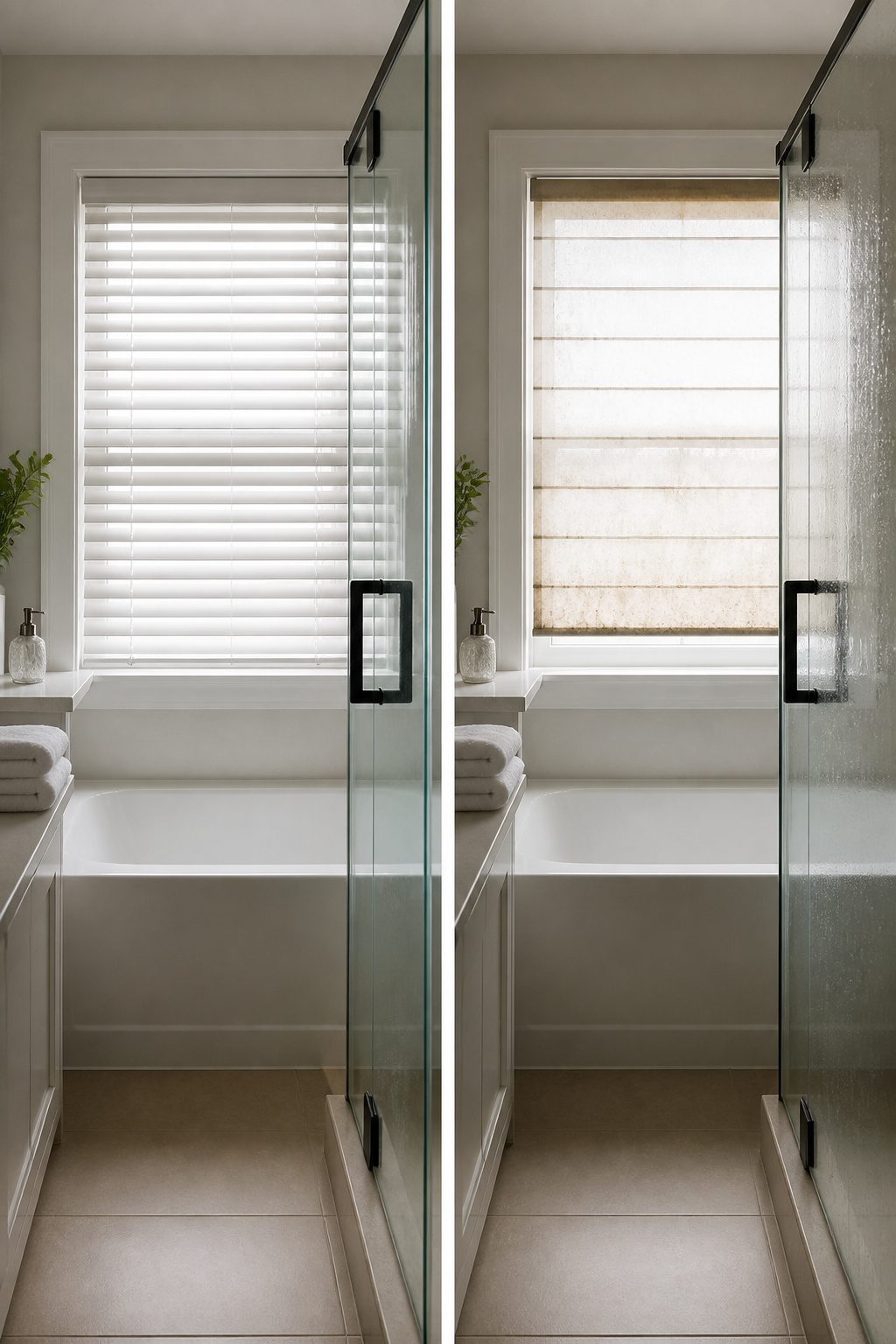
PVC, vinyl, and faux wood carry the same logic as a raincoat in a downpour: their non-porous surfaces block moisture instead of drinking it in.
Steam from a shower hits them and beads off, so the slats or louvers stay flat and the finish stays intact.
That is why these materials dominate the window treatment market, valued at roughly $20.8 billion in 2022, with PVC and polyester leading in bathroom installs specifically.
Untreated wood and standard fabric do the opposite. Real wood absorbs humidity, swells, warps, and eventually mildews; linen or cotton shades in the same room will spot and decay within months.
Faux wood composites give the warmth of grain without the maintenance bill, and polyester fabrics in roller or cellular shades resist mildew while still reading soft.
The mistake is assuming any treatment works in any room. If the window sees regular steam, the material choice matters more than the style.
Reading the Light in Your Room
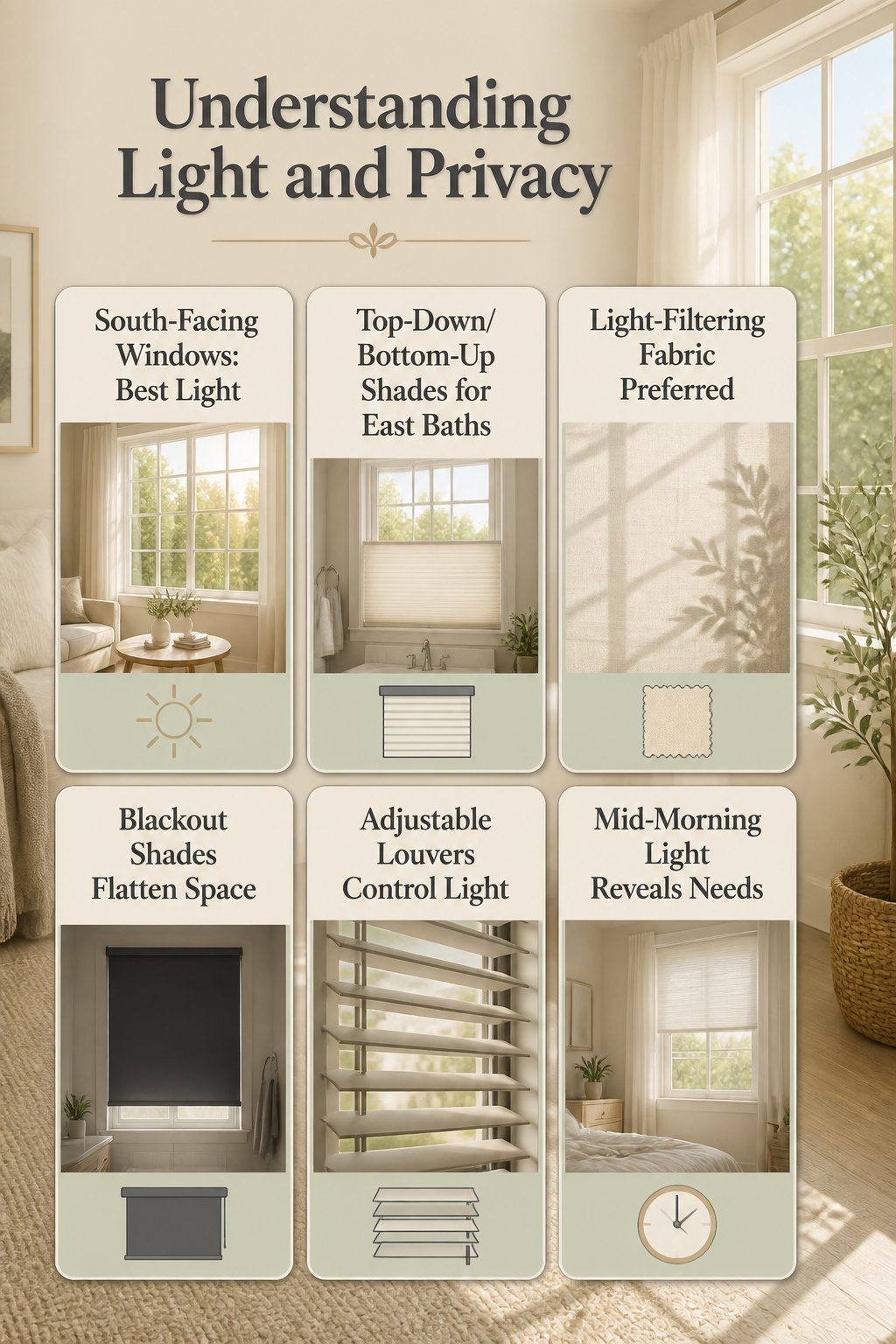
South-facing windows collect the most direct sun, which means privacy risks shift by hour: mid-morning glare can silhouette you to anyone outside, while late afternoon light pours in almost horizontal.
East and west windows are trickier. A top-down/bottom-up shade matters most on east-facing bathroom windows, where you want morning light without greeting the neighbors at eye level.
Lower it from the top and the upper glass stays clear for daylight while the bottom half stays dead opaque.
Light-filtering fabric wins over blackout in small rooms because the space needs every photon it can get. Blackout cellular shades or roller shades will stop the view cold, but they also flatten the room into a box.
A translucent film or a sheer fabric diffuses what’s coming through and bounces it off the ceiling, which reads as square footage you don’t actually own.
Adjustable louvers do the same work with more control: tilt the slats upward and the light skims the ceiling while the sightline from the street hits the back of the slat, not your sink.
The moment you need to choose is usually mid-morning on a Saturday, standing in a room that feels darker than you remembered. That’s when you know whether you bought privacy or just bought shade.
Cleaning Without Taking Anything Down
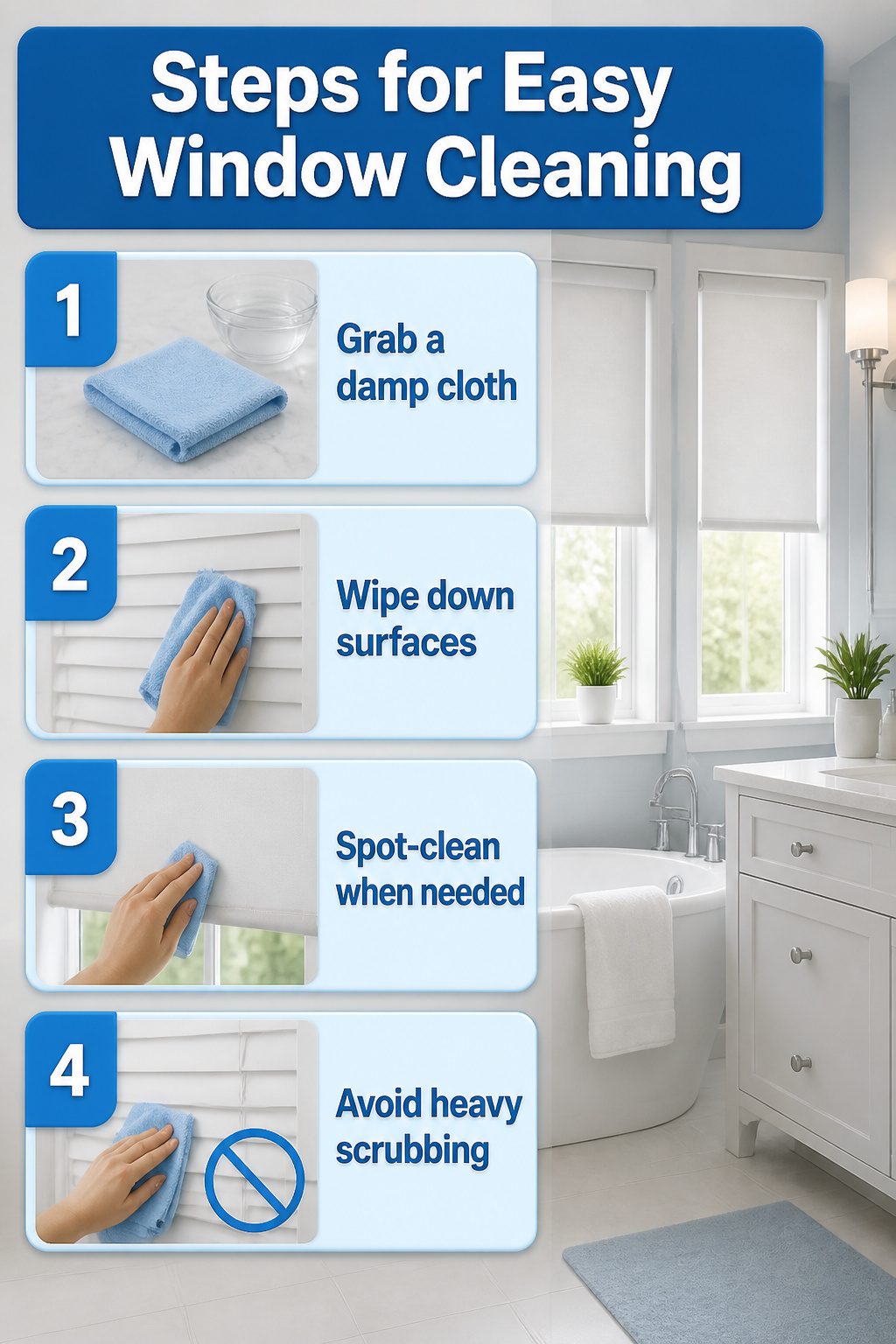
Vinyl shutters, faux wood blinds, and PVC roller shades all share the same practical edge: their non-porous surfaces wipe clean in place with a damp cloth. No ladder work, no hardware removal, no waiting for wash day.
Soap scum changes the math in a bathroom. Dust that would brush off dry becomes adhesive once it meets moisture and residue, so the treatments that let you spot-clean as needed stay presentable longer.
Real wood and fabric absorb that film and hold it; the synthetic options shed it.
The tradeoff shows up in texture. Faux wood mimics grain without the maintenance, but the slats still collect grime at the edges where they stack.
A flat PVC roller shade has fewer seams to trap buildup and less surface area overall, which matters on a small window where every inch gets handled.
Motorized Treatments for Hard-to-Reach Spots
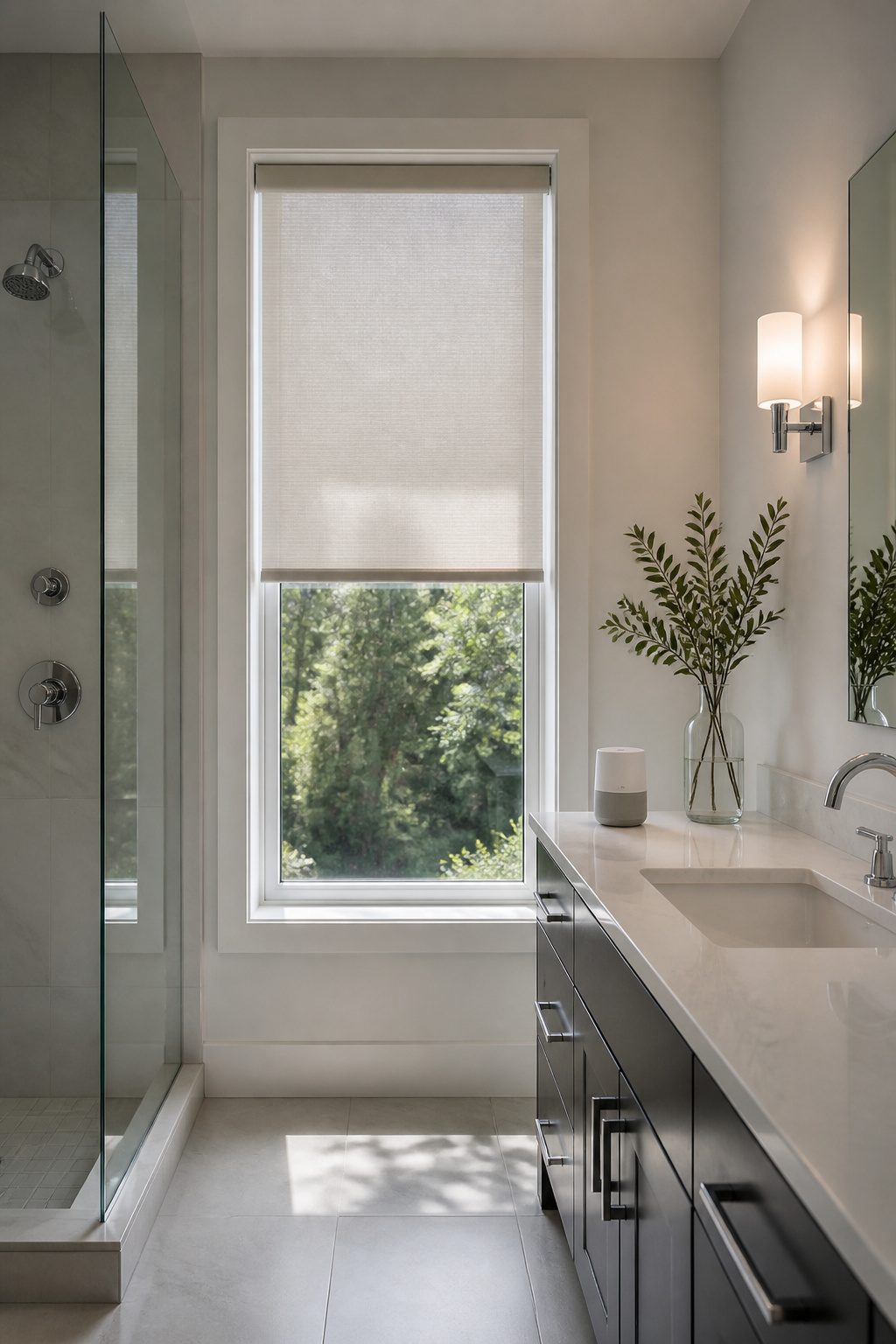
A motorized shade removes the only real obstacle to treating a high bathroom window: reaching it.
The motor sits inside the roller tube or headrail, so the whole thing drops or tilts with a remote, an app, or a voice command. No cords dangle over the tub, and no wet hands touch fabric.
Hygiene is the quieter benefit. Touch-free operation keeps moisture and whatever else is on bathroom hands off the material, which matters more in a small window where the shade sits close to the splash zone.
Smart home integration is where this stops being a splurge. Home automation is expected to reach over 45% of U.S. households by 2024, and manufacturers have responded with more motorized options at lower entry points.
A small window needs less motor power than a wall of glass, so the hardware cost stays proportionally lower. If you are already running a smart hub, adding one more device is a smaller step than starting from scratch.
Frequently Asked Questions
What is the easiest window treatment to clean in a bathroom?
Vinyl shutters, faux wood blinds, and PVC roller shades are the easiest to keep clean.
Their non-porous surfaces let you wipe off soap scum and mildew with a damp cloth without removing anything from the window. Real wood and fabric absorb moisture and hold grime, so they need more careful maintenance.
Can I use fabric curtains in my small bathroom?
You can use fabric curtains in a bathroom if you pick synthetic, mildew-resistant materials and have good ventilation.
Polyester or other engineered weaves dry fast between showers and resist rot better than cotton or linen. Natural fibers will spot and decay within months in a steamy room.
How do I measure my bathroom window for a perfect fit?
For an inside mount, measure the width at the top, middle, and bottom of the frame, then use the narrowest measurement.
Do the same for height and use the shortest measurement. For an outside mount, measure the total area you want covered and add at least two inches to each side for full privacy.