
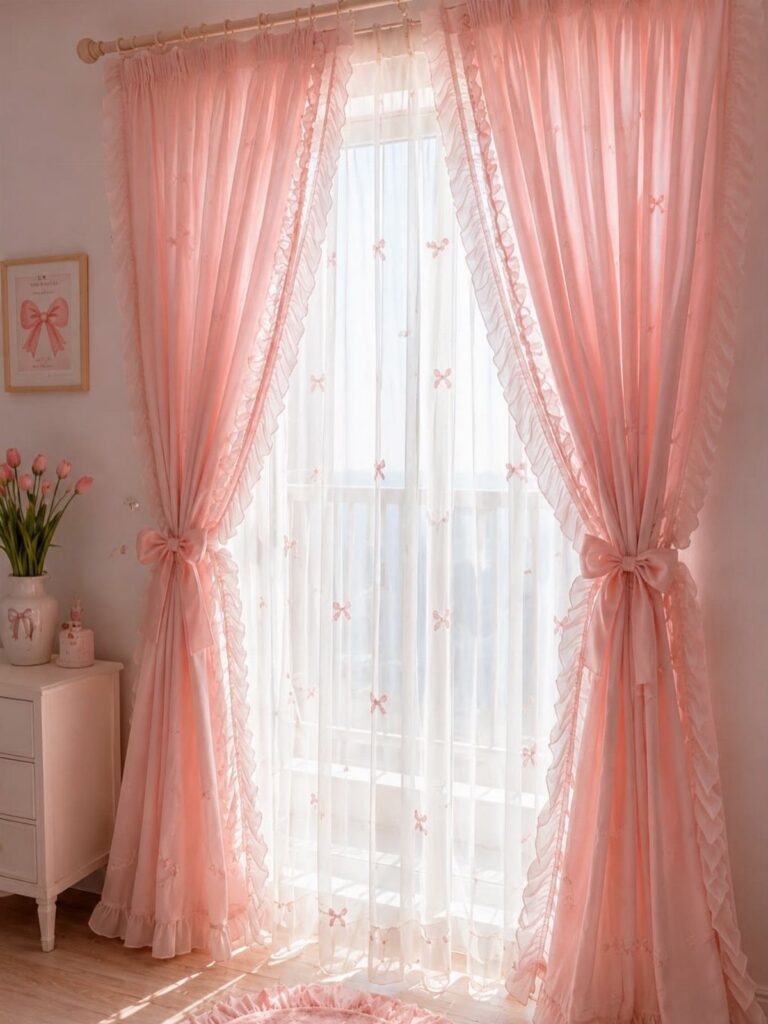
The 22 ideas below range from a fat-quarter remnant bin and an evening with a sewing machine to a ceiling-mounted canopy that hides its track entirely.
What decides which one is yours is whether you own the wall or answer to a landlord: that single fact shapes every choice from rod height to whether the curtain hangs from hardware-store pipe or a hidden ceiling track.
The hidden cove lighting tucked above a dropped soffit is the only one that demands a renovation; everything else lands between a weekend and a Saturday afternoon.
1. Layered Curtains
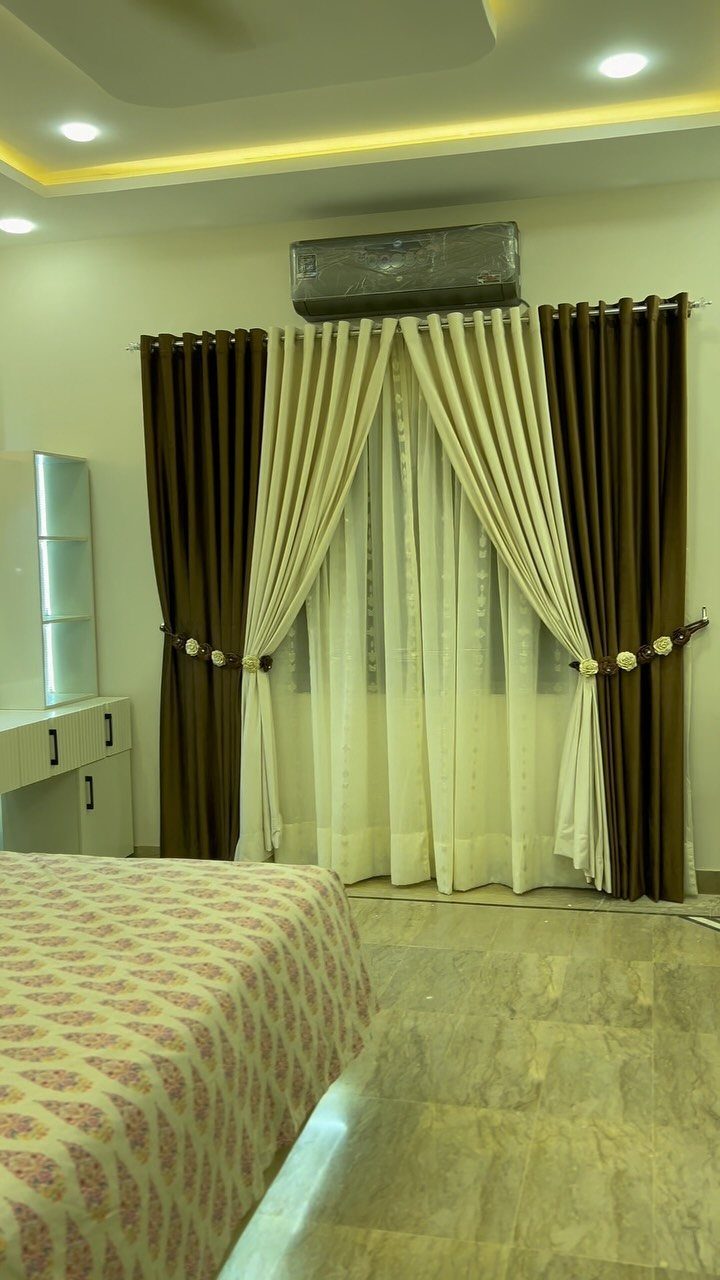
Layered curtains work because you get three functions from one rod setup. The sheer layer handles daylight privacy, the middle drape adds softness when tied back, and the heavier outer panel blocks morning light and drafts.
I like this setup for rentals because you are not drilling extra holes. A double rod or two separate rods hold the layers, and you can swap the middle one seasonally.
A cream and brown pairing keeps the palette quiet, which matters when the bedroom already has a vanity and bedding competing for attention.
2. Ceiling-Mounted Canopy Curtains
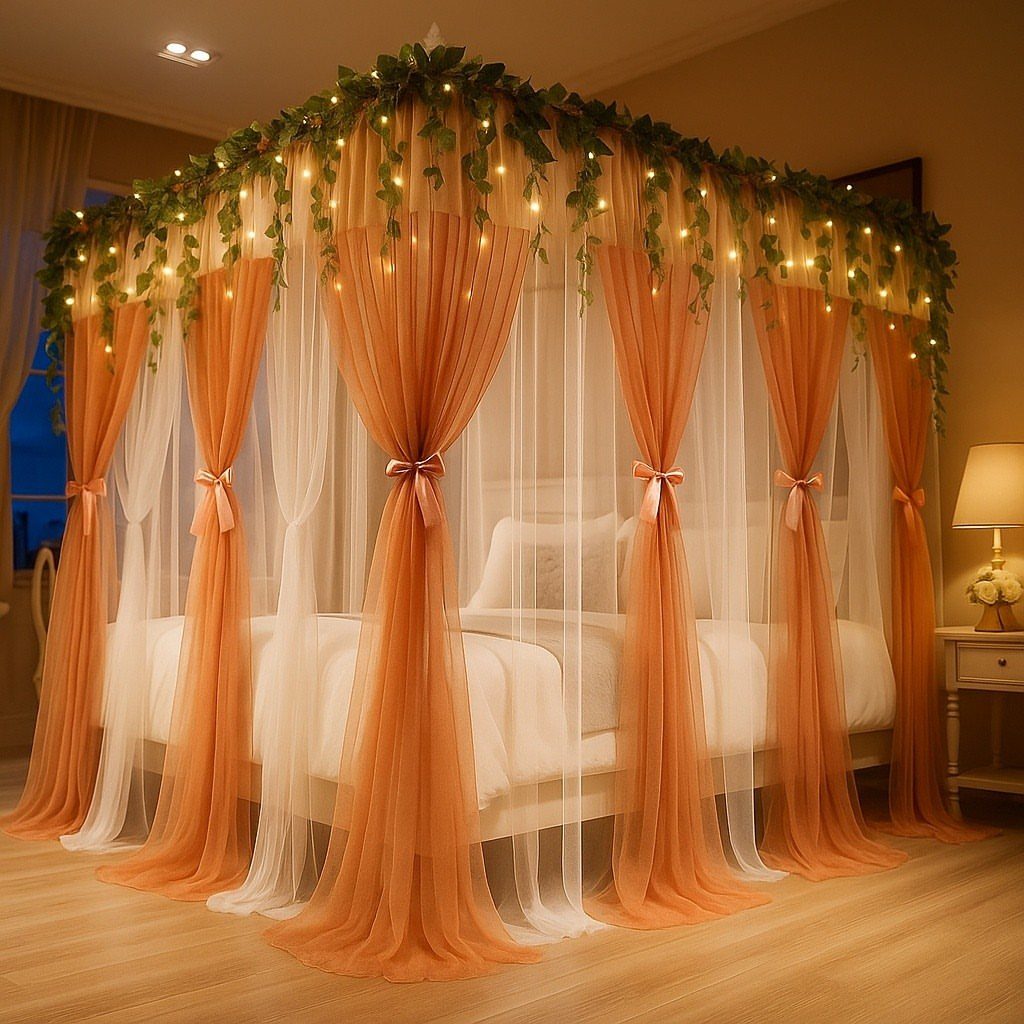
A ceiling-mounted canopy turns any bed into something that feels tucked away.
This setup takes hardware-store parts if you skip the pre-made kits.
I would use sheer polyester rather than cotton; it drapes without ironing and the orange reads as warm rather than loud when light passes through. The ivy and fairy lights are optional, though they do hide the frame.
In this dramatic bedroom, designers Megan Pflug and Moses Nadel prove that curtains aren’t just for windows. Hang curtains at headboard height behind a bed frame to act as a unique DIY headboard.
3. Vibrant Curtains
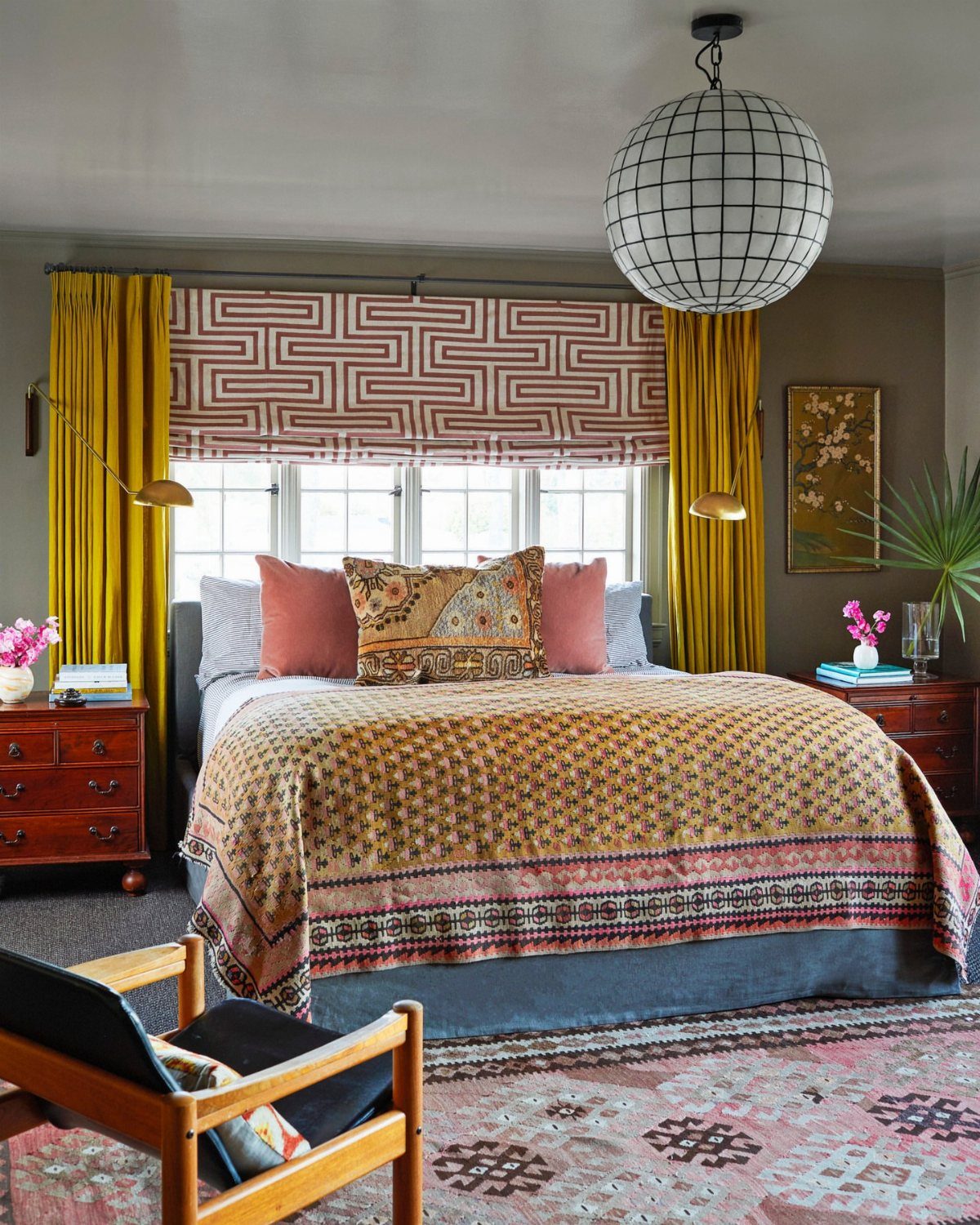
Mustard yellow against white walls is a commitment that pays off in a room with good natural light.
A Roman shade in a small geometric print above the curtains adds a second pattern, which only works because both share the same color.
I would copy this exact pairing if the bedroom has dark furniture that needs lifting.
The curtains themselves are likely a cotton-linen blend in a standard width per panel, the kind you can find at budget retailers. Keep the rest of the room neutral so the yellow does the work alone.
4. Boho Macramé Curtain Panels
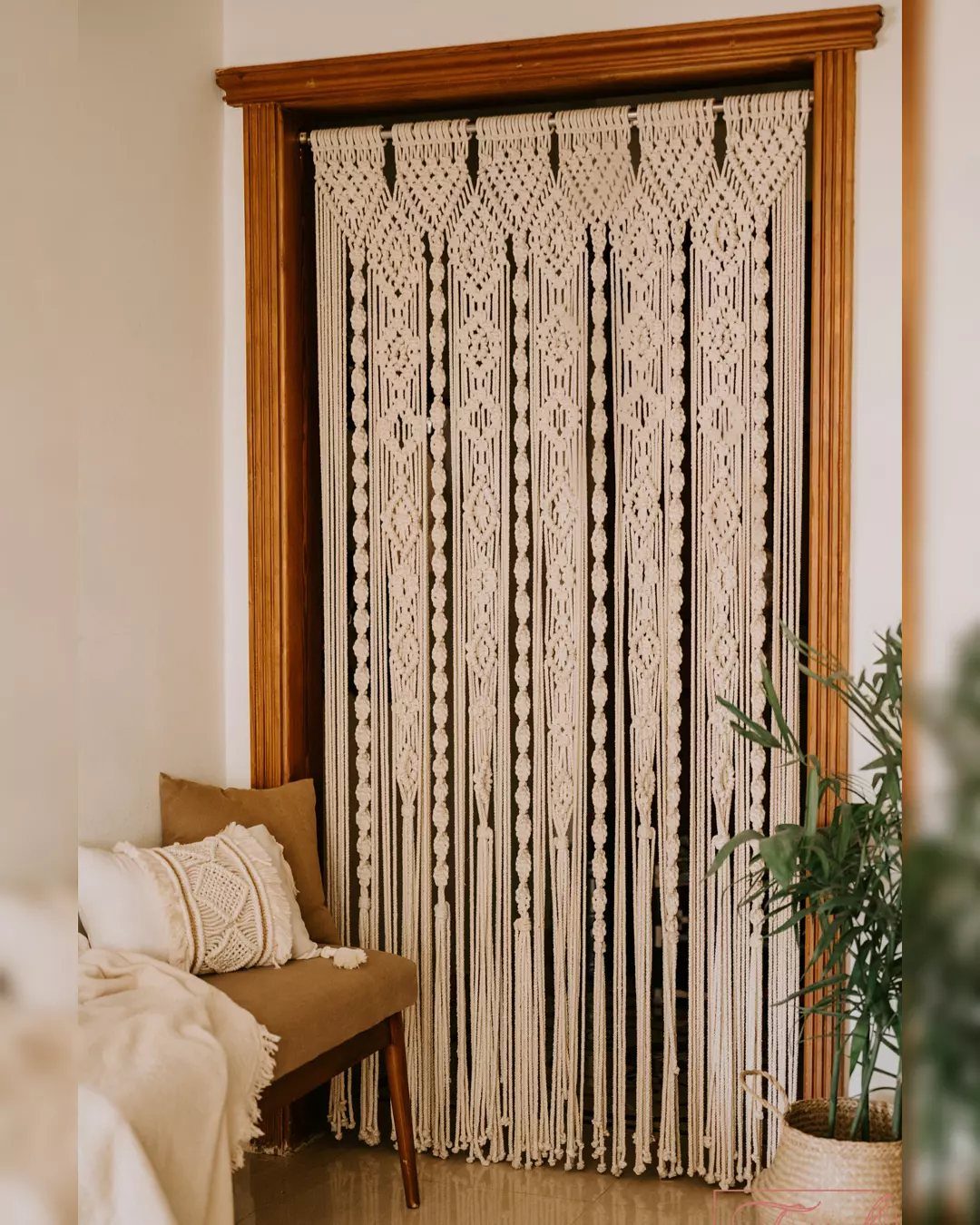
Macramé panels filter light without blocking it, which makes them practical for a doorway or window you want divided more than darkened. The knot density looks like standard cotton cord in square-knot and half-hitch patterns, worked from a top dowel.
I prefer natural unbleached cotton; it yellows slightly over time in a way that suits the boho look rather than looking dirty.
Hang it with a simple wall hook or lean the dowel in a window frame if drilling is not an option.
5. Patchwork Gauze Curtains
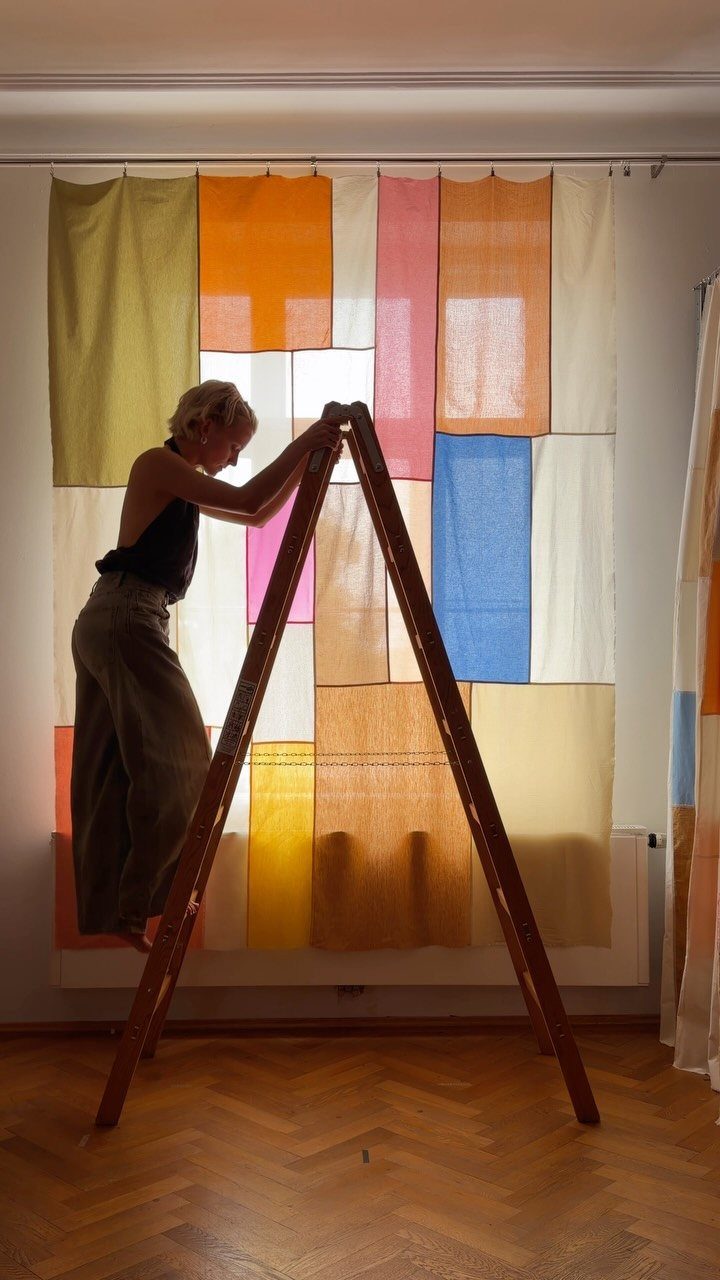
Patchwork gauze is the answer when you have fabric scraps and no patience for quilting.
The panels are sewn in horizontal strips of varying widths, then hung on a simple rod pocket. The gauze is light enough that mismatched fabrics do not read as chaotic.
I would budget fabric for a standard window, pieced from remnants or fat quarters at remnant-bin prices.
The translucent layers need no lining, which saves time and cost. A ladder is not required for hanging, but getting the rod height right on the first try is the part that matters.
6. Curtains Puddle on the Floor
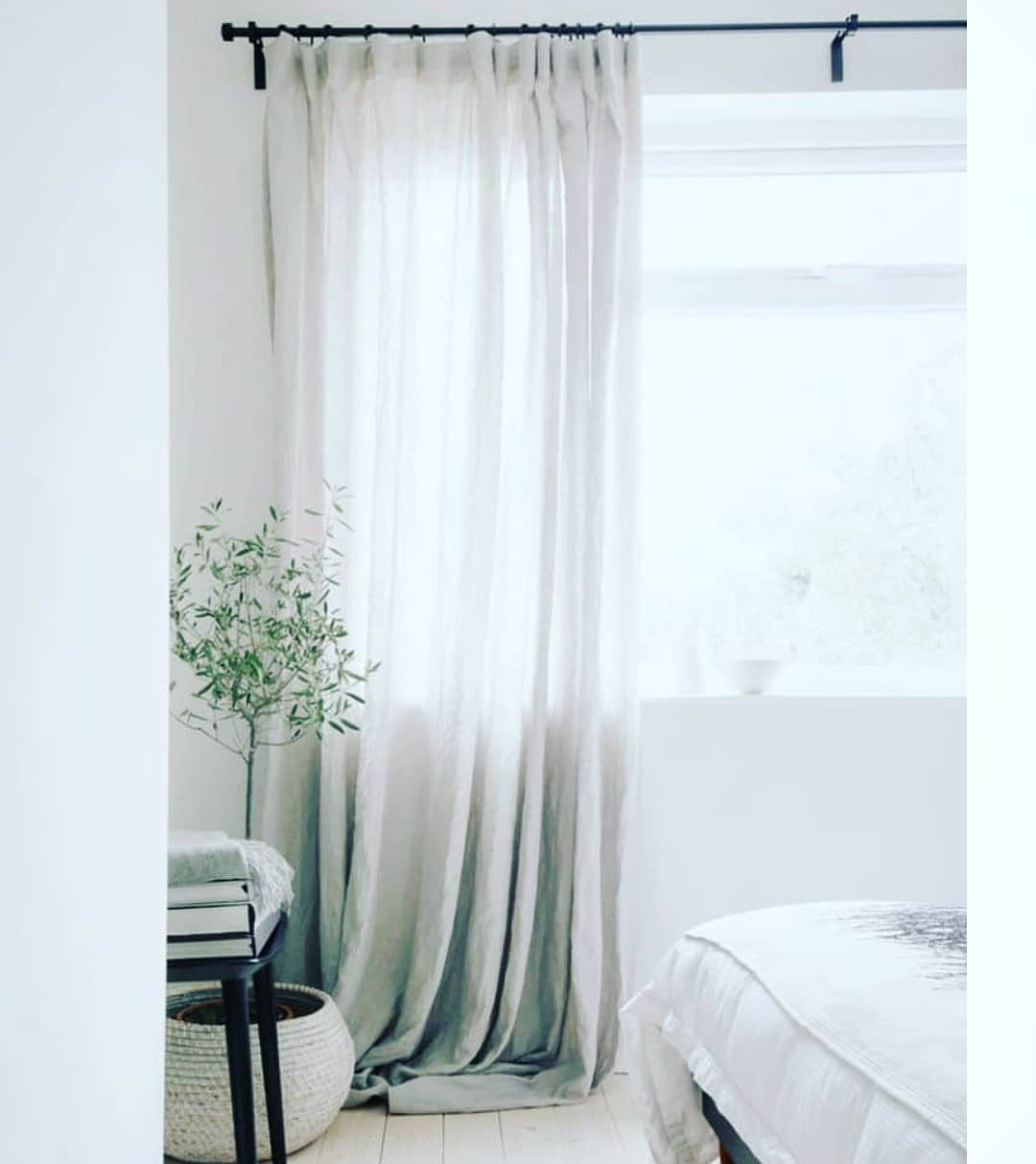
Puddled curtains need extra length to pool correctly on the floor. The linen is doing what linen does: falling soft and holding the puddle without looking deliberate.
This works best on wood or tile where the fabric stays clean; carpet eats the effect. I would hem the panels to break slightly past the floor, then let use and gravity add the rest over a month.
The black rod against pale fabric gives the eye a line to follow, which helps the casual drape feel considered instead of sloppy.
7. Contrast Curtains
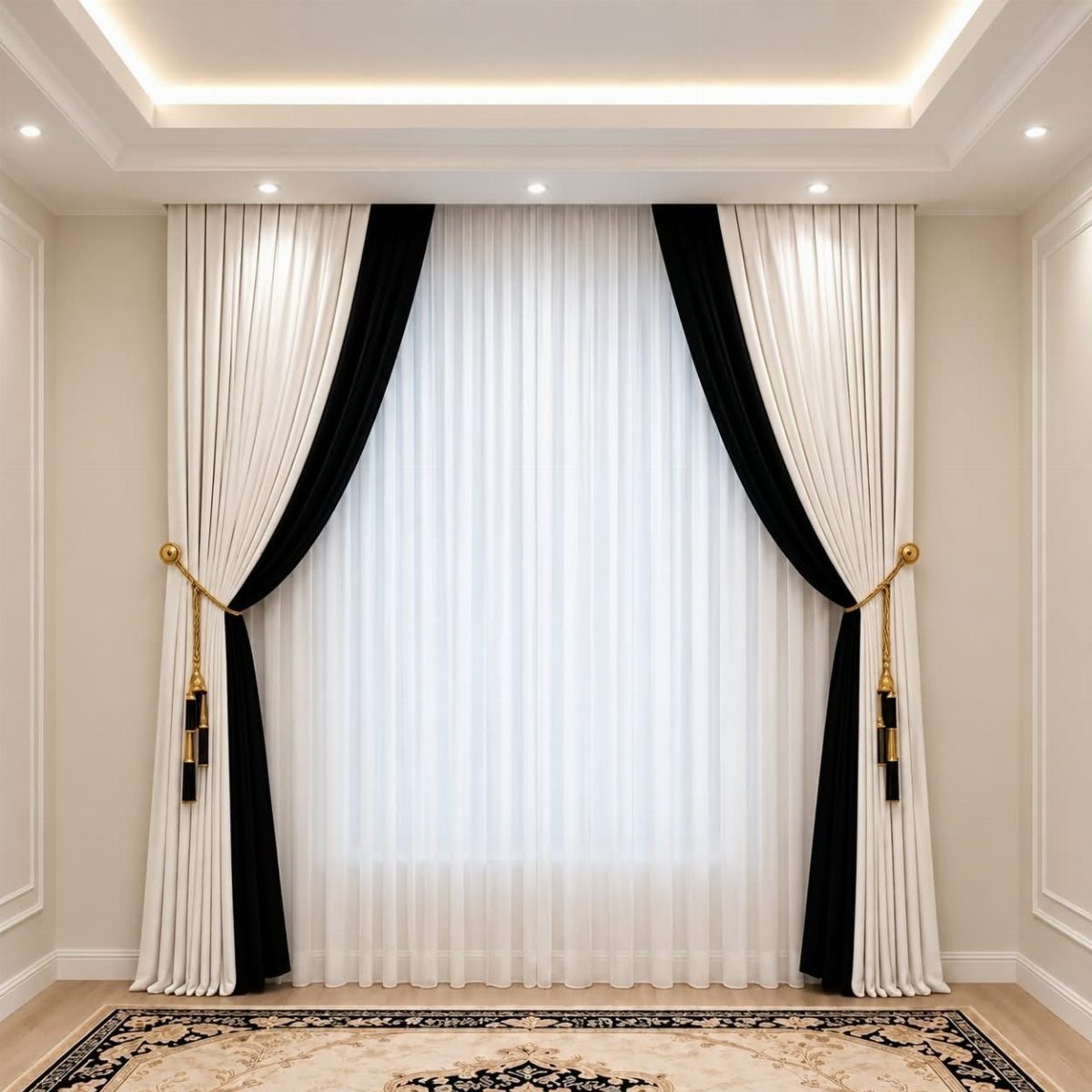
A metal tieback keeps the edge between black drapes and white sheers clean instead of letting the layers collapse into gray. Gold thread in the tassel matches the temperature of most warm-white sheers without tipping into brassy territory.
I would keep the sheer layer standard width and spend the budget on the heavier panel, since that is what carries the visual weight. This setup suits rooms with white or off-white walls where the dark panel becomes the architecture.
8. Curtains as Room Dividers
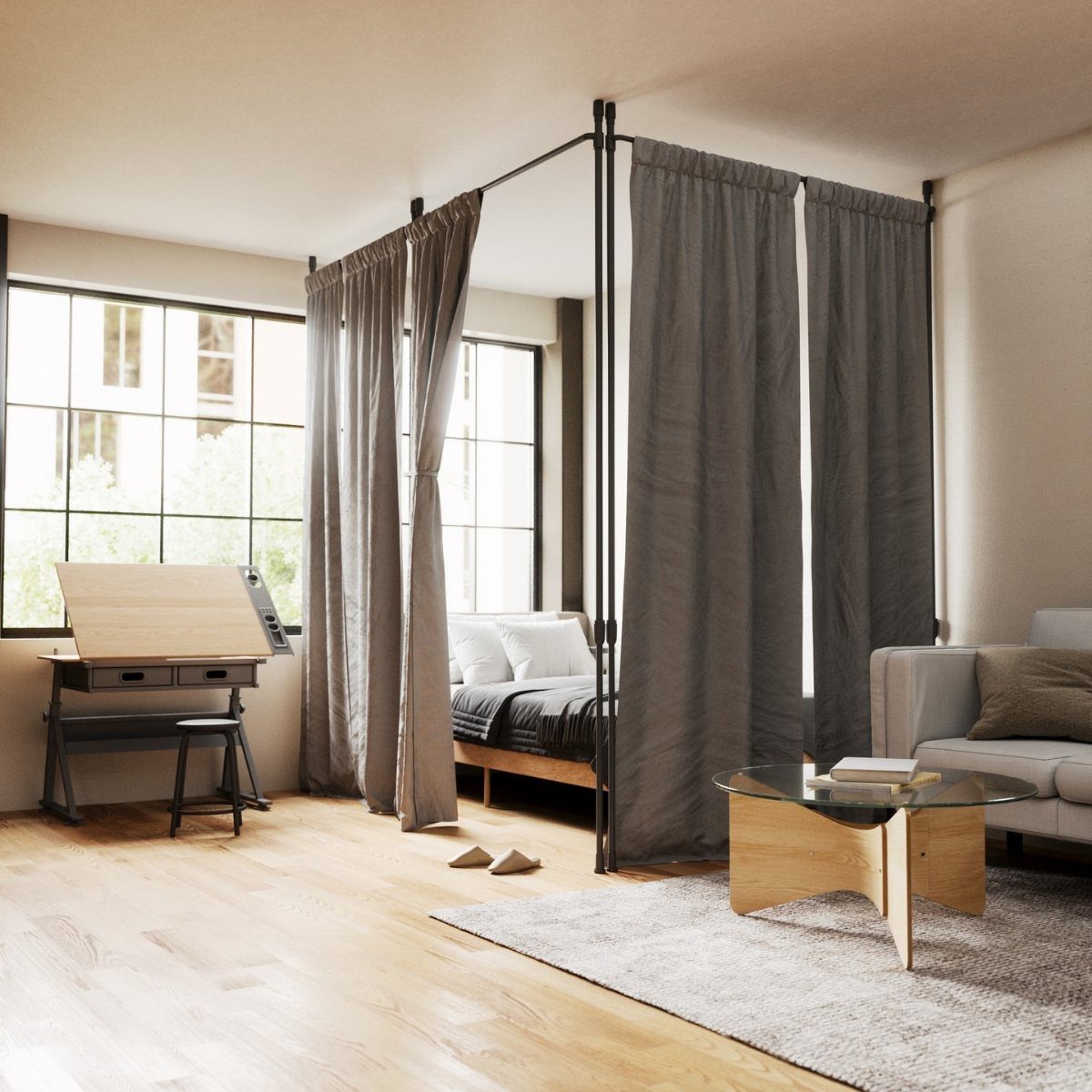
A freestanding frame with curtains turns a studio corner into something like a bedroom without touching the ceiling or walls. The black metal four-poster frame here is doing the structural work; the grey panels simply fill it.
I like this for renters because the frame moves with you and needs no patching later.
Choose a fabric heavy enough to block sightlines but not so heavy the frame lists; a cotton-polyester blend in a medium weight hangs right. Leave one side open for air circulation and morning exit without feeling trapped.
9. Curtains with LED Lights
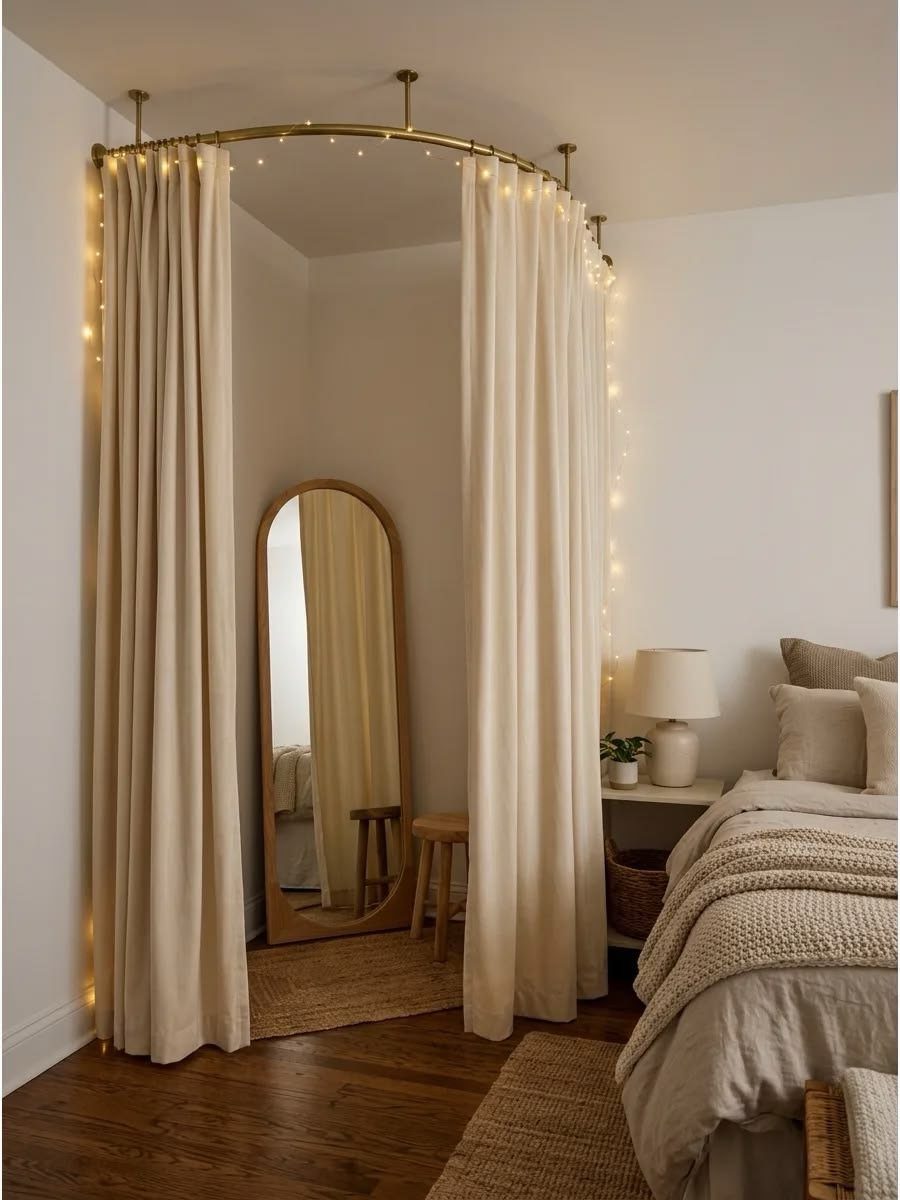
Fairy lights woven through curtain fabric turn a room divider into a soft lamp. The brass rod here curves, which spreads the light around the corner rather than boxing it in.
Battery or plug-in lights both work; I prefer plug-in for a permanent setup since battery boxes need hiding and replacing.
The cream fabric keeps the glow warm, and the weave should be loose enough to thread the wire without snagging. A dimmer is worth adding if the bed sits nearby.
10. Pom Pom Tassel Curtains
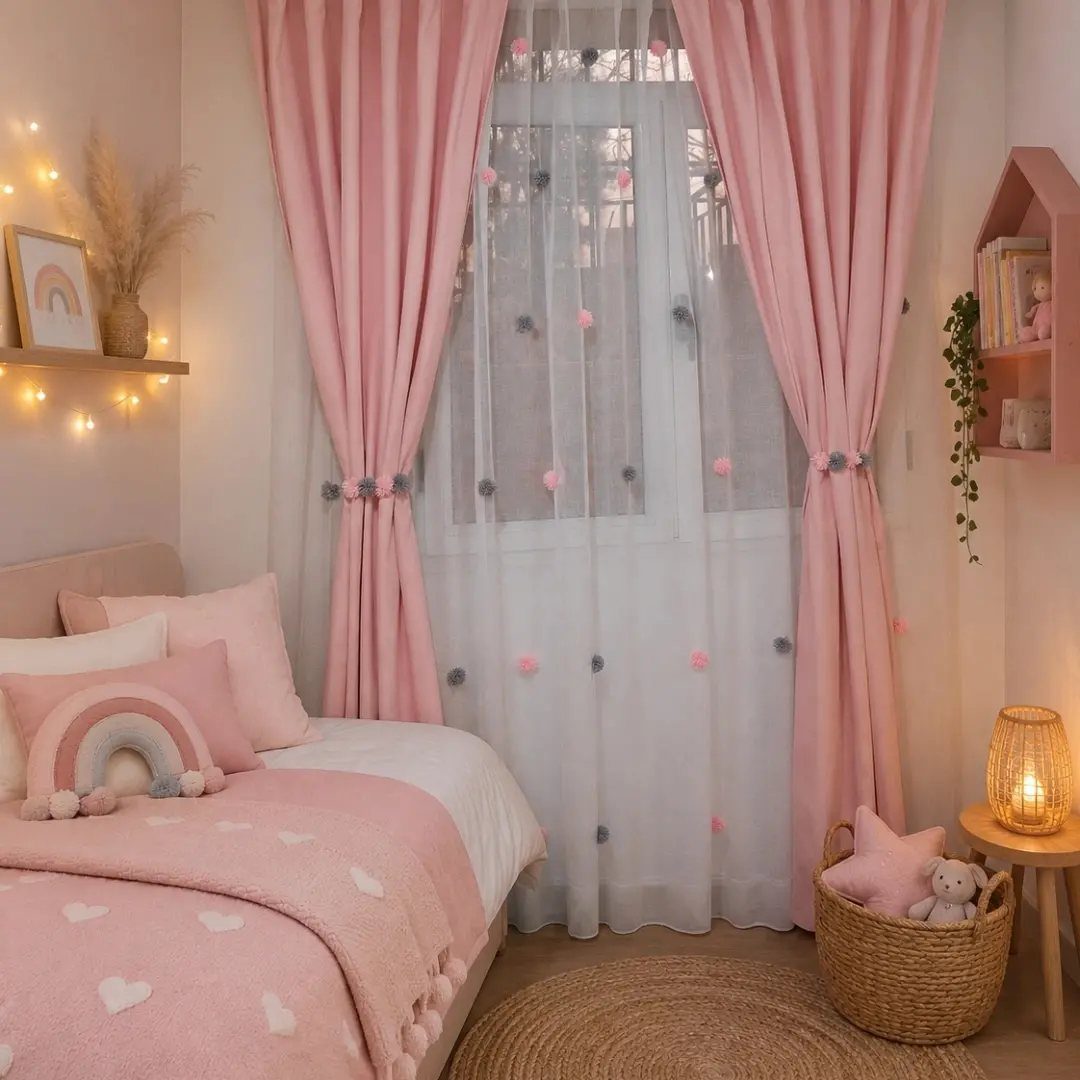
Small pom poms on sheer white curtains read as playful without tipping into nursery territory when the scale stays under an inch. The pink and grey here match bedding already in the room.
I would buy standard white sheers and sew the trim on myself; pre-made pom pom curtains charge for labor you can do in an evening.
Press the sheers first, pin the trim line straight, and use a zipper foot to clear the raised dots. The pink blackout layer behind is practical for east-facing windows and hides the stitching.
11. Tropical Print Curtains
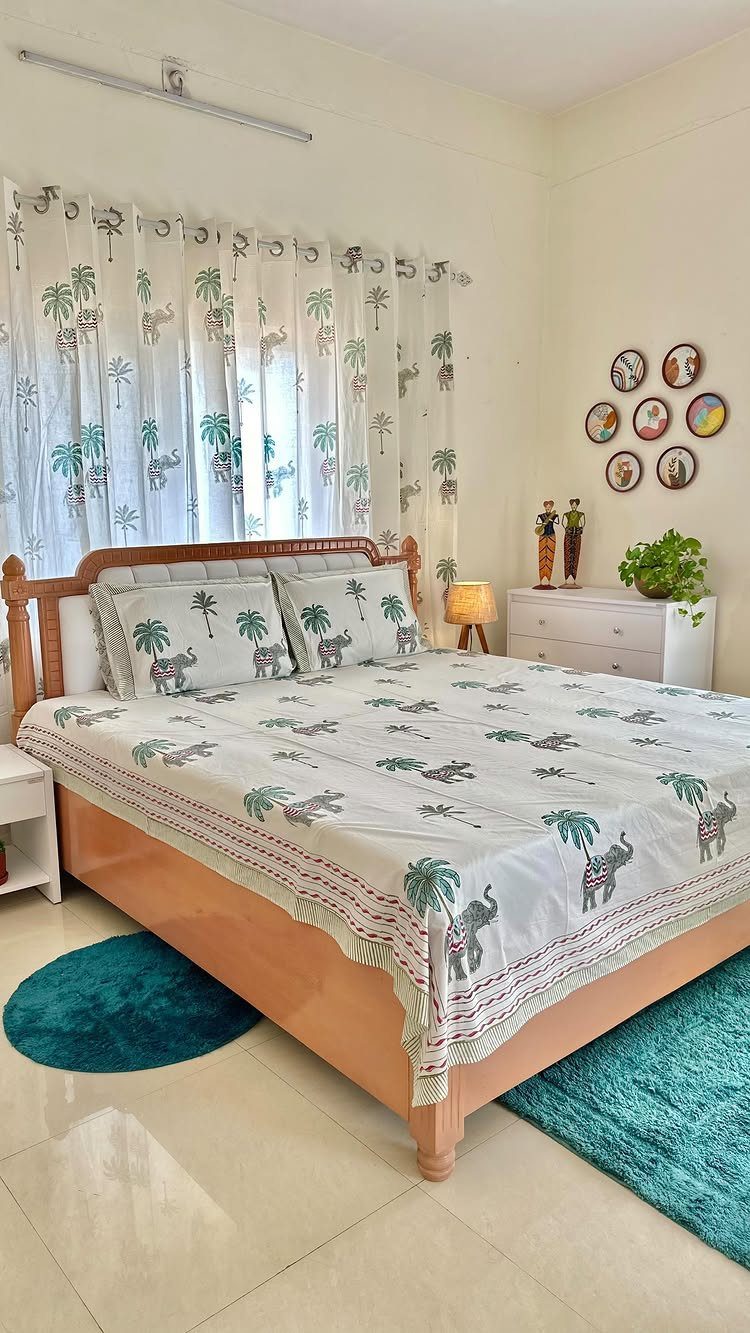
Matching curtains to bedding is a risk that works when the print is the room’s single statement. The elephant and palm pattern here is busy, so the walls stay cream and the furniture stays plain wood.
Sheer curtains in the same print filter light without darkening; I would use them only if the window faces a view worth softening.
For a street-facing window, swap to a solid liner in a color pulled from the print. The set likely cost less than mixing separates, and the cohesion saves decision fatigue.
12. Fringe Curtains
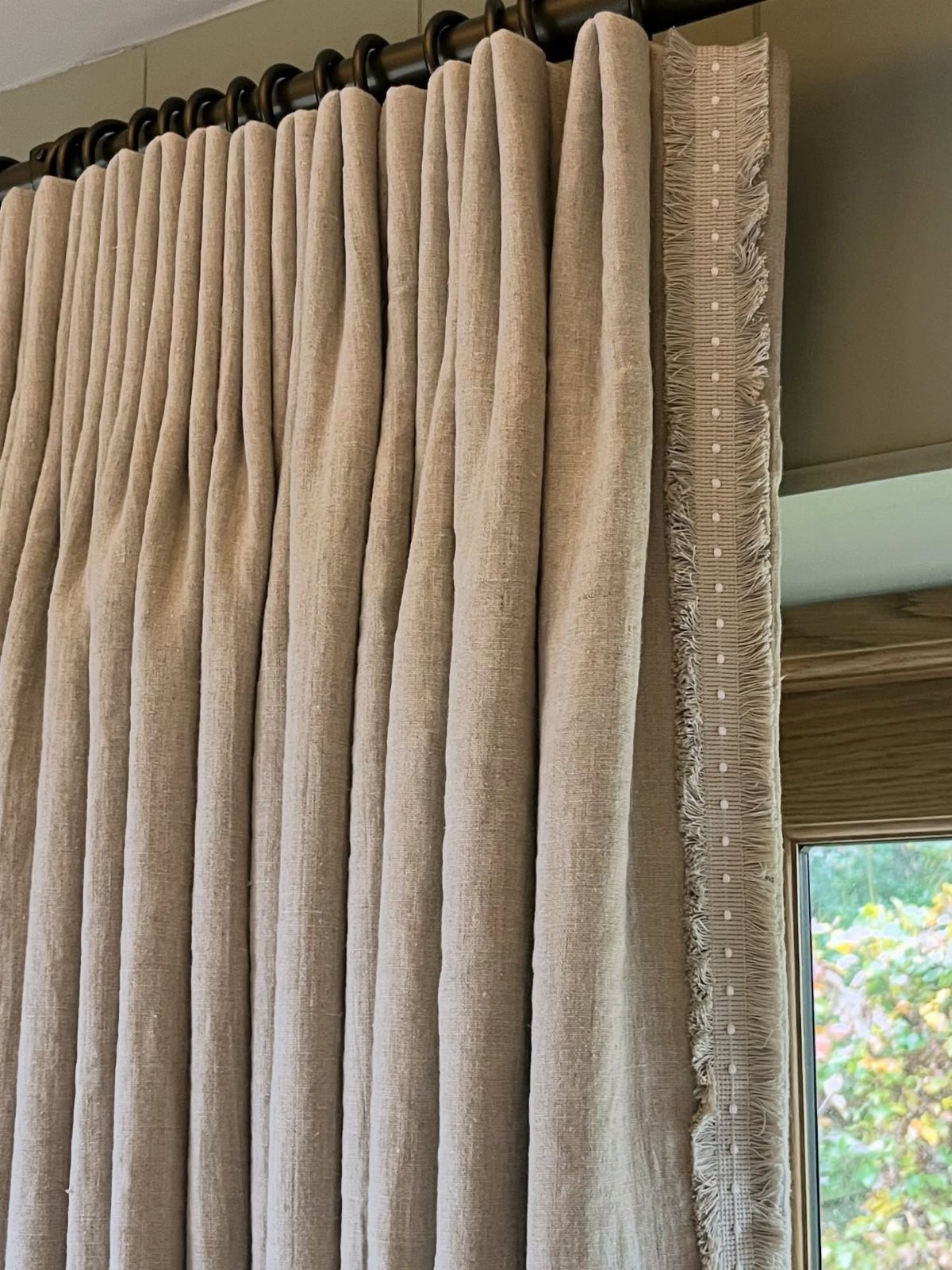
Fringe trim along the leading edge of a curtain catches air and light in a way plain fabric cannot. Linen this plain relies on hardware and trim for character; dark rings and a fringe border do most of the work.
I would choose a fringe in the same fiber as the curtain so they age together. Cotton fringe on linen will shrink and pucker at different rates after the first wash.
The trim is sewn on after hemming, not before, or the bottom fringe hangs crooked. This detail suits rooms with some rough texture already, wood or rattan or unpolished stone.
13. Marble Print Curtains
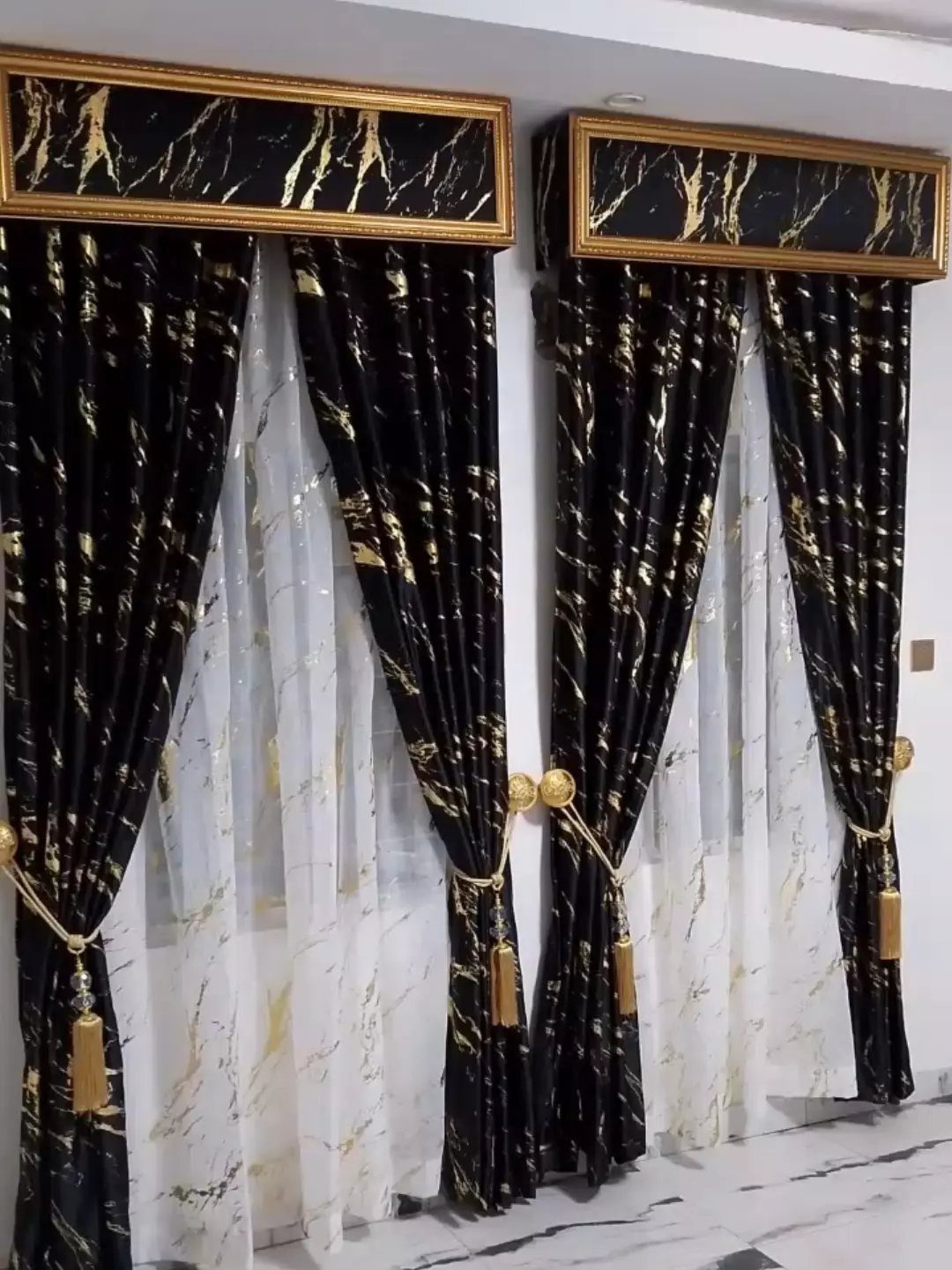
Black and gold marble print turns a window into a single bold gesture that looks deliberate rather than accidental. The gold veins warm up the pattern so it does not feel like a bathroom floor moved vertical.
I would keep the surrounding walls quiet; this print supplies all the movement a room needs.
A simple rod pocket or back-tab heading keeps the top edge clean, since the pattern carries the drama. The sheer layer underneath is optional, though it softens the transition when light hits.
14. Vintage Curtains
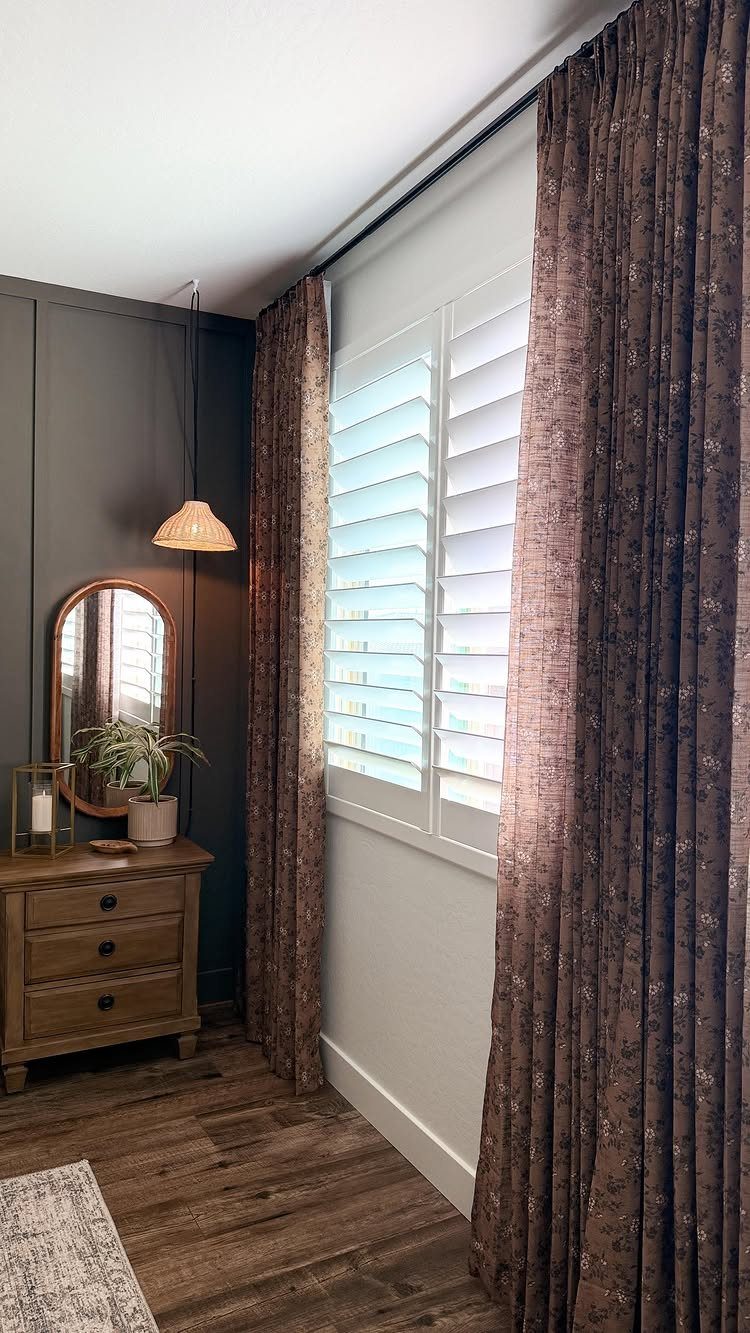
A brown floral on cream grounds a room in something older than trend cycles, which matters when the furniture is plain and the walls are neutral.
The pattern scale here is medium, large enough to read from across the room without dominating.
I would pair these with shutters rather than sheers; the slats give you light control the curtains alone do not.
A wooden rod or plain pocket heading suits the era the print implies. This is the curtain choice when you want the bedroom to feel collected over time rather than assembled in a weekend.
15. Classic White Curtains
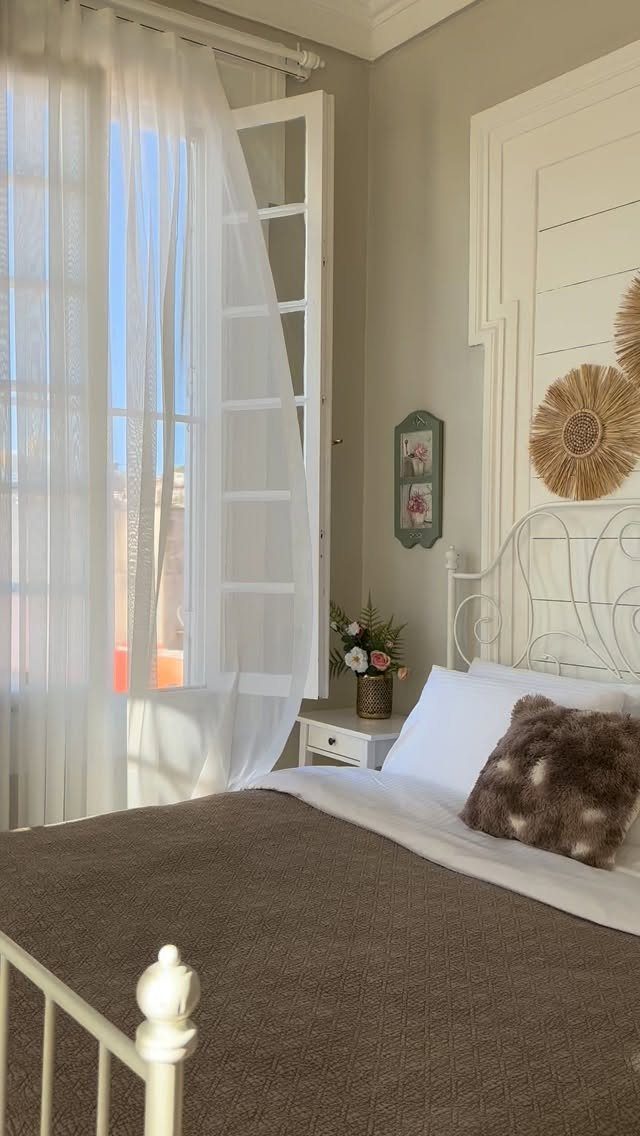
Sheer white against an open window is the least committing curtain choice and often the most effective. The fabric does not compete with the architecture; it frames it.
I would hang these higher and wider than the frame to keep the glass looking larger than it is.
A lightweight cotton or cotton-polyester blend moves with air and filters light without darkening, which suits a bedroom that gets good morning sun. The iron bed and white frame in the room repeat the curtain’s palette so nothing sits alone.
16. Scalloped Valance Curtains
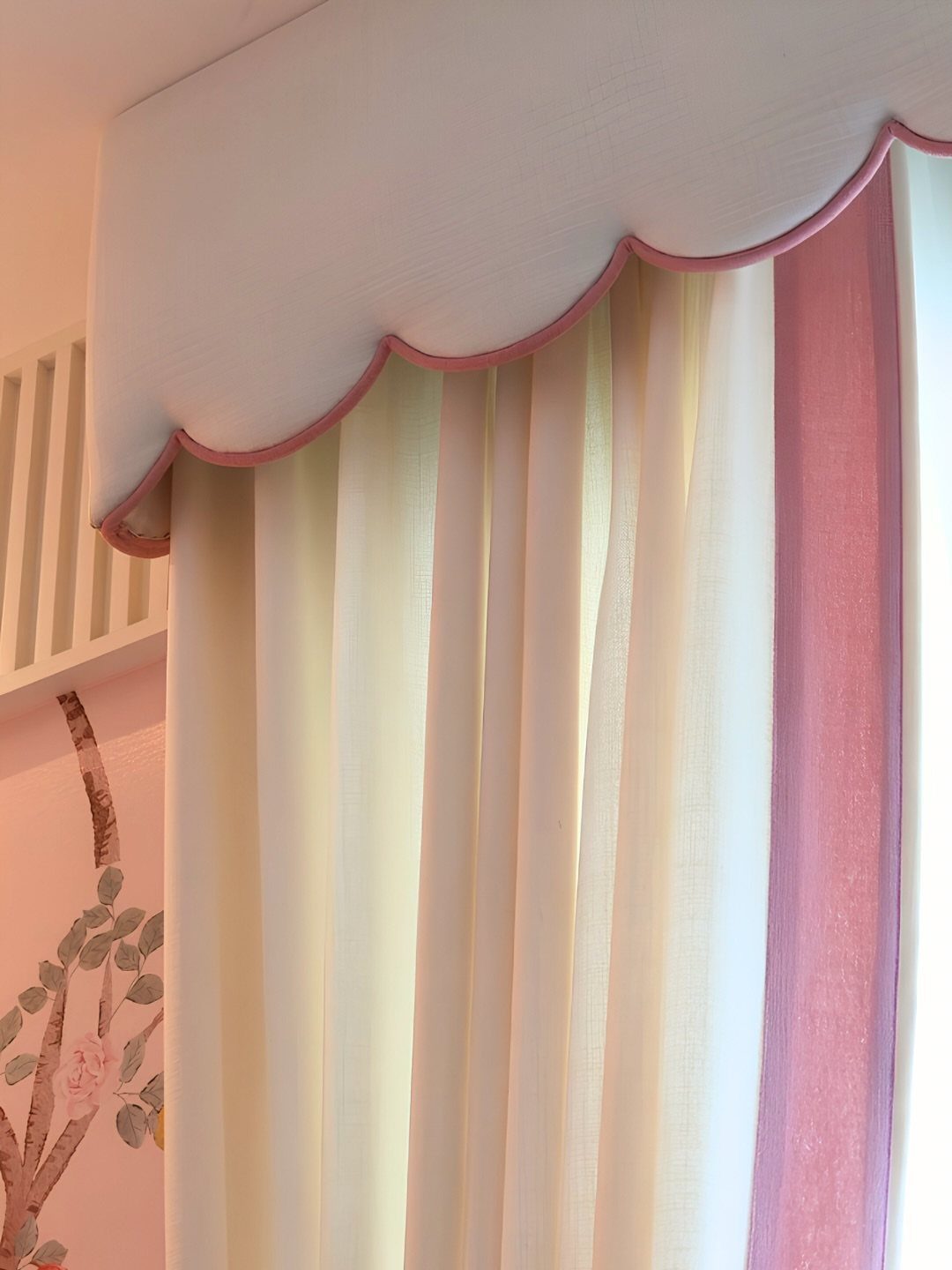
A scalloped valance with piped edging turns a standard rod into something that looks fitted. The cream and pink here is specific, but the shape works in any 2 colors that share a wall.
I would make the valance padded and mounted on a board rather than gathered on a rod; the scallops hold their curve and the piping stays crisp.
The curtain beneath can be simple, since the top does the work. This suits rooms with high ceilings where the window needs weight at the top to feel grounded.
17. Tie-Top Knot Curtains
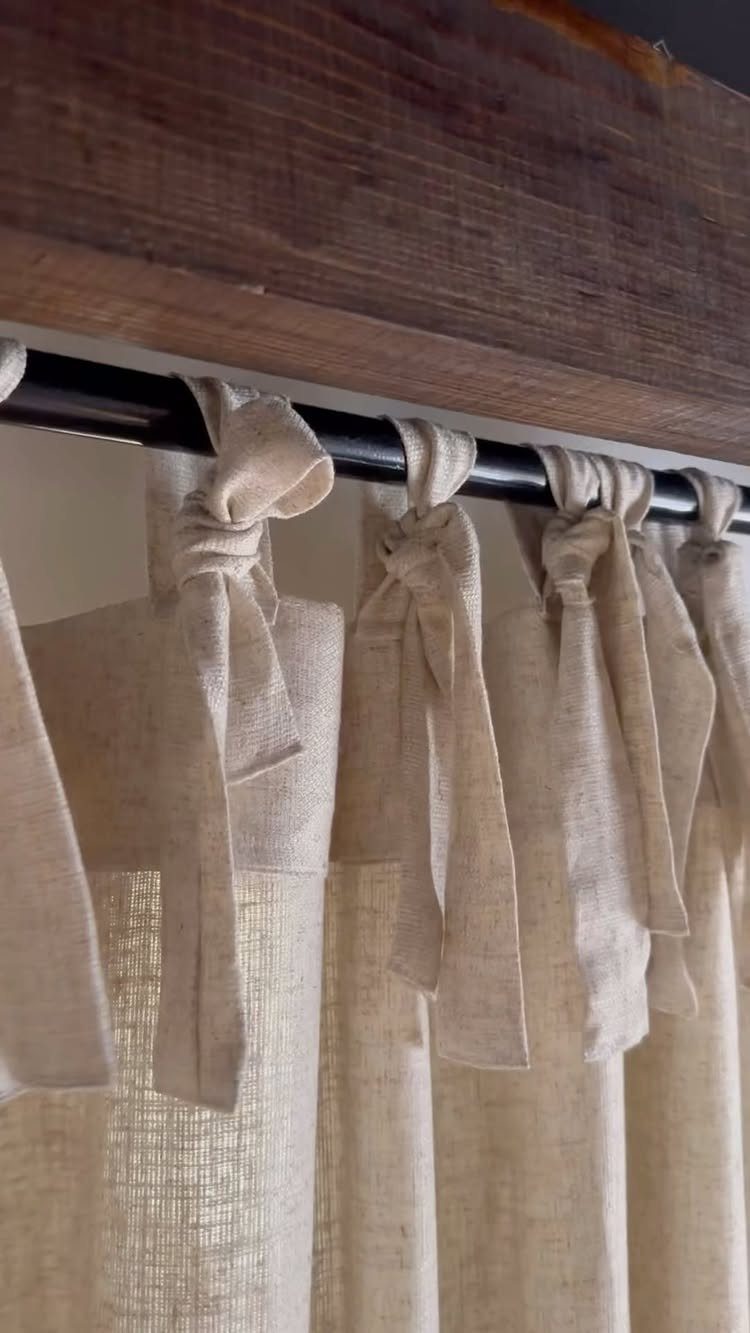
Fabric ties looped over the rod replace rings and hooks with a detail that reads handmade even when it is not. Slubbed natural linen hides the slight irregularity of hand-tied knots better than a smoother weave would.
I would cut the ties long enough to knot loosely without pulling the curtain up short; extra length gives you room to adjust.
The rod shows, so a black metal or finished wood rod becomes part of the look rather than something to hide.
This heading works on windows that call for a curtain stopping above the sill, since full-length panels in this style can feel costume-heavy.
18. Ombre Curtains
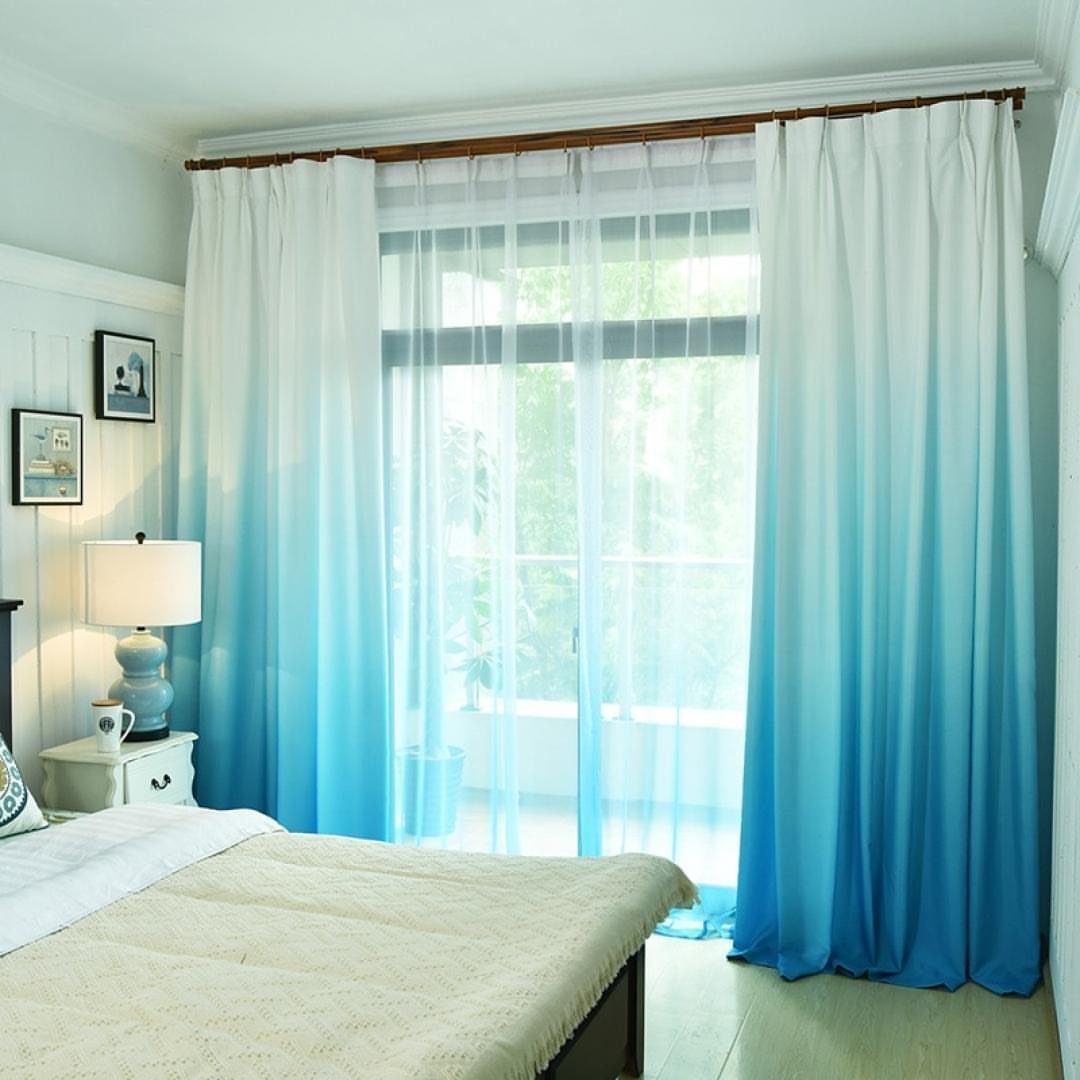
A white-to-blue gradient carries color up the wall without a hard line where curtain meets ceiling. The transition softens the window’s edges so the glass reads larger.
I would hang these with a sheer underlayer in the lightest value of the gradient; it extends the fade and gives you privacy with the panels open.
The dye job matters: cheap ombre can read as a mistake, so test swatch before committing to full panels. This is the choice for a room that wants color direction without pattern complexity.
19. Delicate Dainty Floral Curtains
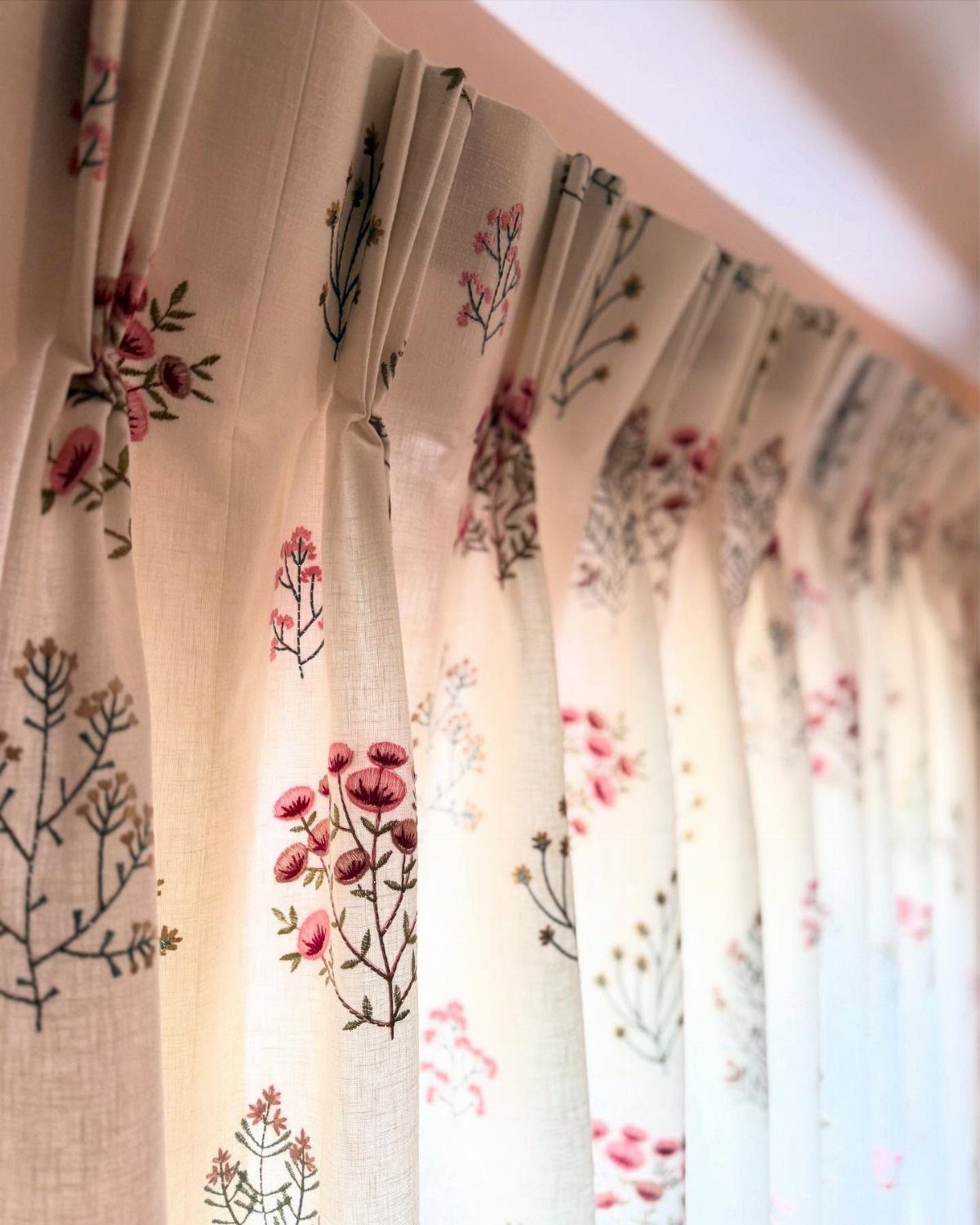
Small-scale floral embroidery on off-white reads as texture from across the room and only resolves into pattern up close.
A pleated heading is functional, not decorative: it lets the fabric fall in controlled folds that show the stems at regular intervals.
I would choose this for a bedroom with pale walls and nothing else competing for attention; the pink is quiet enough to live with daily.
The curtain track stays hidden, which suits renters who cannot replace hardware. A standard lining behind protects the embroidery from sun damage without adding bulk.
20. Velvet Border Trim Curtains
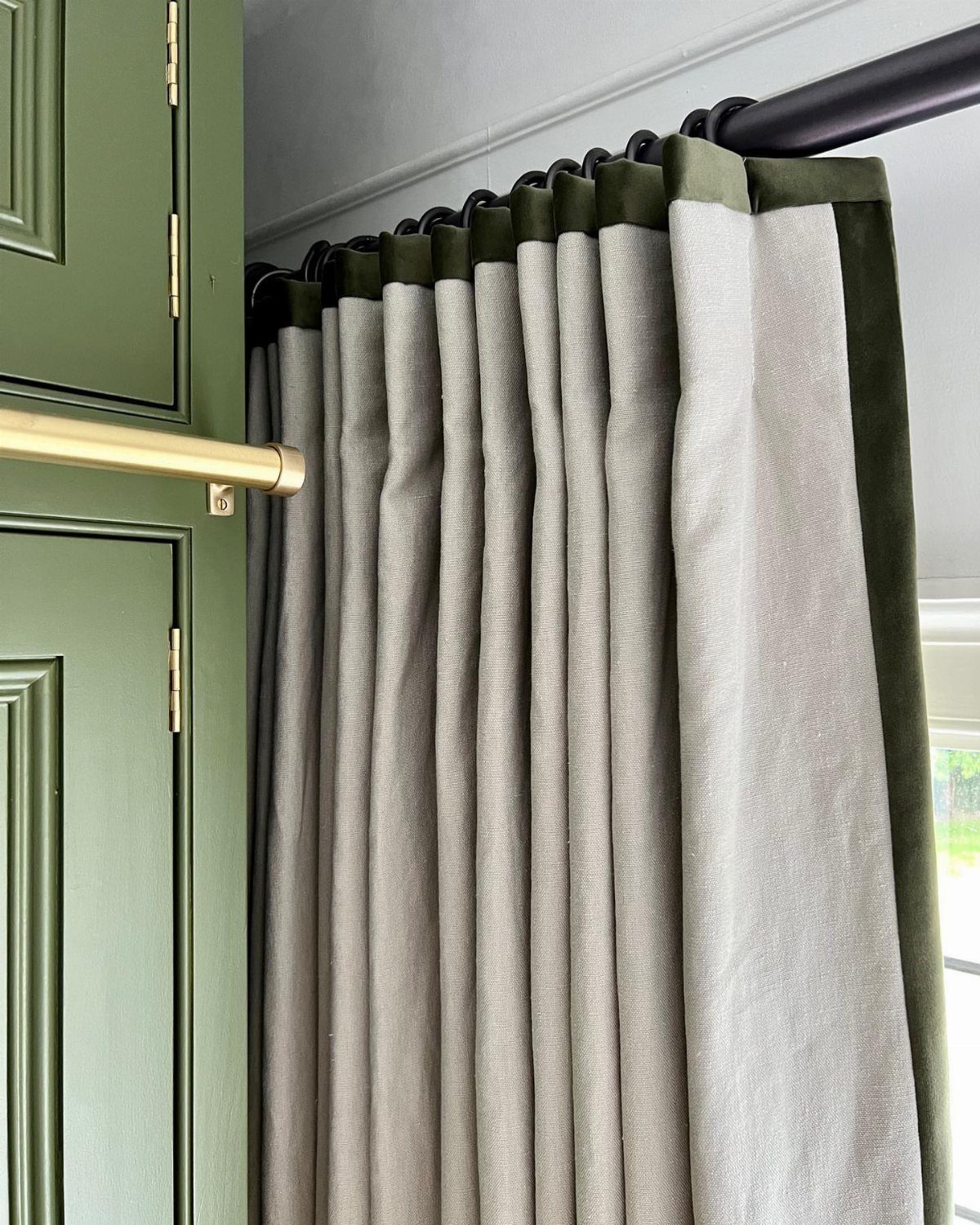
A velvet border along the leading edge turns a plain panel into something that reads as designed rather than bought in haste.
The dark green picks up cabinetry nearby, which is how I would choose it: the trim color comes from something fixed in the room, not chosen in isolation.
The velvet is likely cotton or a cotton-silk blend, applied after the main panel is hemmed and pressed.
I would cut the border wide enough to feel intentional and miter the corner where top meets edge so it lies flat. Black rings repeat the curtain rod and give the eye a rhythm to follow.
21. Curtains Paired with Roman Shades
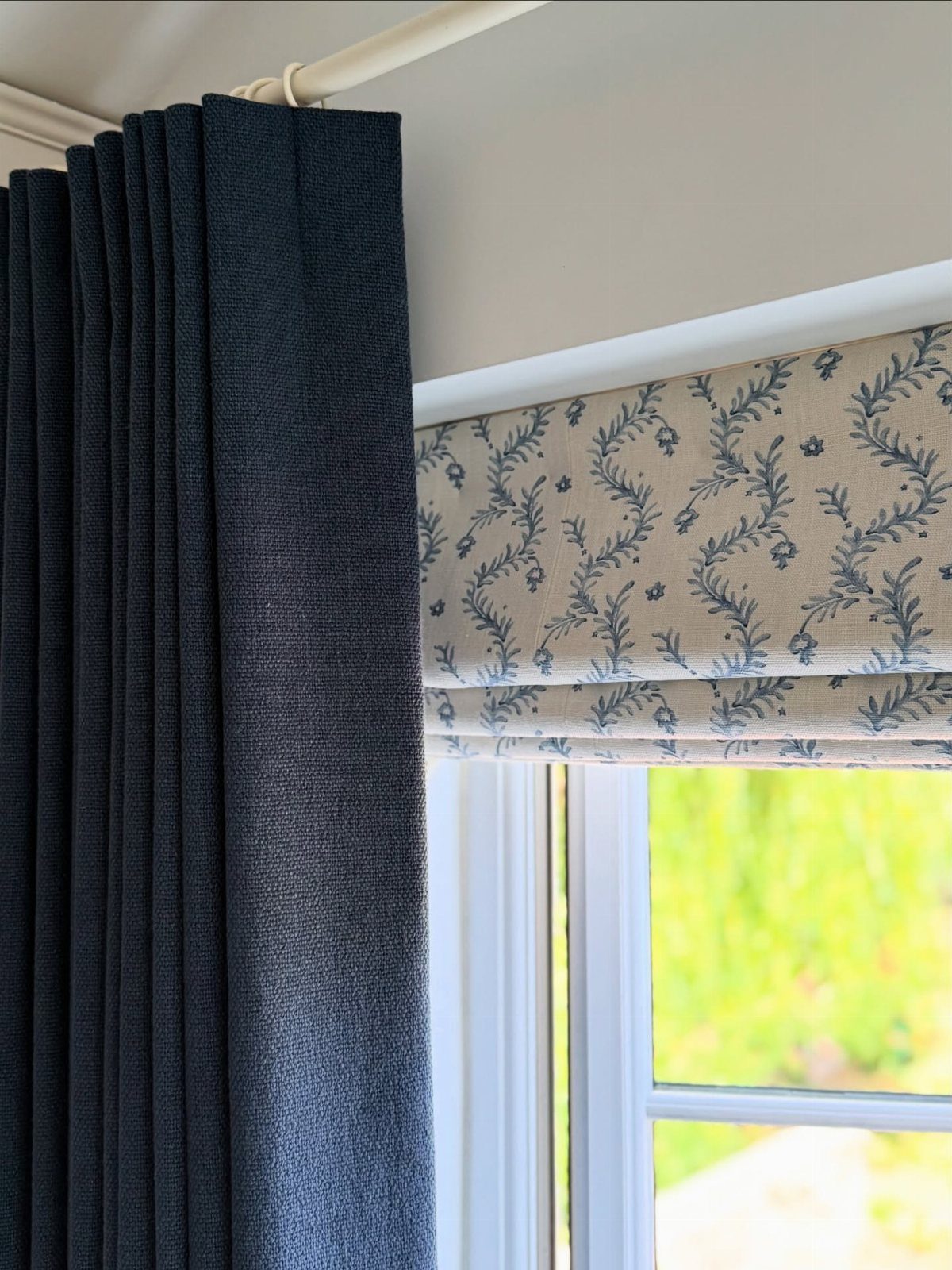
A solid drape in front of a patterned Roman shade gives you 2 layers that each do different work. The shade handles privacy and light control; the curtain frames the window and adds depth when the shade is raised.
The dark blue is textured enough to read as fabric, not ink, and the floral inside the shade is small-scale so it does not fight.
I would mount the shade inside the frame and set the rod 6 to 8 inches wider so the opened drapes do not crowd the pattern. This pairing suits windows where a single layer looks bare but pattern everywhere would tire.
22. Hidden Cove Lighting Curtains
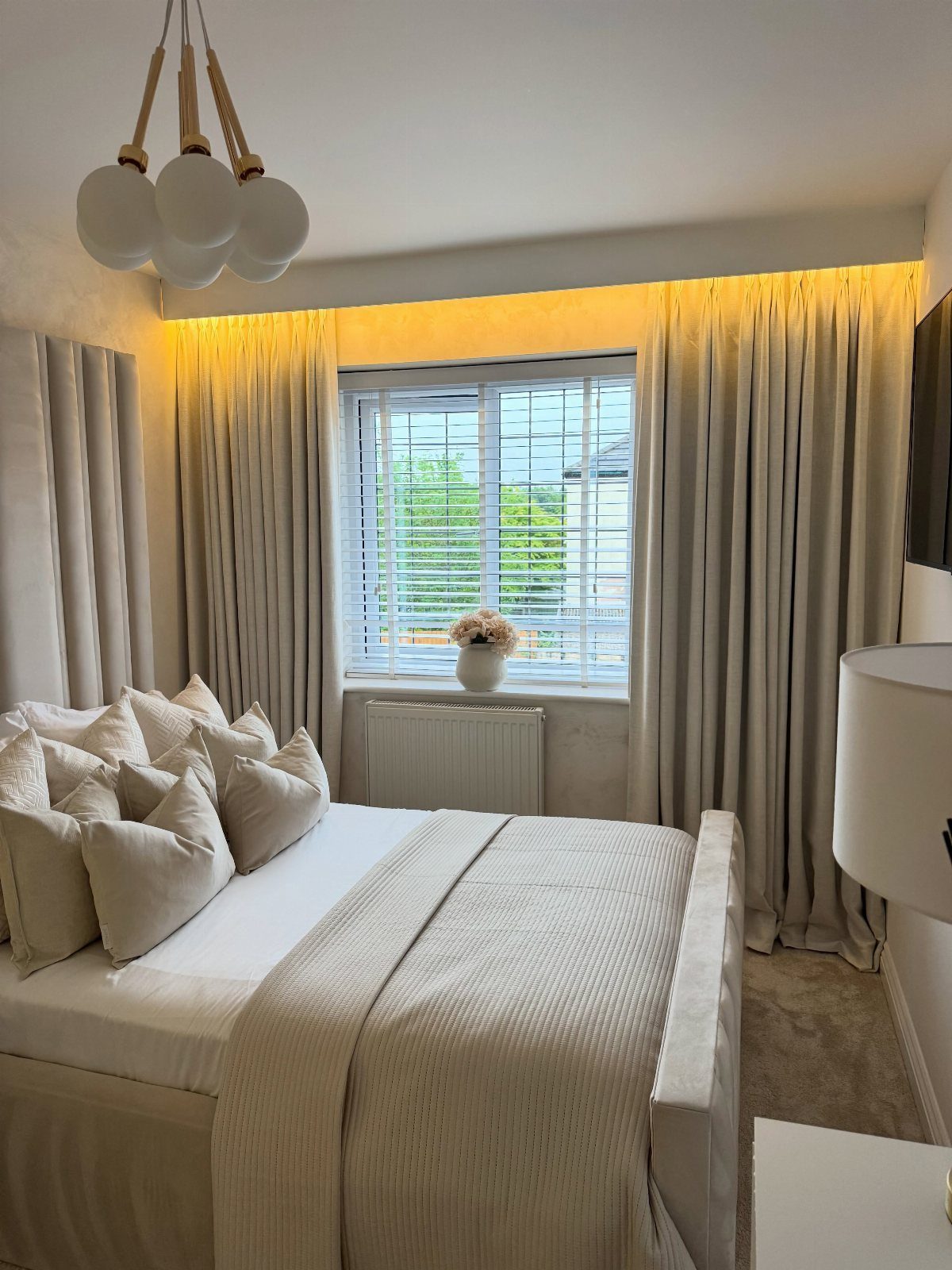
A recessed ceiling cove turns curtains into a light fixture and a headboard substitute at once.
This is built-in work: the cove needs framing, wiring and finishing before the drywall goes up, so it belongs to a renovation rather than a weekend project.
The curtains themselves are standard ceiling-height panels on a hidden track; the magic is the architecture, not the textile. I would choose a warm dimmable LED, since cool white against neutral fabric reads clinical at night.
Choosing the Right Curtain Length
Hanging the rod 4 to 6 inches above the opening buys you more than it costs.
The extra height draws the eye upward and lets the fabric fall in one continuous line from ceiling to floor, which reads as architecture rather than an afterthought.
Ceiling-to-floor panels work hardest in rooms with standard 8-foot ceilings, where every inch of perceived height matters.
I would measure the drop from your chosen rod height to the floor before buying; puddling needs extra length, while a clean break demands precision.
In a rental, a tension rod mounted inside the opening sacrifices this effect entirely, so I would spend the patch kit on a proper wall-mounted rod instead.
Mixing Patterns and Textures
A sheer underlayer with a patterned drape on top gives you 2 fabrics doing different jobs without competing for attention.
The sheer softens daylight and blurs the view from outside; the pattern carries the visual interest when the panels are drawn.
I would keep the scale difference obvious: a small check or narrow stripe against a plain sheer, or a large floral against a solid. 2 patterns of similar density fight each other and tire the eye.
The Buffalo Check panels at 42 inches wide suit a standard window as a single panel per side; measure your total rod width and divide by two to confirm coverage with some stack-back left over.
Texture operates the same way.
A slubbed linen sheer under a smooth cotton print reads as depth; 2 smooth fabrics read as flat. Mixing weights matters too: the heavier fabric should always be the outer layer or the drape looks backwards.
Curtain Maintenance Tips
Machine-washable fabric saves the dry-cleaning budget and the trip.
I would check the care label before buying, not after: "dry clean only" on bedroom curtains is a recurring expense I would avoid unless the material justifies it, which linen blends usually do not.
Light-blocking needs vary by window direction. East-facing bedrooms need the most defense against morning sun; a labeled blackout lining or a separate blackout panel behind the decorative layer does the work.
I would hold the fabric up to a bright bulb in the store: if you can read text through it, it will not block enough light for sleeping past dawn.
Sheer layers are the exception; they are meant to be translucent.
Wash them on gentle and hang damp to avoid the dryer heat that weakens thin fibers over time. A quick press while slightly damp restores the crisp fold better than ironing bone-dry fabric.
Frequently Asked Questions
What kind of curtains look best in the bedroom?
Sheer, patterned, or classic white curtains all work, depending on what the room needs.
I would match the curtain type to the job: sheers for daylight privacy, a pattern for visual interest against plain walls, white for framing the architecture without competing.
The best choice is the one that solves your specific light and privacy problem while fitting the room’s existing palette.
Should bedroom curtains reach the floor?
I hang mine 4 to 6 inches above the frame; the extra height makes the wall feel taller than it is.
That unbroken vertical line does what crown molding does, it tricks the eye into reading the wall as taller, and in an 8-foot room that is worth doing.
Floor-length means measuring twice; puddling adds 6 to 10 inches and I only do it on hard floors where the hem does not pick up dust.





