
The cheapest idea here runs a couple yards of pom-pom trim and fabric glue; the most involved needs an afternoon and a tension rod to hang beaded string that turns a doorway into something architectural.
What picks your idea is whether you want hardware you can take with you or something fixed to the wall, because knotting curtains to fake tie-backs and hanging beaded string on a tension rod come down in minutes, while a reclaimed wood rod needs brackets anchored right.
1. Sheer Panel Behind a Heavier Drape

This setup earns its keep in living rooms where the light changes hour to hour and you do not want to swap hardware seasonally.
Mount both panels on a double rod or a single track with 2 channels; the sheer sits closer to the glass, the drape in front.
Choose a sheer white or cream and a drape color that matches your walls to make the room feel larger, or a contrast to make the window read as a frame.
2. Floor-to-ceiling Curtains
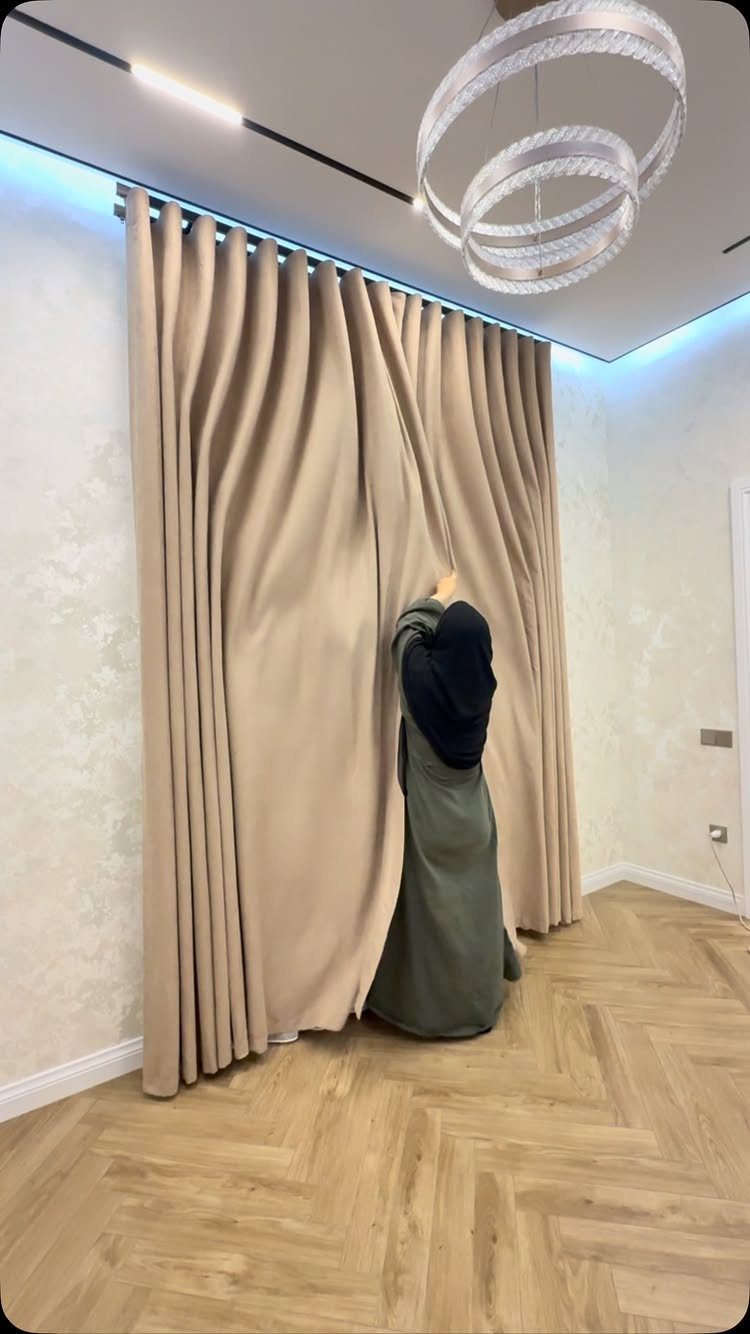
Ceiling-mounted track or rod, curtains that kiss the floor or break by half an inch: this is the trick that makes standard windows read as taller than they are.
The vertical line draws the eye up and gives the room proportion it did not earn from the architecture. You will need panels 1.5 to 2 times the width of your window so the pleats stack cleanly when open.
I skip puddling on the floor unless the room is formal; for a rental or a first home, hem to floor length and call it done.
3. Reclaimed Wood Rod
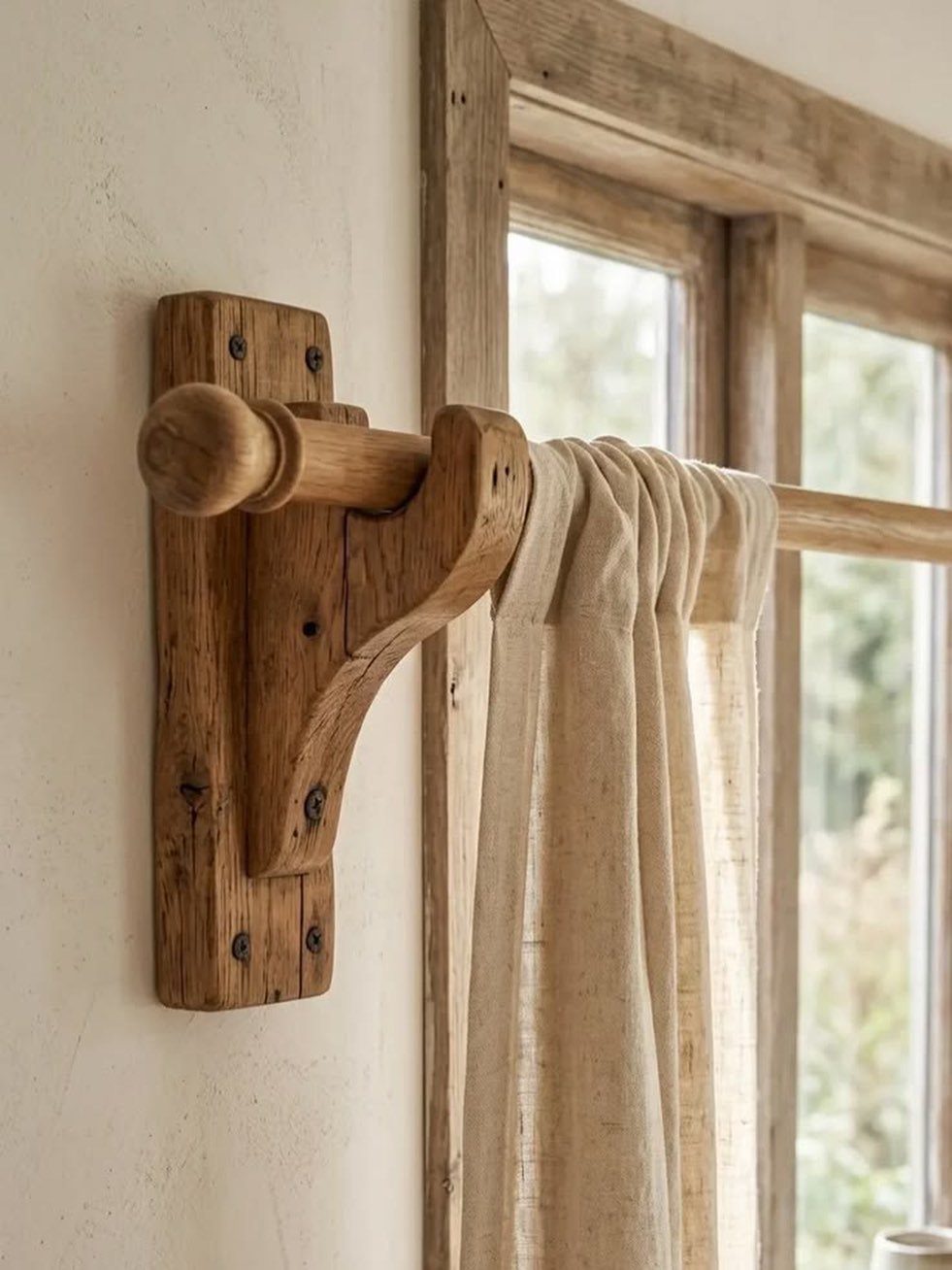
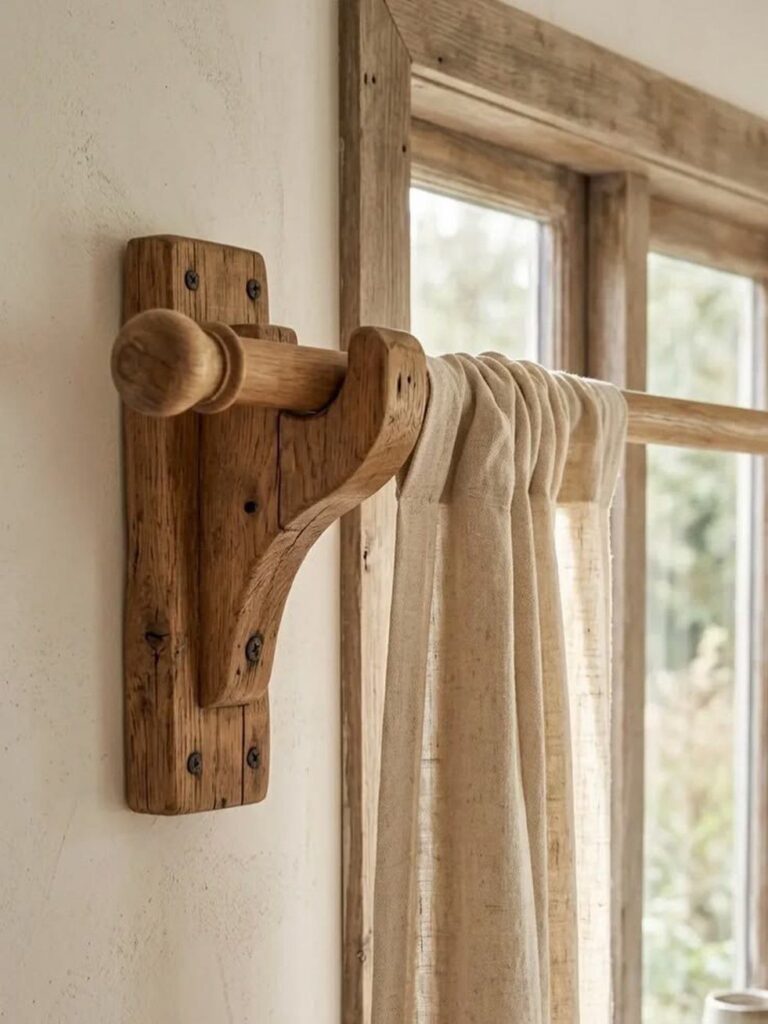
A hand-carved bracket and a rough-sawn rod turn a functional thing into the room’s quiet focal point.
I have hung curtains on galvanized pipe, on birch branches, and once on an oak closet rod I sanded and waxed; the reclaimed wood version wins for warmth without rustic cliché.
Look for brackets that stand out from the wall far enough to clear your window trim; bring a piece of scrap wood to the store and test the fit.
The rod needs to extend 6 to 12 inches past the window frame on each side so the stacked curtain does not block glass. Seal the wood if your climate shifts humidity seasonally; unsealed pine can bow.
4. Knotty Curtains
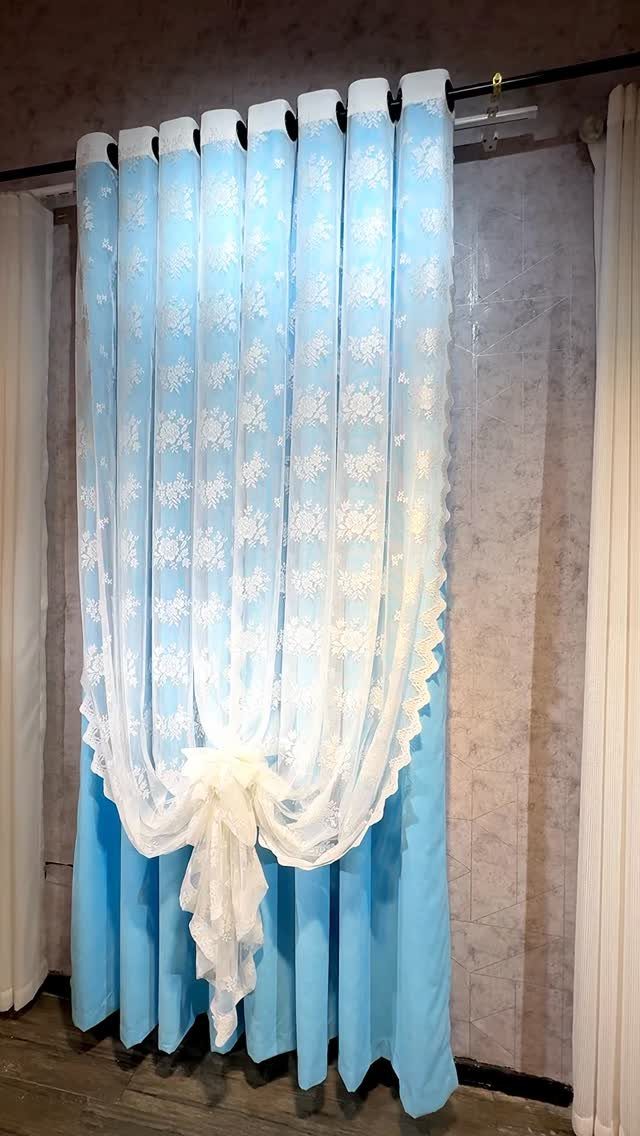
Tying a knot in the center of layered panels fakes the look of tie-backs without hardware or wall damage.
A patterned or textured curtain with a white lace sheer works because the fabrics contrast; 2 solids would look like you forgot the holdbacks.
A loose overhand knot with uneven tails suits a casual room, or a square knot for something more structured.
This suits renters especially, since you are not drilling for hooks. The knot sits best between knee and waist height; higher looks theatrical, lower looks careless.
5. Curtain Panel Bed Canopy
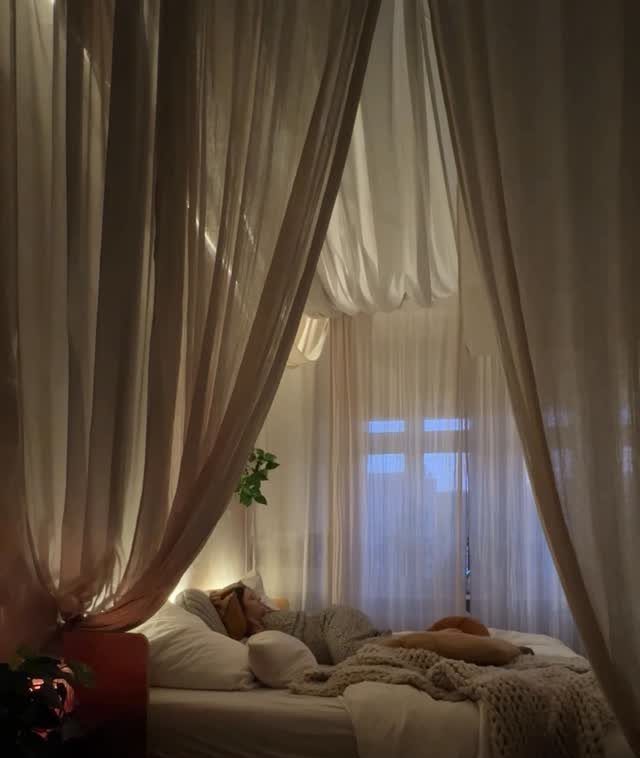
Sheer panels, ceiling hooks, and a bed pushed to center: that is the whole structure of a curtain canopy.
White sheers in a dim room work because sheers diffuse what little light there is into something soft. I would add a string of lights if this were my room, though the photo does without them.
Mount hooks or a ceiling track in a rectangle slightly larger than your mattress; drape the panels so they meet at corners or overlap. Wash the sheers more often than you think; dust settles on top and shows in daylight.
6. Use Pom-poms or Tassels
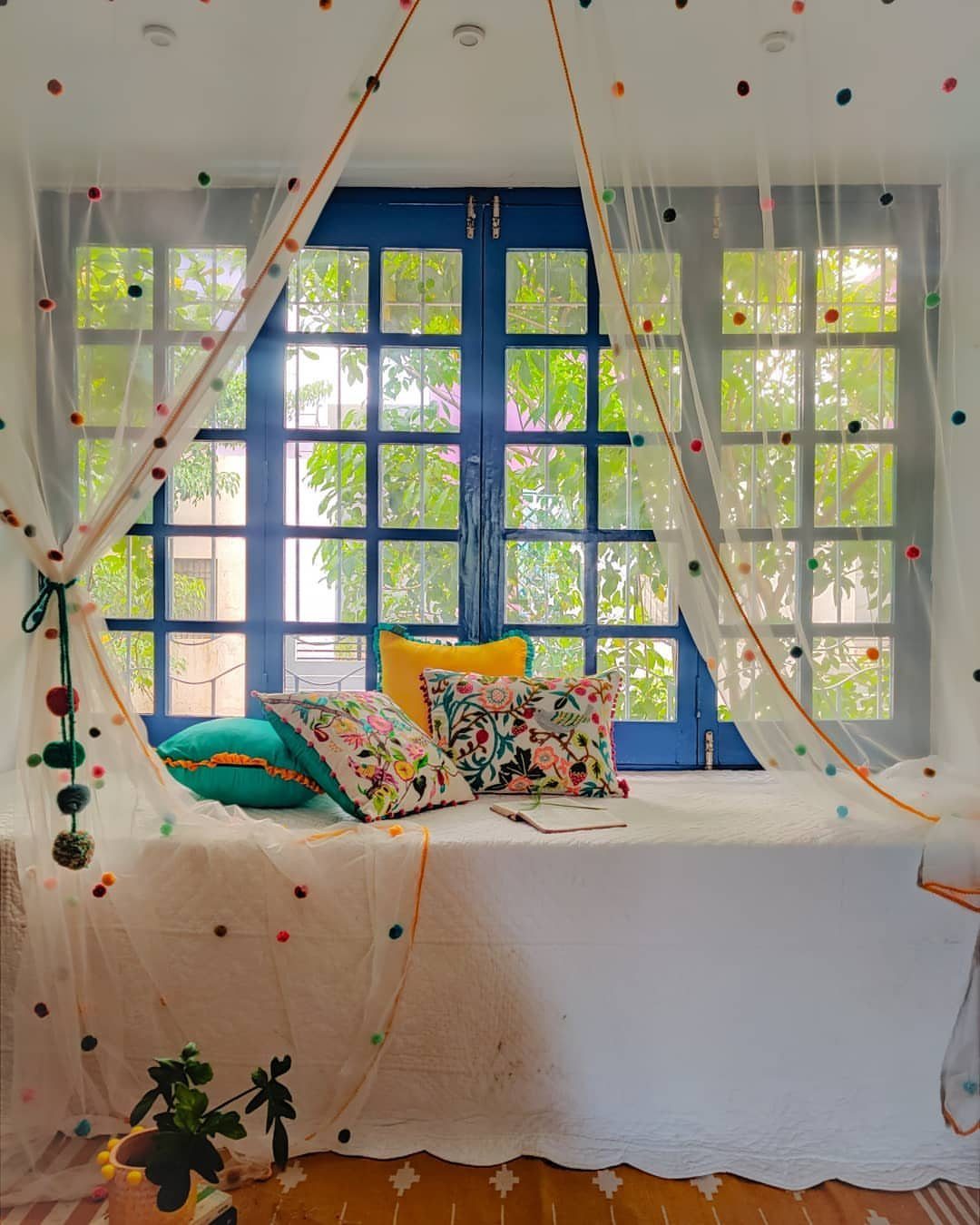
Pom-pom trim sewn or glued along a curtain edge turns a basic panel into something that reads as handmade.
Multicolor pom-poms on white sheers pick up the pillows without matching exactly, which is the way to do it.
Trim by the yard is cheap at most fabric stores, and a single window needs only a couple of yards depending on whether you line one edge or two.
Glue with fabric adhesive if you do not sew, though I would stitch for washability. Tassels work the same way and read slightly more grown-up; pom-poms suit a kids’ room or a space where you want the mood light.
7. Layer with Roman Shades
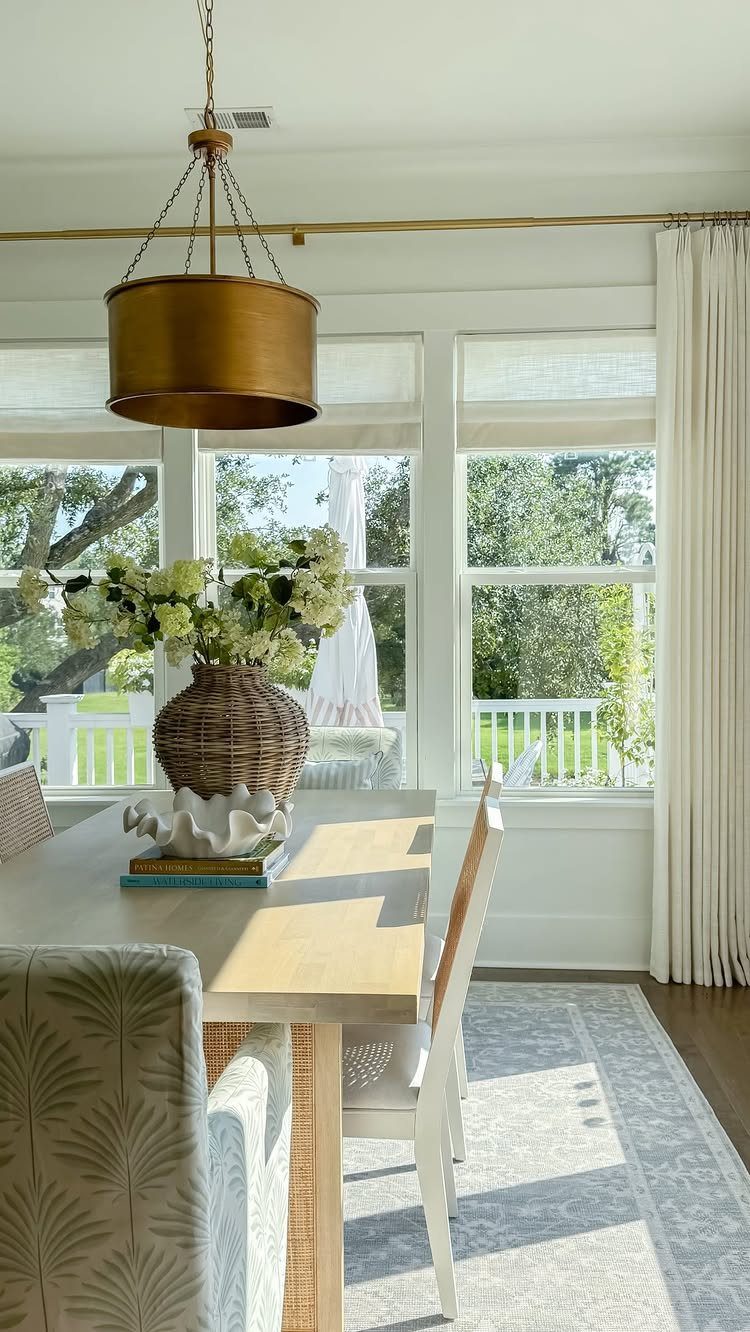
Roman shades give the window a tailored shape even when the curtains are open, and that structure reads as intentional in a dining room where you want things neat.
Mount the shade inside the window frame for a cleaner line, or outside if the frame itself is uneven. White on white works in any light; the shade does the filtering, the drapery softens the edges.
I would choose linen for the Roman and a looser weave for the panels so the 2 fabrics do not compete. Brass hardware warms the whole thing up without shouting.
8. Macrame Beaded String Curtains
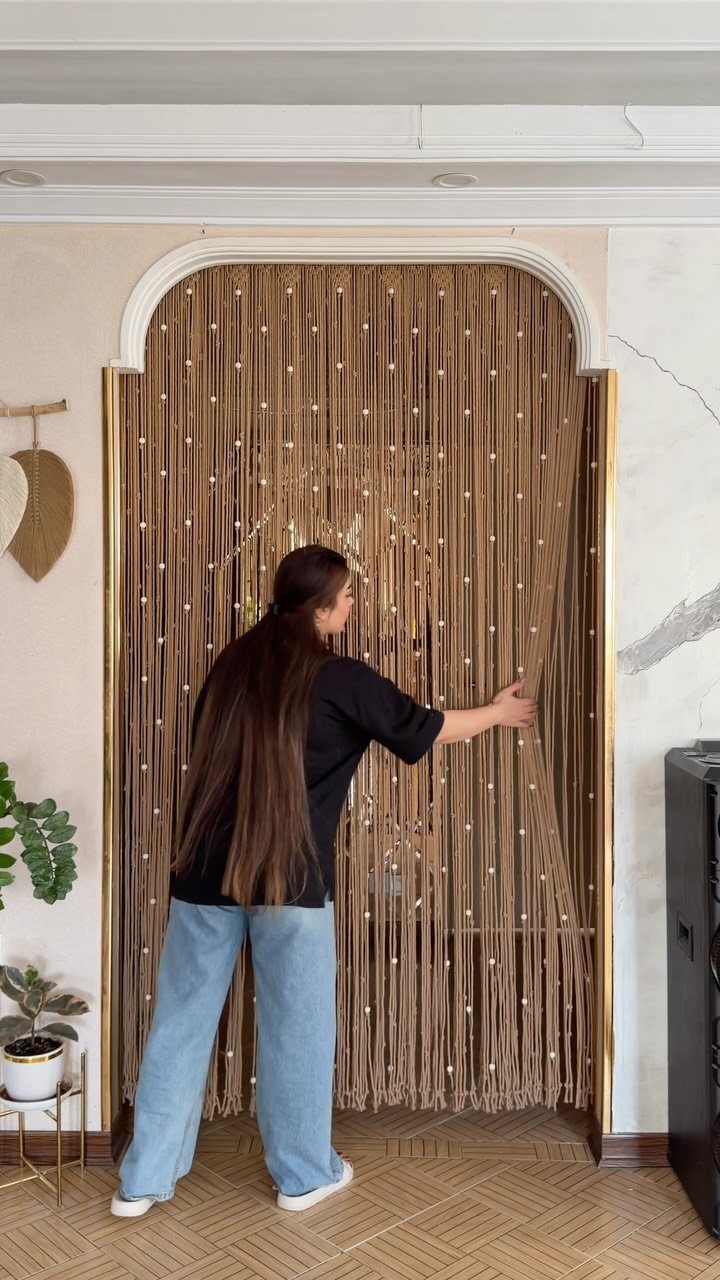
A string curtain turns a doorway into a threshold without closing it off, which suits a rental where you cannot install a proper door.
Cotton cord in natural beige, knotted in repeating patterns with a few white beads spaced through, catches light and moves with air.
The weight of the beads keeps the strands from tangling. Mount it on a tension rod if the doorway has casing, or screw eyes into the header if you own the place.
I would hang it in a bedroom doorway or a closet opening; in a high-traffic hall it would collect elbows and dust. Wash by hand in a basin, not the machine, or the knots tighten and the beads chip.
9. Under-counter Cafe Curtains
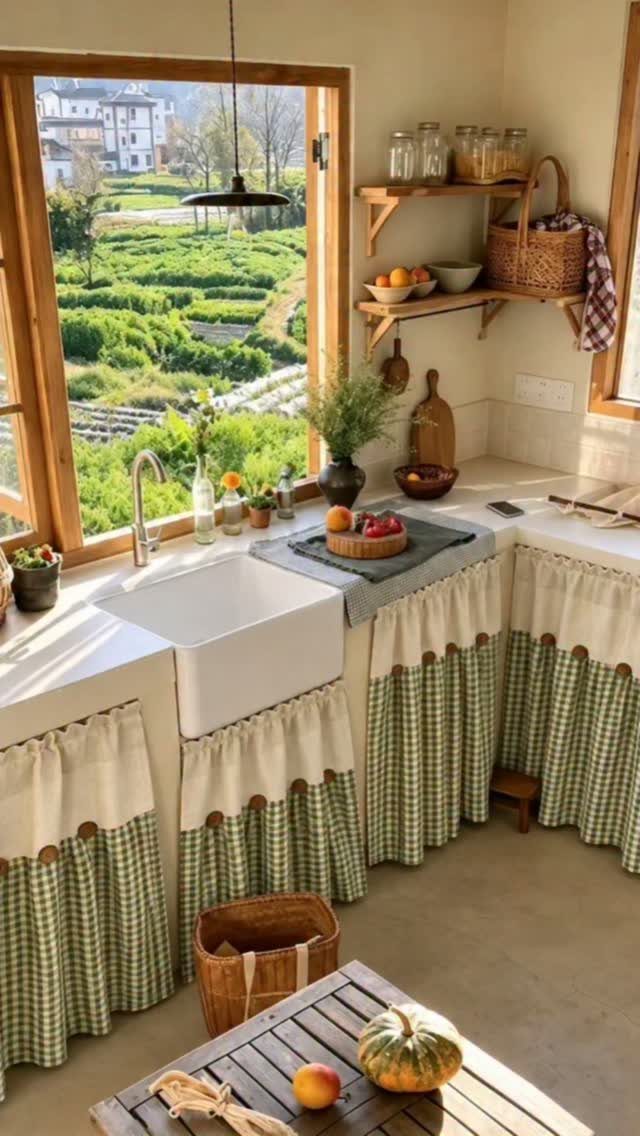
Curtains hung beneath a counter hide open shelving from across the room while keeping everything within reach from the working side.
Green-and-white gingham reads country without going precious; a solid canvas or ticking stripe would shift it toward farmhouse or industrial.
Rod pockets or clip rings on a narrow tension rod both work, but rings are faster to slide when you need something from the back.
Hem an inch off the floor so crumbs and mop water do not collect. This is a quick project with a sewing machine, or longer by hand, and yardage for 2 small panels runs cheap.
10. Ombré Wave Sheers
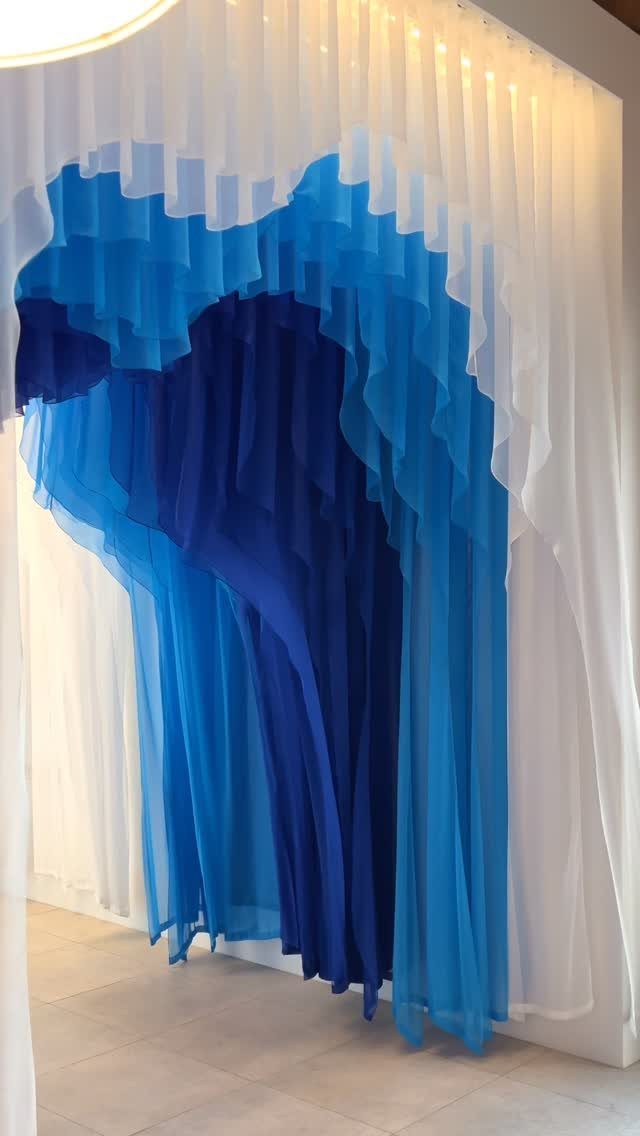
Sheer panels hung in overlapping layers from ceiling tracks can shape a plain hallway into something that reads as architecture.
The wave comes from spacing the carriers on the track closer than the fabric width, forcing the material to billow in set intervals.
White graduating into blue needs at least three layers to read as a gradient; two would look like stripes. Nylon or polyester sheers hold the shape and travel on ceiling tracks without dragging.
I would not attempt this on a standard rod; the track hardware is what keeps the spacing even. Plan on a full afternoon to measure, mount, and adjust the fullness.
11. Curtains Tied Back with Roller Blind
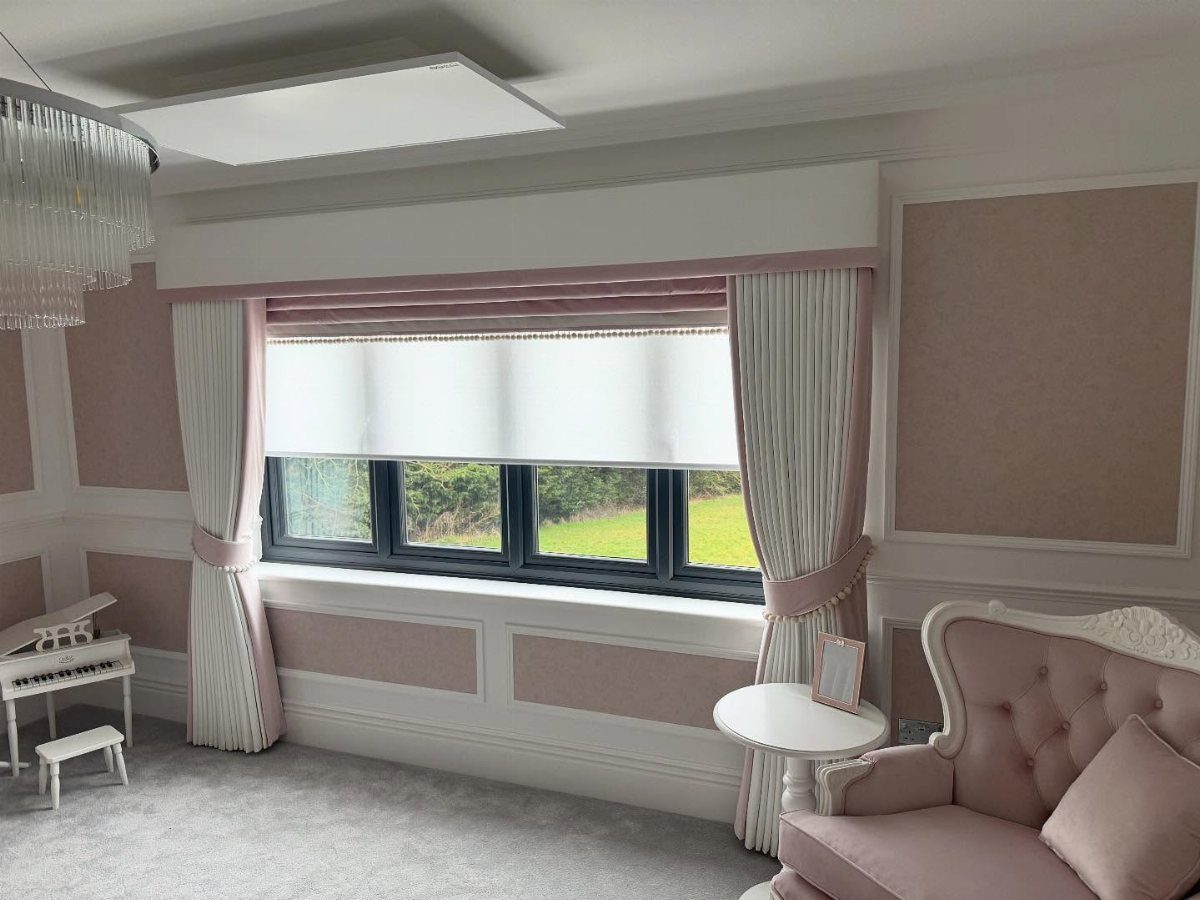
A roller blind behind tied-back panels gives you 2 systems for different times of day: the blind for full privacy or blocking sun, the curtains for softness when you want the room open.
Pink and white pleated curtains with a white roller work because the blind disappears against the trim. I would keep the blind a shade lighter than the walls so it does not read as a dark rectangle when lowered.
Tie-backs at elbow height hold the panels in a neat stack without pulling the fabric askew. This setup costs more than curtains alone but less than custom shutters, and it suits any window where you need real blackout occasionally.
Choosing the Right Fabric
Fabric weight is where most off-the-rack curtains fall short.
For warmth and draft reduction, wool or velvet do the work, or a medium-weight fabric that is lined or interlined.
If drafts are not the issue, a sheer or unlined curtain with light filtering gives daytime privacy without losing daylight. Layer that with a blackout blind behind it and you have two systems instead of one compromise.
Too heavy in a small room and the curtain overwhelms; too light and it lacks presence or fails on privacy.
I would rather see a cheap panel lined properly than an expensive one left sheer when the neighbor’s window faces yours.
From sumptuous Marie Antoinette–inspired velvet blackout curtains to minimalist sheer pinstripe Belgian linen curtains, the market options are incredibly varied—meaning your perfect curtain companion is out there.
Curtain Length and Placement
The hardware height does more for proportion than the fabric choice.
For windows at mixed heights in one room, I hang the rods at the same height across both; the alignment matters more than filling every inch of wall, and the lower window still reads as part of the same system.
Width matters too. Cheat the treatment outward and the window itself looks wider.
Hem to floor length or let it break by half an inch at most. The vertical line does the work, not the pooling.
Layering Window Treatments
Layering is not decoration; it is function stacked on function. A sheer at 171 GSM behind a heavier drape on a double rod gives you privacy and glare control during daylight, then coziness and blackout when the outer layer closes.
The blind behind tied-back panels in the list works the same way: two systems for different hours, not one trying to do everything.
The contrast between layers is what makes it read as intentional. A barely-there sheer against a substantial linen or velvet outer fabric gives the eye something to notice; 2 fabrics of similar weight look like a mistake.
For a more formal room, silk or velvet outer layers with a blind beneath do the same job with more weight.
Loose floaty linens read relaxed. I would decide which mood the room needs before I bought either layer; mixing a formal silk with a casual sheer wastes both.
Frequently Asked Questions
What are some trendy ways to hang curtains?
Reclaimed wood rods, galvanized pipe, or even birch branches turn the hardware into a quiet focal point. For renters, a tension rod or no-drill bracket avoids wall damage while still holding the weight.
What is the curtain trend for 2026?
Bold patterns and rich textures are coming back strong, from romantic florals to stripes, in materials like linen, velvet, and embroidery.
Pinch pleats in quiet neutrals and sheer cafe curtains still work, particularly when you layer them over blinds or shutters.





