
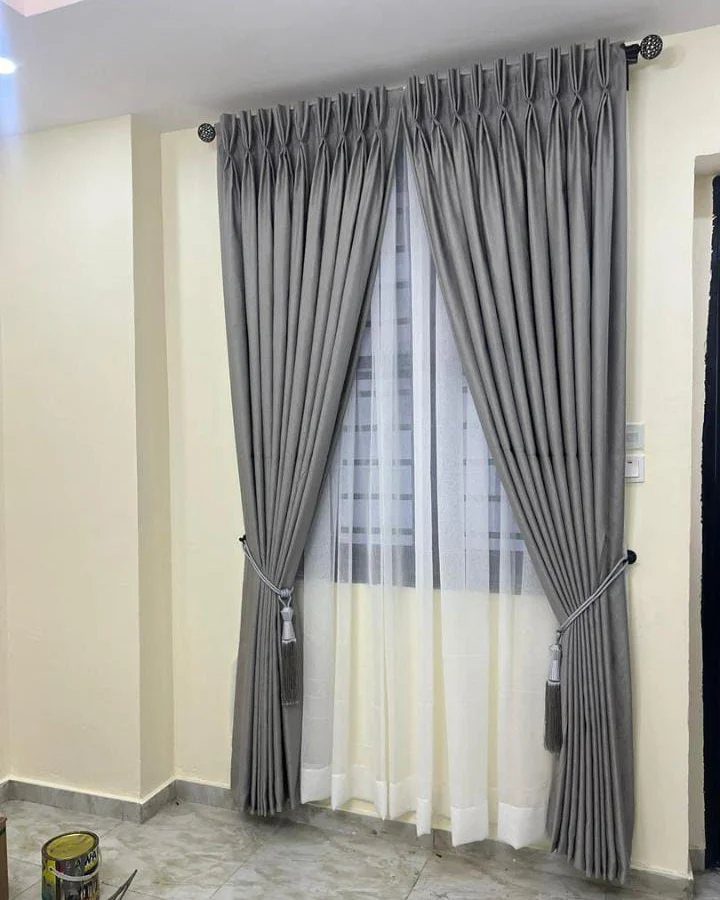
The ideas below run from a beaded tieback you can finish before dinner to a full weekend sewing project with matched fabric weights, and the one that fits your window depends on whether you need the curtain to work every day or to solve one problem for one room.
I would decide first on the rod placement, since no-drill brackets and tension rods sit closer to the glass and that single constraint eliminates half these styles before fabric even enters the conversation.
1. Layered Curtains
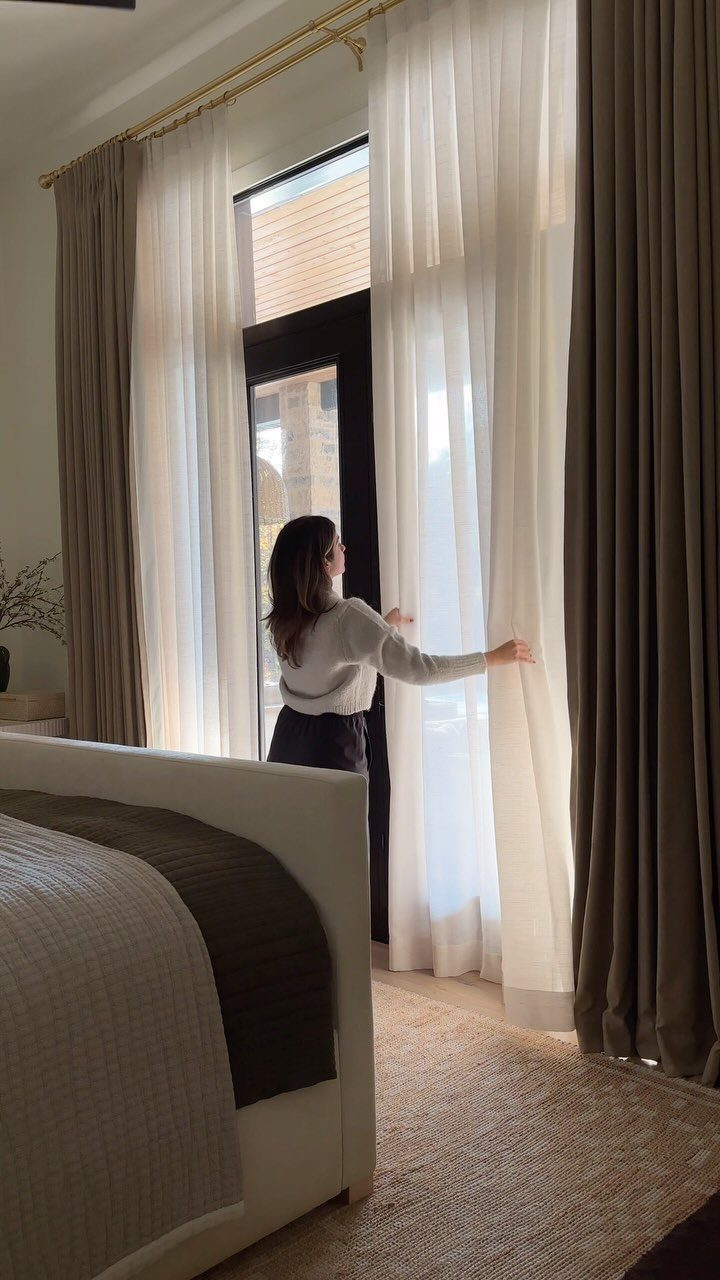
Layered curtains give you two tracks at one window: a sheer that stays put for daylight and a heavier drape that slides on its own rod for night.
I like brass hardware against the taupe and white pairing shown; it reads warm without trying hard.
Mount the back rod slightly lower so the front drape falls clean. For renters, tension rods inside the frame work if you do not want to drill.
2. Tie Top Curtains
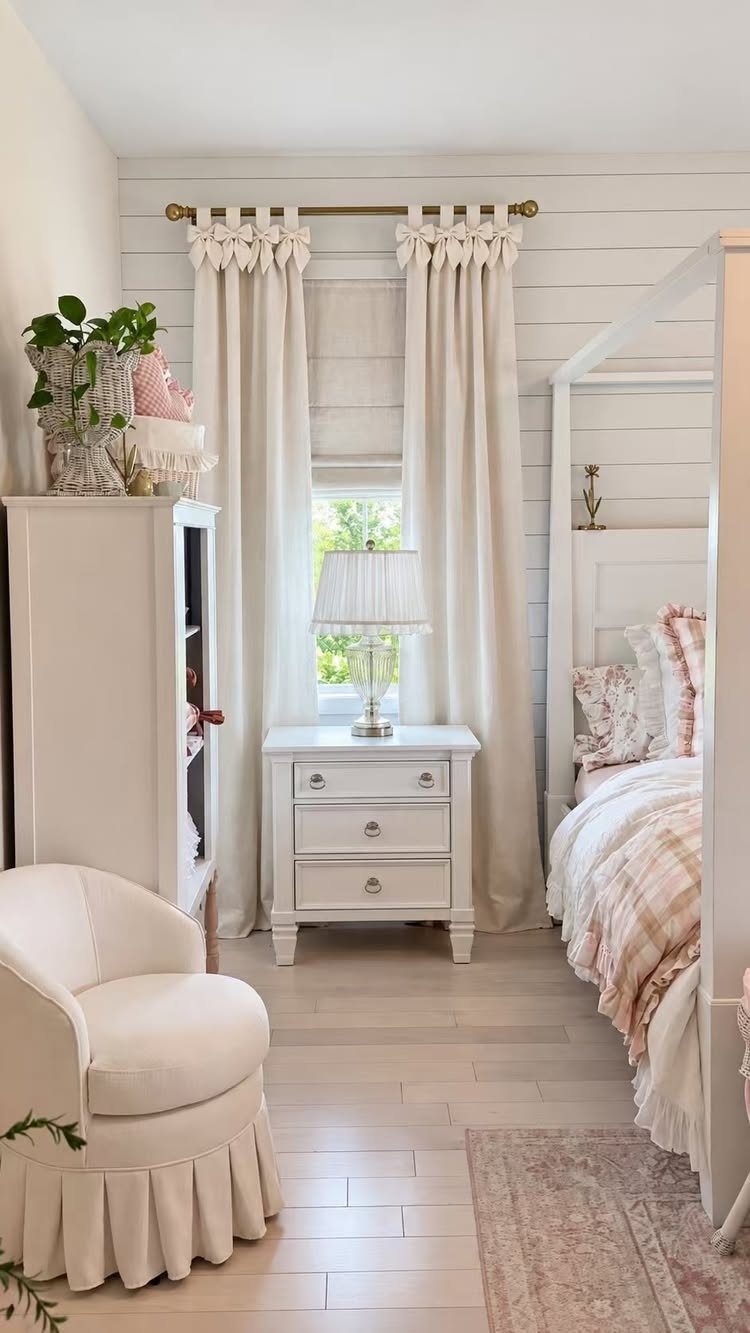
Tie top curtains leave the rod on display, which matters when you have spent money on a good one. Tie-top curtains form their own bows; the fabric loops through itself, no hardware needed.
That gap between header and rod softens the line, so I would not use this style where I need the window to look taller. It suits a casual room with shiplap or painted board walls, something already relaxed.
3. Panel Pair Curtains
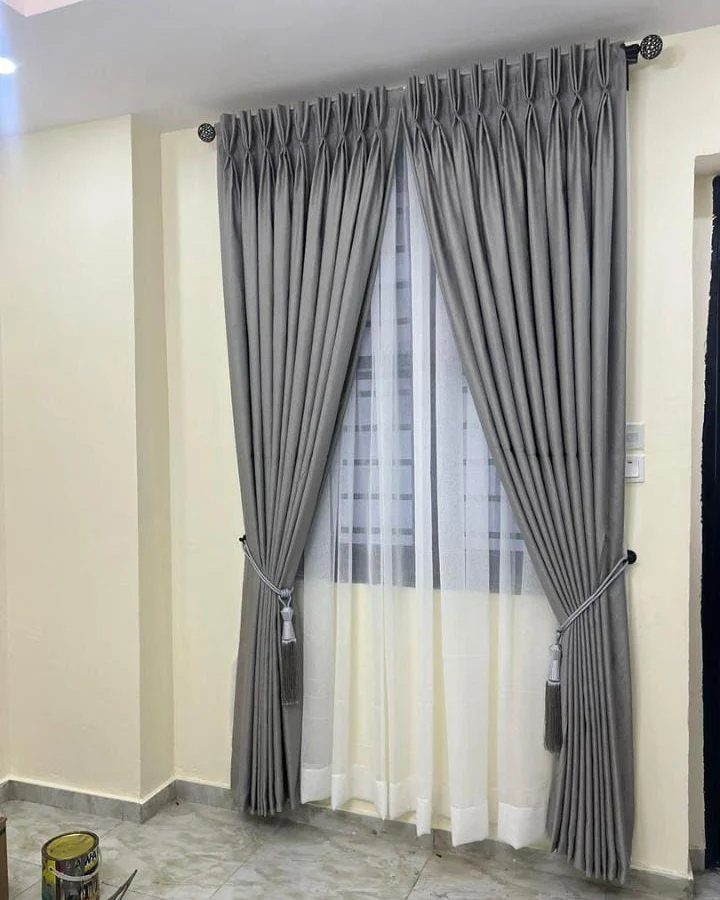
A panel pair is what most people picture when they think curtains: 2 halves that meet in the middle, tied back here with cord and tassel.
The grey over white gives contrast without pattern, a safe choice if you are dressing the window before you have settled the rest of the room.
I would hang them wider than the frame so the pulled-back panels do not block glass.
4. Pinch Pleat Curtains
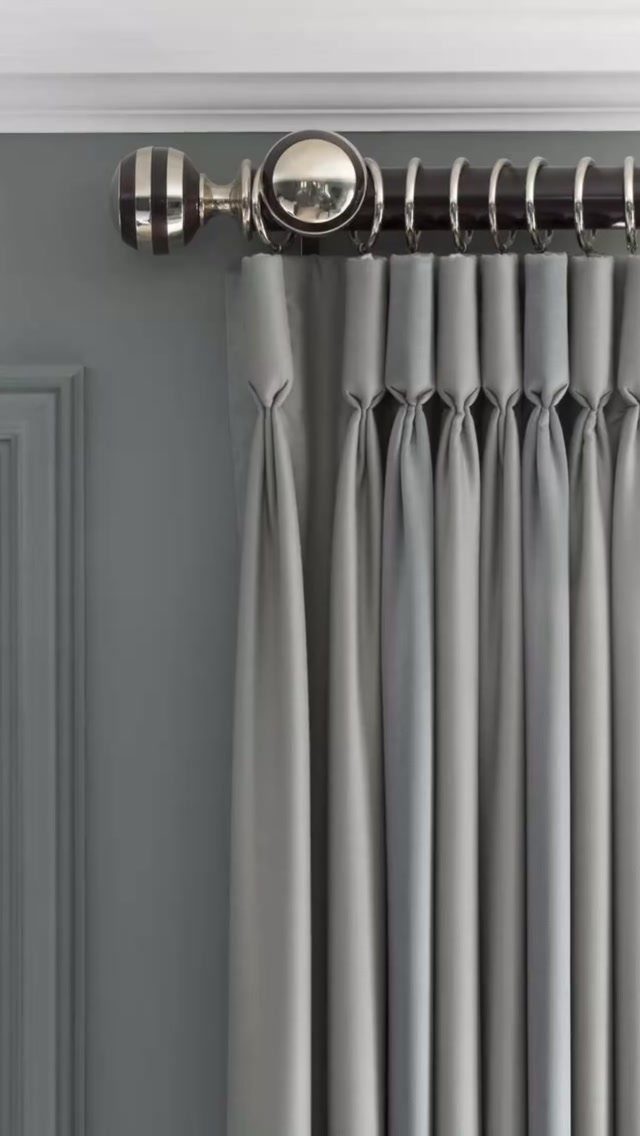
Pinch pleats are sewn in, not clipped on, so the heading keeps its shape when the curtain is open. That structure costs more than a rod pocket but hangs better for years.
Silver rings and a decorative rod read formal; I would use this in a dining room or anywhere with crown molding to match the tone. The pleat depth eats width, so panels need more fabric than flat styles.
5. Grommet Curtains
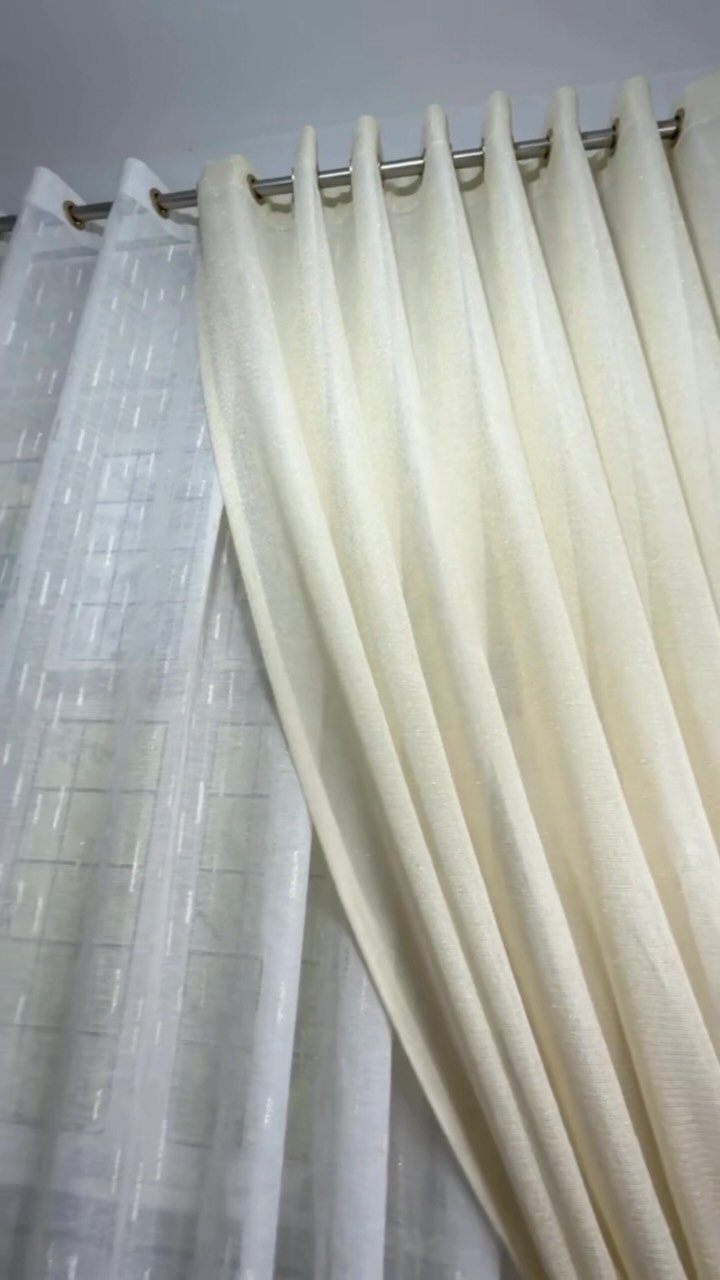
Grommets are metal rings punched straight through the fabric, so the curtain moves along the rod with almost no friction. I find them the easiest style to open and close daily, which matters on a window you use a lot.
Large grommets are a modern look; they work best with a simple metal rod, nothing too ornate competing for attention. Machine-washable fabric is the practical pairing here.
6. Cafe Curtains
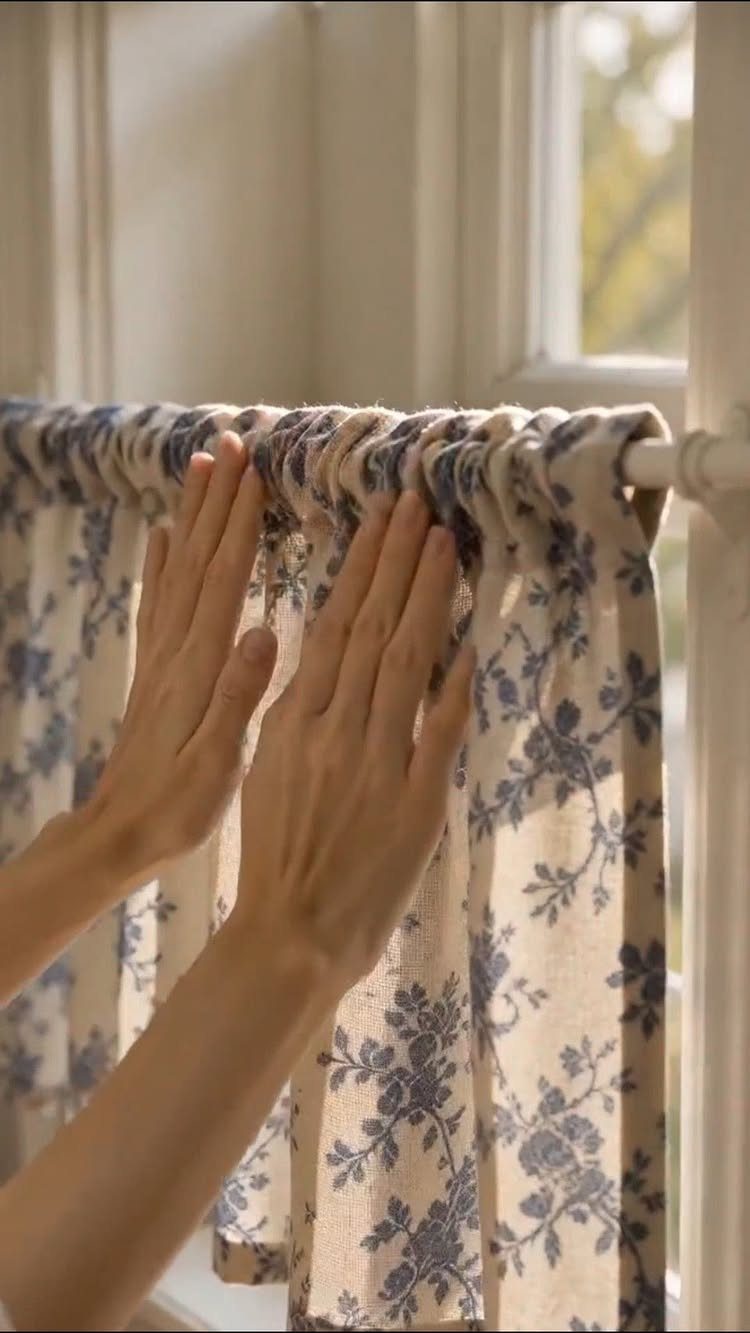
Cafe curtains cover only the lower half of a window, which gives privacy without losing daylight. I would use them on a street-facing kitchen or bathroom where the upper glass stays clear.
Floral cafe curtains read traditional; a solid color reads more current if your room is already busy. Mount the rod at the sash line or slightly above, not midway up the frame, or the proportion goes wrong.
7. Natural Tone Curtains
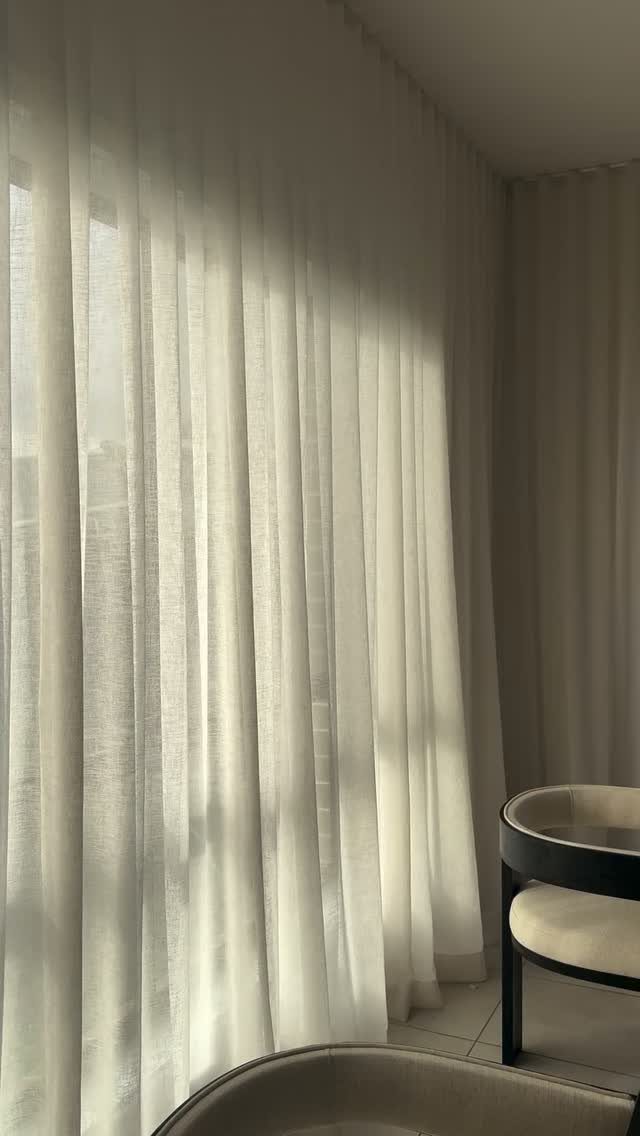
Sheer linen in an off-white or oatmeal reads as quiet warmth rather than starkness. I would use this where the window itself is the feature, not the dressing, or where a room already has enough color elsewhere.
The texture shows in daylight, so the fabric quality matters more than the exact shade. A ceiling track keeps the line clean for modern spaces.
8. Bold Colored Curtains
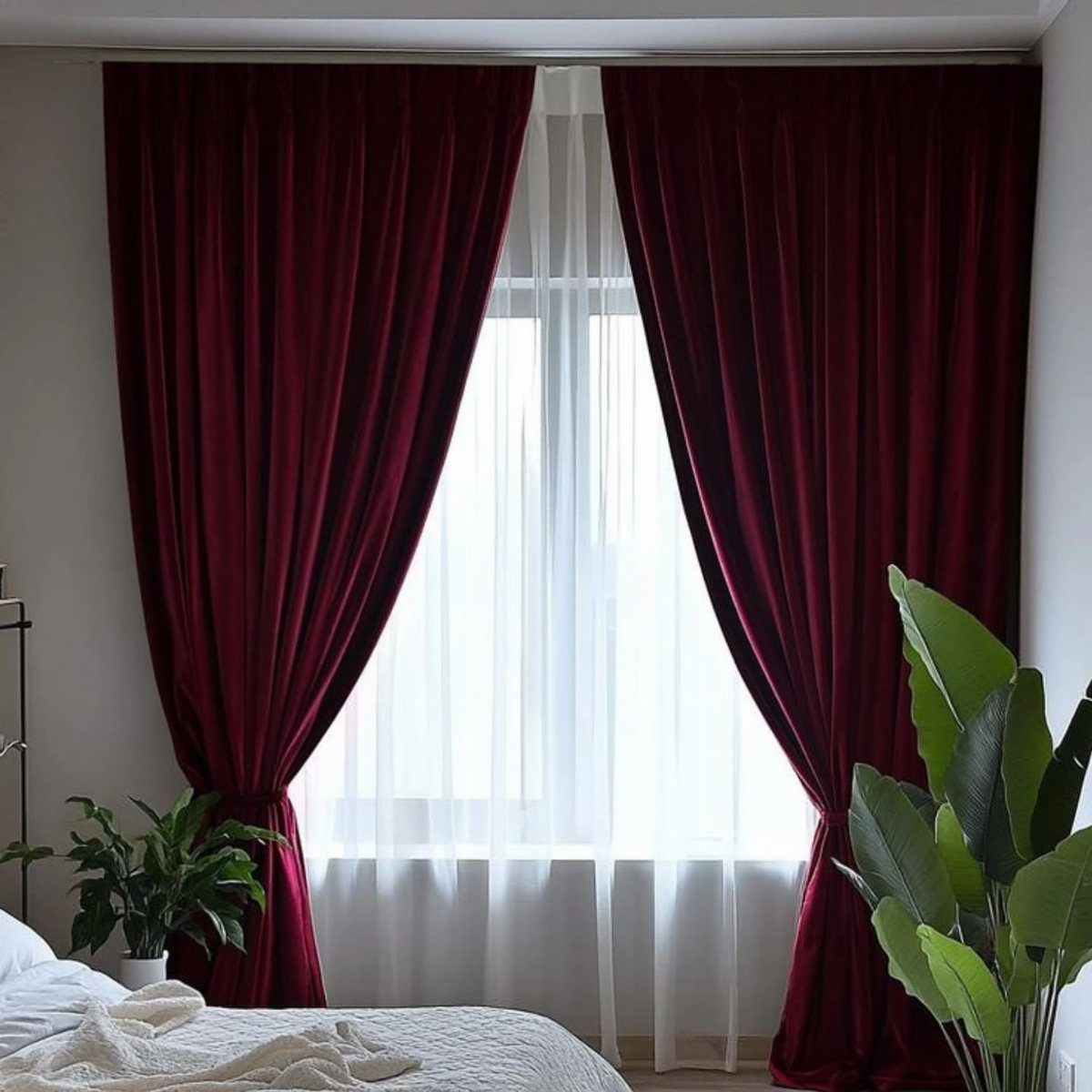
Deep red velvet against white sheers is a deliberate choice: the color does the work so the rest of the room can stay simple.
I would limit this to one window per room, and only where the wall is a neutral that lets the curtain advance.
Velvet needs weight to hang well; cheaper synthetic piles crush and reflect light cheaply. The sheers behind are the practical layer for daily use, the velvet for show.
9. Floral Patterned Curtains
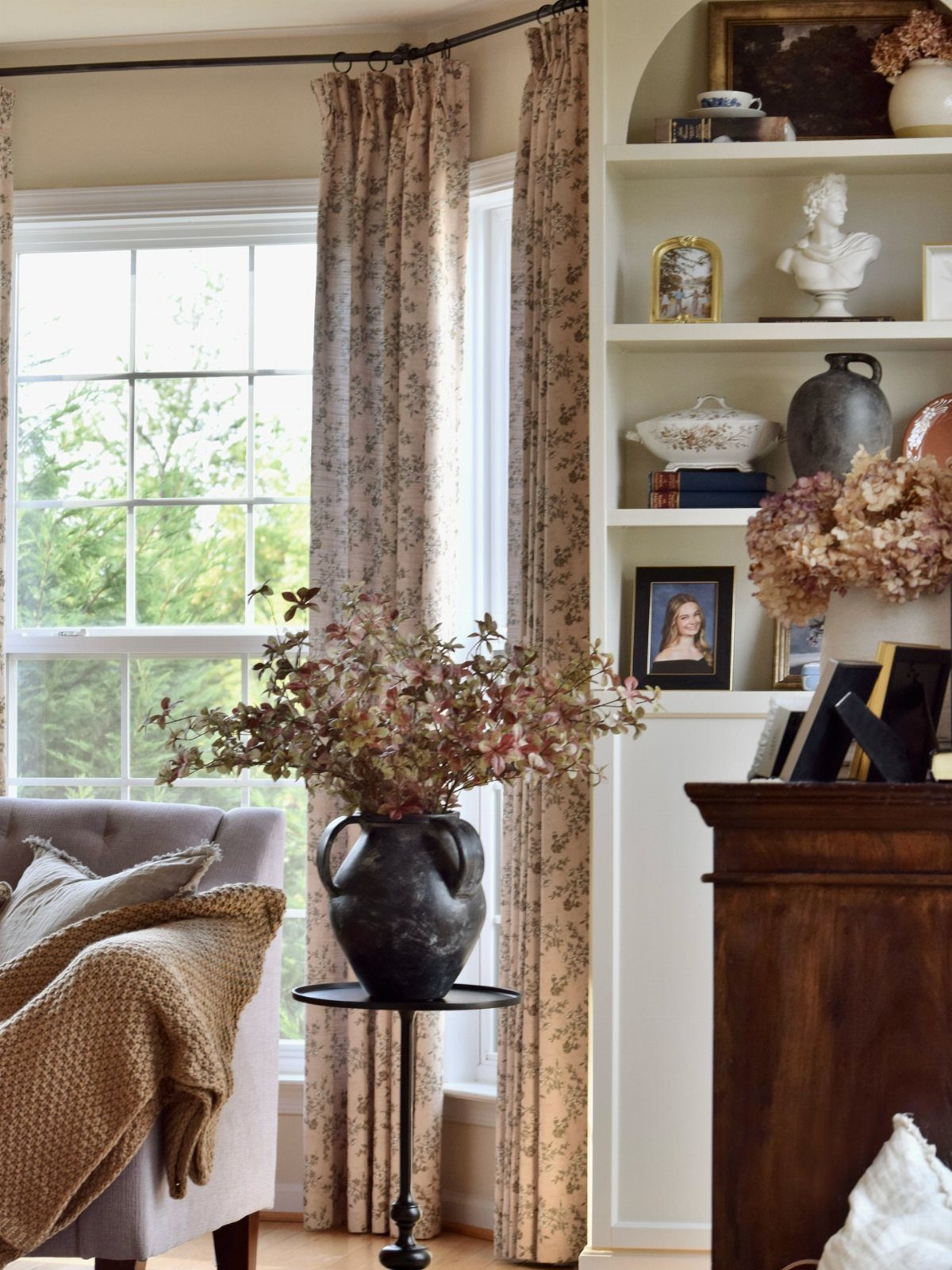
A large-scale floral on floor-length panels suits a room with solid upholstery; the plain armchair next to it shows why.
I would keep the pattern to the curtains and let nothing else compete; a bookshelf nearby is fine because books read as texture, not pattern.
The curved rod softens the architecture, but standard hardware works if your window is already arched or has some curve to echo. Small florals read dated; go big or go plain.
10. Pom-Pom Trim Velvet Curtains
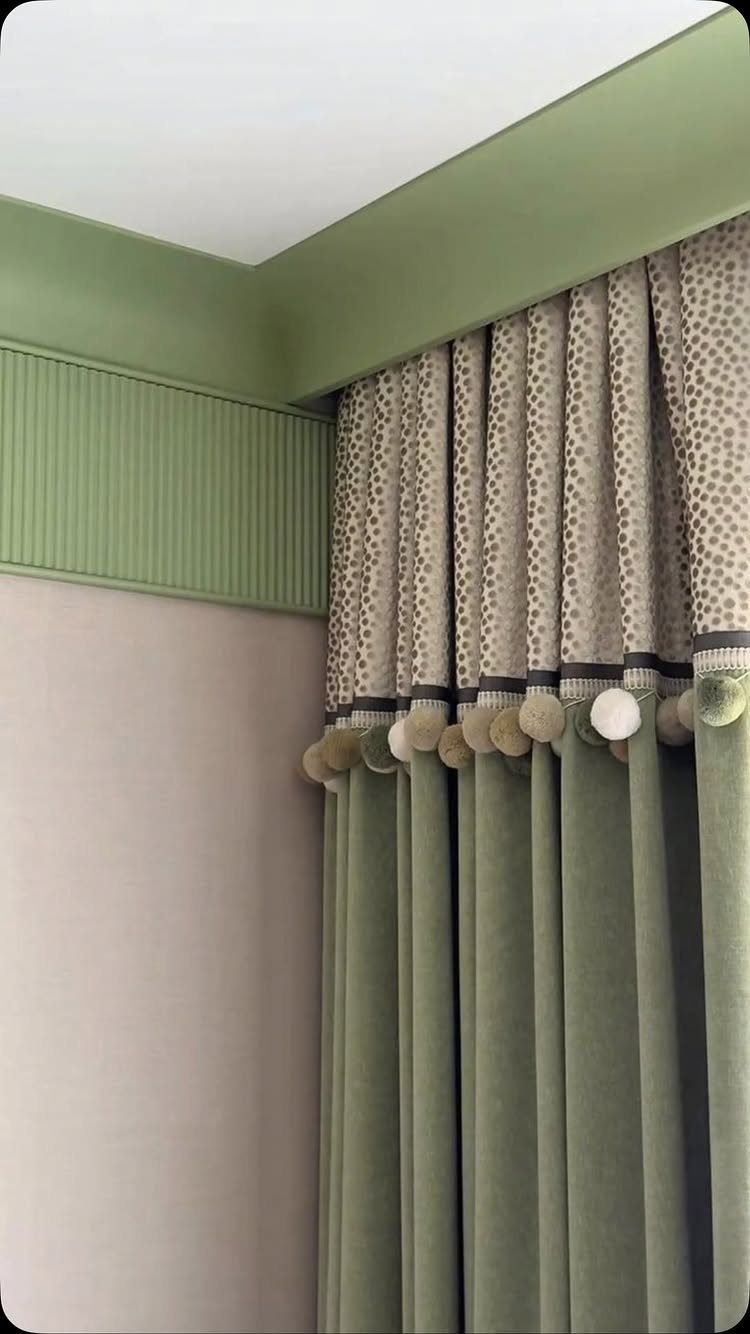
Green velvet with a patterned header and pom-pom fringe is doing several things at once, which risks busy but reads here as confident.
I would not add this to a room that already has pattern on walls or large furniture; the trim needs space to be the detail.
The pom-poms are a playful touch that keeps velvet from feeling too heavy. If you sew, adding trim to ready-made panels is a weekend project with low supply costs.
11. Decorative Beaded Tiebacks
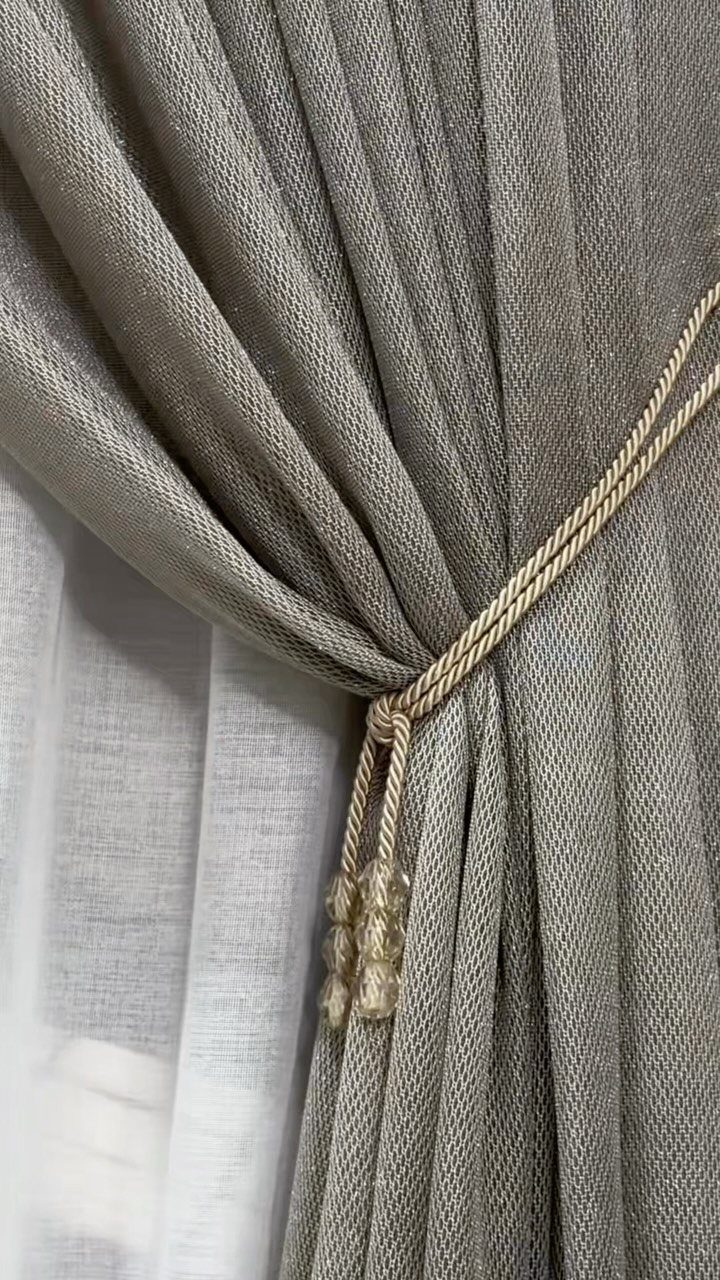
A beaded rope tieback turns a functional holdback into jewelry for the curtain.
The beads catch light, so place them where morning or afternoon sun hits. For a DIY version, cord and beads from a craft store take an hour to knot.
12. Curtains as a Bed Canopy Backdrop
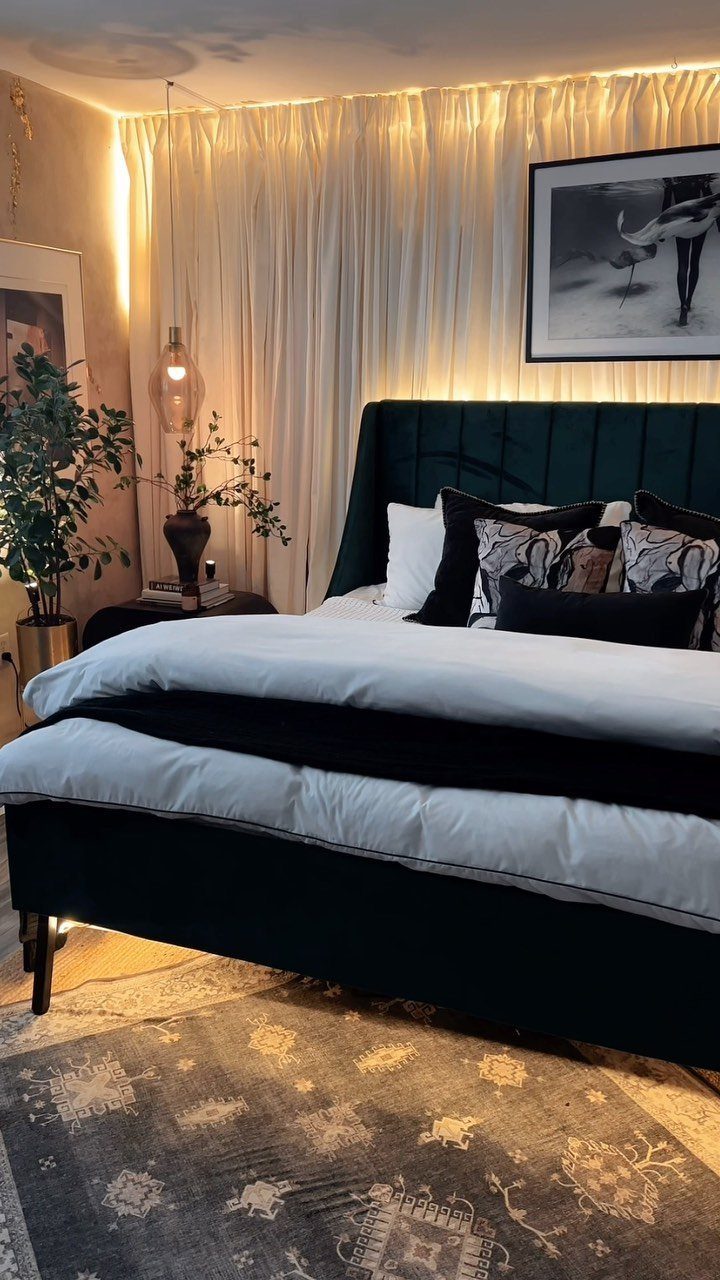
Sheer panels mounted behind the headboard, backlit from above, replace both a headboard statement and bedside lamps.
Warm LED strips work and draw little power. This suits a bed placed against a plain wall where art would otherwise go; the curtain is the art, and it moves.
13. Two-Tone Colorblock Curtains
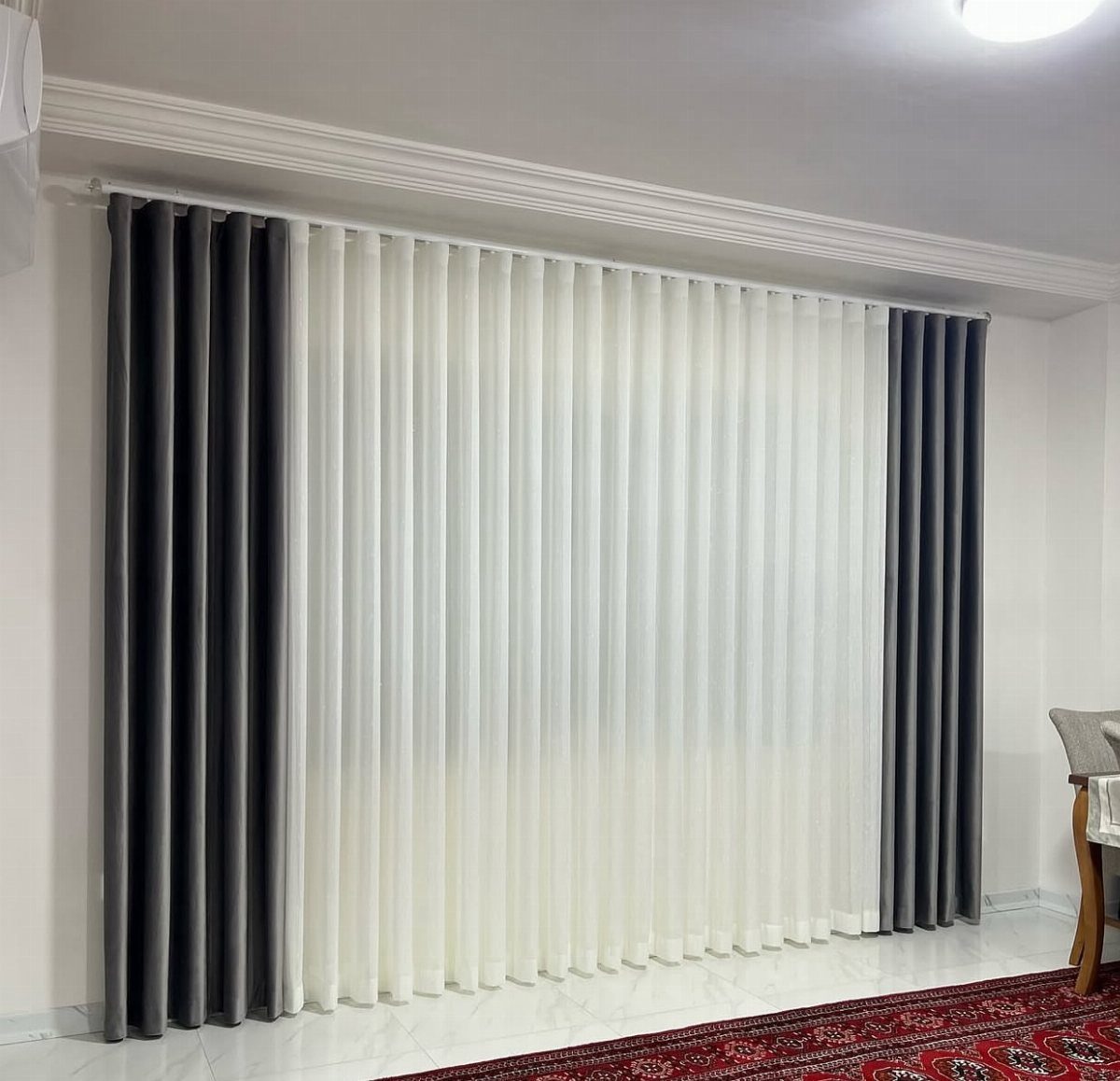
Two-tone colorblock curtains split each panel into fields of contrasting color rather than mixing them in a pattern. The white center here reads as open space, the grey sides as framing; together they read as intentional without demanding attention.
I would use this where a room needs structure but not busyness. The clean edge where colors meet is the detail, so the seam needs to be straight and the fabric weight matched on both sides.
Ready-made colorblock panels are harder to find than solid or printed; sewing 2 flat panels together is the likelier path, and straight seams are beginner work.
A white center stays cooler in summer sun than dark panels alone. The trade is visible dust and the occasional handprint where people part them.
How to Hang Curtains
Curtain width should be 2 to 2.5 times the window width for fullness that reads dressed rather than skimpy. Measure the rod width, not the glass, if you have already chosen hardware.
For length, I stop at the sill for casual rooms, kiss the floor for standard looks, and puddle 1 to 2 inches where I want some formality.
The puddle collects dust; I would not do it near a door or in a kitchen.
No-drill brackets change the math because they sit on the frame itself, not the wall.
That sets the rod closer to the glass, so your panels need to clear the trim when they slide. Tension rods inside the frame have the same constraint.
Best Materials for Curtains
Linen wrinkles and looks right doing it; I would not press it.
Cotton takes dye evenly and washes repeatedly, which makes it the practical choice for panels that see daily use. Cheap velvet reads as costume, not curtain; the pile is too thin and the color sits on top like paint.
Pinch pleats need a stiff heading tape or buckram sewn inside the top to hold their fold, which is why even lightweight fabrics and sheers can carry the look without collapsing.
A lightweight cotton would collapse at the header. Faux silk catches light the same way real silk does, for less money, though it will not breathe or insulate the way the natural fiber does.
For sheers, I look at fiber content rather than brand.
Polyester sheers last longer but can read plastic in strong light. Linen sheers soften the window more but fade faster on south-facing glass.
New Curtain Trends
Layering is the trend that also solves a problem: one panel rarely does both privacy and light control. Double brackets and bypass rods are now standard stock at most home centers, not special order.
Bold colors and natural tones sit at opposite ends of the same movement, which is a turn away from safe beige.
I read this as rooms getting more decisive rather than more colorful overall. One strong curtain against neutral walls, or quiet texture where everything else speaks, both read as intentional.
DIY curtain projects have moved from fringe to mainstream as renters especially look for wall-safe hanging. The afternoon or weekend timeline matches who this site speaks to.
What I watch now is the return of trim: beads, pom-poms, and tiebacks that turn a functional panel into something particular. The craft-store version keeps it budget-friendly.
Frequently Asked Questions
What are the best curtains to put in my living room?
Panel pairs, grommets, or pinch pleats work well depending on the room’s tone. I would use pinch pleats where there is crown molding or other formal detail to match, since the sewn-in heading keeps its shape and reads finished.
Grommets suit a living room you open and close daily because the rings move with almost no friction. For a living room still finding its style, grey over white panel pairs give contrast without locking you into a pattern.
What is the best material for window curtains?
Cotton is the practical workhorse: it takes dye evenly and survives repeated washing.
Linen creases the moment you look at it, which I count as part of its character; the rumpled surface softens a room and keeps the eye on the window shape rather than the panel.
Velvet lives or dies by its heft, and the low-end synthetics prove it: they mat down under their own weight and throw back light like costume fabric.
Sheer polyester survives years of washing but can turn shiny against bright sun, whereas linen sheers filter light the way I prefer and simply wear out sooner on southern exposures.
How do I hang curtains?
Panels need 2 to 2.5 times the rod width, measured wall to wall where the hardware sits, not the glass alone; anything less reads like a bedsheet hung to dry.
Length breaks three ways: sill height for kitchens and kids’ rooms, just grazing the floor for most living spaces, or pooling an inch or two where you want the drama, though I skip the puddle anywhere people walk.
What are the new curtain trends for 2026?
Layering has gone from magazine styling to actual hardware aisle stock, which tells me the problem is universal: one fabric cannot both block the street and let in morning light, so double rods and bypass systems are now ordinary inventory.
The shift from beige runs both directions, toward saturated color and toward raw clay and olive, which I read less as color obsession and more as people finally picking a side.
Renter-friendly trim additions, beads along the edge, pom-pom borders, and fabric tiebacks have crossed from craft blogs to standard weekend projects now that wall-safe hanging is widely available.





