
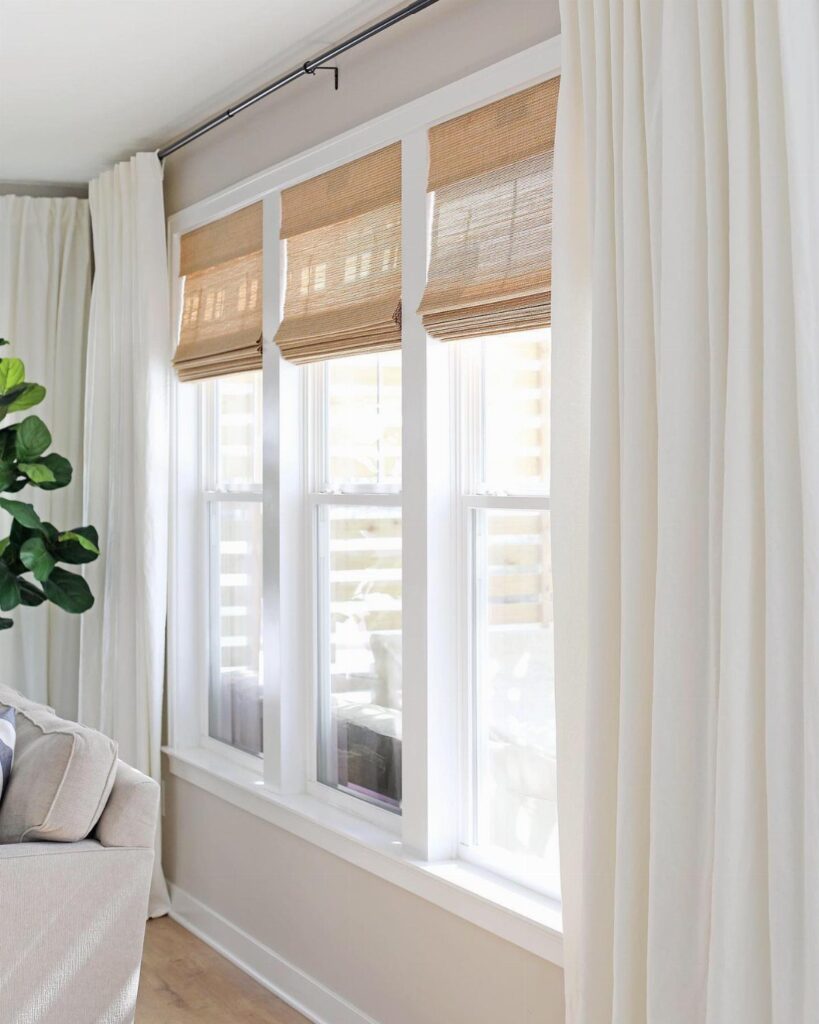
These pairings run from a quick hardware-store shade with ready-made panels to pleated linen hung high enough to break on the floor, so the range is really whether you want the window to disappear or to become the room’s quiet center.
The deciding factor is what you need the combination to do: daily privacy alone, or full blackout and a change of mood by night.
Hunter Douglas’s Provenance line mixes bamboo with grass and reed so no 2 pieces match, and that irregularity is what makes the shade look like something grown rather than manufactured.
1. Unlined Woven Shade
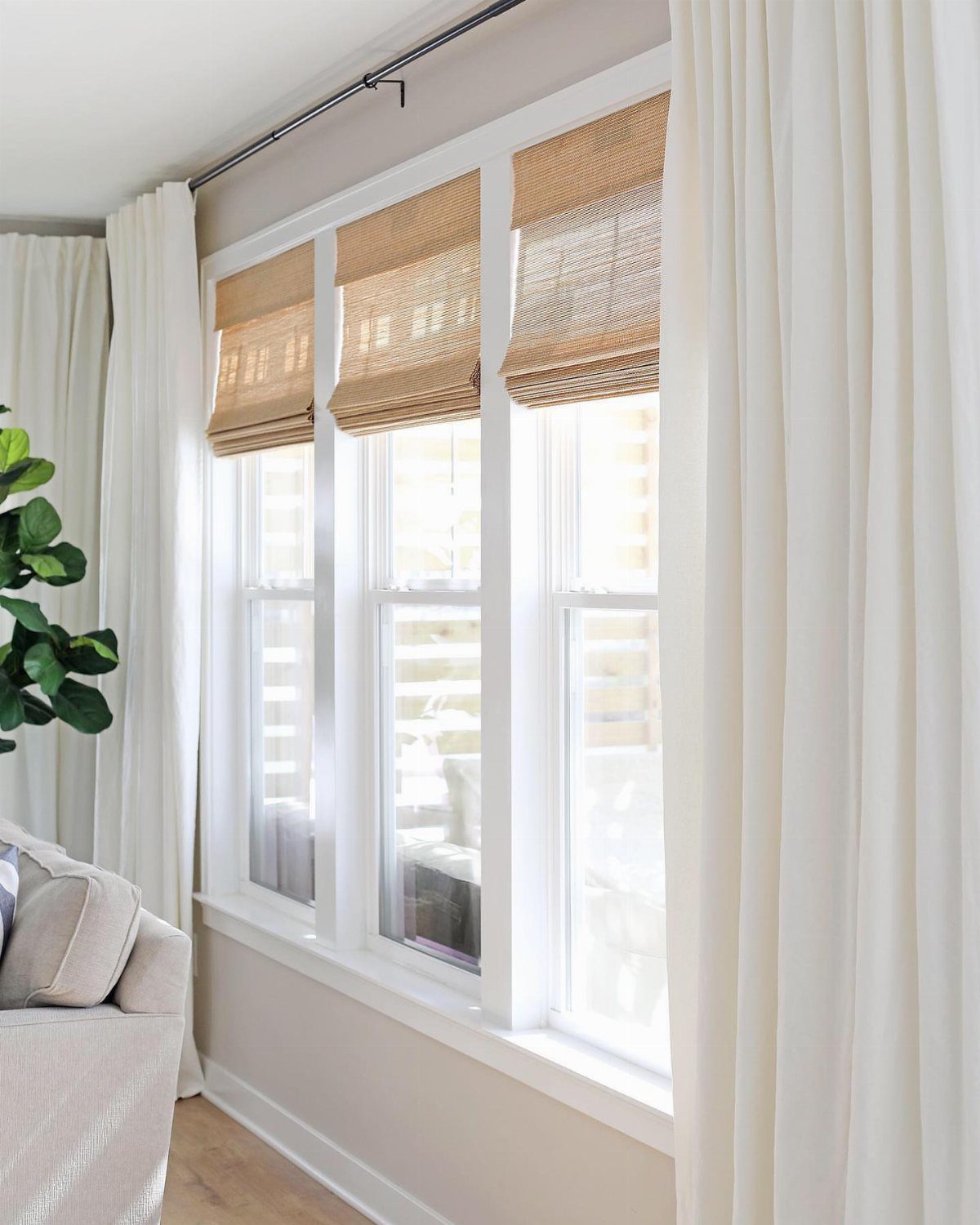
Small gaps in the weave let morning light through an unlined woven shade while still breaking up the glass.
That partial coverage is why I like this pairing for renters who cannot replace windows but want something warmer than bare panes.
White drapery on either side finishes the frame and gives full blackout when you need it. The shade handles daily privacy; the curtains handle everything else.
2. Bamboo Blinds with Curtains
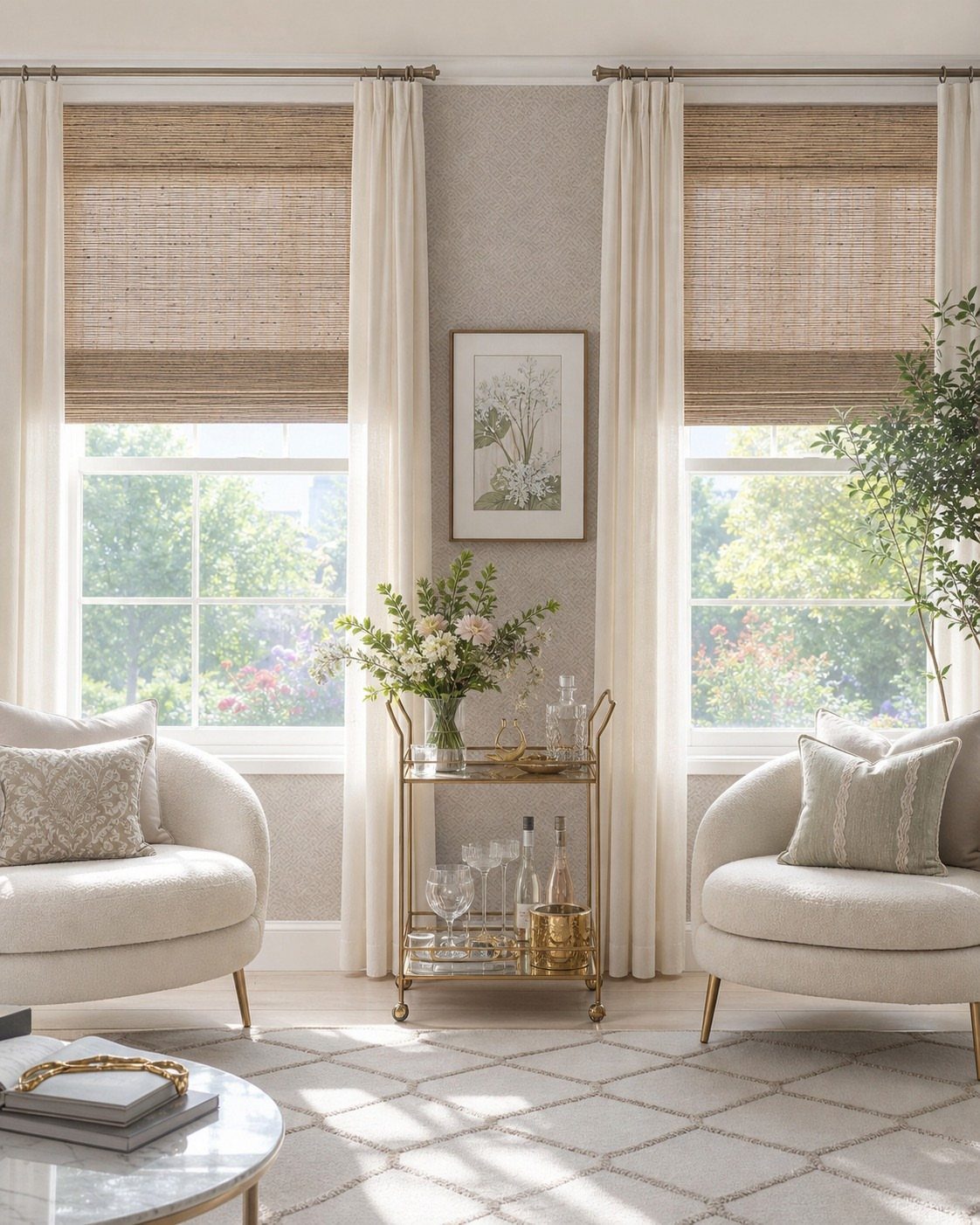
Bamboo shades soften glare and give daytime privacy, but they leave edges exposed and do not block light at night. Floor-length curtains fill those gaps and let you darken the room completely.
I think of it as hiring two specialists rather than one generalist.
The bamboo does the daily work; the curtains step in when you need full coverage or want to change the room’s mood. Either layer works alone, but together they cover more situations than either manages by itself.
3. Linen and Bamboo Pairing
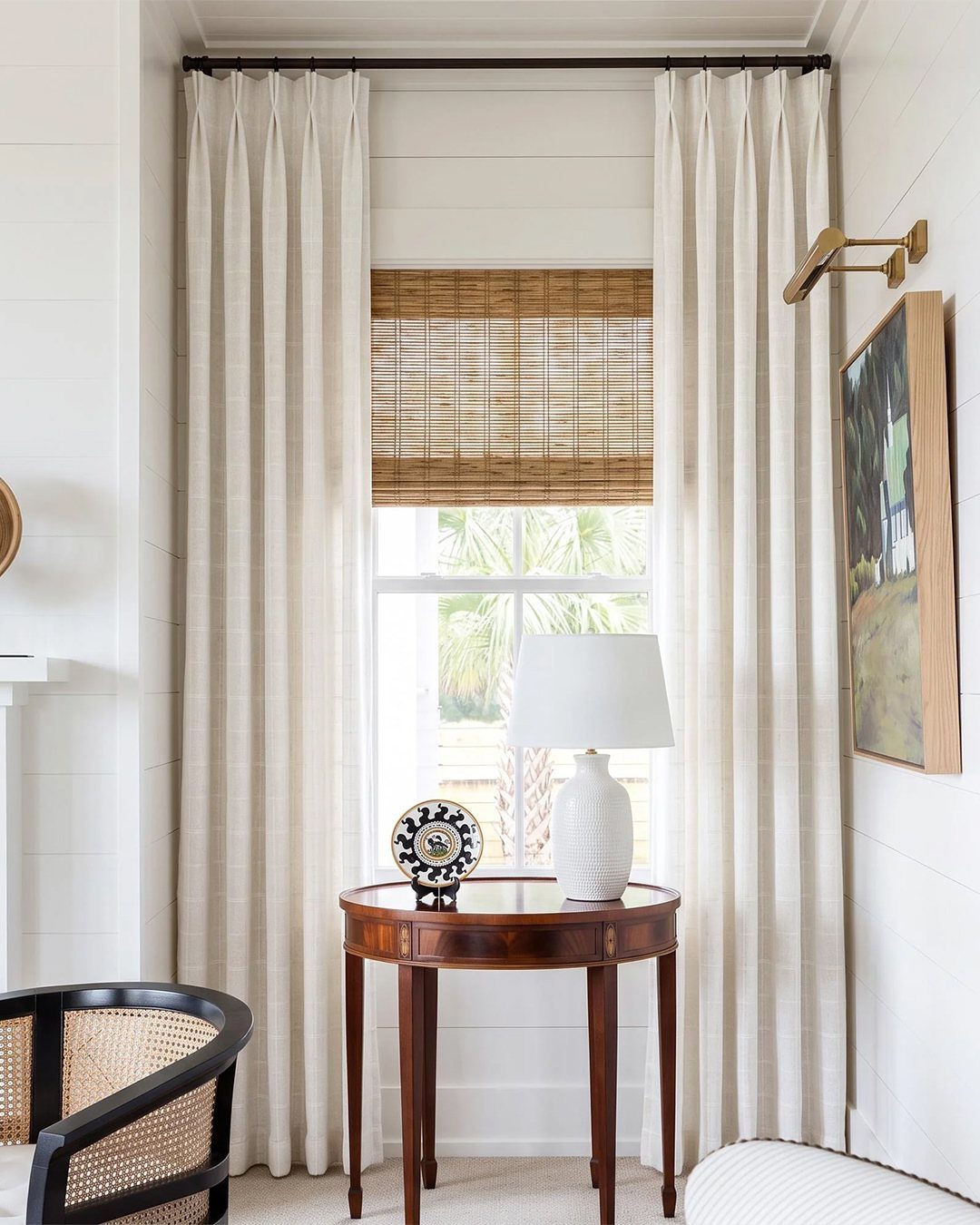
Linen and bamboo share the same irregular, hand-worked texture, so the eye reads them as belonging together even when the colors differ slightly. Both materials relax rather than crisp up, which keeps the window from looking overstyled.
Pleated linen curtains add structure that woven shades lack on their own.
I would hang the rod high and let the linen break on the floor; the shade sits in the window opening where it belongs, and the curtain handles the vertical drama.
4. Bamboo Shades with White
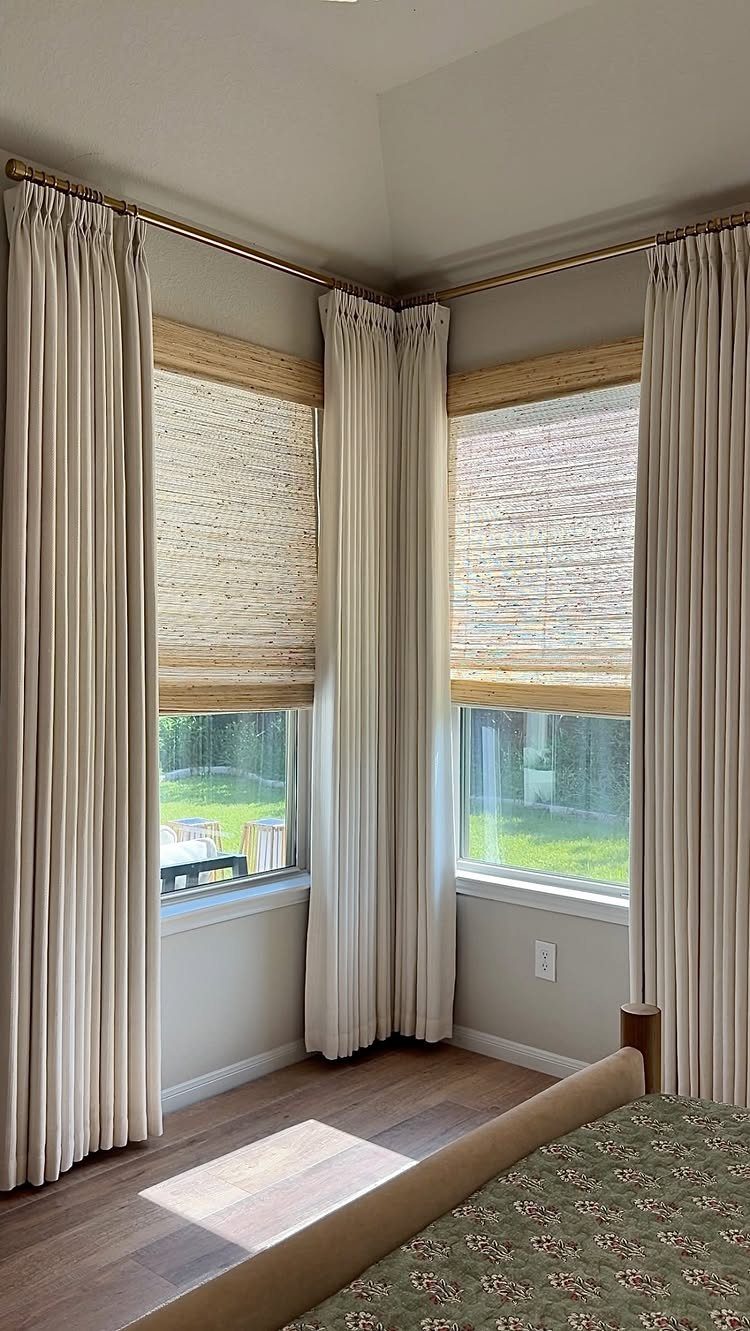
White curtains against bamboo read as fresh rather than stark because the warm tone of the weave keeps the pairing from going clinical. Brass hardware adds a third element that bridges both.
This is the combination I point to when someone wants the natural look but worries about their room going too dark or too rustic. The white keeps it light; the bamboo keeps it from feeling blank.
5. Tan Shade with Beige Drapes
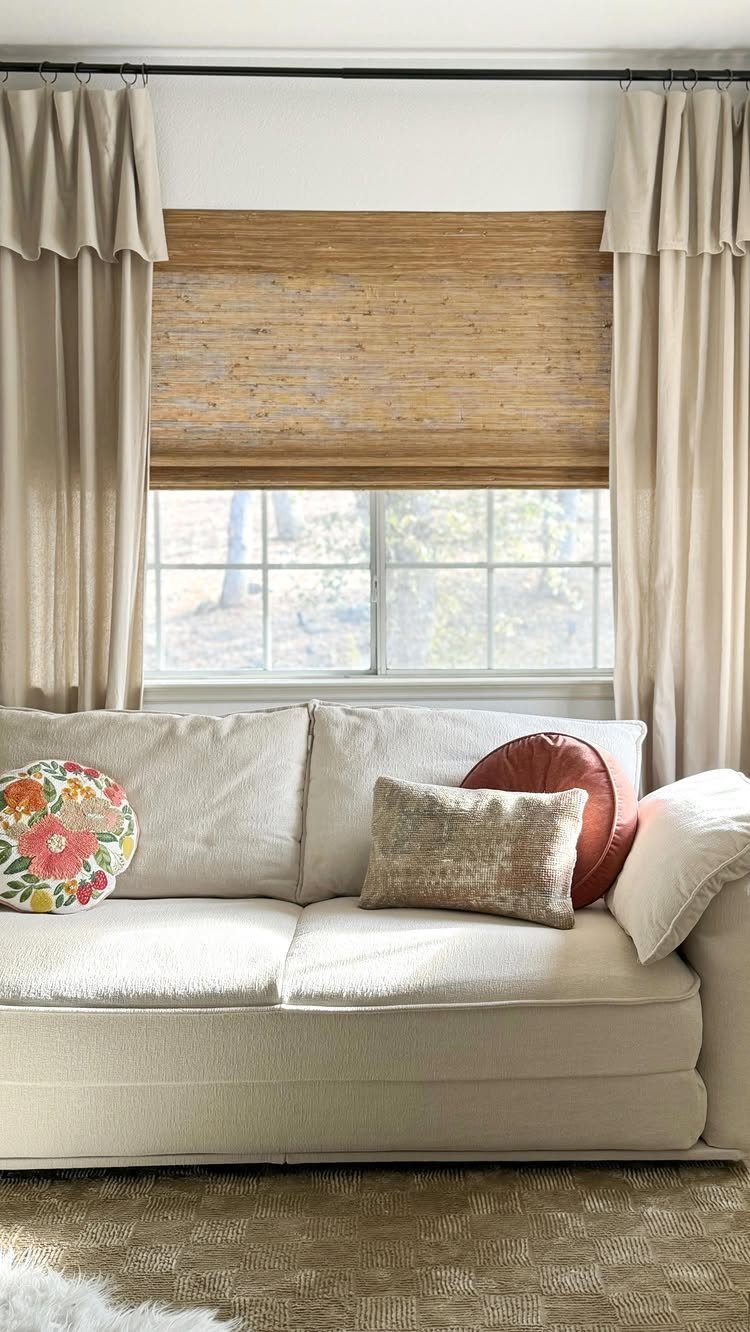
A tan shade with beige drapes narrows the contrast to almost nothing, which makes the window feel larger and calmer. The layered neutrals give depth without pattern, and the shade itself provides enough visual weight to anchor the whole arrangement.
I would use this in a room that already has enough color elsewhere and needs the window to rest. The layered neutrals give depth without pattern, and the shade itself provides enough visual weight to anchor the whole arrangement.
6. Sage Green Curtains with Bamboo
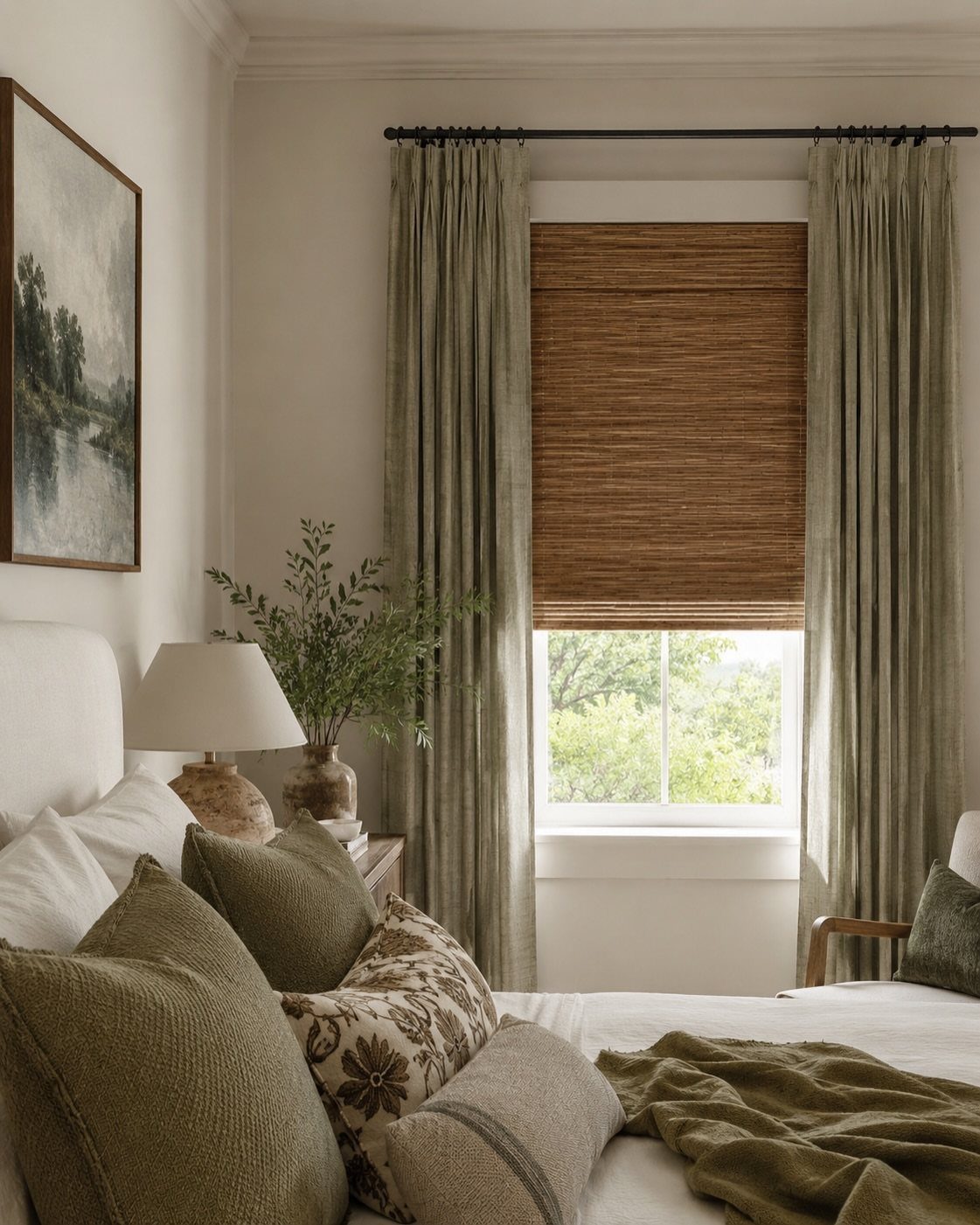
Sage green curtains against brown bamboo bring in color without fighting the natural tone of the shade. In a bedroom this pairing settles the space rather than waking it up.
The green reads as outdoorsy rather than decorative, which keeps the combination from feeling like a color scheme you will tire of.
I would keep the bedding in the same muted range so the window does not become the only statement in the room.
7. Patterned Curtains with Bamboo Shade
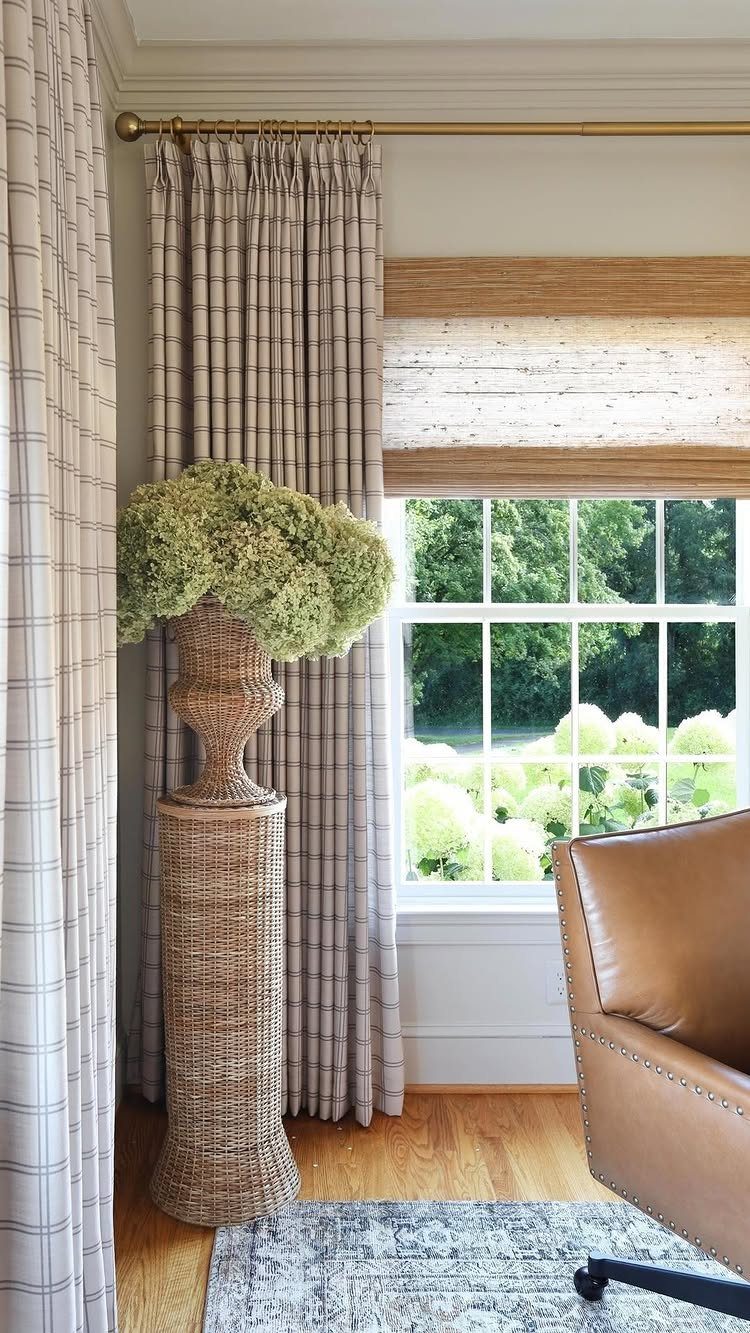
Patterned curtains give a room a focal point that plain drapery never quite manages, and bamboo keeps that pattern from overwhelming the space. The shade acts as a visual pause between the print and the window glass.
I would stick to patterns in the same value range as the bamboo, warm neutrals with a small-scale repeat.
Large geometrics or high-contrast colors fight the weave instead of working with it. A plaid or subtle stripe reads as texture from across the room, which is what you want when the curtains share a wall with anything else interesting.
8. Light Blue Sheers and Bamboo
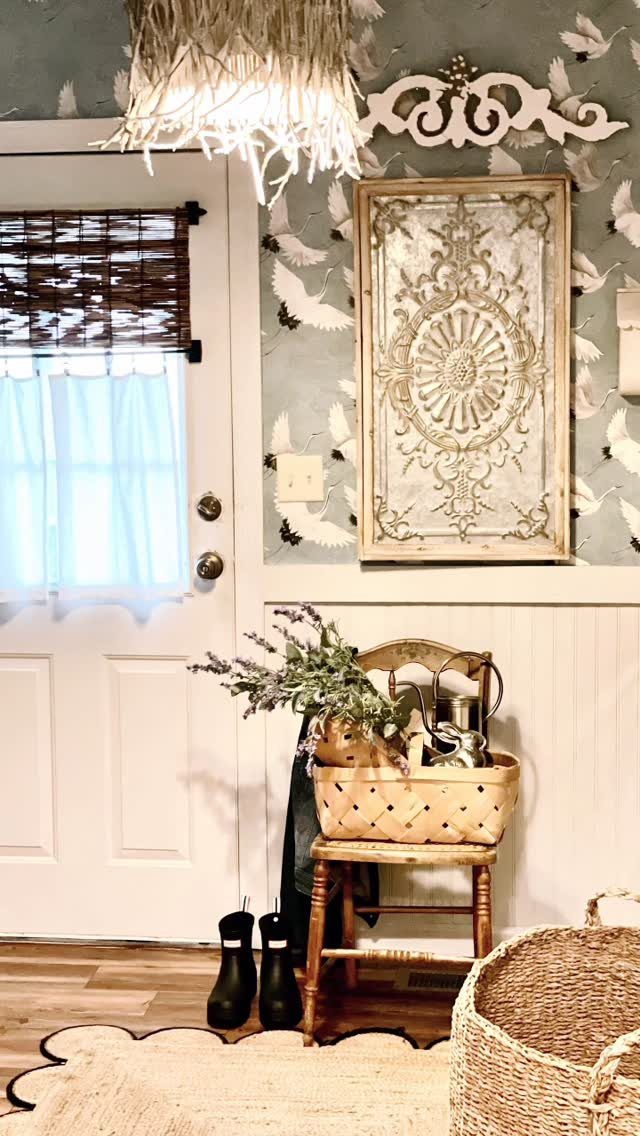
Sheer curtains in light blue turn a door window into something softer without sacrificing what little daylight it gets.
The dark bamboo shade behind them gives enough privacy for an entry; the sheers diffuse what light still comes through and keep the hardware from reading as bare.
This is a pairing for a window that faces a porch or a close neighbor, with coverage that keeps the room from turning into a cave.
The blue picks up on sky tones and keeps a narrow space from feeling boxed in.
9. Brown Curtains with Tan Bamboo
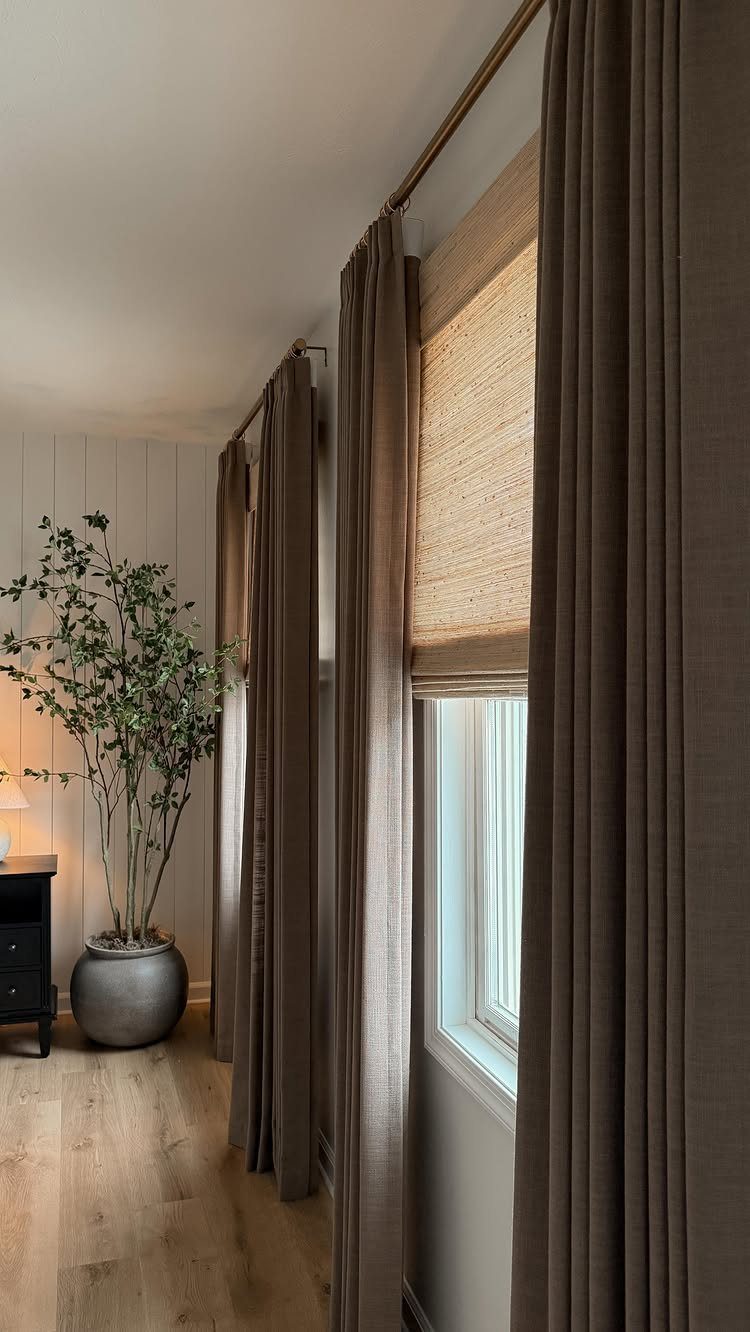
Tan bamboo against rich brown drapes creates a gradient from warm light to deep warm dark, which makes the window feel layered rather than crowded. Brass rods repeat the warmth and keep the brown from going flat.
I think of this as the dressed-up version of the pairing, formal enough for a living room you use in the evening.
The pleated panels add structure that balances the relaxed weave of the shade. Keep the floor and walls in the same warm family so the window does not float.
Bamboo Shades Vs. Woven Wood Shades
"Bamboo shades" and "woven wood shades" name the same thing. Most shoppers say bamboo shades; the trade calls them woven wood shades, which covers anything spun from bamboo, reed, grass, jute or rattan.
Hunter Douglas sells theirs as Provenance Woven Wood Shades, mixing bamboo with grass, reed and wood so every piece varies.
If you are shopping, knowing both terms helps.
Retailers use them almost interchangeably, but "woven wood" will turn up more technical specs while "bamboo" gets more image results. Either way, you are looking at the same family of product.
Bamboo is harvested in five to seven years, whereas a tree can take decades to reproduce itself. Shades made with bamboo are an eco-friendly choice: Instead of requiring fertilizer or pesticides for growth, bamboo gets all its nutrients from its discarded leaves.
Curtains and Bamboo Shades Compatibility
A bamboo shade alone can look like you stopped halfway; curtains alone over clear glass can look like a stage flat.
You also get 2 steps of light control. Drop the shade for daylight filtered through the weave; pull the curtains at night for warmth and a second barrier against leaky windows.
The fabric takes less abuse since you are not hauling it open and shut twice daily, and the window still looks finished when the shade is rolled clear up.
Frequently Asked Questions
What curtains look best with bamboo blinds?
Linen is the pairing I get asked about most. Linen and bamboo share that same slight unevenness you get from plant fibers, so the textures line up even if the shades do not match exactly.
A coarse oatmeal or white linen panel beside a honey-toned weave looks like you gathered it over time instead of buying it as a set.
If real linen costs too much, a polyester blend with the same slubbed surface gives you the look and survives the washing machine; from ten feet away the difference vanishes.
What are the disadvantages of bamboo blinds?
Reed and grass are woven with small spaces between them, so light slips through instead of stopping.
That warm, diffused daylight is exactly the appeal in a living room or kitchen, but an unlined bamboo shade on its own will not give you darkness in a bedroom or media room.
Are bamboo shades in style in 2026?
They work across almost any décor, from island-inspired and farmhouse to modern and traditional Victorian. What keeps them current is that they read as texture rather than trend, and natural materials tend to outlast color cycles.
A swatch on its own never shows the full picture; the shade only reads as current once it hangs in a room with the right pieces around it.





