
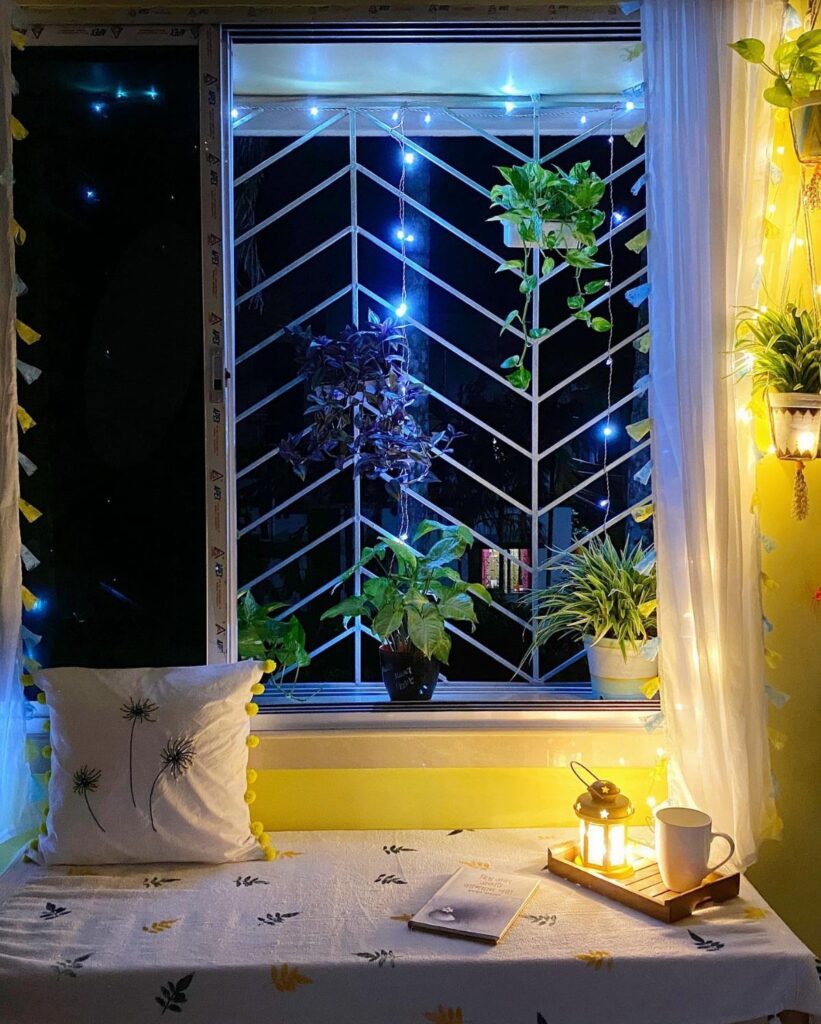
Bedroom window decor runs from iron-on trim to a full bay seat rebuild, and the deciding factor is what your window already gives you: a view worth framing, a curve to follow, or a wall that needs the curtain to do all the work.
I would not hang one continuous shade across a bay’s angled planes; mount each plane separately, or the blind binds at the bend and the whole thing looks like a mistake.
1. Floor-to-Ceiling Windows
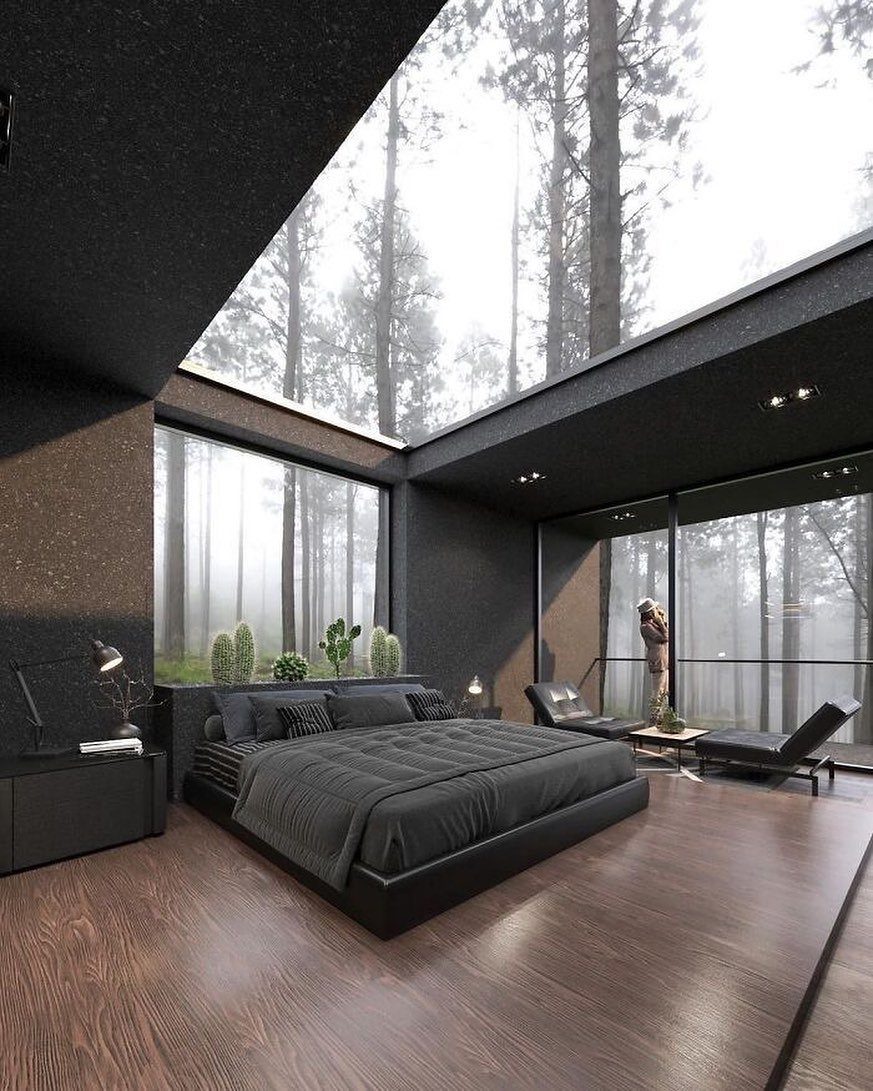
A full wall of glass turns the view into the room’s main feature, which works best when the bedroom faces something worth waking up to: trees, water, or distance rather than a neighbor’s siding.
The frame material matters more at this scale. Aluminum conducts heat and cold aggressively; thermally broken aluminum or fiberglass handles it better and costs less to live with.
I would not do this on a south or west face without serious shading, or the room becomes a greenhouse by mid-afternoon.
2. Arched Windows
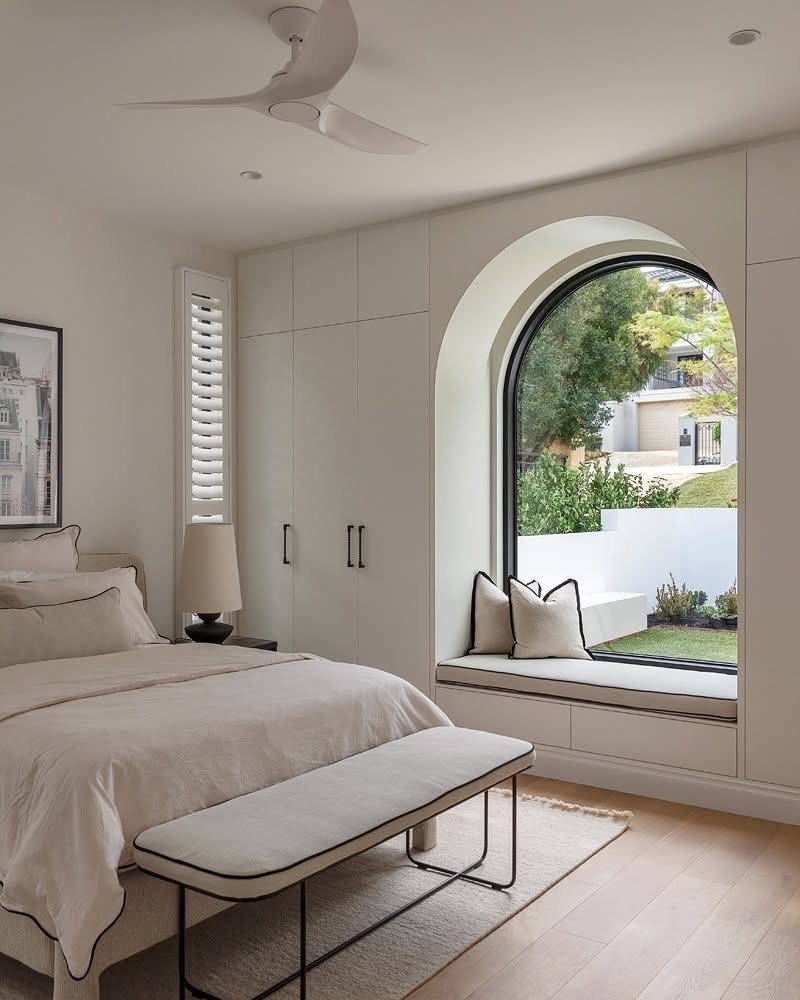
The curve alone does the decorative work, so I keep the treatment simple: a shade cut to the arch, or bare window if the view holds up.
Built-in seating underneath turns the shape into usable space. That bench is storage-heavy carpentry, not a weekend project; plan on hiring it out, or set aside serious time if you are handy and the wall below is straight.
I prefer a flat seat to a curved one. Easier to cushion, easier to sit on with a book.
3. Floor-to-Ceiling Curtains
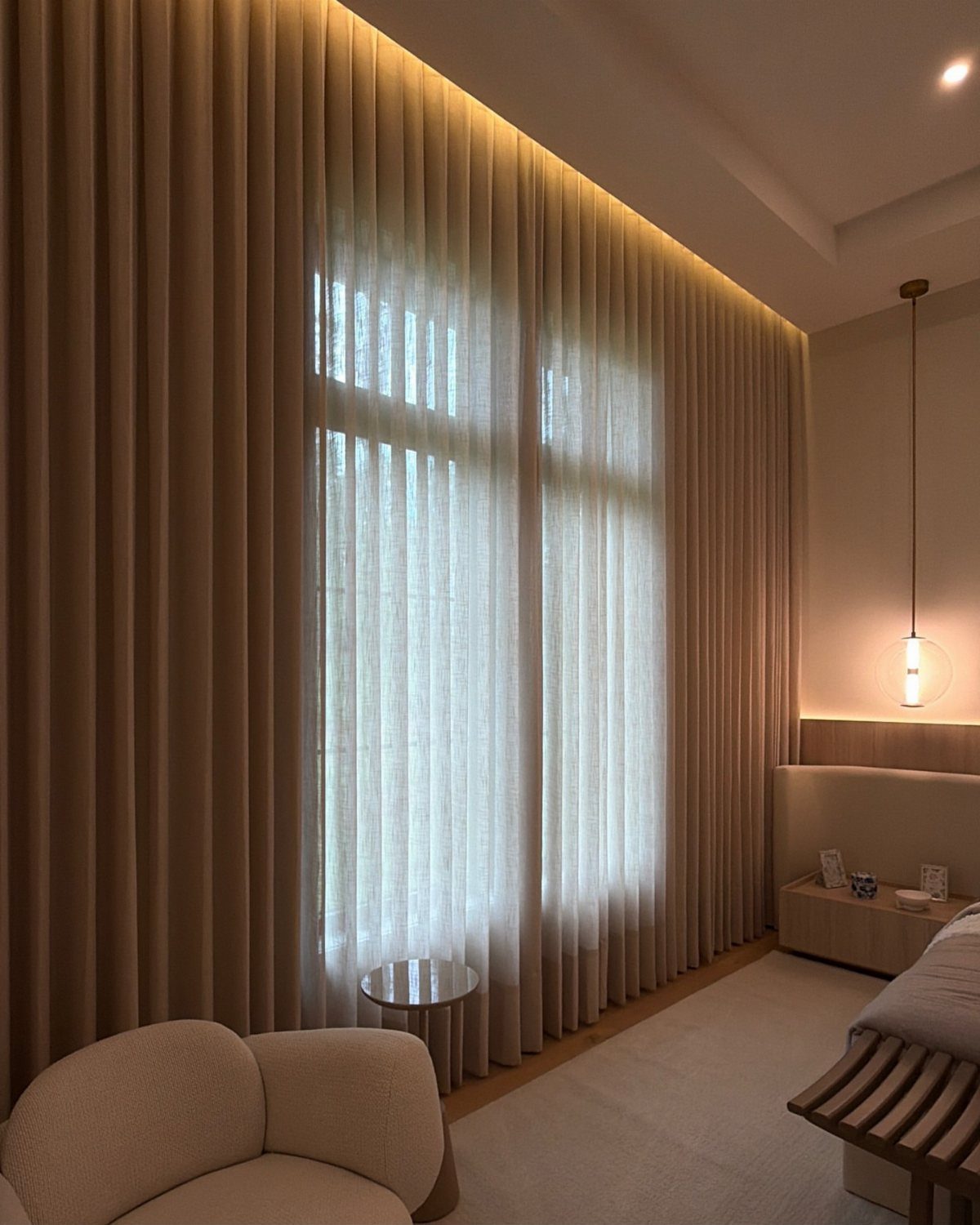
Ceiling-mounted track or rod is the move that makes this read as architecture rather than fabric hung high. Recessed cove lighting above is nice if it is already there; the curtains themselves carry the effect.
For width, I order panels at 1.5–2 times the window span so they stack with body, not cling. Lining is non-negotiable at this yardage; unlined sheers look like bed sheets and fade fast.
I would spend extra per panel for blackout lining even if I do not need darkness. The weight hangs better.
4. Sheer and Blackout Curtains
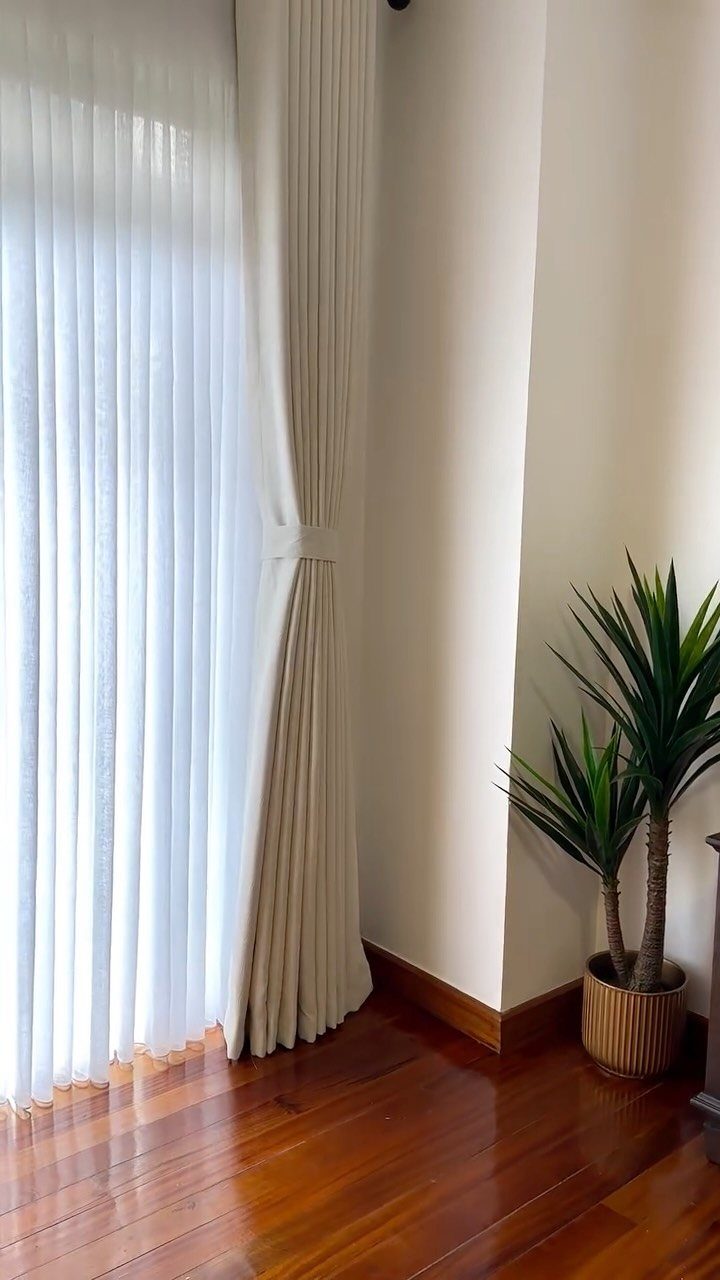
Two layers on one rod or a double track lets you filter afternoon light or kill it entirely without swapping hardware. The sheer goes closest to the glass; the blackout faces the room in front of it for sleeping.
I run the blackout past the opening on each side and drop it to the floor or just above, depending on whether I want the pooled look or less dust contact.
Tying back the blackout daily wears the fabric and the look; I would leave it in place and use the sheer for daytime.
The tie is for the picture. In use, these layers slide past each other and the tie gets lost.
5. Roman Blinds
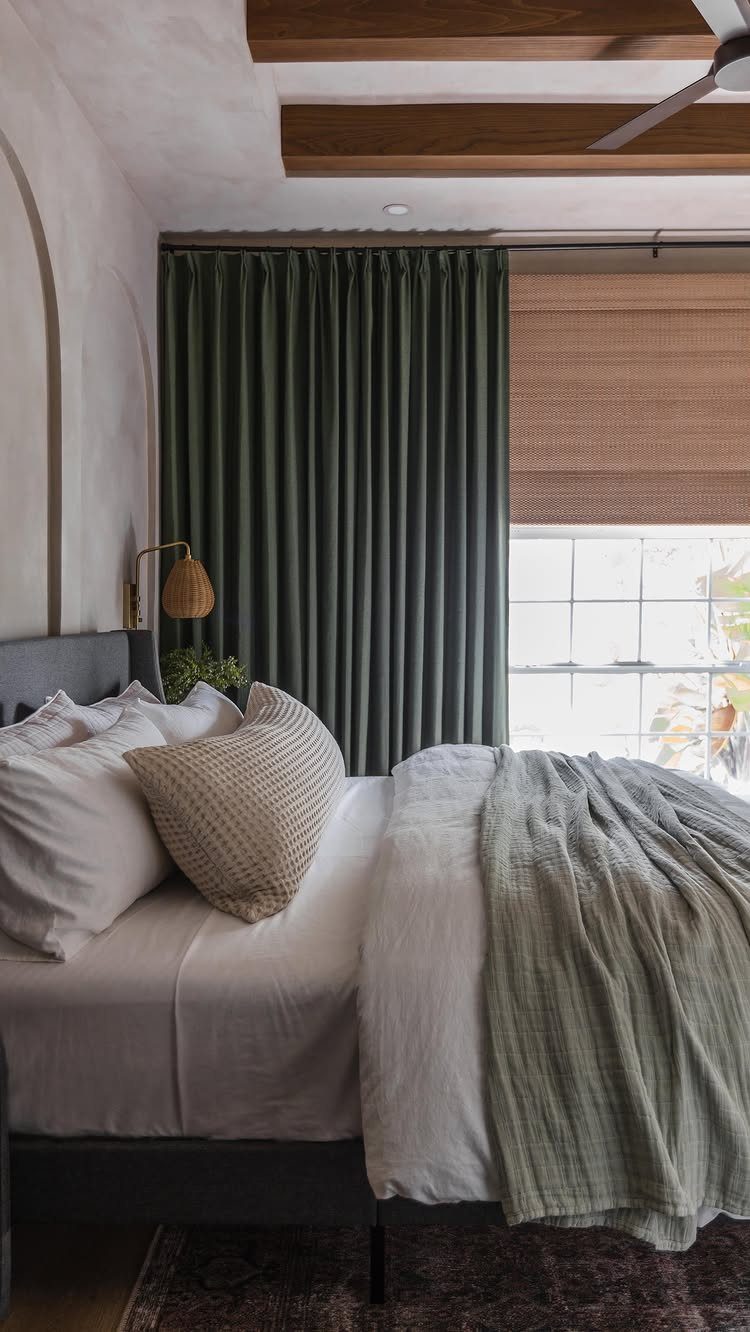
A flat Roman folds neatly into stacked pleats and reads cleaner than the teardrop style, which I find fussy. Woven material filters gently and pairs with side drapery for nights.
Custom work in this size costs more than off-the-shelf, or less if I sew and use blackout interlining. The cord or chain mechanism wears out first; I ask about replacement cost before I buy.
6. Bay Window Nook
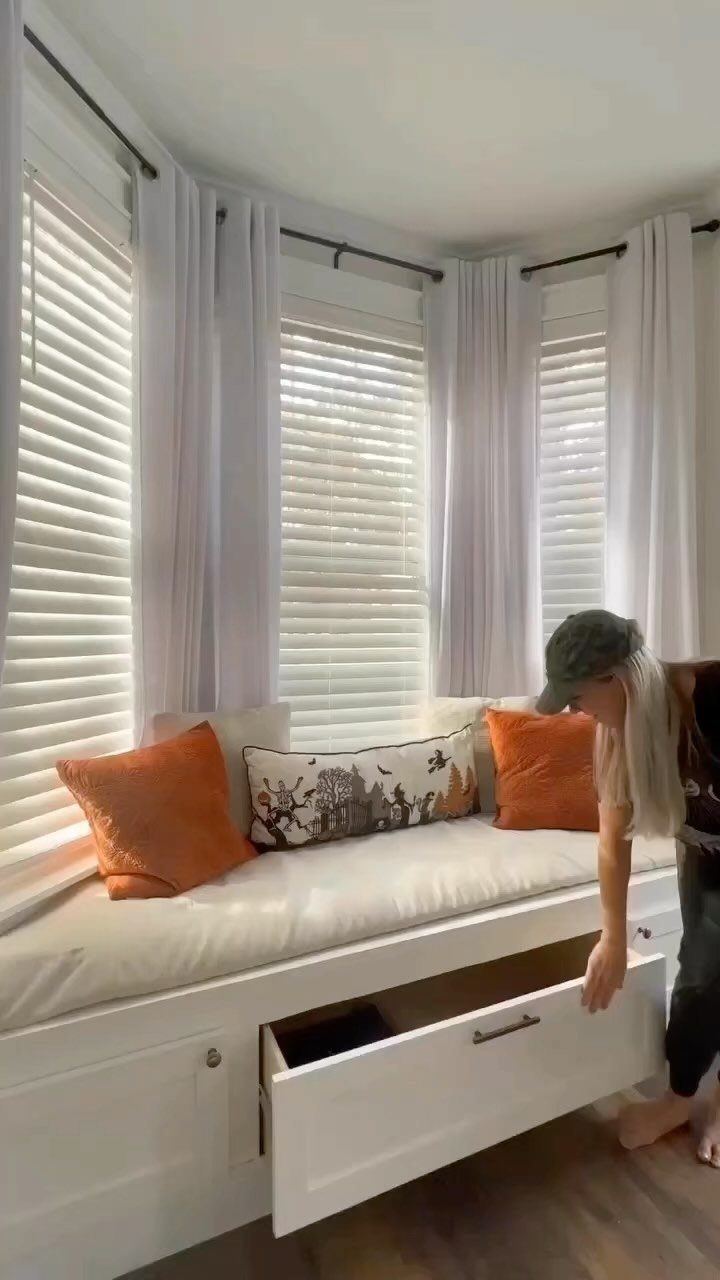
The seat is the easy part; the storage drawers beneath it are where the project lives or dies.
A drawer pulls out from the bench front, which means the framing below the seat must be built for it from the start.
Retrofitting drawers into an existing bay seat is nearly impossible without tearing it apart. I would plan the seat height to match a standard chair with cushion included, which keeps your knees at a comfortable angle.
The side windows in a bay angle away from the room, so I mount blinds or shades on each separate plane rather than trying one continuous treatment across the bend.
7. Black Window Frames
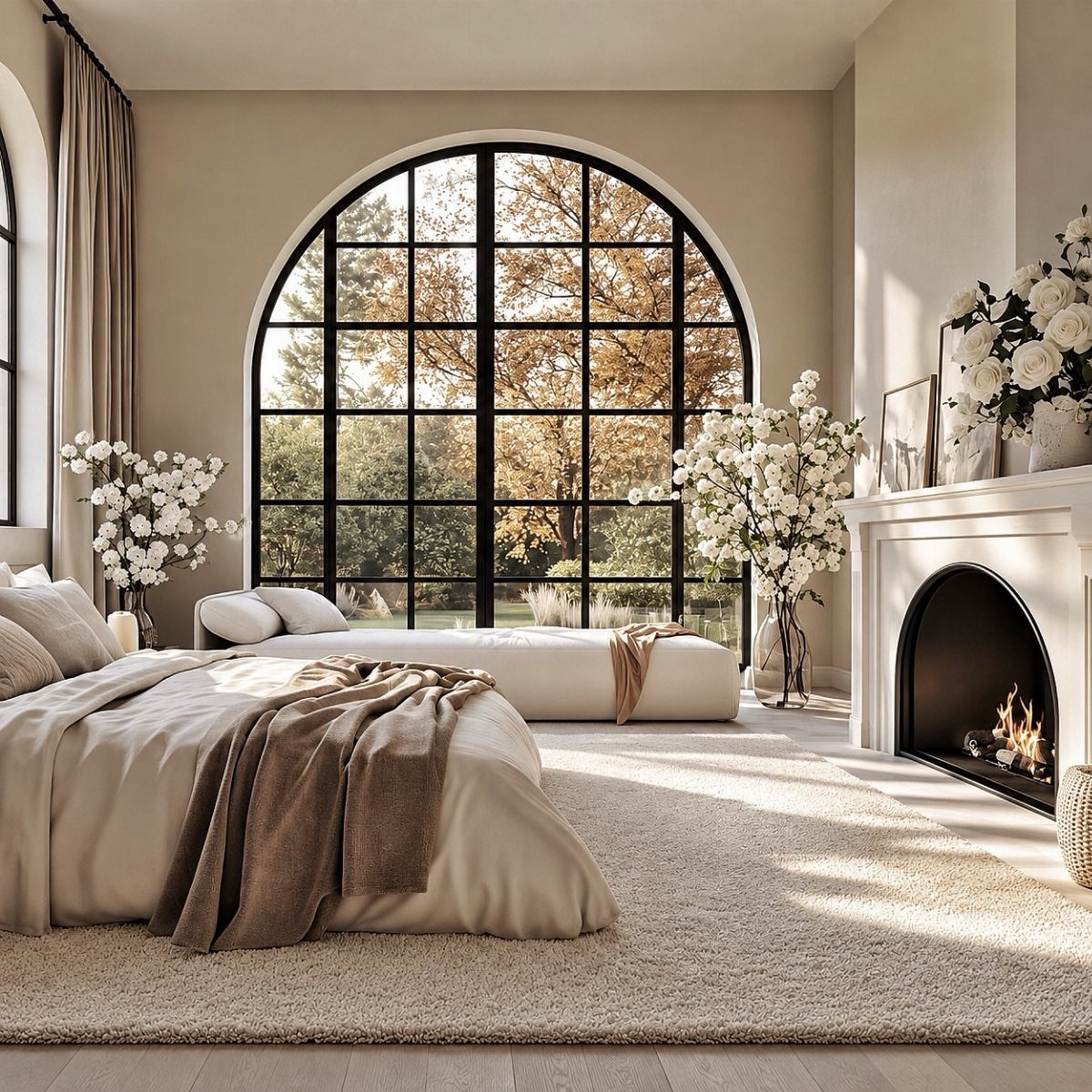
Black framing reads as deliberate against pale walls, and a grid pattern keeps it from feeling like a hole punched in the plaster.
I would use this where the window already has presence: tall, arched, or grouped. On a standard double-hung it can look like hardware store stock.
The finish decides the look more than the color does. A matte powder coat holds up; glossy shows every fingerprint and dust streak by Tuesday.
8. Wooden Horizontal Blinds
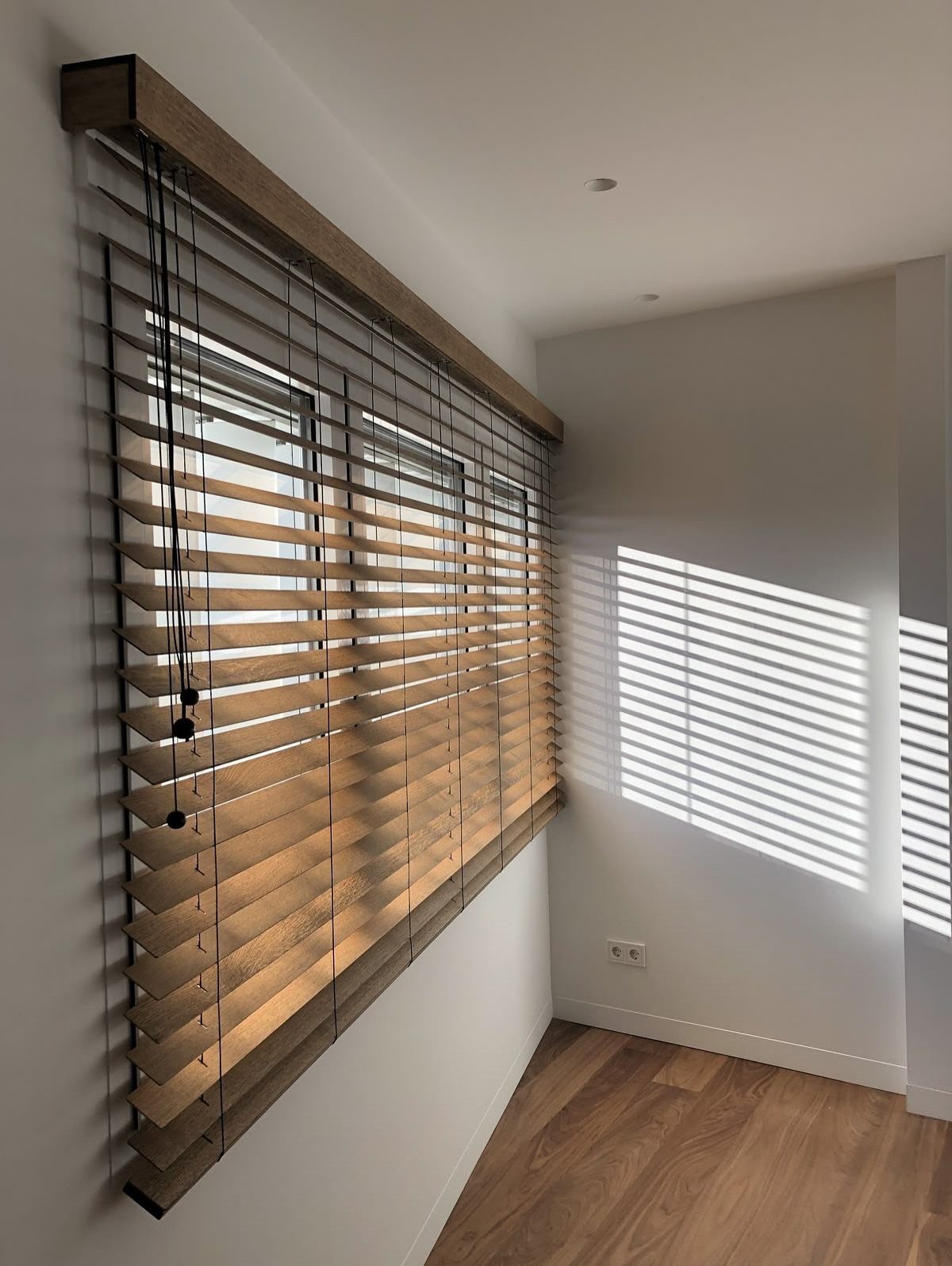
Wood slats throw striped shadow when the sun hits at an angle, which is half the point in a room with bare floors and white walls. Wider slats mean fewer strings, faster dusting, and cleaner shadow bands.
Real wood warps in steamy bathrooms but ages well in dry bedrooms. Faux wood costs less and handles humidity, though the grain repeats too regularly up close.
Skip the decorative tapes. They collect dust and the blind looks better plain.
9. Tassel-Trimmed Drapes
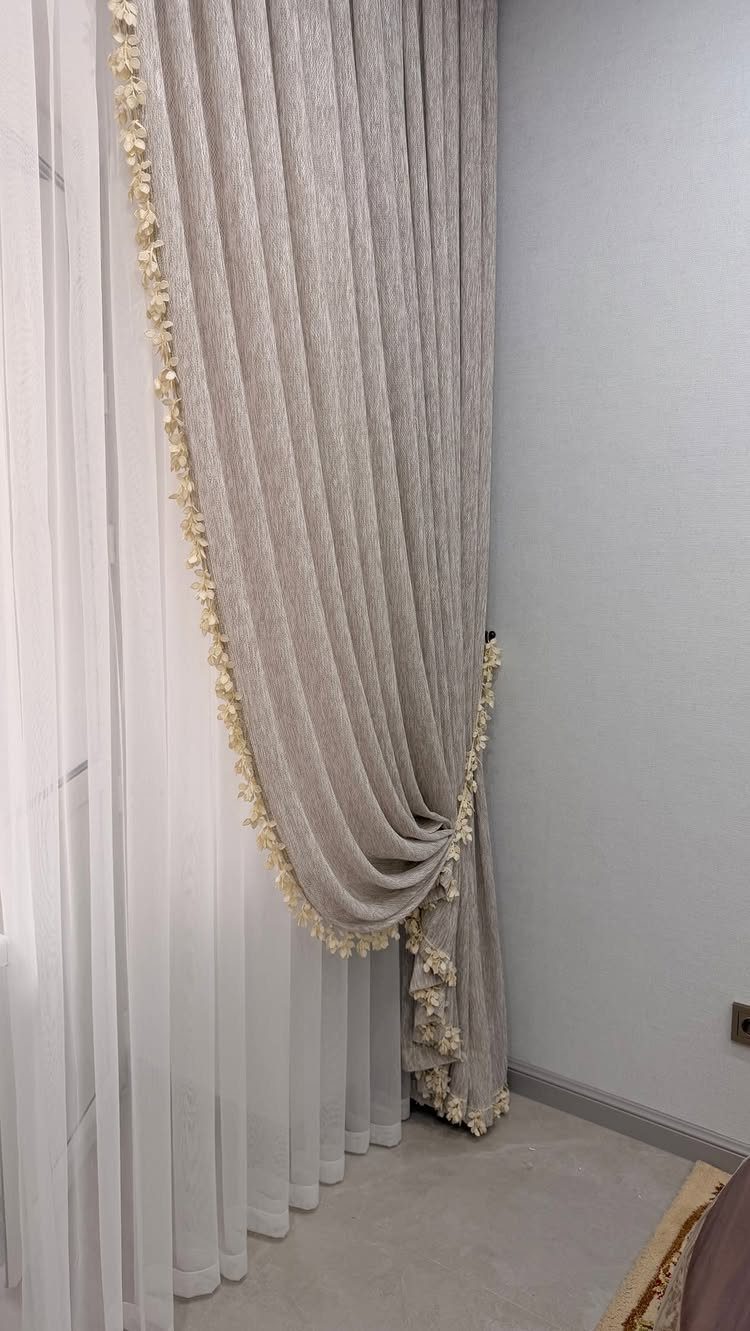
The tassel trim does the work here, so the curtain itself stays simple: a heavy linen or cotton in a tone that reads neutral against the wall.
Fringe comes sewn on or as iron-on tape; sewn hangs straighter after washing. I would keep the sheer behind it white and unadorned.
2 trims compete and the room turns costume. Dry clean or hand wash; the fringe tangles in machines and untangling it eats an hour you will not get back.
10. Classic White Sheer Curtains
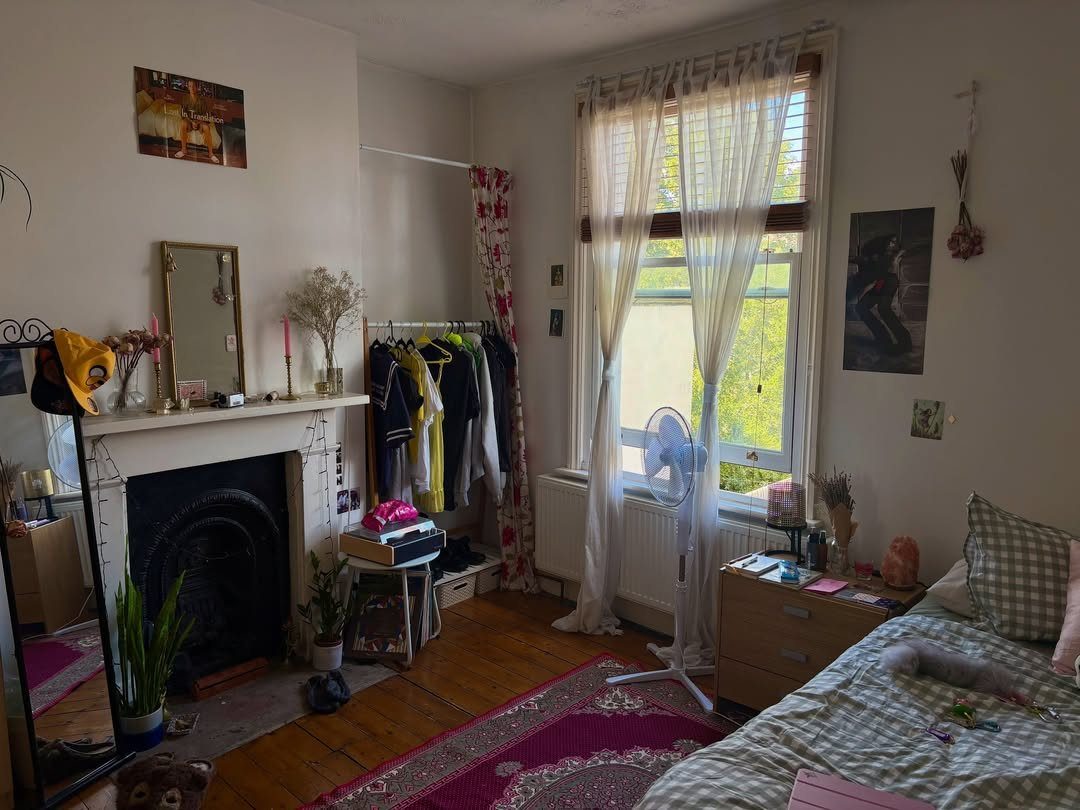
Sheer white panels filter light without blocking it, which suits a bedroom that faces east and wakes you gently or a room with a window you want visible all day.
The fabric looks like a basic poly-cotton voile; linen sheer costs more and wrinkles permanently, which some people like. I hang these on a thin rod close to the frame, not ceiling height.
Pooling on the floor collects dust and looks untidy by Thursday. Wash cold, dry low, pull them out slightly damp and the wrinkles mostly fall out.
Choosing Window Materials
The material you choose for your bedroom windows affects light, temperature, and sound, which matters in a room you sleep in every night.
Fiberglass also resists weather damage, fading, and aging longer than other materials, so the higher upfront cost pays back over years of not replacing.
Vinyl costs less and still handles temperature well; I would use it where the budget is tight and the window is not oversized.
For humidity, aluminum or UPVC hold up without warping or rot. Low-maintenance materials save the weekend hours you would otherwise spend scraping and repainting.
Window Treatment Combinations
A double curtain pole or double track lets you layer sheers in front and blackout behind without 2 separate installations.
Layering firm and soft treatments together covers more situations than either alone. The soft layer gives daytime privacy and filtered light; the firm layer kills it for sleep.
I would not rely on one curtain to do both jobs, because the fabric that blocks all light looks heavy and dead during the day.
Net or voile in front with blackout behind is the standard pairing for bedrooms. The hardware costs more than a single rod, but less than replacing an inadequate setup later.
Maximizing Natural Light
Tall furniture in front of a window blocks light you could have had for free. I keep bookshelves and dressers on wall space instead.
Position the bed or a reading chair to face the window if the view holds up. A window’s square footage means less than where your eye actually travels when you walk into the room.
Reflective surfaces help light bounce deeper into the room. Satin-finish tiles in ivory or taupe add depth without competing with a panoramic view; glossy would throw glare.
Floor-to-ceiling glass makes a room feel larger, but only where the outside rewards it.
Frequently Asked Questions
What type of window is best for a bedroom?
Casement and double-hung windows work best for most bedrooms.
Casements seal tightly and catch breezes for ventilation; double-hung lets you open top or bottom and stays easy to clean. For small rooms, sliding or awning windows save wall space.
What are some easy things to decorate windows?
Sheer white panels on a thin rod near the frame filter light without blocking it.
A flat Roman blind in a woven material folds into clean lines and works with side drapery when you need the room dark. Tassel-trimmed drapes in heavy linen or cotton add detail without demanding a full curtain overhaul.
Which window is trending now?
Black frames with a grid pattern look intentional against light walls, and they hold their own on tall, arched, or grouped windows where the architecture already draws the eye.
Matte powder coat finishes wear better than glossy ones, which collect fingerprints the same day you wipe them.
How can I improve bedroom window insulation?
Fiberglass frames outlast vinyl and wood in weather and sun, so the extra cost at purchase shrinks against fewer replacements down the line.
For the glass itself, double or triple-pane units with low-E coatings block heat transfer. Thermal curtains or blackout lining add another layer without replacing the window.





