
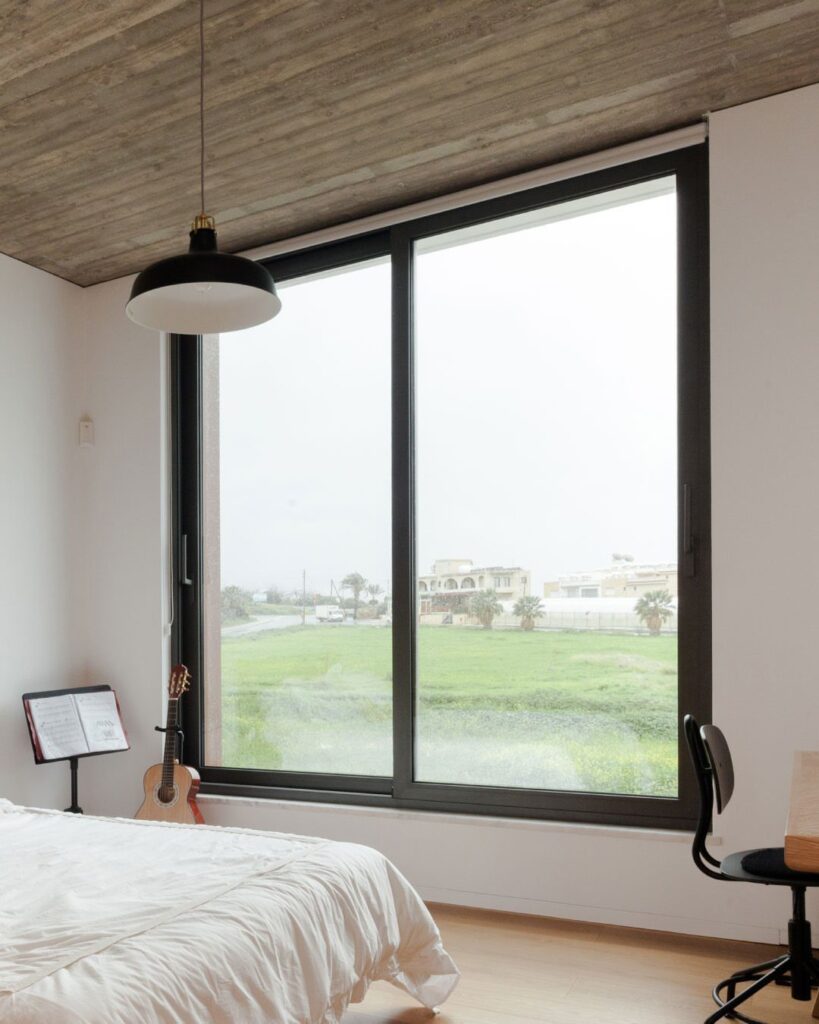
These 11 ideas range from a simple swap to large sliding windows you can install in a weekend, to a structural bay addition that needs support below the floor.
What decides which one belongs to your house is whether you own or rent, and whether you can replace the whole unit or only dress what is already there.
The six-over-six grids that snap between the glass on a modern double hung are factory-ordered, not field-added, and that distinction alone will eliminate half these options for some readers.
1. Large Sliding Windows
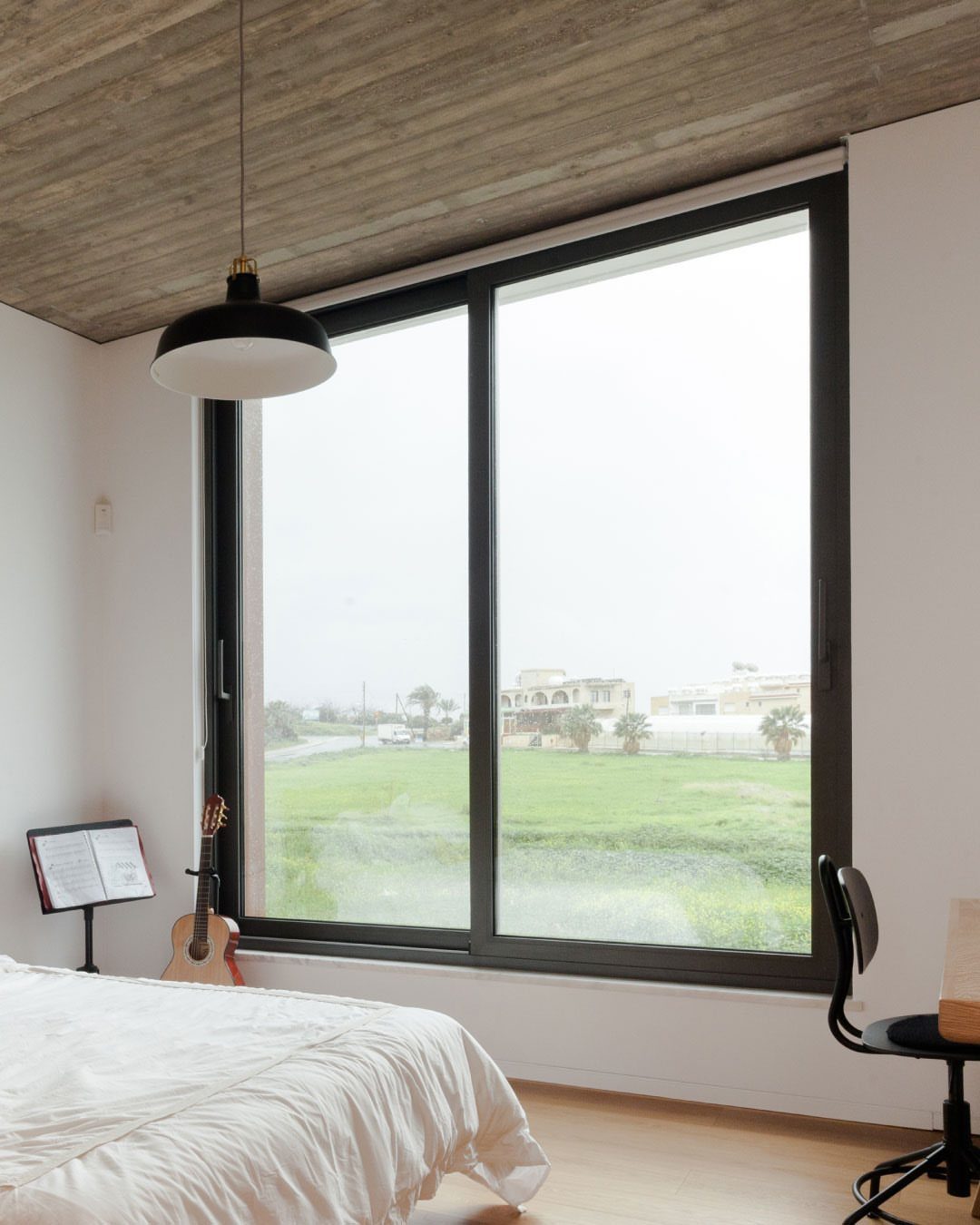
A single panel that moves on a track gives you more glass and less frame than almost any other operable window, which matters when the view is the point.
I would put the track at the bottom, not the top, for easier cleaning and longer roller life.
Cost runs higher than double-hung for the same opening, and the fixed panel means only half ventilates, but for a bedroom where you wake to that field, the trade is worth it.
2. Open Window Shelving
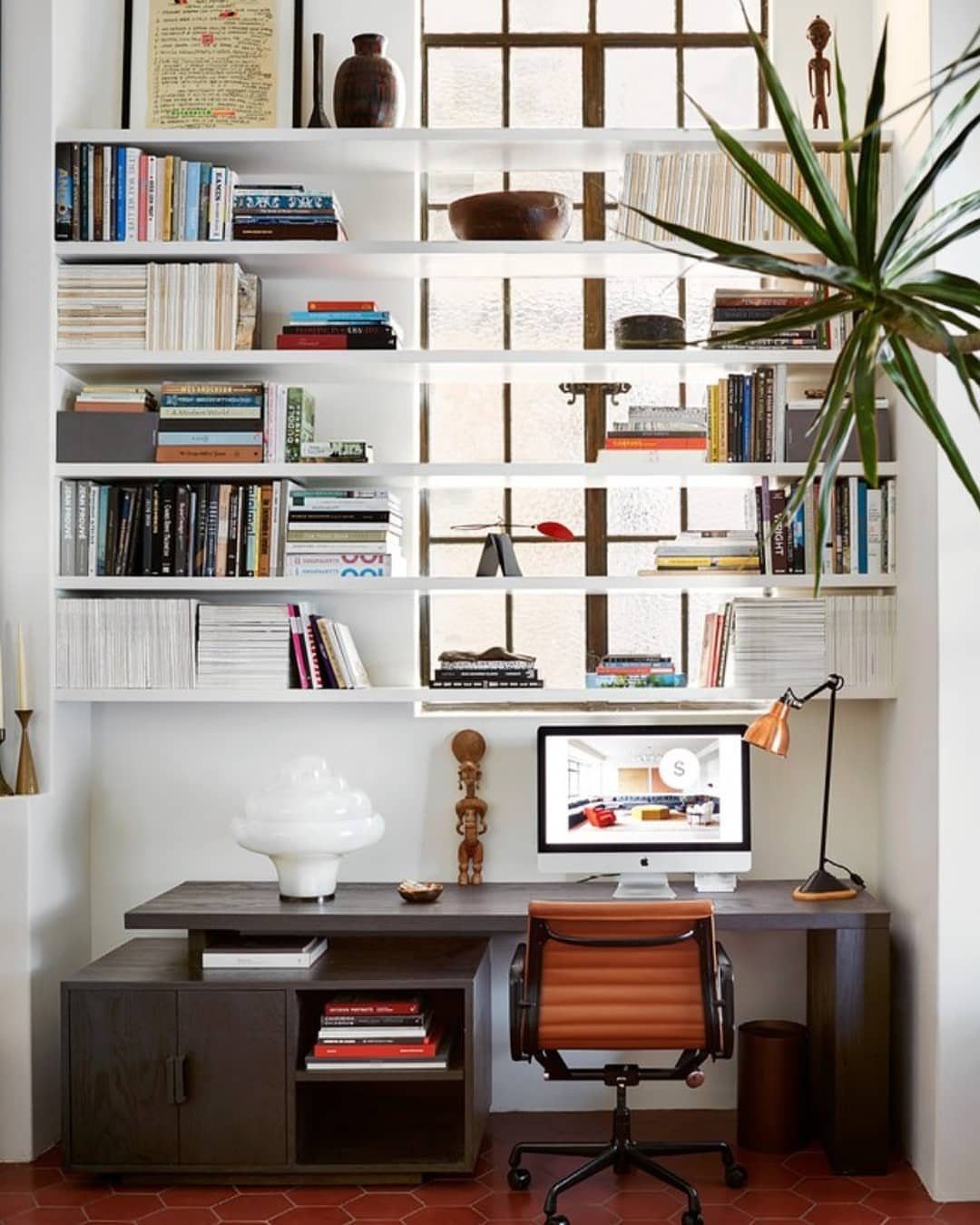
Shelves across a window only work when the window is large enough to leave adequate light; the shelving should extend well past the window on both sides to keep that ratio.
I like white painted MDF here because it reflects light rather than absorbing it; stained wood would read as heavier and darken the room.
The brackets are hidden, probably cleats or a French cleat system screwed into the frame, not the sash.
Keep the depth shallow so you do not block the swing of casement windows or the path of curtains. This is a rental-friendly move if you patch the holes when you leave.
3. Large Double Hung Windows
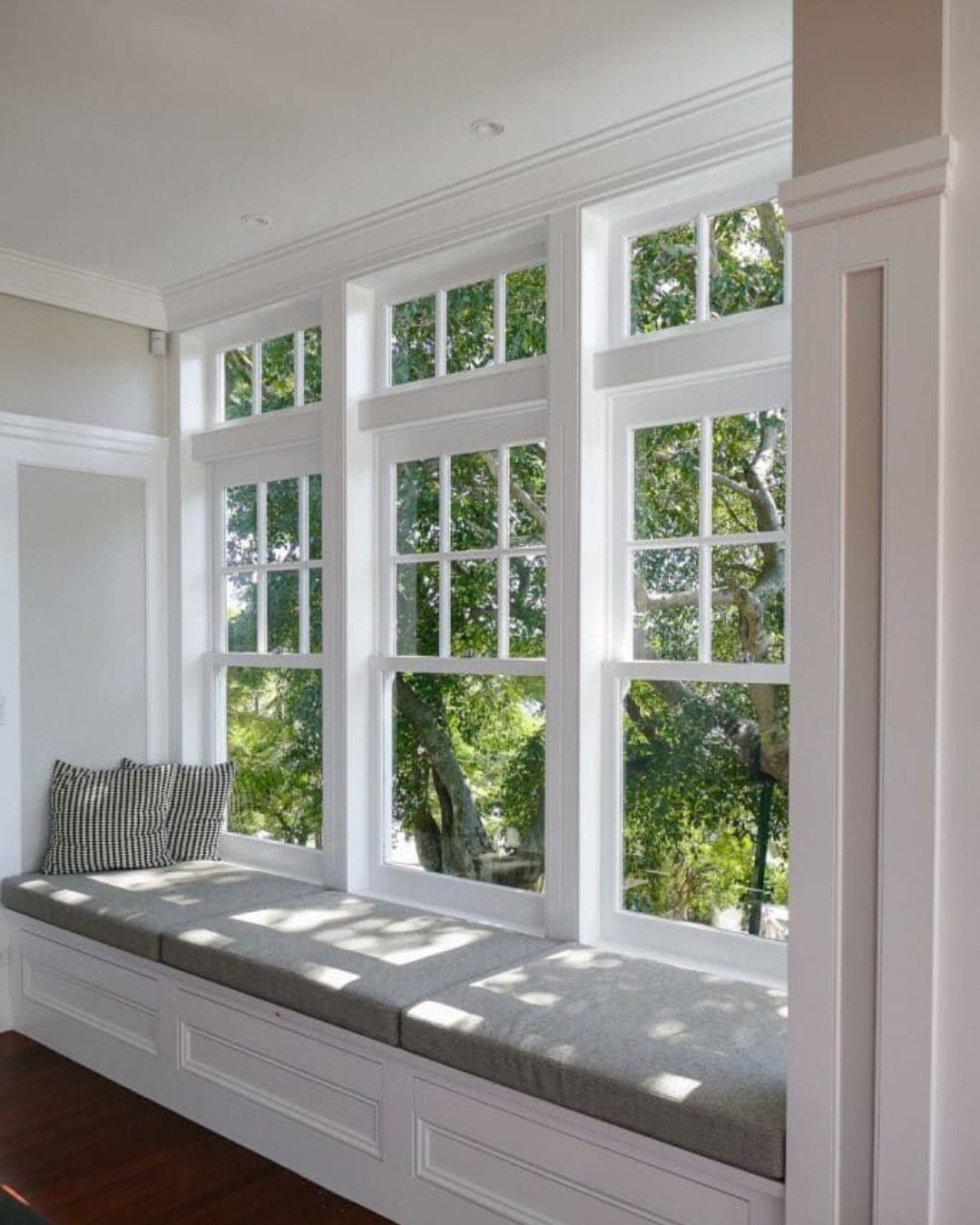
Double hung windows remain the default for a reason: both sashes move, so you can drop the top for summer ventilation without losing privacy at the seat below.
White vinyl or painted wood keeps the look clean against soft furnishings, and a transom above adds height without adding operable parts that would complicate the bench below.
I would order the bottom sash with a tilt-in for cleaning; the second story is not required for that feature to pay off.
Standard bench depth for a window seat matches what the wall below will allow, so check your framing before you plan the cushion.
4. Bay Windows
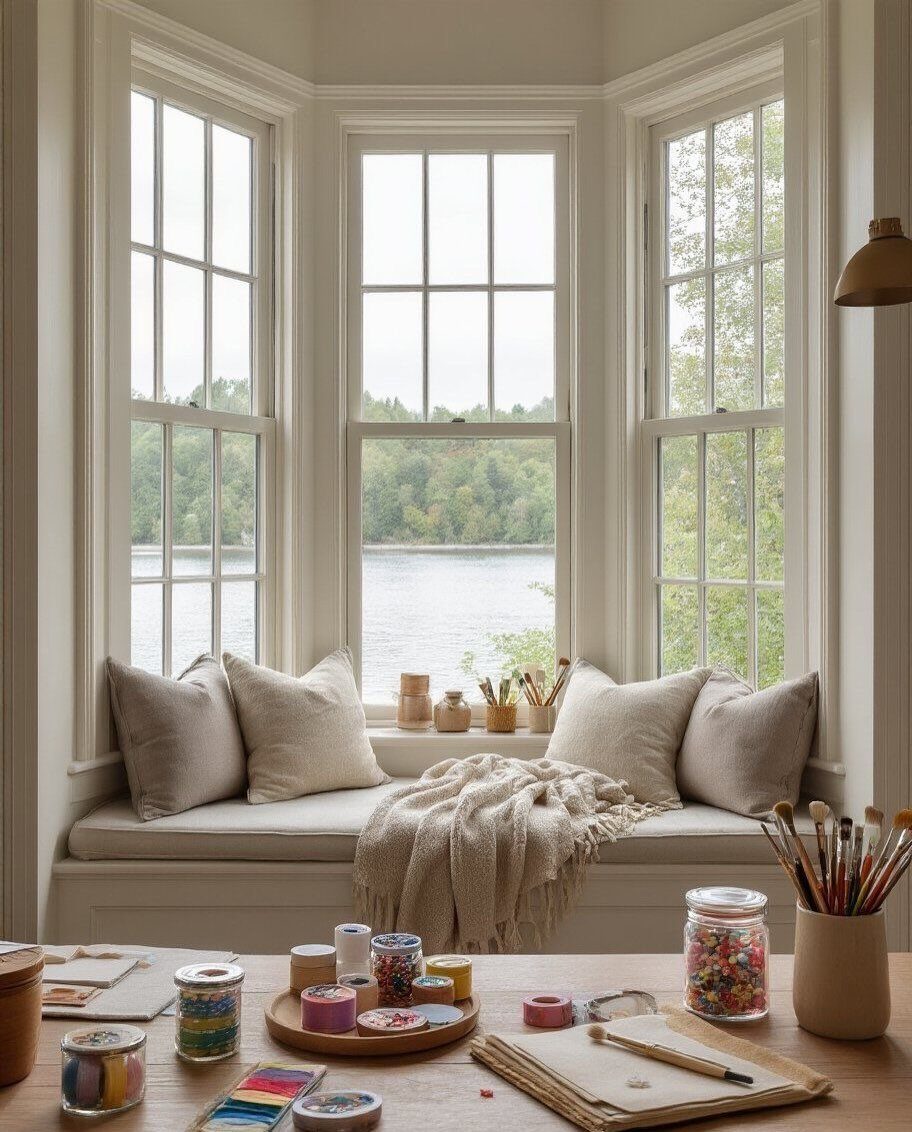
A bay is 3 windows joined at angles, and the projection creates a space that a flat window cannot: a seat, a table, a place for jars and supplies.
The angle of the side windows keeps the projection from eating the room; a shallower angle works better in narrow spaces. I would insulate the seat base well, as the kneewall is an exterior surface and cold will find it.
The lake view helps, but this shape works on any street where you want light from 2 directions and a spot to sit. Structural support below is required; a bay is not a window swap but a small addition.
5. Artwork in the Window
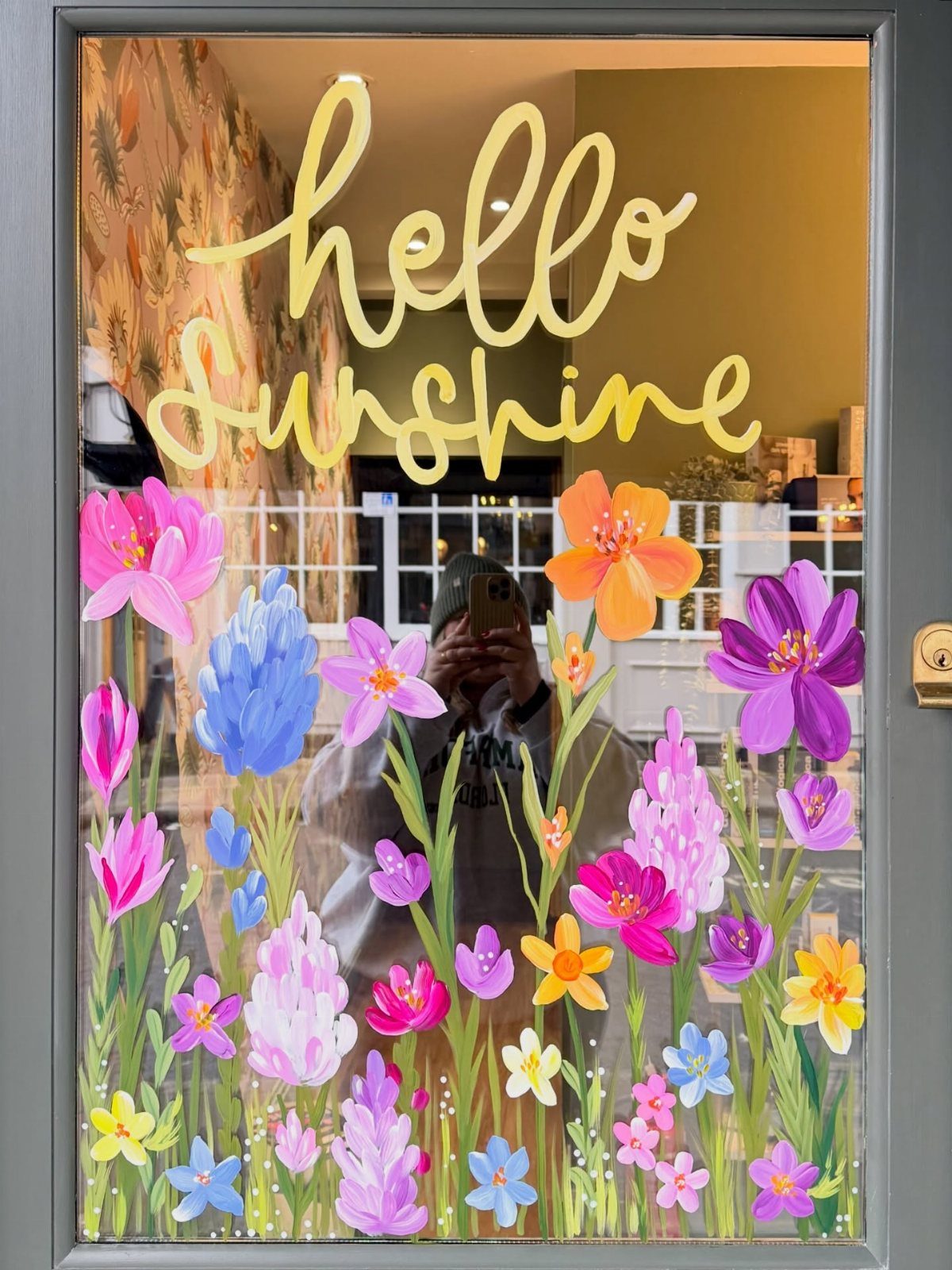
Paint on glass faces outward, so the room behind it reads as ordinary window until you step outside or catch the reflection.
Acrylic or glass paint sits on the surface rather than etching it, which works for decorative patterns but not for script, since painted text faces one direction and reads backwards from the other side.
I would sketch the design first with a dry-erase marker, which wipes clean if the spacing is off.
This is reversible, which matters for renters, but check your lease: some landlords count any window alteration as damage. The floral motif works because the colors read from a distance; fine detail is lost on glass.
6. Cozy Window Seating Nook
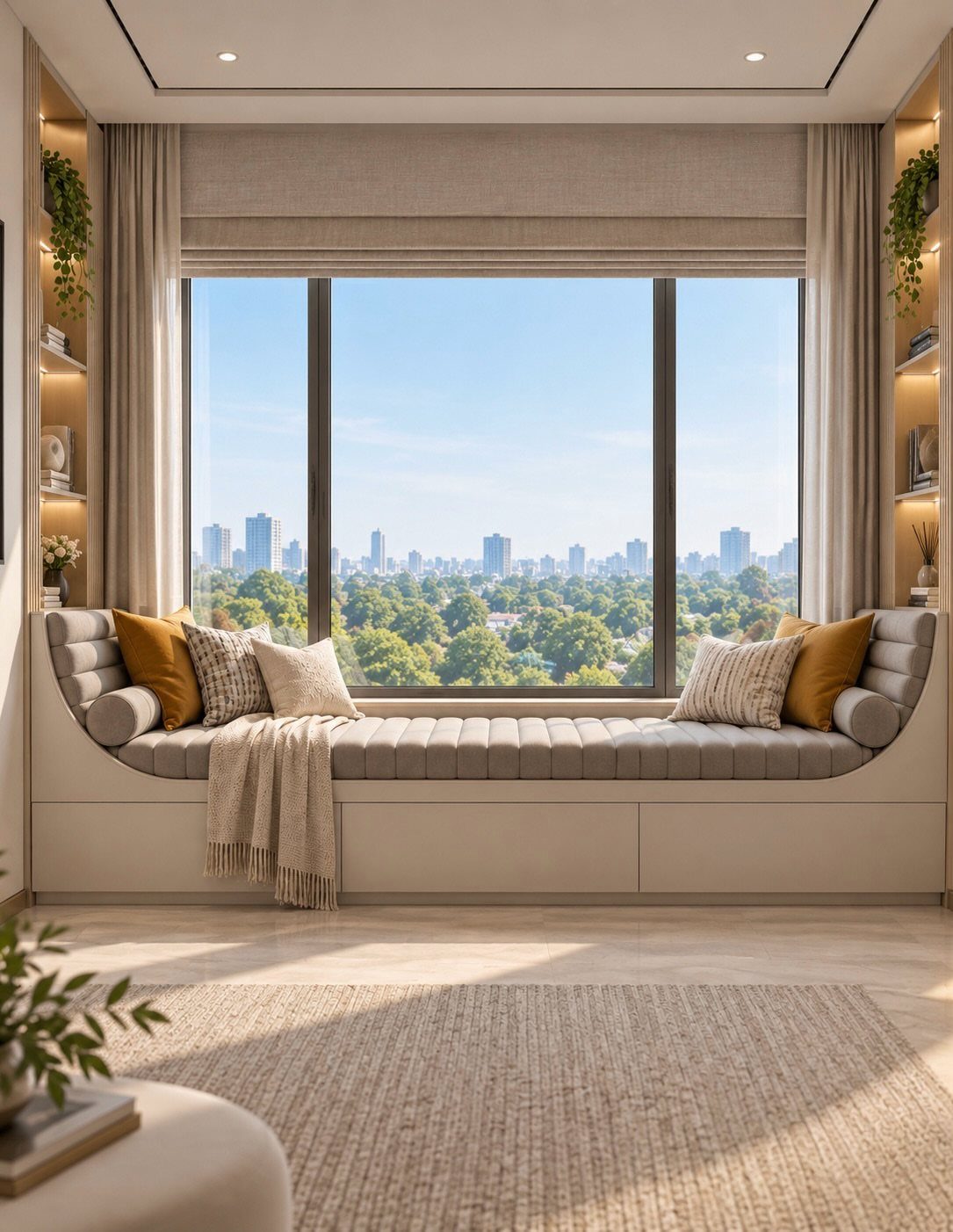
A built-in seat only becomes a nook when it is flanked by something: here, bookshelves that turn the window into a room feature rather than a hole in the wall.
A cushion thick enough for sitting can still block the lower sash of a double hung window; confirm the sash clears the cushion back before you order.
I would add a hinged top for storage, as the space below is otherwise wasted. The curtain placement, framing the whole unit rather than just the glass, makes the window feel larger than it is.
7. Geometric Window Layouts
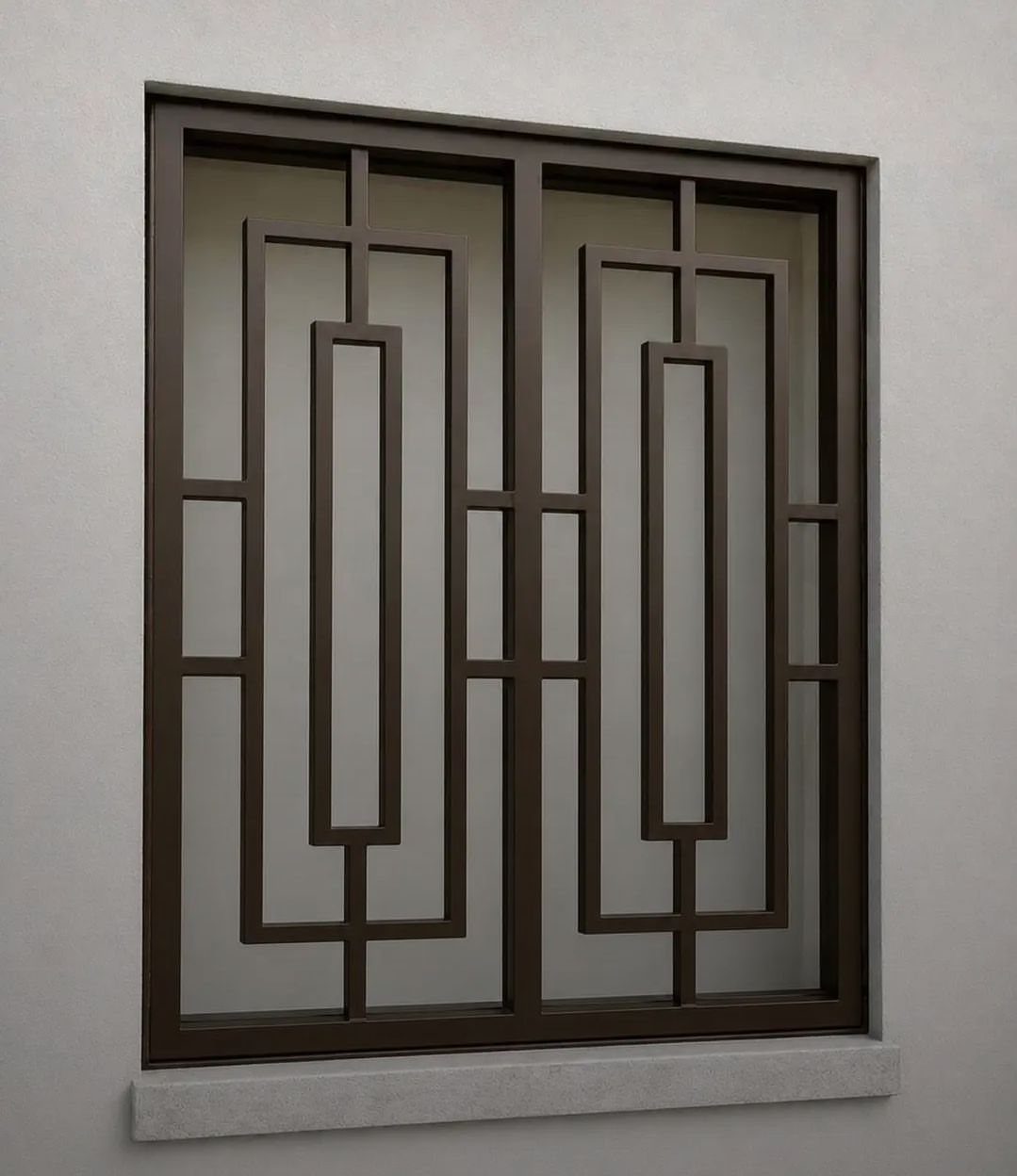
Metal bars set at different heights and widths turn a single window into a composition of nested rectangles.
The brown finish against grey stucco reads as deliberate rather than industrial; powder coating holds up better than paint on exterior steel. I would keep the pattern asymmetrical, as the eye finds regular grids elsewhere on the house.
This suits new construction or a full replacement where the frame can be ordered with the bars integral; retrofitting bars to an existing window is possible but the anchoring shows.
8. Vertical and Horizontal Window Grids
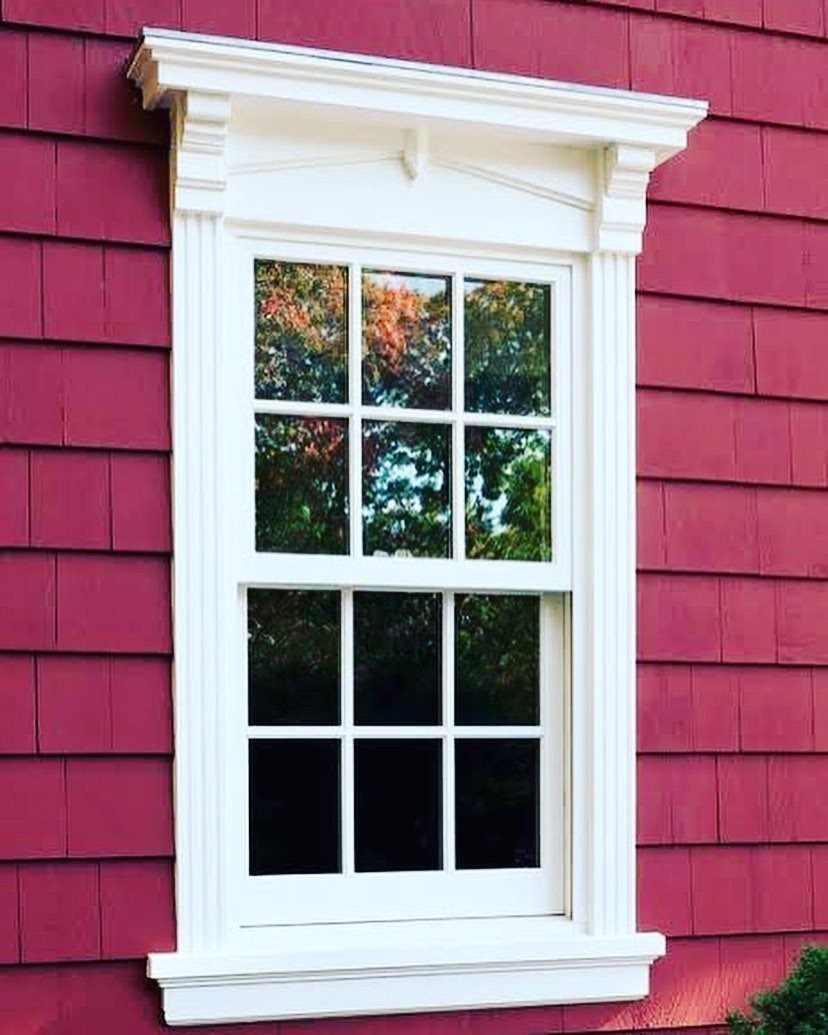
Six-over-six grids divide the glass into panes small enough to read as traditional without the cost of true divided lites.
The white frame against red shingles gives the pattern its contrast; on a darker house I would choose black grids instead.
Muntin bars snap between the glass on most modern double hungs, so this is a factory option rather than a field addition.
Cleaning is the trade: more small rectangles take longer to wipe down, even if the glass itself stays a single smooth pane.
The decorative surround is separate, applied after the window is set, and can be built up in layers with off-the-shelf trim.
9. Decorative Floral Window Grille
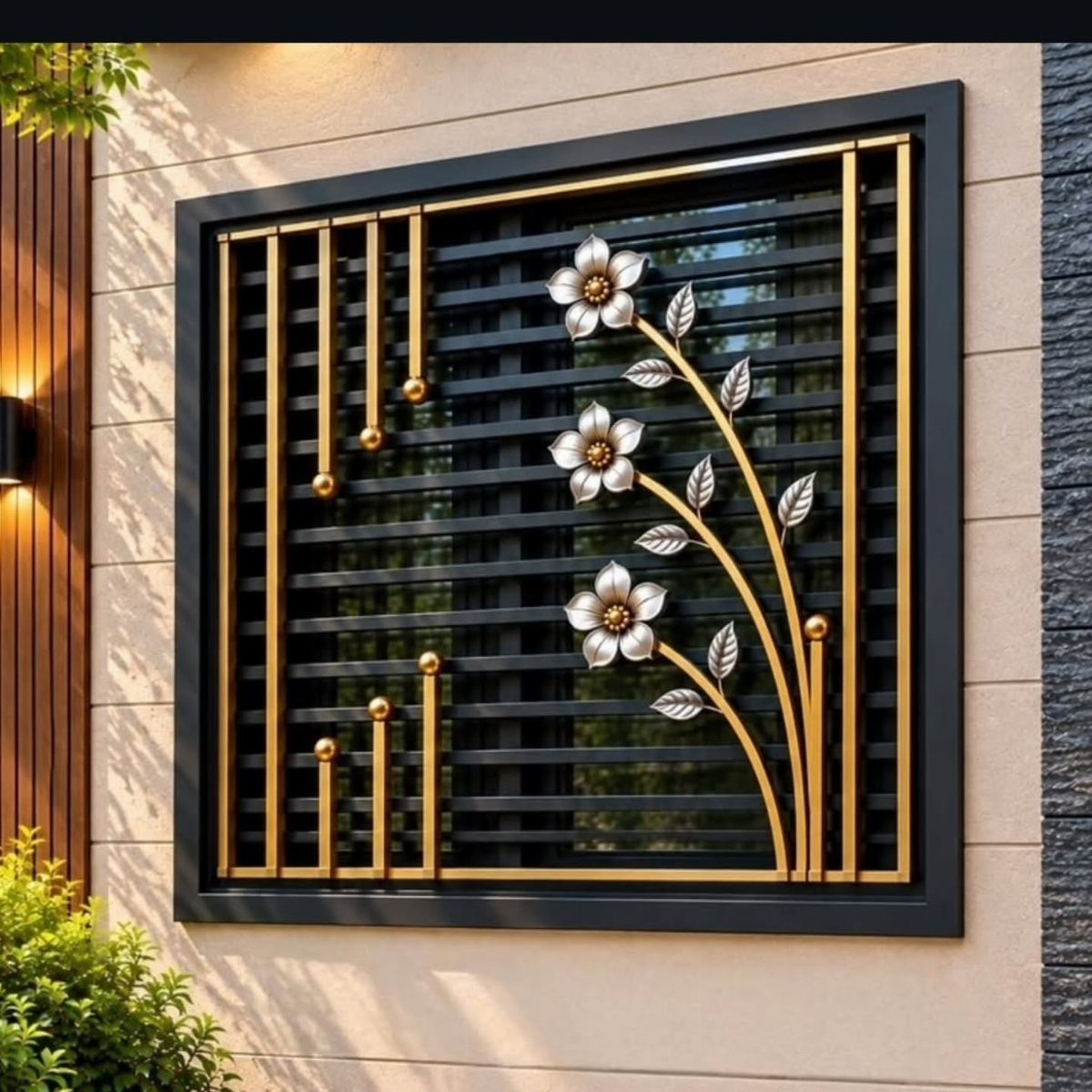
A security grille in floral metalwork does 2 jobs: it bars the opening and it gives the window a focal point from the street.
Black, gold, and silver-white on a black frame keeps the palette tight; more colors would compete. I would mount it on the interior for a cleaner exterior line and easier hinge access, though that costs you the street-side effect.
The metal is likely aluminum or powder-coated steel; either needs a gasket where it meets the glass to prevent condensation staining. This works on ground-floor windows where security matters and curtains would block the light.
10. Ornate Architectural Window Molding
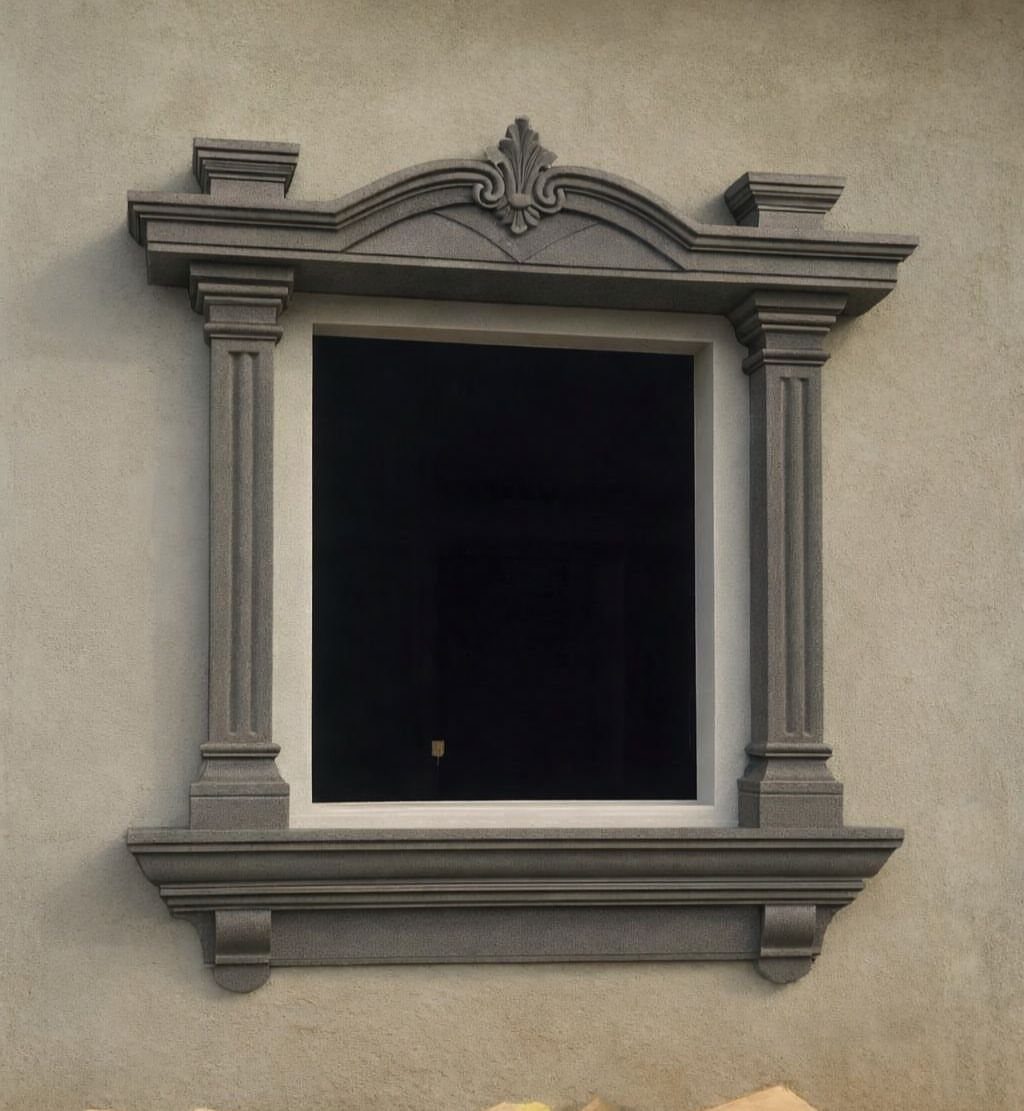
Pilasters and a pediment turn a plain square window into a classical statement. The grey painted composite or PVC molding resists moisture better than wood at the joints, and the crisp detail comes from router-cut profiles rather than hand carving.
I would build the surround in 3 layers: back band against the wall, pilaster stock for the columns, and a cap with the pediment on top.
The black glass behind it reads as void, which makes the frame read heavier; on a lighter wall I might use dark grey instead of black glass. This is new construction or a full siding job, not a weekend project.
11. Modern Black Picture Windows
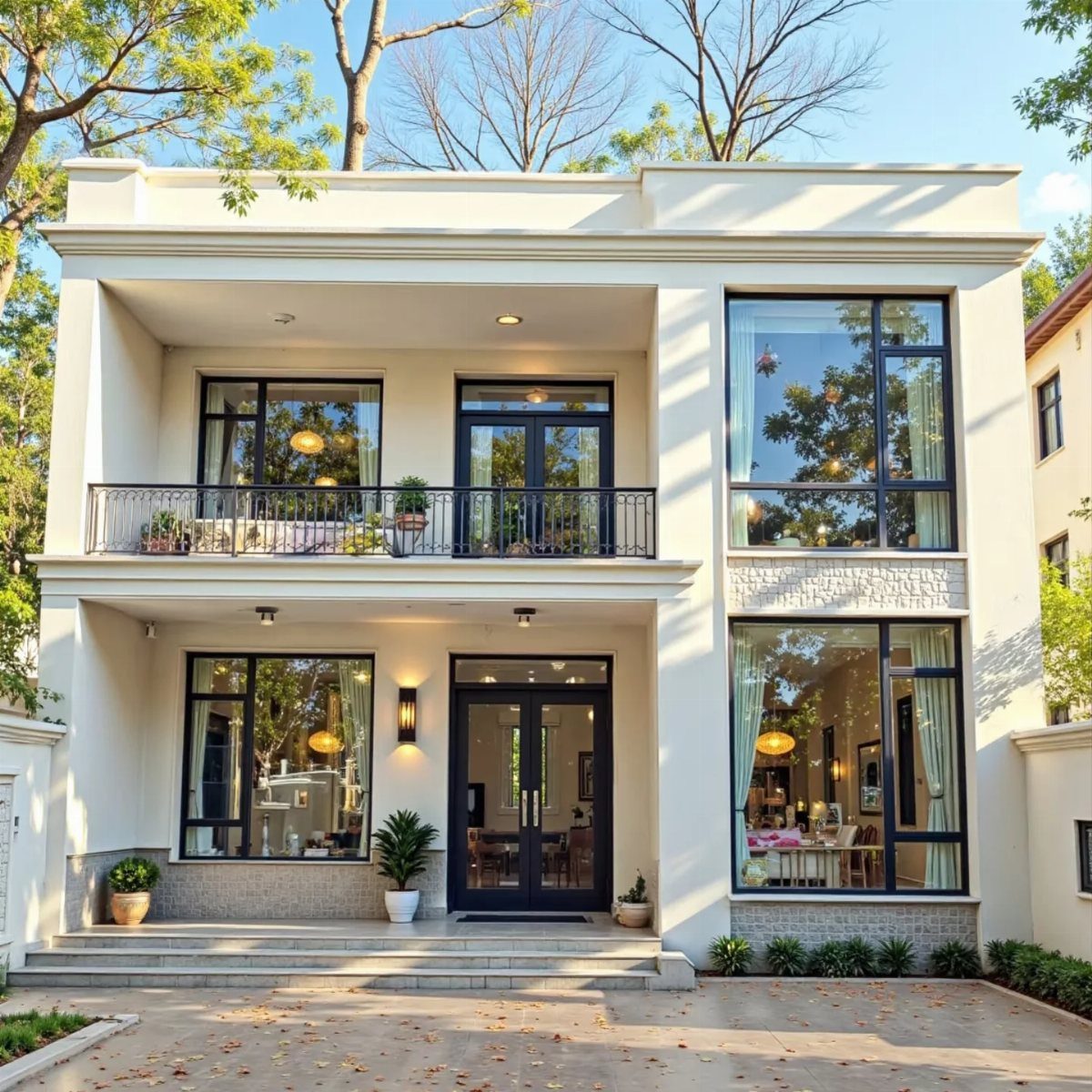
A picture window with no sash, no grille, and a thin black frame gives the maximum glass for the opening.
The white facade makes the black read as graphic line; on a darker house I would reverse to white frames or accept that the windows disappear. Aluminum or thermally broken steel handles the span; vinyl at this size sags.
The second story needs no operable parts if the first floor has enough ventilation, and the fixed glass costs less than an operable unit of the same dimension.
I would plan the balcony railing to sit below the sill line so the glass reads continuous.
Frequently Asked Questions
What are some easy things to decorate windows?
A painted design on the glass itself reads plain from inside; the pattern only shows when light hits it from outside, which keeps the room feeling open.
A shelf run across the lower half of a tall window blocks less light than you’d think, especially if you paint it white so it bounces light back up instead of swallowing it.
Either option peels off or uninstalls without residue, though some leases define damage broadly enough to include anything that changes how the window looks from outside.
What is the cheapest window design?
For the cheapest operable window in a standard opening, a double hung still wins: both sashes move, unlike a slider where the fixed half is dead glass you paid for.
White vinyl or a coat of paint on pine avoids the upcharge for stained hardwood or aluminum cladding. A fixed transom stacked above stretches the wall vertically without requiring another set of moving parts that need screens, weatherstripping, and hardware.
Which window is trending now?
Modern black picture windows with thin frames and no sash or grille give maximum glass for the opening, and the graphic line reads as current.
Geometric window layouts with metal bars at varied heights and widths also show up on new construction; powder-coated steel in an asymmetrical pattern holds up better than paint and avoids the regular grid found elsewhere on the house.
What are the different types of window design styles?
The main categories to sort through are double hungs, sliders, bays, and picture windows: operable, fixed, and the hybrid that projects outward.
Decorative approaches include open shelving, artwork on glass, geometric metal bars, vertical and horizontal grids, floral security grilles, and ornate architectural molding with pilasters and pediments. Each suits a different wall condition, budget, and whether you own or rent.





