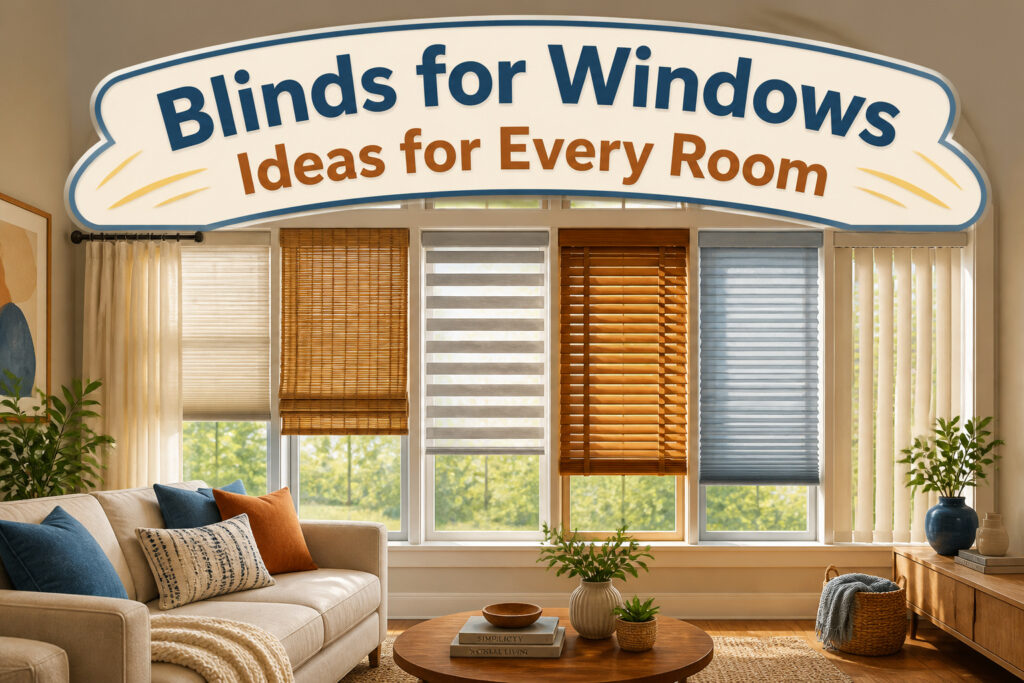
Window coverings run from fifteen-minute installs you can spackle away at move-out to permanent hardware that stays with the house. What separates them is whether you own the wall or just the deposit.
The cheapest full replacement in this list costs about three pizzas. The most efficient traps air in honeycomb pockets tight enough to show up on a utility bill. Between those poles sit cordless springs, motorized tracks, and a basswood grain that warps above a steaming tub.
If you are renting, the drill holes matter as much as the light block. If you are staying, moisture resistance and child safety become the deciding factors, not the price.
[link-whisper-related-posts]1. Cellular Shades
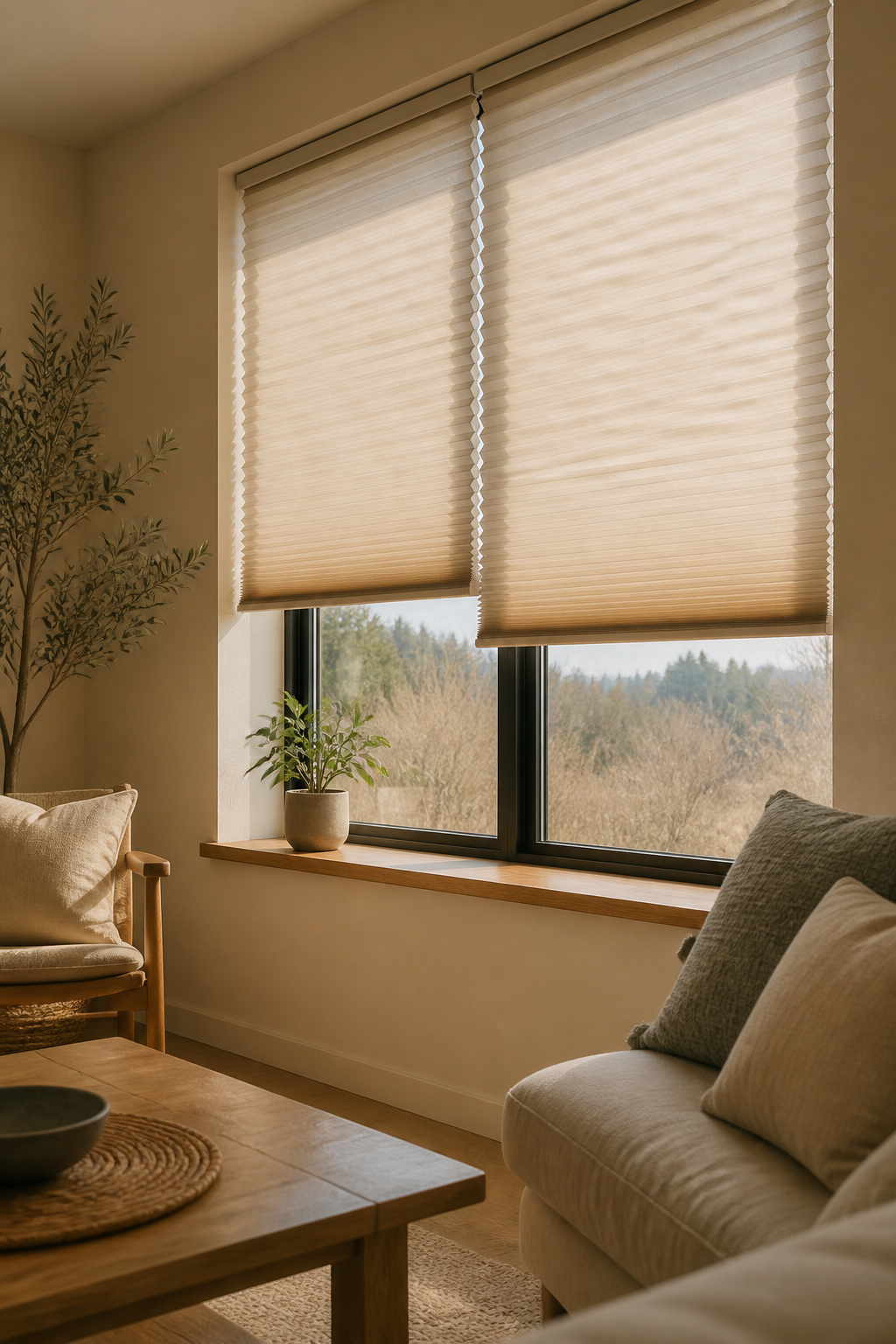
The honeycomb construction in cellular shades traps air in distinct pockets, creating an extra layer of insulation at the window that works both directions. In summer, that trapped air blocks heat from pushing through the glass into your cooled room. In winter, it does the reverse, keeping the warm air your radiator or vent already paid for from leaking out through the pane. That makes these the most energy-efficient shade style for renters watching the utility bill or first-home owners sizing up what the previous owner left behind.
Duette Honeycomb Shades are the specific line worth knowing, available in various sizes and colors with crisp, consistent pleats that hold their shape. The range of sizes matters more than it sounds: a smaller cell works better on narrow windows without looking crowded, while larger cells suit bigger openings and trap more air volume per square foot. Color choice here is practical too, since the fabric faces both the room and the glass, and lighter tones reflect more heat in summer while darker ones absorb it in winter. For skylights or unusually shaped windows, the same line adapts rather than forcing you toward a different product entirely.
2. Roller Shades
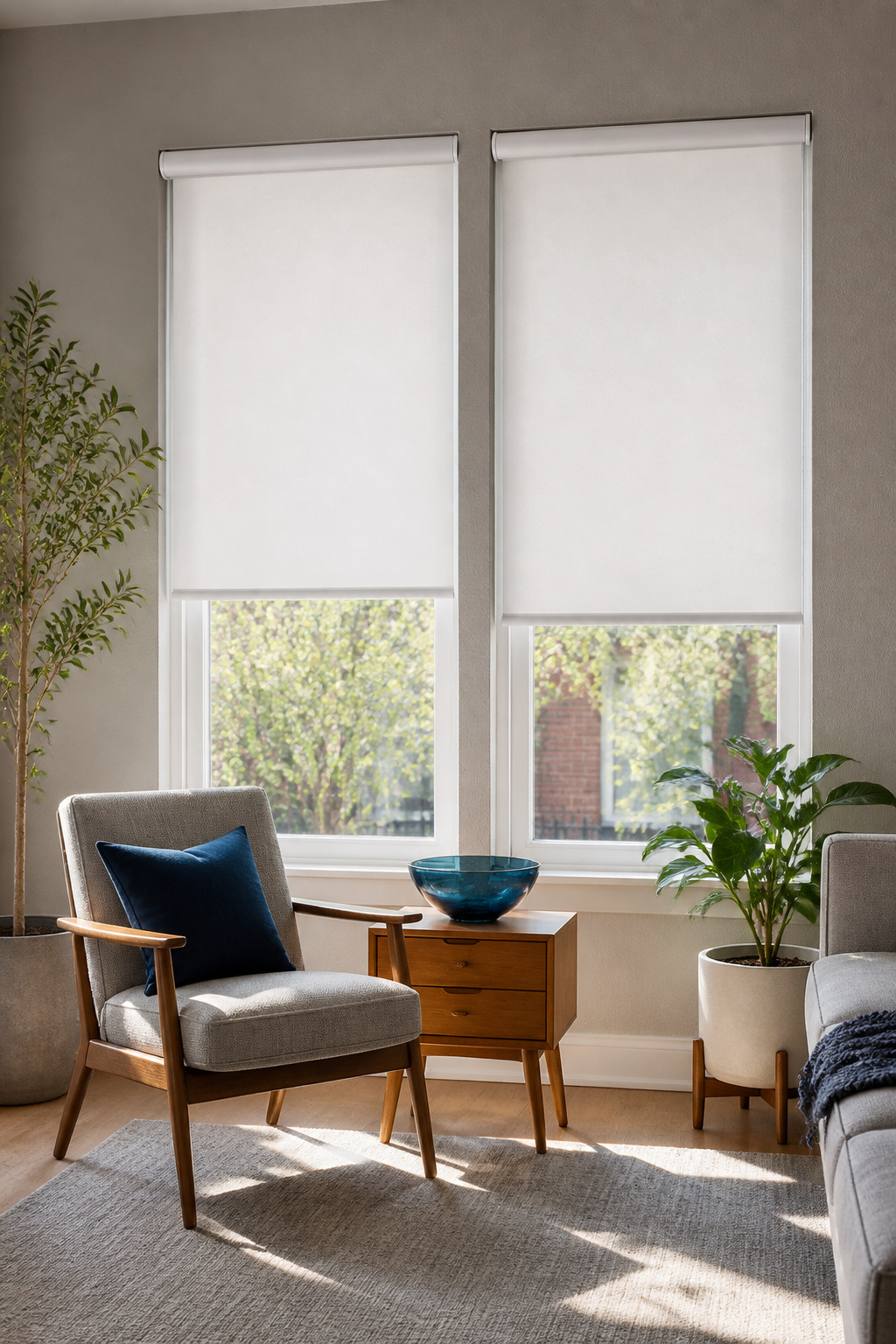
Roller shades carry the cleanest silhouette of any window covering, a single flat plane of fabric that disappears into a compact tube when you raise it. That spare geometry reads as intentional, not temporary, which matters when you are renting and cannot commit to built-ins.
The fabric range is where this system earns its keep. Blackout liners turn a bedroom into a cave on Sunday morning. Solar mesh cuts glare without killing the view. Sheer weaves soften a living room without the fuss of curtains. You order by width and drop, the supplier hems to length, and the result looks custom because it is.
Installation stops at four screws into the window frame or wall, a fifteen-minute job with a drill. Spring-loaded brackets let the whole shade lift off in sixty seconds when the lease ends, leaving only pinholes to spackle. The mechanism is a weighted hem bar and a beaded chain, or a cordless spring if you have toddlers or cats. Nothing to oil, nothing to restring, nothing to misalign.
For a first project, roller shades teach you exactly one skill: measuring twice. The rest is patience and a level. A pair of living-room windows runs the kind of money you might blow on a single dinner out, and the payoff lasts years.
3. Roman Shades
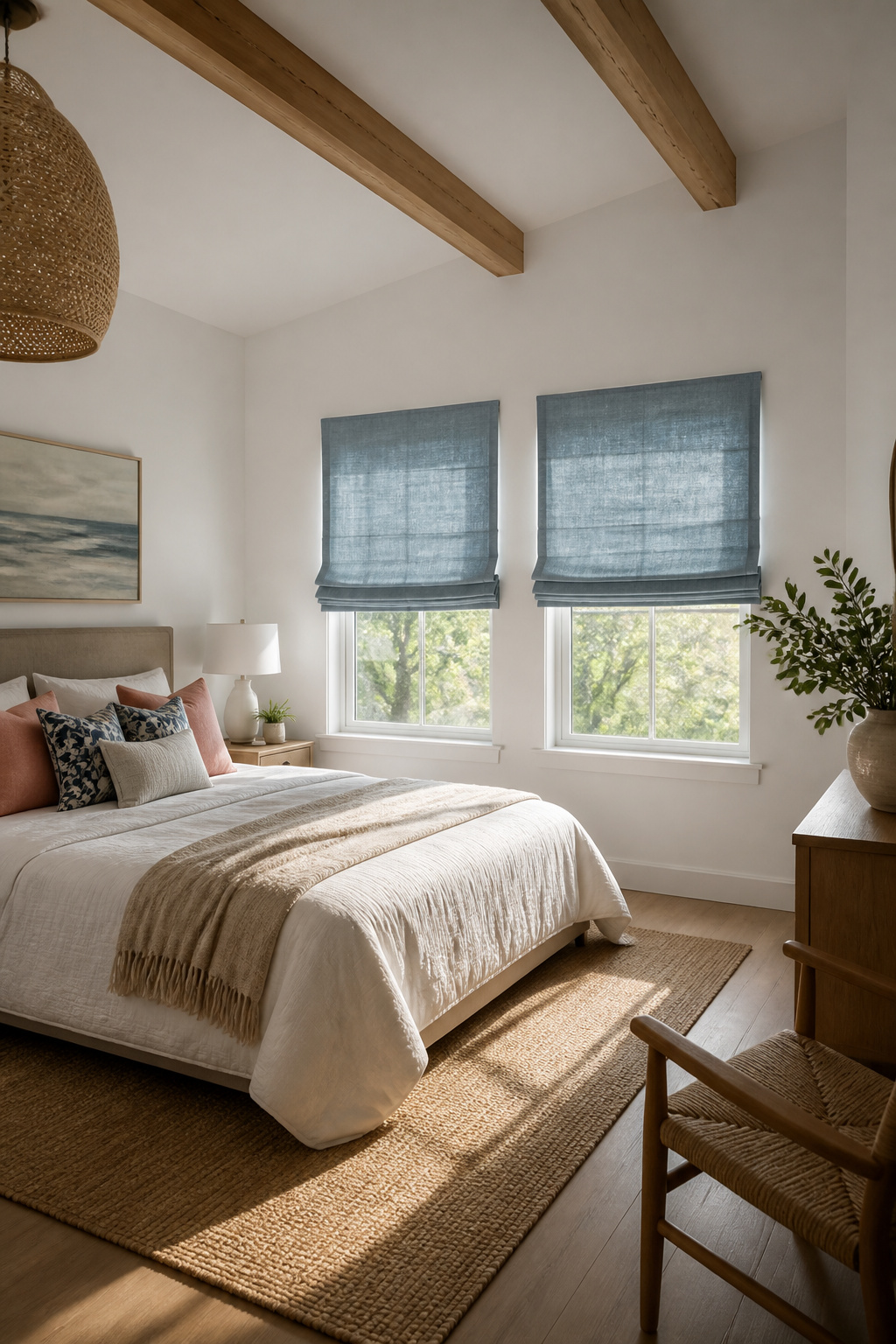
Folded fabric stacks into soft horizontal lines as a Roman shade rises, each pleat catching light differently than flat alternatives. The measuring demands more precision than roller shades, since uneven folds read as a mistake rather than a style choice. Linen gives a relaxed, slightly wrinkled look that works in bedrooms where you want the room to feel finished but not formal. Cotton reads crisper and suits kitchens or spaces where you are mixing in cleaner lines. The style sits in a useful middle ground: traditional enough for crown molding, simple enough for a rental with basic trim. Fabric weight matters more than pattern here. Heavy cotton or a lined linen blocks light and holds the fold structure; lightweight material sags between ribs and looks cheap after a few months of daily use. For renters, the inside-mount version preserves trim and leaves fewer holes than most options, though you will still need a drill and a level to get the brackets straight.
4. Woven Wood Shades

Woven wood shades draw on bamboo, grass, and reeds to bring a warmth that synthetic fabrics struggle to match. The fibers catch light unevenly, so the glow through them shifts from morning to afternoon in a way vinyl never manages. That same texture reads as intentional from across the room; up close, the irregular weave hides dust better than a flat surface.
The trade-off has always been structural: natural materials stretch in humidity, bow under their own weight in wide windows, and snap where the cord threads through. Provenance Woven Wood Shades address this with an engineered backing that keeps the weave square and the lift cords from tearing the reeds. I would not hang untreated woven woods above a kitchen sink or in a bathroom where steam collects, but the Provenance line handles the occasional splatter in a laundry room or the temperature swing near a front door.
For renters, these install with standard brackets and read as a finished upgrade rather than a temporary fix. The light filtering sits between sheer and blackout, enough to soften a southern exposure without turning a room cave-dark. Matchstick weaves let more light through; thicker grass cloth blocks more but costs you some of the shadow pattern that makes the material worth choosing.
5. Sheers and Shadings
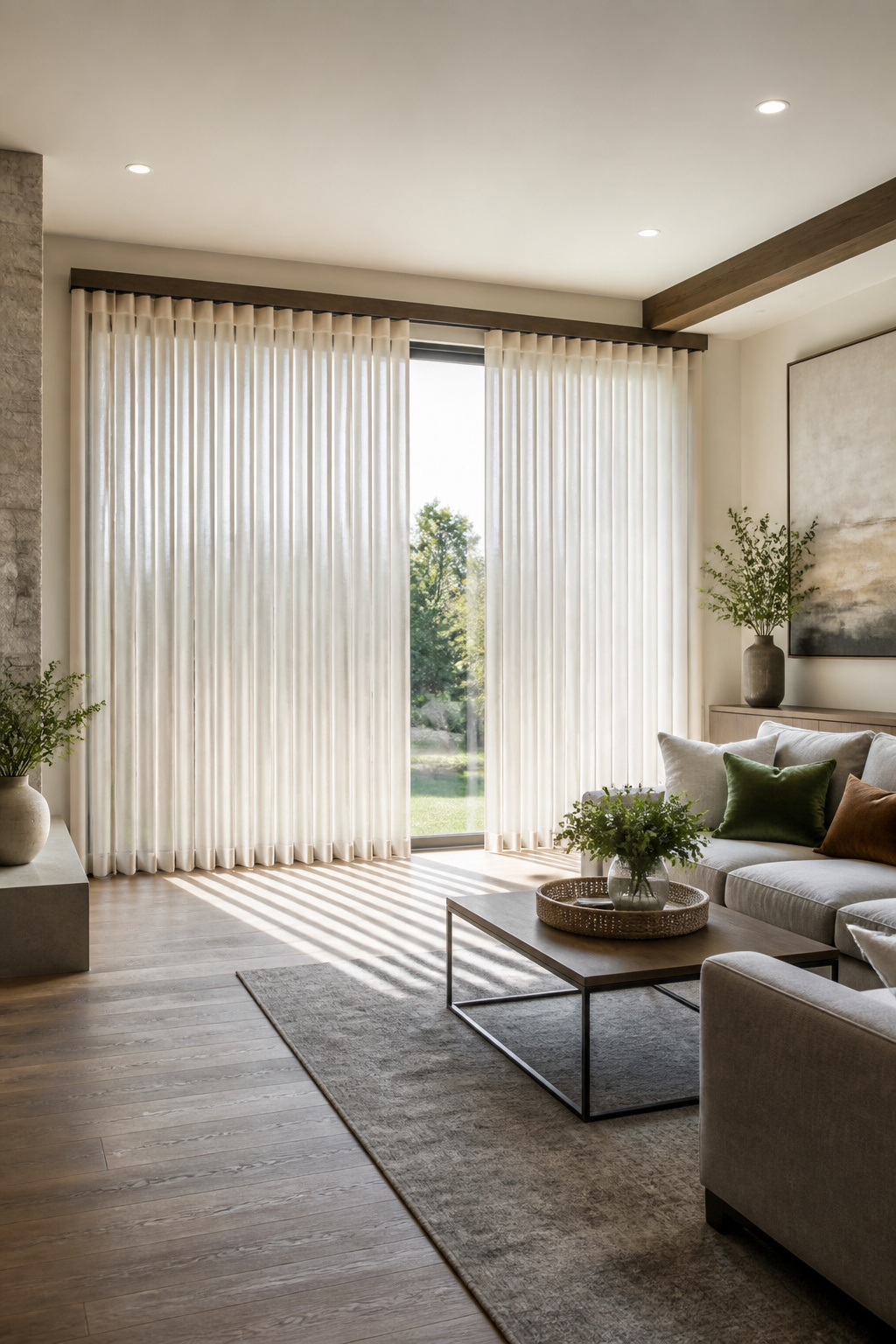
Sheers and shadings work like a fabric sandwich: two sheer panels with soft vanes suspended between them. Light filters through the outer sheers, hits the angled vanes, and diffuses into the room as a glow rather than a beam. You keep the view but lose the glare, and the vanes tilt closed when you want privacy after dark.
For a sliding-glass door or a wall of windows, Vertical Luminette Privacy Sheers hang like drapery and move on a track, but the fabric vanes rotate 180 degrees. That rotation is the practical difference from standard vertical blinds; you get the same walk-through opening when you stack them to one side, plus the soft light of a sheer. The headrail hides the mechanics, so from the street it reads as curtains.
The tradeoff is cleaning. Fingerprints collect on the sheers where people push through, and the vanes need occasional dusting. If you have dogs that charge the door, the fabric will show wear faster than a rigid blind. For a weekend install with no electrical work, though, replacing heavy drapes with these cuts the bulk and keeps the warmth.
6. Drapery and Side Panels
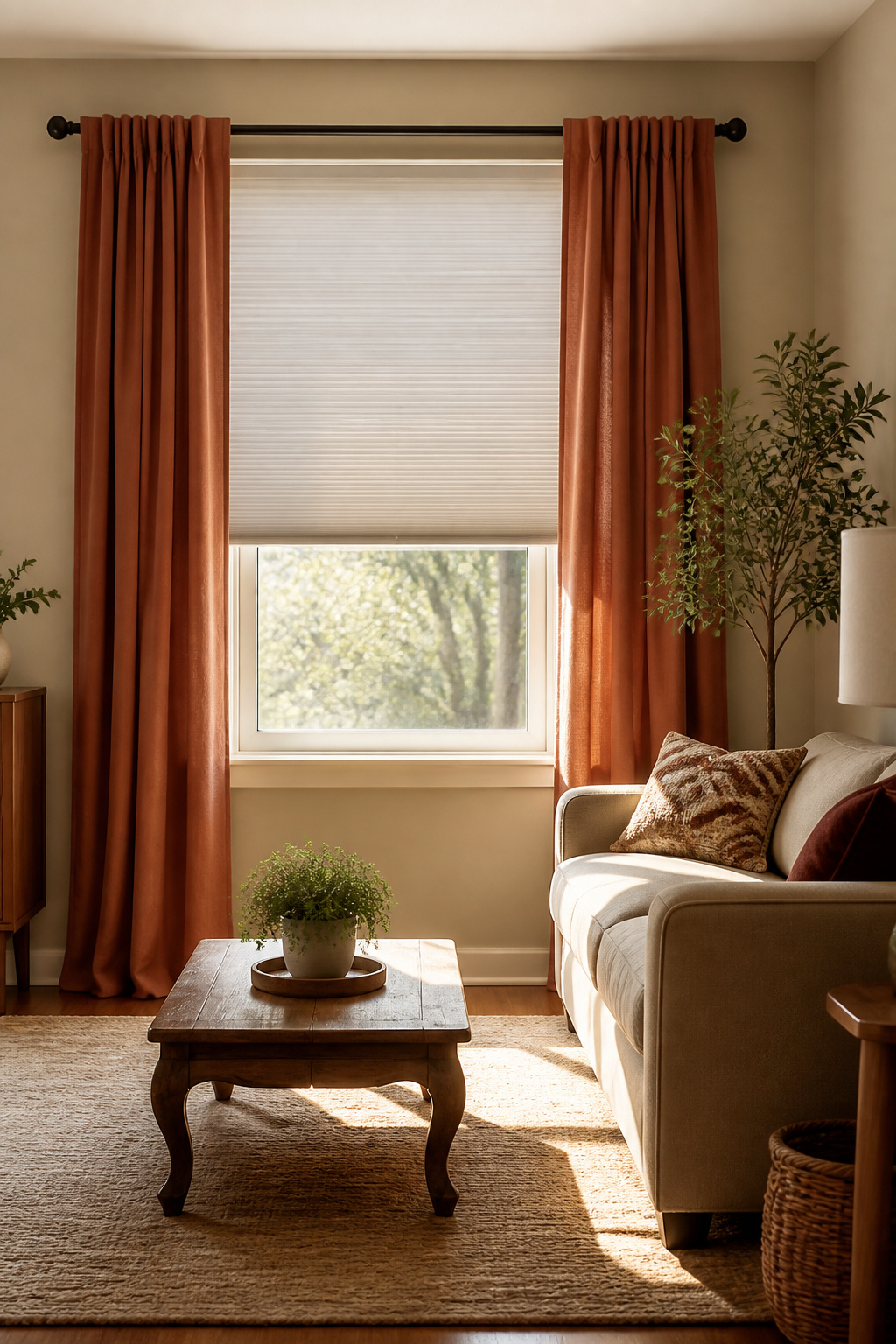
Fabric panels give blinds for windows ideas a second layer that plain hardware alone cannot manage. The pair at my last apartment sat on tension rods pressed inside the frame, no drill holes for the landlord to catalog at move-out. Command hooks work for lighter cottons, though a heavier drapery with lining needs the rod’s spring pressure or it sags by Wednesday.
Side panels are stationary by design, meant to frame rather than cover. They add color and softness while the blind behind them handles privacy and light. In a narrow bedroom I kept the cellular shade lowered for function and hung flax panels wide of the glass, which made the window read larger than its actual width.
The fabric offerings run from tailored pleats to looser contemporary styles. What matters is the proportion: panels should kiss the floor or float a half-inch above, never puddle unless the room is formal enough to justify the dust collection. Layering over a shade-covered window reads finished; used alone, drapery needs enough body to hold a shape or it collapses into bedsheets.
7. Interior Shutters
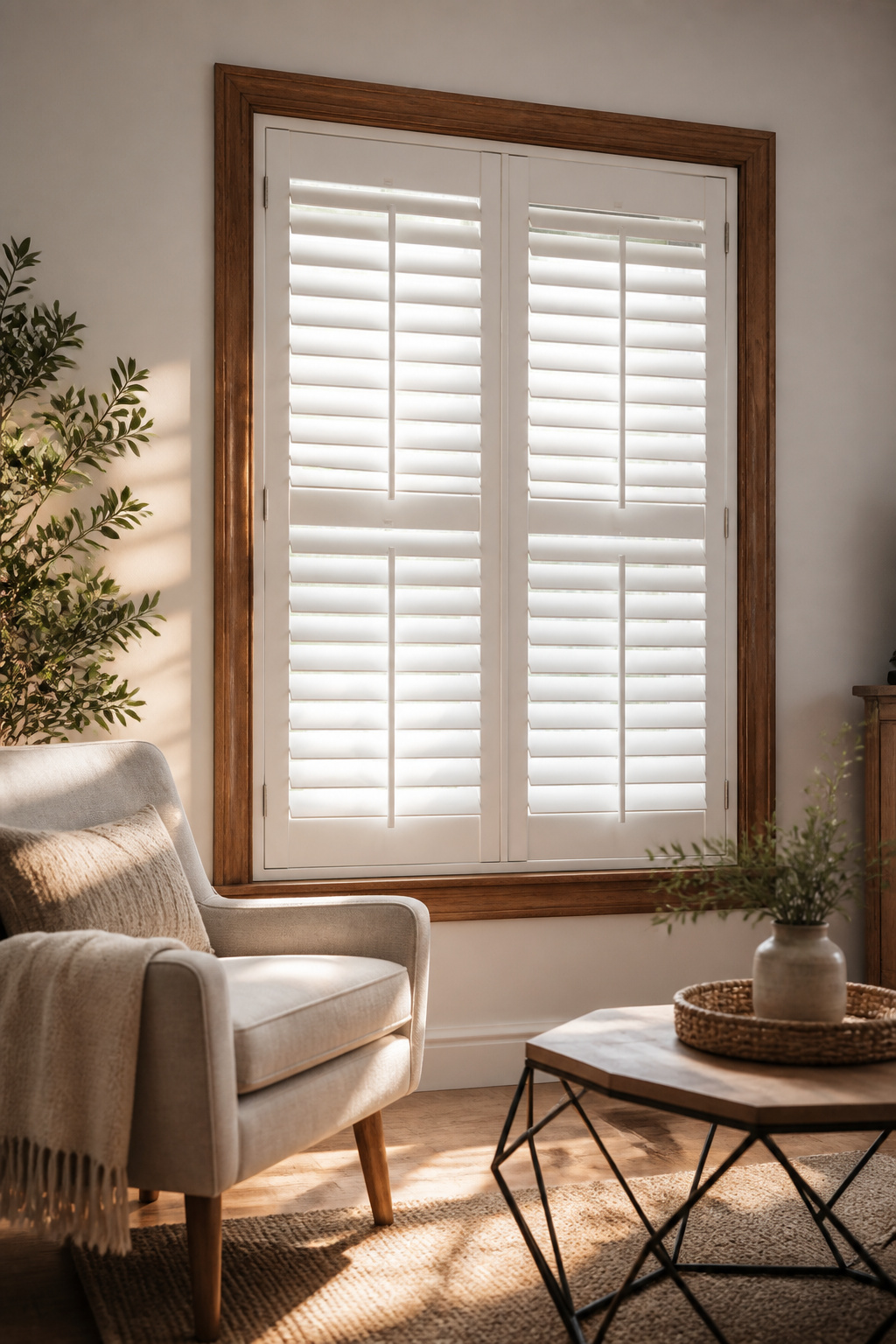
Interior shutters hang in hinged panels that swing open like a cabinet door, each one fitted with rows of adjustable louvers you can tilt to filter light or close flat for privacy. The solid construction, whether real hardwood or composite, gives a clean face to the street and a finished look from inside the room. Cordless operation means no dangling cords, which matters if small children or pets are part of the household. That same solid build makes these a permanent installation, usually screwed directly into the window frame. Renters should know that taking them down when the lease ends means patching holes and possibly forfeiting the hardware investment. For bathrooms or any window that sees both sun and moisture, composite options resist warping and fading where wood eventually gives in.
8. Horizontal Wood Blinds
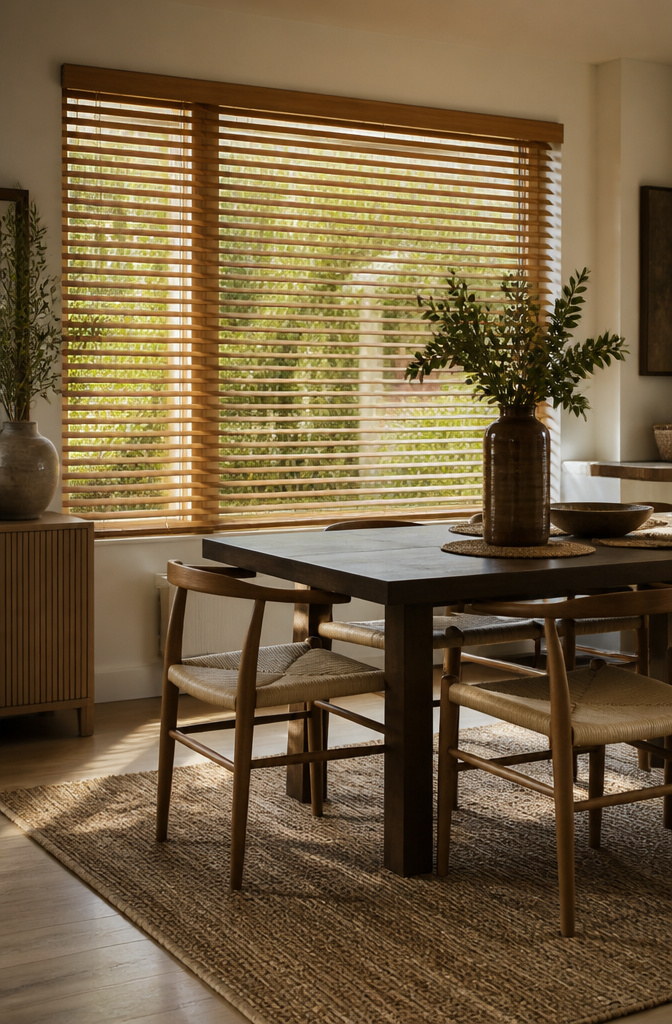
Horizontal wood blinds tilt open for light control and stack at the top of the window when you want the full view. Parkland Wood Blinds are built from 100% basswood, which shows real grain variation from slat to slat. That grain is the appeal and the warning: no two blinds match exactly, and the wood carries more weight than composite alternatives that try to fake the same look.
The basswood construction warms up a room in a way vinyl never quite manages, but it comes with a real limit. High humidity, especially in bathrooms or over kitchen sinks, can warp the slats over time. For those rooms, the composite option wins. Elsewhere, the tradeoff tilts back toward the real thing: the grain, the slight heft when you lift them, and the knowledge that the material is what it claims to be.
9. Aluminum Blinds
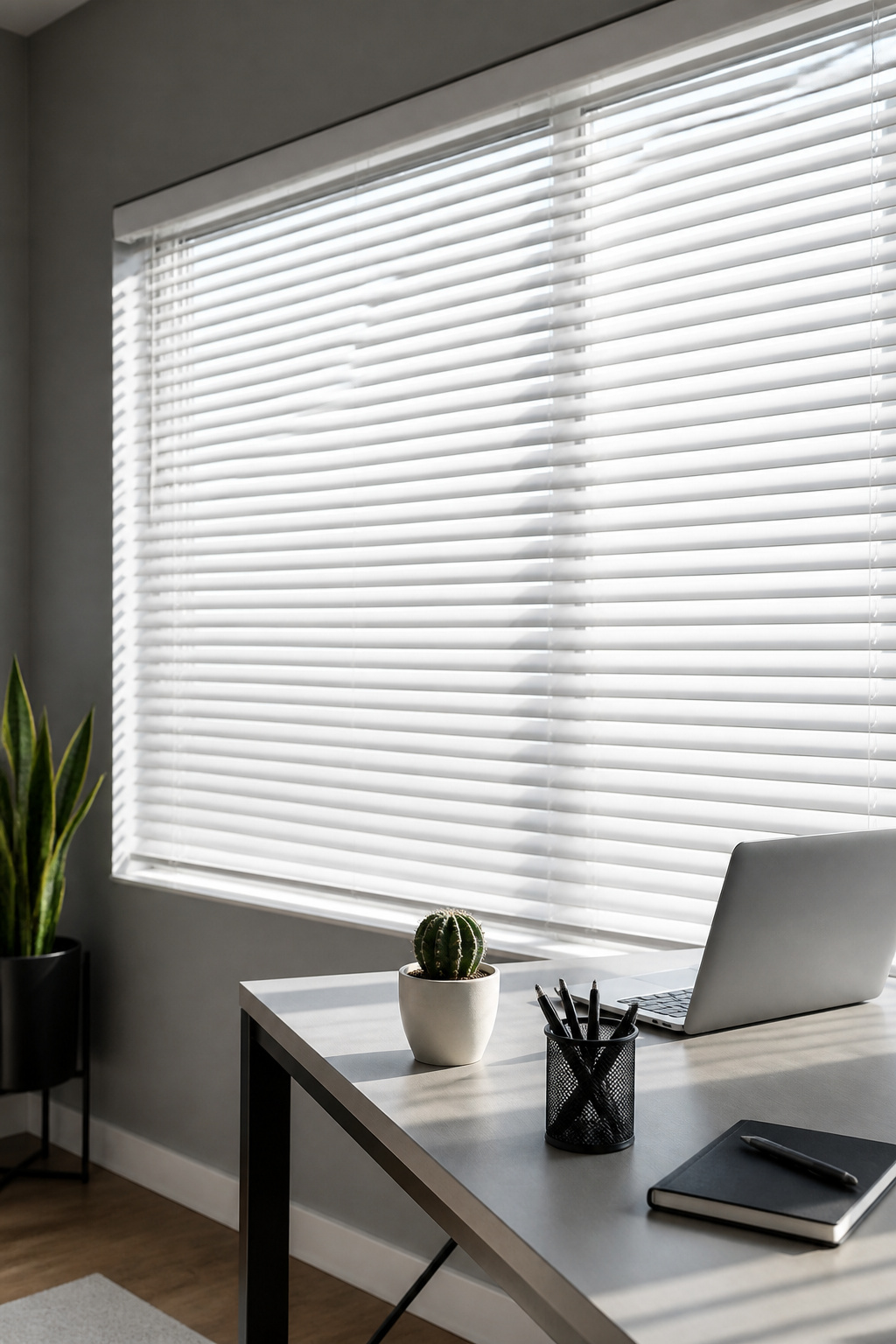
Thin stamped-aluminum slats stack tight and weigh next to nothing, which makes these blinds easy to hang on drywall without hitting a stud every time. The metal dents instead of snapping, so a slat hit by a vacuum or a kid’s toy usually bends back into shape rather than needing replacement. Modern Precious Metals Aluminum Blinds carry finishes from matte white through brushed nickel to a near-black bronze, enough range to read as intentional rather than default.
The low price is the real draw for rentals, but the trade is noise. Wind against an open window slaps the slats together, and tilting them closed carries a metallic click that wakes light sleepers. In a high-turnover apartment or a house with dogs and slammed doors, that rattle matters less than knowing a full replacement runs the cost of a few pizzas rather than a weekend’s labor.
Cordless Options for Safety
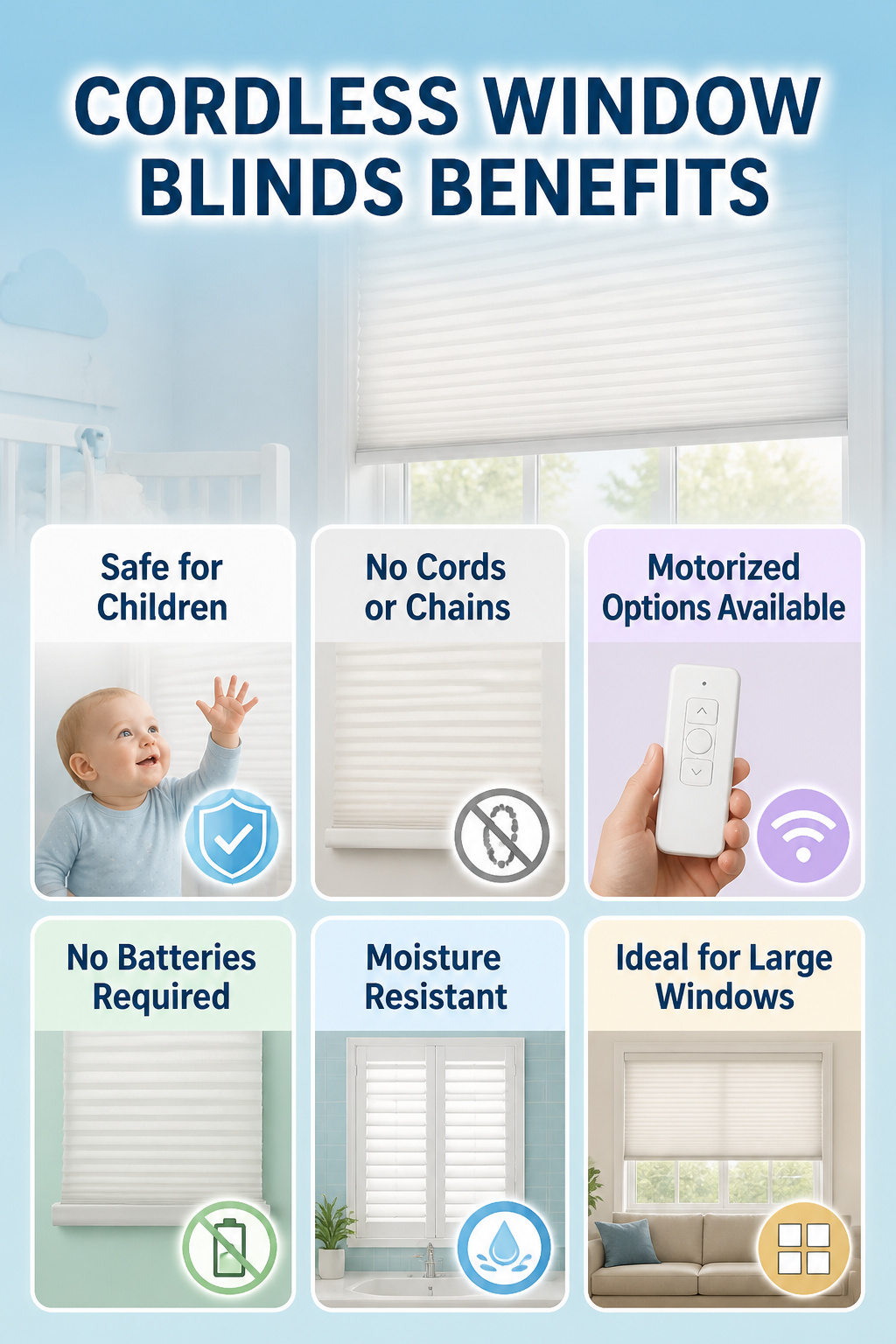
Spring-loaded cordless shades eliminate the loop entirely. A gentle tug on the bottom rail sends them up, and they lock in place where you let go. No batteries, no chains, nothing for a toddler to wrap around a neck or a cat to bat at for entertainment. The mechanism sits inside the headrail where small hands cannot reach it.
Motorized operation costs more but removes even that contact point. A remote or wall switch handles the motion, which matters for windows over a crib or a climbing structure the dog has claimed. Shutters do this naturally; their louvers tilt with a central rod, and the whole panel swings on hinges, so cords were never part of the design. Composite options like Palm Beach Polysatin hold up in bathrooms where a child might splash, and they stay cordless while resisting warping from that moisture.
The choice between spring and motor comes down to window size and who opens it. Large shades load the spring heavily; a motor handles that weight without the fight. For a rental nursery or a first home with a crawling phase ahead, either beats the retrofit kits that merely tie cords shorter. Those still leave a hazard. The better move is buying cordless from the start.
Moisture-Resistant Choices
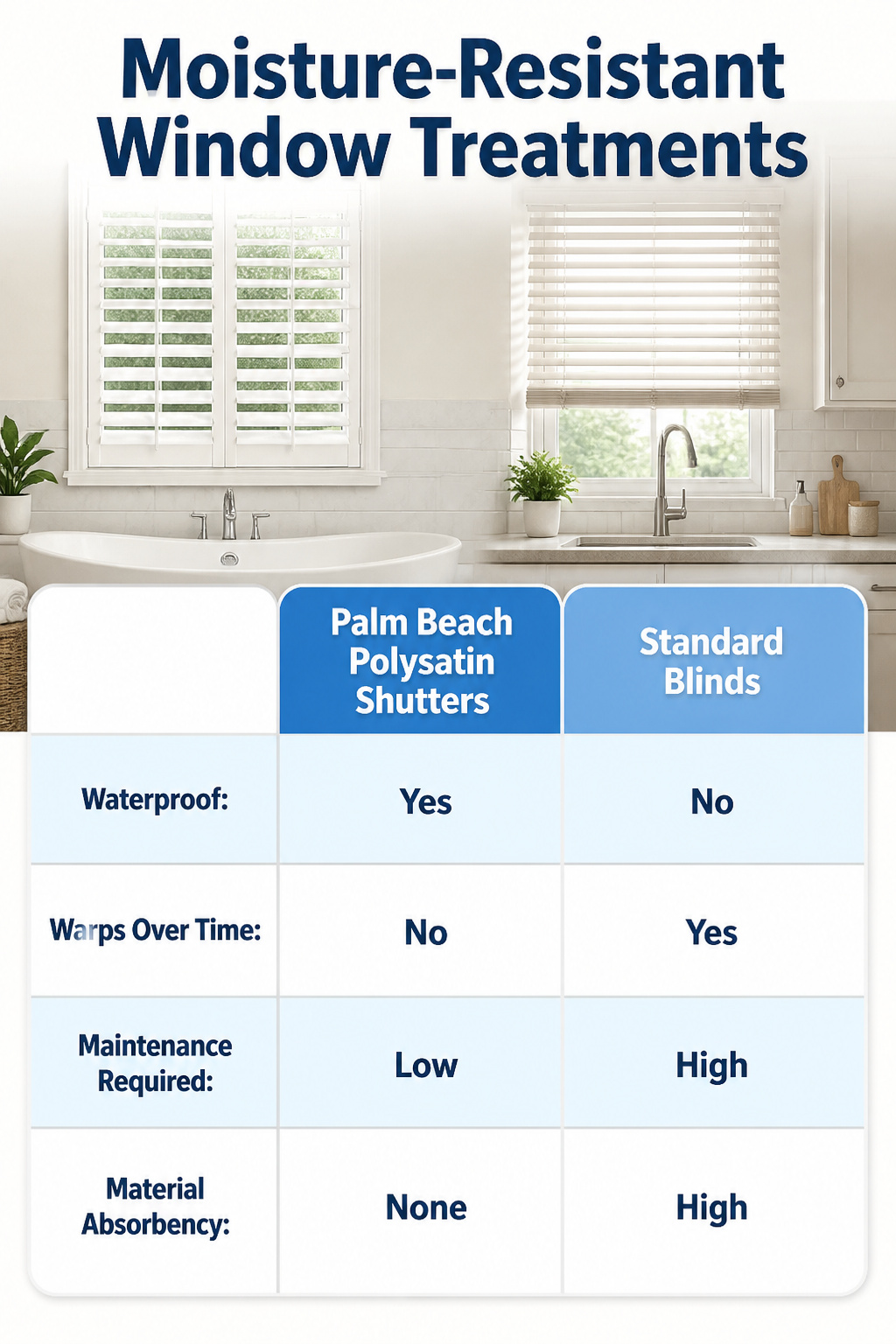
Bathroom and kitchen windows sit in the line of fire from steam, splatter, and daily humidity spikes. Standard materials absorb that moisture over time, swell, and then warp or crack once they dry. I learned the hard way with a set of wood blinds above a rental tub that bowed inward within a single summer, the slats permanently cupped and the finish flaking where water pooled.
Palm Beach Polysatin Shutters are waterproof and carry a guarantee against warping or cracking, which makes them the safer bet for that environment. They keep their shape and surface finish without the maintenance cycle that wood demands in the same room. Composite woods and vinyls handle the damp better than hardwood, but they are not all equal; cheaper vinyls can off-gas in heat or yellow where sun hits them daily. Real hardwood belongs anywhere else in the house. In a bathroom or over a kitchen sink, the juice is not worth the squeeze.
Frequently Asked Questions
What are the best window treatment styles?
The best options are shades, drapery, shutters, and blinds, each solving a different problem. Cellular shades insulate best against heat and cold. Roller shades give the cleanest look for renters. Interior shutters add permanent value for homeowners. Match the material to the room: woven wood for warmth, aluminum for durability in rentals, and composite or vinyl anywhere moisture hits.