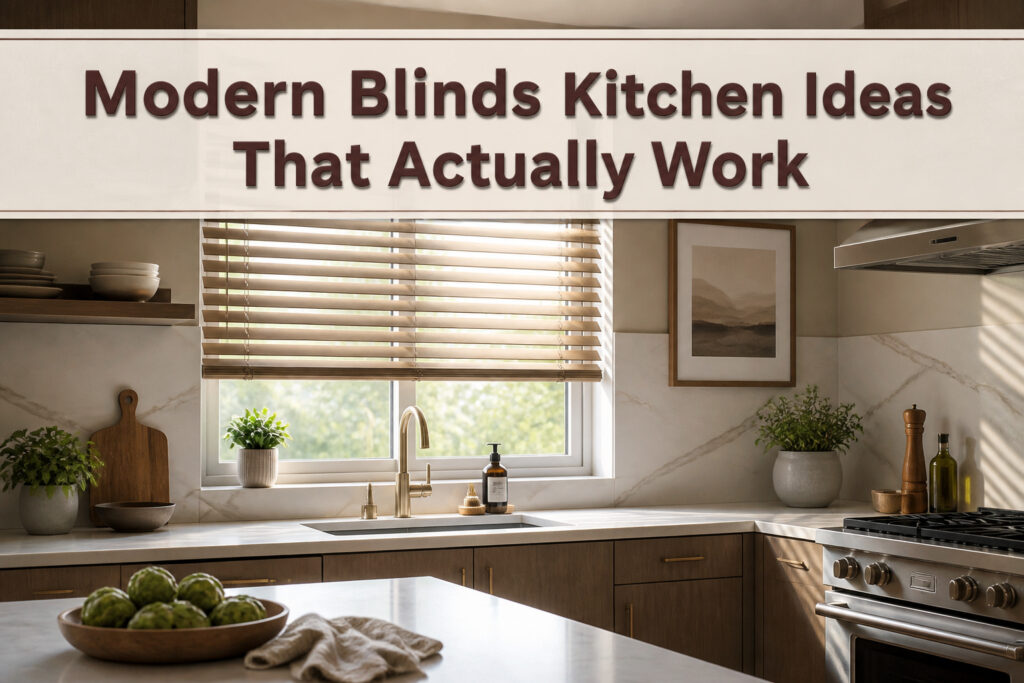
The right modern blinds kitchen setup depends on one question: which window gets hit with steam, grease, or afternoon glare.
Every option on this list handles moisture differently, and choosing the wrong material for the sink or stove means warped slats or fabric that smells like last year’s frying oil.
Faux wood blinds made from UV-resistant Polysatin compounds survive the worst of it and wipe clean with a damp cloth, which is why they sit at the top of every list that actually tested them in a working kitchen.
1. Faux Wood Blinds
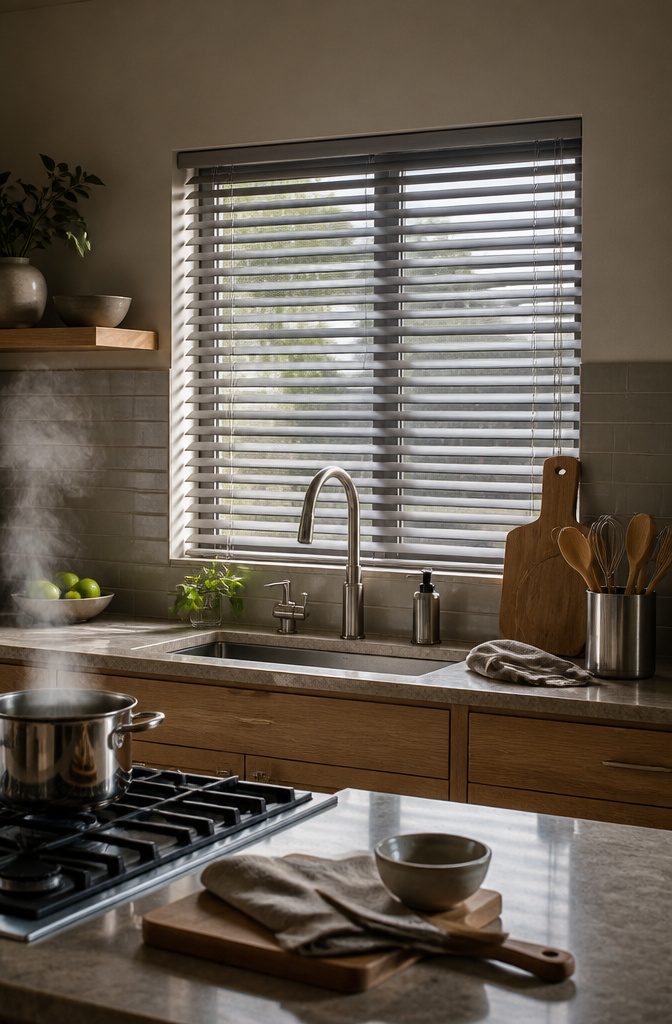
Faux wood blinds sit at the top of every kitchen list for a reason that matters once you actually cook in the room.
The PVC or composite core does not warp above a sink full of steaming pots or a stove running hard through dinner prep.
Six different product lines from major manufacturers back this as the default recommendation for that exact spot, the window over the sink where moisture and heat concentrate.
The surface wipes clean with a damp cloth, which sounds minor until you are scrubbing grease off fabric slats or watching real wood grain lift and peel.
The cost lands below genuine hardwood, sometimes by half, and the visual difference is not something guests notice while they are stealing fries off the sheet pan.
The newer color runs include modern gray and tan tones that read warmer than the bright white defaults.
If your kitchen faces west and catches heavy afternoon sun, the UV-resistant compounds in lines like Polysatin will also resist the fading that turns cheaper whites chalky in two years.
For renters or first-home owners, this is the one type you can install Saturday morning and not think about again.

IMPORTANT! - This window blind is 21.5" wide to allow for mounting the blind inside a 22" wide window. Your blind will arrive to you exactly 21.5" wide. Our 2 Inch Faux Wood blinds are designed for a wide variety of window sizes and styles. Sizes stated within the product descriptions are listed by WIDTH then HEIGHT. See measuring instructions to ensure best fit.

Custom sizes: For inside mount of these faux wood blinds, measure your window’s exact width—we’ll automatically deduct 0.5 inches to ensure your 2 inch cordless faux wood blinds slide smoothly in the frame.

IMPORTANT! - This blind is 34.5" wide to allow for mounting the blind inside a 35" wide window. Your blind will arrive to you exactly 34.5" wide. Our 2 Inch Faux Wood blinds are designed for a wide variety of window sizes and styles. Sizes stated within the product descriptions are listed by WIDTH then HEIGHT. See measuring instructions to ensure best fit.
2. Roller Shades
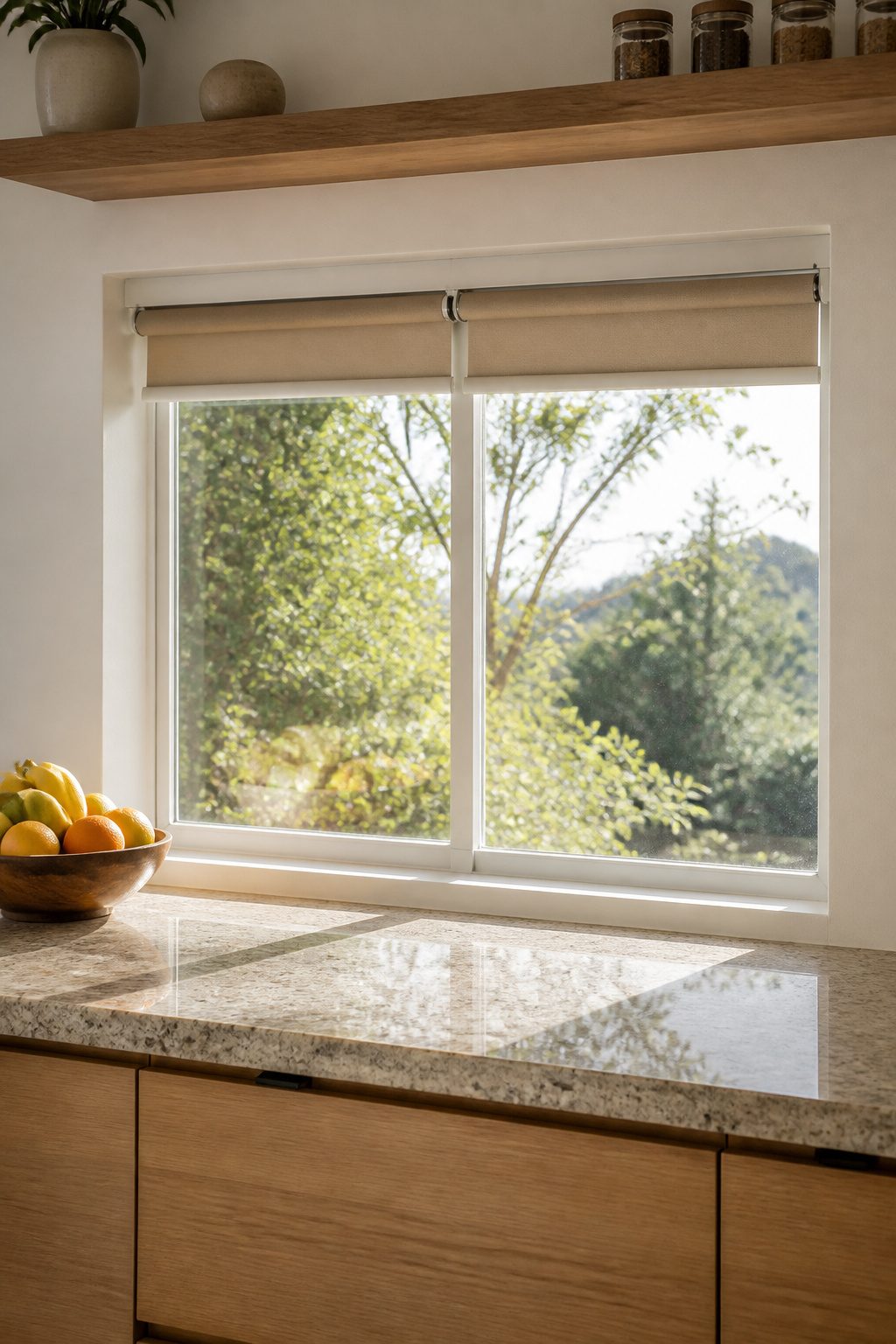
Roller shades sit almost flush against the glass, that flat profile disappearing into the window frame when they’re up.
The fabric runs the full range from sheer cottons that filter morning light to blackout canvas and dark linen for blocking it entirely, plus vinyls that wipe clean with a damp cloth. Spring or chain operation keeps the mechanism simple.
Six sources back this as the go-to for kitchens, and the moisture angle is what sold me reading through them. Above the sink, pair roller shades with faux wood blinds as your alternative.
Both handle water and oil splatter without warping, while real wood should stay nowhere near the faucet. Wipeable vinyl roller shades win for the splatter zone itself; faux wood works if you want slats you can tilt.
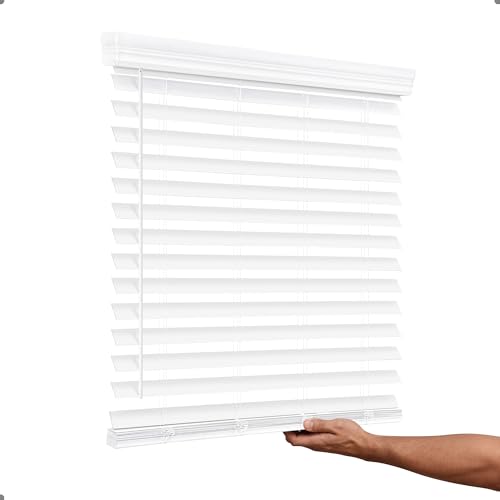
IMPORTANT SIZE NOTE – Precision Fit for Your Window This wood blind arrives exactly 33.5 inches wide, expertly crafted for a snug inside mount in a standard 34-inch window frame. Measure carefully before ordering – all sizes are "Width x Height". For outside mount, refer to our guide to select the ideal size. Perfect for window blinds for home and indoor use
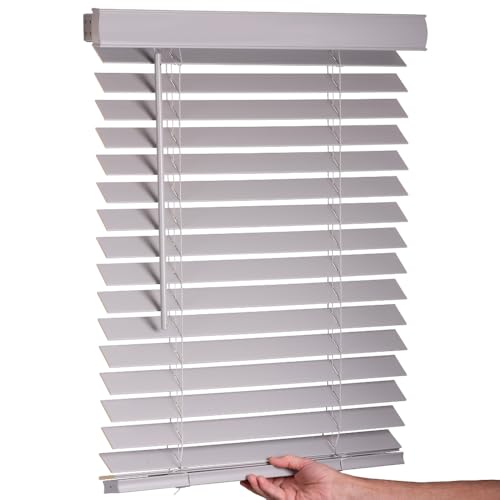
IMPORTANT! - This blind is 33.5" wide to allow for mounting the blind inside a 34" wide window. Your blind will arrive to you exactly 33.5" wide. Our 2 Inch Faux Wood blinds are designed for a wide variety of window sizes and styles. Sizes stated within the product descriptions are listed by WIDTH then HEIGHT. See measuring instructions to ensure best fit.

Smooth Wood-Look Slats (No Grain Texture) - 2" composite faux-wood slats with a clean white finish that complements modern, transitional, classic or minimalist décor. Smooth, low-maintenance surface with no wood-grain texture.
3. Cellular Shades
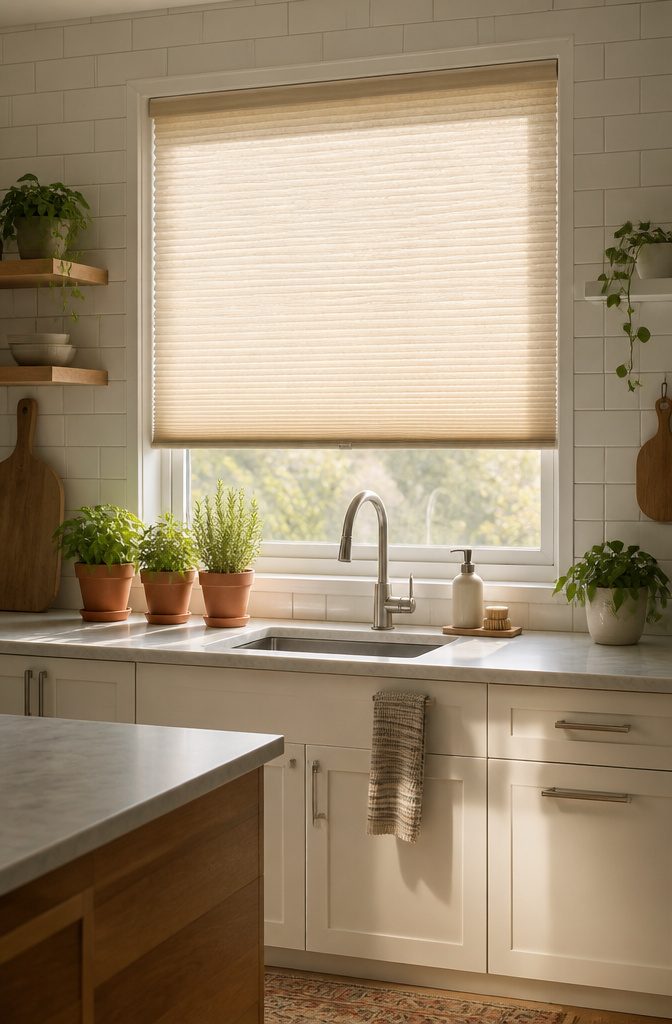
The honeycomb structure in cellular shades traps air inside individual cells, and that trapped air is what slows heat transfer.
Up to 40% less heat escapes through windows with cellular shades installed, which matters in a kitchen where the window above the sink often sits on an exterior wall.
The original Duette design from Hunter Douglas uses single honeycomb cells; the Architella line stacks a smaller cell inside a larger one for more air pockets and better insulation.
Fabric cells absorb grease and cooking odors over time, so placement is the judgment call. Sources put cellular shades on windows away from the stove and prep areas, not directly above the range where splatter lands.
For sink windows where steam rises but grease stays minimal, the fabric holds up fine and the energy savings are real. Near heavy cooking zones, faux wood or vinyl handles cleanup better.
Bamboo and other renewable materials soften hard kitchen surfaces, though they bring the same grease absorption risk as synthetic fabrics. The payoff is in the winter bill and the summer comfort, not in pretending every window in the room qualifies.

Heavy Duty Outdoor Clear PVC Roller Shades for Patio: Enjoy an unobstructed view with our clear roll up patio curtains. Made of 0.5mm thick, high-transparent vinyl roller shades, this heavy-duty PVC cover provides durable, tear-resistant, and dustproof protection for long-lasting use

Crystal Clear 0.8mm PVC: Thick transparent vinyl keeps the view open while adding a durable barrier. Use it as outdoor roller shades for patio, outdoor clear vinyl roller shades, vinyl roller shades, porch blinds, or a clear PVC roller blind.

Waterproof Clear Roll-Up Panel: Transparent vinyl helps keep rain, wind, splash, and dust outside while maintaining a bright view. Use it as waterproof outdoor roller shades for patio, clear vinyl roller shades, or porch blinds.
4. Roman Shades
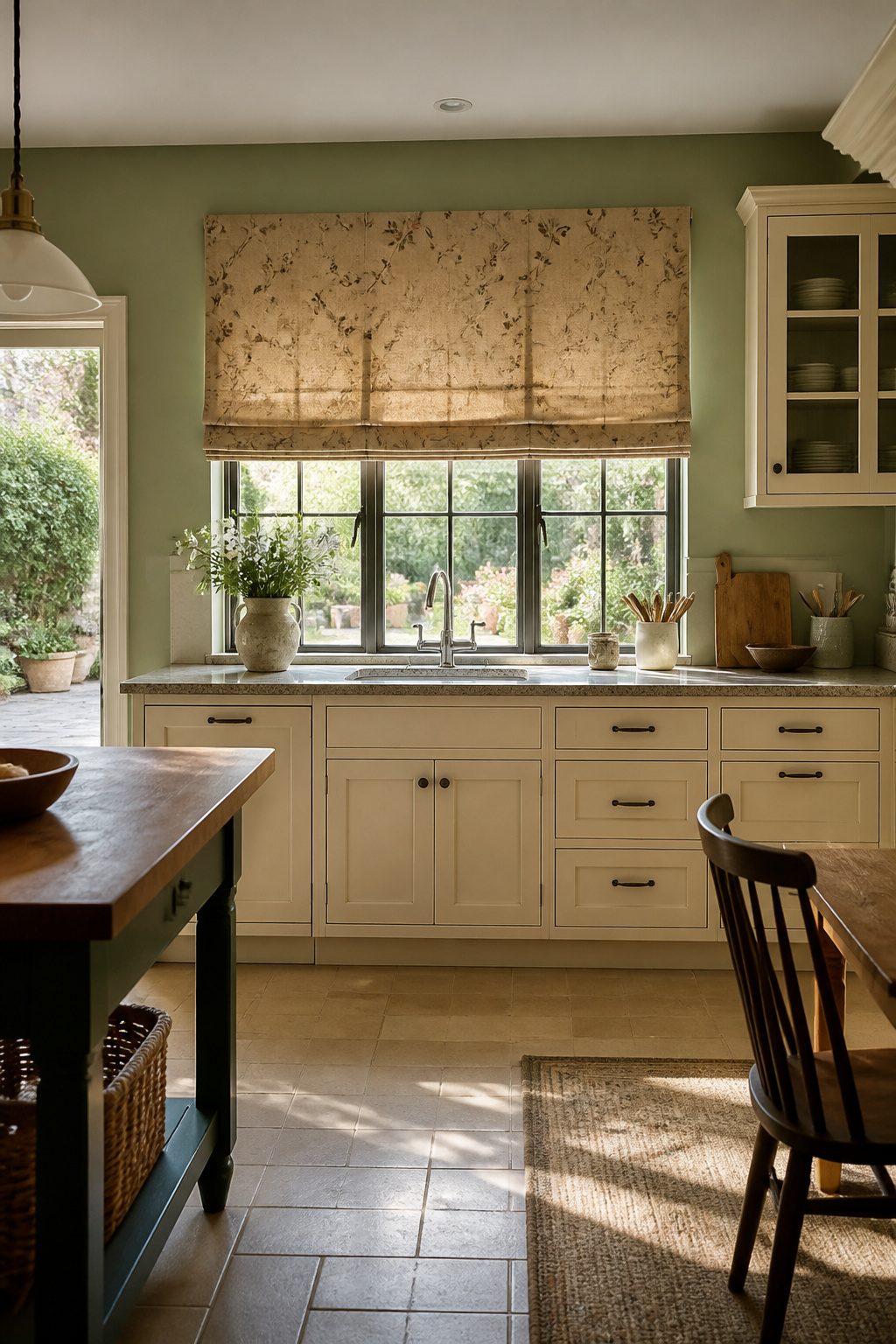
Fabric folds give Roman shades a softness that hard surfaces cannot replicate, and the style options are wider than most people expect.
Flat folds stack neatly into crisp horizontal lines when raised, hobbled folds keep their gentle loops even while lowered, and relaxed folds drape slightly at the bottom for a less structured look.
Each operates on the same principle: a cord system lifts the fabric in even sections so the shade holds its shape through daily use.
The real draw is the material range. Sources describe faux silk, taffeta, cotton, and linen as common choices, with small stripes or muted pinstripes working particularly well against kitchen walls.
Florals can pull multiple colors from a neutral palette without overwhelming the space, though scale matters: larger patterns suit bigger kitchens, smaller prints suit cozier ones.
Fabric in a kitchen collects grease and moisture faster than hard alternatives. Wiping helps, but Roman shades need more attention than vinyl or aluminum.
Stain-resistant treatments exist, and some fabrics clean with simple soap and water, but the maintenance gap is real. For a weekend project on a few hundred dollars, the look is achievable; just budget the time to keep it looking sharp.

100% Blackout Roller Shade: Made of polyester fabric coated with blackout backing. Blocking out 100% light for complete privacy, light control and UV protection for bedrooms, children’s rooms and movie rooms. Excellent for deeper and longer sleepers.

【Excellent Material】:Blind Size: 23"W x 72"H, Fabric Size: 22"W x 72"H. Fabric is 100% polyester material fabrics with reinforce thermal insulated coating, feeling soft and smooth. No burrs, strong wear resistance, and easy to clean.Our blackout blinds block 100% of sunlight and UV rays. The thermal backing reduces the loss of room heat and against cold through the windows in winter and summer, helping to reduce your energy bills.

【Excellent Material】:Blind Size: 23"W x 72"H, Fabric Size: 22"W x 72"H. Fabric is 100% polyester material fabrics with reinforce thermal insulated coating, feeling soft and smooth. No burrs, strong wear resistance, and easy to clean.Our blackout blinds block 100% of sunlight and UV rays. The thermal backing reduces the loss of room heat and against cold through the windows in winter and summer, helping to reduce your energy bills.
5. Woven Wood Shades
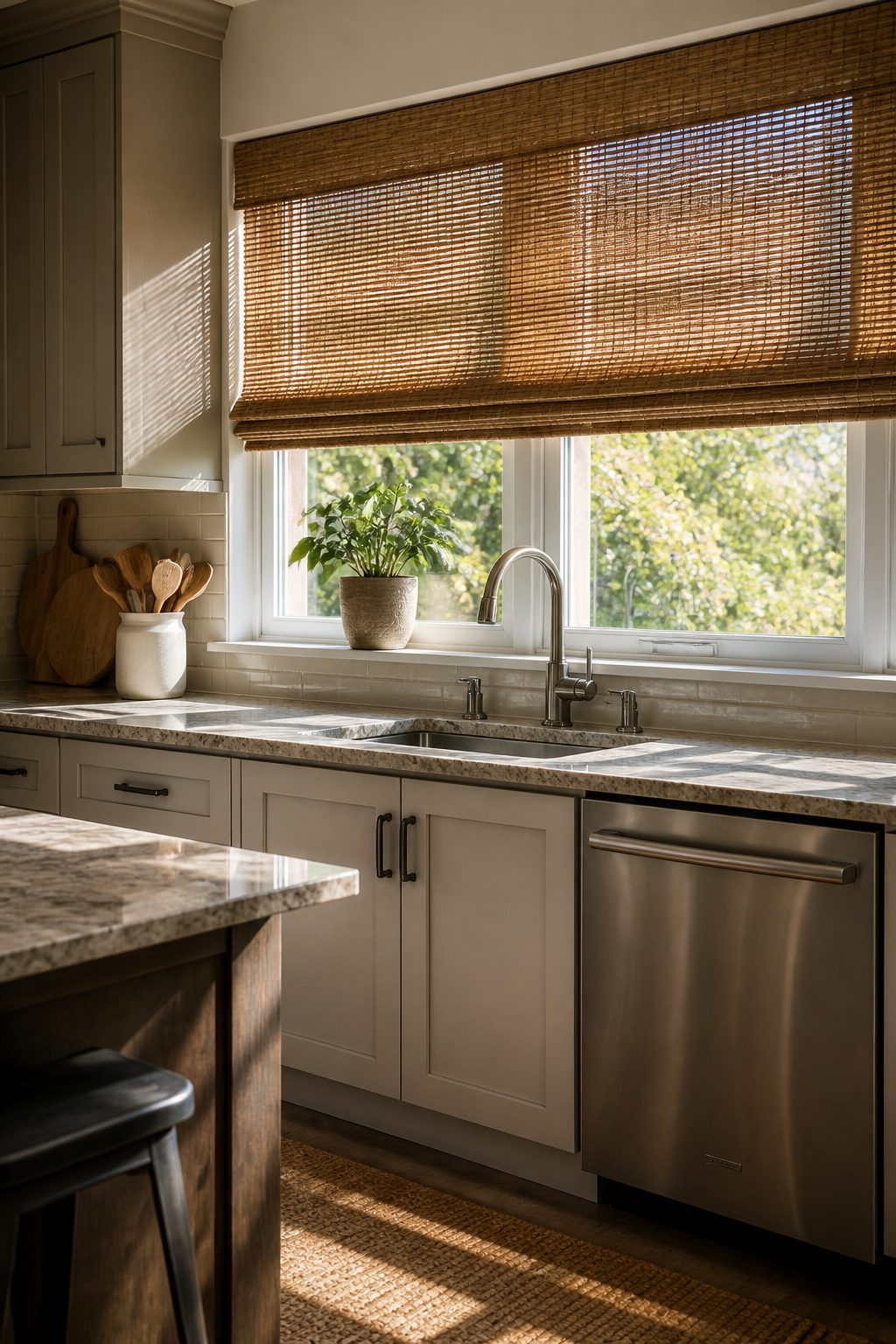
Bamboo, grass, reed, and jute bring exactly what a kitchen full of stainless steel and tile is missing: something that reads as alive.
The texture catches light differently throughout the day, and against hard countertops or appliance fronts, that variation keeps the room from feeling like a showroom.
The woven construction matters more than the specific fiber. Provenance Woven Wood Shades are built to resist stretching, bowing, breaking, and fading, which is the claim worth testing against your actual window.
Morning sun across a breakfast nook is one thing; afternoon heat baking against a west-facing pane above the sink is another. The materials handle the first better than the second.
They are not fully moisture-proof, so placement above a stove or in a window where you regularly boil pasta is a judgment call I would skip.
The shade survives humidity better than raw wood, but "resists" is not "ignores." A liner helps, and the independent operation on some models lets you drop a room-darkening layer behind the weave without losing the texture you installed it for.
The contrast between liner and fiber can actually sharpen the look rather than hide it.
For renters, the weight is worth considering before you drill. These read heavier than a roller or faux wood, and the hardware needs to match.

【Cordless Kid & Pet Safe Design】 This cordless honeycomb shade has a clean tangle-free look. Weighted bottom aluminum rail keeps it flat and wind-resistant, locks at any height for flexible light control

Important Inside Mount Measuring Instructions: This cellular shade is the exact size - no deductions are made. Measure the width across the top, middle, and bottom of window. Ensure your window measures 36.25" to 37" wide for a 36" wide cellular shade. This allows proper fit with minimal light gaps. Measure the height from the top of the window to the windowsill on the left, middle, and right of the window. The largest measurement will be the height you order.

【Soft Light Filtering & Total Privacy】Experience the dual benefits of softened natural light and unwavering privacy. The special fabric of these cellular shades gently filters harsh sunlight into a soft glow, ensuring your space is filled with natural light without compromising your privacy from prying eyes.The unique honeycomb cells trap air to reduce noise and maintain room temperature, helping you save energy year-round,making them the ideal choice for modern home decor.
6. Aluminum Mini Blinds
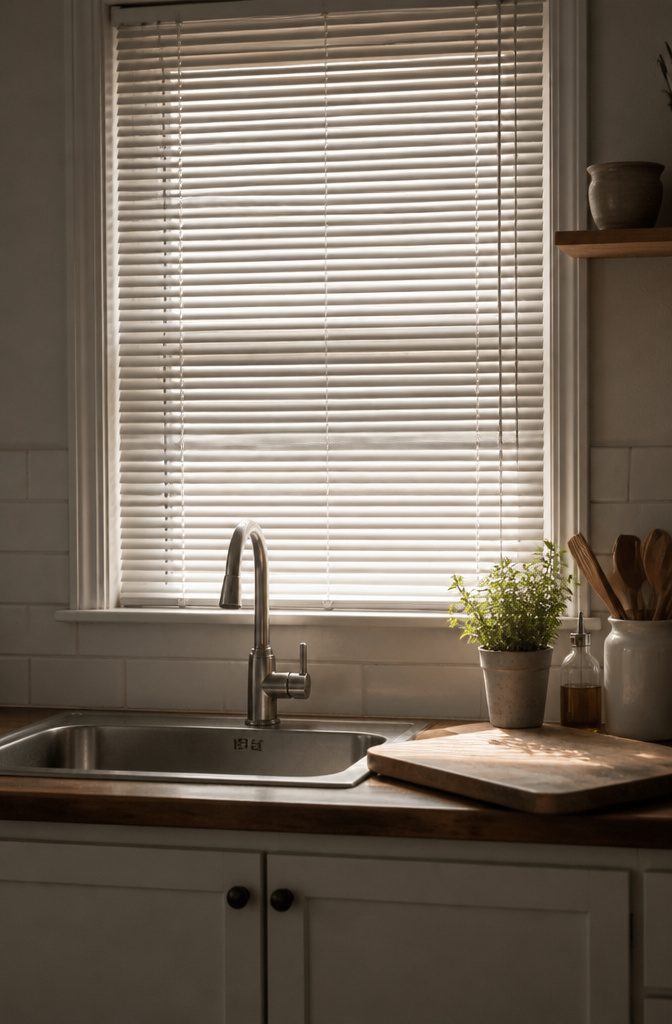
Aluminum mini blinds still earn their spot in a kitchen, though the reasons have narrowed.
The metal slats shrug off humidity that warps real wood and clean with a damp cloth, which matters over a sink where pasta water steams the glass every evening.
Price is the other half: among moisture-resistant options, these sit at the bottom of the range, a practical placeholder rather than a long-term investment.
Three kitchens still call for them. Rental units top the list, since the out-of-pocket cost stays low and landlords rarely object to white or off-white slats.
Temporary fixes during a remodel fit too, when you need privacy for a month and do not want to order custom shades twice.
High-humidity regions like Florida or the Gulf Coast round it out; the aluminum will not bow or yellow the way some vinyl can after seasons of heat.
The slat width matters more than most buyers expect. One-inch slats look busier but collect less dust than half-inch, and in a kitchen that dust is grease.
Wipe direction counts as well: across the slats, not with them, so the cloth catches the gap instead of pushing grime through. Cordless lifts keep the lines cleaner, though motorized options on a budget blind rarely justify themselves.
The downside is noise and temperature. Aluminum conducts heat, so afternoon sun on a west-facing window makes the slats too hot to touch.
They also rattle when the oven vent runs hard. For a permanent home with a few hundred dollars to spend, faux wood or vinyl roller shades usually win.
But when the timeline is "this weekend" and the budget is "as little as possible," aluminum mini blinds still solve the problem.

Custom sizes: For inside mount of these faux wood blinds, measure your window’s exact width—we’ll automatically deduct 0.5 inches to ensure your 2 inch cordless faux wood blinds slide smoothly in the frame. For outside mount, just pick your desired venetian blind width; we recommend adding 3-6 inches for full coverage.

IMPORTANT! – This window blind measures exactly 34" wide and is designed to fit inside a 34.5" wide window, following industry-standard sizing. A 1/2-inch deduction is applied to ensure proper bracket placement within the window frame for a secure fit.
Smooth Wood-Look Slats (No Grain Texture) - 2" composite faux-wood slats with a clean white finish that complements modern, transitional, classic or minimalist décor. Smooth, low-maintenance surface with no wood-grain texture.
7. Vertical Blinds
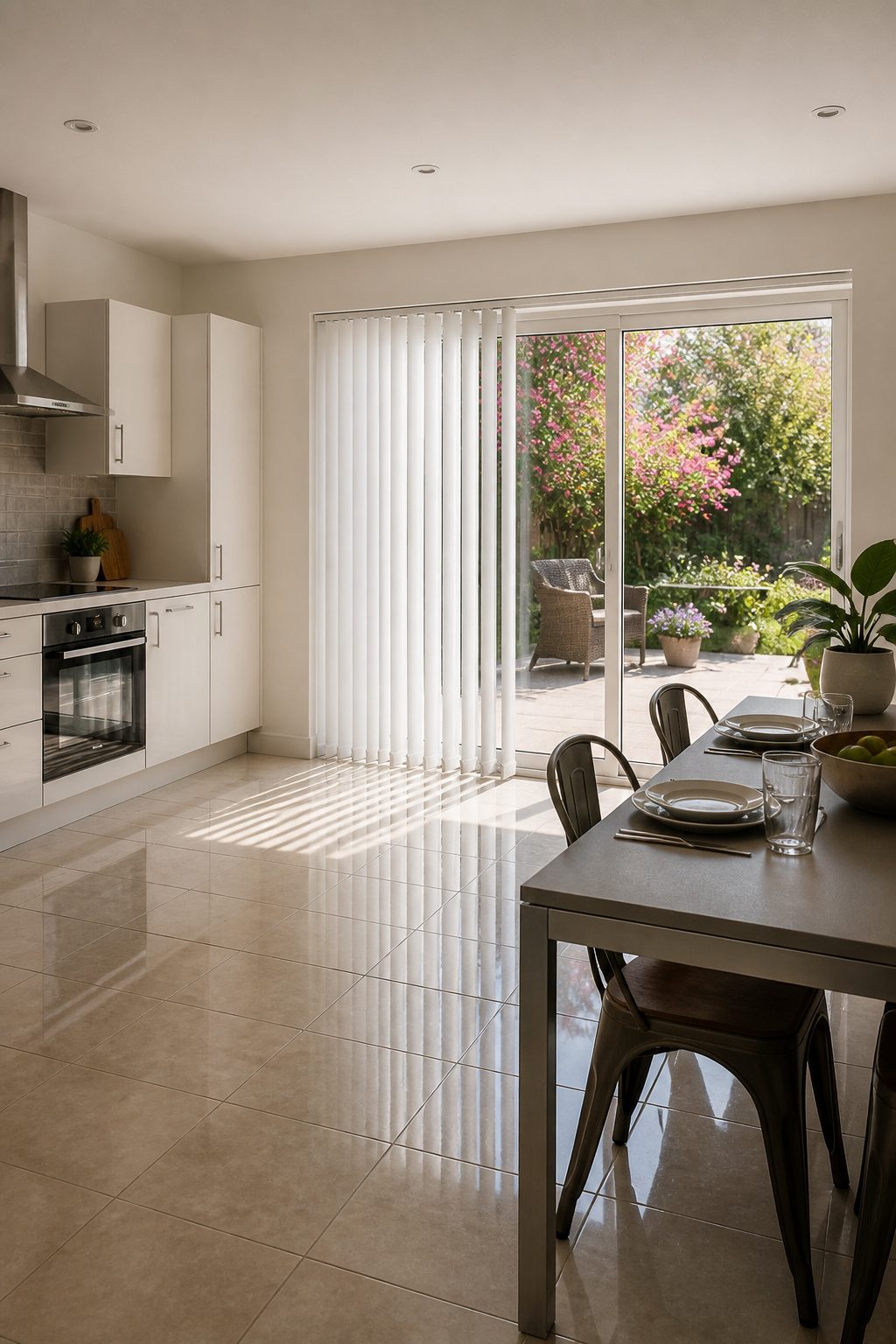
Vertical blinds still earn their place anywhere a stack of horizontal slats would park in the middle of your view.
Sliding glass doors to a patio or a four-foot kitchen window over the sink are the two openings where they make sense, because the vanes draw to one side like a curtain rather than crowning up and leaving a blind heap at the top.
The rotation gives decent light control, too; tilt the vanes and you cut glare without killing the room.
Three sources make the vertical format work: the headrail hardware itself, the vanes you choose, and the rotation angle you set.
Norman’s Synchrony line uses a cordless rail certified Best for Kids, which matters in a kitchen where toddlers wander through with crackers.
The vanes on that system are built heavier than standard to take scuffs from foot traffic near a door.
The problem is scale. Vertical blinds read as dated on anything smaller than about four feet wide, because the headrail dominates the window and the vanes look like afterthoughts hung in a dentist’s office.
In a smaller kitchen window, horizontal stacking or a simple roller keeps the lines cleaner. Save vertical blinds for the openings where width is the main event and the hardware can disappear against the frame.

【Premium Faux Wood Material】 These 2 inch faux wood blinds are made of high-density, warp-resistant PVC that delivers the natural look and texture of real wood. Waterproof and humidity-proof, they resist fading, cracking, and peeling, making them ideal for bathrooms, kitchens, and high-moisture areas. Built for long-lasting performance, these faux wood blinds combine classic beauty with superior practicality.
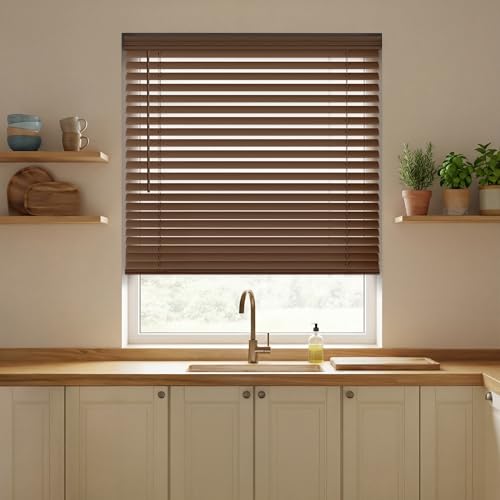
𝗣𝗲𝗿𝗳𝗲𝗰𝘁 𝗙𝗶𝘁 𝗙𝗮𝘂𝘅 𝗪𝗼𝗼𝗱 𝗕𝗹𝗶𝗻𝗱𝘀 – Blinds are ½" narrower than ordered to fit brackets (e.g., order 34" → receive 33.5"). For outside mounts, order ½" wider for full coverage. Please read sizing instructions carefully to avoid returns.

Important measuring notes - The window blind listed measures 10.5 inches wide. If you choose to inside mount, and your window frame size is between 10.875 to 11.5 in. wide this faux wood blind is recommended. A wider window and there will be more of a light gap, a more narrow window and the faux blind will likely not fit; in these cases please look at our other size options. Please view more detailed measuring instructions for inside or outside mounting within the product images section.
8. Sheer Shades
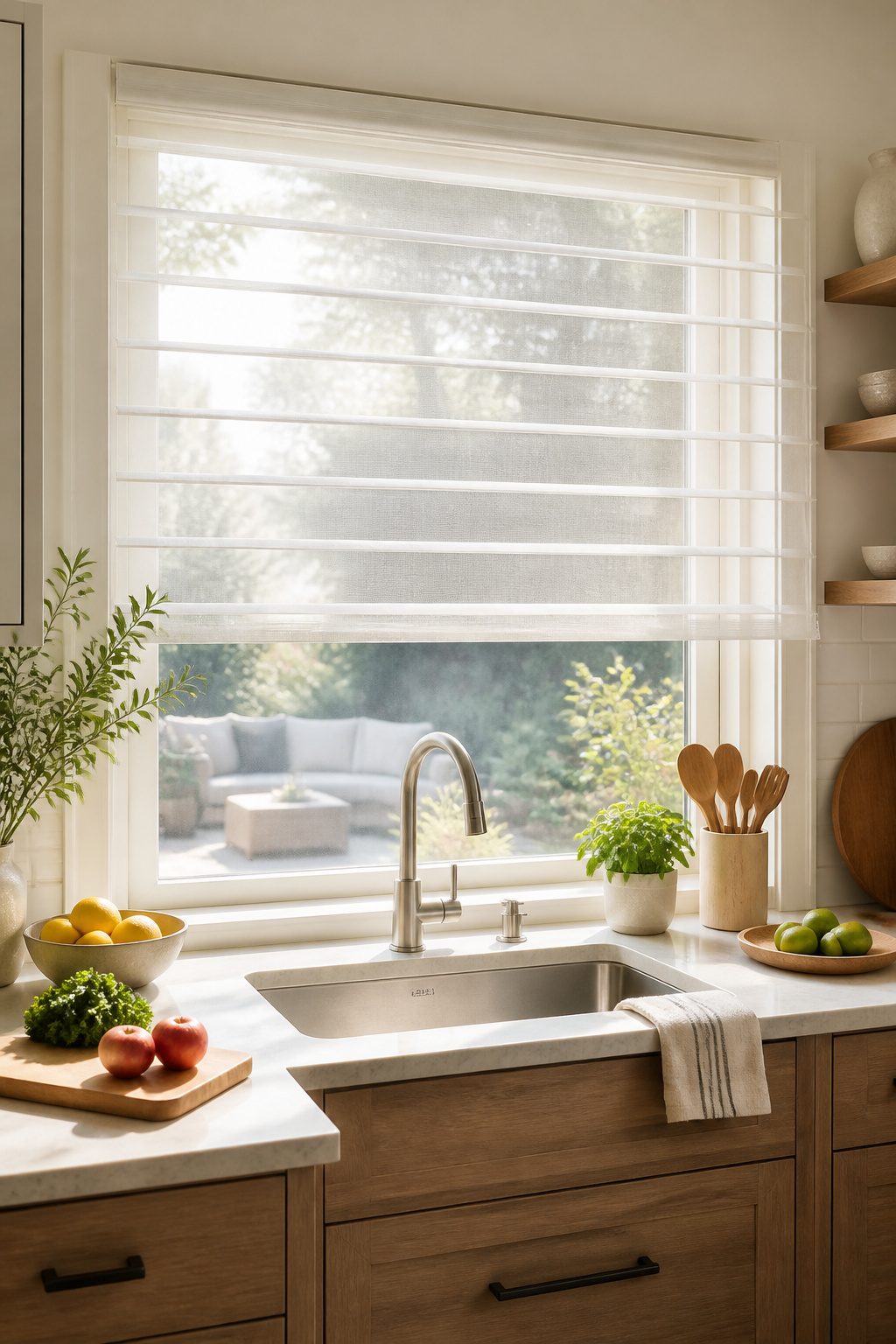
Sheer shades build a fabric vane between two sheer panels, which turns harsh sunlight into a soft glow while you still see out during the day.
The layered construction filters light rather than blocking it, and systems like the Duolite option pair that sheer front with a room-darkening roller behind it for evening privacy.
The fabric vanes, whether the S-shaped Silhouette style or the contoured Pirouette design, suspend in open air and collect whatever your kitchen air carries.
Grease settles on delicate fabric faster than you’d expect above a range, and the sheers themselves are not wipe-down surfaces.
Heat-tolerant materials like aluminum or PVC belong near burners; sheer shades do not. Mount them outside the cooking zone, or choose them for a kitchen window that faces the street rather than the stove.
Waterproof Clear Roll-Up Panel: Transparent vinyl helps keep rain, wind, splash, and dust outside while maintaining a bright view. Use it as waterproof outdoor roller shades for patio, clear vinyl roller shades, or porch blinds.
Waterproof Clear Roll-Up Panel: Transparent vinyl helps keep rain, wind, splash, and dust outside while maintaining a bright view. Use it as waterproof outdoor roller shades for patio, clear vinyl roller shades, or porch blinds.
Waterproof Clear Roll-Up Panel: Transparent vinyl helps keep rain, wind, splash, and dust outside while maintaining a bright view. Use it as waterproof outdoor roller shades for patio, clear vinyl roller shades, or porch blinds.
9. Cafe Curtains
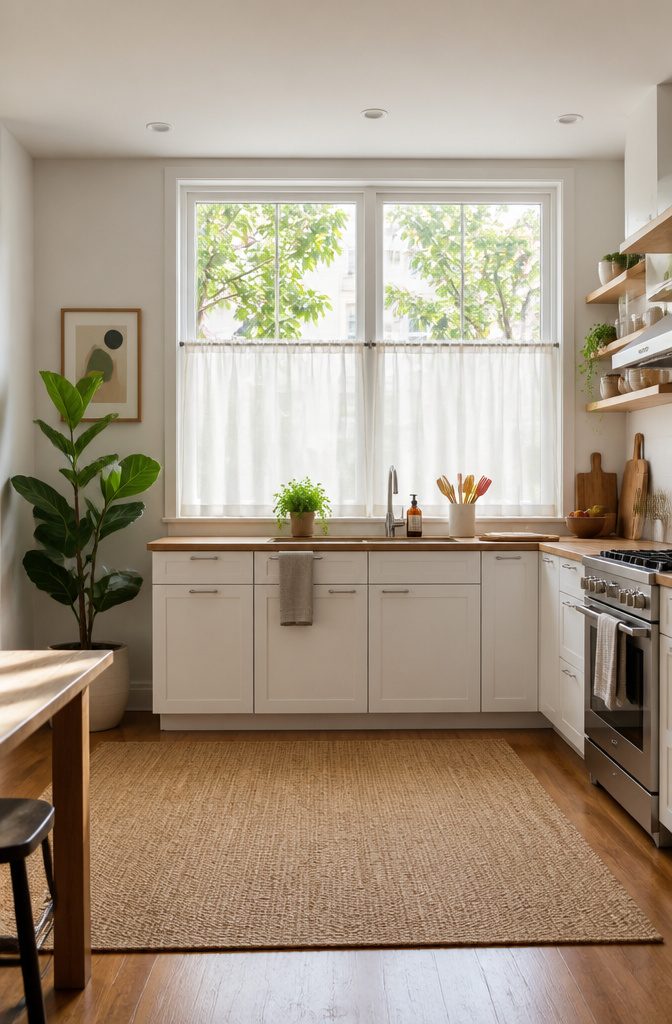
A cafe curtain hangs at the middle of the window, covering only the lower half.
The upper glass stays clear for daylight, and the street-level view into your sink disappears. The rod sits about eye level, easy to install without a ladder and simple to swap out when the fabric collects cooking grease.
This style keeps surfacing in kitchen searches even though it is not a blind at all.
It solves the same problem, privacy without a dark room, but does it with fabric that costs less and washes clean. Renters especially get the benefit: two brackets and a tension rod leave no more mark than a shower curtain.
The tradeoff is real. Cafe curtains do not block afternoon glare on a west-facing window, and they look out of place on anything taller than a standard double-hung.
For a ground-floor apartment or a window facing a neighbor’s deck, though, the partial coverage hits a balance that full blinds often miss.

【Product Details】: Blind Size: 23"W x 72"H, Fabric Size: 22"W x 72"H. Fabric is 100% blackout. Feeling soft and smooth.Note: Fabric width is 1" narrower than total width.Our cordless roller blind fabric is of high quality, more durable and fade resistant than the inferior fabrics on the market.

【Safety】Joydeco cordless roller blind providing a child-safe, pet-safe, and senior-friendly environment. The cords on corded blinds can pose a strangulation hazard to small children (and pets), so Joydeco cordless blinds and shades can bring additional peace of mind.

100% BLACKOUT & FULL PRIVACY: Our blackout roller shades feature a triple-layer design with a White backing that blocks 100% of sunlight and UV rays. Transform any room into a dark, peaceful sanctuary for uninterrupted sleep, daytime naps, or movie nights. Complete privacy protection keeps your home safe from outside view.
What Kitchen Humidity Does to Materials
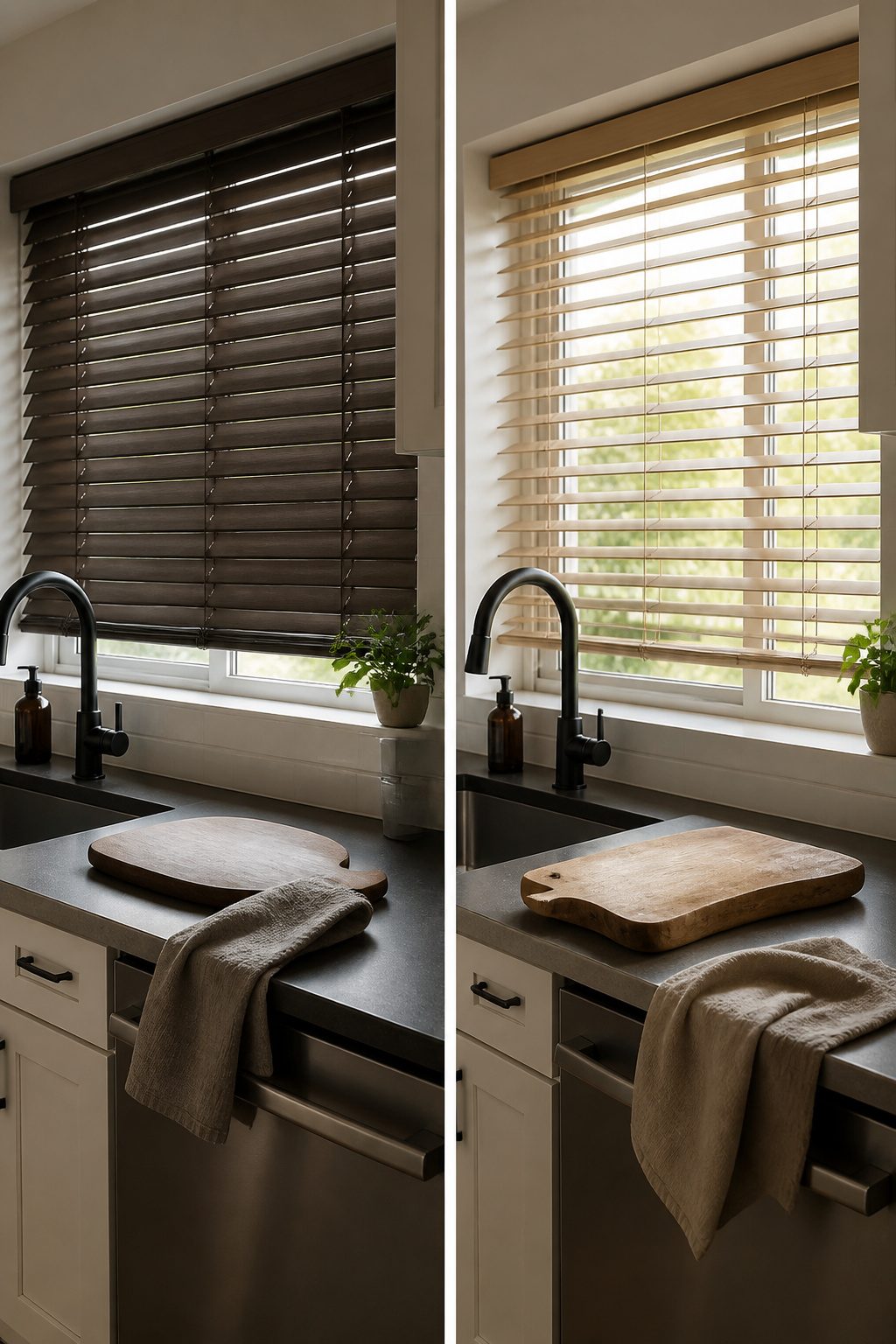
Steam from a rolling boil and grease that hangs in the air after frying bacon do not stay near the stove.
They drift to the window above the sink, cycle through hot afternoons and cold mornings, and quietly destroy materials that looked fine in the showroom.
Real wood swells and warps near the dishwasher’s vent. I have seen slats that bowed until they would not close flat, the finish checked from temperature swings.
Cheap metal corrodes where steam condenses on the headrail. Fabric absorbs cooking odors permanently; one homeowner’s shades smelled like a permanent fish fry after a year of weeknight dinners.
The materials that survive this are engineered for it. Faux wood blinds made from UV-resistant Polysatin compounds or lead-free ABS take heat, steam, and grease without warping, and they wipe clean with a damp cloth.
Composite shutters with specialized finishes resist cracking, fading, chipping, peeling, and discoloration even in extreme moisture. Aluminum mini blinds handle humidity without warping, though they lack the warmth most kitchens need.
Fabric is not automatically out.
Sunbrella, originally developed for marine environments, resists stains and moisture while still reading as soft and traditional. The difference is the finish: grease-proof coatings that let a splatter wipe off instead of soaking in.
For windows directly over the sink or adjacent to the range, the choice is between a material that tolerates abuse and one that disguises it until the damage is done.
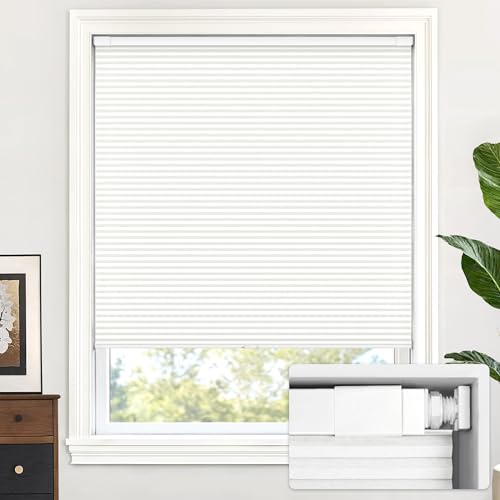
No Drill Blinds: LazBlinds patented technology No Tools-No Drill system allows installation without drilling any holes on your window frame, perfect for renters, landlords, and home buyers. Easy to install in 30 seconds. Fits all kinds of walls, like wooden walls, tile marble, concrete wall and rough tile
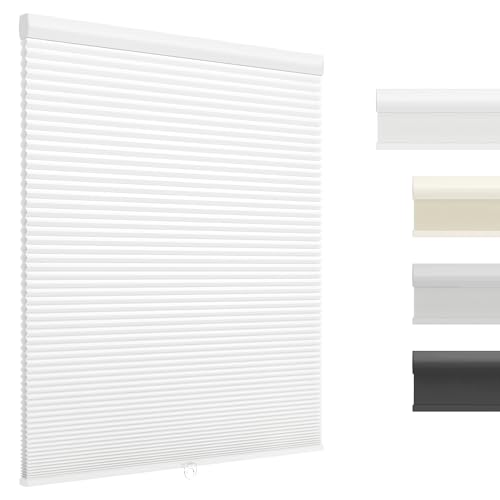
【Soft Light Filtering & Total Privacy】Experience the dual benefits of softened natural light and unwavering privacy. The special fabric of these cellular shades gently filters harsh sunlight into a soft glow, ensuring your space is filled with natural light without compromising your privacy from prying eyes.The unique honeycomb cells trap air to reduce noise and maintain room temperature, helping you save energy year-round,making them the ideal choice for modern home decor.
1【Our Strengths】Over 100 Years Window Covering Expertise (SCHOENBERGER GROUP est.1878)
Light Control by Window Location
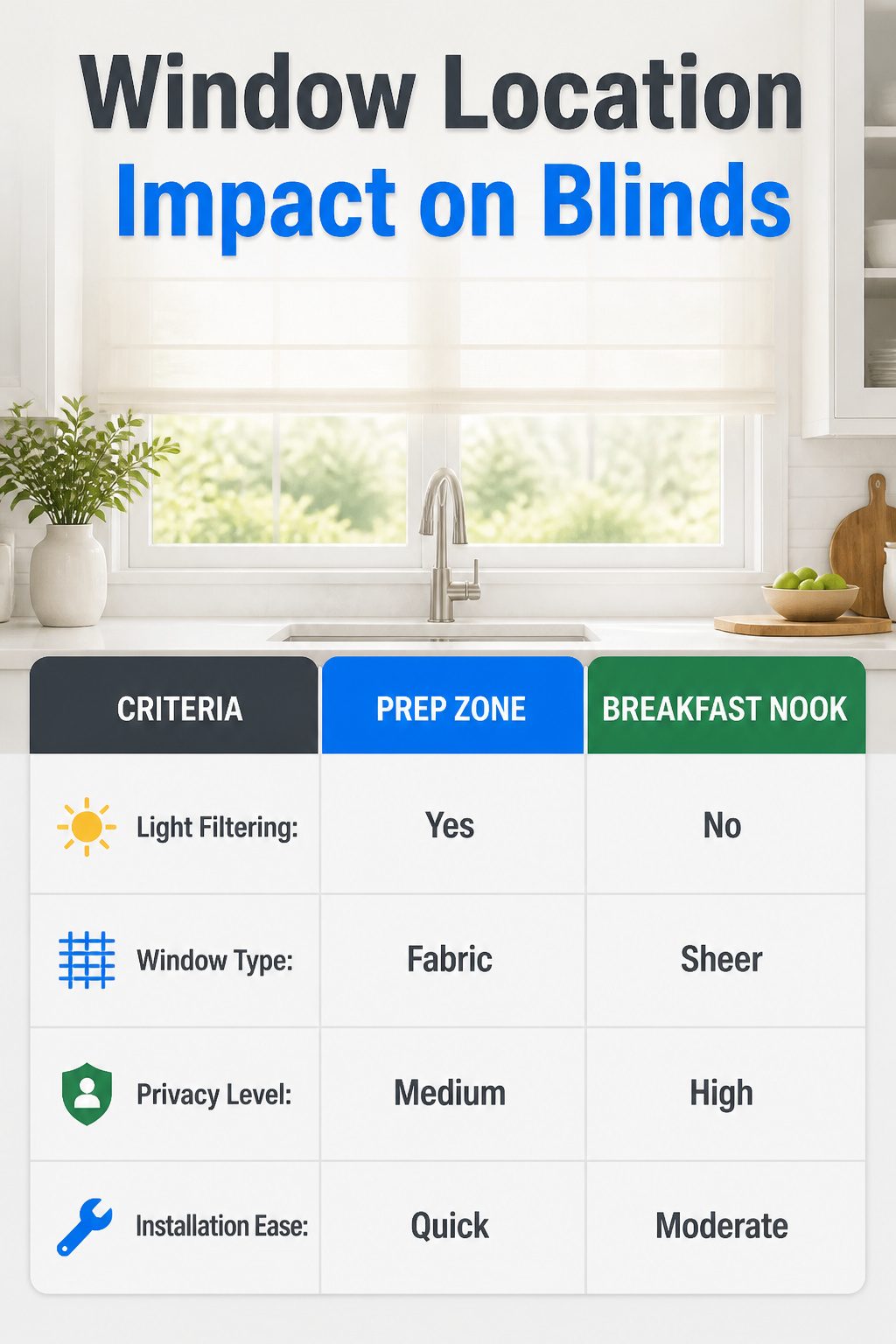
Glare across a cutting board at ten in the morning convinced me that window location dictates blind style more than any design board does.
For prep-zone windows, light-filtering fabrics in brighter hues soften the sun without killing the task lighting you actually need.
I learned that the hard way after installing a near-blackout roller above my own sink and working in what felt like a cave every afternoon.
East-facing breakfast nooks need a different approach. Sheer shadings with S-shaped vanes float filtered light inward while you read the paper, and a paired room-darkening roller behind them, like the Duolite system, handles evening privacy when neighbors’ lights come on.
Two functions, one housing, no extra wall clutter.
South and west windows in eat-in kitchens are where afternoon sun becomes hostile.
Roman shades or woven woods layered with drapery side panels give you a dial, not a switch: sheers for glow, panels drawn for full blackout when the glare hits the table.
Skip the layered look only if you never use that space after lunch.
Cordless and Motorized Options
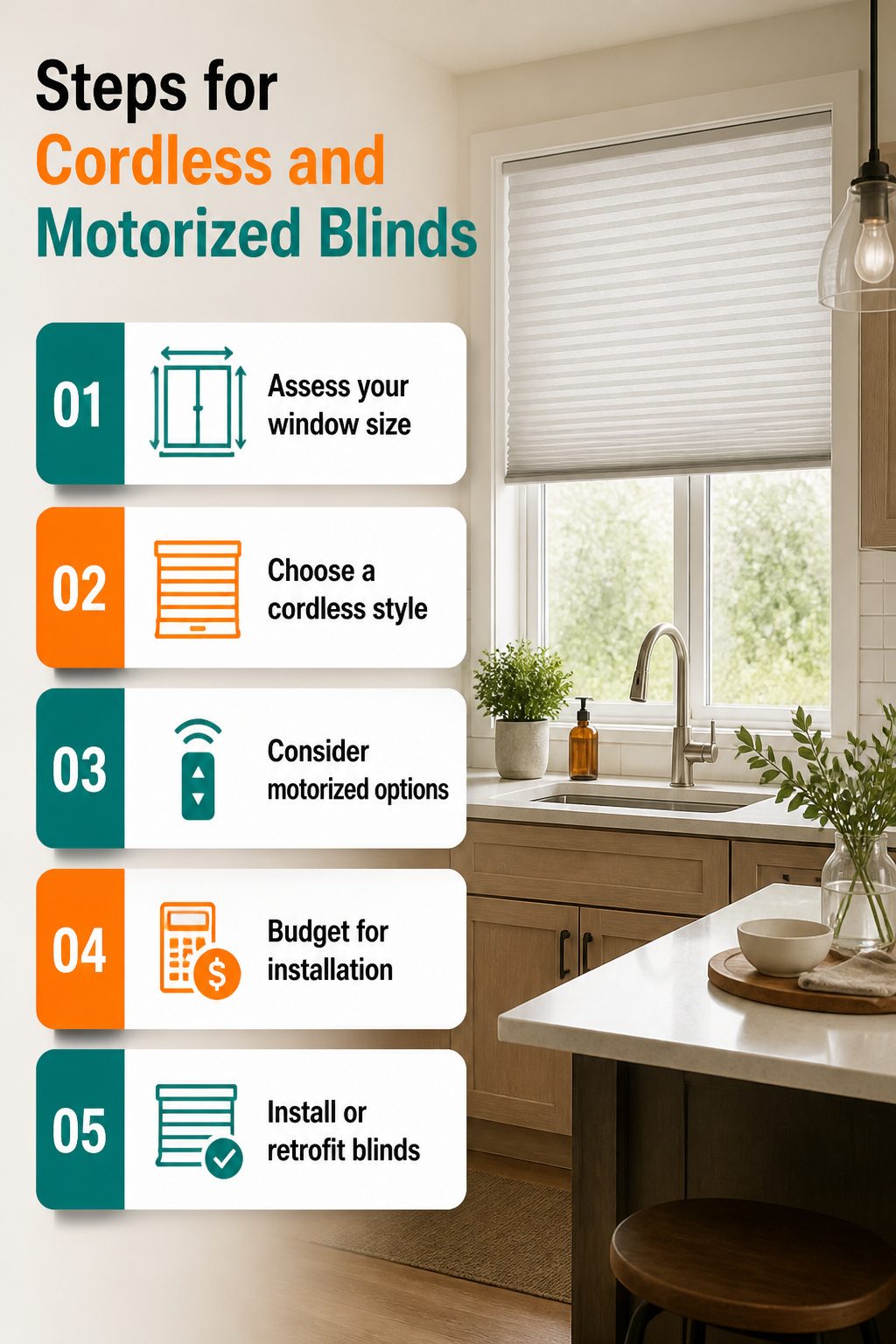
Dangling cords in a kitchen are a hazard most people notice too late.
A looped cord near a window over the sink sits at exactly the height a toddler reaches while climbing a step stool, and pets tangle in them with the same result.
Cordless lift systems replace that risk with a simple push or pull along the bottom rail; the internal spring or tension mechanism does the work without anything hanging free.
Motorized control moves that same idea one step further. The sources describe integration with smart home setups and voice commands, which matters when your hands are covered in dough or grease.
What that actually costs depends on the brand and the size of the window, but the upgrade is not entry-level pricing; budget for it as a separate line item if you are already near your ceiling.
Of the nine styles in this list, faux wood blinds, roller shades, cellular shades, Roman shades, and sheer shades all offer cordless builds.
Motorized lifts are most commonly found on roller and cellular shades, where the tube or honeycomb structure accommodates the motor cleanly.
Aluminum mini blinds and woven wood shades can be harder to find with full motorization, and vertical blinds still tend toward wand or cord operation unless you go custom.
Cleaning Each Type Without Damage
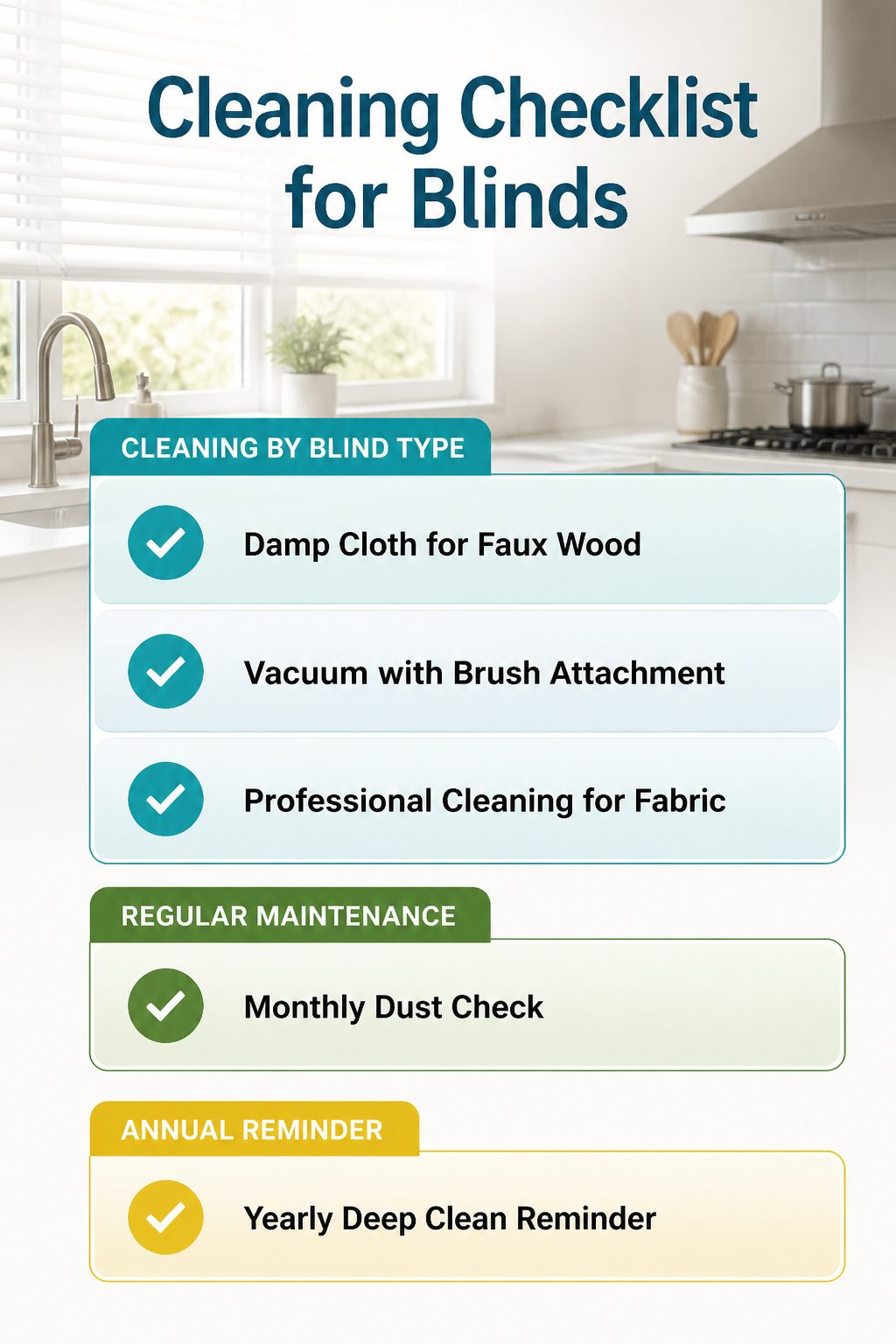
Faux wood and aluminum blinds near the sink or stove wipe clean with a damp cloth, which is about all the attention they need.
The same cloth handles grease and steam without much drama, and the slats stay flat and un-warped through it.
Cellular shades and Romans collect dust differently.
A vacuum with a brush attachment, run lightly over the fabric face, keeps them presentable between deeper intervals. I do this monthly in my own kitchen, though "monthly" really means when I notice the dust catching afternoon light.
Fabric shades, including woven styles, are the ones that change the math. Professional cleaning is the safe path for anything that absorbs kitchen grease rather than shedding it.
Yearly is the interval I plan for, and the one I stretch when the budget tightens. The real cost of a Roman or woven shade is not the install; it is the cleaning bill you will pay to keep it.
Smart Blinds and What They Cost to Add

Motorized blinds have dropped enough in price that they are worth considering for a kitchen you actually use.
The premium over manual runs about $80–150 per window if you buy smart from the start, or $50–100 for a retrofit kit on existing roller shades or aluminum blinds.
Retrofit works best on roller styles; the tube motor slips inside without fighting headrail geometry. Roman shades and faux wood blinds fight you on space and weight, so smart from the factory makes more sense there.
Voice and app control through Alexa or Google Home are standard now, not luxury tier. What sold me, reading through the options, was scheduling: east-facing windows can close at 10 a.m. automatically, before the room turns into a greenhouse.
Battery motors last roughly a year in daily kitchen use; hardwired is cleaner if you are already replacing cabinets and have the wall open.
Frequently Asked Questions
What are the best window treatments for a kitchen window over the sink?
Faux wood blinds and roller shades are the top choices for windows above the sink.
Faux wood handles steam and splashes without warping, and you can wipe it clean with a damp cloth. Roller shades, especially vinyl ones, also survive the moisture and grease that concentrate in that spot.
How do you clean kitchen blinds and shades?
Wipe faux wood and aluminum blinds with a damp cloth; grease and steam come off without much effort.
For cellular and Roman shades, run a vacuum with a brush attachment lightly over the fabric monthly. Fabric shades like woven wood or Roman styles usually need professional cleaning once a year to handle absorbed kitchen grease.
Are shutters or blinds better for a kitchen?
Blinds win for flexibility and ease of maintenance in most kitchens. They tilt open or closed, lift out of the way, and materials like faux wood or aluminum wipe clean near sinks and stoves.
Shutters read more permanent and cost more, though composite shutters with specialized finishes do resist cracking, fading, and moisture damage if you prefer that look.
What type of blind or shade should I put in my kitchen?
Faux wood blinds or roller shades are the safest default for most kitchens.
Both resist humidity, handle splatter, and clean easily. Choose faux wood if you want tiltable slats for light control, or a vinyl roller shade if you prefer a flat profile that nearly disappears when raised.