Your cat’s habits decide the setup, so watch for the specifics: climbing, stretching from the sofa, swatting at shiny things, chewing needles or scratching the trunk.
A cat that chews points to a fake tree, and one that climbs needs a base that is stable on day one; the Cat-proofing Tips and Common Cat Behaviors sections cover both.
1. Cat-proofing Tips
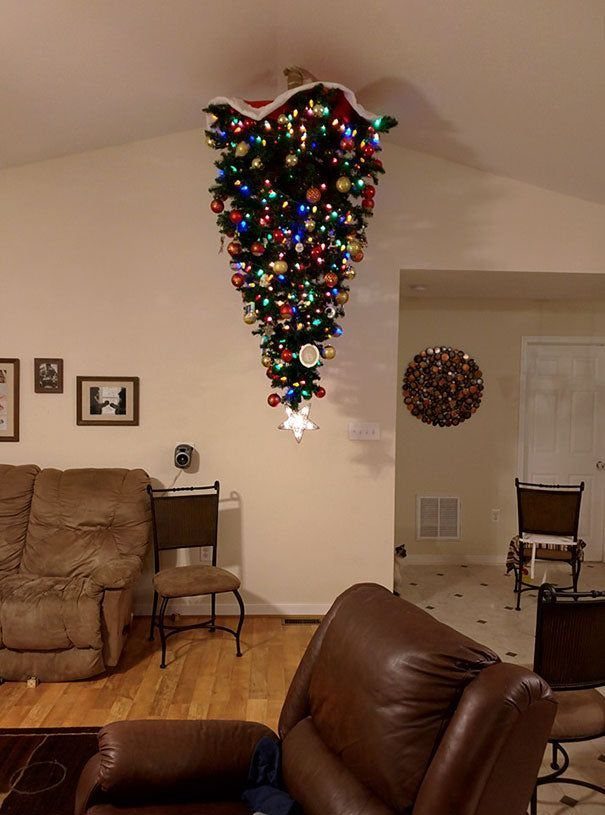
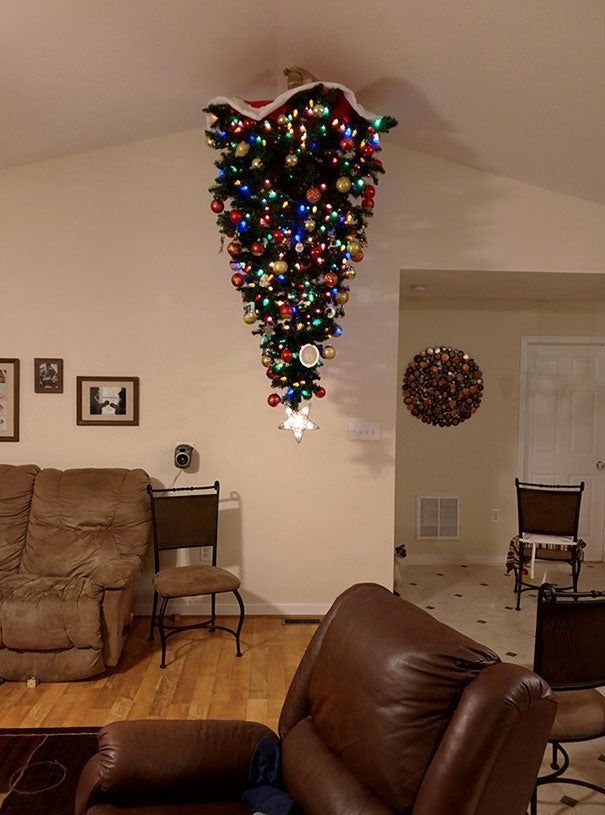
Hanging the tree upside down from the ceiling takes it off the floor, and a cat has nothing to climb or tip.
A smaller tree on a sturdy table or stand is the strongest cat-proofing move here, and a room can still look decorated and intentional with it.
Anchor it to a ceiling joist, not drywall alone, since a full tree pulls hard.
Expect to trade away the usual look, and the top-heavy branches will swing, so keep ornaments light and low-risk. A cat can still leap at the lower tips, so test it for a day before you add everything.
2. Cats Stretch Against the Tree
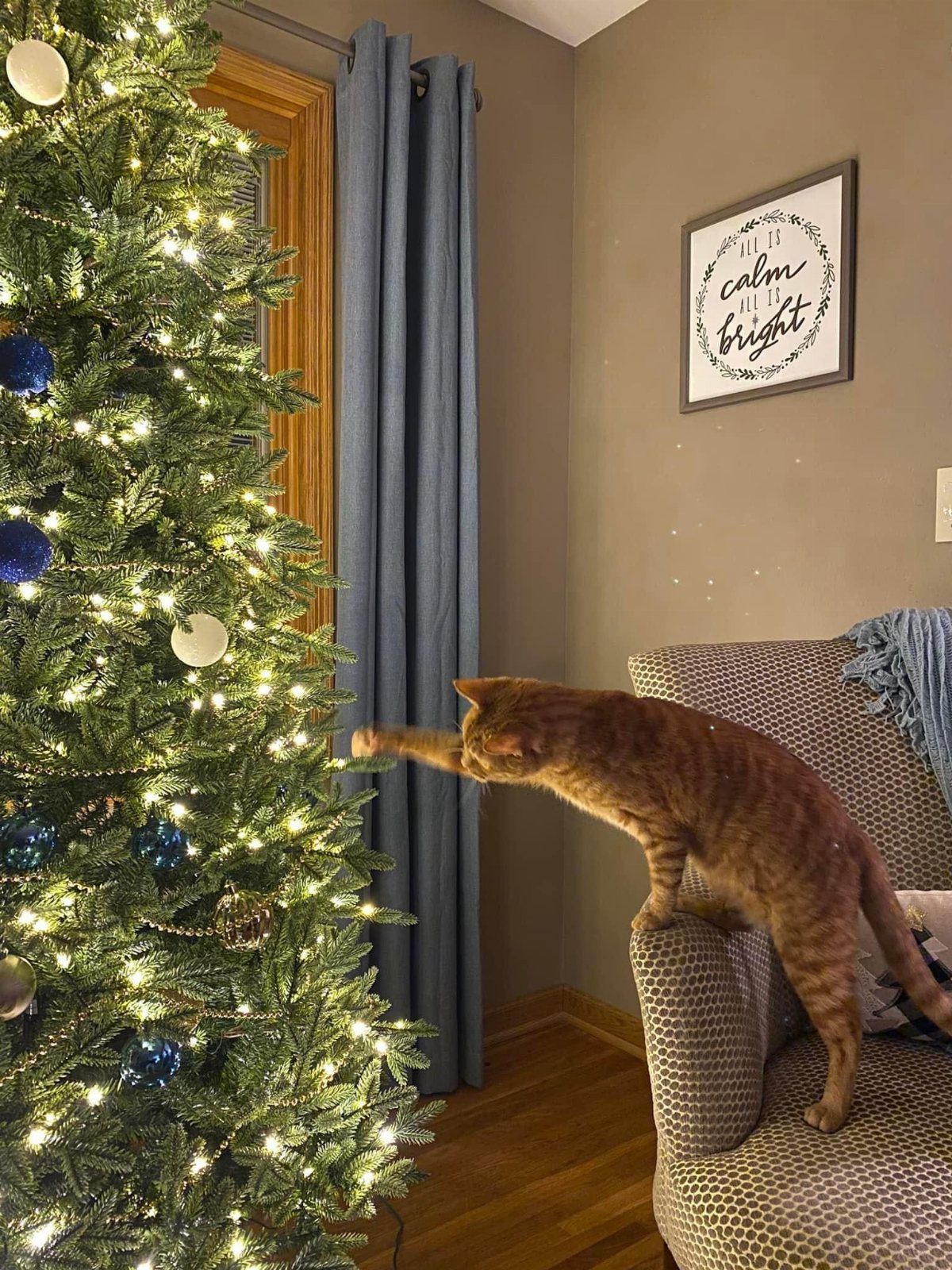
Stretching is how most cats test a tree: they reach from a chair or sofa and tap whatever hangs at paw height.
A tree beside the sofa makes that easy, since a cat can reach it from the cushions without a running jump.
Move the tree a couple of feet from any furniture so the cat can’t reach it without jumping.
Keep the lowest branches bare, or hang only soft felt or wooden ornaments there. Glass and tinsel belong higher up, since a paw swat can send them flying or into a mouth.
3. Cat with Tree
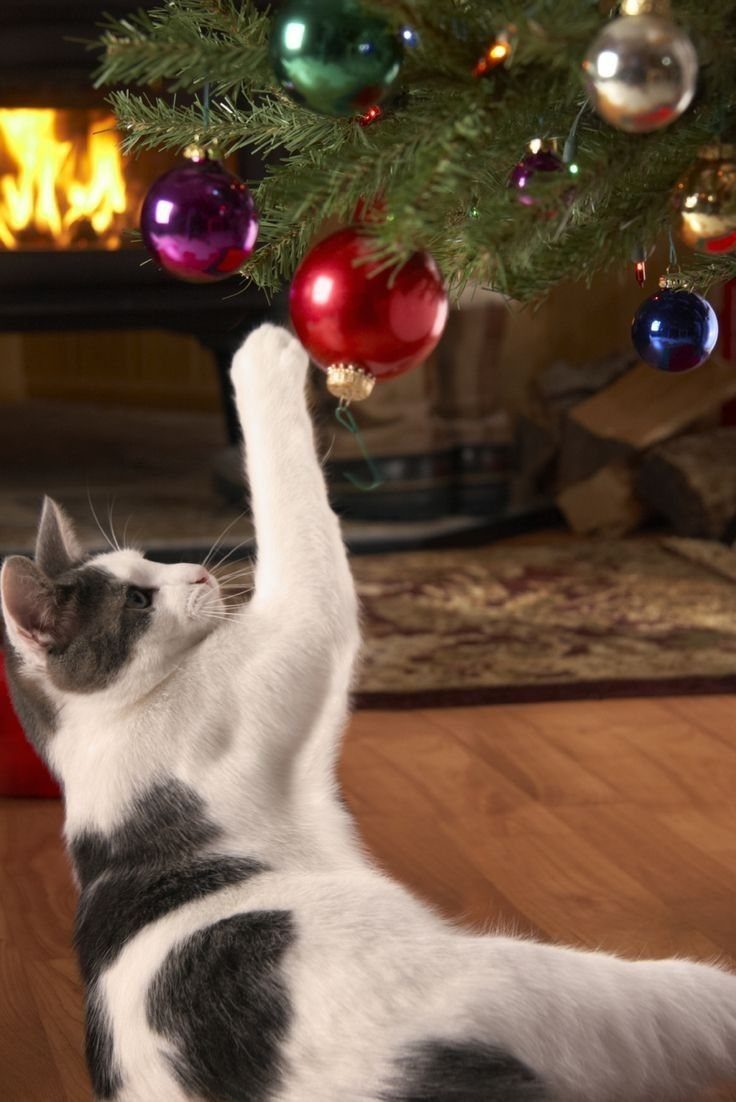
Reaching for one shiny red ornament is classic cat behavior, and the swinging, reflective ball is what draws them in.
I would give them a decoy: hang a few unbreakable ornaments on the bottom branches and keep the glass ones higher.
A tree near a fireplace also sits over a hard hearth, so a topple means a drop onto brick or tile, and glass ornaments will not survive it.
Place a rug or keep the base surrounded, so a tumble or a knocked ornament doesn’t land on stone.
For cats, the tree might be the most tempting play toy at Christmas.
Cats and Christmas Trees
Climbing is instinct for a cat, so plan for some trips up the trunk instead of hoping to prevent every one. A tree that is safe when it gets climbed beats a tree that only works if the cat behaves.
Choose a fake tree if your cat chews things. Pine needles can cause serious health problems when swallowed, and a realistic artificial tree can come out of storage year after year with no risk.
String the lights closer to the trunk than the branch tips, since wires deep in the tree are harder for a cat to reach, and slip the plug end into a cord cover.
If a cat keeps going after the wires, take the lights off; burns and electrocution are not worth the look.
Skip real candles, small ornaments and fake snow made with harmful chemicals. Keep chocolate, mistletoe, lilies, poinsettias and amaryllises in a room the cat can’t enter.
Social Media Trends
Cats in Christmas trees are a December staple online, and the clips tend to end the same way: the tree goes over with the cat still in it.
Set the tree up and secure it before you hang anything. A cat can be in the branches within seconds of the tree going up, so the base needs to be stable on day one, not after decorating.
Take your photos while the cat is calm and supervised. If your cat does climb, lift it out and don’t wait for the wobble to turn into a fall.
Common Cat Behaviors
If your cat scratches the tree trunk or branches, it is probably marking territory. Scratching leaves a scent claim, which is instinct, and a brand-new object in the house is exactly what a cat wants to claim.
Give that urge a better target. Put a scratching post near the tree, and rub it with something familiar so it smells like home.
Scolding rarely works on instinct. Redirecting does, so reward the cat when it uses the post instead.
Frequently Asked Questions
How to get a cat out of a Christmas tree?
Lift the cat out calmly instead of waiting for the tree to wobble into a fall.
Placing the tree 2–3 feet from any sofa, chair or shelf also helps, since a cat that has to make a real leap will often skip it.
Anchoring the base and placing the tree in a spot the cat tends to avoid also help.
Is it safe for cats to be around Christmas trees?
It can be, but only with precautions.
Pine needles are rough on a cat’s stomach if chewed and swallowed, so an artificial tree is the safer choice for a nibbler. Leave out open flame candles, tiny ornaments, tinsel and spray snow that contains harsh chemicals.
Why does my cat scratch the Christmas tree?
Most likely it is marking territory. A cat scratches to leave its scent, and a new object in the living room is an obvious target.
What is the best way to cat-proof a Christmas tree?
Setting a small tree on a heavy table or stand works best, and an upside-down tree hung from the ceiling clears the floor altogether. Both setups leave a cat with nothing to climb and nothing to knock over.