
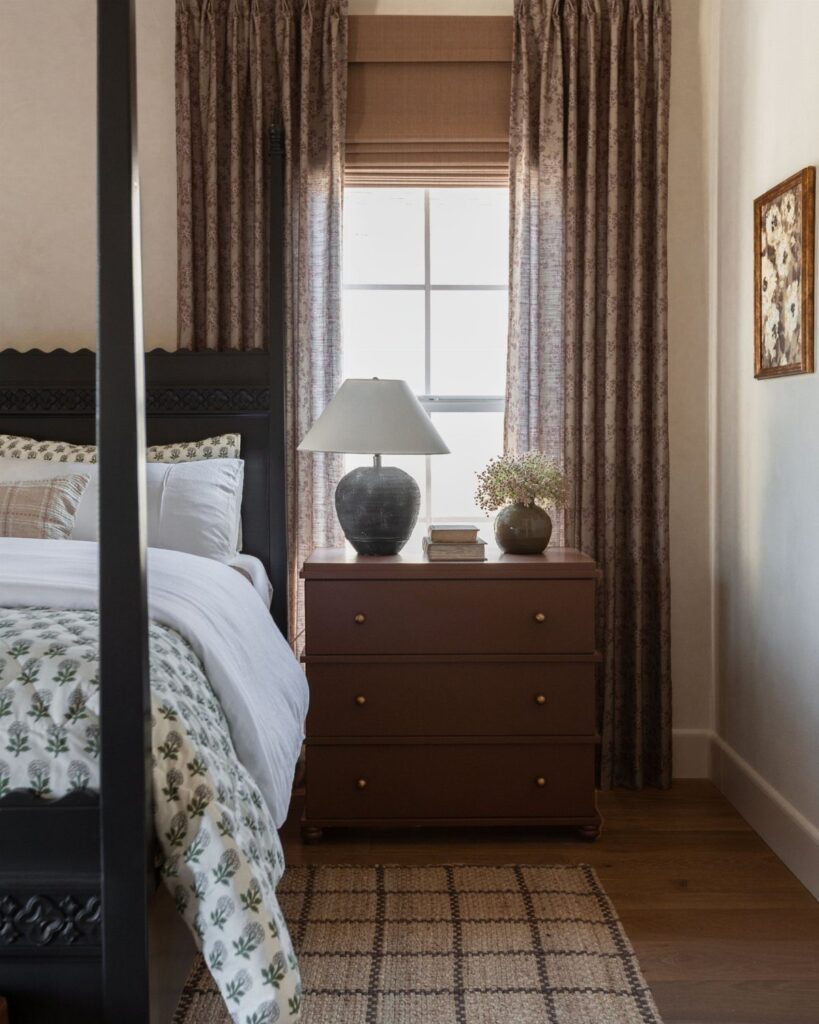
These 8 pairings run from a simple neutral-on-neutral setup you can finish on a Saturday to a layered valance-and-shade combination that needs a second set of hands and a staple gun.
The right one depends on whether your shade sits inside the frame or covers it, because that mount decides your rod placement and your curtain width before you buy anything.
Woven wood shades with real grain and an optional liner are my pick for east- or west-facing bedrooms where you need to block sunrise without losing the texture.
1. Functional Layering
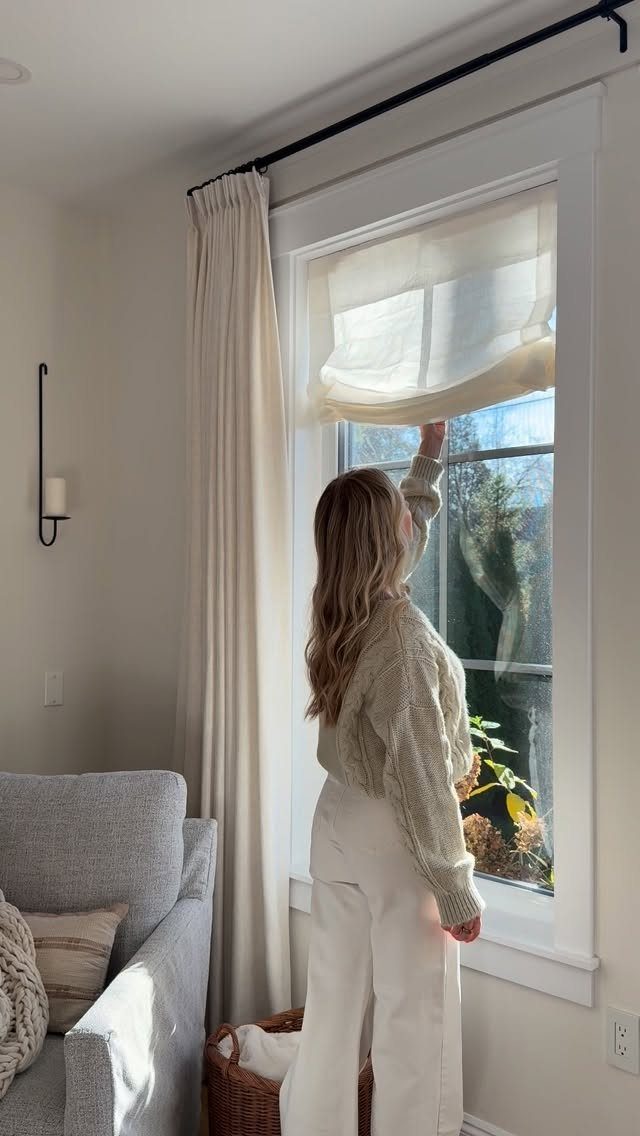
A translucent Roman shade gives you privacy without killing the daylight, and floor-length drapes on either side add the softness a bare window lacks.
I like this setup for bedrooms or living rooms where you want both options within reach: pull the shade down for filtered light during the day, draw the curtains across at night for full coverage.
The drapes also frame the window visually, which helps if your shade sits inside a plain, builder-grade frame.
2. Inside-Mount Roman Shades and Outside-Mount Curtains
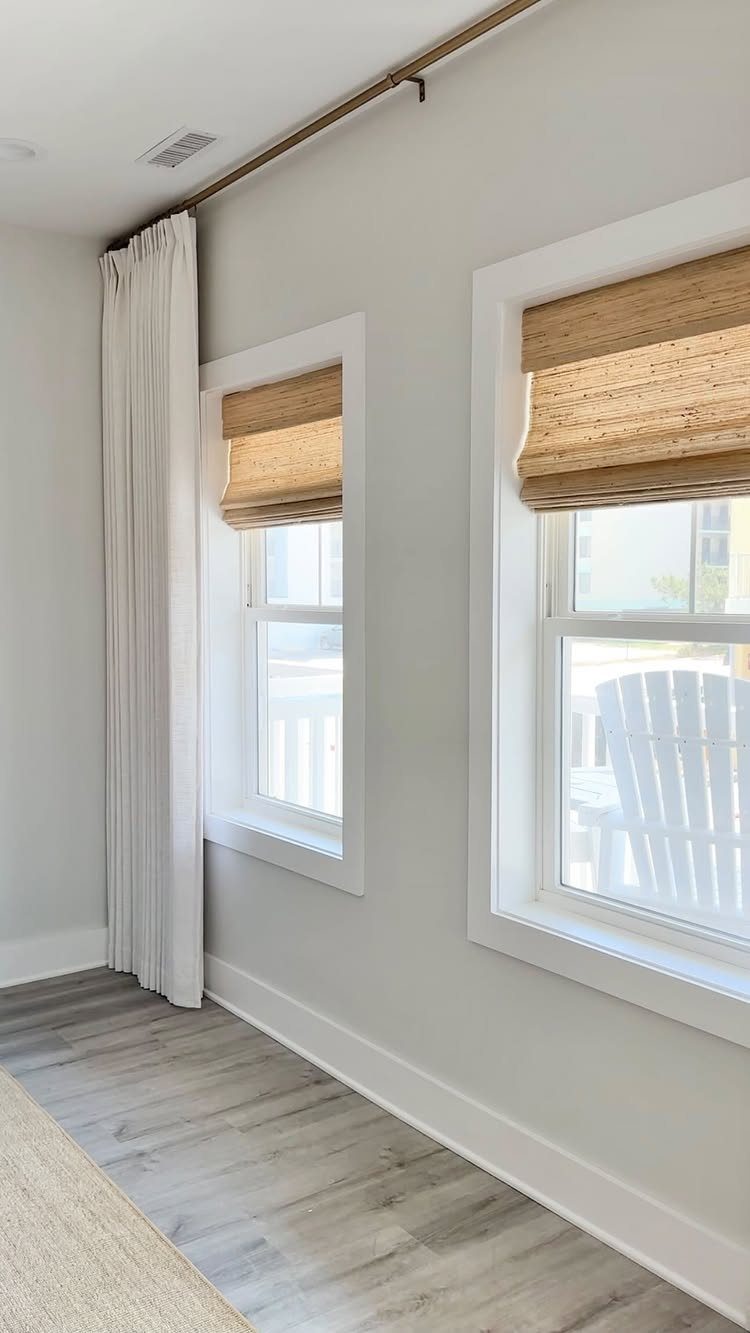
Inside-mount shades sit flush with the window frame, so the wall stays clean for an outside-mount rod hung above and past the edges.
I reach for this pairing when the window itself is nothing special, because the curtain rod draws the eye upward while the shade handles the practical work at the glass.
Woven shades in particular need that inside mount; their bulk stacks high, and an outside mount would push the curtains out too far.
Keep the rod above the frame, higher still if you want the ceiling-height effect. The curtains hang straight and flat, the shade does its job without interference, and the window reads as larger than it is.
3. Linen Roman Shades with Curtains
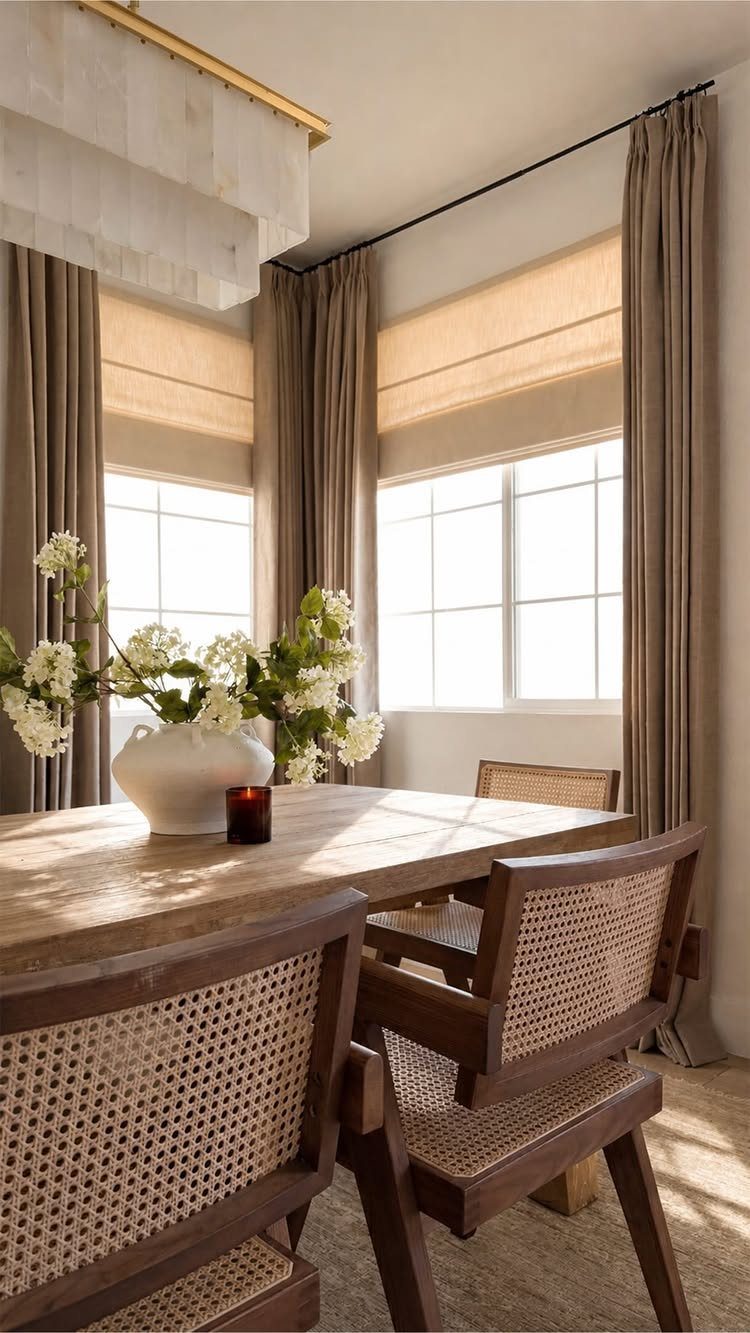
Linen wrinkles. That is not a flaw; it is the material’s character, and it softens a dining room where stiff perfection would feel wrong.
I would choose a medium-weight linen shade with enough body to fold cleanly when raised, paired with heavier linen drapes or a linen-blend curtain that pools slightly on the floor.
Beige with taupe works when both pieces share the same slubbed texture; the match reads as tonal rather than mismatched.
If your walls are white, this is an easy way to add warmth without introducing a color you will tire of. Budget a few yards of medium-width fabric per panel for standard-height windows.
4. Roman Shades with Sheer Curtains
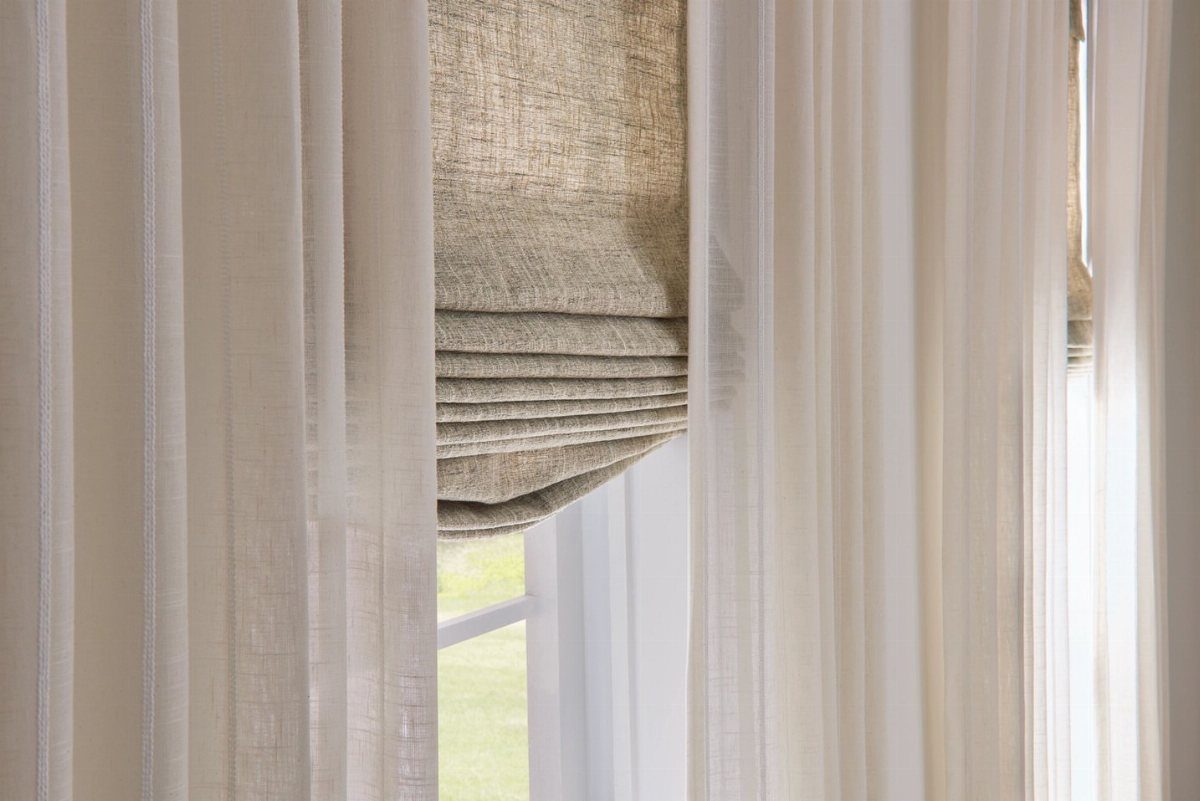
Sheer curtains in front of a Roman shade solve the problem of a window that faces a neighbor or a street.
The shade gives you full coverage when lowered; the sheers stay in place to blur the view and scatter light even when the shade is up.
I find this most useful in rooms where you want brightness but not exposure, like a ground-floor sitting room or a bathroom with a large window.
Choose a sheer with some weight to it, not the flimsy kind that blows into the room when the heat kicks on.
A rod pocket or back-tab hangs cleaner than grommets here, since the sheers stay mostly stationary and the hardware shows through.
5. Valances Above Roman Shades
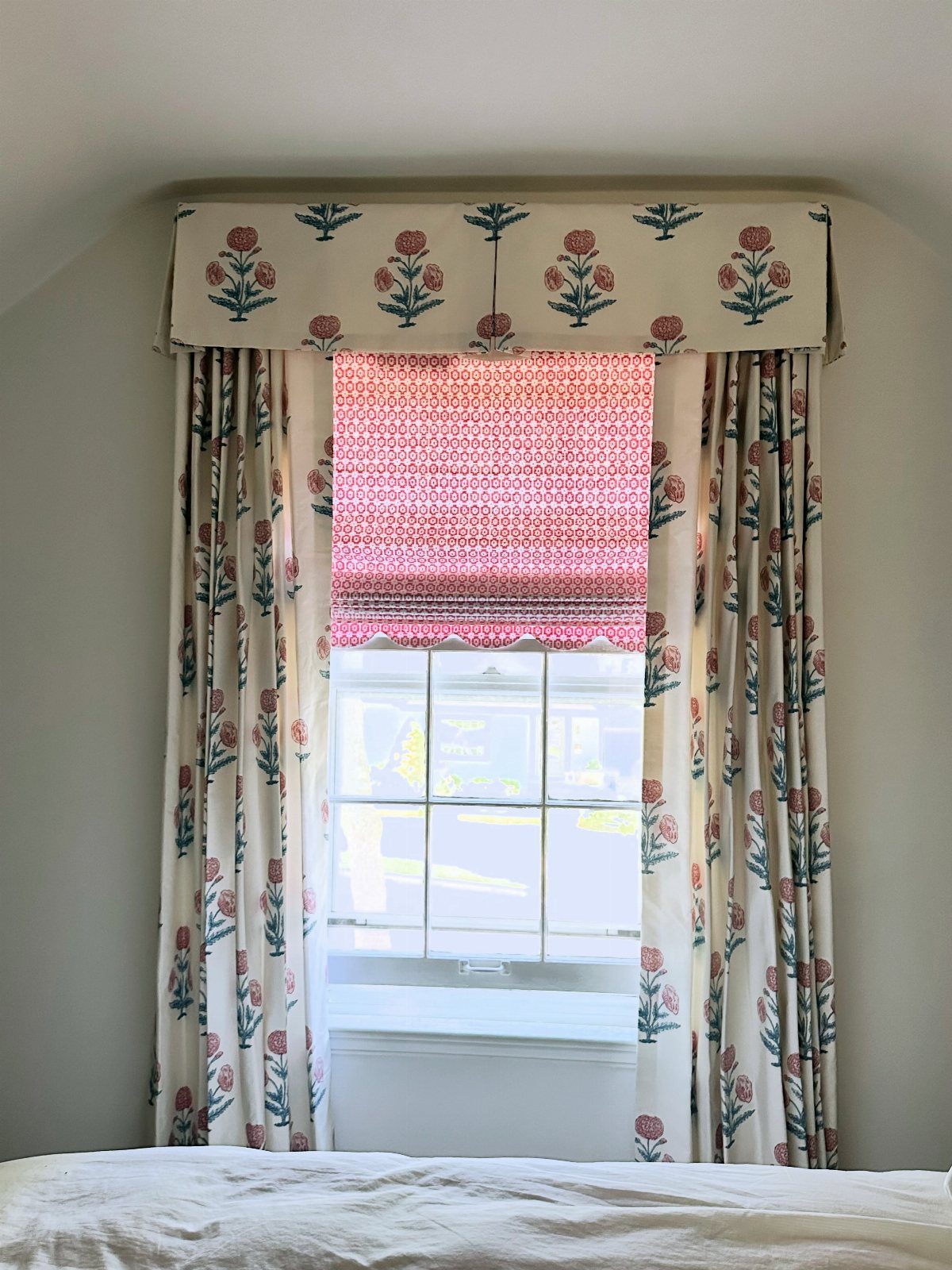
A valance adds height and pattern without the cost of full upper panels, and it lets you carry a print across the whole treatment even when the Roman shade carries its own.
A scalloped hem on the shade picks up a decorative shape somewhere else in the room, the kind of detail that makes this look intentional rather than accumulated.
I would keep the valance shallow or it competes with the shade below. Mount it on a board rather than a rod if you want that crisp, tailored header.
This approach suits rooms where you want a traditional layer of detail, guest bedrooms or a formal front room that does not get daily hard use.
6. Woven Wood Shades with Curtains
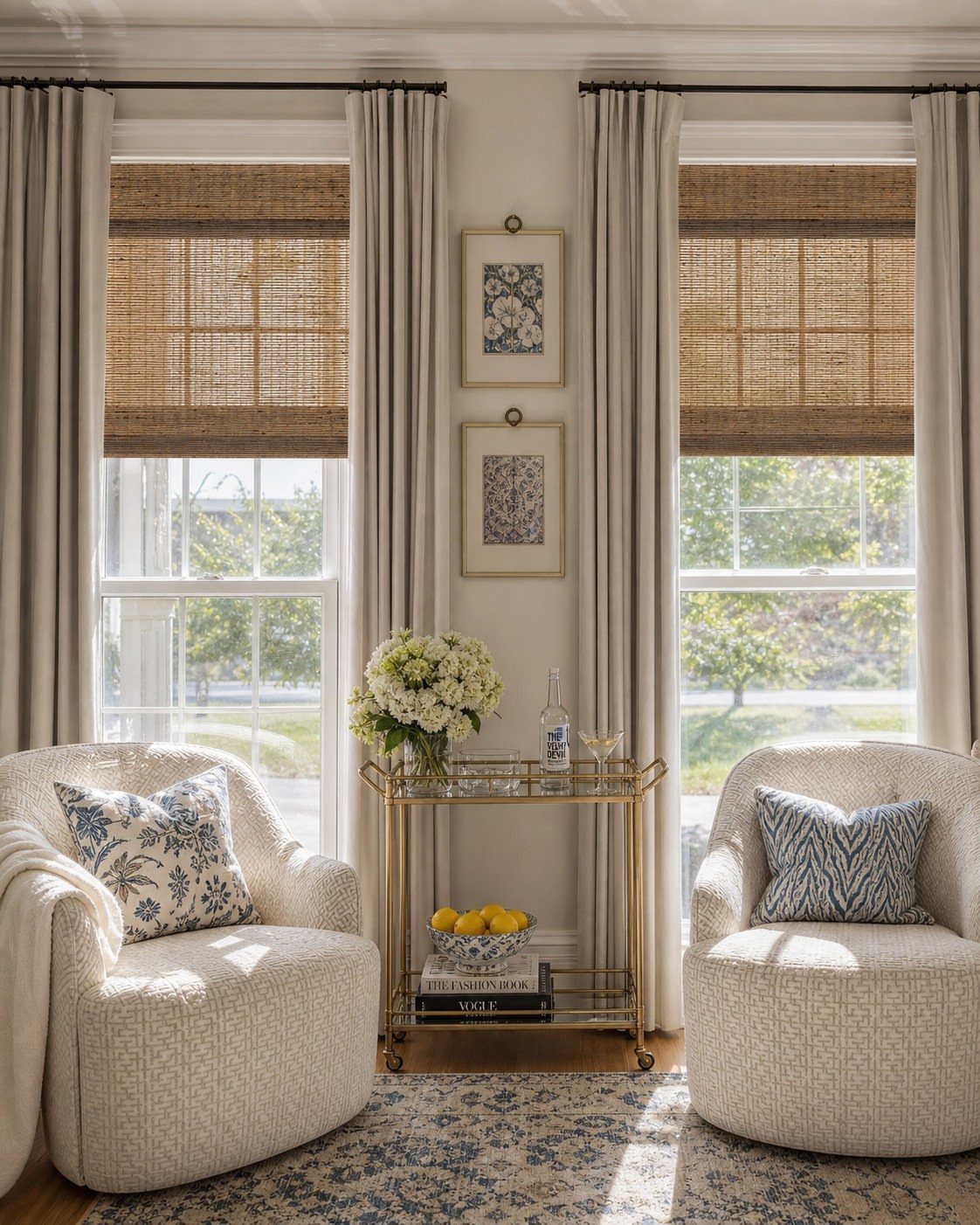
Woven wood brings in texture that flat fabric cannot match, and it pairs naturally with simple cotton or linen curtains because the contrast is already doing the work.
I would keep the curtains solid and neutral so the shade’s grain stays the point.
These shades vary in weave tightness; a looser weave filters light and shows more of the material’s character, while a tighter one gives more privacy at night.
Real woven material costs more than a basic cellular or roller shade, and you will want a liner if the window faces east or west and you sleep past sunrise.
7. Patterned Drapes with Neutral Roman Shades
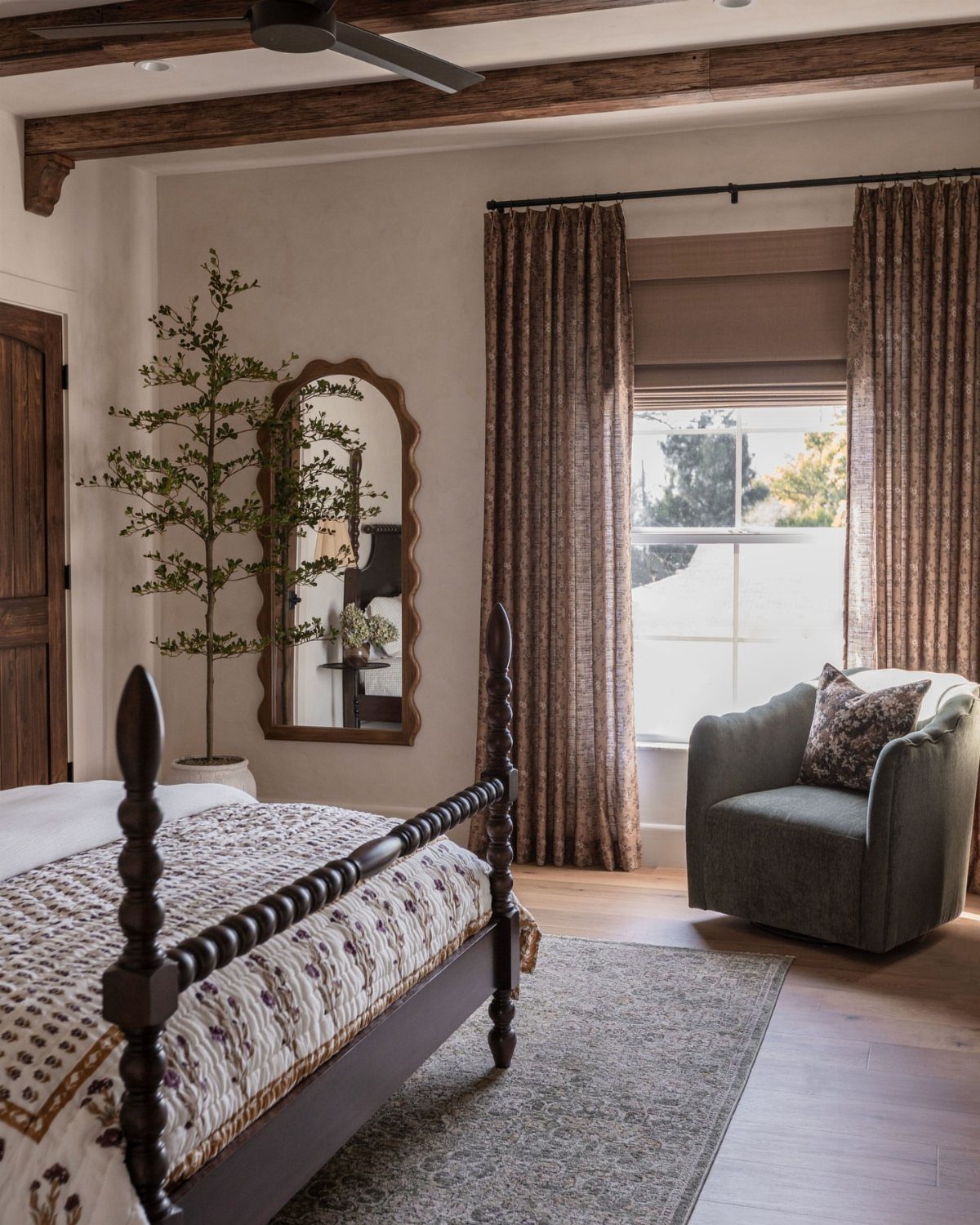
A solid tan or brown Roman shade quiets the window enough that the drapes can carry the pattern without fighting for attention.
I would choose a small-scale print, something geometric or botanical in 2 tones, because a busy pattern at eye level can shrink a room.
The shade stays neutral and flat; the curtains do the visual work.
This suits renters who want personality without committing to wallpaper or painted trim. Keep the rod simple, dark metal or unfinished wood, and mount it wide enough that the open drapes stack clear of the shade.
8. Monochromatic Neutral Shades and Curtains
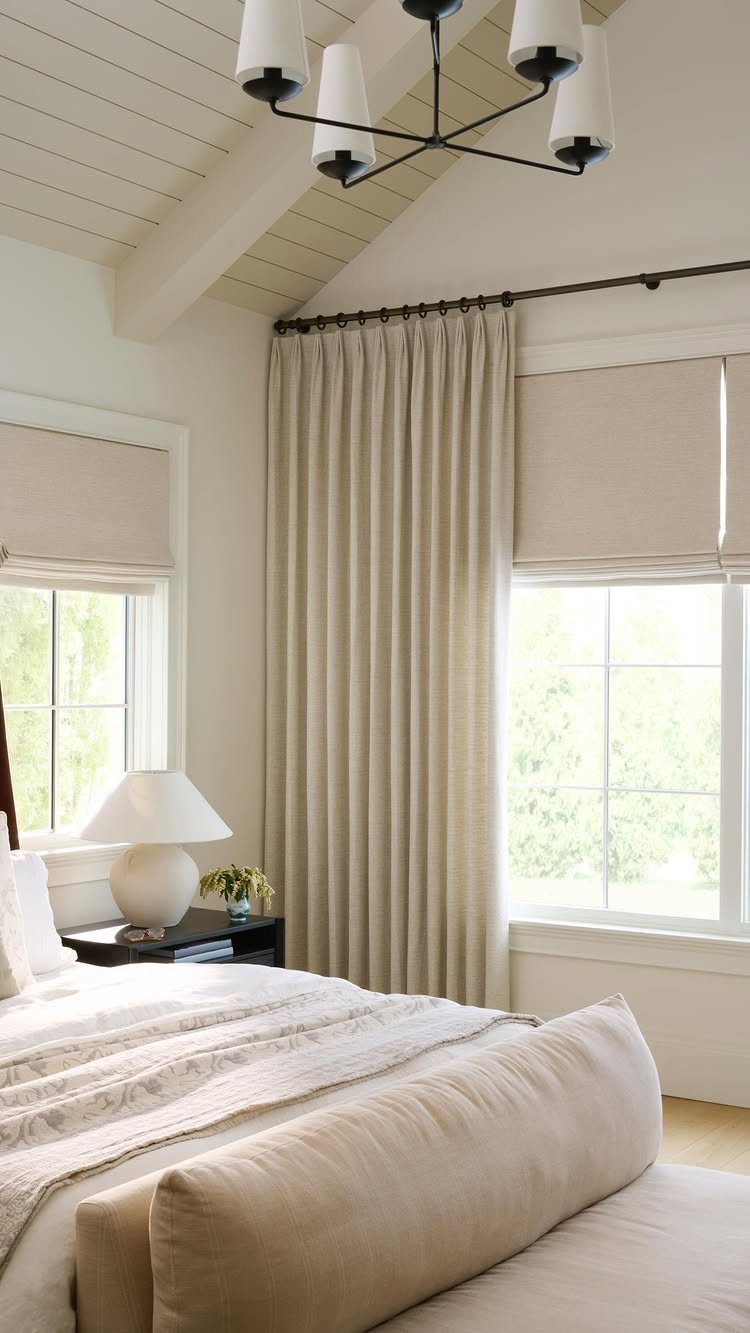
Matching beige on beige reads as texture rather than contrast, which makes a room feel larger and calmer. The dark rod here keeps the treatment from floating away against pale walls; I would not skip it.
Pleated curtains with a flat Roman shade give you two different fabric behaviors at the same window.
The shade folds crisply when raised, the curtains fall in vertical lines, and both read as one quiet layer. This is the least risky pairing for a first project, and it photographs well if you are staging to sell.
Frequently Asked Questions
What is a Roman Shade for windows?
A Roman shade is a fabric window covering that folds into horizontal pleats as it is raised. Flat fold shades stack into crisp, panel-like layers; relaxed fold shades drape with a curved bottom edge.
The style you choose affects what curtains pair best with it, since a structured flat fold reads differently against drapes than a casual relaxed fold.
Can you put Roman shades and curtains on the same window?
Yes, and it works when you give each layer a specific task instead of letting them fight for the same one.
The shade sits at the glass to block light and give privacy; the curtains sit wider to soften the edges and frame the opening.
What are some common problems with Roman blinds?
Roman blinds stack high when raised, which can block part of the view; they also lack the side coverage that curtains provide, so light leaks around the edges.
Adding floor-length curtains solves both issues: the drapes frame the window to hide the stacked bulk and draw across at night for full blackout.
Should the Roman shade or the curtains have the pattern?
Pattern the layer that stays in view, and leave the other one solid.
A warm tan or brown shade stays quiet while patterned drapes do the work; I pull that solid from a tone already in the print so they relate without trying to match.
What is the best fabric for pairing with Roman shades?
Linen is the most versatile choice: it wrinkles in a way that reads as character, not mess, and its weight works for both shades and curtains.
Avoid pairing two heavy fabrics or two sheer ones; the contrast in weight is what makes the layering work.
How high should I hang the curtain rod?
Mount the rod at least 4 to 6 inches above the window frame, and higher if you want the ceiling-height effect.
The shade sits inside the frame doing its practical work; the rod draws the eye upward and keeps the curtains from crowding the shade’s stack.
Wider is better too: extend past the casing so the open panels sit completely off the glass.





