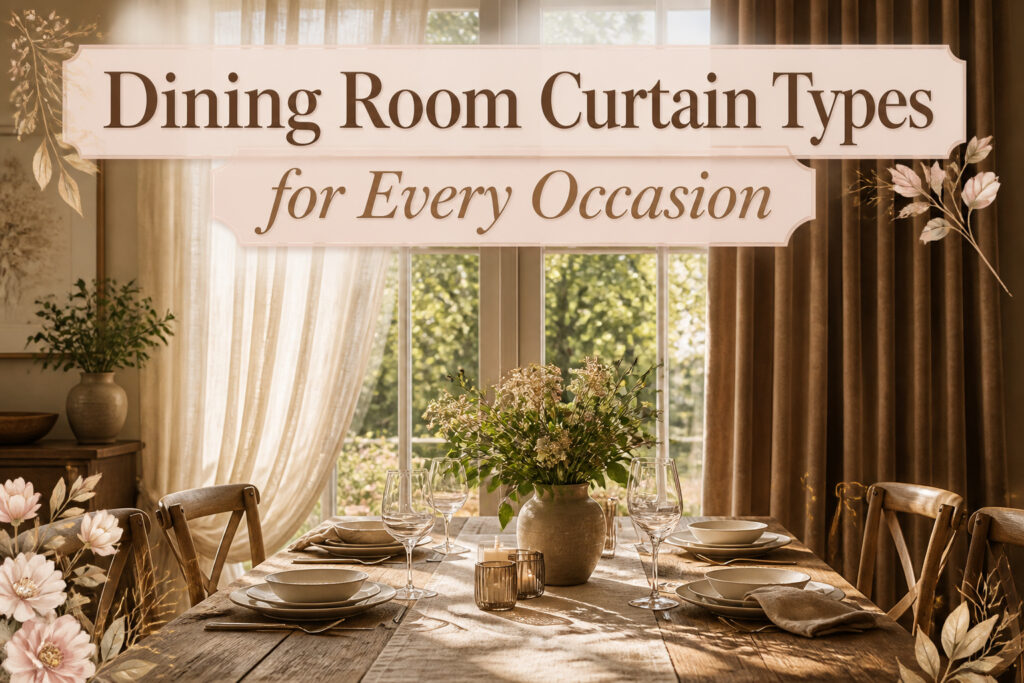
The right curtains for a dining room span from sheer linen that barely filters breakfast light to velvet panels heavy enough to turn a seated dinner into an event.
What decides between them is not the table you own but the life that happens around it: Tuesday takeout with a dog circling at 6:15, or two annual occasions where the room itself needs to feel like one.
The catch is that a fabric chosen for looks alone will punish you, a south-facing velvet traps heat and a drafty sheer does nothing, so the practical condition has to come first.
1. Formal Curtains
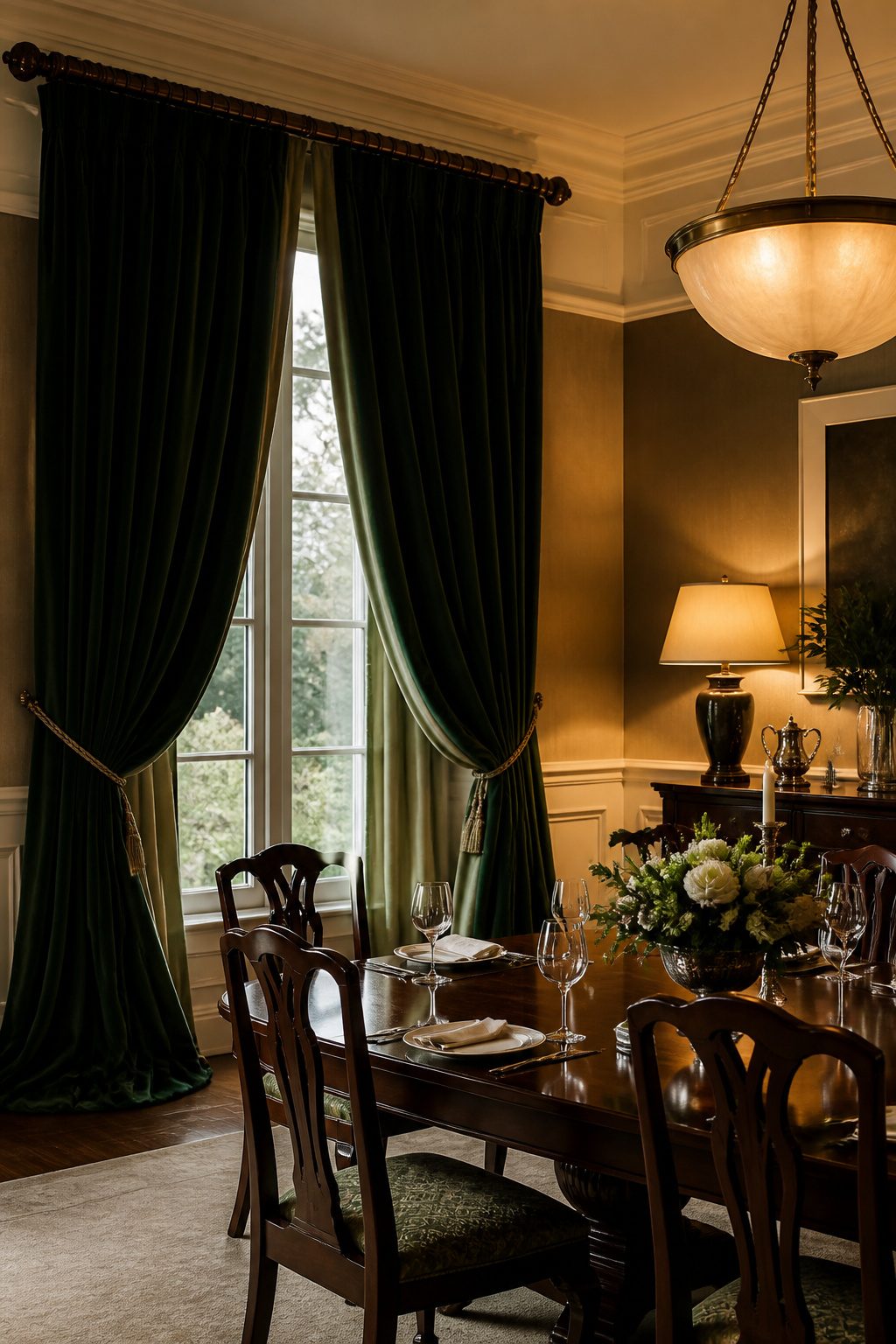
Velvet and silk are the fabrics that signal a formal dining room before a single chair gets pulled out.
Velvet hangs heavy and drinks in light, which is exactly what you want when the occasion is a seated dinner rather than Tuesday takeout.
The pile catches lamplow across a table and turns a room into something intentional. Silk does the opposite work, reflecting light back with a surface that reads as effort without trying to look casual.
The choice between them is mostly practical. Velvet tolerates a north-facing room and still looks deliberate; silk wants some sun or it can go flat and cold.
Both need lining, not for privacy but for weight and for the way unlined panels read as unfinished in a space where you have already committed to the idea of formality.
I would not put either in a dining room that doubles as a homework zone or a craft table on off nights.
The maintenance is real, the cost is higher than linen or cotton, and the effect collapses if the rest of the room does not meet them halfway.
But for the two or three times a year when the table is set for more than four and you want the room to feel like an event, these are the materials that get you there.

WELL MADE: Package contains 2 panels of 52" width by 84" length (104" wide in total). With pleat tape pocket & tabs on top, back loop (2.3 inch) and rod pocket (3.3 inch) which offer our customers multiple hanging options.

WELL MADE: Package includes 2 panels of W52"x L84"(132cm x 214cm) each | W104"x L84"(264cm x 214cm) in total. Velvet curtains have a soft and luxurious feel.

Generous 4-Piece Value Set: MIULEE premium Velvet Curtains include 4 panels, each sized 40x84 Inch for ample window coverage. Perfectly tailored for living rooms, bedrooms, and private home theaters, this complete 4-piece set creates a full, layered, and high-end decorative look. It easily elevates large window arrangements and unified interior styling, delivering a refined and luxurious atmosphere for sophisticated modern households.
2. Semi-Formal Curtains
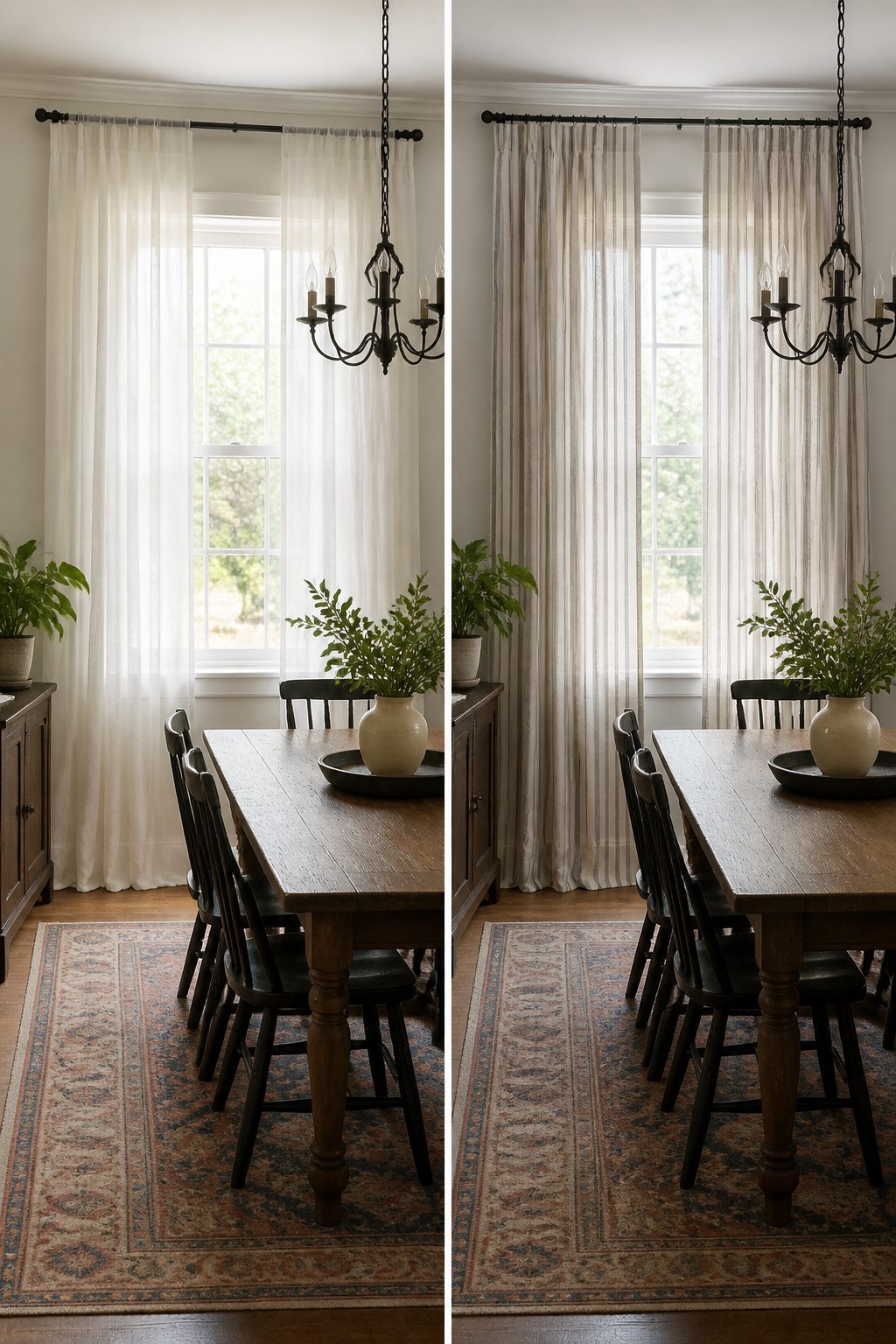
Cotton sits in that useful middle space where it reads as finished without shouting for attention.
A plain-weave cotton panel in warm white or a muted stripe works for a Tuesday night pizza dinner and still looks pulled-together when your parents visit for Thanksgiving.
The fabric takes dye well, so you are not stuck with beige; I have seen a deep tobacco cotton hold its own against walnut furniture and then soften up remarkably when the rest of the room leaned lighter.
The dining rooms that benefit most are the ones still figuring themselves out. Maybe you inherited a chandelier you do not love yet, or your table is hand-me-down and your chairs are IKEA.
Cotton curtains bridge that gap instead of locking you into a formality you might outgrow in two years. They also tolerate washing, which matters more than people admit in a room where red wine lives.
A midweight cotton, roughly the drape of a good chambray shirt, hangs cleanly without lining.
Skip the blackout backing; it stiffens the fold and turns the window into a solid rectangle. Unlined cotton filters afternoon light into something you actually want to eat by.

How To Hang: Our most versatile header allows you to hang 2 ways. Curtain panels can be sheered on a rod using the ruched pocket, Or attached to rings using the belt and drapery pins. The Pole Pocket will accommodate a pole up to 1.5 inches in diameter, Hooks Not Included.


Pack contents-A pair curtians with two pannels. Each pannel in the pair is 52" wide by 120" drop (132x305cm)
3. Casual Curtains
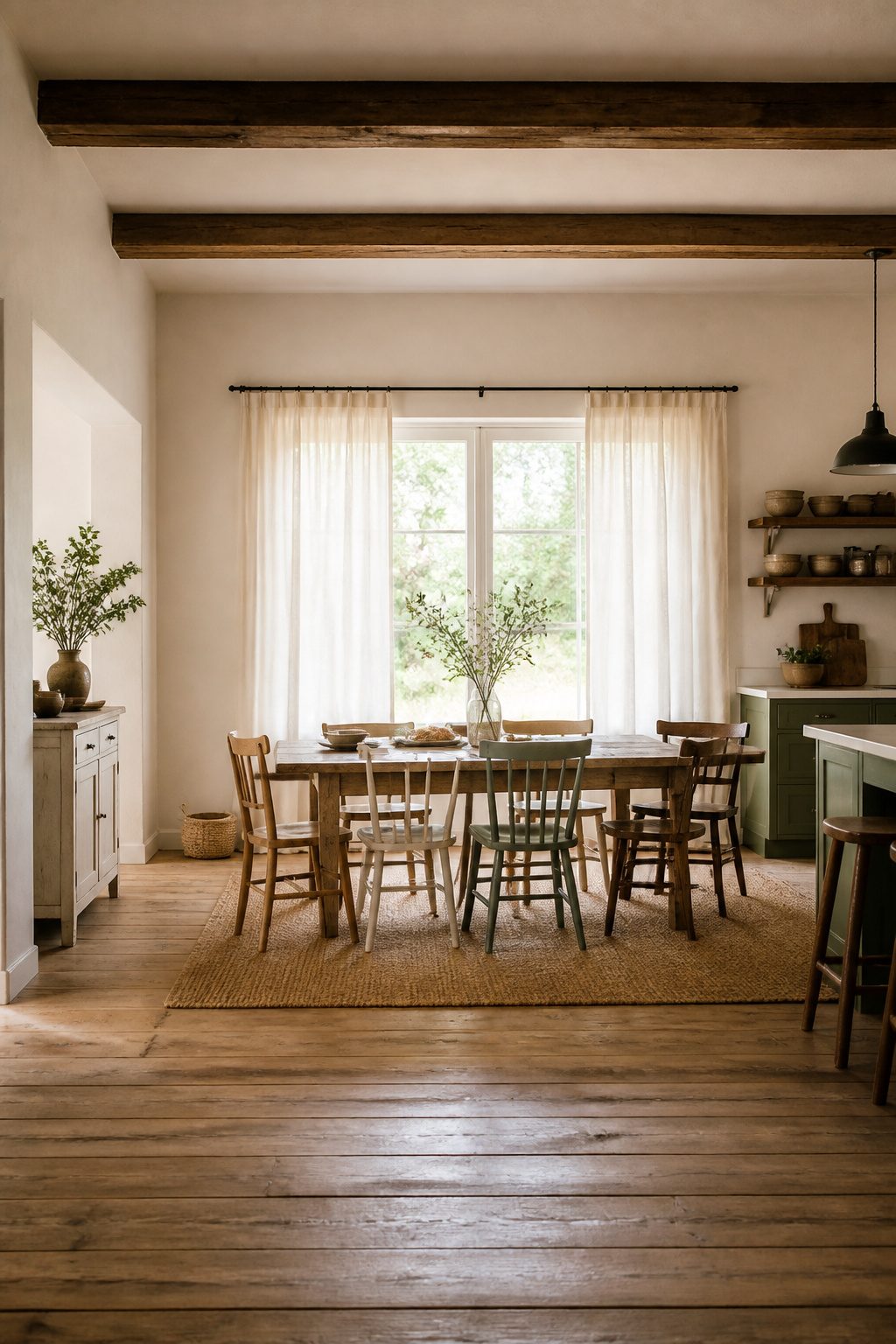
Linen and sheer curtains let morning light spread through a dining room without the harsh edges that heavier fabrics block out.
The weave is loose enough that the room stays bright even when the panels are drawn, which matters in spaces where you eat breakfast or work through lunch at the same table.
These materials suit dining rooms that already feel relaxed: open floor plans bleeding into kitchens, smaller tables for four or six, anywhere the chairs do not match.
A formal dining set with a heavy wood table would fight the airiness rather than complement it.
Sheer filters light almost like a frosted bulb, scattering it so glare disappears but color stays true.
Linen does something closer to softening; it still shows shadows and movement outside, which some people prefer for feeling connected to the yard or street while they eat.
Neither will give you the blackout that lets you run a projector during dinner, so skip them if your dining room doubles as movie night space.
The tradeoff is maintenance.
Linen wrinkles the moment you look at it, and sheer collects cooking grease faster than you would expect in a room near the kitchen. Washing helps, but the relaxed look only holds if you do not mind a little rumple.

Modern Farmhouse: Elevate your home decor with our charming Linen Button Window Curtain. This single panel is perfect as country farmhouse rustic curtains with the look of linen, modern color block design, pleating, and coconut husk buttons.

STANDARD MADE: Curtains are sold per pair. Each pack contains 2 blackout functional curtain panels. Each panel measures 52" W x 84" L | Pair measures 104"W x 84"L. Thread trimmed and wrinkle free, each piece is constructed with 8 anti rust grommets which fit well up to 1 1/2 inches curtain rods for effortlessly installation and sliding

Hand Block Printed - These cafe curtains are hand block printed by local craftsmen, giving them a unique and authentic touch making these curtains a beautiful addition to your home. Available in a selection of
4. Short Curtains
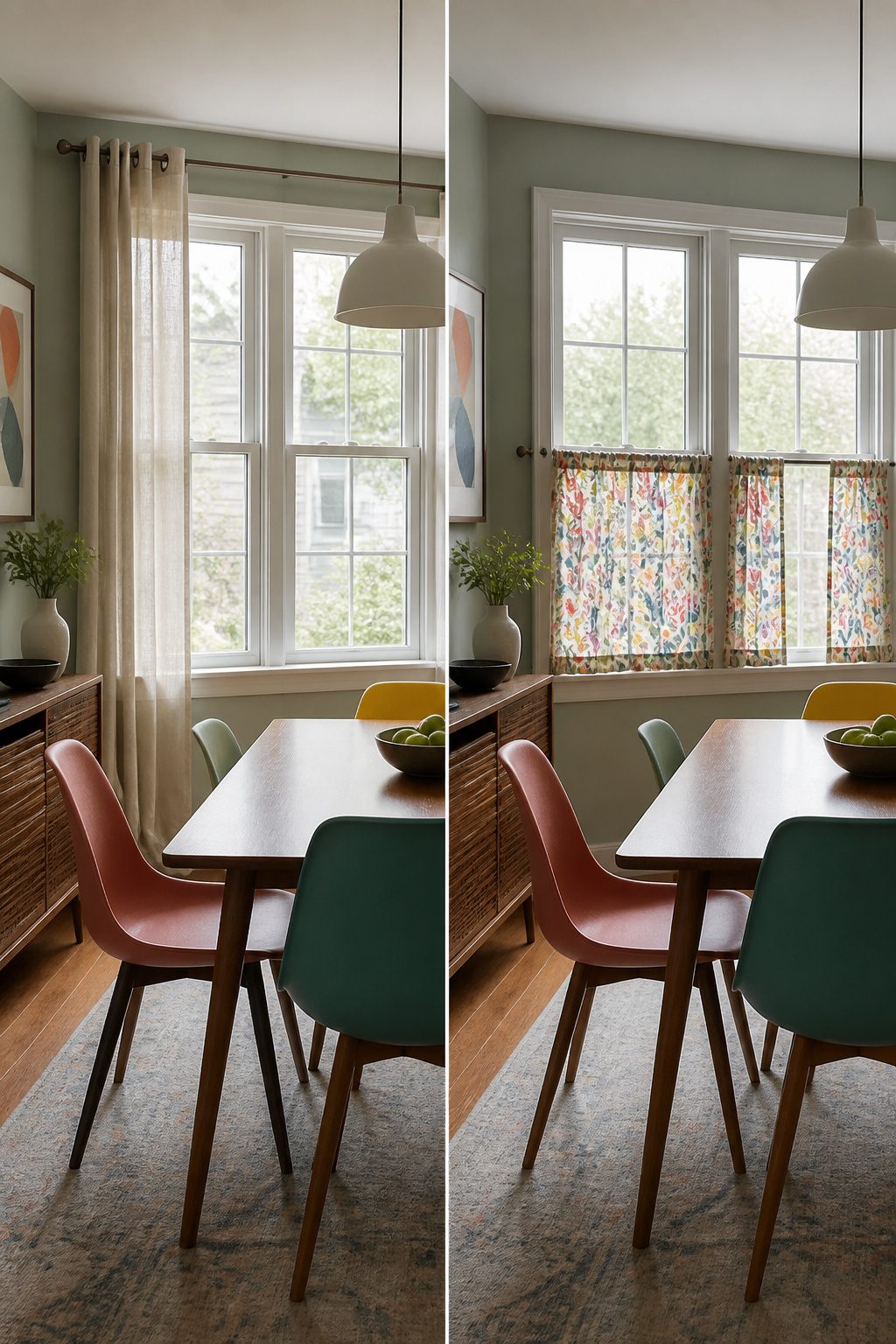
Short curtains earn their keep in dining rooms that see real life.
Cafe curtains hang at half the window height and brush the sill, which leaves the upper glass open for afternoon light while blocking the sight line from a neighbor’s porch.
Sill-length curtains cover the full window and stop right at the sill, the cleanest fit for a space where people pass close to the wall.
Apron curtains run a few inches past the sill, enough to hide a radiator or the edge of a bench seat without reaching the floor.
The shorter lengths suit dining rooms with foot traffic from kids or pets, since nothing trails where it can be stepped on or tripped over.
Fabric that ends at the sill also takes less abrasion than floor-length panels, so the hems stay cleaner between washes.
These styles read more casual than formal drapes, which matters less than you’d think in a room where the main event is a Tuesday spaghetti dinner.

Sold per panel. Hang well right out of the wrapping. Nice slub texture finish. Dry Clean. Come with metal hooks, but rings with clip are not included, please prepare in advance.

Sold per panel. Hang well right out of the wrapping. Nice slub texture finish. Dry Clean. Come with metal hooks, but rings with clip are not included, please prepare in advance.

Sold per panel. Hang well right out of the wrapping. Nice slub texture finish. Dry Clean. Come with metal hooks, but rings with clip are not included, please prepare in advance.
5. Long Curtains
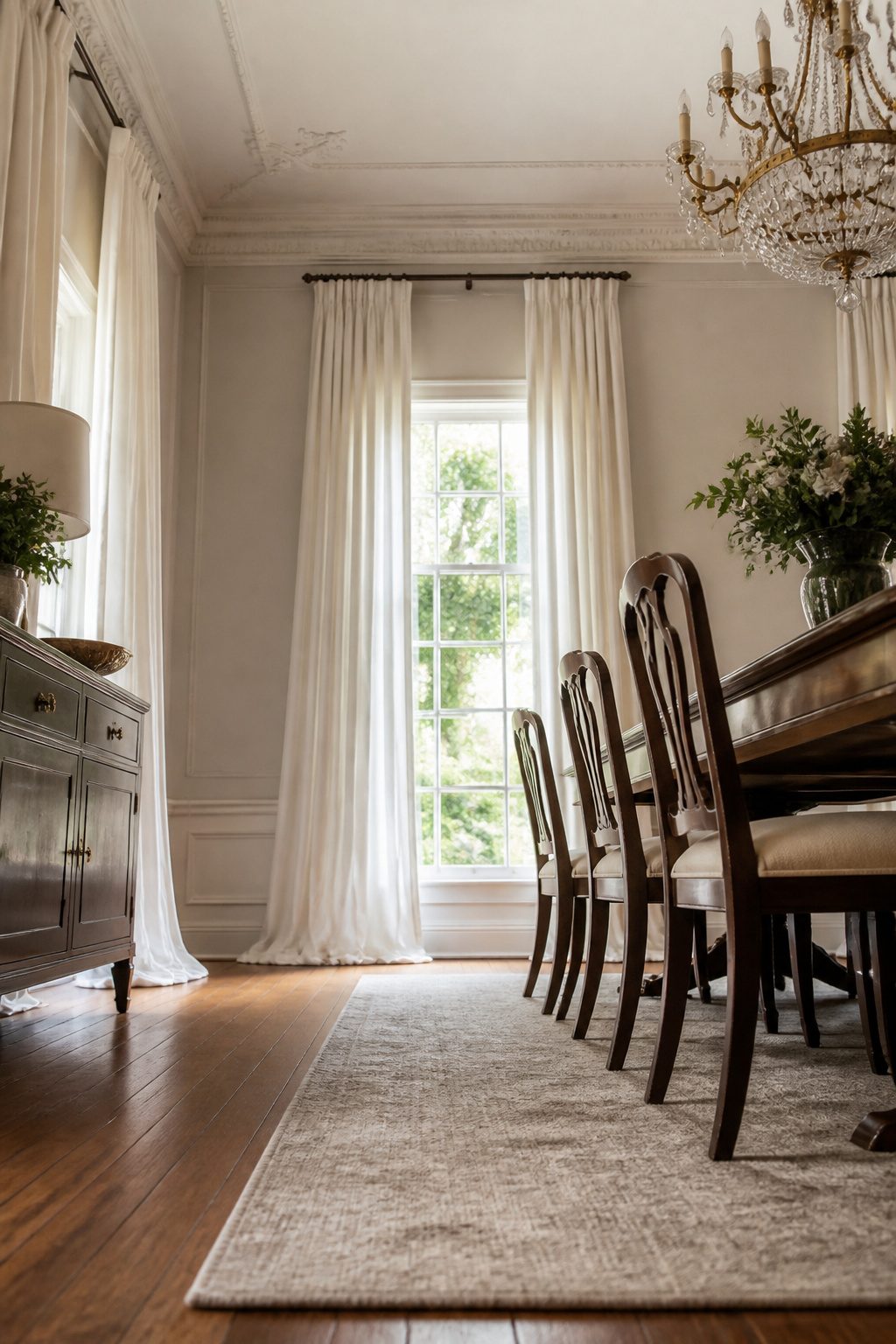
Floor-length panels give a dining room its vertical lines back, especially in older homes where the windows sit high and the ceilings feel like they need something to pull the eye upward.
The fabric has three possible relationships with the floor, and each one changes how the curtains live in the room.
A puddle of two to six inches reads formal and romantic, but that pooled fabric collects dust like a mop head and becomes a trip hazard every time someone pulls a chair back from the table.
I would reserve this for a dining room that sees actual dinner parties rather than Tuesday-night spaghetti. A kiss, where the hem just brushes the floor, stays cleaner and still looks finished.
Floating an inch above keeps the hem clear of spills and foot traffic entirely, which matters when the dining room opens straight off the kitchen and the dog runs through at 6:15 every evening.
The longer the drop, the heavier the panel, so rod choice becomes load-bearing in a way shorter curtains never demand.
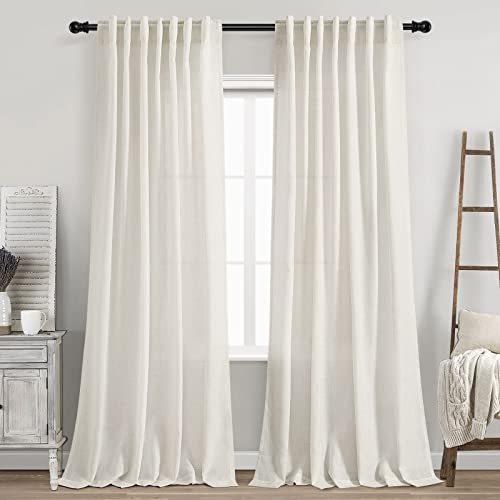
READY MADE: 2 Linen Curtain Panels per package.Each panel measures 52 inches wide by 84 inches long. Top design of Back tab & loop pocket provide 3 hanging options. <1> hanging from the back patch to create an elegant pleated look, <2> from the 3 inch rod pocket for a classic look <3> Hanging with clip rings for easy, slide open and closed (clip rings are not included)

Basic Information: Includes 2 curtain panels, each measuring 50 inches wide for a total of 100 inches. Easy care for machine washable in cold water, do not bleach, tumble dry low, iron on low heat if needed.

SOPHISTICATED LOOK: The well-crafted design of the Loha curtain panels offers a touch of elegance to your home with rich, linen-like texture and a variety of luxurious colors.
6. Layered Treatments
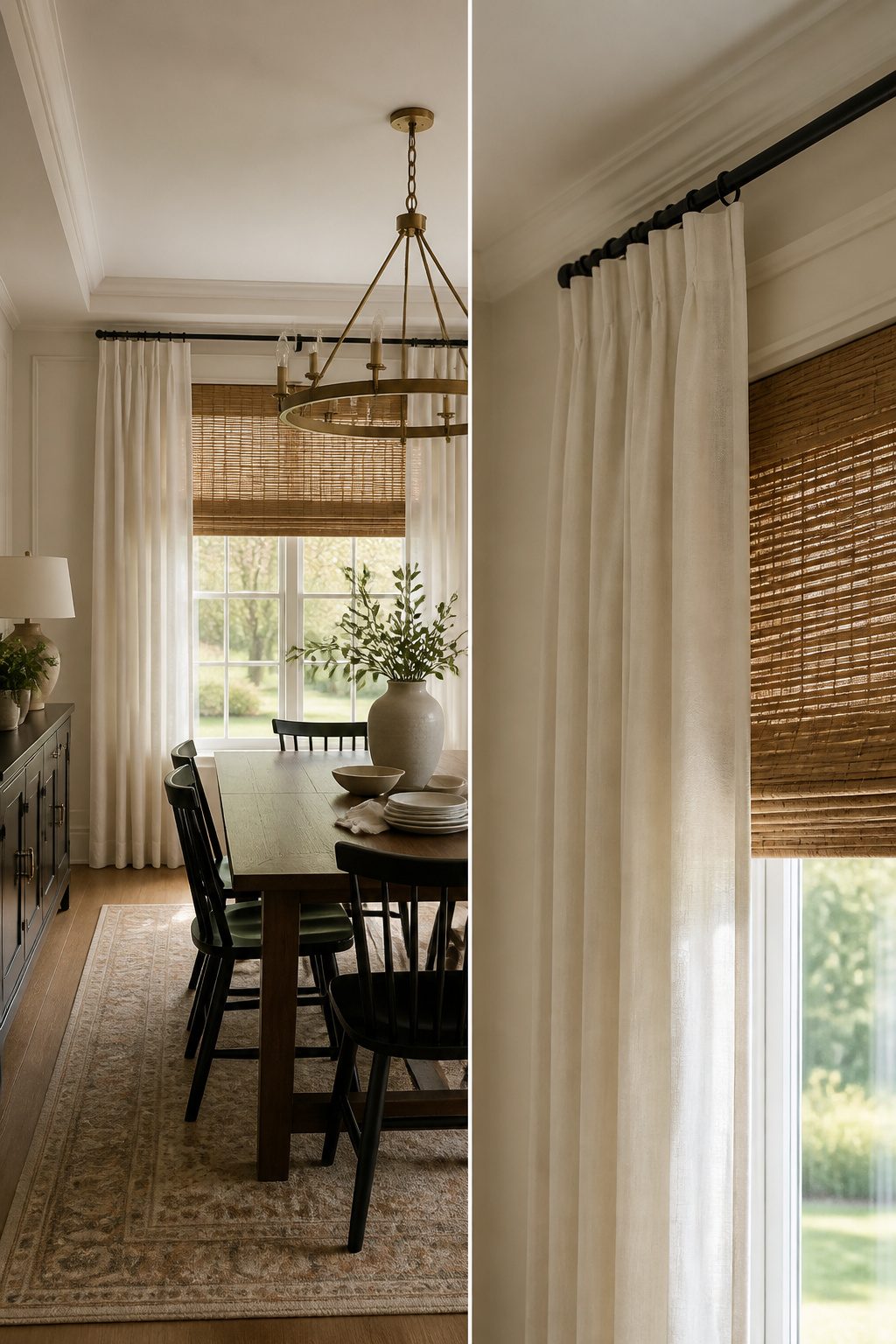
Layering a shade beneath your dining room curtains does two jobs at once: the shade blocks afternoon glare during the meal, and the fabric frame finishes the room even at night when the shade is down.
A woven wood shade under linen panels is the combination I see most often in houses that actually get used, since the texture hides the inevitable dust better than a flat roller.
The mistake is treating the two pieces as afterthoughts. The shade has to sit inside the frame, the rod outside it, and the overlap needs to be planned before either gets ordered.
I learned this the expensive way when a cellular shade I added to a rental stuck out past the curtain stack and caught every time I drew them.
Mount the rod at least six inches past the shade hardware on each side, or the curtains will never sit flat.
Valances over panels are less common now, but a simple box-pleated header still works in a dining room where the window is centered and formal.
The valance hides the rod and any light gap at the top; without it, that strip of wall reads as unfinished in a room where people sit facing the glass. Skip the swags unless you are committed to the ironing.

Package Includes: 2 emerald green soft velvet curtain panels. Each curtain panel mesure 52 inch wide by 72 inch length. With 7 back loops and 3” rod pocket, our velvet drapes can be styled in 3 ways: back loops, rod pocket or clip-rings (not included).These three hanging options will offer you flexible home decoration.

PACKAGE:Includes 2 blackout luxury velvet window curtains panels W52 x L72 inch .Each panel has 2 hanging style--Rod Pocket & Back Tab.All hanging fit rod diameter up to 3 inch.(Rod pockets will form dense folds ,the back tab hanging style will creates neat folds in the curtains.)

2 Panels Set: Package includes 2 Panels Velvet Curtains of 84 inches x 52 inches wide (Total width 104"). Pleated style width should be 1.5-2 times the size of your windows. Equipped with 3-inch inner rod pocket & back tabs suitable for most standard curtain rods
Choosing Fabric
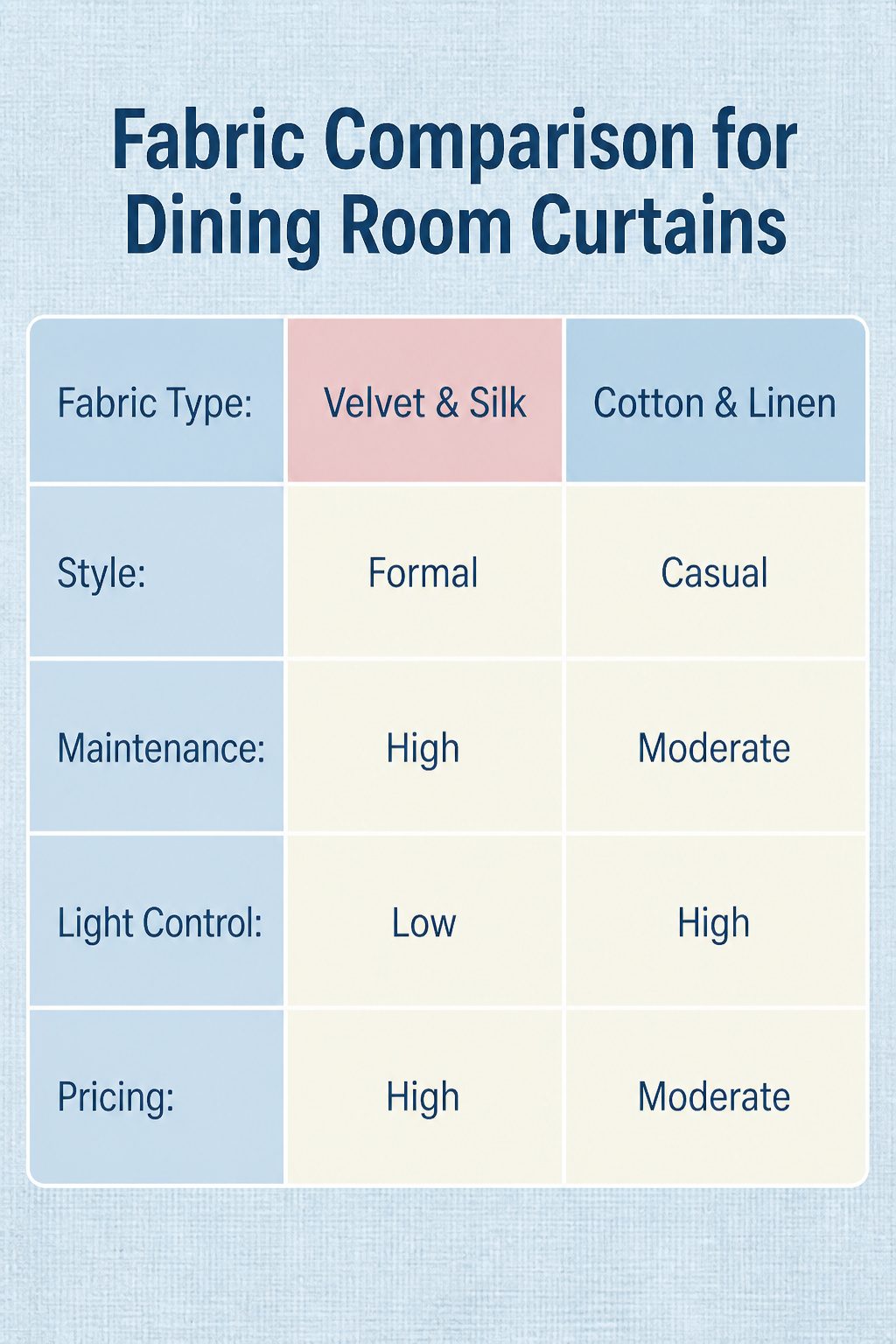
Velvet and silk read as formal because they catch light and hold weight; cotton splits the difference, crisp enough for a dinner party but not so stiff it feels like a hotel.
Linen and sheer fabrics drop the pretense entirely, letting daylight through and softening the room without blocking it.
The mistake is choosing the fabric for looks alone, because a heavy drape in a south-facing room traps heat and a sheer panel in a drafty rental does nothing.
Polyester blends solve the budget problem, though they never drape with the same ease as natural fibers. For a dining room that hosts both weeknight pasta and Thanksgiving, cotton or a cotton-linen mix survives washing and still looks intentional.
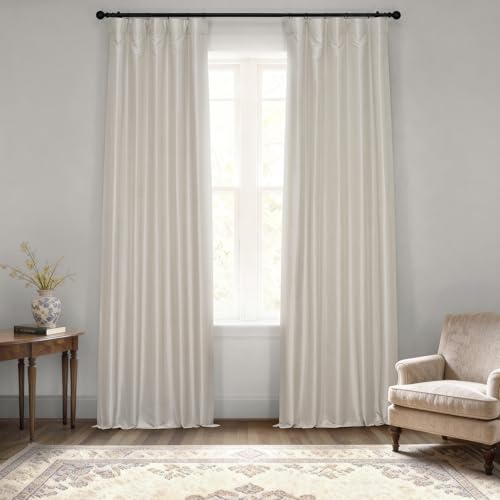
OPACITY AND LIGHT CONTROL: These room darkening curtains for bedroom are designed with Vintage Textured dupioni Silk 100% Polyester. These curtains for living room effectively block out unwanted sunlight, creating the perfect environment for relaxation and restful sleep. These Privacy lined window curtains provide 80% darkness to your room for better sleep.

FAUX SILK CURTAINS Bring style and elegance to your windows by dressing them in the Curtainworks Marquee Lined Curtain Panel. Faux silk curtain panel offers a classic look for your home; subtle shimmer offers interest to your space. Hang with clip rings, hooks or hidden back tabs. Panels are sold individually. The Marquee lined faux silk fabric window curtain panel with subtle shimmer and back tab pinch-pleat detail will create a stunning interior designer look in your home

NEW & TRENDY - Give your home a decorator’s touch with the Madison Park Emilia Window Curtain. Made from a faux silk fabric, this elegant window curtain features a DIY twist tab top. the luxurious sheen and rich navy tone provides a touch of sophistication to your decor. Easy to hang, this twist tab top curtain turns any room into a gorgeous getaway.
Curtain Length
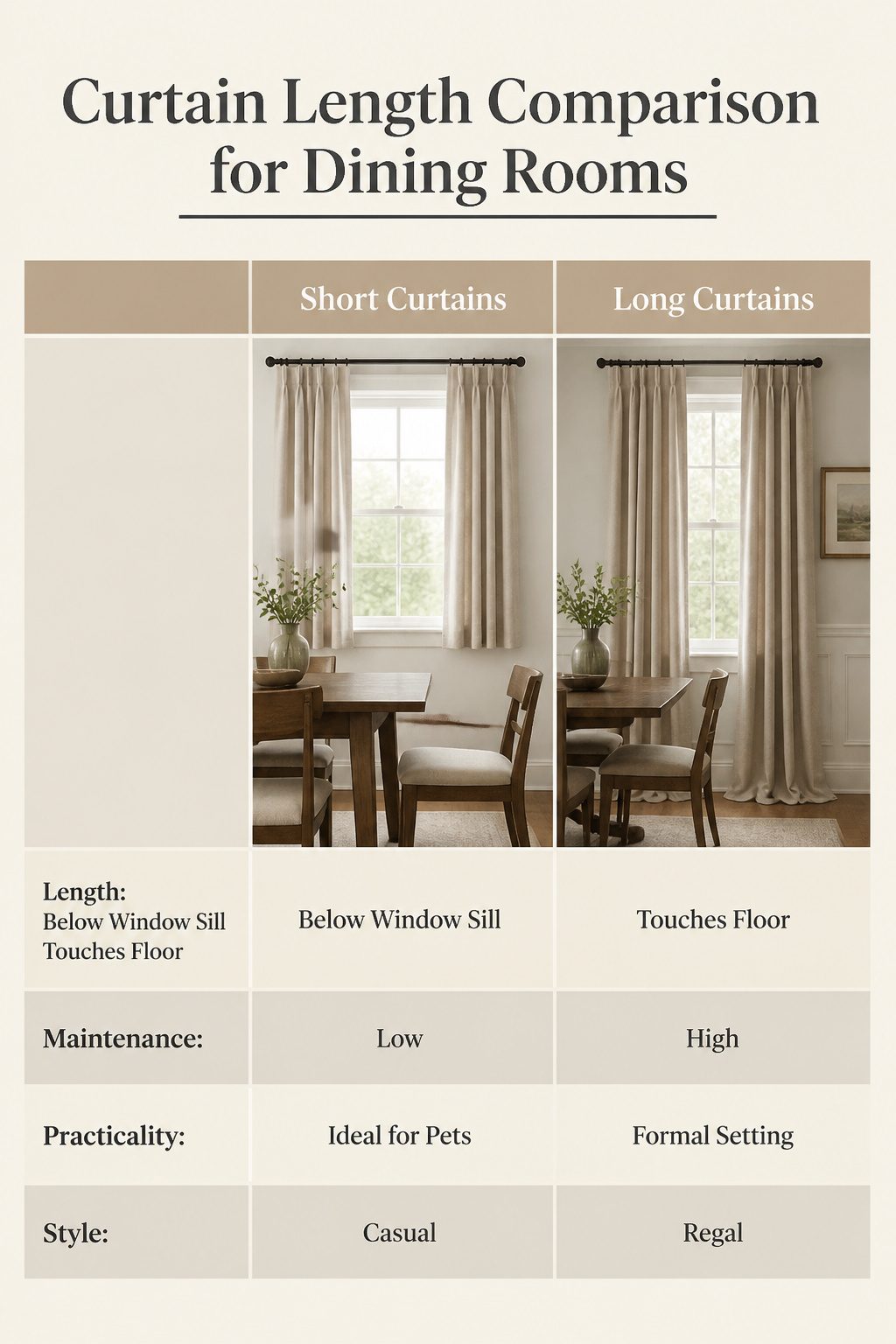
Short curtains brush the sill or stop a few inches below it, which keeps the hem clear of dropped food and passing feet.
In a dining room that doubles as homework central or sees dogs circling the table, that shorter length means less dragging across the floor and fewer trips to the dry cleaner.
Long curtains that float an inch above the floor, kiss it, or puddle in fabric bundles read as formal because they draw the eye upward and stretch the wall.
The tradeoff is maintenance: anything touching or pooling on the floor collects dust and needs washing on a regular schedule. If the space beneath your window holds a radiator or a bench, short curtains are the practical call.
For a room set apart for holiday meals where no one runs through, puddled curtains that extend one to sixteen inches past the floor make the regal statement the occasion demands.

Modern Farmhouse: Elevate your home decor with our charming Linen Button Window Curtain. This single panel is perfect as country farmhouse rustic curtains with the look of linen, modern color block design, pleating, and coconut husk buttons.

Modern Farmhouse: Elevate your home decor with our charming Linen Button Window Curtain. This single panel is perfect as country farmhouse rustic curtains with the look of linen, modern color block design, pleating, and coconut husk buttons.

Modern Farmhouse: Elevate your home decor with our charming Linen Button Window Curtain. These linen-textured curtains are perfect for a farmhouse styled home with the modern color block design, pleating, and coconut husk button details.
Color and Pattern
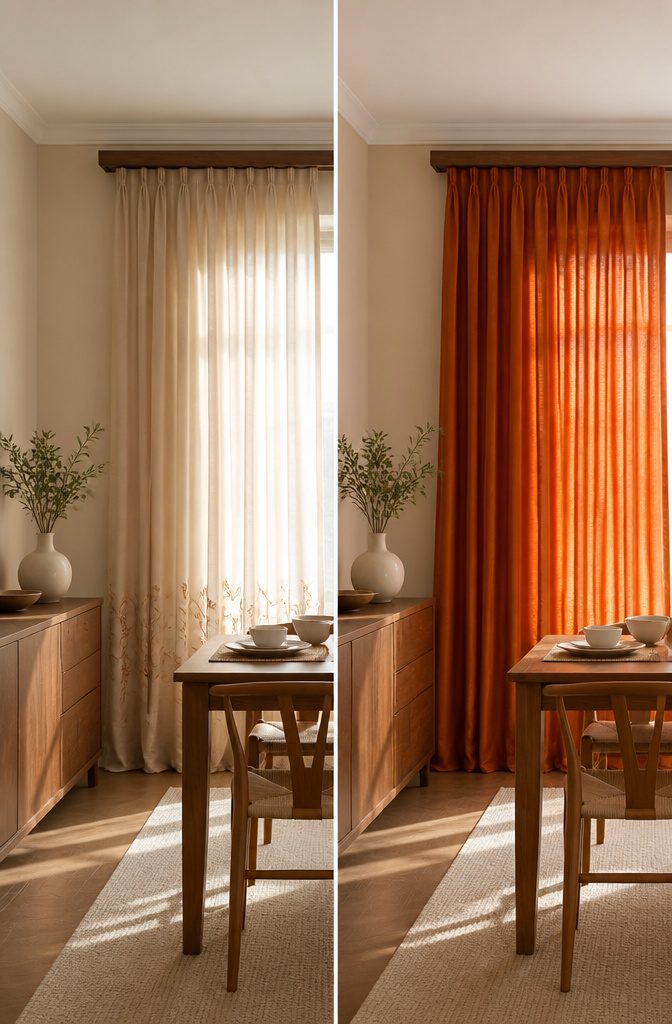
A dining room either has a star feature or it needs one, and curtains swing both ways.
Bold color or a medium-to-large pattern makes the window itself the draw.
An orange silk like Mandarino, for instance, pulls the eye straight across the room. Echoing a tone from your tableware but dialing it up works well when the walls are quiet and the furniture is basic.
Neutrals and small-scale patterns do the opposite, letting a fireplace or a piece of art keep center stage.
Beige linen that matches the wall color reads as architecture, not decoration. A slender vine motif with tonal variation, like the Morlaix cotton, adds texture without announcing itself.
The choice depends on what you already own.
A room with no focal point gains one from statement curtains. A room with competing features calms down when the drapes step back.

【MATERIAL】 Material is made of 20% Linen, 15% cotton and 65% Polyester. natural effect make the curtains more durable and long lasting, no any chemical adding, the authoritative lab test it is environment friendly, safe and green to kids and nursery.
【MATERIAL】 Material is made of 20% Linen, 15% cotton and 65% Polyester. natural effect make the curtains more durable and long lasting, no any chemical adding, the authoritative lab test it is environment friendly, safe and green to kids and nursery.
【MATERIAL】 Material is made of 20% Linen, 15% cotton and 65% Polyester. natural effect make the curtains more durable and long lasting, no any chemical adding, the authoritative lab test it is environment friendly, safe and green to kids and nursery.
Functionality
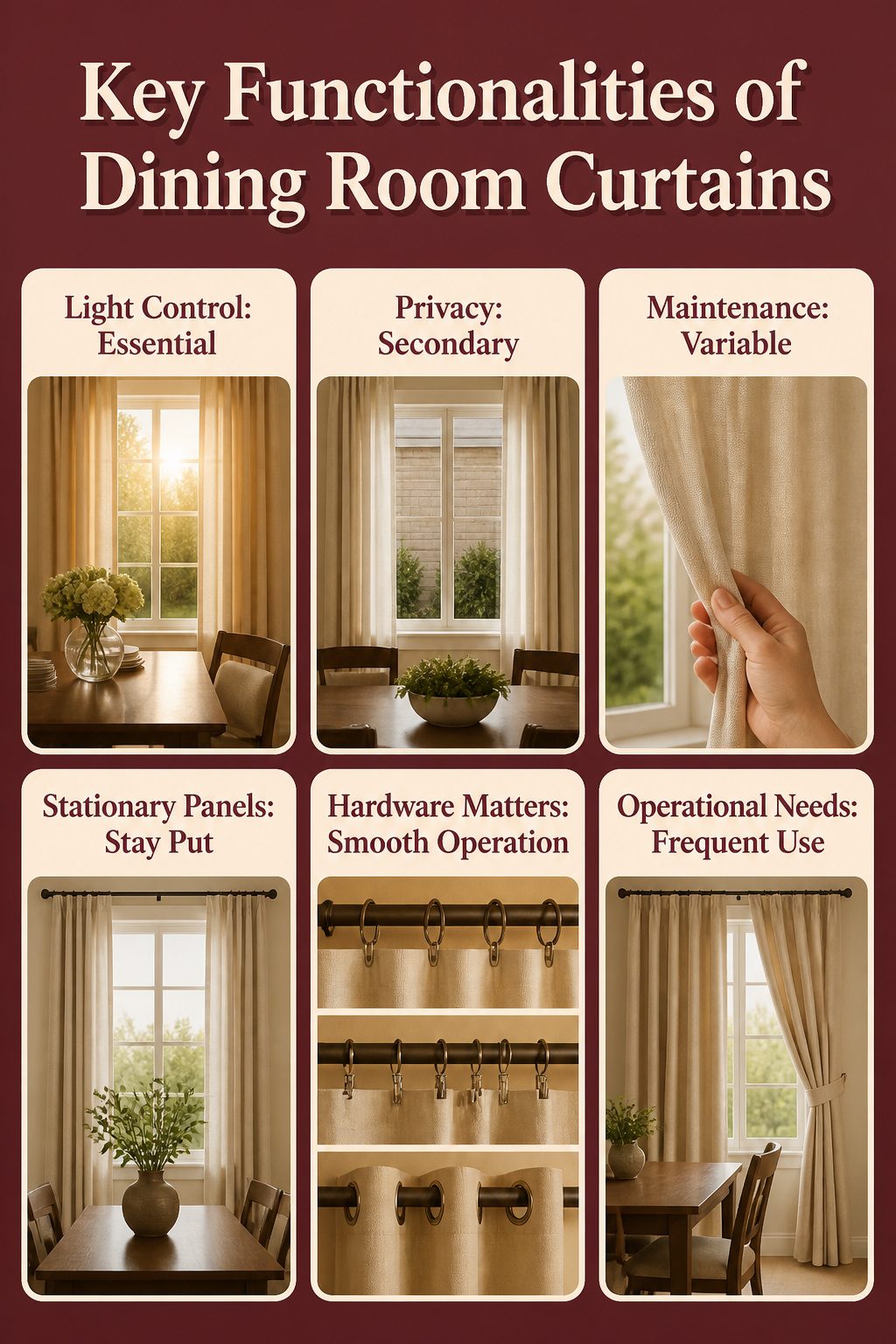
Light control in a dining room usually matters more than privacy, since the window faces a yard or a wall rather than a sidewalk.
The sun’s glare is the enemy at lunch; by dinner, that same window might give the only good light in the house. How often you reach for the curtain rod decides the hardware.
For windows where the curtains stay put, two stationary panels flanking the frame do the work. They frame the glass without ever covering it, so light and air move freely and the fabric stays clean from handling.
If you open and close them daily, the hardware becomes the whole story. Rings, pins, or grommets glide along the pole; rod pockets and back-tab tops fight you every time because the fabric itself forms the loop.
Operational panels also need enough width to gather properly, or they hang flat and look like bed sheets.

READY MADE: 2 Linen Curtain Panels per package.Each panel measures 52 inches wide by 96 inches long. Top design of Back tab & loop pocket provide 3 hanging options. <1> hanging from the back patch to create an elegant pleated look, <2> from the 3 inch rod pocket for a classic look <3> Hanging with clip rings for easy, slide open and closed (clip rings are not included)
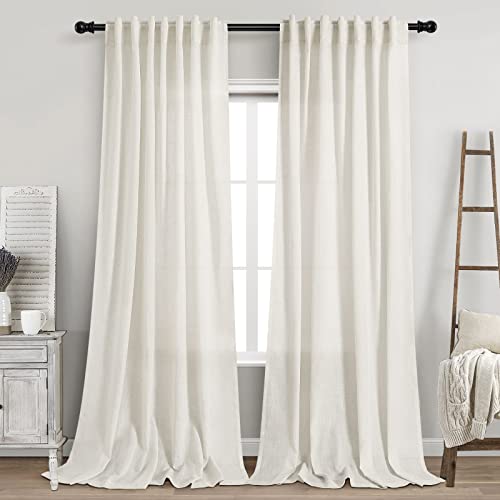
READY MADE: 2 Linen Curtain Panels per package.Each panel measures 52 inches wide by 108 inches long. Top design of Back tab & loop pocket provide 3 hanging options. <1> hanging from the back patch to create an elegant pleated look, <2> from the 3 inch rod pocket for a classic look <3> Hanging with clip rings for easy, slide open and closed (clip rings are not included)

Basic Information: Includes 2 curtain panels, each measuring 50 inches wide for a total of 100 inches. Easy care for machine washable in cold water, do not bleach, tumble dry low, iron on low heat if needed.
Frequently Asked Questions
What are the best fabrics for dining room curtains?
Velvet and silk suit formal dining rooms where the goal is an intentional, event-ready atmosphere.
Cotton works for semi-formal spaces that need to flex between weeknight meals and occasional guests. Linen and sheer fabrics fit casual dining rooms, especially those with open floor plans or mismatched chairs, because they let daylight spread without hard edges.
How long should dining room curtains be?
Short curtains that brush the sill or stop a few inches below it keep hems clear of food, feet, and pets in busy dining rooms.
Long curtains that float an inch above the floor, kiss it, or puddle in fabric bundles draw the eye upward and read as formal, though anything touching the floor collects dust and needs regular washing.
Puddled curtains extending one to sixteen inches past the floor make the most regal statement but suit set-apart rooms for holiday meals, not spaces with daily foot traffic.
How can I make my curtains stand out?
Choose bold color or a medium-to-large pattern when the window needs to become the room’s focal point, like an orange silk that pulls the eye straight across the space.
Keep curtains quiet with neutrals or small-scale patterns when something else already owns the room, such as a fireplace or a piece of art, so the drapes read as architecture rather than decoration.